Categories
Featured Juneau News Juneau Local Ketchikan Local Music News Feeds Sitka Local

Shutdown standoff in US Senate extends as thousands of federal workers are sent home

By:Ashley MurrayJennifer Shutt and Shauneen Miranda, States Newsroom

U.S. Senate Democrats and Republicans remained at a stalemate Wednesday as government offices closed and hundreds of thousands of federal workers faced furloughs on the first day of a government shutdown that showed no sign of ending.

Proposals from each side of the aisle to fund and reopen the government failed again during morning Senate votes, mirroring the same vote breakdowns as Tuesday evening, when lawmakers could not reach a deal hours before the government ran out of money.

The nonpartisan Congressional Budget Office projected up to 750,000 federal workers could be furloughed, leading to a $400 million per day impact on the economy.

Locked in their positions, Republicans failed to pick up enough Democrats to reach the 60 votes needed to advance their plan to fund the government until Nov. 21. 

Senators will break Thursday to observe Yom Kippur but will return Friday to again vote on the funding proposals.

Democratic Sens. Catherine Cortez Masto of Nevada and John Fetterman of Pennsylvania, along with independent Angus King of Maine, again joined Republicans in the 55-45 vote for the House-passed stopgap spending bill. GOP Sen. Rand Paul of Kentucky voted no.

Democrats also failed to find support to move forward their bill to fund the government through Oct. 31, roll back GOP cuts on Medicaid and permanently extend subsidies that tie the cost of Affordable  Care Act health insurance premiums to an enrollee’s income level. 

The Democrats failed to advance their plan in a party-line 47-53 vote. King, who caucuses with Democrats, voted in favor.

Shutdown tied to health care tax credits

Senate and House Democrats say they will not support a GOP path to reopen the government unless Republicans agree to negotiate on rising health care costs. 

House Minority Leader Hakeem Jeffries said at a press conference that Democrats are “ready to sit down with anyone at any time and at any place in order now to reopen the government, to enact a spending agreement that meets the needs of the American people and to address the devastating Republican health care crisis that has caused extraordinary harm on people all across the country.”

The New York Democrat pointed to harms in “rural America, working class America, urban America, small-town America, the heartland of America and Black and brown communities throughout America.” 

Democratic leaders blitzed Capitol Hill with their message on health care, holding press conferences and attending an evening rally Tuesday on the lawn outside the U.S. House. 

U.S. Senate Minority Leader Chuck Schumer, D-N.Y., speaks during a press conference inside the Capitol building in Washington, D.C., on Tuesday, Sept. 30, 2025. Also pictured from left are Washington Sen. Patty Murray, Minnesota Sen. Amy Klobuchar and Illinois Sen. Dick Durbin. (Photo by Jennifer Shutt/States Newsroom)

They pointed to new data published this week showing annual insurance premiums could double on average in 2026 if the subsidies expire at year’s end, according to an analysis from the nonprofit health policy research organization KFF. 

Open enrollment for next year’s ACA health insurance plans opens Nov. 1 in most states, and Oct. 15 in Idaho.

Uptake of ACA health insurance plans has more than doubled to over 24 million, up from 11 million, since the introduction of the subsidies in 2021, according to KFF. 

During their own budget reconciliation deal in 2022, Democrats extended the insurance premium tax credits until the end of 2025. The majority of ACA enrollees currently rely on the credits.

Democrats also want assurances that the White House and Senate Republicans will not cancel any more funds that have already been approved by Congress, as was the case this year when the administration and GOP lawmakers stripped funding for medical research, foreign aid and public broadcasting, among other areas.

‘This can all end today’

GOP leaders in the House and Senate continued to blame Senate Democrats for the government shutdown at the expense of furloughed federal workers and Americans who rely on their services. 

At a Wednesday morning press conference, House Speaker Mike Johnson said “troops and border patrol agents will have to go to work, but they’ll be working without pay.”

Johnson also claimed at the press conference that veterans benefits would stop. The claim is false, as Veterans Administration medical care will continue uninterrupted and vets will also continue to receive benefits, including compensation, pension, education and housing.

House Speaker Mike Johnson of Louisiana speaks at a press conference outside the U.S. Capitol on Oct. 1, 2025, in Washington D.C., alongside fellow GOP leadership in the U.S. House and U.S. Senate. (Photo by Shauneen Miranda/States Newsroom)
House Speaker Mike Johnson of Louisiana speaks at a press conference outside the U.S. Capitol on Oct. 1, 2025, in Washington, D.C., alongside fellow GOP leadership in the U.S. House and U.S. Senate. (Photo by Shauneen Miranda/States Newsroom)

“As we speak here this morning, there are hundreds of thousands of federal workers who are getting their furlough notices. Nearly half of our civilian workforce is being sent home — these are hard-working Americans who work for our federal government,” the Louisiana Republican said, flanked by fellow GOP leaders on the Upper West Terrace of the U.S. Capitol overlooking the National Mall. 

Johnson decided in late September the House will be out until Oct. 6, canceling this week’s votes. 

The speaker said he will bring House members back next week, even if the government is still shut down.

“They would be here this week, except that we did our work — we passed the bill almost two weeks ago out of the House, sent it to the Senate,” Johnson said. “The ball is literally in (Senate Minority Leader) Chuck Schumer’s court, so he determines that.” 

Senate Majority Leader John Thune said “this can all end today” and “needs to end today.”

The South Dakota Republican said the funding lapse can cease when Senate Democrats vote for the GOP’s “clean” short-term funding bill. 

“We will continue to work together with our House counterparts, with the president of the United States, to get this government open again on behalf of the American people,” Thune said. 

Bipartisan deal and Trump

Virginia Democratic Sen. Tim Kaine said later in the day that a bipartisan group huddled on the floor during votes to talk about a possible path forward on “health care fixes” and ensuring that if a bipartisan deal is brokered, the Trump administration will stick to it. 

Republican senators, he said, could give Democrats assurances they won’t vote for any more rescissions requests from the White House, which ask Congress to cancel already approved government spending. But other issues, like laying off federal workers by the hundreds or thousands, have to be a promise from the president. 

“If I find a deal, should Congress have to follow it? Yes. Should the president have to follow it? Yes. Well, what if the president won’t follow it? Oh, yeah, you got a problem,” Kaine said. “So you know, rescission, impoundment, those are Senate words. But a deal is a deal — people get that.”

Kaine also emphasized that it’s not a “clean” stopgap funding bill if the Trump administration unilaterally cancels some of the spending. 

“In the past, we voted for clean (continuing resolutions), but the president has shown that he’ll take the money back,” Kaine said, referring to the technical name for a short-term funding bill. “I mean, just in Virginia, canceling $400 million to our public health, $40 million economic projects just pulled off the table, firing more Virginians than any president. 

“So we just want you to agree, if we do a deal, then you’ll honor the deal,” Kaine said. “It’s not that much to ask.”

‘People are suffering’

North Carolina Republican Sen. Thom Tillis said he doesn’t expect the shutdown will have long-term ramifications for senators’ ability to negotiate bipartisan deals — a necessity in the upper chamber, which has a 60-vote threshold to advance legislation. 

“It’s all transactional,” Tillis said. “I think there’s going to be opportunities for some bipartisan work, but none of that happens, you can’t even really consider it when you’re in a shutdown posture.”

Cortez Masto, who voted to advance Republicans’ seven-week stopgap bill, said the GOP “created this crisis” on health care and “need to address it.”

“They have no moral standing — no moral standing —- to say that this is all on the Democrats. They are in control. They’ve created this crisis,” Cortez Masto said. “People are suffering and they need to come to the table.” 

Missouri Republican Sen. Josh Hawley, who was sworn in for the first time during the last shutdown, said he worries about longer-term effects. 

“My concern is it’s going to poison the well on negotiations going forward on a lot of things,” Hawley said. “I can’t speak for anybody but myself, but I would just say that these tactics are very destructive. And it’s destructive, not just for relationships, but for real people.”

Categories
Featured Juneau News Juneau Local Ketchikan Local Music News Feeds Sitka Local

Radiothon raises $35,000 for Cure for Cade

4-year-old Cade Jobsis

NOTN- When Emma’s son, Cade, was just five months old, she noticed he was falling behind on developmental milestones. Doctors told her he was “just a late bloomer.” But after years of searching for answers, specialists diagnosed Cade with SPG50, an ultra-rare genetic disease that slowly robs children of the ability to control their bodies.

The Juneau community has rallied behind Cade’s cause, A daylong radiothon hosted by KINY on Saturday raised $35,000 to support 4-year-old Cade Jobsis.

The event, ran from 10 a.m. to 5 p.m. and featured prizes such as a helicopter ride from NorthStar Helicopters, an Eaglecrest ski pass, and a yearlong membership to the Rainforest Playzone.

Funds will support Cade, who was diagnosed at just 2 years old with SPG50, a rare form of hereditary spastic paraplegia that causes progressive loss of mobility. Fewer than 100 cases are known worldwide.

His mother, Emma, said her family spent years searching for answers before receiving Cade’s diagnosis. Doctors initially told them there was no treatment.

“There’s only around 100 cases in the world, and because of that, there really isn’t any interest in treating this disease or developing treatments for a disease that’s so rare.” Said Cade’s mom, Emma Jobsis, “So when we left the hospital after hearing his diagnosis, the doctors basically told us, there’s nothing we can do. Take him home, love him, he’s going to fade way in front of your eyes, basically. And we were distraught, as any parent would be.”

Because of the disease’s rarity, pharmaceutical companies and government agencies have shown little interest in funding development. Instead, families like Cade’s are leading grassroots efforts to raise millions for research.

“We decided we just have to do it by any means necessary, we have to raise the money and get this drug through clinical trials, because I can’t live with the fact that the next mom is going to be sitting in the office hearing what
I heard when there’s a drug that exists, but you just can’t get access to it because it’s not approved.” Jobsis said.

Emma said the Juneau community’s response has been overwhelming.

“My town has pulled off something incredible that I never expected. This kind of showing up from my community.” Said Jobsis, “People that I’ve never met in my entire life are texting, emailing, calling, telling me they heard my story, they heard about Cade, and they want to help. And it’s just, it’s so surreal to feel like the community backs you in such a huge way.”

Listeners heard interviews with Cade’s family and others around the world affected by SPG50, as well as with the Canadian father who helped create the experimental gene therapy.

“I have found so much good in people through this process, through this fundraising and advocacy, I’ve felt so much compassion and generosity.” Jobsis said, “Leaning on each other, that’s what it means to be in a strong community. And I’m so grateful to be here and to all Juneau and beyond, supporting us in this way.”

Organizers say the true prize was seeing the community come together for Cade’s future. Donations can still be made at cureforcade.com.

Categories
Featured Juneau News Juneau Local Ketchikan Local Music News Feeds Sitka Local

Murkowski, Sullivan join 10 US senators urging reversal of funding cuts for Native students

By: Corinne Smith, Alaska Beacon

Alaska Republican U.S. Sens. Lisa Murkowski and Dan Sullivan (Alaska Beacon file photos)

Alaska Republican U.S. Sens. Lisa Murkowski and Dan Sullivan signed on to a letter with 10 other U.S. senators, calling on the U.S. Department of Education to reverse the decision to cut millions in congressionally approved grant funding for Native American-serving colleges and universities nationwide. 

The letter, addressed to U.S. Secretary of Education Linda McMahon, argues that an estimated $36.1 million in grant funding already allocated under the Higher Education Act should be distributed to colleges and universities serving Native students nationwide. 

Senators wrote the funds are already authorized and appropriated by Congress and should go toward its intended colleges and universities nationwide, “including dollars that are part of ongoing grants – projects, programs, and services that are already in motion and that are serving currently enrolled students,” they said. 

“These institutions are statutorily authorized to receive federal support from the Department to strengthen their capacity to serve American Indian, Alaska Native, and Native Hawaiian students, and rely on this federal support to adequately serve enrolled students,” they said. 

“The Department’s decision to reprogram this critical source of funding for these colleges jeopardizes not just their continued existence, but also undermines the federal government’s trust and treaty obligations to provide Native students an education,” they wrote.

Earlier this month, Sec. McMahon announced that $350 million in congressionally approved funding for minority-serving institutions, a federal grant category that includes funding for Black, Hispanic, Asian-American and Native American students, would be reallocated. McMahon cited “racial quotas” as discriminatory and unconstitutional. “To further our commitment to ending discrimination in all forms across federally supported programs, the Department will no longer award Minority-Serving Institution grants that discriminate by restricting eligibility to institutions that meet government-mandated racial quotas,” McMahon said. 

The group of three Republican and nine Democratic senators rejected the claims, saying “to be clear, these grants do not impose racial quotas or restrict admissions based on race, but support institutions that deliver on the federal trust responsibility to provide an education for American Indians, Alaska Natives, and Native Hawaiians because of their unique legal status and political relationship with the United States.”

In Alaska, University of Alaska officials say they are still reviewing the extent of the funding freeze, but University of Alaska Fairbanks officials report the grant elimination totals at least $8.8 million across campuses. 

Senators argued that the funding cut contradicts the Trump administration’s expressed focus on career and technical education, and said the funds boost capacity for institutions serving not only Native students, but wider student populations. 

“As such, we again urge you to reverse the decision,” the senators wrote, “to release these funds, as appropriated by Congress, so that the work these schools do to support the trust responsibility, as well as the next generation of leaders as part of our nation’s bright future, can continue.

The letter was signed by Murkowski, as the chair of the US Senate Committee on Indian Affairs, and committee co-chair U.S. Sen. Brian Shatz, D-Hawaii; along with Sens. Dan Sullivan, R-Alaska; Mazie Hirono, D-Hawaii; Thom Tillis, R-North Carolina; Ben Ray Luján, D-New Mexico; Ruben Gallego, D-Arizona; John Hickenlooper, D-Colorado; Michael Bennett, D-Colorado; Mark Kelly, D-Arizona; Tina Smith, D-Minnesota; and Amy Klobuchar, D-Minnesota. 

A spokesperson for Murkowski said as of Wednesday they have not had a response from the department

Categories
Featured Juneau News Juneau Local Ketchikan Local Music News Feeds Sitka Local

Alaskans rally to defend Tongass protections as Roadless Rule faces rollback

By: Grace Dumas, News of the North

Protesters gather at the Roadless Rule Rally September 13th, Photo by: Greg Knight/ News of the North

NOTN- Conservation group Southeast Alaska Conservation Council (SEACC) and local advocates like Juneau for Democracy are urging Alaskans to speak out against a federal proposal that could roll back long-standing protections for millions of acres in the Tongass National Forest, the world’s largest intact temperate rainforest.

The call to action culminated as Alaskans from Juneau to the organized village of Kake, rallied at the downtown whale statue, where they gathered in solidarity to oppose the Trump administration’s renewed attempt to rescind the federal roadless rule.

The roadless rule, adopted in 2001, bars large-scale commercial logging, mining, oil and gas development and road construction on 58.5 million acres of national forest land across the United States. In the Tongass alone, the protections cover 9.3 million acres of old-growth forest that support subsistence, recreation and some of the state’s most profitable industries.

“It was a rule process that involved the public for many years to get support, it was by far one of the biggest public participation events on a federal document in the history of the United States.” Said Nathan Newcomer, Federal Campaigns Manager of SEACC, “1.6 million people submitted comments on this rule-making process back in 2001, and the vast majority was support, it was 96% of Americans who wanted to see the Roadless Rule put in place.”

The Trump administration attempted to eliminate the rule once before, which triggered widespread public opposition before former President Joe Biden reinstated the protections.

The administration has now revived the effort, this time under an accelerated timeline.

A notice of intent was published in the Federal Register on Aug. 29, opening a public comment period of just 21 days, far shorter than most federal rulemaking processes. That window closes in less than a week.

“Initially it was only going to be 14 days that the public could comment on this document. That’s unheard of, It’s unprecedented. ” Said Newcomer, “They gave us an extra week, So they gave us 21 days.”

The window for public comment closes on September 19th.

Eagle Raven dancer Raelhiya Fulmer took part in the event. Photo: Greg Knight/ News of the North

Advocates say tribal voices have been sidelined in the process. The Organized Village of Kake, a federally recognized tribe, has led opposition to the rollback since the early 2000s. President Joel Jackson from the Organized Village Kake and President Mike Jones from the Organized Village of Kasaan joined Saturday’s rally in Juneau.

“We’ve been battling all this since time’s first contact,” said Áakʼw Ḵwáan Tribal spokesperson Fran Houston, “this was our land, this was our territory, and it was taken away from us. And now, hundreds of years later, here I am standing on the grounds of my ancestors, trying to protect what they had. we were forced to live in two worlds.”

“This is the home of the Tlingit, Haida and Tsimshian people, and to cut them out of the process is reprehensible.” Newcomer said, “I can tell the audience that the US Department of Agriculture was supposed to hold a tribal consultation online Zoom meeting with tribal governments, and then they canceled at the last minute and never rescheduled it. So what does that tell you?”

Áakʼw Ḵwáan Tribal spokesperson Fran Houston spoke at the event. Photo: Greg Knight/ News of the North

In a commentary article published by the Alaska Beacon, Ariel Hasse-Zamudio, public advocate with Juneau for Democracy and the Director of Alaska Energy Infrastructure, wrote, “For thousands of years, the Tongass National Forest has provided for the people and wildlife who have lived below its canopies and along its shorelines. The lands protected by the Roadless Rule are the delicate habitats that allow the rest of the forests to thrive. Resource development, while sometimes necessary, almost inevitably changes or destroys habitats essential to the flora and fauna humans depend on.”

Tourism and fishing, two industries closely tied to the health of the Tongass, contribute billions of dollars annually.

According to Newcomer and Hasse-Zamudio, commercial fishing generates more than $6 billion a year, while tourism adds more than $5 billion.

“Without this protection, the other parts of the forest that are able to be managed for logging and mining, won’t be healthy enough for us to even be able to use those resources.” said Hasse-Zamudio, “So this is also about the health of the entire forest, even the parts that are managed for resources.”

For now, the focus is on generating public comments before the deadline. As of this article, more than 86,000 comments have been submitted nationwide.

“It is a specific action everyone can take to elevate their voice and be a part of the democratic process, because it is work to be a citizen in a democracy, and this is how you participate.” Said Hasse-Zamudio.

Saturday’s protest included cultural performances, speakers from tribal governments and conservation groups, and a message of solidarity.

“Because we do live and work in this sacred land, and we need to stand up for it with one solid voice.” Said Newcomer.

Public comments can be submitted through the Federal Register under ‘Special Areas; Roadless Area Conservation; National Forest System Lands.’

For more information about the Roadless Rule, visit the Southeast Alaska Conservation Council website.

Categories
Featured Juneau News Juneau Local Ketchikan Local Music News Feeds Sitka Local

Alaska judge rules in state’s favor on repeal of a rule intended to limit health care costs

By: James Brooks, Alaska Beacon

Wooden gavel with books in background.

An Anchorage Superior Court judge’s ruling has cleared the way for the state of Alaska to repeal its “80th Percentile Rule,” enacted by the state in 2004 as part of an attempt to reduce health care costs in the state.

The Dunleavy administration repealed the rule in 2024, saying it was counterproductive and argued it contributed to higher health care costs. Medical providers say that isn’t true and that repealing the rule will cause some clinicians to close down. 

In 2023, a group of medical providers sued the state, alleging problems with the process used to repeal the rule. On Aug. 27, following a four-day bench trial in February, Judge Yvonne Lamoureaux ruled in favor of the state

In her findings of fact and conclusions of law, Lamoureaux concluded that the repeal was not “unreasonable or arbitrary,” and the state did not conduct an improper procedure.

An appeal to the Alaska Supreme Court is possible.

When in place, the rule required that insurance companies reimburse out-of-network medical providers at a rate equal to the 80th percentile of charges for the given service.

If five clinics provide a given procedure, the required payment would be what the second-most-expensive clinic charges.

The rule was intended to prevent Alaskans from being left with large medical bills after visiting out-of-network clinics. The state and Alaska’s largest health insurance company, Premera Blue Cross Blue Shield of Alaska, contend that it required insurance companies to pay more for services than was warranted, contributing to higher insurance costs.

Categories
Featured Juneau News Juneau Local Ketchikan Local Music News Feeds Sitka Local

Cruise fees could help connect more of Juneau’s waterfront Seawalk

NOTN- Juneau Assembly and Finance Committee officials say extending the downtown Seawalk remains a top community priority, and work is underway to prepare for the next phase of construction using cruise ship passenger fees.

At a work session this week, assembly members heard updates on progress toward connecting more of the waterfront walkway.

“The Sea walk has been a community priority as long as I’ve been on the assembly, anytime we do planning conversations with the community, that always comes up as a top priority, because it’s something that benefits our visitors, but our residents also use our sea walk a lot as well.” Said Christine Woll, head of the Finance Committee, “The ultimate goal is to connect the whole thing, and so we’ve been slowly negotiating leases along the water.”

Woll noted that leases are being negotiated along sections of the waterfront, including near the Huna Totem dock project, which will add its own segment of the walkway.

Deputy City manager Robert Barr says the construction of the Sea walk won’t interrupt cruise docking, however, they will be working closely with businesses along the waterfront that may see disruptions through construction in the future, like Crowley Fuels.

He said the Franklin to AJ dock connection is the last connection on the far side and will be designed in earnest soon. “That’s a long awaited extension, and it’s a long extension too.” Barr said, “It’ll really extend the sea walk all the way down to our farthest dock, I know a lot of community really enjoys that walk, and it’s a really pleasant waterside walk during the day for people that live and work downtown.”

No decisions were made this week, but Woll said the assembly is preparing to allocate funds to start building new portions of the Seawalk in coming years.

“It costs a lot of money to build sea walk, but because we have those passenger fees, we can use those, whether that’s a revenue bond or we’ve been saving that money every year for this, to get to this point where we’ve got those leases negotiated, and we can actually start building.” 

Categories
Featured Juneau News Juneau Local Ketchikan Local Music News Feeds Sitka Local

Juneau redirects $5 million to repair flood barriers, weighs long-term protection after August glacier outburst

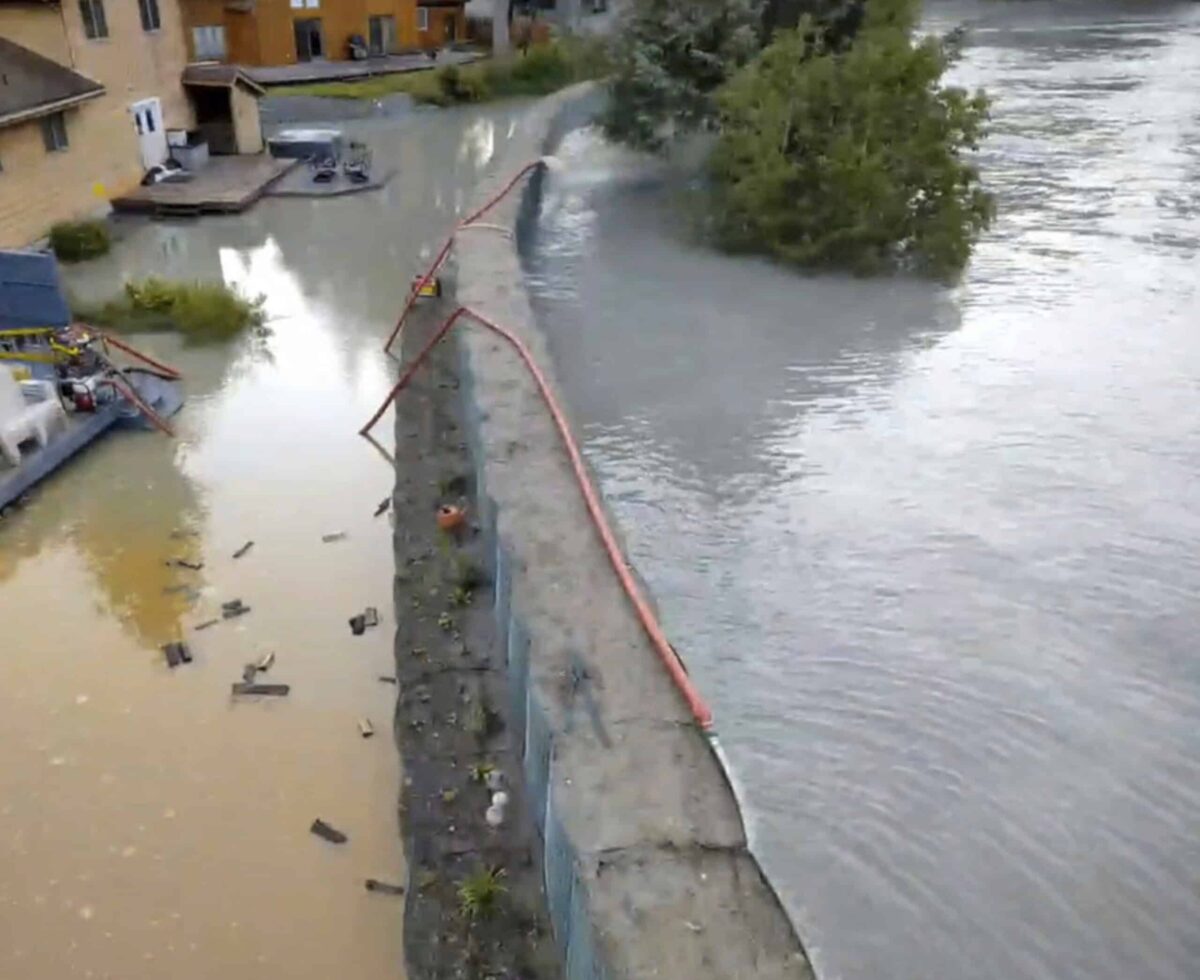
This drone image provided by the City and Borough of Juneau shows flooding from a release of water and snowmelt at Mendenhall Glacier covered some roads and threatened homes along the Mendenhall River in Juneau, Alaska on Wednesday, Aug. 13, 2025. (City and Borough of Juneau via AP)

NOTN- Juneau officials say repairing damaged flood barriers and planning for long-term protection along the Mendenhall River will be a top priority in the wake of August’s glacier outburst flood.

At a Monday night work session, the Assembly said that Phase One of the HESCO barrier project, temporary flood walls installed to protect neighborhoods, sustained an estimated $1 million in damage.

“We are still gathering a lot of information on what happened this year, so folks are looking at, how did the basin change? How did the river change? So we still need a lot of information from our scientists before we’re ready to make any decisions.” Said Christine Woll head of the Finance Committee, “Essentially, last night, we started talking abou are we going to extend the barriers? Last year, we prioritized protecting the areas that had flooded in 2024, but as we think about the potential for this flood to increase in size, we start thinking about, do we want to extend the barriers to essentially the rest of the river? What’s the cost for that going to be and how are we going to pay for it? It starts to get kind of increasingly more expensive for the other areas of the river just because they’re trickier, and those areas are less likely to flood. So it makes for interesting policy decisions about how much the city can afford.”

The Assembly discussed whether to build barriers to a 17-foot or 18-foot model, this carries implications for construction depth, bank armoring, and overall cost. Expanding protection both north and south of the current installation could require substantial outside funding.

Members also considered long-term options for the View Drive neighborhood, where flood protection is difficult to build.

“There’s lots of challenges, but one of them is definitely View Drive, which meets the criteria of being significantly impacted every year by this flood, and yet, you know, has engineering challenges to put HESCOs up” said Woll.

Deputy City Manager Robert Barr said a potential buyout program could be pursued, but cost is the leading question.

“There’s some unanswered questions there that we need to resolve. Specifically, how much is going to cost and how many of the folks in the View Drive area need to participate for that to be a program that the federal government will participate in.” Barr said.

Last nights meeting was a Work Session however the Assembly took one actionable step, voting unanimously to shift $5 million from the Capital Civic Center project into flood mitigation. That money will help repair existing HESCO barriers and support the next phases of protection planning.

“These are decisions we’re going to have to tackle in the coming months,” he said. “We’ll keep looking for federal and state help, but ultimately we have to prepare for what may come next summer.”

The August flood, caused by an outburst from Suicide Basin above the Mendenhall Glacier, inundated neighborhoods and left behind millions in property damage.

Categories
Featured Juneau News Juneau Local Ketchikan Local Music News Feeds Sitka Local

New Federal-State deal aims to speed Alaska’s resource projects

Screenshot of Wednesday’s press meeting in Anchorage

NOTN- Governor Mike Dunleavy hosted a press event yesterday with members of the U.S. House Committee on Natural Resources to ‘highlight Alaska’s resource development opportunities’, the 45-person committee deals with a variety of issues pertaining to public lands in the United States.

Committee Chairman Bruce Westerman, Congressman Nick Begich , and several other members are in the state reviewing current and future projects.

According to the Alaska Beacon, lawmakers visited Hecla Greens Creek Mine, which produces silver, gold, zinc and lead from a site west of Juneau. They overflew parts of the Tongass National Forest, the nation’s largest, and observed Suicide Basin in the Mendenhall Glacier.

The group joined the Governor at his Anchorage office to share their findings and discuss Alaska’s resource potential.

“you know, Alaska is a giant in the resource space.” Said Representative Begich at the meeting, “You know how you bind a giant? one little thread at a time. That’s what we’ve dealt with from the federal government, from not just my perspective, from the perspective of industry that has worked so hard for so many years to develop the resources of Alaska responsibly.”

Following the press conference, Dunleavy signed the nation’s first state-level FAST-41 memorandum of understanding with Emily Domenech, Executive Director of the Federal Permitting Improvement Steering Council.

They say agreement will streamline project reviews, enhance coordination between state and federal regulators, and increase transparency through the Federal Permitting Dashboard.

Dunleavy called the agreement a step toward “unlocking Alaska’s full potential,” saying it will help cut federal delays on resource and energy projects. 

Permitting Council Executive Director Emily Domenech added that Alaska is the first state to formally partner with the council, giving projects like energy, mining, transportation, and broadband a path to streamlined approval. 

The Alaska Department of Natural Resources will serve as the lead agency working with the council.

The U.S. Department of Agriculture also announced yesterday it will move forward with plans to rescind the Clinton-era “Roadless Rule,” which has restricted logging and development on millions of acres of national forest land for more than two decades.

The agency will open a public comment period on Friday through Sept. 19 before finalizing the repeal.

The rule, enacted in 2001, currently protects about 45 million acres of federal forestland, with Alaska’s Tongass National Forest among the most affected areas.

Categories
Featured Juneau News Juneau Local Ketchikan Local Music News Feeds Sitka Local

Five Southeast Alaska fishermen indicted in illegal halibut harvesting conspiracy

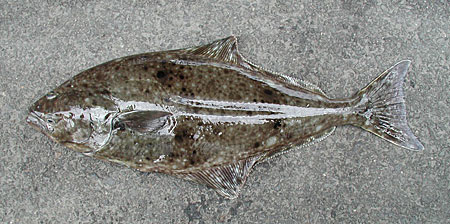
Pacific Halibut out of water, photo courtesy of Alaska Fish and Game

Five commercial fishermen from Alaska and Washington have been indicted by a federal grand jury, accused of conspiring to illegally harvest more than 10,000 pounds of halibut over a four-year period near Yakutat.

According to the U.S. Attorney’s Office, the fishermen, Jonathan Pavlik, 43, of Yakutat; Vincent Jacobson, 51, of Yakutat; Kyle Dierick, 36, of Yakutat; Michael Babic, 42, of Cordova; and Timothy Ross, 58, of Washington, each face federal charges under the Lacey Act, a law that prohibits illegal wildlife trafficking.

Prosecutors say the five men, all experienced commercial fishermen, took part in a conspiracy between 2019 and 2023 to violate halibut fishing rules tied to Individual Fishing Quotas, a system designed to sustainably manage halibut harvests in Alaskan waters.

The indictment alleges that Pavlik conspired separately with each of the other defendants to land halibut without being on board their vessels for the full duration of the fishing trips, a violation of federal regulations.

The indictment alleges that Pavlik, Jacobson, Dierick, Babic, and Ross intentionally falsely reported that the halibut caught was creditable to their respective Individual Fishing Quota (IFQ) permit balances, which is a permit any individual commercially fishing for halibut in the waters off Alaska is required to have. Pavlik and the three co-conspirators are responsible for over 10,700 pounds of illegally harvested halibut.

In a separate incident last fall, Pavlik allegedly sold over 9,600 pounds of illegally caught halibut that was fished aboard a vessel called the Bad Intentions and then transferred to another vessel, New Era, in an effort to conceal its origin before landing it for sale.

Pavlik faces 14 felony charges, including four counts of conspiracy, five counts of unlawful sale, and five counts of false labeling under the Lacey Act. Jacobson, Dierick, Babic, and Ross each face one count of conspiracy.

If convicted, each defendant could face up to five years in prison and fines of up to $250,000 per count. Court appearances are scheduled in the coming weeks before U.S. Magistrate Judge Matthew M. Scoble in Anchorage.

The investigation was led by NOAA Fisheries’ Office of Law Enforcement, Alaska Division, with support from the Alaska Wildlife Troopers. Assistant U.S. Attorneys Seth Brickey and Mac Caille Petursson are prosecuting the case.

An indictment is a formal accusation and not evidence of guilt. All defendants are presumed innocent unless proven otherwise in a court of law.

Categories
Featured Juneau News Juneau Local Ketchikan Local Music News Feeds Sitka Local

Federal indictments, multiple arrests made in Juneau drug trafficking case

Seven people have been indicted and arrested in connection with a large-scale drug trafficking operation that funneled methamphetamine into Juneau from California, following a months-long investigation by state and federal law enforcement agencies, according to a press release by the Juneau Police Department.

Beginning in October 2024, Task Force Officers from the Alaska State Troopers’ Statewide Drug Enforcement Unit (SDEU) and Southeast Alaska Cities Against Drugs (SEACAD), working with the U.S. Postal Inspection Service (USPIS), launched an investigation into a drug trafficking organization operating out of Juneau.

The initial investigation began when task force members obtained evidence that showed that 41-year-old Juneau residents Patrick Iler, and 39-year-old Juneau resident Erika Porter were involved with the distributing methamphetamine throughout Juneau. 46-year-old Juneau resident Timothy Miller was identified as a distributor of methamphetamine working with Iler and Porter in Juneau.

Over the course of the investigation, law enforcement seized a combined 1.32 kilograms of methamphetamine, with an estimated street value of $130,000.

Investigators traced one of the drug sources to Highland, California. In May 2025, Alaska-based task force officers traveled to California and arrested 67-year-old Kinarla Miles, who is accused of supplying methamphetamine to the Juneau network.

Three other Juneau residents, 51-year-old Jerome Larue, 38-year-old Travis Lind, and 60-year-old Edie Seslar, were also arrested as co-conspirators.

Authorities estimate the drug ring distributed approximately 7 kilograms of methamphetamine in total, with an approximate street value of $700,000.

In May 2025, the U.S. Attorney’s Office in Anchorage indicted Miles, Larue, Lind, and Seslar on charges of drug conspiracy, money laundering conspiracy, and possession with intent to distribute controlled substances.

In July 2025, additional indictments were filed against Miller, Porter, and Iler for drug conspiracy and possession with intent to distribute methamphetamine. Porter and Miller were arrested in Juneau on July 23 and 24 and booked into Lemon Creek Correctional Center on federal warrants.

The investigation is ongoing and involves coordination between the Alaska State Troopers, USPIS, and the U.S. Attorney’s Office in Anchorage.