Categories
Alaska News Featured Juneau News juneau Juneau Local Juneau Local Ketchikan Local News Feeds Sitka Local

After years of problems, Alaska plans to outsource payroll for 14,000 public employees

By: James Brooks, Alaska Beacon
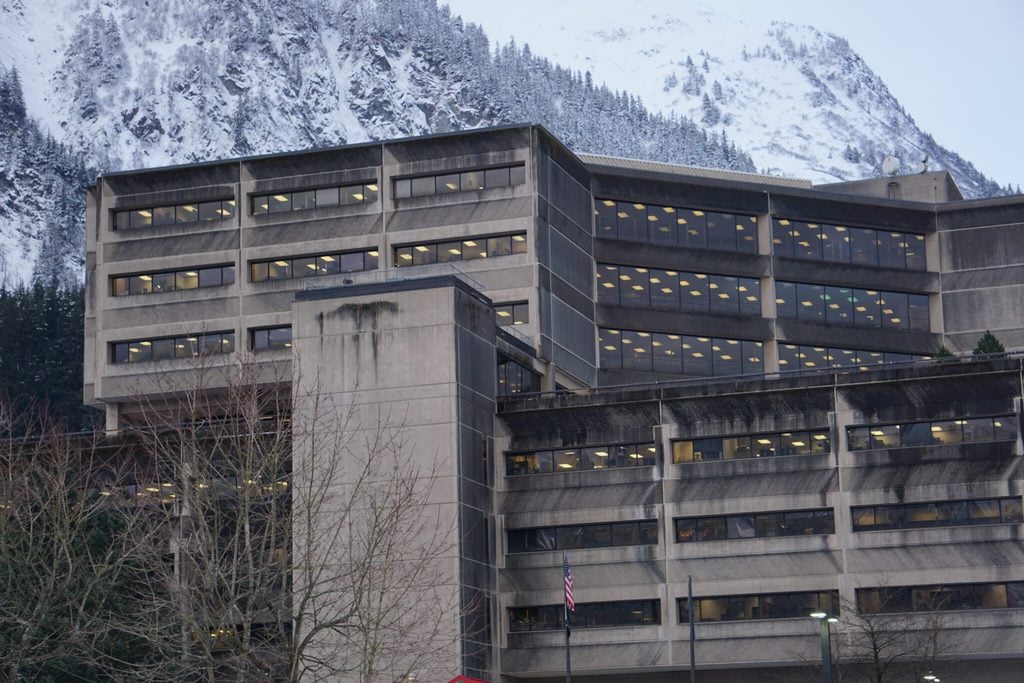
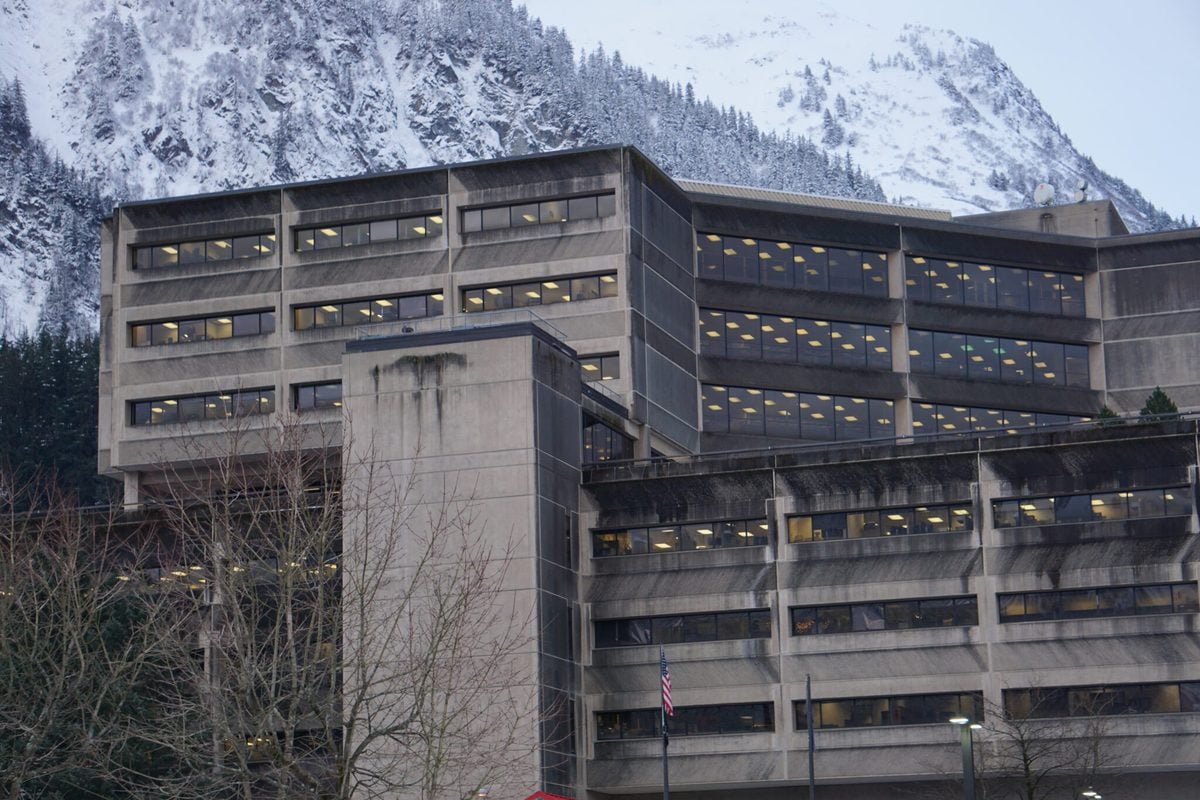
The Alaska State Office Building in Juneau, the state capital, is seen on Feb. 16, 2023. (Photo by Yereth Rosen/Alaska Beacon)

By the end of 2027, as many as 14,000 Alaska state workers could be paid by someone outside the state.

After years of trouble within the payroll department within the Alaska Department of Administration, the agency is planning to outsource the state’s public employee payroll to an outside company.

Proposals from interested companies were due Thursday, and in an internal letter, DOA Commissioner Paula Vrana said “it likely will be several weeks before a final decision is made.”

Vrana implied that if the proposals aren’t affordable or are otherwise unfavorable, the state will not proceed with outsourcing. 

“As of now, we are exploring what options are available to the state and what value may be realized by this approach,” she wrote. “The final decision will be based on the proposals we receive.”

Vrana wrote that the department will begin talking with unions “to explore the options for transfers/placements of employees displaced by outsourcing” and if DOA does choose to outsource, “we will also work with the vendor to include as many existing state payroll employees as possible in their staffing plan.”

The state’s payroll department has struggled with staffing issues for years, leading to times when employees missed paychecks or encountered other problems with their pay. 

In April, DOA published a request for information from companies that might be interested in providing “comprehensive payroll processing” for the state.

A three-page feasibility study dated Sept. 28 states that payroll work involves 78 employees in different agencies; all would be affected by outsourcing.

According to the state’s formal request for proposals, it is prepared to pay $4 million per year for a company to handle payroll. It currently spends about $10 million per year on payroll employees and functions, the feasibility study stated. 

According to the study, in fiscal year 2025, state employees filed more than 1,500 “notice of pay problem” reports, and reducing the number of problems could make employees in other departments happier.

The first outsourced paychecks would come to a handful of departments on April 1, 2027, and other departments would be transferred to the outsourced payroll company through the rest of the year.

The outsourcing company would have to use the state’s existing payroll software programs, the document states, and the work would have to be done in the United States, but the contractor could get a waiver from the state that would allow payroll work to be done in a foreign country.

“The goal is not to change the system used to process payroll but to make payroll processing more efficient and ensure the state’s existing systems and processes are supported by qualified contracted professionals who can maintain continuity, reduce errors, and uphold the state’s obligations to its employees and the public,” the document states.

DOA provided a copy of the RFP documents to the Beacon this week; they were not previously published on the state’s public notice system, and the two public employee unions whose members would be affected by the outsourcing said they also had not previously seen the documents.

The Beacon asked DOA for an interview with Vrana or someone else involved with the outsourcing decision but was turned down.

In response to a written question asking why the department is planning to outsource, a spokesperson said by email: “Ensuring that employees are paid correctly and on time is the essential duty of payroll. Challenges stemming from high turnover and persistent vacancies within the Department have resulted in pay problems for some state employees. The administration has determined that outsourcing payroll may both provide significant recurring cost-savings to the State and improve services to its employees. However, no final decision on outsourcing payroll will be made until responses to the RFP issued earlier are evaluated.”

Jeff Kasper is the business manager of the Alaska Public Employees Association, which represents payroll workers. He’s not a fan of outsourcing. 

“It usually costs more and doesn’t provide the efficiencies that you’re looking for. When you’re talking about public services, you’re essentially having the public pay more for something that’s probably not as good,” he said. 

Kasper isn’t convinced that the Department of Administration has done enough to fix the problems that have deterred Alaskans from working for the payroll department.

“If people aren’t applying for jobs and accepting jobs, it’s usually because it doesn’t pay enough or it doesn’t provide benefits or it’s bad working conditions. This one could be all three, and I don’t think any of them have been addressed,” he said.

The state’s own feasibility study acknowledged those problems.

“Payroll processing occurs on a bi-weekly basis and does not have down time. This work environment and the entry level pay range are likely reasons for low retention and high staff turnover,” the study concluded.

As of last month, the study said, 58% of all payroll positions in the state are vacant, and it can take as long as a year of training before a new worker is capable of working independently.

MaryAnn Ganacias is the interim executive director of the Alaska State Employees Association, whose members are paid by the payroll department. 

“Alaskans deserve to know what the problem is with the state and what they’re trying to solve by privatizing payroll,” she said. 

Ganacias said state money spent outside Alaska is money that doesn’t benefit Alaskans.

“We need to do better investing in our own employees here in Alaska, and not outsourcing where the money actually goes,” she said.

Kasper said he doesn’t think the timeline described in the state’s RFP follows collective bargaining agreements or is realistic.

“The union’s not just gonna sit down and let this happen,” he said. “We don’t think the state has been following the process that’s in the contract.”

Kasper said his union’s contract with the state requires a 30-day consultation period before any outsourcing takes place, and even though the state’s RFP calls for a contract in November, he doesn’t think one is likely before Gov. Mike Dunleavy leaves office in the first week of December. 

Kate Sheehan, policy adviser for the Department of Administration, said by email in response to Kasper’s comments, “The State engaged the Confidential Employees Association (CEA) on September 25th, and we have entered into the 30-day period for the union to submit any alternate plans to be considered during this process. DOA does not intend to contract out prior to the Union’s response and analysis of their input.”

Categories
Alaska News Featured Juneau News juneau Juneau Local Juneau Local Ketchikan Local News Feeds Sitka Local

Investigation closed after human remains discovered in freezer

NOTN- A man whose remains were found inside a chest freezer this summer died of natural causes, according to Juneau police.

Below is the full statement released by JPD on Friday;

The Juneau Police Department has completed its investigation into human remains discovered inside a freezer at a residence in Switzer Village. The deceased was positively identified as Ross Anthony Pasquan, a Juneau resident who would have been 74 years old at the time of the discovery of his remains.

The State Medical Examiner’s Office determined that Pasquan died of natural causes related to severe cardiovascular disease. Investigators did not establish an exact date of his death or how long his remains had been inside the freezer.

The investigation found that Pasquan’s wife, Sheryl Ann McDonald-Pasquan, concealed his death and continued applying for and receiving benefits in his name. McDonald-Pasquan died from natural causes on July 14, 2025, approximately one year before her husband’s remains were discovered.

Discovery and Investigation

On July 19, 2026, at approximately 7:59 p.m., an individual came to JPD to report a possible body inside a chest freezer at McDonald-Pasquan’s property in the 6500 block of Glacier Highway.

The individual had been cleaning out the property following McDonald-Pasquan’s death. Inside a storage shed, they discovered a locked freezer. After locating a key and opening it, they observed a tarp-wrapped object that appeared to contain human remains. They closed the freezer and went directly to JPD.

Responding officers and investigators confirmed the presence of human remains, which were transported to the State Medical Examiner’s Office in Anchorage. On July 25, 2026, the remains were positively identified as Pasquan.

Witness interviews indicated that Pasquan had a history of significant health problems and that McDonald-Pasquan served as his primary caregiver. Witnesses said she explained his absence by telling them he had been moved to a care facility outside Juneau.

Based on the freezer being manufactured in 2018 and McDonald-Pasquan’s death in July 2025, investigators believe Pasquan’s remains were placed in the freezer between those dates. Investigators were not able to establish a reliable timeline and could not determine when Pasquan died or precisely when his remains were placed in the freezer.

Pasquan had not been reported missing before the discovery of his remains.

Benefits and Investigation Findings

Witness interviews and a review of benefit records supported the conclusion that McDonald-Pasquan concealed her husband’s death while continuing to apply for and receive benefits in his name, including Alaska Permanent Fund Dividends, Social Security benefits, and retirement benefits. Investigators also learned that a retirement benefit provider had not been notified of his death and was still depositing monthly payments into Pasquan’s account up until July 2026.

Investigators found no evidence that another person caused Pasquan’s death or assisted McDonald-Pasquan in concealing his remains or collecting his benefits.

The death investigation is closed following the medical examiner’s determination that Pasquan died of natural causes. The investigation into McDonald-Pasquan’s collection of benefits after his death is also closed because she is deceased.

Categories
Alaska News Featured Juneau News juneau Juneau Local Juneau Local Ketchikan Local News Feeds Sitka Local

A second release of Suicide Basin is occuring, crest likely tomorrow

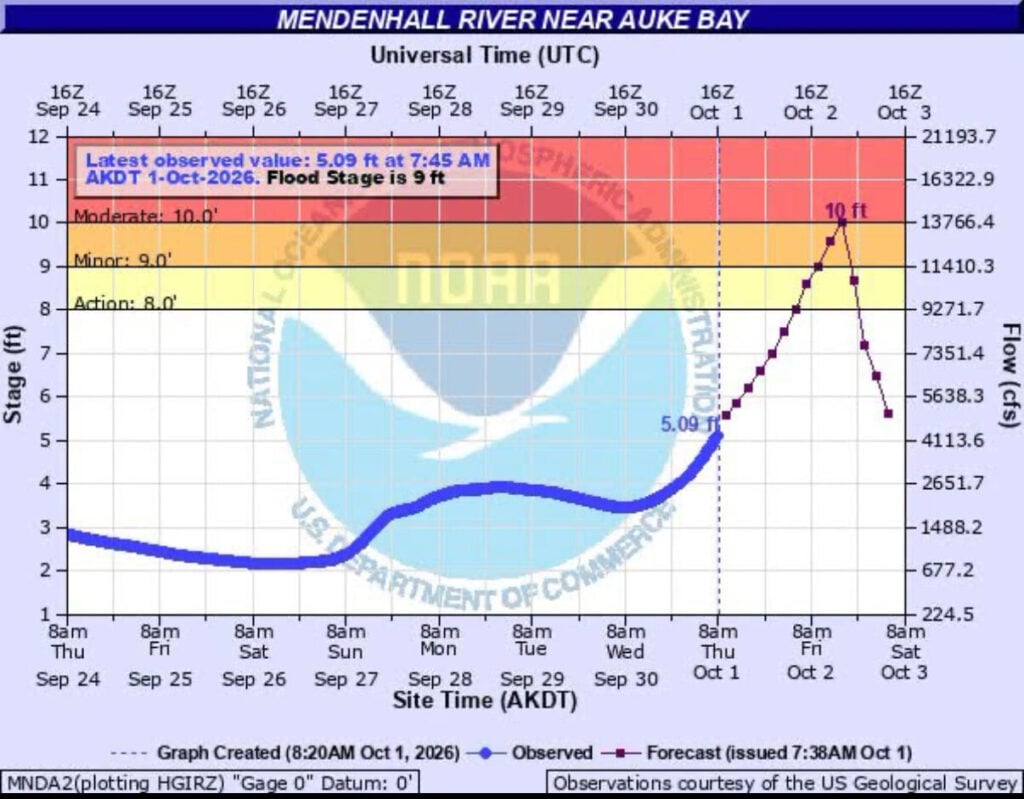
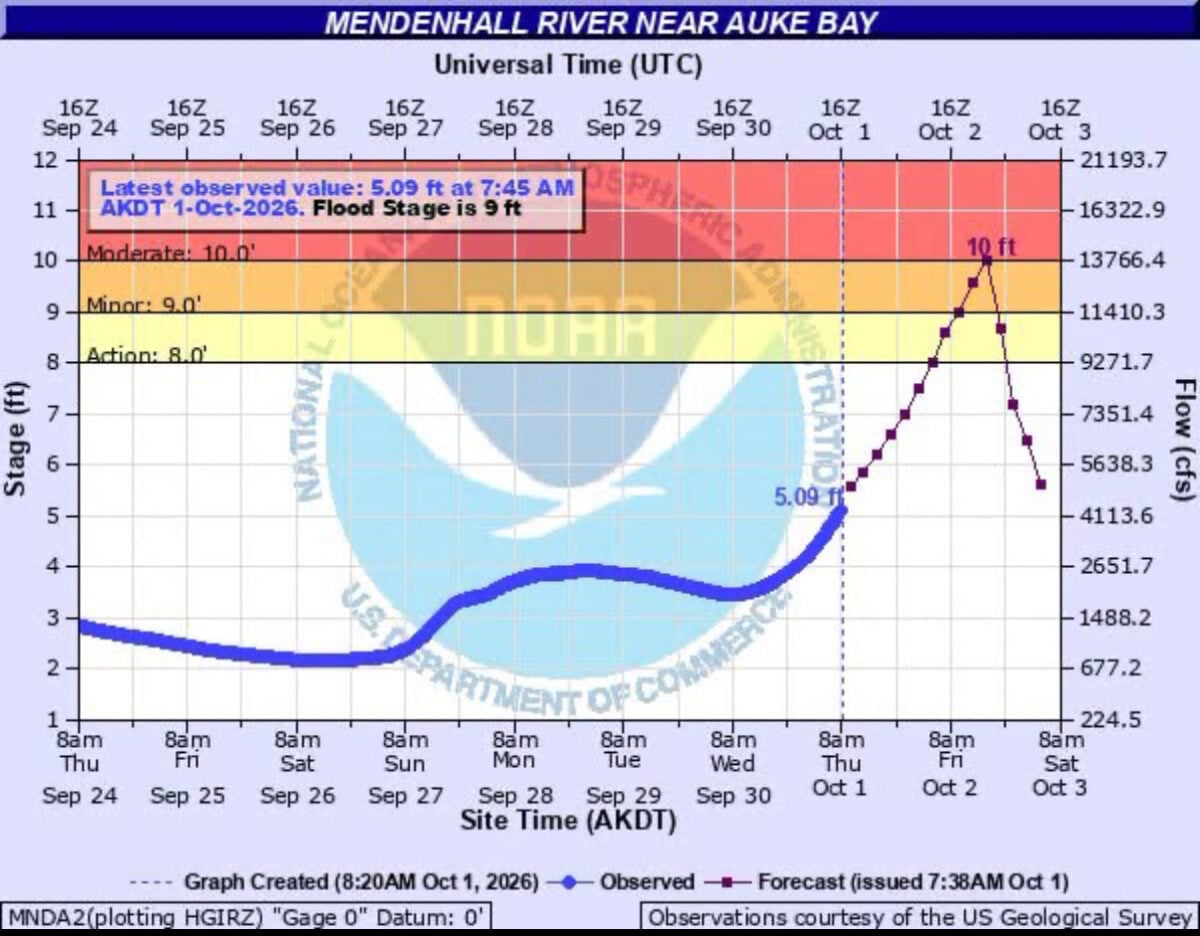
NOTN- A secondary release of Suicide Basin is occurring.

The National Weather Service Juneau’s current forecast indicates Mendenhall Lake cresting near 9.8 to 10.3 feet sometime between 2 pm and 6 pm on Friday, October 2.

Ten feet is considered moderate flood stage. Flooding should be expected around the Mendenhall Campground, Skaters Cabin Road, some flooding in the View Drive area, between 1 and 3 feet.

The Weather Service says to expect closures of pedestrian paths near the Mendenhall River.

Categories
Alaska News Featured Juneau News juneau Juneau Local Juneau Local Ketchikan Local News Feeds Sitka Local

Trump touts Korea as source of funding for long-desired Alaska gas project

Sen. Dan Sullivan, R-Alaska, speaks about Alaska natural gas at an event Wednesday in the White House. President Donald Trump, seated, announced what he said was a deal with the Republic of Korea to invest in the Alaska liquefied natural gas project. Korean officials, however, said the government has not committed to invest in the project but only to continue to examine it. Behind Trump and Sullivan are U.S. Commerce Secretary Howard Lutnick, U.S. Interior Secretary Doug Burgum and U.S. Energy Secretary Chris Wright. (Screenshot from White House video)

By: Yereth Rosen, Alaska Beacon

President Donald Trump on Wednesday announced that he had secured a deal with the Republic of Korea to spend $54 billion on a long-desired Alaska natural gas pipeline project, part of a $200 billion package of investments that include a major power plant in Texas and several nuclear power plants.

South Korea’s trade minister quickly shot down that claim, saying the government is simply reviewing the Alaska project and will proceed with investment “only if its commercial viability is established,” the Korea JoongAng Daily newspaper reported.

Trump spoke in glowing terms of an Alaska liquefied natural gas project as a sure accomplishment — even though half a century of efforts by state and federal officials and the energy industry have failed to make the project a reality, and even though Korean officials have disputed his claim that they are committed to investing in it.

“This alone will be one of the largest energy projects in American history and a gigantic win for the people of Alaska,” Trump said at the event, held in the White House’s Oval Office. “It will create up to 12,000 construction jobs immediately and 1,000 operational jobs. It’ll also save Alaska households up to $1,500, maybe even as much as $2,200 a year in energy costs. It’s amazing.”GET THE MORNING HEADLINES.SUBSCRIBE

The Alaska LNG investment is part of a “colossal package of investments” stemming from his trade and tariff policies that make “a major step toward securing our critical energy supply chain, ensuring American energy dominance, and making our partnership with South Korea and the entire Pacific region stronger than ever before,” Trump said.

South Korea’s industry, trade and resources minister quickly shot down Trump’s claim about securing $54 billion for the Alaska project. Minister Kim Jung-kwan said the Korean government is simply reviewing the Alaska project and will proceed with investment “only if its commercial viability is established,” the Korea JoongAng Daily newspaper reported.

Trump made the announcement while flanked by a crowd of men that included three cabinet members, Republican Gov. Mike Dunleavy and U.S. Sen. Dan Sulivan, R-Alaska, and U.S. Rep. Nick Begich III, R-Alaska. Also in the group was Brendan Duval, chief executive of the Glenfarne Group, the investment company leading the current proposal for a natural gas project in Alaska.

The current proposal is to ship gas from the North Slope through a yet-to-be-built 807-mile pipeline from the North Slope to tidewater at Southcentral Alaska’s Cook Inlet, where it would be liquefied and put on tankers for shipment to Asian markets.

Alaska’s North Slope holds vast amounts of natural gas along with its oil resources. But geographic distance and costs have kept that natural gas stranded from markets, despite numerous schemes proposed over the years to build different types of pipeline systems to ship the product to either Asia or to the Lower 48.

The natural gas pipeline has been a perennial issue in Alaska elections, including this year’s U.S. Senate race, which is hotly contested. The energy investments Trump announced also affect Texas, another state where there is a competitive Senate race.

Trump and others who spoke at the ceremony spent much of their time praising Sullivan, whom he called “a great senator who is totally responsible for this pipeline,” and urging that he be reelected.

Sullivan is facing a stiff challenge from former Democratic U.S. Rep. Mary Peltola, who led in votes in the primary election. But Trump spent much of his time at Wednesday’s Oval Office event talking about retired Petersburg teacher Dan J. Sullivan, the third U.S. Senate candidate on the Alaska ballot whose candidacy has been challenged by state election officials.

“That Dan Sullivan is a disgraceful fraud,” Trump said.

“It’s so corrupt. The Democrats are corrupt. . . When they put up a man with his exact name, they picked him out of a hat. They said, ‘Anybody named Dan Sullivan in Alaska?”

Trump has said he is planning to come to Alaska to campaign for the senator and against the Petersburg candidate.

Sullivan, in turn, praised Trump and also described the natural gas pipeline projects as if it is a sure thing.

“Mr. President, I would say this is the most important project in our state by far,” he said. “This is the project that is going to keep our kids and grandkids in Alaska, with a great, bright future.  This is the project that our state has been working on to try to get done for almost a half century.”

Positive reaction, and also skepticism

Peltola, whom Trump did not mention but who finished 8.1 percentage points ahead of Sen. Sullivan in Alaska’s Aug. 18 open primary, issued a statement saying she welcomes Korean investment in the gas project.

She cited “bipartisan work” she did in the state legislature and Congress and said she will continue to do that work if elected to the Senate. “Today’s announcement is great news for Alaska, and I appreciate President Trump’s work to unleash Alaska energy. I look forward to continuing this bipartisan work with the President as Alaska’s next United States Senator,” she said in the statement.

Also issuing a positive statement was former State Rep. Jonathan Kreiss-Tomkins, a Democrat running for governor.

“Alaska should welcome foreign investment that helps responsibly develop our resources, creates good-paying jobs, and builds new markets for Alaska’s natural gas,” Kreiss-Tomkins said in the statement, in which he describes himself as “an enthusiastic champion” of the gas project. “I’m thrilled to see President Trump’s support, and interest from South Korea, for moving this project forward,” he said.

However, the statements made by Trump, Sullivan and others on Wednesday differ vastly from the position articulated by the Republic of Korea government, according to news reports in that nation.

A map shows various Alaska natural gas pipeline routes proposed as of 2011. (Map from the Congressional Research Service publication, "The Alaska Natural Gas Pipeline: Background, Status, and Issues for Congress," by Paul W. Parfomak, Specialist in Energy and Infrastructure Policy, June 9, 2011)
A map shows various Alaska natural gas pipeline routes proposed as of 2011. (Map from the Congressional Research Service publication, “The Alaska Natural Gas Pipeline: Background, Status, and Issues for Congress,” by Paul W. Parfomak, Specialist in Energy and Infrastructure Policy,
June 9, 2011)

The Korean government is not committing to spending any money on Alaska LNG, a project it considers to be a matter for further consultation, according to Korean publications. The actual commitment to Alaska LNG, as described in a memorandum of understanding, is to ‘explore the possibility of investment’ in the project, “while stopping short of making any binding financial commitment,” according to Korean reports.

Additionally, a law in Korea enacted earlier this year limits government investment in the U.S. to $20 billion a year.

One Alaska lawmaker pointed to the information from Korea as a reason to be skeptical about Trump’s announcement.

State Sen. Scott Kawasaki, D-Fairbanks, noted that Korea’s president had not backed Trump’s account.

Rather, Trump’s announcement seemed like one in a series of “boisterous” statements about things that people want, with details not provided, Kawasaki said.

“I think that, again, this is another bold pronouncement from a president who’s been known for making bold pronouncements but not following through,” he said.

It reminded him of Trump’s promise to build a wall at the Mexico border and make the Mexican government pay for it, Kawasaki said. “That never happened,” he said.

And he cautioned Alaskans against raising their expectations based on Trump’s announcement.

“I don’t want to tell the public and my voters that are just struggling, you know, trying to make ends meet that, ‘Don’t worry, the pipeline’s coming tomorrow; don’t worry, your gas problems are going to be solved overnight,’ because that’s just not going to happen,” he said.

Trump, in addition to making claims that are at odds with the Korean government’s public positions, made other questionable statements.

“For five decades, politicians have talked about the Alaska pipeline. I’ve been hearing about it from the time I’m a little boy: ‘The Alaska pipeline is going to be built someday.’ I was always fascinated by it,” he said.

It was unclear whether he was talking about the existing Trans Alaska Pipeline System, which has been shipping North Slope crude oil from Prudhoe Bay to Valdez since 1977, or the proposed gasline project. Discussions about either pipeline began after oil was discovered at Prudhoe Bay in 1968, when Trump, who is now 80, was 21.

Trump also claimed that he won the presidential vote in Alaska by 22 percentage points. His margin of victory in Alaska in 2024 was 13.1 percentage points.

Long history of international efforts

Wednesday’s announcement about Korean investment comes as part of a decades-long history of highly touted international agreements aimed at developing North Slope natural gas.

Those date back to 1977, when the U.S. and Canada struck a deal to develop an overland system that was to deliver natural gas to the Lower 48.

Other agreements were promoted in the 1980s and 1990s. At the time Yukon Pacific Corp., which ultimately held federal and state permits to build an LNG export project, was actively negotiating with would-be Asian partners and buyers. During the time, Yukon Pacific announced agreements with potential partners in Korea and Taiwan.

There were bold pronouncements about exports made during that era that were similar to those made in the Oval Office on Wednesday.

“ALASKA GAS IS POISED FOR EXPORT TO ASIANS,” said a headline in the Jan. 11, 1988, issue of the Journal of Commerce. The story referred to efforts by President Ronald Reagan and Japanese Prime Minister Noboru Takeshita to try to secure that Asian country as a partner in the Alaska LNG project.

Other international negotiations and agreements followed.

In 2008, for example, the China Petroleum and Chemical Corporation, also known as Sinopec, submitted a formal proposal to the administration of Gov. Sarah Palin to build an LNG project with a pipeline running along the existing oil pipeline’s route from the North Slope to the port of Valdez.

Nine years later, the Alaska Gasline Development Corporation — which became the main sponsor of the project — and the state announced a “Joint Development Agreement” with Sinopec and other would-be partners from China. Along with Sinopec, parties to the agreement were CIC Capital Corporation and the Bank of China. It was “the most significant step forward for Alaska LNG,” AGDC said at the time.

The signing of that agreement was witnessed by Trump in his first administration during a trip to China, according to AGDC’s account.

In February of 2025, Trump announced a “joint venture” with Japan on Alaska LNG in terms similar to those he used on Wednesday to describe what he said was a commitment for Korean investment.

At the time, Sullivan praised Trump in terms similar to those he used on Wednesday.

 “With his leadership, we will get the Alaska LNG Project built, which will create thousands of good-paying jobs, reinvigorate our American steel industry, significantly reduce our trade deficit in Asia, and deliver clean-burning Alaska gas for Americans, our military, and our allies in the Asia-Pacific, like Japan,” Sullivan said in a statement then.

Correction: Dan J. Sullivan is the U.S. Senate candidate from Petersburg.

Categories
Alaska News Featured Juneau News juneau Juneau Local Juneau Local Ketchikan Local News Feeds Sitka Local

Misleading Google AI instructions cause Kodiak woman to be cited for illegal snipe hunt

By: James Brooks, Alaska Beacon

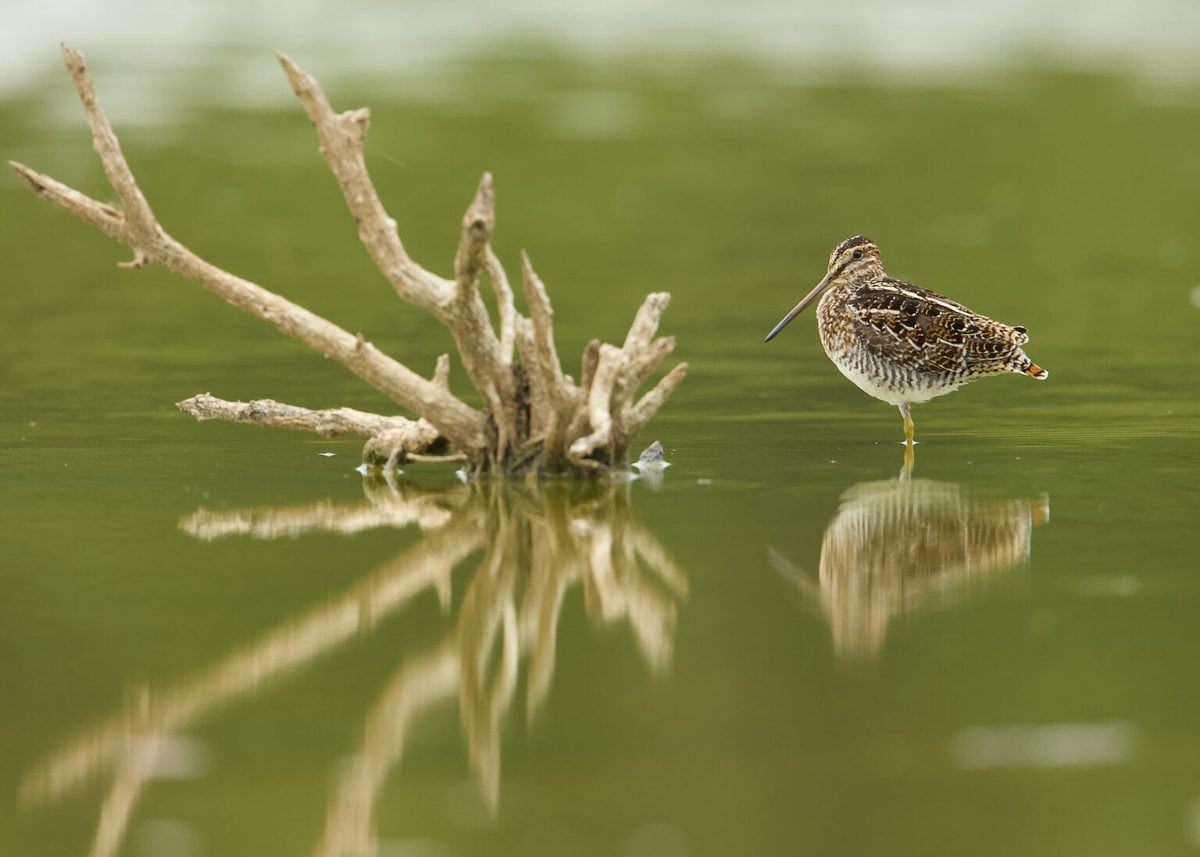
A Wilson’s Snipe is seen in an undated photo published by the U.S. Fish and Wildlife Service. (Larry Pace photo/U.S. Fish and Wildlife Service)

Incorrect information provided by a Google AI overview caused a Kodiak woman to hunt snipe illegally on Sept. 5, according to a citation filed this week at the Kodiak district court.

Writing in an affidavit attached to the citation, Alaska Wildlife Trooper Alex Wick said Weaver called troopers to self-report the violation.

“Christina stated that she Googled ‘Snipe season’ on her phone and that, according to Google, snipe season began on September 1st,” he wrote.

Based on that information, she hunted three snipe but became suspicious after learning that duck season didn’t open until Oct. 8. 

Snipe are small game birds common in Alaska, Canada and the northern Lower 48.

“After conducting her own research, she learned that snipes are not legal to take under the general season until October 8th. Christina then contacted dispatch to turn herself in,” Wick wrote. 

He said he performed a Google search identical to Weaver’s and received identical incorrect information.

Google did not respond to an email seeking comment on the incorrect information provided by its software. The platform provides an immediate artificial intelligence generated summary of search findings. 

“I feel terrible, and I have a lot of shame with it. Obviously, that’s why I immediately self-reported once I got home and dived into the regs,” she said by phone on Friday. “It’s incredibly embarrassing.”

Austin McDaniel, a spokesman for the Alaska Department of Public Safety, said the agency doesn’t keep track of cases involving false information provided by AI software. 

“This is the first time that I think we have seen AI cited,” he said. 

The one source of truth when it comes to hunts is the Alaska Department of Fish and Game’s regulations and emergency orders, McDaniel said.

“I expect we’ll see more of this type of thing in the future,” he said of AI being at fault. 

McDaniel said Weaver acted completely correctly once she learned about the AI-caused mistake. Self-reported hunting violations are punished much less severely than ones uncovered by troopers.

“The potential consequences for self-turning in versus being caught can be pretty dramatic,” he said.

Weaver pleaded no contest to the citation on Friday and was fined $150. 

Categories
Alaska News Featured Juneau News juneau Juneau Local Juneau Local News Feeds

Juneau’s Municipal Election is just over a week away, here’s the info you need to know

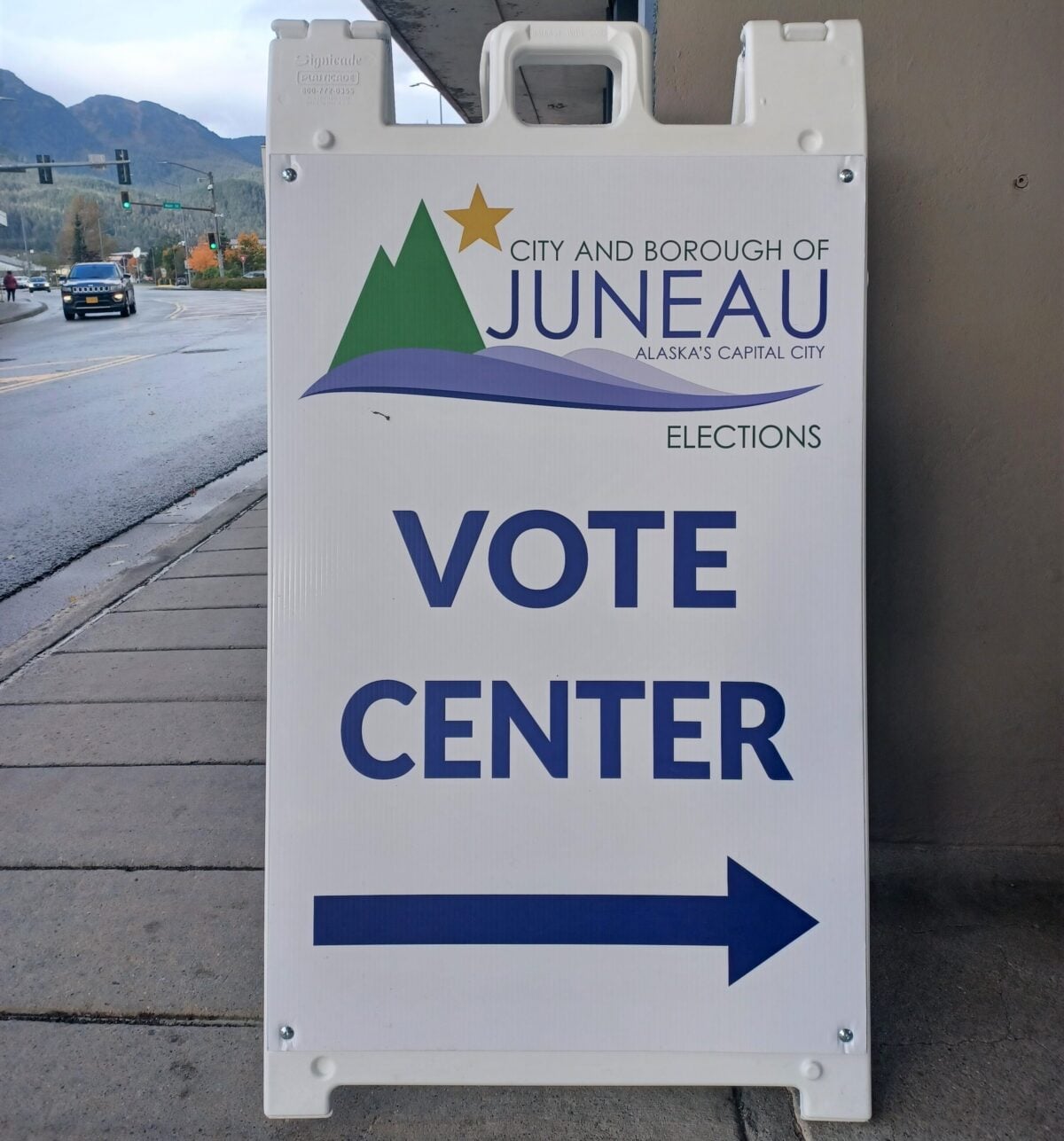
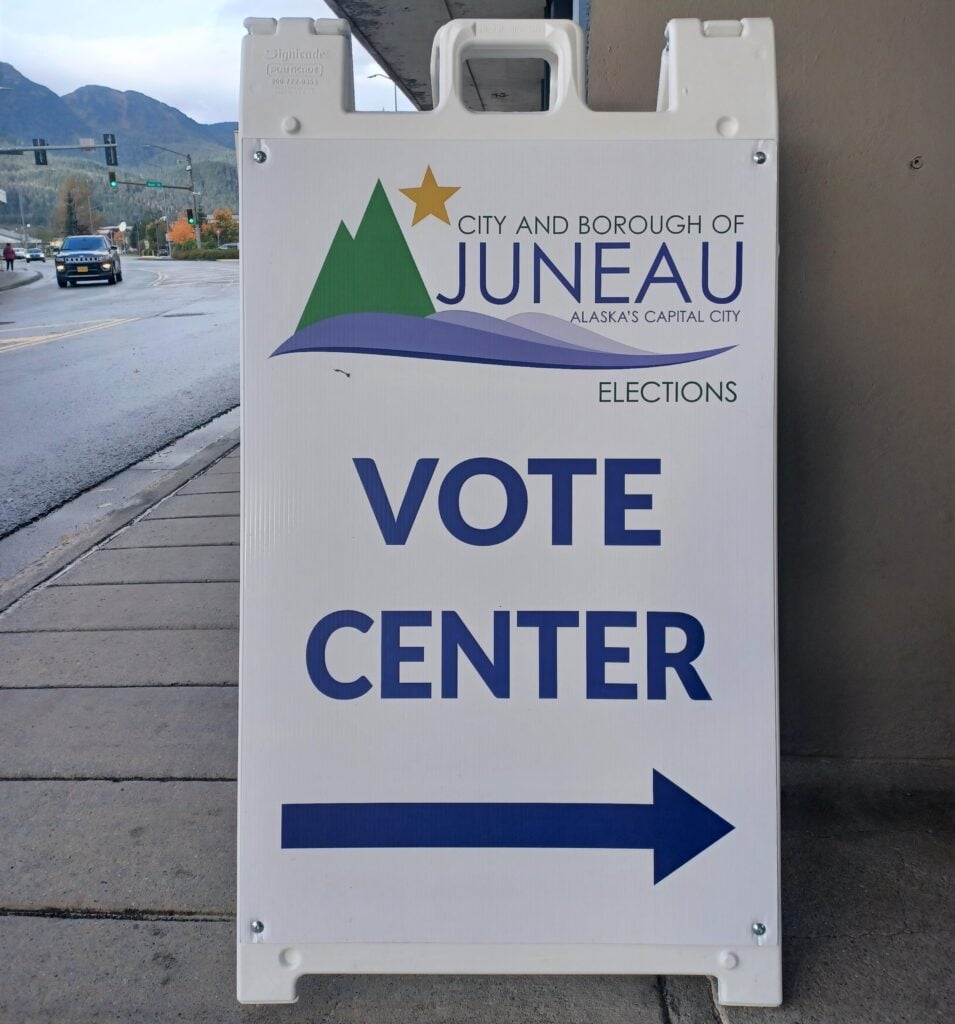
Vote center photo, courtesy of CBJ.

NOTN- Ballots for Juneau’s municipal election have been mailed to voters, if you haven’t already received them.

Voters can return ballots by mail or use one of five drop boxes: at the Statter Harbor boat launch parking lot, outside the Mendenhall Valley Public Library, outside AEL&P in Lemon Creek, outside the Douglas Public Library and outside City Hall.

Mail-in ballots must be postmarked by Oct. 6. Deputy Municipal Clerk Andy Hirsch said, and she recommended that voters mailing ballots close to the deadline ask the post office to date-stamp them in person.

Voters who did not receive a ballot, or who prefer to vote in person, can do so at vote centers at the Mendenhall Valley Public Library or City Hall. The library is open Monday through Thursday from 10 a.m. to 6 p.m. and Friday and Saturday from noon to 5 p.m. City Hall is open weekdays from 8 a.m. to 4:30 p.m. Both locations will be open from 7 a.m. to 8 p.m. on Election Day.

“If for any reason you didn’t receive a ballot, you can go vote in person. In fact, you can vote in person for any reason at all, even if you did receive your ballot.” Hirsch said.

In-person voters will also use a by-mail ballot, Hirsch said, allowing election officials to process ballots consistently and help ensure each person votes only once.

This year’s ballot includes up to three Assembly seats, an area-wide seat and seats for districts one and two, as well as two school board seats and three propositions. Juneau’s voter turnout has generally been around 30%, Hirsch said.

“Every year I’m like pie in the sky, we’re gonna have the biggest voter turnout ever because that’s what I want to happen. Historically, we’re generally in the 30 percent. Voter turnout…There’s a couple of different things going on, but one is how interesting the ballot is, and we have a really interesting ballot this year.”

Want to know more about what’s on the ballot? Here is CBJ’s voter info collected for ease;

ASSEMBLY CANDIDATES

Assembly Areawide– One open seat (3-year term)

Paul Roy Kelly [Official Candidate Statement]
Mailing address: P.O. Box 20981, Juneau, AK 99802
Physical address: 4519 Hillcrest Ave, Juneau, AK 99801
Phone: 907-240-3447
Email: info@paul4juneau.com
Website: http://paul4juneau.com 

Brad Sapp [Official Candidate Statement]
Mailing address: 8172 Thunder St, Juneau, AK 99801
Phone: 907-723-2610
Email: bradsapp777@outlook.com

James J. McCants [Official Candidate Statement]
Mailing address: 8585 Old Dairy Road, Ste 208, Juneau, AK 99801
Phone: 907-713-5154
Email: seriously@youshould.vote

Assembly District 1 – One open seat (3-year term)

Mila Cosgrove [Official Candidate Statement]
Mailing address: P.O. Box 20185, Juneau, AK 99801
Phone: 907-321-3614
Email: mila@cosgroveforassembly.com
Website: https://cosgroveforassembly.com/

Assembly District 2 – One open seat (3-year term)

Karla Hart [Official Candidate Statement]
Mailing address: 4948 Wren Drive, Juneau, AK 99801
Phone: 907-957-6723
Email: karlajhart@gmail.com
Website: hart4juneau.com

Joyce M. Niven [Official Candidate Statement]
Mailing address: 8111 Circle Dr, Juneau, AK 99801
Phone: 907-321-9016
Email: joycenivenforassembly@gmail.com
Website: www.joyceforjuneau.com

Malachi Thorington [Official Candidate Statement]
Mailing address: 9350 View Drive, Juneau, AK 99801
Phone: 907-723-7587
Email: malachijuneau@gmail.com
Website: www.malachiforjuneau.com

David Lee Morris [Official Candidate Statement]
Mailing address: P.O. Box 32593, Juneau, AK 99801
Phone: 907-209-4023
Email: glacierbear1@me.com

BOARD OF EDUCATION CANDIDATES

Board of Education – Two open seats (3-year terms)

Britteny Cioni-Haywood [Official Candidate Statement]
Mailing address: 9343 Betty Ct, Juneau, AK 99801
Phone: 907-957-3171
Email: bchforschoolboard@gmail.com

David Noon [Official Candidate Statement]
Mailing address: 325 W. 9th St, Juneau, AK 99801
Phone: 907-723-7730
Email: dhnoon1970@gmail.com

Christine Johnson [Official Candidate Statement]
Mailing address: 4124 Columbia Blvd, Juneau, AK 99801
Phone: 928-814-3622
Email: cjforjuneauschoolboard@gmail.com
Website: cjforschoolboard.com

A sample ballot can be found here.

Categories
Alaska News Featured Juneau News juneau Juneau Local Juneau Local Ketchikan Local News Feeds Sitka Local

Alaska childcare advocates press for major state investment, policy changes to fill growing gaps

By: Corinne Smith, Alaska Beacon

Preschoolers play in the snowmelt at Hillcrest Children’s Center in Anchorage on April 18, 2024. (Photo by Claire Stremple/Alaska Beacon)

Alaska childcare providers, families and employers are under intense strain with the lack of childcare availability and funding, according to advocates. They are calling for major state investment in the childcare industry and seeking policy changes under the next governor and Alaska State Legislature.

Leaders with several non-profit groups held an online webinar Wednesday focused on barriers and potential solutions to what they called “Alaska’s childcare desert,” which included advocates with the Alaska Children’s Trust, Southeast Childhood Collective and thread, a statewide resource and referral organization. 

Advocates described a patchwork funding system of federal, state and some local municipal grants for childcare providers, which has resulted in a lack of childcare spaces to meet demand, long waitlists, high costs for families and a lack of qualified childcare providers, who also work for low pay. 

“It’s a battle right now,” said Candice Vialpando, marketing and communications director with thread. “But every little bit helps, and every bucket of money that we are getting, we’re just putting out into the field to try and help, and keep programs open.”

Alaska has seen a wave of childcare centers close in recent years. Last year, one of Anchorage’s largest childcare facilities, Bright Beginnings Learning Center, closed due to rising costs and a shortage of workers, displacing 125 children and 35 staff. Since 2019, 25% of childcare facilities have closed, according to thread. 

The organization estimates 50% of Alaskan families cannot fully participate in the workforce because they lack access to childcare. They estimate the average cost Alaska parents pay is nearly $14,000 per year per child.  

Advocates are pushing legislators and state political candidates to make childcare a priority in this election. 

“Alaska is a childcare desert,” said Blue Shibler, executive director of the Southeast Childhood Collective, which provides resource, funding and workforce development support throughout Southeast Alaska. “The good news is, advocates like us on here have been working for years on this issue, and there is quite a bit of framework systems development that could turn all of that around pretty quickly.” 

She said that the state could make big changes quickly if a new executive branch and motivated legislators were open to their policy and funding ideas. 

Shibler said childcare providers are struggling to recruit childcare workers and pay liveable wages, which can result in long wait lists for care. 

“Childcare providers cannot charge families enough money to pay competitive wages in this labor market, and so they’re limited at how many kids they can take based on that,” she said. “So we’re working to improve that.”

This year, the Legislature approved $6.4 million to help boost pay and retain childcare workers, but Gov. Mike Dunleavy vetoed it. 

“That really hurt us,” Vialpando said.

Dunleavy also vetoed Legislature-approved increases of $355,000 to the family support program Parents as Teachers, a $3.7 million increase for Head Start programs and a $3 million increase for infant learning programs to support children with developmental delays or disabilities.  

A spokesperson for the Dunleavy administration, Jeff Turner, said by email Thursday that “substantial funding was provided,” for childcare. He pointed to the governor’s approvals in this year’s budget for $13 million in Head Start grants, $475,000 for Parents as Teachers and $12.3 million for early intervention and infant learning programs.

“Governor Dunleavy also proposed legislation for funding and opportunities to expand workforce training, unfortunately the legislature chose not to pass his legislation,” Turner said, referring to a bill that would have expanded the unemployment insurance trust fund.

State assistance grants, licensing and economic impacts

For state childcare assistance grants that are paid out to providers and families, Vialpando described issues with delayed payments, which can cause children to lose their spots. 

Vialpando said one issue is if families miss renewal dates, they have to reapply for assistance all over again. “It’s not just a quick renewal. It’s like a whole new application period, which takes a very long time,” she said. 

“And during that application period, they’re not getting assistance, so their childcare provider is not getting paid, so they don’t have care for their child during that time. And it’s like, does this person care for the kid without getting paid? Does the child stay home?” she said. “It’s a really bad effect that is happening, so I think that needs to be addressed: prompt payment.”

Officials with the Alaska Department of Health did not respond to a request for comment on state assistance delays on Thursday. 

Nonprofit groups are working to boost childcare worker support and professional development opportunities, including apprenticeship programs, and helping new providers with licensing and regulatory standards for new childcare programs. 

Shibler and others said providers continue to struggle with licensing issues and regulatory hurdles, and the Department of Health could do more to ease the strain.

“A lot of the licensing regulations are just really old and outdated. They just need a review,” she said. “To figure out how many of these are really important to maintain health, safety, and quality, and which ones are just sort of extra that we don’t need to be dealing with and putting on providers.”

With support from an Anchorage initiative directing marijuana tax revenue to the Anchorage Child Care and Early Education Fund, Vialpando said thread is able to provide grants to childcare providers for supplies, equipment upgrades, rent and other operational costs. The organization is also using a mix of state and federal grants to provide health care benefits to childcare workers statewide. “Which is huge in a sector where people do not have healthcare,” she said.

Teresa Wrobel, director of policy and advocacy, Alaska Children’s Trust noted childcare is becoming a priority issue for employers, as there’s a loss of hours as employees need to tend to childcare needs. She and others acknowledged lack of childcare is a major factor in some families leaving Alaska.  

Wrobel emphasized the Alaska Children’s Trust – which is focused on reducing child abuse and neglect — is advocating to address childcare issues to help alleviate stress on families. “Neglect happens with families when there is stress in the family, and we just know that childcare is one of those methods that can reduce stress on the family,” she said. 

Shibler and others expressed hope that future state leaders will address the state’s growing childcare gap. 

“So there’s all these little band-aids out there, you know, trying to fix the problem because nobody wants to take off the big bite, which is we really need to invest $50 million into a compensation system in Alaska,” Shibler said. 

“Childcare is a public good: it needs a public subsidy,” she said. “We subsidize public goods all the time. We’re just not doing it for childcare for some reason.”

Correction: This story has been updated to clarify thread is a statewide resource and referral organization, and to clarify state and federal funding, not ACCE funding, is supporting childcare workers’ healthcare benefits.

Categories
Alaska News Featured Juneau News juneau Juneau Local Juneau Local Ketchikan Local News Feeds Sitka Local

A New York Times article claimed hostility by Mary Peltola. Will it affect Alaska’s Senate race?

By: James Brooks, Alaska Beacon

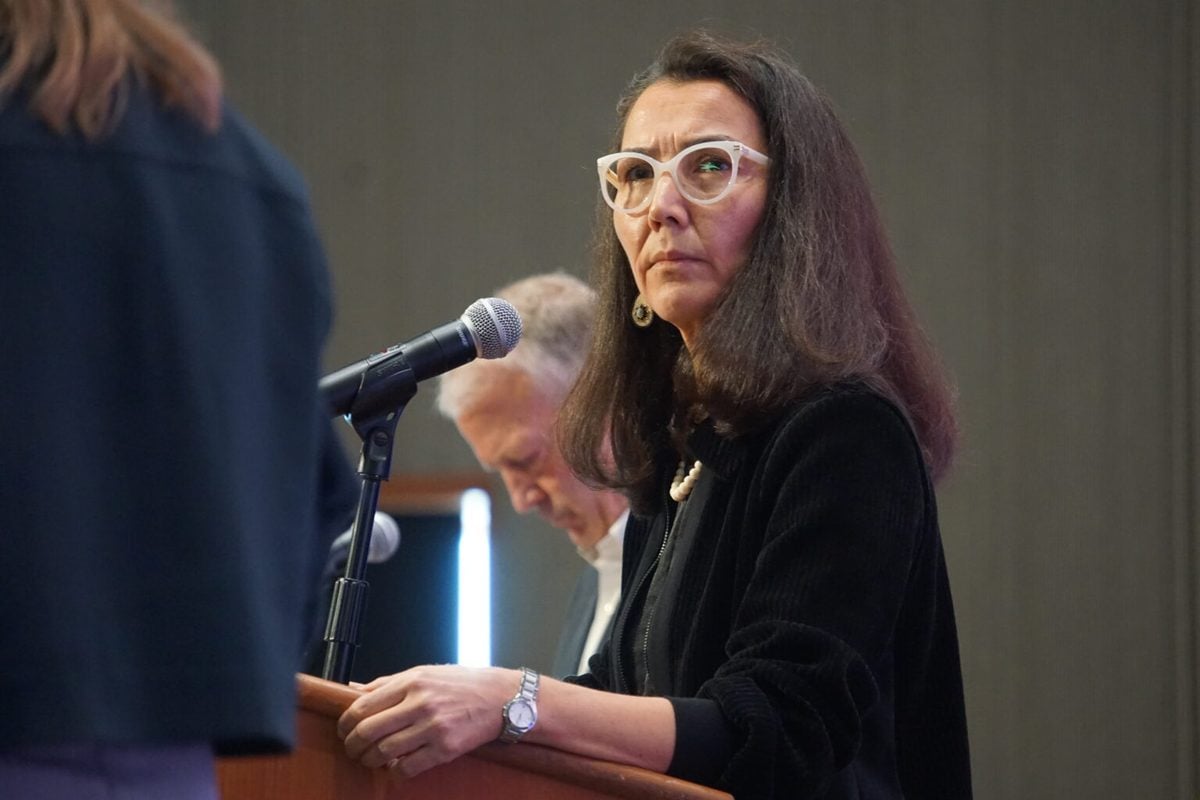
Mary Peltola listens to a question posed by moderator Michelle Egan at a candidate forum held by the Alaska Oii and Gas Association on Aug. 27, 2026. Next to Peltola is i Sen. Dan Sullivan. Peltola, a Democrat and former U.S. House member, is challenging Sullivan. (Photo by Yereth Rosen/Alaska Beacon)

Alaska observers say it is too early to say how reports of bad behavior by Democratic U.S. Senate candidate Mary Peltola might affect the state’s closely watched election, and some supporters suggested this week that she may be subject to a double standard because of her gender.

“While it’s surprising news, I think there’s a very hefty proportion of people who go, ‘It’s a hit job. It’s typical politics,’ and kind of brush it off,” said Ivan Moore of Alaska Survey Research, a political polling firm active in the race.

“It takes a lot to swing someone over from being a Peltola voter to all of a sudden going, ‘Oh, OK, I’ll vote for Sullivan.’ So we’ll see,” Moore said.

On Wednesday, the New York Times published an anonymously sourced article documenting abusive behavior by the former Alaska congresswoman, now a leading candidate for Senate. The article said she was hostile to her staff and used slurs and profanity to privately criticize others.

The article detailed accounts from former staff members who said she required aides to feed her family’s pet chameleon and said that in 2024, she wrote that she hoped a local Planned Parenthood board member would “die of a botched abortion.”

That comment came after the group was slow to endorse Peltola in that year’s election. This year, she does not appear on the group’s endorsement list.

“Planned Parenthood has been called worse and withstood more in its 100+ years; we’ll talk with her about what was reported when she’s Senator-elect,” said Morgan Lim, Alaska state director for Planned Parenthood Alliance Advocates. “Nothing has changed in the stakes of this race and we remain laser-focused on ousting Sullivan from the Senate — making sure Alaska voters know that Dan Sullivan is an anti-abortion, anti-LGBTQ fanatic who will continue to rubber stamp Trump’s judicial nominees.”

Peltola declined to talk to Alaska reporters on Wednesday evening after a meet-and-greet with union members in Anchorage.

Peltola was elected in 2022 to fill the remainder of Congressman Don Young’s term after his death that spring. She subsequently won the general election in November and served a two-year term of her own.

Her time in office coincided with a period of personal loss. Five months after she began her full term, her mother died. Three months after that, her husband died in a plane crash. She sued his employer a year and a half later, and a trial is set to begin in March.

Harry Child, a spokesman for Peltola’s campaign, said by text that the Times article is exaggerated.

“Like any person who has gone through multiple personal tragedies in the span of a few months, Mary sometimes struggled to deal with her grief. But she treats her staff with respect and care, and she maintains close positive relationships with her staff spanning her nearly 30 years in public service,” he said. “Exaggerating and outright lying about moments from the hardest period of her life, and falsely presenting them as a pattern of behavior, is wrong.”

A double standard for judging Peltola?

Polling indicates Peltola, a Democrat, is in a close race against Republican incumbent Dan S. Sullivan for one of Alaska’s two U.S. Senate seats. The winner of that election may decide whether Democrats or Republicans hold a majority of the Senate.

Moore said he doesn’t know whether the Times article will affect the eventual result. 

Readers of the Anchorage Press said they don’t think it will, with some labeling the Times article a “nothingburger.”

The Times found something similar in a followup article of its own. A spokesperson for the Alaska Democratic Party called the initial article “a hit piece.”

“Mary grew up working on a fishing boat and was made in the mold of great Alaskan leaders that came before her. She’s the only candidate in this race who will actually fight to lower costs and put Alaska first, and Alaskans will send her to the Senate this fall because she will deliver,” the spokesperson said.

Nate Adams, a spokesperson for the Sullivan campaign, said by email, “Nearly 30 people close to Mary Peltola were interviewed and more than 100 screenshots informed this reporting. What the Times printed is only a fraction of it, so imagine what was left out, and what else Mary Peltola is hiding from Alaskans.”

Jim Lottsfeldt, a veteran political campaigner who is working on pro-Peltola efforts this year, said he sees somewhat of a double standard in the way she’s being treated.

Her predecessor, Young, was notorious for profane, scurrilous and even violent behavior while in office, and former Sens. Ted Stevens and Frank Murkowski were known for their hot tempers.

“Stevens blew his stack, and we were all like, ‘That’s great, because he blew his stack for our benefit.’ And then you had Don Young saying the most outrageous things occasionally, but got like tons of things passed,” Lottsfeldt said. “So when all this stuff happens with the guys, nobody really clutches their pearls, and now we have little Mary Sunshine, Mary Peltola, who may have said the word f**k when she was mad, and now we’re acting like it’s a major political story, and I don’t think it is.”

Some former staffers back Times reporting, others dispute it

After the Times published its initial article, the Beacon contacted more than a dozen former Peltola aides in an attempt to verify its contents. Some, speaking anonymously, said they could not confirm all the incidents described by the Times but said the article matched the tone and mood of their time in her Congressional office or with her campaign.

They asked to not be named in order to offer frank opinions and because their current jobs may require them to work with Peltola in the future.

But at least some defended their former boss.

Kate Consenstein worked for Peltola in the Alaska Legislature and now runs a communications firm in Anchorage. The Peltola campaign suggested her as someone whose experience doesn’t match the Times article. 

“I wouldn’t want to engage in denying the veracity or the accuracy of those people’s accounts, especially because I don’t know who they are,” she said, “but I would just say the person that I worked for, and the person that I still know, is kind, generous, and not an abusive boss.”

Current U.S. Sen. Lisa Murkowski is a Republican who endorsed Peltola’s 2024 U.S. House run but is backing Sullivan this year. She told reporters in Washington, D.C. on Thursday, “I do acknowledge that while she was here in her first term, she was not only thrown into a very challenging situation immediately running for campaign, but then to lose her husband in that airplane crash and to deal with all of that. That’s pressure that is hard for anybody to bear.”

Sullivan, also interviewed by D.C. reporters on Thursday, said, “I think it’s very sad, very disturbing that so many Alaskans had to get put through that kind of severe abuse, which is very disturbing, but not surprising.”

Tyson Fick, a fisherman from Juneau who worked as a special assistant in Peltola’s congressional office, said there’s no doubt that Peltola would want a “mulligan” for some of the things she said, and he feels she was frequently second-guessed by East Coast staff.

“She never, I thought, was abusive, but also she often got some inadequate staff work,” he said.

“Having been around some operations where they were a little more, you know, systematic and organized, it was hard for me. I had to get out of there. I love Mary. I’ll be with Mary till I die, but I knew I couldn’t sign up for them again,” he said.

Fick and other Alaskans interviewed for this article were particularly critical of Anton McParland, who replaced Alex Ortiz as Peltola’s chief of staff. Ortiz, who declined to comment for this article, had previously worked for Young. When Peltola was elected, McParland did not live in Alaska; he has since registered as an Alaska voter.

In addition to the personal losses that Peltola suffered, there was also a conflict between the people Peltola brought from Alaska and the people she hired from the East Coast.

Peltola and Fick are fishermen and accustomed to salty language, he said. Someone with a trust fund may not understand it, he said.

“Sometimes you say some salty stuff just for effect, and it doesn’t reflect a cultural bias … I get that words mean things, and words hurt, and people get their feelings hurt, and maybe it’s not right, but there’s also times when you’re under super stress, and you’re grieving, that stuff comes out like in inopportune moments, and it’s like, yeah, we could communicate better, we could do better, but also we could have — I could have done better for her,” Fick said.

Categories
Alaska News Featured Juneau News juneau Juneau Local Juneau Local Ketchikan Local News Feeds Sitka Local

Mixed signals for housing costs in Alaska

By: Yereth Rosen, Alaska Beacon

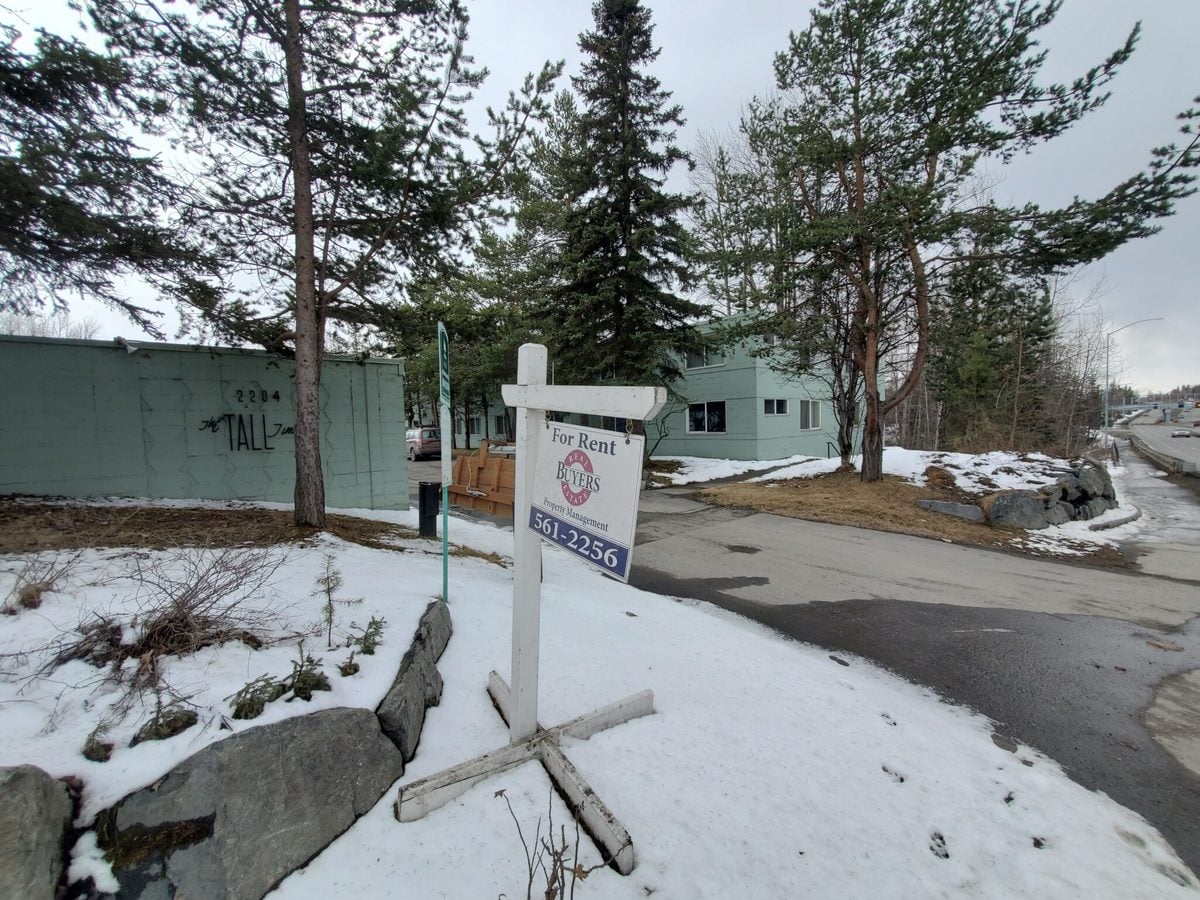
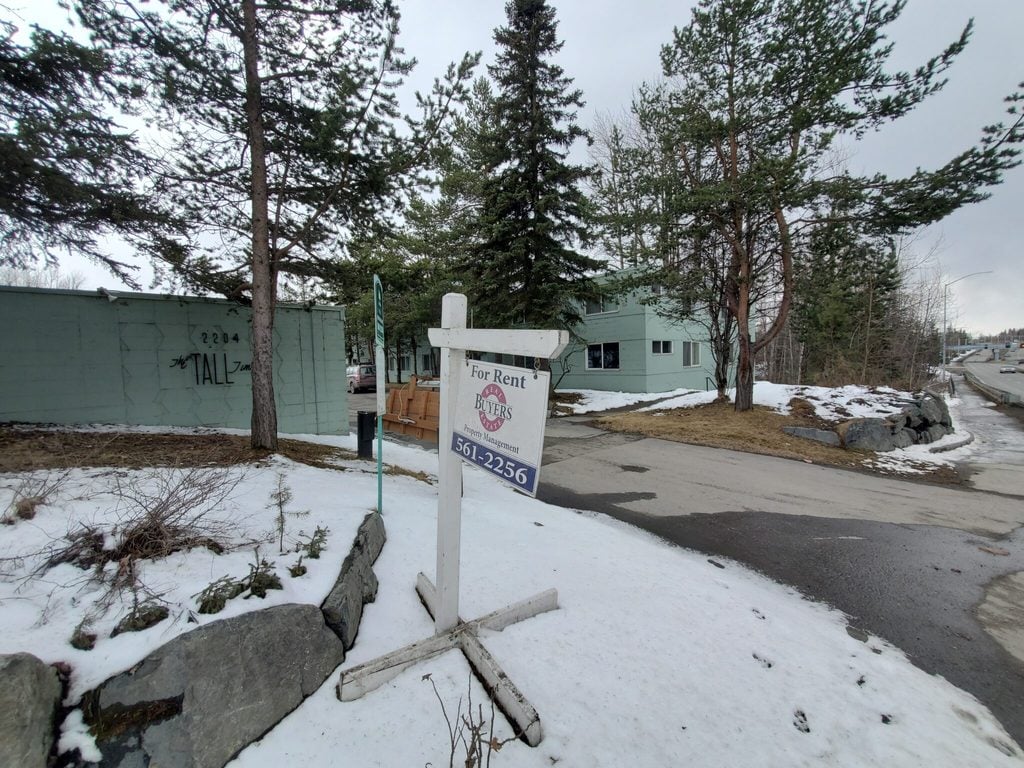
A sign seen on April 9, 2025, advertises rental availability at an apartment building in Anchorage’s Turnagain neighborhood. (Photo by Yereth Rosen/Alaska Beacon)

Apartment rents in Alaska rose 2.1% over the past year, the most modest increase in five years, according to analysis by the state Department of Labor and Workforce Development.

The statistics on rental costs are part of a package of articles about housing costs published in the September issue of Alaska Economic Trends, the monthly magazine of the department’s research section.

Rental statistics, based on prices recorded in March of this year, show some striking geographic differences.

The Wrangell-Petersburg area in Southeast Alaska had the cheapest rent of the 11 cities and areas analyzed, with a median monthly rate of $1,288 for a two-bedroom apartment. Bethel, a rural hub in Western Alaska, had the highest rents, with a median of $2,030 a month for a two-bedroom apartment.

Kodiak, Anchorage, the Fairbanks North Star Borough and Juneau were behind Bethel with monthly median rentals above $1,700.The Matanuska-Susitna Borough, just north of Anchorage, was on the low side for median rents, at $1,567 a month, but it had the biggest yearly increase, measured at 12.8%.

That reflects demographic characteristics in the bustling borough, where many residents are commuters who work in Anchorage, said Gunnar Schultz, a state labor economist and one of the authors of the housing-cost stories.

“Mat-Su obviously has been growing in contrast to most of the rest of the state,” he said. “So I think that that obviously puts upward pressure on price.” Proximity to Anchorage is another contributor because it means money is coming into the borough from the state’s largest city, he said.

The analysis is part of the department’s regular monitoring of housing costs. The rental comparisons covered much but not all of the state; the North Slope Borough and Bering Strait region, for example, were not included.

For homebuyers in Alaska, there are some economic headwinds, according to the economists’ analysis. Mortgage costs are much higher than they used to be, they said.

For a 30-year fixed rate mortgage on a $415,000 Alaska home — the median value — the monthly payment in 2025 was about $2,050. That is 84% higher than the estimated median monthly mortgage payment in 2019, the analysis said.

A big driver is the rise in home values, from an average of about $300,000 in 2019 to an average of $415,000 just six years later. Another factor is the increase in interest rates, from a median under 3% in 2020 to 6.5%in 2023, the analysis said.

But while home values and thus monthly mortgage costs increased, so did wages in Alaska.

The result of all those combined changes was that purchasing a home became marginally more affordable in 2025 than in the two years prior, according to the analysis.

Alaska’s Housing Affordability Index,  the number that represents how many people earning the average monthly are needed to make mortgage payments, dropped a bit in 2025 to 1.37. That is down from last year’s index of 1.39 and from the 2024 index of 1.4, which was the highest in recent years. But it is above the indexes measured in previous years; from 2019 to 2021, the index was below 1, indicating that a single person earning average Alaska wages had enough money to afford monthly mortgage payments.

Despite the slight improvement in the affordability index, buying a house remains a hefty burden in Alaska, Schultz said. “It’s still so much higher than it was during COVID and before,” he said.

A slight decline in interest rates last year was a contributing factor to the small improvement in housing affordability. However, interest rates are now heading up, the analysis pointed out.

Also affecting housing affordability is the availability of homes, and on that subject, there is positive news for would-be buyers, according to the economists’ analysis.

Housing construction in 2025 hit a 10-year high after years of increases that followed the big drop during the COVID-19 pandemic. A total of 2,261 single-family and multifamily housing units were built last year, the analysis said. That compares to 1,747 in 2020 and 1,726 in 2021. Home construction has been steadily rising since those years, according to the data.

The Alaska Economic Trends articles did not compare housing costs in the state to those nationwide, but the U.S. Census Bureau has some U.S. statistics that provide some contest.

Nationally, home ownership costs remained flat from 2020 to 2024, while rents increased by $100 more a month to a median $1,413 during the period, according to the Census Bureau. The analysis considers areas around the nation with populations over 5,000, so most of Alaska’s rural communities are not included.

Categories
Alaska News Featured Juneau News juneau Juneau Local Juneau Local Ketchikan Local News Feeds Sitka Local

Gov. Dunleavy lifts freeze on state government hiring, new regulations and worker travel

By: James Brooks, Alaska Beacon

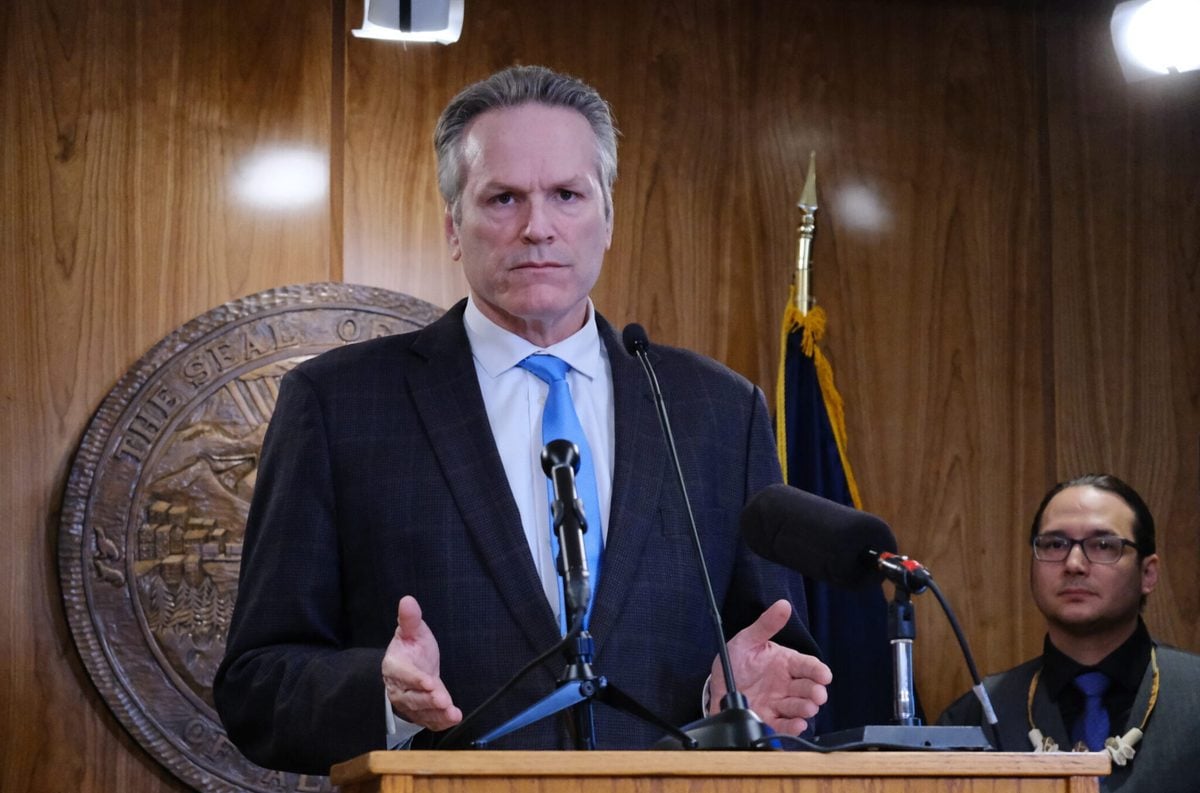
Gov. Mike Dunleavy discusses proposed education legislation at a news conference on Jan. 31, 2025. (Photo by Corinne Smith/Alaska Beacon)

Gov. Mike Dunleavy on Monday lifted a statewide executive branch hiring freeze, removing restrictions on managers who had been required since May 2025 to obtain special permission before hiring new state employees. 

The governor’s decision was revealed without fanfare in a new administrative order that took effect Monday.

This week’s order also repealed a freeze on new state regulations and on state employee travel. Both of those restrictions, and the hiring freeze, had been imposed by the same administrative order last year. 

At the time, Dunleavy cited concerns over state spending, and his actions were similar to ones he took during the COVID-19 pandemic emergency. Both moves mimicked action by former Gov. Bill Walker during a mid-2010s slump in state oil revenue.

Since Dunleavy’s 2025 order, the state’s fiscal situation has improved because of the Iran war. Alaska North Slope oil is worth significantly more than it was last year, and the state has now had consecutive fiscal years with a budget surplus.

Jeff Turner, the governor’s communications director, said on Tuesday that no one from the administration was available to speak about the repeal of the freeze order. 

While state agencies have been able to continue working amid the regulation freeze, it has nonetheless had various effects on operations.

On Tuesday, for example, the Regulatory Commission of Alaska announced that it was unable to allow the state’s electric utilities to buy more home-produced solar power. 

The commission said it had requested a waiver of the regulations freeze in order to proceed but did not receive it, and thus utilities cannot buy as much solar power as they desired.

The hiring freeze has coincided with a general decline in the number of people employed by the state. In August, according to the Alaska Department of Labor and Workforce Development, the state had 23,500 workers. That’s down from 24,800 in April 2025, the month before the hiring freeze. 

Doug Carson is the lead business agent for the Alaska State Employees Association, Alaska’s largest union for state workers.

“Hiring freezes … they’re a lot more PR stunts than they have any actual dramatic impact in terms of hiring,” he said by phone. 

“It doesn’t stop hiring completely, but the one serious impact I think it has is it affects recruitment and retention. People are less inclined to apply for state jobs because they see a hiring freeze is on,” he said.

Carson said he also believes that a hiring freeze encourages state agencies to outsource jobs to private contractors. One example: The state’s Division of Public Assistance, which is working through a large backlog of applications and has continued to contract out much of the work to a company in Massachusetts.

“We think that money belongs in state, in Alaskans’ pockets,” Carson said.

Heidi Drygas, president of the Alaska AFL-CIO, said that while she sees the lifting of the hiring freeze as “a step in the right direction,” it doesn’t fix pre-existing problems in state agencies.

“Things were already pretty bad and pretty rough from department to department in terms of vacancy rates and burnout and just general working conditions, and the freeze just made it worse,” she said.

“It’s going to be for the next administration to deal with, just like a whole host of problems that this administration is leaving for the next governor,” Drygas said.