NOTN- A man whose remains were found inside a chest freezer this summer died of natural causes, according to Juneau police.
Below is the full statement released by JPD on Friday;
The Juneau Police Department has completed its investigation into human remains discovered inside a freezer at a residence in Switzer Village. The deceased was positively identified as Ross Anthony Pasquan, a Juneau resident who would have been 74 years old at the time of the discovery of his remains.
The State Medical Examiner’s Office determined that Pasquan died of natural causes related to severe cardiovascular disease. Investigators did not establish an exact date of his death or how long his remains had been inside the freezer.
The investigation found that Pasquan’s wife, Sheryl Ann McDonald-Pasquan, concealed his death and continued applying for and receiving benefits in his name. McDonald-Pasquan died from natural causes on July 14, 2025, approximately one year before her husband’s remains were discovered.
Discovery and Investigation
On July 19, 2026, at approximately 7:59 p.m., an individual came to JPD to report a possible body inside a chest freezer at McDonald-Pasquan’s property in the 6500 block of Glacier Highway.
The individual had been cleaning out the property following McDonald-Pasquan’s death. Inside a storage shed, they discovered a locked freezer. After locating a key and opening it, they observed a tarp-wrapped object that appeared to contain human remains. They closed the freezer and went directly to JPD.
Responding officers and investigators confirmed the presence of human remains, which were transported to the State Medical Examiner’s Office in Anchorage. On July 25, 2026, the remains were positively identified as Pasquan.
Witness interviews indicated that Pasquan had a history of significant health problems and that McDonald-Pasquan served as his primary caregiver. Witnesses said she explained his absence by telling them he had been moved to a care facility outside Juneau.
Based on the freezer being manufactured in 2018 and McDonald-Pasquan’s death in July 2025, investigators believe Pasquan’s remains were placed in the freezer between those dates. Investigators were not able to establish a reliable timeline and could not determine when Pasquan died or precisely when his remains were placed in the freezer.
Pasquan had not been reported missing before the discovery of his remains.
Benefits and Investigation Findings
Witness interviews and a review of benefit records supported the conclusion that McDonald-Pasquan concealed her husband’s death while continuing to apply for and receive benefits in his name, including Alaska Permanent Fund Dividends, Social Security benefits, and retirement benefits. Investigators also learned that a retirement benefit provider had not been notified of his death and was still depositing monthly payments into Pasquan’s account up until July 2026.
Investigators found no evidence that another person caused Pasquan’s death or assisted McDonald-Pasquan in concealing his remains or collecting his benefits.
The death investigation is closed following the medical examiner’s determination that Pasquan died of natural causes. The investigation into McDonald-Pasquan’s collection of benefits after his death is also closed because she is deceased.
NOTN- A man in Juneau is facing assault charges after police say he threatened a neighbor with a handgun during a backyard dispute in the Mendenhall Valley.
Below is the full information release by JPD;
On Saturday, July 25, 2026, at approximately 7:16 p.m., the Juneau Police Department responded to a residence in the 3200 block of Tongass Boulevard following a report of an assault involving a firearm.
The preliminary investigation determined that an adult male suspect confronted another adult male in the victim’s backyard at his residence in the 3200 block of Tongass Boulevard following a verbal dispute. During the confrontation, the suspect allegedly threatened to shoot the victim while displaying a handgun. A physical struggle ensued, during which the victim was able to prevent the suspect from firing the weapon. The suspect then fled the area on foot with the firearm.
Through the investigation, officers identified the suspect as Hemaloto Fotu, 55, of Juneau, who was believed to have returned to his nearby residence in the 3200 block of Tongass Boulevard. Due to the nature of the incident and the belief that the suspect was armed, members of the Juneau Police Department’s Special Weapons and Tactics (SWAT) Team, Crisis Negotiation Team (CNT), and Drone Team responded to assist.
Using the loudspeaker on an armored vehicle, officers established communication with two occupants inside the residence—an adult female and a juvenile male. Both exited the residence without incident. Shortly afterward, officers deployed a drone inside the residence and located Fotu asleep in a bedroom. Fotu awoke to the sound of the drone and, after continued verbal commands from officers, exited the residence and was taken into custody without further incident.
During the subsequent search of the residence, investigators located a handgun believed to have been used during the assault.
Fotu was arrested and lodged at Lemon Creek Correctional Center on the following charges:
Assault in the Third Degree (a Class C Felony)
Assault in the 4th Degree (a Class A Misdemeanor)
This investigation remains ongoing. Anyone with information regarding this incident who has not yet spoken with investigators is encouraged to contact the Juneau Police Department at (907) 586-0600. Anonymous tips can also be submitted through Juneau Crime Line at www.juneaucrimeline.com
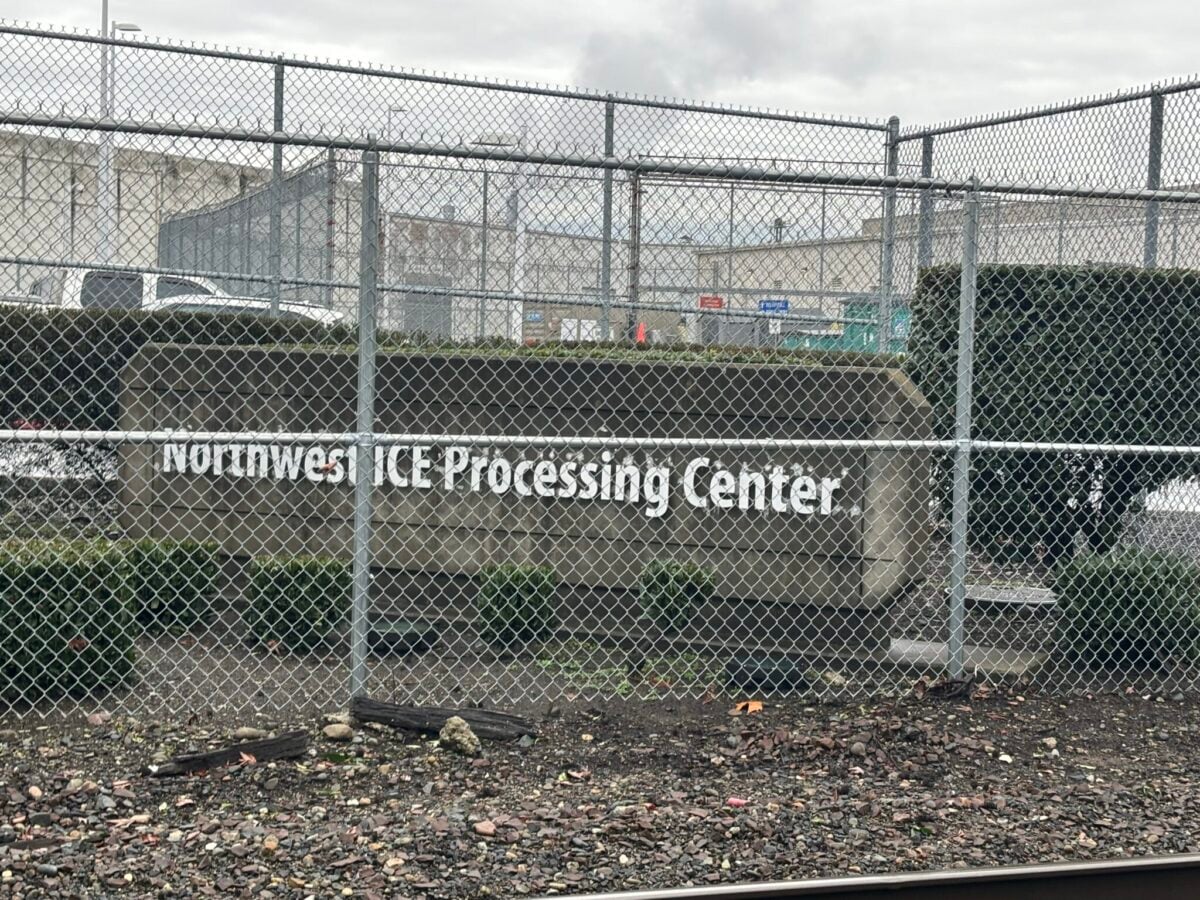
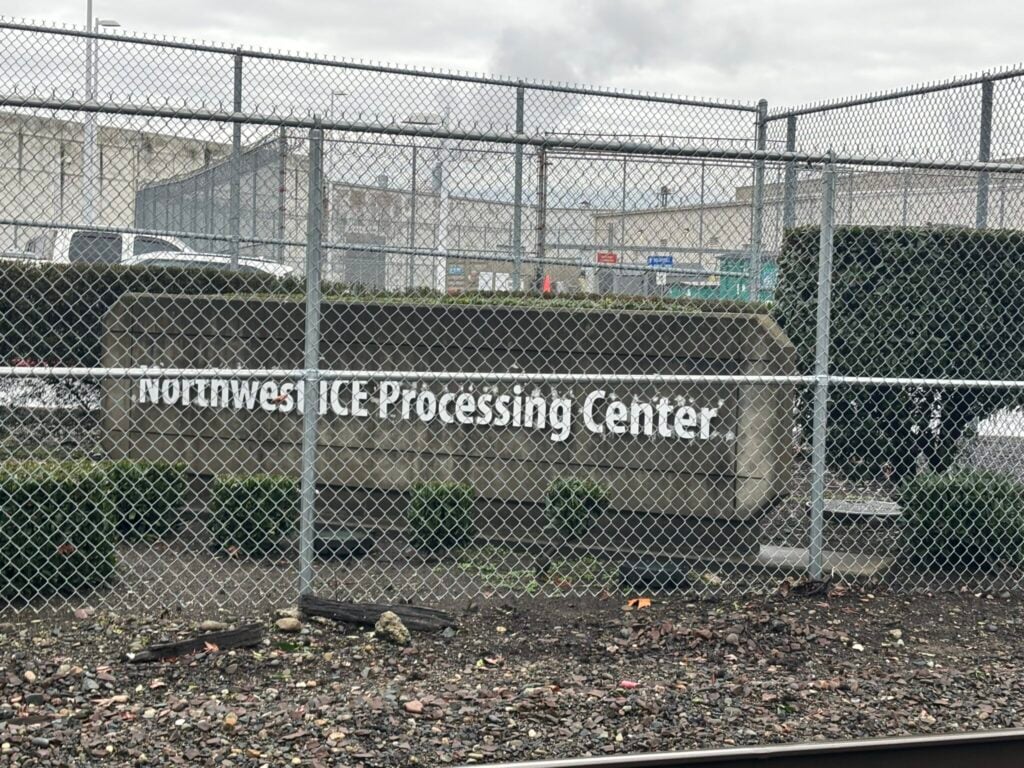
The Northwest ICE Processing Center in Tacoma, which is one of the largest immigrant detention facilities in the western U.S. (Grace Deng/Washington State Standard)
U.S. Immigration and Customs Enforcement arrested an Alaska state attorney in Anchorage and is holding him in an ICE detention facility in Washington state, according to an agency spokesperson.
Shucheng Yang, a 32-year-old Chinese national, was arrested in Anchorage on July 10.
“Yang violated the terms of his admission and is a deportable alien,” said Jason Chudy, an ICE Public Affairs officer, by email on Thursday. He said Yang is currently detained in the Northwest ICE Processing Center in Tacoma, Washington, pending immigration proceedings.
Yang is an attorney with the Alaska Department of Law’s labor, business and corporations section, according to the state employee database. Yang was admitted to the Alaska Bar Association and licensed to practice law in the state in June 2025. A spokesperson for the department declined to respond to questions about his immigration status, employment status or work authorization when hired, saying the department does not comment on personnel matters.
Chudy declined to say how Yang violated the terms of admission into the country. “To be clear, work authorization does NOT confer legal status in the United States,” he said in the email.
He referred further questions about Yang’s work authorization to the U.S. Citizenship and Immigration Services. A spokesperson for USCIS referred the question back to ICE, and said the agency does not comment on individual immigration cases.
The state requires applicants to self-disclose their employment eligibility and work authorization through the I-9 verification process during hiring, according to the Alaska Department of Administration, as reported by Alaska News Source.
There are no state criminal charges against Yang, according to court records. Yang pleaded no contest on June 26 for a speeding citation.
A spokesperson for the Municipality of Anchorage confirmed the Anchorage Police Department issued the traffic ticket on April 25. “They have had no other interaction with Mr. Yang since April,” said Nora Morse, communications director for the municipality, by email on Thursday.
“The Anchorage Police Department does not ask for someone’s immigration status as part of a routine traffic stop,” Morse said.
A spokesperson for the ACLU of Alaska said they were trying to get in touch with Yang’s attorney, and had no other information on his case.
The Alaska Department of Corrections contracts with ICE to hold detainees in Alaska under an agreement with the U.S. Marshals. A spokesperson confirmed that Yang was detained in Alaska for two days after his arrest until he was transferred on July 12.
DOC has held 17 people arrested by ICE since June 1, and 73 people since the beginning of the calendar year, according to spokesperson Betsy Holley on Thursday.
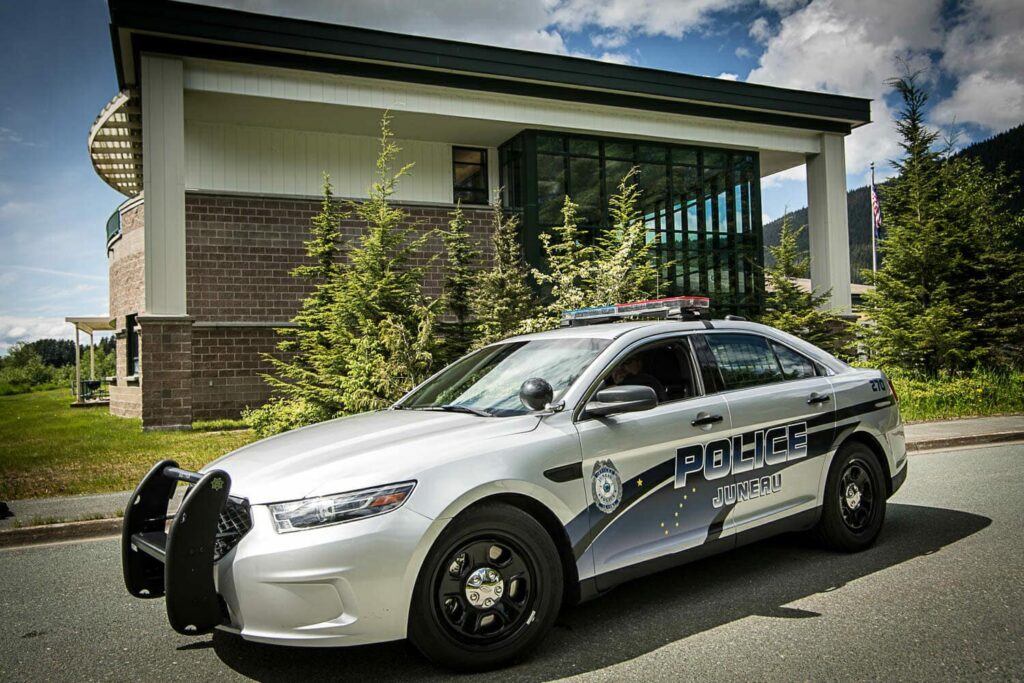
According to the proposed ordinance, when an officer-involved shooting occurs that causes death or serious injury to an officer or someone else, Juneau Police Department would release body-worn camera footage no later than 30 days after the incident. (Photo courtesy City & Borough of Juneau website)
(Photo courtesy City & Borough of Juneau website)
The Juneau Police Department says a recent Southeast Alaska Cities Against Drugs Task Force investigation resulted in an arrest and the seizure of suspected fentanyl, methamphetamine and cocaine, below is JPD’s press release.
JPD- On June 24, 2026, members of the Southeast Alaska Cities Against Drugs (SEACAD) Task Force executed a search warrant on a box van in the 9000 block of Gee Street in Juneau as part of an ongoing narcotics trafficking investigation.
The investigation began in late May 2026 after investigators identified the location as a source of fentanyl distribution within the community. During the execution of the search warrant, investigators contacted and arrested 39-year-old Jonathan Henry Smith of Juneau.
Search of the vehicle associated with Smith resulted in the seizure of the following suspected controlled substances:
Approximately 17 grams of fentanyl
Approximately 54 grams of methamphetamine
Approximately 44 grams of cocaine
Total estimated street value of seized narcotics: $23,600
Smith was arrested and lodged at the Lemon Creek Correctional Center on the following charges:
Four counts of Misconduct Involving a Controlled Substance in the Second Degree, a Class A Felony
One count of Misconduct Involving a Controlled Substance in the Third Degree, a Class B Felony
The SEACAD Task Force remains committed to disrupting the trafficking and distribution of illegal narcotics throughout Southeast Alaska. This investigation highlights the continued cooperation between local, state, and federal law enforcement agencies working together to protect our communities from the harmful impacts of illegal drugs.
SEACAD, Southeast Alaska Cities Against Drugs, is a regional task force comprised of municipal police departments from Juneau, Ketchikan, Sitka, Haines, Skagway, Petersburg, Hoonah, Wrangell, Craig, and Yakutat, the Alaska State Troopers, Federal Bureau of Investigation, Drug Enforcement Administration, United States Postal Inspection Service, and Coast Guard Investigative Service. Together, they work to investigate drug importation and distribution in the Southeast Alaska region.
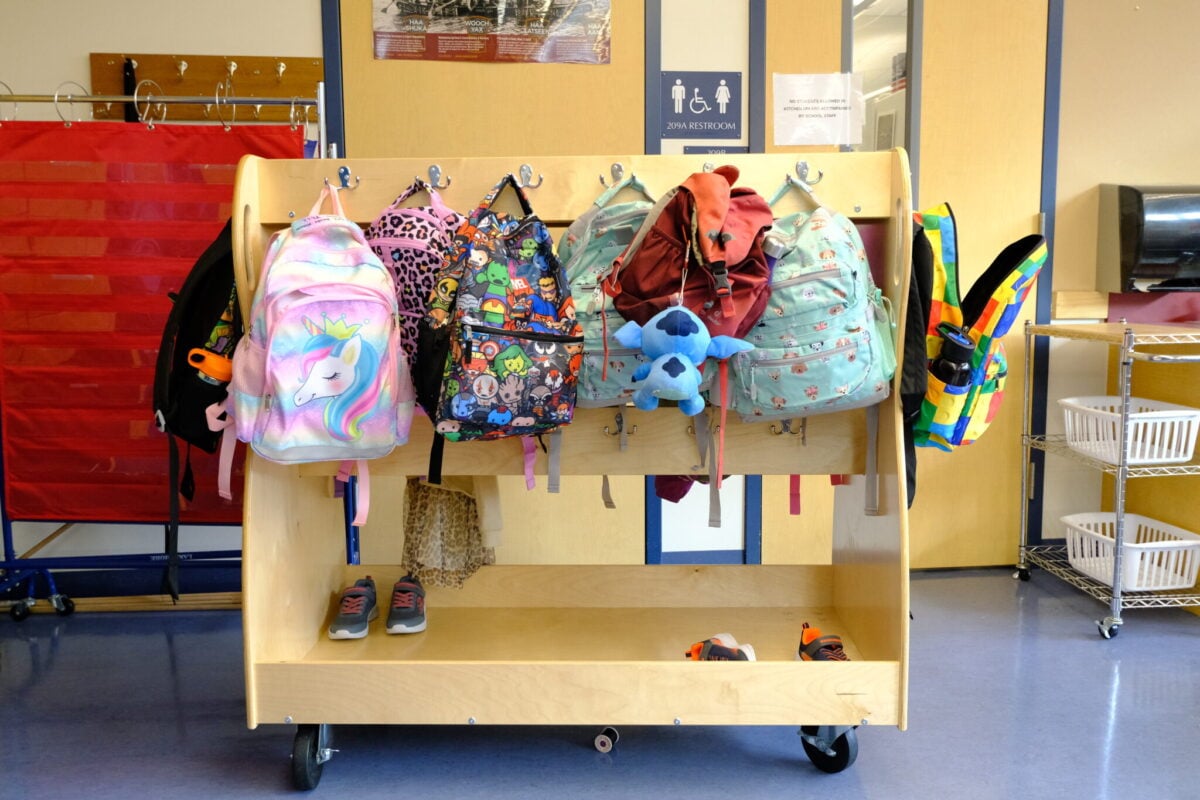
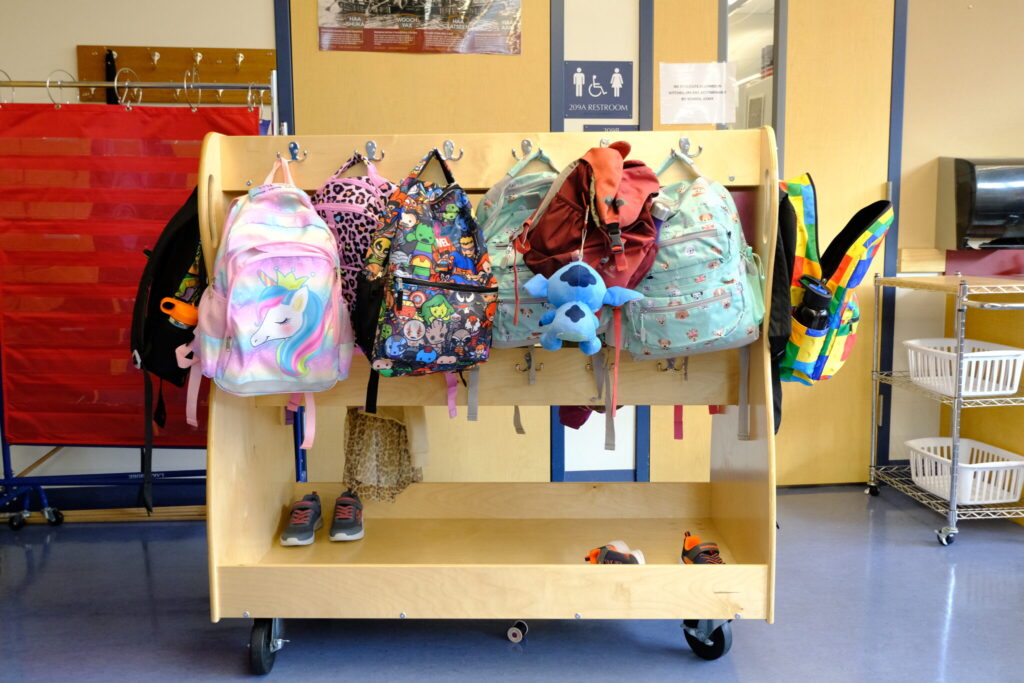
Student backpacks seen on the first day of school at Harborview Elementary School in Juneau on Aug. 15, 2025 (Photo by Corinne Smith/Alaska Beacon)
Content warning: This story contains references to sexual violence and abuse of children.
A new statewide initiative aims to prevent and reduce Alaska’s pervasively high rates of child sexual abuse.
The statewide prevention plan is led by the Alaska Children’s Trust, a non-profit advocacy group focused on supporting children and families and preventing child abuse and neglect.
Trevor Storrs, the president and CEO of the Alaska Children’s Trust, said a coordinated effort among state and community groups, service providers, schools, caregivers and youth is needed to make serious strides in intervening and preventing abuse.
“We should not expect children to fight off these predators. We want them equipped with the tools, but it’s our job, not just as adults, but as a community and society, to make sure kids are safe,” he said.
If you or someone you know has experienced sexual abuse or are healing from a crisis, resources are available:
The StrongHearts Native Helpline: Confidential 24/7 confidential helpline for Native Americans and Alaska Natives dealing with domestic and sexual violence. Call 1-844-762-8483 or use the chat feature.
Child sexual abuse prevention resources provided by the Alaska Children’s Trust can be found here.
AWARE’s list of resources, including housing, medical and financial resources
The plan was developed last year with a variety of statewide groups, including representatives from Child Advocacy Centers, the Alaska Department of Education and Early Development, the Office of Children’s Services, which runs the state’s foster care system, law enforcement, Tribes, health care providers, lived experience experts, faith communities, and the Alaska Network on Domestic Violence and Sexual Assault.
Storrs said the plan focuses on education and raising awareness, as well as preventing harm by developing and strengthening institutions so that questionable behavior is identified and stopped.
“If we don’t keep strong boundaries established, that’s when we start opening the door and predators see their opportunity,” he said. “If we keep those strong and not have those potential openings, it actually prevents the predators from ever accessing, or anybody who’s had even a slight inclination — they’re not being tempted to even try — and that is what our job is.”
The group launched the plan earlier this month and is providing an initial $100,000 in grant funding for prevention work in the three priority areas outlined by the initiative. Nonprofit organizations, tribes, local or state governments, schools and regional attendance areas are invited to apply by July 17.
Alaska has some of the highest rates of sexual violence and rates of child abuse, neglect, and child sexual abuse, in the nation. Many victims delay or never report abuse. A U.S. Department of Health and Human Services’ Child Maltreatment report published this year noted reports of child abuse and neglect have declined somewhat since 2020, but Alaska rates in 2024 were 80% above the nationwide average.
Nationwide, American Indian and Alaska Native children have the highest rates of victimization, and in Alaska national data from the maltreatment report shows rates of abuse among American Indian or Alaska Native children are nearly three times higher than the overall statewide average.
The Alaska Children’s Trust cites a national survey by the U.S. Centers for Disease Control and Prevention from 2013 to 2015 that showed on average one in five Alaska children experience sexual abuse. A 2023 report from the Alaska Children’s Justice Act Task Force showed that an estimated one in seven children will experience an allegation of sexual abuse before their 12th birthday.
“The majority of child abuse and neglect cases that are substantiated are neglect, then it’s physical, and then it’s a small fraction of child sexual abuse,” Storrs said. But sexual abuse can have severe impacts on a child’s development, according to the CDC, with short and long term effects, including chronic health conditions, mental health issues and even post-traumatic stress disorder, or PTSD.
Child sexual abuse is defined as any sexual activity between a child and adult or a child and another child that the child does not fully understand, does not consent to or is not developmentally prepared for and therefore cannot consent to. In Alaska, lawmakers this year changed the law to raise the age of consent to 18 years old.
An estimated 90% of child sexual abuse is perpetrated by someone known to the child or the child’s family, according to the CDC.
Perpetrators can exploit what Storrs calls “natural trust” to get close to a child, including people in positions like a coach, teacher, religious leader or friend of the family, in a pattern of behavior called grooming.
“Grooming is developing that relationship, developing a trust with the family that the child can be left alone with them,” Storrs said. “The trust with the child where their interactions may feel awkward, but are okay. The trust that it’s okay to keep secrets. They really build that trust and build that relationship that then allows them to abuse the child, to do what they do. And you see that in story after story when you talk to a survivor of child sexual abuse, they talk about the relationship.”
Storrs says addressing the stigma to intervene when behavior is inappropriate, also means implementing proper protocols for adults interacting with kids. He said for example, coaches should not text youth individually, but include parents in all communications.
That extends to online safety, he said. Nationally, there are increasing rates of predatory behavior and “sextortion,” a form of blackmail where perpetrators threaten to disclose information or images unless the victims make specific demands. Storrs said caregivers should talk with children and youth about what is and isn’t appropriate, in person and online.
“It’s also making sure that your child understands what the expectations and rules are, as well, of what it’s like to interact with an adult, and what are those boundaries,” he said.
Storrs said in raising awareness of potentially predatory behavior, it’s also important to trust children when they disclose inappropriate behavior.
“A lot of kids don’t disclose that X is happening, what they start disclosing is, ‘I don’t feel comfortable, I don’t want to go. I don’t like hanging out with this person anymore.’ They don’t feel connected,” he said. “That’s a sign.”
The statewide prevention plan likens preventing child sexual abuse to wildfire prevention. That means reducing risks, setting safety codes, educating communities and monitoring high risk situations — to prevent harm.
Three approaches to prevention
The statewide prevention plan has a three-pronged approach: educate and mobilize, cultivate safer environments and act early to prevent harm.
Storrs says all three involve children, families, and community-wide efforts, and the plan calls for local advocacy groups, service providers, schools and governments to gather community input and develop their own child sexual abuse prevention programs and resources best fit around cultural values. The initiative calls for local communities to develop and strengthen systems for children to safely report harm without fear of punishment and family disruption.
The first prong focuses on education: increasing awareness and reducing stigma, and increasing the number of people able to take action proactively. That means training for youth-focused employees like teachers and coaches, and building in protocols for reporting and addressing inappropriate behavior. It also involves providing educational resources for parents and caregivers on healthy boundaries, warning signs, and how to respond to concerns.
The plan calls for education and resources for children and youth on what’s appropriate. Storrs says the plan suggests children receive human development education, not necessarily sex education, so that children develop an understanding of consent, their body anatomy and healthy relationships.
“When you talk to a child about something, it does not give a child permission to engage in something or to act inappropriately,” he said, adding that teaching kids about sex does not give them permission to have it in the same way that teaching kids about car accidents doesn’t give them permission to drive recklessly.
Education is aimed at empowering children to identify when physical boundaries have been violated, Storrs said. “So when a kid needs to talk about any of their private areas or someone is trying to talk about it or touch it, they’re able to know what’s appropriate and what’s not appropriate,” he said.
Similarly, reducing shame and stigma can empower children to talk with an adult or caregiver when they’ve experienced or seen adults behaving inappropriately. Children should know that adults should never ask them to keep secrets, Storrs said, and when inappropriate behavior has occurred they can get help to stop it from continuing.
The second prong, “cultivating safer environments,” calls for state and local governments, Tribes and service organizations to support programs and policies that help families meet essential basic needs to address conditions that put children at risk for sexual abuse.
Storrs noted that children and families with unstable housing, inadequate child care or health care can create circumstances that put children at higher risk.
“Our safety net plays a critical part in keeping kids safe, not just of child sexual abuse, but child abuse in general,” he said. “We know when families have stable housing, food security, all those things, it puts less stress on the family.”
The plan calls for increasing safety of physical and digital spaces where youth spend time, and local community organizations to hold listening sessions in communities to identify risk factors and best prevention strategies.
The third prong aims to prevent harm by increasing access to resources to respond to harmful sexual attitudes or behaviors. That includes addressing people who have harmed or are at risk of harming children.
“I truly believe there’s more gray in our world ever than there is black and white,” Storrs said. “And there are definitely individuals who are 100% predators, and it’s very clear. Then you have individuals that may have some thoughts, but don’t act on it, or it’s controlled internally by themselves and by within the society they are.”
The approach includes responding to harmful and problematic sexual behavior among youth. Storrs said with youth having access to graphic sexual material online, problematic behaviors and attitudes may arise. The plan aims to expand treatment and support services for youth to address harmful behaviors.
“We’re seeing that kids are sexually maturing faster or becoming more hypersexual at a much younger age without the knowledge, skills, supports and resources to then deal with it or understand it,” Storrs said. “And if kids do not have an adult to talk to, or have learned this information, it starts creating hyper sexual experiences, which then can lead to this harmful sexual behavior.”
Alaska has unique challenges with rural and remote communities having less access to services, Storrs said, as well as grappling with legacies of trauma and adversity. He said the initiative aims to push a statewide focus and investment in policies and programs that support children and families that can help prevent harm. The plan is a collaborative effort, he said, and in the first year advocates with the Alaska Children’s Trust will visit communities to discuss the plan, help raise awareness, identify gaps and strengthen protocols and safer environments to prevent abuse.
“What we want to create that’s very clear in our community, in our state, that we as a community are watching and will not stand for any type of inappropriate behavior with our kids,” Storrs said. “And we will say something, we will step in, and you won’t be allowed.”
Dion McCabe, photo provided by family to the Juneau Police Department
NOTN- Juneau police say a body discovered in a wooded area near the end of Sherwood Lane has been identified as 29-year-old Dion McCabe, who had been reported missing earlier this month.
The full press release can be found below;
the Juneau Police Department received a report that the deceased body of Dion McCabe had been located in a wooded area near the end of Sherwood Lane. Officers responded to the scene and confirmed the presence of the deceased individual. The area was secured, and an investigation into the circumstances surrounding the death was initiated.
The next of kin has been notified. The body will be transported to Anchorage, Alaska, where an autopsy will be conducted to assist investigators in determining the cause and manner of death.
At this time, the investigation remains ongoing. Anyone with information related to this case is encouraged to contact the Juneau Police Department. Anonymous tips can also be submitted through Juneau Crime Line at JuneauCrimeLine.com.
**********************
On June 5, 2026, the family of 29-year-old Dion McCabe reported him missing to the Juneau Police Department. Family members reported they had not seen or heard from Dion for approximately a week and a half. Dion was last seen by family on May 26, 2026, at Safeway in Juneau.
Dion is described as a 29-year-old white male, approximately 6 feet tall and 186 pounds, with brown hair and blue eyes. He was last seen wearing Rock Revival blue jeans, a white T-shirt, and UGG slipper-style shoes.
A photograph of Dion is being posted on the Juneau Police Department Facebook page to assist in locating him.
Anyone with information regarding Dion McCabe’s whereabouts is encouraged to contact the Juneau Police Department at (907) 586-0600. Anonymous tips may also be submitted through Juneau Crime Line.
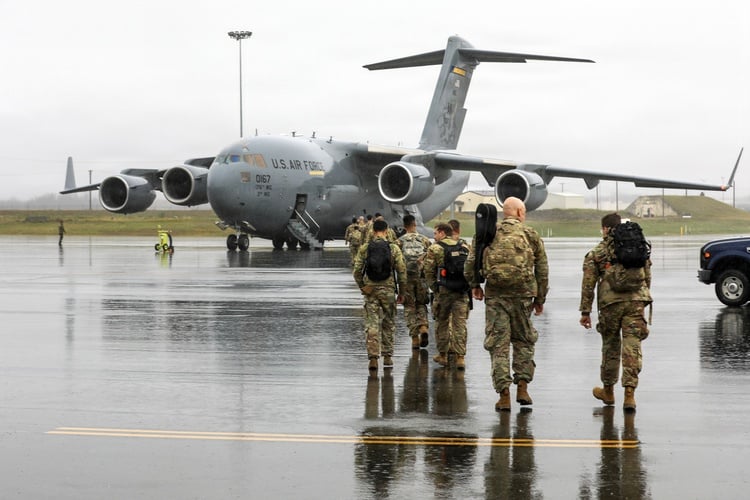
Alaska Organized Militia members from across the Alaska Army National Guard, and the Alaska State Defense Force, prepare for departure from Joint Base Elmendorf-Richardson as they travel to Bethel, Alaska, while supporting storm response operations, Oct. 13, 2025. (Alaska National Guard photo by Capt. Balinda O’Neal)
Alaska will deploy 25 National Guard soldiers and airmen to Washington D.C. this month, according to a Friday update from the Alaska Department of Military and Veteran Affairs.
The deployment is part of a response to President Trump’s August declaration of a “crime emergency” in the nation’s capital. In the nine months since, 2,500 troops remain, according to NBC4 Washington. Guard members have assisted with medical emergencies, arrests and beautification projects, as well as snow removal.
The division announcement said the Alaska service members will be focused on public safety: “Guard members provide support functions such as crowd management, perimeter security, and logistical and communications support.”
Alaska National Guard members will deploy for 60 days, according to the division, as part of a joint task force with the Metropolitan Police Department and federal law enforcement partners.
Gov. Mike Dunleavy approved a verbal request in November from the U.S. Secretary of the Army for Alaska to deploy 100 service members, following a national directive by the Pentagon to all 50 states to prepare National Guard service members to train for “civil disturbance operations.”
A spokesperson for Dunleavy’s office did not respond to a request for comment on the smaller deployment, the purpose and timing of the mission on Monday.
Lawmakers had raised concerns about the Pentagon’s national directive for an estimated 20,000 National Guard service members to be trained and prepared to deploy in U.S. cities within 24 hours. Alaska was initially charged with preparing 350 service members as part of a “quick reaction force” by Jan. 1.
Rep. Andrew Gray, D-Anchorage, co-chair of the Alaska Joint Armed Services Committee, and a veteran of the Alaska National Guard, was among those who had raised concerns.
On Monday, Gray said the smaller deployment for 60 days is less of an issue.
“I don’t think it’s in the best interest of the American taxpayer to be flying service members from Alaska to D.C. to do what I don’t believe is of grave consequence,” he said.
“At the end of the day, to me, it’s sort of a nothing burger. I do think that it shows that the Dunleavy administration and General (Torrence) Saxe are in alignment with Trump. They’re showing that they support Trump’s agenda. But again, this is just not that big of a deal, in my opinion.”
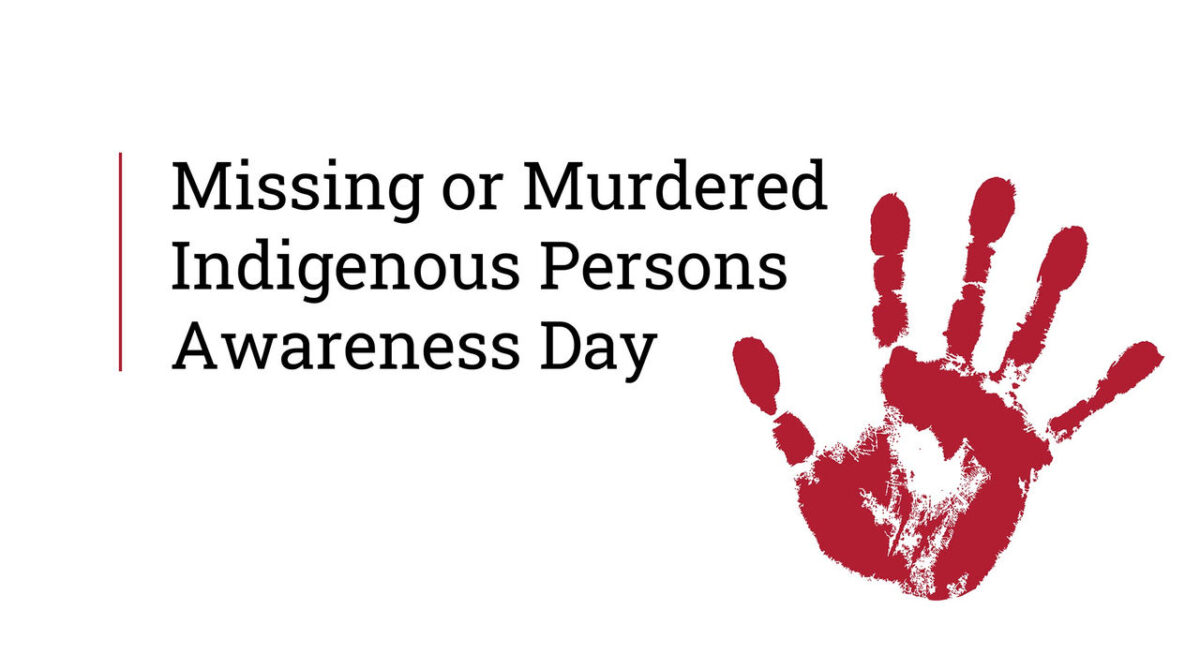
AP- Indigenous peoples across North America are gathering this month to raise awareness about the disproportionate violence in their communities while demanding sustained response from authorities.
Today, May 5th is recognized as the day of awareness in the Missing and Murdered Indigenous Peoples movement but events have already started and will carry on throughout the month. In Canada, it’s referred to as Red Dress Day after Métis artist Jaime Black used the garments as a symbol of what Black said is gendered and racialized violence.
Events include prayer walks, art exhibits, self-defense classes, film screenings, 5k runs, healing circles, and marches and speeches at U.S. state capitols to plead for better cooperation among law enforcement agencies.
U.S. Justice Department data shows Indigenous women are more than twice as likely to be homicide victims than the national average and advocates say many cases recieve little to no media coverage.
Many people wear red and paint their faces with red handprints while vowing to speak for those who have been silenced.
The Central Council of Tlingit and Haida Indian Tribes of Alaska will hold a march to Elizabeth Peratrovich Hall this evening at 5 p.m.
Hacker using laptop. Lots of digits on the computer screen.
By: Haley Lehman, Alaska Beacon
Hacker using laptop. Lots of digits on the computer screen.
The Federal Bureau of Investigation released a report Thursday that showed Alaskans lost nearly $40 million in cyber crime in 2025.
Special Agent in Charge Matthew Schlegel of the FBI Anchorage Field Office said it is the highest financial loss ever reported in Alaska for such crimes.
“Behind these numbers are real people – Alaskan families who lost hard-earned savings, retirement funds, and financial security,” he said in a news release.
Americans lost nearly $21 billion in cyber crimes in 2025, according to the FBI Internet Crime Report issued by the Internet Crime Complaint Center.
This chart outlines IC3 loss trends over a 10-year period for Alaska, with reported losses exceeding $158 million. (FBI graph)
Alaskans reported the 2025 losses in 3,202 complaints to the Internet Crime Complaint Center, making it the highest financial losses ever reported in Alaska in one year. Losses went up by $13.6 million since 2024.
The FBI encouraged people to identify red flags of a potential scam to protect themselves from cyber threats and crime.
“To combat this ever-evolving threat, it has never been more important for residents and businesses to be diligent with cybersecurity, electronic interactions, and safeguarding personal and financial information,” Schlegel said.
The greatest losses in Alaska were from investments-related fraud, confidence or romance fraud, compromised business emails and tech support scans. Approximately 482 Alaskans lost more than $18 million to cryptocurrency crimes.
According to the report, 20% of Alaskans who reported losses from internet crimes were 60-years-old and older who lost $16.2 million.
President Donald Trump issued an executive order on March 6 directing officials to develop a plan to prevent, disrupt, investigate and dismantle Transnational Criminal Organizations in order to stop cyber-enabled criminal activity.
“Cybercrime, fraud, and predatory schemes are draining American families of their life savings, stealing the benefits of years of work, and destroying the lives of our youth,” Trump wrote in the order.
An Alaska State Trooper's shoulder patch is seen on Thursday, Jan. 25, 2024. (Photo by James Brooks/Alaska Beacon)
Corinne Smith, Alaska Beacon
An Alaska State Trooper’s shoulder patch is seen on Thursday, Jan. 25, 2024. (Photo by James Brooks/Alaska Beacon)
Members of the Senate Judiciary committee put questions to a governor’s nominee for the Alaska Police Standards Council about her social media posts during a confirmation hearing Wednesday.
Veronica Lambertsen defended conspiracy theories around the Holocaust, blood-harvesting from children and the Jan. 6 insurrection at the U.S. Capitol.
Lambertsen has been nominated by Gov. Mike Dunleavy to serve a three-year term representing one of four public seats on the 13-member Alaska Police Standards Council, which oversees law enforcement standards across the state.
Lambertsen has served on the council since being nominated in August, but her name was removed from the council’s website Thursday afternoon, following the hearing and media coverage of the posts.
Dunleavy’s office did not respond to a request for comment about her nomination, her social media posts and the removal of her name from the website on Thursday.
Lambertsen is the owner and operator of a motel in Birch Creek, a small neighborhood in Turnagain Arm that is part of the municipality of Anchorage. She also serves as a voluntary member of the local Turnagain Arm Community Council, according to her resume.
Lawmakers in the House expressed skepticism in a hearing earlier this month and questioned Lambertsen’s experience, connections with law enforcement and eligibility for the seat.
Sens. Matt Claman, D-Anchorage, and Löki Tobin, D-Achorage, are seen in a Senate Judiciary Committee hearing on Apr. 20, 2026. (Photo by Corinne Smith/Alaska Beacon)
In a second confirmation hearing on Wednesday, following questions about her background, chair Sen. Matt Claman, D-Anchorage, asked about several social media posts going back many years.
“One of the postings that I saw was a posting that you didn’t believe the Holocaust was real,” Claman said. “Do you believe the Holocaust occurred during World War II?”
Lambertsen said it was a tragedy, but that she has questions. “Do I believe something happened at the Holocaust, and a tragedy and a lot of people died?” she said. “Yes, I believe that actually happened. Are we being told the true story about it all? No, I don’t believe we’re being told the true story about it all.”
“What do you believe is the true story?” Claman asked.
“That I don’t know yet,” she replied.
The Alaska Police Standards Council is charged with setting and enforcing standards for law enforcement, including police, probation, parole and correctional officers. They’re also tasked with reviewing regulation and investigating misconduct, like officer discipline and use of force.
A zip drive of selected posts from Lambertsen’s public Facebook page compiled by legislative staff and reviewed by the Alaska Beacon includes posts going back to 2021 related to a variety of conspiracy theories — questioning the shape of the Earth, the moon landing, the 2020 election results and the Jan. 6 insurrection, as well as posts related to the far-right internet conspiracy theory movement QAnon.
Claman asked about a QAnon claim that children are being harvested for a chemical called adrenochrome from their blood.
After a long pause, Lambertsen responded similarly that she had questions. “From information I have seen and documentation that was provided the question that should be asked,” she said.
Claman said in an interview Thursday that he found the hearing troubling. “For this position, which really means you’re providing some degree of supervision and regulation of our public safety officers, I just have a lot of concerns, given her perspective,” he said.
Lambertsen did not respond to a request for comment on Thursday. She told the Juneau Independent that what she posts on social media is separate from what’s involved in serving on the council.
Sen. Löki Tobin, D-Anchorage, raised the issue that Lambertsen may not be eligible to serve on a seat reserved for a member of the public from a rural district. Two of the four public seats are reserved for members representing communities with a population of 2,500 people or less.
“I think this is unfortunately a situation of where Ms. Lambertsen has been put into a seat that she is not qualified to hold based on statute and practice,” she said. “I would encourage Ms. Lambertsen to consider withdrawing her own name, as she is, in my estimation and read of the statute, not legal to sit in the seat.”
The Senate Judiciary Committee forwarded Lambertsen’s nomination on Wednesday to a vote by a joint session of the Legislature. But whether she will be considered is uncertain, as her name is no longer listed on the state website describing the council.
A joint session for state appointments to boards and commissions, including for Attorney General Stephen Cox, is scheduled for May 7.