NOTN- A man in Juneau is facing assault charges after police say he threatened a neighbor with a handgun during a backyard dispute in the Mendenhall Valley.
Below is the full information release by JPD;
On Saturday, July 25, 2026, at approximately 7:16 p.m., the Juneau Police Department responded to a residence in the 3200 block of Tongass Boulevard following a report of an assault involving a firearm.
The preliminary investigation determined that an adult male suspect confronted another adult male in the victim’s backyard at his residence in the 3200 block of Tongass Boulevard following a verbal dispute. During the confrontation, the suspect allegedly threatened to shoot the victim while displaying a handgun. A physical struggle ensued, during which the victim was able to prevent the suspect from firing the weapon. The suspect then fled the area on foot with the firearm.
Through the investigation, officers identified the suspect as Hemaloto Fotu, 55, of Juneau, who was believed to have returned to his nearby residence in the 3200 block of Tongass Boulevard. Due to the nature of the incident and the belief that the suspect was armed, members of the Juneau Police Department’s Special Weapons and Tactics (SWAT) Team, Crisis Negotiation Team (CNT), and Drone Team responded to assist.
Using the loudspeaker on an armored vehicle, officers established communication with two occupants inside the residence—an adult female and a juvenile male. Both exited the residence without incident. Shortly afterward, officers deployed a drone inside the residence and located Fotu asleep in a bedroom. Fotu awoke to the sound of the drone and, after continued verbal commands from officers, exited the residence and was taken into custody without further incident.
During the subsequent search of the residence, investigators located a handgun believed to have been used during the assault.
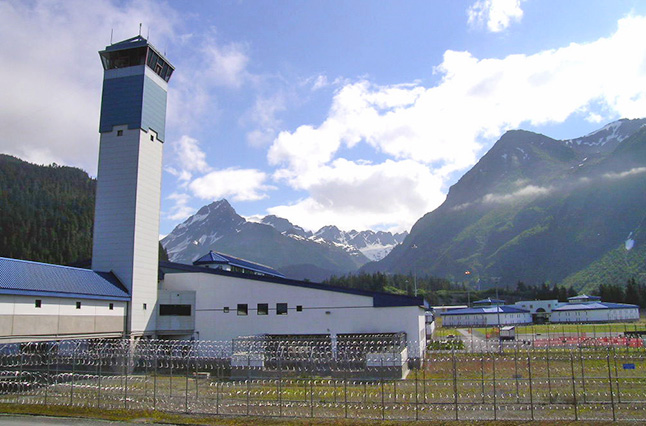
Fotu was arrested and lodged at Lemon Creek Correctional Center on the following charges:
Assault in the Third Degree (a Class C Felony)
Assault in the 4th Degree (a Class A Misdemeanor)
This investigation remains ongoing. Anyone with information regarding this incident who has not yet spoken with investigators is encouraged to contact the Juneau Police Department at (907) 586-0600. Anonymous tips can also be submitted through Juneau Crime Line at www.juneaucrimeline.com
Juneau police are investigating after human remains were discovered Sunday evening at a residence in the 6500 block of Glacier Highway. Officers responded after someone cleaning out the property of a deceased family member reported finding what appeared to be human remains inside a chest freezer in a locked outbuilding.
Below is the full press release.
JPD/CBJ- On Sunday, July 19, 2026, at approximately 7:59 p.m., the Juneau Police Department responded to a residence in the 6500 block of Glacier Highway following a report of possible human remains discovered on the property.
The reporting party advised officers they had been cleaning out the residence following the death of a family member when they located what appeared to be human remains inside a chest freezer in a locked outbuilding on the property.
Officers responded and confirmed the presence of deceased human remains. A preliminary identification has been made, and investigators believe the remains may be those of an adult male family member. Next of kin has been notified. Positive identification is pending confirmation by the State Medical Examiner’s Office.
The length of time the remains have been in the freezer is unknown. Investigators have determined that no missing person’s report related to the deceased was ever filed with the Juneau Police Department.
The remains have been transported to the State Medical Examiner’s Office, where an autopsy will be conducted to confirm the identity of the deceased and determine the cause and manner of death.
At this stage of the investigation, there is no known threat to the public. The investigation remains active and ongoing.
Anyone with information that may assist investigators is encouraged to contact the Juneau Police Department at (907) 586-0600. Those wishing to remain anonymous may submit tips through Juneau Crime Line at www.juneaucrimeline.com.
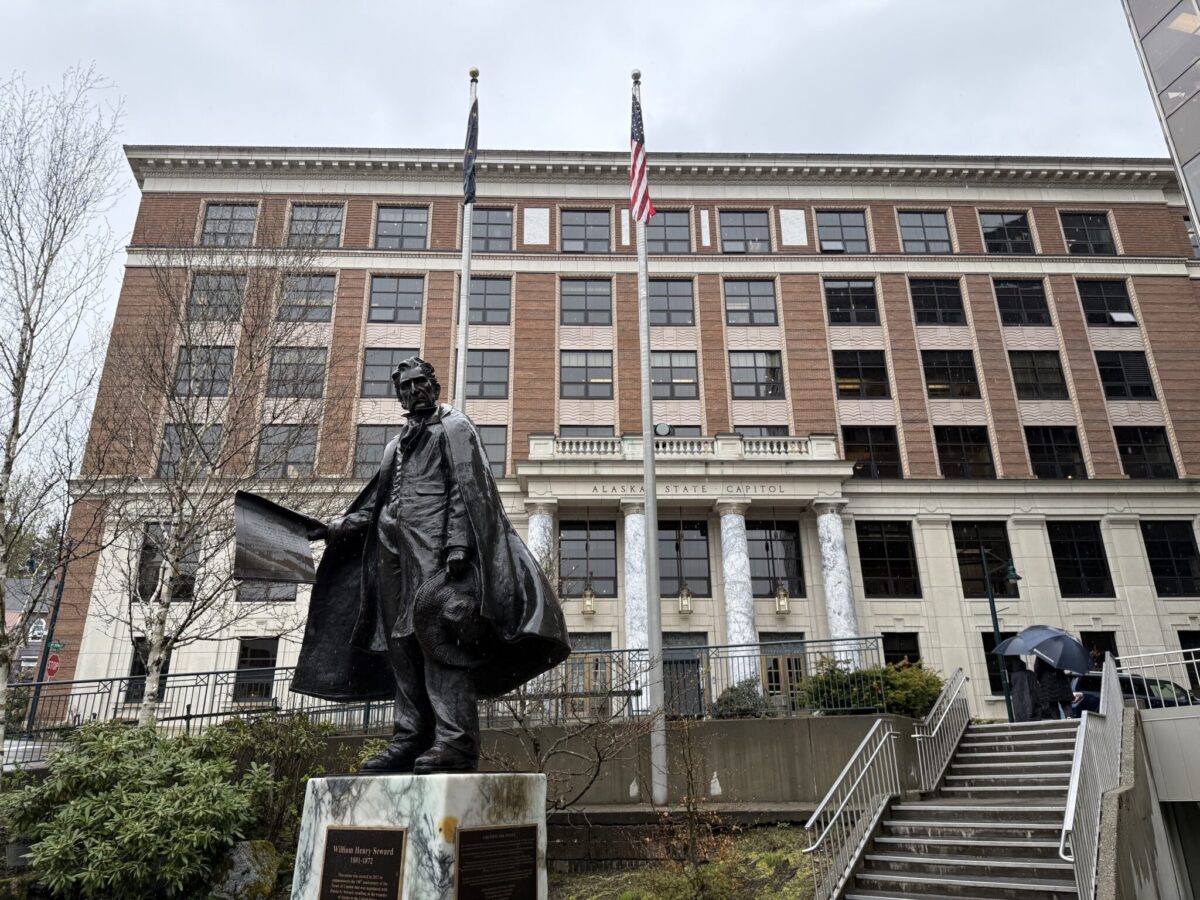
The Alaska State Capitol is seen on the last day of the legislative session on May 20, 2026. (Photo by Claire Stremple/Alaska Beacon)
The Alaska Legislature approved a broad omnibus crime bill that will increase criminal penalties for a variety of offenses and streamline victims services. The bill includes over a dozen pieces of legislation and garnered bipartisan support.
The Alaska Senate unanimously passed House Bill 239 on Tuesday, after assembling the combination bill package over the last several weeks. Lawmakers in the House concurred with the Senate’s changes by a vote of 39 to 1 on Wednesday morning. It now advances to Gov. Mike Dunleavy for consideration.
The omnibus crime bill includes provisions to create stricter criminal penalties for AI-generated child sexual abuse material, hit-and-run incidents and sexual assault by a healthcare worker. It also raises the age of consent from 16 to 18 years old and restructures the Alaska Board of Parole, among other items.
Sen. James Kauffman, R-Anchorage, spoke in support of the omnibus bill on Tuesday. “We hear of sausage-making in the legislative process — this is a big piece of sausage,” he said. “And having seen it in Senate Finance, I was impressed with the content, the quality of how so many things came together, and it came together so well.”
Sen. Matt Claman, D-Anchorage, speaks at a March 19, 2024, news conference held by the Senate majority caucus. (Photo by Yereth Rosen/Alaska Beacon)
Sen. Matt Claman, D-Anchorage, who chairs the Senate Judiciary Committee, carried the omnibus bill in the Senate. He noted that the state will carry some fixed and indeterminate costs for enacting the changes across several state departments, but said it’s worth the price tag to protect public safety and improve protections for victims.
“Changing the statutes is not enough. Sometimes it calls on us to have more prosecutors, more police and more people in the field to actually enforce these crimes,” he said on the Senate floor.
“I hear consistently from the public, when we look at these public safety measures, is ‘Who’s going to be there to enforce these laws?’ This is an example in which the fiscal notes reflect that this bill will cost money, but the public really believes in it, and they want these measures to take place, and they want our public safety professionals to go and do the things they need to enforce these laws,” he said.
Rep. Sarah Vance, R-Homer, speaks Friday, April 26, 2024, on the floor of the Alaska House of Representatives. (Photo by James Brooks/Alaska Beacon)
Rep. Sarah Vance, R-Homer, sponsored the bill to enact state criminal penalties for AI-generated child sexual abuse material, and spoke in support ahead of the vote. She spoke in favor of concurrence on Wednesday morning.
“There’s a couple of windows that I would like tighter, however we have to get agreement with every region of the state. And I think this bill does that. This bill prioritizes justice. And this is justice for all of those who have not had a voice,” she said.
Some members of the House all-Republican minority caucus raised concerns at the number of bills included in the omnibus bill and the need for more public discussion and hearing on the individual bills. But Rep. Andy Josephson, D-Anchorage, argued that hearing each bill would take legislators hundreds of hours and an omnibus bill was the best way to pass and enact needed criminal policy changes.
Rep Andrew Gray, D-Anchorage, backed a bill to raise the age of consent from 16 to 18 years old, aimed at prosecuting sexual violence against 16 and 17 year olds. “For years we were collaborating on this, whether we knew we were collaborating or not,” he said on Wednesday on the omnibus crime bill.
“We have the highest rate of sexual assault in the country, and the majority of victims being young. Being younger is a risk factor,” he said. “What we are doing today is telling predators that 16 and 17 year olds are off limits.”
The omnibus crime bill now includes:
House Bill 239 — would increase criminal penalties for hit and run incidents by drivers that cause a death and knowingly fail to stop and render assistance, and it establishes mandatory sentencing of four to seven years for a first hit and run felony conviction.
House Bill 101 — would raise the age of consent from 16 to 18 years old, with provisions to allow minors to consent to sex with someone up to six years older than them. The draft bill also allows 16 and 17 year olds to consensually exchange sexual or explicit messages within the six year close-in-age gap without penalties.
House Bill 62 — would establish a statewide tracking system for sexual assault examination kits, expedite processing times and ensure that survivors can privately monitor the status of their own kit. The bill was sponsored by the governor.
Senate Bill 100 — would establish the crime of organized theft, including mail theft and medical record theft.
House Bill 242 — would redefine criminal law to prohibit any sexual contact or assault by a healthcare worker during professional treatment, a change to the current law that only applies to patients being unaware of sexual contact or assault for criminal charges to apply.
Senate Bill 17 — would establish the crime of airbag fraud for knowingly selling, installing or manufacturing a counterfeit airbag in a vehicle.
House Bill 81 — would establish that minor marijuana related convictions remain confidential on individuals’ personal records, under certain criteria.
House Bill 384 — would expand confidentiality agreements between victims and service providers by updating the definition of “victim counseling center” to include tribal organizations.
Senate Bill 233 — would reassign the administration of the Controlled Substances Advisory Committee from the Department of Law to the Department of Commerce, Community and Economic Development.
Changes to the Board of Parole
The provision to restructure the Alaska Board of Parole was originally introduced by Sen. Löki Tobin, D-Anchorage, as Senate Bill 62 last year. The provision expands the Board of Parole from five to seven members, enacts term limits of no more than two five-year terms and implements new criteria for board seats.
The Board of Parole is appointed by the governor, and is charged with reviewing applications and eligibility for parole, for which there were 199 applicants last year. Advocates and lawmakers have raised concerns around Alaska’s parole approval rates dropping significantly in recent years — to some of the lowest rates in the nation.
Tobin and proponents of the changes to the parole board said the board’s workload was a reason to expand the board and said the added criteria for the board seats is important for fairness and accountability to those under review for parole.
The new criteria for board seats would require that one member be a licensed physician, psychologist or psychiatrist, one member have experience in the field of criminal justice, one member have experience in providing drug or alcohol addiction recovery support or who has personal experience with addiction, and one member of a federally recognized tribe in the state.
The entrance to the Anchorage Correctional Complex is seen on Aug. 29, 2022. (Photo by Yereth Rosen/Alaska Beacon)
Senators also added criteria for parole eligibility so that parole board members consider an applicant’s age at the time of offense.
While the officials with the Alaska Department of Corrections have said rising costs across the prison system are in part due to an aging population and increasing medical needs, the Board of Parole has not granted anyone geriatric or medical parole in the last five years, according to state data.
Senators included a new provision to allow the corrections commissioner to authorize medical parole of a prisoner, with electronic monitoring, if that prisoner has a terminal, permanent or progressively degenerative disease and is deemed to not pose a threat to public safety. Senators also included legislation introduced last year, Senate Bill 31, to establish an address confidentiality program to help protect victims of domestic violence or stalking and police or correctional officers and their families. Individuals enrolled in the program will have their mail forwarded to a designated post office box to help keep their home address private.
Hacker using laptop. Lots of digits on the computer screen.
By: Haley Lehman, Alaska Beacon
Hacker using laptop. Lots of digits on the computer screen.
The Federal Bureau of Investigation released a report Thursday that showed Alaskans lost nearly $40 million in cyber crime in 2025.
Special Agent in Charge Matthew Schlegel of the FBI Anchorage Field Office said it is the highest financial loss ever reported in Alaska for such crimes.
“Behind these numbers are real people – Alaskan families who lost hard-earned savings, retirement funds, and financial security,” he said in a news release.
Americans lost nearly $21 billion in cyber crimes in 2025, according to the FBI Internet Crime Report issued by the Internet Crime Complaint Center.
This chart outlines IC3 loss trends over a 10-year period for Alaska, with reported losses exceeding $158 million. (FBI graph)
Alaskans reported the 2025 losses in 3,202 complaints to the Internet Crime Complaint Center, making it the highest financial losses ever reported in Alaska in one year. Losses went up by $13.6 million since 2024.
The FBI encouraged people to identify red flags of a potential scam to protect themselves from cyber threats and crime.
“To combat this ever-evolving threat, it has never been more important for residents and businesses to be diligent with cybersecurity, electronic interactions, and safeguarding personal and financial information,” Schlegel said.
The greatest losses in Alaska were from investments-related fraud, confidence or romance fraud, compromised business emails and tech support scans. Approximately 482 Alaskans lost more than $18 million to cryptocurrency crimes.
According to the report, 20% of Alaskans who reported losses from internet crimes were 60-years-old and older who lost $16.2 million.
President Donald Trump issued an executive order on March 6 directing officials to develop a plan to prevent, disrupt, investigate and dismantle Transnational Criminal Organizations in order to stop cyber-enabled criminal activity.
“Cybercrime, fraud, and predatory schemes are draining American families of their life savings, stealing the benefits of years of work, and destroying the lives of our youth,” Trump wrote in the order.
Sen. Matt Claman, D-Anchorage, speaks Wednesday, April 23, 2025, on the floor of the Alaska Senate. (Photo by James Brooks/Alaska Beacon)
By: Corinne Smith, Alaska Beacon
Sen. Matt Claman, D-Anchorage, speaks Wednesday, April 23, 2025, on the floor of the Alaska Senate. (Photo by James Brooks/Alaska Beacon)
With only four weeks left of the legislative session, the Senate Judiciary Committee has merged several bills into a wide-ranging omnibus crime bill. Even with the tight timeline, some lawmakers are optimistic about its chances for passage before the end of the session.
The new draft omnibus crime package combines ten bills ranging from raising the age of consent to increasing criminal penalties for AI-generated child sexual abuse material into one large bill supporters hope will have the momentum to pass both the House and the Senate in the next 28 days.
The Senate Judiciary Committee chair Sen. Matt Claman, D-Anchorage, introduced the 55-page omnibus bill on Friday, saying the bills have a stronger prospect as a package.
“I think that increases the likelihood we’ll be able to pass it,” he said in an interview on Monday.
With one month to go in the second year of the two-year legislative cycle, this is the last opportunity for bills to be passed by the 34th Legislature.
The draft omnibus crime bill was added to House Bill 239, sponsored by House Majority Leader Rep. Chuck Kopp, R-Anchorage, who spoke in support at the hearing on Friday.
“This bill has grown, it’s gone from the sports car to the school bus” he said. “Policies I all support as a bill sponsor.”
Gov. Mike Dunleavy sponsored two bills included in the omnibus package, but did not respond to a request for comment on Tuesday.
The bills included are in various stages. Some have passed the House, while others are being considered by various committees in the House and Senate. Several lawmakers who sponsored bills now included in the omnibus package agreed that politically it could increase chances of passage by May 20.
Rep. Sarah Vance, R-Homer, sponsored a bill that would create state felony penalties for AI-generated child sexual abuse material. It unanimously passed the House last month.
“I’m excited that it’s included in the omnibus bill, because that shows intent by the Senate to pass the bill,” Vance said on Monday. “So I have great confidence that it will cross the finish line.”
But Claman, who is running for governor, has drawn public criticism for the process of how the omnibus crime bill was put together this session.
Advocates for raising the age of consent — along with the Anchorage Daily News editorial board — criticized Claman for holding a bill to raise the age of consent to 18 in the Senate Judiciary Committee, which passed unanimously by the House last year, in order to be included in the omnibus bill. Critics urged Claman and the committee to pass the bill and allow it to move forward as a stand alone bill toward a full Senate vote and final passage.
Claman has argued that despite limited time left in the session, the bills included have been vetted and the combination package will garner more support among legislators and the governor to pass in the last few weeks of the session.
“I’ve been in the Legislature now since 2015, and so in the last 11 years, we’ve passed 11 different bills relating to public safety,” he said. “So I think there are ten different measures that we put into the bill, and if we tried to do them all individually, probably wouldn’t get them all passed.”
Claman pointed to an omnibus crime bill, House Bill 66, enacted in 2024, with support from Gov. Mike Dunleavy and across political affiliations. “That’s certainly, I think, the best example,” he said. “So I do have confidence we’ll get it passed.”
Rep. Andrew Gray, D-Anchorage, speaks Friday, April 26, 2024, on the floor of the Alaska House of Representatives. (Photo by James Brooks/Alaska Beacon)
Rep. Andrew Gray, D-Anchorage, sponsored House Bill 101, the bill that would raise the age of consent from 16 to 18 years old. Backed by advocates for sexual violence prevention, he said the change in law is essential for protecting teens from sexual exploitation and abuse. Under current law, it’s legal for an adult to have sex with a 16 or 17 year old. But when they are assaulted, teens must prove that they did not consent.
Despite previous disagreement and pushing for a stand alone bill, Gray said Monday he will back the omnibus crime bill in order to see the law changed.
“If that happens, inside an omnibus crime package that has other bills that are also worthy of passage, I’m fine with that,” he said. “I just want the policy to change.”
The draft omnibus crime bill now contains ten bills that previously stood alone:
House Bill 239 — would increase criminal penalties for hit and run incidents so that drivers that cause a death and knowingly failing to stop and render assistance, and establishes mandatory sentencing of four to seven years for a first hit and run felony conviction
House Bill 101 — would raise the age of consent from 16 to 18 years old, with provisions to allow consent to sex with someone up to six years older than them. The draft bill also allows 16 and 17 year olds to consensually exchange sexual or explicit messages within the six year close-in-age gap without penalties.
Senate Bill 247 — would create state criminal penalties for creating AI-generated images or video that depicts sexually explicit or obscene content involving anyone under 18 years old
House Bill 62 — Sponsored by Gov. Mike Dunleavy, the bill would establish a statewide tracking system for sexual assault examination kits, expedite processing times, and ensure that survivors can privately monitor the status of their own kit.
Senate Bill 100 — Also sponsored by the governor, and would establish the crime of organized theft, including mail theft and medical record theft
House Bill 242 — would redefine criminal law to prohibit any sexual contact or assault by a health care worker during professional treatment, changing the current law which only applies to patients being unaware of sexual contact or assault for criminal charges to apply.
Senate Bill 17 — would establish the crime of airbag fraud for knowingly selling, installing or manufacturing a counterfeit airbag in a vehicle
House Bill 81 — would establish minor marijuana related convictions to remain confidential on individuals personal records, under certain criteria
House Bill 384 — would expand confidentiality agreements between victims and service providers by updating the definition of “victim counseling center” to include tribal organizations
Senate Bill 233 — would reassign the Controlled Substances Advisory Committee from being administered by the Department of Law to the Department of Commerce, Community and Economic Development.
The new version of Vance’s bill focused on AI-generated child sexual abuse material included in the bill is closer to her initial proposal. Social media controls for minors added by the House were stripped out of the Senate version. Vance said she supports the amended version given First Amendment protections around social media.
“I think that was a wise decision right now, because Alaskans are very mixed on how they feel that we should address social media,” Vance said.
Rep. Sara Hannan, D-Juneau, is the sponsor of House Bill 242, and said she supports her bill being included in the Senate omnibus, but she is still pushing to advance her standalone bill in the House.
Rep. Sara Hannan, D-Juneau, speaks on the House floor on Apr. 13, 2026. (Photo by Corinne Smith/Alaska Beacon)
“I need people who didn’t serve on the two committees that heard it in the House to understand it,” she said, as the Senate draft will come back to the House for a concurrence vote. “It still helps to educate on the issue.”
Hannan’s legislation follows a high profile case in Juneau last year where the court dropped several charges against a chiropractor because under current law part of the legal definition of sexual assault by a medical provider requires the alleged victim to be unaware the assault is happening.
“Right now, the victim needs to be unaware, and the perpetrator needs to know that they are unaware,” Hannan said Tuesday. “So to change that in statute, I think is an important policy statement for us to make.”
Hannan said significant policy bills typically take several years to get through the Legislature, with public input, debate and support gathering. But she expressed confidence in the support for the omnibus crime bill in the weeks ahead.
“We’re running the clock down,” she added. “The only downside, from my perspective, is the advocates and the victims that were directly involved in the case that inspired this bill. You know, they get more acknowledgement when it’s the standalone bill… But in the end, if the goal is to change the policy, there’s no downside to it.”
The Senate Judiciary Committee will continue to hold hearings on the crime bill this week and its members have until Friday to introduce amendments before it advances to the Senate floor for a vote. Claman said he expects that to be in the last week of April.
Craig Scott Valdez, courtesy of the U.S. Attorney’s Office for the District of Alaska
NOTN- Craig Scott Valdez, a former chief of staff for an Alaska Legislator has been arrested in Juneau on federal charges accusing him of sex trafficking and exploiting children.
According to the Juneau Independent, Valdez served as chief of staff to Senator George Rauscher.
The Federal Bureau of Investigation says a federal grand jury returned an indictment charging 36-year-old Craig Scott Valdez with sex trafficking of children, production of child pornography, coercion and enticement of minors, and receipt of child pornography.
According to the U.S. Attorney’s Office for the District of Alaska, Valdez allegedly used the social media app Snapchat to identify and groom juvenile girls for sexual exploitation.
Court documents reference one child victim in an alleged incident in October 2025, but according to a press release, Valdez is believed to have additional victims in Anchorage and Juneau.
Authorities say Valdez worked in both Anchorage and Juneau.
He is scheduled to make his initial appearance February 23, If convicted, Valdez faces a mandatory minimum of 15 years in prison and could receive a life sentence.
Officials are asking anyone with information, or who may have encountered someone using the name Craig Scott Valdez or the usernames “NONAME20233132” or “DOCHANK,” to contact the FBI at (907) 276-4441.
Spring Creek Correctional Center is seen in an undated photo. (Photo courtesy of Alaska Department of Corrections)
Officials with the Alaska Department of Corrections told lawmakers a “large fight” with a hefty price tag broke out at the state’s maximum security prison in January, amid downsizing and cost-cutting efforts.
The fight at Spring Creek Correctional Center involved 50 inmates, some of whom sustained minor injuries, officials said.
“Quick napkin math, we believe it to be just under $200,000 that that cost us,” Jen Winkelman, the commissioner for the corrections department, told lawmakers. “Anecdotally, the pressures of moving the individuals around and being at capacity in our max unit — I believe that, (and) we all believe that that plays a part in it,” she said.
She said the altercation increased agency spending on medical and transportation costs to transfer those involved.
The disclosure came in a budget update to members of the House Finance subcommittee for DOC on Feb 10, as lawmakers are reviewing the department’s additional $24 million spent last year, and request for just over a $500 million budget for next year.
April Wilkerson, deputy DOC commissioner, and Kevin Worley, DOC administrative services director answer questions from lawmakers on the department’s budget on Feb 12, 2026. Jen Winkelman, DOC commissioner is seen in the audience. (Photo by Corinne Smith/Alaska Beacon)
Spring Creek is the state’s only maximum-security prison for men, located just outside Seward on the Kenai Peninsula, and housed approximately 375 inmates last year.
Last year, the legislature directed DOC to close one of three housing units at the prison, which contained 247 beds, as a cost-cutting measure. It was intended “to direct personnel to other areas of the facility, reduce overtime and find efficiencies,” according to a presentation by DOC officials.
The housing unit was closed July 14, and the inmates relocated to other housing in Spring Creek and to other prisons across the state, April Wilkerson, deputy commissioner told lawmakers. She said Spring Creek is now over capacity, with a waitlist of inmates to transfer into the maximum-security prison.
“Ultimately we are not achieving the savings that was identified in the department’s budget,” Wilkerson said.
According to the department, a fight broke out between two groups of inmates on Jan. 24. It involved 50 people, according to department spokesperson Betsy Holley. “Staff responded quickly. 5 inmates had non-threatening injuries and were treated. No staff were injured,” she said in an email after the hearing.
Holley said the fight lasted approximately 10 minutes, and staff responded effectively. “Those inmates involved are currently undergoing the discipline process,” she said, according to DOC policies, which may include suspension from activities or solitary confinement.
Holley said there were no further details on the cost estimate.
On Thursday, Winkelman said in a short interview between hearings at the Capitol that DOC officials reported the incident to lawmakers to illustrate how incidents can occur beyond the department’s control.
“These things happen, and they have a cost incurred, and we can’t plan for it,” Winkelman said. “It happened at eight o’clock in the morning. But they happen often — little things happen often, that have big price tags. So that’s the point that we’re trying to make.”
The scales of justice are seen in an undated photo. (Getty Images)
The Alaska Court of Appeals has rejected an appeal from a man who received one of the highest prison sentences ever given in Alaska to a juvenile convicted of murder.
In an order published Friday, the court concluded that the recantation of a key witness is not enough to warrant a retrial for Brian Hall, who was 17 at the time. In 1995, Hall was sentenced to 159 years in prison for the killing of two men in Anchorage, Mickey Dinsmore and Stanley Honeycutt.
Despite the rejection, wrote Judge Marjorie Allard on behalf of the court, Hall is eligible for resentencing as part of a wave of juvenile punishments being reconsidered by state courts.
“At sentencing, the court sentenced Hall to 159 years to serve, one of the highest sentences — if not the highest sentence — that a juvenile tried as an adult in Alaska has ever received,” she wrote. “As a juvenile sentenced in 1995 to a de facto life without parole sentence, Hall has been granted the opportunity for a resentencing in which his youth and the unique attributes of youth will be appropriately considered.”
In 2012, the U.S. Supreme Court ruled that the Eighth Amendment prohibits courts from sentencing children to life in prison without the possibility of parole, except in homicide cases.
Two years ago, the state appeals court said the Alaska Constitution imposes further limits in addition to those provided by the U.S. Constitution.
Since then, Alaska courts have resentenced several former juveniles who were sentenced to long terms in prison. In September, Alaska’s youngest convicted female murderer was released from prison on parole after 40 years behind bars.
Hall, who has been in prison for 30 years, could receive similar treatment.
At the time of his trial, Hall claimed he acted in self-defense and that he believed, based on a statement from then-15-year-old Monica Shelton, that Dinsmore and Honeycutt — the people he killed — were armed.
At trial, Shelton denied telling Hall that the two were armed. Hall was convicted and sentenced with that testimony.
While in prison, Hall married Angela Diaz (now Angela Hall), and Angela hired a defense investigator who got in contact with Shelton. In a recorded interview, Shelton said she was scared at trial and lied in her testimony.
In an interview with the Anchorage Daily News, Hall said he is full of remorse about his crime and isn’t the same person he was at 17.
Years of legal arguments followed the investigator’s interview as Hall first requested a new trial, then asked for post-conviction relief.
Superior Court Judge Adolf Zeman dismissed that request, siding with state prosecutors who had raised procedural errors, including the idea that Hall’s filings were too late.
He also concluded that Hall failed to show that Shelton’s recantation would “probably result in an acquittal,” the standard that applies to timely filings for post-conviction relief.
Allard, writing on behalf of the appeals court, overruled Zeman on the procedural elements of Hall’s argument but concluded that even with the recanted testimony, it wasn’t clear that a new trial would result in a new outcome.
“The problem that Hall still faces, notwithstanding Shelton’s recantation, is that the rest of the evidence from trial indicates that Hall’s mistaken belief that he had to use deadly force … was not objectively reasonable,” she wrote.
“Hall was required to show that, viewing all the well-pleaded facts in the light most favorable to Hall, it is “highly probable” that Shelton’s recantation would result in an acquittal at any retrial,” Allard said.
“But while Shelton’s recantation constitutes important new evidence that sheds more light on Hall’s motivations and the reasons for his subjective fear, it does not alter the fact that his actions in shooting both men still appear overly impulsive and objectively unreasonable under the circumstances.”
Even with that finding, Hall is eligible for resentencing, Allard said.
“As part of that resentencing, the court should take into account Shelton’s recantation and the effect of that recantation on Hall’s level of culpability.”
The Alaska state crime lab in Anchorage seen on May 6, 2024. (Photo by Yereth Rosen/Alaska Beacon)
State and local law enforcement officials announced a breakthrough on a more than 25 year old cold case in Juneau this summer, thanks in part to a DNA analysis tool at the Alaska Scientific Crime Detection Lab.
Darryl Bruce Fawcett, an Alaska Native man, was 28 years old when he went missing in 1999. His remains were found by divers in the Gastineau Channel in 2004. In July, with the help of a tool that analyzes DNA from bones, officials said they were able to compare a sample with a family member’s DNA and identify Fawcett.
Darryl Bruce Fawcett was identified in July of 2025, after going missing in 1999. (Photo from Juneau Police Department’s missing persons page)
“It is pretty rare, especially (with) that amount of time to have passed,” said Juneau Deputy Chief Krag Campbell, in August. “So I’m just happy that the family was able to get some closure on this.”
The forensic method is not new, but the Alaska Scientific Crime Detection Laboratory was able to adopt it with new federal grant funding, said crime lab chief David Kanaris. Forensic scientists are able to extract DNA from bones or teeth, which can be compared to DNA of a missing person or relative to make an identification.
Previously, bone samples would be sent out-of-state for testing, usually to the University of North Texas, Kanaris said. The state may continue that practice as needed. “We saw real value in bringing on an ability to do most of the work here in Alaska, where we can,” he said.
Cheryl Duda, a forensic scientist and DNA technical leader at the crime lab, said this forensic method is one of many that investigators use when unidentified remains are recovered.
“For many years now, our laboratory has been able to do testing on a very wide variety of body tissues like blood, saliva, hair roots and skin cells, but all of those are very soft tissue types,” she said. “What is different about this technology that we’re bringing online is it’s a method to extract DNA from bones.”
Duda said that first, any unidentified remains reported to the state go through the Alaska State Medical Examiner’s Office, which determines first if they are human or animal. If deemed human, and a bone or tooth is recoverable, the agency will send a sample to the crime lab for analysis. The DNA is then entered into a national DNA database, the Combined DNA Index System, commonly called CODIS, where investigators can search for a match.
The database can compare the sample with samples of known missing persons, family members, or other samples that law enforcement has collected from crimes or that have been submitted by the public.
“That’s the big first step for us, is generating this profile in the hopes of getting that match or that association in state, so that we can report those results,” Duda said.
Jennifer Foster is a forensic scientist and supervisor at the crime lab, and said that the next step requires coordination across agencies. State employees work with the Federal Bureau of Investigation that governs CODIS, other forensic labs, and local and state law enforcement departments conducting investigations. “So there’s a lot of communication,” she said.
Officials at the crime lab say they’re working on a list of remains to be tested from the Alaska Medical Examiner’s Office, and cases are prioritized as they come into the lab. Once DNA samples are entered into the national database, the search continues.
“So that profile routinely searches every night,” Duda said. “It does missing persons searches monthly. Relatives of missing person searches monthly. So as long as it doesn’t need to be removed for whatever reason, it stays in there and will search.”
Austin McDaniel, director of communications for the Alaska Department of Public Safety, said the state has analyzed three more cases since August, but no identifications have been made.
McDaniel said each case of unidentified remains is prioritized as it comes in through the Medical Examiner’s office, and investigators pursue and coordinate leads for identification. He said the new tool won’t necessarily unlock the state’s cold cases.
“If pulling DNA from bone fragments would have been helpful before, you know, either the crime lab or the medical examiner could have sent that out to other labs to have it completed. So I wouldn’t say there’s, like, this huge backlog of cases that just haven’t ever been worked,” he said.
There are currently 60 unidentified persons cases open in Alaska, according to the National Missing and Unidentified Persons Database, which goes back to 1968. The most recent unidentified remains on that list are bones found in a creek on Aug. 24 in Anchorage.
McDaniel said new DNA samples also get shared with the national database by the public through commercial at-home genetic testing, which can be shared with law enforcement. “That’s usually a box people can check, something like that might happen. Or maybe we go through and have family members reach out to us and offer familial DNA samples that can be compared against,” he said.
McDaniel said local law enforcement investigators can request the DNA analysis as they pursue leads. “An investigator from any number of agencies, not just the Troopers, as they’re trying to go through and maybe work on some of these cases they might go through to reach out to a family member proactively that they suspect might be related to the decedent, and see they can collect a voluntary sample from from them,” he said.
Kanaris, as head of the crime lab, acknowledged these are sensitive cases, especially as Alaska grapples with a crisis of missing and murdered Indigenous people. Alaska Native residents are disproportionately victims of violent crime. At least 27% of the 1,268 known cases on the state’s Missing Persons Clearinghouse database, managed by the Alaska Department of Public Safety, involve Alaska Native people.
“We have worked with the tribal liaisons, understanding that a lot of these bones may come from Alaska Native remains,” Kanaris said. “And so we want to handle these samples as sensitively as we can and be as culturally aware as we can.”
He said another benefit of having this DNA analysis tool in the state’s crime lab, is handling cases more promptly.
“They’re going to involve less transit time. The bones are going to stay in state, and they will, hopefully, be able to be returned to the families for closure as soon as possible. That would be one of the benefits of this,” he said.
“I’d like to see us be able to work as many of the samples, not just with bones, but across the board, with forensic science samples in Alaska, at the Alaska crime lab,” he said. “So I think this is a big step forward for us.”