According to the proposed ordinance, when an officer-involved shooting occurs that causes death or serious injury to an officer or someone else, Juneau Police Department would release body-worn camera footage no later than 30 days after the incident. (Photo courtesy City & Borough of Juneau website)
A Juneau Police Department vehicle(Photo courtesy City & Borough of Juneau website)
A woman was arrested and a man was hospitalized following an altercation outside the Douglas Library on Wednesday evening, according to the Juneau Police Department.
Police responded to a report of a woman fighting with a man near the library at approximately 7:32 p.m. on July 30. Officers identified the woman as Marisa Didrickson, 47, of Juneau, and the man as a 52-year-old Juneau resident.
According to police, Didrickson allegedly threw water in the man’s face and made racially charged remarks, including comments suggesting the man, who is black, did not belong in Juneau. She was arrested on a charge of disorderly conduct.
As officers attempted to place Didrickson into a patrol vehicle, she continued to shout at the 52-year-old man and directed a 49-year-old male friend to “take care of him,” while nodding toward the man, police said.
The 49-year-old, also a Juneau resident, then approached officers in what police described as an aggressive manner. the man was taken to the ground during arrest and sustained a head injury.
He was transported by Capital City Fire/Rescue to Bartlett Regional Hospital and later medevacked to Anchorage for further treatment.
Didrickson was transported to Lemon Creek Correctional Center. The incident remains under investigation, police said.
The press release comes after a video was circulated by a civilian on social media.
The arrest has sparked controversy in comments, with some saying the officer used unnecessary force.
The Juneau Police Department has requested and was granted assistance from an outside law enforcement agency to lead an investigation into the officer’s use of force in this incident.
Once the agency concludes its investigation, the State of Alaska Office of Special Prosecutions will review the case to determine whether the use of force was consistent with AS.11.81.370. The Officer involved has been placed on administrative leave per department policy. Their name will be released following the investigating agency’s review. In accordance with CBJ code, body-worn camera footage related to this incident will be released and posted on the JPD website 30 days from the date of the incident.
Photo provided by CBJ following the installation of the HESCO barrier project
Photo provided by CBJ following the installation of the HESCO barrier project
NOTN- Deputy Mayor Greg Smith joined KINY’s morning show on Thursday to recap Wednesday’s joint flood initiative meeting, discussing long-term solutions for flooding caused by the Mendenhall Glacier’s Suicide Basin.
In the short term, HESCO barriers remain the primary line of defense for vulnerable neighborhoods.
“We’re approaching historical release times” said Smith, “I mean, of course, everyone is crossing their fingers and just hoping for the best possible outcome.”
The Army Corps emphasized that a more permanent solution—such as a levee around Mendenhall Lake, is likely necessary. But planning and engineering such infrastructure takes time.
“they’re doing studies, but they need to know, you know, what is the risk from Suicide basin, in 5 years, what’s the risk in 50 years? There are more basins back up behind the glacier, and they need to know what those situations could be.” He said, “There’s a lot of factors that go into it. So for them to engineer a viable, long-term solution that will not fail, it does take time. We’ve heard them say it’s probably the top issue for the Army Corps in the state of Alaska.”
A federally funded technical study is underway, and officials hope that data from current modeling and previous floods will help shorten the usual multi-year timeline.
Still, even an expedited timeline might take seven years or more, but Smith says he’s optimistic about that timeline.
“The fact that we just got federal money to do this technical study is tremendous.” Said Smith.
With the Alaska Legislature back in town for the special session, Smith urged residents to take the opportunity to raise the issue with state lawmakers.
“I think some of the takeaways for people, is letting our congressional staff or congressional delegation know the importance.”
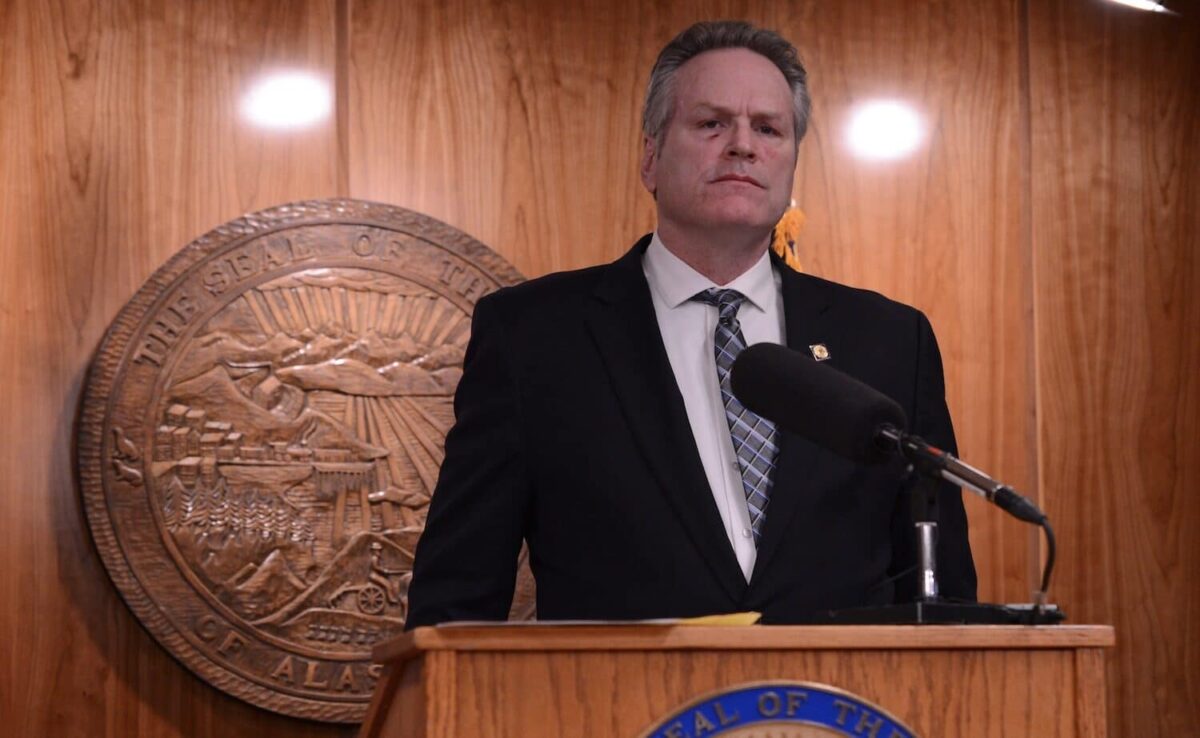
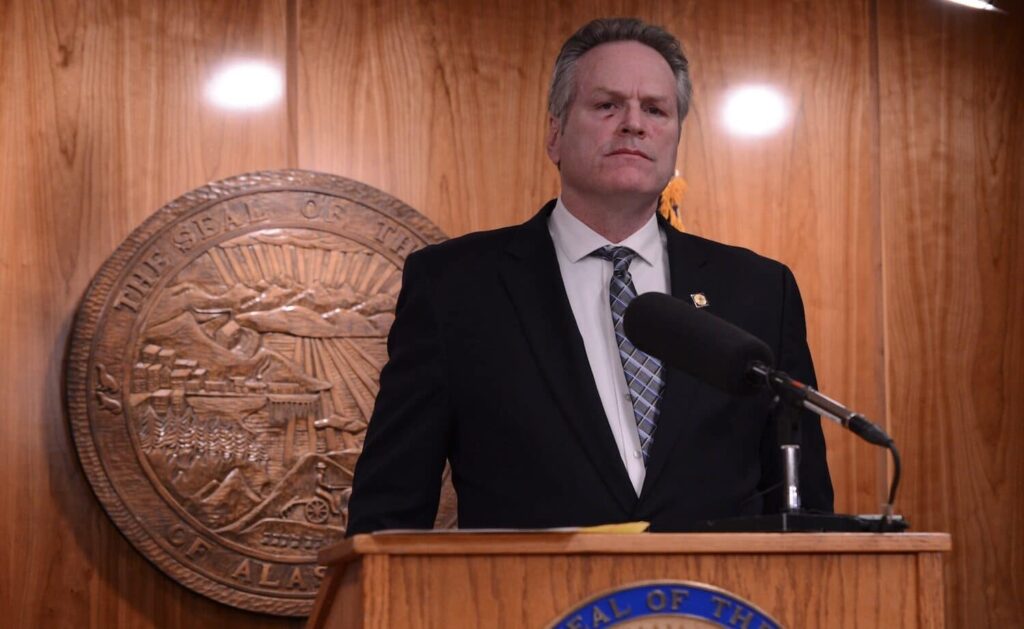
Alaska Gov. Mike Dunleavy speaks during a news conference on Friday, March 15, 2024. (Photo by James Brooks/Alaska Beacon)
Alaska Gov. Mike Dunleavy speaks during a news conference on Friday, March 15, 2024. (Photo by James Brooks/Alaska Beacon)
NOTN- The Alaska Legislature will reconvene in Juneau on Saturday for a special session called by Gov. Mike Dunleavy, with two major items on the agenda: education reform and the creation of a new Department of Agriculture. But lawmakers are also preparing to challenge some of the governor’s recent vetoes, including cuts to public school funding.
Under Alaska’s constitution, when the governor calls a special session, he sets the subjects lawmakers may address.
“He has, apparently, a new education bill. Most of it is stuff that we have seen before, that he’s proposed before, and that has not had a lot of support.” Said Juneau Senator Jessie Kiehl, “And the other thing he wants to take another crack at is creating an Alaska Department of Agriculture. We have a Division of Agriculture. He wants it to be its own State Department.”
But overriding vetoes may take center stage during the first five days of the session, a constitutionally limited window for legislators to reverse the governor’s decisions.
At the top of the list: restoring approximately $51 million in statewide public school funding that Dunleavy vetoed.
That override will require a three-quarters majority, or 45 votes.
“It is the highest, toughest veto override threshold in all 50 states or any of the territories.” Said Senator Kiehl, “I have talked to colleagues all over this state, Republicans, Democrats, rural, urban and the agreement is our schools are hurting, and they need that money.”
Lawmakers are also considering overriding a veto of a bipartisan bill that would empower the Legislative Auditor to review oil tax enforcement practices
That override will require two-thirds of the Legislature, or 40 votes.
In addition to the override votes, lawmakers may consider a commercial fishing bill and discuss items in the governor’s education package through the new legislative Education Task Force.
A recent report suggested that Dunleavy had asked some minority Republicans to stay home in an effort to block override votes. Kiehl said he believes most lawmakers plan to attend.
“My understanding is that in the last week or so, the governor has come the other way and said, everybody, go ahead and be there.” He said, “The Constitution has some rules for how you do your job when you raise your right hand as a legislator elected by the people and take on this duty, I don’t believe in cutting work when I’m on the job, I think the vast majority of my colleagues feel the same way.”
Bill introductions are scheduled for the session’s opening day, August 2, with hearings requested to begin Sunday, Aug. 3.
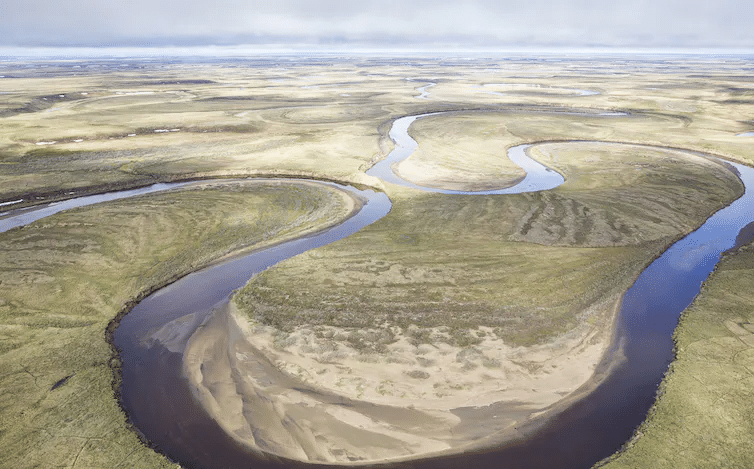
Several oil projects are active in the National Petroleum Reserve in Alaska. (Photo by Bob Wick/Bureau of Land Management, CC BY-SA)
The U.S. Department of the Interior announced on Thursday that it will revoke three documents intended to form the basis for limits on oil drilling in the National Petroleum Reserve in Alaska.
Those documents, and the limits themselves, were issued in the last year of President Joe Biden’s administration.
Since his election, President Donald Trump has prioritized administrative moves that would reverse Biden decisions limiting oil and gas drilling in Alaska.
That decision followed prior decisions by the Biden administration and President Barack Obama’s administration that put about half the reserve off limits to oil development.
Thursday’s announcement, rescinding three planning documents, is a step toward that end.
On Wednesday, ahead of the official notice in the Federal Register, all three members of Alaska’s congressional delegation expressed support for the move and praised the Trump administration for taking action.
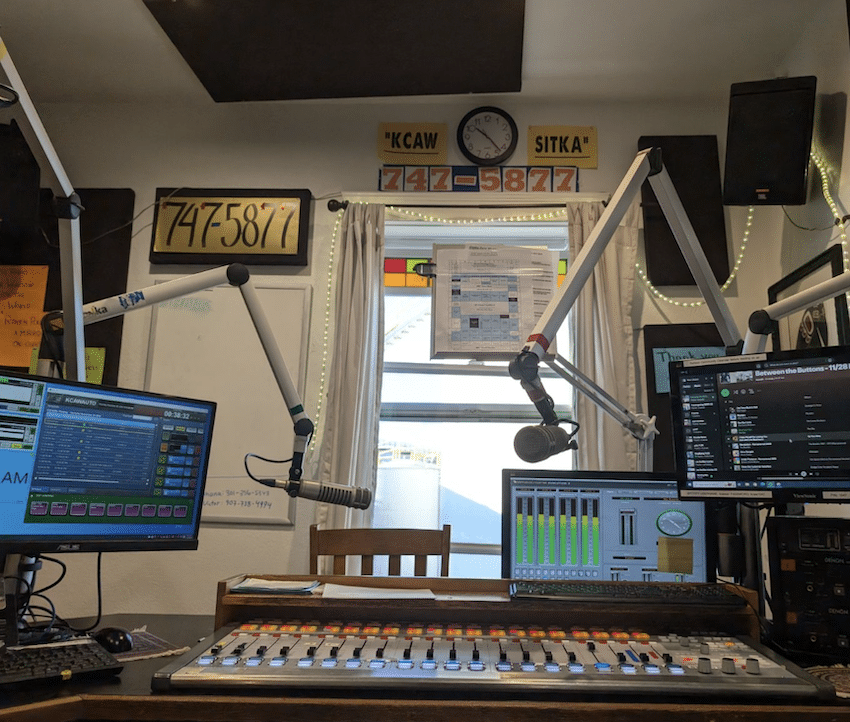
KCAW in Sitka is one of more than two dozen public radio stations broadcasting across Alaska. (Photo by Nathaniel Herz/Northern Journal)
On July 17, Congress voted to eliminate federal funding for public media across the United States.
The cuts, called a “rescission” in Congress-speak, are huge: They will take away some $1 billion that the federal government had previously allocated for the next two years to the Corporation for Public Broadcasting, which provides funding for national outlets like NPR and PBS as well as local radio and television stations with much smaller budgets.
That funding is essential to many of Alaska’s local news outlets. It’s no exaggeration to say that losing that money — which was slated to be delivered starting September 30 — threatens the very existence of some stations that provide news coverage and other programming, like emergency alerts, around the state.
To get a sense of how local radio and television stations are responding — and what their leaders expect in the months ahead — Northern Journal correspondent Max Graham sent some questions to two longtime public media employees in rural Alaska: Sage Smiley, news director at KYUK in Bethel; and Lauren Adams, general manager at KUCB in Unalaska.
Below are their responses, lightly edited for brevity.
What have the last few days been like for you and your colleagues? How are you feeling?
Sage Smiley: We’ve spent seven months facing – and trying to publicly push back on – an increasingly likely existential threat to public broadcasting. It’s been exhausting, and demoralizing.
Beyond the threat to our jobs, or even to this station we care so much about and where we’re trying to serve the communities of the Yukon-Kuskokwim Delta, it’s incredibly concerning and challenging to see the attack on journalism and on that pillar of democracy that this and other actions by the Trump administration represent.
In a way, though, rescission of funds has been deeply motivating to the news staff. We may be in the unique position of defining the end of a chapter of KYUK’s newsroom history, and want to do the best job we can, for as long as we can, serving the mission of KYUK and its newsroom.
Lauren Adams: On the day that the vote took place, KUCB’s entire staff was working to inform our community about a tsunami evacuation following a large earthquake in the region. Our entire community, including the fishing industry workers, were evacuated to high ground. Our emergency response went off without a hitch, and we worked in tandem with our community’s public safety department. It was a huge affirmation of our connection to the community and our important mission.
That night, I was very happy to hear U.S. Sen. Lisa Murkowski speak about KUCB on the Senate floor in defense of Corporation for Public Broadcasting funding. It was incredibly disappointing that her colleagues didn’t hear the message and that they voted in favor of the rescission.
The following days were really low! There was a sadness and a heaviness in the office that I haven’t experienced before. I know my staff was concerned about the future of their jobs and we met as a group the following day to talk through their concerns.
I told them that we will have to make changes in the future but for now we will use reserves to keep our essential services up and running and those services depend on having people on the payroll. In short, we aren’t cutting staff right now.
In my case, I am beyond frustrated and dismayed looking at a budget that’s just not going to balance this year without severe cuts. The federal funding cut comes on the heels of already lean years, given the lack of funding from the state of Alaska, which was eliminated under Gov. Mike Dunleavy.
One silver lining has been seeing donations come in every day from people all across the country expressing their support for the work we do. While the funds won’t fill the gap made by the elimination of federal funding, the sentiment and the comments have been a real morale boost for all of us.
Could you help readers understand how significant federal funding is for your station? What proportion of your budget does it account for, and what does it pay for?
Smiley: KYUK is both a radio and a television station, called a dual licensee, so we receive two community service grants each year from the Corporation for Public Broadcasting. Together, those grants represent about 70% of KYUK’s operating funds – over $1 million. That money pays for everything from salaries to equipment to travel on bush planes for reporting.
Adams: Federal funding last fiscal year was over $280,000, over 40% of our total budget. We had it budgeted at $289,602 for this fiscal year, which started on July 1. That was 45% of this year’s projected budget. There is no replacement for these funds. Our community is small but residents support us in substantial ways already. We estimate that about 8% of people in Unalaska are KUCB donors and also support us through daily non-monetary acts of generosity. We have consistently done well with local fundraising allowing us to match federal funds with local income. But we can’t expect community members to fill this gap: It’s just not possible.
Funding from the Corporation for Public Broadcasting supports KUCB’s local news content, a comprehensive community calendar, emergency alerts, health and safety information and government accountability through live broadcasts and streaming of municipal meetings.
What are your expectations for your station moving forward?
Smiley: KYUK has been a community institution broadcasting to the Yukon-Kuskokwim Delta for over 50 years, committed from the beginning to uplifting Yup’ik voices. Our call letters, Y-U-K, were picked because Yuk means “real person” in Yugtun, the Yup’ik language. Our ultimate goal is to stay on the air, which we have to do to keep our licenses. KYUK is unique and incredible – the only station I’m aware of in the state broadcasting news and public affairs that provides shows bilingually on a daily basis – and we want to preserve that legacy of support for Yup’ik language and culture, however possible.
The entrance to KYUK in Bethel. (Photo by Nathaniel Herz/Northern Journal)
Adams: We had a reporter leave the station in June to fill a Report for America position in Texas. Because I was concerned about funding, I chose not to post that position until we had a better sense of federal dollars. That means we started the fiscal year with a little financial breathing room, but also with a newsroom that was down by a quarter of our former reporting capacity. Thankfully, we have a summer news intern funded by Alaska organizations promoting journalism and community development. When she leaves next month, our community will start to notice the reduction in news coverage, which is unavoidable.
At this point, I don’t know exactly what we will sound like. We will have to meet with our board of directors and with community leaders to make changes under their guidance. I imagine that we will have to sacrifice some of our daily news coverage during times when we have a lot going on.
For instance, we are going into our municipal election season and this is a mayoral election year. I am confident that we will hold our usual forums and we will produce a voter guide as we do every year. This is an important responsibility for us because we employ the only reporters in the community. But if our staff is doing this work, we will have to give up the other stories and newscasts in order to prepare for the forums. We need to be mindful of not burning out staff by just piling more work on the two remaining members of the news team.
We are lucky because our studio is located in a municipal building and the rent is free. We also receive an operations grant from the City of Unalaska. Because of this, I don’t fear that our station will go dark. My bigger concern is that we will be more of a repeater station, playing statewide content instead of local content, and that we won’t have the staff to cover the region’s news and events and we won’t be as effective during an emergency.
I imagine news of the lost funding has brought up, or will bring up, some pretty tough conversations at your station about programming cuts and layoffs. Could you shine some light on those discussions if you’ve already had them? Or are you still waiting and seeing what the full impacts will be?
Smiley: There’s a lot that’s still unclear, and I would say that at this point, KYUK’s future is also unclear. Seventy percent of our funding will cease to exist at the end of the federal fiscal year on September 30. That’s catastrophic. We may have to make drastic cuts to staff in order to keep providing basic broadcasting to the communities we serve.
Adams: We are hoping to hold off on layoffs for at least six months using reserves. In the meantime, we will strip our station budget down as much as possible while maintaining as much of our essential content – local news and information – as possible.
Places where we can cut immediately include syndicated programming, interconnection costs, travel, training, dues and subscriptions, computer hardware and software purchases, internet and phone, and potentially utilities. In the future we might turn off broadcast television and focus on our radio operations, but this is a hard choice that requires giving up a broadcast license that we have held locally for 50 years.
I’ve heard some talk that potential funding from philanthropists could make up for the lost federal spending. Is that really a possibility? Or are there other funding alternatives that are giving you hope?
Smiley: Our fall fundraiser usually brings in around $50,000, and our federal grants are 20 times that. As an ardent lover of the public broadcasting system, I would be overjoyed if a philanthropist decided to fund the network in perpetuity. But I don’t think that’s realistic, or a real solution. The whole point of the public broadcasting system is the system, and the commitment of the United States government to supporting that egalitarian, deeply democratic, equal-access system. It’s the fact that public broadcasting reaches 99% of Americans. It’s that it’s free, and available practically everywhere. A patchwork solution, one that doesn’t preserve the entirety of the system, isn’t going to address what will be lost more broadly.
Adams: I am in one of the most remote corners of the state and I might not be the one to ask about major philanthropy donors and the advocacy efforts. We have a small staff and all of us are working daily to keep our systems up and running and to provide the services that our community relies on. I don’t have the resources to go after major donors. At the statewide level, I think we are all doing our best to try to envision a future where there’s increased funding from philanthropists and donors. I don’t know how quickly this could come together or how sustainable the model would be.
I think that federal funding filled a need, and we were a great fit for the funds because we brought crucial health and safety services to our remote community. I am not aware of a viable long term substitute for Corporation for Public Broadcasting funds.
With that said, I would love to see restoration of public media funding in our state budget. We’ve always received bipartisan support for state funding until the line gets vetoed by the governor. Maybe given the new funding circumstances, and the real need for the services that public broadcasters provide in Alaska, we could see restoration of some state funding.
I also know from years of experience at KUCB that building a station’s relationship with a community, and establishing an award-winning news team, takes a lot of time and effort. I also know that while it’s slow to build, it’s very quick to erode. With reduced news staff, fewer editors, reduced equipment maintenance, and cuts to our services, we will see a spiral of reduced local income.
Could you highlight recent work at your station — whether news reporting or other programming — that wouldn’t have been possible without federal funding and that illustrates the importance of your station to your community?
Smiley: Everything you see on KYUK’s website is supported by federal funding. Our calendar of fisheries openers. The local newscasts in Yugtun and English. Yup’ik Word of the Week. Decades-worth of archival television material from throughout the Delta. Our call-in shows: Fish Talk, River Watch, Talkline, Yuk to Yuk, the Birthday Line. Live coverage of high school basketball games. City Council meetings.
And then there’s all the stuff that goes out over the radio but isn’t necessarily online: radio programming the funding allows us to license, search and rescue messages, boil water notices, public service messages from the local and state governments, emergency alerts.
Adams: Again, I think that the tsunami response earlier this month is an amazing example of the work we do locally — work that is only possible with federal funding. Unalaska is a volcanic island in the middle of a chain of volcanoes, and we experience extreme weather pretty frequently. Emergency alert procedures are essential and a very real part of the work we do.
Additionally, we are the only newsroom located in the Aleutian region. The reporting work that our staff does every day is essential. While cutting syndicated programming wouldn’t hurt our community because yes, we have internet in Unalaska and can get our national news and our music programming from a variety of sources, there is no replacement for the unique daily news and information that KUCB provides. We broadcast every city council meeting, ensure transparency of local government, highlight the arts and culture events that make Unalaska a unique and vibrant place to live, and provide fisheries and science reporting from an important port surrounded by some of the most productive fishing grounds on earth.
Northern Journal contributor Max Graham can be reached at max@northernjournal.com. He’s interested in any and all mining related stories, as well as introductory meetings with people in and around the industry.
This article was originally published in Northern Journal, a newsletter from Nathaniel Herz. Subscribe at this link.
To encourage attendance, the Detroit Public Schools Community District is getting creative. This past year, Michigan’s largest school district awarded US$200 gift cards to nearly 5,000 high schoolers for attending all their classes during a two-week period, and Superintendent Nikolai Vitti also floated the idea of providing bikes to help students get to class. Some district students lack access to reliable transportation.
To understand the consequences of kids regularly missing school, The Conversation U.S. spoke with Sarah Lenhoff, associate professor of education at Wayne State University and director of the Detroit Partnership for Education Equity & Research, an education-focused research collaborative, and Jeremy Singer, an assistant professor of education at Wayne State University. Lenhoff and Singer wrote a book published in March about the socioeconomic drivers of chronic absenteeism in K-12 schools and how policymakers and communities, not just educators, can help.
Is chronic absenteeism the same as truancy?
No. Truancy is how schools have thought about and dealt with student attendance problems since the early days of public education in the United States in the 19th century and is still defined in state law across the country. It focuses on “unexcused” absences and compliance with mandatory school attendance laws. By contrast, chronic absenteeism includes any absence – whether “excused” or “unexcused” – because each absence can be consequential for student learning and development.
Chronic absenteeism is usually defined as missing 10% or more school days. The 10% threshold is somewhat arbitrary, since researchers know that the consequences of missing school accumulate with each day missed. But the specific definition of chronic absenteeism has been solidified in research and by policymakers. Most states now include a measure of chronic absenteeism in their education accountability systems.
How big of a problem is chronic absenteeism in Detroit’s K-12 public schools?
Detroit has among the highest chronic absenteeism rates in the country: more than 50% in recent school years. Prior to the pandemic, the average rate of chronic absenteeism nationwide was about 15%, and it was around 24% in 2024.
In one of our prior studies, we found Detroit’s chronic absenteeism rate was much higher than other major cities – even others with high absenteeism rates such as Milwaukee or Philadelphia.
This is related to the depth of social and economic inequalities that Detroit families face. Compared to other major cities, Detroit has higher rates of poverty, unemployment and crime. It has worse public health conditions. And even its winters are some of the coldest of major U.S. cities. All of these factors make it harder for kids to attend school.
Rates of chronic absenteeism spiked in Detroit during the COVID-19 pandemic, as they did statewide. The Detroit Public Schools Community District has come close to returning to its pre-pandemic levels of absenteeism. The rates were 66% in the 2023-24 school year compared to 62% in the school year right before the pandemic began, 2018-19.
Detroit’s charter schools have struggled more to bring down their chronic absenteeism rates post-pandemic, but the numbers are lower overall – 54% in the 2023-24 school year compared to 36% in 2018-19.
A school social worker from Noble Elementary-Middle School protests outside Detroit Public Schools headquarters. Bill Pugliano/Getty Images
How does missing school affect students?
The connection between attendance and achievement is clear: Students who miss more school on average score worse on reading and math tests. As early as pre-K, being chronically absent is linked to lower levels of school readiness, both academically and behaviorally. By high school, students who miss more school tend to earn lower grades and GPAs and are less likely to graduate.
And it’s not just the absent students who are affected. When more kids in a class miss school regularly, that is associated with lower overall test scores and worse measures of skills such as executive functioning for other students in that class.
Does chronic absenteeism vary by family income or other factors?
Rates of chronic absenteeism are much higher among students from low-income families. In these cases, absenteeism is often driven by factors outside a student’s control such as unstable housing, unreliable transportation, health issues, lack of access to child care, or parents who work nontraditional hours. These challenges make it harder for students to get to school consistently, even when families are deeply committed to education.
School-based factors also influence attendance. Students are more likely to be chronically absent in schools with weaker relationships with families or a less positive school culture. However, even schools with strong practices may struggle if they serve communities facing deep socioeconomic hardship.
Ultimately, we don’t view chronic absenteeism as an issue of student motivation or family values. Rather, we see it as an issue related to the unequal conditions that shape students’ lives.
Does punishing absent kids or their parents work?
Many schools have suspended students for absences, or threatened their parents with fines or jail time. In some cases, families have lost social services due to their children’s chronic absenteeism.
For example, we found that when schools respond with punishment instead of support, they often alienate the very students and families who are already struggling to stay connected. Harsh responses can deepen mistrust between families and schools. When absences are treated as a personal failing caused by a lack of motivation or irresponsibility rather than symptoms of deeper challenges, students and parents may disengage further.
Instead, educators might ask: What’s getting in the way of consistent attendance, and how can we help? That shift from blame to understanding can help improve attendance.
What can policymakers, school districts and community organizations do to reduce chronic absenteeism?
Chronic absenteeism is a societal issue, not just a school problem. In other words, we need to recognize that chronic absenteeism is not a problem that schools can solve alone. While educators work to improve conditions within schools, policymakers and community leaders can take responsibility for the broader factors that influence attendance.
This could look like investing more resources and fostering collaboration across sectors such as health care, housing, transportation and social services to better support students and their families. Community organizations can play a role too, offering wraparound services such as mental health care, access to transportation, and after-school programming, all of which can support families. In the meantime, educators can focus on what they can control: strengthening communication with families, building supportive relationships and helping families connect with existing services that can remove attendance barriers.
Sarah Lenhoff receives funding from the Skillman Foundation, the Joyce Foundation, the Kresge Foundation, the William T. Grant Foundation, the American Institutes for Research, and the Urban Institute.
Jeremy Singer does not work for, consult, own shares in or receive funding from any company or organization that would benefit from this article, and has disclosed no relevant affiliations beyond their academic appointment.
But estranged wife Brittany Cartwright has seen too much of Jax’s dark side to believe his latest claims.
And she laid into her ex like never before during Tuesday night’s The Valley reunion show.
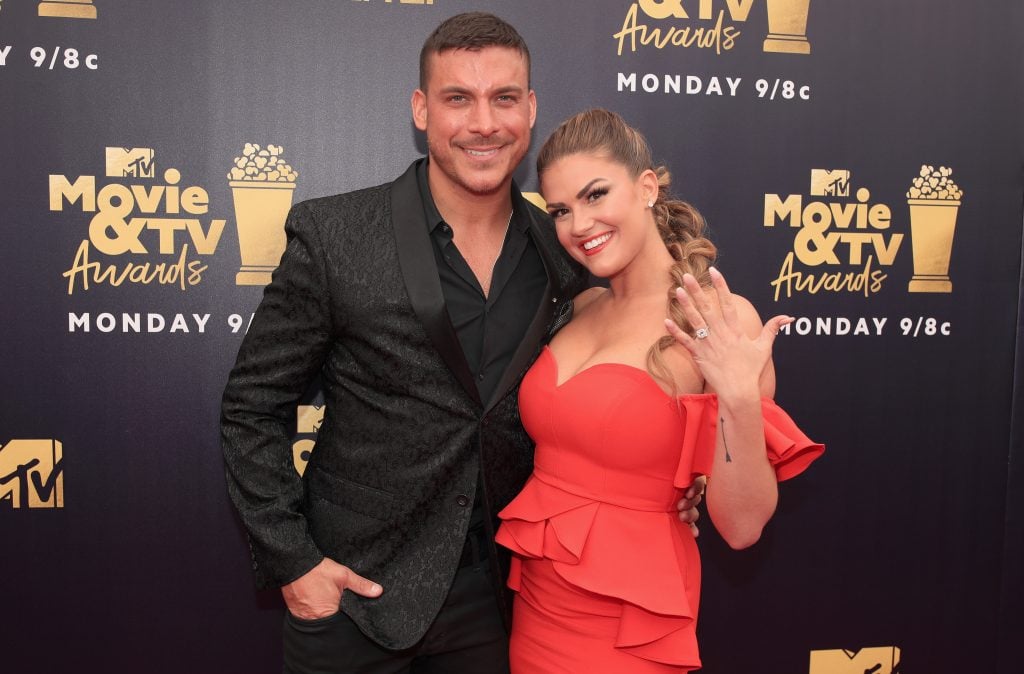
TV personalities Jax Taylor and Brittany Cartwright attend the 2018 MTV Movie And TV Awards at Barker Hangar on June 16, 2018 in Santa Monica, California. (Photo by Christopher Polk/Getty Images for MTV)
Yes, Jax recently quit The Valley, but the reunion was filmed before that announcement — and he really got raked over the coals in what might have been his final filming session for Bravo.
Brittany recalls the worst of Jax’s violent tantrums
As we previously reported, Jax threw a violent tantrum when he learned that Brittany had hooked up with a friend of his (even though they’d been broken up for a month, and he had cheated on her repeatedly during their relationship).
Jax admitted that news of the hookup caused him to “spiral” — but that hardly justifies what happened next.
“I think it was a little sooner than month, it was just hurtful,” he said last night, before admitting, “I went against what I said, too. I had somebody at my house. I’m not trying to start a war here, this is what made me spiral.”
Brittany accused Jax of downplaying the incident, revealing that he got “extremely aggressive” with her.
Jax Taylor and Brittany Cartwright attend the 2019 E! People’s Choice Awards at Barker Hangar on November 10, 2019 in Santa Monica, California. (Photo by Frazer Harrison/Getty Images)
“He threw the coffee table, it landed on my knee, it turned black immediately. He threw both bar stools, he threw my Stanley cup and broke it. He threw my phone and broke it. He threw my laptop and broke it,” Brittany explained on the reunion, adding that Jax “threw me into the rose bushes” outside their home.
Jax denied that last claim, prompting Brittany to reveal that the incident was caught on camera:
“Yes, you did. It’s on my Ring camera doorbell. My close friends up here have seen the videos,” she insisted.
Brittany says Jax has been very promiscuous since their split
Cartwright went after Taylor again when the topic of vasectomies came up.
Host Andy Cohen asked if Jax was planning on undergoing the procedure, prompting Brittany to chime in, “He’s gonna have 20 baby mamas if he doesn’t.”
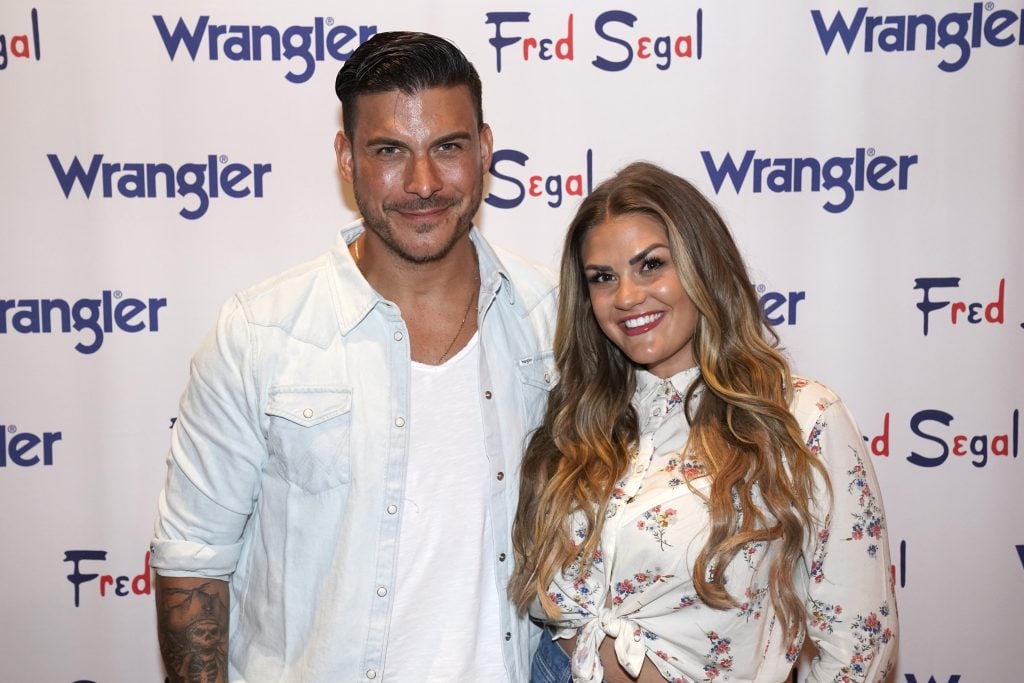
Jax Taylor and Brittany Cartwright attend âA Ride Through the Agesâ: Wrangler Capsule Collection Launch at Fred Segal Sunset at Fred Segal on September 19, 2019 in Los Angeles, California. (Photo by Erik Voake/Getty Images for Wrangler)
It was then that Andy asked Jax if he uses condoms — and that really set Brittany off.
“He’s disgusting. I would not touch that dirty d–k with a 10-inch pole,” Cartwright said.
“That’s not what you said four months ago, when we were at the aquarium. And you were like, do you think we should hook up one more time? You said that, at Hooter’s, 4 months ago. You were drunk, too,” Taylor shot back.
Brittany then revealed that her fling with Jax’s friend Julian was prompted in part by her desire to feel sexy after her ex brutally body-shamed her.
Jax Taylor and Brittany Cartwright attend 4th Annual World Dog Day at West Hollywood Park on May 18, 2019 in West Hollywood, California (Photo by Jerod Harris/Getty Images)
This man degraded me, put me down, body-shamed me constantly,” she said.
“Julian gave me attention that I needed in that moment. He made me feel sexy, he made me feel beautiful. He was what I needed because you made me literally lose my sparkle. And everybody knows it.”
She added that after she gave birth, Jax “body-shamed me for stretch marks” and “literally called me a tree trunk because I had stretch marks.”
Jax actually admitted to much of the bad behavior he was accused of, stating that his substance abuse issues were to blame.
“I don’t want to touch drugs and alcohol again, it’s f–ked up my life. It’s tough. It’s f–king hard. I know it’s hard for her,” he said. “She’s the victim here, not me. I’m a human being, too. Believe it or not, some people think I’m the devil, I get it, but I still have feelings, too.”
Brittany stated that she would consider allowing Jax to take their son on weekends once he’s proven that he’s sober for good.
Things turned both ugly and awkward on the July 29 episode of Welcome to Plathville.
While sitting alongside boyfriend Micah Plath, Veronica Peters opened way open on air about the reality star’s disloyalty to her over the course of their relationship.
“Micah has cheated on me several times,” Veronica said very simply, adding for all to hear and process:
“I hate his behavior. I’ve denied it all. I’ve made a united front. I lied to people. I protect[ed] you. When I knew the truth.”
(TLC)
Veronica continued as follows, holding nothing at all back:
“I was more scared about the truth coming out because it would hurt you. And I put myself aside and my pride and backed him and blamed myself.”
Over the last year or two, plenty of unfortunate allegations have been leveled at various members of the Plath family.
Veronica, for her part, went on to say that she had no interest in being around Micah’s family, with Micah himself acknowledging the major tension.
“There’s been things on both sides. It’s been a heated thing,” the 24-year old said on this episode, referring to his family icing out Veronica and her causing a bigger wedge between him and them.
(Instagram)
Veronica, meanwhile, said that she felt betrayed by Moriah Plath based on the timing of their fight, revealing:
“She knows what I was going through when she treated me like that.”
It’s worth noting here, of course, that Veronica and Micah were still a couple when she was saying all of these things on the episode.
“I’d back you when you hurt me. You don’t care. You care about yourself,” she said about her boyfriend, addressing him directly. “I have backed you. When you have done the most selfish [thing], I have backed you.”
Micah Plath is an aspiring model, and it’s easy to see why he may have a successful career. (TLC)
After revealing Micah had been unfaithful, Veronica claimed that “Moriah knew about” his transgression, adding that despite being in the know she “still blocked me through this hell.”
The installment wrapped up with Veronica crying on the couch … as Micah sat beside her without uttering a word.
In a preview for Welcome to Plathville Season 7, Veronica admitted that she didn’t portend a happy ending for her and Micah.
“I feel like I’m in chemistry class and, like, mixing things together, and it’s going to explode any second,” she said to cameras. “I know this will go bad. Mark my words.”
Following the former couple’s divorce, various dating rumors have followed the controversial athlete.
Everyone has roasted Brady over the greatest fumble of his career: losing his beautiful life because he wasn’t ready to retire yet.
Well, it sounds like he’s on the defensive. He seems to be shading his gorgeous ex-wife, insisting that his workaholic obsession with football made him a better dad.
Tom Brady and Gisele Bundchen attend The 2019 Met Gala Celebrating Camp: Notes on Fashion at Metropolitan Museum of Art on May 06, 2019. (Photo Credit: Neilson Barnard/Getty Images)
Is Tom Brady offering advice, or clapping back at Gisele Bundchen?
On Tuesday, July 29, Tom Brady wrote in his 199 newsletter about his career and his role as a parent.
“I think part of being a great father is being a great example of doing what it takes to take care of your family,” he opined.
Brady acknowledged: “I chose to do it by playing football.”
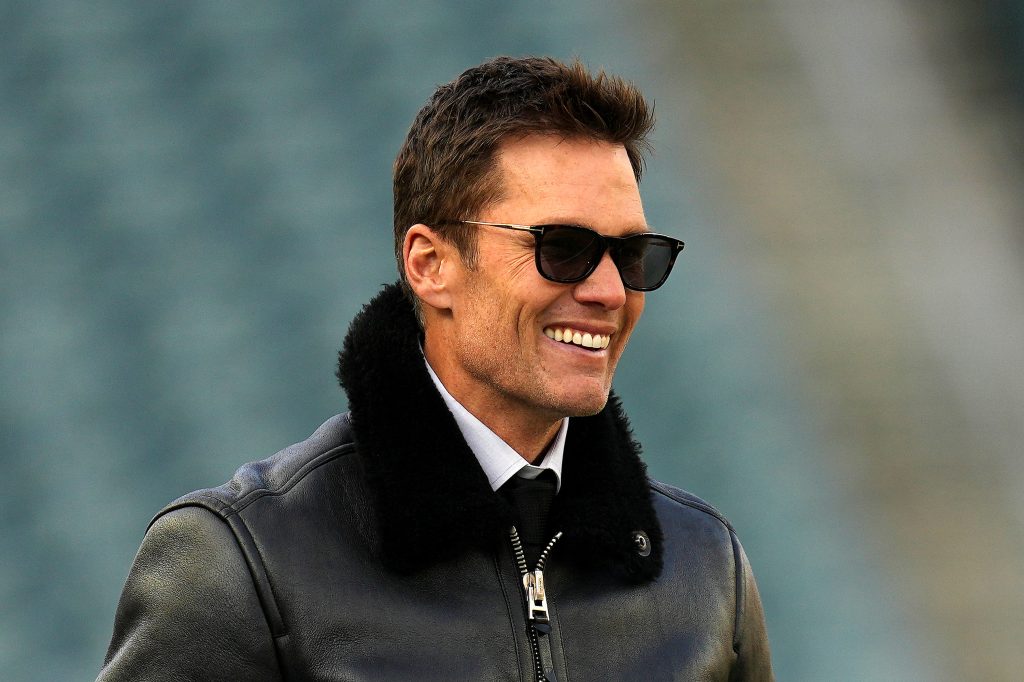
Former NFL Player Tom Brady looks on prior to the NFC Wild Card Playoff between the Green Bay Packers and the Philadelphia Eagles at Lincoln Financial Field on January 12, 2025. (Photo Credit: Mitchell Leff/Getty Images)
“My dedication to the sport, the hours of practice, the moments when I was laser focused,” the polarizing athlete listed.
Brady asserted: “Those were times when I believe I was doing the best possible thing for my family and my kids.”
He wrote: “By prioritizing my profession and teaching, by example, what it takes to be really good at your job.”
Tom Brady and Gisele Bundchen arrive for the 2018 Met Gala on May 7, 2018. (Photo Credit: ANGELA WEISS/AFP via Getty Images)
‘Not the only ways to be a great parent’
“What it takes to follow through on commitments, what it takes to be a great teammate;” Tom Brady continued to list.
“And showing them, also by example, that work is a big part of all of our lives.”
Sounding almost defensive, he asserted: “Reading bedtime stories and helping them with homework are not the only ways to be a great parent.”
Brady then acknowledged: “And neither is winning Super Bowls or MVPs.”
Former NFL player Tom Brady looks on prior to a game between the Chicago Bears and the Green Bay Packers at Soldier Field on November 17, 2024. (Photo Credit: Michael Reaves/Getty Images)
“Being a great football player didn’t make me a great dad, but how I became a great player certainly had an impact,” Brady claimed.
He listed that this had an impact: “From showing up day in and day out, to doing whatever it took to get better, be successful, be a role model, and to provide.” From there, his tone shifted.
“You won’t be perfect. Nobody is. You will fail and disappoint people along the way,” Brady admitted.
“But if you stay committed to your goals over time, even when your priorities shift (which they do at times), then you can be confident that you are living a life of integrity and purpose.”
Tom Brady and Gisele Bündchen attends the 2019 Hollywood For Science Gala at Private Residence on February 21, 2019. (Photo Credit: Kevin Winter/Getty Images)
Is all of this Tom Brady commenting on Gisele Bundchen?
It almost sounds as if the notorious ex-football star is defending himself to Gisele Bundchen rather than, you know, just offering advice to people who want advice from Tom Brady.
Brady is a father to 17-year-old Jack, 15-year-old Benjamin, and 12-year-old Vivian.
Even before their October 2022 divorce, Bundchen cited her role as a homemaker and her desire for Brady to commit to his retirement from football.
It does sound a little like Brady is offering more of a justification of his choices than advice. But then, plenty of workaholics might find his statements useful in defending their own choices.
Having already been locked up for 11 months, Combs might be set free on time served when he goes in front of judge for a sentencing hearing in October.
Prosecutors are requesting 20 years, but legal experts say that’s unlikely that Diddy will receive such a harsh sentence.
Still, it’s not hard to see why Combs might prefer not to take any chances.
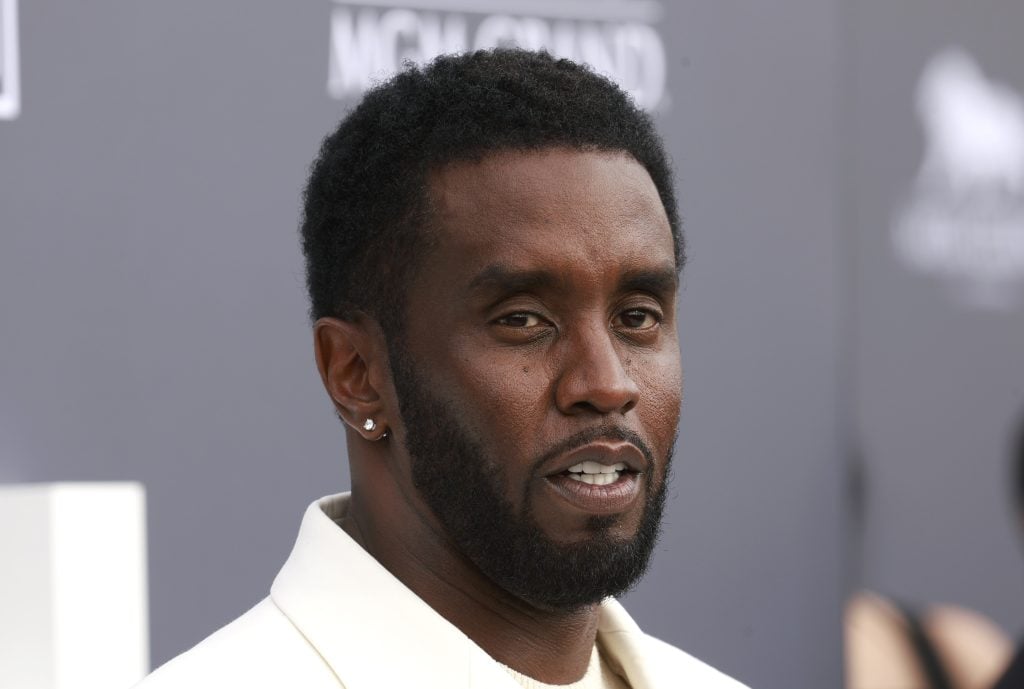
Sean “Diddy” Combs attends the 2022 Billboard Music Awards at MGM Grand Garden Arena on May 15, 2022 in Las Vegas, Nevada. (Photo by Frazer Harrison/Getty Images)
And apparently, that’s where Donald Trump comes in …
Trump has acknowledged the possibility of such a move, but he has not revealed where he stands on the matter.
There was a time when a pardon for Combs would have resulted in outrage, even among Trump’s supporters.
But Diddy’s acquittal on the more serious charges has resulted in a shift in public perception.
And now, the disgraced mogul is reportedly the subject of some very high-level talks.
U.S. President Donald Trump gestures as he meets British Prime Minister Keir Starmer for bilateral talks at Trump Turnberry golf club on July 28, 2025 in Turnberry, Scotland. (Photo by Andrew Harnik/Getty Images)
Is Trump serious about pardoing Diddy, or is it just another ‘weave?’
Insiders tell Deadline that the possibility of a pardon has gone from “just another Trump weave to an actionable event.”
In the past, Trump has referred to the tactical and rhetorical tricks he uses to sidestep inconvenient issues and zero in on expedient ones as “weaves.”
In this case, many of his critics, including Reverend Al Sharpton have accused the president of using celebrity feuds, such as his recent beef with Beyonce to distract from the ongoing uproar over the Jeffrey Epstein files.
Trump went from promising the release of the late sex trafficker’s client list to claiming that no such list exists and encouraging his followers to move on.
Pardoning a sex offender in the wake of such a controversy might seem like an outrageous blunder.
U.S. President Donald Trump reacts as he plays a round of golf at Trump Turnberry golf course during his visit to the UK on July 27, 2025 in Turnberry, Scotland. (Photo by Christopher Furlong/Getty Images)
But many MAGA loyalists applauded when Trump pardoned Todd and Julie Chrisley back in May, and the president might be hoping to score a PR win by letting yet another celebrity off the hook.
We’re sure his administration would welcome the distraction from more inconvenient matters.
But many of Trump’s most high-profile supporters, including journalist Megyn Kelly, are staunchly opposed to the idea.
“Trump should not pardon Diddy” Kelly tweeted today.
She explained that “he doesn’t deserve it” and listed several reasons why it would such a move would be wildly unpopular:
“He’s a Trump hater. He’s a woman abuser. MAGA is already upset over elites seeming to cover for each other. This would not help. GOP struggling w/young female voters, most of whom will HATE a Diddy pardon,” Kelly continued.
But as we’ve learned many times in recent years, Trump is gonna do what Trump is gonna do. So don’t be surprised if Diddy is soon cleared of any legal wrongdoing.