Faster tech means new challenges from AI feedback loops to WordPress security incidents.









Faster tech means new challenges from AI feedback loops to WordPress security incidents.
While many people are paying attention to how the 2026 midterm elections might change the balance of power in Washington, D.C., it is also a potentially pivotal election here in Pennsylvania.
Gov. Josh Shapiro is up for reelection, running against Republican challenger Stacy Garrity, the current state treasurer. Who wins that race will certainly shape the state’s policy agenda for the next two years.
In the General Assembly, which is currently split – Republicans control the Senate and Democrats control the House – both chambers are also up for grabs. Democrats have been slowly eroding the Republicans’ hold over the Senate. In the House, Democrats have a three-seat majority, but Republicans could flip it.
Of course, nationally the wind is at the back of Democrats. Commentators are contemplating the possibility of a Democratic trifecta in Pennsylvania for the first time since 1993.
I teach public policy at Penn State Harrisburg and have a particular interest in Pennsylvania state politics. I think voters should understand not just the positions of the individual candidates on the ballot, but what the legislative priorities will be for either party if they gain control of the General Assembly.

For a glimpse at potential Democratic priorities should they keep the House and win the Senate, it is helpful to look at what legislation the current Democrat-controlled House has been sending the Republican-controlled Senate.
1. Election reform
Election reform has been a perennial priority in the commonwealth since the passage of Act 77 of 2019 and the 2020 election. Act 77 authorized no-excuse absentee balloting and eliminated straight-ticket voting, which was a bipartisan compromise but became a political flash point in President Donald Trump’s efforts to question the 2020 election results. No-excuse means that voters do not need to provide a specific qualifying reason to vote by mail.
Democratic election law priorities have included requiring counties to use ballot drop boxes, maintaining no-excuse mail-in voting, setting clear rules for ballot curing, instituting precanvassing to speed the counting of absentee ballots, and allowing independents to vote in open primary elections.
2. Marijuana
Gov. Shapiro has repeatedly included revenue projections from adult-use recreational marijuana legalization in his budget proposals, and the House even passed a legalization bill in 2025. Democrats have said that they will legalize recreational marijuana if they can take the Senate in 2026. But important details of legalization will remain to be worked out, even if Democrats have full control.
Democrats and Republican supporters of legalization disagree as to whether sales should be through private dispensaries or state stores, similar to how alcohol is sold in Pennsylvania.
Social equity measures meant to repair some of the harms of the War on Drugs on communities disproportionately affected by the criminalization of marijuana will also be key to eventual passage. These include things like expungements of past convictions, license set-asides for minority dispensary owners, and community reinvestment of cannabis tax revenues. Even with Democratic control, the devil will be in the details.
3. Same-sex marriage
Same-sex marriage equality may seem like a settled issue with the 2015 Obergefell v. Hodges decision by the U.S. Supreme Court, but the 2022 overturning of Roe v. Wade by today’s more conservative court has sparked concerns of further changes to precedent.
Pennsylvania’s statutory definition of marriage is still between “one man and one woman,” something that a bipartisan majority in the House tried to change in 2026 to “two individuals.” Democrats are very likely to pick this back up if they win a trifecta. They may even attempt a more durable, but also more procedurally difficult, constitutional amendment that enshrines same-sex marriage rights.
4. Data centers and AI
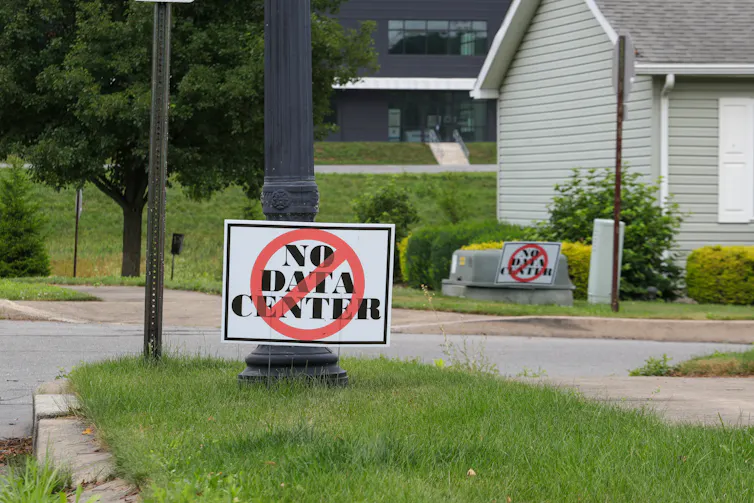
The House has passed several measures to regulate AI and the data center build-out in the commonwealth. This includes a measure that would require warnings on advertisements that were made using AI and several that target energy costs, water use, local government authority and implementing the Governor’s Responsible Infrastructure Development plan. These measures and others are likely to remain on the Democrats’ agenda.
5. Affordability
Given that this election is shaping up to be heavily influenced by voters’ concerns about affordability, both parties have the issue on their agendas but will approach it differently.
The Democrats’ Affordability Action Plan includes measures such as property tax and rent rebates, other housing protections for underserved communities, doubling the income tax credit and increasing food and energy security funding.
Another affordability priority for House Democrats since taking control of the chamber in 2023 has been raising the state’s US$7.25 minimum hourly wage over time. The bill passed by the House in March 2026 would have raised it to $11 in 2027, $13 in 2028 and $15 in 2029, with subsequent annual cost-of-living adjustments, if it had been also passed by the Senate. This is important in Philadelphia, given that state law prohibits the city from setting its own minimum wage.
We can turn to the current Republican-controlled Senate for insight into what will be on the party’s agenda if it resumes full control of the Assembly in 2027.
1. Election reform
Republicans have also been pushing for election law reform since 2020. In contrast to Democrats, their agenda has included repealing no-excuse absentee balloting, banning the use of ballot drop boxes and instituting stronger voter identification requirements.
2. Data centers and AI
Senate Republicans have also been active in proposing and passing AI- and data center-related legislation. A bill banning “nudification” apps, which use AI to remove the clothing from people in pictures and replace them with fake nude images, passed the Senate unanimously in late September.
There has also been bipartisan support for a Republican-proposed ban on the use of nondisclosure agreements in data center development. Republicans in the Senate also proposed designating all of Pennsylvania a Commonwealth Opportunity Zone for AI, which would fast-track data center permits and create a regulatory framework in collaboration with the industry.
While Republican AI legislation is likely to be more enabling of the emergent industry than regulating, Republicans are also concerned about privacy, transparency and costs to their constituents.

3. Energy
Among the costs of data center development are higher energy and water prices. Republicans have already been making energy development a priority, repealing Pennsylvania’s participation in the Regional Greenhouse Gas Initiative and pushing the governor on his promise of an “all of the above” energy strategy.
The stark promise of higher electric prices and poorer grid reliability due to projected data center development in a 2026 Public Utility Commission report is likely to add fuel to Republicans’ push for energy development.
4. Affordability
The affordability plan released by House Republicans in March 2026 points to the types of measures the party will pursue if it takes control of the Assembly. A cornerstone is the reduction of taxes, including lowering the personal income tax rate, a temporary elimination of energy and telecommunications taxes, and suspending the state gas tax, which is $0.576 per gallon for gasoline, $0.741 for diesel. Pennsylvania’s gasoline tax is the fifth-highest and the diesel tax is the third-highest in the United States.
A full plan with 10 bills is to be released in coming weeks, but will also include changes to zoning and construction rules to enable faster housing construction.
Read more of our stories about Philadelphia and Pennsylvania, or sign up for our Philadelphia newsletter on Substack.

Daniel J. Mallinson does not work for, consult, own shares in or receive funding from any company or organization that would benefit from this article, and has disclosed no relevant affiliations beyond their academic appointment.
Politics + Society – The Conversation

The 2026 U.S. midterm campaigns are the first in which AI-generated political ads are regularly appearing on people’s televisions and social media feeds.
We are researchers who have been studying political advertising through the Wesleyan Media Project since 2010. This election cycle – using data from media reports, student coders and AdImpact, a firm that tracks political ad spending – we’ve tracked about US$80 million in spending on almost 170 unique ads that use AI.
What we found has surprised us: AI use spans from hyperrealistic deepfakes to subtle enhancements; Republican sponsors – both candidates and interest groups – are much more likely to use AI than are Democratic sponsors; and, thanks to a patchwork of state legislation, many of these ads do not disclose the use of AI at all.
An assortment of politicians and watchdog groups have expressed concern about campaigns using generative AI to produce deepfakes – synthetic videos showing people doing things they did not do – that might deceive voters.
We’ve noticed several ads containing hyperrealistic deepfakes of famous politicians, including Donald Trump, Nancy Pelosi, Barack Obama, Kamala Harris and Alexandria Ocasio-Cortez. Ocasio-Cortez, in particular, is a favorite among Republican advertisers, appearing in at least five ads.
We’ve seen deepfakes in which a Republican Senate candidate from Louisiana drives a school bus full of undocumented immigrants, a Republican candidate for governor from South Carolina walks arm in arm with drag queens, and an ad in which Liz Cheney, Mitt Romney and Mike Pence are seen carrying pitchforks on the White House lawn.
People who are not politicians made appearances, too, including a fake Dr. Anthony Fauci, seen running around a state fair with a huge syringe, presumably eager to vaccinate everyone. We’ve also noticed several ads in which AI was used to generate crowds or constituents.
In several cases, AI was used to enhance visuals rather than generate something new. One ad from Chip Keating, a Republican candidate for governor in Oklahoma, includes an AI disclaimer, but it doesn’t specify exactly how AI was used. Ads that use AI to enhance visuals don’t necessarily look different from ads that were created in the pre-AI era, which makes it difficult for viewers to discern whether they depict something false.
Republicans – both candidates and groups such as super PACs and 501(c) organizations – are much more likely to use AI in their ads than are Democrats, according to our research.
In fact, Republican candidates or pro-Republican groups were behind 80% of the ads we tracked and 83% of the spending.
We can only speculate as to why Republicans dominate the use of AI in political advertising in 2026. In general, Democrats tend to take on a regulatory mindset when it comes to political campaigns, favoring limits on campaign spending and required disclosures. In 2022, for instance, only Senate Democrats and two independents voted to advance the DISCLOSE Act that would have required additional campaign finance disclosures for super PACs, labor unions and corporations. Republicans, by contrast, tend to be more in favor of a free market approach.
These more general philosophies may be reflected in the parties’ use of generative AI for political advertising, something about which voters are worried. Polling shows broad support for more regulation, with 78% of registered voters favoring a ban on AI content that makes deceptive claims about candidates.
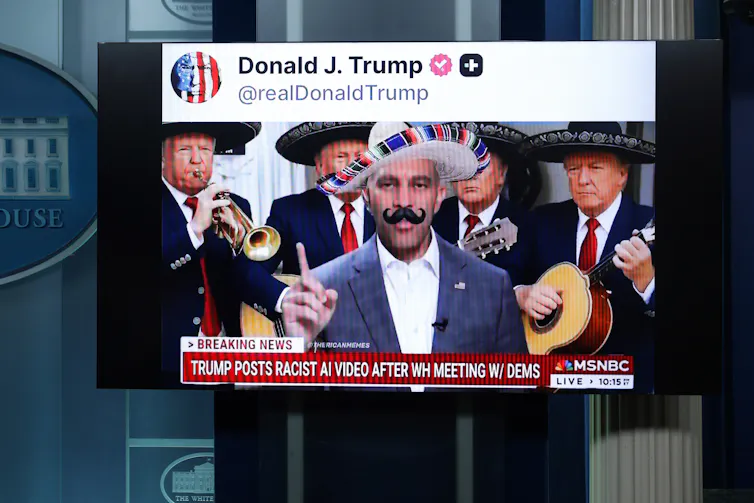
Because regulation of AI in advertising depends on a patchwork of state legislation, many of these ads are not required to disclose the use of AI. This lack of disclaimers makes tracking AI use in ads challenging. Our team has relied on media coverage and trained student coders to flag ads that are potentially AI-generated.
Across 35 states, only 31% of the ads we tracked – representing 22% of the spending – disclosed the use of AI tools. The wording of these disclaimers was all over the map. For example, one Georgia ad included the disclaimer, “This video has been manipulated or generated with artificial intelligence,” while an Oklahoma ad said, “Political satire. AI-generated images do not depict actual events.” A North Carolina state Senate ad said, “You guessed it! AI was definitely used to generate these silly video clips.”
Some advertisers voluntarily disclose the use of AI even when they are not required to do so. Sometimes, the opposite occurs – advertisers don’t include disclaimers even when state law requires them to. In fact, we’ve found that a state law that requires disclaimers on ads that use AI has very little relationship with the actual use of disclaimers.
In states without laws governing the use of AI in political ads, 32% of ads contained a disclaimer; by contrast, in states with laws governing the use of AI, 29% contained a disclaimer. This comparison, however, is not perfect, as some of the ads in our database aren’t covered by their state’s law. Some states, such as Colorado, have laws that apply only to candidate deepfakes and thus exclude other uses of AI. In other instances, such as in Louisiana, an AI law was enacted after the ad aired.
Minnesota law generally bans deepfakes in political ads, but an ad featuring synthetic video of Democratic Senate candidate Peggy Flanagan aired in May 2026 anyway. Whether it violated state law is uncertain, as the law requires that the media be “so realistic that a reasonable person would believe it depicts speech or conduct of an individual who did not in fact engage in such speech or conduct.”
Moving forward, the real policy challenge will revolve around transparency, the enforceability of existing laws and simply figuring out what type of disclosure would be helpful to voters.

The authors do not work for, consult, own shares in or receive funding from any company or organization that would benefit from this article, and have disclosed no relevant affiliations beyond their academic appointment.
Politics + Society – The Conversation

Sometime we think, been there, done that, but hey, not everyone has done that.

Version 1.1.0 of the official Akismet Drupal module is out with support for Drupal 12. If you’re planning your move to 12, spam protection won’t hold you back. Here are the highlights.
The module now runs on Drupal 10.3+, 11 and 12. On Drupal 12, Akismet checks comments and user registrations as soon as you install it, since both live in core. Contact forms, webforms, and the Key module will be supported as soon as they’re ready for D12.
Every check now gives Akismet a fuller picture of each submission. The module’s bot detection watches how someone fills out a form: how long they take, how they type, and how they scroll, click or tap. In 1.1.0, all of those signals feed straight into Akismet’s spam scoring. With more context, Akismet can better tell a real person from a bot, so you should see more spam caught and fewer real messages flagged by mistake.
drush akismet:gdpr-export now takes --format=json (or csv and yaml) and returns the full stored record for each match, including the original submission. That makes subject access requests easier to answer completely.
The export also withholds the moderator’s identity, as GDPR Article 15(4) allows.
The status report now warns you about a leftover copy in yoursettings and stays visible until you deal with it. A new Delete stored API key form removes it in one step. You’ll find the link on the settings page and in the status report.
Before the official module, some Drupal sites used the community-maintained Akismet module (drupal/akismet). That project is no longer maintained. If you’re still running it on Drupal 10.3 or later, 1.1.0 can take over your install in place. Your API key, connection timeout and protection settings carry over, and the update prints a report of everything it migrated, changed or dropped. Our migration guide on drupal.org walks through the process.
You’ll need an Akismet API key. Grab one from our pricing page. It’s free for personal sites.
For a new install:
composer require drupal/akismet_antispam
If you’re already on 1.0, update the module along with the Akismet PHP SDK it depends on, then run the database updates:
composer update drupal/akismet_antispam --with-dependenciesdrush updb
The module needs Drupal 10.3, 11 or 12 and PHP 8.1 or newer, or the newer PHP your Drupal core requires.
Found a bug or have an idea? Tell us in the issue queue.
New to the module? Start with our introduction to the official Akismet Drupal module, or see how it’s built on the official Akismet PHP SDK.
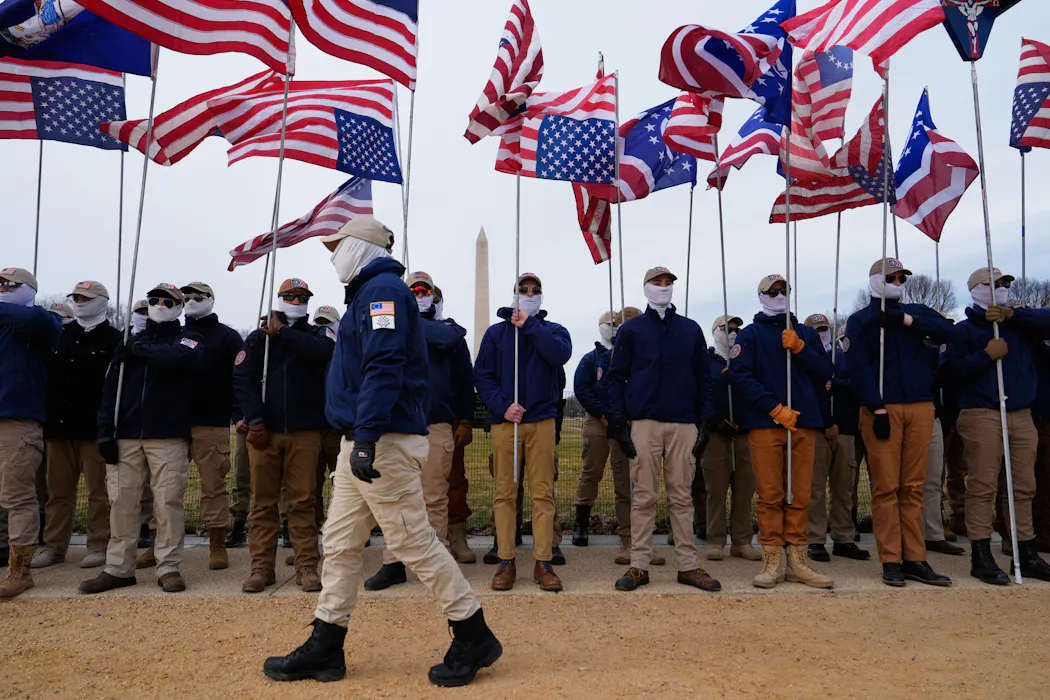
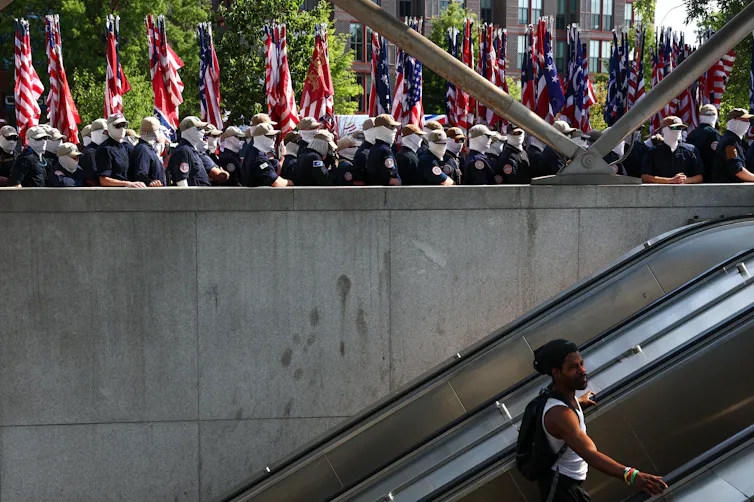
As Americans prepared to celebrate the nation’s 250th birthday on the morning of July 4, sobering images flashed across their phones and TV screens. Hundreds of masked men marched the streets of Washington carrying flags and chanting “Reclaim America!” It soon became clear from the logos on their identical baseball caps that the marchers were members of Patriot Front, a white nationalist group.
The march ended without incident. Still, it joined the 2017 “Unite the Right” rally in Charlottesville, Virginia, and the Jan. 6, 2021, attack on the U.S. Capitol – both of which culminated in deadly violence – as recent mass demonstrations with participants who openly embrace white nationalism. Members of a loosely organized movement that usually operates out of public view, white nationalists hold that shifting demographics pose an existential threat to the white race, which they view as culturally superior and deserving of power over other groups in the U.S.
Combined with the spread of white nationalist ideology from obscure corners of the internet into mainstream politics, these events have led many Americans to wonder: How extensive is white nationalism’s appeal among the broader public, and who is drawn to this extremist ideology?
We are political scientists who study political behavior, identity and social media. In recently published research in the scientific journal Nature, we offer some answers to these questions using national surveys we conducted with nearly 8,000 non-Hispanic white Americans from 2021 to 2025.

We expected many Americans would be unfamiliar with the term “white nationalism,” so we defined it for survey respondents with a brief statement covering the movement’s major tenets: the purported need to maintain a white majority in the U.S., claims about the superiority of white culture, and calls for white people to hold more political and economic power than other groups. We measured endorsement of the movement’s ideology, not participation in the movement itself or approval of its tactics.
We randomly varied whether respondents saw the description before or after we asked whether they supported the white nationalist movement. Overall, nearly 5% of white adults – about 1 in 20 – said they did.
Those asked the question before seeing the description were less likely to express support at first, but their reported support rose after they read it. Along with several tests for possible response bias, this suggests that 5% is a reasonable lower-bound estimate of the true level of support.
Whether 1 in 20 white adults is a high or low number is a matter of interpretation. For context, it’s roughly the same as the share of American adults who identify as vegetarian or vegan.
A number that jumped out to us was the share of white men under age 30 who support white nationalism: just over 13%, or about 1 in 7. This was more than twice the level of support for white nationalism among women in this age group: 6%. Endorsement of white nationalism among men significantly declined by age: Only 2% of white men age 65 and over registered support.
Our discovery that white men born before the passage of the Civil Rights Act were more likely to reject white nationalism than those coming of age today may come as a surprise, as younger white Americans typically hold more tolerant views on racial matters than their elders. But young men have long been overrepresented in extremist groups, and white nationalism’s grievance narrative may resonate for young white men today as they fall behind previous generations of men on key indicators like finishing college, starting careers and forming families, as well as on their overall health.
Another key predictor of support: online social life that crowds out offline relationships. We asked respondents to call to mind their three best friends and then to tell us whether each friend was known only offline, only online or both.
We found that the more best friends known only online, the stronger one’s support for white nationalism. The internet and particularly social media are channels through which people may be exposed to white nationalist content. They are also places where alienated people may turn for the human connections they lack offline.
Interestingly, we did not find a general relationship between more social media use and more support for white nationalism. So while online life appears to be related to support for white nationalism, what matters in our findings is not how much people use social media, but whether their closest friends are known only online.
Strain, whether defined as undergoing personal difficulties or being exposed to wider social distress, is also a strong predictor of support for white nationalism. We asked respondents whether they had suffered from specific hardships over the past year, including the death of a loved one, losing a job, being the victim of a crime or getting divorced. Respondents experiencing more of these adversities were more likely to endorse white nationalism.
Social strain in the counties where respondents live – such as poverty, unemployment and population loss – emerged as another strong predictor of support for white nationalism, as did countywide rates of “deaths of despair,” which include suicide and deaths associated with drug and alcohol use. In other words, support for white nationalism was higher among people living in more distressed or economically depressed places.
White nationalism is often cast as a political phenomenon by advocates, commentators and scholars, and indeed it is.
We found in our research that white Democrats and liberals are significantly less likely to endorse white nationalism than white Republicans and conservatives. However, we also found high levels of support among those who were unsure of their ideology or partisanship, suggesting a potential untapped reservoir of political support for white nationalist ideas.
Still, our findings show that support for white nationalism cannot be explained solely by partisan politics. Larger forces, including generational change, the ubiquity of the internet and the strain Americans are experiencing in part due to profound economic transformation are at work.
In our view, those who seek to understand and address this critical development in American public life must reckon with the broad structural shifts that have reshaped Americans’ identities, social relations and sense of economic security and that undergird white nationalism’s appeal to the broader public.

Funding for this research was provided in part by an NYU Mega-Grant Initiative Seed Award. The NYU Center for Social Media, AI and Politics was supported while this research was carried out by funding from the John S. and James L. Knight Foundation, the Charles Koch Foundation, Craig Newmark Philanthropies, the William and Flora Hewlett Foundation and the Siegel Family Endowment.
James Bisbee and Patrick Egan do not work for, consult, own shares in or receive funding from any company or organization that would benefit from this article, and have disclosed no relevant affiliations beyond their academic appointment.
Politics + Society – The Conversation

Bob Dunn reflects on online conversation styles and an infamous hardware design blunder, offering unsolicited solutions and food for thought.

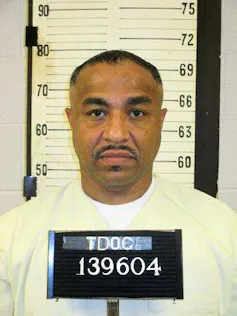
Christa Pike survived an execution attempt in Tennessee on Sept. 30, 2026, after receiving two doses of pentobarbital, a lethal drug. Gov. Bill Lee has temporarily suspended executions in the state.
Pike became the first person ever to get full doses of the drugs intended to kill her and to live nonetheless. But she is not the only person to have survived an execution failure in the Volunteer State.
Tennessee set out to execute Tony Carruthers on May 21, 2026, but he lived to tell about it.
Carruthers, who was sentenced to death for a 1994 triple murder, survived his date with death when the execution team members could find only one suitable vein in which to secure an IV, but not, as USA Today reports, the “backup line, which is required under the state’s lethal injection protocol.”
After the failed attempt, Tennessee Gov. Bill Lee gave Carruthers a one-year reprieve, a decision the governor did not explain.
What happened to Pike and Carruthers is a reminder that things frequently go wrong in executions, even if in almost all cases the problem is resolved and the execution is completed.
Indeed, in the past 80 years, only eight other people have had experiences like Carruthers’ and Pike’s and survived execution attempts.
Four of those execution “survivors” were killed by a second execution attempt, while others escaped that fate. Three others died on death row; one of them after the state agreed not to try to execute him a second time, and one of them is still alive and awaiting his fate.
Having studied capital punishment for decades, I know the Eighth Amendment’s prohibition of “cruel and unusual punishment” has shaped constitutional discussions around failed executions. But so far, courts have not stood in the way when state governments have wanted to try to execute the same man again.
Carruthers and Pike survived lethal injection attempts, but execution failures have not been confined to that method. A look at the history of hanging reveals several instances in which it failed.
In 1833, for example, a hanging in Pennsylvania failed to kill Charles Getter, who had been sentenced to death for murdering his wife.
“The rope was placed around Getter’s neck. The hangman drew it up fast,” true crime author Amanda Howard notes. “Getter struggled and kicked, choking, before the rope broke, throwing him to the ground.” However, Getter did not die.
The executioner sent someone to look for a stronger rope. This time, the rope did not break and Getter met “the fate of a murderer.”
In 1894, Will Purvis’ hanging also failed when the noose loosened. Instead of dying from a broken neck, Purvis survived, suffering only rope burns on his neck.
Unlike Getter, Purvis returned to prison contending that he was innocent. His lawyers unsuccessfully tried to get the courts to prevent a second execution attempt. Purvis remained behind bars until 1898, when Mississippi’s governor pardoned him. Purvis is the only execution survivor ever to receive such grace.
In the late 19th century, the electric chair replaced hanging as the country’s primary execution method, but it did not prevent failed executions. At least once in the 20th century, the electric chair also failed to kill.
In the spring of 1946, the state of Louisiana tried to use it in the execution of Willie Francis, a 16-year-old Black youth who had been convicted of murdering a local sheriff. At the time, the electric chair was said to be the most humane execution method.
But what Francis experienced hardly seemed humane. When the electric current reached him, “He started going into convulsions.” The executioner “flipped the switch again,” but Francis was not killed.
Later, like Purvis, Francis turned to the courts to try to stave off another execution attempt. The decision in his case would set the precedent for how judges would deal with other execution survivors.

In January 1947, months after Francis survived the electrocution, the U.S. Supreme Court gave Louisiana permission to try again. The justices split, with five giving Louisiana the green light and four dissenting.
Justice Stanley Reed’s majority opinion emphasized that what had happened to Francis was accidental and that, without malicious intent, there was no violation of the Eighth Amendment. As he put it, “The fact that an unforeseeable accident prevented the prompt consummation of the sentence cannot, it seems to us, add an element of cruelty to its subsequent execution.”
In his view, “The cruelty against which the constitution protects a convicted man is cruelty ‘inherent’ in the method of punishment, not the ‘necessary suffering’ involved in any method employed to extinguish life humanely.”
Justice Harold Burton spoke for the dissenting judges. As he put it: “The intent of the executioner cannot lessen the torture or excuse the result.” A second execution would offend the “fundamental instincts of civilized man.”
Francis was put to death almost a year to the day after his first execution failed.
It would be several decades until another person survived an execution. But the pace of failed executions has only picked up since the start of the 21st century.
From 2009 until May 2026, six people survived failed lethal injection attempts. Romell Broom became the first 21st-century execution survivor when in 2009 the state of Ohio gave up after trying for two hours to find a usable vein in which to secure an IV line.
In his case, the Ohio Supreme Court, relying on the Francis precedent, decided that “The insertion of IV lines is merely a preparatory step to the execution.” In its view, Broom’s punishment had not really begun. Therefore, a second execution would not violate the prohibition on double jeopardy or on the imposition of cruel punishment.

But before Ohio could again attempt to execute Broom, he died on death row in December 2020 after contracting COVID-19. Another 21st-century execution survivor, Alva Campbell, also died on death row.
In 2018, Doyle Hamm reached an agreement with the state of Alabama stating that he would not be subject to a second execution after executioners couldn’t access a vein during an attempted lethal injection. Hamm died from cancer in 2021.
However, Alabama succeeded in executing two other execution survivors, Alan Miller and Kenneth Smith, both in 2024. In both cases, they had survived failed lethal injections.
And Thomas Creech is, like Carruthers and Pike, still alive after lethal injection failure, this time in Idaho. It’s not clear if and when Idaho will try again to put him to death. If it does, the state will use the firing squad, which became its primary execution method on July 1, 2026.
As Carruthers awaits his fate in Tennessee, defense lawyers in the state have asked Gov. Lee to halt all executions pending a thorough review of its protocol.
And as the Death Penalty Information Center reports, “attorneys from the Federal Public Defender’s Office filed a new federal lawsuit … to prevent Tennessee from attempting to execute Mr. Carruthers a second time.”
That suit builds on litigation filed in March 2025 alleging that the administration of lethal injection in Tennessee inflicts cruel and unusual punishment.
Only time will tell if the judges who hear those cases will be persuaded by what Justice Burton wrote in the Francis case: “Although the failure of the first attempt, in the present case was unintended, the reapplication of the electric current will be intentional … The present case demonstrates that, today, two separate applications are sufficiently ‘cruel and unusual’ to be prohibited.”
When the state, Burton explained, seeks to execute someone, it has a duty “to make sure that there (is) no failure.”
This is an updated version of a story that was originally published on June 4, 2026.

Austin Sarat does not work for, consult, own shares in or receive funding from any company or organization that would benefit from this article, and has disclosed no relevant affiliations beyond their academic appointment.
Politics + Society – The Conversation

In television news, there are two roles in front of the camera: reporter and anchor.
During four decades at CBS, Dan Rather played both roles. On March 9, 1981, he took over the position of nightly news anchor from Walter Cronkite, one of the most influential faces in network television. Although Rather held that job for 24 years, first and foremost he embraced being a reporter.
Today, as his 95th birthday birthday approaches on Oct. 31, Rather remains engaged with news as a social media commentator, with plenty to say about the Trump administration and the state of journalism.
Rather began as a regional reporter in Texas and became chief of the network’s Southern bureau in 1963. In the first of many high-profile career moments, he organized the network’s local coverage of President John F. Kennedy’s Nov. 22, 1963, visit to Dallas, where Kennedy was assassinated.
After covering the Nixon White House, the Vietnam War and other domestic and international stories, Rather became one of television’s “Big Three” nightly news anchors in 1981. For the next two decades, Rather on CBS, Peter Jennings on ABC and Tom Brokaw on NBC, were prominent faces of the last era in which legacy media companies truly set the news agenda.
In his reporting tenure, Dan Rather repeatedly tangled with U.S. presidents. He brought that reporter’s attitude to the anchor role. Rather didn’t just preside over news stories – he was immersed in their preparation and aware of their potential impact.
I teach communication and have written about the history of television and the intersection of media and politics. In my view, the most-cited moments in Rather’s long career reflect the on-edge, on-the-scene, news-gathering spirit of legendary CBS newsman Edward R. Murrow, rather than the avuncular style of a corporate American media host.
Murrow first became known for reporting directly from the London Blitz bombings via radio in 1940 and 1941. At home through the 1950s and 1960s, Murrow delivered unflinching TV documentary reports on subjects that included Sen. Joseph McCarthy’s pursuit of alleged communists in the federal government and harsh working conditions faced by migrant farmworkers.
As a reporter, Rather also covered stories with major national impact. Following the Kennedy assassination, he solidified his credentials as CBS’s White House correspondent during the Johnson and Nixon administrations and, in 1966, he was sent at his request to report from Vietnam.
Back stateside, Rather covered the divisive and bitter 1968 presidential campaign. As a determined floor correspondent at the Democratic National Convention in Chicago, he was knocked down on camera by security guards while trying to interview a Georgia delegate whom the guards were removing from the convention floor.
Rather found his strongest reporting voice during the Nixon administration, pressing for details about the Watergate break-in and subsequent White House efforts to cover up the episode. His questions began to venture into the sensitive topics of potential resignation or even impeachment.
Over time, Rather was cast as Nixon’s most prominent onscreen adversary. When Nixon resigned in August 1974, Rather acquired a lasting reputation for helping to hold a U.S. president accountable.
After Nixon’s resignation, Rather’s presence at CBS News grew. He served as weekend news anchor and chief correspondent for the documentary series “CBS Reports,” and he joined the weekly news magazine “60 Minutes” in 1975.
One of his most-discussed reports was a 1980 story on the Russian occupation of Afghanistan. To cover the war firsthand, Rather and his team dressed in local garb and crossed the border from Pakistan into Afghanistan, where they interviewed resistance fighters and visited battle sites.
Critics praised the segment for showing U.S. audiences the stakes in a faraway conflict; they also rebuked Rather and “60 Minutes” for showboating. Washington Post media critic Tom Shales wrote, “It’s hard to decide whether Murrow is smiling down approvingly or spinning in his grave.”
In 1981, Rather won the competition to succeed Walter Cronkite as “CBS Evening News” anchor, a position he would hold for 24 years.
Rather’s style and demeanor were noticeably different from Cronkite’s reassuring cadence. Even behind the anchor desk, Rather’s inquisitive manner and reporter’s instincts for confrontation were well known. Those traits could be seen as either powerful assets or indicators of biased coverage.
Rather also continued to report, through CBS vehicles such as “48 Hours,” a show that investigated crime and justice stories, and the spinoff show “60 Minutes II.” His pursuit of international and domestic stories earned numerous Emmy and Peabody awards – more than a dozen in the 1980s alone – and he also received special honors, including his 2004 induction into the Television Academy Hall of Fame.

Rather’s trajectory changed abruptly after he reported a 2004 “60 Minutes II” segment about then-President George W. Bush’s service in the Texas Air National Guard in 1968-1974. The segment raised questions about whether Bush – whose father was former president George H.W. Bush – had received preferential treatment that kept him from being sent to fight in the Vietnam War.
Critics challenged the authenticity of some documents that CBS cited in the report, and an external review panel concluded that the network had failed to authenticate them properly. The network apologized; Rather defended the report initially but conceded after several weeks that the materials should not have been used. The debacle became known as “Rathergate.”
Rather’s CBS contract was not renewed. He left the anchor chair in 2005 and the network in 2006, asserting in his departing press statement, “I will do the work I love elsewhere.”
Before leaving CBS, Rather urged citizens and journalists alike to take on the tough battles. “Whether it’s City Hall, the Statehouse or the White House, part of our job is to speak truth to power,” Rather said in a 2006 speech in Seattle.
Cable news offered Rather an alternative. Over the next 15 years he hosted several in-depth reporting and interview programs on cable channels. There, he embraced being a news reporter who could call his own shots and criticize people in positions of power in politics and business.
In his 80s, Rather took to social media, attracting hundreds of thousands of followers via Facebook, the social platform X, formerly Twitter, and Steady, a newsletter distributed via the Substack platform. He quickly adopted the language of short-burst online communication, using snark and style in the service of delivering solid journalism.
Today, the Trump administration is widely viewed as waging war on the mainstream media. President Donald Trump regularly calls journalists the “enemy of the people,” has tightly limited reporters’ access at the White House and the Pentagon, and has sued numerous media outlets for what he calls unfair or defamatory coverage.
In response, many large media companies are taking steps that critics see as pulling punches or currying favor with the Trump White House. For example, in the fall of 2025 CBS News adopted new rules that bar editing recorded interviews before they air.
This step came after the network’s parent company paid Trump US$16 million to settle a lawsuit over its editing of a 2024 interview with Democratic presidential candidate Kamala Harris. CBS also hired Kenneth Weinstein, a prominent conservative and former think tank executive, for a new ombudsman position.
In a Substack post, Rather called the changes evidence that CBS “has tipped over the precipice: that corporate overlords in concert with an autocratic president are demolishing support for independent journalism in favor of financial gain, and in so doing undermining a key foundation of our democracy.” His warning echoed Murrow’s famous 1958 speech urging broadcast leaders to use the power of the medium to teach, illuminate and inspire, rather than letting it become “nothing but wires and lights in a box.”
Dan Rather has pursued that mission throughout his career, even as the players and technologies have changed. He has consistently embraced the challenges, and satisfaction, of being a journalist intent on holding powerful people accountable – including the heads of news organizations.
Harry Castleman, co-author with Walter Podrazik of “Watching TV: American Television, Season by Season,” contributed to this article.

Walter Podrazik is a board member at the Library of American Broadcasting Foundation. He is Television Curator at the Museum of Broadcast Communications in Chicago, and serves on the development for its current Johnny Carson Centennial and Evolution of Late Night exhibits. He is president of the Society of Midland Authors.
Politics + Society – The Conversation

Wherever Marci Bakely went, her ex-boyfriend seemed to know. When the Georgia single mother drove to the grocery store or a date, he often texted within minutes.
According to a Washington Post investigation, Bakely’s ex-boyfriend, Braselton Police Chief Michael Steffman, searched her license plates and those of her teenage daughter roughly 600 times through Flock Safety, a company that makes and operates networks of automated license plate readers, or ALPRs.
The Georgia Bureau of Investigation arrested Steffman in November 2025 on charges of stalking, harassment and misuse of an ALPR. He was found dead before trial.
Bakely’s case is not unique. The Post identified at least 50 officers accused of misusing ALPRs, including 26 who used Flock’s cameras to spy on current or former partners or people they hoped to meet. Its investigation has since identified at least 100 police department employees charged with or accused of misuse.
Flock says these people represent a tiny share of its more than 140,000 monthly users and that permanent audit logs help uncover misconduct.
But these abuses required no hacking or stolen credentials. Each user walked through the front door.
I’m a criminal procedure scholar and I direct a school devoted to forensics. I believe the controversy over ALPRs points to a defect in the surveillance system’s architecture, not just the criminality of some of its users.
Flock cameras capture a vehicle’s plate, location and distinguishing marks down to dents or a bumper sticker. AI can sort license plate photographs by date taken. Police departments across the network can then conduct searches without warrants or supervisory approval.
In September 2026, news outlets Wired and 404 Media analyzed data that hackers had copied from one Flock camera. About 21 days of logs contained roughly 50,200 vehicles and 1.6 million images. The software detected people and bicycles, and it even isolated an American flag patch on a motorcyclist’s saddlebag. Flock said it lacked enough information to assess the hackers’ technical claims about security vulnerabilities in the camera.

Flock says customers control their data, yet a department that leaves sharing enabled may not know who is looking. In 2025, U.S. Customs and Border Protection accessed more than 80,000 cameras during an undisclosed nationwide vehicle-tracking pilot, including one police department’s cameras without its knowledge.
Logs record misconduct only after it happens, and only if someone reads them. Indianapolis police did not regularly audit Flock searches until The Washington Post flagged thousands of questionable inquiries by one officer. A systemwide audit found alleged misuse by four more officers. Other police departments likewise learned of officers’ misuse from reporters.
Flock’s August 2026 changes shorten recommended data retention from 30 to seven days and require misuse detection and case codes to document searches. But customers may retain data longer, emergencies may bypass case codes, and entering a case number can be done without judicial approval.
Flock’s architecture turns local cameras into a cross-jurisdictional surveillance network that agencies that never purchased the cameras may query.
Public records from Danville, Illinois, revealed more than 4,000 searches by federal agencies, including some with a potential immigration-enforcement focus, although U.S. Immigration and Customs Enforcement had no Flock contract.
A 2026 study similarly found 11,935 immigration-related searches in partial records from eight college police departments. Federal immigration agencies sometimes accessed campus camera data without campus officials’ knowledge.
The network also enables searches in other legally contested areas. In May 2025, a Texas sheriff’s office searched more than 83,000 cameras for a woman who had self-managed an abortion. The logged reason was “had an abortion, search for female.” The search reached Illinois, where state law forbids sharing plate data to enforce another state’s abortion ban. The sheriff called it a welfare check. Whatever the motive, one deputy triggered a national dragnet without independent review.
These examples reflect more than individual misuse. The platform makes the cameras easy to use by a second party, difficult to monitor and hard to control once local cameras are connected.
The law remains unsettled on ALPR use.
In October 2025 a Virginia appeals court held that police officers needed no warrant to retrieve three images spanning seven minutes from Norfolk’s 172-camera network because they showed vehicles, not people. But later findings about Flock’s people-detection capabilities weaken that distinction. Analysis of the hacked camera showed that its software could identify a person and record that person’s location within an image.
In January 2026 a federal judge held that Norfolk’s then-176-camera network did not violate Fourth Amendment protections. The system did not capture anyone’s entire movements, the court reasoned, although it photographed two plaintiffs’ vehicles 475 and 325 times over four and a half months. The ruling is being appealed.
In 2018 the Supreme Court held in Carpenter v. United States that acquiring seven days of historical cellphone location records generally requires a warrant because they can reconstruct someone’s past movements. Flock’s architecture raises a related but unresolved question: Its database can also reconstruct movements, yet police officers may search it without a warrant.

Both Norfolk rulings predate the Supreme Court’s June 2026 decision in Chatrie v. United States, which held that police conducted a search under the Fourth Amendment when they obtained two hours of stored Google location history. The court did not decide whether the search was lawful. Instead, it returned the case to the lower court to determine whether the warrant satisfied the Fourth Amendment’s requirements.
That did not make the access automatically unconstitutional: The Fourth Amendment prohibits unreasonable searches, not all searches. But the police generally need a warrant supported by probable cause once their conduct is classified as a search.
The Chatrie decision distinguished vehicles exposed to public view from phone-location data that can follow someone into a home or other sensitive place. But it also expressed concern about comprehensive archives that can be searched retroactively. A license plate reader network can create a similar archive of a driver’s public movements.
The constitutional question in Norfolk, therefore, turns not only on the seven minutes retrieved, but also on the surveillance power of the 172-camera network.
The Indianapolis cases expose the limits of internal controls in Flock’s system. Marion County Prosecutor Ryan Mears said many proposed guardrails would not have prevented the conduct. He pointed to the need for independent or judicial oversight.
I believe five safeguards could preserve Flock’s benefits while curbing abuse:
Judicial authorization for retrospective regional or national searches based on individualized suspicion, preferably a probable-cause warrant, with an emergency exception.
Technical access controls restricting immigration and reproductive-health searches.
Opt-in interstate data sharing, rather than by default.
Independent audits of search logs and device security.
Flock’s new safeguards show that the company concedes that design matters, but private settings cannot substitute for laws. It’s not a matter of making sure officers follow the rules. It’s about creating enforceable limits.

Henry F. Fradella does not work for, consult, own shares in or receive funding from any company or organization that would benefit from this article, and has disclosed no relevant affiliations beyond their academic appointment.
Politics + Society – The Conversation