This article mentions sensitive topics such as sexual assault and child sexual assault, resources for victims in Alaska can be found here.
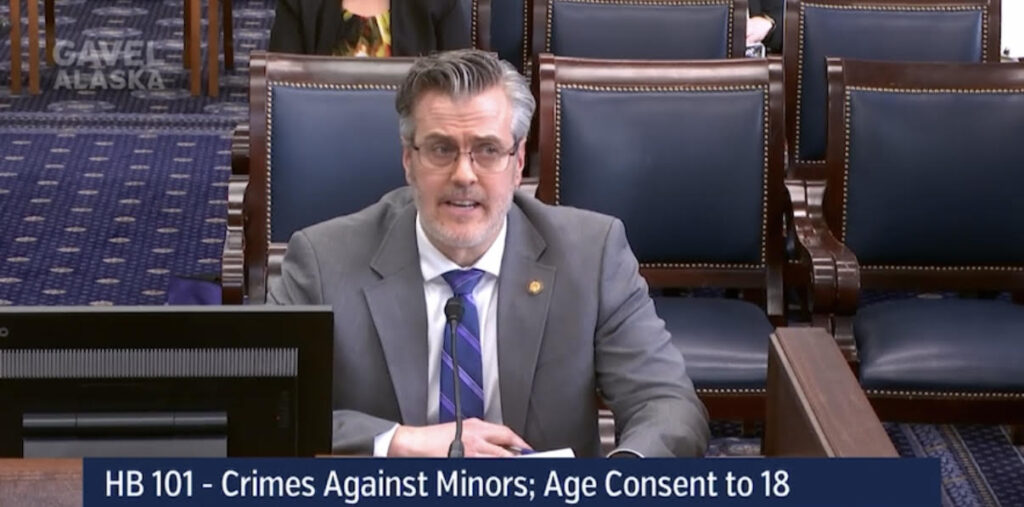
NOTN- Alaska lawmakers are considering legislation that would raise the state’s age of consent from 16 to 18, a change the sponsor statement says would strengthen protections for teenagers and make it easier to prosecute sexual assault and exploitation.
House Bill 101, sponsored by Rep. Andrew Gray, was introduced as Alaska continues to report some of the highest rates of sexual violence in the country.
“Alaska has the highest rate of rape in the country, which is over 3 times the national average.” Gray said at a Senate Judiciary hearing, “We also have one of the highest rates of child sexual assault in the country, over 6 times the national average, according to the UAA Justice Centers’ Alaska Victimization Survey.”
Under current law, 16- and 17-year-olds can legally consent to sex with adults, which supporters say creates a loophole that complicates prosecutions. Survivors often must prove they did not consent, even when there is a clear power imbalance between adults and teens, which Gray says makes the successful prosecution of cases difficult.
HB 101 would close that gap by establishing that minors under 18 cannot legally consent to sexual activity with adults. The bill includes a four-year “close-in-age” exemption so consensual relationships between peers are not criminalized.
The Anchorage Police Department has formally endorsed the bill. In a letter to lawmakers, Police Chief Sean Case said officers regularly see the harm caused by sexual abuse and exploitation and that the bill would give law enforcement clearer authority to protect minors and hold offenders accountable.
“On behalf of the Anchorage Police Department, I express our strong support for House Bill 101. This legislation strengthens protections for Alaska’s youth by aligning our criminal statutes with the realities of adolescent development and the responsibility of adults to safeguard minors from exploitation and harm.” The letter said.