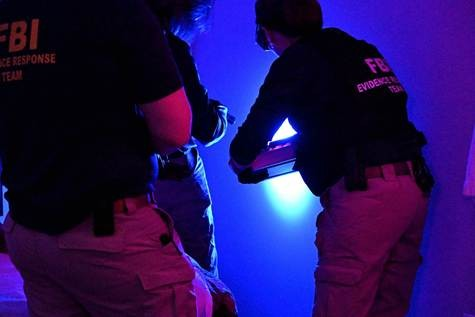
An FBI Evidence Response Team collects and documents evidence at an alleged illicit massage parlor. (Image Courtesy of the FBI Anchorage Field Office)
Multiple law enforcement agencies arrested seven people in Anchorage and the Matanuska-Susitna Valley last week on charges of sex trafficking after a yearlong investigation found that multiple massage parlors were fronts for criminal enterprises.
“Human trafficking criminal enterprises operate in plain sight while victims are exploited for labor, services and commercial sex acts through force, fraud or coercion,” Matthew Schlegel, special agent in charge of the FBI Anchorage Field Office, said during a press conference Thursday.
Anchorage Police Department, Alaska State Troopers, the FBI Anchorage Field Office are part of a task force that investigates sex and human trafficking. Homeland Security Investigations, U.S. Customs and Border Protection, Army Criminal Investigation Division, the U.S. Coast Guard, Wasilla Police Department and the Anchorage Airport Police Department assisted in the investigation.
Officers searched Jasmine Spa, Zen Massage, Stream Health Spa of Wasilla, Phoenix Health Spa, Owl Health Spa, Renew Day Spa, Red House Massage of Anchorage and two Anchorage residences in connection with the investigation.
Law enforcement arrested Lee Merrill Van Ness, 72, of Anchorage, Terry Allen Volkman, 53, of Anchorage, Hui Zhang, 44, Hong Zhen Li, 51, of New York, Guoguo Zhang, 54, of Wasilla, Tuan Huynh, 34, of Anchorage, and Xiaotian Xiong, 40, of New York, on felony charges of sex trafficking.
Investigators collect evidence during an investigation into alleged illicit massage parlors. (Image courtesy of the Alaska State Troopers)
Alaska State Troopers Colonel Maurice Hughes said during a press conference Thursday that they targeted these illegitimate operations because they were exploiting individual and vulnerable adults.
Hughes said that the victims were offered support and connected with resources.
“These individuals were not the focus of the investigation. They were the reason for the investigation,” he said.
Law enforcement identified massage parlors that advertised commercial sexual services online during the investigation. The investigation entailed undercover officers visiting various massage parlors and posing as customers looking for sex in exchange for money, a criminal complaint stated. Law enforcement allege that the seven people arrested harbored victims of human and sex trafficking and forced them to pose as masseuses.
The massage parlors may be linked to international organized crime organized out of Flushing, New York, and Monterey Park, California, according to charging documents. Law enforcement may file additional charges as the investigation continues.
Anchorage Police Chief Sean Case attributed the length of the investigation to the complex nature of the allegations.
Alaska Bureau of Investigation Commander Tony Wegrzyn said that investigators have “a mountain of evidence to go through.”
According to Wegrzyn, all victims were from outside of Alaska.
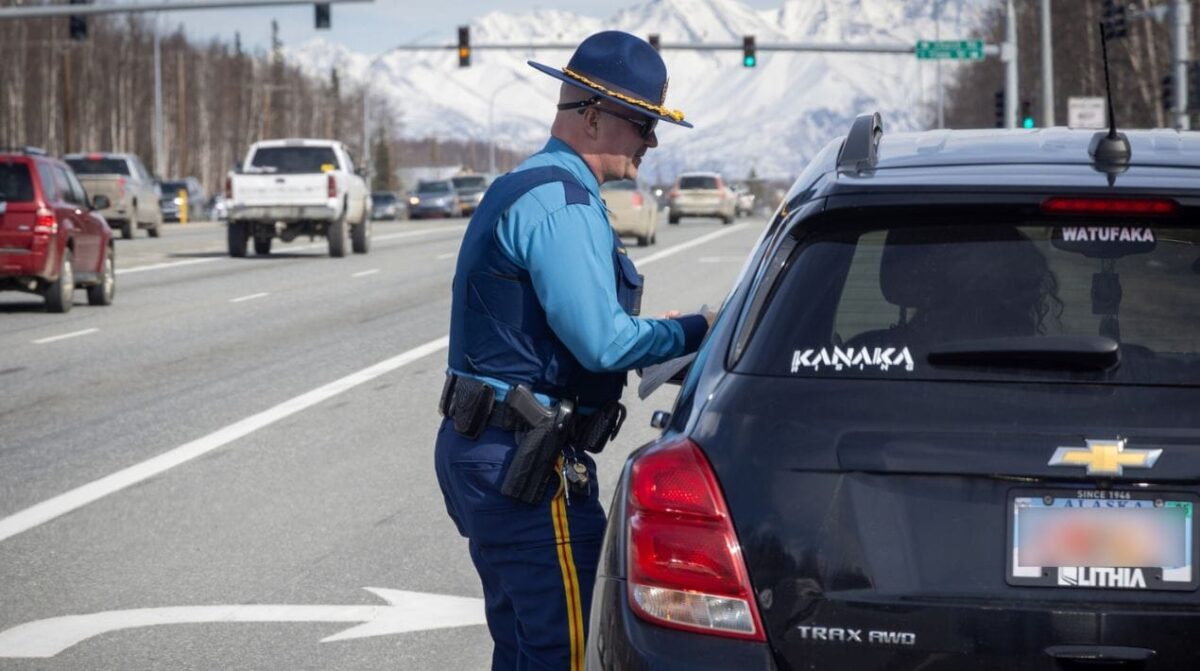
An Alaska State Trooper conducts a traffic stop outside Wasilla in early 2024. (Photo courtesy of Alaska State Troopers)
The House State Affairs committee advanced a governor’s appointee for a public seat on the Alaska Police Standards Council with some skepticism on Tuesday.
Gov. Mike Dunleavy appointed Veronica Lambertsen to serve in one of four public seats on the 13-member Alaska Police Standards Council, which oversees law enforcement standards across the state.
The council is charged with setting and enforcing standards for law enforcement certification, as well as training and retention for all police, probation, parole and correctional officers. Members are also tasked with adopting state regulations and investigating police misconduct, like officer discipline and use-of-force.
Lambertsen is a small business owner, and since 2001 has operated the Bird Creek Motel in Bird Creek, a small unincorporated area south of Anchorage, according to her resume. She has volunteered on the Turnagain Arm Community Council since 2023, which serves the communities of Bird Creek, Indian and Rainbow.
Lambertsen’s resume lists no formal educational or professional training experience, and describes her education as “homeschooled.”
Lawmakers seemed skeptical of her qualifications, and asked Lambertsen about her connection with law enforcement or public safety issues at a confirmation hearing on Tuesday.
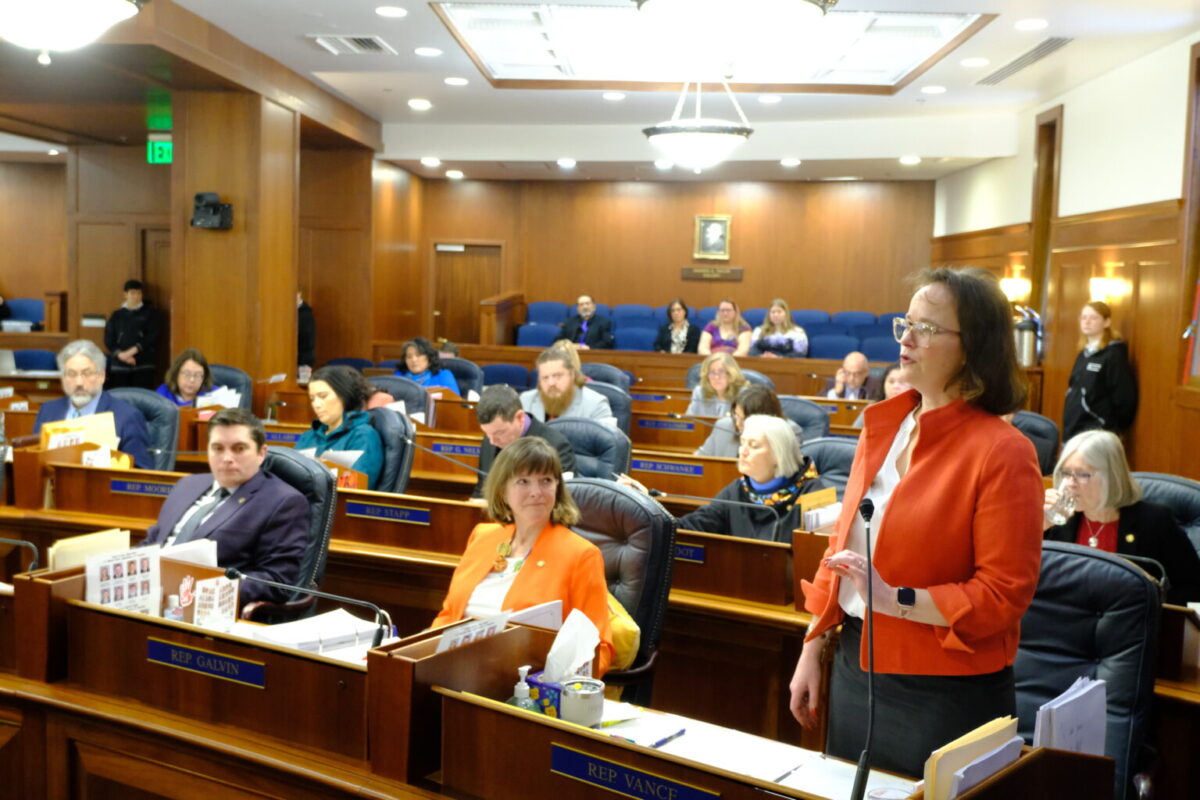
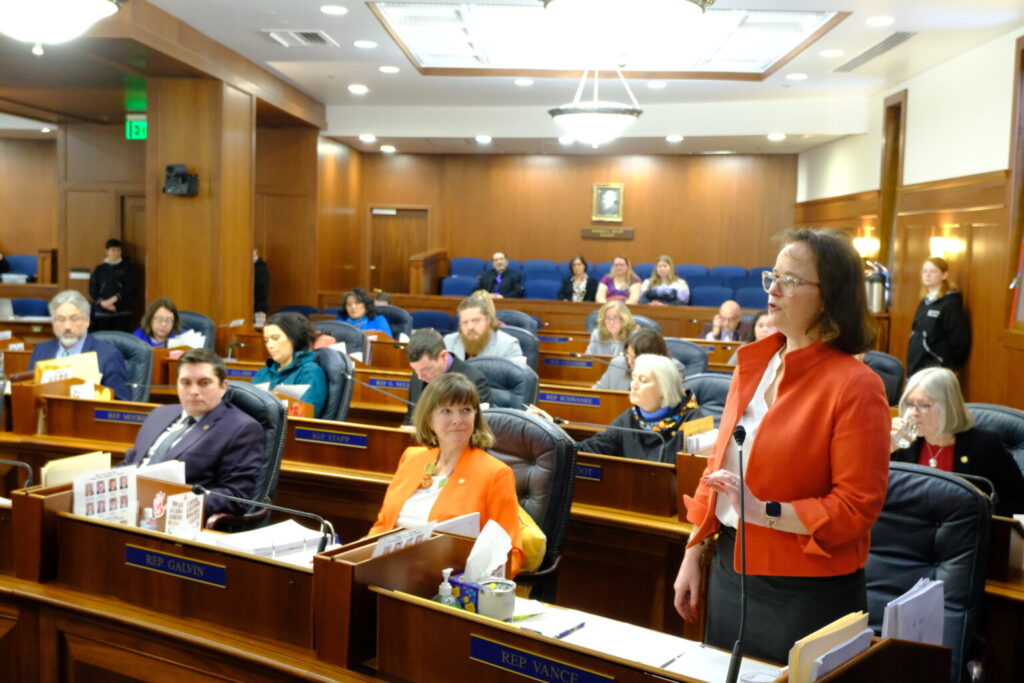
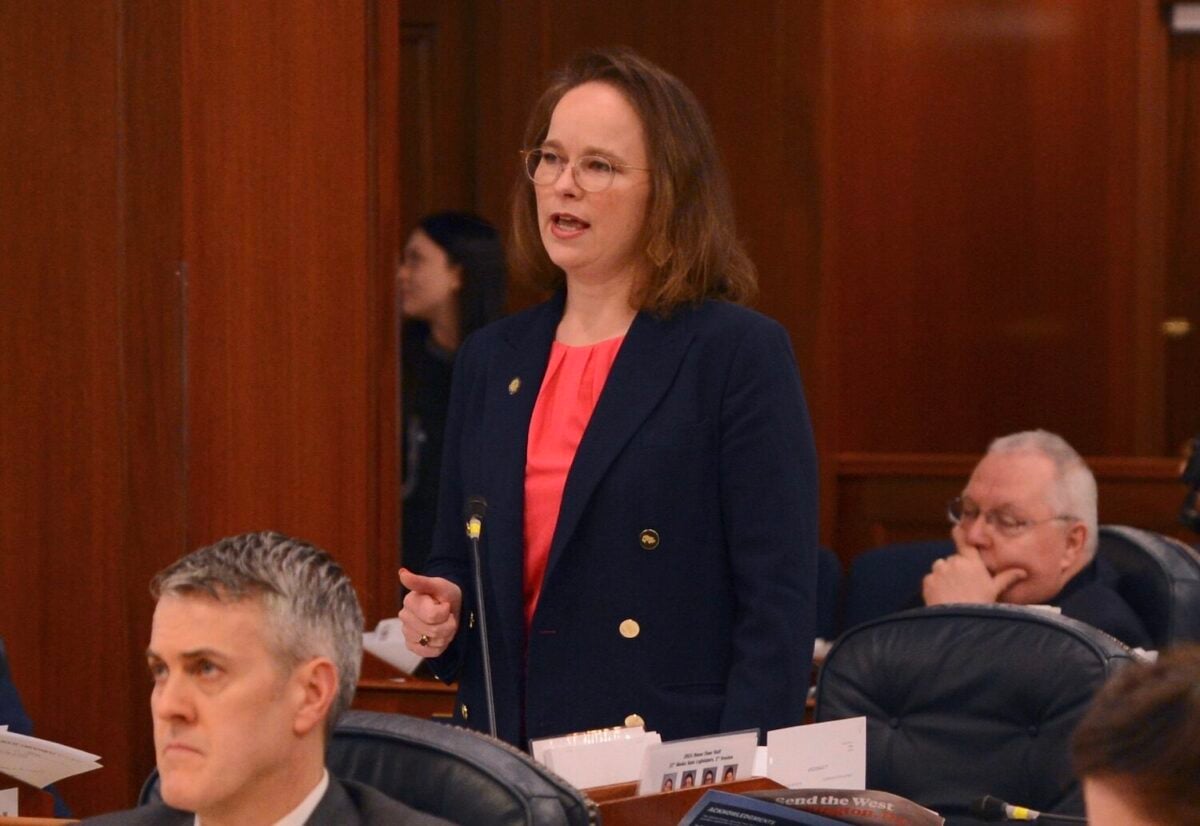
Members of the House State Affairs Committee consider the governor’s appointees for the Alaska Police Standards Council and the Board of Parole on Apr. 7, 2026. (Photo by Corinne Smith/Alaska Beacon)
Rep. Steve St. Clair, R-Wasilla asked if she had law enforcement experience.
“Not active duty or anything,” said Lambertsen by phone. “But being a small business owner, and in reflection of owning a cafe and a motel, I’ve had a lot of experience with law enforcement, and yes, there’s a lot of incidents that have happened regularly, and there’s been a relationship.”
The council has 11 seats reserved for members in leadership positions with law enforcement or corrections, and four seats for members of the public, including two from communities of 2,500 population or less.
Rep. Rebecca Himschoot, I-Sitka asked Lambertson what perspective she would bring to the statewide council. “How will you help make this a better council?” she asked.
Lambertsen told lawmakers she would bring a “public perspective” and said she’s interested in working on standards for training.
Committee members were unsure on Tuesday if police training is required for appointees to the Council. Lambert said it was not, but added that members have the opportunity to take police standards classes.
Officials with the Alaska Department of Public Safety confirmed Wednesday public members of the council do not need to have any law enforcement connection.
Lambertsen serves as the volunteer secretary for the Anchorage chapter of Moms for Liberty, according to her resume, a far-right national group that advocates for parental rights, and is known for its advocacy against school curricula that includes LGBTQ rights. Some chapters advocate for book bans.
The group has been deemed an “antigovernment” group by the Southern Poverty Law Center, a civil rights organization, and has known ties to other extremist or hate groups.
Lawmakers did not ask about Lambertsen’s affiliation with the group, or how it would affect her role on the Alaska Police Standards Council.
Lambertsen responded to questions about her affiliation with the group by email on Wednesday, saying that her position with Moms for Liberty “had nothing to do with anti-student inclusion.”
“My understanding of Moms for Liberty was asking for curriculum being provided by teachers to educate children to be age appropriate, especially for Early Childhood Learning to 6th Grade Learning, for parents to ask questions about curriculum of the School Districts and not allow “soft porn books” in schools and libraries for children of all ages to have access to,” she said. “Certain books should be available in older age sections with accessibility to that age group.”
Lambertsen did not respond to questions about how her political views would influence her role on the council.
In an interview Wednesday, Rep. Ashley Carrick, D-Fairbanks, chair of the House State Affairs Committee, said the committee’s review process is “like a job interview” and a procedural step before a full vote before a joint session of the Legislature. But she said she has concerns about partisan conservative nominees appointed by Dunleavy, including Lambertsen, across state boards.
“It really leads to a lean of our state boards and commissions and those decision making services towards potentially a partisan flavor,” she said. “And I think after eight years of this administration, we are seeing some of the impacts of that.”
Carrick said each lawmaker does their own research on nominees for a final vote in a joint session of the Legislature. She said she prefers to contact nominees privately with concerns, rather in the committee process, and also relies on public input.
“I think at this point I would really need to hear from folks around the state if they’re also concerned,” she said. “And hopefully the hearing just brought just a little bit of attention to this appointee and what she’s being appointed for.”
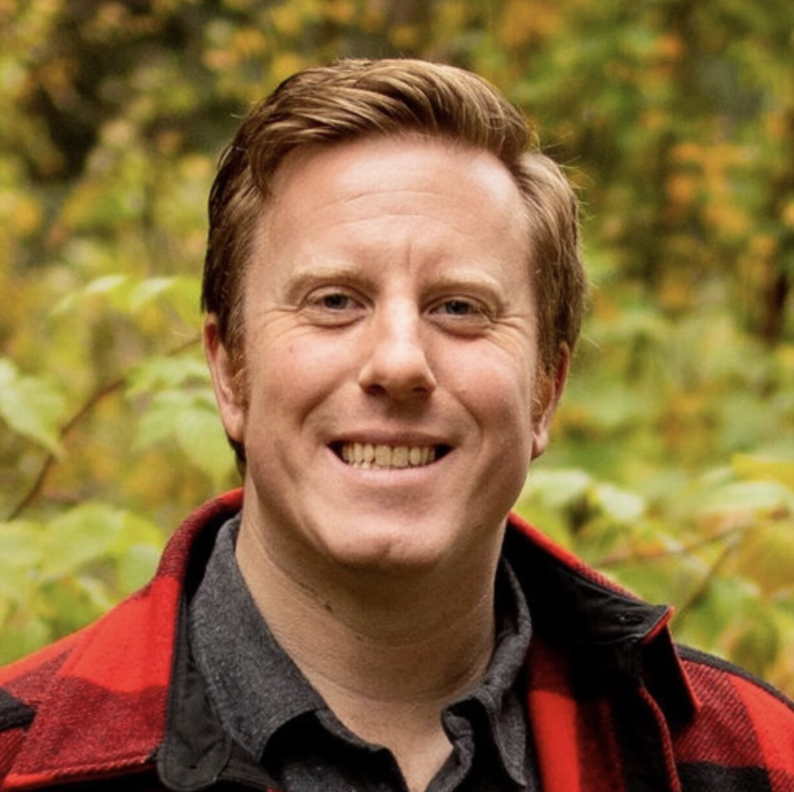
Forrest Wolfe is seen in an undated campaign photo for his run for the Alaska House of Representatives for District 21, in East Anchorage, in 2022. (Campaign photo provided by Wolfe)
A legislative aide to Alaska Gov. Mike Dunleavy, and a former candidate for the Alaska House of Representatives, was arrested and charged with driving under the influence of alcohol on Thursday in Juneau.
Forrest Wolfe, 40, was pulled over by Juneau Police at about 10:30 p.m. on Mar. 26, according to court documents, after driving erratically through a busy area of downtown Juneau. Wolfe was the sole occupant of the vehicle, a red Chevrolet Tahoe, when he was pulled over on Franklin Street.
Wolfe exhibited a strong odor of alcohol and gave conflicting stories of his previous activities, then stopped answering questions, according to the police report. Wolfe failed a field sobriety test and then later a chemical test for alcohol, showing his breath alcohol level at 0.10, which is above the legal limit of 0.08. He was arrested and charged with a criminal misdemeanor.
Wolfe serves as deputy legislative director for Dunleavy, a role he began in January, according to his public LinkedIn profile.
A spokesperson for Dunleavy’s office declined to comment on the arrest or any penalties by his employer on Monday, citing privacy as a personnel matter.
Wolfe ran for the Alaska House in 2022 as a Republican representing District 21 in East Anchorage, and narrowly lost to Rep. Donna Mears, D-Anchorage, by just 150 votes.
Prior to serving in the governor’s office, Wolfe served as a legislative liaison for the Alaska Department of Administration for about a year, in 2025. He worked as legislative staff for more than a decade, since 2012, for various Republican representatives.
Wolfe posted a $500 bail and was released from Lemon Creek Correctional Center on Friday morning, according to Alaska Public Media.
Wolfe has had previous run-ins with Juneau Police for minor infractions, and was arrested and convicted for drunk driving in 2011.
Rep. Sarah Vance, R-Homer, speaks in support of a bill she sponsored, HB 47, that would add state criminal penalties for AI-generated child sexual abuse material, on the House floor on Feb. 27, 2026. (Photo by Corinne Smith/Alaska Beacon)
Anyone that possesses, creates or shares child sexual abuse material created with artificial intelligence in Alaska would face new state felony charges under legislation advanced by the Alaska House of Representatives on Friday — plus AI companies and social media companies could face state penalties too.
House members passed House Bill 47 almost unanimously by a 39 to 0 vote, with Rep. Neal Foster, D-Nome, absent. The bill is sponsored by Rep. Sarah Vance, R-Homer, and would enact new state felony charges for creating AI-generated images or videos that visually depicts sexually explicit or obscene content involving anyone under the age of 18. Previously known as child pornography, it’s now referred to as child sexual abuse material or CSAM.
“A decade ago, we couldn’t even imagine what it is that the vulnerable and our children are facing, and tools that are being used to exploit them,” Vance said Friday on the House floor ahead of the vote. “But here we are in a fast-paced technological environment, and our prosecutors are left with very few tools,” she said.
Vance lauded the bill as closing a gap in state criminal law. Currently there are no state laws directly addressing AI-generated CSAM, though there are statutes that prohibit the viewing, possession and distribution of child sexual abuse materials. Vance emphasized that the bill would update Alaska law to penalize AI-generated CSAM, and noted it would apply regardless of whether images depict a victim or AI-generated material.
“Currently in statute, you have to prove the harm of an actual child. And what this bill does is says that anything that is generated obscene material of minors will be criminalized to the same level as if it were a real child,” Vance said.
Vance and others pointed to the recent arrest of an Alaska senator’s chief of staff for soliciting minors for CSAM on Snapchat, and the need to increase state penalties. Other lawmakers said the case demonstrates the need for more parental controls on minors’ social media.
Legislators added on and approved significant parental controls and penalties for tech companies too, through an amendment process on Wednesday.
Under the revised bill, social media companies will require age verification and parental or guardian consent for minors to create or maintain social media accounts. Parents would have full access to minors’ social media, including all minors’ messages and interactions on the platform. The bill enacts a social media curfew for minors from 10:30 p.m. to 6:30 a.m., unless modified by a parent.
Rep. Zack Fields, D-Anchorage, sponsored the amendments and said with increased parental control measures, parents and guardians will be able to intervene on potentially predatory behavior or victimization of children.
“The fundamental question is: Do parental rights supersede the rights of predators?” Fields said on the House floor Wednesday. “And do parental rights supersede the rights of multi-national corporations, which we have heard knowingly target children with addictive, destructive algorithms. We know that.”
Targeted advertising to minors on social media would also be prohibited, as would content targeting minors, addictive design or features that “encourages or rewards a minor user’s excessive or compulsive use of the platform or that exploits the psychological vulnerabilities of a minor user,” according to the bill.
Families or the state would be able to bring civil legal action against social media companies for harm due to such violations under the bill, and companies could face a penalty of up to $10,000 for each violation.
“I don’t care how hard it is. We should not back down from Big Tech when it comes to protecting our children,” Fields said.
The amendment passed with a 28 to 12 vote, with supporters and opponents spanning party lines.
Rep. Genevieve Mina, D-Anchorage, the youngest member of the House, opposed the provision.
“I absolutely agree that social media can be harmful for youth, especially given the vast environment, where there are a lot of different strangers and people on the internet. I also know I’m probably one of the only people in the body who very much grew up online,” she said Wednesday on the House floor.
“I’ve wrestled back and forth with these types of policies, especially as it relates to age verification or requiring consent from a minor,” she said, and added that she shared concerns about first amendment and privacy rights. “But I just don’t believe that age verification through government regulation is the right way.”
Vance, the sponsor of the bill, also opposed the increased parental controls provision citing First Amendment concerns.
Lawmakers also voted to approve a provision levying civil penalties on any AI organization that facilitates users creating AI-generated CSAM of up to $1 million for each instance.
Rep. Calvin Schrage, D-Anchorage, sponsored the amendment which was passed unanimously.
“I think this is something that creates an incentive for these large companies to curtail or at least put some controls and protections around what I think can be a very powerful and useful tool, but is so often used today for really malicious, nefarious and, I would say, disgusting purposes,” Schrage said.
The bill would also prohibit the distribution of generated sexual depiction of adults without their consent or participation. It would also prohibit distribution of a “forged digital likeness,” known as “deep fakes” often used as misinformation, revenge pornography, scams or blackmail.
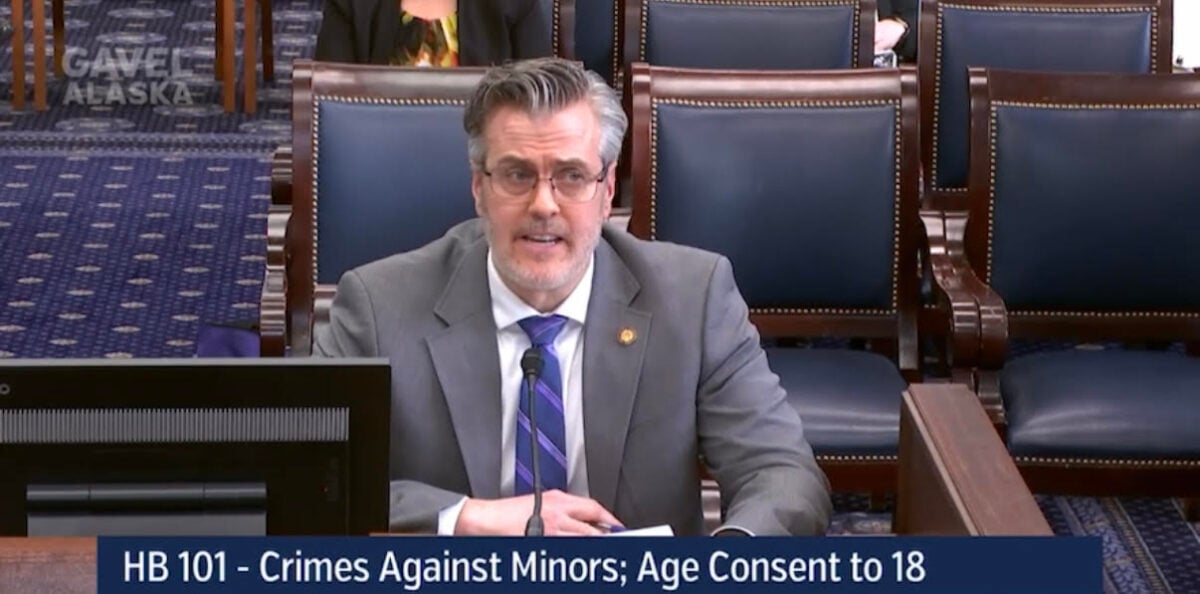
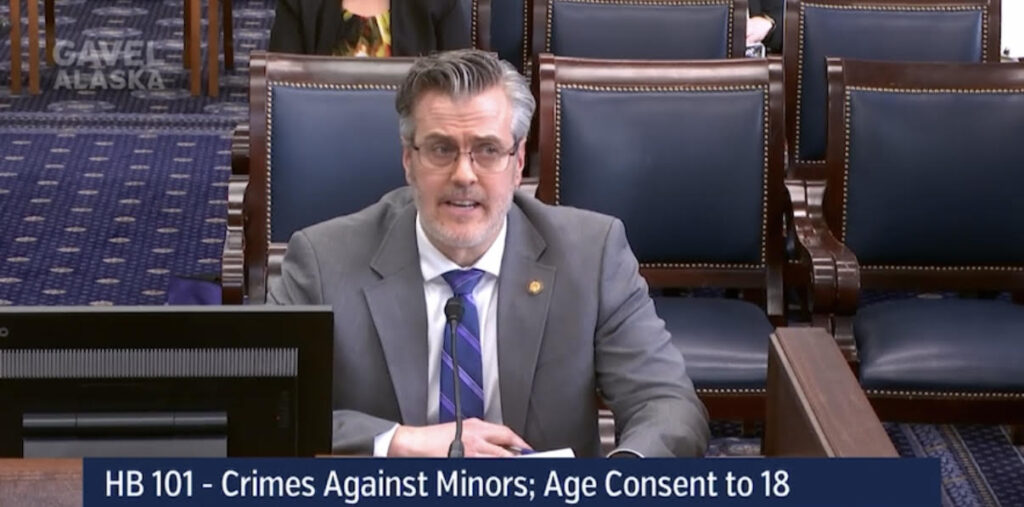
Representative Andrew Gray at a Senate Judiciary hearing for HB 101 on February 9, 2026, Photo Courtesy of Gavel Alaska.
This article mentions sensitive topics such as sexual assault and child sexual assault, resources for victims in Alaska can be found here.
NOTN- Alaska lawmakers are considering legislation that would raise the state’s age of consent from 16 to 18, a change the sponsor statement says would strengthen protections for teenagers and make it easier to prosecute sexual assault and exploitation.
House Bill 101, sponsored by Rep. Andrew Gray, was introduced as Alaska continues to report some of the highest rates of sexual violence in the country.
“Alaska has the highest rate of rape in the country, which is over 3 times the national average.” Gray said at a Senate Judiciary hearing, “We also have one of the highest rates of child sexual assault in the country, over 6 times the national average, according to the UAA Justice Centers’ Alaska Victimization Survey.”
Under current law, 16- and 17-year-olds can legally consent to sex with adults, which supporters say creates a loophole that complicates prosecutions. Survivors often must prove they did not consent, even when there is a clear power imbalance between adults and teens, which Gray says makes the successful prosecution of cases difficult.
HB 101 would close that gap by establishing that minors under 18 cannot legally consent to sexual activity with adults. The bill includes a four-year “close-in-age” exemption so consensual relationships between peers are not criminalized.
The Anchorage Police Department has formally endorsed the bill. In a letter to lawmakers, Police Chief Sean Case said officers regularly see the harm caused by sexual abuse and exploitation and that the bill would give law enforcement clearer authority to protect minors and hold offenders accountable.
“On behalf of the Anchorage Police Department, I express our strong support for House Bill 101. This legislation strengthens protections for Alaska’s youth by aligning our criminal statutes with the realities of adolescent development and the responsibility of adults to safeguard minors from exploitation and harm.” The letter said.
Craig Scott Valdez, courtesy of the U.S. Attorney’s Office for the District of Alaska
NOTN- Craig Scott Valdez, a former chief of staff for an Alaska Legislator has been arrested in Juneau on federal charges accusing him of sex trafficking and exploiting children.
According to the Juneau Independent, Valdez served as chief of staff to Senator George Rauscher.
The Federal Bureau of Investigation says a federal grand jury returned an indictment charging 36-year-old Craig Scott Valdez with sex trafficking of children, production of child pornography, coercion and enticement of minors, and receipt of child pornography.
According to the U.S. Attorney’s Office for the District of Alaska, Valdez allegedly used the social media app Snapchat to identify and groom juvenile girls for sexual exploitation.
Court documents reference one child victim in an alleged incident in October 2025, but according to a press release, Valdez is believed to have additional victims in Anchorage and Juneau.
Authorities say Valdez worked in both Anchorage and Juneau.
He is scheduled to make his initial appearance February 23, If convicted, Valdez faces a mandatory minimum of 15 years in prison and could receive a life sentence.
Officials are asking anyone with information, or who may have encountered someone using the name Craig Scott Valdez or the usernames “NONAME20233132” or “DOCHANK,” to contact the FBI at (907) 276-4441.
Rep. Sarah Vance, R-Homer, speaks Friday, April 26, 2024, on the floor of the Alaska House of Representatives. (Photo by James Brooks/Alaska Beacon)
By: Corinne Smith, Alaska Beacon
Rep. Sarah Vance, R-Homer, speaks Friday, April 26, 2024, on the floor of the Alaska House of Representatives. (Photo by James Brooks/Alaska Beacon)
Alaska lawmakers advanced a bill on Friday that would create new state felony charges for the crime of using artificial intelligence to generate child sexual abuse material.
The House Judiciary Committee unanimously passed House Bill 47, sponsored by Rep. Sarah Vance, R-Homer on Friday. CSAM, formerly referred to as child pornography, is any material that visually depicts sexually explicit or obscene conduct involving a child under the age of 18.
Vance told lawmakers that AI-generated CSAM is a growing problem that is already affecting Alaska communities. “AI-generated CSAM poses serious risk to children by enabling perpetrators to produce highly realistic virtual images of child abuse,” Vance said in a presentation to lawmakers ahead of the vote. “These images are often indistinguishable from real ones, complicating identification by experts and overwhelming law enforcement’s ability to identify real victims.”
Additionally, she said AI-generated images can be used as blackmail. “These realistic, synthetic images create new avenues for predators to exploit minors and their families through extortion and financial coercion, significantly escalating harm and trauma,” she said.
Vance said she introduced the legislation after an Army soldier stationed at Joint Base Elmendorf-Richardson was arrested for creating AI-generated CSAM in 2024.
Vance said the case revealed to her that Alaska law does not have a statute addressing AI-generated CSAM. “But that soldier was prosecuted under federal law, not state law,” Vance said. “Currently, Alaska must rely on federal prosecutions due to our lack of a statute addressing this issue.”
She said she has heard from constituents that the state’s lack of AI-specific CSAM laws is a concern.
“I also had some mothers in Homer contact me probably about a year and a half ago now that their 13-year-old daughters had been subject to the use of AI,” Vance added. “They went to law enforcement, and Homer Police Department said, ‘Alaska statutes do not address AI-generated use of images.’ And so this hit really close to home for me.”
Homer Police Department officials said they investigated the case and the Kenai District Attorney’s Office charged two middle school boys with exploitation of a minor after they created AI-generated nude images of classmates.
While there is no Alaska state law specifically addressing AI-generated CSAM, there are statutes that prohibit the viewing, possession or distribution of CSAM.
“Basically, any depiction of photograph, audio, video recording, drawing, anything like that, if it depicts children being involved in certain sexual simulations or exploitation, then that’s considered exploitation of a minor,” said Lt. Ryan Browning with the Homer Police Department. “We felt like that was enough to meet the probable cause for the statute.”
Statewide, the Alaska Department of Public Safety works with local and federal law enforcement agencies to investigate each CSAM case reported, said Austin McDaniel, director of communications for the agency.
McDaniel said the department does not have data available on the number of recent cases involving AI generated materials. By email, he said the department has received reports of AI-generated CSAM, but he said those reports are not “prevalent.”
He said a team of more than ten investigators work in a unit within the Alaska Bureau of Investigation focused solely on CSAM-related crimes.
“All that they do is child sexual abuse material investigations, or CSAM investigations, and they certainly and unfortunately, stay busy throughout the year,” he said. He noted a “vast number” of cases are reported to the Anchorage Police Department.
State public safety officials received 330 reports of alleged CSAM or child exploitation related crimes in 2024, the most recent year of publicly available data. “We go through and investigate those instances, refer charges to state prosecutors, or work very closely with our federal partners when it might be better to pursue federal charges against somebody versus state charges,” McDaniel said.
Sexual violence is prevalent across Alaska — and 51% of reported victims were minors in 2024. McDaniel noted the most common age of victims of sexual offenses is 13 years old.
“So between our CSAM investigations or child sexual abuse investigations, you know, we are certainly kept very busy,” he said. “And we are working across the state, around the clock to investigate those instances and to hold anyone that victimizes Alaska’s kids accountable for their actions.”
Angela Kemp, deputy attorney general for the criminal division of the Alaska Department of Law, said currently the state has to prove that an actual child was used to create the sexual abuse material to prosecute the case. She said investigators use digital forensic tools to determine if the material is AI-generated, or whether there is a child victim.
“For cases where we cannot prove an actual child was used, law enforcement works with our federal partners to determine whether the conduct can be prosecuted under federal law,” she said.
Vance said if the legislation is passed, it would criminalize all possession of AI-generated CSAM. “It’s hard to distinguish if there was a real victim involved, or if it is all generated through AI technology, this bill would allow them to say all of it is prosecutable,” she said.
The bill would also enact new sentencing guidelines for AI-generated CSAM, and depending on the charges and prior felony convictions, offenders could face two to 99 years in prison.
The bill has been referred to the House Rules Committee, which will determine whether it will go to the full House of Representatives for a vote. If passed, the bill would need to be considered and approved by the Senate to become law.
According to the proposed ordinance, when an officer-involved shooting occurs that causes death or serious injury to an officer or someone else, Juneau Police Department would release body-worn camera footage no later than 30 days after the incident. (Photo courtesy City & Borough of Juneau website)
NOTN- Juneau police arrested a 22-year-old man Monday night after reports that a rifle had been fired from a home on Radcliffe Road.
Police say officers were called to the 2100 block of Radcliffe Road, where a caller reported their roommate, Ethan Hagh, had fired a single round from an AR-15-style rifle out of a window.
The caller and other occupants were able to safely leave the residence but were unsure where Hagh had gone at the time of the report.
Officers searched the area for several hours, using drones and a public address system in an attempt to locate Hagh.
Those efforts were initially unsuccessful.
Just before 7:30 p.m., officers encountered Hagh walking back toward the residence. He was detained without incident. Police later found an AR-15-style rifle inside the home and a pistol on Hagh’s person.
No injuries were reported.
Hagh was taken to Lemon Creek Correctional Center and charged with one count of second-degree misconduct involving weapons and two counts of third-degree assault related to domestic violence and one count of reckless endangerment, according to the statement released by JPD.
Alaska State Troopers said in a bulletin Monday that Dr. Ryan McDonough died in a weekend fire at his home in Wasilla.
At the time of the fire, McDonough — a cardiologist formerly with Mat-Su Regional Medical Center — was on $50,000 bail after being arrested on Dec. 11 and accused of owning child sexual abuse images.
The fatal fire at McDonough’s home took place Saturday; McDonough was initially listed as missing after the fire, but firefighters found human remains at the site, and preliminary testing later identified McDonough’s body.
The cause of the fire remains under investigation, and the other people who lived at the home were unharmed.
Alaska Gov. Mike Dunleavy appointed McDonough to the state medical board in August. That month, he joined other members of the medical board in voting to impose restrictions on medical care for transgender youth in the state and to recommend that Alaska lawmakers end legal access to abortion in the late stages of pregnancy.
McDonough subsequently appeared to drop off the board; he attended its August and September meetings but was absent from its October and November ones, public records show.
McDonough’s name was removed from the board’s roster in November. A spokesperson for Dunleavy told the Anchorage Daily News that the governor’s office found out about McDonough’s alleged crimes on Friday and was not aware of any investigations at the time of his appointment.
According to an affidavit submitted in Palmer courts by a Department of Homeland Security officer, the online file storage company Dropbox sent a tip to the National Center for Missing and Exploited Children on July 31.
That tip led to the investigation of a Dropbox account linked to McDonough that contained a video of a child being sexually abused. A second tip followed another video on Aug. 10.
The Anchorage Police Department, in charge of investigating tips like those received by the National Center, obtained a search warrant for McDonough’s Dropbox, GCI and Google accounts. Subsequent searches found additional suspect videos, and McDonough’s computer was seized during a search warrant on Dec. 11, shortly before his arrest.
The Alaska Beacon typically publishes copies of court affidavits but is not doing so in this case because of their graphic contents and because they describe acts of sexual violence against children.
McDonough’s next court appearance was scheduled for Jan. 31.