Categories
Alaska News Featured Juneau News juneau Juneau Local Juneau Local Ketchikan Local News Feeds Sitka Local

Alaska presumptive Gov.-elect Kreiss-Tomkins announces transition team leaders

By: Corinne Smith, Alaska Beacon
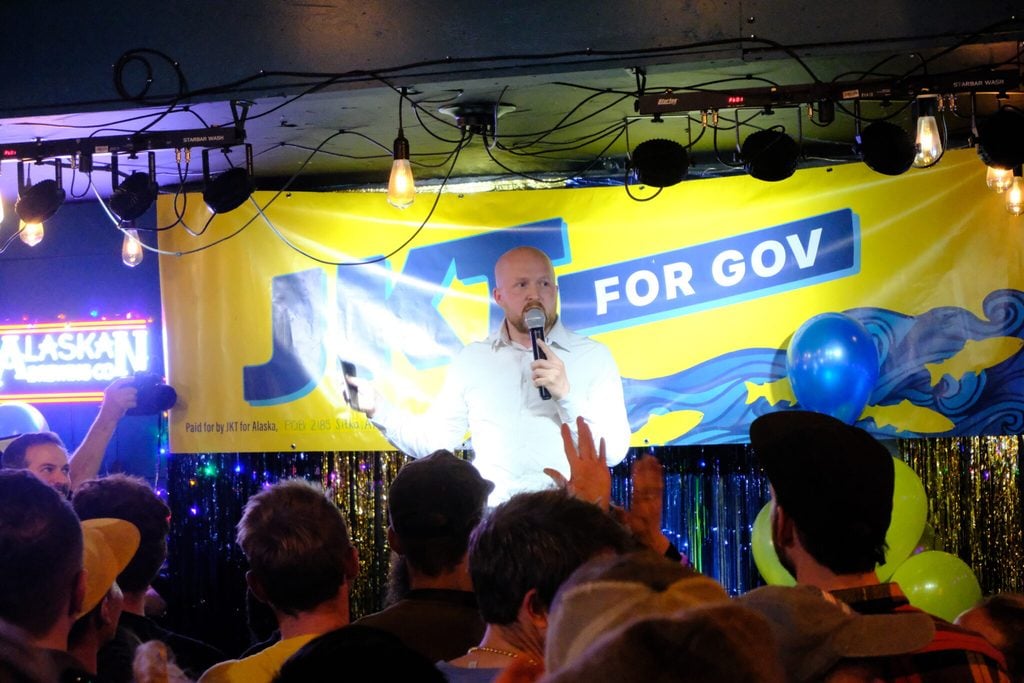
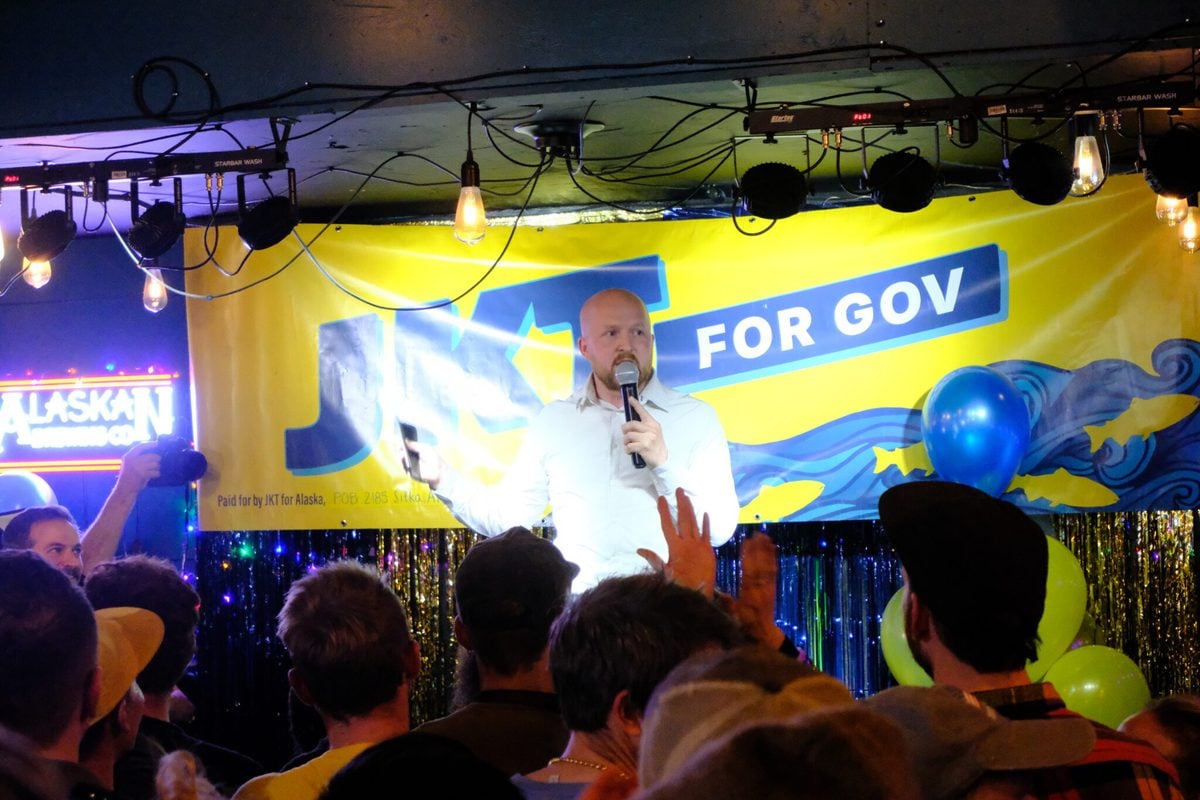
Democratic candidate for governor Jonathan Kreiss-Tomkins addresses supporters at an election night party in Anchorage on Nov. 2, 2026. (Photo by Corinne Smith/Alaska Beacon)

The projected winner of the Alaska governor’s race, Jonathan Kreiss-Tomkins, announced three leaders of his multipartisan transition team on Tuesday. Each member comes from a different part of the state.

The team of co-chairs will be Fairbanks Republican and former state Sen. Click Bishop, Bethel-born Democrat and Alaska Native leader Ana Hoffman and Anchorage independent and community leader Carol Gore. In the coming weeks, the team will lead the formation of the new administration, including hiring staff and setting policy priorities.

Kreiss-Tomkins, 37, sealed his lead last week surpassing the 50% first-choice vote threshold and the other three Republican candidates in the race, putting him on track to be Alaska’s 13th governor, the youngest in state history, and first Democrat elected since 1998. Gov. Mike Dunleavy is term-limited and was ineligible to run again.

Ballots are still being counted and the Alaska Division of Elections is scheduled to announce preliminary final results on Wednesday. It will certify the results on Nov. 25.

On the campaign trail, Kreiss-Tomkins pledged to organize an administration across partisan lines and the three co-chairs reflect the range of political perspectives, he said. 

“Alaska’s greatest strength is its people, and our administration will reflect that,” Kreiss-Tomkins said in an email statement with the announcement. “I’m grateful to Click, Ana, and Carol for stepping up to help lead this transition. They bring different backgrounds, perspectives, and experiences, but share a commitment to moving Alaska forward. We’re building a team that represents all Alaskans and is ready to get to work on day one.”

Click Bishop, a Republican and former state senator and commissioner of the Alaska Department of Labor and Workforce Development, is one of the co-chairs of the incoming Kreiss-Tomkins administration's transition team. (Courtesy photo)
Click Bishop, a Republican and former state senator and commissioner of the Alaska Department of Labor and Workforce Development, is one of the co-chairs of the incoming Kreiss-Tomkins administration’s transition team. (Courtesy photo)
Ana Hoffman, a Democrat and longtime Alaska Native leader and former co-chair of the Alaska Federation of Natives, is one of the co-chairs of the incoming Kreiss-Tomkins administration's transition team. (Courtesy photo)
Ana Hoffman, a Democrat and longtime Alaska Native leader and former co-chair of the Alaska Federation of Natives, is one of the co-chairs of the incoming Kreiss-Tomkins administration’s transition team. (Courtesy photo)
Carol Gore, an independent and Anchorage-based business and non-profit leader, is one of the co-chairs of the incoming Kreiss-Tomkins administration's transition team. (Courtesy photo)
Carol Gore, an independent and Anchorage-based business and non-profit leader, is one of the co-chairs of the incoming Kreiss-Tomkins administration’s transition team. (Courtesy photo)

Click Bishop formerly served in the Alaska Senate as a Republican representing Fairbanks from 2015 to 2023. Prior to the Legislature, he served as commissioner of the Alaska Department of Labor and Workforce Development from 2007 to 2012, and brings experience in workforce development, infrastructure and state budgeting, according to the announcement. Bishop also ran unsuccessfully for governor this year and was among 17 candidates in the primary election. He did not make the final four, but won 7% of the vote.

Ana Hoffman, a Democrat, formerly served as the co-chair of the Alaska Federation of Natives, the largest statewide Native organization, from 2013 to 2025. She is Yup’ik from Bethel, where she has served as the president and CEO of the Bethel Native Corp. since 2006. She has extensive experience in advocating for Alaska Native communities, rural Alaska and economic development, the announcement said. 

Carol Gore, an independent, is an Anchorage-based business and non-profit leader who previously served as CEO of the Cook Inlet Housing Authority from 2000 to 2023. She is of Aleut descent,a member of the Ninilchik Traditional Council and a shareholder of Cook Inlet Region, Inc. She serves on the board of the Anchorage Economic Development Corp. and various non-profit and business boards. Gore was inducted into the Alaska Business Hall of Fame this year.

Kreiss-Tomkins also launched a new website, rebuildalaska.com, for Alaskans to submit ideas to improve the state — and for prospective applicants to apply for jobs with the new administration. 

“We want to hear from Alaskans in every corner of the state, from every political background, and from every walk of life,” Kreiss-Tomkins said. “Whether you’re interested in public service or simply have a good idea for making Alaska a better place to live, we want you to be part of this process.”

The transition team will announce key appointments, including cabinet members, policy priorities and opportunities for public feedback in the coming weeks, according to the announcement.

Inauguration is scheduled for Dec. 7. Kreiss-Tomkins has not yet announced a location.

Categories
Alaska News Featured Juneau News juneau Juneau Local Juneau Local Ketchikan Local News Feeds Sitka Local

With 25,000 more votes counted, Peltola, JKT and Begich near victory in Alaska election

By: James Brooks, Alaska Beacon

Jonathan Kreiss-Tomkins shakes hands with a supporter at an election night party Tuesday, Nov. 3, 2026 at the Broken Blender in downtown Anchorage. (Photo by Loren Holmes/Alaska Beacon)

Democratic U.S. Senate candidate Mary Peltola, Democratic gubernatorial candidate Jonathan Kreiss-Tomkins and Republican U.S. House Rep. Nick Begich III came closer to clinching victory in Alaska’s general election as the Alaska Division of Elections added almost 25,000 ballots to the state tally on Tuesday night.

With 245,470 first-choice ballots counted, Peltola now leads incumbent Republican U.S. Sen. Dan S. Sullivan by 4,250 first-choice votes, or 48.8% to 47.1%. That’s an increase of more than 1,600 votes from Monday.

If the race goes to a ranked choice runoff between Peltola and Sullivan preliminary, partial data published by the Division of Elections and analyzed by the Beacon shows Peltola winning that matchup as well.GET THE MORNING HEADLINES.SUBSCRIBE

The Associated Press estimates about 84% of all ballots have been counted. A separate, independent estimate posted on Twitter found at least 37,000 votes remaining to be added to the statewide tally.  

In the governor’s race, Kreiss-Tomkins has 49.7% of the first-choice votes, ahead of three Republican competitors. In the U.S. House race, Begich has 48.8% of the first-choice votes, leading an independent challenger by a significant margin. 

In Alaska general election races, voters rank up to four candidates in order of preference. If a candidate in a particular race has more than 50% of the first-choice votes, they win.

If no candidate reaches that threshold, the candidate with the fewest first-choice votes is eliminated, and votes for them are transferred to their voters’ second choices.

The eliminations and redistributions continue until only two candidates are left. The person with the most votes wins.

Friday is the deadline for absentee ballots mailed from within the United States to arrive and be counted. Division officials have said to expect a significant update then. Additional updates are possible Wednesday and Thursday.

Preliminary ranked choice data indicates Senate lead won’t change

The Alaska Division of Elections is scheduled to perform its official ranked choice tabulation on Nov. 18, after the deadline for absentee ballots to arrive and still be counted. 

In preliminary, partial ranked choice tabulations by the Alaska Beacon using data published by the division on Tuesday, Sen. Sullivan gains 3,066 redistributed votes and Peltola gains 2,160, a net gain of 906 for Sen. Sullivan but not enough to overcome Peltola’s lead in first-choice votes.

The ranking data does not yet include 9,909 ballots from rural Alaska precincts where ballots are initially hand-counted. 

Two-thirds of the first-choice votes on those ballots went to Peltola, according to summary data published separately by the division, indicating that even after the ranked choice tabulation, Peltola will lead.

In addition, further ballot counting may help Peltola’s margin. The Democratic candidate has repeatedly gained more first-choice votes than Sullivan in ballots counted after Election Day; on Monday, she led Sullivan by 2,517 votes out of 219,342 cast, and that was an improvement over her 636-vote lead at the end of Election Day. 

Governor and US House leaders appear unlikely to change either 

In the governor’s race, Kreiss-Tomkins’ closest competitor is Republican candidate Bernadette Wilson, with 28.7% of the first-choice votes, followed by Republican Dave Bronson with 13.9% and Republican Treg Taylor with 7.3%.

Preliminary, partial ranked choice tabulations by the Beacon show that if Kreiss-Tomkins fails to top the 50% threshold by Nov. 18, he will easily receive the needed votes once the ranked choice runoff is used.

For the U.S. House race, Begich has lost a small bit of first-choice vote share since Election Day, when he was almost exactly at the 50% threshold. That indicates a ranked choice runoff will be needed, but his closest challenger, independent Bill Hill, has 40.9% of first-choice votes. Democratic spoiler candidate Eric Hafner, a man imprisoned in New York state for threatening federal officials, has 7.5% of the first choice votes. Libertarian Jim McDermott has 2.7%.

Preliminary, partial ranked choice tabulations show Begich winning once McDermott and Hafner are eliminated.

Hill — the candidate endorsed by the Alaska Democratic Party — ran a campaign that attempted to label Hafner a sham candidate and not a real Democrat. Ranked choice tabulations show Hill winning less than half of the second-choice votes from Hafner supporters.

Categories
Alaska News Featured Juneau News juneau Juneau Local Juneau Local Ketchikan Local News Feeds Sitka Local

Most candidates for Alaska governor pledge to live in Juneau if elected

By: Corinne Smith, Alaska Beacon

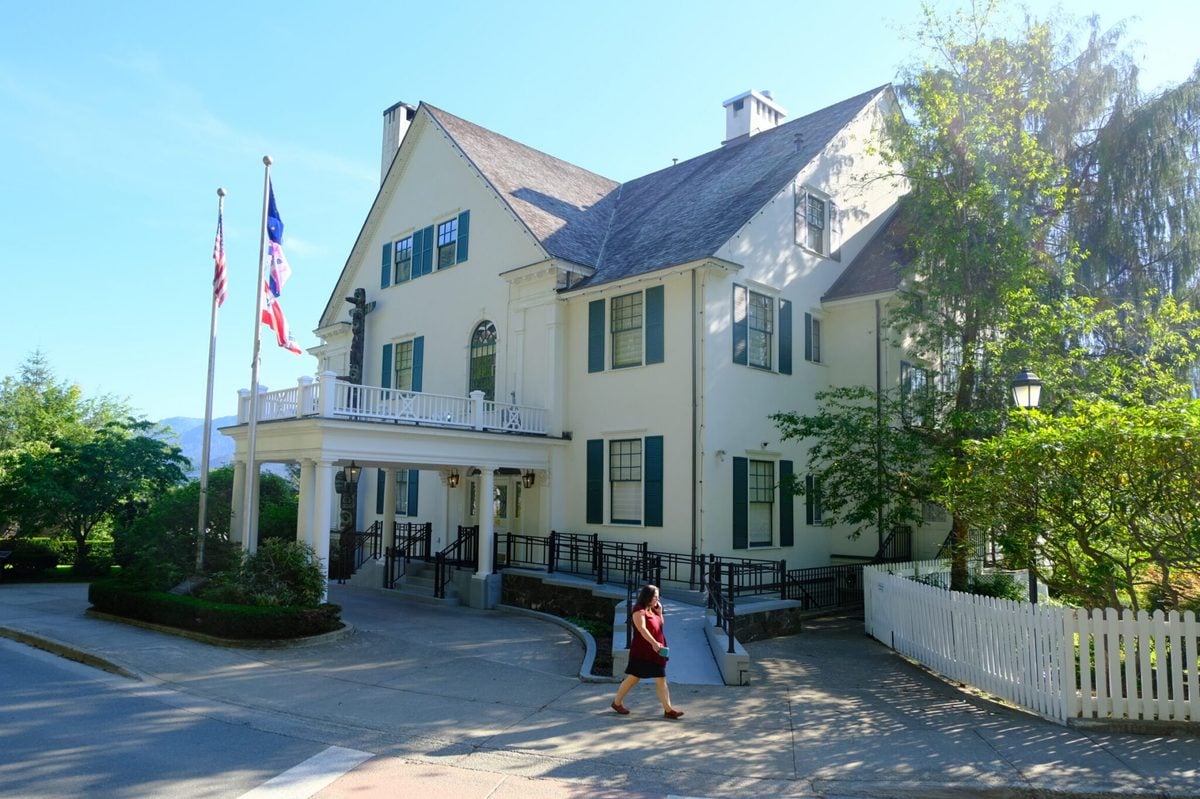
The Alaska governor’s mansion in Juneau is seen on Aug 14, 2026. (Photo by Corinne Smith/Alaska Beacon)


Three of the four Alaska candidates for governor told a Juneau crowd they would live and maintain the seat of government in the state’s Southeast Alaska capital city at a forum in Juneau on Wednesday. 

The candidates’ commitment signals the potential for a significant shift. Gov. Mike Dunleavy, who has served for eight years and cannot run again because of term limits, has maintained his primary residence in Wasilla and conducted state business primarily from Southcentral, with periodic trips to Juneau.

Democrat Jonathan Kreiss-Tomkins and Republicans Bernadette Wilson and Dave Bronson expressed their commitment to Juneau while answering questions from the Juneau Chamber of Commerce about their views on the economy, business and state government relationships with private industry. 

Republican Treg Taylor did not attend the forum due to scheduling conflicts, according to organizers. Taylor’s campaign did not respond to questions Wednesday about whether he would live and maintain his administration from Juneau, if elected. 

The location of Alaska’s capital has long been debated and there have been  many attempts over the years to relocate the capital to the state’s population center of Anchorage. Juneau is landlocked and only accessible by plane or boat. Some say the state’s government would be more accessible to the rest of Alaska if it were located on the road system. Others say Juneau should remain the capital because it has been so since statehood, with state offices, workers and administrative functions established in Southeast. Many also say the cost of relocating the capital to Anchorage is impractical.

Democrat Jonathan Kreiss-Tomkins, a candidate for governor, speaks at a candidate forum hosted by the Juneau Chamber of Commerce in Juneau on October 7, 2026. (Photo by Corinne Smith/Alaska Beacon)
Democratic gubernatorial candidate  Jonathan Kreiss-Tomkins speaks at a candidate forum hosted by the Juneau Chamber of Commerce in Juneau on October 7, 2026. (Photo by Corinne Smith/Alaska Beacon)

Moderators asked candidates what executive leadership, state agencies and investments would be maintained or expanded in Juneau, and whether their cabinet and commissioners would be expected to be based in the capital. 

Kreiss-Tomkins alluded to Dunleavy’s lack of presence in Juneau, saying he would govern from Southeast. “I want to restore Juneau’s position as the seat of government, and have as many commissioners as possible living here,” he said. 

“(In) Governor (Frank) Murkowski’s administration, and Governor (Tony) Knowles’s administration, that was a reality in Juneau, and people felt it. There was a degree of camaraderie and a degree of connectivity that I think have been lost in the years and administration since, and I want to restore that,” he said.

Bronson said he would require his commissioners to live in Juneau if their department is based in the capital. But he noted that he would be flexible for commissioners who may live elsewhere if they are well qualified: “If the talent says, ‘I live in Anchorage, I live in Fairbanks’ — our commissioner right now of DOT, Ryan Anderson, who was my former boss, he lives in Fairbanks. Are you going to lose talent to compel them to live here and change, uproot their lives that much? I don’t think so.”

Bernadette Wilson, a Republican candidate for governor, speaks at a candidate forum hosted by the Juneau Chamber of Commerce in Juneau on October 7, 2026. (Photo by Corinne Smith/Alaska Beacon)
Republican gubernatorial candidates Bernadette Wilson speaks at a candidate forum hosted by the Juneau Chamber of Commerce in Juneau on October 7, 2026. (Photo by Corinne Smith/Alaska Beacon)

Wilson joked that the left-leaning capital city would get a new registered Republican voter if her campaign prevails, and she noted the “gravitas” of hosting at the governor’s mansion. “There is a lot of influence within the four walls of that building that I think have very much been underutilized across the state of Alaska, and quite frankly, for the benefit of all of Alaska,” she said.

Dave Bronson, a Republican candidate for governor, speaks at a candidate forum hosted by the Juneau Chamber of Commerce in Juneau on October 7, 2026. (Photo by Corinne Smith/Alaska Beacon)
Republican gubernatorial candidate Dave Bronson speaks at a candidate forum hosted by the Juneau Chamber of Commerce in Juneau on October 7, 2026. (Photo by Corinne Smith/Alaska Beacon)

Wilson and Kreiss-Tomkins said they would plan to live in the governor’s mansion and host public events, guests and state business there. Bronson said he would commit to living there during the regular legislative session. 

“I will live here, but I won’t be here all year,” Bronson said. “Because a lot of government is spread out throughout the state. And I’ve learned as a young lieutenant in the military — it’s called leadership by walking around — and walking around for government means getting in the car and driving around and visiting people throughout the state.”

Bronson’s views of Juneau have changed from his position several years ago. In 2019, Bronson co-sponsored a ballot initiative to move the regular legislative session to Anchorage, which state analysts estimated could cost up to $42 million. But the petition was not filed in time and failed to advance.  

Bronson agreed Wednesday that the capital should be maintained in Juneau. 

“So is Juneau the seat of government? Should it stay here? Yes, it is, and yes, it should.”

Categories
Alaska News Featured Juneau News juneau Juneau Local Juneau Local Ketchikan Local News Feeds Sitka Local

Former Alaska Gov. Bill Walker files for possible run in 2026 governor’s race

By: James Brooks, Alaska Beacon

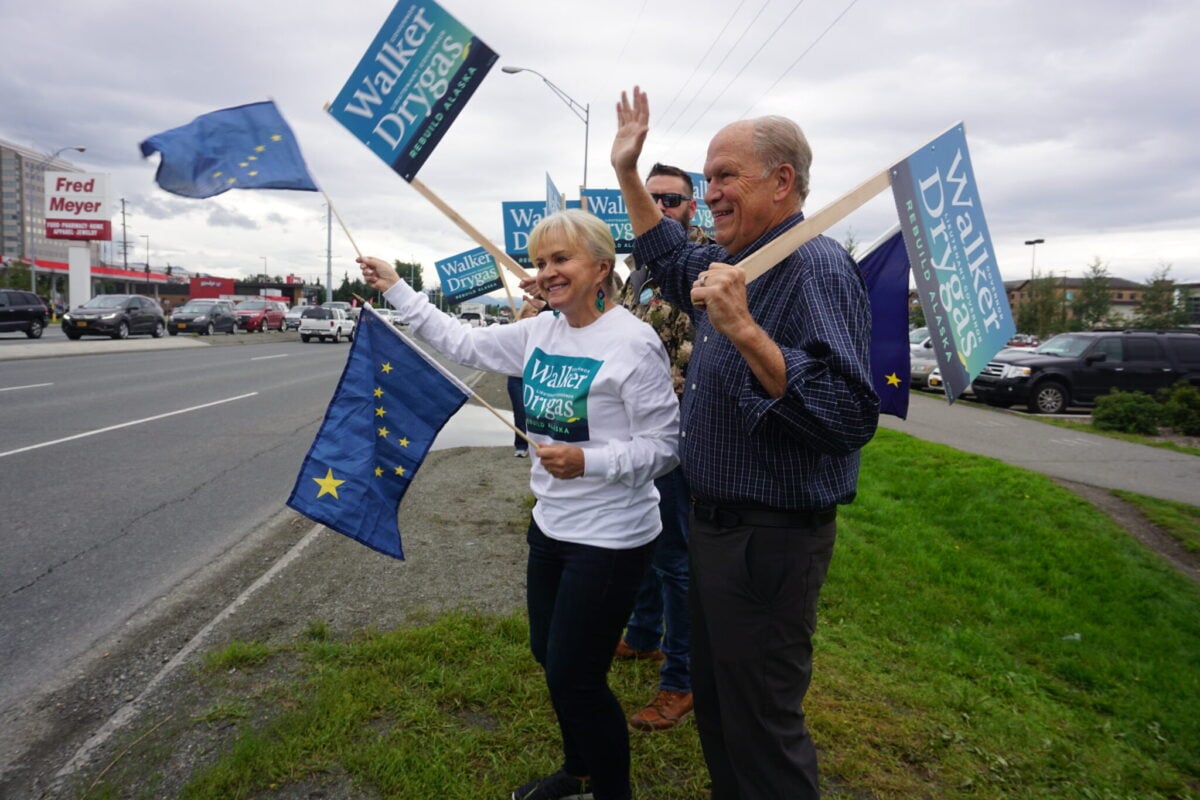
 Former Gov. Bill Walker and his wife Donna wave campaign signs on Aug. 15, 2022, at the intersection of Northern Lights Boulevard and the Seward Highway in Anchorage. Walker is a fan of the state’s new ranked-choice system. (Photo by Yereth Rosen/Alaska Beacon)

Former Alaska Gov. Bill Walker said Thursday that he is considering whether to formally file as a candidate for governor on Monday, the deadline to enter the 2026 race.

Walker and former Department of Revenue Commissioner Randy Hoffbeck filed letters of intent with the Alaska Public Offices Commission on Thursday, a necessary step before officially registering as candidates with the Alaska Division of Elections.

Both would run as independents if they decide to register, Walker said.

“We’ll meet a few times more over the weekend,” Hoffbeck said. “We both feel very strongly that we need to raise the level of discussion on a (state) fiscal plan and the gasline, but our consideration is: Can we move the needle? Is this the best use of our time and resources?”

The deadline to file as a candidate in this year’s statewide elections is 5 p.m. Monday. If Walker formally becomes a candidate, he would be the 19th in this year’s race.

Walker, elected as an independent in 2014, served four years in office. When he ran for re-election, a scandal involving then-lieutenant Gov. Byron Mallott caused Mallott to resign less than a month before Election Day 2018. Walker suspended his re-election campaign, and Republican Mike Dunleavy went on to be elected, defeating Democratic candidate Mark Begich in the process.

Walker ran for re-election in 2022 against Dunleavy and Democratic candidate Les Gara. Dunleavy won that race but is term-limited and cannot run again. That’s led to a wide field of options for the 2026 election.

“There’s a flavor for everybody, no question about that,” Walker said.

During his term in office, Alaska experienced a sharp drop in oil prices that led to a fiscal crisis. Walker slashed the state’s budget and vetoed a portion of the 2015 Permanent Fund dividend, becoming the first governor in state history to do so.

Since then, successive editions of the state Legislature have set the annual dividend amount themselves, rather than using a formula.

During Walker’s term, he proposed a comprehensive state fiscal plan that would have shifted Alaska away from a reliance on oil revenue, but lawmakers failed to adopt it. 

In his final year, legislators approved one aspect, an annual transfer from the Alaska Permanent Fund to the state treasury. That transfer is now the No. 1 source of general-purpose revenue for the state, used for dividends and services alike.

By phone on Thursday, Walker said he was concerned about a state fiscal plan in 2014, and he still is.

“They got some of it passed but not enough of it,” he said, referring to the proposal he made while in office, “and so we need a fiscal plan. I haven’t heard a lot of discussion on the campaign trail from (other candidates) about what they’d do on the fiscal side, and — well, I’m not a very good spectator when there’s work to be done.”

Hoffbeck, who would serve as Walker’s lieutenant governor, was his revenue commissioner from 2014 through 2017, when he resigned to become an interim minister, working at churches whose ministers had recently departed.

“It won’t be an easy job, but you know, we can sit back on the sideline and just complain, or we can get involved and actually try and do something, and I think that’s kind of where Bill and I are at,” Hoffbeck said. “I like being retired, I like what I’m doing right now, but I’m also frustrated with what I’m hearing and seeing, and so, I guess at some point in time you’ve got to stop talking and do something.”

In addition to the surprise possible return of Bill Walker, the last days before the candidate filing deadline have brought a flurry of lieutenant governor candidate announcements.

Democratic candidate Tom Begich announced former U.S. Department of Agriculture official Julia Hnilicka as his running mate on Wednesday, while Republican candidate Adam Crum declared former healthcare CEO Robert Craig as his choice for lieutenant governor on Thursday morning.

Hours after that, Democratic candidate Matt Claman said Sarah Skeel, former chief administrative officer of Providence Alaska Medical Center, would be his lieutenant governor pick. Independent candidate Meda DeWitt has scheduled an announcement event on Saturday.

If a gubernatorial candidate does not have a registered lieutenant governor candidate by 5 p.m. Monday, they are ineligible to run. 

Registered candidates have until June 27 to drop out. If a candidate for governor withdraws, the lieutenant governor candidate may take their spot and pick a new lieutenant governor. A lieutenant governor candidate who withdraws may be replaced with another.

Candidates for Governor

  • Former state Sen. Tom Begich (Democratic) with Lt. Gov. candidate Julia Hnilicka (Democratic)
  • Former state Sen. Click Bishop (Republican) with Lt. Gov. candidate Greta Schuerch (independent)
  • Former Bristol Bay Borough manager Gregg Brelsford (independent)
  • Former Anchorage Mayor Dave Bronson (Republican) and Lt. Gov. candidate Josh Church (Republican)
  • Former state revenue commissioner Adam Crum (Republican) and Lt. Gov. candidate Robert Craig (Republican)
  • Current state Sen. Matt Claman (Democratic) and Lt. Gov. candidate Sarah Skeel (Democratic)
  • Lt. Gov. Nancy Dahlstrom (Republican)
  • Matanuska-Susitna Borough Mayor Edna DeVries (Republican)
  • Organizer Meda DeWitt (independent)
  • Kasilof resident Jessica Faircloth (independent)
  • Anchorage podiatrist and state medical board member Matt Heilala (Republican)
  • Former state Sen. Shelley Hughes (Republican) with Lt. Gov. candidate Blake Gettys
  • Former state Rep. Jonathan Kreiss-Tomkins (Democratic)
  • Author Hank Kroll (Registered Republican) with Lt. Gov. candidate Tommy Nicholson (Undeclared)
  • Angoon resident and former teacher James William Parkin IV (Republican) with Lt. Gov. candidate Ramadhani Greer (Democratic)
  • Former Attorney General Treg Taylor (Republican)
  • Palmer resident Bruce Walden (Republican)
  • Former Gov. Bill Walker (independent) with Randy Hoffbeck (independent)
  • Businesswoman Bernadette Wilson (Republican) with Lt. Gov. candidate Mike Shower (Republican)

Categories
Featured Juneau News Juneau Local Ketchikan Local News Feeds Sitka Local

Former Alaska attorney general Treg Taylor is 11th candidate to announce run for governor in 2026

By: James Brooks, Alaska Beacon

Alaska Attorney General Treg Taylor speaks at a news conference on Thursday, Dec. 15, 2022, at the Alaska State Capitol in Juneau. (Photo by James Brooks / Alaska Beacon)

Treg Taylor, the former Alaska attorney general, is running for governor, he announced Wednesday morning.

“I have a four-and-a-half-year proven record as the attorney general of fighting crime, fighting Biden, and fighting for Alaska,” he said by phone.

In a campaign video and written statement, Taylor promoted himself as a “fearless conservative” who is the best successor to incumbent Gov. Mike Dunleavy, who is term-limited and unable to run for another four years in office.

Taylor is the 10th Republican and 11th candidate overall to enter the 2026 Alaska governor’s race. 

The lone non-Republican in the race is former state Sen. Tom Begich, an Anchorage Democrat. 

The other Republicans are Anchorage business owner Bernadette Wilson; former state Sen. Click Bishop of Fairbanks; former Alaska Revenue Commissioner Adam Crum; current state Sen. Shelley Hughes of Palmer, Lt. Gov. Nancy Dahlstrom of Eagle River; Matanuska-Susitna Borough Mayor Edna DeVries; podiatrist Matt Heilala of Anchorage; former teacher James William Parkin IV of Angoon; and Bruce Walden of Palmer.

“That is a ridiculous number of people in the race,” Taylor said when asked how he distinguishes himself from the other Republicans. “My answer is that I am the only candidate that has a proven record of fighting on behalf of Alaska. When I was the attorney general for four and a half years, I fought crime, I fought Biden, I fought for Alaska’s economic future. I’ve been heavily involved with the Trump administration. I helped draft Trump’s first day Executive Order unleashing Alaska’s extraordinary resource potential. And I’ve worked hard with the Trump administration, with (Department of the Interior), (Department of Justice), to see fulfillment of that executive order, which is going to push Alaska’s economic future.”

Asked about his campaign plans, Taylor said, “over the next few months, I’ll be hard at work, visiting with groups, visiting with individuals, working up support, fundraising. Obviously, I think the biggest tell in this race is going to be when everybody divulges their fundraising and our goal is to be at the top of that list, and I think we’ve got a good plan for getting there.”

Taylor, a longtime attorney with a degree from the Brigham Young University law school, worked in private practice and for Arctic Slope Regional Corp. before joining the Alaska Department of Law in 2018. He was head of the department’s civil division in 2021 when Dunleavy picked him as attorney general following the resignations of two other men amid sexual misconduct scandals.

Taylor, who has never held publicly elected office before, ran unsuccessfully for the Anchorage School Board in 2011 and for that city’s Assembly in 2016.

Taylor’s entry into the governor’s race marks an unusually early start for an Alaska campaign. Eight years ago, when now-Gov. Dunleavy launched his campaign in July 2017, he was the first high-profile candidate to challenge then-Gov. Bill Walker. This time around, three candidates had entered the race before June. 

While the race is unusually crowded, additional candidates are still possible. Republican U.S. Sen. Lisa Murkowski has not ruled out a campaign, and a run by former U.S. Rep. Mary Peltola, a Democrat, is also possible.

Categories
Featured Juneau News Juneau Local Ketchikan Local News Feeds Sitka Local

Republican Bernadette Wilson announces Sen. Mike Shower as lieutenant governor running mate

By: James Brooks, Alaska Beacon

Sen. Mike Shower, R-Wasilla, speaks Friday, April 12, 2024, on Senate Bill 187, the capital budget. (Photo by James Brooks/Alaska Beacon)

Wasilla Republican Sen. Mike Shower will run for lieutenant governor alongside Republican gubernatorial candidate Bernadette Wilson, the two announced Tuesday night in Big Lake.

Wilson is the first of Alaska’s 10 governor candidates to announce her running mate.

The other nine candidates include former Democratic Sen. Tom Begich of Anchorage and eight Republicans: former state Sen. Click Bishop of Fairbanks; former Alaska Revenue Commissioner Adam Crum; current state Sen. Shelley Hughes of Palmer, Lt. Gov. Nancy Dahlstrom of Eagle River; Matanuska-Susitna Borough Mayor Edna DeVries; podiatrist Matt Heilala of Anchorage; former teacher James William Parkin IV of Angoon; and Bruce Walden of Palmer. Former Alaska Attorney General Treg Taylor is also expected to file for the office.

Current Rep. George Rauscher, R-Sutton, said he will run for Shower’s seat in the state Senate. Rauscher previously ran for Senate in 2018 and said he put his name in “one minute after Bernadette stated it was Shower.”

By phone, Wilson said the lieutenant governor has two jobs: taking care of the state seal, and taking care of elections. 

“The Division of Elections is incredibly important and too important to get passed off to who is the politically expedient candidate,” she said.

Bernadette Wilson and Mike Shower pose for a photo on Tuesday, Sept. 9, 2025, in Big Lake, Alaska. (Bernadette Wilson photo)

Wilson said she believes “election integrity and the ability to vote at the ballot box is the very foundation of the Republic” and said that Shower is the right person to fix problems with voting in rural Alaska, an unusually large voter roll, and slow-to-arrive results.

“I felt very confident that Sen. Mike Shower has the knowledge in that area. It is an area that he is passionate about, which is the first step in solving any problem, and he’s worked on that extensively. So I felt that that was incredibly important and made him the best choice for Alaska’s next lieutenant governor,” she said.

Shower served over 20 years as a pilot in the U.S. Air Force and currently works as a commercial cargo pilot. 

Shower was originally appointed to the Senate in February 2018 to replace Mike Dunleavy, who held the seat until resigning to run for governor. Elected on his own merits later that year and re-elected in 2022, he has repeatedly introduced proposals to make changes to the state’s elections system.

His first proposal was introduced in 2019 related to election security protocols, before President Donald Trump began lying about fraud in the 2020 election. 

Currently the Senate’s minority leader, he has regularly re-introduced legislation related to the state’s elections system and has frequently been a key figure in end-of-session negotiations on the topic. Thus far, the Legislature has been unable to pass significant changes.

As a member of the Senate, Shower has consistently endorsed the idea of a large Permanent Fund dividend, going so far as to propose a statewide tax in order to pay for it. 

Wilson said that she and Shower are confident in their ability to win the governor’s race, but if they finish behind another Republican in the August primary, they will withdraw and throw their support behind the leading Republican.

Under Alaska’s current voting system, all candidates for the same office run in the same race, regardless of political party. The top four-vote getters advance to the general election, where Alaskans use ranked choice voting to pick the ultimate winner.

Wilson, one of the leaders of a campaign to repeal that system, said she believes “that when you’ve got multiple people on the ballot of any party, it leads to so much confusion, it leads to voters only ranking one at the end of the day. … I think it’s very arrogant to say, Well, I’m not the top vote getter, but I’m going to stay in anyways. I just don’t think that that’s appropriate.”

Categories
Featured Juneau News Juneau Local Ketchikan Local News Feeds Sitka Local

Alaska Revenue Commissioner Adam Crum to quit, expected to run for governor

By: James Brooks, Alaska Beacon

Adam Crum, commissioner of the Alaska Department of Revenue, testifies Friday, Jan. 20, 2023, at a meeting of the Alaska Senate Finance Committee in the state Capitol at Juneau, Alaska. (Photo by James Brooks/Alaska Beacon)

Adam Crum, commissioner of the Alaska Department of Revenue, will leave his job Aug. 8, according to an announcement published Friday by Gov. Mike Dunleavy’s office.

A person familiar with Crum’s plans said he intends to run for governor in 2026, joining seven other Republican candidates. No independents or Democrats have filed for the primary election, which is 13 months away. 

Asked whether he will run for governor, Crum said by text message, “I’ve accomplished a lot to put Alaska on sound economic footing. I’ll have a formal statement on my last day, August 8th. Stay tuned.”

Crum has been part of Dunleavy’s cabinet since the governor took office in 2018. He initially served as commissioner of the Alaska Department of Health and Social Services, occupying that position during the COVID-19 pandemic and during an executive order that split the agency into two separate departments.

In 2022, Dunleavy named Crum as revenue commissioner, and he assumed a seat on the board of the Alaska Permanent Fund Corp., whose revenues are the No. 1 source of general-purpose dollars for state services and the Permanent Fund dividend.

Jason Brune, former commissioner of the Alaska Department of Environmental Conservation, now fills a public seat on the Permanent Fund Corp. board.

Brune said he knows Crum has been considering a run for governor but could not confirm his plans.

“His departure is a big loss for the state,” Brune said by text. 

“It was an honor working with him for the five years we served together,” he said, referring to the time they spent on the Dunleavy cabinet.

In a written statement Dunleavy praised Crum’s performance during his time with the state.

“Commissioner Crum has been an exemplary leader whose unwavering dedication and innovative approach have significantly benefited Alaskans,” Dunleavy said. “During his time leading both the Department of Health and Social Services and the Department of Revenue, Adam consistently prioritized Alaska’s economic well-being, public health, and fiscal stability. His collaborative spirit and commitment to serving our communities have made a lasting, positive impact.”

The governor’s office said an acting commissioner will be named soon.