Categories
Featured Juneau News Juneau Local Ketchikan Local Music News Feeds Sitka Local

Shutdown standoff in US Senate extends as thousands of federal workers are sent home

By:Ashley MurrayJennifer Shutt and Shauneen Miranda, States Newsroom

U.S. Senate Democrats and Republicans remained at a stalemate Wednesday as government offices closed and hundreds of thousands of federal workers faced furloughs on the first day of a government shutdown that showed no sign of ending.

Proposals from each side of the aisle to fund and reopen the government failed again during morning Senate votes, mirroring the same vote breakdowns as Tuesday evening, when lawmakers could not reach a deal hours before the government ran out of money.

The nonpartisan Congressional Budget Office projected up to 750,000 federal workers could be furloughed, leading to a $400 million per day impact on the economy.

Locked in their positions, Republicans failed to pick up enough Democrats to reach the 60 votes needed to advance their plan to fund the government until Nov. 21. 

Senators will break Thursday to observe Yom Kippur but will return Friday to again vote on the funding proposals.

Democratic Sens. Catherine Cortez Masto of Nevada and John Fetterman of Pennsylvania, along with independent Angus King of Maine, again joined Republicans in the 55-45 vote for the House-passed stopgap spending bill. GOP Sen. Rand Paul of Kentucky voted no.

Democrats also failed to find support to move forward their bill to fund the government through Oct. 31, roll back GOP cuts on Medicaid and permanently extend subsidies that tie the cost of Affordable  Care Act health insurance premiums to an enrollee’s income level. 

The Democrats failed to advance their plan in a party-line 47-53 vote. King, who caucuses with Democrats, voted in favor.

Shutdown tied to health care tax credits

Senate and House Democrats say they will not support a GOP path to reopen the government unless Republicans agree to negotiate on rising health care costs. 

House Minority Leader Hakeem Jeffries said at a press conference that Democrats are “ready to sit down with anyone at any time and at any place in order now to reopen the government, to enact a spending agreement that meets the needs of the American people and to address the devastating Republican health care crisis that has caused extraordinary harm on people all across the country.”

The New York Democrat pointed to harms in “rural America, working class America, urban America, small-town America, the heartland of America and Black and brown communities throughout America.” 

Democratic leaders blitzed Capitol Hill with their message on health care, holding press conferences and attending an evening rally Tuesday on the lawn outside the U.S. House. 

U.S. Senate Minority Leader Chuck Schumer, D-N.Y., speaks during a press conference inside the Capitol building in Washington, D.C., on Tuesday, Sept. 30, 2025. Also pictured from left are Washington Sen. Patty Murray, Minnesota Sen. Amy Klobuchar and Illinois Sen. Dick Durbin. (Photo by Jennifer Shutt/States Newsroom)

They pointed to new data published this week showing annual insurance premiums could double on average in 2026 if the subsidies expire at year’s end, according to an analysis from the nonprofit health policy research organization KFF. 

Open enrollment for next year’s ACA health insurance plans opens Nov. 1 in most states, and Oct. 15 in Idaho.

Uptake of ACA health insurance plans has more than doubled to over 24 million, up from 11 million, since the introduction of the subsidies in 2021, according to KFF. 

During their own budget reconciliation deal in 2022, Democrats extended the insurance premium tax credits until the end of 2025. The majority of ACA enrollees currently rely on the credits.

Democrats also want assurances that the White House and Senate Republicans will not cancel any more funds that have already been approved by Congress, as was the case this year when the administration and GOP lawmakers stripped funding for medical research, foreign aid and public broadcasting, among other areas.

‘This can all end today’

GOP leaders in the House and Senate continued to blame Senate Democrats for the government shutdown at the expense of furloughed federal workers and Americans who rely on their services. 

At a Wednesday morning press conference, House Speaker Mike Johnson said “troops and border patrol agents will have to go to work, but they’ll be working without pay.”

Johnson also claimed at the press conference that veterans benefits would stop. The claim is false, as Veterans Administration medical care will continue uninterrupted and vets will also continue to receive benefits, including compensation, pension, education and housing.

House Speaker Mike Johnson of Louisiana speaks at a press conference outside the U.S. Capitol on Oct. 1, 2025, in Washington D.C., alongside fellow GOP leadership in the U.S. House and U.S. Senate. (Photo by Shauneen Miranda/States Newsroom)
House Speaker Mike Johnson of Louisiana speaks at a press conference outside the U.S. Capitol on Oct. 1, 2025, in Washington, D.C., alongside fellow GOP leadership in the U.S. House and U.S. Senate. (Photo by Shauneen Miranda/States Newsroom)

“As we speak here this morning, there are hundreds of thousands of federal workers who are getting their furlough notices. Nearly half of our civilian workforce is being sent home — these are hard-working Americans who work for our federal government,” the Louisiana Republican said, flanked by fellow GOP leaders on the Upper West Terrace of the U.S. Capitol overlooking the National Mall. 

Johnson decided in late September the House will be out until Oct. 6, canceling this week’s votes. 

The speaker said he will bring House members back next week, even if the government is still shut down.

“They would be here this week, except that we did our work — we passed the bill almost two weeks ago out of the House, sent it to the Senate,” Johnson said. “The ball is literally in (Senate Minority Leader) Chuck Schumer’s court, so he determines that.” 

Senate Majority Leader John Thune said “this can all end today” and “needs to end today.”

The South Dakota Republican said the funding lapse can cease when Senate Democrats vote for the GOP’s “clean” short-term funding bill. 

“We will continue to work together with our House counterparts, with the president of the United States, to get this government open again on behalf of the American people,” Thune said. 

Bipartisan deal and Trump

Virginia Democratic Sen. Tim Kaine said later in the day that a bipartisan group huddled on the floor during votes to talk about a possible path forward on “health care fixes” and ensuring that if a bipartisan deal is brokered, the Trump administration will stick to it. 

Republican senators, he said, could give Democrats assurances they won’t vote for any more rescissions requests from the White House, which ask Congress to cancel already approved government spending. But other issues, like laying off federal workers by the hundreds or thousands, have to be a promise from the president. 

“If I find a deal, should Congress have to follow it? Yes. Should the president have to follow it? Yes. Well, what if the president won’t follow it? Oh, yeah, you got a problem,” Kaine said. “So you know, rescission, impoundment, those are Senate words. But a deal is a deal — people get that.”

Kaine also emphasized that it’s not a “clean” stopgap funding bill if the Trump administration unilaterally cancels some of the spending. 

“In the past, we voted for clean (continuing resolutions), but the president has shown that he’ll take the money back,” Kaine said, referring to the technical name for a short-term funding bill. “I mean, just in Virginia, canceling $400 million to our public health, $40 million economic projects just pulled off the table, firing more Virginians than any president. 

“So we just want you to agree, if we do a deal, then you’ll honor the deal,” Kaine said. “It’s not that much to ask.”

‘People are suffering’

North Carolina Republican Sen. Thom Tillis said he doesn’t expect the shutdown will have long-term ramifications for senators’ ability to negotiate bipartisan deals — a necessity in the upper chamber, which has a 60-vote threshold to advance legislation. 

“It’s all transactional,” Tillis said. “I think there’s going to be opportunities for some bipartisan work, but none of that happens, you can’t even really consider it when you’re in a shutdown posture.”

Cortez Masto, who voted to advance Republicans’ seven-week stopgap bill, said the GOP “created this crisis” on health care and “need to address it.”

“They have no moral standing — no moral standing —- to say that this is all on the Democrats. They are in control. They’ve created this crisis,” Cortez Masto said. “People are suffering and they need to come to the table.” 

Missouri Republican Sen. Josh Hawley, who was sworn in for the first time during the last shutdown, said he worries about longer-term effects. 

“My concern is it’s going to poison the well on negotiations going forward on a lot of things,” Hawley said. “I can’t speak for anybody but myself, but I would just say that these tactics are very destructive. And it’s destructive, not just for relationships, but for real people.”
Categories
Featured Juneau News Juneau Local Ketchikan Local News Feeds Sitka Local

On budget vote, Murkowski says she was ‘hung out to dry’ and stuck between two bad options

By: James Brooks, Alaska Beacon

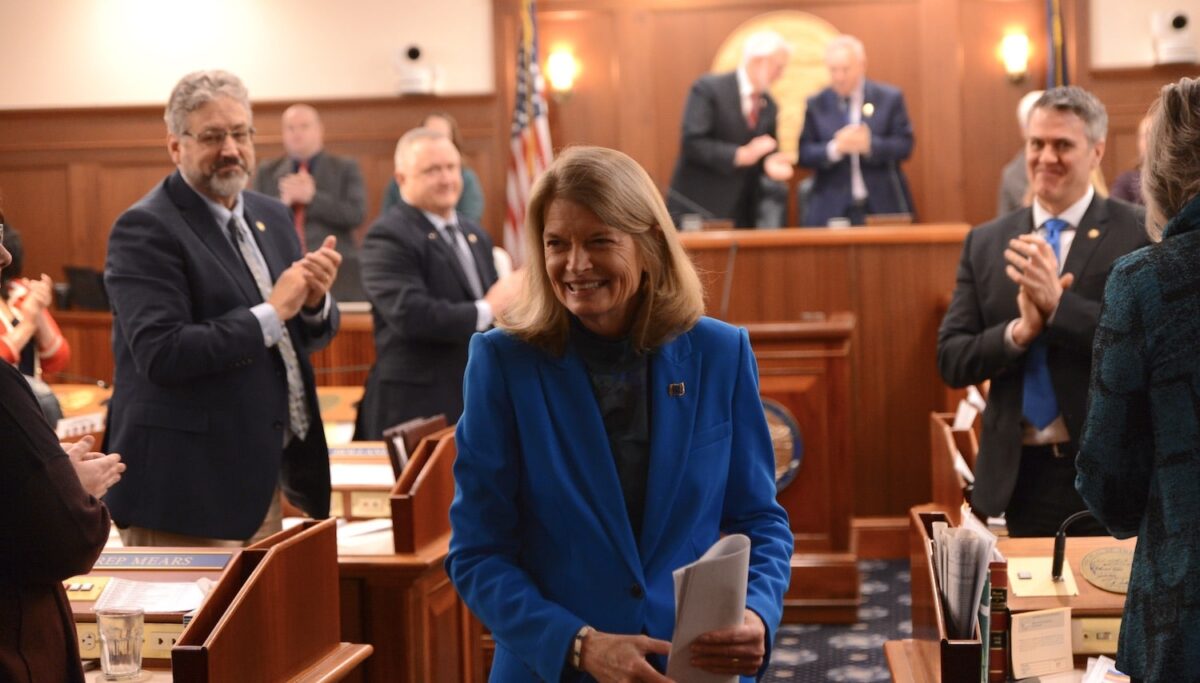
Sen. Lisa Murkowski, R-Alaska, smiles on Tuesday, March 18, 2025, as she exits the Alaska House of Representatives following her annual address to the Alaska Legislature. (Photo by James Brooks/Alaska Beacon)

Speaking in an interview on Friday, Alaska Sen. Lisa Murkowski said President Donald Trump’s health care-cutting budget plan was destined to pass Congress, and her decisive vote on the package last month represented the best of a bad pair of options.

In a new analysis published Monday by the nonpartisan Congressional Budget Office, Republicans’ “big, beautiful” law is estimated to add almost $3.4 trillion to the federal debt over the next decade and cause 10 million Americans to lose access to health insurance. 

Murkowski said she believes that had she opposed the law, Republican senators would instead have sought a 50th vote from Kentucky Republican Sen. Rand Paul, and the result would have been deeper cuts to the federal budget, including to health care.

“What he was looking for was dramatically more cuts to Medicaid, dramatically greater reductions in spending,” Murkowski said. “And so it was no secret that the bill was going to pass. It was just a question of whether or not it was going to pass with Senator Paul’s vote, or with Senator Murkowski’s vote.”

In a column published July 3 by the Louisville Courier-Journal, Paul wrote, “They could have had my vote and saved money but instead chose more spending and tax and welfare changes targeted at Alaska at the cost of the fiscal sanity of our country.”

Murkowski, echoing comments made previously by Alaska Sen. Dan Sullivan, who also voted for the proposal, said she was disappointed that several provisions benefiting Alaska were stricken by the Senate parliamentarian after objections from Senate Democrats.

Those included large subsidies for the state’s Medicaid program and a new split of oil revenue from federal land on the North Slope, with 90% going to the state and 10% to the federal government. 

Voting on the budget package began before the parliamentarian ruled on all aspects of it.

“And so we didn’t know what was in and we didn’t know what was not in,” Murkowski said.

During the process, the 90-10 split dropped to 70-30, and state-specific benefits for Alaska disappeared.

Afterward, one provision that survived — a concession for wind and solar projects — was quashed by executive orders issued by President Trump. 

Speaking to the Anchorage Daily News on Friday, Murkowski said she feels “cheated” by the maneuver.

Speaking to the Alaska Beacon, she said, “I have been criticized. I have been hung out to dry. But you know what? At the end of the day, I fought for my constituents as best I knew how, and I should never, and I will never, apologize for doing the best that I can by them.”

In her last three Alaska U.S. Senate elections, Murkowski defeated more socially conservative candidates with the support of Democrats and independents.

On social media, after her vote in favor of the Republican budget plan, many of those voters voiced their disapproval.

Asked about that disappointment, Murkowski said she understands and hears that criticism.

“I get the fact that they want me to be principled on this. But if it costs Alaskans — which it would have — then how is that doing my job for them? … At the end of the day, I couldn’t kill it, and I understand that people might not believe that, but again, what I set out to do was try to make improvements to a measure that started out in a place that would have … made it very challenging for too many Alaskans.”

Murkowski said she expects the Trump administration to propose more retroactive budget cuts akin to the one that passed last week involving foreign aid and the Corporation for Public Broadcasting.

Sullivan voted in favor of the cut; Murkowski opposed it.

Afterward, Trump budget director Russ Vought said he wants congressional Republicans to get more partisan in the budget process and that lawmakers should expect more “rescission” votes like last week’s.

Murkowski said she hopes other Republicans will join her in rejecting that call.

“I would like to think that it’s comments like that, that would galvanize us as appropriators, galvanize us as Republicans and Democrats in the United States Senate,” she said. “Our oath is to the Constitution. We would say we’ve got our job to do here, and we know that in order to do it and have it be enduring, it takes 60 votes, and so we need to be more bipartisan and not more partisan. To me, it was absolutely offensive, his statement, and so arrogant.”

Categories
Featured Juneau News Juneau Local Ketchikan Local News Feeds Sitka Local

Alaska US senators split votes on cuts to public broadcasting, foreign aid

By Corinne Smith, Alaska Beacon

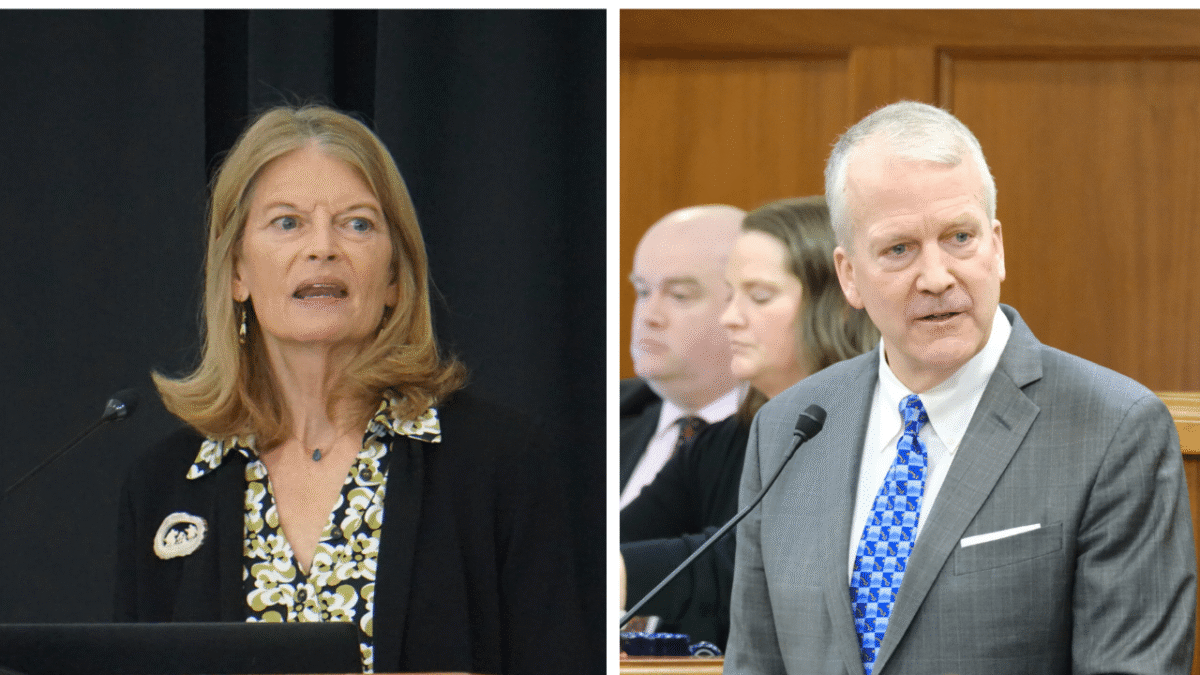
Alaska Republican U.S. Sens. Lisa Murkowski and Dan Sullivan (Alaska Beacon file photos)

Alaska’s two U.S. senators voted differently on a bill requested by President Donald Trump to block federal funding for foreign aid and public broadcasting. 

The cuts include $1.1 billion for public broadcasting over two years, with more than $20 million in funding for Alaska’s 27 public radio and television stations. The measure is known as a rescission package, because it claws back funding that Congress had already approved earlier this year.

The overall bill includes $9 billion in cuts, with most in foreign aid.

The bill passed 51 to 48, with Alaska’s Republican senators voted differently: U.S. Sen. Dan Sullivan voted for the rescission, and U.S. Sen. Lisa Murkowski voted against. 

Sullivan spokesperson Amanda Coyne sent a statement by email on Thursday repeating the senator’s position that he had warned public media, NPR and the Corporation for Public Broadcasting for years about their “biased reporting” that “would eventually jeopardize federal support for both national and local radio stations,” she said.

However, Coyne added, Sullivan has advocated for rural stations and has been working with other senators and White House officials on alternative sources of funding to keep rural stations on the air, particularly Native stations in Alaska.

“Currently, there is approximately $10 million available for tribal and Native stations in the country. Alaska has 11 Native stations. Going forward, Senator Sullivan will continue working to provide resources to support as many Alaska rural radio stations as possible. He was discussing this funding issue with a senior administration official this morning,” Coyne said.

Coyne did not respond to questions on how much would be available for Alaska stations, when, or what stations would be eligible. 

Murkowski was outspoken and critical of the rescission bill, voting no.

In a statement on Thursday, she first cited a lack of clarity by the Trump administration for what programs and amounts would be rescinded, especially for global health programs. “We still lack necessary details, including which ones will be zeroed out. There is no way to determine the implications for lifesaving care and vital resources for women and children abroad,” she said.

“I also strongly oppose the rescission of funding for the Corporation for Public Broadcasting. My colleagues are targeting NPR but will wind up hurting – and, over time, closing down – local radio stations that provide essential news, alerts, and educational programming in Alaska and across the country,” she said. 

Murkowski introduced an amendment on the Senate floor late Wednesday night to protect CPB funding, and it was voted down 51 to 47. 

Murkowski told reporters on Thursday afternoon in an audio recording shared with the Alaska Beacon, when asked about the fate of rural stations in Alaska, that her office was also looking into funding for stations from federal tribal grants.

“Some of them, about a dozen, will be able to access these tribal grants,” she told the reporters.

“But that’s less than half of the Alaska stations. So what happens to KUCB going forward?” she said, referring to the public radio station in Unalaska that broadcast a tsunami warning and emergency evacuation order for remote Aleutian Island communities following a magnitude 7.3 earthquake the day before.  

“So what we’re trying to do is kind of identify how perilously close are many of these small stations to being in a shut down mode. How much do they have to carry them forward?” she said.

In her statement, Murkowski emphasized her opposition to the rescission process, driven by the White House Office of Management and Budget, as undermining Congress’ authority. 

“Finally, and most importantly, approving this package in this manner further shifts the balance of power over the federal budget to the executive branch. Congress, not OMB, holds the power of the purse under the Constitution. To the extent that certain appropriations are not necessary to comply with the laws passed by Congress, we can best address that through the annual budgeting process, where we routinely rescind funds every year.”

The rescission bill now advances back to the U.S. House, which passed an earlier version of the measure. As of Thursday evening it had not been taken up for a vote.

Categories
Featured Juneau News Juneau Local Ketchikan Local News Feeds Sitka Local

How Alaska’s pivotal Republican senator decided to vote for Donald Trump’s bill

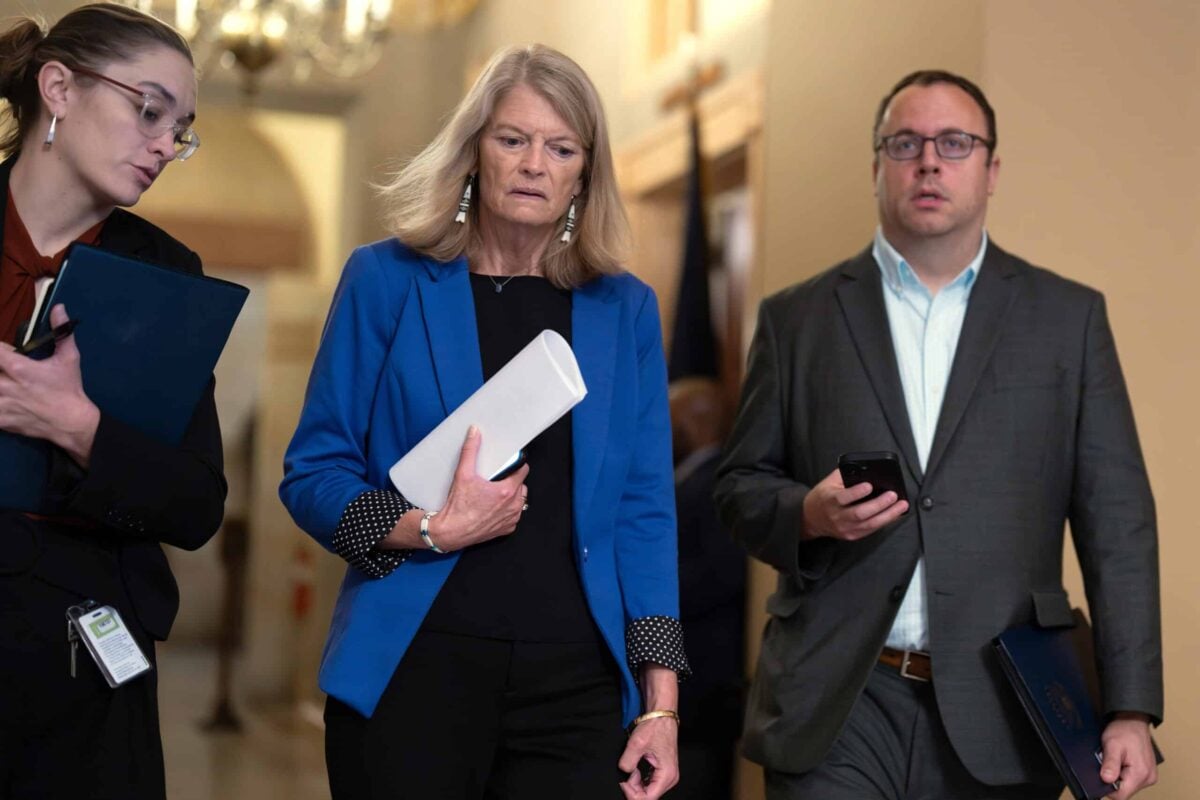
Sen. Lisa Murkowski, R-Alaska, center, a member of the Senate Appropriations Committee, arrives for a closed-door Republican meeting to advance President Donald Trump’s sweeping domestic policy bill, at the Capitol in Washington, Friday, June 27, 2025. (AP Photo/J. Scott Applewhite)

AP- Just after midnight, Alaska Sen. Lisa Murkowski was pacing in a Senate hallway, alone and looking concerned.

It had suddenly become clear to all her Republican colleagues that her vote would be their best chance of passing President Donald Trump’s sweeping bill of tax and spending cuts. Had she decided whether she would support the bill? “No,” Murkowski said, shaking her head and putting her hand up to signal that she didn’t want to answer any questions.

Around 12 hours later, after she had convinced Senate leaders to change the bill to benefit her state and voted for the legislation, ensuring its passage, Murkowski said the last day had been “probably the most difficult and agonizing legislative 24-hour period that I have encountered.”

“And you all know,” she told reporters after the vote at midday Tuesday, “I’ve got a few battle scars underneath me.”

This isn’t Murkowski’s first tough vote

Murkowski has been in the Senate for nearly 23 years, and she has taken a lot of tough votes as a moderate Republican who often breaks with her party. So she knew what she was doing when she managed to leverage the pressure campaign against her into several new programs that benefit her very rural state, including special carveouts for Medicaid and food assistance.

“Lisa can withstand pressure,” said Maine Sen. Susan Collins, a fellow Republican moderate and longtime friend. Collins said she spoke to Murkowski on Monday when she was still undecided, and “I know it was a difficult decision for her, and I also know how much thought she put into it.”

Texas Sen. John Cornyn, R-Texas, who has also served with Murkowski for two decades, was more blunt: “She knows how to use her leverage,” he said.

The 887-page bill narrowly passed by the Senate on Tuesday — and now headed back to the House for possible passage — mentions California three times, Texas twice and New York not at all. But Alaska is in the bill 19 times, from new oil and gas lease sales in the state to tax breaks for Alaska fisheries and whalers to tribal exemptions for work requirements.

Even with all the provisions for Alaska, Murkowski was deeply torn up until the hours just before the vote, when the entire Senate was focused on what she would do — and as Republicans were pressuring her to support the bill and move the party one step closer to giving Trump a win.

She had always supported the bill’s tax cuts and extensions, but she had serious concerns about the repercussions of cutting Medicaid in her state and around the country.

She got much of what she wanted

Murkowski eventually decided to support the legislation in the hours after the Senate parliamentarian approved language to allow several states with the worst error rates in the food stamp program — including Alaska — to put off having to pay a greater portion of the cost of federal benefits, and after Republicans added a $50 billion fund proposed by Collins to help rural hospitals that might otherwise be hurt by Medicaid cuts.

Even with the fund included, Collins was one of three Republicans who voted no on the bill, arguing that the cuts to Medicaid and food stamps would hit her small rural state especially hard. But she said she understands why Murkowski would support it and negotiate special treatment for her state. “The fact is, Alaska is unique from every other state,” Collins said.

Nearly one-third of Alaska’s total population is covered by Medicaid, and the state has long struggled with high health care costs and limited health services in many communities. Most Alaska communities are not connected to the state’s main road system, meaning that many residents, particularly those in small, remote villages, need to fly to a larger city for certain kinds of care. Food security is also a longstanding concern, as the remote nature of many communities means food often is barged or flown in, and options can be limited and expensive.

“I had to look on balance, because the people in my state are the ones that I put first,” Murkowski said immediately after the vote. “We do not have a perfect bill by any stretch of the imagination.”

Some of her colleagues who voted against the bill were critical. “They chose to add more pork and subsidies for Alaska to secure that vote,” said Republican Sen. Rand Paul of Kentucky.

Minnesota Sen. Amy Klobuchar, the top Democrat on the Senate Agriculture Committee, which oversees the food stamp benefits, said that the food stamp provision would incentivize states with the worst oversight, which was the opposite of what Republicans originally intended. The provision would “expand the graft,” Klobuchar said.

Lots of eyes have been on Murkowski

Murkowski, often accompanied by Collins, has been under a microscope for almost every major vote in the Senate in recent years. In February 2021, she joined six other Republicans and all Democrats in voting to convict Trump for inciting the Jan. 6, 2021, attack of his supporters on the Capitol after the House impeached him for a second time. In 2018, she opposed the confirmation of Supreme Court Justice Brett Kavanaugh amid sexual misconduct claims, ultimately voting “present.”

So as Murkowski was wooed for days by Republican leaders and many of her colleagues to vote for the tax and spending cuts package, it was somewhat familiar territory — and an ideal environment for her to win some concessions in favor of her state.

On Monday evening and early Tuesday, Senate Majority Leader John Thune, R-S.D., and Sen. John Barrasso of Wyoming, the No. 2 Senate Republican, spent hours on the Senate floor talking to Murkowski — who was sometimes wrapped in a blanket to stay warm in the frigid chamber. Alaska Sen. Dan Sullivan, a Republican, would sometimes join the group, as did Senate Budget Committee Chairman Lindsey Graham, R-S.C.

As she mulled her vote, Murkowski sorted through drafts of amendments and talked to aides. And despite longstanding criticism of Trump, she communicated with White House officials who made the case that the measure would ultimately be a positive for her state and constituents.

Thune had said for weeks that he would hold a vote as soon as he had 51 senators supporting the legislation. And after days of delays, it became clear Tuesday morning that Murkowski had decided to support it when Thune told senators to come to the floor and scheduled a vote within the hour.

Murkowski, still looking a bit worried, voted “aye.” After the vote, she said: “I haven’t slept in a long, long while now.”