NOTN- The Juneau Assembly on Monday approved zoning changes at two Lemon Creek properties, one near Costco, and directed more than $2 million from the city’s Affordable Housing Fund to support several housing developments, as officials continue efforts to address a persistent housing shortage.
Deputy Mayor Greg Smith said housing was the focus of Monday night’s meeting.
The rezones were “tricky” he said, as certain zoning districts may not always be appropriate for housing.
“The Comprehensive Plan has a map that says what zoning districts are for good reason, people may not want to live next to an asphalt plant, or a rock crushing place, or a shooting range. So there are these zoning deserts, and there’s reason for it.” he said. “The development department and the planning commission looks and says, how will this use work? I think kind of a broader sentiment at the assembly was. some of these sites have been developed in a long time, we really need housing. lets give it a shot.”
Despite earlier recommendations against the changes from the Planning Commission, one property had been zoned industrial, where housing was not allowed, and the other required a zoning adjustment to permit expanded residential development.
The votes were not unanimous, he said.
In addition to the zoning decisions, the Assembly approved five measures allocating money from the city’s Affordable Housing Fund to projects across the city. Altogether, the developments are expected to add roughly 40 housing units, including a mix of single-family homes and multifamily buildings.
“We passed five that appropriated funds from the affordable housing fund for various projects throughout the borough, that was big.” Smith said.
Among the projects receiving support is the planned redevelopment of the former Bergmann Hotel in downtown Juneau. The developer is seeking to convert the long-closed building into an apartment complex. Other funded projects include new single-family homes and a small multifamily development in various neighborhoods, like Pederson Hill.
The Assembly also formally adopted its goals for the coming year, building on priorities identified during a December retreat.
City representatives will be attending the Southeast Alaska Conference this week.
Photo of the Candy Cane Hunt video promotion, provided by Juneau Parks and Recreation
NOTN- As December arrives, Juneau’s Parks and Recreation Department has a busy schedule.
Newly appointed Parks and Recreation Director Marc Wheeler said he is excited to lead the department.
“I’ve always had a passion for Parks and Recreation. I think it’s a really wonderful thing for Juneau. It makes Juneau a great place to live and work and raise a family.” Said Wheeler, “I’m a power user of parks and recreation. I swim, I run on the trails. I love all our facilities and our programs, and it’s just great to be part of the team.”
The department oversees a vast array of operations, from local pools and indoor recreation to youth housing services and after-school programs.
Youth Services Manager Jordan Nigro said the city’s offerings for young people continue to grow, ranging from the nearly 80 year old Zach Gordon Youth Center to a youth shelter, transitional housing, rapid rehousing assistance, and after-school programs.
“The thing folks are most familiar with is Zach Gordon Youth Center, it’s been around for a long time, and it’s a pretty special place.” Said Nigro, “It’s got free drop in activities for youth of all ages. It’s a good reminder that the Holiday break is coming up, so come by over the break, we always have tons of things going on.”
Nigro said the department is recruiting young people with lived experience in housing instability to join its Youth Action Board.
“It’s young people working on issues around housing and homelessness, and right now we are doing a push for more youth to be involved with that. So this is specifically young people who have lived experience with challenges with housing, and housing insecurity.” Said Nigro, “We want to have your voice involved in making changes at the local and state level. The Alaska Coalition on Housing and Homelessness really helps with this so young people can get paid to be involved. It’s pretty great.”
Parks and Recreation is also offering “in-service day” camps when schools are closed, and registrations are open for youth basketball through Dec. 20.
Wheeler said community engagement is crucial as the department prepares for funding challenges.
“Our biggest constraints are funding with our budget. And the city is going to be looking at their budget really soon with the assembly, and it’s a great chance for people to get involved in that process. If you care about Parks and Rec, we would love to have your voice be heard.” Wheeler said.
The department’s annual Candy Cane Hunt is also starting today, and will run through Dec. 17. Participants can download a “Candy Cane Tracker” from the city website, then visit participating businesses to find candy canes displayed in their windows.
Completed trackers can be submitted online or dropped off at the Parks and Recreation office for entry into a prize drawing scheduled for Dec. 18.
“We started this during the pandemic, and a lot of downtown and businesses around town are participating. And you can see a candy cane in the window, you can go and get your candy cane, it’s super fun.” Wheeler said, “It’s super fun, there’ll be a lot of prizes with the drawing, and the prizes are good.”
Five giant candy canes placed around downtown CBJ facilities will offer entries for participants who snap selfies with each one.
Parks and Rec also has a deal on a Winter Pass.
“It’s a great bargain. For $200 you get unlimited access to the pools, to the Treadwell arena, to the Field house and the Mount Jumbo gym, and that’s free entry through March 31.” Wheeler said.
More information about programs and events is available on the department’s website and its social media pages.
NOTN- Juneau Mayor Beth Weldon says Assembly members are finalizing their annual list of priorities, steps taken to determine which city projects will be forwarded to state lawmakers and Alaska’s congressional delegation for potential funding.
“We won’t have a meeting on Monday. It’s our homework, so we have to have it due in by Monday. And all we do is, we look at all of our different projects, capital projects that we want to send before the legislature that will help with the congressionally directed spending.” Weldon Said, “this does not mean that this is necessarily ranking order of our preference of the projects. It’s more of a order of preference on whether we think we’re going to get money or not for it.”
Among the projects the city is submitting this year are a new Solid waste transfer station covering both design and construction, Gold Creek flood control rehabilitation, Glacial outburst flood response, the North Douglas crossing, Mendenhall wastewater treatment upgrades, Bartlett Regional Hospital emergency department renovations and Peterson Hill housing development.
Weldon said each Assembly member ranks the projects individually, and staff compile the results into a final list, which will return to the full Assembly, likely in December, for approval before being sent to the Legislature.
“If your project’s not on our list, it doesn’t mean that we’re not trying to do that project. It just means this particular time, we don’t think we’re going to either get state or federal money.” Weldon said.
Weldon encouraged residents to share their thoughts on the list once its been published.
NOTN- Juneau residents will soon see changes at the checkout counter as the city moves to implement Proposition 2, which exempts food and utilities from sales tax starting November 20.
Barr said the goal is to make the transition “as seamless as possible” for both residents and businesses.
“Residents won’t have to do anything. You just simply won’t see sales tax on your receipts or your bills for food and utilities.” He said.
The measure, approved by voters earlier this year, eliminates the city’s 5% sales tax on groceries and household utilities. Barr said some exceptions apply, “There’s a couple of exceptions for utilities that you buy in person, like wood or wood pellets or the retail purchase of fuel. For those specific exemptions folks will have to come downtown or go online and get a card number from us, because, while food is exempt for everyone, utilities aren’t.” said Barr.
He said most utility vendors already have systems in place to differentiate between the two.
Proposition 2 defines “essential utilities” as those sold to individuals for non-commercial use within the City and Borough of Juneau. This includes the sale of electricity, heating fuel, water and wastewater service, refuse and recycling collection at a City and Borough of Juneau resident’s principal place of abode, and the non-commercial use of landfill facilities by CBJ residents.
CBJ released an official statement that clarifies some concerns on extra steps; Because most, if not all, utilities already designate commercial and residential rates for billing purposes, and to ensure that the intent of the ballot sponsors and the will of the voters is honored, CBJ is working with utilities to utilize their definition of residential and commercial while maintaining the intent of the ballot initiative. CBJ also provided definitions for guidance where utilities do not already designate rates as commercial or residential.
In practice, this means that residents are not required to obtain an exemption number or card to receive the exemption for billed utility use (electricity, water, etc.). However, residents may choose to apply for an exemption card if they intend to make retail purchases of eligible essential utilities (wood pellets, propane, etc.). If residents believe they are mistakenly designated as commercial by billed utilities, they may also apply for a utility sales tax exemption card and submit their exemption card to the utility to receive the exemption. Essential utilities exemption card application details will be available at juneau.org/finance/sales-tax and at the CBJ Sales Tax Office prior to the November 20 enactment date.
CBJ is working with utility providers on the implementation process. It may take time for providers to apply the new exemptions to their many thousands of accountholders.
NOTN- The City and Borough of Juneau is preparing to implement major sales tax changes as a result of Ballot Proposition 2, which exempts food and utilities from local sales taxes starting Nov. 20.
Deputy City Manager Robert Barr says the city wants the transition to be as seamless as possible.
“Residents won’t have to do anything. You just simply won’t see sales tax on your receipts or your bills for food and utilities.” He said, “There’s a couple of exceptions for utilities that you buy in person, like wood or wood pellets or the retail purchase of fuel. For those specific exemptions folks will have to come downtown or go online and get a card number from us, because, while food is exempt for everyone, utilities aren’t.”
Barr said the city’s utility vendors are working to ensure that most billing adjusts automatically, though Barr noted some cases may require clarification between residential and commercial customers.
Below is the summary of what residents can expect, posted by CBJ;
Essential Food
Proposition 2 follows the same definition of “essential food” utilized by the Supplemental Nutrition Assistance Program (SNAP) and defined by the federal Food and Nutrition Act of 2008 (7 U.S.C. § 2012(k). No action is required by residents to receive the essential food sales tax exemption. Residents do not need to obtain an exemption card or number.
Examples of exempt foods include dairy products, fruits and vegetables, meat, poultry, fish, bakery items, cereals, snack foods, cold sandwiches for off-premises consumption, seeds and plants that grow food, and items with a Nutrition Facts label.
Non-exempt items include hot prepared foods, restaurant meals, foods intended to be eaten on-site, pet food, vitamins, cough drops, alcohol, tobacco and tobacco products, and items with a Supplement Facts label.
It may take merchants time to adjust point-of-sale systems to reflect the new sales exemption. For this reason, senior sales tax exemption cardholders are encouraged to continue carrying their card until this transition is complete.
Noncommercial Essential Utilities
Proposition 2 defines “essential utilities” as those sold to individuals for non-commercial use within the City and Borough of Juneau. This includes the sale of electricity, heating fuel, water and wastewater service, refuse and recycling collection at a City and Borough of Juneau resident’s principal place of abode, and the non-commercial use of landfill facilities by CBJ residents.
Because most, if not all, utilities already designate commercial and residential rates for billing purposes, and to ensure that the intent of the ballot sponsors and the will of the voters is honored, CBJ is working with utilities to utilize their definition of residential and commercial while maintaining the intent of the ballot initiative. CBJ also provided definitions for guidance where utilities do not already designate rates as commercial or residential.
In practice, this means that residents are not required to obtain an exemption number or card to receive the exemption for billed utility use (electricity, water, etc.). However, residents may choose to apply for an exemption card if they intend to make retail purchases of eligible essential utilities (wood pellets, propane, etc.). If residents believe they are mistakenly designated as commercial by billed utilities, they may also apply for a utility sales tax exemption card and submit their exemption card to the utility to receive the exemption. Essential utilities exemption card application details will be available at juneau.org/finance/sales-tax and at the CBJ Sales Tax Office prior to the November 20 enactment date.
CBJ is working with utility providers on the implementation process as quickly as possible. It may take time for providers to apply the new exemptions to their many thousands of accountholders.
NOTN- The City and Borough of Juneau’s Assembly began early budget discussions on Wednesday, bracing for a projected $6 million loss following the passage of two ballot measures exempting food and utilities from local sales tax.
Finance Committee Chair Christine Woll said the Assembly convened sooner than usual, typically, the city begins its budget process in December to address the significant fiscal impact of the new exemptions, which take effect next month.
“When food and utilities become tax exempt for residents here next month that will, impact the amount of money the city is taking in.” Woll said, “And essentially the high-level message coming out of that meeting was the assembly wants to use those extra savings we ended up with at the end of last year to take our time, to really look at our whole city budget with the public and talk about what priorities we have before making any large cuts.”
Still, Woll said city departments have been directed to “tighten spending” and pause new projects until the Assembly determines long-term strategies to balance the budget.
“You won’t be seeing the pool hours changing, or any of our facilities being shut down immediately.” Said Woll, “As we think towards next year, we will see significant service reductions, and we don’t want to make those decisions too early before getting a lot of input from our community. But you know, in anticipation of some big cuts, we asked our city manager to be pretty conservative.”
Woll added that the U.S. Army Corps of Engineers fully fund Phase Two of the HESCO barrier flood protection project helped to relieve financial pressure, but doesn’t have any impact on the city’s budget.
“We really didn’t have funding in place for it, and so it was going to be very complicated, especially with the ballot initiative passing, that had really tied our hands.” she said, “Unfortunately, because it wasn’t in our budget, it doesn’t replace any funding. It doesn’t give us more funding, but it does mean that we can move forward with a project that otherwise I’m not sure we were going to be able to do.”
NOTN- Monday evening’s Assembly meeting saw the approval of several major funding measures.
By a narrow 5–4 vote, the Assembly approved transferring $3.5 million from the city’s Seawalk project to Marine Park improvements.
“The $3.5 million transferring from the Seawalk to the marine park improvements passed by the skin of its teeth, five to four.” said Mayor Beth Weldon, “Some of us didn’t like the total cost of the project, but it did pass.”
Members also passed an ordinance shifting $5 million from the proposed Capital Civic Center to maintenance and repairs of the city’s HESCO flood barriers.
Additional funds included $700,000 for St. Vincent de Paul to renovate its sobering center and $125,000 for Juneau’s cold weather emergency shelter, supplementing earlier funding to help house residents from homeless encampments during winter.
“Just so people understand what that does, it allows the homeless encampments to go to the shelter during the winter. We already put $435,000 so we had to add another $125,000.” Said Weldon, “Just so people understand, that’s how much it cost to take care of that. Because sometimes we get accused of not doing anything, we do what we can do is we can give money towards something, and that’s what we do.”
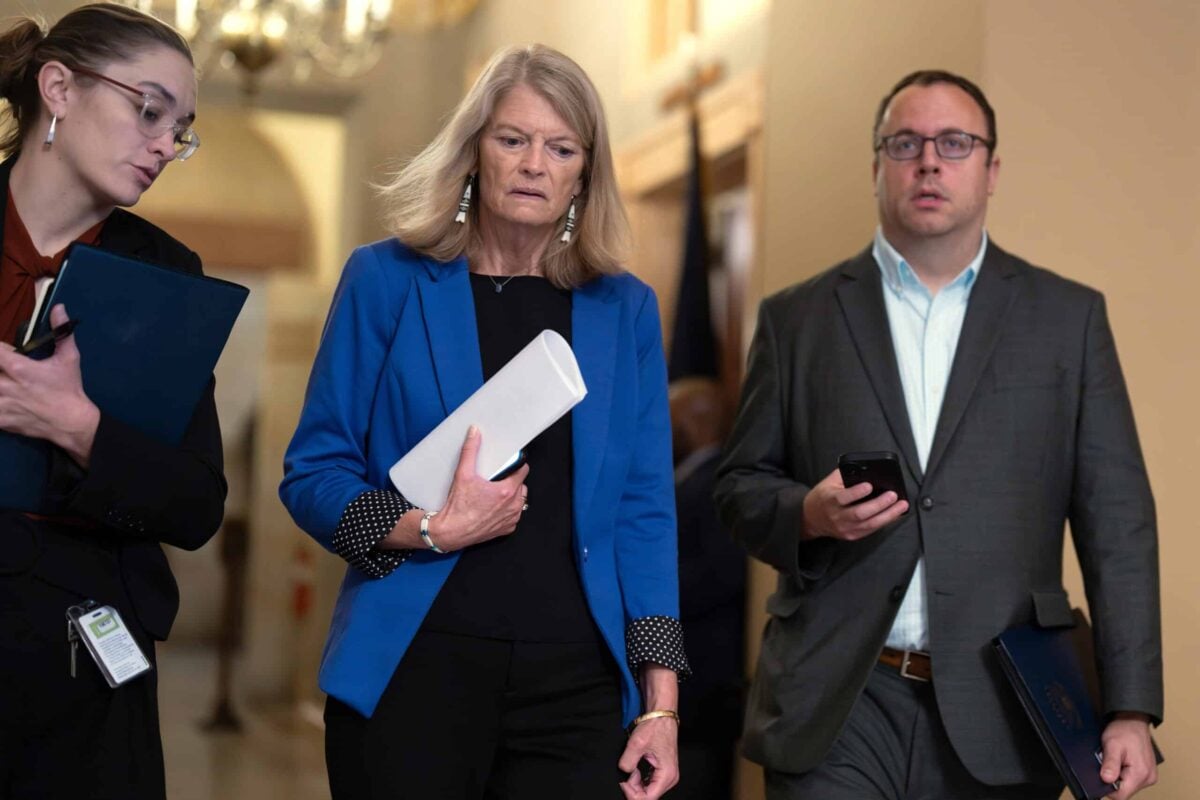
Sen. Lisa Murkowski, R-Alaska, center, a member of the Senate Appropriations Committee, arrives for a closed-door Republican meeting to advance President Donald Trump's sweeping domestic policy bill, at the Capitol in Washington, Friday, June 27, 2025. (AP Photo/J. Scott Applewhite)
Sen. Lisa Murkowski, R-Alaska, center, a member of the Senate Appropriations Committee, Friday, June 27, 2025. (AP Photo/J. Scott Applewhite)
AP- The pressure to end the second-longest federal government shutdown is gaining new urgency this week as millions of Americans face the prospect of losing food assistance, more federal workers miss their first full paycheck and recurring delays at airports snarl travel plans.
The building strain on lawmakers to end the impasse was magnified by the nation’s largest federal employee union, which called on Congress to immediately pass a funding bill and ensure workers receive full pay. Everett Kelley, president of the American Federation of Government Employees, said the two political parties have made their point.
“It’s time to pass a clean continuing resolution and end this shutdown today. No half measures, and no gamesmanship,” said Kelley, whose union carries considerable political weight with Democratic lawmakers.
Still, Democratic senators, including those representing states with many federal workers, did not appear ready to back down. Virginia Sen. Tim Kaine said he was insisting on commitments from the White House to prevent the administration from mass firing more workers. Democrats also want Congress to extend subsidies for health plans under the Affordable Care Act.
“We’ve got to get a deal with Donald Trump,” Kaine said.
But shutdowns grow more painful the longer they go. Soon, with closures lasting a fourth full week as of Tuesday, millions of Americans are likely to experience the difficulties firsthand.
“This week, more than any other week, the consequences become impossible to ignore,” said Rep. Lisa McClain, chair of the House Republican Conference.
Shutdown’s impact is set to grow dramatically
The nation’s 1.3 million active-duty service members are at risk of missing a paycheck on Friday. Earlier this month, the Trump administration ensured they were paid by shifting $8 billion from military research and development funds to make payroll. But it is unclear if the Trump administration is willing — or able — to shift money again.
Larger still, the Trump administration says funding will run out Friday for the food assistance program that is relied upon by 42 million Americans to supplement their grocery bills. The administration has rejected the use of more than $5 billion in contingency funds to keep benefits flowing into November. And it says states won’t be reimbursed if they temporarily cover the cost of benefits next month.
The Department of Agriculture says the contingency fund is intended to help respond to emergencies such as natural disasters. Democrats say the decision concerning the Supplemental Nutrition Assistance Program, known as SNAP, goes against the department’s previous guidance concerning its operations during a shutdown.
Senate Democratic leader Chuck Schumer of New York said the administration made an intentional choice not to the fund SNAP in November, calling it an “act of cruelty.”
Will lawmakers find a solution?
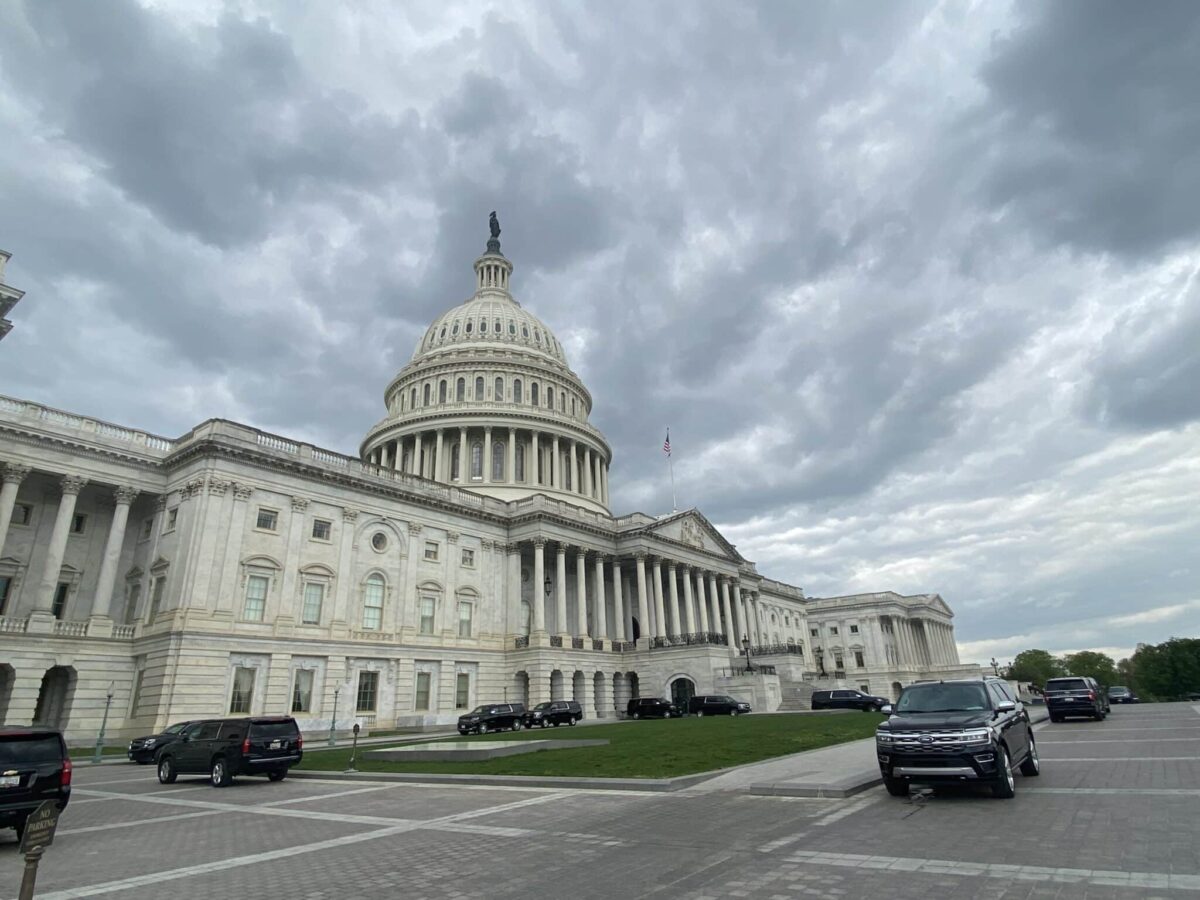
At the Capitol, congressional leaders mostly highlighted the challenges many Americans are facing as a result of the shutdown. But there was no movement toward negotiations as they attempted to lay blame on the other side of the political aisle.
“Now government workers and every other American affected by this shutdown have become nothing more than pawns in the Democrats’ political games,” said Senate Majority Leader John Thune, R-S.D.
The House passed a short-term continuing resolution on Sept. 19 to keep federal agencies funded. Speaker Mike Johnson, R-La., has kept the House out of legislative session ever since, saying the solution is for Democrats to simply accept that bill.
But the Senate has consistently fallen short of the 60 votes needed to advance that spending measure. Democrats insist that any bill to fund the government also address health care costs, namely the soaring health insurance premiums that millions of Americans will face next year under plans offered through the Affordable Care Act marketplace.
Window-shopping for health plans delayed
The window for enrolling in ACA health plans begins Saturday. In past years, the Centers for Medicare and Medicaid Services has allowed Americans to preview their health coverage options about a week before open enrollment.
As of Monday, Healthcare.gov appeared to show 2025 health insurance plans and estimated prices, instead of next year’s options. CMS was expected to temporarily bring back all its workers furloughed during the shutdown, in part to manage the ACA open enrollment period.
Twenty-eight senators, mostly Democrats, signed a letter urging Trump’s administration to let ACA enrollees start previewing next year’s health insurance options on its marketplace website.
Republicans insist they will not entertain negotiations on health care until the government reopens.
“I’m particularly worried about premiums going up for working families,” said Sen. David McCormick, R-Pa. “So we’re going to have that conversation, but we’re not going to have it until the government opens.”
Congressional leaders dig in deeper
Schumer said Republicans would prefer to shut the government down than work with Democrats in preventing massive spikes in their health insurance costs. He said the average American doesn’t want to pay an extra $20,000 a year to cover their health insurance.
“And we Democrats want to solve this crisis right away,” Schumer said. “So lowering health care is not a crazy demand.”
Vice President JD Vance planned to attend a Republican luncheon on Capitol Hill Tuesday. But with President Donald Trump traveling in Asia and congressional leaders dug into their positions, a quick deal appeared unlikely.
Meanwhile, some rank-and-file lawmakers urged colleagues to consider the impact of their standoff on the lives of federal employees and Capitol police officers who have not been paid for weeks.
“We have got to come together, which means we’ve got to talk to one another,” Sen. Lisa Murkowski, an Alaska Republican, said in a floor speech urging leaders to stop focusing on who was winning the political fight. “Right now, those that are losing are the American people.”
But as President Donald Trump welcomed Republican senators for lunch in the newly renovated Rose Garden Club — with the boom-boom of construction underway on the new White House ballroom — he portrayed a different vision of America, as a unified GOP refuses to yield to Democratic demands for health care funds, and the government shutdown drags on.
“We have the hottest country anywhere in the world, which tells you about leadership,” Trump said in opening remarks, extolling the renovations underway as senators took their seats in the newly paved over garden-turned-patio.
And while Trump said the shutdown must come to an end — and suggested maybe Smithsonian museums could reopen — he signaled no quick compromise with Democrats over the expiring health care funds.
Later at another White House event, Trump said he’s happy to talk with Democrats about health care once the shutdown is over. “The government has to be open,” he said.
Shutdown drags into record books
As the government shutdown enters its fourth week — on track to become one of the longest in U.S. history — millions of Americans are bracing for health care sticker shock, while others are feeling the financial impact. Economists have warned that the federal closure, with many of the nearly 2.3 million employees working without pay, will shave economic growth by 0.1 to 0.2 percentage points per week.
The Democratic leaders Sen. Chuck Schumer and Rep. Hakeem Jeffries had outreached to the White House on Tuesday, seeking a meeting with Trump before the president departs for his next overseas trip, to Asia.
“We said we’ll set up an appointment with him anytime, anyplace before he leaves,” Schumer said.
With Republicans in control of Congress, the Democrats have few options. They are planning to keep the Senate in session late into the night Wednesday in protest. The House has been closed for weeks.
The Republican senators, departing the White House lunch with gifts of Trump caps and medallions, said there is nothing to negotiate with Democrats over the health care funds until the government reopens.
“People keep saying ‘negotiate’ — negotiate what?” Senate Majority Leader John Thune said after the hour-long meeting. He said Republicans and the president are willing to consider discussions over health care, “but open up the government first.”
Missed paychecks and programs running out of money
While Capitol Hill remains at a standstill, the effects of the shutdown are worsening.
Federal workers are set to miss additional paychecks amid total uncertainty about when they might eventually get paid. Government services like the Special Supplemental Nutrition Program for Women, Infants and Children, known as WIC, and Head Start preschool programs that serve needy families are facing potential cutoffs in funding. On Monday, Energy Secretary Chris Wright said the National Nuclear Security Administration is furloughing its federal workers. The Federal Aviation Administration has reported air traffic controller shortages and flight delays in cities across the United States.
At the same time, economists, including Goldman Sachs and the nonpartisan CBO, have warned that the federal government’s closure will ripple through the economy. More recently, Oxford Economics said a shutdown reduces economic growth by 0.1 to 0.2 percentage points per week.
The U.S. Chamber of Commerce noted that the Small Business Administration supports loans totaling about $860 million a week for 1,600 small businesses. Those programs will close to new loans during the shutdown. The shutdown also has halted the issuance and renewal of flood insurance policies, delaying mortgage closings and real estate transactions.
Rising health care costs
And without action, future health costs are expected to skyrocket for millions of Americans as the enhanced federal subsidies that help people buy private insurance under the Affordable Care Act, come to an end.
Those subsidies, in the form of tax credits that were bolstered during the COVID-19 crisis, expire Dec. 31, and insurance companies are sending out information ahead of open enrollment periods about the new rates for the coming year.
Members of both parties acknowledge that time is running out to fix the looming health insurance price hikes, even as talks are quietly underway over possible extensions or changes to the ACA funding.
Democrats are focused on Nov. 1, when next year’s enrollment period for the ACA coverage begins and millions of people will sign up for their coverage without the expanded subsidy help. Once those sign-ups begin, they say, it would be much harder to restore the subsidies even if they did have a bipartisan compromise.
But senators left the meeting, some saying it was more of a luncheon than a substantial conversation. They said they could hear, but not see, the ballroom construction nearby.
Trump had previously indicated early on during the shutdown that he may be willing to discuss the health care issue, and Democrats have been counting on turning the president’s attention their way. But the president later clarified that he would only do so once the government reopens.
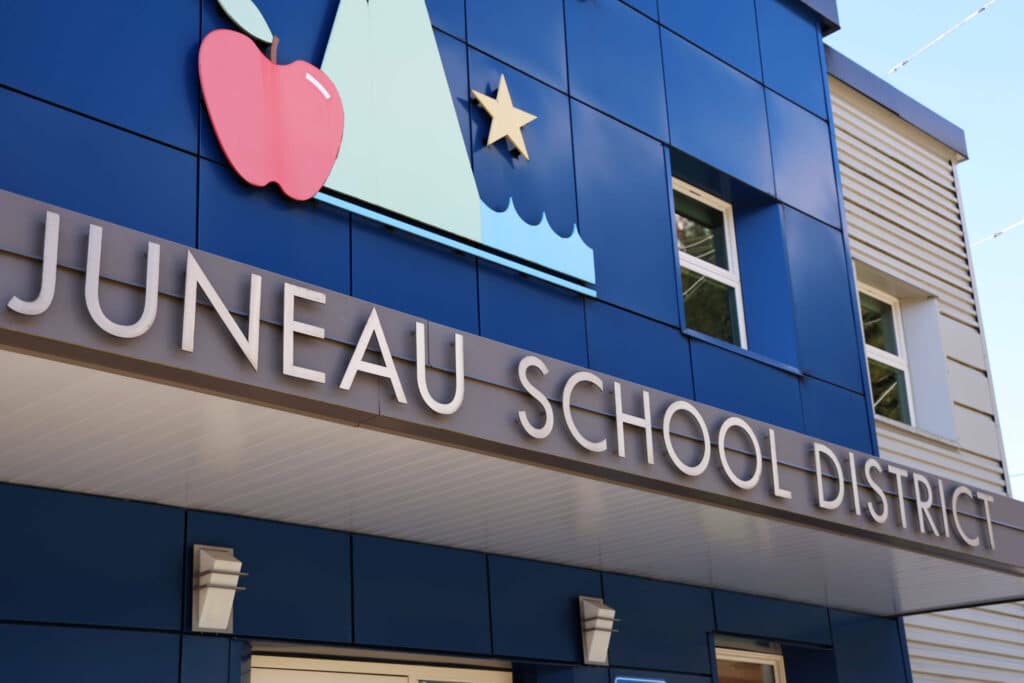
NOTN- The Juneau School District has launched a “Buy a Brick” campaign to help fund playground equipment at the Dzantik’i Heeni campus, where several of the city’s programs were relocated after school consolidation.
“Through the consolidation the year before last at the Juneau School District, our optional programs were moved to the Dzantik’i Heeni campus, which had previously been a middle school.” Said Juneau school district Director of Operations Kristy Germain, so we now have Montessori Borealis, which has pre-K and kindergarten through eighth grade, and we also have the Juneau Community Charter School, which is kindergarten through eighth grade, and additionally our Yaakoosge Daakahidi alternative high school, but the playground is primarily for our elementary program.”
While the playground will primarily serve elementary students, it will also be open to children in the surrounding Lemon Creek and Switzer neighborhoods, Germain says the school district partnered with the city engineering department for public design and safety concerns.
“The cost is substantial,” Germain said “We have received funding from the City Assembly, they authorized an ordinance to put $735,000 specifically toward the site preparation and the concrete base and the safety surfacing for the playground, and that’s just the safety surfacing. So the equipment is an additional cost. So the Juneau school district is taking the lead on fundraising for the actual playground equipment.”
The Buy a Brick fundraiser allows residents and businesses to purchase engraved bricks that will be installed at the site.
“We are partnering with Brick Markers, and they’re a company that has worked with other organizations in Juneau, I think notably, Rotary Park and the 911 Memorial use the same company.” Germain said, “Those bricks are holding up, so that’s a good testament to them. But we have established various levels so that individuals and community members are able to purchase a brick, and we’re also looking to our business community to support this endeavor.”
Proceeds will go toward the cost of equipment, which Germain said could push the project’s total cost beyond $1 million once installation, shipping, and materials are factored in.
The district plans to launch an online portal for the fundraiser within the week, with brick sales running through December. Officials hope to purchase and receive equipment in time for installation next summer.
“We are running into some timelines for purchasing the equipment in time for it to arrive to be installed this summer. So that is why we have a tight timeline.” Said Germain.
Community support has already begun. Juneau’s Rotary clubs recently donated $30,000 toward musical play equipment and are organizing volunteer work parties to help install it.
For those unable to buy a brick, Germain said there will be other ways to contribute, including volunteering at fundraising booths or helping with community outreach.