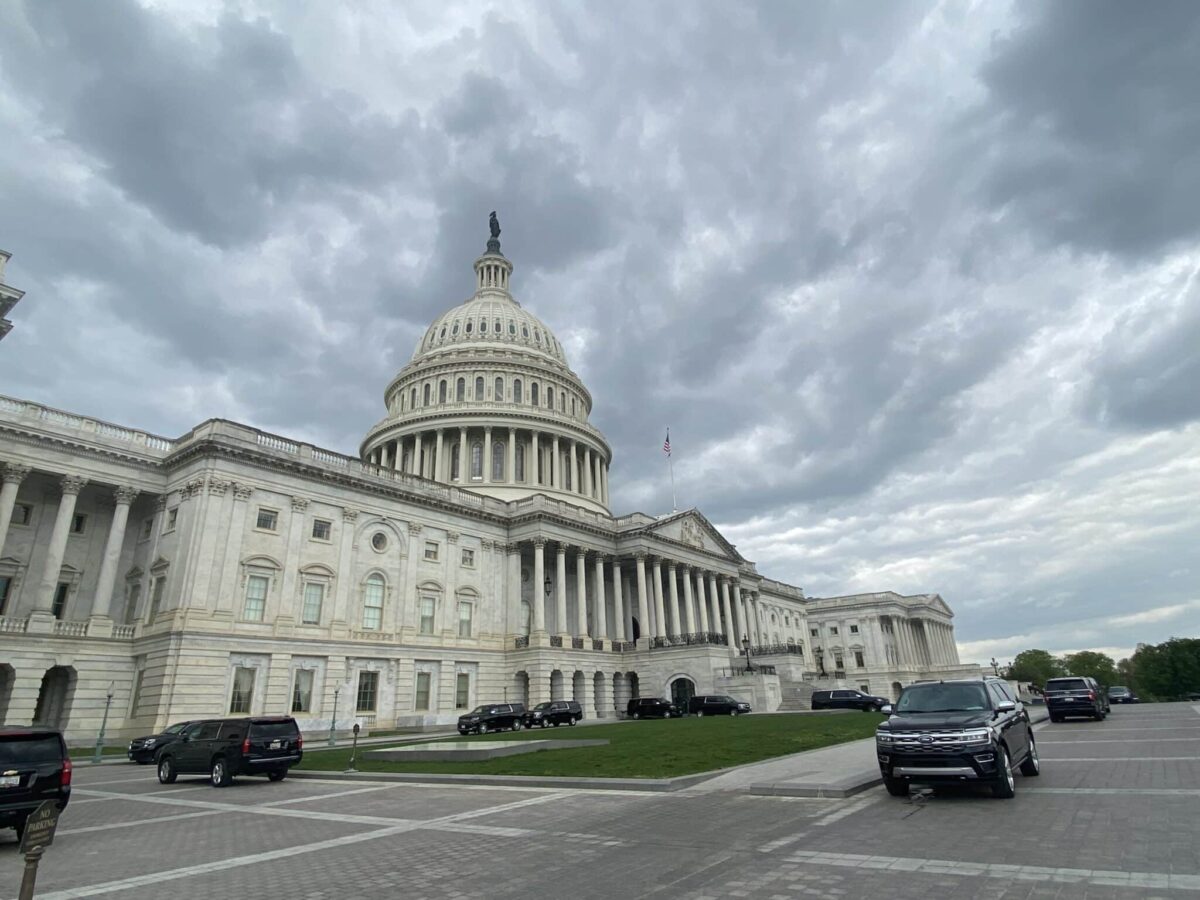

AP- Head Start programs for preschoolers are scrambling for federal funds. The federal agency tasked with overseeing the U.S. nuclear stockpile has begun furloughing its 1,400 employees. Thousands more federal workers are going without paychecks.
But as President Donald Trump welcomed Republican senators for lunch in the newly renovated Rose Garden Club — with the boom-boom of construction underway on the new White House ballroom — he portrayed a different vision of America, as a unified GOP refuses to yield to Democratic demands for health care funds, and the government shutdown drags on.
“We have the hottest country anywhere in the world, which tells you about leadership,” Trump said in opening remarks, extolling the renovations underway as senators took their seats in the newly paved over garden-turned-patio.
And while Trump said the shutdown must come to an end — and suggested maybe Smithsonian museums could reopen — he signaled no quick compromise with Democrats over the expiring health care funds.
Later at another White House event, Trump said he’s happy to talk with Democrats about health care once the shutdown is over. “The government has to be open,” he said.
Shutdown drags into record books
As the government shutdown enters its fourth week — on track to become one of the longest in U.S. history — millions of Americans are bracing for health care sticker shock, while others are feeling the financial impact. Economists have warned that the federal closure, with many of the nearly 2.3 million employees working without pay, will shave economic growth by 0.1 to 0.2 percentage points per week.
The Democratic leaders Sen. Chuck Schumer and Rep. Hakeem Jeffries had outreached to the White House on Tuesday, seeking a meeting with Trump before the president departs for his next overseas trip, to Asia.
“We said we’ll set up an appointment with him anytime, anyplace before he leaves,” Schumer said.
With Republicans in control of Congress, the Democrats have few options. They are planning to keep the Senate in session late into the night Wednesday in protest. The House has been closed for weeks.
The Republican senators, departing the White House lunch with gifts of Trump caps and medallions, said there is nothing to negotiate with Democrats over the health care funds until the government reopens.
“People keep saying ‘negotiate’ — negotiate what?” Senate Majority Leader John Thune said after the hour-long meeting. He said Republicans and the president are willing to consider discussions over health care, “but open up the government first.”
Missed paychecks and programs running out of money
While Capitol Hill remains at a standstill, the effects of the shutdown are worsening.
Federal workers are set to miss additional paychecks amid total uncertainty about when they might eventually get paid. Government services like the Special Supplemental Nutrition Program for Women, Infants and Children, known as WIC, and Head Start preschool programs that serve needy families are facing potential cutoffs in funding. On Monday, Energy Secretary Chris Wright said the National Nuclear Security Administration is furloughing its federal workers. The Federal Aviation Administration has reported air traffic controller shortages and flight delays in cities across the United States.
At the same time, economists, including Goldman Sachs and the nonpartisan CBO, have warned that the federal government’s closure will ripple through the economy. More recently, Oxford Economics said a shutdown reduces economic growth by 0.1 to 0.2 percentage points per week.
The U.S. Chamber of Commerce noted that the Small Business Administration supports loans totaling about $860 million a week for 1,600 small businesses. Those programs will close to new loans during the shutdown. The shutdown also has halted the issuance and renewal of flood insurance policies, delaying mortgage closings and real estate transactions.
Rising health care costs
And without action, future health costs are expected to skyrocket for millions of Americans as the enhanced federal subsidies that help people buy private insurance under the Affordable Care Act, come to an end.
Those subsidies, in the form of tax credits that were bolstered during the COVID-19 crisis, expire Dec. 31, and insurance companies are sending out information ahead of open enrollment periods about the new rates for the coming year.
Most U.S. adults are worried about health care becoming more expensive, according to a new Associated Press-NORC Center for Public Affairs Research poll, as they make decisions about next year’s health coverage.
Members of both parties acknowledge that time is running out to fix the looming health insurance price hikes, even as talks are quietly underway over possible extensions or changes to the ACA funding.
Democrats are focused on Nov. 1, when next year’s enrollment period for the ACA coverage begins and millions of people will sign up for their coverage without the expanded subsidy help. Once those sign-ups begin, they say, it would be much harder to restore the subsidies even if they did have a bipartisan compromise.
What about Trump?
Tuesday’s White House meeting offered a chance for Republican senators to engage with the president on the shutdown after he had been more involved in foreign policy and other issues.
But senators left the meeting, some saying it was more of a luncheon than a substantial conversation. They said they could hear, but not see, the ballroom construction nearby.
Trump had previously indicated early on during the shutdown that he may be willing to discuss the health care issue, and Democrats have been counting on turning the president’s attention their way. But the president later clarified that he would only do so once the government reopens.