A certified medical assistant holds a syringe for a flu vaccine at a clinic in Seattle, on Wednesday, Sept. 10, 2025. (AP Photo/Lindsey Wasson, File)
AP-Flu is rising rapidly across the U.S., driven by a new variant of the virus — and cases are expected to keep growing with holiday travel.
That variant, known as “subclade K,” led to early outbreaks in the United Kingdom, Japan and Canada. In the U.S., flu typically begins its winter march in December. On Tuesday, the Centers for Disease Control and Prevention reported high or very high levels of illness in more than half the states.
The CDC estimated there have been at least 7.5 million illnesses, 81,000 hospitalizations and 3,100 deaths from flu so far this season. That includes at least eight child deaths — and is based on data as of Dec. 20, before major holiday gatherings.
Some states are particularly hard-hit. New York’s health department said the week ending Dec. 20 marked the most flu cases the state had recorded in a single week since 2004: 71,000.
It’s far too soon to know if this flu season will be as severe as last winter’s.
But it’s not too late to get a flu shot, which health experts say can still prevent severe illness even if someone gets infected. While this year’s vaccine isn’t a perfect match to the subclade K strain, a preliminary analysis from the U.K. found it offered at least partial protection, lowering people’s risk of hospitalization.
According to the CDC, only about 42% of adults and children have gotten a flu vaccination so far this year.
What is subclade K flu?
The flu virus is a shape-shifter, constantly mutating, and it comes in multiple forms. There are two subtypes of Type A flu, and subclade K is a mutated version of one of them, named H3N2. That H3N2 strain is always harsh, especially for older adults.
Subclade K’s mutations aren’t enough of a change to be considered an entirely new kind of flu.
But they’re different enough to evade some of the protection from this year’s vaccine, said Andrew Pekosz, a virus expert at Johns Hopkins Bloomberg School of Public Health.
Will subclade K make people sicker?
The CDC said it’s too soon to know how severe this season will be.
Flu seasons dominated by any version of H3N2 tend to be bad, with more infections overall and more people becoming seriously ill. But Hopkins’ Pekosz cautioned it will take time to tease apart whether this subclade K version simply spreads more easily or also is more dangerous.
That question aside, the CDC notes there are some prescription medicines to treat flu — usually recommended for people at high risk of complications. But they generally need to be started a day or two after symptoms begin.
Who needs a flu vaccine?
The CDC and major medical societies all recommend a flu vaccine for just about everyone age 6 months and older. Despite lots of recent misinformation and confusion about vaccines, the flu recommendations haven’t changed.
Flu is particularly dangerous for people 65 and older, pregnant women, young children and people of any age who have chronic health problems, including asthma, diabetes, heart disease and weak immune systems.
The vaccines are brewed to protect against three influenza strains. Despite concern over that new H3N2 variant, they appear to be a good match against H1N1 and Type B flu that may also circulate this year, Pekosz said.
There are shots for all ages, as well as the nasal spray FluMist for ages 2 to 49. For the first time this year, some people may be eligible to vaccinate themselves with FluMist at home.
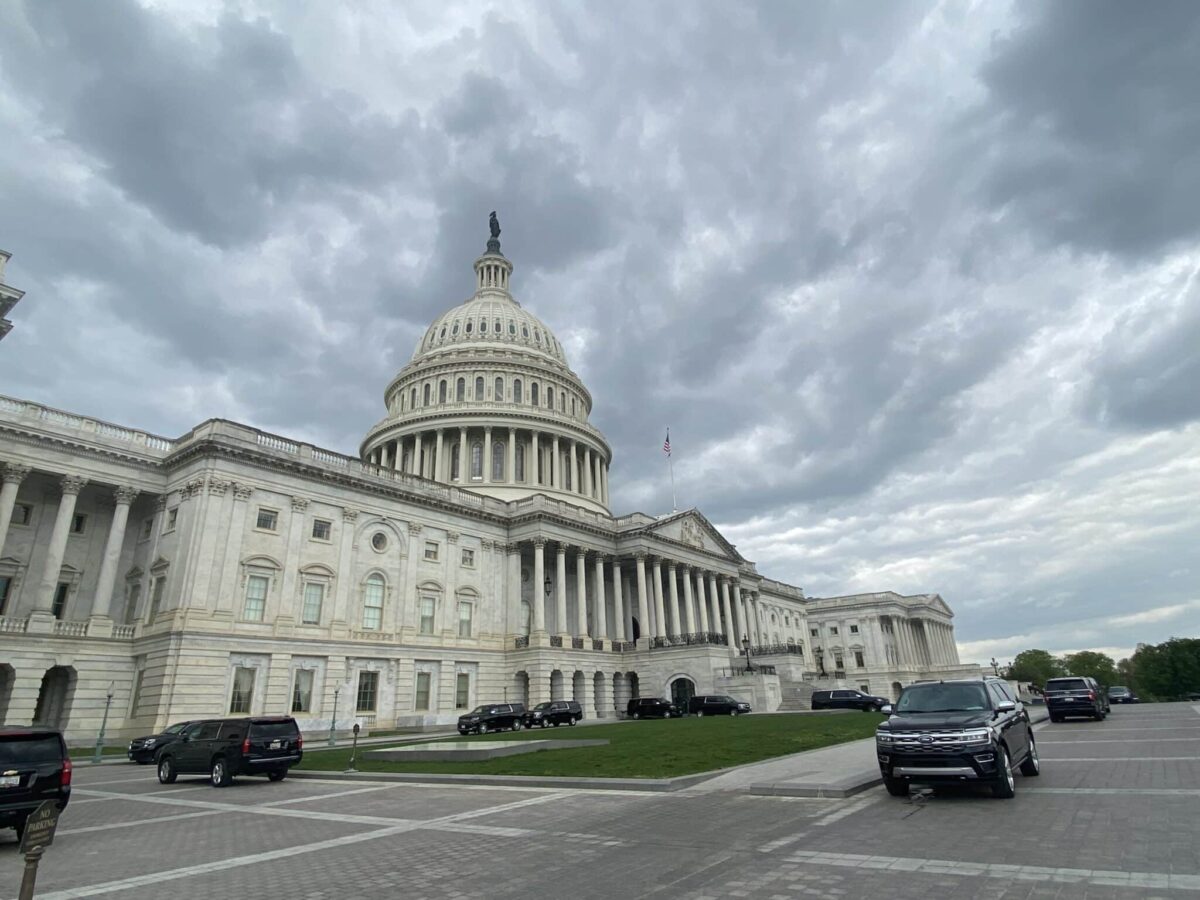
The U.S. Capitol in Washington, D.C., on Oct. 1, 2025. (Photo by Jennifer Shutt/States Newsroom)
Alaska was awarded more federal money than any state besides Texas for a federal rural health initiative, the Centers for Medicare & Medicaid Services announced on Monday.
The money will come from the Rural Health Transformation Fund, a $50 billion program set up as part of the One Big Beautiful Bill Act and intended to counteract the effects of its sweeping Medicaid cuts in rural areas.
Alaska’s congressional delegation and state officials lauded the federal investment, which will be upwards of $272 million in Alaska in 2026.
At a Wednesday news conference in Anchorage, Sen. Dan Sullivan, R-Alaska, said the $1.36 billion the state is slated to receive over the next five years is the biggest investment from the federal government to Alaska’s health care system in state history.
“This is a generational opportunity for our state,” he said.
Heidi Hedberg, commissioner of the state’s health department said a major goal is to rework the state’s “fragmented” health system.
She said the agency will release more information about its plan for the money in the coming days, but pointed to the state’s application to the program, which outlines six priorities: maternal and child health, access to services, preventative care, a strengthened workforce, financial sustainability and updated technology and data systems.
Emily Ricci, the agency’s deputy commissioner, said that core to the state’s application was the question of how to support services that already exist in the state.
“Part of our focus was making sure that the tribal communities could see some of the ways that they want to sustain their programs and evolve or build their programs out further into something that provides more access and sustainable costs,” she said. “So I would say that those opportunities are written in each one of the initiatives.”
She did not immediately supply specific examples.
The state’s application also commits to adherence to several policies favored by the Trump administration, including a pledge to join licensure compacts and prohibit the use of federal Supplemental Nutrition Assistance Program funds to buy soda pop by 2027.
Several of those commitments require the approval of the state’s legislature or medical board.
Hedberg said her agency will work with those decision makers to follow through on the commitments the state made in its application.
In a virtual meeting with reporters after the state’s news conference, Sen. Lisa Murkowski, R-Alaska, challenged the state administration and legislators to take on the question of rebuilding the state’s health care system as a major issue.
In response to a reporter’s question, she said she was worried about the reliability of the funding because the state could fail to make the most of the opportunity or because the federal government could pause or cancel the funding.
“I know that we’re going into an election year next year. I know that the Permanent Fund always takes up space. I know we’re going to be talking about the gas line,” she said. “But we must, we must absolutely be talking about this health care opportunity that we have in front of us now.”
U.S. House Speaker Mike Johnson, R-La., talks with reporters inside the U.S. Capitol on Tuesday, Oct. 21, 2025. (Photo by Jennifer Shutt/States Newsroom)
WASHINGTON — U.S. House Speaker Mike Johnson said Tuesday he will not allow a floor vote this week on a bipartisan amendment supported by moderate Republicans that would extend the Affordable Care Act enhanced tax credits.
Johnson was confident that blocking the amendment would not lead centrist GOP lawmakers to oppose the Republican health care bill scheduled to get a vote Wednesday.
“There’s about a dozen members in the conference that are in these swing districts who are fighting hard to make sure they reduce costs for all of their constituents. And many of them did want to vote on this Obamacare, COVID-era subsidy the Democrats created,” Johnson said. “We looked for a way to try to allow for that pressure release valve and it just was not to be.”
The enhanced ACA tax credits are set to expire at the end of the year, sharply increasing the cost of health insurance for the roughly 22 million Americans who purchase plans through the exchange and benefit from the subsidies.
The House Republican health care bill wouldn’t extend those tax credits, frustrating GOP lawmakers in that chamber who are most at risk of losing their reelection bids during the November midterm elections.
Johnson said he expects that GOP bill will pass, though he didn’t address its prospects in the Senate, where bipartisanship is needed for nearly all bills to advance under that chamber’s 60-vote legislative filibuster.
‘Idiotic and shameful’
New York Republican Rep. Mike Lawler said in a speech on the House floor that GOP leaders’ decision to let the enhanced ACA tax credits expire was “idiotic and shameful,” especially after changes were added to address fraud and reduce costs.
“So we have been forced to sign onto two discharge petitions,” he said. “And yet my Democratic colleagues will not join us, but for those that were at the negotiation table.”
Lawler then criticized House Minority Leader Hakeem Jeffries, of New York, for not encouraging Democrats to sign onto the bipartisan discharge petitions, noting that would likely get the 218 signatures needed to force a floor vote. He argued that’s because Jeffries “doesn’t actually want to solve the problem, he wants the issue.”
“This place is disgraceful,” Lawler said. “Everybody wants the upper hand. Everybody wants the political advantage. They don’t actually want to do the damn work. This problem could be solved today if everybody who says they care about extending this signs the discharge.”
GOP-only bill in 2026?
When the House returns from its two-week holiday break next year, Johnson said, leaders may try to use the complex reconciliation process they used to enact the “one big, beautiful bill” to address health care.
“What we anticipate going into the first quarter of next year is, possibly in a reconciliation package or in regular order a stand-alone, ideas just like this,” Johnson said after being asked a question about Health Savings Accounts. “We have a long list of things that we know will reduce premiums, increase access and quality of care.”
President Donald Trump said Monday he wants Republicans to use the reconciliation process or to eliminate the Senate’s legislative filibuster to address health care and other policy priorities.
“Republicans should knock out the filibuster and we should approve a lot of things,” Trump said.
Senate Majority Leader John Thune, R-S.D., has said repeatedly he doesn’t intend to change or scrap the filibuster.
Direct payments or tax breaks
Trump also reiterated during the Oval Office event he would like to see Congress send direct payments to Americans to help them buy health insurance or afford health care.
“I want all money going to the people and let the people buy their own health care. It’ll be unbelievable,” Trump said. “They’ll do a great job. They’ll get much better health care at a much lower cost.”
The Senate voted last week on two health care bills, one from Republicans and one from Democrats, but neither received the support needed to move toward a final passage vote.
Republicans’ bill would have provided direct payments to some people enrolled in either bronze or catastrophic ACA marketplace plans with up to $1,500 in payments annually for 2026 and 2027.
Democrats’ legislation would have extended the enhanced ACA marketplace tax credits for three years.
Cost most urgent issue, poll finds
A bipartisan group of senators is trying to find solutions that bridge the political divide, though they are unlikely to achieve consensus on the details before the end of this week.
A poll released Monday by the West Health-Gallup Center on Healthcare in America shows that cost is the “most urgent” health issue facing the country, followed by access and then obesity.
Just 57% of those polled said they were satisfied with how much they pay for their own health care and only 16% were satisfied with the total cost of health care.
Nearly two-thirds of those in the survey said they believe it’s the federal government’s responsibility “to make sure all Americans have healthcare coverage,” while 33% said it’s not.
One of the outdoor sculptures at the University of Alaska Anchorage campus is integrated into a fountain, pictured here on May 16, 2022. More than half of the University of Alaska system schools attend UAA or one of its satellite campuses. (Photo by Yereth Rosen/Alaska Beacon)
The University of Alaska is anticipating an increase of up to 10% for health care costs this fiscal year, on par with what employers are anticipating nationally, according to officials presenting to the Board of Regents at their meeting on Nov. 6.
Nikole Conley, chief of human resources for the university system, gave a presentation outlining the university system’s health care costs so far, and projections for the rest of this fiscal year, ending in July 2026. Her presentation included medical, dental and pharmacy care.
“We do see health care costs across the nation going up and increasing, and we’re not necessarily expecting this to decline anytime soon,” she said.
The university is projecting 8% to 10% overall cost increases across the system for this fiscal year. That means health coverage for 3,442 employees is estimated to cost $85.5 million.
A screenshot from a University of Alaska presentation on health care costs on Nov. 6, 2025, shows a rise in costs in recent years.
“We are seeing trend increases of 8% for medical, 13% for pharmacy and 4% for dental. We’ll do another recast in January of 2026 and hopefully try to firm up that figure and what that’s going to look like,” Conley said.
Nationally, employers are expecting an 8.5% increase in medical costs and an 11% increase in pharmacy costs, she said, so the university’s costs and projections are mirroring that trend.
Health care costs in Alaska are among the highest in the nation, according to state data. Since 2023, the average cost of a health insurance marketplace plan in Alaska rose by more than 16% each year. In 2023 alone, the cost went up by an average of 18.4%.
The university has a cost split for health care with 18% paid by employees in premiums, and 82% paid by the universities. Conley presented total cost projections to the board.
Conley said the number of university employees isn’t growing, but more people are opting into the university’s health care plan. She said system-wide the largest cost increase is in pharmacy claims, but her department is expecting to renegotiate pharmacy costs, which could save the university about $3 million.
Last year, the university saw pharmacy spending increase 11.2% from the year before. Over the last five years, overall pharmacy costs more than doubled from $9.2 million to $19.2 million, she said.
Conley said that’s partly due to a rise in prescriptions for drugs used for weight loss and to treat diabetes, known as GLP-1 drugs like Ozempic. They were the second highest pharmacy claim within the university’s plan, totaling $4.1 million last fiscal year.
“We’re also looking at the potential elimination of GLP-1s, because they are a major cost driver for us,” she added.
University of Alaska Regent Karen Perdue pushed back against that idea, pointing out that weight loss can also improve employees’ health outcomes and result in less health care costs. “It’s not just a plus, there can be a minus on the bottom line as well,” she said.
A screenshot from a University of Alaska presentation on health care costs on Nov. 6, 2025 shows the highest claims for medical and pharmacy care
University of Alaska President Pat Pitney also pointed out other high pharmacy costs last year. The largest costs were on inflammatory diseases, with the highest cost at $4.3 million, and cancer treatments at $1.3 million.
The highest medical costs for the university last fiscal year were for muscle, joint and bone claims at $10.7 million, followed by cancer at $7 million, and behavioral health and disorder treatments at $5.3 million.
Last year, the university’s total costs came in at $80.1 million, which was $1.1 million over the university’s projection. Conley said next year’s premiums will go up to recover those costs.
Conley said her department is working to push more education and use of wellness programs and preventative health care.
“Not only are we seeing this growth of 8% to 10% in cost, but we’re also seeing less use, for some reason, of our preventative health care. And so we’re really trying to encourage folks to use preventative health care, because that will help minimize some of our costs in the future,” she said.
According to university data presented by Conley, only half of health care participants used preventative screenings, like annual physical exams or checkups; nearly 38% of emergency room visits could have been avoided with better primary care or urgent care use; and 38% of participants are categorized as pre-obese or obese.
The university is insured through Premera Blue Cross, and Conley said her department discusses health care plan changes with the university’s Joint Health Care Committee, an advisory committee made up of representatives from the faculty union, management and staff.
The university is also expecting a health care rebate, which is a benefit paid back to employees if they utilize the prevention programs throughout the year, like cancer screenings, dental care, and regular check ups.
“We’re estimating about a $1.5 million rebate,” Conley said, for this year, ending in July 2026. “We’re going to see up to a $2.5 million rebate increase in FY27 with new rates. So that’s a good positive.”
The debate around national health care, federal tax credits, and costs for Americans has been at the heart of bitter negotiations around ending the longest government shutdown in U.S. history. The U.S Congress approved a stopgap spending bill ending the shutdown. Democrats have introduced a discharge petition to force a vote to extend tax credits for three years under the Affordable Care Act. White the Senate Majority leader has promised a vote by the end of the year, leaders of the Republican-majority House have remained opposed, and discussions on health care are ongoing.
FILE – Bear sculptures sit outside the Boney Courthouse, where the Alaska Supreme Court hears cases, in downtown Anchorage, Alaska, Sept. 10, 2024. (AP Photo/Mark Thiessen, File)
AP- The Alaska Supreme Court is weighing a case that is expected to determine who can provide abortion care in the state.
The court heard arguments Wednesday in a 2019 case challenging the constitutionality of a law that states only a doctor licensed by the State Medical Board can perform an abortion in Alaska.
The law, dating to the 1970s, was struck down as unconstitutional by Superior Court judge Josie Garton last year, a victory for the group that brought the challenge, Planned Parenthood Great Northwest, Hawaii, Alaska, Indiana, Kentucky. The state appealed Garton’s ruling.
Planned Parenthood has argued there is no medical justification for the restriction and that it unfairly burdens those seeking an abortion by limiting the pool of those qualified to provide care. In 2021, Garton granted the group’s request to allow advanced practice clinicians — health care workers, such as nurse practitioners and physician assistants — to provide medication abortion pending her decision in the underlying case. They have continued to do so and since the 2024 ruling also have been able to provide procedural abortions, Planned Parenthood says.
Advanced practice clinicians routinely provide care similar in risk and complexity to that of providing abortion services, and in 25 states can provide medication abortion, attorneys for Planned Parenthood said in court documents. Planned Parenthood’s advanced practice clinicians seek to provide abortion care in just the first trimester, the attorneys said.
Since Garton’s 2021 decision, advanced practice clinicians have been providing “nearly all” medication abortions in Alaska, and Planned Parenthood clinics in the state have been able to offer medication abortion each day they’ve been open, the attorneys wrote. Before that, doctors hired by Planned Parenthood on a per diem basis — at the clinics on limited days — were able to offer medication abortions perhaps once or twice a week at each clinic, they wrote.
A vital statistics report released by the state this year shows that the total number of abortions in Alaska has been fairly consistent — 1,229 in 2021, 1,247 in 2022, 1,222 in 2023 and 1,224 last year. The report says that could include cases where medication was provided to manage a miscarriage, but without providing a number. It also says reasons for ending pregnancies are not reported to the state.
The U.S. Supreme Court in 2022 overturned a federal right to abortion, leaving it up to each state to regulate.
Access to health care has been a longstanding concern in Alaska, with travel — sometimes covering hundreds of miles — required for many residents. Compounding that are ongoing challenges to recruit and keep medical providers.
Most Alaska communities are not connected to the state’s main road system, and health care in many small communities is often limited, requiring residents to fly to larger cities, such as Anchorage or Seattle, for more options or for specialized care. Roundtrip flights can easily cost hundreds of dollars. In remote communities, fog or poor weather can cause flight delays.
Planned Parenthood has two clinics in Alaska, in Anchorage and Fairbanks. It closed its clinic in Juneau last year.
The Alaska Supreme Court has long interpreted the right to privacy in the state’s constitution as encompassing abortion rights.
But attorneys for the state argued in court filings that Planned Parenthood did not show that the law at the center of the legal challenge had “inhibited women in Alaska from exercising their right to choose an abortion.” Planned Parenthood could have hired more doctors but chose not to, wrote the attorneys, including Laura Wolff, an assistant attorney general.
“Even if an occasional patient were prevented from getting an abortion, the physician-only law is not unconstitutional as applied to all women who are not significantly affected by the law because the law has a plainly legitimate sweep,” the filing states.
Wolff and Camila Vega, an attorney representing Planned Parenthood, argued their respective sides in court Wednesday. The court did not indicate when it might rule.
But as President Donald Trump welcomed Republican senators for lunch in the newly renovated Rose Garden Club — with the boom-boom of construction underway on the new White House ballroom — he portrayed a different vision of America, as a unified GOP refuses to yield to Democratic demands for health care funds, and the government shutdown drags on.
“We have the hottest country anywhere in the world, which tells you about leadership,” Trump said in opening remarks, extolling the renovations underway as senators took their seats in the newly paved over garden-turned-patio.
And while Trump said the shutdown must come to an end — and suggested maybe Smithsonian museums could reopen — he signaled no quick compromise with Democrats over the expiring health care funds.
Later at another White House event, Trump said he’s happy to talk with Democrats about health care once the shutdown is over. “The government has to be open,” he said.
Shutdown drags into record books
As the government shutdown enters its fourth week — on track to become one of the longest in U.S. history — millions of Americans are bracing for health care sticker shock, while others are feeling the financial impact. Economists have warned that the federal closure, with many of the nearly 2.3 million employees working without pay, will shave economic growth by 0.1 to 0.2 percentage points per week.
The Democratic leaders Sen. Chuck Schumer and Rep. Hakeem Jeffries had outreached to the White House on Tuesday, seeking a meeting with Trump before the president departs for his next overseas trip, to Asia.
“We said we’ll set up an appointment with him anytime, anyplace before he leaves,” Schumer said.
With Republicans in control of Congress, the Democrats have few options. They are planning to keep the Senate in session late into the night Wednesday in protest. The House has been closed for weeks.
The Republican senators, departing the White House lunch with gifts of Trump caps and medallions, said there is nothing to negotiate with Democrats over the health care funds until the government reopens.
“People keep saying ‘negotiate’ — negotiate what?” Senate Majority Leader John Thune said after the hour-long meeting. He said Republicans and the president are willing to consider discussions over health care, “but open up the government first.”
Missed paychecks and programs running out of money
While Capitol Hill remains at a standstill, the effects of the shutdown are worsening.
Federal workers are set to miss additional paychecks amid total uncertainty about when they might eventually get paid. Government services like the Special Supplemental Nutrition Program for Women, Infants and Children, known as WIC, and Head Start preschool programs that serve needy families are facing potential cutoffs in funding. On Monday, Energy Secretary Chris Wright said the National Nuclear Security Administration is furloughing its federal workers. The Federal Aviation Administration has reported air traffic controller shortages and flight delays in cities across the United States.
At the same time, economists, including Goldman Sachs and the nonpartisan CBO, have warned that the federal government’s closure will ripple through the economy. More recently, Oxford Economics said a shutdown reduces economic growth by 0.1 to 0.2 percentage points per week.
The U.S. Chamber of Commerce noted that the Small Business Administration supports loans totaling about $860 million a week for 1,600 small businesses. Those programs will close to new loans during the shutdown. The shutdown also has halted the issuance and renewal of flood insurance policies, delaying mortgage closings and real estate transactions.
Rising health care costs
And without action, future health costs are expected to skyrocket for millions of Americans as the enhanced federal subsidies that help people buy private insurance under the Affordable Care Act, come to an end.
Those subsidies, in the form of tax credits that were bolstered during the COVID-19 crisis, expire Dec. 31, and insurance companies are sending out information ahead of open enrollment periods about the new rates for the coming year.
Members of both parties acknowledge that time is running out to fix the looming health insurance price hikes, even as talks are quietly underway over possible extensions or changes to the ACA funding.
Democrats are focused on Nov. 1, when next year’s enrollment period for the ACA coverage begins and millions of people will sign up for their coverage without the expanded subsidy help. Once those sign-ups begin, they say, it would be much harder to restore the subsidies even if they did have a bipartisan compromise.
But senators left the meeting, some saying it was more of a luncheon than a substantial conversation. They said they could hear, but not see, the ballroom construction nearby.
Trump had previously indicated early on during the shutdown that he may be willing to discuss the health care issue, and Democrats have been counting on turning the president’s attention their way. But the president later clarified that he would only do so once the government reopens.
(AP) — President Donald Trump said Monday that he’d be open to striking a deal with Democrats on the health care subsidies they’ve made central to the shutdown fight, cracking the door slightly to negotiations that Republicans have said should only happen after the government reopens.
But Trump also said “billions and billions” are being wasted, nodding to arguments from conservatives who do not want the health subsidies extended to lessen the cost of plans offered under the Affordable Care Act, commonly referred to as Obamacare.
“We have a negotiation going on right now with the Democrats that could lead to very good things,” Trump said. “And I’m talking about good things with regard to health care.”
Trump’s comments were one of the few hopeful signs Monday as the government shutdown hit its sixth day. Negotiations between the two parties have been virtually nonexistent since the start of the shutdown despite the impact on federal services. Democrats have urged that Trump get involved, saying no deal will be possible without the president’s approval.
The two Democratic leaders in Congress, Sen. Chuck Schumer and Rep. Hakeem Jeffries, both denied there are any negotiations with Trump. Jeffries said the White House “has gone radio silent” since a meeting in the Oval Office last week.
“Trump’s claim isn’t true, but if he’s finally ready to work with Democrats, we’ll be at the table,” Schumer said.
Senate Majority Leader John Thune told reporters “there may be a path forward” on ACA subsidies, but stressed, “I think a lot of it would come down to where the White House lands on that.”
More doomed Senate votes
The president’s comments came shortly before the Senate took another doomed pair of votes Monday on funding the federal government. Neither the Republican measure nor the Democratic proposal came close to gaining the 60 votes needed to advance.
Both parties used much of the day to ramp up the pressure on the other to end the impasse.
Thune said a critical food aid program for women, infants and children was starting to run low on funds, blaming Democrats and saying “now it’s the American people who are suffering the consequences.”
Schumer said his side was ready to work with Republicans to “reopen the government and end the health care crisis that faces tens of millions of Americans.”
“But it takes two sides to have a negotiation,” Schumer said.
Earlier in the day, the two sides dug in. House Speaker Mike Johnson said “there’s nothing for us to negotiate” while Jeffries declared the “time is now” to work out a deal on health care.
Johnson, R-La., told reporters they could stop asking why he wasn’t negotiating an end to the impasse. It was up to a handful of Democrats to “stop the madness” and pass a stopgap spending bill that had earlier passed the House, he said.
“We did the job to keep the government open, and now it’s on the Senate Democrats,” Johnson said.
The House is not expected to be in session this week, focusing attention on the Senate to take the lead on any deal in the Republican-led Congress. Yet even with House lawmakers away, the Republican and Democratic leaders have been holding almost daily briefings as they frame their arguments and seek to shift blame for the shutdown.
Democrats are insisting on renewing subsidies to cover health insurance costs for millions of households, but Republicans have insisted that can be dealt with later. They say the subsidies are a separate debate than the one on keeping the government funded for a few weeks while the two sides work out their differences on a full-year spending package.
While some Democratic senators said they viewed Trump’s comments about the status of negotiations as positive, there was also skepticism from members on both sides of the political aisle about whether they represented much of a breakthrough.
“The discussion can’t happen until we reopen the government. The Democrats want to have these talks. The president has just signaled he wants to talk, but reopen the government,” said Sen. Markwayne Mullin, R-Okla.
“I have a hard time taking it seriously,” said Sen Richard Blumenthal, D-Conn. “Because Johnson and Thune as well as Trump are all saying ‘we won’t talk until you open up the government.’”
Turmoil for the economy
The stalemate comes at a moment of troubling economic uncertainty. While the U.S. economy has continued to grow this year, hiring has slowed and inflation remains elevated as the Republican president’s import taxes have created a series of disruptions for businesses and hurt confidence in his leadership. At the same time, there is a recognition that the nearly $2 trillion annual budget deficit is financially unsustainable.
Trump had seemingly suggested Sunday night that layoffs were already taking place, but White House press secretary Karoline Leavitt said Trump was talking about furloughs. Under a furlough, workers cannot report to work, but they will return to their job and get paid retroactively after the shutdown ends. She said layoffs were still planned if the shutdown continues.
The talk of layoffs has escalated an already tense situation in which Washington lawmakers have struggled to find common ground and build mutual trust. Leaders in both parties are betting that public sentiment has swung their way, putting pressure on the other side to cave.
NOTN- When Emma’s son, Cade, was just five months old, she noticed he was falling behind on developmental milestones. Doctors told her he was “just a late bloomer.” But after years of searching for answers, specialists diagnosed Cade with SPG50, an ultra-rare genetic disease that slowly robs children of the ability to control their bodies.
The Juneau community has rallied behind Cade’s cause, A daylong radiothon hosted by KINY on Saturday raised $35,000 to support 4-year-old Cade Jobsis.
The event, ran from 10 a.m. to 5 p.m. and featured prizes such as a helicopter ride from NorthStar Helicopters, an Eaglecrest ski pass, and a yearlong membership to the Rainforest Playzone.
Funds will support Cade, who was diagnosed at just 2 years old with SPG50, a rare form of hereditary spastic paraplegia that causes progressive loss of mobility. Fewer than 100 cases are known worldwide.
His mother, Emma, said her family spent years searching for answers before receiving Cade’s diagnosis. Doctors initially told them there was no treatment.
“There’s only around 100 cases in the world, and because of that, there really isn’t any interest in treating this disease or developing treatments for a disease that’s so rare.” Said Cade’s mom, Emma Jobsis, “So when we left the hospital after hearing his diagnosis, the doctors basically told us, there’s nothing we can do. Take him home, love him, he’s going to fade way in front of your eyes, basically. And we were distraught, as any parent would be.”
Because of the disease’s rarity, pharmaceutical companies and government agencies have shown little interest in funding development. Instead, families like Cade’s are leading grassroots efforts to raise millions for research.
“We decided we just have to do it by any means necessary, we have to raise the money and get this drug through clinical trials, because I can’t live with the fact that the next mom is going to be sitting in the office hearing what I heard when there’s a drug that exists, but you just can’t get access to it because it’s not approved.” Jobsis said.
Emma said the Juneau community’s response has been overwhelming.
“My town has pulled off something incredible that I never expected. This kind of showing up from my community.” Said Jobsis, “People that I’ve never met in my entire life are texting, emailing, calling, telling me they heard my story, they heard about Cade, and they want to help. And it’s just, it’s so surreal to feel like the community backs you in such a huge way.”
Listeners heard interviews with Cade’s family and others around the world affected by SPG50, as well as with the Canadian father who helped create the experimental gene therapy.
“I have found so much good in people through this process, through this fundraising and advocacy, I’ve felt so much compassion and generosity.” Jobsis said, “Leaning on each other, that’s what it means to be in a strong community. And I’m so grateful to be here and to all Juneau and beyond, supporting us in this way.”
Organizers say the true prize was seeing the community come together for Cade’s future. Donations can still be made at cureforcade.com.
“I do think it’s important to recognize that we should be seeing thousands of people likely lose coverage from this,” said Jared Kosin, president and CEO of the Alaska Hospital and Healthcare Association.
Speaking to a room at Juneau’s convention center, they said if federal subsidies end, the cost of health insurance would rise so much that many Alaskans will go uninsured, discouraging them from getting checkups that could prevent serious illnesses. Hospitals would see a larger number of emergencies from uninsured people, straining them. It might even lead to an exodus from the state, as people seek alternative options and cheaper places to live.
“I worry about that,” said Kim Champney, executive director of the Alaska Association on Developmental Disabilities. “Because I think people will decide to leave Alaska because we have the most expensive health care in the country.”
Anton Rieselbach, with the Juneau Economic Development Council provided an analysis of cost estimates for Juneau. In Alaska’s capital city alone, 1,389 people receive health care via insurance plans bought through the federal marketplace. Right now, those Juneauites pay an average of $124 per month. If those subsidies expire, that will rise to $1,008 per month, an increase of more than 700%.
The council, a nonpartisan organization devoted to economic growth in the capital city, is worried about what will happen if the subsidies expire.
“We want people to be working and spending money, generating economic activity,” Rieselbach said, “but this just places another huge burden on people’s ability to spend their money in other arenas besides health insurance.”
A problem years in the making
The upcoming problem stems from federal subsidies enacted by Congress in 2021 and extended through the end of 2025. Those subsidies, known as “enhanced premium tax credits,” were applied on top of subsidies included in the original Affordable Care Act, which established the federal insurance marketplace.
Now, almost anyone who buys an individual health care plan through the marketplace gets some kind of subsidy.
Generally, that includes people whose employers don’t provide health insurance, self-employed people, and people who retired early and aren’t yet eligible for Medicare, which insures people with disabilities and people 65 or older.
Subsidies helped expand the number of people on federal marketplace plans from 11.4 million in 2020 to 24.3 million this year, allowing millions of Americans to get regular health care.
They also came at a high cost to the federal treasury: Extending them for another 10 years would cost $335 billion.
But if subsidies end, Alaska would be exceptionally hard-hit. The state has the highest health-care costs in the nation, which means unsubsidized insurance rates are high.
Of the 28,736 Alaskans who have health insurance policies through the federal marketplace, 25,170 receive the enhanced subsidies, according to figures published by the Centers for Medicare and Medicaid Services.
If the enhanced subsidies expire, the poorest Alaskans will still see their plans subsidized. Middle-class Alaskans would be hard hit.
According to estimates published in March by the Alaska Division of Insurance, a single 50-year-old who earns $58,650 per year would see their monthly health insurance cost rise from $282 per month to $407 per month for a “silver” plan. If they have a “bronze” plan, their costs wouldn’t change.
But Alaskans who earn more than 400% of the federal poverty line — $78,000 per year for an individual — would see their costs skyrocket.
In 2023, 2024 and 2025, the average cost of a health insurance marketplace plan in Alaska rose by more than 16% each year. In 2023 alone, the cost went up by an average of 18.4%.
That same 50-year-old would go from paying $534 per month for a silver plan to $1,415 per month. Under a bronze plan, their cost would go from $9 per month to $890 per month.
Lori Wing-Heier, the director of the Division of Insurance at the time of those estimates, called the increase “pretty horrific” for affected Alaskans.
“It’s an insane amount,” said Rep. Genevieve Mina, D-Anchorage, talking about the increase.
This spring, Mina sponsored and the Alaska Legislature passed House Joint Resolution 9, a bipartisan letter asking Congress to extend the subsidies.
Across the state this year, the average monthly premium for Alaskans of all ages and all plans was $971.43, but the average subsidy was $866.28, the Division of Insurance said in March.
Kosin, of the hospital and healthcare association, said his group thinks it’s “really important” to extend the enhanced subsidies.
Insurance is based on the concept of sharing risks and costs. The more people in an insurance pool, the better it works. Subsidies encourage healthy people to be a part of the health insurance pool, he said. If people drop off, the cost of caring for any individual person is spread among fewer members, and rates go up.
An extension relies on congressional action
For the moment, Alaskans only have estimates of what will happen if the subsidies expire. Open enrollment on the federal insurance marketplace starts Nov. 1. There’s a “window shopping” period at the end of October that will give a sneak preview.
People must sign up by Dec. 15 to get insurance coverage that starts with the new year. Miss that deadline, and Jan. 15 is the deadline to get coverage that starts Feb. 1.
Kosin said he’s heard the argument that Alaskans could afford health care before the enhanced subsidies came into effect, and so there won’t be many people who drop their coverage.
That fails to take into account the way health insurance costs have gone up since 2020, he said.
In 2023, 2024 and 2025, the average cost of a health insurance marketplace plan in Alaska rose by more than 16% each year. In 2023 alone, the cost went up by an average of 18.4%.
“If there truly is a doubling or tripling of premiums, especially at once, I think I would have to guess it would be a higher percentage than a fifth of the population that would consider themselves priced out of the market,” he said.
U.S. Sen. Lisa Murkowski knows plenty of those people.
“If you are a 60-year-old couple (earning about) $82,000 in Alaska, you would be looking at a premium increase … without enhancements, of $44,556. My husband and I are over 60. Now, granted, we’re not on the exchange, but I have a lot of friends are in that category, and I don’t know very many of them that could swallow an additional $44,000 a year to pay for their insurance if they’re on the exchange,” she said in a Sept. 17 phone call.
Murkowski is among the members of the U.S. Senate who have been trying for months, without success so far, to find enough votes to extend the subsidies.
Impending government shutdown
The issue has now gotten entangled with the impending government shutdown. Senate Democrats have demanded — among other things — a permanent extension of the health care subsidies, without changes, in exchange for their votes on keeping the federal government open.
Sen. Dan Sullivan also supports an extension of the subsidies, but “there’s no way I would ever vote for that,” he said of the Democratic plan.
“I do think there’s bipartisan support to get this done. We’ve just got to power through these different issues,” he said by phone.
He identified three hurdles for the subsidies.
“It’s how long you extend them; are there pay-fors (budget cuts to compensate for the cost of the extension) … but the most important and complicated — and we just did a deep dive on this, and I do think there’s bipartisan support on this, is reforms,” Sullivan said.
“We are looking at ways to reform the system to make it work for the people who need it and are using it honestly, but have a disincentive against those who have been abusing it,” he said.
“We’re getting there. It’s complicated. I think the reform piece is going to be the most complicated, but I’m hopeful, and I’m putting a lot of effort into it,” Sullivan said.
Murkowski is more interested in a straight extension without changes. She introduced a standalone two-year measure and voted against both Republican and Democratic proposals to keep the government open, saying one of her conditions was an extension of the subsidy.
Speaking by phone this month, Mina noted that an extension has the support of groups as far afield as the Anchorage Chamber of Commerce.
“I think if you’re directly on the insurance marketplace, you should be concerned. But also, if you care about economic diversification and startups, you should also be concerned,” she said.
If the marketplace doesn’t work, she noted, it would increase the costs of health care for everyone in the state because hospitals are required to treat people regardless of their ability to pay. If people can’t pay, that means their costs get shifted to people who can, increasing the health insurance rates of everyone, not just those on the marketplace.
“What I fear is that we’re regressing to the state that we were in (a decade ago) when we had all of these news articles about people paying like, $800, $1,000 a month for their health insurance, and we were able to stabilize that and find solutions to help people,” Mina said. “We’re just going backwards in that regard.”
An Anchorage Superior Court judge’s ruling has cleared the way for the state of Alaska to repeal its “80th Percentile Rule,” enacted by the state in 2004 as part of an attempt to reduce health care costs in the state.
The Dunleavy administration repealed the rule in 2024, saying it was counterproductive and argued it contributed to higher health care costs. Medical providers say that isn’t true and that repealing the rule will cause some clinicians to close down.
In 2023, a group of medical providers sued the state, alleging problems with the process used to repeal the rule. On Aug. 27, following a four-day bench trial in February, Judge Yvonne Lamoureaux ruled in favor of the state.
In her findings of fact and conclusions of law, Lamoureaux concluded that the repeal was not “unreasonable or arbitrary,” and the state did not conduct an improper procedure.
An appeal to the Alaska Supreme Court is possible.
When in place, the rule required that insurance companies reimburse out-of-network medical providers at a rate equal to the 80th percentile of charges for the given service.
If five clinics provide a given procedure, the required payment would be what the second-most-expensive clinic charges.
The rule was intended to prevent Alaskans from being left with large medical bills after visiting out-of-network clinics. The state and Alaska’s largest health insurance company, Premera Blue Cross Blue Shield of Alaska, contend that it required insurance companies to pay more for services than was warranted, contributing to higher insurance costs.