Categories
Featured Juneau News Juneau Local Juneau Local Ketchikan Local News Feeds Sitka Local Uncategorized

Lawmakers consider changes to public school funding

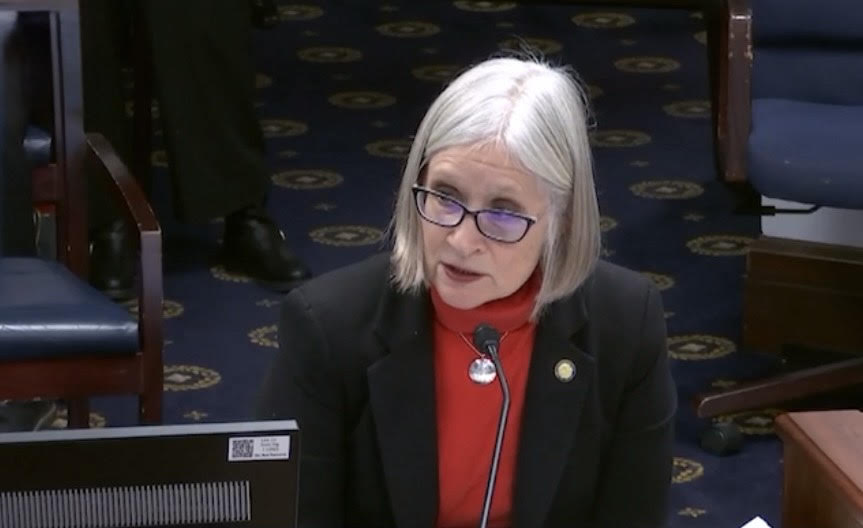
Representative Andi Story presenting to the House Education Committee, Screengrab courtesy of Gavel Alaska and KTOO

NOTN- A bill heard at 8 A.M this morning would overhaul how public schools are funded by changing how students are counted for state aid.

House Bill 261, rewrites large portions of the state’s public school funding statutes.

“We force school districts to budget in such an irrational way.” Said Representative Andi Story, “This backwards budgeting consumes a great deal of valuable time to reshuffle numbers, from personal experience this causes great pain in the community.”

In the full text of House Bill 261, available on The Alaska State Legislature Website, the measure is intended to stabilize school funding particularly through enrollment declines.

The biggest change in the bill is how Alaska calculates average daily membership, or ADM, which is the student count used to determine state education funding.

According to the Alaska Department of Education and Early Development, the ADM is a count of enrolled K-12 students taken for 20 days ending the last Friday in October of each year, the ADM is adjusted due to a few factors including school size, district cost, and special needs.

Under the bill, districts would generally receive funding based on the higher of their most recent student count or a three-year average.

“Alaska should create a 3 year averaging approach statewide to replace the current Hold Harmless Provision.” Story said during her presentation.

The Hold Harmless Provision currently protects school funding if their ADM drops by 5% or more each year, which allows the previous year’s student count to be used as a base to mitigate a drop in funding.

“It could also provide districts with greater stability and planning.” Story said, “As districts would not be so concerned about unexpected changes in enrollments at the October count period. About 19 states use an approach that either averages, combines or provides the better of multiple years of student counts.”

The bill also alters how districts are funded following school consolidations or closures, it would allow temporary offsets to soften funding losses over a period of several years.

The bill would also restrict districts from reopening schools too quickly after consolidation.

HB 261 also changes or revises how special education funding is calculated, particularly for students who require intensive services.

Using the above 3 year count, districts that identify additional students requiring intensive services midyear would be eligible for retroactive funding.

The bill applies to school districts statewide and does not directly increase the base student allocation, which is the per-student dollar amount set separately by the Legislature.
Categories
Featured Juneau News Juneau Local Ketchikan Local News Feeds Sitka Local

Juneau School District launches ‘Buy a Brick’ fundraiser for Dzantik’i Heeni playground

NOTN- The Juneau School District has launched a “Buy a Brick” campaign to help fund playground equipment at the Dzantik’i Heeni campus, where several of the city’s programs were relocated after school consolidation.

“Through the consolidation the year before last at the Juneau School District, our optional programs were moved to the Dzantik’i Heeni campus, which had previously been a middle school.” Said Juneau school district Director of Operations Kristy Germain, so we now have Montessori Borealis, which has pre-K and kindergarten through eighth grade, and we also have the Juneau Community Charter School, which is kindergarten through eighth grade, and additionally our Yaakoosge Daakahidi alternative high school, but the playground is primarily for our elementary program.”

While the playground will primarily serve elementary students, it will also be open to children in the surrounding Lemon Creek and Switzer neighborhoods, Germain says the school district partnered with the city engineering department for public design and safety concerns.

“The cost is substantial,” Germain said “We have received funding from the City Assembly, they authorized an ordinance to put $735,000 specifically toward the site preparation and the concrete base and the safety surfacing for the playground, and that’s just the safety surfacing. So the equipment is an additional cost. So the Juneau school district is taking the lead on fundraising for the actual playground equipment.”

The Buy a Brick fundraiser allows residents and businesses to purchase engraved bricks that will be installed at the site.

“We are partnering with Brick Markers, and they’re a company that has worked with other organizations in Juneau, I think notably, Rotary Park and the 911 Memorial use the same company.” Germain said, “Those bricks are holding up, so that’s a good testament to them. But we have established various levels so that individuals and community members are able to purchase a brick, and we’re also looking to our business community to support this endeavor.”

Proceeds will go toward the cost of equipment, which Germain said could push the project’s total cost beyond $1 million once installation, shipping, and materials are factored in.

The district plans to launch an online portal for the fundraiser within the week, with brick sales running through December. Officials hope to purchase and receive equipment in time for installation next summer.

“We are running into some timelines for purchasing the equipment in time for it to arrive to be installed this summer. So that is why we have a tight timeline.” Said Germain.

Community support has already begun. Juneau’s Rotary clubs recently donated $30,000 toward musical play equipment and are organizing volunteer work parties to help install it.

For those unable to buy a brick, Germain said there will be other ways to contribute, including volunteering at fundraising booths or helping with community outreach.

Categories
Featured Juneau News Juneau Local Ketchikan Local News Feeds Sitka Local

JSD board to consider playground donation, universal breakfast plan at today’s meeting

NOTN- The Juneau School District Board of Education will hold a special meeting today, at noon via Zoom to consider a series of action items, from playground improvements to budget changes and contract approvals.

One of the key items up for a final vote is the acceptance of playground equipment donated by Juneau Rotary Clubs for the Dzantik’i Heeni campus. Rotary has secured $30,000 in funding to provide musical play elements for students at Montessori Borealis and the Juneau Community Charter School.

Volunteers have committed to installing the equipment this fall.

Also on the agenda is a first reading of a budget revision that would add universal free breakfast for all JSD students. The revision comes after an increase in state education funding, after the Base Student Allocation was restored to $700 per student.

The adjustment would provide an additional $1.5 million in revenue, allowing the district to potentially expand student meal programs.

The public can view the meeting online, and final adoption of the FY 2026 Budget Revision is expected at a subsequent board meeting.

Categories
Featured Juneau News Juneau Local Ketchikan Local News Feeds Sitka Local

US Education Department to unfreeze contested K-12 funds

By: Jennifer Shutt, States Newsroom

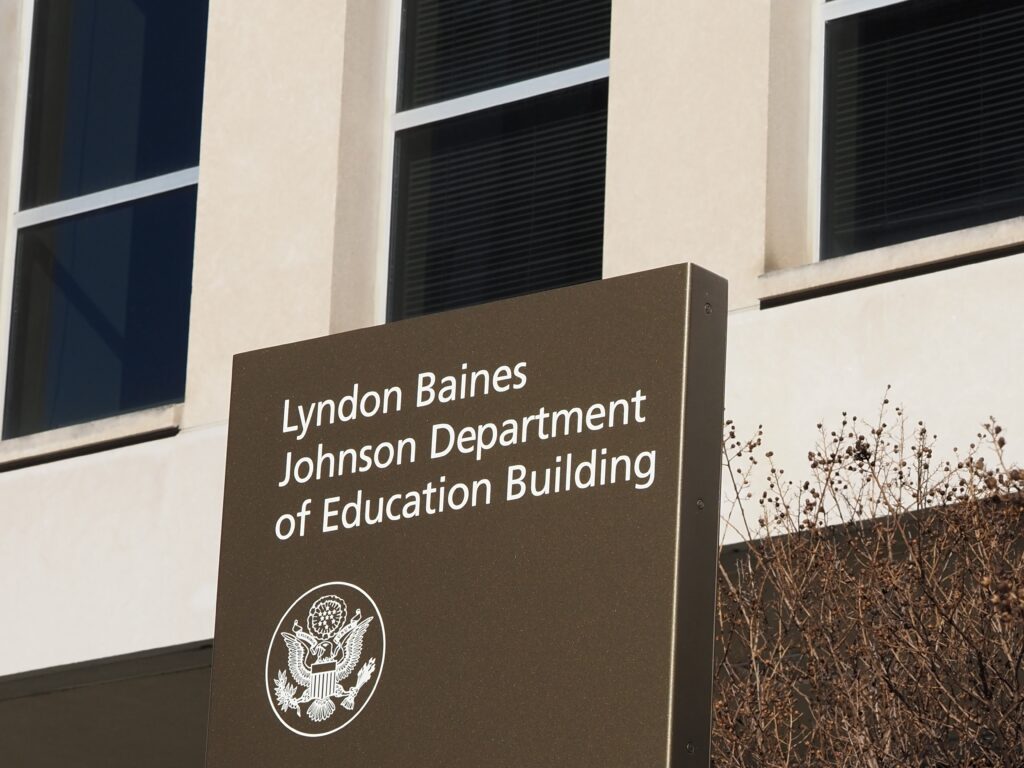
 The Lyndon Baines Johnson Department of Education Building in Washington, D.C., in a file photo from November 2024. (Photo by Shauneen Miranda/States Newsroom)

WASHINGTON — The Trump administration said Friday it’ll soon release billions in Education Department funding that has been frozen for weeks, delaying disbursements to K-12 schools throughout the country.

The funding — which goes toward migrant education, English-language learning and other programs — was supposed to go out before July 1, but the administration informed schools just one day before that it was instead holding onto $6.8 billion while staff conducted a review. Members of both parties in Congress objected to the move.

The Education Department released $1.3 billion for before- and after-school programs as well as summer programs in mid-July, but the rest of the funding remained stalled.

Madi Biedermann, a Department of Education spokesperson, wrote in an email to States Newsroom that the White House budget office “has completed its review” of the remaining accounts and “has directed the Department to release all formula funds.”

The administration will begin sending that money to school districts next week, Biedermann wrote.

Appropriators cheer

Maine Republican Sen. Susan Collins, chairwoman of the Appropriations Committee, wrote in a statement the “funds are essential to the operation of Maine’s public schools, supporting everything from classroom instruction to adult education.”

“I am pleased that following outreach from my colleagues and me, the Administration has agreed to release these highly-anticipated resources,” Collins wrote. “I will continue working to ensure that education funds are delivered without delay so that schools have adequate time to plan their finances for the upcoming school year, allowing students to arrive back to class this fall to properly-funded schools.”

Collins and nine other Republican senators wrote a letter to Office of Management and Budget Director Russ Vought earlier this month asking him to “faithfully implement” the spending law Congress approved in March.

“The decision to withhold this funding is contrary to President (Donald) Trump’s goal of returning K-12 education to the states,” the GOP senators wrote. “This funding goes directly to states and local school districts, where local leaders decide how this funding is spent, because as we know, local communities know how to best serve students and families.

“Withholding this funding denies states and communities the opportunity to pursue localized initiatives to support students and their families.”

West Virginia Republican Sen. Shelley Moore Capito, chairwoman of the appropriations subcommittee that funds the Education Department, wrote in a statement released Friday she was glad to see the funding unfrozen.

“The programs are ones that enjoy longstanding, bipartisan support like after-school and summer programs that provide learning and enrichment opportunities for school aged children, which also enables their parents to work and contribute to local economies, and programs to support adult learners working to gain employment skills, earn workforce certifications, or transition into postsecondary education,” Capito wrote. “That’s why it’s important we continue to protect and support these programs.”

Categories
Featured Juneau News Juneau Local Ketchikan Local News Feeds Sitka Local

GOP members of US Senate protest Trump freeze of $6.8B in school funding

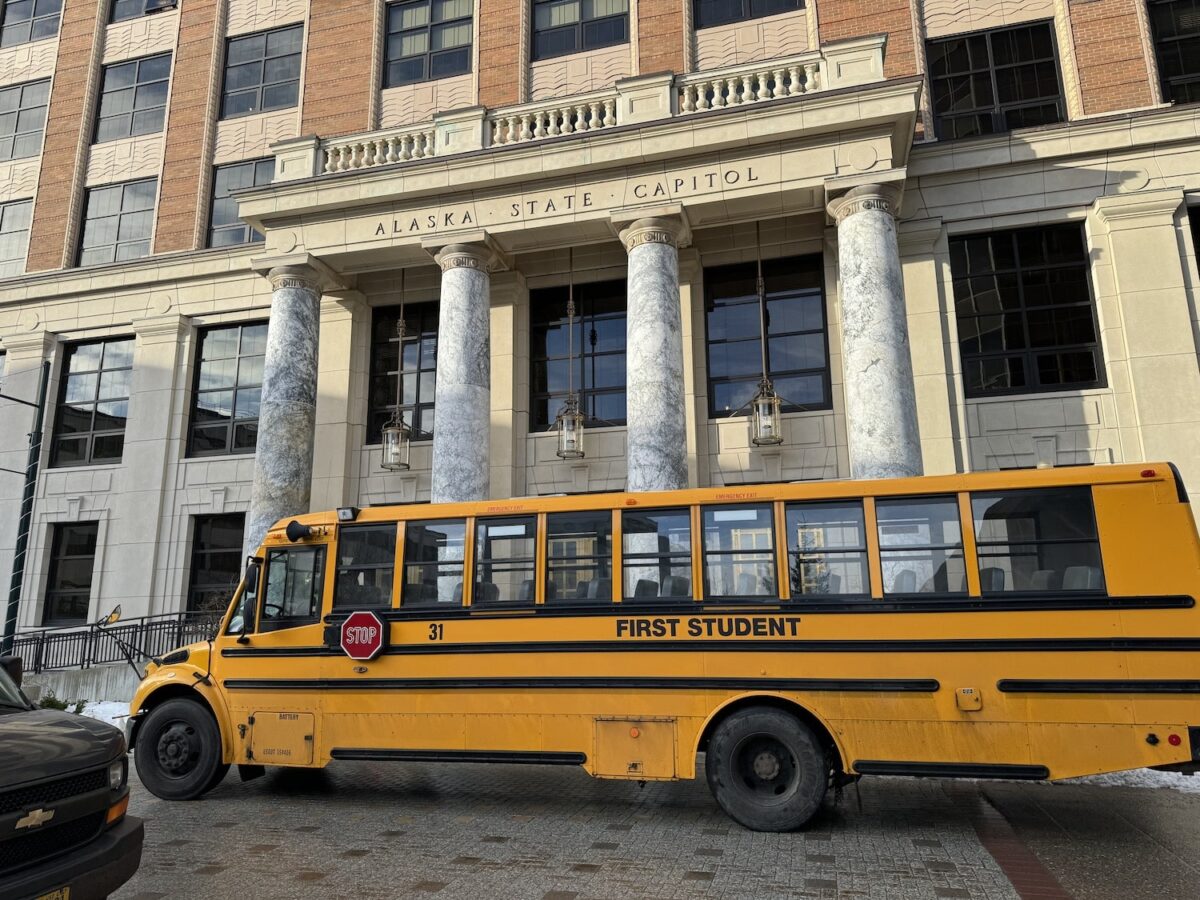
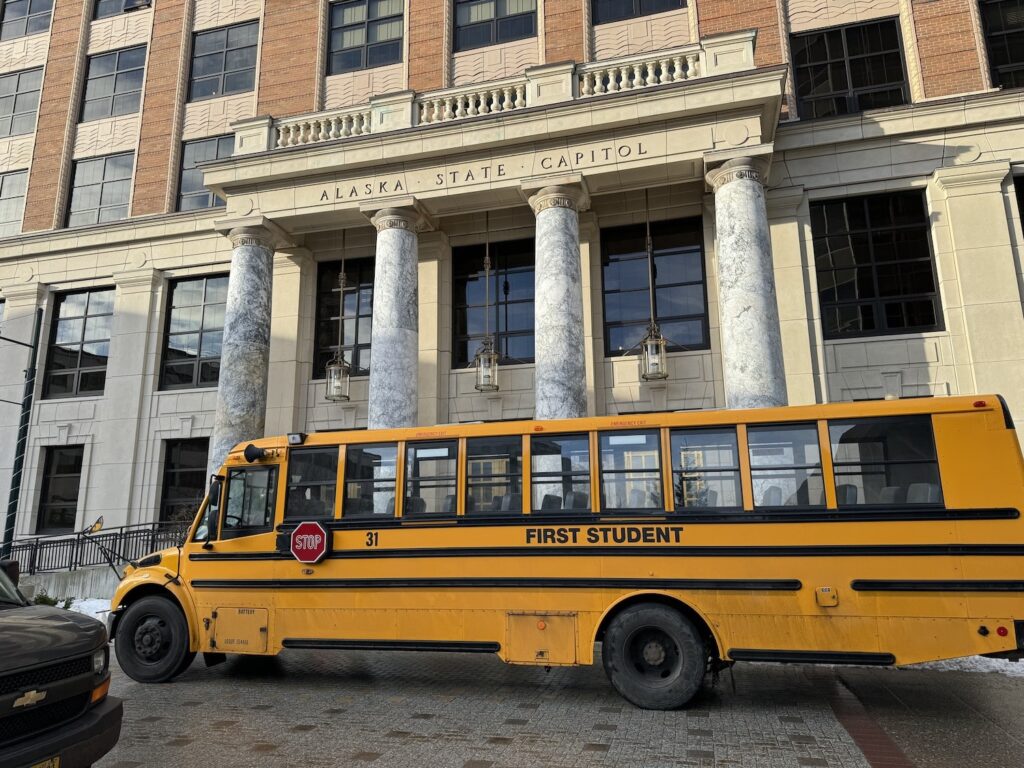
A school bus passes in front of the Alaska Capitol on Tuesday, Feb. 6, 2024. (Photo by James Brooks/Alaska Beacon)

By: Shauneen Miranda, States Newsroom

Republican members of the U.S. Senate called on Office of Management and Budget Director Russ Vought in a letter Wednesday to release the $6.8 billion in funds for K-12 schools that the Trump administration is withholding.

The letter marked a major friction point between President Donald Trump and influential lawmakers in his own party as his administration tests the limits of the executive branch’s authority in clawing back federal dollars Congress has already appropriated. Every state has millions in school funding held up as a result of the freeze.

Wednesday’s letter came after the Supreme Court temporarily cleared the way earlier this week for the administration to carry out mass layoffs and a plan to dramatically downsize the Department of Education that Trump ordered earlier this year.

Just a day ahead of the July 1 date when these funds are typically disbursed as educators plan for the coming school year, the Education Department informed states that it would be withholding funding for several programs, including before- and after-school programs, migrant education and English-language learning, among other initiatives.

“Withholding these funds will harm students, families, and local economies,” wrote the 10 GOP senators, many of them members of committees that make decisions on spending. Sen. Shelley Moore Capito, a West Virginia Republican and chair of the Senate Appropriations Subcommittee on Labor, Health and Human Services, Education, and Related Agencies, led the letter.

Sen. Susan Collins of Maine, chair of the broader Senate Appropriations Committee, also signed onto the letter, along with: Sens. Katie Britt of Alabama, Lisa Murkowski of Alaska, John Boozman of Arkansas, Mitch McConnell of Kentucky, Deb Fischer of Nebraska, John Hoeven of North Dakota, Mike Rounds of South Dakota and Jim Justice of West Virginia.

“The decision to withhold this funding is contrary to President Trump’s goal of returning K-12 education to the states,” the senators wrote. “This funding goes directly to states and local school districts, where local leaders decide how this funding is spent, because as we know, local communities know how to best serve students and families.”

States Newsroom has asked the Office of Management and Budget for comment on the letter.

Meanwhile, a slew of congressional Democrats and one independent — 32 senators and 150 House Democrats — urged Vought and Education Secretary Linda McMahon in two letters sent last week to immediately release the funds they say are being withheld “illegally.”

Democratic attorneys general and governors also pushed back on these withheld funds when a coalition of 24 states and the District of Columbia sued the administration earlier this week.