On Oct. 1, the Alaska Department of Natural Resources will begin limiting how far in advance reservations can be made to three months, down from six months.
The only exceptions to the three-month reservation window will include the Wood-Tikchik Region and cabins on Afognak and Shuyak Islands in the Kodiak region, which will continue to allow reservations up to six months in advance.
The change is part of a shift to a new online booking system and website that also opens Oct. 1. Cabin-seeking Alaskans will be unable to change, modify or cancel their existing reservations from Sept. 28 through Sept. 30 as part of the transition.
Beginning Oct. 1, reservations for all facilities can be made for Jan. 1, 2027 and the 3-month rolling window will begin.
Wendy Sailors, community engagement manager for Alaska State Parks, said by email that the new shorter reservation window is the result of feedback from Alaskans who said “that it is difficult to plan that far out, often people forget that they had the reservation and have to cancel last minute or just don’t use it, etc. So in addition to the three-month rolling reservation window, we are incorporating a few new features like an email reminder 7 days out.”
NOTN- At a Committee of the Whole work session last night, the Juneau Assembly narrowly voted to delay action on an ordinance that would lock the city’s informal five-ship-a-day cruise limit into law, opting instead to wait for findings from the Visitor Industry Task Force.
The committee voted 5-4 to postpone the measure until after the task force completes its work and issues a report later this year. Supporters of the delay, including Mayor Beth Weldon, said the risk of costly litigation was too high, and the need for stronger data to defend any future ordinance was needed.
“It was said that both parties need to show up in these negotiations, and you know, I get that we can do this one-sided, but we still need both parties to show up for our negotiations over the use of the marine passenger funds. And I’m not saying we’re bowing to the the industry. I’m saying, I think we have a lot to gain by continuing with collaboration.” Said Assembly Member Maureen Hall.
Those who voted against the postponement, said it would erode public trust and ignores years of community support for the five-ship cap, now enforced through a memorandum of understanding with cruise lines.
“I’m a little frustrated to hear the conversations we’re having today, because for the many years that I’ve been on the assembly, I have seen overwhelming support for the five ship limit.” Assembly Member Ella Adkison said, “It’s consistently a thing that scores very highly in all of our surveys, it’s something that everyone has rallied around as a good thing and a good first step. And the only reason we haven’t made it code is because we were not legally able to. And now we have the opportunity to make this very popular public good ironclad, and we’re hesitating. That seems to me like we are just wanting to kick the can down the road. I think there’s nothing wrong with bringing it to public testimony, but I can guess that that public testimony is going to be very in favor. And I don’t think waiting will tell us any more than the last few years have already told us.”
In a story by KTOO, it was detailed that a recent federal court ruling in Bar Harbor, Maine, found that community’s limits on cruise passengers were legal, which could potentially open a path for Juneau to pursue its own restrictions.
But City Attorney Emily Wright warned that a local ordinance would almost certainly face a lawsuit. She estimated litigation could cost the city between one and four million dollars, with no guarantee Juneau would win.
The Assembly voted 5-4 to postpone the ordinance. The Visitor Industry Task Force is expected to complete its work and make recommendations to the Assembly later this fall.
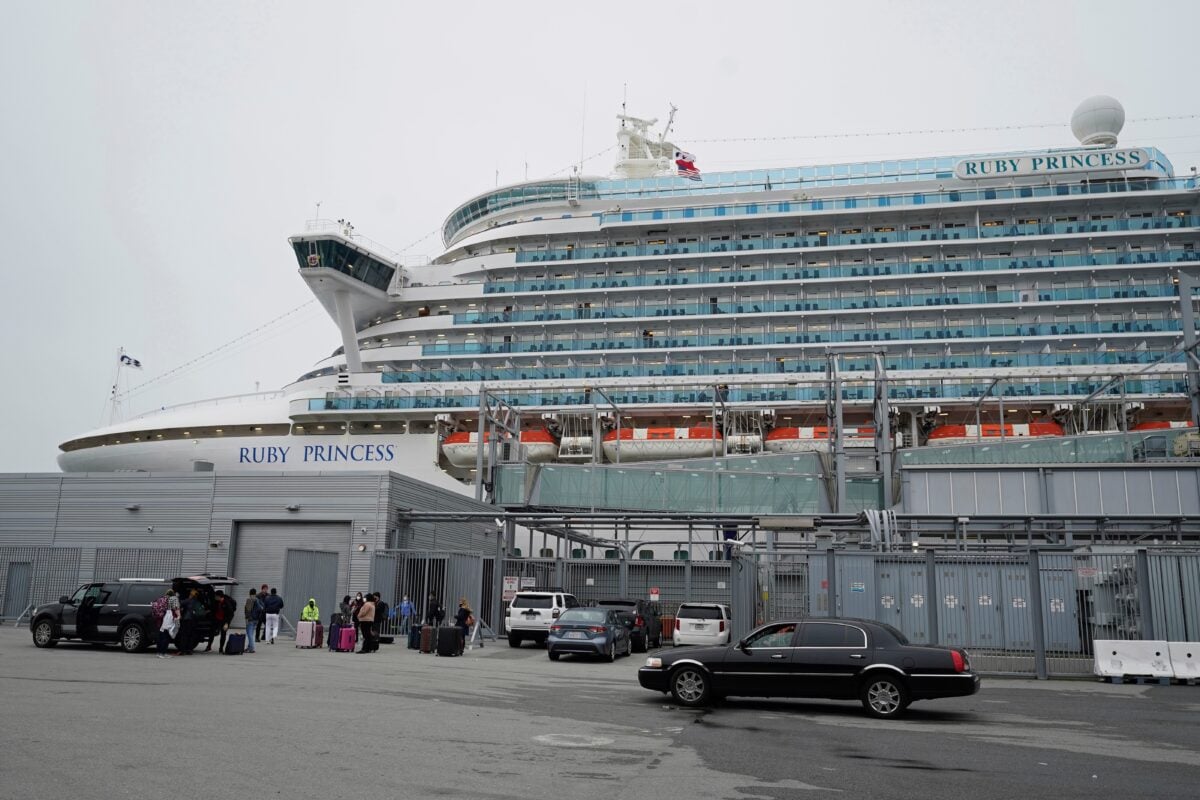
FILE - The Ruby Princess is docked in San Francisco, Thursday, Jan. 6, 2021. (AP Photo/Eric Risberg, File)
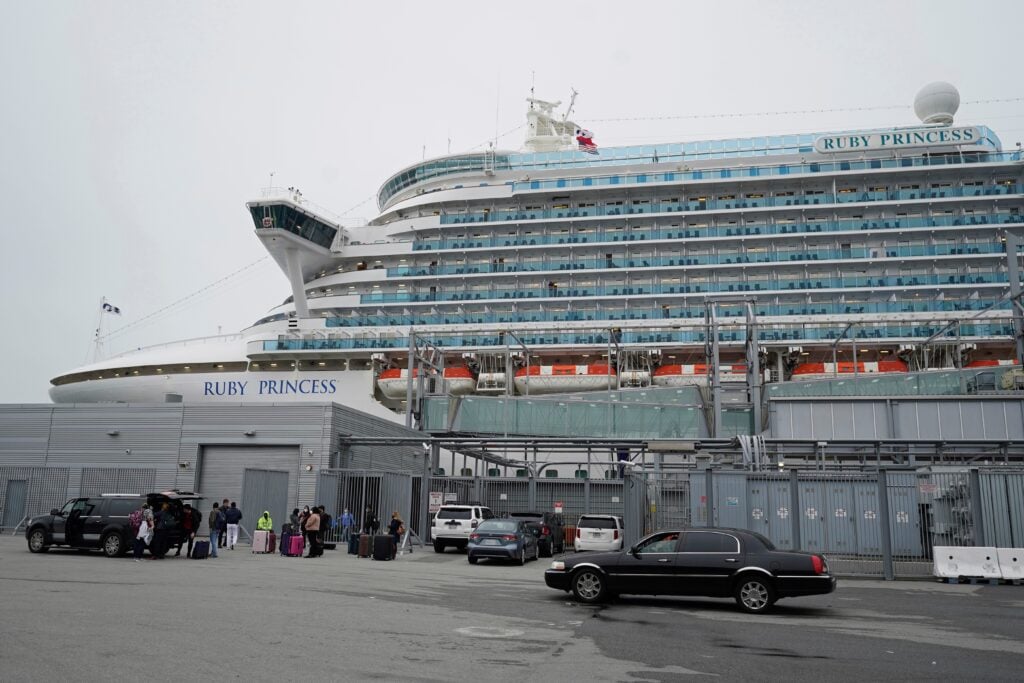
FILE – The Ruby Princess is docked in San Francisco, Thursday, Jan. 6, 2021. (AP Photo/Eric Risberg, File)
AP- More than 120 passengers and crew members on a Princess Cruises ship that docked in San Francisco on Thursday were infected with a stomach virus while on their voyage, federal health officials said.
The Ruby Princess was on a 20-day round trip journey from San Francisco to Canada and Alaska when 102 passengers and 23 crew members were stricken by norovirus, the U.S. Centers for Disease Control and Prevention said.
Norovirus is highly contagious, often spread by food or on surfaces, particularly in crowded conditions. It is a short-lived illness for many people, but can be dangerous for people with underlying health conditions, young children and those aged 65 and older.
Symptoms include sudden onset of vomiting, diarrhea and stomach pain that can last three days, according to the CDC.
The outbreak on the Ruby Princess, which set sail on June 12, was reported to the CDC on Saturday, officials said, adding that not all the infected people were sick at the same time or when the ship arrived or left port.
There were 3,032 passengers and 1,144 crew members on the Ruby Princess voyage, the CDC said.
Princess Cruises said in a statement that the ship’s crew responded promptly and implemented “enhanced sanitation protocols across the ship.”
The ship will be thoroughly cleaned and disinfected before departing on its next trip later Thursday, the company said.
So far this year, there have been seven illness outbreaks reported on cruise ships in the CDC’s jurisdiction, mostly from norovirus, health officials said.
Most norovirus outbreaks occur when people who are already infected spread the virus to others by direct means, such as through sharing food or utensils. Outbreaks can also be spread through food, water or contaminated surfaces.
Washing hands frequently is key to preventing a norovirus infection, especially after using the bathroom or before eating and drinking. It is best to use soap and water, scrubbing and washing for at least 20 seconds. Hand sanitizer alone doesn’t work well against norovirus, the CDC said.
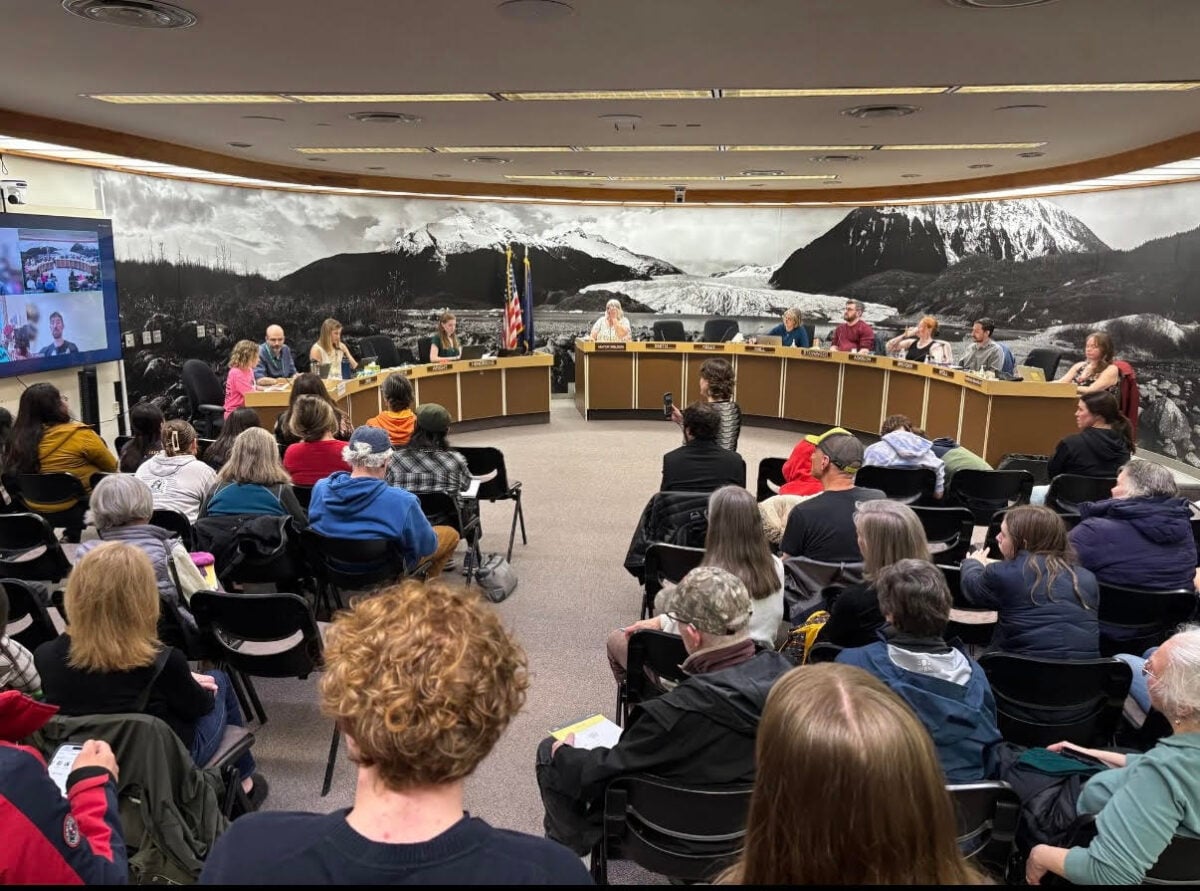
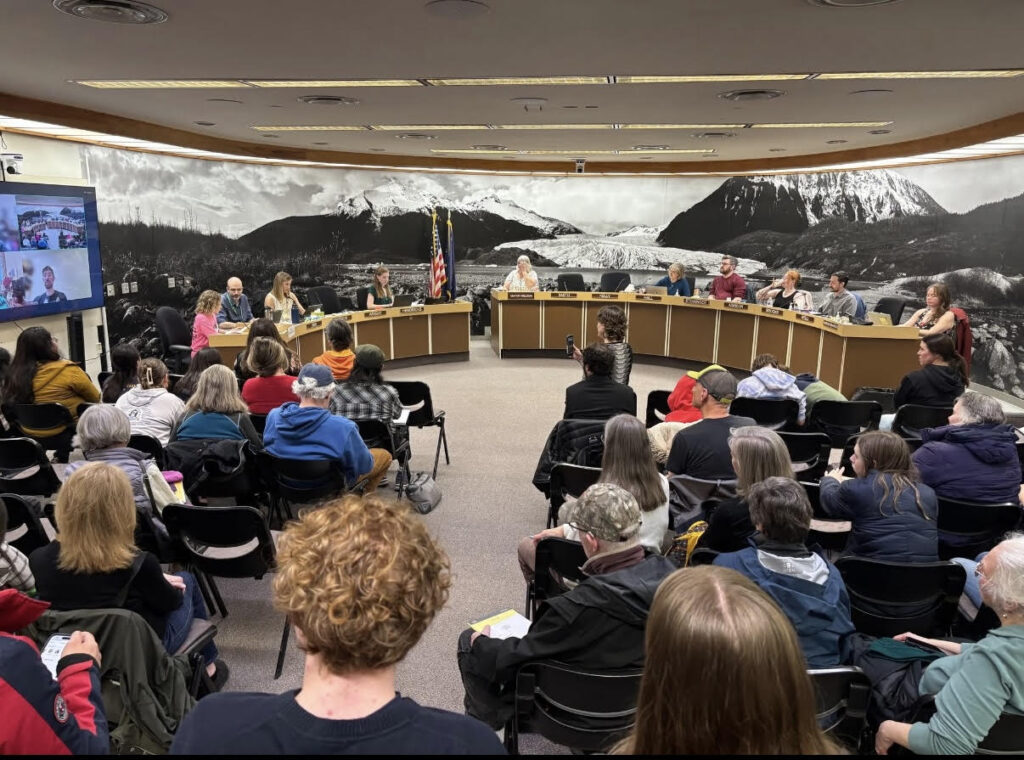
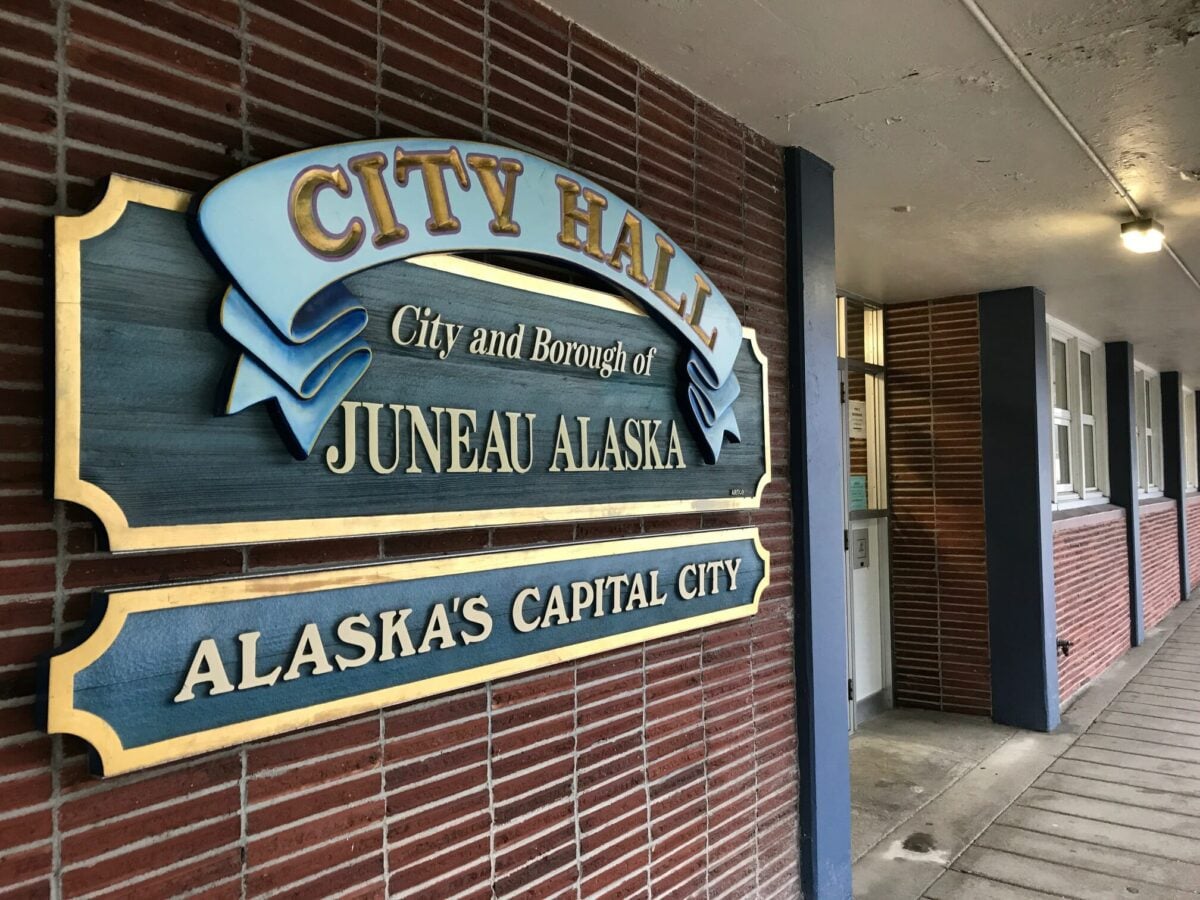
City Hall packed with Juneau residents ready to testify on the FY27 budget, courtesy of CBJ
NOTN- The Juneau Assembly held an extensive meeting last night on the FY27 budget, it was also the last opportunity for public testimony.
During the meeting, city leaders moved ahead with a strained city budget that still trims popular services, including reduced funding for the Juneau Douglas City Museum, the closure of Mount Jumbo Gym, reduced funding for Travel Juneau and Jensen Olsen Arboretum.
It does however preserve both pools, the Diamond Park Fieldhouse and the Douglas Fire station.
Early in the evening officials approved a major change to the city’s sales tax code, raising the cap on single-item purchases to $50,000.
The final version also keeps a lower effective cap in place for most vehicle purchases.
“The situation that we find ourselves in is drastic.” Said Finance Chair Christine Woll, “If we pass the budget that we have put forward tonight, we will have passed a balanced budget, but only because we have eliminated all of our savings to do so. And next year we will look at a $7 million deficit that we will have not have savings to fill.”
Woll warned that without new revenue, the city could be forced to consider closing pools, Eaglecrest Ski Area, the city museum and other services next year.
The Assembly also passed separate measures to tax more onboard cruise ship sales, end a $30 online filing credit for businesses, and advanced debate on repealing a sales tax exemption for travel agent commissions, which small tour operators say would amount to double taxation.
Public testimony earlier in the meeting again targeted the planned $9 million demolition of Telephone Hill, with residents urging the Assembly to redirect that money to schools, housing and cultural institutions instead.
“I urge the assembly to take the $9 million that has been earmarked for the demolition and site work of Telephone Hill and diverted into something that the people want and need, that money belongs to the people of Juneau, and we should get a say in how it is used.” Said Joshua Adams.
Before passage of the FY 2027 budget, residents turned out in force to defend the Juneau‑Douglas City Museum.
“At a time when indigenous land acknowledgements are being removed from public places across the country, this assembly chooses to read one at the start of every meeting. By doing so, you honor a vital part of Juneau’s history, but we must ask ourselves, are we just talking the talk, or are we willing to walk the walk? Just as families cherish their history through heirlooms and photos, our community preserves our identity through the Juneau Douglas City Museum.” Said testifier Jean Mcbride.
Residents warned that deep staff cuts would “devastate” programs, erode public trust and jeopardize thousands of volunteer hours and donated artifacts.
“We’ve all been to the City Museum, and we all love the City Museum. Why in the dickens are you cutting half of its operating budget?” One testifier, Chuck Cohen said, “It doesn’t make any sense. It’s a very small percentage of a very large budget, and we have to get rid of the main director of the museum and the person responsible for public participation, that’s public participation by our children and by ourselves. I think you folks are very short-sighted.”
An effort to fully restore museum funding failed.
“I know that it’s not a large amount. I don’t know how much of an impact it will have, but I don’t feel right asking the community to give up so much.” Said Assembly Member Nano Brooks.
Members “begrudgingly” as Woll put it, passed the roughly $545 million budget, but they still did not meet their goal to cut $2 million in costs.
“I don’t want to make this cut. I don’t, I believe everything everyone said about what the impact will be long term for the museum, even if we want to live in a world where we get to bring the City Museum back, the same thing’s going to happen with Travel Juneau and Eaglecrest, they are going to suffer for the cuts that we are, right now, planning on making to them.” Woll said, “Our fund balance right now is one bad sales tax quarter away from having no funds to deal with our expenses, let alone a major natural disaster or other disaster, and we live in an uncertain world, and that’s what our fund balance is for.”
In a separate 5-4 vote, the Assembly also rejected a to shift $360,000 in marine passenger fees away from security and restroom costs at two private cruise docks and into a seawalk expansion project.
Some members argued cruise companies already collect enough in dock fees to cover those services and said residents don’t understand why the city isn’t “getting more benefit from the industry”
The Assembly moved ahead with a lower property tax rate, the long-term capital improvement plan, and several flood and wastewater projects backed by state revolving fund loans.
“This ordinance sets the mill rate at 9.29” Said City Manager Katie Koester.
With flood season approaching, officials are inviting residents to a public flood preparedness open house tonight, as they weigh costly long‑term protections for riverfront neighborhoods.
Representatives from the U.S. Army Corps of Engineers, the City and Borough of Juneau, the National Weather Service and the Central Council of the Tlingit & Haida Indian Tribes of Alaska will meet with residents at 6 p.m. at Thunder Mountain Middle School to discuss risks and answer questions.
Officials said they are moving ahead on a “midterm solution” while reinforcing existing defenses this year, but warned that conditions and plans continue to shift.
The city expects annual maintenance for temporary Hesco barriers could run $6 million to $12 million, a cost that could drop if sheet piling is installed as a stronger, permanent river reinforcement.
The following article has been written by the President and CEO of Goldbelt Inc. and is not a neutral news report.
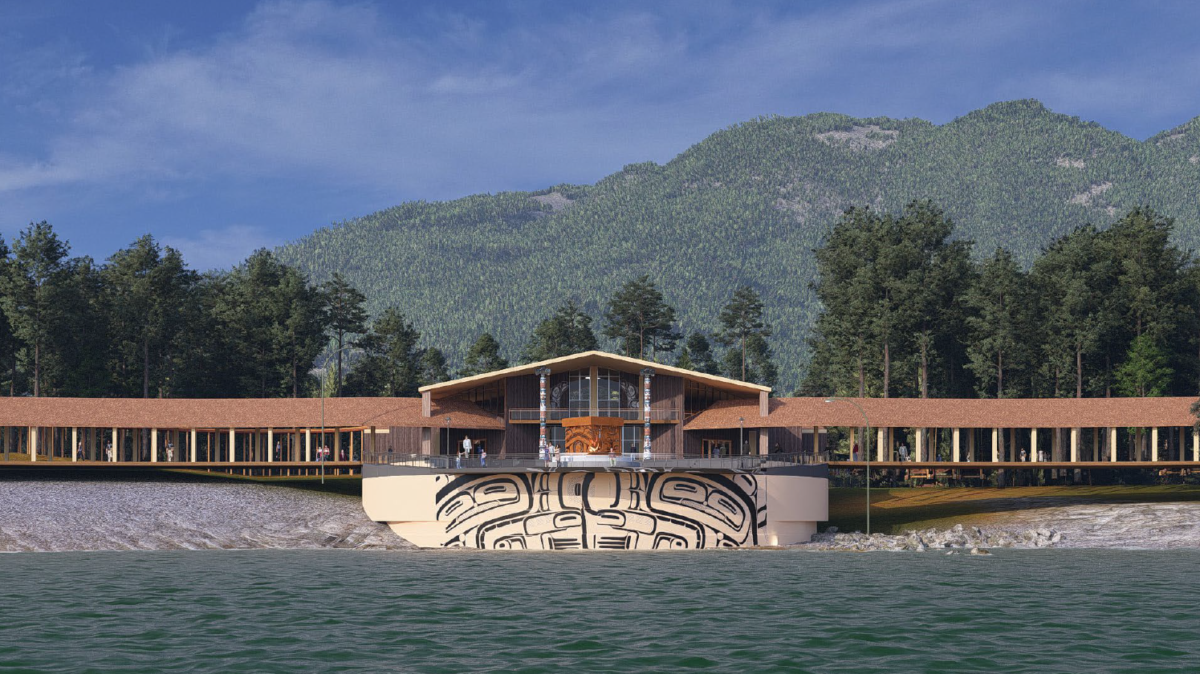
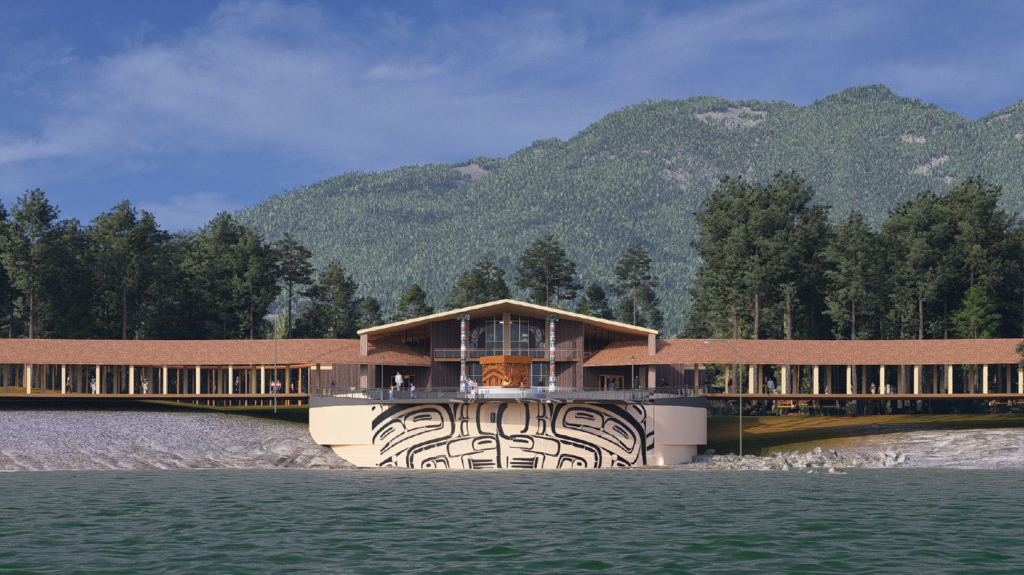
The Goldbelt Aani Concept Image, provided by Goldbelt Inc.
Juneau is at an inflection point. Rising costs, aging infrastructure, and shrinking resources are forcing tough decisions about whether our community will remain sustainable for the next generation. Goldbelt will lead a path to prosperity.
Goldbelt was created through the Alaska Native Claims Settlement Act (ANCSA), legislation that resolved Indigenous land claims by creating corporations, instead of reservations, and returning select lands to Alaska Native people through regional and village corporations. As Juneau’s Alaska Native corporation, we selected parcels from our ancestral homelands that were important to our people and that we are responsible for stewarding these ancestral lands today.
Under ANCSA, these lands are not taxed until they are developed. That structure was designed to support long-term economic opportunity for Alaska Native people and to keep Native land in Native hands.
As Juneau’s Alaska Native corporation (ANC), owned by Tlingits of the Áak’w Kwáan and T’áaku Kwáan, Goldbelt’s responsibility is to the Indigenous people who make up our shareholder base. Our shareholders will always be our top priority. Unlike a publicly traded company, our responsibility does not end with dividends. It includes building systems and infrastructure that support our shareholders and the broader community.
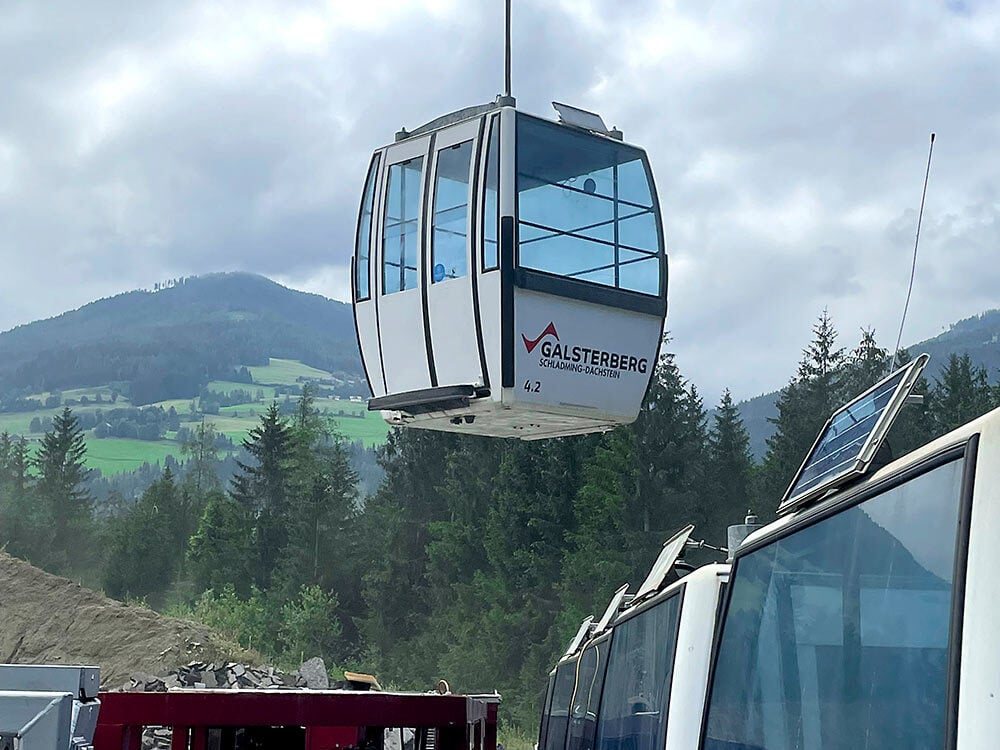
As an example, when Goldbelt invested $10 million in a revenue-sharing agreement with the City and Borough of Juneau on the Eaglecrest gondola project, it did so because it was a strong investment for our shareholders. It also reflects an investment in our community. We believe that a prosperous Juneau depends on a sustainable, year-round outdoor recreation facility at Eaglecrest.
The Goldbelt Aaní port project on the backside of Douglas is another example of investment that serves our stakeholders while supporting the community. The port reflects decades of planning by Goldbelt and its shareholders for development of our ANCSA lands. Not only will it create local jobs and produce profits that remain here in Juneau, the project will enhance borough infrastructure with upgraded utilities and a new wastewater treatment facility on Douglas Island.
Once developed, the port is expected to become one of Juneau’s largest taxpayers. That revenue supports schools, infrastructure and the services residents rely on every day. Sustainable, thoughtful development supports jobs, strengthens the economy and contributes to a stable tax base.
Goldbelt is a forever company supporting people who have been here since time immemorial. We are here to stay and to contribute to Juneau’s long-term economic stability because this is where our people live. We operate businesses around the world, but our headquarters and our home are in Juneau. We invest our profits in Juneau’s future. As an Alaska Native corporation, those investments stay with our people and our lands, adding long-term value for locals instead of flowing to outside investors.
Goldbelt wants to help build a future where families choose to stay in Juneau, where people have confidence in the economy, where children are raised, and people invest in their future now and forever.
Author bio
McHugh Pierre is President and CEO of Goldbelt, Inc., Juneau’s Alaska Native corporation, owned by Tlingit shareholders of the Áak’w Kwáan and T’áaku Kwáan.
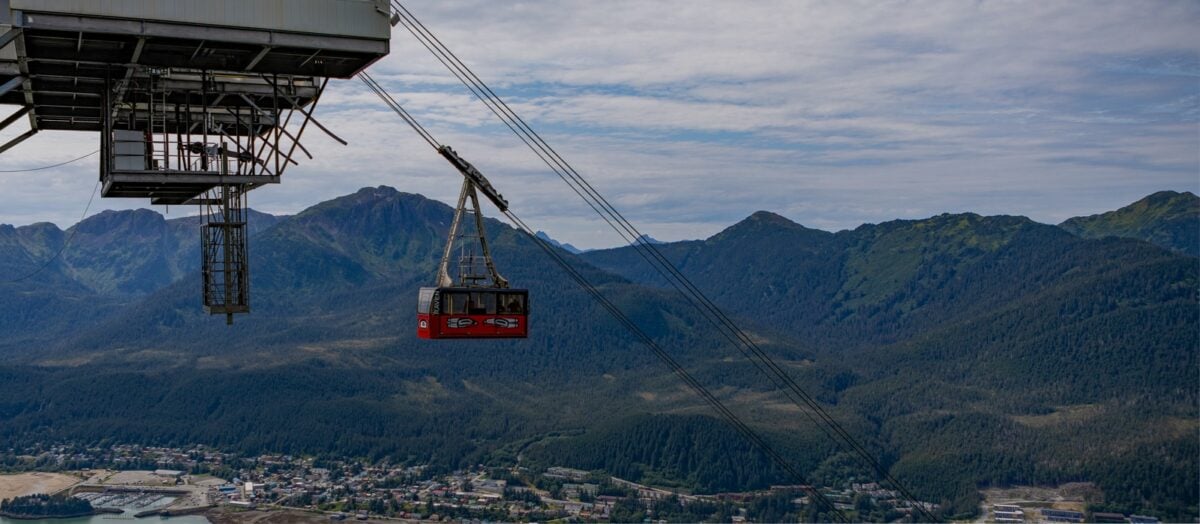
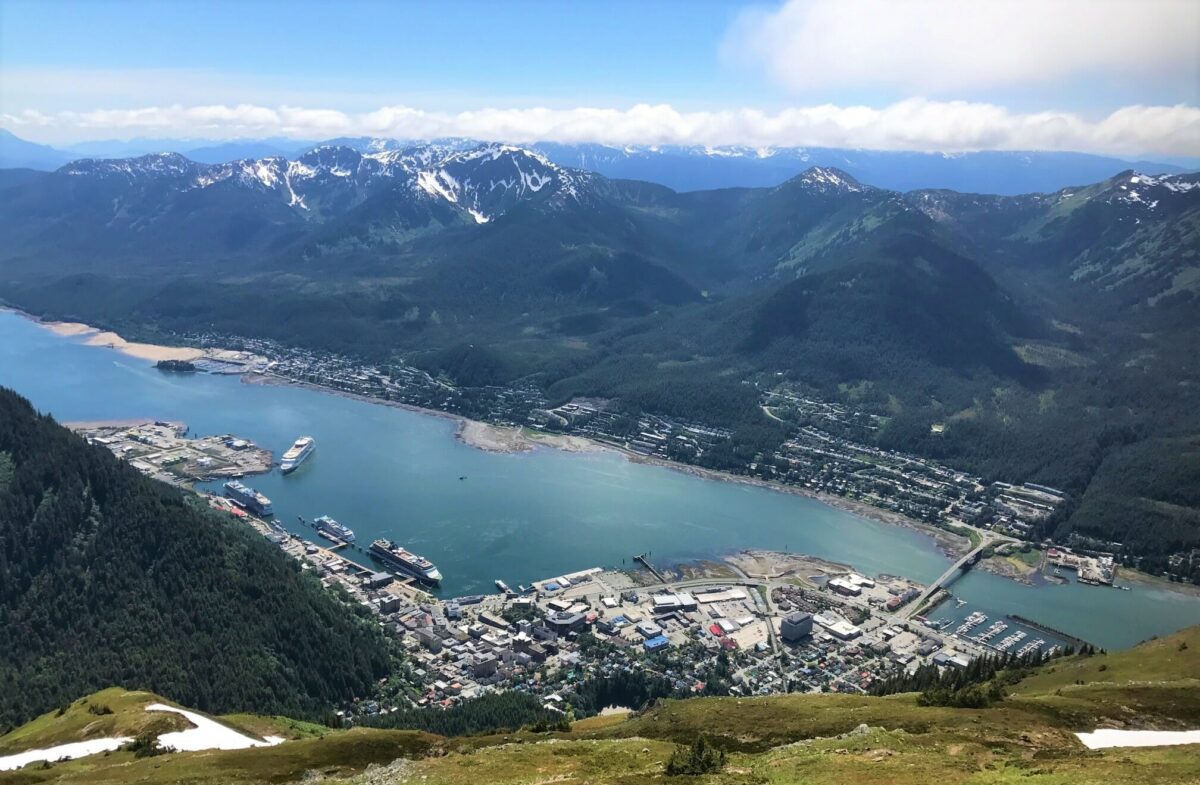
Goldbelt Tram overlooking Juneau, courtesy of Goldbelt.
NOTN- Goldbelt Inc. will not reopen the Goldbelt Tram until a full round of safety testing and recertification is complete following an April 30 mechanical incident that injured several employees, the company’s president and CEO said.
McHugh Pierre said an internal investigation found “an operational event” triggered the tram’s emergency stop system, causing both cars to contact infrastructure near the lower terminal and skybridge.
“I want to make sure that everybody knows that safety is the core component at the Goldbelt Tram, and at all Goldbelt operations.” Said Pierre, “We take events like what happened April 30th at the tram very seriously, and so we’ve completed a rigorous investigation. We’ve identified an operational event that occurred that triggered the emergency stop system at the tram, and because of the proximity of where the cars were to the lower terminal in the sky bridge, each one of those cars made contact with that infrastructure. We are going through very serious testing and evaluation of all of our equipment before we reopen to make sure that we continue to stay focused, and have a very clear mandate on safety across all of our systems.”
Pierre said the tram, which is marking its 30th year of operation, undergoes rigorous annual inspections before each season, including non-destructive testing of welds on aluminum and steel for stress fractures, and evaluation of the haul and tow cables. The manufacturer also participates in reviewing the electric and diesel motor systems.
Because of the April incident, the full inspection is being repeated.
“We will go through it before we reopen this summer, and there’s been some confusion, and I understand, you know, people are looking for some answers. We will reopen when we are safe and certified to reopen.” Pierre said.
All season pass holders have been refunded but will still receive their usual benefits once the tram resumes service.
“I’m committed to being the first person to ride a tram car up the mountain,” he said, adding he wants to personally demonstrate the system’s safety and reliability, “I want to make sure that I can personally demonstrate the certainty that our loyal local customers have, and our visiting customers have as well.”
Juneau’s Assembly Finance Committee is staring down a major budget deficit for fiscal year 2027.
They inched their way through a long night of budget cutting at a work session last night, trimming around the edges while sparing some of the city’s most debated programs.
Finance Director Angie Flick warned the city cannot afford to end the year in the red.
“You should be projected to be at zero at worst case scenario,” Flick told the committee, “I think my predecessor and the prior city manager had some conversations with the assembly at the time and suggested $5 or $7 million as a fund balance, and that was based on the spending and the projects that the assembly liked to do. When I went back and looked over the last three years, I would, if I were making a recommendation based on your past to predict your future, I would say you would want $11 to $12 million in your fund balance. There were some significant general fund dollars that went to support the school district when it was in need, there’s been significant one-time dollars that have gone to flood fighting, and then there have been other community priorities that the body has decided to fund, and so you know, based on how the body has approached spending in the past, that would be the kind of fund balance that I would suggest. I think the real pressing concern that’s going to be hard to get around, would be flood fighting as we move forward, and that’s just going to be a tricky one to deal with.”
The current draft budget uses about $8 million in fund balance to cover operating costs, leaving Juneau projected at negative $1.7 million in unrestricted fund balance. Even if a package of fast‑tracked sales tax changes passes, that only improves the outlook modestly.
Members were split over strategy.
Some pushed for deeper cuts now and said they were aiming to leave roughly $5 million in fund balance. Others favored relying more on one‑time project cuts until they know whether new revenue measures or fall ballot initiatives will pass.
In terms of action taken, prior to the June 8 public hearing, members voted 5-4 to cut $75,000 a year from the city’s landscape budget.
Assembly member Neil Steininger was one of those who objected to the cuts saying, “I feel like when we just call this the landscaping budget, it’s kind of a misnomer, because so many other things fit in there. This is a parks maintenance budget, it’s not the flowers downtown, it is not beautification landscape, it is safety considerations, it is cleanliness, it is all of those things. I don’t think when people hear landscape budget they think about trail maintenance. I think it’s an important thing that we spend money on to keep Juneau safe.”
Supporters, said the cut will make residents more aware of what those services cost.
The Assembly also approved a $261,000 recurring cut to the Juneau City Museum, staff said this will mean two layoffs and reduced public access.
Members also voted 5-4 for a one‑time $300,000 cut to the city’s grant for the Juneau Economic Development Council.
A $300,000 cut to staff travel and training was rejected.
Assembly members rejected a deeper, one‑time $250,000 cut to the Affordable Housing Fund, but later agreed to a smaller $150,000 reduction. Several members argued this is the wrong time to pull back on housing dollars.
“It is very hard for me to look at our actions and look at our process and look at where we are trying to go, and the things that people have said no to for cuts, speaking to the importance of their value to the community, and then turn around and say that we can afford a cut like this to the affordable housing fund.” Said Assembly member Alicia Hughes-Skandijs, “It does not make sense to me that rationale.”
The Assembly also kept a subsidy in place for Bartlett Regional Hospital’s home health and hospice program, while directing Bartlett to cover a separate, one‑time $247,000 substance use treatment grant for Gastineau Human Services.
They also approved a $20,000 one‑time cut to the city’s accessory dwelling unit grant program and voted to eliminate general fund support for the Jensen‑Olson Arboretum.
The Assembly declined to reduce funding for the Juneau Arts and Humanities Council or the Small Business Development Center.
A proposal to lease out the Douglas Fire Station failed after the fire chief warned it would worsen the island’s insurance rating and emergency response.
Committee members repeatedly emphasized that none of the reductions are final.
“These are not final decisions, what we are trying to do tonight is come to a holistic budget that we can pass to the full Assembly so that the public can get one more opportunity to give us feedback on it.” Said Finance Director Christine Woll, “Nothing is set in stone until we vote as a full Assembly on June 8.”
A complete budget, including any service cuts and use of savings is expected to go to the full Assembly and the public for a final vote June 8.
NOTN- Juneau’s city manager is urging residents to stay engaged and, not to panic as the Assembly prepares to confront a multimillion-dollar budget shortfall that could reshape what services the city provides.
“I think the message I want for the public is definitely be engaged, because, you know, this is where some of the real conversations start to happen, but not the panic. Because the silver lining to this exercise is we, everyone from staff to the assembly, and hopefully the public is learning a lot more about what our city does and the valuable service we provide and who we provide them for. And we should be doing that level of deep dive in our budget process.” Katie Koester said.
Koester said the Assembly’s Finance Committee will meet today to review $2 million to $4 million in potential service reductions, part of a broader effort to address an estimated $12 million budget gap over the next two years.
“The estimated gap we have is $12 million but we don’t really know that, so the assembly is trying to take a measured approach, over two years. They know that there’s going to be some cuts that impact services, so individually, they came up with $2 -4 million in service productions, and they’re looking at that collated a list (this) evening, so it will be the first time some people see, their favorite services, or their favorite things on a list.” Koester said.
The Juneau Independent has published a story detailing some of those potential cuts which can be read here.
The list of possible cuts will be presented publicly tonight.
She also cautioned against alarm, saying the process has forced the city, the Assembly and hopefully the public to take a deeper look at what the city does, who it serves and what those services are worth.
Koester said the priority is to avoid ‘nickel-and-diming’ every program and ending up with a city that does many things poorly.
“I think what we can not afford to do, and I think the assembly sees this, is to do a lot of things really poorly, right? The assembly is really trying to take a look at what things should we be doing? What things should we not be doing? and making sure that the services that we do provide, we continue to provide well.” She said.
Alongside potential cuts, the Assembly will also examine foregone revenue, areas where the city may not be collecting as much as it could under current policy.
That includes a fresh look at some sales tax exemptions and other practices that may be limiting the city’s ability to raise money without new tax hikes.
“I certainly think the future is bright, with a lot of development, with the coming of the Coast Guard and all of those things, right? We have more people. We have more economic activity that provides more tax revenue for services, more dollars circulating in our economy.” She said, “Those are all good things, because another thing that the assembly is looking at on (today) is foregone revenue. They’re taking a fresh look at just how we do things and why we do things.”
Still, the immediate focus will be on the detailed, sometimes uncomfortable budget work now beginning in public.
The Assembly is expected to continue its budget work in the coming weeks, with more public discussion as members narrow down which services to preserve and where to look for new or previously overlooked revenue before the budget is due in June.
NOTN- The City and Borough of Juneau is moving to terminate its revenue sharing agreement with Goldbelt, as discussed at a Committee of the Whole work session Monday night, over the proposed gondola project at Eaglecrest.
Mayor Beth Weldon said the Assembly’s Committee of the Whole voted to end the existing Revenue Sharing Agreement (RSA) with Goldbelt, citing mounting interest costs and concerns over the city’s fund balance.
At Monday night’s meeting City Manager Katie Koester introduced the Gondola issue, saying, “We have a 99% designed gondola, and all the parts and pieces for this mountain, and marketing that to an outside investor is certainly something that this body has expressed interest in. As a reminder repayment on May 1 is a little over $12 million. We have about $3.3 million left in the project account. However, there’s lots of moving pieces and encumbrances, and I’d like to leave at least, you know, half a million dollars in that account to cover some of those.”
“Goldbelt still wants to negotiate, but in the meantime, the revenue sharing agreement that we have keeps collecting interest, so we moved an ordinance to terminate the RSA with Goldbelt forward to the full assembly, accompanied by an appropriate ordinance for 9.5 million from fund balance and 2.7 million in the remaining gondola project. So we’re going to terminate the RSA agreement, but that doesn’t mean that we still won’t negotiate with Goldbelt or another entity to move forward.” Weldon said.
The city is advancing an ordinance to appropriate $9.5 million from its fund balance and $2.7 million from remaining gondola project funds. Those dollars would be used to satisfy the city’s obligations under the RSA.
“There was quite a bit of conversation that this will take our fund balance down considerably, but we have yet to do all of our work, and so we’re working on trying to put stuff back in the fund balance, and we have a ways to go.” She said.
The refund to Goldbelt could go out soon after the Assembly’s next regular meeting, Weldon said. “it will come in our next assembly meeting, if that passes, it will go through.” She added.
Weldon said she has already submitted budget-cutting ideas to help replenish reserves, though it will be up to the Assembly to decide what to adopt.
The gondola was one of three major financial and development topics discussed at the Assembly Committee of the Whole work session, alongside Telephone Hill development and child care funding.
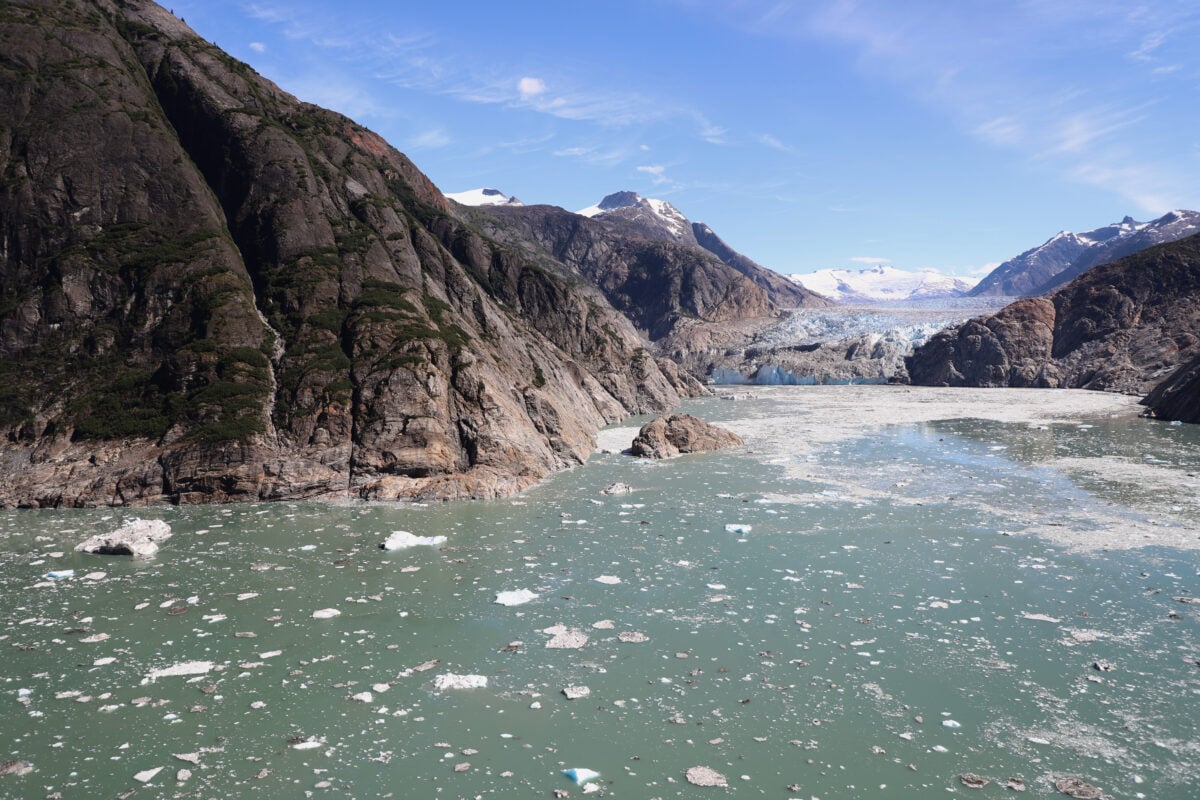
This photo provided by the U.S. Geological Survey looks up Tracy Arm fjord to the terminus of the South Sawyer Glacier about 80 miles southeast of Juneau, Alaska, on Aug. 13, 2025, days after a landslide in the area. (John Lyons/U.S. Geological Survey via AP)
This photo provided by the U.S. Geological Survey looks up Tracy Arm fjord to the terminus of the South Sawyer Glacier about 80 miles southeast of Juneau, Alaska, on Aug. 13, 2025, days after a landslide in the area. (John Lyons/U.S. Geological Survey via AP)
AP- For years, a popular part of many cruises in southeast Alaska has been sailing up Tracy Arm, a long, narrow fjord marked by steep mountains, glittering waterfalls and calving glaciers.
But this season, major cruise lines are skipping it. A massive landslide last summer sent parts of a glacier crashing into the water, generated a tsunami and pushed a wave high up the opposite mountain wall. Several companies opting out cited safety concerns with the still-hazardous slopes.
“Tracy Arm is the majestic princess, you know, she is the queen of fjords,” said travel agent Nate Vallier.
The destination cruise and tour companies have chosen as an alternative — nearby Endicott Arm and Dawes Glacier — is “still beautiful by any means, but it’s just not the same,” he said.
Tracy Arm, southeast of Juneau, is a roughly 30-mile (50-kilometer) fjord that features two tidewater glaciers — the North and South Sawyer — and wildlife, including seals and bears.
Early on Aug. 10, 2025, a landslide originating high on a slope above the toe of the South Sawyer, near the head of the fjord, sent water surging more than a quarter mile (more than half a kilometer) up the mountain wall opposite the slide and out Tracy Arm.
No ships were in the fjord, officials said, and no deaths or injuries were reported. But kayakers camped on an island near where Tracy and Endicott arms meet had much of their gear swept away by the rushing water.
Southeast Alaska, largely encompassed by a temperate rainforest, is no stranger to landslides. And while it’s long been known the fjord network in the Tracy Arm region has been susceptible, the slope that failed had not been identified as an active hazard before last summer’s collapse, said Gabriel Wolken, manager of the state’s climate and ice hazards program.
Scientists are working to understand not only what caused the slope to collapse but to understand what other hazards might exist in the fjord, he said.
The area remains unstable, said Steven Sobieszczyk, a U.S. Geological Survey spokesperson. Steep landslide areas continue to change for years after an initial slide, he said by email.
“Continued rockfall and small-scale sliding from the exposed landslide scar are expected and could impact the water, potentially causing a future localized tsunami,” he said.
Major cruise companies, including Holland America, Carnival Cruise Line and Royal Caribbean said in response to inquiries from The Associated Press that they are replacing a Tracy Arm visit with Endicott Arm. MSC Cruises, Virgin Voyages and regional tour company Allen Marine also are doing Endicott and Dawes Glacier instead. Norwegian Cruise Line said it does not have voyages sailing by Tracy Arm.
Endicott already has been a stop for some ships previously and an alternative when conditions in Tracy Arm, such as excess ice, have been unsafe.
Vallier, who owns the Alaska Travel Desk, said he would have liked cruise companies to give travelers more advance notice about itinerary changes.
After leaving Seattle, the first ships of the season are due April 21 in Ketchikan and in Juneau the following week.
Seeing a glacier — particularly a dynamic, calving glacier — is a bucket-list item for many tourists, and that’s what has made Tracy Arm so popular, he said. While the Mendenhall Glacier in Juneau is a major attraction for the capital city and cruise port, many visitors view it from across a large lake, and it has diminished or entirely retreated from view from some hiking overlooks.
Kimberly Lebeda of Wichita, Kansas, was excited when she booked tickets for a Tracy Arm excursion for her family last year. Lebeda, who researches areas she visits, said she was sold on the scenery.
But the night before the stop, they were told that due to ice in Tracy Arm, they would go up Endicott instead. Her family and others who’d booked the excursion got off the ship and onto a smaller boat with glass windows, abundant seating and snacks. They saw seals on ice floes, waterfalls and “a wall of ice” calve from Dawes Glacier, she said.
She called it “an amazing thing to witness.”
“Was it worth it? Yes, because I don’t know if I’ll ever get to do that trip again,” she said. “Again, I haven’t ever been to Tracy Arm so I can’t really compare. But to me, was it worth it and was it exciting? Absolutely.”