NOTN- Juneau’s got a busy few weeks ahead as the city prepares for the arrival of the 2026 Canoe Journey and continues discussions on the Fiscal Year 2027 budget.
The Central Council of the Tlingit and Haida will welcome canoes ashore Tuesday, June 2, during the 2026 Canoe Journey Landing in Juneau ahead of Celebration.
Community members, families and visitors are invited to gather for the event.
One landing is scheduled for 1 p.m. at the Áak’w Kwáan Landing at the Auke Village Recreation Area. Parking at Auke Rec is limited, and shuttle service will run from the University of Alaska Southeast between 11 a.m. and 3 p.m.
A second landing is planned for 2 p.m. at the Huna Totem Corp. lot at Egan Drive and Whittier Street downtown.
Celebration begins June 3-6, held by Sealaska Heritage Institute, the theme this year is “Enduring Strength.”
Several city meetings are also scheduled Wednesday, June 3.
The Juneau Commission on Sustainability will hold a regular meeting at noon via Zoom. The Eaglecrest Board Sales and Communications Committee also meets at noon by Zoom.
Later in the day, The Assembly Finance Committee will meet at 5:30 p.m. in Assembly Chambers, with participation also available through Zoom and YouTube livestream, this is ahead of the June 8 Assembly meeting, which city officials say is the final opportunity for public input on the proposed Fiscal Year 2027 budget before adoption.
On May 20, the Assembly Finance Committee adopted nearly $4.7 million in proposed reductions to the budget. The reductions included cuts to partner agency grants, capital projects, city services and the restricted budget reserve.
The Assembly also introduced four ordinances May 27 that would amend the city’s Sales Tax code and generate additional tax revenue.
Those ordinances will also be discussed during the June 8 meeting.
The Assembly must adopt a final budget by June 15.
Juneau’s Assembly Finance Committee is staring down a major budget deficit for fiscal year 2027.
They inched their way through a long night of budget cutting at a work session last night, trimming around the edges while sparing some of the city’s most debated programs.
Finance Director Angie Flick warned the city cannot afford to end the year in the red.
“You should be projected to be at zero at worst case scenario,” Flick told the committee, “I think my predecessor and the prior city manager had some conversations with the assembly at the time and suggested $5 or $7 million as a fund balance, and that was based on the spending and the projects that the assembly liked to do. When I went back and looked over the last three years, I would, if I were making a recommendation based on your past to predict your future, I would say you would want $11 to $12 million in your fund balance. There were some significant general fund dollars that went to support the school district when it was in need, there’s been significant one-time dollars that have gone to flood fighting, and then there have been other community priorities that the body has decided to fund, and so you know, based on how the body has approached spending in the past, that would be the kind of fund balance that I would suggest. I think the real pressing concern that’s going to be hard to get around, would be flood fighting as we move forward, and that’s just going to be a tricky one to deal with.”
The current draft budget uses about $8 million in fund balance to cover operating costs, leaving Juneau projected at negative $1.7 million in unrestricted fund balance. Even if a package of fast‑tracked sales tax changes passes, that only improves the outlook modestly.
Members were split over strategy.
Some pushed for deeper cuts now and said they were aiming to leave roughly $5 million in fund balance. Others favored relying more on one‑time project cuts until they know whether new revenue measures or fall ballot initiatives will pass.
In terms of action taken, prior to the June 8 public hearing, members voted 5-4 to cut $75,000 a year from the city’s landscape budget.
Assembly member Neil Steininger was one of those who objected to the cuts saying, “I feel like when we just call this the landscaping budget, it’s kind of a misnomer, because so many other things fit in there. This is a parks maintenance budget, it’s not the flowers downtown, it is not beautification landscape, it is safety considerations, it is cleanliness, it is all of those things. I don’t think when people hear landscape budget they think about trail maintenance. I think it’s an important thing that we spend money on to keep Juneau safe.”
Supporters, said the cut will make residents more aware of what those services cost.
The Assembly also approved a $261,000 recurring cut to the Juneau City Museum, staff said this will mean two layoffs and reduced public access.
Members also voted 5-4 for a one‑time $300,000 cut to the city’s grant for the Juneau Economic Development Council.
A $300,000 cut to staff travel and training was rejected.
Assembly members rejected a deeper, one‑time $250,000 cut to the Affordable Housing Fund, but later agreed to a smaller $150,000 reduction. Several members argued this is the wrong time to pull back on housing dollars.
“It is very hard for me to look at our actions and look at our process and look at where we are trying to go, and the things that people have said no to for cuts, speaking to the importance of their value to the community, and then turn around and say that we can afford a cut like this to the affordable housing fund.” Said Assembly member Alicia Hughes-Skandijs, “It does not make sense to me that rationale.”
The Assembly also kept a subsidy in place for Bartlett Regional Hospital’s home health and hospice program, while directing Bartlett to cover a separate, one‑time $247,000 substance use treatment grant for Gastineau Human Services.
They also approved a $20,000 one‑time cut to the city’s accessory dwelling unit grant program and voted to eliminate general fund support for the Jensen‑Olson Arboretum.
The Assembly declined to reduce funding for the Juneau Arts and Humanities Council or the Small Business Development Center.
A proposal to lease out the Douglas Fire Station failed after the fire chief warned it would worsen the island’s insurance rating and emergency response.
Committee members repeatedly emphasized that none of the reductions are final.
“These are not final decisions, what we are trying to do tonight is come to a holistic budget that we can pass to the full Assembly so that the public can get one more opportunity to give us feedback on it.” Said Finance Director Christine Woll, “Nothing is set in stone until we vote as a full Assembly on June 8.”
A complete budget, including any service cuts and use of savings is expected to go to the full Assembly and the public for a final vote June 8.
NOTN- Juneau’s city officials are still weighing cuts to city services, new debt for infrastructure and a major change to sales tax rules as they work to close a nearly $12 million dollar budget deficit.
After a nearly five-hour finance committee meeting last night, officials began prioritizing a list of possible reductions. The work will shape the budget the Assembly expects to pass by the deadline on June 15.
Still under consideration are cuts to destination marketing through Travel Juneau, economic development funding for the Juneau Economic Development Council, potential closure of Mount Jumbo Gym, reduced hours or closure of the City Museum, and cuts to arts and culture funding through the Juneau Arts and Humanities Council.
Some of the most controversial ideas have been taken off the table for this year, including closing one of the city’s pools, the field house and the Treadwell arena. Those facilities will instead be supported with city savings which will be a short-term solution.
“Those were the ones that we had heard lots of public feedback on.” Said Finance Director Christine Woll, “Closure of the ice rink is no longer in consideration. I will say, everyone on the assembly acknowledged we can get away with not making those cuts this year, but that’s because we have a lot of money in savings, and so using our savings to fund those facilities will not work much for longer than a year.”
The Assembly is also considering up to two bond proposals for the ballot, Woll said, one for improvements to aging school facilities and another for water and wastewater infrastructure. She said general obligation bonds are appropriate only for capital projects and must be approved by voters.
“With approval from the taxpayers, the city does have a good amount of debt capacity and one piece I’ll add to that is, we would only use debt for Capital Projects, right? So the idea is you would borrow money so you can improve something or build something, and then pay it back over time, as opposed to taking on debt to operate something into the future.” Woll said, “So the Assembly is looking at putting up to two bond proposals on the ballot. We haven’t decided yet, but basically we’re looking at taking on debt for some improvements to our aging school facilities, as well as our water and wastewater infrastructure. So those in my opinion, good projects for debt.”
The Assembly plans a public hearing June 8, the same day many budget decisions are expected, and is accepting email comments at boroughassembly@juneau.gov. Woll urged residents to weigh in on the tax cap and potential service cuts as soon as possible.
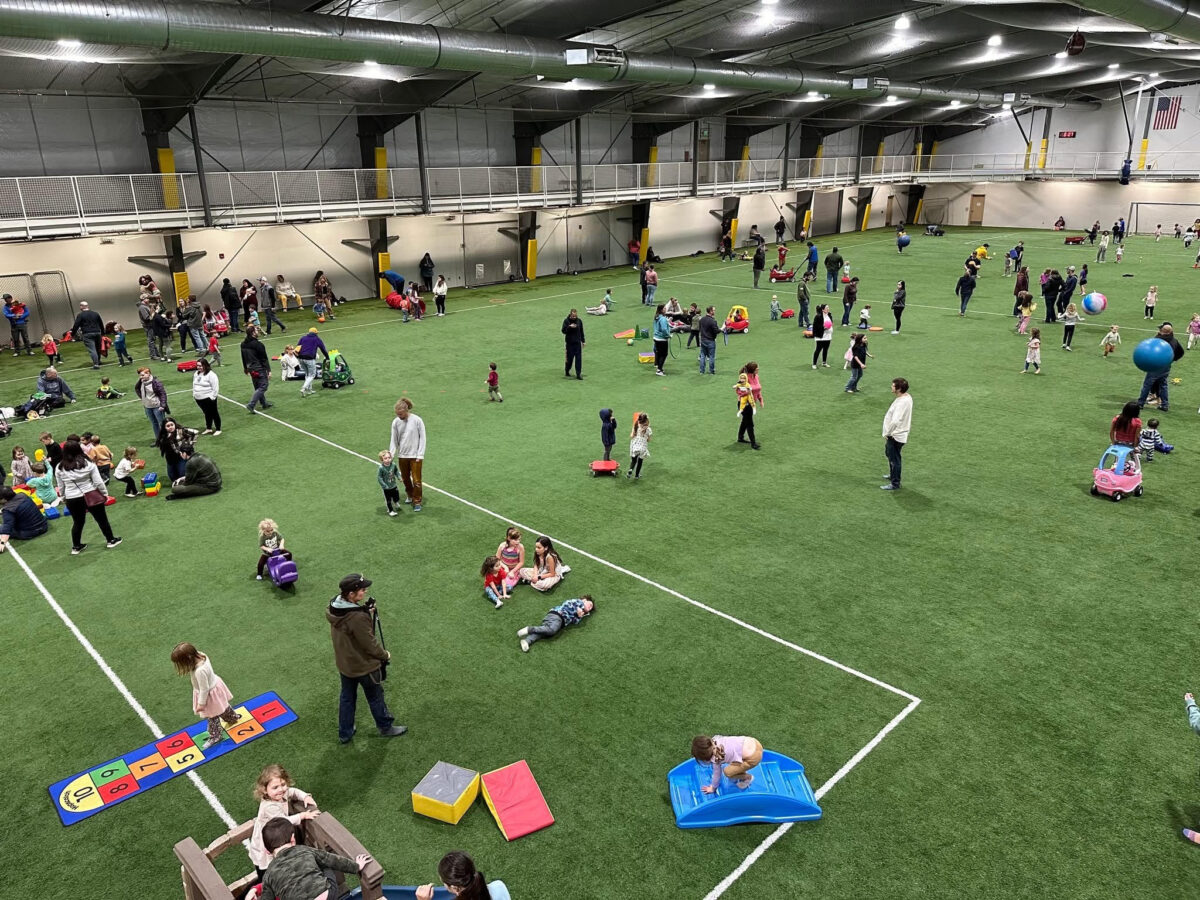
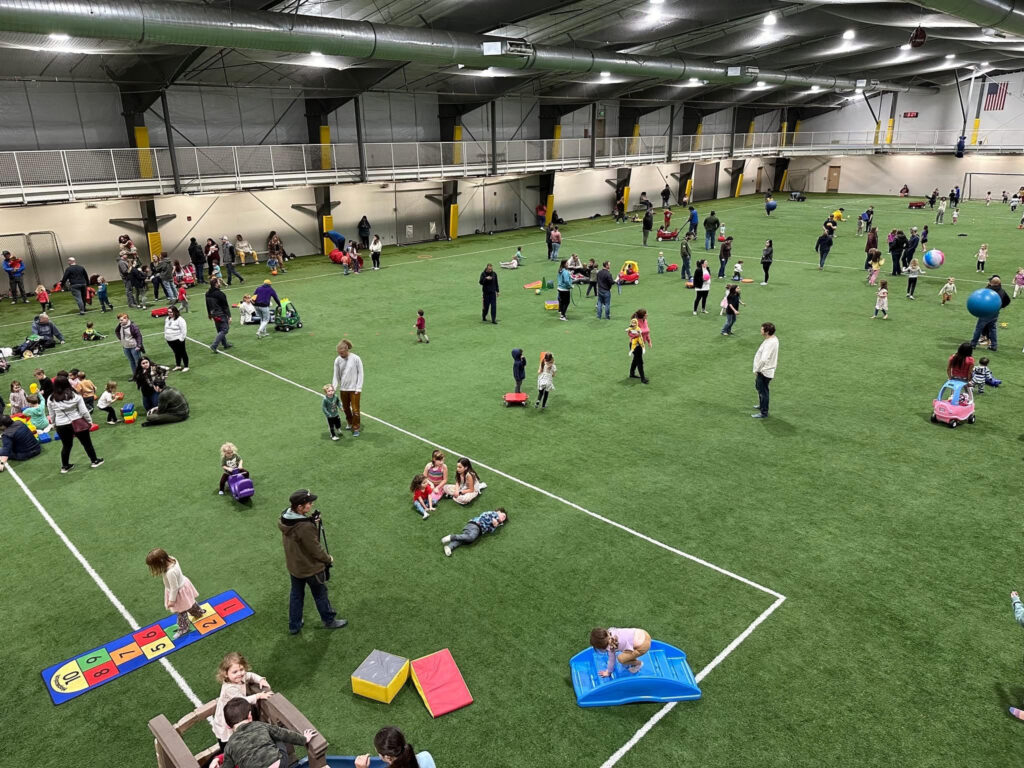
Family Fun Night at Dimond Park Field House, photo courtesy of Juneau Parks and Recreation
NOTN- The Juneau Assembly held a special budget listening session last night as the city faces a steep drop in revenue following last fall’s municipal election.
Assembly and staff said voter-approved changes, including a property tax mill rate cap and new sales tax exemptions on essential food and residential utilities. have created a larger-than-expected budget gap.
“As I’m sure most of or all of you know, we’re in a difficult position of having to come up with a balanced budget after significant revenue loss.” Finance Chair Christine Woll said, “People are paying less in taxes, which is a good thing. The flip side is we have less resources available to fund city services.”
Finance staff now project roughly a $14 million reduction in sales tax revenue heading into fiscal year 2027.
The Assembly is searching for $2-4 million in service cuts and potential new revenue.
“No question, there’s reduced revenue, but we’re really trying to be measured in how they approach it, which means you will be hearing from us and having this conversation over the course of two years, and you’ll get very tired of it, but expect us to be in this conversation of, ‘how do we live within our means for a couple of years?’ Because he certainly wants to make sure that it’s done thoughtfully and with lots of engagement.” Said City Manager Katie Koester.
Public testimony at the listening session focused largely on protecting Parks and Recreation services, including the Treadwell Arena, Diamond Park Field House, pools, and the Jensen-Olson Arboretum.
Testifiers told heartwarming stories about their experiences, memories and use of these city facilities emphasizing to the assembly their importance to Juneau life year round but especially during long winters like this one.
“I understand that the city has some tough decisions to make regarding funding, and while fields, playgrounds and a field house may not seem vital parts to our community, I’m here to tell you they are.” Said one testifier, Lexi, “Parks and Rec is vital to the Juneau community because it organizes sports for youth to participate in, without the high price tag of club teams. It also provides facilities that youth can play organized or pick up games. Any large cuts to Parks and Rec will substantially hurt the youth of Juneau, the parents that support them and the adults that still feel like they’re youths on the field.”
Residents argued those facilities are critical to Juneau’s physical and mental health, youth opportunities and community retention, especially through long winters.
“I made the possibly questionable decision to start playing hockey at 59 years of age.” Said testifier Kieth, “Since I started I have found a community that is incredible. What’s important to our community is what’s going to keep young people and families here in Juneau, and I’m afraid that recreation opportunities are underestimated in their value there. It’s hard to quantify. People make decisions about whether they’re going to stay here or not based upon what kind of opportunities there are. There’s a wide range of people that I’ve met there, from all across the community that I would never have met before, spans all generations. And during the dark, wet winter months, it’s always light and dry, well lit. And so, I just think it’s a very important place to maintain and I hope we can keep the full funding for the for the rink.”
Some speakers urged the city to raise or revisit certain tax exemptions, while others called for expanded use of user fees, volunteers, and public‑private partnerships rather than deeper cuts to specific city entities.
“Maintain existing services within your existing revenue stream. I don’t think that you ought to adjust taxes, particularly sales tax. I do think that reasonable adjustments to fees are acceptable to users, if they enjoy the service that you’re providing, or the community is providing, then they ought to pay for those and they should understand that we’re in tough times.” Said testifier Don.
Assembly members repeatedly warned, that even with strong public support, some services are still likely to be reduced as they work to balance the budget over the next two years.
Budget discussions will continue, with more public input opportunities expected before the city passes next year’s budget.