NOTN- Juneau residents will see higher water and sewer bills starting today.
The City and Borough of Juneau says utility rates will increase by five percent on July 1 as part of a series of annual rate adjustments approved by the Assembly through 2029.
City officials say the increases are intended to help fund utility operations and major infrastructure projects, including replacement of aging drinking water wells, pipelines, wastewater handling systems, and water pump stations. Crews are also currently working on improvements at Cope Park.
Fee increases will also take effect for a variety of Parks and Recreation Services.
The city says the increases are to reflect increased operational expenses and decreased city general funding.
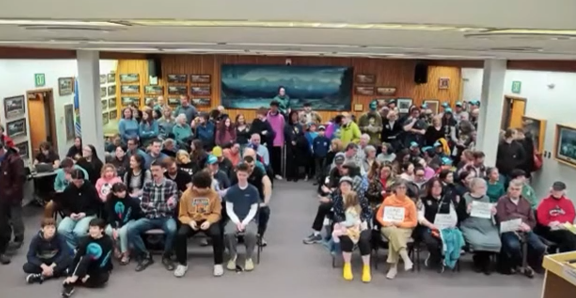
Juneau residents pack Assembly Chambers to give public testimony on CBJ’s proposed Budget cuts, photo courtesy of CBJ.
NOTN-Residents packed a special Assembly meeting last night to oppose proposed cuts to city recreation facilities, warning that closures would damage public safety, youth development and the community’s quality of life.
“‘I’ve got some serious questions about the budget as proposed and how it actually balances livability.” Said one testifier, Brock.
The hearing focused on the city manager’s draft budget, which lists possible reductions to parks and recreation services, including the closure of one of Juneau’s two public pools, the Treadwell Ice Arena, and the Dimond Park Field House. City officials have emphasized the list is preliminary and intended for discussion, not a final set of cuts.
“Speaking in favor of the Juneau Douglas City Museum, my wife and I volunteer there, as do many, many other people, thousands of hours a year.” Said one testifier, Ed, “We provide a lot of information for visitors, capital tours, walking tours, the museum itself. When you lose a museum, you lose history. When you lose your history, you screw up the future.”
Speaker after speaker, including parents, children, seniors and former officials, urged the Assembly to keep the facilities open.
“‘Name me a better return on investment for the well being of Juneau than our pools in a community like ours, surrounded by water and defined by our connection to it. Access to safe, welcoming aquatic spaces is not a luxury. It is a necessity. Public Pools provide a place where people of all ages can come together, stay active and build community on any given day. Young children are being taught how to swim. Senior citizens are participating in low impact exercise. Athletes are using the gym. Parents like me are maintaining social connections. It is a shared space that strengthens the fabric of our town. For family, these pools are essential.” Said Connor, testifying in support of Parks and Rec.
Residents urged continued funding for the field house and ice arena, saying they are heavily used indoor venues that provide affordable recreation during long, dark winters.
“I’m here tonight as a social worker and advocate, and most importantly, a mother, because the people most affected by these proposed cuts are often the least able to attend in person late at night meetings.” Said Joanna, testifying on behalf of Parks and Recreation programs, “The proposed elimination of community services is not a minor budget adjustment. These are not luxuries. They are essential public infrastructure. What is most disappointing for me personally is not just the threat of cuts, but the lack of thoughtful understanding behind them.”
Some residents accused city leaders of, what they characterized as poor fiscal decisions, including spending on a new city hall and the troubled Eaglecrest gondola project.
“Mayor, City Manager, you’ve got to listen to the public. I was someone that worked for you that told the truth. I tried to go to a November assembly meeting. You made me leave.” Said KC Kregar, who has previously been trespassed from City Hall, according to a story by KTOO, he also came to discuss safety issues at Eaglecrest. “You’ve spent hundreds of thousands of dollars on a now dead gondola project. You spent millions of dollars of the community’s money not having a plan, and now you think this community is going to accept you taking away their recreational facilities.”
Some also warned that reductions to core services could drive working families away and erode trust in local government.
“Yes, our community faces some difficult decisions. But our solutions cannot be simply to take an ax to all the things that make this community wonderful.” Said Cheryl.
A few days prior to the special assembly meeting, Assembly member Nano Brooks posted to his Facebook with his own reduction proposals.
“It breaks my heart to see people pleading for recreation facilities. People are sad, people are scared and you all deserve better.” He wrote.
An assembly finance meeting took place directly following the swathes of public tesimony.
Members reviewed two lean budget options for Eaglecrest Ski Area, both designed to avoid another year of deficit spending.
At the Assembly’s request, the Eaglecrest Board and staff returned with a “bare minimum” budget built around the ski area’s traditional $930,000 general fund subsidy, and a separate, broader budget that would need about $1.68 million from the city but is the lowest level board members say can realistically support operations next winter.
Board members said the $930,000 option technically balances on paper but would cut staffing by 56%, trim operating days from about 86 to roughly 66, and shorten hours to 9 a.m.-3 p.m. all season and eliminate in‑house food service. Eaglecrest staff warned that would leave the mountain unable to reliably open lifts, respond to breakdowns or maintain safety.
Acting general manager Erin Lupro said the higher-subsidy plan still cuts staffing around 44% and keeps shortened hours, but preserves just enough capacity to run the hill, pursue a private food-and-beverage concession and continue long‑range planning the Assembly has requested.
In a split decision, the Finance Committee directed staff to calculate the cost of effectively mothballing Eaglecrest, which essentially means keeping facilities maintained but not operating, while leaving enough staff to plan for a future relaunch. Some members opposed even studying closure, but others said they need those numbers before deciding on any subsidy level.
“At some point, we’re going to be moving some stuff, we’ve got a long list for final decision.” Said Finance Chair Christine Woll, “I move that we direct somebody, and I would think this would be city staff and Eaglecrest staff, to work together to bring us back the cost for keeping Eagle Crest warm. When I hear that we can’t operate Eaglecrest at the same level of taxpayer funding that’s been going into Eaglecrest, I just have to know what the cost, if we were to not operate Eaglecrest, but maintain our infrastructure so that when a new plan for Eaglecrest arises, we can pick it back up. I think that will be expensive, but it’s hard for me to imagine justifying spending twice as many dollars of taxpayer support on Eaglecrest, given all of the feedback that we’ve gotten.”
No final decisions were made. Eaglecrest’s budget, along with youth grants and other items, remains on the committee’s pending list as the Assembly continues work on the fiscal 2027 budget.
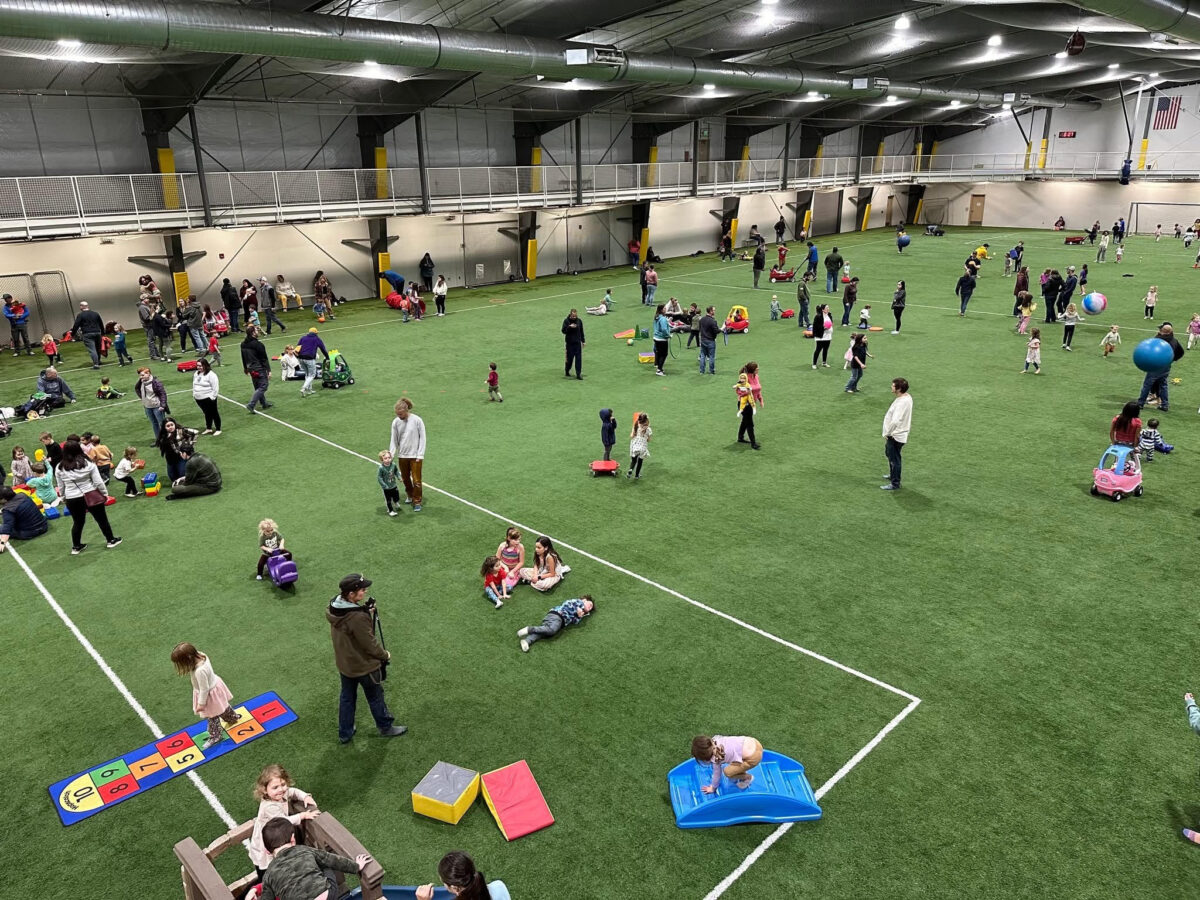
Family Fun Night at Dimond Park Field House, photo courtesy of Juneau Parks and Recreation
NOTN- The Juneau Assembly held a special budget listening session last night as the city faces a steep drop in revenue following last fall’s municipal election.
Assembly and staff said voter-approved changes, including a property tax mill rate cap and new sales tax exemptions on essential food and residential utilities. have created a larger-than-expected budget gap.
“As I’m sure most of or all of you know, we’re in a difficult position of having to come up with a balanced budget after significant revenue loss.” Finance Chair Christine Woll said, “People are paying less in taxes, which is a good thing. The flip side is we have less resources available to fund city services.”
Finance staff now project roughly a $14 million reduction in sales tax revenue heading into fiscal year 2027.
The Assembly is searching for $2-4 million in service cuts and potential new revenue.
“No question, there’s reduced revenue, but we’re really trying to be measured in how they approach it, which means you will be hearing from us and having this conversation over the course of two years, and you’ll get very tired of it, but expect us to be in this conversation of, ‘how do we live within our means for a couple of years?’ Because he certainly wants to make sure that it’s done thoughtfully and with lots of engagement.” Said City Manager Katie Koester.
Public testimony at the listening session focused largely on protecting Parks and Recreation services, including the Treadwell Arena, Diamond Park Field House, pools, and the Jensen-Olson Arboretum.
Testifiers told heartwarming stories about their experiences, memories and use of these city facilities emphasizing to the assembly their importance to Juneau life year round but especially during long winters like this one.
“I understand that the city has some tough decisions to make regarding funding, and while fields, playgrounds and a field house may not seem vital parts to our community, I’m here to tell you they are.” Said one testifier, Lexi, “Parks and Rec is vital to the Juneau community because it organizes sports for youth to participate in, without the high price tag of club teams. It also provides facilities that youth can play organized or pick up games. Any large cuts to Parks and Rec will substantially hurt the youth of Juneau, the parents that support them and the adults that still feel like they’re youths on the field.”
Residents argued those facilities are critical to Juneau’s physical and mental health, youth opportunities and community retention, especially through long winters.
“I made the possibly questionable decision to start playing hockey at 59 years of age.” Said testifier Kieth, “Since I started I have found a community that is incredible. What’s important to our community is what’s going to keep young people and families here in Juneau, and I’m afraid that recreation opportunities are underestimated in their value there. It’s hard to quantify. People make decisions about whether they’re going to stay here or not based upon what kind of opportunities there are. There’s a wide range of people that I’ve met there, from all across the community that I would never have met before, spans all generations. And during the dark, wet winter months, it’s always light and dry, well lit. And so, I just think it’s a very important place to maintain and I hope we can keep the full funding for the for the rink.”
Some speakers urged the city to raise or revisit certain tax exemptions, while others called for expanded use of user fees, volunteers, and public‑private partnerships rather than deeper cuts to specific city entities.
“Maintain existing services within your existing revenue stream. I don’t think that you ought to adjust taxes, particularly sales tax. I do think that reasonable adjustments to fees are acceptable to users, if they enjoy the service that you’re providing, or the community is providing, then they ought to pay for those and they should understand that we’re in tough times.” Said testifier Don.
Assembly members repeatedly warned, that even with strong public support, some services are still likely to be reduced as they work to balance the budget over the next two years.
Budget discussions will continue, with more public input opportunities expected before the city passes next year’s budget.
NOTN- Juneau’s Parks and Recreation Department has a full slate of programs this winter, even as city officials prepare for difficult budget decisions that could affect long-term funding.
Mark Wheeler, recently appointed director of City and Borough of Juneau Parks and Recreation, said as the City and Borough of Juneau continues discussions on its upcoming budget, funding remains the department’s biggest challenge.
“Our biggest constraints are funding with our budget.” said Wheeler, “If you care about parks and Rec, we would love to have your voice be heard.”
Parks and Recreation operates multiple facilities and programs across the community, and future citywide cuts could force some difficult decisions.
The city will roll out a three phase public engagement process to better understand community priorities, facing next fiscal year.
“We are doing a public process, we will try and figure out what we need to know from the residents and how they can engage with us about these services and other things that are going to be affected by the budget cuts.” Said Juneau Mayor Beth Weldon, “So what we hope to achieve is basically gathering community input to have a deeper understanding and depth of knowledge of our CBJ services.”
In January, residents can expect an online survey, with QR codes distributed throughout the community for easy access.
The final phase will involve in-person engagement, featuring small interactive workshops, limited to 25 participants each for deeper discussion as well as a community listening session where citizens can testify about the budget.
Even facing the upcoming funding challenges, the department is promoting several winter offerings designed to keep residents active through Juneau’s bitter cold this December, including its winter recreation pass.
The Parks and Recreation winter pass is available for $200 and provides unlimited access through March 31 to city pools, the Treadwell Arena, the Dimond Park Field House and the Mt. Jumbo Gym. Wheeler described the pass as one of the department’s best values.
“It’s a great bargain,” he said.
Parks and Recreation staff are also encouraging residents to follow the department online for updates on programs, facility schedules and upcoming events as the season progresses.
NOTN- The Juneau Assembly spent its Saturday retreat examining an estimated $11 million budget shortfall, Mayor Beth Weldon said it will take one to two years to fully understand as the city assesses the effects of recent voter-approved ballot measures.
“This is just an estimate because it will take us a year or two to figure out exactly what the ramifications of the ballot measures are, good or bad.” Weldon Said.
According to Weldon, about $4.4 million of the projected deficit is considered one-time cost.
The Assembly directed the manager to split reductions between delaying capital projects, including a planned waterfront museum, and pushing back one year of planned street work funded through the 1% temporary sales tax.
The remaining $6.6 million is tied to recurring costs. Weldon noted that additional financial pressures remain, including school district funding questions and outstanding police and fire labor contracts.
“To give people an idea of how big that is, when we did our priority list budgeting, all of our recreational facilities, everything together was $6 million. So we’re looking at some definitely cuts in service.” She said, “And on top of that, we also have to keep in mind that we have to have funding for glacial lake outburst floods and we have to have contracts out there for police and fire.”
To address the recurring shortfall, the city said it will tighten budget assumptions, such as eliminating long-vacant positions and delaying the launch of new programs, increase revenue, primarily through higher dockage fees and begin service reduction.
“We’re looking for community input on this, because this is where the community is going to feel it.” Weldon said.