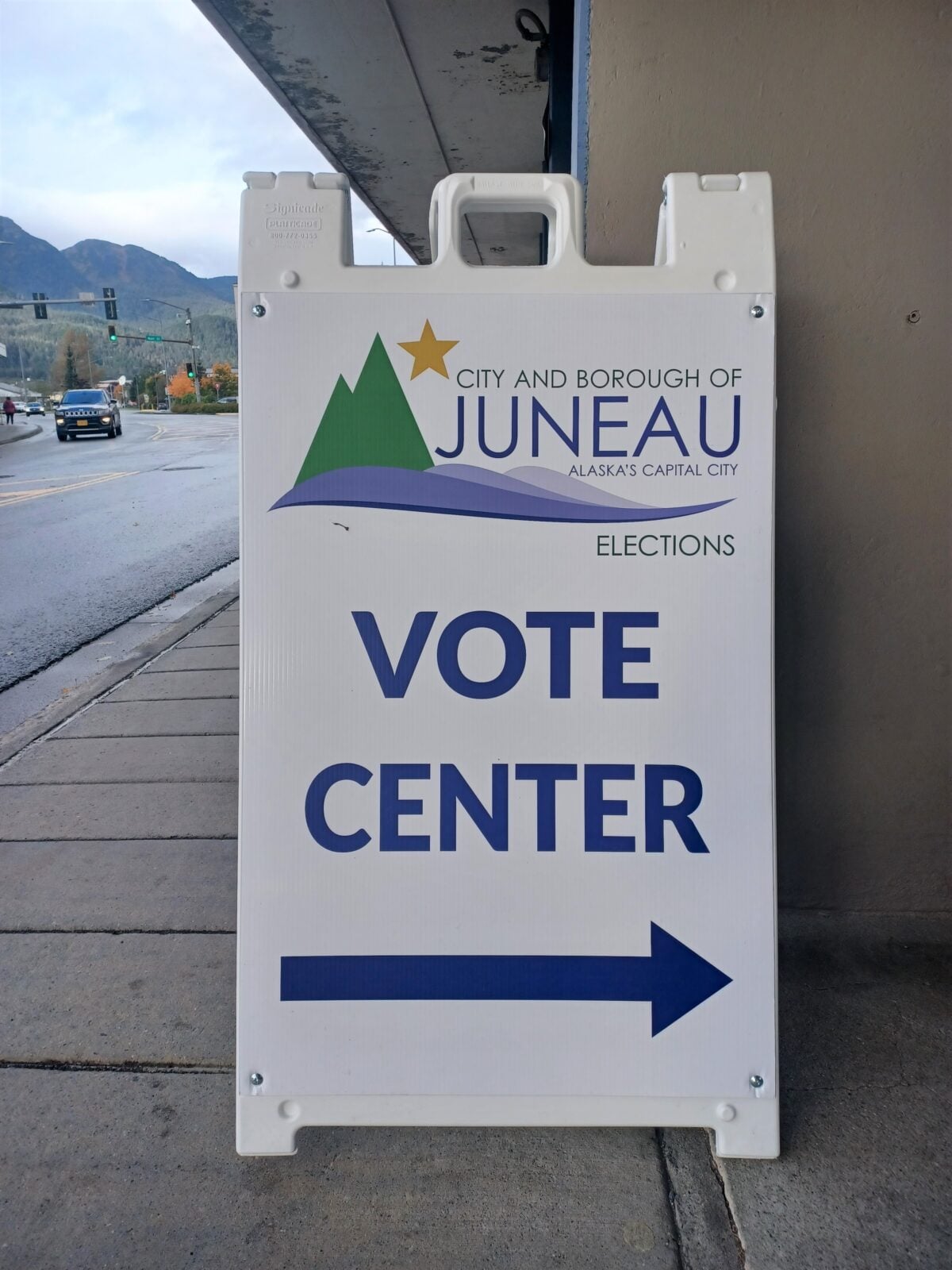
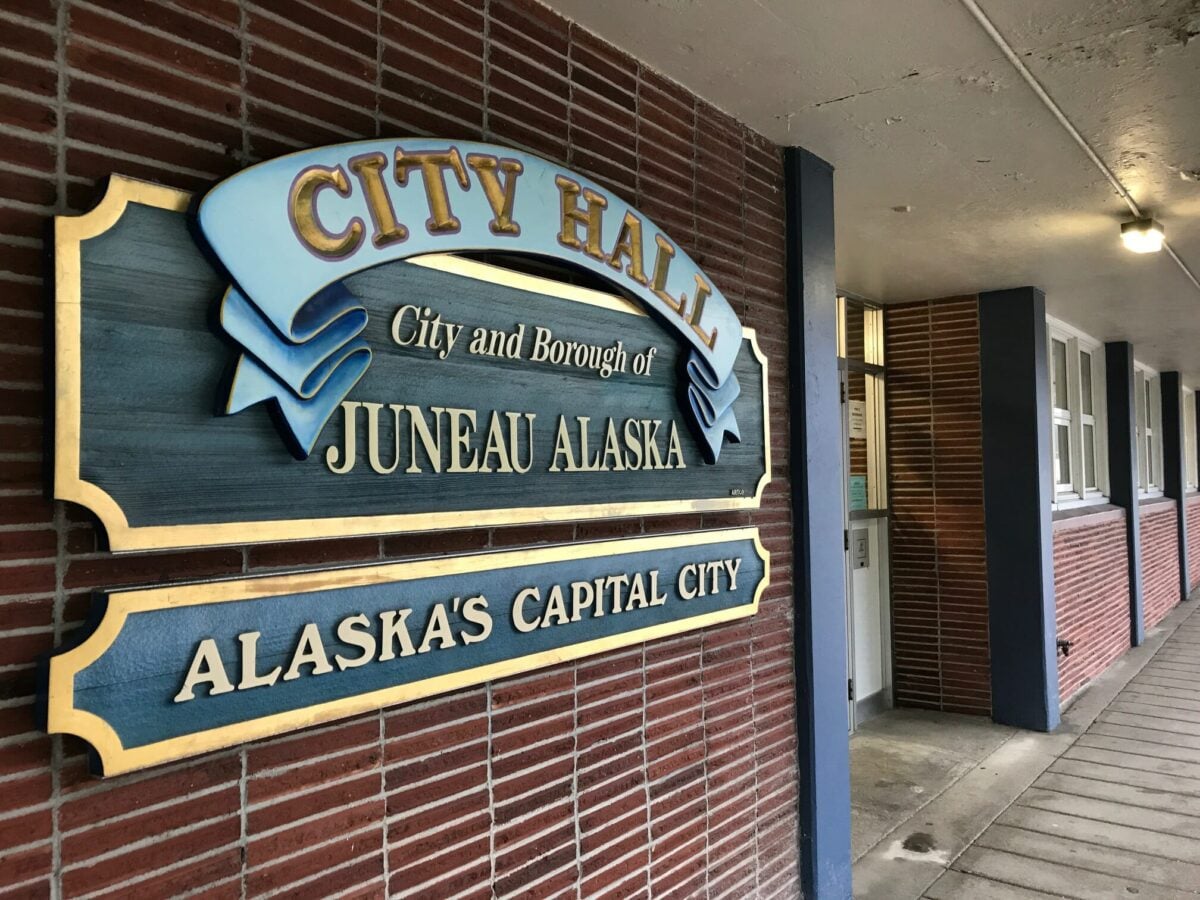
CBJ- The Municipal Clerk has certified the proposed Mill Rate Cap Charter Amendment Petition as sufficient under the requirements of the CBJ Charter. The petitioners’ committee submitted petition books containing 2,986 signatures, and after review and verification by the Clerk’s Office, the petition met the required threshold of 2,566 certified signatures.
The Certification of Petition has been issued and is available on the CBJ Elections webpage. Unlike initiative petitions, charter amendment petitions are not subject to Assembly action following certification. Pursuant to the CBJ Charter, the proposed Charter Amendment will be placed directly before the voters at the next regular election.
The Mill Rate Cap Charter Amendment will appear on the October 6, 2026 Municipal Election ballot.
For petition documents, certification materials, and the latest petition status updates, visit the CBJ Elections webpage or contact the Municipal Clerk’s Office at 907-586-5278 (Option 1).
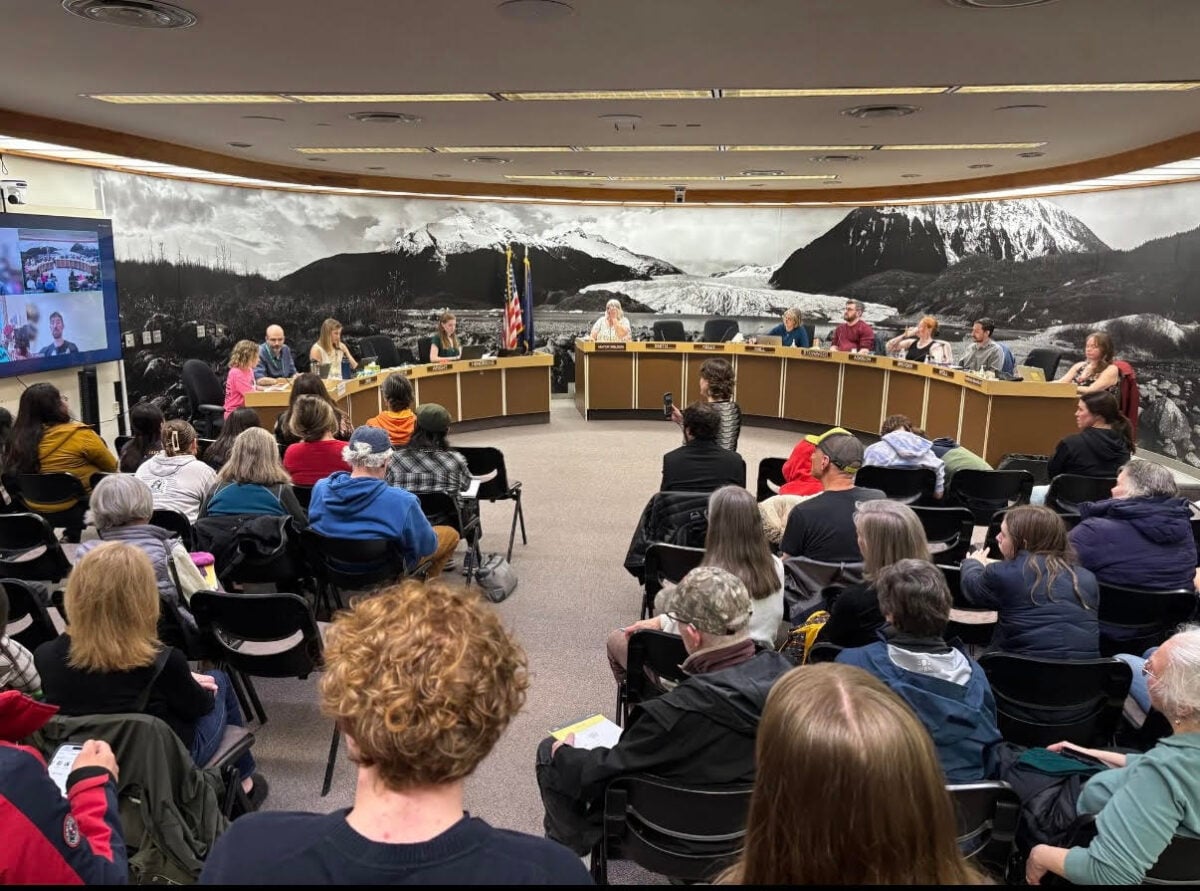
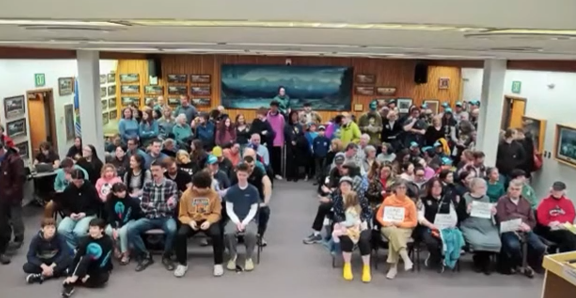
City Hall packed with Juneau residents ready to testify on the FY27 budget, courtesy of CBJ
NOTN- The Juneau Assembly held an extensive meeting last night on the FY27 budget, it was also the last opportunity for public testimony.
During the meeting, city leaders moved ahead with a strained city budget that still trims popular services, including reduced funding for the Juneau Douglas City Museum, the closure of Mount Jumbo Gym, reduced funding for Travel Juneau and Jensen Olsen Arboretum.
It does however preserve both pools, the Diamond Park Fieldhouse and the Douglas Fire station.
Early in the evening officials approved a major change to the city’s sales tax code, raising the cap on single-item purchases to $50,000.
The final version also keeps a lower effective cap in place for most vehicle purchases.
“The situation that we find ourselves in is drastic.” Said Finance Chair Christine Woll, “If we pass the budget that we have put forward tonight, we will have passed a balanced budget, but only because we have eliminated all of our savings to do so. And next year we will look at a $7 million deficit that we will have not have savings to fill.”
Woll warned that without new revenue, the city could be forced to consider closing pools, Eaglecrest Ski Area, the city museum and other services next year.
The Assembly also passed separate measures to tax more onboard cruise ship sales, end a $30 online filing credit for businesses, and advanced debate on repealing a sales tax exemption for travel agent commissions, which small tour operators say would amount to double taxation.
Public testimony earlier in the meeting again targeted the planned $9 million demolition of Telephone Hill, with residents urging the Assembly to redirect that money to schools, housing and cultural institutions instead.
“I urge the assembly to take the $9 million that has been earmarked for the demolition and site work of Telephone Hill and diverted into something that the people want and need, that money belongs to the people of Juneau, and we should get a say in how it is used.” Said Joshua Adams.
Before passage of the FY 2027 budget, residents turned out in force to defend the Juneau‑Douglas City Museum.
“At a time when indigenous land acknowledgements are being removed from public places across the country, this assembly chooses to read one at the start of every meeting. By doing so, you honor a vital part of Juneau’s history, but we must ask ourselves, are we just talking the talk, or are we willing to walk the walk? Just as families cherish their history through heirlooms and photos, our community preserves our identity through the Juneau Douglas City Museum.” Said testifier Jean Mcbride.
Residents warned that deep staff cuts would “devastate” programs, erode public trust and jeopardize thousands of volunteer hours and donated artifacts.
“We’ve all been to the City Museum, and we all love the City Museum. Why in the dickens are you cutting half of its operating budget?” One testifier, Chuck Cohen said, “It doesn’t make any sense. It’s a very small percentage of a very large budget, and we have to get rid of the main director of the museum and the person responsible for public participation, that’s public participation by our children and by ourselves. I think you folks are very short-sighted.”
An effort to fully restore museum funding failed.
“I know that it’s not a large amount. I don’t know how much of an impact it will have, but I don’t feel right asking the community to give up so much.” Said Assembly Member Nano Brooks.
Members “begrudgingly” as Woll put it, passed the roughly $545 million budget, but they still did not meet their goal to cut $2 million in costs.
“I don’t want to make this cut. I don’t, I believe everything everyone said about what the impact will be long term for the museum, even if we want to live in a world where we get to bring the City Museum back, the same thing’s going to happen with Travel Juneau and Eaglecrest, they are going to suffer for the cuts that we are, right now, planning on making to them.” Woll said, “Our fund balance right now is one bad sales tax quarter away from having no funds to deal with our expenses, let alone a major natural disaster or other disaster, and we live in an uncertain world, and that’s what our fund balance is for.”
In a separate 5-4 vote, the Assembly also rejected a to shift $360,000 in marine passenger fees away from security and restroom costs at two private cruise docks and into a seawalk expansion project.
Some members argued cruise companies already collect enough in dock fees to cover those services and said residents don’t understand why the city isn’t “getting more benefit from the industry”
The Assembly moved ahead with a lower property tax rate, the long-term capital improvement plan, and several flood and wastewater projects backed by state revolving fund loans.
“This ordinance sets the mill rate at 9.29” Said City Manager Katie Koester.
With flood season approaching, officials are inviting residents to a public flood preparedness open house tonight, as they weigh costly long‑term protections for riverfront neighborhoods.
Representatives from the U.S. Army Corps of Engineers, the City and Borough of Juneau, the National Weather Service and the Central Council of the Tlingit & Haida Indian Tribes of Alaska will meet with residents at 6 p.m. at Thunder Mountain Middle School to discuss risks and answer questions.
Officials said they are moving ahead on a “midterm solution” while reinforcing existing defenses this year, but warned that conditions and plans continue to shift.
The city expects annual maintenance for temporary Hesco barriers could run $6 million to $12 million, a cost that could drop if sheet piling is installed as a stronger, permanent river reinforcement.
CBJ- The City and Borough of Juneau Assembly is nearing the end of the Fiscal Year 2027 budgeting process. Below is an update on the budget actions that took place last week, as well as the next steps required before the Assembly’s June 15 deadline to finalize the budget.
The Assembly reviewed, discussed and took action on 21 proposed expenditure reductions to get to a final budget for FY2027.
The nearly $4.7M in reductions includes a combination of one-time and recurring reductions to partner agency grants, capital projects and CBJ services and programming, including:
$770,000 in cuts to Partner Agency Grants
Reductions to Travel Juneau, Juneau Economic Development Council, the Alaska Committee and Alaska Heat Smart
$1M in cuts to Capital Projects
The Gastineau Avenue Widening & Turnaround project
$507,1000 in cuts to CBJ Services, Operations and Programming
Operational reductions to the City Museum, Parks & Recreation’s Landscaping division and Arboretum, and Administration.
$2.7M in cuts to the Restricted Budget Reserve
$247,000 added as a one-time subsidy to Gastineau Human Services through Bartlett Regional Hospital
These reductions are not final. They were included in the amended FY2027 budget and moved to the June 8 Assembly Meeting. The public can provide testimony at the June 8 meeting before the Assembly adopts the final budget.
The Assembly Finance Committee also took action on the following:
An ordinance establishing the Mill Levy (9.92 mills including debt service) for property taxes was moved to the June 8 Assembly Meeting for public hearing and adoption.
CBJ’s independent auditors will provide the FY25 Audit Presentation, including their findings and recommendations. The Assembly will also discuss the proposed sales tax ordinances and general obligation bonds on schools and utilities. There will be an update on the Cost Allocation Plan.
The Assembly will host its final public hearing on the FY 2027 budget. To testify, participants can come to the Assembly Chambers and sign-up. For remote participation, testifiers will need to call the Clerk’s Office at 907-586-5278 by 4 p.m. on the day of the meeting and indicate the topic they will speak on.
The Assembly will make any needed amendments and adopt a CBJ Budget Ordinance, Mill Levy Ordinance and Capital Improvement Project Resolution (as amended).
Juneau residents pack Assembly Chambers to give public testimony on CBJ’s proposed Budget cuts, photo courtesy of CBJ.
NOTN-Residents packed a special Assembly meeting last night to oppose proposed cuts to city recreation facilities, warning that closures would damage public safety, youth development and the community’s quality of life.
“‘I’ve got some serious questions about the budget as proposed and how it actually balances livability.” Said one testifier, Brock.
The hearing focused on the city manager’s draft budget, which lists possible reductions to parks and recreation services, including the closure of one of Juneau’s two public pools, the Treadwell Ice Arena, and the Dimond Park Field House. City officials have emphasized the list is preliminary and intended for discussion, not a final set of cuts.
“Speaking in favor of the Juneau Douglas City Museum, my wife and I volunteer there, as do many, many other people, thousands of hours a year.” Said one testifier, Ed, “We provide a lot of information for visitors, capital tours, walking tours, the museum itself. When you lose a museum, you lose history. When you lose your history, you screw up the future.”
Speaker after speaker, including parents, children, seniors and former officials, urged the Assembly to keep the facilities open.
“‘Name me a better return on investment for the well being of Juneau than our pools in a community like ours, surrounded by water and defined by our connection to it. Access to safe, welcoming aquatic spaces is not a luxury. It is a necessity. Public Pools provide a place where people of all ages can come together, stay active and build community on any given day. Young children are being taught how to swim. Senior citizens are participating in low impact exercise. Athletes are using the gym. Parents like me are maintaining social connections. It is a shared space that strengthens the fabric of our town. For family, these pools are essential.” Said Connor, testifying in support of Parks and Rec.
Residents urged continued funding for the field house and ice arena, saying they are heavily used indoor venues that provide affordable recreation during long, dark winters.
“I’m here tonight as a social worker and advocate, and most importantly, a mother, because the people most affected by these proposed cuts are often the least able to attend in person late at night meetings.” Said Joanna, testifying on behalf of Parks and Recreation programs, “The proposed elimination of community services is not a minor budget adjustment. These are not luxuries. They are essential public infrastructure. What is most disappointing for me personally is not just the threat of cuts, but the lack of thoughtful understanding behind them.”
Some residents accused city leaders of, what they characterized as poor fiscal decisions, including spending on a new city hall and the troubled Eaglecrest gondola project.
“Mayor, City Manager, you’ve got to listen to the public. I was someone that worked for you that told the truth. I tried to go to a November assembly meeting. You made me leave.” Said KC Kregar, who has previously been trespassed from City Hall, according to a story by KTOO, he also came to discuss safety issues at Eaglecrest. “You’ve spent hundreds of thousands of dollars on a now dead gondola project. You spent millions of dollars of the community’s money not having a plan, and now you think this community is going to accept you taking away their recreational facilities.”
Some also warned that reductions to core services could drive working families away and erode trust in local government.
“Yes, our community faces some difficult decisions. But our solutions cannot be simply to take an ax to all the things that make this community wonderful.” Said Cheryl.
A few days prior to the special assembly meeting, Assembly member Nano Brooks posted to his Facebook with his own reduction proposals.
“It breaks my heart to see people pleading for recreation facilities. People are sad, people are scared and you all deserve better.” He wrote.
An assembly finance meeting took place directly following the swathes of public tesimony.
Members reviewed two lean budget options for Eaglecrest Ski Area, both designed to avoid another year of deficit spending.
At the Assembly’s request, the Eaglecrest Board and staff returned with a “bare minimum” budget built around the ski area’s traditional $930,000 general fund subsidy, and a separate, broader budget that would need about $1.68 million from the city but is the lowest level board members say can realistically support operations next winter.
Board members said the $930,000 option technically balances on paper but would cut staffing by 56%, trim operating days from about 86 to roughly 66, and shorten hours to 9 a.m.-3 p.m. all season and eliminate in‑house food service. Eaglecrest staff warned that would leave the mountain unable to reliably open lifts, respond to breakdowns or maintain safety.
Acting general manager Erin Lupro said the higher-subsidy plan still cuts staffing around 44% and keeps shortened hours, but preserves just enough capacity to run the hill, pursue a private food-and-beverage concession and continue long‑range planning the Assembly has requested.
In a split decision, the Finance Committee directed staff to calculate the cost of effectively mothballing Eaglecrest, which essentially means keeping facilities maintained but not operating, while leaving enough staff to plan for a future relaunch. Some members opposed even studying closure, but others said they need those numbers before deciding on any subsidy level.
“At some point, we’re going to be moving some stuff, we’ve got a long list for final decision.” Said Finance Chair Christine Woll, “I move that we direct somebody, and I would think this would be city staff and Eaglecrest staff, to work together to bring us back the cost for keeping Eagle Crest warm. When I hear that we can’t operate Eaglecrest at the same level of taxpayer funding that’s been going into Eaglecrest, I just have to know what the cost, if we were to not operate Eaglecrest, but maintain our infrastructure so that when a new plan for Eaglecrest arises, we can pick it back up. I think that will be expensive, but it’s hard for me to imagine justifying spending twice as many dollars of taxpayer support on Eaglecrest, given all of the feedback that we’ve gotten.”
No final decisions were made. Eaglecrest’s budget, along with youth grants and other items, remains on the committee’s pending list as the Assembly continues work on the fiscal 2027 budget.
NOTN-The results are in, residents in Juneau have been helping shape the capital city’s long-term future at “Juneau Futures” workshops and with a community survey.
“Juneau’s had Comprehensive Plans on the books for decades, since the 1900s, so it’s basically a big picture guide that helps us decide where and how to develop, usually, over the next 20 to 30 years.” Said Senior Planner Minta Montalbo, “I think it’s important to keep in mind that the Comprehensive Plan reflects community priorities, and it connects our values and goals with CBJ decision makers, with policies and actions. It’s like a reference point for decisions on how to best use our land and where to focus our resources.”
The effort is part of the “Our Juneau, Our Future” comprehensive plan update, which gathered input through 14 in-person workshops and an online survey aimed at guiding development in Juneau over the next 20 years.
The workshops asked residents 3 major questions, Where should Juneau grow? What does Juneau need to do to prepare for the future? And how should Juneau grow?
According to findings released by CBJ, participants outlined several approaches for where that growth should happen. Many supported investing in central areas like downtown Juneau and Lemon Creek.
Quotes in italics will be pulled directly from CBJ’s results.
Downtown Juneau and Lemon Creek were popular development areas with many participants expressing interest in building activity in and around central Juneau.
Others prioritized established neighborhoods such as the Mendenhall Valley, emphasizing investment near current residents.
Investments should focus on infill and areas with existing infrastructure.
Additional support emerged for developing multiple hubs, including Auke Bay, seen by some as an alternative community center, others pointed to North Douglas as a next step for expansion due to its available land.
North Douglas is the next logical step for development in the next 20 years, and then we can focus on West Douglas.
Across all responses, one issue stood out: housing.
Participants consistently identified it as the community’s top priority, even noting that “everything connects to housing.”
Housing was the most important issue for many participants. While approaches differed, it is clear that Juneau needs more housing solutions.
Respondents also stressed the importance of protecting neighborhoods from natural hazards like flooding and avalanches, and called for diversifying Juneau’s economy beyond tourism.
“Folks are focused mainly on flooding and protecting the homes in the valley, but we’re also hearing renewed discussion about landslide dangers and avalanches, so we’re going to want to be looking at that in the new comp plan.” Montalbo said, “Not surprisingly, housing for all definitely remains a huge priority, and when we’re talking about housing, housing options that suit a variety of needs. And then I think the third biggest category is economic diversification. Again, not a new topic, but we’re hearing a lot of concern about trying to strengthen year round industries, and find a balanced approach to tourism. We want to recognize the economic contribution, but people are also asking that we care for Juneau’s unique small town characteristics at the same time.”
Once participants had decided how Juneau should grow, they were asked to see how their scenario would hold up against future conditions, such as potential increase or decrease in tourism, funding, and natural hazards.
Participants said they expect tourism to increase, while state and federal funding may decline and natural hazards may become more severe.
In workshop scenarios, residents adjusted their priorities accordingly, shifting resources toward housing, hazard mitigation, and economic resilience when faced with those challenges, notably when faced with a decrease in federal funds, participants primarily divested from Remote Area Infrastructure and Waterfront Development, viewing them as non-essential “luxuries” without federal support.
According to the findings particpants felt, “no matter the strategy, growth should consider existing investment, current residents, housing needs, and hazard risk.”