CBJ- The Eaglecrest Board of Directors is pleased to announce the selection of Julie Jackson Piper as the next General Manager of Eaglecrest Ski Area. Piper was appointed to the role at the July 7 Eaglecrest Board special meeting.
“I am excited to welcome Julie Jackson Piper back to Eaglecrest as our ski area’s general manager,” said Brandon Cullum, Eaglecrest Board President. “Julie is the right person to lead our staff, support the board, and help inspire confidence with the Assembly as we move into the 2026/2027 ski season and work to address Eaglecrest’s longer-term sustainability concerns.”
Piper is currently employed as the Recreation Manager for the City of Richland, Washington, where she has served in that role since 2018. Her prior experience includes being the Aquatics Manager for the City and Borough of Juneau and Youth & Community Outreach Coordinator & Snowsports School Supervisor at Eaglecrest. Piper also has a Bachelor of Science in Ski Area Business Management from Northern Michigan University.
“I am honored to join Eaglecrest’s dedicated staff and engaged Board of Directors as we build upon the mountain’s remarkable legacy,” Piper said. “Together, we have an incredible opportunity to strengthen our connection with the community, enhance the year-round mountain experience, and ensure Eaglecrest continues to thrive for generations as we begin its next 50 years.”
Piper will begin her new role on August 31, 2026 and be paid an annual salary of $134,014.40.
The Eaglecrest General Manager is selected and supervised by the Eaglecrest Board. Following an initial applicant screening by the City and Borough of Juneau Human Resources Department, the Board Human Resources Committee interviewed candidates remotely before selecting a finalist for an in-person interview at the Eaglecrest Board meeting last week.
For more information, contact Dallas Hargrave, CBJ’s Human Resources/Risk Management Director, at dallas.hargrave@juneau.gov or 907-586-0225.
NOTN- The Eaglecrest Board will hold a special meeting this afternoon to consider the lone finalist for the ski area’s next general manager.
The meeting will run from 12:30 to 1:30 p.m. and will be held online only through Zoom, with the agenda available on the City and Borough of Juneau’s Civic Clerk webpage.
The finalist? Former Eaglecrest manager Julie Jackson Piper.
Piper previously worked at Eaglecrest from 2009 to 2015 and later managed Juneau’s public pools before becoming recreation manager for Richland, Washington. She was also a finalist for the position in 2024, finishing as the runner-up.
Her potential hiring comes during a challenging period for Eaglecrest, which has faced financial losses, equipment failures and closure uncertainty after the city canceled plans for a new gondola project because of soaring costs.
Currently the City and Goldbelt are discussing a potential partnership such as a long term lease.
Additional information on the meeting and other public meetings is available through the CBJ public meetings calendar.
Eaglecrest, located on Juneau’s Douglas Island, rises above the Inside Passage. (Nathaniel Herz/Northern Journal)
Last winter’s first big storm came in December. Then came another. And another. By New Year’s Day, four feet of fresh snow blanketed the city of Juneau.
For many locals, it was a crisis: Roofs collapsed; boats sank in the harbor.
For Juneau’s fervent alpine skiers and snowboarders, it could have been a godsend.
Except they had nowhere to ski.
During one of Juneau’s snowiest months on record, the city’s only ski area, a beloved, municipally-run mountain called Eaglecrest, was barely operating.
It’s one of Alaska’s biggest ski areas and a reminder that Juneau, a city defined largely by cruise tourism and the state Capitol, is a mountain town, too.
But just after the season started last December, mechanical issues forced a closure of Eaglecrest’s main chairlift. And a water line broke, leaving its two lodges without running water. Aside from a few beginner slopes, the mountain was closed.
“Pretty much anything that could have gone wrong went wrong,” the chair of the ski area’s public board, Hannah Shively, said at a meeting in early January.
The infrastructure failures came after years of deferred maintenance, staff turnover and accusations of mismanagement and underinvestment. And, though the ski area was fully opened by mid-January, its early-season woes may have been an omen: The next time it snows 80 inches in a month in Juneau, Eaglecrest might not exist at all.
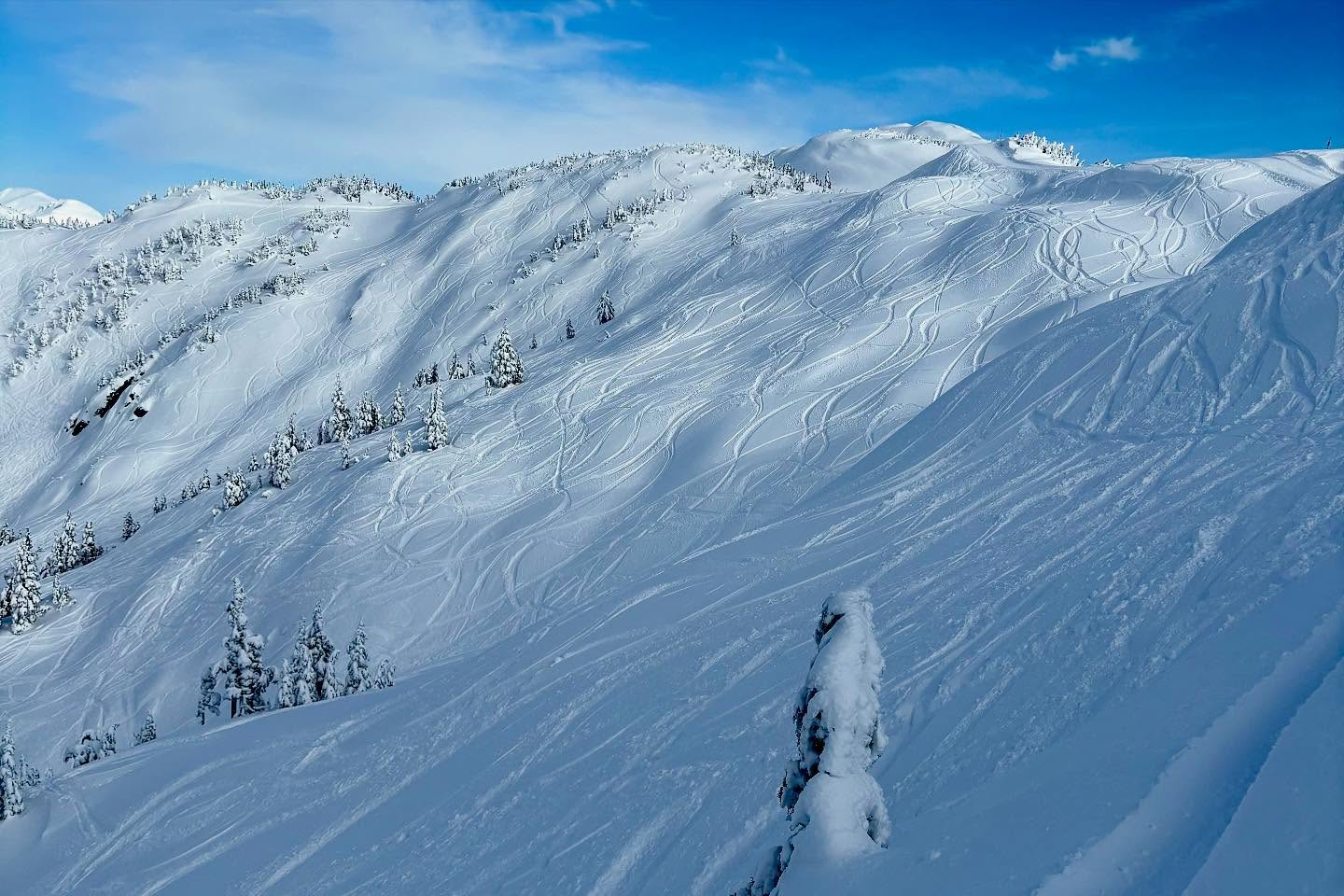
Ski tracks crisscross alpine terrain at Eaglecrest, one of Alaska’s most beloved ski areas. (Eaglecrest Ski Area)
The mountain has operated in the red each of the past four years, with losses totaling some $3 million. Now, it’s at the center of a fierce debate over local government spending, with implications not only for the future of skiing in Juneau, but for the town’s identity.
Some residents say the ski area provides a crucial outlet for outdoor recreation during Juneau’s notoriously gloomy winters, and deserves public funding. Others say the government has effectively run the place into the ground and that the mountain should be privatized.
The Juneau Assembly, which oversees Eaglecrest’s budget, voted this spring to keep the ski area open next season. But it’s allocating $1 million less than what Eaglecrest’s management requested, forcing layoffs and sustaining operations at an “absolute minimum.”
That decision came right after a long-term plan to turn around the mountain’s finances fell through.
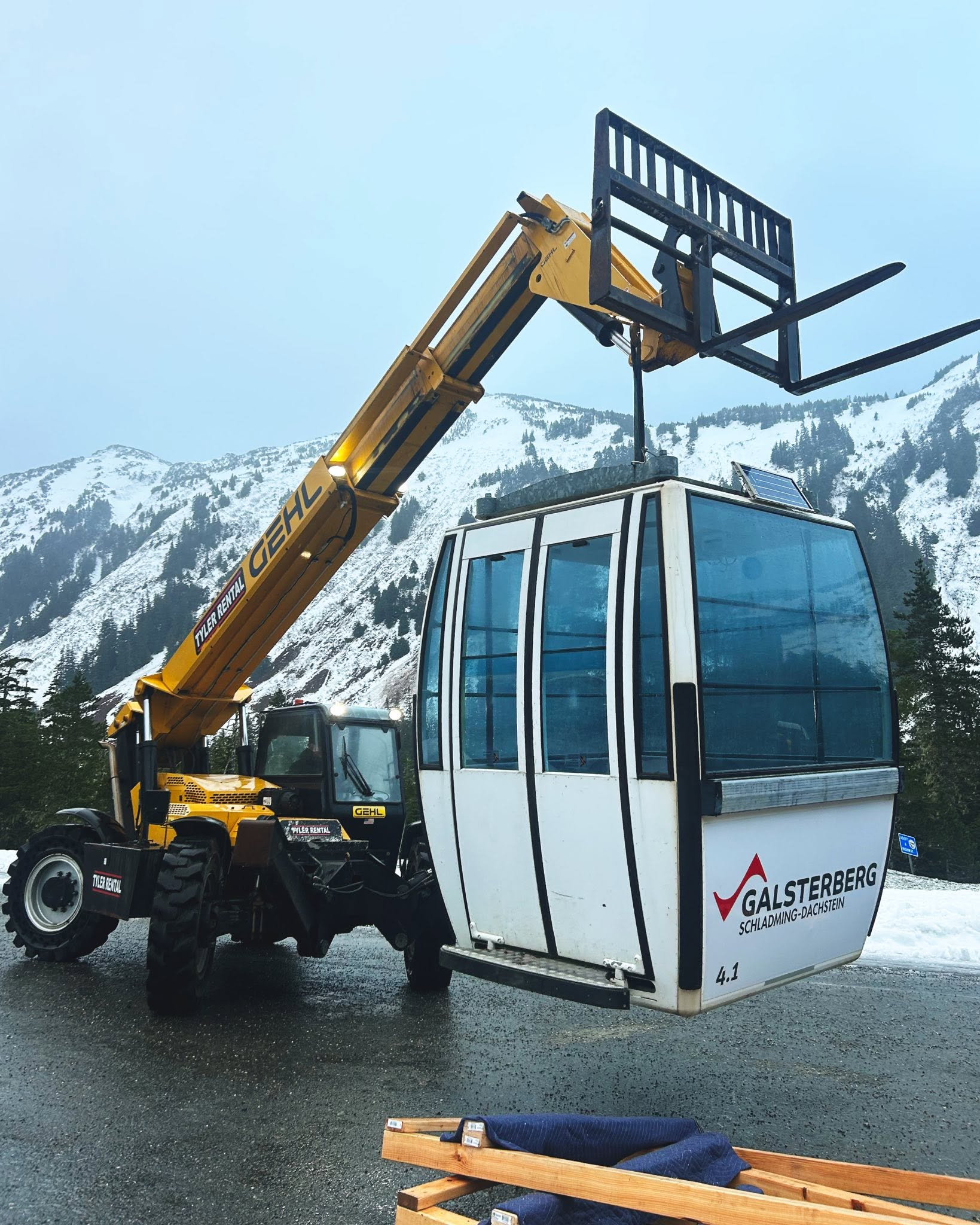
Four years ago, the city bought a used gondola, aiming to install it at Eaglecrest to boost summer tourism and generate enough new revenue to make the mountain profitable.
But after construction delays and a staggering cost increase, officials abandoned the project in May, setting the municipality back millions of dollars. They have yet to present an alternative path forward for the mountain, and there’s no certainty that Eaglecrest will stay open beyond next year.
It’s at the most precarious point in its 50-year history.
“We’re definitely at a threshold, or a turning point,” said Jim Calvin, a longtime Juneau skier and member of Eaglecrest’s board. “It’s an existential issue.”
What “separates” Juneau
One reason Alaska skiers love Eaglecrest is that it’s not a typical ski resort. In fact, it’s not a resort at all, but more like a public park.
Nearly all the big ski areas in North America are for-profit businesses. Some — Vail, Whistler, Park City — are owned by the same big, publicly traded corporation. Others, like Steamboat and Mammoth, are owned by private equity and investment firms.
Eaglecrest, meanwhile, is owned by the City and Borough of Juneau, meaning local taxpayers have been contributing about $1 million to operations annually. That’s about 0.6% of the city’s general operating budget.
This helps the mountain keep prices low: An adult season pass last winter cost $802, or $630 if bought before July. At Alyeska, the state’s largest ski area, in Girdwood, prices were nearly double that: $1,599 for a regular season pass, or $1,049 with an early-bird discount.
Public ownership also has helped Eaglecrest stay oriented around recreation and community rather than luxury hotels and real estate development. There is no Four Seasons on the mountain — nor any hotel, for that matter.
“It’s the one nice thing we have that separates us,” said Sandy Hussain, a Juneau resident who frequents the ski area with her husband and son. “Most cities have libraries. They have pools. They don’t have Eaglecrest.”
Eaglecrest is perched at the top of a dead-end road in the mountains of Douglas Island, a 20-minute drive from downtown Juneau. It was established by Juneau’s ski club in the mid-1970s. Over the years, local taxpayers have approved spending on mountain infrastructure projects through sales tax increases and bonds.
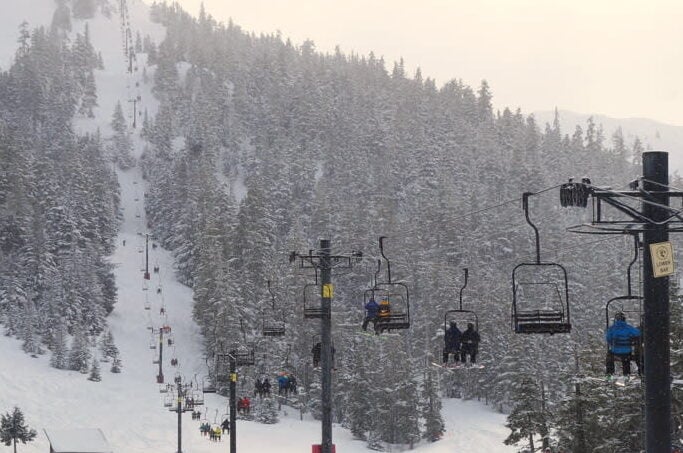
Spread across 640 acres, Eaglecrest has three operating chairlifts and two day lodges. From the parking lot, where skiers tailgate on sunny days, you can ride a lift named Ptarmigan through a spruce-and-hemlock forest to an alpine hut with ocean views. There are groomed runs for beginners, and there’s tree skiing for more advanced skiers. Cliff-lined backcountry areas beckon for experts.
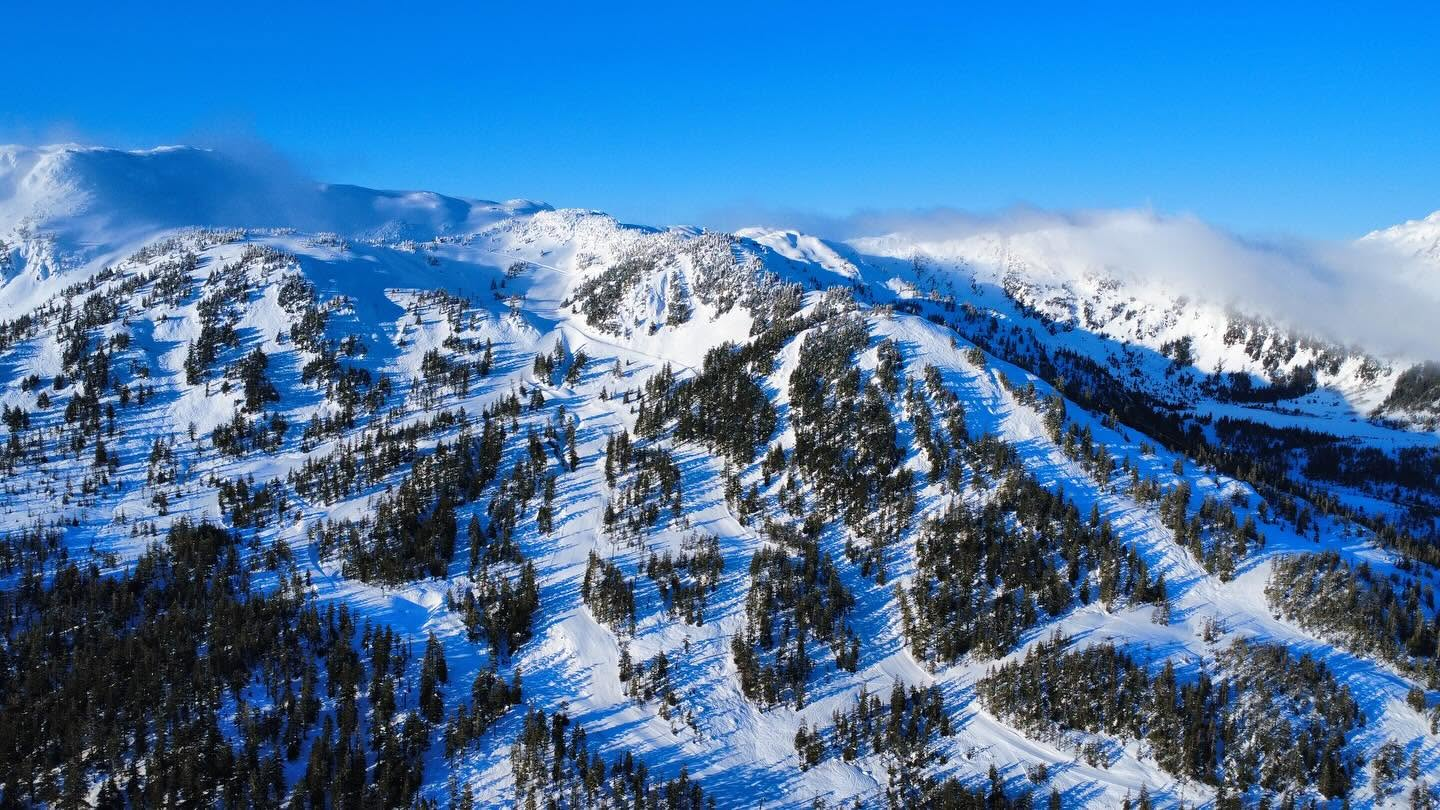
Eaglecrest is known for its diverse terrain. (Eaglecrest Ski Area)
While it’s small, with fewer trails and only half the vertical drop of Alyeska, Eaglecrest is known for its powder days (albeit rain days, too), ocean views and diverse terrain, including “tons of pillows and little spine features,” said Ryland Bell, a professional snowboarder based in Haines, a small town up Lynn Canal from Juneau.
Eaglecrest’s terrain and community vibes stand out internationally, said Bell, who has snowboarded all over the world.
“You’re looking down at the ocean, on all sides, and then all the peaks and fjords and canals. It’s an incredible place,” Bell said. “The town absolutely needs it.”
Juneau residents describe the ski area as a favorite winter gathering spot. People bump into friends in the parking lot; parents catch up at the base lodges while kids take ski lessons.
“There was nothing like that in Juneau that we had found yet,” said Hussain, who moved to the town three years ago in part because of Eaglecrest. “It felt like a very welcoming space, even if you’re not the best skier in the world.”
Her family would move away if the mountain were to close, Hussain said. “That would not be a question.”
Eaglecrest’s woes
Ask Juneau residents about the cause of Eaglecrest’s woes, and you’ll get a range of answers, some entirely contradictory.
One local skier said the dysfunction is mostly the fault of the ski area’s former general manager.
Another said the same general manager was one of the greatest things ever to happen to Eaglecrest and said the ski area declined after his firing.
A third skier: “Everyone in town thinks they’re the general manager of Eaglecrest.”
There is, however, broad agreement on a key cause of the ski area’s struggles: economics. There just aren’t enough skiers in Juneau, with a population of about 30,000, to cover all of the mountain’s costs through lift ticket sales and concessions.
And those costs are going up. Officials have substantially boosted employee pay, which was below Alaska’s minimum wage a few years ago. Plus, maintenance needs are growing as Eaglecrest’s infrastructure ages. Management decommissioned one of the main chairlifts, Black Bear, last year; the other, Ptarmigan, is the one that broke down in December.
“It’s an old ski area, and there are a lot of gremlins in there,” said Bruce Griggs, a longtime Juneau skier.
To offset rising costs, Eaglecrest officials hatched a plan four years ago: The city would buy a used gondola from a resort in the Austrian Alps, ship it to Juneau and set it up on the mountain.
Summer cruise tourists — numbering more than 1 million in Juneau each summer — could ride the gondola to the summit to soak in views or launch hikes.
Ticket sales, in turn, would generate new revenue for Eaglecrest. Goldbelt, the Alaska Native-owned corporation for Juneau and a major player in the local tourism industry, would loan the city $10 million in return for a share of the revenue.
Juneau officials bet that buying a used gondola would save the mountain. The plan fell through this spring. (Eaglecrest Ski Area)
The Juneau Assembly, in a 5-4 vote, approved a plan to buy the gondola for $2 million. Projections at the time showed it would generate enough cash to make Eaglecrest profitable. Supporters said the ski area’s future depended on it.
“This is going to be a true game-changer,” Eaglecrest’s general manager, Dave Scanlan, said in 2023.
Then the plan imploded.
Budget debate, identity crisis
Earlier this year, Jim Calvin, the Eaglecrest board member, made a bombshell announcement at a public meeting: Installing the gondola would cost $27 million, pushing the overall price tag to some $37 million, more than triple early estimates.
“That’s a pretty big gulp factor,” Calvin said at the meeting.
Construction would be more expensive than expected. The gondola needed more parts. And the city would have to pay tariffs on some of those parts, since they’d be coming from Austria.
In response to the cost increase, city officials had to decide whether to scrap the project or find new investors to cover the higher price tag.
At the same time, they were looking for ways to slash spending.
Last fall, Juneau voters passed two ballot initiatives to cut taxes, producing an estimated shortfall of $10 to $12 million — a roughly 8% reduction in the city’s general fund revenue, according to officials.
Among dozens of budget cuts under consideration by the Juneau Assembly this spring was money for public pools, a field house, an ice rink, the city’s library and Eaglecrest.
“We’re trying to make all these big decisions on the city budget, and it makes it really difficult to have the bandwidth to think rationally about the longer term of what we do with Eaglecrest,” Juneau Assembly member Neil Steininger, a former state budget director, said in a May interview.
Without the funds to pay for the gondola project at its new price, officials decided to abandon it. The city now must repay Goldbelt’s original loan, plus interest, costing taxpayers some $9 million.
The project’s failure was “a hit in the public eye” for Eaglecrest and has made it harder for Juneau officials to justify further investment in the ski area, said Christine Woll, a Juneau Assembly member and chair of its finance committee.
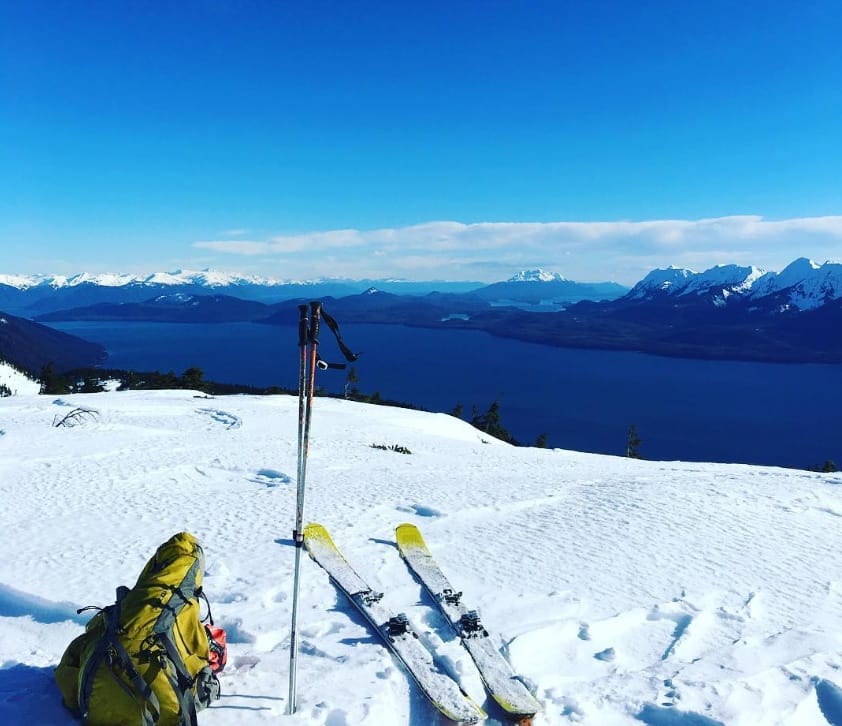
Looking out from Eaglecrest over Douglas Island. (Eaglecrest Ski Area)
A growing contingent of Juneau residents now think the solution is to hand the mountain over to a private investor who, in theory, could spend tens of millions of dollars to upgrade ailing infrastructure and develop summer tourism.
Among those residents is Dave Hanna, a local skier and longtime Eaglecrest supporter. He has lost faith in city ownership because critical maintenance on the mountain has lagged recently, he said — and officials, in his view, botched the gondola project.
“It’s been steadily going downhill the last couple years,” Hanna said.
He thinks boosting summer tourism — by developing a gondola and other attractions — is likely “the only thing that’s going to sustain Eaglecrest.”
Hanna supports privatizing Eaglecrest, but only if it can remain affordable for local residents, he said.
“I think there’s a lot of folks that have always believed the city could afford to maintain the area,” Hanna added. “And, finally, they’re waking up and smelling the coffee.”
Hanna is affiliated with the group, Affordable Juneau Coalition, that pushed the tax cuts last year, and he’s been on the opposite side of the broader fiscal debate from Juneau Assembly members like Woll.
He thinks the Assembly is looking in the wrong places to cut spending. Eaglecrest’s future, in his view, is contingent less on the city’s current budget than on its management of the mountain.
For Woll, though, the budget issue has created a real challenge for Eaglecrest.
In her ideal world, the city would keep funding the ski area along with other services facing cuts, she said.
But given the city’s fiscal realities, it’s “hard to justify” spending on Eaglecrest at the level it needs right now, in contrast with “essential services” like housing, Woll said.
Woll isn’t sure about a long-term solution. “I want the answer very badly,” she said.
While officials try to figure out a path forward, the ski area is raising lift ticket prices to help offset losses. A season pass will be about 10% more expensive next year, but still considerably less than at many other U.S. ski resorts.
Calvin, the Eaglecrest board member, said ski area officials will be looking for investors but will continue to ask city leaders for funding until Eaglecrest can “wean” itself off municipal support.
“It will just take time,” he said.
In the meantime — for another year, at least — Juneau’s skiers will still have a place in winter to zoom downhill and hang out with friends. Assuming, of course, nothing breaks before the next big storm.
Northern Journal contributor Max Graham can be reached at max@northernjournal.com. He’s interested in any and all mining related stories, as well as introductory meetings with people in and around the industry.
This article was originally published in Northern Journal, a newsletter from Nathaniel Herz. Subscribe at this link.
NOTN- The major topic discussed at the Committee of the Whole meeting last night was proposed changes to governance at Eaglecrest Ski Area, which has struggled for years with operational instability and deferred maintenance.
Juneau Mayor Beth Weldon said she introduced an ordinance that would shift the Eaglecrest board from an empowered governing body to an advisory role under a newly established City and Borough of Juneau Eaglecrest Recreation Area Department. The change would give the city more direct oversight over operations and capital investments.
“My ultimate goal is to try to save Eaglecrest. If anybody knows my history, both my kids grew up in Eaglecrest. In fact, my youngest son continued ski racing in college.” She said, “Eaglecrest is a great place to learn how to ski, but they have struggled with operational instability and management challenges for many years. So this tells me there’s a structural problem.”
She emphasized that the proposal is not a reflection on the current board, but rather an effort to ensure the ski area’s long-term survival.
“Currently, the board that we have is a very strong board, but despite having more year-round staff than ever before, Eaglecrest has still struggled with basic ski operations, amplified by long-term neglect of equipment and deferred maintenance.” Said Weldon, “And I think in order for Eaglecrest to survive, it needs a little shake-up, and the only shake-up we can really do is to have more city oversight.”
Without additional city control, Weldon warned, major repairs may not be financially feasible.
A joint meeting is scheduled for early March between the city’s Committee of the Whole and the Eaglecrest board to address these proposals and gather further input.
“We’re going to have a joint meeting where we’ll sit and talk to the Eagle Crest board, and then I think a couple weeks later, it’ll be back in front of the Committee of the Whole and we can decide what we change.” Said Deputy Mayor Greg Smith, “I’ve heard a lot about it. It shows how much people care about Eaglecrest.”
The emergency shelter at Centennial Hall closed this morning after days of continuous operation during the avalanche and evacuation advisories, with city officials and relief organizations offering thanks to the staff and volunteers who provided round-the-clock support for more than 50 displaced residents.
The shelter was opened last Friday as a precaution for the elevated avalanche risk, and volunteers and staff worked hard to create a safe place to stay for community members affected by evacuation advisories. Operations were supported through a partnership between the City and Borough of Juneau, the American Red Cross of Alaska, Juneau Arts and Humanities, and numerous volunteers.
“The Red Cross is the sheltering partner for this disaster,” said Britta Tonnessen, community disaster program manager with the American Red Cross of Alaska in a statement release on social media by CBJ, they were also able to accommodate pets through collaboration with Juneau Animal Rescue.
The shelter remained open 24 hours a day throughout the advisory period, staffed by volunteers and professionals who coordinated meals, sleeping arrangements and general care for the community..
“We’re continuing to actively monitor the avalanche risk and all the slide pass in close partnership with the DOT.” Said emergency Manager for CBJ, Ryan O’Shaughnessy, “Right now, we believe that the risk is acceptable for folks to return to their homes.”
Information about ongoing avalanche conditions and emergency preparedness remains available through the City and Borough of Juneau
NOTN- Juneau officials are urging residents living within the Behrends avalanche path to continue evacuating and are advising the public to limit activity in the area as avalanche risk remains elevated.
Deputy City Manager Robert Barr said the city continues to recommend that people avoid stopping or parking within the Behrends avalanche path, citing ongoing uncertainty about snowpack stability and limited visibility at higher elevations due to the rainy and windy weather conditions.
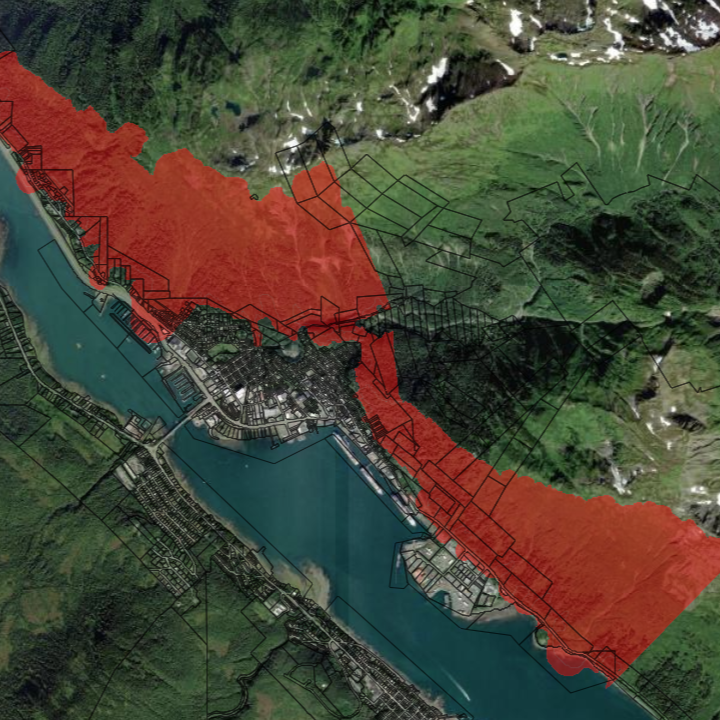
Barr emphasized that the avalanche path shown on CBJ maps represents the maximum modeled extent of a worst-case avalanche event.
“It is important to note that the Behrends avalanche slide path, as shown in the CBJ avalanche maps, represents the maximum extent of the largest model avalanche event, meaning it is unlikely than an avalanche would reach the outer reaches of the map, that includes Egan drive.” Barr Said.
While officials say it is unlikely that an avalanche would reach Egan Drive, emergency planners prepare for the most severe scenario.
“Our emergency programs and responders prepare for the worst.” Barr said, “That means having critical resources staged on both sides of town, as well as having plans for their partners to respond and care for emergency medical transportation and other needs, we also want to make sure that the public has all the information we have so that they can make their own decisions about their potential risk.”
Barr noted that forecasting avalanche risk remains complex, particularly because weather conditions have prevented crews from visually inspecting the snowpack near the top of the Behrends slide path. Barr said information about the volume and stability of snow in the upper reaches of the slide zone is limited.
“Predicting and forecasting risk is complicated and can be an exercise in making decisions with incomplete information.” Barr said.
City teams were monitoring conditions overnight, so far there has been no major release, and the evacuation advisory remains in effect this morning.
Officials said additional information will be shared once crews are able to safely access and visually inspect the snowpack, which could happen later this week depending on weather conditions.
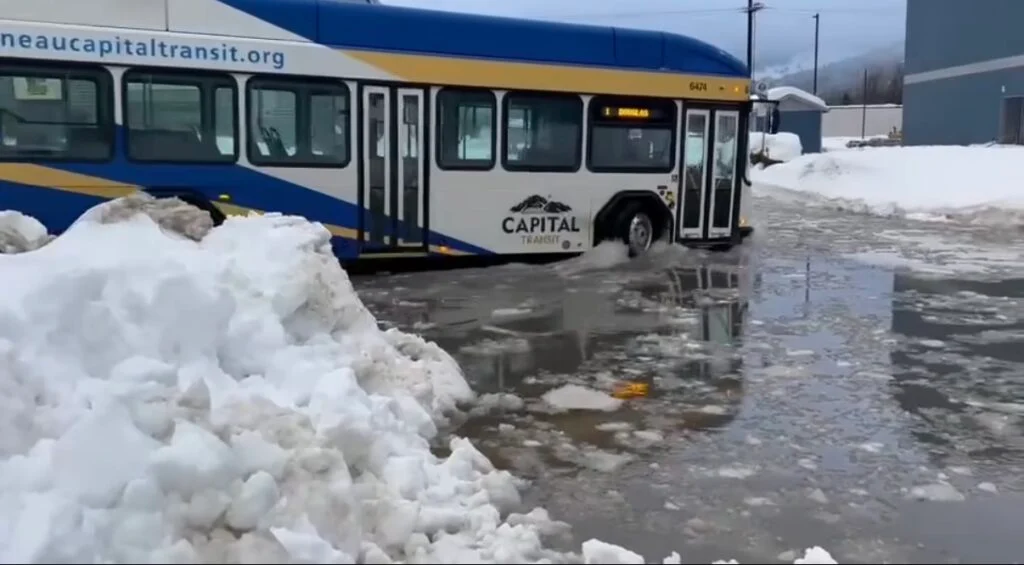
Capital Transit bus, turning through pooling water, photo courtesy of CBJ
NOTN- Most City and Borough of Juneau facilities and schools reopened Monday after crews removed more than 3 million pounds of snow and ice from rooftops across the city, though officials warned that avalanche danger, high winds and heavy rain could create renewed hazards through Wednesday.
Deputy City Manager Robert Barr said city crews and contractors worked through the past week to prepare buildings for safe occupancy.
“We got a lot of work done.” Said Barr, “CBJ teams, our contractors, did a lot getting ready for facilities to reopen. The warming weather, I would say, mostly helped us, but the rain definitely presented some new challenges too. Over the past week or so, our crews and contractors removed over 3 million pounds of snow and ice from our roofs, that work, combined with the work of our engineering team doing all those roof assessments, got us to where we are today.”
All Juneau School District schools and CBJ facilities reopened Monday, except for Mendenhall River Community Schools, which remained closed while contractors complete snow removal from roofs.
City officials are now closely monitoring another weather system expected to move through the panhandle today into Wednesday.
High wind warnings have been issued for much of the panhandle through 9 p.m. Wednesday. Winds are expected to increase rapidly this afternoon, first across southern communities and then moving north. Gusts of up to 70 mph are possible as the front pushes through late today, before gradually decreasing but remaining elevated into Wednesday.
Forecasts also call for two to three inches of rain, conditions that could significantly increase avalanche danger.
“We will be actively monitoring that pattern with our partners at the Weather Service and DOT, and everyone else that’s involved with it so that we can understand what that might mean for avalanche risk. And of course, we’ll communicate that as it as it evolves.” Said Barr.
As a precaution, Thane Road will be closed at the avalanche gates beginning at noon today due to high avalanche hazard. The closure will be re-evaluated at 6 a.m. Wednesday.
Officials warned that if a natural avalanche reaches the roadway, debris removal may not be possible until conditions improve or hazard levels decrease naturally.
Barr thanked residents who reported drainage issues the city, saying the information helped crews clear storm drains and access fire hydrants.
“I want to express appreciation and really thank everyone who has reached out to us, really appreciate people giving us a heads up about where they see that localized flooding or ponding because a storm drains not clear.”
Residents can report more drainage issues or hazards at emergencyresponse@juneau.gov.
Juneau’s emergency declaration issued last week has brought additional assistance from the State Emergency Operations Center. Barr said the state is helping with documentation for potential reimbursement, coordinating with insurance providers, supplying new avalanche monitoring equipment installed Sunday, and supporting drone flights for situational awareness. Helicopter support is planned once weather conditions allow.
Centennial Hall will remain open as an emergency shelter for the foreseeable future, as long as evacuation advisories remain in place.
NOTN- City officials issued a high-risk avalanche evacuation advisory today as worsening weather conditions raised the likelihood of avalanches across all known slide paths.
The advisory, updated at 10:30 a.m., urges residents in at-risk areas to evacuate as increased snowfall, warmer temperatures and several inches of rain forecast at higher elevations are significantly heightening avalanche danger.
Officials stressed that the situation is rapidly evolving and could escalate further as weather conditions deteriorate.
Emergency response crews are staged and prepared to respond in the event of an avalanche at Thane road where DOT was scheduled to close the road at the avalanche gates at noon.
An emergency shelter is available at Centennial Hall, where the American Red Cross is prepared to provide mass care services, including meals, once formally activated. City officials said resources are in place to support evacuees should conditions worsen.
Pet sheltering is also available at Centennial Hall. Juneau Animal Rescue is offering additional emergency pet sheltering through its Safe-Keeping Program, and JAR and KTOO have created resources to help pet owners prepare for emergencies.
“‘It’s a substantial portion of downtown.” Said Deputy City Manager Robert Barr, “Downtown is the area that that we’ve been able to map. That doesn’t mean avalanche doesn’t exist elsewhere. folks should just be aware.”
Authorities urged residents to take precautions during the period of elevated avalanche risk, including avoiding travel beneath known avalanche paths, following all road and trail closures, and not stopping in avalanche runout zones. Residents were also advised to closely monitor official alerts and updates.
After storms or avalanche activity, officials warned people to stay clear of debris piles and runout areas and to wait for official reopening notices before resuming normal travel. Any observed avalanche activity should be reported to authorities.
NOTN- All Juneau School District (JSD) schools will be closed today January 9, due to the weather.
A statement was released by JSD yesterday evening saying that for the safety of students, staff and families all classes, meetings and activities are cancelled.
City and Borough of Juneau engineers are continuing to monitor the roofs at CBJ facilities during the closures.
Thane Road will be closed at the avalanche gates beginning at noon today due to a high risk of avalanches. An avalanche advisory for all known slide paths also went into effect yesterday evening, and officials warn that hazardous conditions are expected to intensify over the coming days.
The Alaska Department of Transportation and Public Facilities announced the emergency closure for Thane Road, the closure is scheduled to be re-evaluated at 8 a.m. Saturday.
“The avalanche hazard is expected to remain high over the next few days,” DOT said in their social media post, “If a natural avalanche reaches the roadway, it is unlikely DOT&PF will be able to safely remove the avalanche debris until the hazard can be minimized from mitigation work or once the hazard has decreased naturally.”
At the same time, the City and Borough of Juneau warned that avalanche risk across the Mount Juneau slide paths remains high and is expected to significantly increase over the next few days.
An atmospheric system bringing warmer air and precipitation has raised concerns about destabilizing the deep snowpack that has built up over weeks of heavy snowfall. While the situation does not currently warrant an evacuation advisory, city officials said preparations are underway.
Officials said an emergency alert would be issued if an evacuation advisory is called.
Authorities are continuing to monitor avalanche conditions closely and emphasized that public safety remains the priority.
The city is bracing for heavy rain and potential the for more flooding of roadways and storm drains as an atmospheric river is expected to impact much Southeast Alaska into the weekend, weather officials are saying Juneau will see a transition to rain later today.
Photo courtesy of Mendenhall River Community School
NOTN- Students and staff at Mendenhall River Community School were relocated to Thunder Mountain Middle school today out of an abundance of caution after engineers raised concerns about the snow load on the roof in the gymnasium, according to a statement released by Juneau School District.
According to the statement, engineers conducted a walk-through inspection of the school and initially cleared the building for occupancy. However, during a second inspection the recommendation was made to relocate students and staff to TMMS.
District officials said all students and staff are safe.
Students were transported by school bus with their classes and teachers to TMMS, where families can pick them up after 1 p.m.