







Categories
Alaska News Featured Juneau News juneau Juneau Local Juneau Local Ketchikan Local News Feeds Sitka Local

Alaska Senate advances resolution asking federal policymakers to protect visa programs

By: Haley Lehman, Alaska Beacon
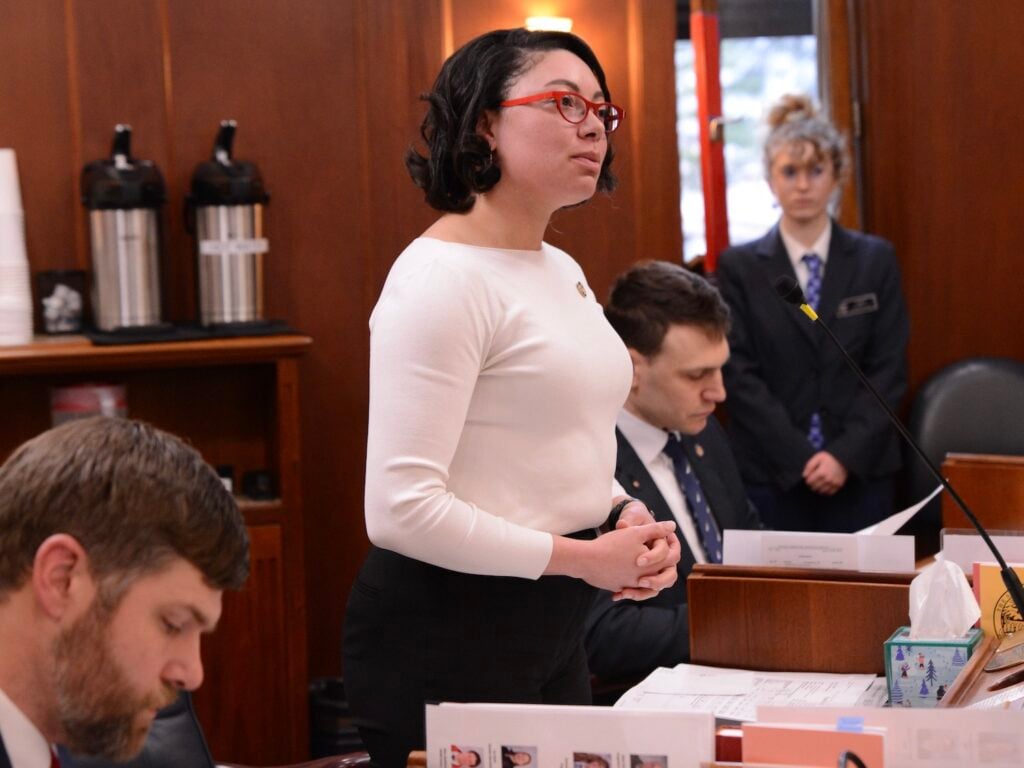
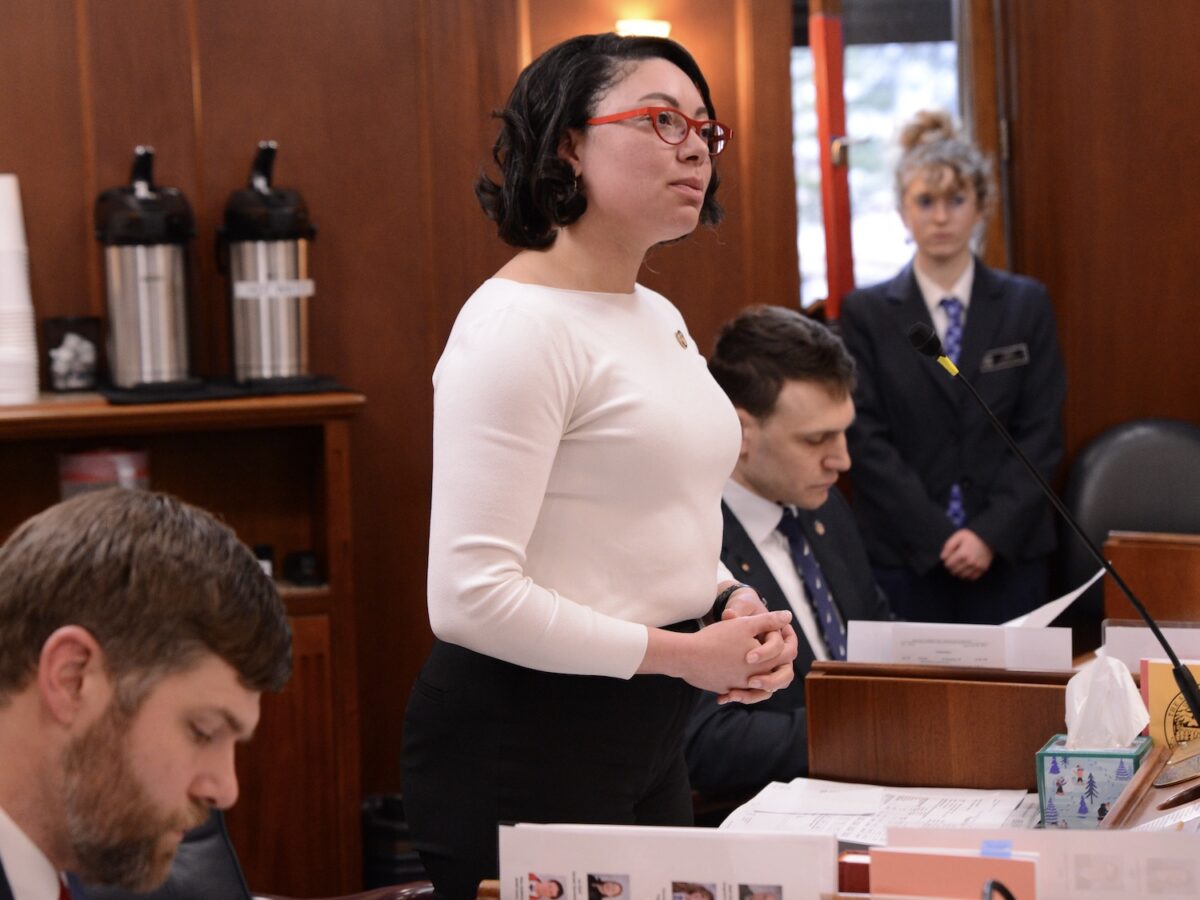
Sen. Loki Tobin, D-Anchorage, speaks in the Alaska Senate on Monday, April 28, 2025. (Photo by James Brooks/Alaska Beacon)

The Alaska Senate advanced a resolution Monday to preserve three work visas to support Alaska’s economic security.

Alaska relies on J-1 visas to fill teacher positions, H-1B visas for highly skilled workers and the H-2B program for temporary nonagricultural workers in tourism, health care and seafood processing industries and for teachers.

Sen. Löki Tobin, D-Anchorage, said that Senate Joint Resolution 28, “puts Alaska on the record in support of these programs to fill jobs here in our state.”

The Trump administration raised the fee for highly skilled worker visas from $5,000 to $100,000 in September 2025.

Tobin said Monday that school districts in Alaska cannot absorb those costs and utilize the H-1B visa program to hire international teachers.

The Alaska House of Representatives passed a resolution in March urging the Trump administration to waive the $100,000 visa fee for international teachers. It was sponsored by Rep. Alyse Galvin, I-Anchorage.

According to Jennifer Schmitz, director of the Alaska Educator Retention and Recruitment Center, 20 school districts in Alaska employed 232 educators with J-1 visas and 341 educators with H-1B visas in 2025.

Alaska’s senior U.S. Senator, Republican Lisa Murkowski, introduced legislation in March that would exempt teachers from non-processing related fees for H-1B visas. U.S. Republican U.S. Sen. Dan Sullivan is a cosponsor. 

The visa programs support other jobs, too. Marilyn Usibelli, owner of Black Diamond Resort Co. in Healy, wrote to legislators in March that J-1 visa holders play an essential role in staffing seasonal jobs in Alaska with lawful, reliable temporary workers.

“Despite extensive local recruitment, the small year-round population in the Denali Borough simply cannot meet the seasonal demand. J-1 participants fill critical roles that allow us to maintain safe, high-quality operations, support other local businesses, and contribute to the broader Denali-area economy,” Usibelli wrote.

The resolution passed the Senate with 19 yes votes with Sen. Donny Olson, D-Golovin, absent

Categories
Alaska News Featured Juneau News juneau Juneau Local Juneau Local Ketchikan Local News Feeds Sitka Local Uncategorized

Alaska Legislature moves to support international worker visas

Jobs wanted image

NOTN- An Alaska Senate committee on Wednesday advanced a resolution backing federal visa programs that lawmakers say are critical to the state’s seasonal workforce and public schools.

Senate Joint Resolution 28, heard in the Senate Labor and Commerce Committee, puts the Alaska Legislature on record in support of the J-1 and H-1B visa programs and urges the state’s congressional delegation to work with federal policymakers to preserve and strengthen them.

A similar resolution was heard in the Senate Education committee Wednesday as well, in support of H-1B international educators.

“Senate Joint Resolution 28 very simply, recognizes the important role that visa programs such as the J1 visa program, and the H-1B program, play to the economy and the education of children and young adults across Alaska.” Said legislative aide Mike Mason, “These international visa workers are vital to filling Alaska’s diverse workforce needs. If you travel around Alaska, especially this summer, you are going to see these visa workers filling very important jobs across the state. This resolution simply puts the Alaska legislature on record as supporting these visa programs.”

The measure also objects to a steep federal fee increase on certain H-1B petitions, from $5,000 to $100,000, which supporters say has effectively shut Alaska’s public schools out of the program.

“That fee effectively ended most employers ability to fill these open jobs through this program.” Mason said.

Lawmakers adopted an amendment, to explicitly include H-2B visas, which cover temporary nonagricultural workers.

Public testimony on the resolution was brief but supportive.

Jonathan Schaffer said his experience working with J-1 participants in seasonal jobs across the country showed clear benefits for both employers and workers.

“Having worked in seasonal employment across the United States with a number of J-1 enrollees, I can say that the program, in my opinion, benefits both employers and those enrolled in it. It is remarkable the opportunities that are provided for people in small communities to learn about the world around them from the people who travel there to serve visitors, who travel from all over the place. It is remarkable the benefit that those who enroll in the J-1 program have in gaining a more positive view of the United States, which they take back to their communities around the world.”

The committee voted without objection to move the resolution.

It now heads to further consideration in the Legislature.

Categories
Featured Juneau News juneau Juneau Local Juneau Local Ketchikan Local News Feeds Sitka Local

Facing teacher shortage, Alaska lawmakers urge waiver of $100,000 visa charge

Rep. Alyse Galvin at the Alaska House Education Committee presenting HJR39, photo courtesy of Gavel Alaska

NOTN- Alaska lawmakers are urging the federal government to waive steep new fees on H-1B visas for international teachers, warning that hundreds of classrooms could be left without educators if school districts are forced to absorb the added costs.

On Monday, the Alaska House Education Committee heard testimony on House Joint Resolution 39, which calls on the state’s congressional delegation to seek an exception to a recent presidential proclamation that imposes a $100,000 annual fee per H‑1B visa holder.

Many Alaska districts, particularly in rural and remote communities, rely heavily on international teachers to fill longstanding vacancies.

Rep. Alyse Galvin, the sponsor of HJR 39, told the committee the resolution is meant to give U.S. Sen. Dan Sullivan and the rest of Alaska’s delegation a stronger hand in Washington, D.C.

“We are unfortunately without enough educators before students, and so we are facing a really tough time in recruitment and retention of teachers, especially in rural and remote communities. Many school districts across Alaska use international recruitment to fill our school vacancies, with cases of international hires filling 60% of the total teaching staff in western Alaska.” Said Galvin, “We heard last week about how hard they’re working to grow our own teachers, we are still facing this gap. Our H-1B teachers are very important to us, and with the most recent proclamation by the President, we now have an imposition of a $100,000 fee for any employer who is hiring H-1B, so any new ones coming in will be having to face that cost, at least our school districts will and this is insurmountable.”

Galvin said some districts also face deep budget holes, including an estimated $90 million deficit for the Anchorage School District alone and more than $200 million in combined shortfalls across the state. Many districts have already exhausted their reserves, she said.

The committee also heard from Dr. Lisa Parady, executive director of the Alaska Council of School Administrators, who said Alaska employs 573 international teachers, including 341 on H‑1B visas.

“Alaska is already facing a severe teacher shortage, at the start of the school year, we had at last report, 345, first day teacher vacancies, which equates to thousands of Alaska students beginning school without a teacher. Many Alaska districts, especially rural and remote communities, struggle annually to fill critical positions. International educators are not a luxury, without these educators, class sizes increase, course offerings shrink, student services are reduced, student outcomes suffer.” Said Parady.

Some lawmakers used the hearing to argue that while HJR 39 may help in the short term, it does not solve deeper problems with Alaska’s teacher workforce.

Rep. Andi Story, who co-chaired the committee Monday, heard concerns about pay and retirement. Galvin noted that unlike other states, Alaska does not have a single statewide pension system for all educators, and cited research that found Alaska’s average teacher salaries are roughly 30% lower than those in Washington state.

HJR 39 would not change the law, but would formally express the Legislature’s support for waiving or exempting Alaska school districts from the new visa fees.