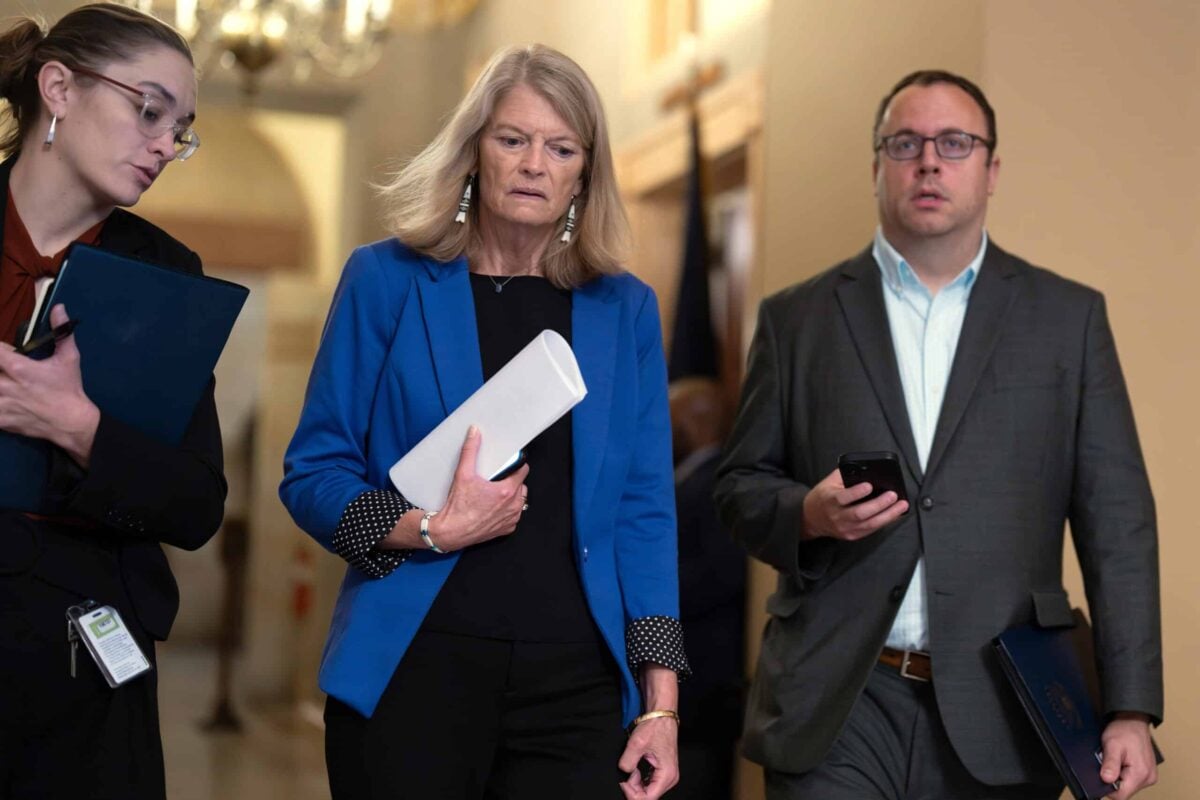
NOTN- Juneau officials are moving forward with plans to buy two floors of the Michael J. Burns building downtown, calling it the most financially responsible option for consolidating city staff after voters rejected a proposal for a new City Hall.
At a work session this week, the assembly voted to advance negotiations on the purchase to the full assembly for final approval. A decision could come within the next month.
Assembly member Christine Woll, head of the Finance Committee said the city’s current office spaces are aging and expensive to maintain. “The Burns building has emerged as the most financially responsible option, and makes the most sense to bring all our city employees into a single building that’s not leaking like our other locations right now. And so last night, we officially moved that decision to negotiate purchase to the full assembly, so we’ll ultimately make that final decision in about a month. But this was the last big stop to say, yes, this is what we’re interested in doing.”
If approved, the city would form a condominium association with the Alaska Permanent Fund Corporation, which owns part of the building. Renovations would be required to adapt the space for municipal use.
Sen. Mike Shower, R-Wasilla, speaks Friday, April 12, 2024, on Senate Bill 187, the capital budget. (Photo by James Brooks/Alaska Beacon)
Wasilla Republican Sen. Mike Shower will run for lieutenant governor alongside Republican gubernatorial candidate Bernadette Wilson, the two announced Tuesday night in Big Lake.
Wilson is the first of Alaska’s 10 governor candidates to announce her running mate.
The other nine candidates include former Democratic Sen. Tom Begich of Anchorage and eight Republicans: former state Sen. Click Bishop of Fairbanks; former Alaska Revenue Commissioner Adam Crum; current state Sen. Shelley Hughes of Palmer, Lt. Gov. Nancy Dahlstrom of Eagle River; Matanuska-Susitna Borough Mayor Edna DeVries; podiatrist Matt Heilala of Anchorage; former teacher James William Parkin IV of Angoon; and Bruce Walden of Palmer. Former Alaska Attorney General Treg Taylor is also expected to file for the office.
Current Rep. George Rauscher, R-Sutton, said he will run for Shower’s seat in the state Senate. Rauscher previously ran for Senate in 2018 and said he put his name in “one minute after Bernadette stated it was Shower.”
By phone, Wilson said the lieutenant governor has two jobs: taking care of the state seal, and taking care of elections.
“The Division of Elections is incredibly important and too important to get passed off to who is the politically expedient candidate,” she said.
Bernadette Wilson and Mike Shower pose for a photo on Tuesday, Sept. 9, 2025, in Big Lake, Alaska. (Bernadette Wilson photo)
Wilson said she believes “election integrity and the ability to vote at the ballot box is the very foundation of the Republic” and said that Shower is the right person to fix problems with voting in rural Alaska, an unusually large voter roll, and slow-to-arrive results.
“I felt very confident that Sen. Mike Shower has the knowledge in that area. It is an area that he is passionate about, which is the first step in solving any problem, and he’s worked on that extensively. So I felt that that was incredibly important and made him the best choice for Alaska’s next lieutenant governor,” she said.
Shower served over 20 years as a pilot in the U.S. Air Force and currently works as a commercial cargo pilot.
Shower was originally appointed to the Senate in February 2018 to replace Mike Dunleavy, who held the seat until resigning to run for governor. Elected on his own merits later that year and re-elected in 2022, he has repeatedly introduced proposals to make changes to the state’s elections system.
His first proposal was introduced in 2019 related to election security protocols, before President Donald Trump began lying about fraud in the 2020 election.
Currently the Senate’s minority leader, he has regularly re-introduced legislation related to the state’s elections system and has frequently been a key figure in end-of-session negotiations on the topic. Thus far, the Legislature has been unable to pass significant changes.
As a member of the Senate, Shower has consistently endorsed the idea of a large Permanent Fund dividend, going so far as to propose a statewide tax in order to pay for it.
Wilson said that she and Shower are confident in their ability to win the governor’s race, but if they finish behind another Republican in the August primary, they will withdraw and throw their support behind the leading Republican.
Under Alaska’s current voting system, all candidates for the same office run in the same race, regardless of political party. The top four-vote getters advance to the general election, where Alaskans use ranked choice voting to pick the ultimate winner.
Wilson, one of the leaders of a campaign to repeal that system, said she believes “that when you’ve got multiple people on the ballot of any party, it leads to so much confusion, it leads to voters only ranking one at the end of the day. … I think it’s very arrogant to say, Well, I’m not the top vote getter, but I’m going to stay in anyways. I just don’t think that that’s appropriate.”
An Anchorage Superior Court judge’s ruling has cleared the way for the state of Alaska to repeal its “80th Percentile Rule,” enacted by the state in 2004 as part of an attempt to reduce health care costs in the state.
The Dunleavy administration repealed the rule in 2024, saying it was counterproductive and argued it contributed to higher health care costs. Medical providers say that isn’t true and that repealing the rule will cause some clinicians to close down.
In 2023, a group of medical providers sued the state, alleging problems with the process used to repeal the rule. On Aug. 27, following a four-day bench trial in February, Judge Yvonne Lamoureaux ruled in favor of the state.
In her findings of fact and conclusions of law, Lamoureaux concluded that the repeal was not “unreasonable or arbitrary,” and the state did not conduct an improper procedure.
An appeal to the Alaska Supreme Court is possible.
When in place, the rule required that insurance companies reimburse out-of-network medical providers at a rate equal to the 80th percentile of charges for the given service.
If five clinics provide a given procedure, the required payment would be what the second-most-expensive clinic charges.
The rule was intended to prevent Alaskans from being left with large medical bills after visiting out-of-network clinics. The state and Alaska’s largest health insurance company, Premera Blue Cross Blue Shield of Alaska, contend that it required insurance companies to pay more for services than was warranted, contributing to higher insurance costs.
Photo of Charlie Kirk at Utah Valley University event Wednesday, courtesy of AP
NOTN/AP- An Alaskan resident attending Brigham Young University said she was just feet away when conservative commentator Charlie Kirk was shot and killed during a campus event on Wednesday.
Margie Brown of Kasilof, Alaska, described the scene as “surreal” and said she is still processing what she witnessed.
“I’m okay. I definitely know I’m probably still in a little bit of shock,” Brown said in an interview with News of the North. “As he was setting his microphone down, you heard the crack, it was behind me, and I saw him, with my own eyes, get shot in the neck, and I knew it was the neck because there was a lot of blood.”
Videos posted to social media from Utah Valley University show Kirk speaking into a handheld microphone while sitting under a white tent emblazoned with the slogans “The American Comeback” and “Prove Me Wrong.” A single shot rings out and Kirk can be seen reaching up with his right hand as a large volume of blood gushes from the left side of his neck. Stunned spectators are heard gasping and screaming before people start to run away.
Brown, a history major finishing her last semester at Brigham Young University in Provo, Utah, said she and a friend signed up to attend Kirk’s appearance and they found seats near the stage, about 50 feet from where Kirk was speaking.
Immediately before the shooting, Kirk was taking questions from an audience member about mass shootings and gun violence.
Brown said she hit the ground hard before urging others to run.
FILE – Interior Secretary Doug Burgum listens as President Donald Trump speaks with reporters in the James Brady Press Briefing Room at the White House, Monday, Aug. 11, 2025, in Washington. (AP Photo/Mark Schiefelbein, File)
The rule was a key part of efforts under former President Joe Biden to refocus the Interior Department’s Bureau of Land Management, which oversees about 10% of land in the U.S. Adopted last year, it allowed public property to be leased for restoration in the same way that oil companies lease land for drilling.
Industry and agriculture groups were bitterly opposed to the Biden rule and lobbied Republicans to reverse it. States including North Dakota, where Burgum served as governor before joining Trump’s Cabinet, pursued a lawsuit hoping to block the rule.
Wednesday’s announcement comes amid a flurry of actions since Trump took office aimed at boosting energy production from the federal government’s vast land holdings, which are concentrated in Western states including Alaska, California, Nevada, New Mexico, Utah and Wyoming.
Interior officials said the Biden rule had sidelined people who depend on public lands for their livelihoods and imposed unneeded restrictions.
Burgum said in a statement that it would have prevented thousands of acres from being used for energy and mineral productions, grazing and recreation. Overturning it “protects our American way of life and gives our communities a voice in the land that they depend on,” Burgum said.
“The previous administration’s Public Lands Rule had the potential to block access to hundreds of thousands of acres of multiple-use land – preventing energy and mineral production, timber management, grazing and recreation across the West,” Burgum said.
Environmentalists had largely embraced the rule that was finalized in April 2024. Supporters argued that conservation was a long-neglected facet of the land bureau’s mission under the 1976 Federal Lands Policy Management Act.
“The administration cannot simply overthrow that statutory authority because they would prefer to let drilling and mining companies call the shots,” said Alison Flint, senior legal director at The Wilderness Society.
While the bureau previously issued leases for conservation purposes in limited cases, it never had a dedicated program for it.
Critics said the change under Biden violated the “multiple use” mandate for Interior Department lands, by catapulting the “non-use” of federal lands — meaning restoration leases — to a position of prominence.
National Mining Association CEO Rich Nolan said Burgum’s proposal would ensure the nation’s natural resources are available to address rising energy demands and supply important minerals.
“This is a welcome change from the prior clear disregard for the legal obligation to balance multiple uses on federal lands,” Nolan said.
The rule also promoted the designation of more “areas of critical environmental concern” — a special status that can restrict development. It’s given to land with historic or cultural significance or that’s important for wildlife conservation.
In addition to its surface land holdings, the land bureau regulates publicly-owned underground mineral reserves — such as coal for power plants and lithium for renewable energy — across more than 1 million square miles (2.5 million square kilometers). The bureau has a history of industry-friendly policies and for more than a century has sold grazing permits and oil and gas leases.
The pending publication of Burgum’s proposal will kick off a 60-day public comment period.
House Republicans last week repealed land management plans adopted in the closing days of former President Joe Biden’s administration that restricted development in large areas of Alaska, Montana and North Dakota. Interior officials also announced a proposal aimed at increasing mining and drilling in Western states with populations of greater sage grouse. Biden administration officials proposed limits on development and prohibitions against mining to help protect the grouse.
Through Aug. 28, when officials at the Alaska Department of Fish and Game stopped counting, an estimated 23,806 Chinook salmon — informally known as kings — had been counted by workers at the sonar site at Eagle, just west of the Yukon border.
Under international agreements, the United States is supposed to allow a minimum number of fish to travel upriver and into the Yukon to maintain the king salmon run and allow fishing in the territory.
Last year, following years of poor returns, officials in Alaska and Canada agreed to restrict king salmon fishing, including Indigenous subsistence fishing, of king salmon on the river until escapement — the number of king salmon crossing into Canada — exceeds 42,500 fish.
The ultimate goal of the agreement is to rebuild the number of king salmon returning until 71,000 kings reach Canada each summer.
This year’s figures are slightly lower than they were last year, when 24,183 kings reached Canada, but are nearly double the low of 2022, when only an estimated 12,025 kings returned.
King salmon returns on the Yukon River have steadily declined since 2017, when 73,313 fish passed the sonar at Eagle.
Attention now falls on the Yukon River’s much larger chum salmon run, which is also expected to fail international treaty obligations. As of Sept. 7, ADF&G estimates 276,000 fall chums in the Yukon River, less than a third of the historical run size.
“A run size below 300,000 fall chum salmon is not anticipated to be large enough to meet U.S. tributary goals or Canadian treaty objectives for fall chum salmon,” the department said in an estimate published Tuesday.
As a result of the shortfall, subsistence fishing for chum salmon, a vital part of Alaska Native traditional culture, continues to be suspended.
Changes in deep-ocean conditions caused by climate change, warming river conditions caused by climate change, commercial fishing, and endemic disease have all been cited as possible reasons for the declining salmon runs.
NOTN- Juneau Assembly and Finance Committee officials say extending the downtown Seawalk remains a top community priority, and work is underway to prepare for the next phase of construction using cruise ship passenger fees.
At a work session this week, assembly members heard updates on progress toward connecting more of the waterfront walkway.
“The Sea walk has been a community priority as long as I’ve been on the assembly, anytime we do planning conversations with the community, that always comes up as a top priority, because it’s something that benefits our visitors, but our residents also use our sea walk a lot as well.” Said Christine Woll, head of the Finance Committee, “The ultimate goal is to connect the whole thing, and so we’ve been slowly negotiating leases along the water.”
Woll noted that leases are being negotiated along sections of the waterfront, including near the Huna Totem dock project, which will add its own segment of the walkway.
Deputy City manager Robert Barr says the construction of the Sea walk won’t interrupt cruise docking, however, they will be working closely with businesses along the waterfront that may see disruptions through construction in the future, like Crowley Fuels.
He said the Franklin to AJ dock connection is the last connection on the far side and will be designed in earnest soon. “That’s a long awaited extension, and it’s a long extension too.” Barr said, “It’ll really extend the sea walk all the way down to our farthest dock, I know a lot of community really enjoys that walk, and it’s a really pleasant waterside walk during the day for people that live and work downtown.”
No decisions were made this week, but Woll said the assembly is preparing to allocate funds to start building new portions of the Seawalk in coming years.
“It costs a lot of money to build sea walk, but because we have those passenger fees, we can use those, whether that’s a revenue bond or we’ve been saving that money every year for this, to get to this point where we’ve got those leases negotiated, and we can actually start building.”
The ConocoPhillips Alaska Inc. building in Anchorage is seen on June 28, 2023. (Photo by Yereth Rosen/Alaska Beacon)
The top oil-producing company in Alaska is planning significant layoffs, it announced last week.
In a series of statements, the oil giant ConocoPhillips said it will be firing between 20% and 25% of its global workforce of about 13,000 people. That would mean between 2,600 and 3,250 layoffs worldwide.
“We are always looking at how we can be more efficient with the resources we have. As part of this process, we have informed employees that a 20% to 25% reduction in our global workforce, which includes employees and contractors, is anticipated. The majority of these reductions will take place in 2025,” said Rebecca Boys, director of external affairs for ConocoPhillips Alaska, on Thursday.
Boys declined to say how many people the company employs in Alaska, but prior documents published by the company say that it has “about 1,000 people in Alaska,” and of those, about 80% live in the state.
Altogether, the oil and gas industry employed 8,800 people in Alaska as of July, according to state statistics. If ConocoPhillips were to lay off a quarter of its Alaska workforce, it likely would reverse an upward trend for the oil and gas industry here.
Since bottoming out at 6,100 people in November 2020, during the COVID-19 pandemic emergency, the number of people employed by the oil and gas industry rose throughout President Joe Biden’s administration.
ConocoPhillips produces the most oil of any company operating on the North Slope and holds the second-most oil and gas lease area in the state.
According to state data, ConocoPhillips leases about 490,000 acres of Alaska land and water for oil and gas drilling. That’s behind only privately owned Hilcorp, whose holdings exceed 500,000 acres.
ConocoPhillips is developing the large Willow project in the National Petroleum Reserve-Alaska, which is expected to begin producing oil in 2029.
According to the Alaska Division of Oil and Gas, ConocoPhillips is also planning to drill four exploration wells in other parts of the reserve this winter.
On its production side, ConocoPhillips was planning to drill 12 new production wells this year and next from the Kuparuk oilfield west of Prudhoe Bay.
This drone image provided by the City and Borough of Juneau shows flooding from a release of water and snowmelt at Mendenhall Glacier covered some roads and threatened homes along the Mendenhall River in Juneau, Alaska on Wednesday, Aug. 13, 2025. (City and Borough of Juneau via AP)
NOTN- Juneau officials say repairing damaged flood barriers and planning for long-term protection along the Mendenhall River will be a top priority in the wake of August’s glacier outburst flood.
At a Monday night work session, the Assembly said that Phase One of the HESCO barrier project, temporary flood walls installed to protect neighborhoods, sustained an estimated $1 million in damage.
“We are still gathering a lot of information on what happened this year, so folks are looking at, how did the basin change? How did the river change? So we still need a lot of information from our scientists before we’re ready to make any decisions.” Said Christine Woll head of the Finance Committee, “Essentially, last night, we started talking abou are we going to extend the barriers? Last year, we prioritized protecting the areas that had flooded in 2024, but as we think about the potential for this flood to increase in size, we start thinking about, do we want to extend the barriers to essentially the rest of the river? What’s the cost for that going to be and how are we going to pay for it? It starts to get kind of increasingly more expensive for the other areas of the river just because they’re trickier, and those areas are less likely to flood. So it makes for interesting policy decisions about how much the city can afford.”
The Assembly discussed whether to build barriers to a 17-foot or 18-foot model, this carries implications for construction depth, bank armoring, and overall cost. Expanding protection both north and south of the current installation could require substantial outside funding.
Members also considered long-term options for the View Drive neighborhood, where flood protection is difficult to build.
“There’s lots of challenges, but one of them is definitely View Drive, which meets the criteria of being significantly impacted every year by this flood, and yet, you know, has engineering challenges to put HESCOs up” said Woll.
Deputy City Manager Robert Barr said a potential buyout program could be pursued, but cost is the leading question.
“There’s some unanswered questions there that we need to resolve. Specifically, how much is going to cost and how many of the folks in the View Drive area need to participate for that to be a program that the federal government will participate in.” Barr said.
Last nights meeting was a Work Session however the Assembly took one actionable step, voting unanimously to shift $5 million from the Capital Civic Center project into flood mitigation. That money will help repair existing HESCO barriers and support the next phases of protection planning.
“These are decisions we’re going to have to tackle in the coming months,” he said. “We’ll keep looking for federal and state help, but ultimately we have to prepare for what may come next summer.”
The August flood, caused by an outburst from Suicide Basin above the Mendenhall Glacier, inundated neighborhoods and left behind millions in property damage.
NOTN- A trial is scheduled to begin this week for a man accused of fatally shooting another man in the Mendenhall Valley in 2023.
Court records show 46-year-old Andre P. Lawrence is set to appear before Juneau Superior Court Judge Amy Mead on Wednesday.
He is charged with first- and second-degree murder in the death of 23-year-old James T. Newman.
Newman was found dead from a gunshot wound on Cinema Drive on the night of July 20, 2023.
Investigators said video surveillance showed him approaching a black Dodge pickup before collapsing. A witness later identified Lawrence as the driver.
Police said the truck linked to the shooting had blood on the driver’s side door.
Lawrence was arrested the next morning at a residence on Riverwood Drive after what police described as an overnight investigation.
If convicted, Lawrence could face up to 99 years in prison.