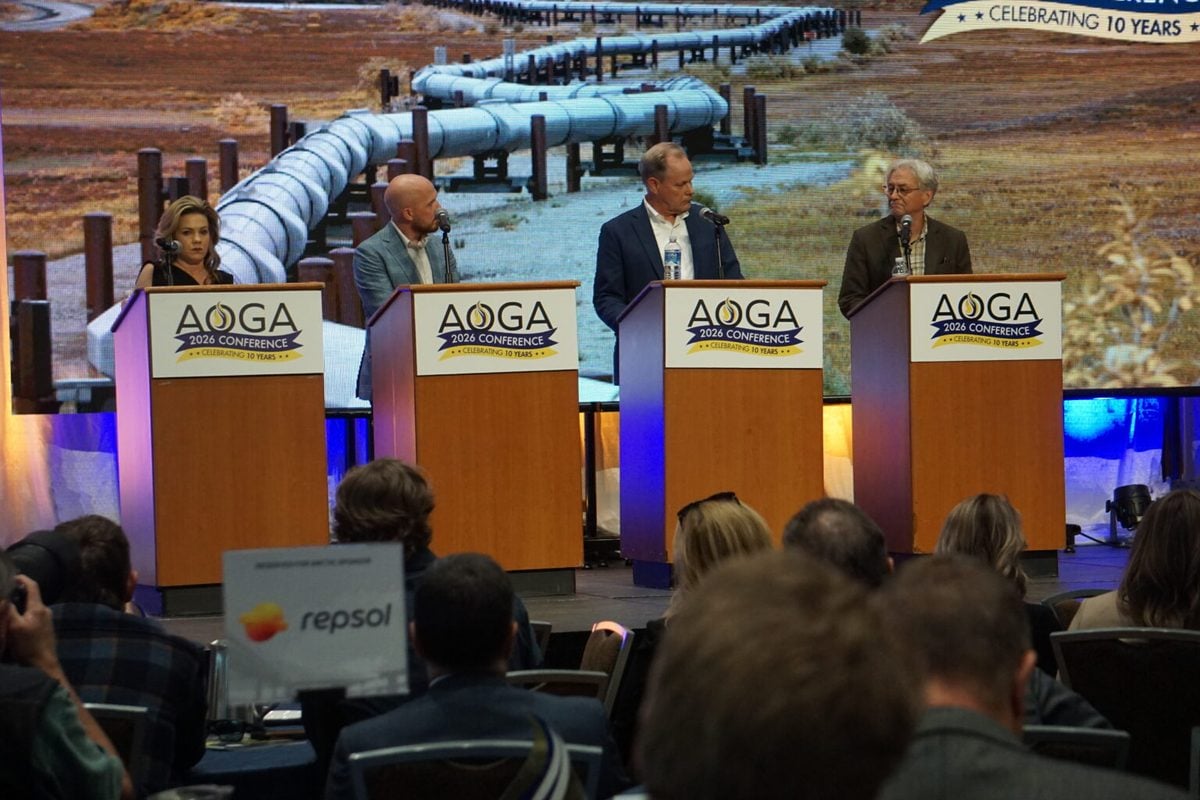
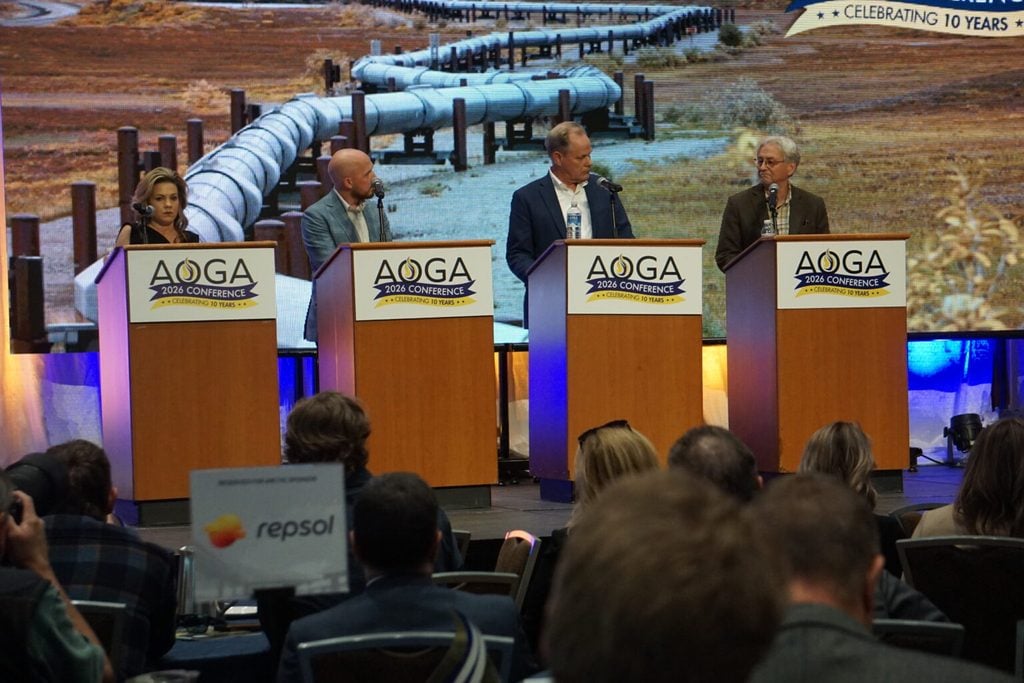
The four gubernatorial candidates emerging from Alaska’s open primary gathered on the stage on Aug. 26, 2026 at the annual conference held by the Alaska Oil and Gas Association. From left are Republican Bernadette Wilson, Democrat Jonathan Kreiss-Tompkins, Republican Dave Bronson and Democrat Tom Begich. (Photo by Yereth Rosen/Alaska Beacon)
At their first candidate forum since the Aug. 18 primary election, the four remaining gubernatorial hopefuls pitched visions for the state’s future that revealed sharp political divides.
Speaking at the event, held at the Alaska Oil and Gas Association’s annual conference in Anchorage, were Democrats Jonathan Kreiss-Tomkins and Tom Begich and Republicans Bernadette Wilson and Dave Bronson. Kreiss-Tomkins has been leading in the still-ongoing primary election vote count, with 22.2 %, followed by Begich at 20.5%, Wilson at 10.2% and Bronson at 8.2%.
The four emerged as the top vote-getters among 17 candidates for governor. Alaska’s election system uses open, non-partisan primaries and ranked choice voting in the general election.
Kreiss-Tomkins and Begich, both former state legislators, presented mostly similar positions. Wilson, a talk-show host, and Bronson, a former Anchorage mayor, also presented largely similar positions that contrasted with the Democrats’ views.
Oil and gas taxes figured prominently in the event.
Democrat Tom Begich speaks at an Aug. 26, 2026, forum held by the Alaska Oil and Gas Association. (Photo by Yereth Rosen/Alaska Beacon)
Both Democrats told the petroleum industry audience that they favored changes that would bring the state more revenues from oil producers. Their plans include a statewide corporate income tax on oil producers that are S corporations, also known as pass-through corporations, that currently do not pay them.
The main company affected by such a tax would be Hilcorp, a privately held company based in Texas that is a major Alaska producer. As of 2020, Hilcorp had acquired all of BP’s Alaska assets when that oil giant left the state, and now it operates Alaska’s largest oil field in Prudhoe Bay, among others. Unlike BP, Hilcorp pays no corporate income tax to the state. Legislative leaders have been pushing to change that.
Hilcorp is also a main sponsor of the AOGA conference.
Begich said a tax on S corporations and other changes to the state’s tax system would bring in an extra $400 million to the treasury each year.
He acknowledged that the oil industry crowd might not like those changes at first. But ultimately, “it will be forward-thinking for private investment,” he said. “If we have that revenue coming in, we can improve our education system. We can improve our economy in general and make our energy significantly more affordable up here. In doing that, you’re going to attract people to this state.”
Kreiss-Tomkins said all sectors, including the oil industry, will have to contribute taxes to correct a structural deficit problem in Alaska that, for now, threatens to wipe out the state’s savings.
“I am pro-math, and math just doesn’t lie. And balancing a budget is ultimately a math problem, and I think you have to be clear-eyed about where the state is,” he said. Compromises will be needed to address that, including compromises from the oil industry, he added.
Wilson and Bronson, in contrast, said they adamantly oppose tax changes that would wring more revenue out of the oil industry.
Wilson called for deep slashes to the state budget.
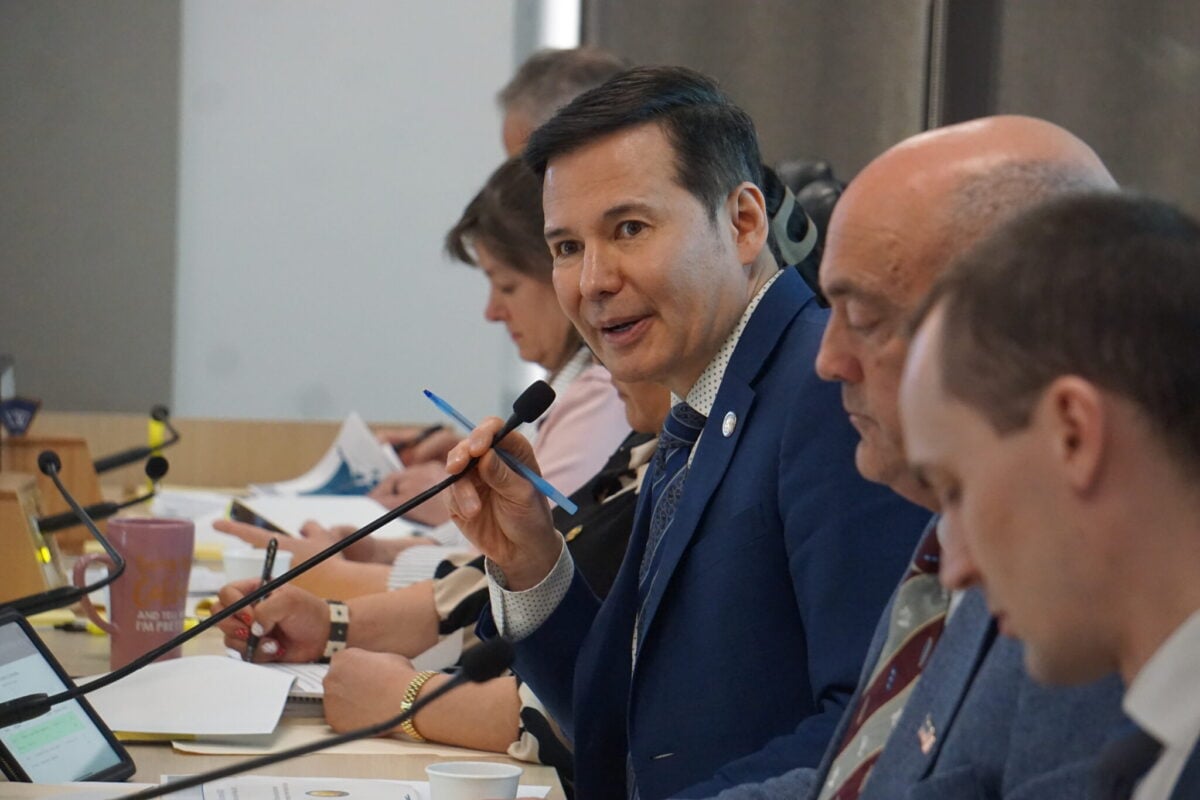
Former Anchorage Mayor Dave Bronson, a Republican who finished fourth in the open primary election, speaks at a gubernatorial candidate forum held on Aug. 26, 2026, by the Alaska Oil and Gas Association. Next to him is former state lawmaker Jonathan Kreiss-Tompkins, a Democratic candidate who received the most votes in the open primary. (Photo by Yereth Rosen/Alaska Beacon)
“We do not have a revenue problem in this state. We have a spending problem in this state,” she said.
“The reality is we need to come into this budget, and we need to DOGE the heck out of it,” she said, referring to the mass firings and cuts imposed by the Trump administration through the so-called Department of Government Efficiency, or DOGE.
Bronson said Alaska has made too many changes already to its oil and gas tax system, and that “changing the rules of the game and the tax structure midway through” scares off investment.
“The reality is we don’t have a whole lot of businesses that are lining up to do business with Alaska,” he said.
Both Wilson and Bronson accused the state legislature of blocking a proposed massive natural gas pipeline that would carry product from the North Slope about 800 miles to a yet-unbuilt liquefaction plant in Southcentral Alaska, known as the AKLNG project
There have been efforts over the past half century to build such a pipeline, but none have been economic. In pushing the latest version, Gov. Mike Dunleavy called the legislature into three special sessions this summer to try to get them to approve sweeping tax concessions for the investment company now involved with the project, the Glenfarne Group. Lawmakers ultimately rejected Dunleavy’s demands.
Wilson said the Glenfarne plan pushed by Dunleavy, unlike all other plans over the past half century, made economic sense, but lawmakers blocked it.
“You had a couple of legislators specifically that are hell bent on seeing Alaska fail. That’s why you don’t have a gas line,” she said.
Bronson drew a similar conclusion.
Bernadette Wilson, a Republican candidate for governor, listens to a question at an Aug. 26, 2026, forum held by the Alaska Oil and Gas Association. (Photo by Yereth Rosen/Alaska Beacon)
“We’ve got personal animosities in Juneau, and it comes down to just a few people that are shutting that project down,” he said.
Glenfarne, like Hilcorp, is a sponsor of the AOGA conference.
Kreiss-Tomkins and Begich, in turn, criticized Dunleavy, describing his policies as a major reason why Alaska has had more people leave the state than move to it for 13 consecutive years – the most ever recorded. They were particularly critical of his policies on education.
Under Dunleavy, they said, Alaska has stagnated.
“This governor has just set a record for the most number of vetoes by any governor in Alaska history since we became a state,” Kreiss-Tomkins said. “That is a sign of political failure, not political success.”
This year, Dunleavy set the record for the most vetoes by an Alaska governor in a single two-year Legislature, while the number of bills passed has also dropped significantly in recent years.
Candidates also discussed national politics at the forum. The two Republican candidates aligned themselves with President Donald Trump, and they portrayed themselves as hard-liners.
“I’m a hardcore conservative, and I’m proud of that,” said Bronson, who described the differences between candidates as stark.
“We’re at an inflection point in this country and in this state, in this election,” he said. “You can choose socialism. . .Or you can choose capitalism. That’s the choice in this race right now.
U.S. Rep. Nick Begich, R-Alaska, listens to gubernatorial candidates at an Aug. 26, 2026, forum held by the Alaska Oil and Gas Association. One of the candidate speaking was his uncle, former state Sen. Tom Begich, a Democrat. Tom Begich mentioned the family relationship during the forum. Nick Begich is running for re-election. (Photo by Yereth Rosen/Alaska Beacon)
Wilson said the biggest danger to the state came from two of the three men who shared the stage with her.
“The greatest policy threat is, God forbid, this state elect a Democrat to this governor’s office.” she said. Wilson said Democratic Party policies regarding oil and gas “are the greatest threat to this industry.” She urged the audience to stick with Republicans and take advantage of the next two years of the Trump administration.
In contrast, the two Democrats emphasized consensus-building.
“Beyond a doubt, I disagree with Bernadette,” Begich quipped in comments directly following those by Wilson.
More broadly, Begich spoke about his approach to governing. While the governor has a responsibility to “be an advocate for the state of Alaska at all times,” including pushing back against the federal government, if necessary, that does not mean unrelenting combativeness, he said.
“What I won’t do is use the state’s power to attack people that are not even living in our state. I think that’s ridiculous,” he said.
Kreiss-Tomkins took a similar tone. He spoke of his time serving in a bipartisan coalition in the legislature that “set aside the more fringe and polarizing issues that I think often bring government and the legislature to a standstill” and prevent progress.
“That is a North Star principle for me. . .trying to find compromise, trying to work from a common-sense, common-ground agenda and get things done to move the state forward,” he said.
Ballots are still being counted, but the top four candidates for governor are unlikely to change. The Division of Elections’ primary election schedule calls for all absentee and questioned ballots to be counted within 10 days of the primary, resulting in a deadline of Aug. 28. The results are to be certified on Aug. 31, which is also the deadline for candidates to drop out.
A selection of comments filed with state land managers on a proposed lease of Alaska public lands for a data center project on the North Slope. (Image from Nathaniel Herz/Anchorage Press)
Opposition is pouring in against a large data center and power plant proposed for Alaska’s North Slope, as Gov. Mike Dunleavy’s administration considers whether to approve a 50-year lease of state land to the project’s developer.
More than 500 public comments were received before a preliminary deadline set by the Alaska Department of Natural Resources, according to copies of the messages released by the agency.
Fewer than a dozen comments endorsed the project. The vast majority were opposed, often in harsh or strident terms — with subject lines like “HELL NO! To ANY DATA CENTERS” and “NO AI”. One commenter noted explicitly that their message had been written “with my own brain and fingers typing,” rather than generated by artificial intelligence.
“Please incorporate some AI (Alaskan intelligence) into making this decision,” wrote one commenter, who described data centers as “the abandonment of both nature and humanity.”
Comments were initially due to the department’s Division of Oil and Gas in mid-June; the agency has since extended the deadline an extra month, to July 17, due to “the volume of comments received, public interest and requests for extension,” spokesperson Sean Clifton wrote in an email.
Once the deadline passes, the agency will assess the comments before it makes a final decision on the proposed land lease, Clifton said.
An official with Stak Energy, the Anchorage-based company that applied for the lease, said in an emailed statement that the business “is committed to being a responsible steward of the land entrusted to us” and has proposed the lease in an area “far removed from any local communities.”
“Our initial assessment is that the vast majority of the comments are form letters lacking substance other than reflecting an individual’s point of view,” said the official, John Boyle, Stak’s chief strategy officer, who previously served as commissioner of Alaska’s natural resources department from 2023 to 2025. Boyle added: “Some of the comments are more substantive and will be addressed in due course.”
The natural resources department released copies of the comments to the Anchorage Press/Northern Journal after it also released them to Stak, though the agency redacted names and other identifying information.
The company is planning a major development that would use abundant natural gas from nearby North Slope oil fields to run power plants that could support artificial intelligence and cloud computing, according to documents it submitted to the state.
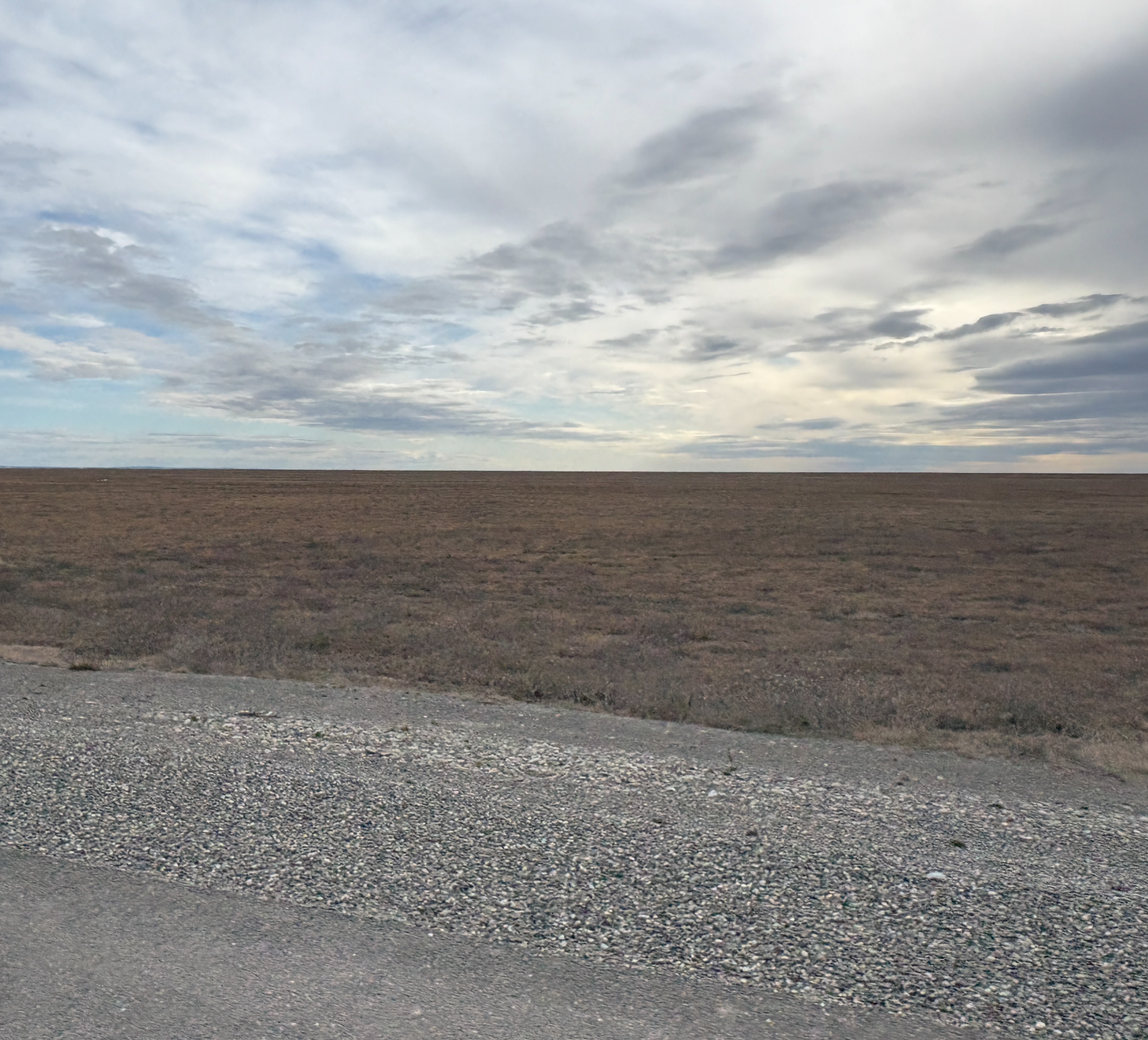
The project, which Boyle said would cost more than $10 billion, would occupy roughly one square mile just off the Dalton Highway, some 25 miles south of the North Slope oil hub of Deadhorse. Its generators could produce a gigawatt or more of power, which is some 30% more than the peak demand of urban Alaska’s entire grid.
Boyle, in his message, stressed that Stak would be focused on generating power and selling it to large-scale computing companies known as “hyperscalers” — and would not operate data centers itself.
“And while we anticipate hyperscalers providing the commercial foundation for our power plant build, Stak will be able to provide power to any entity interested in purchasing it,” he said.
Stak’s project, if built, would be the first large data center development in Alaska. In its lease-related documents, the company said its plans were drafted to avoid the backlash against the industry that’s erupted in other states — where advocates have increasingly protested projects’ land use, pollution and water consumption.
Average annual temperatures at the proposed project site, according to Stak, are 12 F, meaning that the development is expected to need 10% or less of the amount of water that typical data centers use for cooling. There are also no cities or villages within 50 miles of the proposed development except for Deadhorse — an industrial center populated by oil industry employees who live in work camps during multi-day shifts, then fly home.
Stak Energy is proposing to lease an area near this stretch of tundra, on Alaska’s North Slope near the Dalton Highway, to operate natural gas generators that would power a large data center. (Nathaniel Herz/Anchorage Press)
The few positive comments made some of those points. “The location pretty well leaves NIMBY out of the equation,” one commenter said. “I’m all for this application and this project.”
Other comments against the development used identical language and appeared to stem from templates distributed by opponents. Formal opposition or messages of concern also came in from groups including the Northern Alaska Environmental Center, the Alaska Public Interest Research Group and the Alaska chapter of a sportsman’s group called Backcountry Hunters and Anglers.
But many other messages objecting to the project were unique and written by individuals from across the state — from Kodiak and Kotzebue to Seward, Valdez and the North Slope village of Nuiqsut. Those critics were not sold on Stak’s pitch, and expressed themselves in terms ranging from reasoned and factual to strident and misinformed.
Some commenters, for example, argued that Stak’s project and natural gas consumption would have the effect of raising electricity prices for other Alaskans — many of whom also get their power from natural gas plants.
But the North Slope oil fields are hundreds of miles from urban Alaska and disconnected from the state’s power grid, meaning that sales of fuel to Stak would have no direct impact on city-dwellers’ electricity prices.
Others, meanwhile, made factually supported assertions — among them that data centers running on fossil fuels would accelerate climate change, and that the pad that Stak plans to build on the tundra would require huge quantities of gravel, a scarce resource on the North Slope that’s also used by villages and oil developers.
Still others kept their objections short and succinct — and sometimes cheeky.
“No,” was one commenter’s full message, though they added a postscript: “You may build one in Canada though.”
Nathaniel Herz welcomes tips at natherz@gmail.com or (907) 793-0312. This article was originally published in Northern Journal, a newsletter from Herz. Subscribe at this link.
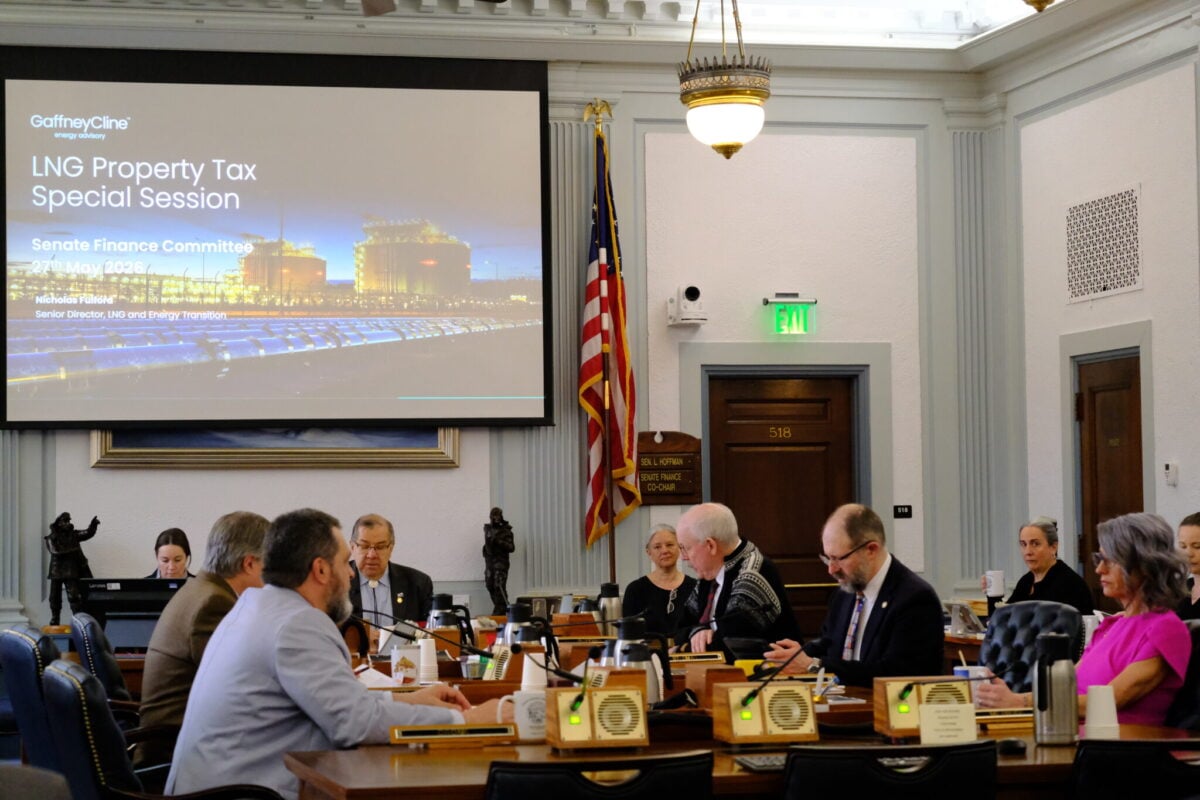
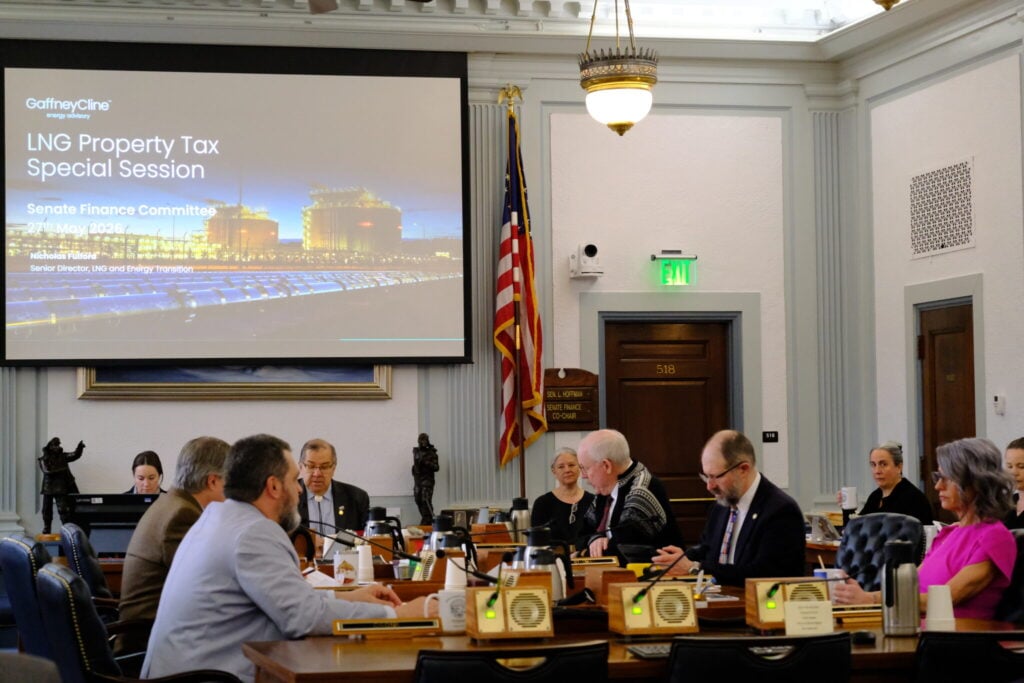
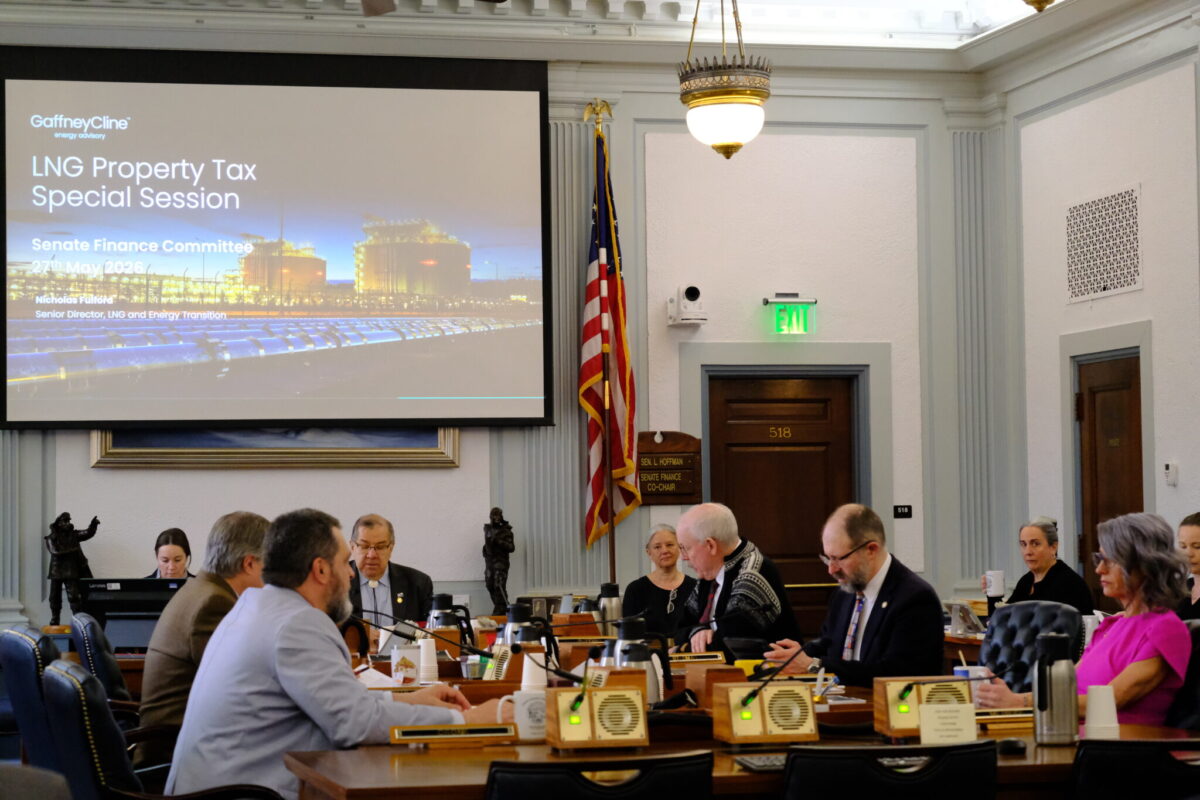
Members of the Senate Finance Committee convene on the first day of a special legislative session on the proposed LNG gas line project on May 27, 2026. (Photo by Corinne Smith/Alaska Beacon)
Now, a newly revealed draft of the agreement between the state-owned Alaska Gasline Development Corp. and Glenfarne, the private developer, shows that if the project fails to go forward under certain conditions, the state could be required to pay in order to retake control of the project.
The contract between AGDC and Glenfarne has never been published and remains confidential, but a handful of state senators obtained a leaked draft copy during debates over the size and scope of a $16 billion tax break intended to benefit the pipeline project.
The draft offers the best glimpse to date about the relationship between the state-owned AGDC and Glenfarne, which together are pursuing a multibillion-dollar effort to sell natural gas from the North Slope.
“It’s a significant document. It should be taken seriously,” said Sen. Bert Stedman, R-Sitka.
As legislators debated the bill containing the tax break this month, the leaked document inspired some members of the Senate to amend the legislation. Meanwhile, the document stayed secret from other senators, members of the House and Alaskans overall.
Gov. Mike Dunleavy and members of the House criticized the Senate’s version of the tax-break bill, calling it unacceptable. The governor and House lawmakers said they prefer a separate version passed by the House.
“I don’t know how the document got out to people that it got out to, but somehow it did, and quite frankly, thank God it did,” said Sen. Bill Wielechowski, D-Anchorage.
When the Beacon asked AGDC and Glenfarne about the document and its contents, each said they are bound by a confidentiality rule and cannot discuss them.
“We believe Glenfarne can deliver something enormously important for the state: reliable and affordable energy, thousands of jobs, and the opportunity to finally unlock the value of North Slope natural gas for future generations of Alaskans,” said Tim Fitzpatrick, a spokesman for Glenfarne, by email. “Business documents are protected as a matter of ethical and good faith principles. For that reason, rather than any document specifics, the inappropriate distribution of draft AGDC materials is very disappointing.”
With the House and Senate having passed different versions of the tax-break legislation, lawmakers are negotiating a compromise that could come as early as the first week of July and as late as never.
If the bill advances, the protections inspired by the leaked document could be preserved, diluted or removed entirely.
“The structure of the state’s agreements that could leave Alaskans paying for something is something Alaskans should know,” said Sen. Jesse Kiehl, D-Juneau.
“I’m worried, and I don’t have full information, so we’re doing the best we possibly can,” he said.
Details of the confidential document
The document obtained by the senators dates from a key point in the pipeline project’s history.
That timing indicates the draft obtained by lawmakers and the Beacon was written relatively late in the process and may be close to the final version.
“My impression is that it is a highly refined draft,” Stedman said.
By email, AGDC president Frank Richards said it was written by an AGDC staff member for the corporation’s board of directors.
“The document you reference is a confidential memorandum meant for use by the AGDC Board to make an informed decision on a significant business partnership to move the Alaska LNG Project forward. Alaska LNG has made historic progress in the past fourteen months and development momentum continues,” he wrote.
Glenfarne officials have testified that they will allow legislators who sign non-disclosure agreements to examine financial documents. Members of the Senate Finance Committee have said in hearings that they are unwilling to accept that precondition.
“AGDC has identified that Alaska’s oil and gas property taxes are very high compared to other jurisdictions where LNG facilities are built and need to be lowered to help the Alaska LNG Project be competitive to attract capital investment and achieve (final investment decision),” he wrote.
With an officially estimated construction price of between $44.5 billion and $54.5 billion, the project — formally named Alaska LNG or AKLNG — would be one of the largest natural gas projects on Earth.
Under current law, Alaska would levy a 2% property tax on that project when it finishes construction. Legislators are considering whether to replace that tax with a tax on natural gas pumped through the pipeline. The resulting tax break would be worth about $16 billion over the project’s first 30 years of operation.
Alaska would still receive royalties and production taxes from natural gas sold through the pipeline, and it would receive assorted other fees as well, such as the proceeds of carbon dioxide sequestration.
Altogether, the state treasury stands to earn as much as $800 million per year for 30 years. That’s on top of the economic benefits caused by having thousands of extra workers in the state to build the pipeline, and potentially cheaper natural gas for residents and local industries.
As explained in public and in the confidential document, AKLNG would be built in two phases. The first phase would include a “764-mile, 42-inch-diameter pipeline” from the North Slope “into the Southcentral Alaska gas pipeline system.”
Coupled with a small gas treatment facility on the North Slope, that first phase would provide gas for in-state use by Alaskans.
Because the pipeline will not be built before Southcentral Alaska begins running out of gas, the confidential agreement also calls for AGDC and Glenfarne to build a gas import facility together.
Once the pipeline is operating, the partnership would use that equipment for exports.
The second phase would involve connecting the pipeline to the Prudhoe Bay and Point Thomson oil and gas fields, plus construction of a larger gas treatment facility and a liquefied natural gas export facility on the Kenai Peninsula “capable of (exporting) up to 20 million tons per annum.”
The pipeline, North Slope facility and Kenai Peninsula facility are each considered “sub projects” under the agreement between AGDC and Glenfarne.
“Glenfarne will negotiate contracts for construction, equipment, materials, and gas supply,” the document states. “No projects can create an obligation for AGDC or the State of Alaska without prior approval by AGDC or the State of Alaska, respectively.”
Currently, lawmakers are considering whether to restrict AGDC’s ability to borrow money without input from the Legislature. The House version of the tax-break bill would allow AGDC to borrow without permission, but lawmakers could halt the borrowing. The Senate version would require AGDC to ask permission first.
When AGDC and Glenfarne reach a final investment decision — a last decision on whether to build at all — there will be new development agreements that determine the ownership of each subproject.
Ownership would be split among any investors, AGDC and Glenfarne.
In presentations to the Legislature, AGDC officials explained that while the state currently owns 25% of the project, that share will be diluted on each subproject as investors are brought on board. The state will only keep its 25% share if it invests more money.
The confidential draft agreement says Glenfarne must reach “clawback milestones” to continually prove that it is operating in good faith.
If AGDC decides Glenfarne hasn’t met a milestone — such as signing a binding agreement to sell natural gas to a particular customer — it could seek to retake the project. That may require AGDC to pay.
The structure of the state’s agreements that could leave Alaskans paying for something is something Alaskans should know.
– Sen. Jesse Kiehl, D-Juneau
If Glenfarne disputes AGDC’s assessment, the two parties would consult a third party.
AGDC isn’t required to repurchase Glenfarne’s part of the project, but if it does, Glenfarne would be the one proposing the price, “based on the value Glenfarne has added to the company.”
AGDC could dispute that price, and if it does, an “independent investment bank” would determine the final amount.
Senators familiar with the confidential draft said this language was new to them, and they see it as a potential financial liability.
Under the draft agreement, confidentiality is required
“We are trying to craft legislation to protect the state’s interests, and we’ve been put in a position where we have had to guess what is in the contract or not in the contract in order to protect our interests. That is an awful place to be as a state and as a legislature,” Wielechowski said.
Secrecy between Alaska’s state-owned corporations and their investment partners isn’t unprecedented, nor are controversies over that secrecy.
When it comes to the gas pipeline, Glenfarne released an updated estimate for the project’s cost earlier this month, but state lawmakers still don’t have all the financial information they’ve been seeking, including estimates about the project’s profitability.
The confidential draft states that AGDC would share profits with Glenfarne and other partners, but lawmakers don’t know what that share would be or how the project’s economics would change under the tax break being discussed by legislators.
The Alaska Department of Revenue has provided public estimates, but Glenfarne and AGDC have not.
“On the whole, it gets down to the level of information that we need to make good decisions, and we have a little bit more than we had when the bill came out of the House, but we are still pretty short,” said Sen. Jesse Kiehl, D-Juneau and one of the lawmakers who had access to the document.
How we reported this article
The Beacon obtained the draft agreement discussed in this article on Friday from a source who does not work for the Legislature and was able to compare it with a separate paper copy the following day.
The text of the copies was identical, though the paper copy — used by a senator — had its control number and other identifying information clipped out. The senator said they would be shredding their copy after the examination.
We do not know who originally leaked the document, whether there were multiple leakers, or why they shared the document.
After verifying the document, the Beacon called and emailed Glenfarne on Monday about its contents and sent a list of questions by email when asked to do so.
AGDC’s Frank Richards responded by email. Glenfarne officials spoke on the phone but were not willing to be quoted directly, and provided a written statement.
Richards asked for a copy of the “document or documents” the Beacon had. The Beacon declined to send that document — and we are declining to post it in this article — because even with control numbers and other identifying information redacted, it could still contain language that would allow the source to be identified.
The Beacon did not receive answers to all of its questions, including details about how much has been spent on the project to date and possible partnerships with companies mentioned in the draft agreement.
Lawmakers have concerns over the clawback
Senators familiar with the confidential agreement said they don’t recall when they first received it, in part because they initially overlooked its importance.
Sen. Cathy Giessel, R-Anchorage, said she became aware of the draft when her aide, Paige Brown, read through it.
“It wasn’t actually until the last couple weeks that … I found it in a pile of my desk and said, “‘Paige, look this over, I think there might be some stuff in here,’ and she started flagging sections, and we started looking at it more closely,” Giessel said.
Stedman said that when he first saw the document, “I was struggling, quite frankly, on how to handle it.”
He briefly considered releasing it to the general public.
“I actually thought about putting it on the table, and I didn’t do it … because it’s marked confidential. It’s highly sensitive,” he said.
The clawback section drew senators’ attention. Members of the Senate majority have been openly concerned about the risks to the state if the project doesn’t go forward or is only partially built.
In a Senate Finance hearing on June 16, members of the Senate Finance Committee grilled AGDC consultant Matt Kissinger and Glenfarne Alaska president Adam Prestidge with questions drawn from the draft.
“There is no scenario where we will ask the state for money,” Prestidge said under questioning.
The state will be given a chance to invest money in the project, he said, but “even the state investment option is an option to the state that doesn’t come with a formal request or pressure from Glenfarne.”
Prestidge didn’t mention the clawback, so Stedman went a different direction: “Was there preliminary discussions when all this came together, about any exit strategies and purchases, buybacks, any of that stuff?” he asked.
“There is a different provision around making the developer leave, which would require a payment, but as far as the developer quitting themselves and no longer pursuing diligent development efforts, no, there was never even a discussion of a payment in regards to that,” Kissinger said, alluding to the clawback but not explicitly stating it.
Afterward, Stedman said he wasn’t pleased with the answers.
“It’s hard sitting at the table when you knew some of the answers weren’t as direct and accurate as they should be,” he said.
Days later, the Senate rewrote the tax break bill. One of its amendments — adopted by a 14-6 vote, with all members of the majority voting yes — states that if the project does not go forward, the developer must transfer all of the project’s assets back to AGDC within six months “at no cost to the corporation or the state.”
Another amendment, adopted by an identical 14-6 vote, requires AGDC and Glenfarne to report any relationships with foreign companies.
One section of the confidential agreement states that Glenfarne will work with Canadian natural gas firm Enbridge on the proposed import terminal. Another section says Glenfarne will talk with South Korean conglomerate Hanwha Group and Japan’s Inpex about the export terminal.
The document also provided senators with a definition of “final investment decision” as determined by AGDC and Glenfarne.
That mattered, Stedman said, because if legislators used a different definition for that term than AGDC and Glenfarne did, any law covering the term might be ineffective.
Dismay from AGDC’s president
Before the Senate voted on the pipeline tax break, some members of the Senate Majority invited AGDC president Richards into the office of Senate President Gary Stevens, R-Kodiak, and told him what they had.
None of the participants in that meeting were willing to discuss it in depth.
Richards said by email that he was “dismayed” when senators told him last week.
“I think you’ll find AGDC is very concerned about this document,” Stedman said this week, “and potential liability exposure between them and Glenfarne.”
Richards said AGDC’s board is considering an investigation.
“The protection of confidential information is specifically and purposefully allowed in AGDC’s statutes to fulfill the corporation’s mission to deliver North Slope natural gas for the benefit of Alaskans,” he said by email.
While the Capitol has a reputation for information leaks, the text of the document stayed closely held, even as rumors about its existence spread.
I have not liked this process where we are working in the dark and we are not getting information that we need to protect the state’s interests. We are being forced to just guess where the landmines are, guess where the pitfalls are. I don’t like being in that situation at all, and every Alaskan should be concerned about that.
– Sen. Bill Wielechowski, D-Anchorage
Each of the three co-chairs of the House Finance Committee said they had not seen the document. Rep. Neal Foster, D-Nome, said he had heard about it, though.
“I just know there’s something out there, and everybody was kind of getting excited,” he said.
Foster said the document was never discussed in deliberations within the House Finance Committee nor was it discussed among members of the House’s majority coalition.
Sen. James Kaufman, R-Anchorage, and Senate Minority Leader Mike Cronk, R-Tok, are on the Senate Finance Committee and said they had not seen the draft.
Even some Senate majority members said they had not seen it.
“Is that the secret document everyone’s talking about?” said Sen. Kelly Merrick, R-Eagle River, when asked.
“I have not seen that, and I don’t care to see it. I don’t want to be responsible for confidential information,” she said.
Members of the state House and Senate are scheduled to meet July 1 and may consider a compromise tax break on that day.
A preliminary meeting is scheduled for 2 p.m. Friday.
Even if the confidential Glenfarne-AGDC agreement becomes more widely known, senators said lawmakers will be crafting a compromise with incomplete information.
“I have not liked this process where we are working in the dark and we are not getting information that we need to protect the state’s interests,” Wielechowski said. “We are being forced to just guess where the landmines are, guess where the pitfalls are. I don’t like being in that situation at all, and every Alaskan should be concerned about that.”
The Alaska House convened for a third special session and voted to reject a Senate version of a tax break bill for the proposed AK LNG gas line project on June 20, 2026. (Photo by Corinne Smith/Alaska Beacon)
The Alaska House of Representatives on Saturday rejected a Senate-drafted multibillion-dollar tax break for a proposed trans-Alaska natural gas pipeline project, as members of the House declined to abandon a different proposal they drafted.
Members of the House voted down the Senate’s revised bill 12-28, nine votes short of what was needed to adopt the Senate plan. In a separate 0-16 vote, the Senate declined to abandon its version in favor of the House’s plan. Lawmakers will now convene a conference committee with representatives from both bodies to hammer out a compromise agreement.
In an interview following the House vote, House Speaker Bryce Edgmon, I-Dillingham, said objections within the House varied, and lawmakers with the conference committee need time to evaluate the changes.
“Given the breadth and just the wide range of things that happened to House Bill 381 in the Senate last night, you know, we’re going to take that vehicle and use it as a starting point going forward, and we’re going to work very diligently and also with a strong sense of resolve to try to bring it all to an agreement,” Edgmon said.
Lawmakers agreed to reconvene for potential final votes on July 1.
Members of the all-Republican House Minority Caucus huddle outside the House chamber behind the Capitol ahead of a vote to reject the Senate’s version of a tax break bill for the proposed AK LNG gas line project on Saturday, June 20, 2026. (Photo by Corinne Smith/Alaska Beacon)
While conference committees typically negotiate behind closed doors, Edgmon said there will be public meetings as well.
Lawmakers said negotiations would begin soon but there was no confirmed schedule for the conference committee.
From the House, the conference committee will include Edgmon, Reps. Calvin Schrage, I-Anchorage, and Justin Ruffridge, R-Soldotna. From the Senate, the committee includes Sens. Lyman Hoffman, D-Bethel, Bert Stedman, R-Sitka, and Mike Cronk, R-Tok.
At issue is the size and scope of a tax break for the proposed trans-Alaska natural gas pipeline project, known as Alaska LNG.
As currently proposed, the project would include construction of a 807-mile gas line from the North Slope to Cook Inlet, in phase one. In phase two, it would include a new large gas-treatment plant on the North Slope and an export facility on the Kenai Peninsula to export gas internationally.
The House passed the bill with a larger tax break on June 12. The Senate revised the bill, reducing the size of the tax break and passed a variety of changes on Friday, with a smaller tax break on the gas tax, known as the alternative volumetric gas tax, and a plan for gradual increases in tax over time.
Senators also included a variety of changes to the bill, including a previously contentious provision voted down by the House this spring to levy corporate income taxes on privately-owned oil and gas companies that currently do not pay them. That would apply to Hilcorp and Glenfarne, the company developing the LNG project.
The Senate also included amendments to the bill seeking more protections for the state and Alaskans: one an amendment would limit the gas price cap for residents in Southcentral Alaska to rise with inflation and prohibiting developers from passing on cost overruns to Alaskans; a labor-related proposal would require the pipeline builders to pay prevailing wages in the state and employ Alaskans and apprentices. An amendment would require Glenfarne and developers to disclose their ties to foreign companies. Another amendment declared that if pipeline developers abandon their efforts, the project will return to the state at no cost. Currently Glenfarne owns 75% of the project while the remaining 25% is held by the state-owned Alaska Gasline Development Corp. Glenfarne could not seek a buyout from the state if it failed to move forward with the project.
The Senate imposed deadlines on the project, mandating construction of the pipeline and phase one to be completed no later than 2032, and phase two to be done no later than 2036.
The Alaska Senate convened for the third special session on June 20, 2026, voting to move a tax break bill for the proposed AK LNG gas line project to a conference committee. (Photo by Corinne Smith/Alaska Beacon)
Late Friday night, Gov. Mike Dunleavy voiced objections to the Senate’s version of the bill, saying there were “serious questions about all the amendments.”
Friday was the last day of a 30-day special session devoted to the gas pipeline project. Dunleavy has proclaimed another 30-day special session, which began Saturday, and legislators spent the morning taking procedural actions that allow them to resume work without interruption.
Dunleavy urged lawmakers to work quickly, but four senators were excused absent from Saturday’s votes, and members of the House rapidly left the Capitol on Saturday afternoon in order to catch flights home from Juneau.
Edgmon said he expects negotiations with the governor’s office to continue.
“If he’s not involved, and that’s going to make the pathway ahead problematic,” he said.
A spokesperson for Dunleavy’s office said on Saturday that the governor supports the bill moving forward to a conference committee.
“Governor Dunleavy is encouraged by House and Senate leadership’s decision to send HB 381 to a conference committee,” said Jeff Turner, Dunleavy’s communications director, by email. “It’s an opportunity for both bodies to agree on a version of the bill that can incentivize the Alaska LNG Project while still providing steady, predictable revenue to communities along the pipeline corridor using a volumetric tax mechanism.”
The governor and members of the House were particularly opposed to the corporate income tax provision.
House Majority Leader Chuck Kopp, R-Anchorage, joined a news conference with Gov. Mike Dunleavy on June 19, 2026. (Photo by Claire Stremple/Alaska Beacon)
“It is considered economically counterproductive at the moment the state is trying to attract final investment decisions on phase one and phase two of the gas pipeline,” House Majority Leader Rep. Chuck Kopp, R-Anchorage, said on the House floor ahead of Saturday’s vote, adding that he believes the provision undercuts certainty and competitiveness of the project.
“These amendments were not vetted or extensively explained on the other body’s floor, and we do not yet know their full impact,” Kopp added.
But Sen. Bert Stedman, R-Sitka, who co-chairs the Senate Finance Committee said lawmakers still need more financial information from Glenfarne to determine if that’s the case, and to determine the project’s economic viability.
“They still haven’t clearly delineated how much benefit or burden the property tax existing structure actually is on it,” Stedman said after the Senate vote. “Even if we made no property tax on the gas line, it does not make it economic. It helps economics, it does not get it over the hurdle.”
“We gotta protect the treasury, that’s our job,” Stedman added. “If you’re going to give concessions, they need to show us why they need them, and the impact.”
If legislators do not adjourn early, the new special session is set to end on July 19.
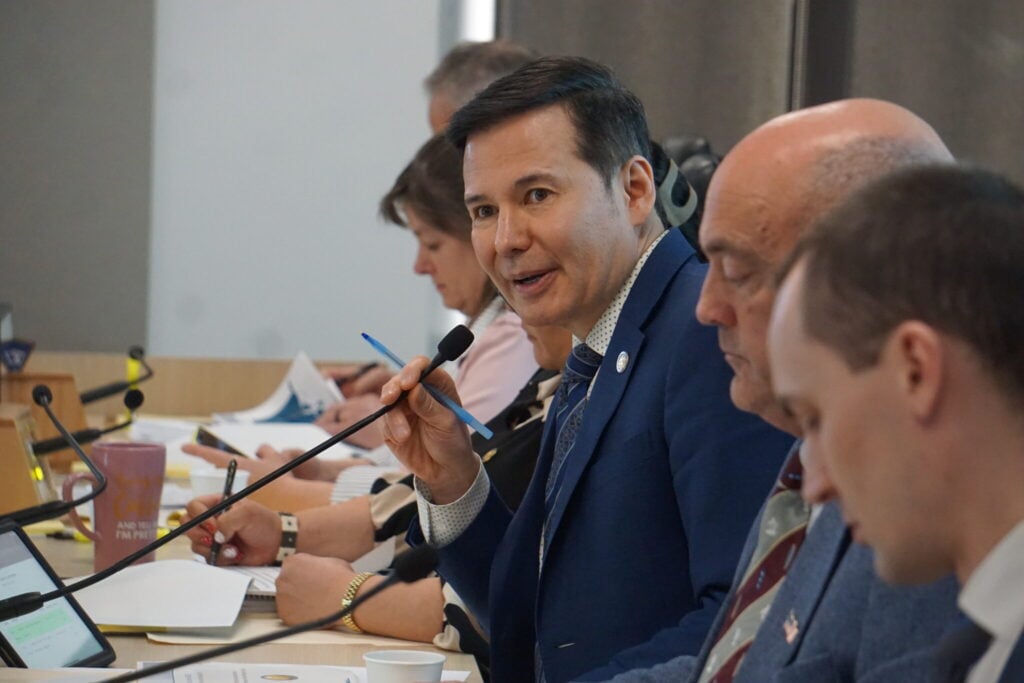
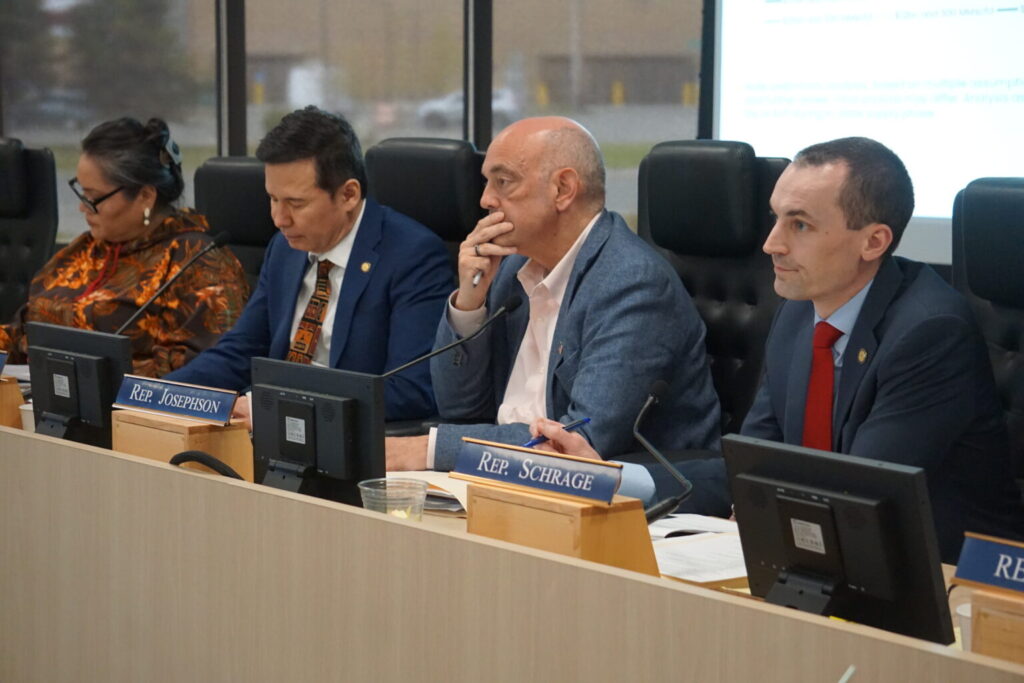
Rep. Neal Foster, D-Nome and co-chair of the House Finance Committee, asks a question during a May 27, 2026, hearing in Anchorage. Shown with Foster are other members of the committee: Rep. Alyse Galvin, I-Anchorage, Rep. Andy Josephson, D-Anchorage, and Rep. Calvin Schrage, I-Anchorage. The committe on Wedneday approved a version of a tax bill intended to encourage development of a natural gas pipeline. Lawmakers have been considering the bill during a special session called by Gov. Mike Dunleavy. (Photo by Yereth Rosen/Alaska Beacon)
Alaska lawmakers, meeting in a special session, advanced a bill intended to spur construction of a long-desired pipeline carrying natural gas from the North Slope to markets.
The legislature’s House Finance Committee approved the bill, House Bill 381, which would largely eliminate state and municipal property taxes on project-related infrastructure, replacing those revenues with money from gas flowing through the system.
The bill now heads to the House floor for consideration. For the bill to become law, it must be approved by the House and then reviewed and approved by the Senate before the special session ends on June 19. If the Senate makes changes to the bill, the House must vote to concur with them.
The Senate has its own version of the bill, Senate Bill 2001, which is currently under review in that body’s finance committee.
The House bill has been a top priority of Gov. Mike Dunleavy, who called the special session, and the Glenfarne Group LLC, a private asset manager and developer leading the current plan to commercialize long-stranded North Slope natural gas. They argue that property taxes are the major impediment to the project’s construction.
The Glenfarne project, which is in partnership with the state-owned Alaska Gasline Development Corp. proposes an approximately 800-mile pipeline from Prudhoe Bay to tidewater at Cook Inlet, where gas would be liquefied. Glenfarne became involved in the project last year, acquiring a 75% share from the Alaska Gasline Development Corp.
In comments just before their vote to move the bill, some House Finance Committee members said they had high hopes the measure will result in a pipeline project.
Rep. Frank Tomaszewski, R-Fairbanks, said the project will be as important as the trans-Alaska oil pipeline that his father helped build in the 1970s.
“I’m just humbled and honored right now to be able to be working on this legislation that is going to bring that next step, that gas pipeline, because 40, 50 years ago, that was what we were talking about,” Tomaszewski said at the hearing. “I’m looking forward to the groundbreaking ceremony for this project, because it will be transformational for the state, not only with lower gas prices and affordable energy but also tremendous amount of revenue for the state and local communities.”
Rep. Will Stapp, R-Fairbanks, had similar comments.
“Generally, at the end of the day, I think the vast majority of us and Alaskans really want to see the best chance possible to be provided to move forward with this transformational project,” Stapp said.
The bill went through numerous amendments, many of which were aimed at protecting local governments dependent on property taxes.
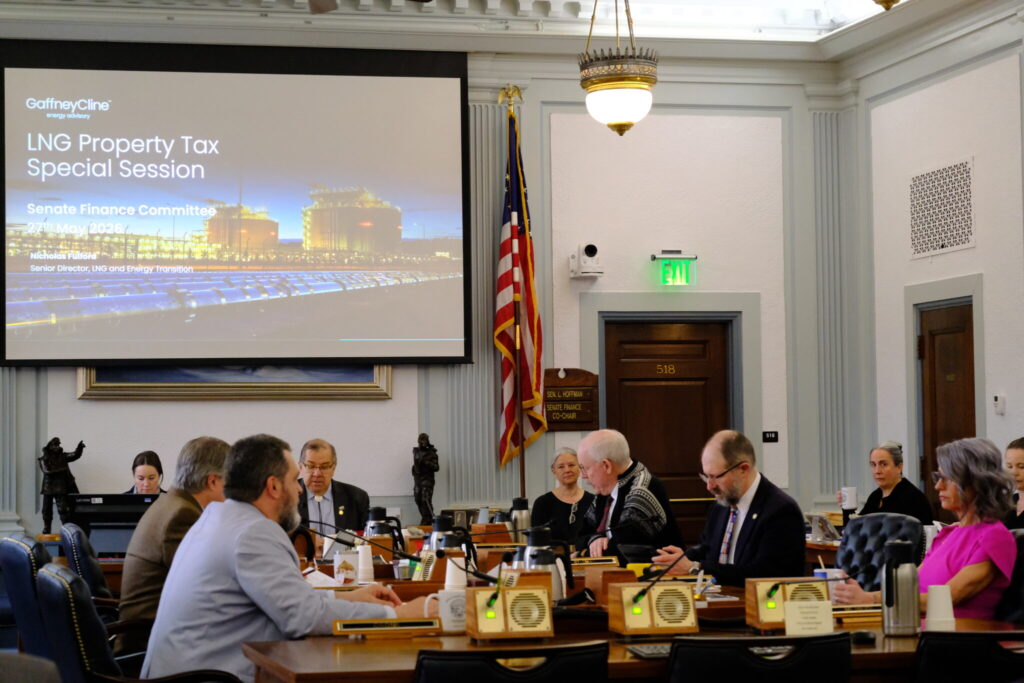
Members of the Senate Finance Committee convene on the first day of a special legislative session on the proposed LNG gas line project on May 27, 2026. (Photo by Corinne Smith/Alaska Beacon)
The firm developing the proposed trans-Alaska natural gas pipeline has proposed limiting the price for natural gas sold through the pipeline to Alaskans.
If accepted by legislators, the limit would prevent the cost of gas from rising if the pipeline costs more than expected.
The new proposal from pipeline developer Glenfarne comes as the Alaska Legislature continues meeting in a 30-day special session, considering a major tax break to support the AKLNG pipeline project. That project aims to build an 807-mile pipeline to bring natural gas from the North Slope to Cook Inlet for export and in-state use.
A price cap could resolve one sticking point in negotiations over the proposed tax break, but with half of the special session gone, a variety of other issues remain unresolved.
Those include basic elements about the tax break, including its size and length, as well as how municipal governments will be compensated for the impacts of construction, which is expected to bring as many as 12,000 new workers to the state temporarily.
The House Finance Committee is expected to begin voting on possible solutions to those issues next week.
Natural gas is the primary fuel for home heating and electricity in Southcentral Alaska, but officials estimate that by the end of the decade, local production from gas fields beneath Cook Inlet will be insufficient to meet demand.
Prices are already rising, and several gas-import projects have been proposed. The AKLNG pipeline is another possible solution, but because the pipeline and supporting infrastructure are so large, the project would need to also sell gas overseas in order to offset costs.
If the pipeline is built but no exports take place — something that could happen if the pipeline costs more to build than expected — the Alaska Department of Revenue has estimated that AKLNG gas would be much more expensive than imported gas.
In legislative hearings, that risk has caused some lawmakers to question the project.
Speaking to the Senate Finance Committee on Wednesday, Glenfarne Alaska LNG president Adam Prestidge said the company is on the verge of finalizing a firm, 30-year contract with Enstar, the largest natural gas utility in Southcentral Alaska.
That fixed-price arrangement would guarantee natural gas at no more than $16 per MMBtu, a measurement of heat capacity.
If the pipeline costs more than expected, cost overruns would not be passed on to consumers, said John Sims, Enstar’s president, when speaking to the House Finance Committee on Monday.
“Enstar’s agreement has a fixed price, and Enstar does not care if the project goes over cost. It does not impact in any way, shape, or form the price that we would be charging customers as a fixed price,” he said.
Rep. Alyse Galvin, I-Anchorage, immediately responded to Sims’ comment.
“A lot of us are very excited to say, yes, I 1,000% support this, because I want to keep low prices,” she said.
Capped price would be cheaper than imported gas
The figure given by Prestidge is equivalent to about $16.59 per thousand cubic feet of natural gas, using a standard conversion. That is cheaper than the forecast price of imports.
Dan Stickel, chief economist for the Alaska Department of Revenue, told legislators in late May that the department’s estimate for the cost of imported gas in 2033 — AKLNG’s planned completion date — “came to about $17 per thousand cubic feet price range.”
Sims told legislators on Monday that Enstar currently expects a “total, all-in cost between $16-22” per thousand cubic feet for imported gas.
Enstar’s current cost of gas is $10.80 per thousand cubic feet, but that will rise in coming years as production declines in Cook Inlet.
The $16 per MMBtu figure is a maximum, Prestidge said. If the pipeline is developed according to plan, exports would subsidize the cost of in-state gas, dropping it as low as $5 per MMBtu, he said.
Glenfarne’s $16 figure could rise with inflation, Prestidge said, but it wouldn’t be affected by cost overruns on building the pipeline.
Prestidge told the Senate Finance Committee that Glenfarne is open to applying a price cap on gas sold to other utilities and industries that might use natural gas.
“Glenfarne is supportive of language being added to any property tax bill that prohibits cost overruns on the project from being borne by either the state or the regulated ratepayers who are buying gas off the pipeline,” he said.
While a final deal between AKLNG and utilities is subject to approval by regulators, a price cap would directly address legislators’ concerns about affordability.
“I think putting that (cap) in a bill would provide a ton of reassurance, because it substantially mitigates your risk in a low-volume scenario,” said Rep. Zack Fields, D-Anchorage.
Sen. Kelly Merrick, R-Eagle River, listened in person to Prestidge on Wednesday.
“I don’t know if $16 is the perfect cap, but it’s addressing a significant concern and protecting Alaska ratepayers,” she said.
Long-awaited pipeline cost estimate met with mixed reaction
On the same day that Prestidge discussed the price cap, he also disclosed updated cost estimates for the pipeline project, saying the first phase of the project is now expected to cost between $13.2 billion and $16.9 billion.
Building facilities needed for gas exports would raise the cost to between $44.5 billion and $54.5 billion, Glenfarne estimates.
Legislators have previously criticized a lack of updated cost estimates, saying their absence is hampering their ability to work on a tax break.
Sen. James Kaufman, R-Anchorage, said the new data and the proposed cost cap “was kind of a tipping point” in discussions.
“I think it gives us more information to do our due diligence,” said Sen. Lyman Hoffman, D-Bethel and co-chair of the Senate Finance Committee.
Alaska currently levies a 2% tax on oil and gas property. Cities and boroughs are permitted to claim some or all of that tax on property within their boundaries.
To incentivize AKLNG investors, Dunleavy proposed replacing the property tax with an “alternative volumetric tax” of 6 cents per thousand cubic feet of gas shipped through the pipeline. The change would effectively result in a 90% tax break, and there would be no tax during construction, because gas isn’t yet being shipped.
The impact of the switch would be heaviest on municipalities. They would have to deal with the consequences caused by having thousands of extra people living nearby, but they would have little (or no) new tax revenue to cover the resulting costs.
The North Slope Borough funds most of its services through the petroleum property tax and has opposed Dunleavy’s proposed change.
Rep. Robyn Niayuq Frier, D-Utqiagvik, represents the North Slope. She has deep concerns about the switch to a volume-based tax and thinks Glenfarne’s new cost estimates are still too low.
“I think there are a lot of people who are having these conversations who think that there’s no way this is actually going to happen, that this is a pipe dream,” she said of the pipeline project.
That would reduce the size of the break that Dunleavy requested and increase the amount the state and boroughs would collect in revenue.
Dunleavy has suggested that the new tax should last the life of the project. Other legislators, including Frier and Sen. Bert Stedman, R-Sitka, are suggesting shorter terms.
Lawmakers are also debating the size of a proposed “impact fund” that Glenfarne would provide to cover the costs that cities and boroughs would incur as thousands of workers gather to build the pipeline.
Legislators also haven’t decided what communities would be eligible for the fund or how the money would be distributed.
The House Finance Committee is scheduled to begin debating the unresolved issues on Monday and could advance a bill to the House floor as soon as the second half of next week.
The Senate could take up that measure on the week of the 15th, but with the special session ending on June 19, there’s a real risk that legislators will run out of time before they decide the multibillion-dollar issues at stake.
“We have to find a product that meets the polar opposite forces that are out there,” said Speaker of the House Bryce Edgmon, I-Dillingham.
“The needle’s not been threaded yet, and if we don’t get the needle threaded … I think ultimately, then the 30 day special session is — I don’t know what’s going to happen. I just, quite frankly, don’t know.”
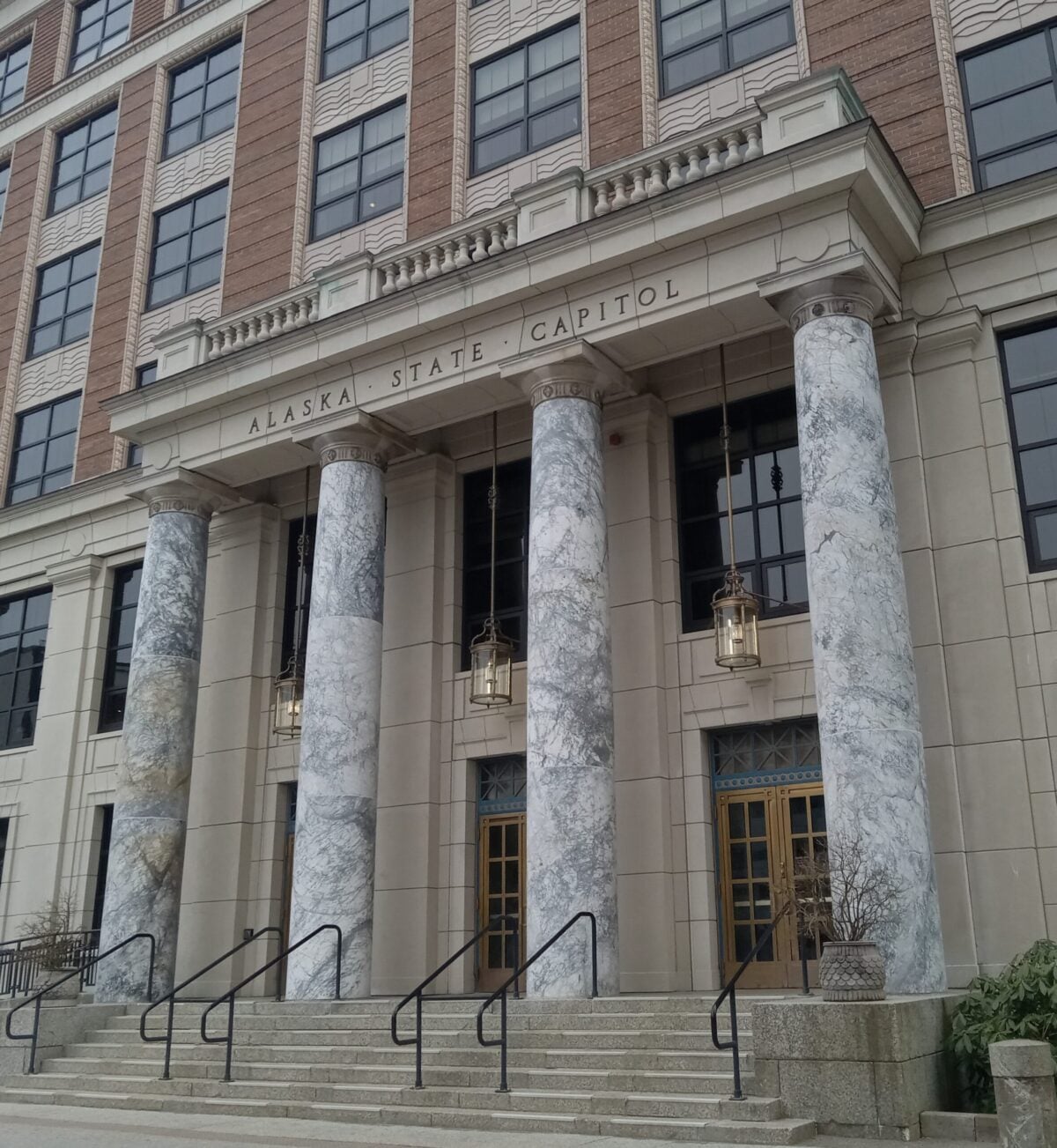
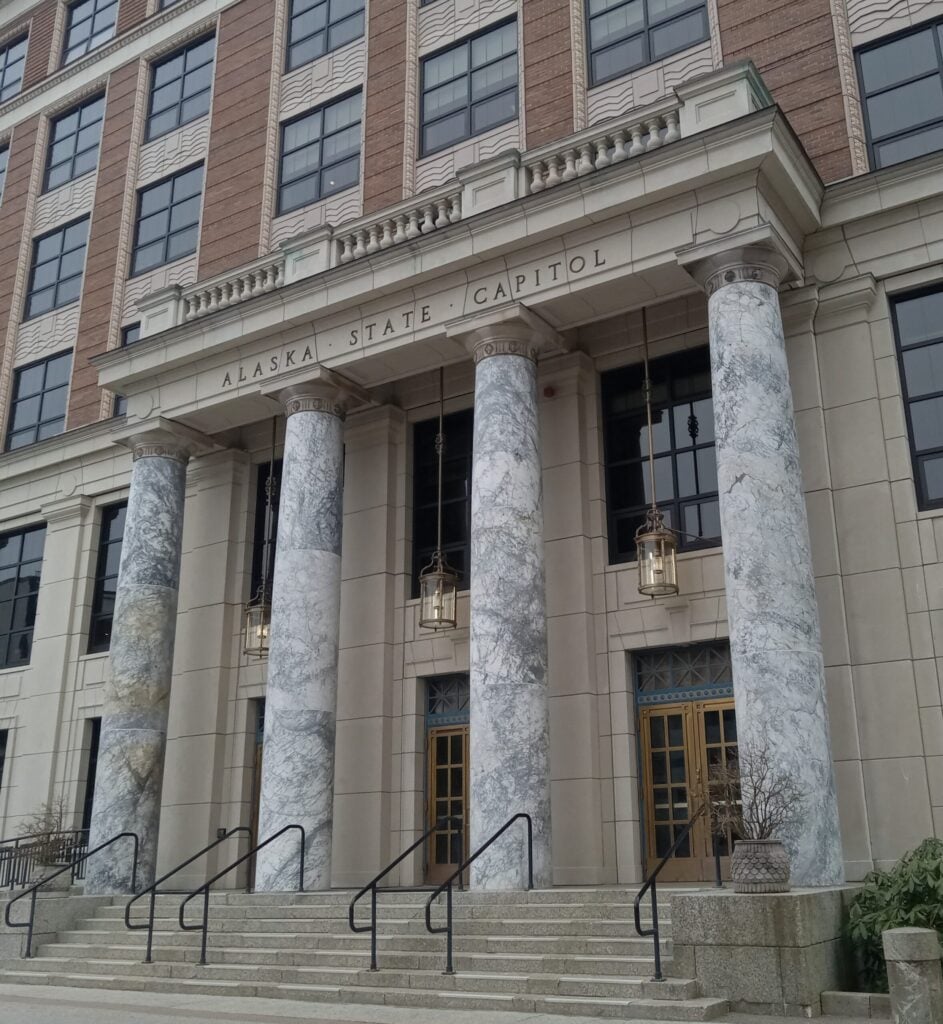
The Alaska State Capitol in downtown Juneau.
(Photo by Greg Knight/News of the North)
The Alaska State Capitol in downtown Juneau. (Photo by Greg Knight/News of the North)
NOTN- Alaska lawmakers are in a 30-day special session to weigh a sweeping tax break for the proposed North Slope natural gas pipeline.
Juneau Sen. Jesse Kiehl, said the governor’s bill would shift the project away from the current 20-mill petroleum property tax structure and toward a volume-based tax on gas flowing through the line. He said the proposal amounts to roughly a 90% tax cut that would last as long as the pipeline operates.
“That’s one of the things we’re working on.” He said, “The governor’s proposal is about a 90% tax cut, and the governor’s proposal lasts as long as the pipeline lasts. They will not need that, right? They will not need that, past, heaven knows, past year 20 when you got almost all your debt paid off.”
Kiehl said some early tax relief is reasonable for a multibillion-dollar project that will not generate revenue immediately, but he questioned the size and duration of the proposed break.
“During the regular session, we couldn’t seem to get as many numbers, real numbers, as we needed, so we’re working on that.” He said, “A big gas line could be a huge project for the state, big for the state’s economy, a lot of jobs when it gets built. The other thing we have to make sure of is that we also protect the treasury, because the risk with these things is cost overruns, right? The oil pipeline cost could be more than double what they planned on.”
Lawmakers are seeking more complete data from project backers to determine how large a tax incentive is necessary and how long it should last.
While the gas line would not deliver gas to Southeast Alaska, Kiehl said the region’s benefit would come from new state revenues that fund public services, including schools and state troopers.
“The benefit we get from Alaska gas going to market is some money in the treasury to pay for public services, all the things we need. So, we’ve got to make sure that we watch those risks.” He said.
Kiehl also added that if the state grants a substantial property tax break, it will also need to ensure money flows to local governments along the route, such as Anchorage, Kenai and Fairbanks. Those communities would face increased demand for schools, law enforcement, road work and other services during construction.
The governor’s bill was introduced midway through the regular session and has already been vetted by House and Senate resources committees. The measure is now before the finance committees, which Kiehl said will use the full 30 day special session to scrutinize the fiscal impacts and negotiate possible changes.
If project backers do not provide the information lawmakers are seeking, he said, the Legislature could choose to “cut our losses and expenses and gavel out,” ending the special session without approving the package.
Late-afternoon sunlight bathes the ConocoPhillips building in downtown Anchorage on March 10, 2026. A legal dispute over confidentiality of data from exploratory wells drilled by ConocoPhillips in the National Petroleum Reserve in Alaska came down to interpretations of the federal Naval Petroleum Reserves Production Act. The Alaska Oil and Gas Conservation Commission is seeking to release the information publicly, and an appeals court ruled in the state’s favor. (Photo by Yereth Rosen/Alaska Beacon)
The state of Alaska has the right to make public data from exploration wells drilled by ConocoPhillips in the National Petroleum Reserve in Alaska, an appeals court has ruled.
The 9th Circuit Court of Appeals ruling, issued Wednesday, overturns a 2023 decision by U.S. District Court Judge Sharon Gleason that allowed well data to remain under wraps.
At issue is a collection of wells drilled in the reserve, which is federal territory. ConocoPhillips argued that data confidentiality is explicitly guaranteed in federal law and that federal law supersedes state law, but the appeals justices disagreed.
On the National Petroleum Reserve, “Alaska has its own authority to gather — and disclose — data collected from oil and gas exploration, authority that it exercised even before Congress opened the Reserve to private exploration,” the appeals court ruling said.
The Indiana-sized National Petroleum Reserve is of keen interest to energy companies. It is underlain by a formation called the Nanushuk, the source of oil for ConocoPhillips’ huge Willow project, which is under development, the Santos-operated Pikka project, which recently started production, and other prospects. A lease sale held in the reserve in March, the first since 2019, drew a record $163 million in high bids.
Under state law, data from exploratory oil and gas wells is to be disclosed publicly after those wells are completed. State law provides for a 24-month period of confidentiality, after which the AOGCC is to make the data publicly available, unless the Department of Natural Resources commissioner grants an exemption to keep the information confidential for a longer period.
After ConocoPhillips’ request for a DNR exemption was denied, the company in 2022 sued the Alaska Oil and Gas Conservation Commission to keep the data confidential.
ConocoPhillips argued that the federal Naval Petroleum Reserves Production Act expressly prevents the AOGCC and Gas Conservation Commission from disclosing data from the wells, which were drilled on federal leases.
Gleason’s March 8, 2023, ruling came to a slightly different conclusion that nonetheless backed ConocoPhillips. She found that the federal law implicitly protects data confidentiality, despite state law.
The appeals court judges agreed that the federal law has no explicit restriction on state release of well data, but they drew a different conclusion from that finding than Gleason did.
For the state, the appeals court ruling is a victory that is good for future development, Acting Attorney General Cori Mills said in a statement.
“Alaska relies heavily on our resources and resource development. We are also stewards of those resources for the citizens of Alaska. Alaska’s law both allows resource development now, and encourages further development and exploration in the future. We’re pleased that the Ninth Circuit recognized that federal law has not overridden Alaska’s balanced approach,” Mills said.
ConocoPhillips is still considering its next steps, a company spokesperson said. “ConocoPhillips Alaska, Inc. has received the court’s decision and is evaluating it. ConocoPhillips Alaska, Inc. has not decided on whether to appeal the decision,” company spokesperson Megan Olson said by email.
The well data that is the subject of the case remains confidential, according to court documents. Confidentiality has been maintained all the time that the court case has been active.
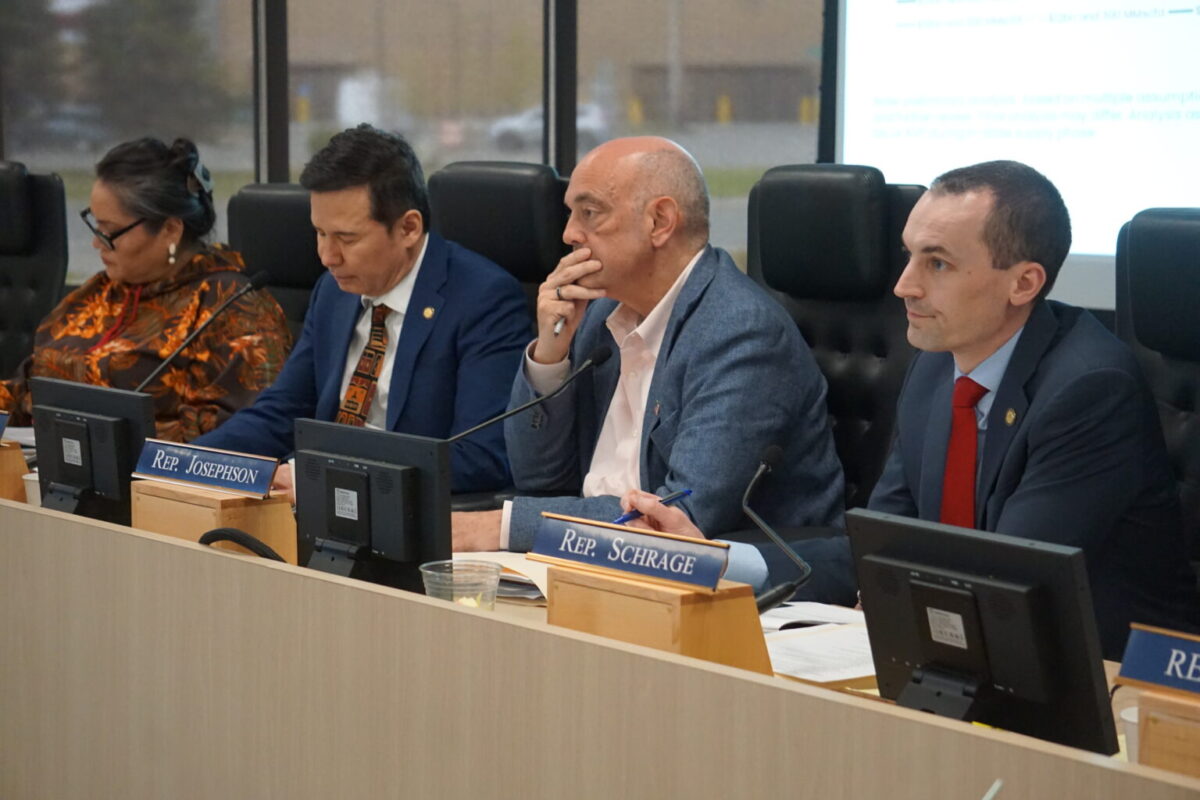
Rep. Nellie Unangiq Jimmie, D-Toksook Bay, Rep. Neal Foster, D-Nome, Rep. Andy Josephson, D-Anchorage, and Rep. Calvin Schrage, I-Anchorage, listen to Nick Fulford, senior director for gas, LNG and energy transition at GaffneyCline Energy Advisory, at a May 26, 2026, House Finanance Committee hearing in Anchorage. (Photo by Yereth Rosen/Alaska Beacon)
The proposed trans-Alaska natural gas line faces a narrow road to profitability, even with Gov. Mike Dunleavy’s proposed multibillion-dollar tax break, according to estimates presented to state legislators.
The more the pipeline costs, the more its builders will need to charge for gas shipped through it in order to make money. But if the cost of Alaska gas is too high, it isn’t competitive with gas from other sources around the world.
On Tuesday, members of the House Finance Committee met for the second time in a 30-day special session devoted to discussing the tax break.
Nick Fulford of GaffneyCline, the Legislature’s hired analyst for the pipeline project, said previously published financial modeling by the Alaska Department of Revenue remains the best public look at whether the project pencils out financially.
“The main question really is: How much bigger and how much more capital cost can the project support before it becomes uneconomic,” he said.
Nick Fulford, senior director for gas, LNG and energy transition at GaffneyCline Energy Advisory, speaks to the House Finance Committee at a May 26, 2026, hearing in Anchorage. (Photo by Yereth Rosen/Alaska Beacon)
In 2018, officials with the Alaska Gasline Development Corp. suggested that building a pipeline from the North Slope to Cook Inlet — plus large industrial processing plants on either end — would cost roughly $43.4 billion, including money earmarked for possible cost overruns.
Since then, the official cost has risen only slightly, to $46.2 billion, but many state lawmakers have said they are skeptical of that figure, because it does not seem to account for inflation.
Glenfarne, a multinational corporation that now owns 75% of the pipeline project, has not disclosed an updated figure.
Rep. Alyse Galvin, I-Anchorage, said that when she uses the Consumer Price Index to judge how much the cost has grown, it’s significant.
“When I look at cost adjustment, just using CPI, just a straight cut through, that brings us to $57 (billion) to $60 billion,” she said during Tuesday’s hearing.
“I would say it seems highly likely that it would be more than $46 billion given the general inflation that we’ve seen,” Fulford said.
Rep. Alyse Galvin, I-Anchorage, poses a question to Nick Fulford, senior director for gas, LNG and energy transition at GaffneyCline Energy Advisory, at a May 26, 2026, House Finanance Committee hearing in Anchorage. Next to her is Rep. Frank Tomaszewski, R-Fairbanks. Photo by Yereth Rosen/Alaska Beacon)
Publicly available estimates suggest gas could be bought from North Slope producers between $1 and $2 per thousand cubic feet. That’s what’s technically known as the “upstream price.”
In a scenario where the pipeline costs Galvin’s suggested figure, the state’s tax laws don’t change to help the project and the upstream price is $1.50 per thousand cubic feet of gas, the Department of Revenue estimates that an end buyer in Japan could expect to pay more than $11 per thousand cubic feet.
That’s likely a problem for the pipeline project, because according to GaffneyCline’s estimates, the average contract price in Japan over the past 10 years has been $10.41 per thousand cubic feet — less than what the Alaska project would have to charge to earn its expected profit target.
Under a tax change proposed by the governor, the end buyer’s price would drop to about $10.40, using Galvin’s cost estimate and the $1.50 upstream price.
But if the cost of upstream gas rises, or if the cost of the pipeline rises, even the governor’s proposed tax break isn’t enough to keep the project economically competitive.
Fulford, speaking to the House Finance Committee, said he thinks Asian LNG prices will rise in the coming years, possibly offsetting any rising costs and keeping the project viable.
But he also acknowledged that with so many unknowns, it’s not clear where the project becomes uneconomic.
“The question is … if the price of LNG goes up and if the capital cost goes up, then where’s that sort of tipping point where the project can still go ahead, even if it’s a much higher capital cost?” he said.
Under Dunleavy’s proposal, the state’s existing petroleum property tax would be largely replaced by a tax on gas that moves through the pipeline.
Speaking last week in Anchorage, Glenfarne CEO Brendan Duval said the governor’s proposed change is necessary for Glenfarne to get financing for the project.
“It won’t be financeable in the form that we’re trying to do it without the tax stabilization law,” he told the Anchorage Daily News.
Legislators appear favorable to the general idea, but they don’t know what tax rate to use for the “alternative volumetric tax,” as it is formally known.
Dunleavy has proposed 6 cents per thousand cubic feet of gas. House and Senate lawmakers are each considering different, higher rates.
They’re also considering mandatory impact payments to compensate cities and boroughs that collectively would lose out on $14 billion in property taxes through 2063 if the governor’s plan is adopted. A mandatory natural gas spur line to Fairbanks is also being discussed. As currently planned, the pipeline runs to the west of Fairbanks.
Rep. Calvin Schrage, speaking Tuesday, said legislators are working with a large amount of uncertainty, and that is slowing their work.
“If we could eliminate some of these variables and have it known, it would really help us in figuring out where this might be going, but we don’t have that right now,” he said. “What this is ultimately showing is that under our current tax structure, there’s a very small window of break-even profitability for a developer.”
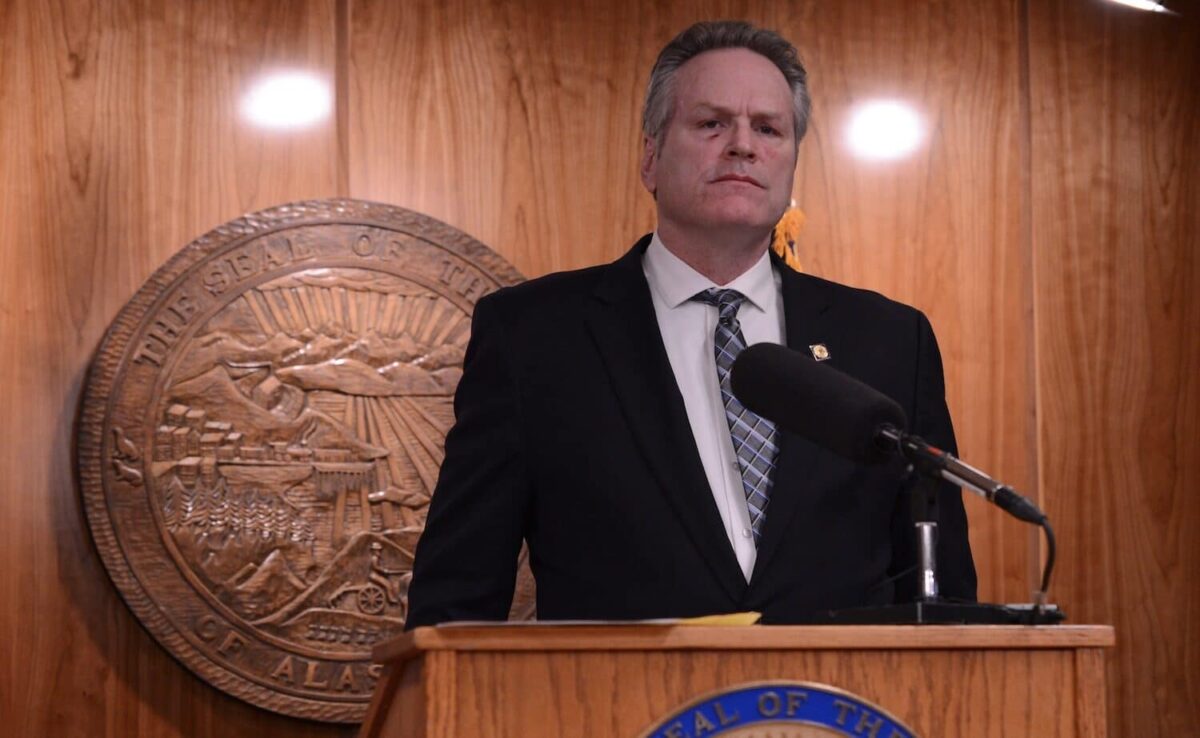
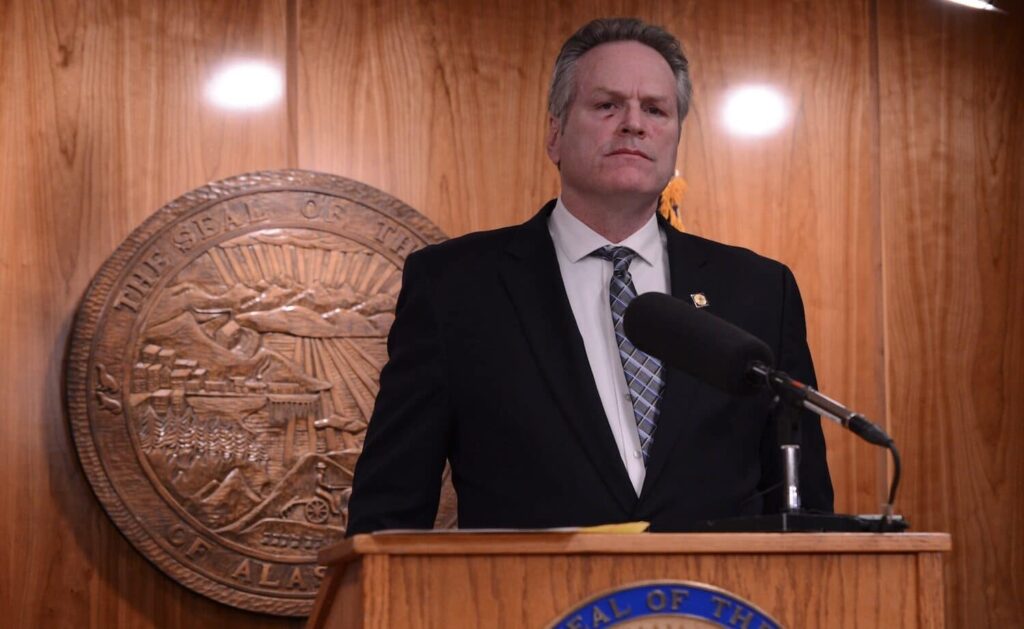
Alaska Gov. Mike Dunleavy speaks during a news conference on Friday, March 15, 2024. (Photo by James Brooks/Alaska Beacon)
Alaska Gov. Mike Dunleavy speaks during a news conference on Friday, March 15, 2024. (Photo by James Brooks/Alaska Beacon)
NOTN- Alaska lawmakers will continue holding hearings this week during a 30 day special session on Senate Bill 2001, and separately House Bill 381, the governor-backed gas pipeline tax proposal tied to the proposed Alaska LNG project.
The Alaska State Senate Finance Committee is scheduled to meet today, Thursday and Friday at 9 a.m. in Juneau to hear presentations and discussion on the bill.
Today and Thursday’s hearings will include presentations from consulting firm GaffneyCline. Friday’s meeting is also focused on continued review of the legislation.
The House met yesterday, and will continue work this week in Anchorage.
Governor Mike Dunleavy called the special session after lawmakers failed to pass a gasline bill during the regular session, lawmakers received the governor’s proposal on day 80 of 120.
The governor is pushing for larger tax breaks and incentives for the project’s developers.
According to reporting from the Alaska Beacon following an Energy Conference in Anchorage, state and local governments would eliminate 90% of the property tax that would be levied on gasline-related infrastructure in exchange for future opportunities to tax natural gas as it moves through the yet-to-be-built system.
Though legislators are currently sitting on both sides of the fence, some argue the proposal would reduce future revenue for both the state and local governments along the pipeline route.