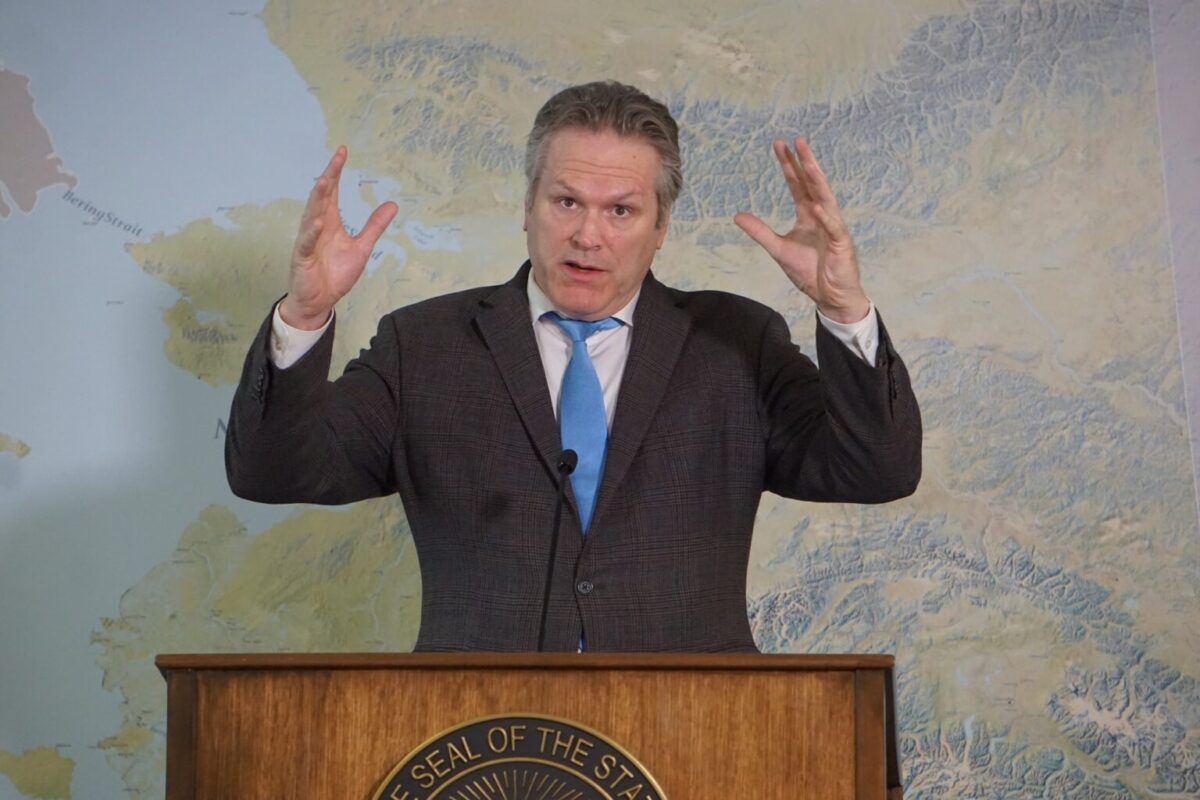
Gov. Mike Dunleavy speaks about at a May 4, 2026, news conference about his property tax bill intended to help draw investment in a massive natural gas pipeline. The news conference was held in his Anchorage office. (Photo by Yereth Rosen/Alaska Beacon)
Alaska Gov. Mike Dunleavy is urging state lawmakers to act on his proposal to cut state taxes by $7.2 billion over the next 36 years to subsidize construction of the proposed trans-Alaska natural gas pipeline.
Failing to act, he said, could keep the pipeline from being built at all.
“This bill is too important. This concept is too important,” Dunleavy said. “This is not setting up a tax for the lemonade stand down here in the corner by the hot dog stand. This is the biggest (natural gas) project on the planet.”
But some state lawmakers are skeptical about the size of the governor’s proposed subsidy. Two alternatives — one in the House and the other in the Senate — are advancing through committees in the final weeks of the session.
Other legislators believe the pipeline already makes financial sense and no change is needed.
As a result, four different paths await state legislators in their last weeks, and it isn’t clear which one they’ll take — or whether the governor will call legislators into special session on the issue.
There’s also been no agreement with cities and boroughs affected by the proposed tax cut. There’s also no public agreement with North Slope gas producers or the state’s labor unions.
At the core of the problem facing lawmakers is how much — if any — subsidy is needed in order to attract investors who would pay for building the pipeline project in two stages.
The first stage would involve a pipeline from the North Slope to Cook Inlet for in-state use. The second stage would construct processing plants at the north and south ends of the pipeline, allowing larger volumes of gas to be exported overseas.
If both phases of the project are built, Department of Revenue economist Dan Stickel told legislators on Tuesday, the result would be cheaper natural gas than currently available from Cook Inlet.
“If the full project goes forward, it’s a significant reduction in cost to Alaskans,” he said.
Rep. Zack Fields, D-Anchorage, noted that Alaskans could be locked into high natural gas prices if the second phase is never built or if both phases are built but no exports take place.
For a hearing last week, the Department of Revenue estimated that under that scenario, prices in Anchorage would exceed $27 per thousand cubic feet by 2033, more than double current prices.
It’s unclear how likely that worst-case scenario is.
The larger the subsidy, the greater the chance that the project is built in full and the lower the price of gas for Alaskans, project proponents say.
“Our objective is to have the lowest cost gas for Alaskans and have certainty on the project,” said Adam Prestidge, president of Glenfarne Alaska, the project’s developer.
A problem, some legislators say, is that they’re working without information. Glenfarne, an international firm that last year bought 75% of the project and became its developer, has not shared its latest estimate for how much the pipeline will cost.
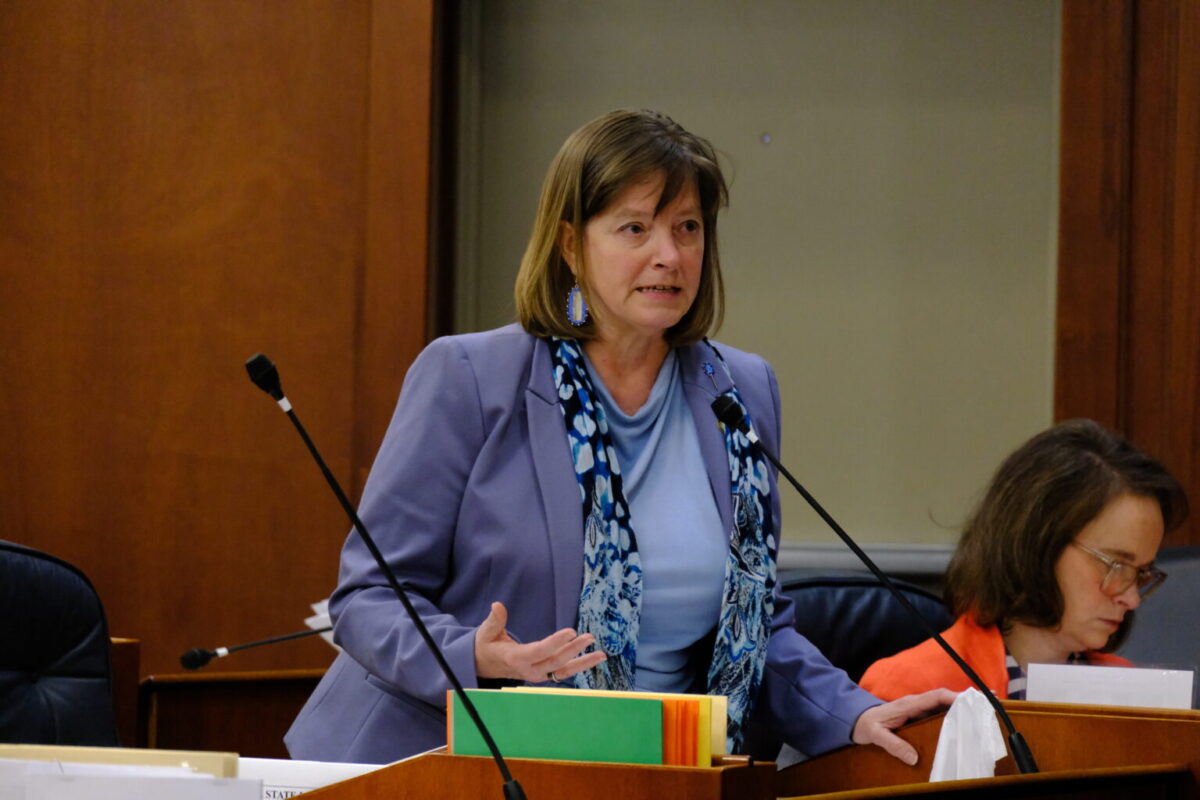
“I think it’s important for us to have starting points on what the actual numbers are, because if it needs tax relief, let’s figure out what the relief is,” said Sen. Bill Wielechowski, D-Anchorage.
Legislators also don’t know how much North Slope gas producers will charge for the gas, or what international buyers will pay for it.
Some of that information is impossible to know — legislators are trying to anticipate the price of natural gas in 2033 and beyond, once the pipeline is up and running.
Other information is being kept confidential until a final investment decision or when proposed prices are submitted to state regulators, something that’s months away at the earliest.
Legislators are being asked to take action within weeks.
“We’re not really competitive in the global market if the (cost) overrun is 40%,” said Rep. Julie Coulombe, R-Anchorage, on Tuesday.
The gas pipeline’s publicly stated cost on Tuesday was $46 billion, but most legislators believe the true figure is higher.
“I think it’s really $57 billion … if not higher,” said Sen. Bill Wielechowski, D-Anchorage, relying on a prior statement from former U.S. Sen. Mark Begich.
Begich, a Democrat, lost to Gov. Mike Dunleavy in the 2018 governor’s election. Now, Begich is a paid adviser, hired by Dunleavy’s administration on a $100,000 contract.
In a Tuesday hearing, Begich said lower taxes would not increase profits for investors or developers and would simply lower the end cost of gas for consumers.
“If you lower the tax, it does not go to the return or the profit or anything of this project,” he said.
“I am just telling you right now, every dollar you save consumers is a dollar in their pocket in an economy that is struggling,” Begich said.
Under his calculations, Wielechowski said, the average Southcentral Alaska family would save $55 per year if the pipeline is built and produces gas according to the latest available cost analysis from the Department of Revenue.
The subsidy needed to create that savings amounts to a loss of $500 per Alaskan per year, he said, money that could be used for the Permanent Fund dividend or state services.
“That’s not a good deal,” he said of the exchange.
The latest available version of the Senate proposal shows an increase in revenue to the state, rather than a subsidy. Instead of earning $27.9 billion through 2062, the state would earn $42.1 billion.
“I would describe that as very burdensome for the project and potentially prohibitively so,” Prestidge said.
“I will characterize that tax at that level as something that would require some real reconsideration of the drawing board of how the project is structured and taken forward,” he said.
In the House, discussions have been less acrimonious. The House Resources Committee on Tuesday morning discussed a proposed a subsidy of less than $5.9 billion, smaller than the governor’s concept but similar in other regards.
“It would be a tax reduction but a smaller tax reduction than proposed by the governor,” Stickel said of the House proposal.
On Tuesday afternoon, the committee worked methodically through a long series of amendments to its plan, frequently consulting Prestidge and Begich about how each might affect financial negotiations.
The House and Senate bills are each in an early stage of development. If passed by the resources committees, each would have to pass through their respective finance committee before advancing to a floor vote and on to the other half of the Legislature.
Rep. Alyse Galvin, I-Anchorage, speaks on the House floor on Apr. 13, 2026. (Photo by Corinne Smith/Alaska Beacon)
The Alaska House of Representatives on Monday rejected a bill passed by the Senate that would have applied state corporate income taxes to privately owned oil and gas companies that currently do not pay them. Supporters said the bill would have generated up to $100 million in new revenue for Alaska.
The proposal would have required companies licensed as S corporations or as limited liability companies to pay state corporate income taxes for profits earned in the state, which they currently do not pay. The largest company affected would have been Hilcorp, a privately run Texas-based company that operates the Prudhoe Bay oil fields as well as most of the oil and gas operations in Cook Inlet.
The state does not levy a tax on income earned by S corporations and LLCs because their profits go to owners or shareholders. In many states, those people would pay personal income tax on the money, but Alaska does not have a personal income tax, so such companies avoid taxation on profits. Traditional corporations, or C corporations, are publicly traded and already subject to existing state tax law.
Four members of the multipartisan House majority caucus objected to the proposal, and split to join the all-Republican minority members to reject the Senate’s version of House Bill 194 by a 23 to 17 vote.
House Majority Leader Rep. Chuck Kopp, R-Anchorage, was among those to oppose the bill.
House Majority Leader Chuck Kopp, R-Anchorage, speaks on Monday, March 24, 2025, in favor of House Joint Resolution 11. (Photo by James Brooks/Alaska Beacon)
“This policy creates uncertainty at the exact moment Alaska needs more energy development,” Kopp said on Monday on the House floor. “These are the people that are actually keeping our energy crisis at bay right now.”
Kopp argued the change would potentially hamper new oil and gas development. “It’s been a cold winter in Southcentral and along the Railbelt, and this is at the same time we’re asking these folks to drill more, to produce and store more gas, to explore more and to sign long term gas contracts. So it seems shortsighted to hamstring gas producers when we need them to invest a lot more right now, just to keep our schools warm, our homes heated and our businesses going,” he said.
Anchorage Independent Rep. Alyse Galvin, and Democratic Reps. Carolyn Hall of Anchorage and Robyn Frier of Utqiagvik also joined the minority caucus to oppose the bill on Monday.
Anchorage Democrat Sen. Forrest Dunbar sponsored the amendment to levy the corporate tax on privately owned oil and gas companies on a bill that would have been a routine renewal of a state oil royalty lease agreement, which passed the Senate last month.
Dunbar criticized the House decision in a Wednesday interview, saying it was a missed opportunity to bring in revenues for Alaska.
“They took potentially $100 million or more and rather than put it towards schools or the state of Alaska, they hand it to a billionaire in Texas. I think that was a mistake,” Dunbar said. “This is some of the lowest of low hanging fruit.”
“So I’m very disappointed in their actions,” he added. “And frankly, I’m surprised that some of the members of my party voted the way they did.”
On Monday, Big Lake Republican Rep. Kevin McCabe argued against the bill saying a tax focused on specific corporations that could result in lawsuits against the state. “I would suspect that this will lead directly to the courts,” he said. “This is just plain wrong. We shouldn’t be doing this.”
Galvin, a member of the multipartisan majority caucus, said she opposed that the measure was added to the underlying bill, but said she sees the need for more revenue. “I do think that it’s confusing when we add one bill to another, and haven’t properly vetted (it),” she said.
Galvin said she has proposed legislation, House Bill 152, which would include the corporate income tax provision, as well as a 4% state income tax on individuals earning more than $150,000 and an annual $150 tax per Alaskan to help pay for state services like education. It’s now being considered by the House Finance Committee.
“In a bill that I’m working on, I’m certainly careful to not call out one company,” she said. “But we do need to look at fairness also in all of our taxation. And I think that there is a place for us to address this.”
Galvin also requested to be excused from the vote citing a conflict of interest, but there was an objection on the House floor and she was required to vote. She told the Anchorage Daily News her husband works for Great Bear Pantheon, an Alaska subsidiary of Pantheon Resources, a Texas-based oil and gas exploration company.
Several members argued in support of strengthening corporate income taxes to provide much-needed revenues for Alaska.
Rep. Ky Holland, I-Anchorage is seen during debate on the operating budget on Apr. 13, 2026. (Photo by Corinne Smith/Alaska Beacon)
Rep. Ky Holland, I-Anchorage, supported the provision saying it was a defining moment for the Legislature to take action to address what he called the “Alaska disconnect” — being a resource rich state without capturing the economic value and benefits for residents.
“I believe this is a defining question for many of us, who I think, recognize that our state has moved past looking for the fiscal cliff and is now out beyond it,” he said. “And it’s now time for us to decide, are we willing to take some difficult votes and take some difficult action?”
Holland said failing to change the tax code could create a scenario where other businesses incorporate as S corporations or LLCs to avoid corporate income taxes. “This bill offers a way to address a point of fairness in the taxation that we have,” he said.
The amended bill now returns to the Senate, which can remove or change the provision. Those acts could result in a conference committee made up of representatives from both chambers to reach agreement on the bill.
The original legislation was introduced by the governor and passed the Alaska House last year. It would renew a three-year oil royalty agreement between the state and Marathon Petroleum Corporation, for state owned oil to be processed at its refinery in Nikiski, on the Kenai Peninsula, valued at between $4 million and $18 million in state revenue.
Several lawmakers in the House, including Kopp, said the company was no longer interested in the state contract, voiding the need for the legislation. A spokesperson for Marathon declined to comment on Wednesday, saying the company does not comment on its crude oil sourcing.
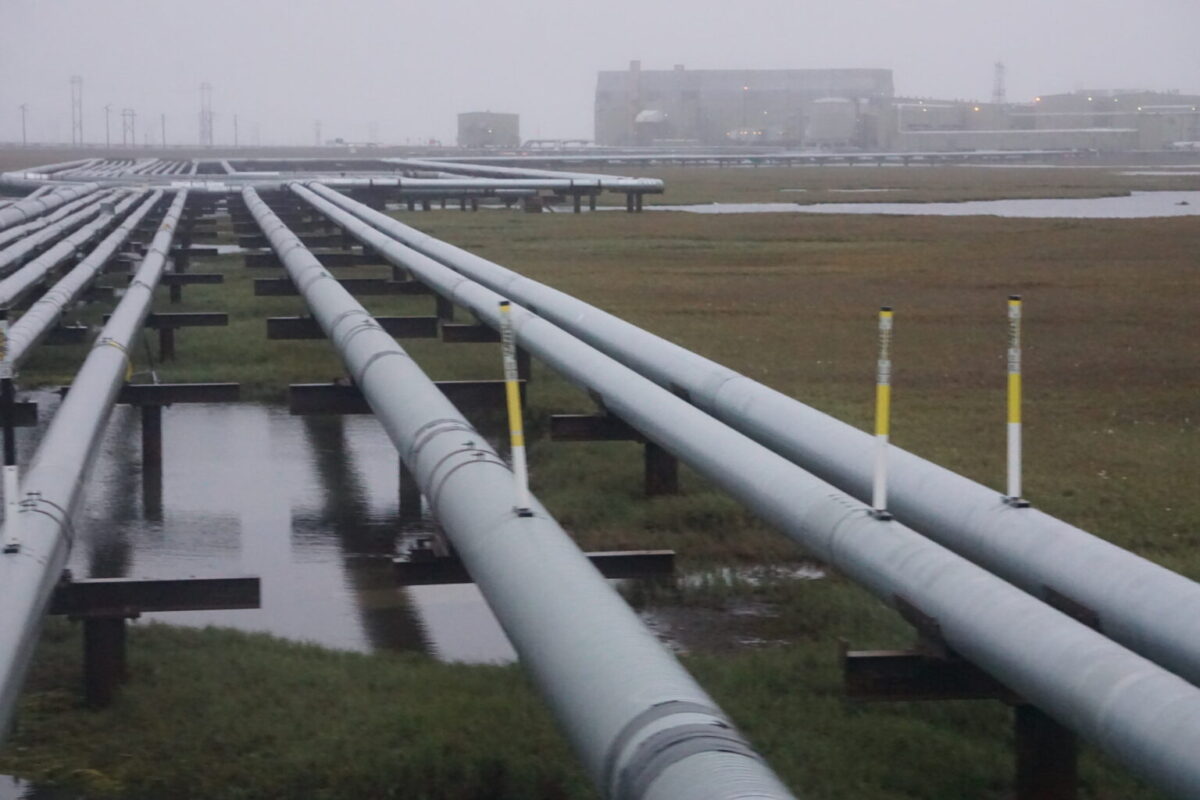
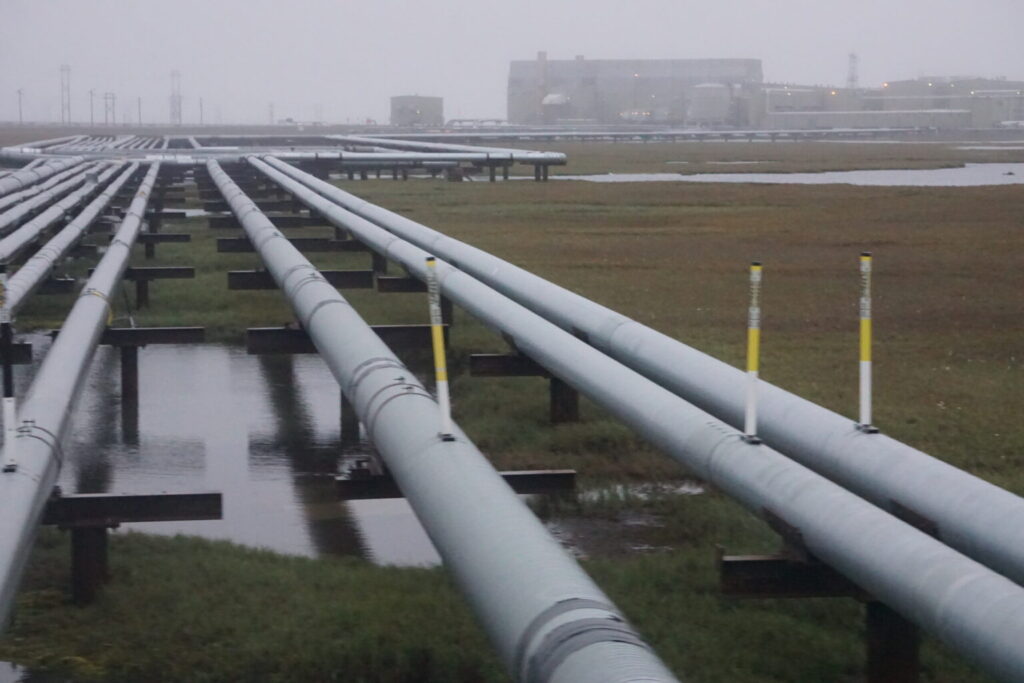
A network of pipelines, seen on Aug. 23, 2018, snakes through a portion of the Greater Prudhoe Bay Unit on Alaska’s North Slope. (Photo by Yereth Rosen/Alaska Beacon)
Five Alaska mayors voiced concerns about how a proposed tax break for the Alaska LNG gas line project would impact their communities.
Republican Alaska Gov. Mike Dunleavy has proposed eliminating property taxes and other local taxes for the $46 billion megaproject. Instead, his bill would impose a volume-based tax when substantial quantities of gas are delivered from the North Slope.
The Alaska Department of Revenue estimated Dunleavy’s bill would equate to a roughly 90% reduction in property tax revenue, once the pipeline is at full capacity. The state agency has said the pipeline will not move forward without cutting property taxes for Glenfarne, the New York-based developer of the proposed pipeline and export facilities.
Five Alaska mayors on Friday testified to the Senate Resources Committee in support of the 800-mile pipeline, which is set to run from the North Slope to Cook Inlet. But the municipal leaders also expressed concerns about the potential loss of revenue from the governor’s tax break and the impacts on municipal services.
‘Bottom offer’
Peter Micciche is mayor of the Kenai Peninsula Borough, one of Alaska’s largest with roughly 62,000 residents. He said a liquefaction facility, equating to 43.5% of the total project, is set to be located in the coastal region.
Micciche said the project would have tens of millions of dollars of impact annually for the Kenai Peninsula, with costs set to be borne by local communities under Dunleavy’s bill. He said the proposed elimination of all local taxes for Alaska LNG is “cutting deep into the fabric of how our communities work. And that worries me.”
He cited concerns about Dunleavy’s proposed tax rate rising by 1% annually. He said the borough’s budget increases on average by 2.5% each year, meaning that would leave the Kenai Peninsula “underwater.”
“Costs have shifted from the state to the municipalities. But we simply cannot afford additional costs,” he said to lawmakers Friday.
Micciche, a former long-time oil and gas executive, emphasized that he is excited by the project, but he considers the governor’s tax break to be “a bottom offer.”
Adam Prestidge, president of Glenfarne Alaska LNG, on Monday told the Senate Resources Committee that the company recognizes there will be impacts to municipalities from the project. He said discussions are ongoing with municipal leaders about how the company will cover some costs to ensure communities feel comfortable they “will be taken care of.”
Senate President Peter Micciche, R-Soldotna, listens to questions from senators during a break in Alaska Senate proceedings on Tuesday, May 3, 2022 at the Alaska State Capitol in Juneau. (James Brooks / Alaska Beacon)
Micciche, a former Republican Alaska Senate president, framed the scale of the challenge of negotiating acceptable legislation for communities and Glenfarne with less than half of the legislative session left until adjournment. “This bill needs a lot of work,” he said.
“We’re ready to sit down and pen a deal that works for everyone — the developers, our community, Alaskans — and I hope to God that comes along with affordable gas,” Micciche said.
‘Once-in-a-lifetime project’
Supporters remain bullish on the gas line’s potential to be an economic boon for Alaska. Former Democratic U.S. Sen. Mark Begich has been hired by the Dunleavy administration to boost the pipeline. He told the Senate Resource Committee on Monday that it was “a once-in-a-lifetime project.”
Glenfarne owns 75% of the project while the Alaska Gasline Development Corp., a state agency, owns the remaining 25%.
Begich and Prestidge declined to answer some questions in detail about the proposed tax break and whether it was at an appropriate rate, citing the need for confidentiality in commercial agreements. Begich implored lawmakers to hold a session behind closed doors to discuss revenue questions with Glenfarne.
Under Dunleavy’s bill, the long-sought gas pipeline is expected to raise over $22.5 billion in new revenue for the state of Alaska. But over the next 36 years, it would also cost roughly $13 billion for local communities compared to current law, according to state projections.
Instead of property taxes, the governor’s bill would impose a volume-based tax of 6 cents on every thousand cubic feet of gas, which would increase by 1% annually. The tax would only be imposed once the pipeline delivers an average of 1 billion cubic feet of gas per day or 10 years after gas starts being produced.
Edna DeVries is mayor of the Matanuska-Susitna Borough, home to around 117,000 people. She said the Mat-Su Assembly believes those thresholds are “far too high” and that they should be lowered so the borough could collect revenue sooner.
DeVries cited a concern common to all five mayors along the proposed corridor for Alaska LNG: the impacts of constructing the pipeline on municipal budgets.
Mayor Chris Noel of Denali Borough, home to 1,600 residents, said that construction would see added costs for waste management, fire and rescue and housing, which would likely be borne by the local community. Denali Borough does not currently collect property tax. But it would get “limited benefits” from the pipeline with no local offtake planned for the borough, Noel said.
“The bottom-line is we cannot subsidize increased costs. We need certainty via an impact payment program during construction that actual costs will be covered by the project,” he said.
Another potential concern: education funding. Alaska’s complicated education funding formula means that as a local community’s total assessed property tax value increases, state contribution for schools is reduced.
Concerned at the ‘precedent’
Mayor Josiah Patkotak of the North Slope Borough said he was concerned at the “precedent” set by eliminating property taxes for oil and gas projects before a final investment decision is reached. Patkotak, also a former member of the Alaska House of Representatives, cited a recent record North Slope lease sale and said oil developers could seek similar tax relief.
Rep. Louise Stutes, R-Kodiak, talks with Rep. Josiah Patkotak, I-Utqiagvik, on Tuesday, Jan. 17, 2023, as the Alaska House of Representatives convenes at the state Capitol in Juneau. (Photo by James Brooks/Alaska Beacon)
The North Slope Borough, based out of Utqiaġvik with 10,500 residents, has a long history of fiercely defending its authority to levy property taxes on oil and gas companies, he added.
Patkotak estimated Dunleavy’s proposed tax break means the borough would collect $12 billion less in revenue compared to current law. He said property tax revenue has been critical for the borough, which funds schools, fire and rescue services, airports and waste management.
Prestidge declined to tell the Senate Resources Committee whether the proposed tax break would be make-or-break for the project. But he said if the bill failed to pass, “It makes it more difficult because it makes the gas more expensive.”
“It creates an incredible amount of uncertainty around the project,” he added.
Patkotak noted that the North Slope would not get any of the gas delivered through the pipeline with no offtake planned for the remote region.
That has long been a concern for Fairbanks, which has a population of 97,000 people. The borough has advocated for a $180 million spur to deliver gas to the Interior city.
“We need to make sure we’re getting Alaskans’ gas to Alaskans,” said Mayor Grier Hopkins of the Fairbanks North Star Borough.
Hopkins said there are currently “no concrete” plans to build a gas offtake for Fairbanks, but discussions are ongoing with Glenfarne.
Members of the Senate Resources Committee hear testimony by phone from borough mayors on Gov. Mike Dunleavy’s tax break proposal for the Alaska LNG gas line project on Mar. 27, 2026. (Photo by Corinne Smith/Alaska Beacon)
The vast National Petroleum Reserve-Alaska extends west of ConocoPhillips’ massive Willow oil project. (ConocoPhillips)
Global energy leaders have convened here this week, spiffed up in dark suits and polished shoes, to discuss the industry’s most pressing issues: war in the Middle East, Venezuela, artificial intelligence.
But behind the scenes at this annual conference of industry executives — known formally as CERAWeek by S&P Global but nicknamed the “Super Bowl of energy” — a big story about Alaska oil is unfolding.
It involves a massive lease sale in the Arctic, a remarkable show of interest from global oil giants that had faded from Alaska’s frontlines and an emerging race to find deposits potentially worth billions of dollars. Industry proponents say a flood of crude from the largely undeveloped western Arctic, if companies can locate and produce it, could open a new era for the state’s industry.
In what was by far the highest-value federal lease sale in the vast National Petroleum Reserve–Alaska in more than two decades, oil companies last week snatched up more than 1 million acres across the western Arctic.
The scale of interest, with 11 companies participating and a record $163 million spent on bids, was itself notable. But so were the identities of some of the bidders. Two, in particular, surprised even industry insiders: ExxonMobil and Shell.
Both supermajors have a history in Alaska.
ExxonMobil still owns shares of existing Arctic oil fields and the trans-Alaska pipeline. But Shell no longer operates in the state and hasn’t drilled a well in Alaska since its failed offshore exploration campaign more than a decade ago. And ExxonMobil hadn’t bid on leases in years.
Energy historian Dan Yergin, left, speaks with Wael Sawan, chief executive of Shell, at the CERAWeek oil industry conference in Houston this week. (Grant Miller Photography/CERAWeek by S&P Global)
Their renewed interest — along with continued investment from established players like ConocoPhillips and Colorado-based wildcatter Bill Armstrong — accelerates an industry revival that was already playing out on the North Slope.
Just a few years ago, new production and investment in the region lagged as some companies struggled to raise money and even pulled out of Alaska amid successful advocacy campaigns against Arctic drilling.
But major geologic discoveries by Armstrong — and a pair of big new oil fields now under construction — have made the North Slope a more attractive investment. And the industry also has political tailwinds coming from a Trump administration keen to boost resource extraction in Alaska.
“This sale absolutely shows the world the potential for Alaska,” Armstrong, one of the primary bidders, said in an interview at CERAWeek. “This could be a game-changer for the state.”
Bill Armstrong (Max Graham/Northern Journal)
The region still faces obstacles to development, like high costs and competition from other basins where drilling is cheaper.
And the lease sale is just a preliminary step, far from an assurance of future production: No new wells have been drilled yet, and companies often spend years doing exploratory work before deciding whether to start pumping oil.
Conservation groups, meanwhile, continue to fight the industry’s expansion in the reserve — where, they note, federal law instructs policymakers to not only to oversee oil development but also to protect the environment and cultural values. Multiplelawsuits are challenging the Trump administration’s oil-friendly policies in the Arctic, and advocates have asked a judge to invalidate leases set to be awarded after last week’s sale.
Four small lakes sit on the northwestern side of Teshekpuk Lake, a key wildlife habitat within the National Petroleum Reserve – Alaska that’s also seen interest from oil companies. (Craig McCaa/U.S. Bureau of Land Management)
“What we saw last week were companies pushing into some of the most sensitive areas of the reserve,” said Suzanne Bostrom, an attorney with a conservation-focused Anchorage law firm, Trustees for Alaska, that represents some of the organizations suing the administration. “We and the groups that we work with are going to continue to fight for this area, and fight for the protections that it deserves,” Bostrom added.
But even amid the pending legal questions, the sale’s results are still a step toward new development; further investment and competition in the petroleum reserve are likely to follow, conference participants told Northern Journal in Houston this week.
A surprising sale
Leading up to the sale, there were signs that oil companies could show up in force.
It was the first auction in NPR-A in seven years, and more acreage was up for grabs than in many previous sales. The offerings included large swaths of tundra and wetlands that Democratic administrations had designated off-limits to drilling.
And after years of comparatively tepid industry interest, recent oil discoveries have expanded the known resources on the North Slope, said Bob Fryklund, a top oil and gas analyst at S&P Global Energy, a research firm.
“It’s kind of been a sleeper basin,” he said.
This map of Alaska’s North Slope shows the National Petroleum Reserve – Alaska and the Arctic National Wildlife Refuge. Two oil companies are building large developments near the reserve’s eastern edge, and a major lease sale recently auctioned off land deeper into the reserve. Prudhoe Bay is the hub of existing North Slope development.
A decade ago, the petroleum reserve was beyond the western edge of the North Slope’s oil infrastructure, making it more expensive to bring in equipment and drill.
But the industry has been moving in its direction: Construction is now underway at two big new oil fields in the area — ConocoPhillips’ Willow project and Santos’ Pikka project. Both will tap into a long-overlooked oil-rich geologic formation, known as the Nanushuk, that Armstrong initially discovered near the reserve’s eastern boundary.
It was no surprise, then, that ConocoPhillips, Santos and Armstrong all showed up at the recent auction, analysts said.
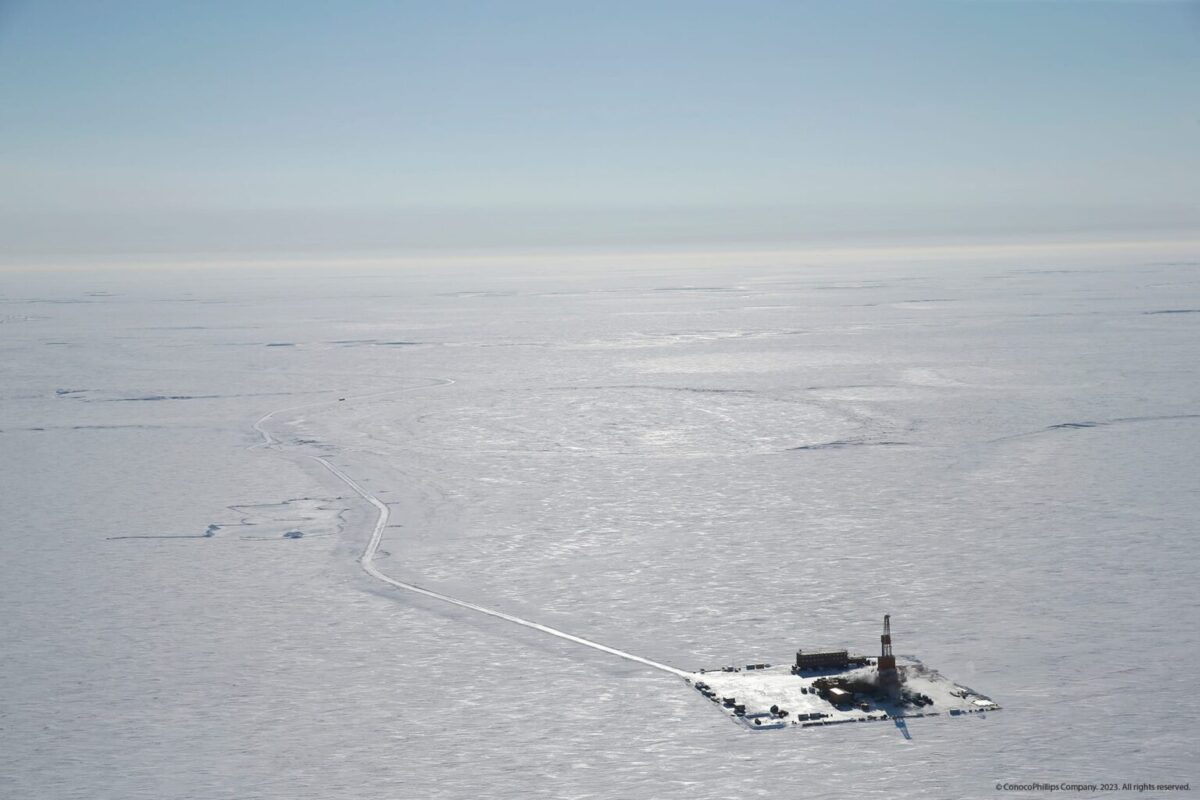
An exploration rig drills for oil at ConocoPhillips’ Willow prospect in the National Petroleum Reserve – Alaska. (ConocoPhillips)
Few people, however, predicted that so many other companies would put in bids, or that major corporations like ExxonMobil and Shell would participate.
ExxonMobil, committing more than $7 million on some 138,000 acres, came as a particularly big surprise.
That company, headquartered in Houston, owns shares in the existing Point Thomson and Prudhoe Bay oil fields on the North Slope. But it doesn’t manage either field, and the company has not been active in exploration and new development in the state: Until last week, ExxonMobil had not bid on a federal or state oil and gas lease in Alaska in more than a decade, according to data provided by Welligence, an industry research firm.
Meanwhile, Shell, in a partnership with a Spanish company, Repsol, submitted some of the highest bids. The two companies offered more than $2 million on many individual tracts, and committed more than $90 million in total.
A map produced by the U.S. Bureau of Land Management shows winning bids from last week’s lease sale.
Experts said the return of those players was likely influenced by the ongoing development in the area.
Although neither the Willow nor Pikka project is producing yet, the multibillion-dollar investments by ConocoPhillips and Santos may have given other companies more faith in the surrounding geology and the ability to pump oil in the area, analysts said.
“What you saw Shell do, and even Exxon, was validation of the work done by other players on the North Slope in recent years,” an oil company executive said in Houston, speaking on the condition of anonymity because he was not authorized to speak publicly.
Industry headwinds subside
Shell’s interest represents a reversal from its announcement a decade ago that it was pulling out of Alaska. The company had spent some $7 billion on its failed effort to drill for oil offshore in the Chukchi Sea, citing Obama administration policies and high costs when it departed the state.
In 2020, another major, BP, also pulled out of Alaska, selling its assets to Hilcorp, a privately owned Texas business.
Those decisions both seemed like signals of the industry’s decline in the state, as the daily flow through the trans-Alaska pipeline shrank to 500,000 barrels from a high of 2 million decades earlier. An era of oil giants spending freely on big new projects was giving way to one of smaller companies wringing the last drops of crude out of aging fields.
An oil and gas rig drills at a Hilcorp development in the Cook Inlet basin in Southcentral Alaska. (Nathaniel Herz/Northern Journal)
At the time, companies were contending not only with the usual impediments to drilling in Alaska, like high costs and opposition from environmental groups, but also with growing political pressure from climate-minded shareholders and activists opposed to expanding fossil fuel production. Even oil executives acknowledged that advocacy against the oil industry, which is a major driver of climate change, was deterring investment in Alaska.
But even as the burning of fossil fuels continues to warm the planet, global demand for oil remains high — and industry confidence in the North Slope’s potential appears only to be growing.
The newly discovered oil deposits there “have proven that Alaska is not over,” Fryklund said.
ConocoPhillips, ExxonMobil and Santos declined to make officials available for on-record interviews. Shell did not respond to a request for comment.
“This marks an important step in our continued commitment to responsible energy development in Alaska and the U.S.,” an Exxon spokesperson said in an emailed statement.
Once the company’s leases are finalized, ExxonMobil will work with the state and local communities as it evaluates “potential next steps for the area,” the statement said.
“I wish I were 30 years younger”
For those who work in the oil industry, the central plank of Alaska’s economy, the sale stirred excitement, and some relief: New activity in the federal reserve could bring more gigs for contractors that have long wondered if there would be enough development on the North Slope to sustain their businesses.
“We’ve all had this little worry of, ‘Well, what’s next?’” said Greg Miller, vice president of operations at Cruz Construction, a Palmer-based company with oil-related contracts on the Slope. “Now, there’s a little bit of reason to be a little bit more hopeful and positive about the next 10, 20 years.”
The sale won’t lead to immediate growth for Miller’s business, he said. But new exploration activity, if and when it happens, will create jobs: A single project can provide a year’s worth of wages for as many as 100 employees at Cruz, Miller added.
For the president of another Alaska oil services company, Kevin Durling, the hype around the petroleum reserve is reminiscent of the boom days when oil started flowing through the trans-Alaska pipeline, in the 1970s and 1980s.
The trans-Alaska oil pipeline pumps some 500,000 barrels a day. (Nathaniel Herz/Northern Journal)
“I wish I was 30 years younger,” he said.
The state’s conservation community, meanwhile, has reacted with disappointment, and concern for the western Arctic ecosystem.
The vast, largely undeveloped region contains important habitat for migratory birds, and it sustains tens of thousands of caribou, some of which calve around Teshekpuk Lake, a major water body in the northern part of the petroleum reserve.
“I’ve had better weeks at work. No question about that,” said Andy Moderow, senior policy director at Alaska Wilderness League, one of the environmental groups suing the Trump administration. But, he added: “The war is still well in front of us.”
One potential hurdle for development is a legally disputed conservation area around Teshekpuk Lake. The protections, across about 1 million acres, were set aside by the Biden administration for the nearby Iñupiaq village of Nuiqsut, where many people still depend on caribou and other wildlife for food.
The Trump administration canceled the protections late last year, touting the area’s oil and gas potential and aiming to authorize leasing there. Nuiqsut’s leaders then sued, saying the move violated a prior agreement and threatened the village’s subsistence traditions.
Two days before the lease sale results were announced, a federal judge restored the Teshekpuk protections while the lawsuit played out.
But the area still attracted bids from a few companies — including ExxonMobil.
The administration has not said whether it plans to award leases in the disputed area to high bidders — or how, exactly, it intends to navigate the apparent conflict between the sale results and the court ruling.
Nathaniel Herz contributed reporting from Anchorage.
Northern Journal contributor Max Graham can be reached at max@northernjournal.com. He’s interested in any and all mining related stories, as well as introductory meetings with people in and around the industry.
This article was originally published in Northern Journal, a newsletter from Nathaniel Herz. Subscribe at this link.
An oil tanker sits at the dock in Valdez, where vessels pick up crude moved from the North Slope by the Trans Alaska Pipeline System. (ConocoPhillips photo)
The Alaska Senate approved a measure to boost state taxes on oil and gas production on Wednesday. Lawmakers tacked it on to what would have been a routine renewal of a state oil royalty agreement.
Sen. Forrest Dunbar, D-Anchorage, sponsored the amendment to House Bill 194, saying it would close a corporate income tax loophole and potentially capture more than $100 million in new state revenues each year — at a time when Alaska is in dire need of revenue to pay for state services.
Sen. Forrest Dunbar, D-Anchorage speaks on the Senate floor on Mar. 25, 2026 (Photo by Corinne Smith/Alaska Beacon)
“Can we afford this loophole while we close schools? Can we afford this tax subsidy while we slash the permanent fund dividend? Can we afford this tax subsidy while our infrastructure languishes, while we struggle to recruit and retain state troopers and firefighters and maintenance crews?” Dunbar said. “The answer is no.”
The provision would impose the state’s corporate tax rate on oil and gas companies doing business in the state, at a maximum rate of 9.4% for companies whose net profits are more than $5 million per year.
Alaska’s oil prices are surging amid the Iran War, and state forecasters are projecting hundreds of millions in potential state revenue in the coming months. Despite the spike in oil prices, Dunbar said lawmaker action to capture more revenue from the oil and gas industry is long overdue.
“There is still a long term revenue problem in this state, regardless of short term prices connected to the Iran war,” he said. “Now is the time to do this. Prices for oil are high. These corporations are doing very well. You fix the roof when the sun is shining.”
The Senate approved the amendment by an 11 to 8 vote, then passed the underlying legislation by a 12 to 7 vote, with Sen. Kelly Merrick, R-Eagle River, absent.
The original legislation was introduced by the governor, and passed the Alaska House last year. It would renew a three-year oil royalty agreement between the state and Marathon Petroleum Corporation, for state owned oil to be processed at its refinery in Nikiski, on the Kenai Peninsula. The proposed contract is estimated to generate between $4 million to $18 million in state revenue.
However the bill’s sponsor, Sen. Jesse Bjorkman, R-Soldotna, objected to the new oil tax provision, saying the Senate should take time to evaluate how the tax measure would affect the broader industry and energy supply for Alaskans.
“I’m a no vote on this amendment, because we do need a legitimate plan,” he said. “We don’t rush things. We don’t do things in a half-cocked manner, because that’s how mistakes are made.”
He said lawmakers should model potential revenue measures so they know how they will function within a state fiscal plan.
Lawmakers have been hotly debating Alaska’s oil and gas tax structure for years. A bill introduced last year, Senate Bill 92, would change the way the state’s corporate income tax applies to the oil company Hilcorp, which is an S-corporation, and the state’s largest oil producer. Hilcorp is a privately held, Texas-based energy company that since 2020 has operated the Prudhoe Bay oil field in the North Slope, as well as most of the operations in Cook Inlet.
That bill is currently in the Senate Rules Committee and has not moved this year.
The measure approved by the Senate on Wednesday would enact state taxes not just on Hilcorp but many companies, and collect revenues that would otherwise be leaving the state, Dunbar said in an interview after the vote.
“To be clear, it’s not just Hilorp that might be affected by this, but that is one of the large, obvious holes we see in our oil tax structure right now that is causing us to shift tens of millions, and over the long term, hundreds of millions of dollars, from schools and roads and the permanent fund dividend to out of state companies and individuals,” he said.
The amended bill now goes to the House for a concurrence vote.
Dunbar urged support for the measure, citing financial woes in his own district where the Anchorage School Board has voted to close three elementary schools and cut hundreds of staff positions to help address a $90 million budget shortfall.
“I hope they agree that it’s not an acceptable world where the price is high and this industry is booming and we are closing Lake Otis Elementary School because we don’t have enough money,” he said.
Two animals in the Teshekpuk Caribou Herd are seen on June 27, 2014, in the National Petroleum Reserve in Alaska. A right-of-way agreement reinstated through a federal court order protects the Teshekpuk Lake area and the habitat used by the caribou herd named for the lake. But in an oil and gas lease sale, the Trump administration auctioned off tracts in that right-of-way area nonetheless. (Photo by Bob Wick/U.S. Bureau of Land Management)
A controversial oil and gas federal lease sale in the National Petroleum Reserve in Alaska generated a new bidding record, according to results released on Wednesday. It was the first auction held in that Arctic Alaska territory since 2019.
The lease sale produced $163 million in high bids, beating the $104 million mark set during the first competitive oil and gas lease sale in the Indiana-sized reserve, which was held in 1999 during the Clinton administration.
Eleven companies submitted bids for more than 1.3 million acres of the nearly 5.5 million acres offered in the auction.
Kevin Pendergast, Alaska state director for the U.S. Bureau of Land Management, called the results “historic.”
“This is the strongest sale we have ever had in the National Petroleum Reserve in Alaska by nearly every measure. It makes clear that for the NPR-A, despite all the successes to date, the best days are still ahead,” Pendergast said at the conclusion of the bid opening, which lasted about two hours.
In statements issued after the bid reading, federal and state officials hailed the results.
“Today’s lease sale underscores the National Petroleum Reserve in Alaska’s vital role in strengthening America’s energy security while fueling economic growth across Alaska,” Secretary of the Interior Doug Burgum said in a statement. “The Reserve was created to support our nation’s energy needs, and this successful sale demonstrates what’s possible when we align responsible development with that original purpose.”
Gov. Mike Dunleavy celebrated the results in a Facebook post that thanked President Donald Trump “for believing in the great State of Alaska.”
“Today’s record setting NPR-A lease sale is a major win for our state and our country. It reinforces Alaska’s role as a reliable energy producer, supports high-paying jobs for our families, generates additional revenue for the state, and strengthens American energy security at a time when energy security is more important than ever,” he said in the post. “Alaskans have demonstrated that we know how to unlock our vast resources while protecting the land for future generations. This is exactly the kind of balanced, commonsense progress Alaskans have been calling for.”
The lease sale was one of five mandated in the reserve over the next 10 years by the sweeping budget and tax bill called the “One Big Beautiful Bill Act.” That mandate calls for lease sales to be conducted under a Trump administration management plan that opened 82% of the reserve to oil development. Previously, the Obama administration held annual lease sales in the petroleum reserve, but that administration’s management plan protected about half of the land through the designation of “special areas” considered important to wildlife and to Native cultural practices.
Prominent bidders were energy giants ConocoPhillips and Repsol, which are already active in the area. ConocoPhillips is developing a huge project within the reserve, the Willow Ppoject, that is expected to produce up to 180,000 barrels a day after its expected startup in late 2029. Repsol is a partner in another huge oil field, Pikka, which is on state land bordering the reserve and is set to start production this year.
Late-afternoon sunlight bathes the ConocoPhillips building in downtown Anchorage on March 10, 2026. ConocoPhillips, long active in the National Petroleum Reserve in Alaska, was a major bidder in the lease sale held Wednesday. (Photo by Yereth Rosen/Alaska Beacon)
The petroleum reserve and adjacent state and Native-owned lands along its eastern border are considered highly prospective for new oil finds because of a geological feature called the Nanushuk Formation that underlies it.
Federal officials auctioned tracts of protected land
Much of the bidding in Wednesday’s sale was for territory that was previously off-limits to oil development under protections that date as far back as the Reagan administration.
The inclusion of long-protected land in the sale, predominantly the area around ecologically sensitive Teshekpuk Lake, made the lease sale contentious. It is the subject of two lawsuits filed by Native and environmental groups.
Bids were accepted even for tracts within an area encircling Teshekpuk Lake, the North Slope’s largest lake, despite a federal court order issued Monday that reinstated development prohibitions there.
U.S. District Court Judge Sharon Gleason on Monday issued an injunction reinstating a right-of-way agreement with Nuiqsut Trilateral Inc., a partnership of Nuiqsut’s city and tribal governments and Kuukpik Corp., the village for-profit Native corporation.
Nuiqsut, an Inupiat village of about 500, is the community closest to oil development occurring in the reserve, including the Willow project. Under the agreement, oil development is banned within the right-of-way territory, though the Nuiqsut Trilateral Inc. has the right to waive that ban.
The court ruling was not mentioned Wednesday when BLM officials in Alaska opened the bids.
But in a statement issued later in the day, the U.S. Department of the Interior acknowledged that BLM did sell tracts that lie within the Nuiqsut right of way and that legal issues concerning those tracts remain.
“We can confirm that lease offerings within the right of way are included in today’s sale. Any lease issuance for tracts within the right of way will be consistent with the court’s order,” the statement said.
DOI officials did not elaborate on how they would follow the court order.
Criticism of expanded lease offerings, but praise as well
The Trump administration’s decision to auction off long-protected land, and especially its decision to press forward with leasing of tracts within the Nuiqsut right of way, dismayed critics.
A map shows the tracts within the National Petroleum Reserve in Alaska that are at issue in two lawsuits targeting the Trump administration’s management of the land unit. The orange tracts are in previously protected areas that were off-limits to leasing. Some tracts are within the Nuisuit Trialateral Inc. right of way and the subject of that organization’s lawsuit. A lawsuit filed by the Native organization Grandmothers Growing Goodness and The Wilderness Society is seeking to prevent development in all of the tracts colored orange. (Map provided by Layla Hughes, one of the plaintiff attorneys)
Among them was Rosemary Ahtuangaruak, leader of one of the plaintiff groups suing the Department of the Interior over its management of the petroleum reserve. She criticized the Trump administration for abandoning protections deemed important for several generations of Indigenous North Slope residents.
She cited in particular a narrow corridor of land northeast of the lake that is important to migration of the Teshekpuk Caribou Herd. The BLM accepted a $2 million bid from a company called Epoch Oil and Gas LLC for a large block within that migration corridor.
“It’s very concerning that they’re not putting a better foot forward in protecting what’s important about this area,” said Ahtuangaruak, a resident of Nuiqsut and leader of the group Grandmothers Growing Goodness. “For me, it’s really important that we push back on the activities that are encroaching around us.”
She said it was hard for her to watch the latest lease sale unfold because it added to a pattern of development encroaching on the village and resulting problems like air pollution and the January accident that overturned a huge drill rig intended for ConocoPhillips work in the area.
“It’s painful every time I watch these because these are important traditional land use areas. And the further they get into the Teshekpuk Lake area, the more traditional land use areas are going to be impacted,” Ahtuangaruak said.
The Trump administration’s decision to press ahead with auctioning land within the area protected by the Nuiqsut Trilateral right-of-way agreement drew particular ire from critics.
A plain reading of the right-of-way agreement shows that leasing in that area is not allowed without a waiver from the Nuiqsut group, said Andy Moderow of the Alaska Wilderness League.
“For the administration to not even acknowledge that is absurd,” he said.
In contrast, a different organization representing Indigenous people of the North Slope, Voice of the Arctic Iñupiat, praised the Trump administration’s management of the lease sale and celebrated its results.
“Today’s lease sale proves what we have been saying for years: when there is meaningful policy in place supporting responsible onshore development, industry interest will follow,” Nagruk Harcharek, Voice of the Arctic Iñupiat’s president and chief executive, said in a statement. “Over the past year, we have supported the Trump-Vance administration and Congress’s efforts to build more durable policies affecting our homelands. This successful NPR-A lease sale is a gratifying reminder (of) our work that will strengthen our self-determination for generations to come.”
Half of the royalties derived from oil production in the National Petroleum Reserve are designated for North Slope communities through a grant program established in federal law.
A competitive auction
Lease sale bidding was competitive, with some tracts receiving as many as six different offers. ConocoPhillips focused much of its bidding on tracts near the eastern border of the lease sale area and closest to its Willow project.
A pair of tundra swans swim on a lake on June 25, 2014, in the northeastern part of the National Petroleum Reserve in Alaska. The northeastern part of the reserve is highly prospective for oil, But it also has wetlands, including Teshekpuk Lake and various smaller lakes, that are important to birds that migrate from as far away as Antarctica. (Photo by Bob Wick/U.S. Bureau of Land Management)
ConocoPhillips did not bid for any tracts within the Nuiqsut Trilateral right of way, however,
Exxon Mobil was among the companies that bid for tracts within the right-of-way area, emerging as the apparent winner of tracts along the southern shore of the lake.
The lease sale marks a return to Alaska of sorts for Exxon.
While it maintains part ownership of the Prudhoe Bay field and the trans-Alaska oil pipeline, Exxon pared down its Alaska presence in recent years. In 2021, it transferred the operator position at the Point Thomson field to Hilcorp. Earlier that year, the company dropped its longtime corporate sponsorship of the Iditarod Trail Sled Dog Race.
Also returning to Alaska through the lease sale is Royal Dutch Shell. The bids submitted by Repsol were in partnership with Shell Frontier Oil and Gas Inc., a company subsidiary. Several of those Repsol-Shell winning bids were for over $2 million per tract.
Shell engaged in an expensive Arctic offshore exploration program in past years that turned out to be a failure. After spending at least $7 billion and wrecking a drill ship, Shell in 2015 abandoned its Arctic offshore program and eventually dropped its leases in the Chukchi and Beaufort Seas. The company in 2024 relinquished leases in state offshore territory.
Another active bidder was North Slope Exploration LLC, which is a unit of Denver-based Armstrong Oil and Gas. The company was the high bidder on over 70 tracts, according to preliminary results, adding to acreage in the reserve acquired during the 2019 lease sale.
The debate continues
While there is excitement among development supporters about the big sale, legal questions about the lease sale and the management plan under which it was conducted persist.
While Gleason on Monday issued the preliminary injunction reinstating the Nuiqsut Trilateral right of way, thus erecting a roadblock to any oil development in that approximately 1-million-acre area, on Wednesday she rejected the request from Ahtuangaruak’s group for a broader injunction that would have barred leasing in a wider region around Teshekpuk Lake.
Gleason, in her Wednesday ruling, said the Grandmothers Growing Goodness-Wilderness Society plaintiffs could try for another injunction should the BLM authorize any surface-disturbing activities in the formerly protected area.
That lawsuit remains active, as does the lawsuit filed by Nuiqsut Trilateral Inc., which is seeking a permanent reinstatement of the right-of-way agreement.
Economist Dan Stickel talks to the Alaska House Finance Committee on Monday, March 16, 2026. (James Brooks photo/Alaska Beacon)
By: James Brooks, Alaska Beacon
Economist Dan Stickel talks to the Alaska House Finance Committee on Monday, March 16, 2026. (James Brooks photo/Alaska Beacon)
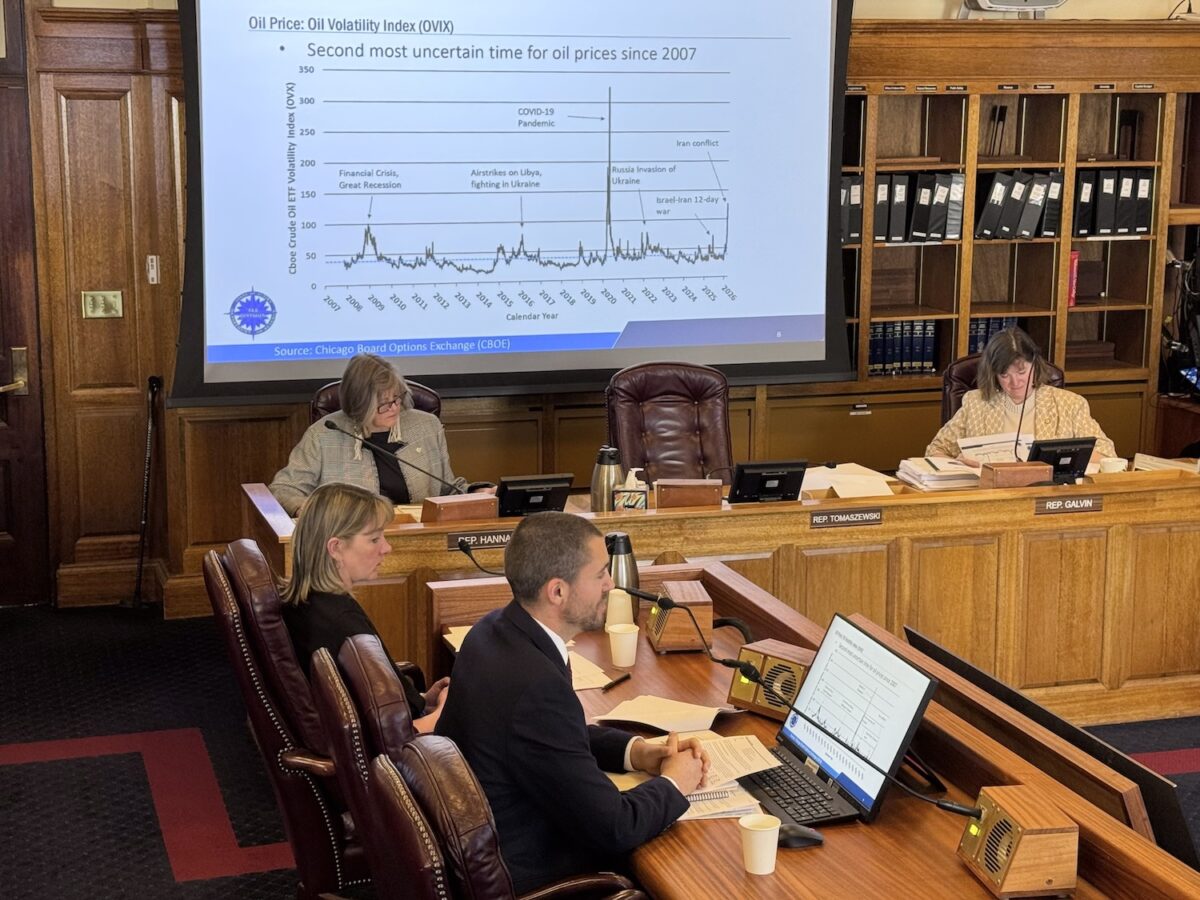
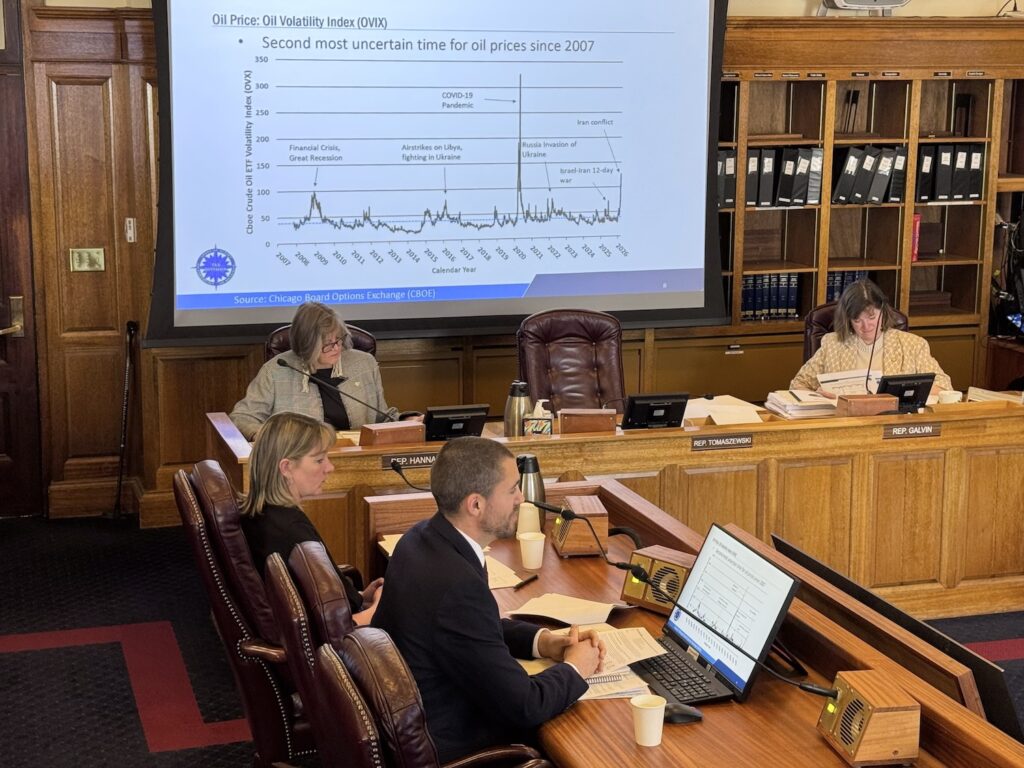
The U.S.-Israeli war against Iran has left oil markets more uncertain than they were during the Great Recession, a state expert told the Alaska Legislature on Monday.
In a pair of hearings, Alaska Department of Revenue economist Dan Stickel told state legislators that the volatility of global oil markets is the second-highest on record, leaving future forecasts particularly unreliable.
“The level of uncertainty around future prices in the oil markets now is higher than during the peaks of the Great Recession in 2008-2009 and it’s higher than the Russian invasion of Ukraine, and it’s higher than any of the COVID spikes other than the initial April 2020 spike,” he said during a Monday morning hearing of the Senate Finance Committee.
“The message here is to plan for the possibility that revenue doesn’t come in exactly at what we forecast for the next couple of years,” Stickel said.
Oil is the second-largest source of general-purpose revenue for the Alaska state budget, and Stickel’s testimony came days after the department released a new Alaska revenue forecast showing $545 million more in current-year revenue than projected in the fall. Most of that higher prediction is due to the price of oil.
That forecast has snarled relations in the Alaska House of Representatives, which has repeatedly postponed discussion of a bill that would fund a variety of amendments to the fiscal year 2026 budget passed by lawmakers and Gov. Mike Dunleavy last spring.
On Monday, after more than two hours of acrimonious debate, House legislators again declined to take up the bill.
Soon after the House adjourned its floor session, Stickel testified in front of the House Finance Committee, and told lawmakers that “the level of certainty that we will hit our exact forecast is low.”
As he spoke, on the other end of the Capitol’s fifth floor, the Senate Finance Committee was simultaneously hearing from Office of Management and Budget director Lacey Sanders, who said the governor’s office was requesting another $18 million in spending for the current fiscal year.
Altogether, the governor has requested almost $427 million in additions to the budget. Add in additional spending proposed by lawmakers, and there’s only about a $30 million difference between the new revenue forecast and the additions proposed by the governor and legislators.
At the latest forecast prices, said Rep. Calvin Schrage, I-Anchorage, a $2 change in the average price of a barrel of North Slope oil is worth $30 million.
He asked Stickel what the odds were that the forecast misses low by more than $2.
“Roughly a slightly less than 50% chance that we come in more than $2 below the forecast,” Stickel said, then alluded to the fact that there’s a similar chance of coming in above the forecast.
“The level of certainty that we will hit our exact forecast is low in either direction,” he said.
Currently, members of the House majority are advocating that legislators unlock the state’s principal savings account to provide surety for some of those budget additions.
Doing so would avoid problems if oil prices turn out to be lower than forecast.
But spending from the Constitutional Budget Reserve, the state’s principal savings account, requires 30 votes in the House and 15 votes in the Senate.
The House’s multipartisan coalition majority has 21 members, which means they need support from the all-Republican House minority caucus.
Members of that group have been arguing against unlocking the budget reserve right now, saying that the new forecast and the current balance of the state’s general-purpose accounts demonstrate it isn’t needed.
In addition, as currently written, the supplemental budget bill in the House would allow spending from savings regardless of the price of oil. That could allow the majority to dictate extra spending even if prices stay high.
The Senate has already approved spending from the Constitutional Budget Reserve, and on Monday morning, Sen. Bert Stedman, R-Sitka and co-chair of the Senate Finance Committee, said a draw from the reserve would act as a “safety net.”
Sen. Lyman Hoffman, D-Bethel, said senators don’t intend to spend dollars from savings unless it is needed.
“If they are not needed, they will stay in the CBR,” he said, adding that without permission to spend from savings, there’s a chance that lawmakers would need to return in August to fix budget problems in a special session.
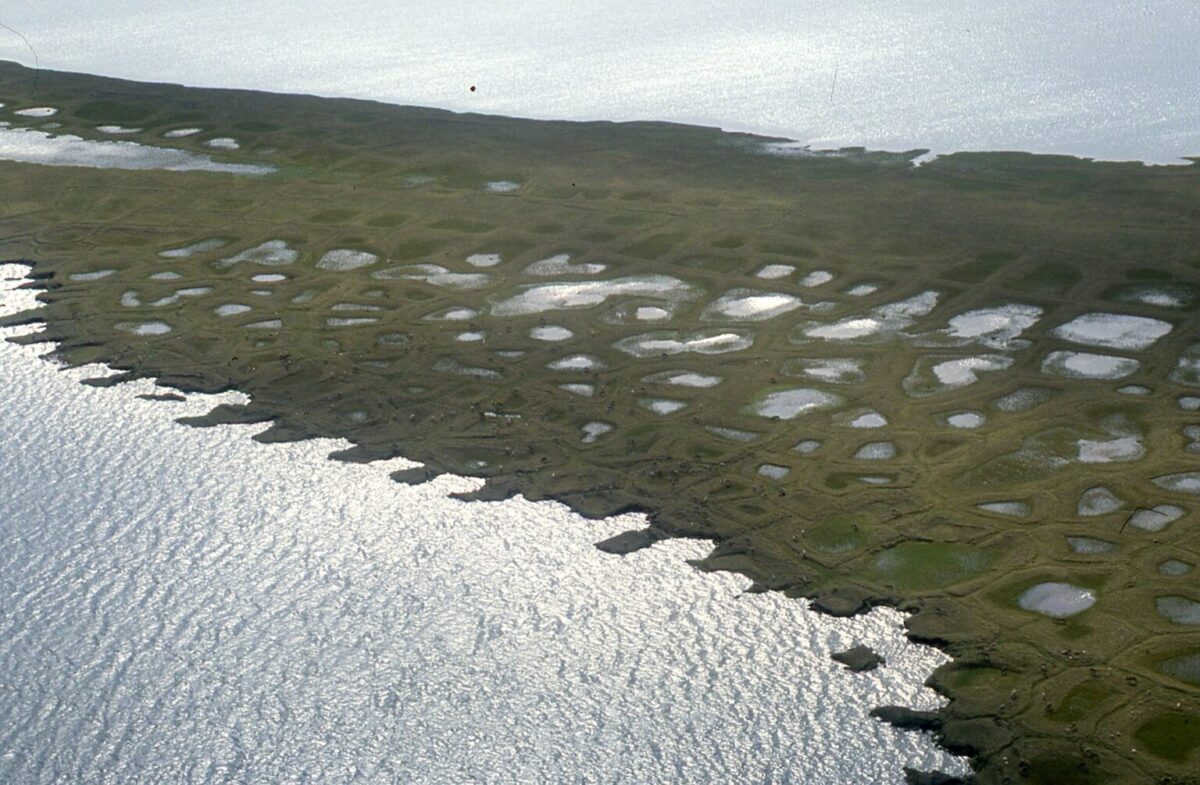
Surface pools on the edge of West Long Lake in the Teshekpuk Lake Special Use Area of the National Petroleum Reserve in Alaska are seen in this undated photo. The pools are formed by permafrost. Summer melt creates pools of water on the surface, creating thousands of sites that support wildlife. The Teshekpuk Lake area is important to subsistence harvests and had been protected from development for decades, but the Trump admininistration is now trying to sell oil leases there. (Photo by Laura McDuffie/U.S. Geological Survey Alaska Science Center)
Just six days before the Trump administration is set to open bids in the first of several oil and gas lease sales for federal territory in Arctic Alaska, critics were in court on Thursday trying to win injunctions to temporarily block some or all of the sale.
In one case, a Native organization called Grandmothers Growing Goodness and an environmental organization, The Wilderness Society, are seeking to fully prevent the scheduled March 18 sale in the National Petroleum Reserve in Alaska, a federal land unit stretching across Alaska’s western North Slope. The sale is offering 5.5 million acres, a larger geographic scope than most of the NPR-A lease sales held since 1999.
The Grandmothers Growing Goodness-Wilderness Society lawsuit is also seeking to overturn a new Trump administration management plan that opens 82% of the Indiana-sized reserve to oil development. Previously, only about half of the reserve was available for leasing, and several areas had protective status. Among those areas was Teshekpuk Lake and its adjacent wetlands and tundra, which provide key habitat for a caribou herd, numerous species of migratory birds, fish and other Arctic animals.
The other case, filed by an organization representing residents of Nuiqsut, is narrower.
Nuiqsut is the North Slope Inupiat village closest to existing NPR-A development. The Nuiqsut lawsuit is seeking to reinstate a program that protects an environmentally sensitive portion of the reserve that had been off-limits to oil development until the Trump administration jettisoned those protections.
The Nuiqsut lawsuit concerns a right-of-way agreement struck with the Biden administration and Nuiqsut Trilateral Inc., an organization formed by Nuiqsut’s city and tribal governments and its village for-profit Native corporation. The agreement, made final in 2024, protects about 1 million acres in the area of Teshekpuk Lake by barring leasing and other development not approved by Nuiqsut Trilateral.
In December, the Trump administration abruptly canceled that agreement, citing the potential for oil in the right-of-way area.
That cancellation, which was announced without any consultation or advance warning to the villagers, caused immediate harm, said Travis Annatoyn, an attorney for the Nuiqsut plaintiffs.
“From the moment Interior canceled the right of way, it advertised its intent to grant competing property rights on top of the subject acreage. That is an invitation to administrative and judicial chaos down the road,” Annatoyn told U.S. District Court Judge Sharon Gleason during the day’s second hearing. “This court should foreclose that chaos by issuing a narrow injunction and stay for just the area of the right of way. We are not seeking relief across the reserve. We are not seeking relief sale-wide.”
Gleason stated her intention to issue rulings before bids are unsealed on Wednesday, Mar. 18.
She said Nuiqsut plaintiffs presented a more compelling case for a temporary injunction. That case concerns property rights, not just “more esoteric” environmental and subsistence protections.
A caribou from the Teshekpuk herd grazes on June 27, 2014, in the National Petroleum Reserve in Alaska. The herd is named for the lake, the largest on the North Slope. The herd uses the tundra adjacent to the lake for calving. (Photo by Bob Wick/U.S. Bureau of Land Management)
“I do see that there are far greater reasons for injunction as to this preliminarily, until the merits can be fully fleshed out,” she told U.S. Justice Department attorney Paul Turcke, who argued on behalf of the Department of the Interior at both hearings.
If the Teshekpuk-area leases are sold and the case is later decided in Nuiqsut Trilateral Inc.’s favor, that could create challenges for numerous parties, Gleason said.
The right-of-way agreement stemmed from environmental and subsistence stipulations in the Biden administration’s 2023 approval of ConocoPhillips’ giant Willow project, and it was a condition of Nuiqsut residents’ endorsement of that project. Willow is set to become the North Slope’s westernmost producing oil field. Conoco Phillips expects production to start in 2029, with an eventual peak of 180,000 barrels per day.
The right-of-way agreement focused on the Teshekpuk Lake area because it is important to Inupiat subsistence food-gatherers.
Under Trump administration terms, Teshekpuk-area protections that had been in place for decades no longer exist. That auction offers some areas at Teshekpuk Lake that have never previously been open to leasing, including parts of the lake itself.
Turcke argued at Thursday’s hearing that the federal government already protects subsistence rights diligently and does not need the right-of-way agreement to do so.
He also argued that Congress has already effectively struck down the restrictions imposed by the right-of-way agreement.
That happened last year, when Congress passed the sweeping budget and tax bill called the “One Big Beautiful Bill Act,” he said. The bill mandated a series of at least five NPR-A lease sales to be conducted over 10 years under terms of management plan proposed by the first Trump administration.
Turcke also disputed the idea that including the Teshekpuk area in the lease sale would cause irreparable harm to the Nuiqsut plaintiffs.
“It sounds concerning when they say that their property rights could be impacted, but again, the whole property right that they’re really talking about is the ability to just leave it the way it is right now. And that’s not going to change whether leases are issued or not,” he said.
But Annatoyn said Nuiqsut residents are already suffering impacts from the administration’s actions.
“They wake up every day. They see and smell and hear the trucks going to Willow,” he said.
Both lawsuits were originally filed in U.S. District Court in the District of Columbia but transferred last month to federal court in Alaska.
A plume of smoke rises after an explosion on Feb. 28, 2026 in Tehran, Iran. (Getty photo)
All three members of Alaska’s delegation to Congress showed their support for the new war with Iran last week, voting against resolutions intended to restrain President Donald Trump.
The Alaska legislators’ votes were in line with their past actions. Last year, when Trump ordered a bombing campaign against Iranian nuclear facilities, all three said they supported the strikes.
The current war is significantly larger than last year’s attacks, and Trump has said he is seeking Iran’s “unconditional surrender” and wants to have a role in picking its next leader.
Neither he nor senior administration officials have given firm long-term plans, and they have not ruled out the deployment of soldiers on the ground in Iran.
Begich issued a statement on Feb. 28 calling the war “a necessary and targeted response” and said he supports regime change in the country.
“The path forward cannot be centered on further appeasement but the removal of this corrupt, fanatical leadership that has brought suffering to the Iranian people and threatens our peace at home. In so doing, we can provide the people of Iran the opportunity to change leadership, reclaim their sovereignty, and chart a new course,” the statement said in part.
Begich is in the middle of a re-election campaign, and his two leading challengers issued statements opposing the war.
By email, Democratic U.S. House candidate Matt Schultz criticized Begich’s vote and suggested he would have chosen differently.
“Our tax dollars should build schools and hospitals here at home, not bankroll endless foreign wars. But Washington always seems to find billions for war while Alaskans pay the price with sky-high costs and watch investments in our future get delayed, downsized, or ignored,” he said.
“The cost of war isn’t just dollars and cents, it’s measured in human lives and suffering. As a pastor, I believe every life is sacred. That’s why the Constitution requires Congress to approve war: so no president can send Americans into conflict without a real plan and the support of the American people.”
A spokesperson for independent U.S. House candidate Bill Hill referenced that candidate’s posts on social media when asked about his position.
“Our leaders should be investing in lowering costs and making life better for working Americans, not putting American lives at risk in foreign wars without congressional approval,” Hill wrote in a Wednesday post on Facebook.
“Six U.S. service members have died and billions of dollars have been spent in a matter of days. Meanwhile here at home, our schools are in crisis, healthcare costs keep rising, veterans are at risk of losing benefits, and everyday costs are just too damn high,” he wrote. “We can’t afford a costly war with no end in sight.”
On the Senate side, Murkowski said the resolution presented to her this week would have required the removal of soldiers from hostilities, stopping military operations immediately.
“The abrupt cessation of all offensive operations would not leave any Americans — soldiers, diplomats, or civilians — in the Middle East in a safer position,” her statement said in part.
Murkowski said Trump has “committed U.S. troops to active engagement in combat with an enemy that has targeted and killed Americans for decades. We have lost six soldiers in this fight with the potential for more casualties. What our troops need now is for our Congress, and this country, to know that they are supported. It is for this reason that I oppose Senator Kaine’s War Powers Resolution — based on the practical implications of its passage.”
Sullivan has supported military action against Iran for years and told reporters on Feb. 28, “I’m not someone that, in general, would support kind of taking out world leaders,” he said. “But I think these guys, … my belief is that they’re less world leaders than terrorists, right?”
“This country’s been at war with us for almost a half century,” he said, referring to Iran, “and they’ve killed thousands and wounded thousands of our best and brightest.”
Sullivan is also facing a re-election campaign this year, but unlike on the House side, there isn’t a bright line between the incumbent and his leading opponent on this issue.
Democratic U.S. Senate candidate Mary Peltola hasn’t made any public statements about the Iran war, and her campaign social media accounts have been silent on the subject.
When contacted Thursday, her campaign spokesperson said she had no comment.
That makes it unclear whether she supports or opposes the war.
Teshekpuk Caribou Herd animals graze in June of 2014 in the northeastern part of the National Petroleum Reserve in Alaska. (Photo by Bob Wick/Bureau of Land Management)
A newly filed lawsuit and a revived six-year-old case from environmental groups and an Alaska Native organization are challenging the Trump administration’s proposal to open more parts of the National Petroleum Reserve-Alaska to oil and gas drilling.
On Tuesday, Grandmothers Growing Goodness and The Wilderness Society filed suit against the U.S. Department of the Interior, alleging that the department’s development plan for the reserve violates proper procedure and federal law.
That suit was filed in the U.S. District Court for the District of Columbia.
Thousands of miles away, in the U.S. District Court for the District of Alaska, the Center for Biological Diversity and Friends of the Earth updated a six-year-old challenge dating from the first Trump administration.
Despite the difference in time and distance, both lawsuits are seeking the same goal: A stop to new plans for oil and gas drilling in the reserve.
The Audubon Society, which had been participating in the older lawsuit, withdrew from the case shortly before the new complaint was filed.
That sale, which will open up to 5.5 million acres of North Slope land to oil and gas drilling, would be the first in the National Petroleum Reserve-Alaska since 2019.
The reserve, located to the west of Prudhoe Bay, has been eyed for possible development for decades, and — unlike the Arctic National Wildlife Refuge to the east of Prudhoe Bay — has been the subject of interest by major drillers.
The sale is one of five mandated in the next 10 years by the budget and policy legislation known as the “Big Beautiful Bill Act.”
During the first Trump administration and again this year, the federal government attempted to lease parts of the reserve that are near Teshekpuk Lake, an area that had been protected under previous agreements with local residents.
The lake is the largest on the North Slope and is considered important habitat for caribou and migrating birds.
Since taking office earlier this year, Trump has emphasized his desire for increased oil production from the North Slope and other federal land nationwide, part of a strategy intended to wean America off imported oil.
If a lease sale takes place in the reserve, exploratory drilling would likely take years, and production would take years more.
Oil company ConocoPhillips acquired some NPR-A leases in 1999; its Willow Project, located in the reserve, is expected to reach full production by the end of this decade.