Categories
Featured Juneau News Juneau Local Ketchikan Local News Feeds Sitka Local

Telephone Hill housing plan draws debate at packed Assembly meeting

Telephone Hill Park, photo provided by CBJ

NOTN- Residents filled Centennial Hall on Monday to oppose a plan to redevelop Juneau’s Telephone Hill into higher-density housing.

About 30 people testified against the proposal, which calls for replacing 14 existing units with more than 100 new units. Mayor Beth Weldon said the project is part of the city’s effort to expand downtown housing.

The Assembly has appropriated $5.5 million toward the redevelopment, though Weldon said no decisions are final.

“Most of it just comes down to trying to get housing downtown.” said Weldon, “So instead of 14 units, we’re looking for over 100 units, its a leap of faith.”

Opponents who testified criticized the plan’s cost and the displacement of current residents. The city maintains the redevelopment is necessary to address Juneau’s housing shortage.

“We do have a timeline. This is a topic for people, because we are doing evictions, but in the spirit of trying to get more housing downtown.” Weldon said.

According to Mayor Weldon, the Assembly changed the format through resident testimony so that there was more conversation between the city and the individuals who showed up to testify.

Categories
Featured Juneau News Juneau Local Ketchikan Local News Feeds Sitka Local

Fat Bear Week kicks off with online voting to crown the most oversized ursine

FILE – In this photo provided by the National Park Service is Grazer, the winner of the 2023 Fat Bear Contest, at Katmai National Park, Alaska on Sept. 14, 2023. (F. Jimenez/National Park Service via AP, File)

AP-  After gorging all summer on sockeye salmon, the portliest brown bears on the Alaska Peninsula will battle it out to see who will be named the fattest of them all in the wildly popular online voting contest called Fat Bear Week.

Those casting votes online starting Tuesday will choose between 11 mammoth brown bears and the winner of last week’s competition for cubs, named “128 Junior.” She’s a cub of “Grazer,” the two-time defending Fat Bear Week champion at Katmai National Park and Preserve who is looking for a third title.

The contest, which began in 2014, is meant to showcase the resiliency of the brown bears, who pack on the pounds each fall to survive the harsh winter, mostly by gobbling salmon on the Brooks River in the remote preserve about 300 miles (482 kilometers) southwest of Anchorage by plane. The public can watch the bears on explore.org’s livestream cameras before deciding on their favorite creature.

How to vote for Fat Bear Week

The 12 contestants announced Monday will face off in a single-elimination, bracket-style tournament. All voting is done online at www.fatbearweek.org, with the winner declared Sept. 30.

The first round features eight bears squaring off in four separate contests. The four winners advance to the second round, where they face four bears that received first-round byes.

There are about 2,200 brown bears within Katmai, a 6,562-square-mile (16,997-square-kilometer) park on the Alaska Peninsula, which extends from the state’s southwest corner toward the Aleutian Islands. To be featured in the contest, the bears must frequent the area of the main Brooks Camp.

The contest has some colorful characters

The contestants include a number of colorful characters, from a bear nicknamed “Flotato” for a stomping dance it does, to one that will place its paw over its heart like she is pledging allegiance to the flag while waiting for fish to arrive.

Two of the contestants were once dominate males now adjusting to new realities. One was once at the top of the bear hierarchy but now is the old man of the river. The other is adapting to life with a broken jaw that will never heal properly.

A full list can be found here.

Voting is not all about weight

The brown bears at Katmai are among the largest in the world. Mike Fitz, a naturalist for explore.org who started the Fat Bear Contest at Katmai when he was a ranger there, said that the only bears that are bigger are on nearby Kodiak Island.

A male bear at Katmai weighs about 700 to 900 pounds (318 kg to 408 kg) mid-summer and can bloat to over a 1,000 pounds (454 kg) by September or October, thanks to successful foraging. But even a 1,400-pound (635-kg) male isn’t unusual.

Female bears are about half to two-thirds the size of adult males.

But the contest isn’t always just about how big the bear is, and the past two years prove that point with “Grazer” defeating “Chunk,” one of the biggest bears on Brooks River.

Voters could consider the challenges some contestants have had to overcome, such as female bears who protect their young and produce milk for the cubs while also fattening up for winter themselves.

Abundant salmon equals fat bears

Even though factors other than girth can be considered when voting, this might be the year when weight does play a role.

Brooks Falls is famous for brown bears snagging salmon out of the air as the fish try to jump upstream to get to their spawning ground.

That didn’t happen much this year, as an exceptional salmon run reduced the need for bears to compete for fishing spots at the falls.

“We are kind of expecting really to have some of the fattest bears we’ve ever seen in the event,” Fitz said. In fact, officials refer to one contestant as “cruise ship” because of its sheer plumpness.

Categories
Featured Juneau News Juneau Local Ketchikan Local News Feeds Sitka Local

Alaska Landslide Inventory tracks hazard risks, high wind and rain continue across southeast.

Screenshot of Alaska Landslide Inventory Map

NOTN- In response to landslides in Alaska, the state established the Landslide Hazards Program in 2022 to assess and communicate landslide risks. A key part of this program is the Alaska Landslide Inventory, a database compiling mapped landslides from published geological reports and newly identified events reported in the news or detected through aerial imagery.

first reported by Alaska Public Media, the inventory classifies landslides by type, including slides, falls, flows, spreads, and thaw-related events, and includes metadata such as kinematic features, and event dates.

While the database is not complete, its goal is to serve as a resource for planners, researchers, and the public to identify landslide-prone areas and reduce economic losses and fatalities.

Users are encouraged to review the methods and limitations of the database, which will be updated periodically as more landslides are mapped and additional data become available.

Over the weekend, Auke lake Trail saw two landslides due to heavy rainfall and intense wind gusts, and for the second time in two years an apartment complex on Gastineau Avenue was evacuated last Wednesday after a landslide caused two trees to fall beside the apartments.

Landslide and downed trees along Auke Lake Trail

Intense weather will continue through late this evening according to the National Weather Service, bringing wind gusts up to 70 mph and heavy rain.

Categories
Featured Juneau News Juneau Local Ketchikan Local News Feeds Sitka Local

Murkowski: Help for health care, public broadcasting, is needed in shutdown-averting budget plan

By: James Brooks, Alaska Beacon

Sen. Lisa Murkowski, R-Alaska, speaks at an Aug. 4, 2025, news conference in her Anchorage office. (Photo by Yereth Rosen/Alaska Beacon)

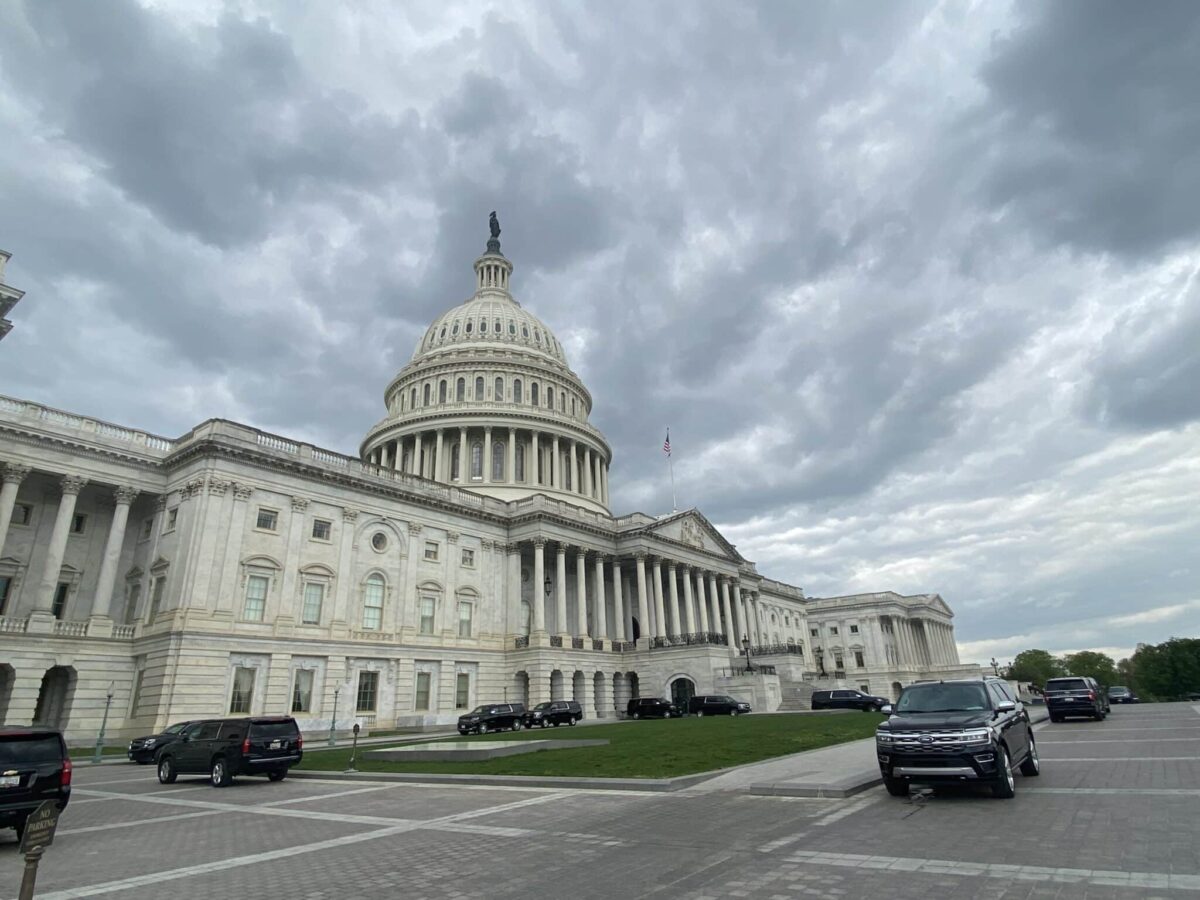
Alaska’s three members of Congress differed on a series of votes Friday intended to keep the federal government funded past the end of the month, and avert a government shutdown.

Alaska’s sole U.S. House Rep. Nick Begich III, R-Alaska, voted in favor of a seven-week budget extension, but that measure died in the U.S. Senate when lawmakers were unable to garner the 60 votes needed to pass the U.S. House measure or an alternative proposed by Democratic members of the Senate.

U.S. Sen. Dan Sullivan, R-Alaska, was absent from both votes. U.S. Sen. Lisa Murkowski, R-Alaska, voted against both proposals.

“I voted against both measures as I felt that they were not serious (enough) to meet the situation that we are currently in today,” she said in a recording provided by her office.

The Republican-controlled House passed its stopgap funding bill 217-212, with one Democrat voting for it and two Republicans voting against it.

“The House did its job,” Begich said in a written statement afterward. “We passed a responsible, short-term continuing resolution to keep the government open and give Congress time to complete the appropriations process. Unfortunately, Senate Democrats chose obstruction over solutions, blocking this clean measure.”

Murkowski and Sen. Rand Paul, R-Kentucky, voted against the House-passed plan, while Sen. John Fetterman, D-Pennsylvania, voted for it. Eight senators did not vote, and the measure died 44-48.

The Democratic counterproposal failed 47-45.

Murkowski said that counterproposal included “a Christmas list” of Democratic ideas, including items that would have reversed big parts of the Republican “Big Beautiful Bill Act” from earlier this year, which contained core tax cuts and spending policies of Trump’s second presidential term. Murkowski and Sullivan voted for that bill, which was later signed into law.

On the other side of the coin, Murkowski said the Republican plan failed to include an extension of subsidies for health care plans passed through the federal insurance marketplace, something that is critical for Alaskans. It also didn’t include additional funding for public broadcasting or opposition to President Donald Trump’s unilateral budget clawbacks, known as recissions.

“I’m going to be busy in the next 10 days, trying to build a level of consensus that keeps the government open, because there is no side — no Republican, no Democrat, the White House — nobody wins when there is a government shutdown,” she said.

“It’s possible that my proposal will equally annoy both sides, but maybe, just maybe, it will get the conversation going in a way that advances serious discussion and positive outcomes,” Murkowski said.

Categories
Featured Juneau News Juneau Local Ketchikan Local News Feeds Sitka Local

Alaska’s 2025 Permanent Fund dividend will be $1,000 and arrives starting Oct. 2

By: James Brooks, Alaska Beacon

 People line up outside of the downtown Anchorage Permanent Fund Dividend office on March 31, 2023, the last day to submit applications. (Photo by Yereth Rosen/Alaska Beacon)

This year’s Permanent Fund dividend will be $1,000, an amount set by the Alaska Legislature in House Bill 53, the state’s annual operating budget bill, earlier this year.

Ordinarily, lawmakers allocate an amount of money for the dividend, which makes individual payments dependent upon the number of recipients. 

The Alaska Department of Revenue then announces the final amount in September.

This year, lawmakers set a specific dividend amount, which turned the Alaska Department of Revenue’s fall announcement, released Friday, into an anticlimax.

Alaskans whose PFD applications were filed electronically, whose applications were approved as of Sept. 18, and who requested direct deposit, will begin to receive their payments Oct. 2. 

Those whose applications are approved by Oct. 13 will receive their dividends starting Oct. 23.

That includes people who applied for the dividend on paper forms or requested paper checks.

Paying a $1,000 dividend to all recipients was expected to cost $685.3 million, making it one of the largest single expenses in Alaska’s annual state budget.

Only the Alaska Department of Education and Early Development ($1.4 billion) and the Alaska Department of Health ($1.1 billion) are more expensive.

The 2026 dividend is expected to be larger, if lawmakers agree to spend from the state’s Constitutional Budget Reserve. 

Since 2020, lawmakers have approved larger dividends in election years than in non-election years.

The Alaska Permanent Fund, an $83 billion state trust fund, is the largest source of general-purpose revenue for state services, paying for between 50-60% of state operations in an ordinary year. Oil revenue, by comparison, supplies only about a third of state revenue. 

Since 1982, a portion of the fund has been paid out to Alaskans in an annual dividend. The payment was set by formula until 2016, when lawmakers — facing severe budget shortfalls — began setting it by fiat. The formula remains in state law, but legislators are not obliged to follow it.

Categories
Featured Juneau News Juneau Local Ketchikan Local News Feeds Sitka Local

Heavy Rainfall Causes Landslides at Auke Lake Trail, Flooding Expected at Montana Creek

The following is an advisory from the City and Borough of Juneau

Residents are advised to be aware of their surroundings and take precautions as heavy rainfall and wind may increase hazard risk in the Juneau area through late Monday night. Read the full National Weather Service (NWS) Flood Watch notice.

City & Borough of Juneau (CBJ) Parks and Recreation teams closed the Auke Lake Trail on Saturday after two landslides were observed. For their safety, residents should to stay clear of the trail and out of the lake until weather conditions improve and staff can clear the debris.

The National Weather Service also issued a Flood Advisory for Montana Creek. Significant rainfall is increasing water levels around Montana Creek, with water observed in low-lying areas and the potential for flooding on Montana Creek Road and Back Loop Road at the Montana Creek Bridge. If you see water on the road, turn around. Do not drive on flooded roadways.
From the National Weather Service Flood Watch for Juneau:

“While the current periods of heavy rainfall will diminish Saturday evening, another band of heavy rain will move through on Sunday. This will result in elevated streams and the potential for minor flooding. This will be followed by a strong system on Monday which will bring with it strong winds and more heavy rain. Rainfall totals of between 3-5 inches are expected during this time, with higher amounts possible in isolated areas and at elevation.”

CBJ will remain in close contact with the NWS and our response partners and provide updates as available. Residents can also stay tuned to weather.gov/Juneau for further developments.

Categories
Featured Juneau News Juneau Local Ketchikan Local News Feeds Sitka Local

Juneau’s election period officially begins as ballots are mailed to voters

(Photo by James Brooks/Alaska Beacon)

NOTN- Ballots for the 2025 City and Borough of Juneau municipal election are being mailed today to all registered voters, marking the official start of the election period that runs through Oct. 7.

Voters can return their ballots by mail, deposit them in one of five secure drop boxes located around Juneau, or vote in person at City Hall or the Mendenhall Valley Public Library.

Drop boxes open today and will remain available 24 hours a day until 8 p.m. on Election Day.

This year’s ballot includes races for three Assembly seats, an areawide member, and representatives from Districts 1 and 2 , along with three Board of Education positions.

Ballots must be postmarked by Oct. 7 to be counted.

Official results are scheduled to be certified and published Oct. 21, following the review of ballots.

Categories
Featured Juneau News Juneau Local Ketchikan Local News Feeds Sitka Local

Retreating Alsek Glacier reveals new island in southeast Alaska

This satellite image provided by NASA Earth Observatory shows the retreat of Alsek Glacier in Glacier Bay National Park and Preserve in Alaska, as it loses contact with a land mass known as Prow Knob, center right, revealing an island, Aug. 6, 2025. (NASA Earth Observatory via AP)

AP- A retreating glacier revealed a new island in Alaska this summer, as lake water filled in to surround a land mass once hugged by ice.

Mauri S. Pelto, a glaciologist at Nichols College in Massachusetts, had anticipated for some time that the Alsek Glacier in southeast Alaska’s Glacier Bay National Park and Preserve would detach from the land mass referred to as Prow Knob. As the glacier has retreated, it has eroded a basin now filled by Alsek Lake, which is fed by the nearby Alsek River, glacier melt and icebergs, he said.

Pelto for years has used satellite imagery as part of his work chronicling changes in glaciers, and he had been checking images of the area at least once a month as he watched for the separation to occur, he said. It appears to have happened sometime between late July and early August.

Glacier Bay has over 1,000 glaciers, according to the park. While many glaciers in Alaska are retreating, not many new islands of size are revealed by their retreat, Pelto said. Prow Knob is roughly 2 square miles (5 square kilometers), and its highest point is just over 1,000 feet (304.8 meters), he said.

Imagery from the early 1980s, shared by NASA Earth Observatory, shows the Alsek Glacier largely surrounding Prow Knob, with Alsek Lake on one side. The glacier at that time shared a connection with Grand Plateau Glacier, the images show.

Over time, the lake has expanded as the glaciers have retreated. Alsek Lake is one of three lakes next to glaciers in the region that has seen marked growth since the 1980s, Pelto said.

Categories
Featured Juneau News Juneau Local Ketchikan Local News Feeds Sitka Local

No public comment or hearings on environmental review of oil leasing in Alaska’s Cook Inlet

By: Yereth Rosen, Alaska Beacon

 Cook Inlet waves roll onto the beach at Kenai on Aug. 14, 2018. The U.S. Bureau of Ocean Energy Management is preparing a supplemental environmental impact statement to address legal deficiencies in a 2022 lease sale. (Photo by Yereth Rosen/Alaska Beacon)

Federal regulators will accept no public comments on a pending environmental study of oil leasing in Alaska’s Cook Inlet, a U.S. Department of the Interior agency announced through a Federal Register notice published Thursday.

There will be no public comment period and no public hearing on a draft supplemental environmental impact statement for a Cook Inlet lease sale that was held in 2022 but found to be legally flawed, said U.S. Bureau of Ocean Energy Management, which manages oil and gas development in federal offshore areas.

The rejection of public comments is in accordance with Trump administration changes to the National Environmental Policy Act, the 55-year-old law that guides federal decisions about activities that may have environmental impacts. The changes are aimed at speeding up environmental reviews and developing infrastructure projects.

BOEM is following the administration’s updated NEPA regulations and a new department handbook on the law, which went into effect on July 3, said Elizabeth Pearce, a U.S. Department of the Interior senior public affairs specialist.

“This Supplemental Environmental Impact Statement is narrowly focused on addressing the court’s concerns, without a separate public-comment round – streamlining what is typically a protracted, multi-year process down to a few months.” Pearce said by email on Thursday.

Although no public comments will be accepted, the public will be able to read the new environmental impact statement when it is finished, Pearce added. “The completed Supplemental EIS will be posted online so Alaskans and other stakeholders can see exactly how we addressed the court’s limited concerns,” she said.

The Cook Inlet environmental study stems from a federal lease sale that was held on Dec. 30, 2022. It drew only one bid.

Earlier in the year, the Biden administration had planned to cancel the sale because of lack of industry interest. But at the urging of former Sen. Joe Manchin of West Virginia, the Inflation Reduction Act that narrowly passed Congress that year included a mandate for the sale to take place. Hilcorp Inc., the dominant oil and gas operator in Cook Inlet, submitted the only bid.

In response to a lawsuit filed by environmental groups days before the lease sale was held, U.S. District Court Judge Sharon Gleason ruled in 2024 that the lease sale had been held without adequate study of impacts to endangered Cook Inlet beluga whales. Her ruling put the lease sale results on hold, and she ordered BOEM to conduct a new review addressing impacts to the belugas.

BOEM’s announcement about the lack of public comment opportunities was blasted by environmental plaintiffs in the case.

“BOEM’s decision to exclude the public from its supplemental environmental statement is unacceptable. Public participation is not a box to check — it is the heart of NEPA,” Loren Barrett, co-executive director the water conservation non-profit Cook Inletkeeper, said in an emailed statement.

BOEM’s earlier lapses concerning Cook Inlet belugas were “not minor oversights; they are serious errors that must be corrected with rigor and transparency and a proper review that allows the time for public input,” Barrett added.

Kristen Monsell, oceans legal director for the Center for Biological Diversity, also cited risks to the endangered beluga population, which is estimated to number a little over 300.

“This secrecy around exploiting public waters for fossil fuels is completely unacceptable. It would only take one oil spill to devastate Cook Inlet and its beluga whales, which is why the law requires transparency for these dangerous sales,” Monsell said in a statement. “The court found that federal officials failed to look at several important factors that could harm endangered belugas, including vessel noise. If the agency hides its analysis, we won’t know whether these critical issues have been addressed to better protect the belugas.” 

Hilcorp currently holds eight federal leases in Cook Inlet, including the sole lease acquired in the disputed 2022 sale. The company relinquished seven other federal leases in Cook Inlet. The BOEM website does not list any Hilcorp plans for exploring its remaining leases in the inlet.

Categories
Featured Juneau News Juneau Local Ketchikan Local News Feeds Sitka Local

A Texas man on a cruise to Alaska is dead after falling from a trail during a hike, authorities say

FILE – Clouds and fog hang in the area near and along Mount Roberts trail on Sept. 22, 2012, in Juneau, Alaska. (AP Photo/Becky Bohrer, File)

AP- One man is dead and another injured after falling from a trail in the mountains above downtown Juneau, authorities said. Both men were cruise ship passengers who were visiting Alaska’s capital city.

Alaska State Troopers said they were notified late Tuesday about a search and rescue involving two men who had fallen from a trail and slid down the mountainside. One of the men was found with minor injuries. The body of the other man, a 36-year-old from Texas, was located by drones farther down the mountain, according to troopers, who said he died from injuries sustained in the fall.

One of the men had called 911 for help, troopers’ spokesperson Tess Williams said by email. She said the men had mistakenly followed a path that was not the actual trail and is in the vicinity of a tram. The tram shuttles people between the downtown area where cruise ships dock and a developed site about 1,800 feet (548.6 meters) up a mountainside; it’s popular with cruise passengers. The Mount Roberts trail passes through that area and heads up toward a ridgeline and peaks that tower over downtown.

Williams said at the time of the incident it was dark with dense fog and periods of light rain. She said the ground was soggy and wet, and conditions off trail were slick.

In July, another cruise passenger, a Kentucky woman, also was found dead in the mountains above downtown Juneau. Authorities had initiated a search for her after she did not return to her cruise ship following a hike.