Categories
Featured Juneau News Juneau Local Juneau Local News Feeds

Danish official says there’s a ‘fundamental disagreement’ with Trump, Murkowski supports Greenland’s sovereignty

From left, Greenland Foreign Minister Vivian Motzfeldt, Danish Foreign Minister Lars Løkke Rasmussen, Sen. Ruben Gallego, D-Ariz., Sen. Lisa Murkowski, R-Alaska, and Sen. Angus King, I-Maine, begin a meeting on Capitol Hill as officials from Denmark and Greenland meet with lawmakers from the Arctic Caucus, at the Capitol in Washington, Wednesday, Jan. 14, 2026. (AP Photo/J. Scott Applewhite)

Ap- A top Danish official said Wednesday that a “fundamental disagreement” over Greenland remains with President Donald Trump after holding highly anticipated White House talks with Vice President JD Vance and Secretary of State Marco Rubio.

The two sides, however, agreed to create a working group to discuss ways to work through differences as Trump continues to call for a U.S. takeover of the semiautonomous territory of NATO ally Denmark.

“The group, in our view, should focus on how to address the American security concerns, while at the same time respecting the red lines of the Kingdom of Denmark,” Danish Foreign Minister Lars Løkke Rasmussen told reporters after joining Greenland’s foreign minister, Vivian Motzfeldt, for the talks. He added that it remains “clear that the president has this wish of conquering over Greenland.”

Trump is trying to make the case that NATO should help the U.S. acquire the world’s largest island and says anything less than it being under American control is unacceptable.

Denmark, meanwhile, announced plans to boost the country’s military presence in the Arctic and North Atlantic as Trump tries to justify his calls for a U.S. takeover of the vast territory by repeatedly claiming that China and Russia have their designs on Greenland, which holds vast untapped reserves of critical minerals.

The president, who did not take part in Wednesday’s meeting, told reporters he remained committed to acquiring the territory.

“We need Greenland for national security,” Trump said. “We’ll see how it all works out. I think something will work out.”

Trump named Louisiana Gov. Jeff Landry as a special envoy to Greenland last month. Landry did not attend Wednesday’s meeting, but was scheduled to travel to Washington on Thursday and Friday for meetings that include the topic of Greenland, his spokesperson said.

Landry, following Trump’s latest comments, posted on X that Trump was “absolutely right” about acquiring Greenland and the territory “is a critical component of our nation’s national security portfolio.”

Before the meeting, Trump took to social media to make the case that “NATO should be leading the way” for the U.S. to acquire the territory. NATO Secretary General Mark Rutte has sought to keep an arms-length away from the dispute between the most important power and the other members of the 32-country alliance unnerved by the aggressive tack Trump has taken toward Denmark.

Both Løkke Rasmussen and Motzfeldt offered measured hope that the talks were beginning a conversation that would lead to Trump dropping his demand and create a path for tighter cooperation with the U.S.

“We have shown where our limits are and from there, I think that it will be very good to look forward,” Motzfeldt said.

Denmark bolstering presence in Arctic

In Copenhagen, Danish Defense Minister Troels Lund Poulsen announced a stepped-up military presence in the Arctic “in close cooperation with our allies,” a necessity in a security environment in which “no one can predict what will happen tomorrow.”

Several of the country’s allies, including Germany, France, Norway and Sweden, announced they were arriving in Greenland along with Danish personnel to take part in joint exercises or map out further military cooperation in the Arctic.

NATO is also looking at how members can collectively bolster the alliance’s presence in the Arctic, said a NATO official who was not authorized to comment publicly and spoke on condition of anonymity.

Greenlanders want the US to back off

Greenland is strategically important because, as climate change causes the ice to melt, it opens up the possibility of shorter trade routes to Asia. That also could make it easier to extract and transport untapped deposits of critical minerals which are needed for computers and phones.

Trump says Greenland is also “vital” to the United States’ Golden Dome missile defense program. He also has said Russia and China pose a threat in the region.

But experts and Greenlanders question that claim, and it has become a hot topic on the snow-covered main street in Greenland’s capital, where international journalists and camera crews have descended as Trump continues his takeover talk.

In interviews, Greenlanders said the outcome of the Washington talks didn’t exactly evince confidence that Trump can be persuaded.

“Trump is unpredictable,” said Geng Lastein, who immigrated to Greenland 18 years ago from the Philippines.

Maya Martinsen, 21, said she doesn’t buy Trump’s arguments that Greenland needs to be controlled by the U.S. for the sake maintaining a security edge in Arctic over China and Russia. Instead, Martinsen said, Trump is after the plentiful “oils and minerals that we have that are untouched.”

Greenland “has beautiful nature and lovely people,” Martinsen added. “It’s just home to me. I think the Americans just see some kind of business trade.”

Denmark has said the U.S., which already has a military presence, can boost its bases on Greenland. The U.S. is party to a 1951 treaty that gives it broad rights to set up military bases there with the consent of Denmark and Greenland.

Bipartisan concern from U.S. senators

Løkke Rasmussen and Motzfeldt also met with a bipartisan group senators from the Arctic Caucus. The senators said they were concerned Trump’s push to acquire Greenland could upend NATO and play into the hands of Russian President Vladimir Putin.

Republican Sen. Lisa Murkowski of Alaska, who has introduced legislation to try to block any U.S. action in Greenland, said it was “stunning” to her that they were even discussing the matter. “We are operating in times where we are having conversations about things that we never even thought possible,” Murkowski said.

Sen. Angus King, I-Maine, said it is “nonsense” to say that the U.S. needs to control Greenland to protect national security. The officials were “very open to additional national security assets in Greenland in order to meet whatever risks there are.”

A bipartisan delegation of U.S. lawmakers plans to show their solidarity by traveling to Copenhagen this week.

Categories
Featured Juneau News Juneau Local Ketchikan Local News Feeds Sitka Local

Murkowski offers support to Democratic senator targeted for retribution by Trump administration

By: James Brooks, Alaska Beacon

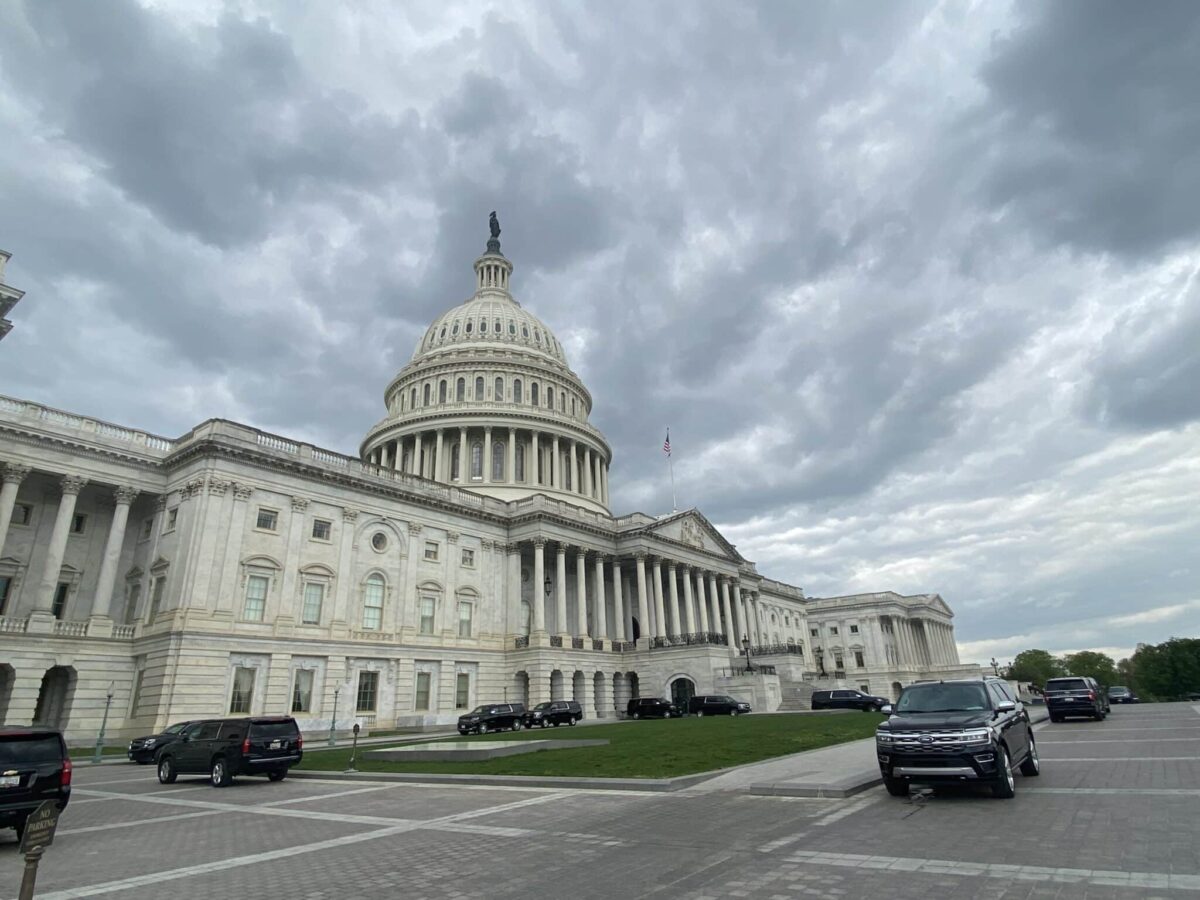
 The U.S. Capitol on the evening of Tuesday, Sept. 30, 2025, just hours before a federal government shutdown. (Photo by Ashley Murray/States Newsroom)

Alaska Republican Sen. Lisa Murkowski denounced the Trump administration’s targeting of Arizona Democratic Sen. Mark Kelly on Tuesday, saying on social media that its actions are “reckless and flat-out wrong.”

Kelly, a retired astronaut and U.S. Navy officer, was one of six Democratic senators who appeared in a video directed to members of the U.S. military. In that video, they say members of the military are being subject to political pressure and should uphold the Constitution and ignore “illegal orders.”

Afterward, President Donald Trump took to social media to call for all six to be executed for treason. The FBI has begun to make inquiries about the video, and the Department of Defense have vowed to investigate. Secretary of Defense Pete Hegseth has been particularly critical of Kelly.

“Senator Kelly valiantly served our country as an aviator in the U.S. Navy before later completing four space shuttle missions as a NASA astronaut,” Murkowski said. “To accuse him and other lawmakers of treason and sedition for rightfully pointing out that servicemembers can refuse illegal orders is reckless and flat-out wrong. The Department of Defense and FBI surely have more important priorities than this frivolous investigation.”

It has become unusual for elected Republican officials to speak in defense of elected Democrats, particularly when it places them at odds with President Donald Trump, who remains popular among Republican voters, even if his approval overall is low.

Alaska Republican Sen. Dan Sullivan previously expressed concerns about the possible politicization of the military during the presidency of Democrat Joe Biden. 

Asked about the situation with Kelly, Sullivan criticized the Democratic video and the administration’s response to it. 

“The Democrats in the video have offered no explanation of what they considered to be an illegal order, sowing confusion and politicizing the ranks in a way that risks undermining military discipline, lethality and readiness,” his office said in a written statement.

The statement went on to say that “he does not believe it is a good use of the Pentagon’s time to investigate Senator Kelly” because “such an investigation has the potential to turn into a major distraction for our military.”

The office of Rep. Nick Begich, R-Alaska, did not return a text message or email seeking comment.

Sullivan’s office requested that his statement be printed in full. Because it has not been published elsewhere, we think there is news value in reprinting it, so it is published below.

“Senator Sullivan strongly disagreed with many actions taken by the Pentagon under Presidents Obama and Biden — such as President Biden’s use of enlisted Marines as political props standing behind him in a very partisan speech in Philadelphia in 2022. But he would never have put out a video — like the one released by Senator Mark Kelly and five other Democratic lawmakers — implying that troops should question orders from their superiors. The Democrats in the video have offered no explanation of what they considered to be an illegal order, sowing confusion and politicizing the ranks in a way that risks undermining military discipline, lethality and readiness. 

Instead of using our troops as political pawns, members of Congress should press top Pentagon officials directly on issues over which they have concerns. Senator Sullivan does this regularly in Senate Armed Services Committee hearings and in meetings and phone calls with top Pentagon leaders regardless of which party controls the White House.

While Senator Sullivan believes the message in the video was irresponsible and politically driven, he does not believe it is a good use of the Pentagon’s time to investigate Senator Kelly — who served honorably in the Navy — under the UCMJ, particularly given that the Constitution’s Speech or Debate Clause would likely take precedence over any UCMJ provision. Such an investigation has the potential to turn into a major distraction for our military. After four years of Biden’s woke military, the Department of War needs to stay laser focused on lethality and war fighting.”

Categories
Featured Juneau News Juneau Local Ketchikan Local News Feeds Sitka Local

Murkowski: Help for health care, public broadcasting, is needed in shutdown-averting budget plan

By: James Brooks, Alaska Beacon

Sen. Lisa Murkowski, R-Alaska, speaks at an Aug. 4, 2025, news conference in her Anchorage office. (Photo by Yereth Rosen/Alaska Beacon)

Alaska’s three members of Congress differed on a series of votes Friday intended to keep the federal government funded past the end of the month, and avert a government shutdown.

Alaska’s sole U.S. House Rep. Nick Begich III, R-Alaska, voted in favor of a seven-week budget extension, but that measure died in the U.S. Senate when lawmakers were unable to garner the 60 votes needed to pass the U.S. House measure or an alternative proposed by Democratic members of the Senate.

U.S. Sen. Dan Sullivan, R-Alaska, was absent from both votes. U.S. Sen. Lisa Murkowski, R-Alaska, voted against both proposals.

“I voted against both measures as I felt that they were not serious (enough) to meet the situation that we are currently in today,” she said in a recording provided by her office.

The Republican-controlled House passed its stopgap funding bill 217-212, with one Democrat voting for it and two Republicans voting against it.

“The House did its job,” Begich said in a written statement afterward. “We passed a responsible, short-term continuing resolution to keep the government open and give Congress time to complete the appropriations process. Unfortunately, Senate Democrats chose obstruction over solutions, blocking this clean measure.”

Murkowski and Sen. Rand Paul, R-Kentucky, voted against the House-passed plan, while Sen. John Fetterman, D-Pennsylvania, voted for it. Eight senators did not vote, and the measure died 44-48.

The Democratic counterproposal failed 47-45.

Murkowski said that counterproposal included “a Christmas list” of Democratic ideas, including items that would have reversed big parts of the Republican “Big Beautiful Bill Act” from earlier this year, which contained core tax cuts and spending policies of Trump’s second presidential term. Murkowski and Sullivan voted for that bill, which was later signed into law.

On the other side of the coin, Murkowski said the Republican plan failed to include an extension of subsidies for health care plans passed through the federal insurance marketplace, something that is critical for Alaskans. It also didn’t include additional funding for public broadcasting or opposition to President Donald Trump’s unilateral budget clawbacks, known as recissions.

“I’m going to be busy in the next 10 days, trying to build a level of consensus that keeps the government open, because there is no side — no Republican, no Democrat, the White House — nobody wins when there is a government shutdown,” she said.

“It’s possible that my proposal will equally annoy both sides, but maybe, just maybe, it will get the conversation going in a way that advances serious discussion and positive outcomes,” Murkowski said.

Categories
Featured Juneau News Juneau Local Ketchikan Local News Feeds Sitka Local

Murkowski, Sullivan vote with Republicans against measure seeking release of Epstein files

By: James Brooks, Alaska Beacon

The U.S. Capitol on July 2, 2025. (Photo by Ashley Murray/States Newsroom)

Alaska Republican U.S. Sens. Lisa Murkowski and Dan Sullivan joined fellow Senate Republicans Wednesday night in voting to set aside a budget amendment that would have compelled the U.S. Department of Justice to release files related to the late sex offender Jeffrey Epstein.

The vote to table the amendment, stopping the Senate from considering it, was 51-49. 

All of the Senate’s Democrats voted in favor of the amendment, as did Republican Sens. Josh Hawley of Missouri and Rand Paul of Kentucky.

The failure of either of Alaska’s Republican senators to vote for the amendment drew criticism from the Alaska Democratic Party.

Alaska Republican U.S. Sens. Lisa Murkowski and Dan Sullivan (Alaska Beacon file photos)

Murkowski, talking by phone on Thursday, said the amendment, proposed by Senate Minority Leader Chuck Schumer, D-New York, came as a surprise, and she voted against it for procedural reasons, not because she opposes the idea of a release.

“What Schumer did was nothing more than a political stunt,” Murkowski said.

In July, Murkowski and other members of a Senate budget subcommittee voted unanimously to amend a proposed appropriations bill to mandate that the U.S. Department of Justice compile a report on the activities of Epstein, a sex trafficker with extensive ties to rich and powerful people worldwide. Epstein died in jail while awaiting trial in 2019. 

The final text of the bill requires a report, but not the release of original documents in the possession of the federal government.

President Donald Trump campaigned on releasing the documents during last year’s presidential election, but this summer has since broken that campaign pledge, downplaying the case 

In February, U.S. Attorney General Pam Bondi said she had Epstein’s client list “sitting on my desk right now.” But in July the FBI announced in a memo that there was no “client list” and no more public information would be released. The announcement caused a public outcry, and the federal government still has not released the documents.

Trump’s social relationship with Epstein was well-documented, and this week, the Wall Street Journal published a copy of a birthday greeting Trump sent to Epstein in 2003. Trump has claimed the letter doesn’t exist, but it bears his signature.

The letter was released to the public after being obtained by U.S. House members investigating the Epstein case.

“I have been — I don’t know if it’s fair to say one of the rare Republicans — certainly a very early Republican on the Senate side who said, ‘Look, just, just release these Epstein files. Just get this stuff out there,” Murkowski said.

The appropriations bill with Murkowski’s preferred Epstein language would fund the U.S. Department of Justice and other commerce and science-related parts of the federal government. For that reason, it’s been nicknamed the “CJS bill.”

It has not yet come to a floor vote, and with senators hurrying to pass budget bills before the end of the federal fiscal year on Sept. 30, it isn’t clear when it will come up.

“Will we see the CJS as part of a floor package that could move through the Senate? It’s not impossible, but we are kind of running out of daylight,” Murkowski said.

Part of that uncertainty is due to Senate Democrats’ opposition to the overall contents of the bill. That opposition has slowed the bill’s progress.

Schumer’s amendment would have forced the Senate to debate the Epstein issue immediately, as part of the annual defense authorization bill now under debate.

In response to a request for comment, Sullivan’s office issued a written statement that also criticized Schumer’s amendment and defended his vote.

It said in part, “Senator Sullivan has repeatedly said that he believes the DOJ should release as much information as possible on Epstein’s horrific crimes, while protecting survivors. Chuck Schumer tried slipping the Epstein provision into the National Defense Authorization Act (NDAA), knowing full well it would be stripped out as the bill went through the process, leaving no doubt he’s using Epstein’s atrocious crimes as a political pawn instead of focusing on building up our military in the NDAA, which Schumer has never shown any interest in doing.”

Murkowski said the amendment disrupted normal work on the defense bill and “threw a real wrench into the whole negotiated process that had really been moving along in a positive way.”

She said she believes Schumer brought up the Epstein issue because Senate Republicans are preparing to change the rules for the confirmation of Trump’s executive-branch nominations.

Ordinarily, the Senate approves uncontroversial nominees without a roll-call vote to make the process more efficient. Since the beginning of Trump’s second term, none of his nominees have been approved without a roll-call vote, an unprecedented change in the Senate, and one that has slowed both the Senate and the Trump administration’s confirmations.

In response, Senate Republicans are planning to change the Senate’s rules to allow the approval of multiple nominees with a single vote.

“I think he was trying to kind of change the narrative,” Murkowski said of Schumer’s proposed amendment. “I don’t think he was making much headway on his pushback on some of the nominations. And he made a decision that, I think, is going to be short-lived in its political fire. He really kind of poisoned the waters around here in terms of good-faith negotiations.”

The day after the vote, Alaska Democratic Party Chair Eric Croft released a statement, saying by email: “Just two months ago, Dan Sullivan called on the Department of Justice to release the documents to shine a light on convicted sex offender Jeffrey Epstein’s horrific crimes. But last night, Dan Sullivan was a deciding vote to continue the cover-up and block an effort to force the DOJ to release the Epstein files. Instead of listening to Alaskans and the victims of Jeffrey Epstein, Sullivan acted in his usual fashion – like a spineless politician who’s only loyal to his billionaire buddies. Alaskans and survivors deserve better.”

Sullivan faces re-election in 2026 and is running for another term in Congress.

To date, no Democrat has filed with the Alaska Division of Elections to challenge Sullivan. Filings with the Federal Elections Commission show Republican Christopher Miklos of Homer and Democrat Ann Diener of Fairbanks have filed forms necessary to begin fundraising.

The U.S. House, meanwhile, is close to having enough support to force a vote on the Epstein issue. While Speaker of the House Mike Johnson, R-Louisiana, opposes bringing up the topic, a bipartisan petition could override the Speaker if it has 218 signatures. As of Wednesday night, it had 217. Alaska’s lone member of the House of Representatives, Rep. Nick Begich, has not signed the discharge petition. His office did not respond to questions about his position on the Epstein issue and whether he will sign the petition.

Categories
Featured Juneau News Juneau Local Ketchikan Local News Feeds Sitka Local

Senate Republicans haul Trump’s big bill to passage after a turbulent all-night session

AP- Senate Republicans hauled President Donald Trump’s big tax breaks and spending cuts bill to passage Tuesday on the narrowest of votes, pushing past opposition from Democrats and their own GOP ranks after a turbulent overnight session.

The outcome capped an unusually tense weekend of work at the Capitol, the president’s signature legislative priority teetering on the edge of approval, or collapse.

The difficulty it took for Republicans, who have the majority hold in Congress, to wrestle the bill to this point is not expected to let up. The package now goes back to the House, where Speaker Mike Johnson had warned senators not to deviate too far from what his chamber had already approved. But the Senate did make changes, particularly to Medicaid, risking more problems as they race to finish by Trump’s Fourth of July deadline.

The outcome is a pivotal moment for president and his party, which have been consumed by the 940-page “One Big Beautiful Bill Act,” as it’s formally titled, and invested their political capital in delivering on the GOP’s sweep of power in Washington.

Trump acknowledged it’s “very complicated stuff,” as he departed the White House for Florida.

“I don’t want to go too crazy with cuts,” he said. “I don’t like cuts.”

What started as a routine but laborious day of amendment voting, in a process called vote-a-rama, spiraled into a round-the-clock slog as Republican leaders were buying time to shore up support.

The droning roll calls in the chamber belied the frenzied action to steady the bill. Grim-faced scenes played out on and off the Senate floor, amid exhaustion.

Senate Majority Leader John Thune of South Dakota was desperately reaching for last-minute agreements between those in his party worried the bill’s reductions to Medicaid will leave millions without care, and his most conservative flank, which wants even steeper cuts to hold down deficits ballooning with the tax cuts.

The GOP leaders have no room to spare, with narrow majorities. Thune can lose no more than three Republican senators, and already two — Sen. Thom Tillis of North Carolina, who warned that millions of people will lose access to Medicaid health care, and Sen. Rand Paul of Kentucky, who opposes raising the debt limit by $5 trillion — had indicated opposition.

Attention quickly turned to two key senators, Lisa Murkowski of Alaska and Susan Collins of Maine, who also raised concerns about health care cuts, as well as a loose coalition of four conservative GOP senators pushing for even steeper reductions.

Murkowski in particular became the subject of the GOP leadership’s attention, as they sat beside her for talks. She was huddled intensely for more than an hour in the back of the chamber with others, scribbling notes on papers.

Then all eyes were on Paul after he returned from a visit to Thune’s office with a stunning offer that could win his vote. He had suggested substantially lowering the bill’s increase in the debt ceiling, according to two people familiar with the private meeting and granted anonymity to discuss it.

Senate Democratic Leader Chuck Schumer of New York said “Republicans are in shambles because they know the bill is so unpopular.”

An analysis from the nonpartisan Congressional Budget Office found 11.8 million more Americans would become uninsured by 2034 if the bill became law. The CBO said the package would increase the deficit by nearly $3.3 trillion over the decade.

And on social media, billionaire Elon Musk was again lashing out at Republicans as “the PORKY PIG PARTY!!” for including the $5 trillion debt ceiling in the package, which is needed to allow continued borrowing to pay the bills.

Senators insist on changes

Few Republicans appeared fully satisfied as the final package emerges, in either the House or Senate.

Collins had proposed bolstering the $25 billion proposed rural hospital fund to $50 billion, offset with a higher tax rate on those earning more than $25 million a year, but her amendment failed.

And Murkowski was trying to secure provisions to spare people in her state from some food stamp cuts, which appeared to be accepted, while she was also working to beef up federal reimbursements to hospitals in Alaska and others states, that did not comply with parliamentary rules.

“Radio silence,” Murkowski said when asked how she would vote.

The conservative senators demanding a vote on their steeper health care cuts, including Rick Scott of Florida, Mike Lee of Utah, Ron Johnson of Wisconsin and Cynthia Lummis of Wyoming, filed into Thune’s office near-midnight.

What’s in the big bill

All told, the Senate bill includes $4.5 trillion in tax cuts, according to the latest CBO analysis, making permanent Trump’s 2017 rates, which would expire at the end of the year if Congress fails to act, while adding the new ones he campaigned on, including no taxes on tips.

The Senate package would roll back billions of dollars in green energy tax credits, which Democrats warn will wipe out wind and solar investments nationwide. It would impose $1.2 trillion in cuts, largely to Medicaid and food stamps, by imposing work requirements on able-bodied people, including some parents and older Americans, making sign-up eligibility more stringent and changing federal reimbursements to states.

Additionally, the bill would provide a $350 billion infusion for border and national security, including for deportations, some of it paid for with new fees charged to immigrants.

Democrats fighting all day and night

Unable to stop the march toward passage, the Democrats tried to drag out the process, including with a weekend reading of the full bill.

A few of the Democratic amendments won support from a few Republicans, though almost none were passing. More were considered in one of the longer such sessions in modern times.

One amendment overwhelmingly approved stripped a provision barring states from regulating artificial intelligence if they receive certain federal funding.

Sen. Patty Murray of Washington, the ranking Democrat on the Appropriations Committee, raised particular concern about the accounting method being used by the Republicans, which says the tax breaks from Trump’s first term are now “current policy” and the cost of extending them should not be counted toward deficits.

She said that kind of “magic math” won’t fly with Americans trying to balance their own household books.