Categories
Featured Juneau News Juneau Local Ketchikan Local News Feeds Sitka Local

Trump signs funding bill, ending record 43-day government shutdown

President Donald Trump signs the funding bill to reopen the government, in the Oval Office of the White House, Wednesday, Nov. 12, 2025, in Washington. (AP Photo/Jacquelyn Martin)

President Donald Trump signed a government funding bill Wednesday night, ending a record 43-day shutdown that caused financial stress for federal workers who went without paychecks, stranded scores of travelers at airports and generated long lines at some food banks.

The signing ceremony came just hours after the House passed the measure on a mostly party-line vote of 222-209. The Senate had already passed the measure Monday.

The shutdown magnified partisan divisions in Washington as Trump took unprecedented unilateral actions — including canceling projects and trying to fire federal workers — to pressure Democrats into relenting on their demands.

Democrats wanted to extend an enhanced tax credit expiring at the end of the year that lowers the cost of health coverage obtained through Affordable Care Act marketplaces. They refused to go along with a short-term spending bill that did not include that priority. But Republicans said that was a separate policy fight to be held at another time.

Here’s the latest:

Trump’s new ambassador visits head of Greece’s Orthodox Church

Kimberly Guilfoyle, the first female U.S. ambassador to Greece and a close ally of President Trump, visited the head of Greece’s Orthodox Church on Thursday, telling him he was the first person she called after being nominated to her new post.

Guilfoyle’s visit to Archbishop Ieronymos II came just over a week after she took up her new position in Athens. A former California prosecutor and Fox News host who was once engaged to Donald Trump Jr, the 56-year-old presented her diplomatic credentials to Greece’s president on Nov. 4.

“It’s wonderful to be here and I’m just very grateful that President Trump has blessed me with the opportunity to serve the United States here in Greece, for the relationship that we have and for that growing and blossoming going forward,” Guilfoyle said during the meeting with the 87-year-old archbishop.

Ieronymos extended his thanks “to the president for the opportunity that he gave us today. May God bless these relations.”

▶ Read more about the ambassador’s visit in Greece

Funding bill renews Medicare telehealth program

Medicare telehealth waivers that allow millions of older adults to get virtual health care without leaving home were restored through Jan. 30 in the government funding bill, after lapsing during the 43-day shutdown.

Patients and caregivers reacted with relief — but called for more action.

“We are pleased that Congress has worked together to temporarily restore the telehealth funding, but we hope they can make this a permanent part of the healthcare system,” said Martha Swick, a full-time caregiver for her husband Bill, who uses the program for speech therapy to treat his degenerative brain disease.

The deal also restored funding through Jan. 30 for a Medicare program that allows some patients to receive hospital-level acute in-person care at home.

Essential federal workers expected to get backpay soon, White House official says

Federal workers deemed essential, including Capitol Police officers, TSA workers and air traffic controllers, had been forced to work without pay during the shutdown.

But Kevin Hassett, chair of the National Economic Council at the White House, said their checks should soon be on the way.

“I think that the payments will come probably come in the next week,” Hassett said. “Maybe even before.”

Health care debate ahead

It’s unclear whether the parties will find any common ground on health care before the December vote in the Senate. House Speaker Mike Johnson has said he will not commit to bringing it up in his chamber.

Some Republicans have said they’re open to extending the COVID-19 pandemic-era tax credits as premiums will soar for millions of people, but they also want new limits on who can receive the subsidies. Some argue the tax dollars for the plans should be routed through individuals rather than go directly to insurance companies.

Sen. Susan Collins, R-Maine, chair of the Senate Appropriations Committee, said Monday that she was supportive of extending the tax credits with changes, such as new income caps. Some Democrats have signaled they could be open to that idea.

A bitter end after a long stalemate

The frustration and pressures generated by the shutdown was reflected when lawmakers debated the spending measure on the House floor.

Republicans said Democrats sought to use the pain generated by the shutdown to prevail in a policy dispute.

“They knew it would cause pain and they did it anyway,” House Speaker Mike Johnson said.

Democrats said Republicans raced to pass tax breaks earlier this year that they say mostly will benefit the wealthy. But the bill before the House on Wednesday “leaves families twisting in the wind with zero guarantee there will ever, ever be a vote to extend tax credits to help everyday people pay for their health care,” said Democratic Rep. Jim McGovern of Massachusetts.

Federal workers deeply felt the impacts of the shutdown

The shutdown created a cascade of troubles for many Americans. Throughout the shutdown, at least 670,000 federal employees were furloughed, while about 730,000 others were working without pay, according to the Bipartisan Policy Center.

The plight of the federal workers was among several pressure points, along with flight disruptions and cuts to food aid, that in the end ratcheted up the pressure on lawmakers to come to an agreement to fund the government.

Throughout the six-week shutdown, officials in President Trump’s administration repeatedly used the federal workers as leverage to try to push Democrats to relent on their health care demands. The Republican president signaled that workers going unpaid wouldn’t get back pay. He threatened and then followed through on firings in a federal workforce already reeling from layoffs earlier this year. A court then blocked the shutdown firings, adding to the uncertainty.

Federal workers question whether the longest government shutdown was worth their sacrifice

Jessica Sweet spent the federal government shutdown cutting back. To make ends meet, the Social Security claims specialist drank only one coffee a day, skipped meals, cut down on groceries and deferred paying some household bills. She racked up spending on her credit card buying gas to get to work.

With the longest shutdown ever coming to a close, Sweet and hundreds of thousands of other federal workers who missed paychecks will soon get some relief. But many are left feeling that their livelihoods served as political pawns in the fight between recalcitrant lawmakers in Washington and are asking themselves whether the battle was worth their sacrifices.

“It’s very frustrating to go through something like this,” said Sweet, who is a union steward of AFGE Local 3343 in New York. “It shakes the foundation of trust that we all place in our agencies and in the federal government to do the right thing.”

▶ Read more about how federal workers felt about the shutdown

OPM: Get back to it, federal workers

The Office of Personnel Management posted on X that federal workers are expected to be back to the grind on Thursday, with Trump signing a measure ending the record 43-day shutdown.

“Federal agencies in the Washington, DC area are open. Employees are expected to begin the workday on time. Normal operating procedures are in effect,” the OPM posting says.

Categories
Featured Juneau News Juneau Local Ketchikan Local News Feeds Sitka Local

US flight cancellations expected to drag on even after the government shutdown ends

Alaska Airlines planes are shown parked at gates with Mount Rainier in the background on March 1, 2021, at Seattle-Tacoma International Airport in Seattle. (AP Photo/Ted S. Warren, File)

AP- The flight cancellations at airports across the U.S. are expected to persist even after the government shutdown ends.

The Federal Aviation Administration has reduced flights as some air traffic controllers — unpaid for weeks — have stopped showing up for work.

The Senate took a first step toward ending the shutdown Sunday, but final passage could still be several days away. Transportation Secretary Sean Duffy made clear last week that flight cuts will remain in place until the FAA sees safety metrics improve.

Over the weekend, airlines canceled thousands of flights to comply with the order to eliminate 4% of flights. The cancellations are scheduled to rise to 6% of all flights at 40 of the nation’s busiest airports on Tuesday. By the end of the week, flight cancellations are scheduled to reach 10% of all flights at those airports.

Already, travelers are growing frustrated.

“All of this has real negative consequences for millions of Americans, and it’s 100% unnecessary and avoidable,” said Todd Walker, whose flight from San Francisco to Washington state was canceled over the weekend, causing him to miss his mom’s 80th birthday party.

As of Monday morning, airlines had already canceled 1,600 flights for Monday and nearly 1,000 for Tuesday. International flights have not been affected.

Beyond the mandated cuts, flight delays have been rippling through airports nationwide at times ever since the shutdown began. That’s because the FAA slows air traffic anytime it’s short on controllers at one of its facilities to ensure flights remain safe.

Tuesday will be the second missed payday for air traffic controllers and other FAA employees. It’s unclear how quickly they might be paid once the shutdown ends. The head of the controllers union, Nick Daniels, plans a news conference Monday morning to address the shutdown’s toll.

“More controllers aren’t coming to work day by day, the further they go without a paycheck,” Duffy said.

The government has struggled for years with a shortage of air traffic controllers, and Duffy said the shutdown has worsened the problem, prompting some controllers to retire early or quit. Before the shutdown, Duffy had been working to address the shortage by hiring more controllers, speeding up training and offering bonuses to retain experienced controllers.

Duffy warned over the weekend that if the shutdown drags on, the situation could deteriorate further as the U.S. heads into the busy holiday travel season. He said air travel may “be reduced to a trickle” by the week of Thanksgiving.

Categories
Featured Juneau News Juneau Local Ketchikan Local News Feeds Sitka Local

Senate takes first step toward ending the government shutdown

AP-The Senate took the first step to end the government shutdown on Sunday after a group of moderate Democrats agreed to proceed without a guaranteed extension of health care subsidies, angering many in their caucus who say Americans want them to continue the fight.

In a test vote that is the first in a series of required procedural maneuvers, the Senate voted 60-40 to move toward passing compromise legislation to fund the government and hold a later vote on extending Affordable Care Act tax credits that expire Jan. 1. Final passage could be several days away if Democrats object and delay the process.

The agreement does not guarantee the health care subsidies will be extended, as Democrats have demanded for almost six weeks. Senate Democratic leader Chuck Schumer of New York voted against moving ahead with the package, along with all but eight of his Democratic colleagues.

A group of three former governors — New Hampshire Sen. Jeanne Shaheen, New Hampshire Sen. Maggie Hassan and Independent Sen. Angus King of Maine — broke the six-week stalemate on Sunday when they agreed to vote to advance three bipartisan annual spending bills and extend the rest of government funding until late January in exchange for a mid-December vote on extending the health care tax credits.

The agreement also includes a reversal of the mass firings of federal workers by the Trump administration since the shutdown began on Oct. 1 and would ensure that federal workers receive back pay.

Senate Majority Leader John Thune quickly endorsed the deal and called an immediate vote to begin the process of approving it as the shutdown continued to disrupt flights nationwide, threaten food assistance for millions of Americans and leave federal workers without pay.

“The time to act is now,” Thune said.

Returning to the White House on Sunday evening after attending a football game, President Donald Trump did not say whether he endorsed the deal. But he said, “It looks like we’re getting close to the shutdown ending.”

Five Democrats switch votes

In addition to Shaheen, King and Hassan, Democratic Sen. Tim Kaine of Virginia, home to tens of thousands of federal workers, also voted in favor of moving forward on the agreement. Illinois Sen. Dick Durbin, the No. 2 Democrat, Pennsylvania Sen. John Fetterman and Nevada Sens. Catherine Cortez Masto and Jacky Rosen also voted yes.

The moderates had expected a larger number of Democrats to vote with them as 10-12 Democratic senators had been part of the negotiations. But in the end, only five Democrats switched their votes — the exact number that Republicans needed. King, Cortez Masto and Fetterman had already been voting to open the government since Oct. 1.

The vote was temporarily delayed on Sunday evening as three conservatives who often criticize spending bills, Republican Sens. Mike Lee of Utah, Rick Scott of Florida and Ron Johnson of Wisconsin, withheld their votes and huddled with Thune at the back of the chamber. They eventually voted yes after speaking to Trump, Lee said.

Another Republican, Sen John Cornyn of Texas, had to fly back from Texas to deliver the crucial 60th vote.

Schumer votes no

After Democrats met for over two hours to discuss the proposal, Schumer said he could not “in good faith” support it.

Schumer, who received blowback from his party in March when he voted to keep the government open, said that Democrats have now “sounded the alarm” on health care.

“We will not give up the fight,” he said.

Independent Sen. Bernie Sanders of Vermont, who caucuses with the Democrats, said giving up the fight was a “horrific mistake.”

Sen. Chris Murphy, D-Conn., agreed, saying that in last week’s elections people voted overwhelmingly Democratic “to urge Democrats to hold firm.”

A bipartisan agreement

Democrats had voted 14 times not to reopen the government as they demanded the extension of tax credits that make coverage more affordable under the Affordable Care Act. Republicans said they would not negotiate on health care, but GOP leaders have been quietly working with the group of moderates as the contours of an agreement began to emerge.

The agreement includes bipartisan bills worked out by the Senate Appropriations Committee to fund parts of government — food aid, veterans programs and the legislative branch, among other things. All other funding would be extended until the end of January, giving lawmakers more than two months to finish additional spending bills.

The deal would reinstate federal workers who had received reduction in force, or layoff, notices and reimburse states that spent their own funds to keep federal programs running during the shutdown. It would also protect against future reductions in force through January and guarantee federal workers would be paid once the shutdown is over.

House Democrats push back

House Democrats swiftly criticized the Senate.

Texas Rep. Greg Casar, the chairman of the Congressional Progressive Caucus, said a deal that doesn’t reduce health care costs is a “betrayal” of millions of Americans who are counting on Democrats to fight.

“Accepting nothing but a pinky promise from Republicans isn’t a compromise — it’s capitulation,” Casar said in a post on X. “Millions of families would pay the price.”

Rep. Angie Craig of Minnesota posted that “if people believe this is a ‘deal,’ I have a bridge to sell you.”

House Democratic leader Hakeem Jeffries blamed Republicans and said Democrats will continue to fight.

“Donald Trump and the Republican Party own the toxic mess they have created in our country and the American people know it,” Jeffries said.

Health care debate ahead

It’s unclear whether the two parties would be able to find any common ground on the health care subsidies before a promised December vote in the Senate. House Speaker Mike Johnson, R-La., has said he will not commit to bring it up in his chamber.

Some Republicans have said they are open to extending the COVID-19-era tax credits as premiums could skyrocket for millions of people, but they also want new limits on who can receive the subsidies and argue that the tax dollars for the plans should be routed through individuals.

Other Republicans, including Trump, have used the debate to renew their yearslong criticism of the law and called for it to be scrapped or overhauled.

Shutdown effects worsen

Meanwhile, the consequences of the shutdown have been compounding. U.S. airlines canceled more than 2,000 flights on Sunday for the first time since the shutdown began, and there were more than 7,000 flight delays, according to FlightAware, a website that tracks air travel disruptions.

Treasury Secretary Sean Duffy said on CNN’s “State of the Union” that air travel ahead of the Thanksgiving holiday will be “reduced to a trickle” if the government doesn’t reopen.

At the same time, food aid was delayed for tens of millions of people as Supplemental Nutrition Assistance Program benefits were caught up in legal battles related to the shutdown.

And in Washington, home to tens of thousands of federal workers who have gone unpaid, the Capital Area Food Bank said it is providing 8 million more meals ahead of the holidays than it had prepared for this budget year — a nearly 20% increase.

Categories
Featured Juneau News Juneau Local Ketchikan Local News Feeds Sitka Local

US flight cancellations accelerate as airlines comply with government shutdown order

FILE – Alaska Airlines planes are shown parked at gates with Mount Rainier in the background on March 1, 2021, at Seattle-Tacoma International Airport in Seattle. (AP Photo/Ted S. Warren, File)

AP- U.S. airlines began canceling hundreds of flights Thursday due to the Federal Aviation Administration’s order to reduce traffic at the country’s busiest airports starting Friday because of the government shutdown.

Airports that will see cuts include Anchorage International and Seattle Tacoma, both directly affecting Alaskan travelers.

More than 500 flights scheduled for Friday were already cut nationwide, and the number of cancellations climbed steadily throughout Thursday, according to FlightAware, a website that tracks flight disruptions.

The FAA order to cut flights at 40 of the busiest airports across the U.S. includes New York, Los Angeles and Chicago, according to a list distributed to the airlines and obtained by The Associated Press. But the impact will disrupt travel at many smaller airports too.

The FAA seeks to reduce service by 10% across “high-volume” markets to maintain travel safety as air traffic controllers exhibit signs of strain during the shutdown. The move also comes as the Trump administration is ramping up pressure on Democrats in Congress to end the shutdown.

Airlines will phase in the 10% reduction in their flight schedules at the airports across more than two dozen states. Just hours before the reductions went into place, airlines were scrambling to figure out where to cut and some travelers began changing or canceling itineraries preemptively.

Travelers with plans for the weekend and beyond waited nervously to see if their flights would take off as scheduled.

The affected airports included busy connecting hubs and those in popular tourist destinations, such as Atlanta, Denver, Orlando, Miami and San Francisco. In some of the biggest cities — such as Dallas, Houston and Chicago — multiple airports will be affected.

Flight cuts will begin gradually

Airlines will phase in the cuts at the direction of the FAA, eliminating 4% of flights at the 40 airports on Friday and working up to 10%, according to three people familiar with the plans who were not authorized to discuss them publicly.

Delta Air Lines said it planned to cancel roughly 170 flights Friday. By late Thursday afternoon, United Airlines had called off 145 flights and American Airlines had canceled 32 for Friday, according to aviation analytics firm Cirium.

The FAA had not yet published an official order as of the afternoon.

Some airlines planned to focus on slashing routes to and from small and medium-size cities.

“This is going to have a noticeable impact across the U.S. air transportation system,” industry analyst Henry Harteveldt said.

The flight reductions just weeks before the busy holiday season prompted some travelers to change their plans or looking at other options.

Fallon Carter canceled her Friday flight from New York to Tampa, Florida, where she planned to spend the weekend at the beach. She was worried about making it back to Long Island to be a bridesmaid at her best friend’s wedding.

“I don’t know if I get there, will I get home?” Carter said.

The FAA is imposing the reductions to relieve pressure on air traffic controllers who are working without pay during the shutdown, which began Oct. 1, and have been increasingly taking sick days. Most controllers work mandatory overtime six days a week, leaving little time for side jobs to help cover bills unless they call out.

In recent weeks the FAA has delayed flights when airports or its other facilities are short on controllers.

Shuffling schedules

Airlines said they would try to minimize impact on customers, some of whom will see weekend travel plans disrupted with little notice.

United, Delta and American were among carriers that said they would offer refunds to passengers who opt not to fly, even if they purchased nonrefundable tickets.

The head of Frontier Airlines recommended that travelers buy backup tickets with another airline to avoid being stranded.

The cuts also could disrupt package deliveries because two airports with major distribution centers are on the list — FedEx operates at the airport in Memphis, Tennessee, and UPS in Louisville, Kentucky, the site of this week’s deadly cargo plane crash.

The cuts could affect as many as 1,800 flights, or upward of 268,000 passengers, per day, according to an estimate from Cirium.

Airlines are used to dealing with canceling thousands of flights on short notice during severe weather, but the difference now is that these cuts during the shutdown will last indefinitely until safety data improves.

Shutdown already straining travel

The shutdown is putting unnecessary strain on the system and damaging confidence in the U.S. air travel experience, said U.S. Travel Association President and CEO Geoff Freeman.

Kelly Matthews, who lives in Flat Rock, Michigan, and frequently flies for work, said she has canceled most of her upcoming trips and understands why federal airport employees have stopped showing up.

“You can’t expect people to go in to work when they’re not getting a paycheck for the continuation of over a month now,” she said. “I mean it’s not a matter of them not wanting to do the job — but you can’t afford to pay for gas, your day care and everything else.”

Controller staffing worsening

The past weekend brought some of the worst staffing issues since the start of the shutdown.

From Friday to Sunday evening, at least 39 air traffic control facilities reported potential staffing limits, according to an AP analysis of operations plans shared through the Air Traffic Control System Command Center system. The figure, which is likely an undercount, was well above the average for weekends before the shutdown.

Categories
Featured Juneau News Juneau Local Ketchikan Local News Feeds Sitka Local

Government shutdown on track to become the longest ever

AP- The government shutdown is poised to become the longest ever this week as the impasse between Democrats and Republicans has dragged into a new month. Millions of people stand to lose food aid benefits, health care subsidies are set to expire and there are few real talks between the parties over how to end it.

President Donald Trump said in an interview that aired Sunday that he “won’t be extorted” by Democrats who are demanding negotiations to extend the expiring Affordable Care Act subsidies. Echoing congressional Republicans, the president said on CBS’ “60 Minutes” he’ll negotiate only when the government is reopened.

Trump said Democrats “have lost their way” and predicted they’ll capitulate to Republicans.

“I think they have to,” Trump said. “And if they don’t vote, it’s their problem.”

Trump’s comments signal the shutdown could drag on for some time as federal workers, including air traffic controllers, are set to miss additional paychecks and there’s uncertainty over whether 42 million Americans who receive federal food aid will be able to access the assistance. Senate Democrats have voted 13 times against reopening the government, insisting they need Trump and Republicans to negotiate with them first.

The president also reiterated his pleas to Republican leaders to change Senate rules and scrap the filibuster. Senate Republicans have repeatedly rejected that idea since Trump’s first term, arguing the rule requiring 60 votes to overcome any objections in the Senate is vital to the institution and has allowed them to stop Democratic policies when they’re in the minority.

Trump said that’s true, but “we’re here right now.”

“Republicans have to get tougher,” Trump told CBS. “If we end the filibuster, we can do exactly what we want.”

With the two parties at a standstill, the shutdown, now in its 34th day and approaching its sixth week, appears likely to become the longest in history. The previous record was set in 2019, when Trump demanded Congress give him money for a U.S.-Mexico border wall.

A potentially decisive week

Trump’s push on the filibuster could prove a distraction for Senate Majority Leader John Thune, R-S.D., and Republican senators who’ve opted instead to stay the course as the consequences of the shutdown become more acute.

Republicans are hoping at least some Democrats will eventually switch their votes as moderates have been in weekslong talks with rank-and-file Republicans about potential compromises that could guarantee votes on health care in exchange for reopening the government. Republicans need five additional Democrats to pass their bill.

Thune told reporters Monday that he was “optimistic” that the Senate could vote to reopen the government by the end of the week.

But he also added, “If we don’t start seeing some progress or some evidence of that by at least the middle of this week, it’s hard to see how we would finish anything by the end of the week.”

Virginia Sen. Tim Kaine, a Democrat, said on ABC’s “This Week” on Sunday there’s a group of people talking about ”a path to fix the health care debacle” and a commitment from Republicans not to fire more federal workers. But it’s unclear if those talks could produce a meaningful compromise.

Far apart on health care subsidies

Trump said in the “60 Minutes” interview that the Affordable Care Act — often known as Obamacare because it was signed and championed by then-President Barack Obama — is “terrible” and if the Democrats vote to reopen the government, “we will work on fixing the bad health care that we have right now.”

Democrats feel differently, arguing that the marketplaces set up by the ACA are working as record numbers of Americans have signed up for the coverage. But they want to extend subsidies first enacted during the COVID-19 pandemic so premiums won’t go up for millions of people on Jan. 1.

Senate Democratic leader Chuck Schumer said last week that “we want to sit down with Thune, with (House Speaker Mike) Johnson, with Trump, and negotiate a way to address this horrible health care crisis.”

No appetite for bipartisanship

As Democrats have pushed Trump and Republicans to negotiate, Trump has showed little interest in doing so. He called for an end to the Senate filibuster after a trip to Asia while the government was shut down.

White House spokeswoman Karoline Leavitt said on Fox News Channel’s “Sunday Morning Futures” that the president has spoken directly to Thune and Johnson about the filibuster. But a spokesman for Thune said Friday that his position hasn’t changed, and Johnson said Sunday that he believes the filibuster has traditionally been a “safeguard” from far-left policies.

Trump said on “60 Minutes” that he likes Thune but “I disagree with him on this point.”

The president has spent much of the shutdown mocking Democrats, posting videos of House Democratic leader Hakeem Jeffries in a Mexican sombrero. The White House website is now featuring a satirical “My Space” page for Democrats, a parody based on the social media site that was popular in the early 2000s. “We just love playing politics with people’s livelihoods,” the page reads.

Democrats have repeatedly said that they need Trump to get serious and weigh in. Virginia Sen. Mark Warner said that he hopes the shutdown could end “this week” because Trump is back in Washington.

Republicans “can’t move on anything without a Trump sign off,” Warner said on “Face the Nation” on CBS.

Record-breaking shutdown

The 35-day shutdown that lasted from December 2018 to January 2019 ended when Trump retreated from his demands over a border wall. That came amid intensifying delays at the nation’s airports and multiple missed paydays for hundreds of thousands of federal workers.

Transportation Secretary Sean Duffy said on ABC’s “This Week” that there have already been delays at several airports “and it’s only going to get worse.”

Many of the workers are “confronted with a decision,” he said. “Do I put food on my kids’ table, do I put gas in the car, do I pay my rent or do I go to work and not get paid?”

As flight delays around the country increased, New York City’s emergency management department posted on Sunday that Newark Airport was under a ground delay because of “staffing shortages in the control tower” and that they were limiting arrivals to the airport.

“The average delay is about 2 hours, and some flights are more than 3 hours late,” the account posted.

SNAP crisis

Also in the crossfire are the 42 million Americans who receive SNAP benefits. The Department of Agriculture planned to withhold $8 billion needed for payments to the food program starting on Saturday until two federal judges ordered the administration to fund it.

The Trump administration indicated in court Monday that it will only partially fund SNAP this month by using a $4.65 billion emergency fund. That left the program in uncertainty with no clear indication of how much beneficiaries will receive or when their cards will be loaded to buy groceries.

House Democratic leader Jeffries, D-N.Y., accused Trump and Republicans of attempting to “weaponize hunger.” He said that the administration has managed to find ways for funding other priorities during the shutdown, but is slow-walking pushing out SNAP benefits despite the court orders.

“But somehow they can’t find money to make sure that Americans don’t go hungry,” Jeffries said in an appearance on CNN’s “State of the Union.”

Categories
Featured Juneau News Juneau Local Ketchikan Local News Feeds Sitka Local

Governor declares state disaster to ensure food security

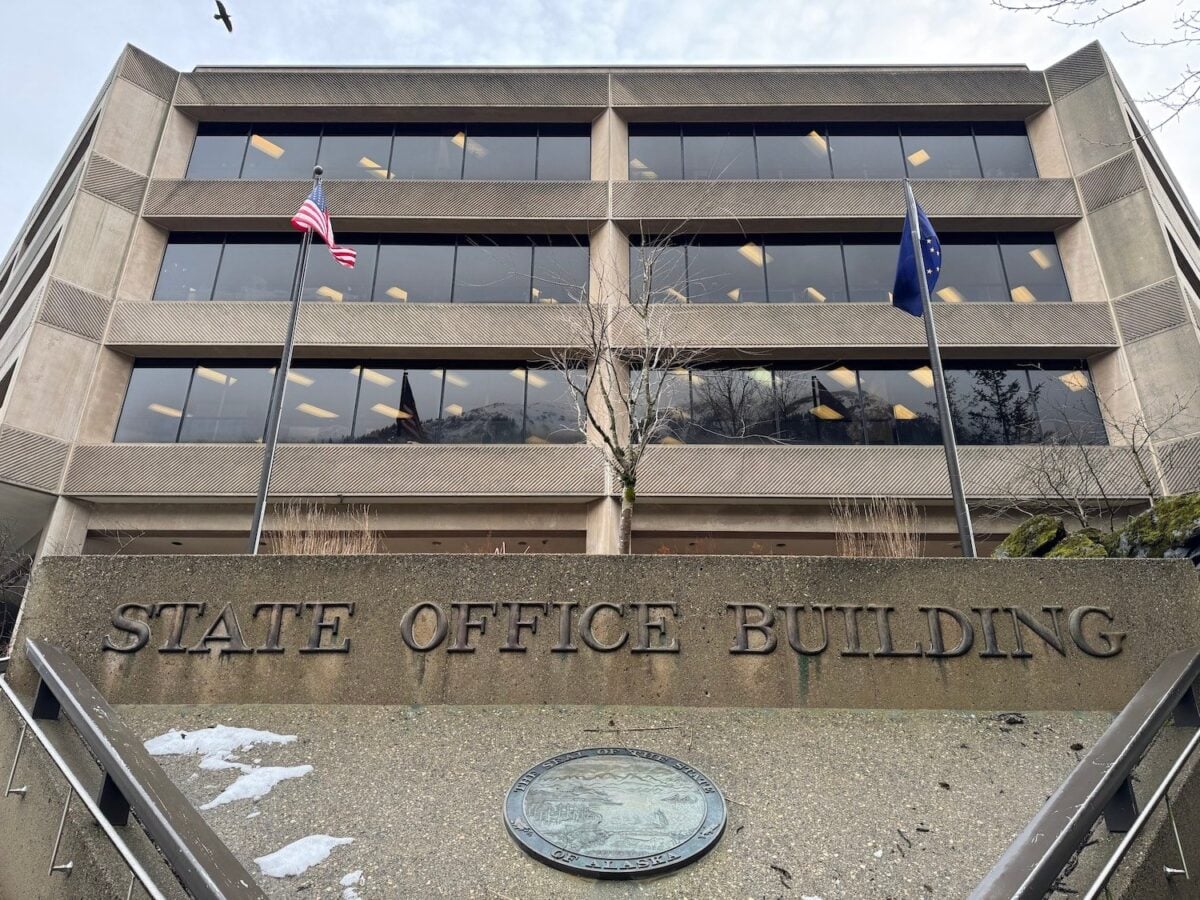
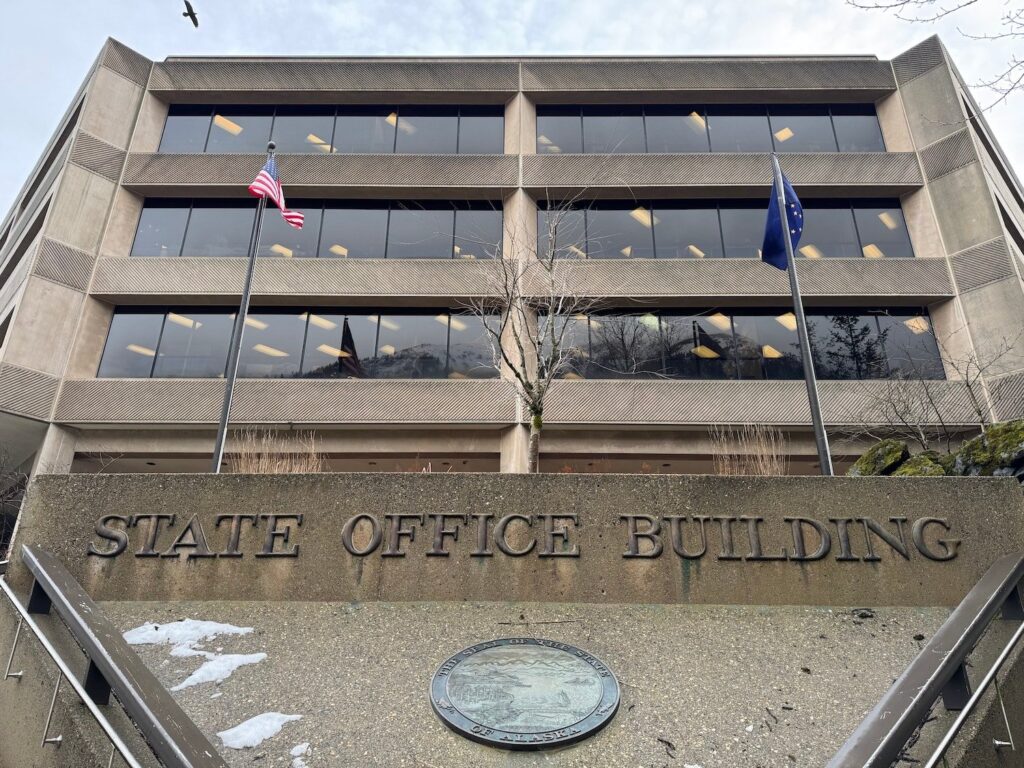
The State Office Building in Juneau is seen on Thursday, Feb. 20, 2025. (Photo by James Brooks/Alaska Beacon)

NOTN-Alaskans who rely on the Supplemental Nutrition Assistance Program, known as SNAP or food stamps, did not receive their November benefits as scheduled Saturday.

In a social media post Friday afternoon, President Trump said he would ask the courts for additional guidance before releasing SNAP funds to states.

Alaska Governor Mike Dunleavy issued a state disaster to ensure food security, this 30 day declaration will allow the state to work with the federal contractor that manages SNAP benefits, loading funds onto EBT cards weekly instead of monthly so families can continue to buy food.

The Department of Health will also coordinate with food banks to fill any gaps in aid. The full declaration can be found below.

November 3, 2025 (Anchorage, AK) — Governor Mike Dunleavy has issued a state disaster declaration to deal with the food security issue as a result of inaction on the federal budget in Washington D.C. The Governor will declare a 30 day disaster declaration that ensures food security in two ways for the thousands of Alaskan households that utilize Supplemental Nutrition Assistance Program (SNAP) benefits.   The Dunleavy Administration will work with the federal contractor responsible for loading EBT cards to deposit benefits on a weekly schedule. This ensures Alaskans will not struggle to put food on the table during the shutdown The Alaska Department of Health will begin discussions with food banks and work with them to ensure the resources are available to assist Alaskans that may otherwise fall between the cracks   The Governor has been meeting with Speaker Edgmon and President Stevens to ensure the process for Legislative concurrence is expedited. Those discussions have gone well and demonstrate that the executive and legislative branches work well when Alaskans are in need.   “I want to thank Speaker Bryce Edgmon and President Gary Stevens for working with me the past few days to craft an approach to deal with this issue,“ said Governor Mike Dunleavy.   “I’m grateful and deeply relieved that help will reach Alaskans in need without further delay,” said House Speaker Bryce Edgmon (I-Dillingham). “I want to thank the Governor and Senate President for acting swiftly and working together to make this happen.”   “Alaskans shouldn’t have to worry about how they’ll feed their families because of a federal stalemate,” said President Gary Stevens (R-Kodiak). “I appreciate and support the Governor’s declaration to ensure that Alaskans are not left behind because of inaction in Washington, D.C. Congress must reconcile their differences and act quickly so Alaskans, and all Americans, can continue to have the support and stability to care for their families.”   The disaster declaration will last no longer than 30 days or as soon as the federal government reopens.   Click here for a copy of the disaster declaration and the legislative notification.

Categories
Featured Juneau News Juneau Local Ketchikan Local News Feeds Sitka Local

Kiehl: Government shutdown hurting public workers

The Alaska and American flags fly in front of the Alaska State Capitol on Tuesday, April 22, 2025. (Photo by James Brooks/Alaska Beacon)

NOTN- Juneau Sen. Jesse Kiehl says the ongoing federal government shutdown is harming public workers and citizens rather than politicians.

Speaking on KINY last week, Kiehl said that despite one party holding control of Congress and the White House, U.S. Senate filibuster rules make it difficult to reach a budget deal.

“Federal rules are a little bit different than the state; there’s the old saying in the U.S. Senate that there are only two rules, there’s unanimous consent and total exhaustion.” Kiehl said, “Breaking a filibuster means bringing in cots and sleeping there until somebody finally falls over. The U.S. Senate is not a bunch of spring chickens, so they don’t like to do that second part. So they’re trying to get to a deal, or rather, if they don’t get to a deal, we end up here.”

Kiehl, recalling Alaska’s own brief partial shutdown during his time in the Legislature, said the consequences of budget impasses fall hardest on workers and the public.

“The pain doesn’t end up with the folks who do the voting, we really have to keep an eye on who’s affected, and it’s the citizens.” Kiehl said, “It’s the people who try to go to work and do the job for the public every day, and that’s what we’re seeing. It’s a doggone shame.”

As of October 21, 2025, the government has been shut down for 21 days, with over 700,000 federal employees furloughed, on October 22, 2025 the shutdown will become the second longest, the longest funding lapse was 35 days in 2018 and 2019.

Republicans and Democrats seem no closer to an agreement on how to resolve the ongoing budget dispute.

Under the U.S. system, the different branches of government have to agree on spending plans before they become law.

“Everybody needs to focus back up and remember that services to Americans are what’s getting cut here.” Kiehl said, “This is destructive.”

Categories
Featured Juneau News Juneau Local Ketchikan Local News Feeds Sitka Local

Murkowski and colleagues urge Administration to follow law on back pay for furloughed federal workers

A House committee met this week to discuss possible federal AI legislation, and debated a pending measure to preempt states from enacting their own regulations. (Photo by Jennifer Shutt/States Newsroom)
(Photo by Jennifer Shutt/States Newsroom)

NOTN- Alaska Senator Lisa Murkowski is joining a bipartisan group of lawmakers urging the Office of Management and Budget to guarantee back pay for federal workers affected by the ongoing government shutdown.

In a letter sent to OMB Director Russell Vought, the lawmakers said the Government Employee Fair Treatment Act of 2019 clearly requires all federal employees, whether furloughed or working without pay, to receive full back pay once the shutdown ends.

The group says OMB recently removed affirmation of that guarantee.

The full letter can be viewed below;

Dear Director Vought:

The Office of Management and Budget’s (OMB) recent update to the Frequently Asked Questions During a Lapse in Appropriations document implies that furloughed federal workers are not entitled to back pay. Additionally, a draft OMB memo stated the administration would deny back pay to furloughed federal workers for the current government shutdown. During the 2018-2019 shutdown, we worked with President Trump to enact the Government Employee Fair Treatment Act (GEFTA) of 2019, the intent of which is clear – federal employees are entitled to retroactive pay in the event of a government shutdown. We applauded President Trump for signing this bipartisan bill into law. 

On January 16, 2019, the Senate unanimously passed the Government Employee Fair Treatment Act to guarantee back pay for all impacted federal workers once a government shutdown ends. This law was enacted during the longest government shutdown which lasted 35 days at the end of 2018, and into the beginning of 2019. Prior to the law’s passage, Congress had to pass specific legislation after each shutdown to ensure furloughed workers received back pay. 

Explicitly, the law guarantees back pay for all federal employees in the event of a government shutdown. “Each employee of the United States Government or of a District of Columbia public employer furloughed as a result of a covered lapse in appropriations shall be paid for the period of the lapse in appropriations, and each excepted employee who is required to perform work during a covered lapse in appropriations shall be paid for such work, at the employee’s standard rate of pay, at the earliest date possible after the lapse in appropriations ends, regardless of scheduled pay dates, and subject to the enactment of appropriations Acts ending the lapse.” The law requires that retroactive pay be required in the event of any government shutdown after December 22, 2018.

The law is clear: all impacted government employees, regardless of excepted or furloughed status, are entitled to back pay after a government shutdown ends, which is consistent with the guidance currently provided by federal agencies, including the Office of Personnel Management (OPM). OPM’s shutdown guidance from September 2025 still states that furloughed federal workers will be provided back pay once the government reopens. The decision by OMB to remove critical guidance on federal employee back pay is causing unnecessary stress for the federal workforce comprised of nearly 2.2 million employees.

Thus, we request you immediately clarify and update the Frequently Asked Questions During a Lapse in Appropriations Document and other relevant materials to affirm that furloughed employees will receive back pay, as is required by law.

Categories
Featured Juneau News Juneau Local Ketchikan Local Music News Feeds Sitka Local

Government shutdown creates uncertainty for fisheries management in waters off Alaska

By: Yereth Rosen, Alaska Beacon

Alaska pollock, shown here from a harvest, make up the nation’s top-volume single-species commercial seafood catch. Alaska pollock, harvested mostly in the Bering Sea but also in the Gulf of Alaska, are processed into fish sticks, fish burgers, imitation crab meat and other common fish products. (Photo provided by NOAA)

For the organization that oversees commercial fisheries in federal waters off Alaska, the most significant impact of the federal government shutdown might materialize in December.

That is when the North Pacific Fishery Management Council is scheduled to issue harvest limits for Alaska pollock – the nation’s top-volume commercial harvested species – and other types of groundfish harvested in the Bering Sea and Gulf of Alaska, such as Pacific cod and sablefish.

The Bering Sea and Gulf of Alaska pollock harvests start in January.

To set the groundfish harvest levels, the council relies on federal scientists’ analysis of fish stocks in the ocean, work that is based in large part on scientific surveys conducted over the summer.

But during the shutdown, most National Marine Fisheries Service employees, including the scientists who analyze survey data to assess the conditions of commercially targeted fish stocks, are furloughed.

On Wednesday, the last day of the council’s October meeting, the members considered how to deal with scientific uncertainty if the government shutdown prevents completion of the detailed analysis that is usually provided in time for the December meeting.

Council member Nicole Kimball referred to a warning issued eight days prior by Bob Foy, director of the NMFS Alaska Fisheries Science Center, the organization that does the stock assessments. Foy said then that a shutdown lasting more than five days would compromise the ability to complete stock assessments and that a shutdown beyond 15 working days would “dramatically impact” those assessments.

The 15-day threshold is not too far away, Kimball said.

“How does the council and the public understand what to expect in December, in between the October and December meeting, relative to stock assessments?” she asked.

Diana Evans, the council’s deputy director, said impacts are yet to be determined, but the public will be notified of them as soon as possible.

“We don’t think we can answer that until we have a better sense of exactly where we land and how many days of work are remaining between the time that government workers are back and able to resume that work and the meeting,” she said.

Advocates with environmental organizations said they worry about shutdown effects on scientific information needed for harvest decisions, which would add to the effects of mass firings and retirements at NMFS and other agencies.

“I’m terrified at the prospect of flying blind into the next fishing season, especially as the Trump administration has decimated the ranks of scientists who monitor the health of our oceans,” Cooper Freeman, Alaska director of the Center for Biological DIversity, said by email. “I’m especially worried about fisheries like the massive pollock trawl fleet that has been harvesting millions of tons annually at the expense of the larger ecosystem.” 

“The first challenge with this shutdown is the instant level of uncertainty it creates. Normal processes face delays that can easily impact or inhibit active fisheries. Potential staff losses will exacerbate that,” Michelle Stratton, executive director of the Alaska Marine Conservation Council, said by email.

“But beyond the concern for continuing day to day services, are those major efforts — like stock assessments and (total allowable catch) setting — that rely on substantial NMFS staff input, data processing and expert analysis. If this continues to the point where we are unable to set catch limits for the start of the 2026 seasons, we’ll be in seriously uncharted territory, and could well see massive economic impacts to our fishing communities and fleets,” she said. 

The shutdown forced the council to rearrange its October meeting because federal representatives were unavailable to present information.

One major agenda item was postponed: review of a work plan for assessing essential fish habitat. Other items on the agenda were abbreviated.

The shutdown has already affected fishery management operations to some degree, said council member Jon Kurland. As Alaska regional director for NMFS, Kurland is one of a small group of agency employees remaining at work during the shutdown.

Kurland, in comments last week at the start of the meeting, said some services have been unavailable during the shutdown, such as the processing of harvest quota transfers.

NMFS is still doing basic management of ongoing fisheries, monitoring and closing them as needed, and is supported by contractors, he said. But that level of work has its limits, he said.

“If there are significant unforeseen problems, we will have limited ability to address those. Fingers crossed,” he said then.

Categories
Featured Juneau News Juneau Local Ketchikan Local News Feeds Sitka Local

Federal government shutdown begins, with no easy exit in sight

By: Jennifer Shutt and Ariana Figueroa, States Newsroom

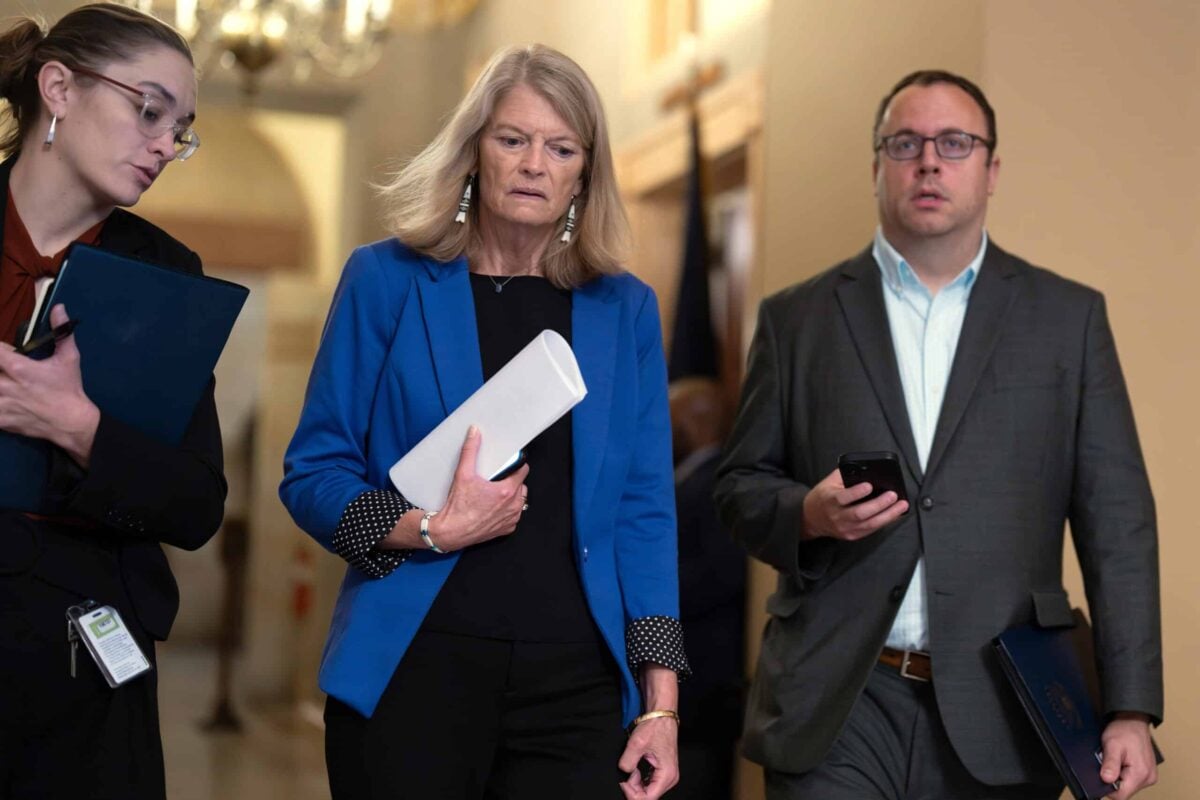
Sen. Lisa Murkowski, R-Alaska, center, a member of the Senate Appropriations Committee (AP Photo/J. Scott Applewhite)

This report has been updated.

WASHINGTON — The federal government started shutting down early Wednesday after Congress failed to approve a funding bill before the beginning of the new fiscal year — resulting in widespread ramifications for hundreds of programs and giving the Trump administration an avenue to fire federal workers en masse.

The U.S. Senate was unable to advance two short-term government funding bills Tuesday when Democrats and Republicans deadlocked for the second time this month, with just hours to go before the midnight Tuesday shutdown deadline.

Senators voted 55-45 on Republicans’ bill that would fund the government for seven weeks and 47-53 on a Democratic stopgap proposal that would keep the lights on for a month and included several health care provisions that they said were needed for their support. Neither had the 60 votes needed to advance. 

Nevada Democratic Sen. Catherine Cortez Masto, Pennsylvania Democratic Sen. John Fetterman and Maine independent Sen. Angus King voted with GOP senators on their stopgap bill. Kentucky GOP Sen. Rand Paul voted against it.

White House Office of Management and Budget Director Russ Vought said in a memo to departments and agencies Tuesday night after the Senate vote that “affected agencies should now execute their plans for an orderly shutdown.” Vought said federal employees should report for their next regularly scheduled tour of duty to undertake shutdown activities.

The consequences of a shutdown will be sweeping in the nation’s capital and across the country, where states are bracing for the impact. About 750,000 federal workers could be furloughed, leading to a $400 million impact a day, the nonpartisan Congressional Budget Office reported. All federal employees would go unpaid until the shutdown is over.

Additionally, the Trump administration plans to lay off thousands of federal employees, which would reshape the federal workforce. President Donald Trump again vowed Tuesday to undertake layoffs and a major government employee union filed suit in federal court in advance of such a move.

More votes on GOP bill planned

Senate Majority Leader John Thune, R-S.D., said hours before the votes there wouldn’t be any talks with Democrats during a shutdown. 

“The negotiation happens when the government is open. So let’s keep the government open and then we will have the negotiations,” Thune said. 

“We’re happy to sit down and talk about these issues that they’re interested in,” he said. “But it should not have anything to do with whether or not for a seven-week period we keep the government open, so that this government can continue to do its work and that we can do our work through the regular appropriations process to fund the government.” 

After the votes failed, Thune expressed his frustration with Democrats during a press conference. 

“This is so unnecessary and uncalled for,” he said. 

Thune said he plans to bring up a vote on the continuing resolution again. He said as soon as Wednesday the federal government can be funded if five Democrats voted with Republicans. 

“Democrats may have chosen to shut down the government, but we can reopen it tomorrow,” Thune said. 

Republican Whip John Barrasso of Wyoming said the “cracks in the Democrats are already showing,” noting that three Democrats voted with Republicans Tuesday night. 

“There is bipartisan support for keeping the government open,” Barrasso said. “We’re happy to see that the Democrats are already starting to break from (Senate Democratic Leader Chuck Schumer) and we’re going to continue to offer a clean (continuing resolution) on the floor of the Senate to open the government for the next seven weeks.”

Health care tax credits at center of standoff

The disagreement isn’t entirely about GOP lawmakers writing their short-term funding bill behind closed doors and then expecting Democrats to help advance it in the Senate, where bipartisanship is required for major legislation.

Democratic leaders have raised concerns for weeks about the end-of-year sunset of enhanced tax credits for people who buy their health insurance on the Affordable Care Act Marketplace, arguing a solution is needed now ahead of the open enrollment period starting on Nov. 1. 

Congressional Black Caucus Chair Yvette Clarke, a New York Democrat, speaks at a press conference outside the U.S. Capitol in Washington, D.C., on Sept. 30, 2025. (Photo by Shauneen Miranda/States Newsroom)

Democrats have also grown increasingly frustrated with the White House budget office’s unilateral actions on spending, arguing Vought is significantly eroding Congress’ constitutional power of the purse. Sen. Susan Collins of Maine, the Republican chairwoman of the U.S. Senate Appropriations Committee, said Tuesday the Government Accountability Office should sue the Trump administration over its efforts to freeze or unilaterally cancel spending approved by Congress. 

Senate Minority Leader Chuck Schumer said Democrats need an agreement with Republicans to extend the enhanced tax credits. 

Schumer said people will begin getting notices in October telling them how much the cost of their ACA plans will increase during the next year, which he expects will ratchet up pressure on Republican leaders to broker a bipartisan agreement. 

“We’re going to be right there explaining to them it’s because the Republicans wouldn’t negotiate with us,” Schumer said, referring to consumers. “We’re ready to do it anytime. And there will be huge heat on (Republicans) on this issue.”

People who buy health insurance on the ACA marketplace and receive subsidies through enhanced ACA tax credits could expect to pay on average more than double for annual premiums in 2026 if the credits expire as scheduled at the end of this year, according to an analysis released Tuesday by the nonprofit health policy research organization KFF. 

The analysis found premiums could increase from an average of $888 this year to $1,904 in 2026.

Claims about immigrants 

Schumer also rebuffed GOP leaders saying that Democrats want to include people without legal immigration status in federal health care programs. 

“They say that undocumented people are going to get these credits. That is absolutely false. That is one of the big lies they tell, so they don’t have to discuss the issues,” Schumer said. “The federal government by law that we passed does not fund health insurance for undocumented immigrants in Medicaid, nor the ACA nor Medicare. Undocumented immigrants do not get federal health insurance premiums.” 

Immigrants in the country without legal authorization are not eligible for Medicaid, and neither are most immigrants with legal status, such as those with student visas or enrollment in the Deferred Action for Childhood Arrivals program, known as DACA. 

Only immigrants with a “qualified status,” such as legal permanent residents, asylees and refugees, are able to get Medicaid benefits, and they usually have to wait five years before their coverage can even begin. 

Democrats explain why they voted with GOP 

Cortez Masto of Nevada wrote in a statement explaining her vote to advance the GOP stopgap bill that she could not support “a costly shutdown that would hurt Nevada families and hand even more power to this reckless administration.”

“We need a bipartisan solution to address this impending health care crisis, but we should not be swapping the pain of one group of Americans for another,” she added. “I remain focused on protecting health care for working families, and I call on my colleagues on both sides of the aisle to work together to tackle this problem.”

Pennsylvania’s Fetterman wrote in a statement of his own that his vote on the Republican bill “was for our country over my party.

“Together, we must find a better way forward.”

Collins said during a brief interview before the vote she is worried about the broad authority the White House holds during a shutdown and how the Office of Management and Budget has indicated it will use that power. 

“I’m much more concerned about OMB sending signals that there should be mass firings of federal employees who have the misfortune to be designated as non-essential, when in fact they’re performing very essential work, they’re just not being paid,” Collins said.  

North Dakota Republican Sen. John Hoeven, chairman of the Agriculture spending subcommittee, said lawmakers will have to sort through how various departments implement their contingency plans as well as the possibility of mass layoffs during a shutdown. 

“We’ll have to work through those things and figure out how we do keep things going as best we can during this Democrat shutdown,” Hoeven said.

West Virginia Sen. Shelley Moore Capito said Republicans are “unified in the belief that this is an easy choice” to fund the government with a stopgap bill that doesn’t include any contentious or political provisions. 

Capito — who chairs the Appropriations subcommittee that funds the departments of Education, Health and Human Services, and Labor — said there are several programs that will be “missed” during a shutdown. 

“And that’s concerning. So I think the option is to keep the government open so we can avoid this pain,” Capito said. 

‘I’m not optimistic that we’re going to get a path forward’

Missouri Republican Sen. Josh Hawley said he is worried about the possible impacts of a shutdown on his home state and that keeping the government open is the only way to avoid that.  

“I’m sure the administration will do everything they can,” Hawley said. “But the solution is to not shut the government down. I mean, why would you punish working people because you’re not getting what you want on any issue, whatever it is.”

South Dakota Republican Sen. Mike Rounds said he doesn’t expect a shutdown will end until after Democrats have sent a message to their voters. 

“I’m not optimistic that we’re going to get a path forward until they’ve had a shutdown,” he said. 

Rounds, who negotiated a handshake agreement with the White House budget director this summer to preserve some funding for rural tribal radio stations after Congress eliminated funding for the Corporation for Public Broadcasting, said that deal could be affected by a shutdown. 

“They’re putting the administration in a position where they can pick and choose what they’re going to do, and a shutdown is not going to be beneficial to these Native American radio stations,” Rounds said. 

Democratic Sen. Elissa Slotkin of Michigan said she wants Democrats and Republicans to negotiate on health care provisions.

“I’ve been making the case constantly, that (it) is literally my obligation to try and fight for health care, and I’m willing to talk to anyone,” she said. “I’m willing to accept that I certainly will not get everything I want.”

Senate Minority Whip Dick Durbin of Illinois said that while Democrats agreed to help advance what’s known as a continuing resolution in March, they can’t now because of “what President Trump is doing to this country, particularly when it comes to health care costs for families.”  

The shutdown will significantly affect the operations of the federal government as lawmakers have not passed any of the dozen full-year appropriations bills that finance agency operations. Oct. 1 is the beginning of the new fiscal year for the federal government.

Shutdown plan for national parks

Departments began releasing updated contingency plans this weekend, detailing how many of their employees would work during a government shutdown and how many would be furloughed.

The Interior Department, which includes the Bureau of Land Management, U.S. Fish and Wildlife Service and National Park Service, posted its updated plans late Tuesday. 

The National Park Service plans to furlough 9,300 of its 14,500 workers. 

The Trump administration will allow several activities necessary for the protection of life or property to continue, including fire suppression for active fires, permitting and monitoring First Amendment activities, border and coastal protection and surveillance, and law enforcement and emergency response.

The contingency plan says that roads, lookouts, trails, and open-air memorials will generally remain accessible to visitors,” but it adds that if “access becomes a safety, health or resource protection issue … the area must be closed.”

Union files suit

In anticipation of layoffs by the Trump administration, labor unions representing more than 1 million federal workers filed a lawsuit in the Northern District of California on Tuesday to block the Trump administration from carrying out mass firings. The suit argues that there is no statutory authority to fire federal employees during a government shutdown.

“These actions are contrary to law and arbitrary and capricious, and the cynical use of federal employees as a pawn in Congressional deliberations should be declared unlawful and enjoined by this Court,” according to the suit filed by the American Federation of Government Employees and the American Federation of State, County and Municipal Employees.

Ashley Murray and Shauneen Miranda contributed to this report.