Categories
Alaska News Featured Juneau News juneau Juneau Local Juneau Local Ketchikan Local News Feeds Sitka Local

US Supreme Court deals blow to Trump, ruling states can accept ballots after Election Day

By: Jonathan Shorman, States Newsroom

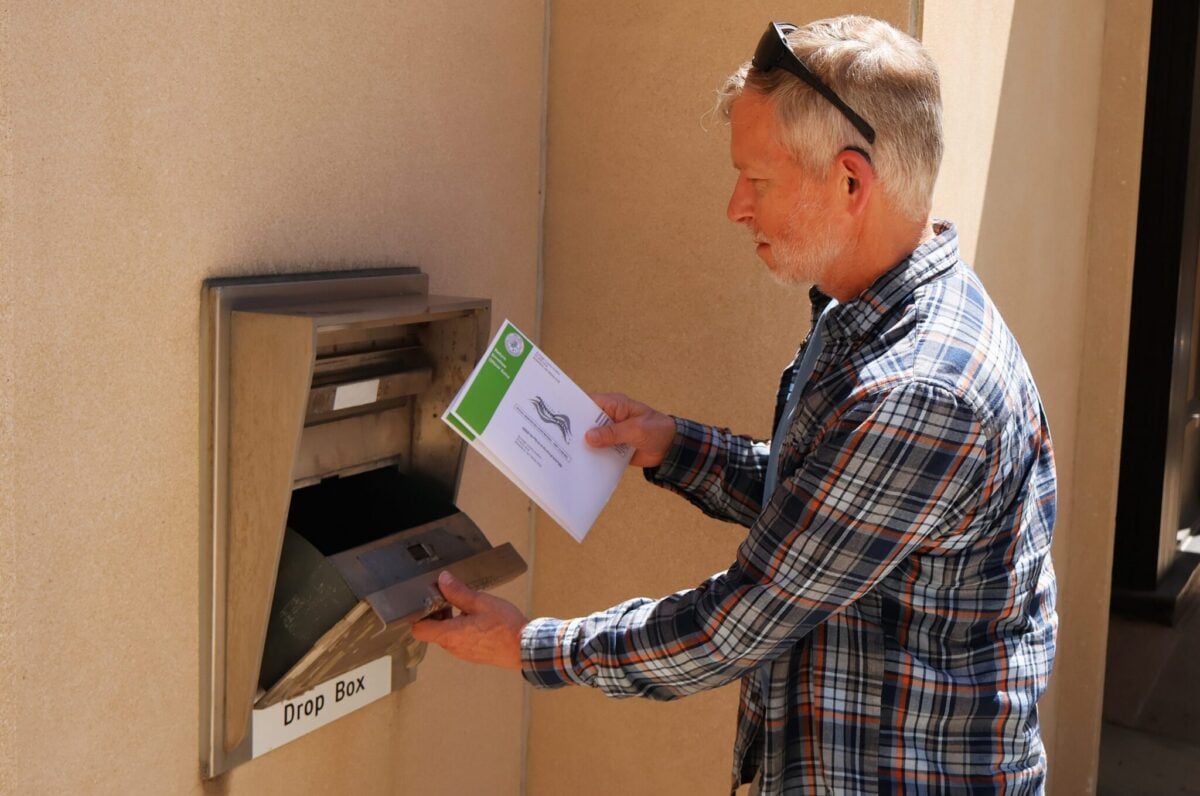
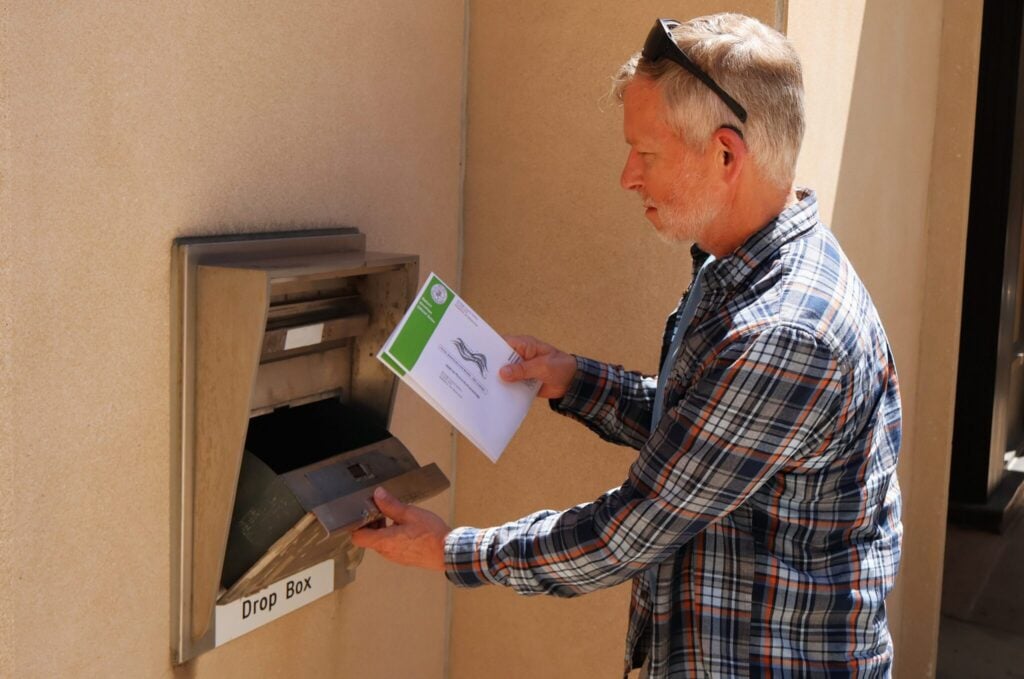
Greg Lange of Bismarck, North Dakota, drops off his absentee ballot and his wife’s at the Bismarck Burleigh County Office Building on June 8, 2026. (Photo by Michael Achterling/North Dakota Monitor)

The U.S. Supreme Court ruled Monday that states can count mail-in ballots that arrive after Election Day, a blow to the Trump administration and some Republican states that had urged the justices to require all ballots to arrive by the close of polls.

In a 5-4 decision, the court found that federal law does not prevent states from accepting late-arriving ballots. The ruling is a victory for Democrats and voting rights advocates, who had said setting a hard, Election Day deadline for ballot arrival would risk disenfranchising voters amid fears of deteriorating mail service.

The case, RNC vs. Watson, centered on whether federal law overrides a Mississippi law that requires mail-in ballots postmarked on or before Election Day to be counted as long as they arrive within five business days of the election. Thirteen states have similar laws, which extend a “grace period” to ballots that arrive through the mail after polls close.

Justice Amy Coney Barrett, writing for the majority, said that federal law didn’t preempt the state law because elections represent when voters make a decision, which must be done on or before Election Day. Voters who cast their ballot by mail have made a decision by Election Day, Barrett reasoned.

“The electorate’s choice is made when voting is complete, not when ballots are received,” Barrett wrote.

Barrett cautioned that the decision rested on the interpretation of federal law, not the U.S. Constitution. She noted that the court was not considering the scope of Congress’ authority to regulate federal elections — suggesting that if Congress passes a nationwide ballot arrival deadline that the justices might uphold such a law.

Barrett was joined by Chief Justice John Roberts and Justices Sonia Sotomayor, Elena Kagan and Ketanji Brown Jackson. 

Justice Samuel Alito dissented, joined by Justices Clarence Thomas and Neil Gorsuch. Justice Brett Kavanaugh joined part of the dissent.

“If ballots received after election day are added to the set of ballots that dictate the election’s outcome, the electorate’s choice does not occur on election day, and the federal election-day statutes are violated,” Alito wrote.

States with grace periods

In addition to Mississippi, other states with some form of grace period include Alaska, California, Illinois, Maryland, Massachusetts, Nevada, New Jersey, New York, Oregon, Texas, Virginia, Washington and West Virginia.

David Becker, executive director of the nonpartisan Center for Election Innovation & Research, called the Supreme Court decision a win for these states, as well as 30 states that accept military and overseas ballots delivered after Election Day.

“This is a victory for all the states and for all those who respect the will of the Founders, who ensured the security of our elections by giving the power to run those elections to the states — not to one person sitting in Washington, DC,” Becker said in a statement.

Some local election officials had warned that requiring all ballots to be received by the close of polls would burden their offices as they try to quickly warn voters about the change just months before the midterms. More ballot drop boxes that let voters keep their ballots out of the mail could help, they say, but also cost money.

“Ultimately, the voters may be harmed as well,” election officials in California, Massachusetts, Oregon and Washington wrote in a court brief, warning that some ballots may not be received in time, “despite best efforts by careful and proactive administrators and local governments.”

But some Republican secretaries of state had urged the justices to strike down “grace period” laws. Louisiana Secretary of State Nancy Landry and Wyoming Secretary of State Chuck Gray wrote in a court brief that an Election Day deadline “provides the bright-line rule that effective election administration demands.”

At least 725,000 ballots were postmarked by Election Day 2024 and arrived within a legally accepted post-election window, The New York Times has reported, citing election officials in 14 of 22 states and territories where late-arriving ballots were accepted that year. 

Overall, about 30% of voters cast a mail ballot in 2024, according to data gathered by the U.S. Election Assistance Commission.

RNC challenged law

The Republican National Committee challenged the Mississippi law, which was defended by Mississippi Republican Secretary of State Michael Watson. The RNC argued a longstanding federal law that sets the Tuesday after the first Monday in November as Election Day for federal offices preempted state laws that allow ballots cast by Election Day, but received later, to count.

The 5th U.S. Circuit Court of Appeals ruled in October 2024 that federal law requires ballots to be received by Election Day. President Donald Trump last year also unilaterally attempted to require mail ballots to be received by the end of Election Day in a sweeping executive order on elections. Much of that order was blocked in federal court.

The Supreme Court “rejected the RNC’s radical attempt to rewrite election laws in a way that would have resulted in the rejection of hundreds of thousands of ballots and the disenfranchisement of voters nationwide through no fault of their own,” Elisabeth Frost, litigation chair at Elias Law Group, said in a statement. 

Elias Law Group represented two nonprofit voting rights groups, Vet Voice Foundation and the Mississippi Alliance for Retired Americans, that had intervened as defendants in the case.

The Supreme Court issued Monday’s decision against a backdrop of uncertainty surrounding mail ballots. Trump signed an executive order in March that would restrict voting by mail by requiring states to provide lists of possible mail ballot voters to the U.S. Postal Service in advance. A federal judge recently blocked major portions of the order, triggering a near-certain appeal.

Republican National Committee chairman Joe Gruters accused Democrats of inviting chaos by allowing elections to “drag on” for days and weeks after ballots are cast. He said Republicans wouldn’t be deterred by the decision.

“If we want fair and secure elections, Election Day should mean exactly what it says, which is why this decision makes it even more imperative that Congress pass the SAVE America Act,” Gruters said in a statement, referring to restrictive voter legislation pushed by Trump that lacks the votes to pass the U.S. Senate.

Trump said the decision was a “tremendous loss” in a social media post and again urged passage of the SAVE America Act.

Paul Clement, an attorney for the Republican National Committee, said during oral arguments at the Supreme Court in March the prospect that the outcome of an election could change because of ballots arriving after Election Day would be unacceptable to losing candidates. After the 2020 election, President Donald Trump demanded election officials not count ballots that came in after Election Day, but states kept counting ballots.

“If you have an election and the election is going to turn on late-arriving ballots in a way that means what everybody kind of thought was the result on Election Day ends up being the opposite a week later, 21 days later, the losers are not going to accept that result. Full stop,” Clement told the justices.

Attorneys for Watson argued that both legal and historical precedent supported his position. States may decide that voters have made their final choices when ballots are submitted to state officials rather than when they’re received, according to Watson.

Watson didn’t immediately respond to a request for comment.

This is a developing report that will be updated.

Categories
Alaska News Featured Juneau News juneau Juneau Local Juneau Local Ketchikan Local News Feeds Sitka Local

President Donald Trump calls for repeal of ranked choice voting in Alaska

By: Sean Maguire, Alaska Beacon

 President Donald Trump speaks to the media in the Oval Office at the White House on Sept. 2, 2025 in Washington, D.C. 

President Donald Trump on Friday called on Alaska voters to repeal ranked choice voting at the November election.

“The Wonderful People of Alaska desperately want to restore Free, Fair, and Honest Elections in their Great State, and get rid of their disastrous, and very fraudulent, “Ranked-Choice Voting,” Trump said on Truth Social.

An effort to repeal ranked choice voting in 2024 failed by just 737 votes. A separate repeal initiative, sponsored by figures aligned with the Alaska Republican Party, is set to appear on the 2026 general election ballot. 

Trump gave his “complete and total support” to supporters of the repeal effort, including U.S. Sen. Dan Sullivan and Congressman Nick Begich, both Alaska Republicans running for reelection in November. 

The president’s post was seized on by Republican candidates for Alaska statewide office who echoed his calls to strike down the voting system.

Alaska voters narrowly approved a ballot measure in 2020 that implemented ranked choice voting for state and congressional elections, alongside open primary elections and tougher campaign finance disclosure requirements. 

Ranked-choice voting in Alaska lets voters pick candidates in order of preference rather than choosing just one. If no candidate wins a majority of first-choice votes, the lowest-ranked candidate is eliminated and those votes are redistributed until someone surpasses 50% of votes.

However, the new election system has been controversial. Opponents argue that ranked choice voting is unnecessarily complicated, while supporters say it has led to more moderate and consensus candidates elected.

Ranked voting, open primaries and the tougher campaign finance disclosure requirements would all be struck down if the 2026 ballot measure is approved by a majority of voters.

Alaska for Better Elections is a group running voter education campaigns in support of retaining ranked choice voting and open primaries. Executive Director Juli Lucky said Alaska’s election system has allowed policymakers across the political spectrum to work together without fear of challengers in partisan primaries. 

“I think Alaskans will reflect on the results we’ve seen to decide whether our system of open primaries, ranked choice voting, and the strictest campaign finance laws in the country works for them,” Lucky said by text message after Trump’s post. “Ultimately, Alaskans created and enacted this system, and Alaskans will decide whether we keep it.”

Categories
Alaska News Featured Juneau News juneau Juneau Local Juneau Local Ketchikan Local News Feeds Sitka Local

Alaska House passes elections overhaul bill amid national debate around voter access

By: Corinne Smith, Alaska Beacon
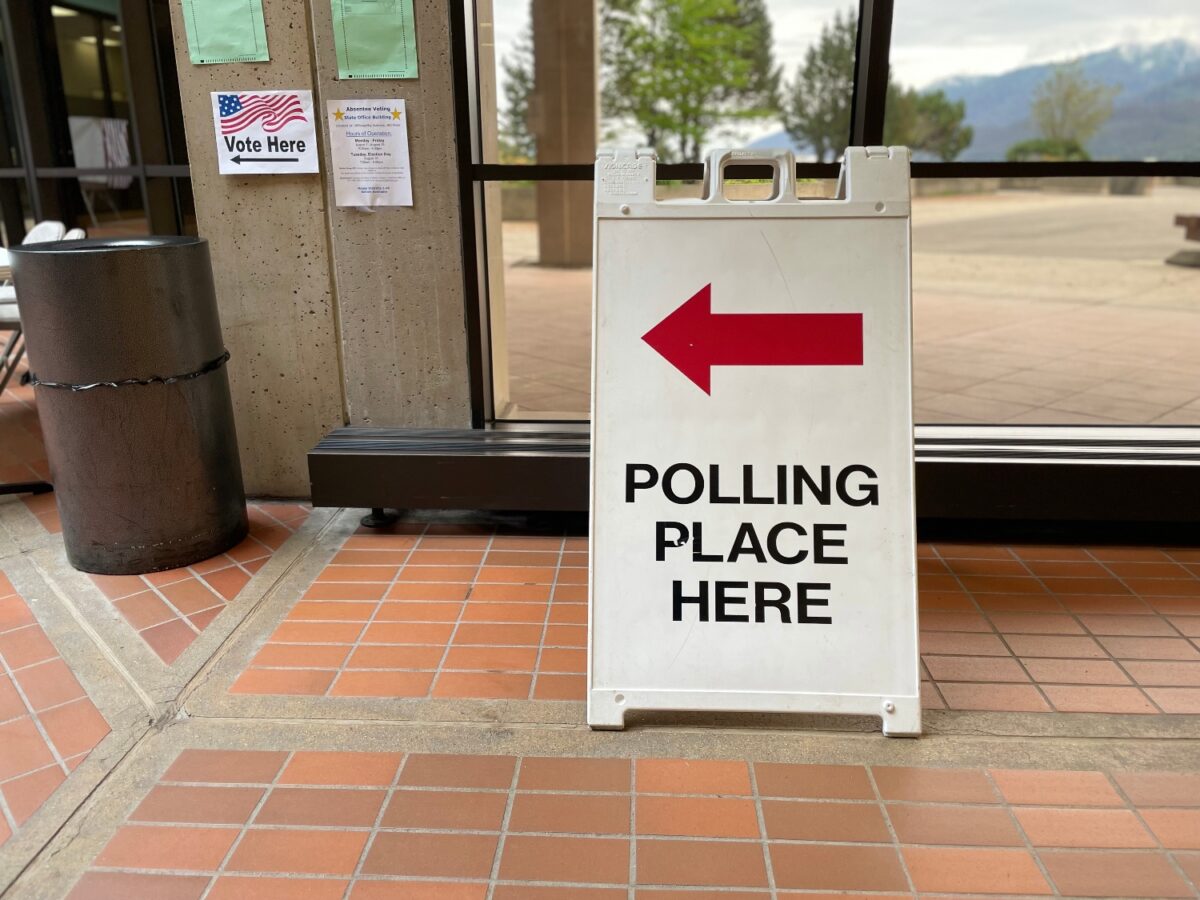
A polling place sign at the State Office Building in Juneau on Aug. 15, 2022. (Photo by Lisa Phu/Alaska Beacon)

The Alaska House of Representatives passed an elections bill aimed at streamlining the state’s voting process and updating the voter rolls with a bipartisan vote on Monday. If signed into law, the bill would implement a new ballot tracking system, provide paid postage for all absentee mail-in ballots and implement provisions for faster election results, among other changes. 

The House passed Senate Bill 64 by a 23 to 16 vote on Monday evening, with Rep. Ashley Carrick, D-Fairbanks, absent. Three members of the House minority caucus joined the majority in supporting the legislation: Rep. Sarah Vance, R-Homer, Rep. Kevin McCabe, R-Big Lake, and Rep. Jeremy Bynum, R-Ketchikan. 

Sen. Bill Wielechowski, D-Anchorage, sponsored the legislation as chair of the Senate Rules Committee and said at a news conference on Tuesday the bill was at least a decade in the making and the result of a bipartisan effort. 

“We’re going to agree on the things that we can agree on, things that just fundamentally make our elections better. And after 10 years, I think this bill does that,” he said. “It’s not a perfect bill. There are still things that need to be worked on, but this goes a long way towards improving our election system for every single person in the state of Alaska.”

The House made a variety of changes to the bill that the Senate passed last year, and the bill now goes back to the Senate for a concurrence vote on Wednesday. If signed into law by Gov. Mike Dunleavy, some elections changes would be implemented immediately, like a review of the voter rolls. Changes to ballot tracking and curing would go into effect after the August primary. 

Lawmakers have focused on updating the state’s voter rolls to make sure voters are currently living in Alaska. Wielechowski said the new system will help the state maintain active voter rolls. 

“We have 105% more registered voters than we have eligible citizens in the state of Alaska,” Wielechowski said, calling the discrepancy a “fundamental problem.”

“Everyone in Alaska knows that our elections in Alaska are probably the most difficult elections to conduct in the United States for a variety of reasons, but mostly because of geography, because of weather, because people are just spread out over such a vast area,” he said.

Under SB 64, the Division of Elections would send a notice to confirm address and residency in Alaska if the voter has:

  • Registered to vote in a another state
  • Received a driver’s license in another state
  • Registered a vehicle in another state
  • Served on a jury in another state
  • Receives a residential property tax exemption in another state
  • Receives public assistance in another state

If the bill passes, the Alaska Division of Elections will review the voter rolls and, based on a list of factors, send a postcard by mail to verify a voter’s address and establish residency. Once the notices are sent, voters have a period of 45 days to respond and confirm their Alaska residency to the division — or be moved to an inactive voter list for a period of 28 months or two elections. 

Some members of the Republican House minority caucus expressed concern that military members stationed overseas would be kicked off the voter roles. 

Rep. Sarah Vance, R-Homer and a member of the minority caucus, spearheaded the House version of the bill and said that even if voters are inactive, they will still be on a master voter list for eight years, under federal law.

“We cannot cancel, according to federal law, someone off of the master register for eight years. So this includes the military voters,” she said. “But I want to make sure that everyone else understands they’re not going to be inadvertently canceled either.”

Under the bill, voters would be able to show identification issued from a federally recognized tribe to register to vote or for voting. To confirm active voting status, voters would be able to  contact the division by calling, emailing or by voting.

Under the Senate’s version of the bill, the state would have done away with the requirement of a witness signature for all absentee mail-in ballots, but the House objected to that change and opted to keep the witness signature.  

If passed, the bill would also allow voters to fix mistakes on their ballot – a process called ballot curing — by requiring the division to contact the voter by phone or email within 24 hours. Within two to five days, the division would send notification by mail. The voter would have to return a form to correct the ballot with a copy of identification by email or by mail within 10 days of the election for their ballot to be counted.  

If passed, the bill would require the state to provide paid postage for all absentee mail-in ballots. The state would also enact a new tracking system so that voters will be notified when their ballot is received and counted. 

Wielechowski said that will help with transparency, as will new provisions to get election results published faster. Additionally, the elections department will start reviewing ballots 12 days ahead of Election Day — five days earlier than under current law — to allow more ballots to be counted on Election Day.

Other provisions in the bill include:

  • Require all absentee ballots to be received within 10 days of Election Day; 
  • Establish a new rural community liaison position within the Division of Elections to support rural districts, including recruitment and training of poll workers;
  • Require the Permanent Fund Dividend Division to share data to improve the accuracy of the voter rolls’
  • Require the state to develop a cybersecurity program, and notify the public if there is a data breach;
  • Require the division to publish results for all rankings in the precinct results.
  • Require presidential ballots to include a line for write-in votes for president and vice president 
  • Updates crimes of unlawful interference with an election, ballot tampering and election official misconduct

Wielechowski said the new rural liaison established by the bill would be charged with helping small, rural communities prepare to hold their elections, coordinate equipment and polling places, and hire poll workers to improve operations on Election Day.

“That person is responsible for working with the local villages … working with those communities to ensure that all the citizens are able to exercise their fundamental right to vote,” he said.

He pointed to recent examples of rural residents missing out on opportunities to vote due to issues with poll workers.

“The polls never opened in Wales in 2024 in the primary. The polls in Anaktuvuk Pass in 2024 opened up 30 minutes before closing, and roughly seven people out of about 250 were able to vote in that election in person,” Wielowski said. 

The changes to Alaska’s process of voting and elections this year could come amid potential sweeping changes to national elections.

The U.S. Supreme Court is considering a case that would require all ballots to be received by Election Day in order to be counted for federal elections. 

All ballots received after that deadline would be thrown out, which could potentially disenfranchise thousands of Alaska voters who cast ballots that may be delayed by weather, flight delays or election logistics challenges. 

“It’s going to create some havoc in our election system, and it may very well require a special session for us to come in and deal with it,” Wielechowski said. “And so you could get in a situation where you have ballots coming in that don’t count for the federal election, but do count for the state election. And so there would have to be some kind of way that you figure out how to process those ballots in a different manner.”

The Supreme Court is expected to rule next summer. 

Meanwhile, the Trump administration is putting pressure on the U.S. Congress to pass the SAVE America Act, which would, in part, require voters to present identification and proof of U.S. citizenship in person when they vote. 

Alaska Republican U.S. Sen. Lisa Murkowski has loudly opposed the bill, saying it’s logistically impossible for most Alaskans, as the state only has six in-person elections offices and fewer than a dozen DMV offices. Republicans U.S. Sen. Dan Sullivan and U.S. Rep. Nick Begich III have supported the bill, saying they don’t think it would be hard to comply with its requirements. 

The U.S. Senate is currently debating the bill amid another contentious debate around funding for the U.S. Department of Homeland Security and ending a five-week partial shutdown for the department. On Tuesday, Senate Majority Leader John Thune said the Senate may drop the voting bill in order to reach an agreement with Democrats over funding DHS, and return to it after Easter, according to reporting by Politico.

Categories
Alaska News Featured Juneau News juneau Juneau Local Juneau Local Ketchikan Local News Feeds Sitka Local

Federal ‘SAVE Act’ risks denying thousands of Alaskans the ability to vote, Murkowski says

By: James Brooks, Alaska Beacon

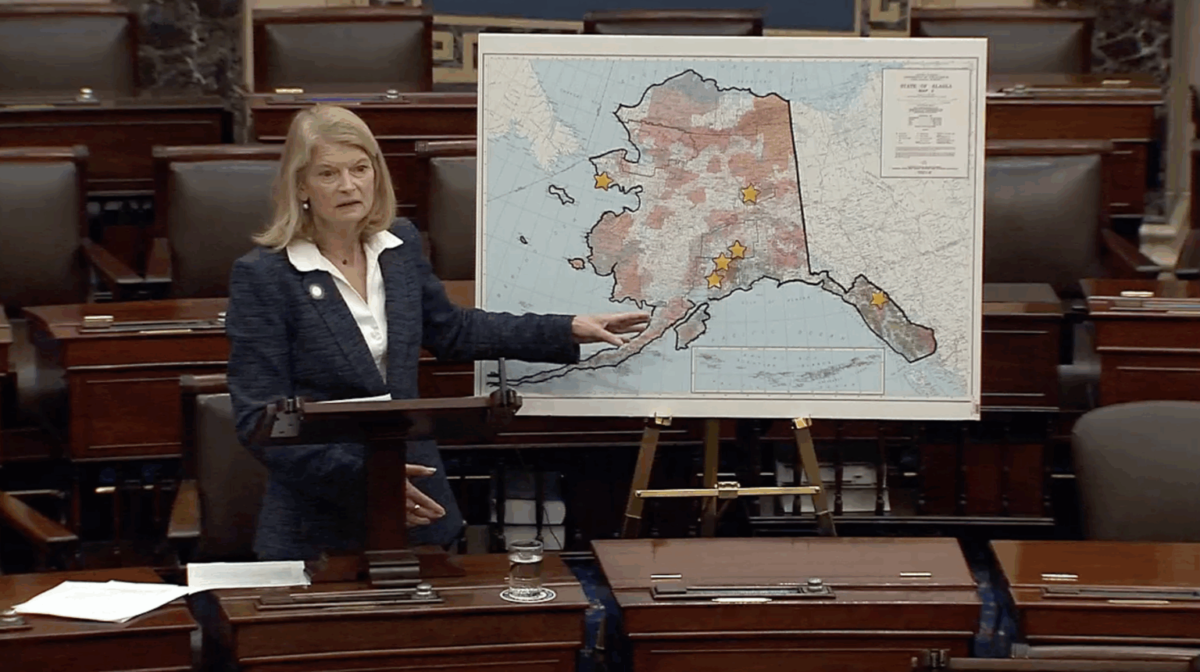
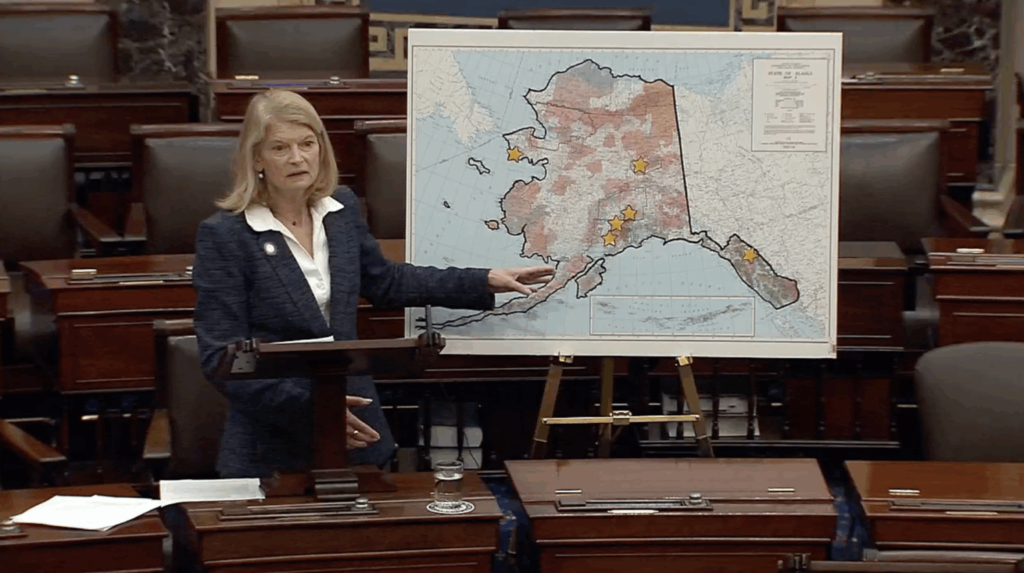
U.S. Sen. Lisa Murkowski, R-Alaska, speaks Thursday, March 19, 2026, on the floor of the U.S. Senate, in this screenshot of a video broadcast by the Senate. (Screenshot)

An elections bill being debated by the U.S. Senate could cost thousands of Alaskans the ability to vote in this year’s elections, Sen. Lisa Murkowski said Thursday in a lengthy speech on Capitol Hill.

The SAVE America Act, supported by President Donald Trump and most congressional Republicans, is ostensibly intended to prevent noncitizens from voting in American elections, but its implementation could prevent many Americans from being able to vote. 

“While disenfranchisement may not be the intent of the SAVE America Act … I think that we will see that. In fact, I fully expect it to be an outcome of this,” Murkowski said.

The act would require that voters present photo ID when they vote, and that people present documentary proof of citizenship when they register to vote. That would mean presenting proof of citizenship in person at an elections office or other specially licensed state license.

“This would be a major, major departure from how most Alaskans currently register to vote,” Murkowski said. 

In 2024, about 29,000 Alaskans registered to vote. Most of those — 25,000 or so — would have run into problems if the current bill had been law at that time, she said.

Most of Alaska’s voter registrations are done online or through the state’s motor-voter or PFD voter process. The bill could allow citizenship verification, but it’s not clear how that would happen, Murkowski.

Mandating in-person registration would have big effects in Alaska. 

The state has only six in-person elections offices, mostly on the Railbelt, and fewer than a dozen DMV offices where residents could present proof of citizenship. 

Some other state agencies might also be able to accept that proof, but the bill’s requirements take effect immediately, and it contains no funding for states to make changes that would allow remote offices to verify ID.

In practice, that means the bill would require rural residents to fly to urban Alaska, Murkowski said.

In addition, anyone seeking to register would have to have either a passport — roughly 50% of Alaskans don’t have one, Murkowski said — or some other form of appropriate ID. 

Alaska driver’s licenses wouldn’t be good enough to register to vote, nor would most tribal IDs, because they don’t specifically label someone as a citizen or not.

The bill allows someone to self-certify their citizenship if they sign an affidavit, but that clause only applies if the person has already made “reasonable efforts” to obtain a copy of a valid ID.

It isn’t clear what that means, Murkowski said.

The bill also would end Alaska’s practice of allowing anyone to cast an absentee ballot for any reason. It would restrict absentee voting to a subset of specifically identified voters, including people living out of the state where they are registered to vote.

Murkowski said she hasn’t seen evidence that these kinds of measures are needed to address a small-scale problem.

Voting by noncitizens is rare in Alaska. A report obtained by the Alaska Beacon through a public records request showed 70 possible cases since 2015. At least 11 people on that list have been charged in state court. 

“That’s basically seven a year,” Murkowski said.

“You look at what we’re trying to chase here with this balance — with disenfranchising so many who would be faced with almost insurmountable challenges in order to register or vote — I look at this and on balance, it doesn’t weigh,” she said.

Earlier this year, Rep. Nick Begich III, R-Alaska, voted in support of the bill as it passed out of the House, saying afterward that he doesn’t think it will be hard to comply with the bill.

Sen. Dan Sullivan, R-Alaska, has said he supports the act despite its ramifications for the state.

“I do think that having the ability to show an ID and proof of citizenship to keep elections safe is important, and it’s supported by the vast majority of Americans,” he said in response to a question during a February forum hosted by the Juneau Chamber of Commerce.

At that forum, he was confronted by an angry attendee who questioned how he could speak on Elizabeth Peratrovich Day, a state holiday honoring an Alaska Native civil rights leader, and support a bill that would have detrimental effects on Alaska Native voters.

“I have a very, very, very strong record as it relates to the franchise for our people, in particular, the Alaska Native community,” he said, referring to actions he took during the 2010 Alaska election, when he served as attorney general. 

“I think voting, in my view, should be easy, but cheating on voting should not be,” Sullivan said.

While Sullivan has said he supports the bill, he also told reporters last month that he doesn’t support overriding the Senate’s filibuster to pass it.

In practice, the filibuster means that the bill would require 60 votes, not 50 and the vice president, to advance through the Senate.

With all of the Senate’s Democrats and Murkowski opposed to the SAVE Act, the bill — at least as of Friday — lacks the support it needs to become law.

Categories
Featured Juneau News Juneau Local Ketchikan Local News Feeds Sitka Local

Discrepancies and voter roll questions addressed Monday night

City Hall, downtown Juneau / File

NOTN- City Municipal Clerk Breckan Hendricks presented the official election certification report, at Monday evenings eventful meeting, and City officials are addressing questions voters had about voter number discrepancies.

Juneau has about 28,000 registered voters despite a population of roughly 31,000.

Weldon said the difference comes from using the state voter roll, which can take up to eight years to remove inactive voters.

“So that’s why, when everybody looks at that, when the election results says only 20% of the vote, that’s not a true number, because that’s 20% of the 28,000.” Said Mayor Beth Weldon.

Only 117 ballots were rejected this year, a small number that Weldon said reflects voters’ growing familiarity with the city’s voting process.

CBJ Municipal Clerk Breckan Hendricks says that election integrity is taken seriously by the borough.

“We need to make sure that we’re transparent, that everybody has faith in our system,” Hendricks said. “A lot of people don’t understand it. We have our election rules and procedures online now, on our juneau.org elections page, and we’re trying to get more PSAs out there, trying to make people hopefully understand the process a little better to give them more faith in our system. I know that there’s a lot of hesitancy with by-mail ballots, and we really are following all the rules and regulations to make sure that there’s no gaps.”

Categories
Featured Juneau News Juneau Local Ketchikan Local News Feeds Sitka Local

CBJ Clerk: Election integrity is taken seriously by the borough

By: Greg Knight, News of the North

City & Borough of Juneau Municipal Clerk Breckan Hendricks at the borough’s ballot processing center near Thane Road. (Photos by Greg Knight/News of the North)
 

Before and after the polls closed at eight o’clock Tuesday night, city officials worked to ensure the ballot count was accurate and complied with election integrity regulations put in place by the CBJ.

Ballots from Juneau’s five drop boxes and two vote centers were securely delivered to the city’s Ballot Processing Center on Thane Road. That center has been in operation since 2022.

Once ballots were inside, teams of two verified voter signatures, separated secrecy sleeves, and fed the ballots into high-speed scanners, all under strict chain-of-custody rules. Each envelope and unique barcodes were cross-checked to prevent double counting.

CBJ Municipal Clerk Breckan Hendricks says that election integrity is taken seriously by the borough.

“We need to make sure that we’re transparent, that everybody has faith in our system,” Hendricks said. “A lot of people don’t understand it. We have our election rules and procedures online now, on our juneau.org elections page, and we’re trying to get more PSAs out there, trying to make people hopefully understand the process a little better to give them more faith in our system. I know that there’s a lot of hesitancy with by-mail ballots, and we really are following all the rules and regulations to make sure that there’s no gaps.”

The interior of the borough’s ballot processing center.

One thing to note is that mailed ballots postmarked on Tuesday and those needing signature fixes can be counted through October 21.

In the end, Hendricks told News of the North that patience is key, and that accuracy comes before speed in Juneau’s current vote-by-mail system.

Categories
Featured Juneau News Juneau Local Ketchikan Local News Feeds Sitka Local

Juneau’s election period officially begins as ballots are mailed to voters

(Photo by James Brooks/Alaska Beacon)

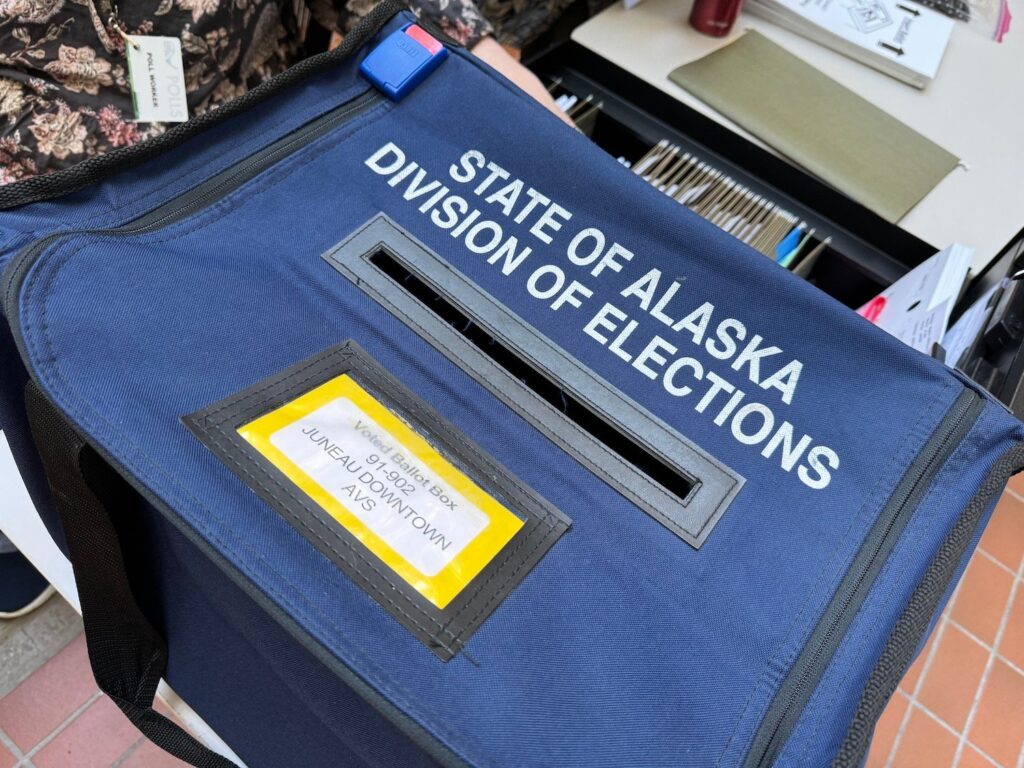
NOTN- Ballots for the 2025 City and Borough of Juneau municipal election are being mailed today to all registered voters, marking the official start of the election period that runs through Oct. 7.

Voters can return their ballots by mail, deposit them in one of five secure drop boxes located around Juneau, or vote in person at City Hall or the Mendenhall Valley Public Library.

Drop boxes open today and will remain available 24 hours a day until 8 p.m. on Election Day.

This year’s ballot includes races for three Assembly seats, an areawide member, and representatives from Districts 1 and 2 , along with three Board of Education positions.

Ballots must be postmarked by Oct. 7 to be counted.

Official results are scheduled to be certified and published Oct. 21, following the review of ballots.

Categories
Featured Juneau News Juneau Local Ketchikan Local News Feeds Sitka Local

Report lists 70 possible noncitizen Alaskans who attempted to vote in the past decade

By: James Brooks, Alaska Beacon

An early voting station is set up in the atrium of the State Office Building in Juneau, Alaska on Monday, Aug. 5, 2024, the first day of early voting for the 2024 Alaska primary election. (Photo by James Brooks/Alaska Beacon)

A document submitted by the Alaska Division of Elections to the U.S. Department of Justice in response to a nationwide data request names 70 possible noncitizens who voted or attempted to vote in state or local Alaska elections since 2015.

Among the 70 people are 10 American Samoans from Whittier who now face state criminal charges related to their voting. American Samoans are not considered U.S. citizens by the state, and civil charges against an 11th individual  are now being considered by the Alaska Court of Appeals.

Noncitizen voting remains extraordinarily rare, nationwide figures show, and Carol Beecher, director of the Alaska Division of Elections, said there is no evidence that noncitizen voting changed the result of last year’s elections here.

Ahead of last year’s elections, Donald Trump and other Republican politicians said they believed large numbers of non-U.S. citizens would seek to vote and influence the result of elections. 

Since becoming president, Trump has asked Congress to impose citizenship checks on all potential voters. His Department of Justice has asked all 50 states for copies of their voter lists in order to create a national government database

Alaska turned over its voter list and other documents to the U.S. Department of Justice last month.

In response to a public records request filed by the Alaska Beacon, the Alaska Division of Elections provided copies of documents it delivered to federal authorities.

Most of the documents, including a copy of the state’s official voter list, were already public. The voter list, for example, is available for purchase from any state elections office and doesn’t include sensitive information beyond a voter’s name, how often they’ve voted, and where they live.

The state’s inactive voter list — showing people whose voter registrations have been flagged for review and possible removal — is also a public record, but it isn’t commonly circulated. Inactive voters can’t cast a ballot without additional ID checks.

WHERE’S THE LIST?

Ordinarily, the Alaska Beacon publishes copies of the documents it obtains via public records requests, but in this case, we’re not publishing the list.

The inactive voter list contains the names and addresses of tens of thousands of Alaskans who have committed no wrongdoing, and we believe the potential harm outweighs the benefit of publishing it.

The list may become available from other sources or news outlets, but because people may be listed as “noncitizens” due to paperwork errors or other innocent mistakes, and because we aren’t able to verify the citizenship of all 541 people, we’re not publishing it.

The inactive voter list provided to the DOJ and to the Beacon is from August. It includes 541 people whose voter records were tagged “NC” for non-citizen.

But it’s not clear whether these Alaskans are noncitizens or were on the list because of mistakes.

Carol Beecher, director of the Alaska Division of Elections, said some people may have been erroneously labeled, so it isn’t correct to say that there were 541 noncitizens registered to vote. 

“As we get more information, things change. So what I’m telling you today on a number may change tomorrow because of new information that we got,” Beecher said in an extended interview on Wednesday.

Stephen Kirch, the division’s spokesperson, said by email that “the DOE cannot say with any degree of certainty whether the current number of NC-coded entries is ‘abnormal’ or ‘unusual’ in a historical context. This is because the number is a moving target and not a static one; it is not tracked.”

The inactive voter list shows only people whose records have been flagged for additional attention and isn’t confirmation that they are not citizens. It may include people who filled out paperwork incorrectly or registered to vote shortly before becoming a citizen. 

“It’s really hard to say whether this particular number (541) is a problem, because there’s so many questions behind even that particular number,” said Mara Kimmel, a former immigration attorney who now works as executive director of the Alaska chapter of the American Civil Liberties Union.

That total also might miss noncitizens who are on the active voter list but haven’t yet been identified.

Carol Beecher, the new director of the Alaska Division of Elections, answers questions from reporters on Thursday, Feb. 16, 2023. (Photo by James Brooks/Alaska Beacon)

Beecher said she considers the “NC” tag to be “kind of like a file drawer. You put things into that file based on the status when you put it in there. But that could change.”

Kimmel said that the issue is “never as easy as it seems or as it would be framed. … Noncitizens voting has become a real political hot-button issue.”

In her experience, “there’s so much confusion and misinformation that is born out of a benign desire to participate in your new home.”

In Alaska, residents can register to vote by contacting the Alaska Division of Elections. Residents are also asked if they want to register when they update their driver’s license, get a new driver’s license, and apply for the annual Permanent Fund dividend.

As Beecher explained, if someone attests that they’re not a citizen through one method but says they are a citizen via a different method, that gets the attention of authorities.

“When we have gone in there and looked and contacted them, we have found that usually it was a mistake,” she said.

In other cases, particularly with the state’s “motor-voter” program, the mistake might come from a typo or someone’s misunderstanding of the rules, particularly if they don’t speak fluent English, as might be the case with new immigrants.

The Division of Elections doesn’t have investigative powers, which means voting officials rely on an applicant’s sworn oath about their citizenship. There’s no automatic double-checking, and it’s federally unconstitutional for the division to ask for proof of citizenship.

Judges have thrown out a Kansas law that required voters to verify citizenship, and the U.S. Supreme Court has only partially allowed a different Arizona law.

“All we get is the affirmation, and however frustrating that can be for everyone out there to say, ‘Well, why can’t you make sure?’ Well, we are not given that authority. So essentially, the division takes people at their word is really what it comes down to,” Beecher said.

If someone’s registration is flagged by a complaint or because of a discrepancy in the records, the division forwards the case to the Alaska Department of Law for investigation.

“We provide them with documents if they request that, as pursuant to an investigation, but if not, we may never hear from them,” Beecher said of the investigation.

In 2023, the division flagged the registration of Tupe Smith, a Whittier resident, after she ran for and won a seat on the local school board.

Smith was born in American Samoa, an island territory in the South Pacific. Its residents are U.S. nationals — having some of the same legal rights as other Americans — but aren’t citizens.

During the subsequent investigation, Alaska State Troopers learned of 10 other American Samoans who had voted in Alaska. The state charged them with civil crimes in April, and this week, they were indicted. 

All 10 are labeled noncitizens on the inactive voter list supplied to the Beacon and Department of Justice. They, and another 60 other people, are shown as having voted or attempted to vote at least once during the past 10 years.

It isn’t clear whether all of those ballots were actually counted. Many are labeled as “questioned,” meaning that they were subject to additional ID verification. Beecher said “it’s possible” that some were counted but that she didn’t have numbers.

She believes “very few” noncitizens have voted.

“I’m speaking very anecdotally, because I don’t have those kinds of numbers for you, but our sense is that it’s very small. And I think the underlying reason for that is because there is no nefarious intent out there to try to sway an election. It’s people who either — and this is my personal opinion — they’re confused about the rules or somehow ended up marking something that they didn’t understand,” Beecher said.

Alaska had 605,302 registered voters on Aug. 3, according to Division of Election statistics.

If the noncitizen-tagged voters on the inactive list had still been active, they would have represented just 0.09% of Alaska voters.

Last year, 340,981 Alaskans voted in the state’s November general election. The division’s inactive list shows six noncitizens either voted or attempted to vote in that election.

In Michigan, officials announced in April that they had found 16 credible cases of noncitizen voting out of about 5.7 million votes cast overall, or one per every 360,000 votes.

Nationally, noncitizen voting remains exceptionally rare.

Sen. Bill Wielechowski, D-Anchorage and a supporter of election reform legislation in Alaska, noted that the rate of noncitizen voting in Alaska is likely well below the rate at which legitimate voters are being disqualified because of problems with the state’s absentee voting system.

“Any time you have people who are voting that shouldn’t be voting, that’s cause for concern,” Wielechowski said in an interview Wednesday. 

“But at the same time, we’ve got hundreds of people that we know of, actually thousands of people who were disenfranchised,” he said, referring to the state’s regular practice of disqualifying absentee ballots because of submittal errors.

“In rural Alaska, we had 10% or 15% of the population in rural Alaska that was disenfranchised a couple of years ago, legitimate voters who were disenfranchised because of a bureaucratic technicality that’s not even checked. So I think there’s bigger problems,” Wielechowski said. 

In 2023, Rep. Sarah Vance, R-Homer, proposed legislation that would have required the Division of Elections to cross-check the state’s voter rolls with a national citizenship database. 

“I always like to presume innocence, but we have to put the safeguards in place, and by having the division use those databases as a check and balance, I think that’s a very simple way to make sure that we’re crossing our T’s and dotting I’s,” Vance said Wednesday.

She noted that current Speaker of the House Bryce Edgmon, I-Dillingham, won his 2006 primary election via a coin toss that followed a tied election. 

“When you look at how slim some of our elections are, how tight races can be, these numbers matter,” she said.

The Alaska Senate stripped out Vance’s citizenship provision and passed a revised bill, but the Republican-led House failed by a single vote to take up the legislation on the last day of the regular session in 2024. The bill died at the end of the session, and lawmakers started anew this spring. 

In recent years, the Alaska Department of Law has requested funding for a part-time elections investigator. The Legislature has not approved that request. 

“We shouldn’t have anyone voting in our elections on any level who shouldn’t be,” Vance said. 

“This is important and significant because we want to make sure that we protect the sovereignty of every individual’s vote,” she said.