Categories
Featured Juneau News juneau Juneau Local Juneau Local Ketchikan Local News Feeds Sitka Local

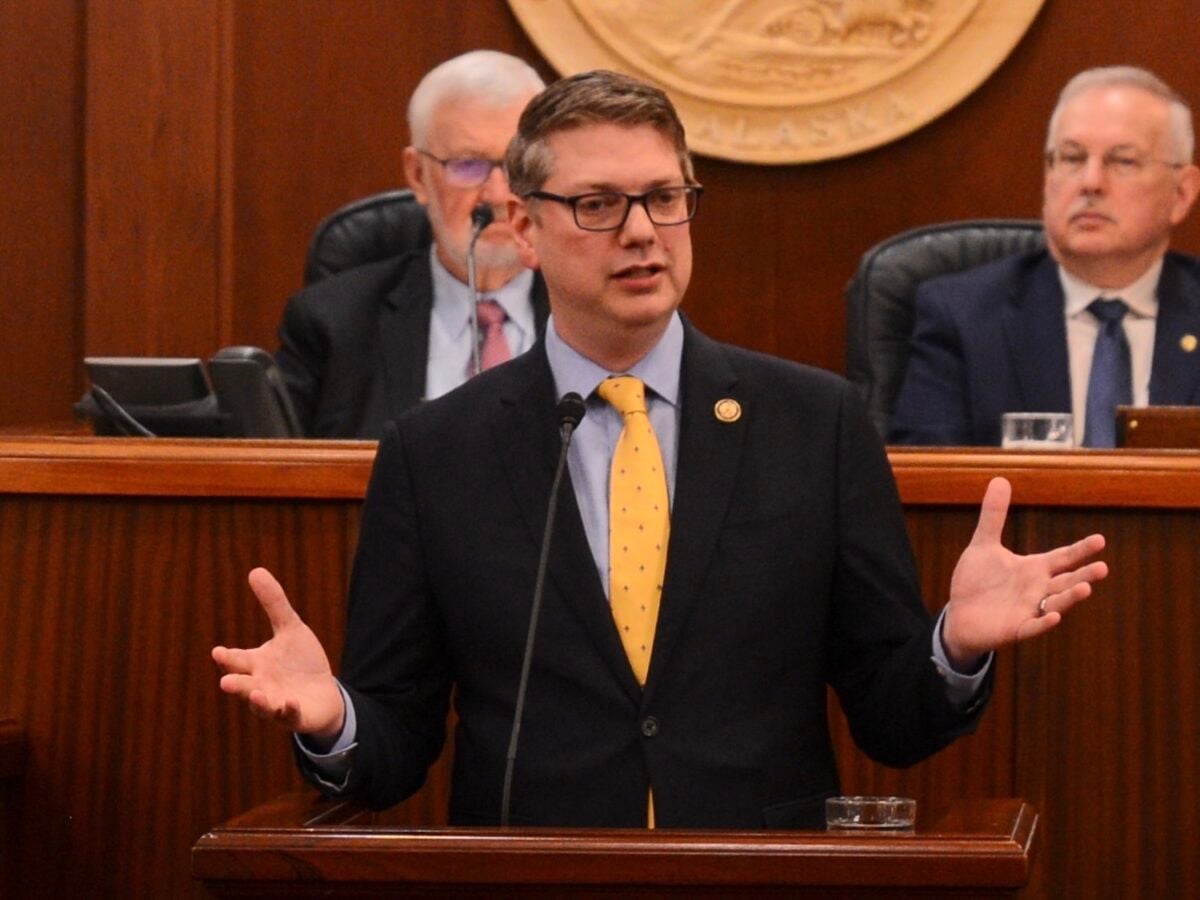
Anchorage Republican spending lots of his own money in governor’s race, early campaign records show

By: James Brooks, Alaska Beacon

Matanuska-Susitna Borough Mayor Edna DeVries looks up at fellow Alaska Republican governor candidate Matt Heilala during a candidate forum on Feb. 11, 2026, in Juneau. (James Brooks photo/Alaska Beacon)

An Anchorage doctor and his wife have put almost $1.3 million of their own money into his campaign for Alaska governor, an extraordinary act that puts him atop early fundraising totals in figures published this week by the Alaska Public Offices Commission.

With more than $1 million remaining in the bank after early spending, Republican candidate Matt Heilala stands out among a field of candidates that expanded to 17 this week with the entry of community organizer Meda DeWitt. 

State law requires political candidates to disclose their financial support on an irregular basis; the next report isn’t due until July, so this week’s figures represent an early look at who might be a competitive candidate. 

Campaign fundraising doesn’t guarantee success at the polls, experts say, but it can act like  gas in a car’s tank: Even a campaign with a high-powered engine can fall short if it doesn’t have enough gas in the tank. 

‘Zero chance’ of getting elected without money

“Money is the mother’s milk of politics,” said Jim Lottsfeldt, an experienced Alaska campaign consultant. “I didn’t coin that phrase, but it is true. If you’re not raising sufficient money to float an organization, you have zero chance of getting elected.”

Lottsfeldt hasn’t signed a contract with any candidate in the race but was planning to personally host a fundraiser for Democratic candidate Jonathan Kreiss-Tomkins. 

Former Alaska attorney general Treg Taylor, another Republican candidate, reported having more than $724,000 in his campaign accounts as of Feb. 1, the reporting deadline for the information published this week. He also made a significant contribution to his own campaign — records show a $250,000 donation from Taylor to his campaign.

Both he and Kreiss-Tomkins stood out from the field in terms of dollars available to spend: The only other candidates who reported having more than $226,201 available were Heilala and Democratic candidate and current state Sen. Matt Claman.

Kreiss-Tomkins said in a news release that his campaign had raised more than $750,000 since entering the race this month; because he entered the race after Feb. 1, those figures were not included in this week’s APOC reports. 

It also wasn’t clear how much of that total he has already spent. Several candidates reported that they had already spent much of the money they raised since starting their campaigns.

Republican businesswoman Bernadette Wilson has raised almost $306,000 since becoming the third candidate to enter the governor’s race, but she has spent more than two-thirds of that total. Similarly, former state Sen. Click Bishop has spent more than half of the $283,605 he reported raising since he started his campaign last summer.

Anchorage doctor seeks to fill a niche

Heilala, the self-funded candidate, spent more than any other candidate in the early going but still has the largest stockpile of campaign cash.

By phone on Wednesday, he said he hopes to fill a niche on the ballot.

“A lot of people claim they want a non-politician, non-bureaucrat, but how do you raise funds if nobody knows who you are?” he asked. 

He said he and his wife have “worked our tail off” in their lives and have enough financial freedom to afford their spending. 

He said that while he is a podiatrist, he also is “a fairly diverse business guy.”

“And that’s where my success has come from — investing and property developing and a lot of other things,” he said.

Self-funding the campaign to such a large degree means they can’t be swayed as much by donors, he said.

Heilala is a member of the state medical board but hasn’t served in public office before. At a candidate forum in Juneau, he praised President Donald Trump and said that he and his wife are golfing buddies with the president. 

That they’re willing to spend so much of their own money shows they’re serious about their campaign, he said.

“From this point forward, it will be a little easier to get larger donors,” he predicted. 

Matt Larkin is president of Dittman Research, which conducts polls and advises candidates in Alaska. Early fundraising figures can “serve sort of the same function as a primary” election, he said.

“When you have this many candidates … it’s really hard for donors to make a decision on who they’re going to support. And what you’ll typically see is donors will kind of support maybe multiple candidates at this stage in small amounts, but they’re really kind of waiting to see who emerges,” he said. “And so, this first fundraising update, I think will probably narrow the field some.”

Among well-known candidates, incumbent Lt. Gov. Nancy Dahlstrom, a Republican, reported having just $4,880 in cash on hand, less than Matanuska-Susitna Borough Mayor Edna DeVries, another Republican candidate.

Former state Sen. Click Bishop reported $130,258 in cash on hand, putting him in the bottom half of candidates, but his list of donors was an unusually multipartisan list that included former state Sen. John Coghill, a conservative Republican from Nenana, and current state Sen. Jesse Kiehl, a progressive Democrat from Juneau, among others. 

Former state Rep. Joe Hayes, a Democrat, was a donor, as was Leslie Hajdukovich, a Republican who unsuccessfully challenged Hayes’ current employer — Democratic state Sen. Scott Kawasaki — in a 2024 Fairbanks Senate race. 

In Alaska, there are no limits on donations — for now

Alaska has no limits on the amount of money an individual can donate to a political campaign. The state’s prior limits were eliminated by the U.S. 9th Circuit of Appeals in 2021, and the state declined to appeal the decision.

The Alaska Legislature has not passed a bill to reimpose limits, but voters will be asked in August whether they want to approve a ballot measure that reimposes them

Those new limits would take effect after the November general election.

Several third-party groups registered with the public offices commission last month to support various candidates, but none have reported significant spending or donations.

In the 2022 race for governor, Republican Mike Dunleavy’s campaign spent more than $2 million. A supporting campaign backed by the Republican Governors Association, added almost $3 million in a parallel effort.

Independent Bill Walker’s campaign spent more than $2.4 million, and Democratic candidate Les Gara’s campaign spent almost $1.6 million. Republican Charlie Pierce, the fourth candidate, spent less than $150,000

Gara said that with early fundraising numbers, “you can get a sense for how hard somebody’s working, and I think that’s the most important thing.”

In general, Lottsfeldt said, “the reason you want this money is you need to spend it mostly when people are paying attention and are going to cast a ballot. And so that is really, mid-July through the third week in August.”

“Unfortunately for all the guys and women running for governor,” he said, “there’s this U.S. Senate iceberg floating in the middle of the channel.”

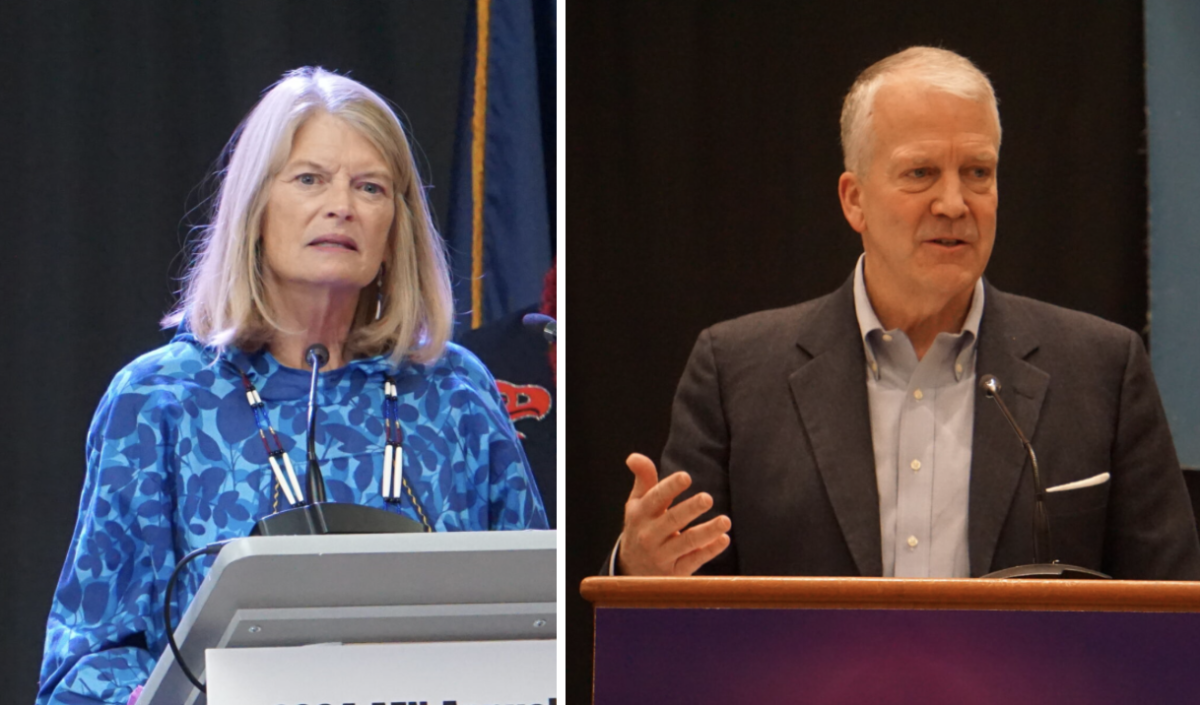
Lottsfeldt expects that the U.S. Senate race between Democrat Mary Peltola and Republican incumbent Dan Sullivan will take up most of the available TV and radio ad slots because those candidates will have more money and be able to outbid governor candidates. 

For that reason, he thinks a successful governor candidate will invest in things like yard signs, supporters going door-to-door, and other parts of a “field game.”

“It’s funny: Yard signs don’t win campaigns, but it is a marker of, ‘oh, that campaign is active. There’s people behind that. There’s enthusiasm. … Whether it’s a door stop, a yard sign, word of mouth, that is going to be huge when we have 16 people who are running.”

Even as Lottsfeldt talked, that number had already increased by one.

The deadline to sign up as a candidate is June 1. Candidates may drop out of the race as late as June 27. 

In Alaska, the top four finishers in the August primary, regardless of political affiliation, advance to the November general election, where voters use ranked choice voting to sort the candidates in order of preference and pick a winner.

Larkin, of Dittman Research, doesn’t have a contract with any candidate but has done polling on the governor’s race. While money is important, he said, “how you use that money is more important.”

“Increasingly, it’s the message that these candidates will go with will end up being the difference,” he said. “… I think the candidate with the best ideas is going to win this race, bottom line.”

Categories
Featured Juneau News juneau Juneau Local Juneau Local News Feeds

CBJ Recycling Center to Reopen After Equipment Repairs Completed

CBJ- The Recycling Center will open with limited services this Friday, February 20 and Saturday, February 21 from 9 a.m. to 3:30 p.m. Recycling drop off will be limited to cardboard and mixed paper only. 

The Recycling Center closed in January 2026 when the baler, essential equipment used to clear recycling material, was damaged during the extreme cold. Staff found that the baler’s wire guide system was in need of replacement and located a technician to help with repairs. The baler is now operational, and staff are arranging for the baler to receive annual inspections to prevent future equipment failures.  

While the baler is working as intended, staff at the Recycling Center hope to minimize build-up of materials so recent repairs are not overwhelmed. The Recycling Center is accepting cardboard and mixed paper only this weekend to allow for Juneau residents to drop materials off without overloading the center. No other recyclables will be accepted this weekend. 

Recycling Center staff will evaluate conditions next week and announce a new Recycling Center schedule based on performance this weekend. Ongoing updates about Recycling Center services and operating hours can be found at juneaurecycling.com.  

The City and Borough of Juneau thanks Juneau residents for their patience and looks forward to welcoming residents back to the Recycling Center this weekend.  

For more information about the Recycling Center, visit the RecycleWorks webpage at juneaurecycling.com or contact RecycleWorks Manager Stuart Ashton at Stuart.Ashton@juneau.gov.  

Categories
Featured Juneau News juneau Juneau Local Juneau Local Ketchikan Local News Feeds Sitka Local

In legislative speech, Dan Sullivan reiterates support for Trump administration, denounces Democrats

By: James Brooks, Alaska Beacon

U.S. Sen. Dan Sullivan, R-Alaska, leaves the Alaska Legislature on Wednesday, Feb. 18, 2026, after his annual address to state legislators. (James Brooks photo/Alaska Beacon)

Facing a potentially difficult re-election campaign, U.S. Sen. Dan Sullivan came to the Alaska Legislature with praise for President Donald Trump’s administration and damnation for Democrats.

The Republican senator endured a gauntlet of protesters before he delivered his annual address to state lawmakers, saying his theme was an “Alaska comeback” brought about by the change between the Democratic presidency of Joe Biden and Trump’s Republican administration.

“We’re now beginning to see the beginnings of a real comeback and real progress on goals we’ve dreamed about collectively for decades,” he said, referring to the way the Trump administration has opened more parts of the North Slope to oil and gas drilling, and its stated support for a trans-Alaska natural gas pipeline.

Sen. Lyman Hoffman, D-Bethel, leads U.S. Sen. Dan Sullivan, R-Alaska, through a group of protesters in the Alaska Capitol on Wednesday, Feb. 18, 2026. Hoffman has endorsed Sullivan in this year’s U.S. Senate elections. (James Brooks photo/Alaska Beacon)

He reiterated his support for the Republican-drafted budget plan known as the Big, Beautiful Bill Act. It’s since been rebranded the “Working Families Tax Cuts Act.”

That plan calls for multiple oil and gas lease sales in Alaska, new military and Coast Guard construction in the state, and large personal tax cuts.

It also offered large one-time health care funding grants to compensate for a cut to Medicaid, cut federal food stamps and imposed work requirements for both programs. 

More Alaska-specific benefits in the Big Beautiful Bill were objected to by Senate Democrats and removed before the bill’s final passage, including a Medicaid increase that Sullivan had sought.

In his speech, Sullivan repeatedly criticized Democrats in the U.S. Senate.

“Alaskans should know who wants to help us and who wants to hurt us,” Sullivan said.

One of the legislators listening in the audience was state Sen. Forrest Dunbar, D-Anchorage.

“That was the most partisan speech I’ve ever heard a member of the congressional delegation give in the Alaska Legislature,” he said afterward.

“There was no critique of what the Trump administration has done in canceling projects in Alaska. There was no critique of what Trump has done, whether it comes to rule of law or democracy,” Dunbar said.

U.S. Sen. Dan Sullivan, R-Alaska, receives applause from the Alaska Legislature on Wednesday, Feb. 18, 2026, during his annual address to state legislators. (James Brooks photo/Alaska Beacon)

Also listening was state Sen. George Rauscher, R-Sutton. Afterward, Rauscher said he always appreciates the volume of Sullivan’s speeches and the range of subjects.

Did it feel like a campaign speech to him?

“If it felt like that, there’s probably a reason,” Rauscher said.

Until Sullivan was prompted by reporters and lawmakers, he didn’t address some of the nation’s most inflammatory issues, including the actions of Immigration and Customs Enforcement officers nationwide.

The day before Sullivan’s speech, ICE agents detained a Soldotna family, including a mother, two teenagers and a five-year-old.

Rep. Alyse Galvin, I-Anchorage, asked Sullivan about the incident. He responded that he hadn’t heard about it.

Answering reporters’ questions after his speech, Sullivan voiced soft disagreement with ICE policies nationwide, saying he supports deporting illegal immigrants with violent criminal records.

“I think that should be the focus of the administration’s efforts,” he said.

About ICE’s violent tactics in Minnesota, Sullivan said, “I put out statements, but also, importantly, weighed in with senior folks in the administration, saying, look, it’s really important to bring the temperature down on both sides — which ended up happening — and then very much that ICE needs to refine its techniques and tactics.”

Sullivan said he doesn’t believe protesters killed by ICE agents are “domestic terrorists,” as the White House has claimed.

“American citizens have the right to their Second and First Amendment rights, and I don’t think they should be targeted for that reason,” he said.

Categories
Featured Juneau News juneau Juneau Local Juneau Local Ketchikan Local News Feeds Sitka Local

Alaska Supreme Court upholds constitutionality of campaign ad disclosure statements

By: James Brooks, Alaska Beacon

Wooden gavel with books in background.

Alaska’s legally required campaign ad disclaimers do not violate the First Amendment, the state supreme court ruled Friday, deciding a six-year-old dispute between the Alaska Policy Forum and state campaign regulators.

Justice Dario Borghesan wrote the 61-page decision on behalf of the court, which ruled unanimously and upheld minor fines against APF that were issued by the Alaska Public Offices Commission five years ago.

At issue were a series of news releases, opinion pieces and a video embedded in the group’s website, all opposing ranked-choice voting. 

“We uphold the agency’s decision, concluding that the cited publications had to be reported and required a ‘paid for by’ disclosure,” Borghesan wrote. “We also hold that the statutory standards are not unconstitutionally vague because they give fair notice of what kind of speech must be reported and must contain a disclosure. And we conclude that the First Amendment challenges to these laws are unavailing.”

APF organized with a variety of groups across the country to produce the video embedded in its website, the opinion notes.

“APF did not just happen to find a video on the internet and share it on social media. APF engaged in discussions with organizations around the country to create a national coalition that developed or gathered content on ranked-choice voting and allowed APF to republish that content. Such efforts required significant time, and someone paid for that time. Alaskans have a genuine interest in knowing who,” the opinion states.

The case dates from 2020, when Alaskans voted to approve Ballot Measure 2.

That measure installed open primary elections, required disclosure of some political donations and installed ranked-choice voting in general elections. 

That system remains in place today but has been challenged by a new repeal initiative. A prior repeal effort failed in 2024.

In September 2020, Alaskans for Better Elections, a group that supports the current voting system, filed a complaint with the commission, stating that APF was violating state law because its statements on ranked-choice voting did not list their three top contributors, something required for campaign communications.

APF contended that its statements were about ranked-choice voting in general, not about Ballot Measure 2 in particular, because they didn’t specifically name the Alaska measure.

APOC commissioners disagreed and cited APF, requiring it to file disclosure forms but waiving fines. APF appealed to Superior Court Judge Frank Pfiffner, who ruled in the commission’s favor, finding that the commission “reasonably concluded that APF’s activities amounted to an express communication that was an exhortation to vote against (Ballot Measure 2).”

Pfiffner rejected technical arguments against the commission’s actions, the argument that state laws were improperly vague, the idea that the First Amendment gave APF a right to publish its material without a disclosure, and APF’s challenge to a state law that requires political groups to disclose contributions starting with the “first dollar” they spend.

Individuals are not subject to the same disclosure requirement. 

APF appealed to the Supreme Court, which heard oral arguments in September 2023 and ruled more than two years later.

In Friday’s order, Borghesan repeatedly refers to past rulings by the 9th U.S. Circuit Court of Appeals, which holds jurisdiction over Alaska. 

Relying on that precedent, the court concluded that given the context and language of APF’s communications, there was no other way to view them than as urging a particular vote in the 2020 campaign.

“In the context of an upcoming election in which ranked-choice voting is on the ballot,” Friday’s order states, a “video’s reference to a ‘push’ by ‘interest groups’ for ranked-choice voting and its call to ‘SAY NO TO RANKED CHOICE VOTING’ is a clear, albeit indirect, reference to voting against the Initiative.”

The Alaska Supreme Court’s ruling could be appealed to the U.S. Supreme Court.

“APF is disappointed by the decision,” said attorney Stacey Stone, who represented the group in court. “The ruling allows the state to treat protected educational speech about public policy as regulated campaign activity. That approach threatens to chill core First Amendment expression. We are reviewing the opinion carefully and evaluating our options.”

Attorney Scott Kendall represented Alaskans for Better Elections.

“Alaskans for Better Elections has been focused on campaign finance transparency since its founding. This victory affirms those values,” he said, explaining that the group is “very pleased with this outcome.”

Kendall noted that Alaskans have an interest in knowing who is funding ads in their elections.

“Hopefully, the Policy Forum will now comply with the law and disclose its donors, as it should have done years ago,” he said.

Categories
Featured Juneau News juneau Juneau Local Juneau Local News Feeds

Juneau Protesters Call on Sullivan to Reject ‘Authoritarian’ Policies

By: Grace Dumas, News of the North

Erin Jackson-Hill outside the Capitol, speaking to a group of protestors

Protesters gathered outside the Alaska State Capitol this morning, calling on U.S. Sen. Dan Sullivan to oppose what organizers described as growing authoritarianism at the federal level.

“Juneau for Democracy is a group of Juneau residents who get together in care and resistance.” Said Volunteer Anjali Grantham, “We really are a network of people trying to live our democracy and protect our democracy.”

The rally’s theme was “We the People Do Not Consent.” Participants held signs and delivered speeches criticizing Sullivan’s positions on immigration enforcement, federal spending and voting requirements.

“We are finished with the silence, we are finished with complicity, we demand a leader who will fight for us, we demand courage.” Said Erin Jackson-Hill of Stand up Alaska.

Grantham said protesters were urging Sullivan to support additional congressional oversight of immigration enforcement agencies and to oppose policies they believe undermine constitutional rights, such as the deployment of federal officers in U.S. cities, and increased funding for the Department of Homeland Security.

“We’re going to make sure that Sullivan knows it’s despicable that he has voiced support for the SAVE act.” Grantham said, this is federal legislation that would require voters to provide proof of citizenship, like a passport or birth certificate, to cast a ballot.

“Can you imagine what that would mean for Rural Alaskans? In addition to many women who have changed their name after getting married.” She said.

Voting by noncitizens has been found to be exceedingly rare nationwide and in Alaska.

“He’s an attorney, and he has not only watched but actually facilitated the erosion of our First Amendment rights, our Fourth Amendment rights, our Fifth Amendment rights and our Eighth Amendment rights. He’s a military officer, but he’s also justified the deployment of troops to U.S. cities. He’s a senator, and he’s totally abandoned the role of the legislative branch. He’s had the audacity to tell Alaskans that we should be grateful to the regime, meanwhile, the federal government has become predatory on its own people.” Grantham said.

The rally was held before Dan Sullivan delivered his annual speech to the Alaska Legislature.

“We want him to be someone who is standing against authoritarianism and not paving the way for authoritarianism.” she said.

Categories
Featured Juneau News juneau Juneau Local Juneau Local News Feeds

Two lawsuits challenge Trump administration’s plans for oil drilling in Alaska petroleum reserve

By: James Brooks, Alaska Beacon

Teshekpuk Caribou Herd animals graze in June of 2014 in the northeastern part of the National Petroleum Reserve in Alaska. (Photo by Bob Wick/Bureau of Land Management)

A newly filed lawsuit and a revived six-year-old case from environmental groups and an Alaska Native organization are challenging the Trump administration’s proposal to open more parts of the National Petroleum Reserve-Alaska to oil and gas drilling.

On Tuesday, Grandmothers Growing Goodness and The Wilderness Society filed suit against the U.S. Department of the Interior, alleging that the department’s development plan for the reserve violates proper procedure and federal law.

That suit was filed in the U.S. District Court for the District of Columbia.

Thousands of miles away, in the U.S. District Court for the District of Alaska, the Center for Biological Diversity and Friends of the Earth updated a six-year-old challenge dating from the first Trump administration. 

Despite the difference in time and distance, both lawsuits are seeking the same goal: A stop to new plans for oil and gas drilling in the reserve.

The Audubon Society, which had been participating in the older lawsuit, withdrew from the case shortly before the new complaint was filed. 

It isn’t yet clear whether the lawsuits will deter a planned oil and gas lease sale scheduled to take place next month. 

That sale, which will open up to 5.5 million acres of North Slope land to oil and gas drilling, would be the first in the National Petroleum Reserve-Alaska since 2019. 

The reserve, located to the west of Prudhoe Bay, has been eyed for possible development for decades, and — unlike the Arctic National Wildlife Refuge to the east of Prudhoe Bay — has been the subject of interest by major drillers.

The sale is one of five mandated in the next 10 years by the budget and policy legislation known as the “Big Beautiful Bill Act.”

During the first Trump administration and again this year, the federal government attempted to lease parts of the reserve that are near Teshekpuk Lake, an area that had been protected under previous agreements with local residents.

The lake is the largest on the North Slope and is considered important habitat for caribou and migrating birds. 

Since taking office earlier this year, Trump has emphasized his desire for increased oil production from the North Slope and other federal land nationwide, part of a strategy intended to wean America off imported oil.

If a lease sale takes place in the reserve, exploratory drilling would likely take years, and production would take years more. 

Oil company ConocoPhillips acquired some NPR-A leases in 1999; its Willow Project, located in the reserve, is expected to reach full production by the end of this decade.

Categories
Featured Juneau News juneau Juneau Local Juneau Local Ketchikan Local News Feeds Sitka Local

University of Alaska requesting more funding for employee compensation and mental health services

The University of Alaska Southeast campus in Juneau as seen on May 25, 2022. (Photo by Lisa Phu/Alaska Beacon)

NOTN- The University of Alaska is asking state lawmakers for millions in additional funding next year, saying the money is needed to stabilize operations, cover rising costs and address campus safety and student mental health needs.

University officials outlined their fiscal year 2027 budget request Monday to the Alaska House Finance Subcommittee.

The university’s highest priority for FY27 is a $15.2 million increase in unrestricted general funds for employee compensation.

University officials said the request would fund a 3% raise for union and nonunion employees under negotiated agreements, that’s about 1,100 faculty members, 640 adjunct faculty and roughly 420 graduate employees covered under union contracts. Another approximately 2,700 nonunion staff would also receive a 3% increase

“President Pitney has always tried to ensure that we have a very disciplined negotiation, and we want to respect the legislative process. we’re presenting numbers that are viable in the grand scheme of things, knowing the budget pressures that exist within the state.” Said University Liaison Chad Hutchison.

Officials said 53% of the university’s operating budget goes toward employee compensation, with much of the remainder paying for contracted services like food and custodial work.

The compensation request also includes funding to address rising health care costs. The university estimates $4.8 million in increased costs for health coverage, while the governor’s proposed budget includes $3 million so far.

Beyond pay raises, the university is seeking money for public safety across campuses. At the Anchorage campus, officials said the university police department is significantly understaffed.

“To put this in context, last year, we had about 500 police reports that resulted in cases that required a lot of police officer time.” Said Ryan Buchholdt, the Vice Chancellor for University of Alaska Anchorage, “When we look at Department of Justice statistics we should be in the realm of about 30 police officers minimum, if we start thinking about leaves and training and injuries we should probably be closer to the 44 realm. We have 15 police officers.”

The university is also requesting $900,000 for student mental health services.

“This committee will remember that the students had brought that to many of your members when they visited the capital, it is my expectation based on conversations we’ve been having with the students that they’ll probably bring those requests again, mental health services are a very high need when it comes to our students across all three campuses.” Said Hutchison.

The university reports about 20,500 students statewide, describing itself as a primary workforce provider for Alaska’s economy.

Categories
Featured Juneau News juneau Juneau Local Juneau Local News Feeds

‘Large fight’ breaks out at Alaska’s maximum-security prison in Seward amid downsizing effort

By: Corinne Smith, Alaska Beacon

Spring Creek Correctional Center is seen in an undated photo. (Photo courtesy of Alaska Department of Corrections)

Officials with the Alaska Department of Corrections told lawmakers a “large fight” with a hefty price tag broke out at the state’s maximum security prison in January, amid downsizing and cost-cutting efforts. 

The fight at Spring Creek Correctional Center involved 50 inmates, some of whom sustained minor injuries, officials said. 

“Quick napkin math, we believe it to be just under $200,000 that that cost us,” Jen Winkelman, the commissioner for the corrections department, told lawmakers. “Anecdotally, the pressures of moving the individuals around and being at capacity in our max unit —  I believe that, (and) we all believe that that plays a part in it,” she said.

She said the altercation increased agency spending on medical and transportation costs to transfer those involved. 

The disclosure came in a budget update to members of the House Finance subcommittee for DOC on Feb 10, as lawmakers are reviewing the department’s additional $24 million spent last year, and request for just over a $500 million budget for next year.

April Wilkerson, deputy DOC commissioner, and Kevin Worley, DOC administrative services director answer questions from lawmakers on the department’s budget on Feb 12, 2026. Jen Winkelman, DOC commissioner is seen in the audience. (Photo by Corinne Smith/Alaska Beacon)

Spring Creek is the state’s only maximum-security prison for men, located just outside Seward on the Kenai Peninsula, and housed approximately 375 inmates last year. 

Last year, the legislature directed DOC to close one of three housing units at the prison, which contained 247 beds, as a cost-cutting measure. It was intended “to direct personnel to other areas of the facility, reduce overtime and find efficiencies,” according to a presentation by DOC officials. 

The housing unit was closed July 14, and the inmates relocated to other housing in Spring Creek and to other prisons across the state, April Wilkerson, deputy commissioner told lawmakers. She said Spring Creek is now over capacity, with a waitlist of inmates to transfer into the maximum-security prison. 

“Ultimately we are not achieving the savings that was identified in the department’s budget,” Wilkerson said.

According to the department, a fight broke out between two groups of inmates on Jan. 24.  It involved 50 people, according to department spokesperson Betsy Holley. “Staff responded quickly. 5 inmates had non-threatening injuries and were treated. No staff were injured,” she said in an email after the hearing. 

Holley said the fight lasted approximately 10 minutes, and staff responded effectively. “Those inmates involved are currently undergoing the discipline process,” she said, according to DOC policies, which may include suspension from activities or solitary confinement. 

Holley said there were no further details on the cost estimate.   

On Thursday, Winkelman said in a short interview between hearings at the Capitol that DOC officials reported the incident to lawmakers to illustrate how incidents can occur beyond the department’s control. 

“These things happen, and they have a cost incurred, and we can’t plan for it,” Winkelman said. “It happened at eight o’clock in the morning. But they happen often — little things happen often, that have big price tags. So that’s the point that we’re trying to make.”

Categories
Featured Juneau News juneau Juneau Local Juneau Local Ketchikan Local News Feeds Sitka Local

At forum, Alaska’s Republican governor candidates split with Trump on Greenland

By: James Brooks, Alaska Beacon

From left to right, Click Bishop, Dave Bronson and Adam Crum, three of the 10 candidates at the Capital City Republican governor candidate forum, are seen on Wednesday, Feb. 11, 2026, at the Baranof Hotel in Juneau. (James Brooks photo/Alaska Beacon)

A fast-moving forum in Juneau on Wednesday hosted 10 of Alaska’s 12 Republican candidates for governor, but the size of the field in the hourlong event meant there was more flavor than meat in the soup du jour. 

All but two of the candidates effusively praised incumbent President Donald Trump, but despite that support, most said they disagree with his attempt to acquire Greenland and make it part of the United States.

As of Wednesday, 16 people have signed up to run for governor in this year’s election: 12 Republicans, 3 Democrats and an independent. 

The top four candidates in the August primary election will advance to the November general election, where voters will sort their choices using ranked choice voting. 

Incumbent Gov. Mike Dunleavy is term-limited and unable to run for a third term, leaving the seat open. 

Current Lt. Gov. Nancy Dahlstrom and author Hank Kroll were the only Republicans to not participate in Wednesday’s event, which was hosted by the Capital City Republicans on the night of their annual Lincoln Day dinner. Dahlstrom had a prior commitment and was unable to attend, organizers said. Kroll was not mentioned.

Asked to name their favorite Republican president other than Reagan and Lincoln, most of the 10 candidates said Trump, and some said they put him above Reagan and Lincoln.

“He’s the best president Alaska’s ever had,” said former attorney general Treg Taylor.

“I’d have taken a bullet for him,” said Bruce Walden, a former paratrooper.

“Trump has done more for Alaska than every president in our entire American history,” said former state Sen. Shelley Hughes.

Anchorage podiatrist and state medical board member Matt Heilala said he had to choose Trump because Heilala and his wife play golf with Trump.

Former state Sen. Click Bishop was an exception, naming Teddy Roosevelt, Dwight Eisenhower and Ronald Reagan as his favorite presidents. James William Parkin IV of Angoon said he doesn’t choose favorites and didn’t name a pick.

Asked whether Alaska should support the American acquisition of Greenland, Bishop was quick to say “no,” and most of the other candidates followed suit.

“I think we have enough problems here, and I’d like to see the federal government give us more support to develop our resources here,” said former state revenue commissioner Adam Crum.

Taylor said that “when my friend, the governor of Louisiana, Jeff Landry, was tapped to be the US envoy (to Greenland), I texted him and said, ‘What the heck? You don’t even know what it’s like to be cold.’ Ultimately, it’s a question for Greenland and self determination, but I’d be happy to talk to (Trump) about how we fit into the United States and the importance that we play in our economy and our strategic location.”

Matanuska-Susitna Borough Mayor Edna DeVries was the sole candidate who offered a different answer, saying, “Well, if I want President Trump to continue to love Alaska, I’m going to say yes.”

All but Bishop and Parkin said they intend to support the repeal of Alaska’s 2020 ballot measure, which installed open primary elections and a ranked-choice general election, as well as tougher disclosure requirements for political donations.

The candidates split when asked whether they think Alaska’s judges should be required to run for office or whether judges should be appointed, as in the existing system.

Bishop, Heilala and Hughes each said they think judges should be appointed, though Hughes called for more public members on the Alaska Judicial Council, which examines applicants and nominates candidates to the governor for appointment.

Former Anchorage Mayor Dave Bronson, Crum, DeVries, Parkin, Taylor, Walden and Wilson each said they think judges should be elected.

When asked which Alaska politician each candidate admires, most said either Ted Stevens or Don Young, longtime Republicans who served in the Senate and House, respectively.

“I don’t think hardly any of them,” Wilson said. “I think you have to get back to my great-uncle Wally (Hickel). … Nick Begich is also doing a hell of a job.”

Wilson served as a senior adviser to Begich’s 2024 election campaign.

Walden also chose Nick Begich. 

Asked whether Alaska should regulate artificial intelligence software, the candidates gave a variety of answers.

AI is sort of like a hammer, Walden said. “You can build a house with a hammer. You can also murder somebody with a hammer. If it’s used properly, it’s probably going to be all right, but yeah, we better regulate it big time,” he said.

Wilson said that if anyone on her campaign team is using AI, “they better not be.”

While it is a powerful tool and can be harnessed, she said there are serious concerns. “We have seen AI used to manipulate photos, especially against people running for office. We’ve seen it used to create comments that were never said. I think that we really need to pay attention to the damage that can be done for AI,” she said.

DeVries, at 83, is the oldest candidate in the field.

“I can remember when TV came in and how horrible that was going to be, right? It ended up — it can either be a blessing or a curse, and that’s the way I feel about AI,” she said.

Taylor, who said he used AI to help prepare his closing speech, said “Alaska is AI’s best friend” because the state is the source for critical minerals used in high-tech electronics.

“On the other side, AI is Alaska’s best friend,” because it could be used to make government functions more efficient, Taylor said.

“We have to responsibly deploy AI in state government to create those efficiencies, to create those savings, or we’re going to get left behind.”

Categories
Featured Juneau News juneau Juneau Local Juneau Local News Feeds Uncategorized

CBJ budget survey is closed, so what’s next?

NOTN- The City and Borough of Juneau survey seeking public input on how to address a projected $10 million budget gap has officially closed, but now the Assembly is preparing for a series of community workshops to further guide its decisions this tense budget season.

The survey, asked residents to weigh in on municipal services and identify what they value most as the Assembly begins work on the fiscal year 2027 budget.

Assembly Member Neil Steininger said the city faces a significant revenue shortfall following voter-approved ballot measures that eliminated sales tax on food and capped the local mill rate. The changes reduced revenue and left the Assembly with the task of determining how to maintain services with less funding.

“We got that message from the voters that, they wanted lower taxes. We need to figure out how to make that work and how to deliver city services, and we’re really looking for information from the voters to understand what their priorities are for what they see from government here in Juneau.” He said. “It is very difficult to make these decisions, which is something that we want to impress to people.”

Detailed reports from the survey are expected in the coming weeks.

“I think that’s just a really important thing for everyone to do, especially in a community like Juneau that’s so small and so closed, I think it’s important that people actively voice what they want prioritized in our city, so that the assembly can use that information to better inform their decision making.” Steininger said.

In addition to the survey, the city is hosting three in-person Community Compass workshops This month and early March. During the 60- to 90-minute sessions, participants will work through mock budgeting scenarios and discuss how to respond to unexpected financial changes.

“now it’s your turn to put yourself in an assembly member’s shoes and actively decide the city budget and then react to unforeseen circumstances that will ask you to reallocate certain pieces of the budget accordingly.” Steininger said.

Input gathered at the workshops will be shared with the Assembly as it moves deeper into the budgeting process this spring.

The workshops are scheduled for Feb. 18 at the Filipino Community Hall, Feb. 24 at Mendenhall Valley Public Library and March 3 at Douglas Public Library.