Categories
Featured Juneau News juneau Juneau Local Juneau Local Ketchikan Local News Feeds Sitka Local

Federal government may seek removal of individual Alaskans from state voter rolls

By: James Brooks, Alaska Beacon
Reject stickers await ballot envelopes Wednesday, June 15, 2022 at the Division 1 office of the Alaska Division of Elections in Juneau, Alaska during counting for Alaska’s special U.S. House primary election. (Photo by James Brooks/Alaska Beacon)


When the state of Alaska turned over a copy of the state’s voter rolls to the Department of Justice in December, it also signed an agreement that allows the DOJ to ask the state to put individual Alaskans on track for removal from the state’s voter list.

Officially labeled a “confidential memorandum of understanding,” the document was signed Dec. 19 by Carol Beecher, director of the Alaska Division of Elections, and U.S. Assistant Attorney General Harmeet Dhillon.

Alaska is one of at least a dozen states that have signed similar documents, even as more states continue to fight the requests in court. 

In part, the document says “the Justice Department will securely notify you or your state of any voter list maintenance issues … i.e., that your state’s (list) only includes eligible voters.”

It goes on to state “that within forty-five (45) days of receiving that notice from the Justice Department of any issues … your state will clean its (list) by removing ineligible voters and resubmit the updated (list) to the Civil Rights Division of the Justice Department” to confirm that the state is following federal law.

Alaska’s signed agreement was obtained by the Alaska Beacon on Tuesday via a public records request.

Beecher and Kelly Howell, chief of staff to Lt. Gov. Nancy Dahlstrom, said the agreement does not allow DOJ to purge voters — a term that means removing them from the voter roll altogether.

Instead, the DOJ’s picks, if any, would be placed on the state’s inactive voter list. Anyone on that list must provide ID and have their identity verified if they wish to vote.

People on the inactive list are also placed on the state’s path to removal, a process that takes four years according to a timeline set by federal and state law

The agreement says in part that it was “entered into at your state’s request,” but by email, Dahlstrom’s office said that isn’t correct and that the Department of Justice provided the agreement.

The lieutenant governor is in charge of Alaska’s elections, and in a cover letter dated Dec. 19, she said the memo was “entered at the request of the Department of Justice” and state law.

That law, Dahlstrom said, “allows the Division of Elections to share voters’ confidential information with a federal government agency, such as the Department of Justice, provided it uses ‘the information only for governmental purposes authorized under law.’”

If the Department of Justice were to seek faster removal of Alaskans from the voter rolls, it could violate that clause.

Responding to questions from the Beacon, the lieutenant governor’s chief of staff said the state has not received any notices from the Justice Department about problems with its voter list, that no “ineligible voters” have been removed and that the state isn’t aware of any times when Alaska’s rolls were used for “pre-litigation or litigation purposes,” as defined in the agreement.

Concerns about states’ rights being overridden

The U.S. Supreme Court has repeatedly upheld the right of states to set the rules for local and state elections; changing voter rolls would represent a new expansion of powers by the Department of Justice.

Former Democratic state Sen. Tom Begich, posting about the issue on social media, said he is “outraged” by the agreement between the state and the federal government.

“That kind of federal interference threatens our constitutional right to run our own elections,” he said.

He later issued a statement calling on the Alaska Legislature to investigate the issue.

Dahlstrom, a Republican, is also a candidate for governor.

Writing in an opinion column published by the Juneau Independent on Friday, former Alaska Attorney General Bruce Botelho, a Democrat, said “it is alarming that the federal government has demanded” the copy of the voter roll with personally identifying information.

Nationally, at least 11 other states have signed agreements similar to the one signed by Alaska, according to federal court testimony in December over a lawsuit that challenged the state of California’s refusal to turn over its voter rolls to the federal government.

The text of Alaska’s agreement is almost identical to ones previously disclosed in court and by the American Civil Liberties Union in a lawsuit by the federal government against the state of Colorado.

“We will not comply with the Trump Department of Justice’s request for Coloradans’ sensitive voting information,” said Colorado Secretary of State Jena Griswold, a Democrat, in December. “The DOJ can take a hike; it does not have a legal right to the information. Colorado will not help Donald Trump undermine our elections and hurt the American people.”

Nationally, the federal government has sued more than two dozen states, including Colorado, that refused to send voter rolls to the federal government.

Those states generally have provided copies of publicly available rolls, but the federal government is seeking more detailed information, including lists of personally identifying information that may include birth dates, driver’s license numbers and Social Security numbers in part or whole.

“The manner in which the Department of Justice has acted makes clear that what is at stake is not voter integrity, but voter privacy,” Botelho said.

The Justice Department has said that its requests are necessary to make sure that states are following federal laws that require them to regularly maintain their lists and keep noncitizens from voting.

The Department of Justice has been sharing the voter rolls with the Department of Homeland Security, searching for noncitizens.

As of this week, federal judges had ruled against the Department of Justice in lawsuits covering Oregon, California and Michigan. The department has not prevailed in any case so far.

In the Oregon ruling, published on Feb. 5, Judge Mustafa Kashubhai wrote that the federal government cannot be trusted about its true motives.

“When Plaintiff, in this case, conveys assurances that any private and sensitive data will remain private and used only for a declared and limited purpose, it must be thoroughly scrutinized and squared with its open and public statements to the contrary,” he wrote.

Alaska-specific implications may be broad

The national ACLU has opposed the federal government’s requests in general. When contacted Friday about the Alaska memo, the Alaska chapter of the organization said it did not have immediate comment and was still researching the issue.

The agreement between the state of Alaska and the Department of Justice could have broad consequences here. 

Days before signing the agreement, the Alaska Division of Elections disclosed that dozens of noncitizens had accidentally been registered to vote by the Alaska Department of Motor Vehicles.

Under guidelines imposed by the Trump administration, those noncitizens could be deported, because federal law strictly prohibits noncitizens from registering to vote, and appearing on a voter list prompts special review when someone is attempting to become a citizen.

The state has also criminally charged 11 American Samoa-born Alaska residents for voting in state elections. People born in American Samoa are American nationals, but not citizens, and thus are ineligible to vote.

When the Alaska Beacon reviewed Division of Elections files that were turned over to the Department of Justice last year, it found 70 people labeled as noncitizens who either voted or attempted to vote in the state between 2015 and 2025.

Those people were on the state’s inactive voter list, which was not provided to the Department of Justice.

In addition, the violent federal crackdown against noncitizens in Minnesota and other states has ensnared many American citizens, indicating that the federal action is resulting in many false positives or is targeting Americans regardless of citizenship. 

Correction: The initial version of this article incorrectly stated that the memo would allow the Department of Justice to direct the purge of individual voters. It only permits DOJ to identify Alaskans for eventual removal and does not immediately prevent them from voting.

Categories
Featured Juneau News juneau Juneau Local Juneau Local Ketchikan Local News Feeds Sitka Local

Procedural objections almost stop Alaska Legislature from extending disaster declaration

By: James Brooks, Alaska Beacon

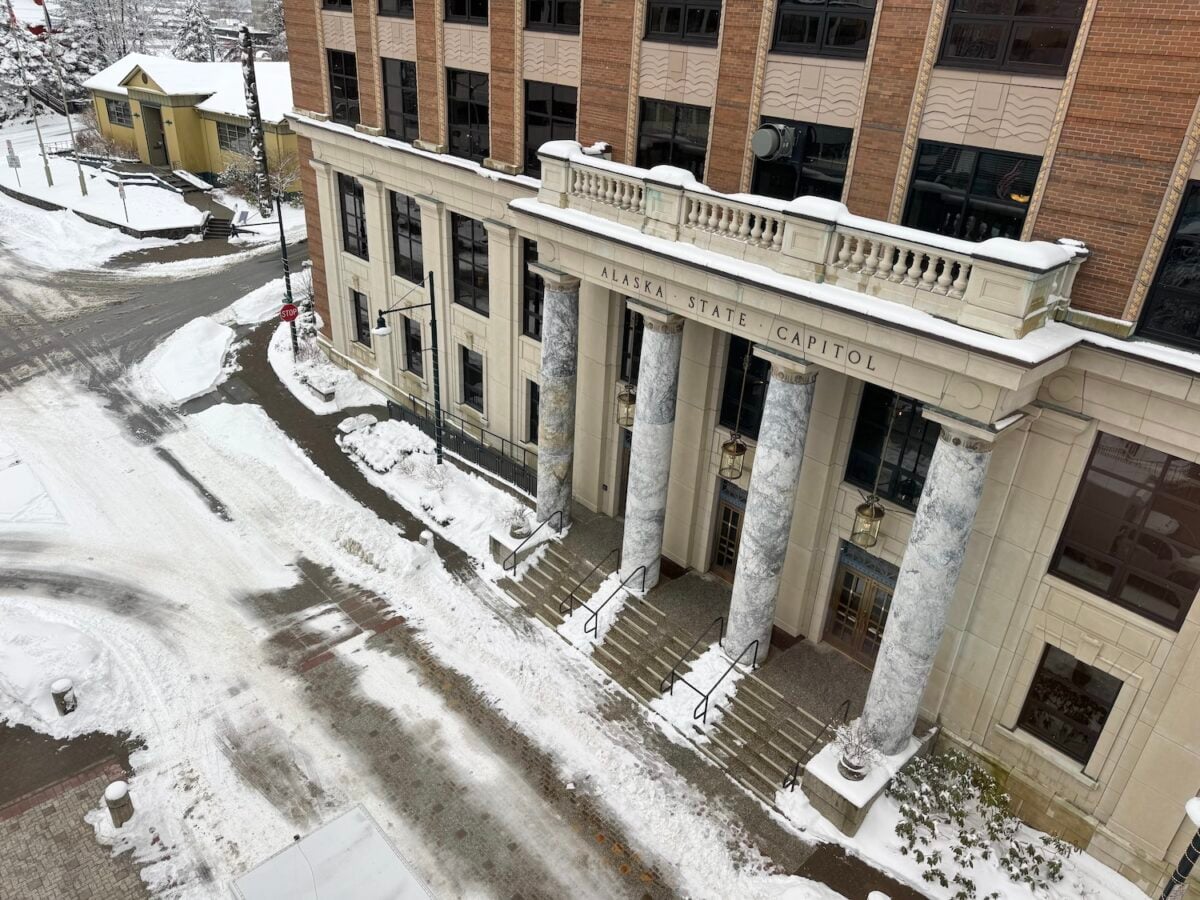
The Alaska State Capitol is seen behind other buildings on Tuesday, Feb. 10, 2026, in downtown Juneau. (James Brooks photo/Alaska Beacon)

The Alaska Legislature on Wednesday approved a 30-day extension for the state of disaster covering the fall 2025 storms that battered the state’s west coast.

The extension allows the state to continue spending money from its disaster response fund as it continues cleanup and repair efforts from two storms in October. Hundreds of Alaskans were displaced by the disasters, which devastated coastal communities.

The Alaska Senate approved the extension in a 19-0 vote on Monday, but the extension nearly failed in the Alaska House after members of the House’s Republican minority caucus raised procedural issues on Wednesday and said members of the majority were not following state law.

The extension was included in Senate Concurrent Resolution 12, which retroactively approves extensions issued since October and allows the governor to spend more from the state’s disaster response fund. 

“Doing this as a resolution is dangerous, I think it’s a mistake, and I’m not even certain that it’s legal,” said House Minority Leader DeLena Johnson, R-Palmer. 

Johnson and other Republicans said that under their interpretation of state law, legislators would need to approve the spending via a bill, not a resolution.

A legislative attorney, writing in a Feb. 2 memo to Speaker of the House Bryce Edgmon, I-Dillingham, said, “when the legislature means to take action having a binding effect on those outside the legislature, including extending a disaster declaration, the legislature must enact a bill in a special or regular session rather than using the less formal resolution process.”

Johnson was rebutted by House Rules Chair Louise Stutes, R-Kodiak and a member of the House’s majority coalition.

“This is not new money,” she said. “This is money that has been (in the fund) and is being allowed to be appropriated out. … it’s been agreed upon that maybe this wasn’t the optimum way. Nothing’s perfect. We’re moving forward. We are trying to do the best we can as quickly as we can. Time is of the essence, so I ask you to ask yourself: Do you want to be right in how it is done, or do you want to do the right thing when there’s a question?”

The House vote was 22-18, with Rep. Will Stapp, R-Fairbanks, joining the 21 members of the House’s coalition majority in support. All other members of the House Republican minority voted against the resolution.

As debate opened, Rep. Nellie Unangiq Jimmie, D-Toksook Bay, became choked up as she described the disaster, which devastated her district and resulted in the largest peacetime evacuation in state history.

“Today, months later, 340 of our neighbors remain without permanent houses. Mr. Speaker, we are Yup’ik. Our people have lived in this delta for thousands of years. We know storms. We know water. We know loss,” she said. “We have lived on this coast for thousands of years, and we’ve survived ice ages, epidemics, colonization. We’ve survived by adapting, sharing, by refusing to abandon our homes, but you can’t really live when your home floats 10 miles out to sea, when your fuel tanks that heat your home in winter are submerged in salt water.”

On Jan. 28, Gov. Mike Dunleavy requested permission to spend $20.5 million from the disaster response fund, up $5.5 million from a prior request.

When federal money is added to that tally, the total amount is $39.25 million.

More spending is expected. 

Last week, the director of the Alaska Division of Homeland Security and Emergency Management said that the Federal Emergency Management Agency has estimated at least $125 million in state and federal costs related to the storm disaster.

“The declaration allows state agencies to continue their emergency response and to extend state funds as needed,” said Rep. Andy Josephson, D-Anchorage and co-chair of the House Finance Committee.

Rep. Justin Ruffridge, R-Soldotna, took issue with the fact that after Dunleavy declared a state of disaster in October, the Speaker of the House and Senate President approved subsequent 30-day extensions without consulting legislators.

“I think we should have called ourselves in (to special session), or the third floor should have called us in (to special session) to take up this very important issue,” Ruffridge said.

“What precedent does this set for the presiding officers to make the decisions before us on our behalf?” he asked. “What power do we give the executive by allowing disaster declarations to continue without (the House) or the (Senate) taking up that order of business?”

Rep. Dan Saddler, R-Eagle River, said he worries that failing to follow proper procedure could leave disaster relief vulnerable to legal challenge.

“We put the reliability of that relief at question if this is not done right,” he said. 

The day after the vote, Ruffridge said members of the minority have drafted a bill that would fix the problems they see, and that bill is being reviewed by legislative attorneys.

House Majority Leader Chuck Kopp, R-Anchorage, said legislative attorneys have reviewed the majority’s plan.

“We have had our legal department tell us that this passes muster,” he said during the debate.

After the vote, Kopp’s office was unable to provide a legal memo to that effect but said he had received verbal advice.

Josephson, wrapping up debate, said the majority was working in good faith with Dunleavy to get the money out the door quickly.

“Given the urgency of the matter, we’re trying to cooperate with the executive branch,” he said.

Categories
Featured Juneau News juneau Juneau Local Juneau Local Ketchikan Local News Feeds Sitka Local

Alaska’s chief justice says the state is making progress on criminal case backlog

By: Corinne Smith, Alaska Beacon

Alaska Chief Justice Susan Carney gives the annual State of the Judiciary address to members of the Alaska State Legislature on Feb. 11, 2026. (Photo by Corinne Smith/Alaska Beacon)

In her annual speech, Alaska’s chief justice of the Supreme Court told lawmakers the state is making significant progress on the court’s backlog of criminal cases, but there is more work to be done.

Susan Carney, chief justice of the Alaska Supreme Court poses for a photo in the Juneau Courthouse following her annual State of the Judiciary address to the Legislature on Feb. 11, 2026. (Photo by Corinne Smith/Alaska Beacon)

Susan Carney gave the annual State of the Judiciary address to members of the Legislature on Monday. She is now in the second year of her term as chief justice, presiding over the five-member Alaska Supreme Court. 

Carney has practiced law in Alaska for over 40 years, and has served on the Supreme Court since 2016, when she was appointed by Gov. Bill Walker. She’s the second woman to serve in the role as chief justice, leading Alaska’s first female-majority Supreme Court. 

“We have eliminated the pandemic backlog,” she said. “But I told you last year, and I’ll reiterate to you today, that our work isn’t done.”

Alaska’s court system has grappled with significant pre-trial delays, with some defendants and victims languishing for years before court rulings — as highlighted by investigative reporting from the Anchorage Daily News and ProPublica. The time to resolve the most serious criminal cases, such as murder and sexual assault, has nearly tripled in the last decade, reporters found. 

“It’s not comfortable to have the press focus on a few extremely sad but also extremely unusual cases, but it’s valuable for us,” Carney said in her address. “I know that the cases with extreme delay are outliers compared to the vast majority of criminal cases and the time it takes to resolve them, but it’s still heartbreaking to think of the anguish that victims suffer and the problems that delays cause to everybody involved.” 

Carney said pending criminal cases ballooned during the COVID pandemic to over 20,000 cases in 2023, which she said was unprecedented. She said with focused efforts, and the legislature’s approved raises for state attorneys, the courts are making progress. “There are now fewer than 11,000 open criminal cases,” she said. 

Last year, the Supreme Court ordered limits on continuances, or time extensions granted by judges, in order to limit delays and speed up court proceedings. The order required that there be no more than 270 days of new delays for criminal cases filed in 2022 or before. 

“Our order addressed continuance requests because judges are not the ones that delayed cases. Delays happen when an attorney, whether on the defense or prosecution side, asks for more time to prepare for a hearing or to file some kind of document,” Carney said. “And the judge grants that request.”

Carney said the order requires all requests to be made on the record or documented in writing, and judges are given guidelines for making rulings on whether to grant delays. “For example, a medical emergency will almost always be a good cause to put off a case, but negotiations with the other side will just about never be a good cause.”

She said as a result, the number of pending felony cases in criminal court has dropped by more than half. 

“On January 1, 2023 there were 1,677 pending felonies, more than two years old. That was nearly one out of every four pending felony cases,” she said “This year, on January 1, 2026 we had fewer than 750 pending felonies over two years old. This is great progress.”

Carney emphasized that criminal cases are complex, and continuing the effort to reduce the backlog requires work from everyone involved — from juries and witnesses, to prosecutors and defense attorneys. “We continue to work with the prosecution and the defense agencies so that we can all keep cutting down the time it takes to move cases through the criminal justice system,” she said. 

Carney noted criminal cases make up roughly 30% of all cases in state courts, and the 70% that are civil cases — which can be divorces, child custody, or foster care decisions — are highly emotional and can take extra time and care from judges as well. 

“When people come to a courthouse, they are generally having their worst day ever, and they’re going through very challenging and often life changing circumstances. We work hard every day to provide not only fair and reasonable decisions, but to recognize the difficulties that Alaskans are having when they come into our courthouses and to explain and to help them feel heard and feel that we understand them,” she said. 

Moving forward, Carney said the courts have requested one new Superior Court judge in Palmer to address the growing case load of the Matanuska-Susitna Borough’s growing population. The four judges based in Palmer are handling an average of 683 cases per judge, compared to a statewide average of 458 cases per judge, according to state data.

“They are the busiest in the state, and they have been the busiest each of the last five years,” she said, adding that judges from Anchorage to Valdez have stepped in to relieve the burden. 

“This is mostly for criminal and Child in Need of Aid cases, but that leaves all the other kinds of cases — the divorces, the custody business matters — just waiting,” she said. “We do not want to clear out all the oldest criminal cases only to find a similarly problematic group of old civil cases causing our new crisis.”

Rep. Andrew Gray, D-Anchorage, who chairs the House Judiciary Committee, after the speech questioned whether just one more judge is enough. “The idea that we just need one judge is, I find, a little bit conservative. I think we might need more judges,” he said.  

Gray has called for the state to expand the number of prosecutors and public defenders. He said imposed timelines for trials is a concern, with overburdened attorneys carrying high case loads, and can risk a mistrial and more delays.

“Our prosecutors and our public defenders have too many cases. We need more of them. We need to lower their caseloads,” he said. “That’s going to improve these timelines the most, and ensure that folks are getting the best lawyer available who’s fully prepared and ready to do the work.”

Carney, in an interview after the address, said the request for the Palmer Superior Court is the focus for now. “Bringing in another judge will, I think, at the very least, mean that we don’t have to keep bringing judges from other places,” she said. “I think it will allow us to keep even at this point.”

Lawmakers are now considering House Bill 262, which would expand the number of judges, which passed the House Judiciary Committee on Monday. If the bill becomes law, the Alaska Judicial Council would put forward recommendations for a new state judge that would then be approved by the governor.

Alaska Supreme Court Justices (left to right) Aimee A. Oravec, Jude Pate, Jennifer S. Henderson, and Dario Borghesan, attend the chief justice's annual State of the Judiciary address to the Legislature on Feb. 11, 2026. (Photo by Corinne Smith/Alaska Beacon)
Alaska Supreme Court Justices (left to right) Aimee A. Oravec, Jude Pate, Jennifer S. Henderson, and Dario Borghesan, attend the chief justice’s annual State of the Judiciary address to the Legislature on Feb. 11, 2026. (Photo by Corinne Smith/Alaska Beacon)
Categories
Featured Juneau News juneau Juneau Local Juneau Local Ketchikan Local News Feeds Sitka Local

Alaska Senate votes to require public schools to teach CPR

By: James Brooks, Alaska Beacon

Sen. Elvi Gray-Jackson, D-Anchorage, talks to a colleague on the floor of the Alaska Senate, Wednesday, May 1, 2024. (Photo by James Brooks/Alaska Beacon)

Alaska public school students would be required to learn hands-only CPR under a proposal advancing through the state legislature.

In a 19-0 vote on Wednesday, the Alaska Senate approved Senate Bill 20, which requires the Alaska Department of Education and Early Development to “adopt curricula to instruct public school students on hands-only cardiopulmonary resuscitation.”

Conventional CPR involves chest compressions and mouth-to-mouth breathing, whereas hands-only CPR uses compressions alone.

Sen. Robert Yundt, R-Wasilla, was absent from the vote.

Existing state law says that each state school district is “encouraged” to teach CPR; the new bill, if approved by the House and Gov. Mike Dunleavy, would change CPR to a requirement.

The department said in a fiscal note that it will be able to implement the new requirement at no additional cost to the state.

“It’s time for Alaska to align with the growing national standard that ensures students learn these life-saving CPR techniques,” said Sen. Elvi Gray-Jackson, D-Anchorage and the sponsor of the bill.

Heart diseases are the No. 2 cause of death in Alaska, according to the latest available state statistics. CPR can be used to keep someone’s blood flowing if they experience sudden cardiac arrest. That can triple a victim’s chances of survival, Gray-Jackson said, noting that CPR has even been used in the Capitol on occasion.

SB 20 advances to the House for further consideration. A companion measure, House Bill 92, is in the House Education Committee and has not yet been heard.

Categories
Featured Juneau News juneau Juneau Local Juneau Local Ketchikan Local News Feeds Sitka Local

Proposed Cascade point ferry terminal faces legislative opposition

Cascade Point, photo courtesy of DOT

NOTN- A proposed ferry terminal at Cascade Point near Juneau is drawing increasing criticism from Alaska lawmakers and the public alike, who are question its cost, planning and long-term benefit to the state’s struggling ferry system.

“I’m really struggling when we talk about the Cascade Point project and a few of these other proposed items, to understand how, from that statewide perspective, we’re investing the amount of money we’re investing into these projects.” Said Representative Ashley Carrick, “Why this? I’d like this money to stay in Southeast and be reinvested back into the Marine highway system in some way. But when you talk about there being controversy and welcoming the dialog, it doesn’t seem to jive with the fact that the dollars are already dedicated towards this project. So the discussion seems to be sort of moot and after the fact.”

Ryan Anderson, Commissioner for the Department of Transportation and Public Facilities said, “When we are looking at that balance between the cost of a ferry, I view it as the time of a person, so if you can reduce the time you have to be on the ferry by hours, I see that as a value. We’re constantly looking for ways for operational efficiency.”

The Department of Transportation has already begun spending money on the project despite what lawmakers call unresolved issues, including plans for fresh water, sewage handling and access for walk-on passengers.

“They have a sort of big concept of a plan,” Kiehl said. “You shouldn’t start spending money before you’ve worked that stuff out.”

An economic analysis completed earlier this year concluded the project would not pay for itself within a reasonable time frame, Kiehl said. Lawmakers are also concerned that the terminal would not reduce operating costs for the Alaska Marine Highway System, which has faced years of service cuts and budget challenges.

“The other thing that’s super weird is, We really use a lot fewer of Alaskans dollars if we put the projects through the federal process, 9 national dollars for every 1 Alaska dollar.” He said, “I want to be able to promise you that I’m using your money as efficiently as I can. Well DOT has decided to do this with 100% Alaska dollars, no federal money in it.”

The Marine Highway Operations Board has formally opposed the project, and Kiehl said many legislators share those concerns.

“I have a huge number of colleagues who are just saying, this is crazy.” Kiehl said, “When I talk to DOT, and I say, show me the homework, and I get the dreaming stage, that’s tough defense to play.”

Supporters of a proposed ferry terminal at Cascade Point point to a partnership with Goldbelt Inc. as a key advantage, but Alaska lawmakers say the collaboration has not resolved broader concerns about the project.

“I guess most folks in the legislature are really questioning, is a second ferry terminal in Juneau, the way to go? Does it save us money long term? Does it make the ferry system more efficient long term?” Kiehl said.

Categories
Featured Juneau News juneau Juneau Local Juneau Local Ketchikan Local News Feeds Sitka Local

Alaska House approves university fee transparency act, sends it to state Senate

By: James Brooks, Alaska Beacon

Rep. Ashley Carrick, D-Fairbanks, talks on the floor of the Alaska House of Representatives on Friday, Feb. 6, 2026. (James Brooks photo/Alaska Beacon)

The University of Alaska may soon be legally required to provide itemized bills to students and give them more notice of fee increases.

The Alaska House of Representatives voted 36-3 on Friday to pass House Bill 176 and send it to the Senate for further consideration.

Rep. Ashley Carrick, D-Fairbanks, introduced the bill in the House and said it is “meant to provide greater transparency and accountability for all of my fellow Nanooks, Seawolves and Whales out there,” referring to the state’s universities by their mascots.

“With House Bill 176, it is our hope that we are able to provide more information to students and those that may be helping them to pay their bills about what it is that they are paying for and how those dollars will be spent,” she said.

The legislation received bipartisan support in the House.

“As a mom of two college students, it is important to see what is going on with their tuition because I’m paying for their tuition,” said Rep. Jamie Allard, R-Eagle River.

No one spoke against the bill on the floor, but afterward, Rep. Justin Ruffridge, R-Soldotna and one of three “no” votes, said he didn’t think the bill was necessary.

“I just think government does some things that could be solved with five or six conversations,” he said.

The University of Alaska said in a fiscal note that it believes it can implement the changes without any additional cost to its budget.

The bill has been referred to the Senate Education Committee, which has not yet scheduled it for a hearing.

Categories
Featured Juneau News juneau Juneau Local Juneau Local Ketchikan Local News Feeds Sitka Local

Juneau Assembly advances housing rezonings, directs more than $2 million to housing projects

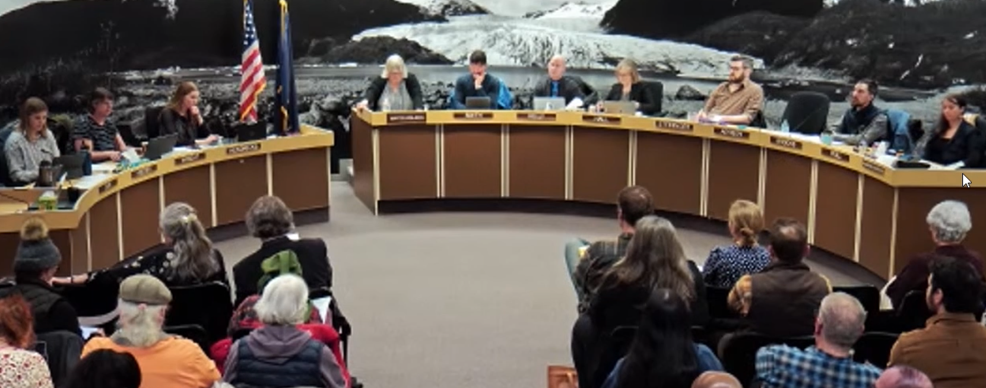
NOTN- The Juneau Assembly on Monday approved zoning changes at two Lemon Creek properties, one near Costco, and directed more than $2 million from the city’s Affordable Housing Fund to support several housing developments, as officials continue efforts to address a persistent housing shortage.

Deputy Mayor Greg Smith said housing was the focus of Monday night’s meeting.

The rezones were “tricky” he said, as certain zoning districts may not always be appropriate for housing.

“The Comprehensive Plan has a map that says what zoning districts are for good reason, people may not want to live next to an asphalt plant, or a rock crushing place, or a shooting range. So there are these zoning deserts, and there’s reason for it.” he said. “The development department and the planning commission looks and says, how will this use work? I think kind of a broader sentiment at the assembly was. some of these sites have been developed in a long time, we really need housing. lets give it a shot.”

Despite earlier recommendations against the changes from the Planning Commission, one property had been zoned industrial, where housing was not allowed, and the other required a zoning adjustment to permit expanded residential development.

The votes were not unanimous, he said.

In addition to the zoning decisions, the Assembly approved five measures allocating money from the city’s Affordable Housing Fund to projects across the city. Altogether, the developments are expected to add roughly 40 housing units, including a mix of single-family homes and multifamily buildings.

“We passed five that appropriated funds from the affordable housing fund for various projects throughout the borough, that was big.” Smith said.

Among the projects receiving support is the planned redevelopment of the former Bergmann Hotel in downtown Juneau. The developer is seeking to convert the long-closed building into an apartment complex. Other funded projects include new single-family homes and a small multifamily development in various neighborhoods, like Pederson Hill.

The Assembly also formally adopted its goals for the coming year, building on priorities identified during a December retreat.

City representatives will be attending the Southeast Alaska Conference this week.

Categories
Featured Juneau News Juneau Local Juneau Local News Feeds

Alaska Legislature will vote on extension of disaster declaration covering west coast storms

By: James Brooks, Alaska Beacon

Sen. Lyman Hoffman, D-Bethel, speaks on the floor of the Alaska Senate on Monday, Feb. 9, 2026, in Juneau, Alaska. (James Brooks photo/Alaska Beacon)Sen. Lyman Hoffman, D-Bethel, speaks on the floor of the Alaska Senate on Monday, Feb. 9, 2026, in Juneau, Alaska. (James Brooks photo/Alaska Beacon)

The Alaska Legislature is expected to declare this week that parts of Western Alaska are still in a state of disaster following a major storm in October.

On Monday, the Alaska Senate voted 19-0 to extend a state of disaster until early March, retroactively extending a disaster declaration that expired Feb. 6. 

“While there has been progress made, the impacts remain severe,” said Sen. Lyman Hoffman, D-Bethel, shortly before the vote.

The Alaska House of Representatives is expected to take up the resolution with the extension on Wednesday.

Under Alaska law, a governor may only declare a disaster for 30 days. Dunleavy declared a disaster starting Oct. 9, then asked for an extension in November.

Speaker of the House Bryce Edgmon, I-Dillingham, and Senate President Gary Stevens, R-Kodiak, unilaterally granted extensions in November, December and January, but when they attempted to approve an extension for February, legislative attorneys advised them that action by the entire Legislature is needed.

Part of that advice came because the governor updated the state’s disaster spending plan. On Jan. 28, Dunleavy requested permission to spend $20.5 million from the state’s disaster response fund, up $5.5 million from a prior plan. 

Including federal money, the governor is requesting permission to spend $39.25 million.

State law requires a legislative vote for such a large additional draw from the disaster fund. It will have a balance of about $2.1 million after the draw, according to the governor’s letter to legislators. 

More spending is expected. Last week, the director of the Alaska Division of Homeland Security and Emergency Management said that the Federal Emergency Management Agency has estimated at least $125 million in state and federal costs related to the storm disaster.

While the disaster fund is too small to cover that amount, Dunleavy has already requested that $40 million be taken from the state’s Constitutional Budget Reserve for the fund.

The House is expected to approve the disaster extension by a wide margin later this week, standing in contrast to its actions five years ago this month.

In 2021, legislative attorneys cautioned that legislative approval was needed to extend the state’s COVID-19 pandemic emergency disaster declaration, in place since 2020. They said that while it was possible for a governor to issue multiple, successive 30-day disaster declarations, that action might later be ruled illegal.

In February 2021, despite a request from Dunleavy, the Legislature declined to extend the pandemic emergency into a second year, and Alaska became the second state in the nation to end its state of emergency.

Subsequent analysis found Alaska’s COVID-related death rate spiked in 2021.

Categories
Featured Juneau News Juneau Local Juneau Local Ketchikan Local News Feeds Sitka Local

‘Schools are being asked to do more with less’ Testifiers call for more school funding

Student, Maddie Bass and school board member Steve Whitney testifying before the Joint Education Committee. Photo courtesy of Gavel Alaska.

By: Grace Dumas, News of the North

District leaders and student advocates from across Alaska testified this morning at a joint Education Committee hearing with both the House and the Senate.

One thing all districts had in common, despite the unique challenges facing schools from Fairbanks to Yakutat, was a call for reliable school funding.

Public schools are funded through Average Daily Membership or ADM, this is the count of enrolled students each year, it can take months to fully process, with an accurate count generally unavailable during budget making.

Testifiers say school funding is a “guessing game.” With districts often creating their budgets with no concrete data.

Some schools have classes that span multiple age groups, bloated class sizes that spread teachers thin, and testifiers say it’s, “costing the state excellence.”

Another commonality between all districts was concern for teacher turnover.

Testifiers said teachers are not compensated fairly to adjust for the rising cost of living in the state, and they are not provided an adequate retirement package which creates an incentive to stay in Alaska.

“I don’t know where the state is going to save all kinds of money by not giving our children the education they need.” said testifier Strong from Chatham school district.

15-year old Maddie Bass from Juneau described growing up in what she called an “underfunded district” where teachers routinely sent home lists of supplies so students could fully participate in class.

“I have never had the opportunity to learn in a classroom that was funded enough to have materials for everyone.” she said, “even with recent consolidations in my district, which caused the firing of multiple teachers, the cutting of programs and more, there is not enough.”

Bass, whose father taught in Alaska schools, said she has watched educators in her district work multiple jobs, struggle to secure adequate health care and has watched her father go to school sick because there were not enough substitute teachers.

She added that, as a teenager, she should not be missing class to “testify in front of legislators” to ask for funding so her teachers can afford to live and students can receive a full education.

“So I’m asking you, please do as much as you can for me, for my teachers, and so my little sister will not have to stand up here and testify when she goes to high school in four years,” she said.

Testifiers thanked legislators for the increase in the Base Student Allocation, but that recognition came with a plea for more stability moving forward.

Categories
Featured Juneau News Juneau Local Juneau Local News Feeds

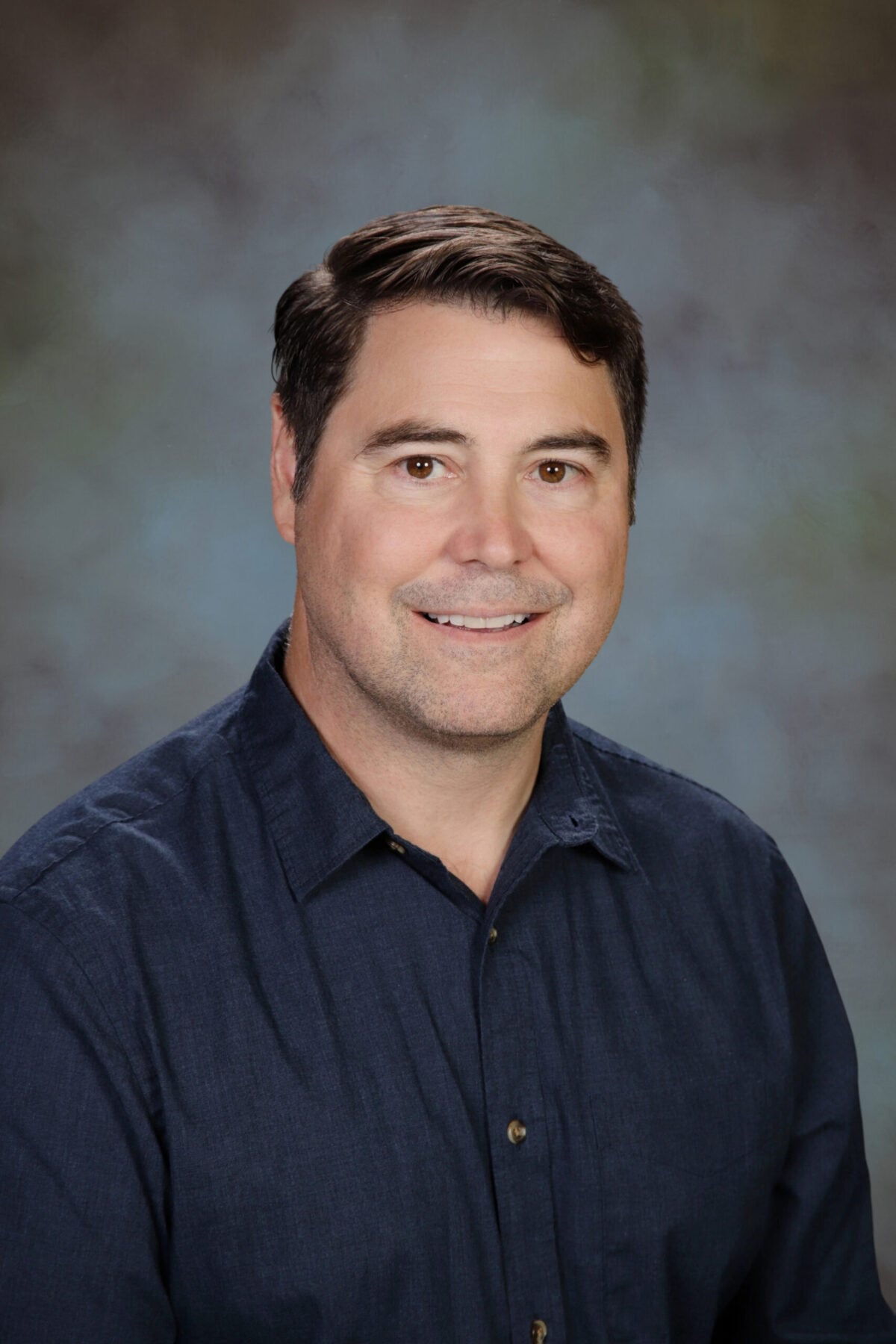
Juneau’s new Fire Chief starts his role today

Chief Hatley, photo courtesy of CBJ

NOTN- The City and Borough of Juneau has appointed Thomas Hatley as the new fire chief for Capital City Fire Rescue, his role officially begins today.

City officials said Hatley’s three decades of experience across multiple fire agencies in the Northwest made him a strong fit for Juneau. He has held a range of leadership positions during his career, including fire chief, deputy fire chief, assistant chief and fire marshal.

“Fire chief is always tricky because there are lots of people that you have to please, including the public.” Said Mayor Beth Weldon, “Trying to bring things under control is difficult in an ever-changing world, being at a fire scene is chaotic at best. I know that the firefighters are looking forward to a new chief, so hopefully Chief Hatley will fit the build and also try to revive some of our volunteers.”

Hatley said he is looking forward to joining Capital City Fire Rescue and building on the work of his predecessor.

“I am honored to join the City and Borough of Juneau and the dedicated professionals of Capital City Fire Rescue,” shared Chief Hatley. “After more than three decades in the fire service, I have learned that the strongest departments are built on relationships, trust, and pride in serving the community.”

He also thanked retiring Fire Chief Rich Etheridge.

As fire chief, Hatley will serve as the administrative leader of Capital City Fire Rescue, overseeing emergency response and preparedness, fire prevention and community risk reduction, strategic planning, workforce development, interagency relations and community engagement.