By: Corinne Smith, Alaska Beacon
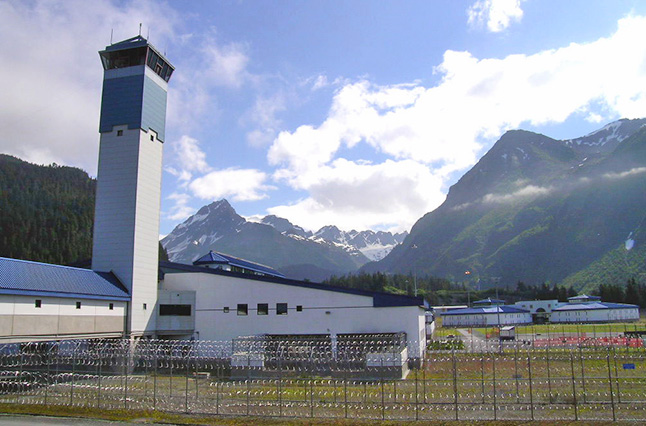
The Dunleavy administration has proposed a $523 million budget for the Alaska Department of Corrections for the next fiscal year, which House lawmakers with a finance subcommittee advanced without substantial changes last week.
It’s the largest corrections budget proposal to date, according to state data. It includes just over $514 million requested in state funding, $475.5 million of which is unrestricted general funds for the agency’s 13 state prisons and jails and estimated 2,127 employees. DOC officials expect an additional $9.3 million in federal funding for inmates held on federal charges.
The Department of Corrections has become one of the state’s most expensive departments in recent years. This year the Department of Health, which has requested $1.1 billion in unrestricted general funds, and the Department of Education and Early Development, which has requested $1.4 billion, would spend more. The Permanent Fund dividend could also be a bigger expense — if the state pays out a $1,000 dividend like last year, it would cost the state $660 million.
While the number of people in Alaska’s prisons and jails has remained relatively consistent, costs are soaring. Last year, DOC officials reported that state corrections booked nearly 26,000 people and just over 16,000 unique individuals, so roughly 9,000 people were repeat offenders. DOC also held nearly 450 people in involuntary commitments, which is for those who are deemed a danger to themself or others, or gravely disabled as a result of mental illness. The state cost for incarcerating an individual is an average of $223 per day.
Initially, corrections officials submitted a $500 million budget request, but later added an additional request for $20 million for staffing and inmate transportation, and $3.3 million for healthcare and medical staffing.
The proposed budget breaks down to roughly 60% for state prison institutions, lawmakers heard on Feb. 24. Roughly 20% is for health and rehabilitation, 10% for pretrial, probation and parole, 4% for administration, 3% for maintenance and operations and just 0.4% to administer the Board of Parole.
Costs to staffing Alaska’s prisons have ballooned in recent years, along with healthcare costs for an aging inmate population and increasing health needs, DOC officials told members of a House finance subcommittee for corrections.
“Staffing being the first, and then the second being our medical costs,” Jen Winkelman, corrections commissioner, told lawmakers. “The fees for medical in Alaska is through the roof, and every single individual that’s coming to us — that we don’t know we’re going to be getting — have significant medical issues.”
DOC has a 11.5% staff vacancy rate statewide, according to a spokesperson in February. DOC officials told lawmakers that recruitment and retention is an ongoing challenge, especially because prisons must be staffed 24/7.
DOC reports staffing and decade of ‘policy changes’ as major cost drivers
April Wilkerson, deputy commissioner for the department, told lawmakers in a presentation on Feb. 24 that DOC officials analyzed the budget over the last ten years, and saw a total increase of an estimated $182 million for operational costs in that time. She said roughly one third of cost increases since fiscal year 2016 were driven by employee contracts, salary and benefit increases.

“Collective bargaining agreements, salary adjustments and health insurance changes — that makes up over 30% of the growth of the general funds within the department’s budget, which is outside of the department’s control,” Wilkerson said.
Wilkerson said an estimated 40% of cost increases have been due to “policy changes” from the Legislature. She pointed to the repeal of Senate Bill 91 enacted in 2020, when lawmakers increased prison sentences for most felonies and misdemeanors, and increased penalties for violating conditions of release. She also pointed to the state’s increased contributions to employees’ retirement benefits in 2022.
Lawmakers asked DOC officials for policy recommendations to curb costs across the department. Rep. Donna Mears, D-Anchorage, also asked the commissioner to address the problem of the department spending over its allocated budget.
“Funds allocated to DOC last year included cuts that the department just said, ‘Nope, we can’t do that.’ I think on a larger basis, there needs to be more discussions about that,” Mears said. “There’s this tension between the executive branch and requests for the department to make cuts, and that’s not happening.”
DOC officials reported all 13 state prisons spending over budget for the fiscal year ending in June, resulting in the department requesting an additional $20 million from the legislature to cover personnel costs, plus an estimated $3 million to cover health care costs.
Winkelman said the department had to partially make up for legislative cuts in their budget last year. A department spokesperson confirmed the supplemental budget request makes up for a $13.8 million reduction made by lawmakers last year.
Winkelman told lawmakers the department has not been able to fill its vacancies, which has resulted in high overtime costs. She said DOC has had to manage a legislative directive to cut costs by closing a housing unit at Spring Creek Correctional Center in Seward. “We were tasked with closing a housing unit, and we did that, and it is not achieving the savings, and as a matter of fact, it’s bottlenecked some of our population management,” she said.
Winkelman also pointed to unexpected health care costs for inmates as a driver of the department’s increased budget need. “We just recently had an inmate leave us that was with us for a year, that cost us over a million dollars in medical. We didn’t plan for that. We didn’t know that she was going to have that much of a cost associated. So going back to your question, and not being able to achieve some of these,” she said, referring to state budget allocations. “Because we don’t know what’s going to come through the back door.”
Winkelman recommended the creation of a new task force to tackle the question of how to curtail and manage the corrections budget.
“We were going to need some sort of a task force with other agencies, with the legislature, with law enforcement,” Winkelman said. “Some sort of a group to take a look at the broader system to figure out which policy changes are going to make that difference in order for us to be able to stay within our means.”
Rep. Ky Holland, D-Anchorage, said he found the proposal concerning: “If a task force is needed, why aren’t all the folks that are doing these jobs coming together and doing the work of a task force? Why do we have to somehow create that and then fund it?”
Holland said it was difficult for him to see that lawmakers are required to pay increasing budgets for DOC because of legal staffing requirements and said he wished the state’s education system had the same safeguards. “I wish we could tell our teachers that they had a maximum class size of the number of students that they had in a classroom because we had a standards council that had the force of law,” he said.
Winkelman said DOC officials are trying to address the budget challenges. “We are constantly at the table trying to figure out how to solve this, if you will,” she said.
She then walked back the task force idea, and said hiring a consultant could be another option. “I think our recommendation is to maybe hire a consultant, hire an expert in this world, to kind of take all the pieces together,” she said.
Winkelman acknowledged Holland’s concerns about the state’s financial pressure with competing budget priorities, and said she understands the corrections budget is eating into funding for schools.
“Right now, above working for the Department of Corrections for 25 years and fighting this battle, I’m a mom with two kids in school, and that’s most important,” she said. “I’m fighting this battle every day of how expensive Corrections is, and I know it is taking from our school systems.”
House members with the finance subcommittee for corrections heard several weeks of presentations about the department’s budget and asked questions of DOC officials. Rep. Mike Prax, R-North Pole, introduced several amendments to the budget, proposing millions in cuts until the department could provide further explanation on how the items would be spent and fulfill the department’s goals. But the committee voted them down before advancing the budget proposal without changes.
The corrections budget now moves to the full House Finance Committee for further consideration.