NOTN- The University of Alaska Southeast says its textbook affordability program has saved students more than $1 million since it began in 2016.
According to national surveys and studies on the affordability of course materials, about 65% of college students did not buy their textbooks because they were too expensive and 77% of students delayed purchasing their textbooks due to high cost. Students who face food insecurity are often the most heavily impacted, having to make a choice between buying meals and purchasing textbooks.
The initiative, encourages faculty to use low-cost or zero-cost course materials in place of traditional commercial textbooks. According to the university, more than 200 faculty have offered 889 “Zero Textbook Cost” courses, saving students an average of $225,000 each semester.
“Offering affordable access to an excellent education is our #1 priority at UAS.” Chancellor Aparna Palmer said in a statement. “Thanks to the leadership of the Egan Library and the hard work of our faculty and staff, we help ensure that our students can learn more deeply, finish their degrees, and achieve their dreams.”
The effort is part of a national shift toward using open educational resources (OER), which are free, adaptable, and often more up-to-date than traditional textbooks.
According to UAS these open educational resources enable both students and faculty to benefit, because the materials can be adapted to fit the needs of today’s students, they also help strengthen student participation.
UAS began marking “Zero Textbook Cost” courses in 2022, allowing students to easily search for affordable options when registering for classes.
By the end of the spring 2025 semester, the university estimates more than 10,000 students have benefited from the program.
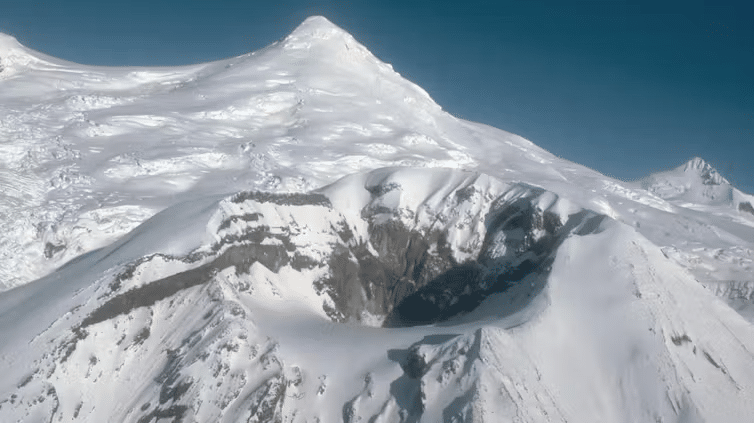
One of two main craters on Alaska’s Mount Spurr, shown in 1991. Earthquake activity suggested the volcano was close to erupting again in 2025. (Photo by R.G. McGimsey/Alaska Volcano Observatory/U.S. Geological Survey, CC BY)
Alaska’s volcano experts no longer expect an eruption anytime soon from Mount Spurr, the closest active volcano to Anchorage.
On Wednesday, the Alaska Volcano Observatory formally lowered the alert level for Mount Spurr from yellow to green after months of declining activity.
“Things are OK right now, and hopefully that continues in the future,” said David Fee, coordinating scientist for the University of Alaska Fairbanks Geophysical Institute, which operates the observatory alongside the U.S. Geological Survey.
While the land immediately around Spurr isn’t inhabited, ash emitted from the volcano has disrupted life in Southcentral Alaska before. In 1953 and 1992, Spurr eruptions dumped ash on Anchorage, disrupting air travel.
Starting in February 2024, scientists had observed large numbers of small earthquakes beneath the volcano, and ground near it was deforming, surging upward. Ice atop the volcano melted, and air samples taken above the volcano showed signs of magma moving beneath the surface.
Scientists had been monitoring Crater Peak, a site south of Mount Spurr’s summit, as the likely spot of an eruption.
In October 2024, they raised the volcano’s alert level, and by March of this year, the volcano observatory said an eruption was “likely.”
But soon after that estimate, the signs of an imminent eruption began to diminish. There were fewer earthquakes, and the ground stopped rising as quickly as it had been.
Earlier this summer, the volcano observatory issued a statement saying that the odds of an eruption had fallen, and Spurr continued to quiet, leading to Wednesday’s announcement.
“What we’re seeing right now is all … really consistent with magma that intruded (beneath the volcano) and then stopped intruding. But it’s still creating some signals such as increased gas emissions and kind of weak seismicity,” Fee said.
While Spurr erupted in 1953 and 1992, darkening the skies over Anchorage with ash, it has also previously signaled an eruption that never came to pass.
In 2004 and 2006, the volcano showed signs of unrest for months but never erupted. The most recent period of unrest seems to resemble those two false starts.
Even though the volcano didn’t erupt, it has the potential to offer a scientific bonanza. AVO staff installed a network of seismic, infrasound and ground-measuring devices around Spurr, making it the most-monitored volcano in the state, according to the number of instruments listed on the AVO’s website.
“As we’re starting to look back now, at the period of unrest, it’s often just as interesting or scientifically valuable to understand why volcanoes don’t erupt, because they don’t, over half the time, approximately. Are there maybe some signals or something in our data that we can kind of tease out to help us understand why it didn’t erupt?” Fee said, looking back at what was learned.
“I think understanding why that occurred will be really important,” he said.
AVO and the Alaska Division of Homeland Security and Emergency Management also spent months educating Southcentral Alaskans about the possibility of ashfall, reminding them that they live in a volcanically active area.
That work will live on, too, Fee said, and people will be better informed the next time an eruption looks likely.
“Because they don’t happen that frequently in Cook Inlet, it was kind of a good reminder for people to be aware, to understand the hazards that are out there,” he said.
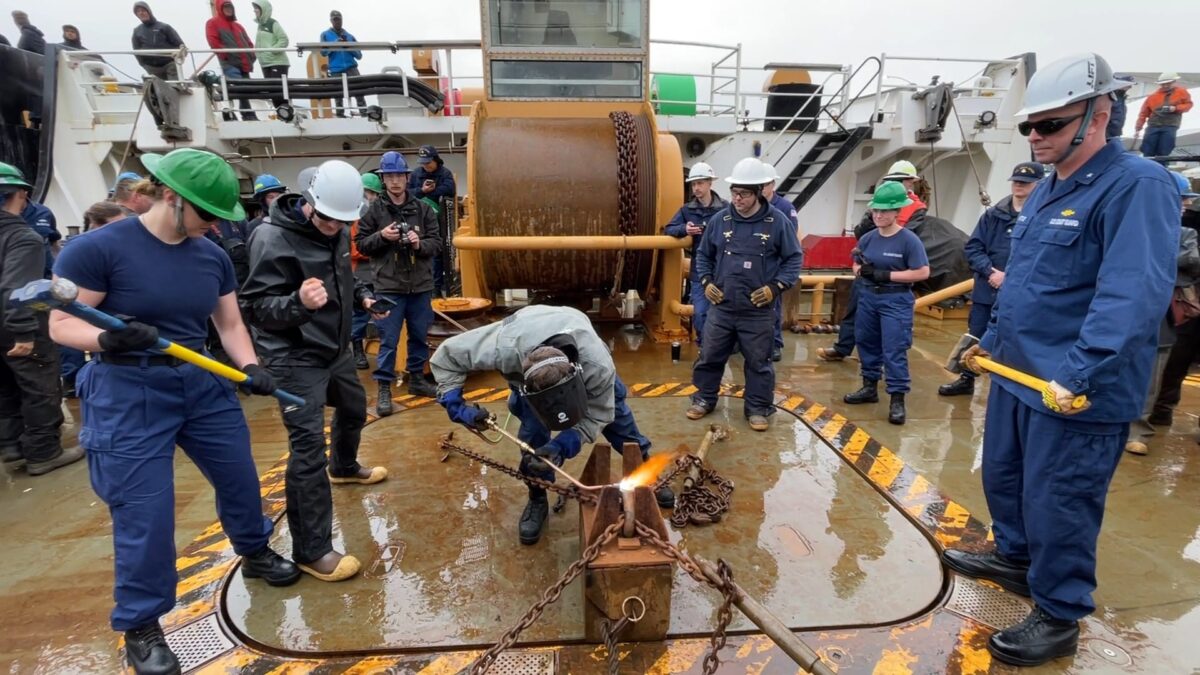
Rear Admiral Bob Little (right) and Ensign Camden Martin prepare to take part in the heat-and-beat competition on Wednesday in Juneau. (Photos/Video by Greg Knight)
Rear Admiral Bob Little (right) and Ensign Camden Martin prepare to take part in the heat-and-beat competition on Wednesday, August 20 in Juneau. (Photos/Videos by Greg Knight/NOTN)
By Greg Knight, News of the North
The 2025 U.S. Coast Guard Buoy Tender Round-Up Olympics was held in Juneau Wednesday, August 20 at the Coast Guard Station in downtown.
The BTR Olympics is an annual event that gives participants an opportunity to receive specialized training, discuss ways of enhancing effectiveness, and test the seamanship skills that enable crews to excel at Aids to Navigation missions in the Arctic.
Events included the chain pull, line toss, boom spot, tug-o-war, and heat-and-beat events.
Crew members from the vessels Kukui, Cypress, Fir, Aspen, Anthony Petite, and Elderberry took part.
Lieutenant Megan Grimes is the Coast Guard’s spokesperson for the event in Juneau. Aboard the Kukui, she told News of the North about the value events like the Olympics have in day-to-day operations in Alaska.
“The Olympics are very important because it’s essentially a skills competition,” Lt. Grimes said. “These are skills that the units employ underway during normal operations, and it’s a way to showcase the that proficiency, and with some friendly competition, rile each other up, see who does it best, and also learn from each other and learn from each other’s best practices.”
Boatswain’s Mate Second Class Shane Wood of the Cutter Cypress said unit cohesion among Alaskan units grows thanks to events like this one.
“The big thing that we do here is the networking, everybody comes together in one centralized area, which is uncommon,” BM2 Wood said. “So, unit to unit, we can help each other, as well as [help] within our own unit. We learn how to work together, through these events and the trainings we attend.”
The heat-and-beat competition, which involves heating a shackle pin with a torch until it’s glowing orange, and then using sledgehammers to drive the pin into place and secure a new chain link for a buoy, featured Rear Admiral Bob Little and Ensign Camden Martin on a team.
BM2 Wood said is was great to see a senior officer like Admiral Little, who is commander of the Coast Guard Arctic District, take part in the event.
“You get to see their appreciation for what we do, and the lower ranks, they can see that they they actually care about the job and what we do,” Wood added. “It’s super cool to see them out here doing heat and beats and doing the work.”
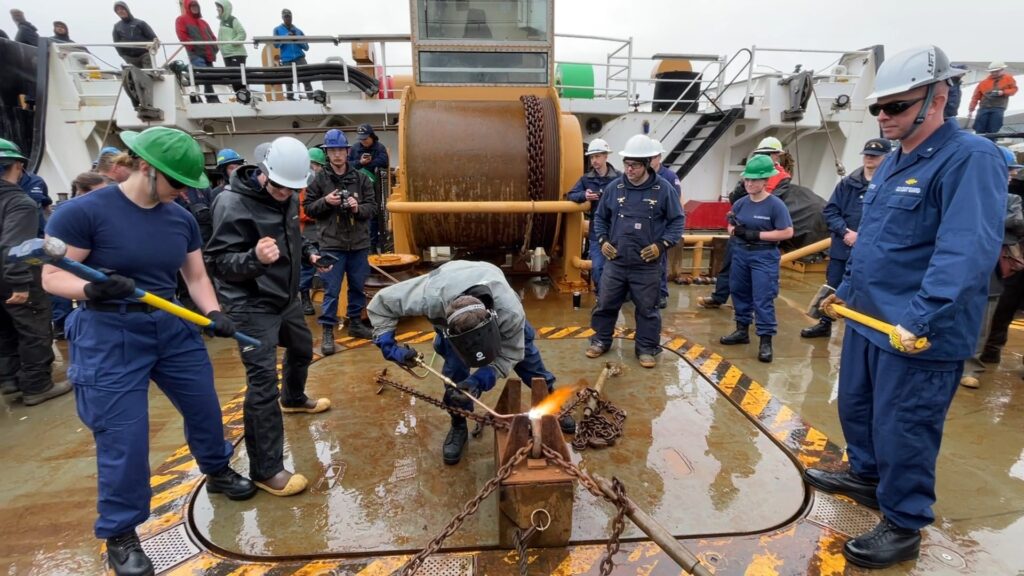
Rear Admiral Bob Little (right) and Ensign Camden Martin take part in the heat-and-beat competition on Wednesday, August 20 in Juneau.
Crews aboard Coast Guard buoy tenders in Alaska service more than 1,300 navigational aids along 33,000 miles of coastline, as well as conduct search and rescue, environmental protection and law enforcement missions.
NOTN- The Glory Hall shelter says it will stop offering dayroom services to non-residents later this month, citing worsening safety conditions around the facility.
The Glory Hall, which offers food, shelter and daytime support at its Teal Street location, plans to end its day services on Aug. 26.
Going forward, only individuals staying overnight at the shelter will have access to the dayroom. Others will be allowed inside only when meeting with a case manager, clinician, or outreach worker.
“The Teal Street area is probably the most major area of JPD patrol right now. There’s a lot of extra patrol that goes on over there.” Said Deputy City Manager Robert Barr.
Barr said the city will continue discussions with shelter staff, police and service providers in the coming weeks as the shift takes effect.
The Glory Hall has served Juneau’s unhoused community for decades. Its decision to adjust services comes amid continued assaults, criminal activity, and “general chaos” near the Teal Street site, including sales of illegal drugs and stolen goods.
Despite more than a year of meetings with residents and city officials, the board says the environment is no longer tenable.
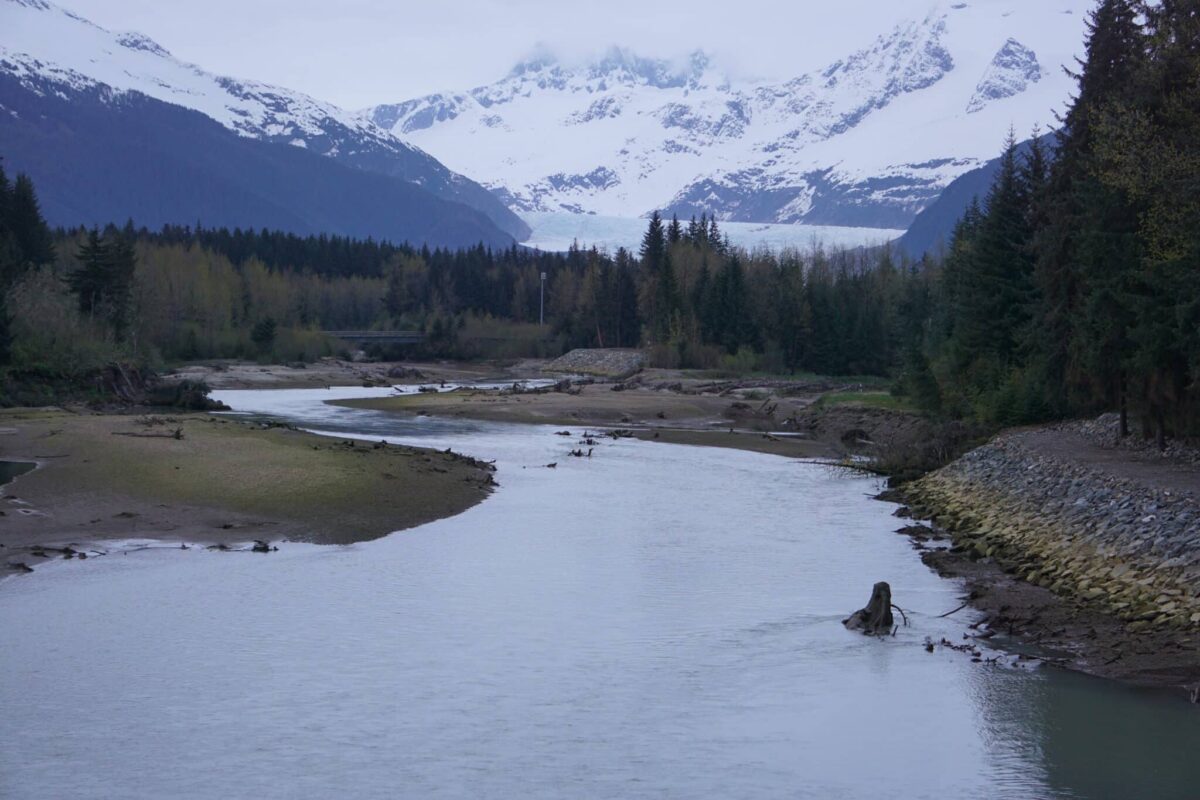
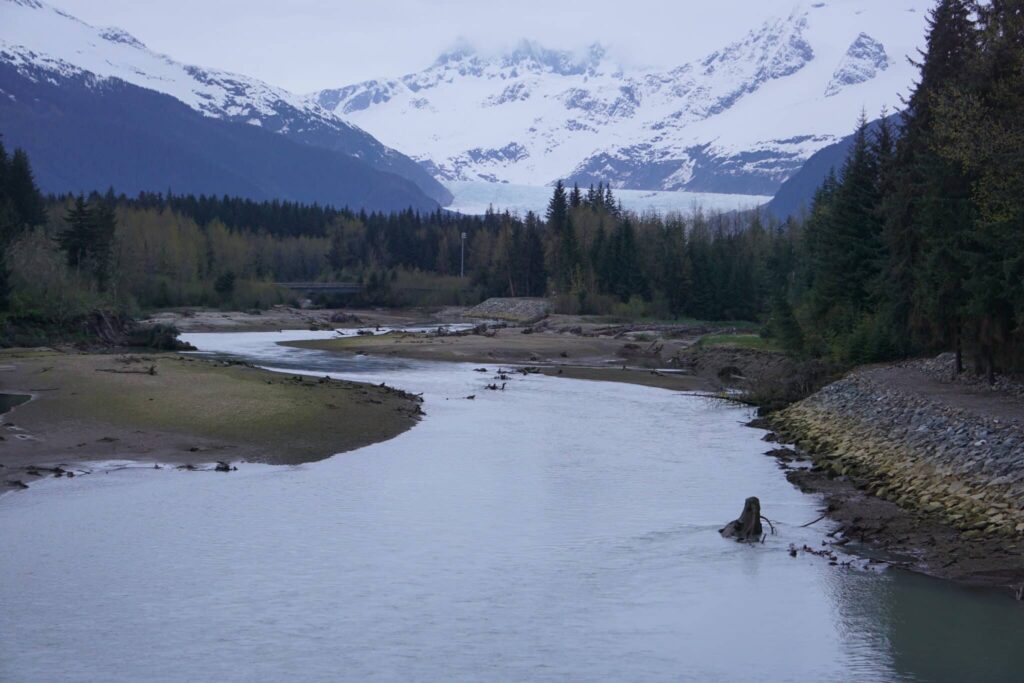
Mendenhall Glacier, photo courtesy of Alaska Beacon
NOTN- Juneau officials reflected on the city’s response to this month’s glacial outburst flood, saying while the emergency actions were effective more work is needed to strengthen protections.
Deputy City Manager Robert Barr said “We’ve been getting a fair amount of expressions of concern that we’re early in congratulating the people that worked on it, expressing our appreciation and thanks, and we have, because it was a great response to a tragic event. At the same time, I think we are all capable of holding two truths at once, we have work to do. We have a long road ahead of us, the barrier project was far from perfect.”
Following a damage assessment of the city, it was revealed that 16 houses experienced minor water damage while six homes suffered major impacts, primarily on View Drive.
Juneau Mayor Beth Weldon said damage repairs could cost up to a million dollars. “We’re not standing around patting ourselves on the back. We’re just thankful that the houses didn’t get flooded to the number that happened last year, and we are continuing to look for not just another phase of our short term, but also our long term solution.”
The U.S. Army Corps of Engineers says the temporary flood barriers helped protect Juneau neighborhoods during last week’s flood.
The Corps shipped more than 37,000 feet of barrier wall, 112,000 sandbags, and other materials from Illinois to Juneau, where they were placed in phases along 2.5 miles of the river.
Floodwaters peaked at 16.6 ft., the highest on record.
“The HESCO worked.” Said Mayor Weldon, “and yes, there’s water in people’s yards on the other side, but the difference in height is pretty tremendous.”
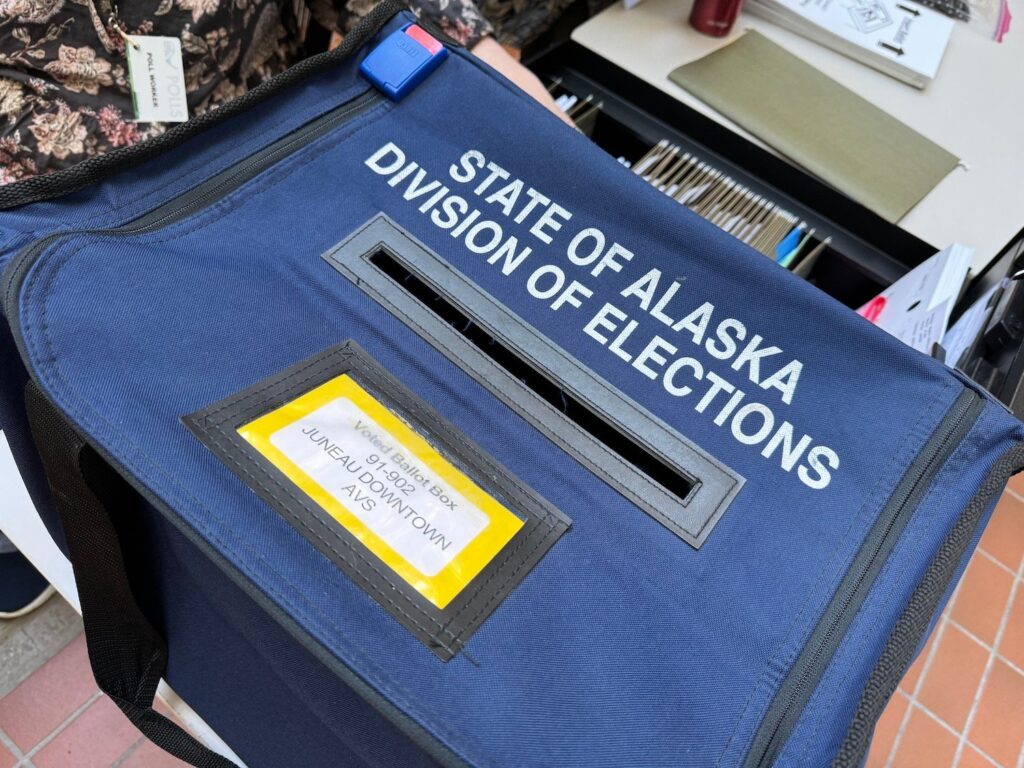
An early voting station is set up in the atrium of the State Office Building in Juneau, Alaska on Monday, Aug. 5, 2024, the first day of early voting for the 2024 Alaska primary election. (Photo by James Brooks/Alaska Beacon)
An early voting station is set up in the atrium of the State Office Building in Juneau, Alaska on Monday, Aug. 5, 2024, the first day of early voting for the 2024 Alaska primary election. (Photo by James Brooks/Alaska Beacon)
NOTN- Juneau’s proposal to adopt ranked choice voting in municipal elections is headed for another public hearing in November.
Deputy City Manager Robert Barr said the Assembly held its first hearing on the measure last night and advanced it to the Nov. 3 meeting.
“We had our first public hearing on it last night.” Said Barr, “an information release went out yesterday as well to help people understand how it would work in local elections.”
Under the proposal, voters could rank candidates in single-seat races, like for mayor or assembly. If no one wins a majority outright, the lowest-ranked candidates are eliminated and ballots are redistributed until one candidate secures over 50 percent.
The change would not apply to multimember races, like the school board, which would stay under the current system.
Juneau Mayor Beth Weldon said testimony so far has been split for and against the proposal.
“We had four people, two for it and two against it.” Said Weldon,”We’re keeping that on our radar.”
The city is weighing potential benefits and considerations, saying ranked- choice voting could add more consistency for voters and may increase the number of people willing to run for office, however they also note transitioning to a new election process could be difficult on voters and election staff, and counting could be more complex than the current voting system.
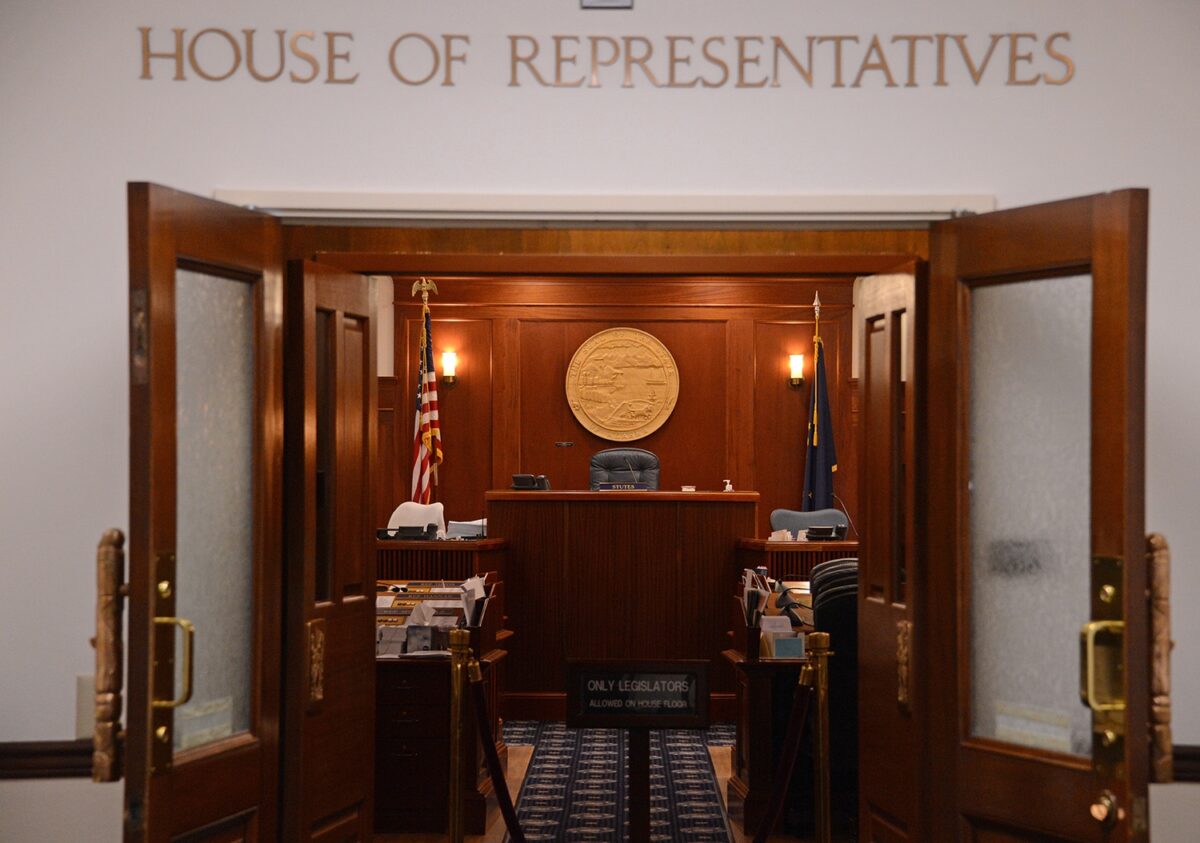
The House chambers are seen on Friday, May 13, 2022 at the Alaska State Capitol in Juneau, Alaska. (Photo by James Brooks/Alaska Beacon)
By: Corinne Smith, Alaska Beacon
The House chambers are seen on Friday, May 13, 2022 at the Alaska State Capitol in Juneau, Alaska. (Photo by James Brooks/Alaska Beacon)
The Alaska State Legislature is planning a brief session without taking any action on Tuesday, and legislative leaders say they’ve already completed their intended work for the special session, which ends on Aug. 31.
Gov. Mike Dunleavy called the 30-day session, which began on Aug. 2, for legislators to address his education policy priorities and to create a new Alaska Department of Agriculture. The Legislature convened — one senator flying back from U.S. National Guard duty in Poland — and within hours voted to override two of the governor’s vetoes. Lawmakers then adjourned until Tuesday.
Legislators voted to leave the session open and not officially close out the special session to prevent Dunleavy from calling them into another one.
On Tuesday, just “a handful” of legislators are expected to be present for what’s known as a “technical session,” said House Speaker Rep. Bryce Edgmon, I-Dillingham, reached by phone Monday in his district.
Edgmon said he was planning to fly back to Juneau to facilitate proceedings in the House on Tuesday, but said it will be brief.
He said the Legislature’s votes to override two of the governor’s vetoes, including restoring $51 million for K-12 schools, was a success – and their only goal for the special session.
“But the specter of the governor calling us right back in seems to be very prominent,” Edgmon said. “And we had to do what we had to do in terms of allowing members to go back home, go back to their districts, not being Juneau, drawing per diem, costing the state money — with the stated intention, of course, of looking at the governor’s bills, continuing to consider the governor’s bills and the subject matter next session, as we started to do last session.”
The governor introduced three bills on Aug. 2, related to education policy, and Edgmon said they have been referred to related committees.
Edgmon said he’s had no communication from the governor’s office since the veto override votes.
“I wish we had a better relationship with the governor, to where we could plan things out, work jointly in terms of any outcomes for a special session. The governor is acting unilaterally, which, of course, is his prerogative, should he choose. But that does not bode well in terms of any kind of a positive result for special session,” he said.
Jeff Turner, the governor’s communications director, said by email Monday, “lawmakers should not need an incentive to improve public education policy,” and that it was the Legislature’s decision to not take up the governor’s bills during this special session.
Turner pointed to the governor’s comments on an Anchorage-based commercial radio show on Aug. 14, where Dunleavy criticized the Legislature’s veto override restoring school funding, and said additional funding is “not going to change the performance outcomes.”
The House and Senate are scheduled to gavel in at 10 a.m. on Tuesday.
A new joint legislative education funding task force is scheduled to hold its first meeting on Aug 25, where its six members are expected to examine how the state funds schools, as well as Dunleavy’s educational policy items.
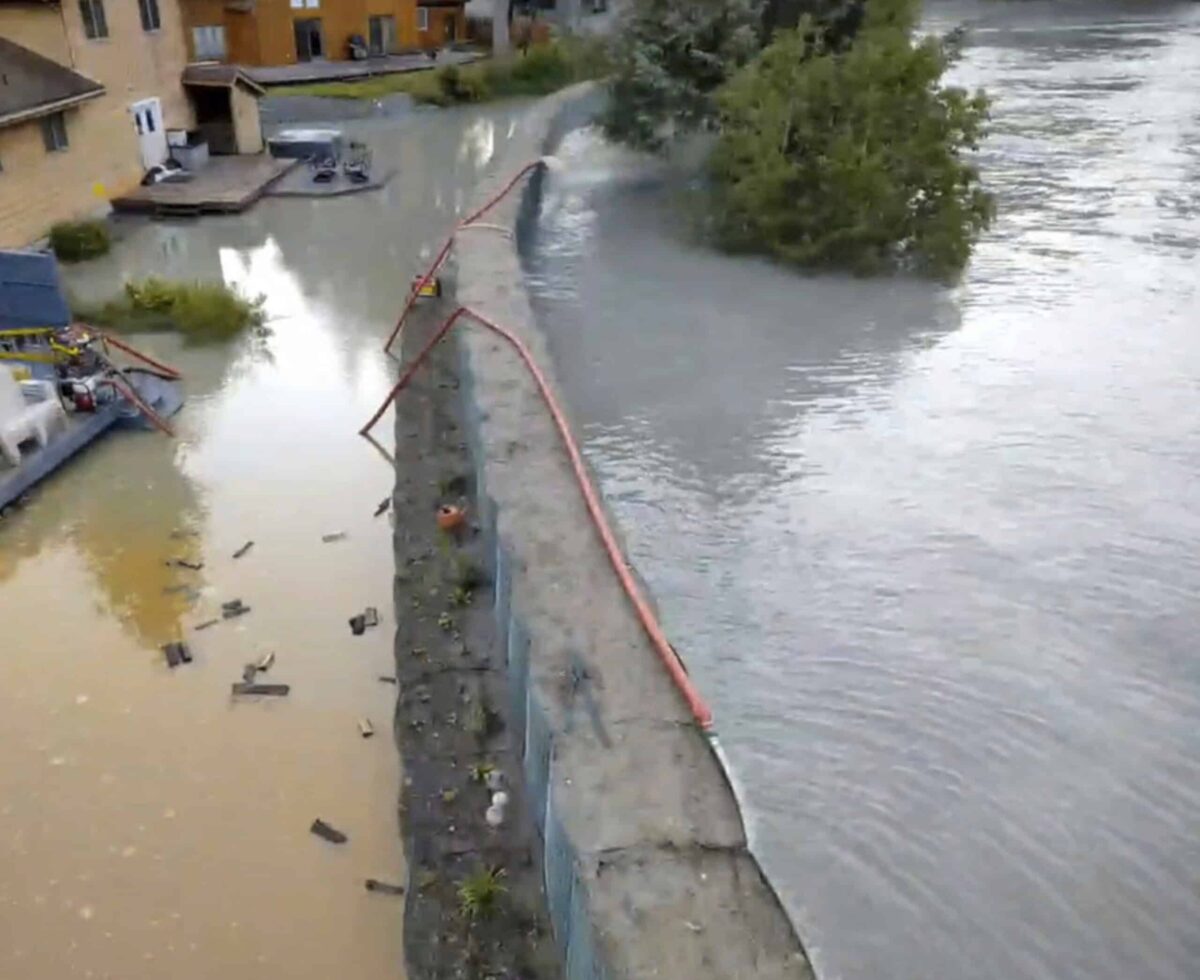
This drone image provided by the City and Borough of Juneau shows flooding from a release of water and snowmelt at Mendenhall Glacier covered some roads and threatened homes along the Mendenhall River in Juneau, Alaska on Wednesday, Aug. 13, 2025. (City and Borough of Juneau via AP)
This drone image provided by the City and Borough of Juneau shows flooding from a release of water and snowmelt at Mendenhall Glacier covered some roads and threatened homes along the Mendenhall River in Juneau, Alaska on Wednesday, Aug. 13, 2025. (City and Borough of Juneau via AP)
Juneau Mayor Beth Weldon provided more details following a damage assessment of the city’s recent glacier lake outburst flood, revealing that 16 houses experienced minor water damage while six homes suffered major impacts, primarily on View Drive.
“16 houses were affected, and what affected means is they had water in their garage that they could just vacuum up, or water in their crawl space, but there was no damage to insulation or sheet rock or anything like that.” Said Mayor Weldon, “25 minor, so that means water in their house or their garage affected something besides just being able to shop Vac, but did not go up past outlets in the wall.”
The U.S. Army Corps of Engineers says temporary flood barriers helped protect Juneau neighborhoods during last week’s flood.
The Corps shipped more than 37,000 feet of barrier wall, 112,000 sandbags, and other materials from Illinois to Juneau, where they were placed in phases along 2.5 miles of the river.
Floodwaters peaked at 16.6 ft., the highest on record.
Of the 751 homes above the 17-foot flood line, most remained unaffected by recent flooding. The city’s HESCO barriers largely performed as intended, though some areas experienced water seepage and tree damage.
Mayor Weldon says there were about 6 homes with major damage. “of those six major, five are on View Drive. So we know that View Drive is still a dilemma for us.” she also stated about 23 homes were unverified.
NOTN- The Juneau Assembly proposed updates to the city’s disorderly conduct laws, tightening rules around blocking sidewalks, public disturbances, and behavior in public spaces. However, it is expected that this action will be tabled at tonight’s meeting, possibly indefinitely, after community backlash.
“We’ve heard a lot from the public, not positive things.” Said Juneau Mayor Beth Weldon.
The focus of the new update was to make it easier for the Juneau Police Department to arrest individuals for disruptive actions in public areas.
The ordinance adds language allowing police to intervene when people stand, walk, or camp in places like sidewalks, stairwells, parking lots, and garages.
Organizations like Juneau for Democracy, argued the ordinance would unfairly target people experiencing homelessness and could also infringe on First Amendment rights, since the language does not specifically exempt lawful protests or public gatherings.
The systemic racism Review Committee also had a real problem with this.” Said Mayor Weldon, “as well as some of the members of the assembly, so we decided that that wasn’t right for now.”
Deputy City Manager Robert Barr said the changes would have brought city code in line with state law, removing steps that currently delay enforcement, which lie within officers arresting individuals for trespassing rather than disorderly conduct.
“Our first course of action whenever we’re engaged in that sort of activity with folks who are unhoused, is to try and connect to resources and seek voluntary compliance.” Said Barr, “but sometimes it’s not possible.”
Ukrainian forces are increasing the intensity of long-range drone strikes deep into Russia, according to data released by Moscow, ahead of Friday's planned meeting between Presidents Donald Trump and Vladimir Putin in Alaska.
Ukrainian forces are increasing the intensity of long-range drone strikes deep into Russia, according to data released by Moscow, ahead of Friday’s planned meeting between Presidents Donald Trump and Vladimir Putin in Alaska.
Alaska (AP) — President Donald Trump failed to secure an agreement from Vladimir Putin on Friday to end Russia’s war in Ukraine, falling short in his most significant move yet to stop the bloodshed, even after rolling out the red carpet for the man who started it.
“There’s no deal until there’s a deal,” the U.S. president said, after Putin claimed they had hammered out an “understanding” on Ukraine and warned Europe not to “torpedo the nascent progress.” Trump said he would call Ukrainian President Volodymyr Zelenskyy and European leaders to brief them on the talks.
Trump, who for years has balked at American support for Ukraine and expressed admiration for Putin, had pledged confidently to bring about an end to the war on his first day back in the White House. Seven months later, after berating Zelenskyy in the Oval Office and stanching the flow of some U.S. military assistance to Kyiv, Trump could not bring Putin even to pause the fighting, as his forces make gains on the battlefield.
The U.S. president had offered Putin both a carrot and a stick, issuing threats of punishing economic sanctions on Russia while also extending a warm welcome at Joint Base Elmendorf-Richardson in Anchorage, but he appeared to walk away without any concrete progress on ending the war in Ukraine, now in its fourth year.
Instead, he handed Putin long-sought recognition on the international stage, after years of Western efforts to make him a pariah over the war and his crackdown on dissent, and forestalled the threat of additional U.S. sanctions.
In a sign that the conversations did not yield Trump’s preferred result, the two leaders ended what was supposed to be a joint news conference without taking questions from reporters.
During a subsequent interview with Fox News Channel before leaving Alaska, Trump insisted that the onus going forward might be somehow on Zelenskyy “to get it done,” but said there would also be some involvement from European nations. That was notable since Zelenskyy was excluded from Trump and Putin’s meeting.
The U.S. president had wanted to show off his deal-making skills, while Putin wanted to negotiate a deal that would cement Russia’s gains, block Kyiv’s bid to join the NATO military alliance and eventually pull Ukraine back into Moscow’s orbit.
“We had an extremely productive meeting, and many points were agreed to,” Trump said while standing next to Putin. “And there are just a very few that are left. Some are not that significant. One is probably the most significant, but we have a very good chance of getting there.”
He continued: “We didn’t get there.”
Putin says Trump ‘shows understanding’ that Russia has its own interests
For Putin, just being on U.S. soil for the first time in more than a decade was validation after his ostracization following his invasion of Ukraine.
His meeting with Trump may stall the economic sanctions that the U.S. president had promised unless Moscow worked harder to bring the fighting to a close. It also may simply lead to more meetings, giving his forces more time to make progress on the battlefield.
Putin said Russia and the United States should “turn the page and go back to cooperation.”
He praised Trump as someone who “has a clear idea of what he wants to achieve and sincerely cares about the prosperity of his country, and at the same time shows understanding that Russia has its own national interests.”
“I expect that today’s agreements will become a reference point not only for solving the Ukrainian problem, but will also mark the beginning of the restoration of businesslike, pragmatic relations between Russia and the U.S.,” Putin said.
Despite not reaching any major breakthrough, Trump ended his remarks by thanking Putin and saying, “we’ll speak to you very soon and probably see you again very soon.”
When Putin smiled and offered, “next time in Moscow,” Trump said “that’s an interesting one” and said he might face criticism but “I could see it possibly happening.”
During the interview with Fox News, Trump bragged that Putin echoed many of the U.S. president’s long-standing grievances, including about the 2020 election. This suggests that Putin, a former KGB officer, may have left Trump with the impression that he’d notched a big win even as he left empty handed.
When Trump and Putin arrived in Alaska, they had greeted each other with a warm handshake, chatting almost like old friends, and gripped hands for an extended period on a red carpet rolled out at the military base. As they chatted, Putin grinned and pointed skyward, where B-2s and F-22s — military aircraft designed to oppose Russia during the Cold War — flew overhead. The two then shared the U.S. presidential limo for a short ride to their meeting site, with Putin offering a broad smile as they rolled past the cameras.
It was the kind of reception typically reserved for close U.S. allies and belied the bloodshed and suffering in the war Putin started in Ukraine. Although not altogether surprising considering their longtime friendly relationship, such outward friendliness likely raised concerns from Zelenskyy and European leaders, who fear that Trump is primarily focusing on furthering U.S. interests and not pressing hard enough for Ukraine’s.
Not a one-on-one meeting
White House press secretary Karoline Leavitt said shortly before Air Force One touched down that the previously planned one-on-one meeting between Trump and Putin would be a three-on-three discussion including Secretary of State Marco Rubio and special envoy Steve Witkoff. Putin was joined by Foreign Minister Sergey Lavrov and foreign affairs adviser Yuri Ushakov.
The change seemed to indicate that the White House was taking a more guarded approach than it did during a 2018 meeting in Helsinki, where Trump and Putin met privately with their interpreters and Trump then shocked the world by siding with the Russian leader over U.S. intelligence officials on whether Russia meddled in the 2016 campaign.
Zelenskyy’s exclusion was also a heavy blow to the West’s policy of “nothing about Ukraine without Ukraine.”
War still raging
Russia and Ukraine remain far apart in their demands for peace. Putin has long resisted any temporary ceasefire, linking it to a halt in Western arms supplies and a freeze on Ukraine’s mobilization efforts, which are conditions rejected by Kyiv and its Western allies.
The meeting comes as the war has caused heavy losses on both sides and drained resources. Ukraine has held on far longer than some initially expected since the February 2022 invasion, but it is straining to hold off Russia’s much larger army, grappling with bombardments of its cities and fighting for every inch on the over 600-mile (1,000-kilometer) front line.
Alaska is separated from Russia at its closest point by just 3 miles (less than 5 kilometers) and the international date line.
Joint Base Elmendorf-Richardson was crucial to countering the Soviet Union during the Cold War. It continues to play a role today, as planes from the base still intercept Russian aircraft that regularly fly into U.S. airspace.