Categories
Featured Juneau News juneau Juneau Local Juneau Local Ketchikan Local News Feeds Sitka Local

Tough choices ahead on federal buyout for flood‑prone View Drive

NOTN- Juneau officials are weighing whether to move forward with a federal buyout program for homes on flood‑prone View Drive, after most residents said they can’t afford the required local cost share.

The Natural Resources Conservation Service has identified View Drive as a candidate for its Emergency Watershed Protection buyout program. A preliminary estimate puts the total project cost at about $25 million.

Under the program, the federal government would cover 75% of eligible costs. The remaining 25% must come from non‑federal sources, such as the city, homeowners or other partners. Juneau asked NRCS to waive that local share, but the request was denied.

“After the assembly had some additional discussion at the Finance Committee meeting, they directed staff to to do an informal poll, so it was non-binding, just to get a sense from the residents who live on that road, if they would be willing and interested to participate in this program, if they had to pay the 25% non federal cost share, or if they would not be interested in participating in the program.” Said Director of Engineering Denise Koch.

The city conducted that informal poll of 18 properties on View Drive. 14 responded.

Koch said most homeowners indicated they would not participate if they had to pay the full 25% themselves. Only two said they were interested.

“Most of the respondents said that they would not be interested in participating under those circumstances. There was one property owner that I had listed as unclear, they selected yes and no, and they indicated that they would need more information in order to make an informed decision.” Koch said, “Of the two yeses, one is a property that has been subject to severe and repetitive flooding, the other is a property that is on the high side and has not flooded.”

Because the two interested homes are far apart, Koch said it’s likely NRCS would only approve a buyout for the repeatedly flooded property. That would create an unusual, one‑house project in a program that typically buys out a group of homes.

“A major theme was real disappointment that CBJ would require individual property owners to pay a 25% cost share.” Said Koch, summarizing several responses from the informal ballot and in person conversations, “Some people said that they didn’t have the ability to pay for that 25% cost share. Or if they had that amount of money, they might use it in other ways to protect their homes versus participating in a buyout program.”

On top of the 25% share, the city would also face tens of thousands of dollars per property in non‑reimbursable project management costs, including permitting and technical work. Kocher said the city is already stretched thin and facing a tight federal timeline; participating homeowners would need to be out of their homes before the 2026 glacial outburst flood season.

“What we’re looking for from a staff perspective is to understand from the Assembly, if there’s additional information that that you need in order to help make a decision as to whether CBJ should participate in this program or not. We do have this, essentially, time is of the essence problem again, if we’re going to proceed with this project, we have to get people out of their homes before August of 2026, and that’s really not that that far away.” Koch said.

Assembly members said View Drive residents have found the program details “incredibly confusing,” with multiple meetings, memos, and evolving information about eligibility and costs.

“One of the frustrating things I think about this project is there probably is a solution out there, you could bring partners together, you know, city homeowners, our community, the state nonprofits, there are lots of folks who may want to see this come to fruition, but we don’t have time.” Said Assembly member Christine Woll.

Kocher acknowledged that city staff are “learning as we go” while simultaneously working on other flood mitigation and long‑term enduring solution efforts, including the now‑uncertain lake tap alternative that, if built, was expected to protect all homes along View Drive.

For now, the Assembly has directed staff to hold another neighborhood meeting with View Drive residents, along with a small number of Assembly members. The goal is to explain the program more clearly, answer questions and find out whether there’s enough interest to justify moving ahead with the buyout option at all.

Categories
Featured Juneau News juneau Juneau Local Juneau Local Ketchikan Local News Feeds Sitka Local

Alaska House passes nearly $500M budget deficit bill, amid split support for Dunleavy spending

By: Corinne Smith, Alaska Beacon

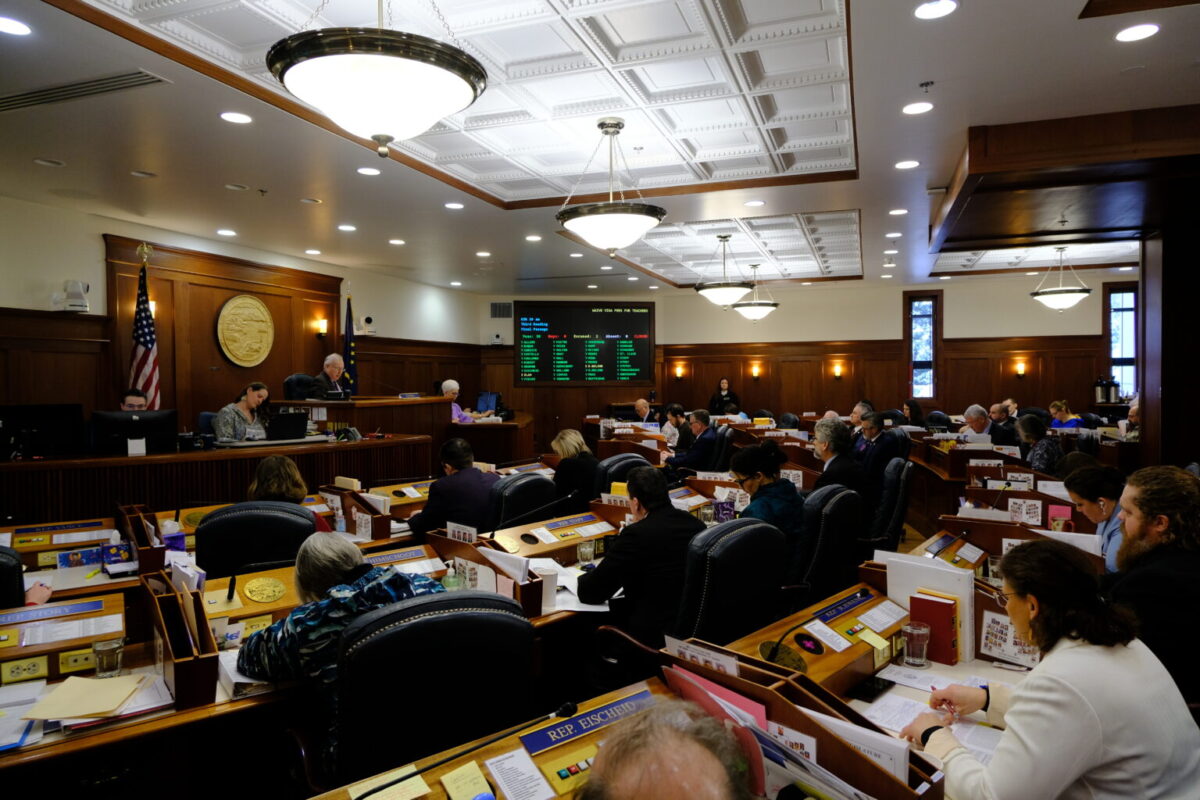
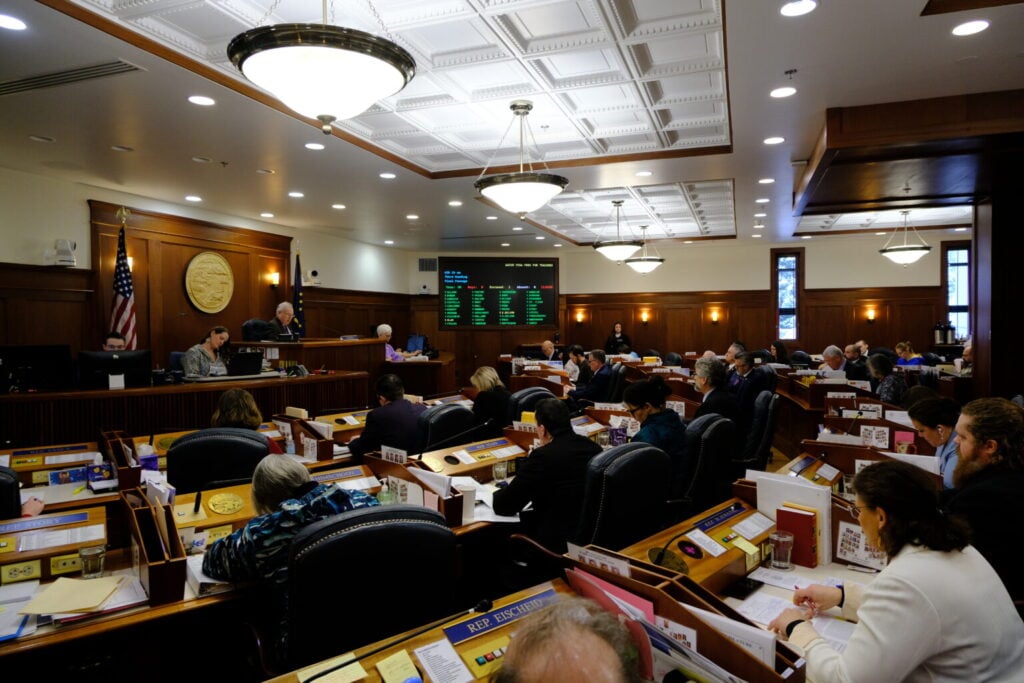
Members of the Alaska House of Representatives convene on the first day of the second session of the 34th Alaska State Legislature on Jan. 20, 2026 (Photo by Corinne Smith/Alaska Beacon)

The Alaska House of Representatives advanced a nearly $500 million supplemental budget bill to address the state’s budget deficit — one of the largest budget shortfalls to date — amid debate and scrutiny from Republicans who opposed drawing from a state savings account to pay for it, leaving the bill unfunded for now. 

Lawmakers passed House Bill 289, known as the supplemental budget, by a 24 to 16 vote on Monday, which is largely a routine process to address budget shortfalls and fund state government services and programs through the fiscal year that ends on June 30.

Top line items include an additional $40 million for disaster relief, following the devastation of the remnants of Typhoon Halong on Western Alaska; $55 million for last year’s million-acre wildfire season in the Interior of Alaska; $70 million in transportation funding to unlock $630 million in federal matching funds; $130 million for the Higher Education Investment Fund; $20 million for the Alaska Department of Corrections; and millions for public assistance including Medicaid, the Supplemental Nutrition Assistance Program, housing vouchers and senior benefits.  

But members of the Republican-led House Minority caucus raised concerns and frustration at the “fast tracked” budget bill, as well as expansion of spending and high costs for this year. While some members said a few items may be mandatory like funding disaster relief efforts and transportation, other spending items need further vetting and review. 

Voicing opposition, Republican members voted against immediately funding the roughly $490 million budget bill through the state’s principal savings account, the Constitutional Budget Reserve – which failed by a 24 to 16 vote on Monday. 

Unlocking the savings requires three quarters of the 40-person House, or 30 votes. Amid higher than expected state costs, and declining oil prices and state revenues, the Legislature must draw from the savings account to fund the state government. 

The budget bill is expected to advance to the Senate for further debate and possible amendments. But on Monday, Rep. Mia Costello, R-Anchorage, a member of the minority caucus, requested a re-vote, expected on Wednesday, which may change the final vote tally but is not expected to delay the bill. 

Historically, members of the minority have withheld support for the CBR vote until after the Senate approves the bill to maintain negotiating leverage. 

Rep. DeLena Johnson, R-Palmer who serves as the House Minority Leader, raised objections to what she called a rushed process in the House. 

“A rush through the budget without adequate scrutiny, in my opinion, without transparency, that’s not efficiency, that’s just courting failure, that’s just a rush to failure,” Johnson said. “And history has shown that rushed budgets often lead to unintended consequences.”  

Members of the multipartisan House Majority caucus called for lawmakers to support the budget bill, as requested by Dunleavy, and pay the state’s bills now.

Rep. Andy Josephson, D-Anchorage speaks on the supplemental budget bill on the House floor on Feb. 24, 2026. (Photo by Corinne Smith/Alaska Beacon)

“These obligations must be paid,” said Rep. Andy Josephson, D-Anchorage, who chairs the House Finance Committee, speaking on the House floor on Monday. “There’s nothing unusual. The size is unusual, but the fact that they were requested and filed is not unusual. They are obligations of the state. They are effectively binding contracts that must be paid. And the question is, when.”

Dunleavy first introduced the supplemental budget in December, and requested additional items up to last week, including $35 million more for disaster relief if the state fails a federal appeal and is denied a request for the Federal Emergency Management Agency to fund 90% of costs for the first three months of the typhoon disaster in October.  

Some items, like the $70 million federal transportation match, replace funds that Dunleavy vetoed last year — to the alarm of some lawmakers, union and construction industry groups because the money unlocks hundreds of millions of federal dollars. Lawmakers say it is time-sensitive to fund it in order to support the summer construction season. 

“I would say these are actually precise invoices, not a blank check,” said Rep. Chuck Kopp, D-Anchorage. “They’re ones that were already on the books, and we’ve already taken the responsibility to pay.”

Lawmakers also allocated nearly $130 million to repay the Higher Education Investment Fund, which in part funds student scholarships, in order to cover state expenses last year. 

Some Republicans questioned departments spending over what the Legislature appropriated last year, particularly the Alaska Department of Corrections, calling for more thorough oversight and transparency.

“We have departments who have come with us, who actually spent like drunken sailors last year,” said Rep. Jamie Allard, R-Eagle River. “We need to make sure that they’re reined in.”

Other lawmakers pushed back against critics for holding up the budget bill process.

“I feel like I’m in the Twilight Zone,” said Rep. Andrew Gray, D-Anchorage, on the House floor on Monday, in response to Republicans’ criticisms of Dunleavy’s budget request and administration spending. “And what I’ll say is that sometimes we just have to put our differences behind us. We have to collaborate, cooperate, and do what’s best for Alaska.” 

Following the House votes on Monday, House Speaker Rep. Bryce Edgmon, I-Dillingham, pointed out that the governor has not been involved in supporting the budget his administration has requested. “It’s quite interesting if this is a governor’s bill and the governor’s not involved at all in terms of promoting his own bill,” he said. 

Rep. Jeremy Bynem, R-Ketchikan, a member of the minority, raised concerns on the House floor but ultimately voted to support the budget bill and the savings draw. “It was a difficult, challenging vote for me,” he said of voting against his caucus. 

“I absolutely did not love the process we went through to get to where we were today. There are items in that (bill) I still have questions on,” he said. “The reality is that many of these items are things that we will have to take up and pay for.”

A spokesperson for Dunleavy’s office did not respond to a request for comment on the criticisms raised and lack of support from Republicans on the governor’s requested budget.

“The Alaska Constitution grants appropriation powers to the legislature, and that includes the CBR draw,” said Jeff Turner, communications director for Dunleavy. “The governor’s office is not part of any negotiations between the house caucuses.”

Categories
Featured Juneau News juneau Juneau Local Juneau Local Ketchikan Local News Feeds Sitka Local

Former Dunleavy recall leader is latest candidate for Alaska governor

By: James Brooks, Alaska Beacon

Meda DeWitt holds up a plant in this undated photo provided by the candidate. (Handout photo)

Six years ago, Meda DeWitt was seeking to recall Gov. Mike Dunleavy from office. Now, she’s looking to take his position.

Last week, DeWitt became the 17th person and second independent to file a letter of intent for Alaska’s gubernatorial race.

Speaking by phone, she said a majority of the candidates in the race are Republican and all working off the same talking points.

“We need somebody who isn’t owned by a specific party and required to use those talking points shared among all of the party, and really listen to Alaskans and get the job done,” she said.

DeWitt is a lifelong Alaskan, born and raised in the state. She is Tlingit from the Naanya.aayí clan in Wrangell, she is senior state manager for the Wilderness Society in Alaska and president of Yak-Tat K̲wáan Inc., the village corporation for Yakutat. 

traditional healer, she has 20 years of experience as a community and political organizer.

“I have experience in working with the different components that a community needs to thrive,” she said. “And I believe that our state has some hard realities that we need to address. You know, we need to address climate change. We have 141 communities that are going to have to be relocated.”

DeWitt said the state’s budget will need “some tough love” but that the next governor should also be prepared to support the base needs of what the state is supposed to provide its residents.

Asked why she believes she’s the best person to organize that, she said, “Well, Alaska needs a mom. My elders that I work with have asked me to run. Communities have asked me to run. My children have asked me to run. They believe that I can make a difference, and so I personally may never have just chosen on my own to step up into that space, but when you have your elders in your life that matter, your children in your life that matter, and your community in your life that matter, that ask you to do it, then you have to take the time to honor that.”

The recall campaign against Dunleavy launched in 2019, after the governor proposed sweeping budget cuts. It alleged a variety of illegal and incompetent acts.

Dunleavy’s attorney general rejected the campaign, stalling it until the following year, when it was interrupted by the COVID-19 pandemic emergency. The campaign ultimately fell short of the signatures needed to force a recall vote.

“He cut safety, he cut education, he cut elder benefits, he cut all of these things that underpin being able to live here and survive,” she said, recalling the campaign. “Alaska is hard to live in.”

She noted that Dunleavy now has the worst approval rating of any governor in the United States.

“The recall, even though we didn’t recall him, we did hold him in check. He knew that that was always looming there in the background for his entire eight years,” she said.

The next governor will have to deal with tough issues, DeWitt said. 

“We have to talk about ferries in Southeast,” she said. “We have to talk about coastal erosion on the West Coast, we have to talk about our oil and gas dependency and how that’s not healthy for us. Also, who’s talking about the fact that we ship in 95% of our food and goods?” 

DeWitt sees her campaign as one focused on issues that people are talking about.

“I think that this is a people’s campaign that’s going to take people power to do it, and I look forward to working with Alaskans in the process,” she said. “And I humbly ask for their support and their vote and to be given the opportunity to serve.”

Candidates for Governor

  • Former state Sen. Tom Begich (Democrat)
  • Former state Sen. Click Bishop (Republican)
  • Former Anchorage Mayor Dave Bronson (Republican) and Lt. Gov. candidate Josh Church (Republican)
  • Former state revenue commissioner Adam Crum (Republican)
  • Current state Sen. Matt Claman (Democrat)
  • Lt. Gov. Nancy Dahlstrom (Republican)
  • Matanuska-Susitna Borough Mayor Edna DeVries (Republican)
  • Organizer Meda DeWitt (independent)
  • Kasilof resident Jessica Faircloth (independent)
  • Anchorage podiatrist and state medical board member Matt Heilala (Republican)
  • Former state Sen. Shelley Hughes (Republican)
  • Former state Rep. Jonathan Kreiss-Tomkins (Democrat)
  • Author Hank Kroll (Registered Republican) with Lt. Gov. candidate Tommy Nicholson (Undeclared)
  • Angoon resident and former teacher James William Parkin IV (Republican)
  • Former Attorney General Treg Taylor (Republican)
  • Palmer resident Bruce Walden (Republican)
  • Businesswoman Bernadette Wilson (Republican) with Lt. Gov. candidate Mike Shower (Republican)
Categories
Featured Juneau News juneau Juneau Local Juneau Local News Feeds

Army Corps abruptly backs away from ‘Lake Tap’ enduring solution for Glacial Lake Outburst Floods

By: Grace Dumas, News of the North

Juneau officials said they were “deeply frustrated” after learning that the U.S. Army Corps of Engineers has abruptly backed away from pursuing a preferred long-term fix for the catastrophic glacial outburst floods threatening the Mendenhall Valley.

At a Committee of the Whole meeting Monday night, City and Borough of Juneau leaders detailed new modeling that shows a worst-case glacial lake outburst flood could send an estimated 118,000 cubic feet per second of water down the Mendenhall River, far beyond anything the city has experienced.

“So in August of 2023 when we had our first majorly destructive GLOF, that impacted about 30 homes. Then the next year, in the August of 2024 we wound up with a very different type of event. It wasn’t as much of a riverbank erosion event, it was more of an inundation event. It impacted about 300 homes. So just get a sense of that.” Said Director of engineering Denise Koch, “Then in August of 2025 we had an even more severe GLOF. The HESCO barriers were largely successful in protecting the areas that they were designed to protect. We think without HESCO barriers in 2025, we would have had anywhere from 750 to 1000 homes that would have been impacted. So just to give you a sense of how much more severe each one of these GLOFs is getting.”

Maps presented at the meeting showed that a maximum event could push water beyond the Central valley, crossing Riverside Drive and Mendenhall Loop Road, affecting neighborhoods on both sides of the river.

“We’re talking about a GLOF of this magnitude, if you did not have sufficient mitigation, going beyond what people experienced in 2024 which was terrible in and of itself.” Said Koch, “We’re talking about water also having impacts on the western side of the river, having impacts all the way down, impacting the Mendenhall wastewater treatment plant, having impacts to the airport, a GLOF of this magnitude really gets beyond the Central Valley.”

Scientists from the University of Alaska Southeast, the National Weather Service, the U.S. Forest Service, and Tribal representatives from Tlingit and Haida identified a “lake tap” of Suicide Basin as the preferred enduring solution.

“The lake tap was the most attractive option. It has a very high likelihood of reducing the GLOF risk. It is designed to drain out Suicide Basin at approximately the Basin’s inflow rate.” Said Koch, “There are a lot of assumptions that went into this. A lake tap is essentially a tunnel, there’s a lot of tunnel building capacity in Alaska, It is definitely a technology that is out there and exists.”

The Lake Tap option, the least costly of the long term mitigation efforts discussed, would include construction of a roughly 2.3‑mile tunnel from Suicide Basin to an outfall between Nugget Falls and the face of the Mendenhall Glacier, according to officials.

City Manager Katie Koester said that until recently, CBJ had been told the lake tap was the selected alternative, and that the Army Corps would move quickly toward a technical report on a timeline strongly backed by Sen. Dan Sullivan.

Koester said the city had been in “multiple times a week” coordination with the Corps, but that a couple weeks ago those check ins ceased.

“We were under the impression that it was all going smoothly.” Koester said, “We began inquiring, why haven’t we had a check in a while? Then on Thursday of last week, we had a meeting with Army Corps headquarters where they rescinded all of the direction that they had previously given to pursue a lake tap as the selected alternative. They directed staff to wrap up all efforts on the lake tap as the selected alternative, which included environmental work and feasibility and preliminary engineering.”

Koester described the change as “a really disheartening pivot that left us a little bit speechless,” adding, “I imagine also leaves you speechless.”

“I’m deeply frustrated with this change of course from Army Corps of Engineers. They certainly have been a great partner, really we need them.” Koester said, “We need them to fight the flood fight, to keep this community safe and whole until we can get to an enduring solution.”

According to Koester, Alaska’s delegation, Sen. Murkowski and Sullivan are both committed to an enduring solution, with Sen. Sullivan meeting with the Assistant Secretary of the Army for Civil Works on Wednesday.

Koester urged residents to advocate specifically for the lake tap, and to speak as a unified community.

“I think that it certainly doesn’t help our position to have a divided community on what the best option is, because we are asking for so much so quickly.” Koester said, “I’m confident that we are all advocating for a solution. We need to be aligned, and it doesn’t help when we’re unaligned. But we’re not that unaligned. We all, everyone in this room, everyone who has written their delegation and talked to their delegation, wants an enduring solution and wants it quickly, and I have never heard anyone advocate for anything other than that.”

Officials did emphasize however, that HESCO barrier flood protection work is proceeding.

Koester confirmed the Corps has a signed agreement and continues to cover 100% of Phase Two HESCO costs.

Categories
Featured Juneau News juneau Juneau Local Juneau Local Ketchikan Local News Feeds Sitka Local

Juneau Assembly to discuss flood mitigation, Buyout Plan, Telephone Hill and budget survey results

NOTN- The City and Borough of Juneau Assembly is set to tackle several hot button issues at tonight’s Committee of the Whole meeting, including flood mitigation efforts, redevelopment plans and new budget survey results.

According to a release from CBJ, the major focus of the meeting will be long-term solutions for glacial lake outburst flooding in the Mendenhall Valley.

City officials will present updates on a proposed Lake Tap which has been identified as the preferred engineering option following a recent planning session hosted by the U.S. Army Corps of Engineers.

Engineers estimate that without further mitigation, a future maximum flood event could impact more than 2,800 properties in the valley.

The Assembly will also receive updates on the second phase of the HESCO barrier flood project, and review results of an informal poll of View Drive residents about a voluntary federal buyout program.

City Manager Katie Koester said the buyout option would require a 25% non-federal match, estimated at roughly $6 million if all 18 eligible properties on View Drive participate.

Officials are seeking to determine whether homeowners are interested and whether they could help assemble the local share through private or nonprofit contributions.

City leaders emphasized participation would be voluntary, and the city would not move forward without sufficient interest.

Beyond flood response, the Assembly will hear results from a recent citywide budget priorities survey.

The meeting will also include discussion of next steps for a developer solicitation for Telephone Hill and updates on the ongoing Seawalk project.

City leaders are anticipating a late night tonight.

Categories
Featured Juneau News juneau Juneau Local Juneau Local Ketchikan Local News Feeds Sitka Local

UA Board of Regents to continue anti-DEI policy, despite federal court ruling

By: Corinne Smith, Alaska Beacon

 Student walks along West Ridge at the University of Alaska Fairbanks campus on Oct. 10, 2024. (Photo by Yereth Rosen/Alaska Beacon)

The University of Alaska Board of Regents says the university will continue the policy to ban references to “DEI,” or “diversity, equity and inclusion,” enacted last year, despite a federal court ruling that struck down the policy and the U.S. Department of Education agreeing to drop an appeal.

Jonathon Taylor, a spokesperson for the university, said even though the policy was struck down, “the direction of enforcement and potential risk has not gone away.”

Last year, the Trump administration issued a “Dear Colleague” letter to all pre-K through 12 schools, colleges and universities who receive federal funding outlining its opposition to diversity initiatives it called discriminatory, and threatened to withhold federal funds from schools if they had diversity or equity programs.

As a result, the board moved quickly to comply, approving a policy on Feb. 21, 2025 to scrub references to DEI and affirmative action from all university programs and operations, job titles and office names. At the time, Ralph Seekins, chair of the Board of Regents, defended the policy, saying the action to remove DEI language as committing to “equal opportunity” for everyone. 

Several education and civil rights groups filed lawsuits and a federal court blocked the directive in April. This week, a New Hampshire federal judge dismissed the case, following a January agreement by both parties and the Department of Education to drop its appeal. The ruling invalidates the directive, and prevents the government from enforcing it. Plaintiffs celebrated the court’s move, with some saying it was a victory for free speech and academic freedom.

Taylor confirmed that the UA Board of Regents had no immediate plans to change or rescind the policy for the University of Alaska.

“The Dear Colleague Letter from February 2025 has indeed been struck down by the courts, and the Department of Education has declined to appeal,” Taylor said by email. 

“However, the federal administration’s policy goals and concerns that led to the letter – including what they see as discriminatory DEI practices, and attempts to tie enforcement to federal funding – have not changed. Federal agencies can still pursue similar goals through other legal or regulatory means and have demonstrated an intent to focus oversight or investigations on what they see as DEI-related policies and programs using mechanisms other than agency guidance (the original Dear Colleague letter),” he wrote.

Taylor said the board enacted the policy to mitigate risks of federal funding being withheld. He said the board has had to “balance their concern about the potential medium- and long-term regulatory and funding risks to which UA may be exposed with the University’s unchanging and unwavering commitment to equal access, equal opportunity, and no discrimination, as well as free speech, academic freedom, and freedom of expression.”

Taylor added that overall, UA has so far been effectively able to “weather the storm” of federal funding cuts, grant freezes and terminations. As of September, and most recently available data, UA had roughly $530 million in active federal grants. There has been $24.6 million, or 4.6% that have been delayed, frozen or terminated.

The item was not on the Board of Regents’ February meeting agenda, scheduled for two days this week in Dillingham, at the University of Fairbanks’ Bristol Bay campus.

But several university faculty weighed in during public comment to the board on Monday.

Jill Dumesnil, a professor of mathematics at the University of Southeast and president of the largest faculty union, United Academics, called on board members to create updated guidance following the ruling. 

“Many faculty are still experiencing a chilling effect on our campuses. Some fear retaliation or punishment for teaching or discussing DEI-related subject matter, others just feel uncomfortable, unsupported and unwelcome,” she said. 

“Teaching about race, racism, inequality and related issues, continues to be lawful, supporting students in a way that acknowledges racial or ethnic identities continues to be lawful,” she added. “Schools may continue operating programs that encourage diversity, equity and inclusion in accordance with existing law, and the Dear Colleague letter and the certification requirement cannot be enforced against educators or schools.” 

Michael Navarro, a professor of marine fisheries at the University of Alaska Southeast, and co-chair of the Belonging, Empowerment, Access, Representation and Safety Committee, known as UAS BEARS, made a plea to the board to rescind the anti-DEI motion. 

“As a direct result of this board decision, UAS has lost faculty and staff and some students question the university’s commitment to their success and safety on campus,” he said. 

“Despite the anti-DEI motions, reaffirmation towards maintaining a welcoming environment and honoring Alaska Native culture and heritage, after this motion, many people now feel less welcome or even unwelcome, and are not testifying today because they don’t feel safe to do so.”

Taylor, with the university, said as of now the board does not have plans to take up the issue but continually accepts written comments from the public. “The Board continues to receive testimony both in support of and in opposition to last year’s motion, and takes that feedback into consideration when setting meeting agendas,” he said.

To date, the University of Alaska Fairbanks has taken the hardest hit with federal funding cutbacks — of the $24.6 million in grants delayed, frozen or terminated, approximately $20 million has been at UAF, including $8.8 million terminated for funded programs for Alaska Native and Native Hawaiian students last year. The Trump administration has terminated $4 million in grant funding at the University of Alaska Anchorage, Taylor confirmed, and no federal grant funding has been frozen at the University of Alaska Southeast.

Categories
Featured Juneau News juneau Juneau Local Juneau Local Ketchikan Local News Feeds Sitka Local

State employee arrested in Juneau on federal child exploitation and trafficking charges

Craig Scott Valdez, courtesy of the U.S. Attorney’s Office for the District of Alaska

NOTN- Craig Scott Valdez, a former chief of staff for an Alaska Legislator has been arrested in Juneau on federal charges accusing him of sex trafficking and exploiting children.

According to the Juneau Independent, Valdez served as chief of staff to Senator George Rauscher.

The Federal Bureau of Investigation says a federal grand jury returned an indictment charging 36-year-old Craig Scott Valdez with sex trafficking of children, production of child pornography, coercion and enticement of minors, and receipt of child pornography.

According to the U.S. Attorney’s Office for the District of Alaska, Valdez allegedly used the social media app Snapchat to identify and groom juvenile girls for sexual exploitation.

Court documents reference one child victim in an alleged incident in October 2025, but according to a press release, Valdez is believed to have additional victims in Anchorage and Juneau.

Authorities say Valdez worked in both Anchorage and Juneau.

He is scheduled to make his initial appearance February 23, If convicted, Valdez faces a mandatory minimum of 15 years in prison and could receive a life sentence.

Officials are asking anyone with information, or who may have encountered someone using the name Craig Scott Valdez or the usernames “NONAME20233132” or “DOCHANK,” to contact the FBI at (907) 276-4441.

Categories
Featured Juneau News juneau Juneau Local Juneau Local News Feeds

Police investigate report of possible intruder at Juneau apartment

NOTN- The Juneau Police Department responded earlier this morning to a report of a possible intruder at an apartment complex in the DeHartz area.

First reported by the Juneau Independent, police said a resident contacted officers after believing an unknown person might be inside the residence.

according to a Facebook post released by JPD, officers searched the apartment but did not find anyone inside.

Authorities said there is no indication at this time that anyone unlawfully entered the residence. The investigation remains ongoing.

Categories
Featured Juneau News juneau Juneau Local Juneau Local Ketchikan Local News Feeds Sitka Local

Alaska to replace Black Veterans Memorial Bridge, saving part as tribute to Alaska Highway builders

FILE – This Oct. 25, 1942, photo provided by the U.S. Army Corps of Engineers Office of History, shows Corporal Refines Slims, Jr., left, and Private Alfred Jalufka shaking hands at the, “Meeting of Bulldozers,” for the ALCAN Highway in the Yukon Territory in Beaver Creek, Alaska. (U.S. Army Corps of Engineers Office of History via AP, File)

AP-Thousands of Black soldiers performed the backbreaking work of transforming rough-hewn wilderness in extreme weather swings during World War II to help build the first road link between Alaska and the Lower 48.

The work of the segregated Black soldiers is credited with bringing changes to military discrimination policies. The state of Alaska honored them by naming a bridge for them near the end point of the famed Alaska Highway.

Now, eight decades later, the aging bridge needs to be replaced. Instead of tearing it down, the state of Alaska intends to keep two of the bridge’s nine trestles in place as a refashioned memorial. The others will be given away.

Two spans will become the memorial

The state of Alaska will replace the 1,885-foot (575-meter) bridge that spans the Gerstle River near Delta Junction, the end point of the Alaska Highway about 100 miles (161 kilometers) south of Fairbanks.

Seven of the bridge’s trestles are being offered for free to states, local governments or private entities who will maintain them for their historical features and public use.

The two remaining spans from the old bridge, renamed the Black Veterans Memorial Bridge in 1993, will honor the 4,000 or so Black soldiers who built the first wooden bridge over the river while completing the Alaska Highway.

These two sections, the first trestles on either end, will retain the name of the memorial bridge. The new Gerstle River Bridge will unofficially carry the memorial name unless the Legislature also makes it official. The old bridge will remain in place until the new one opens in 2031.

Former mayor wants proper memorial

Mary Leith, a former Delta Junction mayor and member of the historical society, said she’s pleased some of the history will be saved, but she wants the state to have proper signage and a highway pullout area near the historic bridge to allow people to walk on it.

“I would hope that if they’re going to save it, then they save it properly,” she said.

The Black Veterans Memorial Bridge sign will remain and the two sections will be visible from the new bridge, but both will be blocked off to prevent people from climbing or vandalizing them, said Angelica Stabs, a spokesperson for the state transportation department. No pullout is planned.

The new bridge will parallel the existing bridge to the east, leaving about 50 feet of space between it and the old bridge’s location, Stab said.

Soldiers’ work helped integrate the U.S. Army

The project to build a supply route between Alaska and Canada used 11,000 troops from the U.S. Army Corps of Engineers divided by race, working under a backdrop of segregation and discrimination. Besides transforming the rugged terrain, the soldiers had to deal with mosquitoes, boggy land, permafrost and temperatures ranging from 90 degrees F (32 degrees C) to minus 70 F (minus 56 C).

“Though conditions were harsh for all, they were nearly unbearable for black soldiers. From the Deep South, most of these soldiers had never encountered anything approaching the severe conditions of the far north. Moreover, since black troops were not typically permitted to use heavy machinery, they made do with picks, shovels, and axes. In addition, they were prohibited from entering towns and were confined to wilderness assignments,” according to a historical account by the National Park Service.

It took Black soldiers working from the north just over eight months to meet up with white soldiers coming from the south to connect the 1,500-mile (2,400-kilometer) gravel road, then called the Alcan Highway, from Dawson Creek, British Columbia, to Delta Junction Oct. 25, 1942.

“In light of their impressive performance, many of the black soldiers who worked on the Alcan were subsequently decorated and sometimes deployed in combat. Indeed, the U.S. Army eventually became the first government agency to integrate in 1948, a move that is largely credited in part to the laudable work of the soldiers who built the Alcan,” the National Park Service says.

Road expedited after Japanese attacks

Alaska was still a territory, and officials long wanted such a road to the Lower 48. However, battles over routes and its necessity led to delays.

Japanese attacks on Pearl Harbor in Hawaii and Dutch Harbor in Alaska, along with the Japanese invasions of the Alaska islands Kiska and Attu signaled urgency for the road since the ocean shipping lanes to the West Coast could be vulnerable.

Black soldiers working near Delta Junction built a temporary bridge over the Gerstle River in 1942. Contractors finished the steel structure two years later.

Free bridge comes with caveats

The Alaska transportation department is accepting proposals until March 6 for the seven trestles, but you don’t have to take them all. The state will consider all proposals, even those seeking one or two trestles for uses such as a walkway over a creek in a public park.

Winners will have to abide by certain restrictions including not allowing vehicular traffic, paying for removal, transportation and lead abatement, and maintaining the features that make the bridge historically significant.

Categories
Featured Juneau News juneau Juneau Local Juneau Local Ketchikan Local News Feeds Sitka Local

Alaska’s Department of Corrections spent $24M over budget last year, mostly on staff overtime

By: Corinne Smith, Alaska Beacon

 This symbol is inside of the Alaska Department of Corrections office on Sept. 7, 2022, in Douglas, Alaska. (Photo by Lisa Phu/Alaska Beacon)

The Alaska Department of Corrections spent over $24 million more than the budget approved by the Legislature last year, with a large portion for staff overtime, raising alarm from lawmakers.

DOC officials submitted their additional budget request to the Legislature earlier this month, part of a routine budget process to account for state spending over the past year — but this year’s price tag for the state’s prison system is at a historic high.

The department requested an additional $20 million for staffing and overtime for last year at the state’s 13 prison and jail facilities. 

According to department data provided to the Senate Finance Committee on Thursday, there were 15 correctional staff that earned over $100,000 each in overtime pay last year, on top of salary and benefits. 

Two correctional officers at the Anchorage Correctional Complex worked over 2,000 hours in overtime last year — one officer topped the list working 2,770 hours of overtime, to earn a total of over $225,000 last year. 

DOC officials did not respond to questions about the department’s policies around overtime and mandatory overtime on Thursday, but a spokesperson said the department’s current vacancy rate is 11.5% statewide. In budget documents, DOC officials noted the additional funding was needed for minimal staffing requirements for “24/7 operational readiness.”

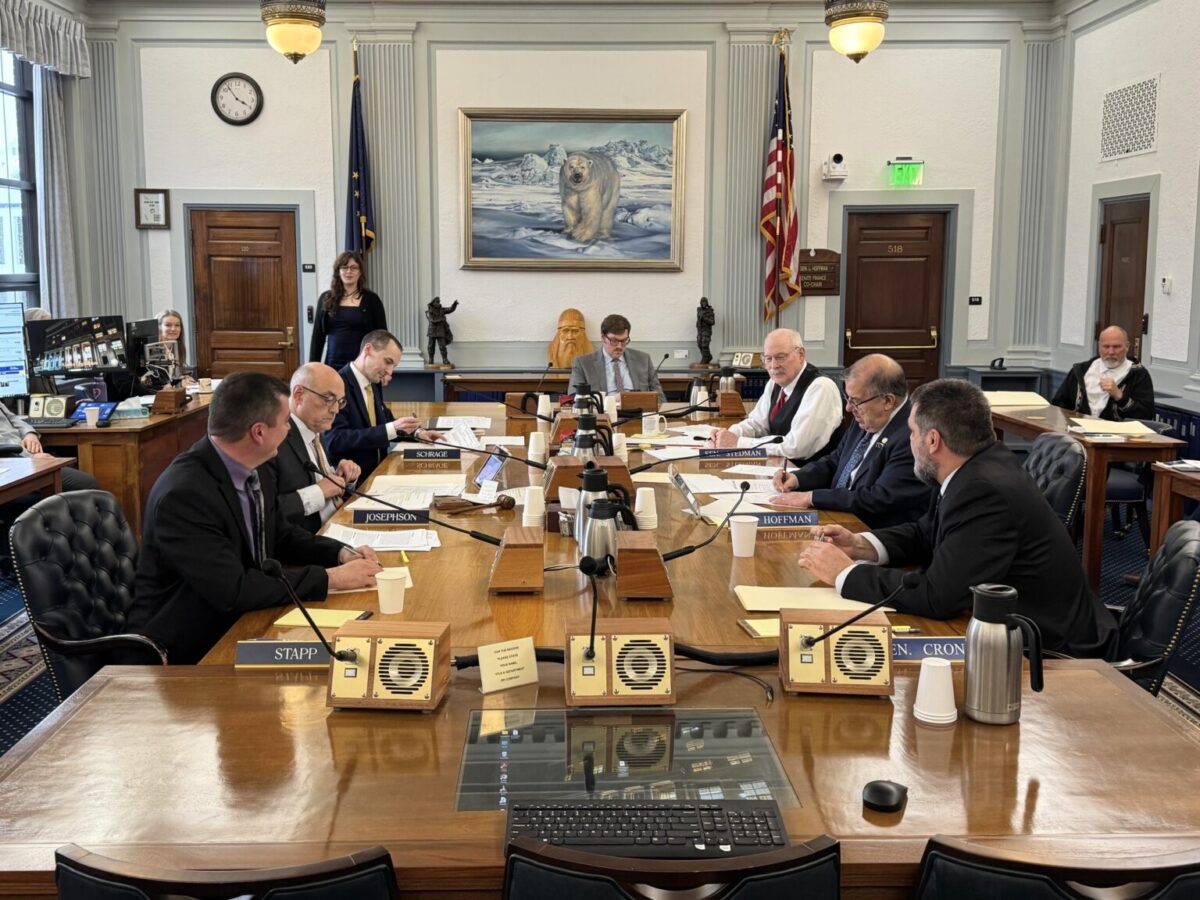
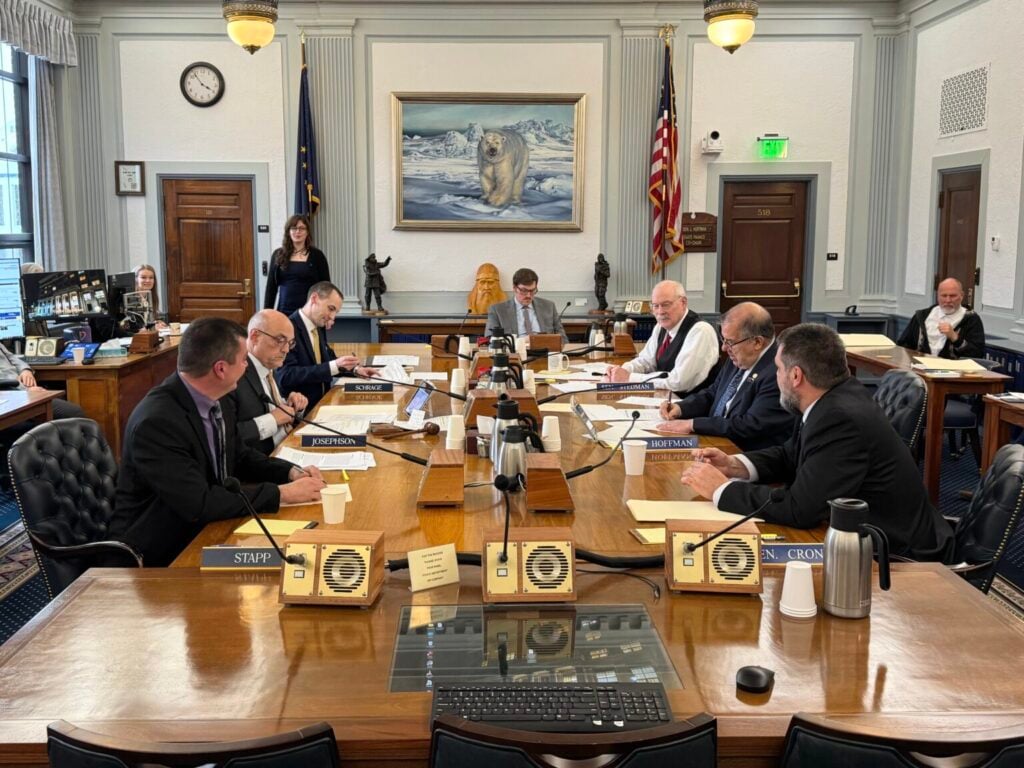
Sen. Bert Stedman, R-Sitka and co-chair of the Senate Finance Committee, said while the rising costs in DOC are well-known, going millions over budget is a problem as lawmakers grapple with declining state oil revenues and a growing list of state funding needs this year. 

“Their budget has been growing exponentially,” he said Thursday. “It’s not fair, because those funds that are being channeled in that direction could go elsewhere.”

DOC’s budget has seen increases year-over-year throughout Gov. Mike Dunleavy’s term, unlike other agencies who have sustained cutbacks. Since 2019, the state budget for DOC has increased 46% to over $437 million last year, according to state data.  

The $24 million in additional funds the agency requested also included $1.1 million for community residential treatment centers, or halfway houses, and $2.95 million in health care costs last year.

Sen. Mike Cronk, R-Tok, also serves on the Senate Finance Committee and expressed surprise and concern at the overtime hours presented to the committee on Thursday.

“That’s literally 100 hours a week. All year long,” he said, and questioned if people were running up overtime for a short time in order to retire or leave the department. “So it’s very concerning. You know, obviously I don’t blame anybody for it, but we have to figure out why this is happening, and we just have to do better. We have to be more efficient and make sure that we’re doing everything we possibly can to keep costs down.”

Stedman questioned the state’s contracts with the union representing correctional officers, the Alaska Correctional Officers Association, in accounting for the extensive overtime.

“My concern is maybe they ought to haggle a little bit better when they do their labor agreements, because this is definitely not appropriate for the public treasury to put up with, and it’s got to get corrected,” he said.

Representatives with the union did not immediately respond to emailed questions about lawmakers’ concerns on Thursday.  

Last year, over 9,800 people entered DOC custody in institutions or on supervised release on probation or parole, according to state data.