Photo courtesy of Susan Walker, Juneau Community Collective
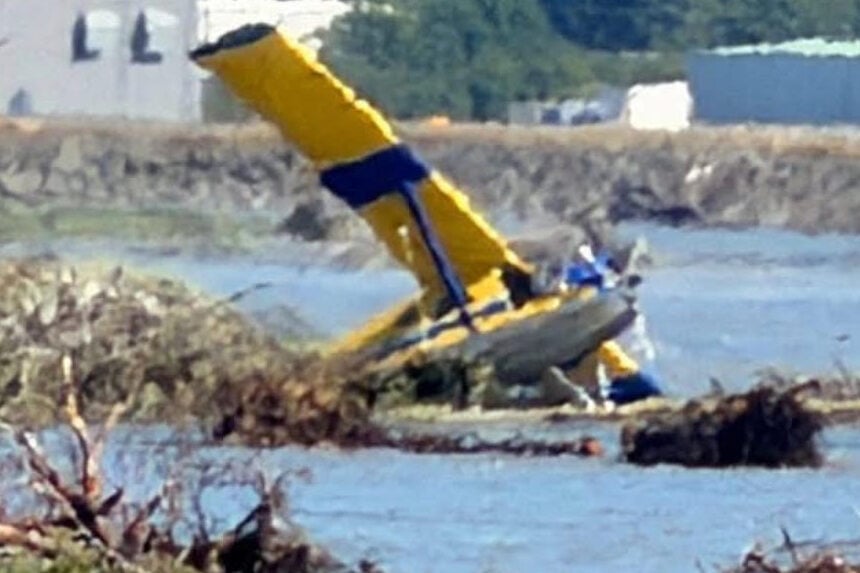
NOTN- An Alaska Seaplanes floatplane made an emergency landing in the Mendenhall River this morning, with no injuries reported.
The company says a de Havilland Beaver, tail number N777DH, made the emergency landing at about 11:17 a.m., shortly after taking off from the floatplane pond at Juneau International Airport.
According to a Facebook post, there was one pilot aboard and no passengers. The pilot was unharmed and is now with Alaska Seaplanes personnel.
The aircraft landed safely but later drifted into a floating root ball in the river. Alaska Seaplanes personnel are working to recover the plane.
The company says additional information will be provided as it becomes available.
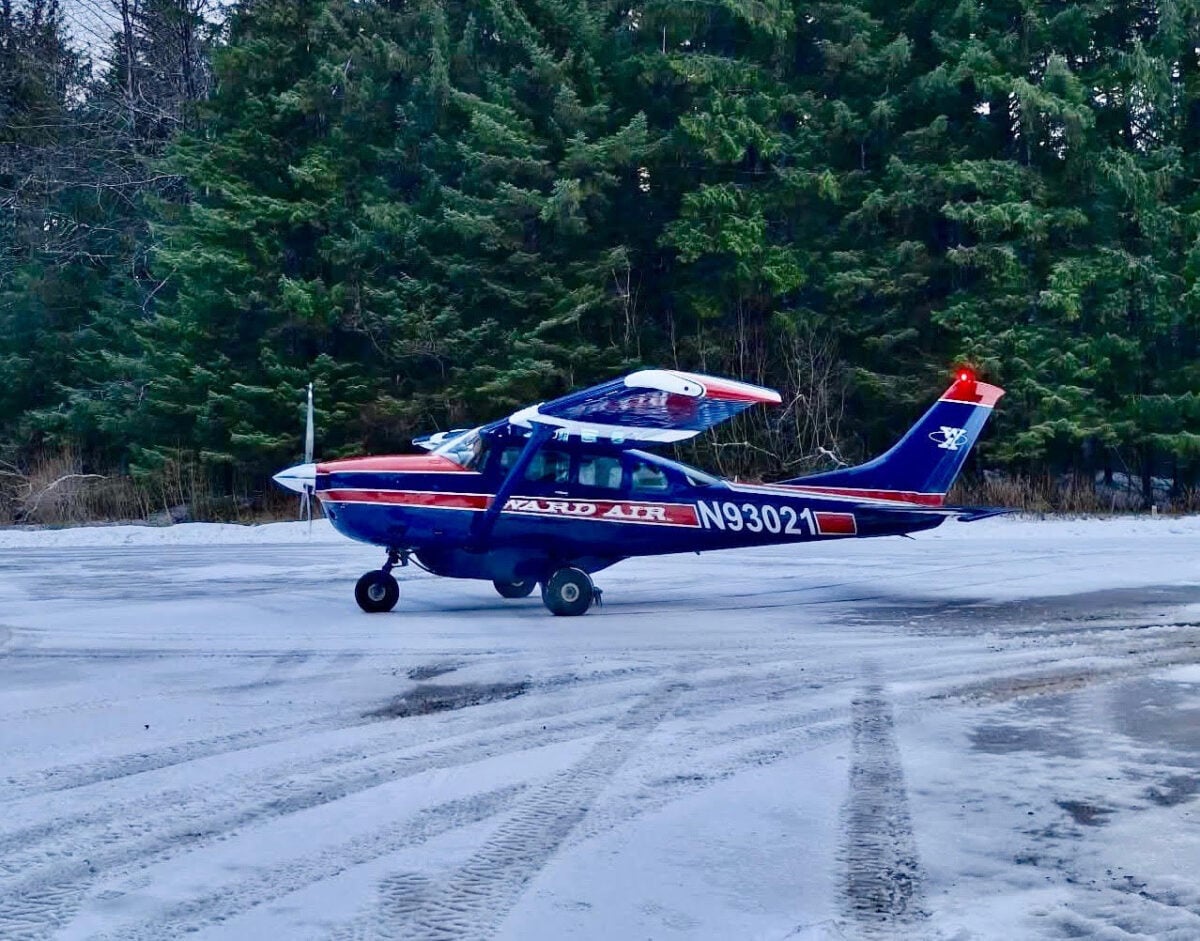
NOTN- A plane crash in Southeast Alaska sent one person to the hospital Thursday morning.
The U.S. Coast Guard received a report just after 10 a.m. of a downed aircraft near Shelter Island in Lynn Canal, KINY was sent a note from an internal source close to 12:00 p.m., as of yet the pilot’s condition has not yet been released.
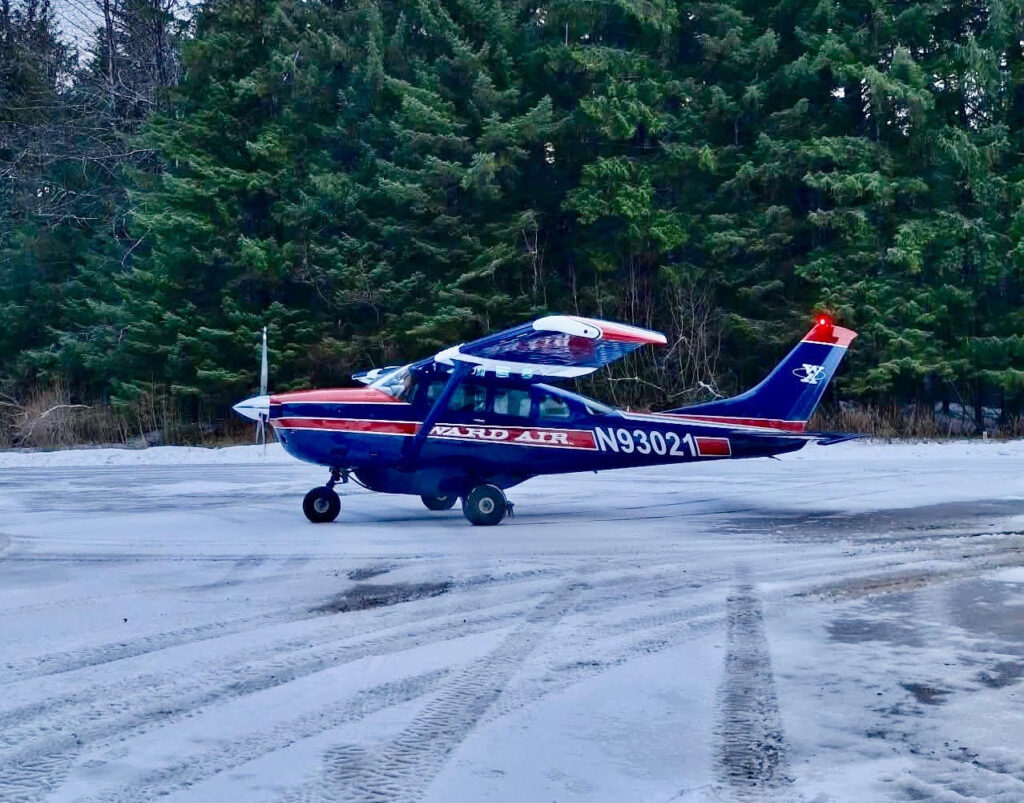
The plane, operated by Ward Air, was carrying only the pilot.
The pilot was pulled from the water by another Ward Air seaplane and taken to a hospital for treatment, there are unconfirmed claims that the pilot may have suffered a head injury, though this is currently hearsay.
It’s been reported the plane was a float plane, but an unnamed source has said it was a Wheel Plane, specifically a CESSNA 206, KINY is unable to substantiate that claim, Ward Air representatives declined to comment when contacted by phone this afternoon.
Alaska Airlines planes are shown parked at gates with Mount Rainier in the background on March 1, 2021, at Seattle-Tacoma International Airport in Seattle. (AP Photo/Ted S. Warren, File)
AP- Air travelers in the U.S. without a REAL ID will be charged a $45 fee beginning in February, the Transportation Security Administration announced Monday.
The updated ID has been required since May, but passengers without it have so far been allowed to clear security with additional screening and a warning. The Department of Homeland Security says 94% of passengers are already compliant and that the new fee is intended to encourage travelers to obtain the ID.
REAL ID is a federally compliant state-issued license or identification card that meets enhanced requirements mandated in the aftermath of the Sept. 11, 2001, terrorist attacks.
Obtaining the ID — indicated by a white star in a yellow circle in most states — means taking more documents to the motor vehicle agency than most states require for regular IDs. It was supposed to be rolled out in 2008 but the implementation had been repeatedly delayed.
Beginning Feb. 1, travelers 18 and older flying domestically without a REAL ID and who don’t have another accepted form of ID on them, such as a passport, will pay the non-refundable fee to verify their identity through TSA’s alternative “Confirm.ID” system.
TSA officials said that paying the fee does not guarantee verification, and travelers whose identities cannot be verified may be turned away. If approved, however, the verification covers a 10-day travel period.
The fee can be paid online before arriving at the airport. Travelers can also pay online at the airport before entering the security line, but officials said the process may take up to 30 minutes.
The TSA initially proposed an $18 charge for passengers without a REAL ID, but officials said Monday they raised it after realizing the alternative identification program would cost more than anticipated.
Other acceptable forms of ID include military IDs, permanent resident cards and photo IDs from federally recognized tribal nations. TSA also accepts digital IDs through platforms such as Apple Wallet, Google Wallet and Samsung Wallet at more than 250 airports in the U.S.
The U.S. Supreme Court, on Oct. 9, 2024. (Photo by Jane Norman/States Newsroom)
In 2012, Alaska State Troopers arrested Fairbanks pilot Ken Jouppi and seized his aircraft after charging him with bootlegging for shipping beer into the dry community of Beaver.
Now, after 13 years of legal disputes, the state’s decision to seize Jouppi’s airplane could be headed to the U.S. Supreme Court.
The Institute for Justice, a libertarian-leaning nonprofit public interest law firm, last week asked the Supreme Court to consider overturning an Alaska Supreme Court ruling from April. That ruling declared that the state’s decision to seize Jouppi’s plane was not an excessive fine for bootlegging.
The “petition for a writ of certiorari” — a formal document asking the U.S. Supreme Court to take up the issue — was filed last week, an official with the Institute confirmed on Tuesday afternoon.
The odds are against Jouppi — the Supreme Court takes only about 1% of the cases it receives. If cases filed with a fee waiver are excluded — those usually come from prisoners representing themselves in a last-ditch appeal — the acceptance rate is 5% or less.
Now 85 and retired, Jouppi was a longtime air taxi pilot in Fairbanks when he planned to ferry a passenger and her groceries from that hub city to Beaver, a village in the Interior.
Before takeoff, an Alaska State Trooper noticed a six-pack of beer visible in the baggage. Beaver had outlawed the sale, consumption and importation of alcohol in 2004. Troopers searched the plane and found three cases of beer — two Budweiser, one Bud Light — intended for the passenger’s husband, the local postmaster.
Jouppi was indicted on bootlegging charges, convicted, and sentenced. His sentence included three days in jail and a fine. State prosecutors asked that he be required to forfeit his plane, but the trial judge declined.
The state appealed that decision, and the Alaska Court of Appeals ruled in 2017 in the state’s favor. The Appeals judges sent the case back to the trial court, which again refused to order the plane’s forfeiture, citing the U.S. Constitution’s excessive fines clause.
The appeals court ordered additional proceedings by the trial court, but both Jouppi’s attorneys and state prosecutors instead asked the Alaska Supreme Court to take up the issue, which it did last year before issuing a written opinion in April.
“We hold, as a matter of law, that the owner of the airplane failed to establish that forfeiture would be unconstitutionally excessive,” wrote Justice Jude Pate on behalf of the court, which ruled unanimously in the state’s favor.
Pate and the court said that Alaska legislative debates showed that state lawmakers placed a high priority on punishments for bootleggers, and thus the seizure of an airplane was not excessive, even though a relatively small amount of beer was involved.
“Alcohol abuse in rural Alaska leads to increased crime; disorders, such as alcoholism; conditions, such as fetal alcohol spectrum disorder; and death, imposing substantial costs on public health and the administration of justice. Within this context, it is clear that the illegal importation of even a six-pack of beer causes grave societal harm,” the ruling states. “This factor strongly suggests that the forfeiture is not grossly disproportional.”
In their request for the U.S. Supreme Court to examine the case, Jouppi’s attorneys argue that the federal justices should decide whether courts should consider the seriousness of an offense in abstract, or if they should take into account a specific defendant’s circumstances.
The Alaska Supreme Court “examined the gravity of the defendant’s offense at a stratospheric level of abstraction,” they argue, when justices should have taken into account the circumstances.
The Alaska justices relied on a federal decision from the 11th U.S. Circuit Court of Appeals, Jouppi’s attorneys note, but Alaska is within the 9th U.S. Circuit Court of Appeals.
Judges for the 9th Circuit have considered the Excessive Fines clause of the Constitution and concluded that it is critical to “review the specific actions of the violator rather than by taking an abstract view of the violation.”
Because of those two differing interpretations of the Constitution, Jouppi’s attorneys say, the case is ripe for the U.S. Supreme Court to consider.
No date has been set for a court conference to determine whether Jouppi’s case will be considered by the U.S. Supreme Court.
If the court declines to consider his case, the Alaska Supreme Court decision will stand.