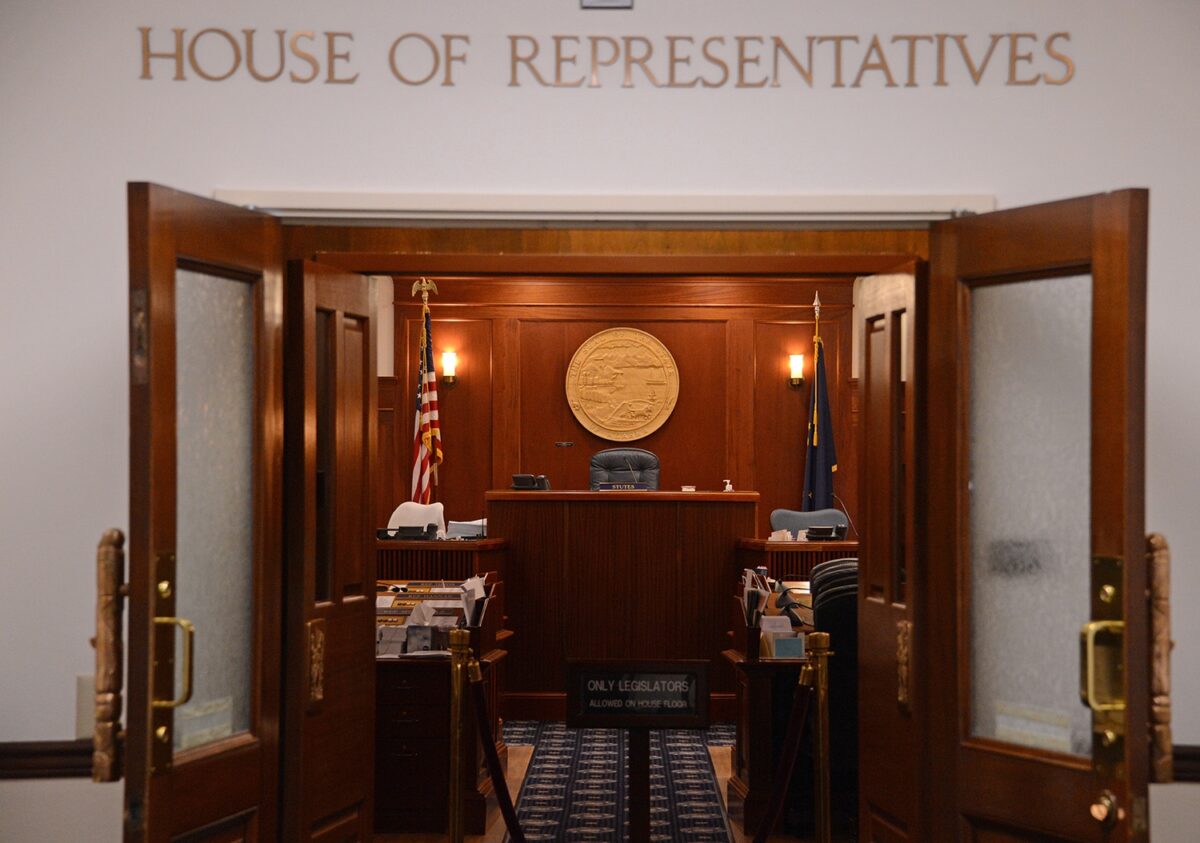
The House chambers are seen on Friday, May 13, 2022 at the Alaska State Capitol in Juneau, Alaska. (Photo by James Brooks/Alaska Beacon)
By: Corinne Smith, Alaska Beacon
The House chambers are seen on Friday, May 13, 2022 at the Alaska State Capitol in Juneau, Alaska. (Photo by James Brooks/Alaska Beacon)
The Alaska State Legislature is planning a brief session without taking any action on Tuesday, and legislative leaders say they’ve already completed their intended work for the special session, which ends on Aug. 31.
Gov. Mike Dunleavy called the 30-day session, which began on Aug. 2, for legislators to address his education policy priorities and to create a new Alaska Department of Agriculture. The Legislature convened — one senator flying back from U.S. National Guard duty in Poland — and within hours voted to override two of the governor’s vetoes. Lawmakers then adjourned until Tuesday.
Legislators voted to leave the session open and not officially close out the special session to prevent Dunleavy from calling them into another one.
On Tuesday, just “a handful” of legislators are expected to be present for what’s known as a “technical session,” said House Speaker Rep. Bryce Edgmon, I-Dillingham, reached by phone Monday in his district.
Edgmon said he was planning to fly back to Juneau to facilitate proceedings in the House on Tuesday, but said it will be brief.
He said the Legislature’s votes to override two of the governor’s vetoes, including restoring $51 million for K-12 schools, was a success – and their only goal for the special session.
“But the specter of the governor calling us right back in seems to be very prominent,” Edgmon said. “And we had to do what we had to do in terms of allowing members to go back home, go back to their districts, not being Juneau, drawing per diem, costing the state money — with the stated intention, of course, of looking at the governor’s bills, continuing to consider the governor’s bills and the subject matter next session, as we started to do last session.”
The governor introduced three bills on Aug. 2, related to education policy, and Edgmon said they have been referred to related committees.
Edgmon said he’s had no communication from the governor’s office since the veto override votes.
“I wish we had a better relationship with the governor, to where we could plan things out, work jointly in terms of any outcomes for a special session. The governor is acting unilaterally, which, of course, is his prerogative, should he choose. But that does not bode well in terms of any kind of a positive result for special session,” he said.
Jeff Turner, the governor’s communications director, said by email Monday, “lawmakers should not need an incentive to improve public education policy,” and that it was the Legislature’s decision to not take up the governor’s bills during this special session.
Turner pointed to the governor’s comments on an Anchorage-based commercial radio show on Aug. 14, where Dunleavy criticized the Legislature’s veto override restoring school funding, and said additional funding is “not going to change the performance outcomes.”
The House and Senate are scheduled to gavel in at 10 a.m. on Tuesday.
A new joint legislative education funding task force is scheduled to hold its first meeting on Aug 25, where its six members are expected to examine how the state funds schools, as well as Dunleavy’s educational policy items.
Protesters rally in downtown Anchorage as part of the nationwide “No Kings” protests on June 14, 2025. (Photo by Corinne Smith/Alaska Beacon)
Alaskans are planning demonstrations in solidarity with Ukraine across the state, ahead of the meeting between President Donald Trump and Russian President Vladimir Putin on ending the war in Ukraine.
Trump and Putin are expected to meet at the Anchorage military base, Joint Base Elmendorf-Richardson, at 11:30 a.m. on Friday. The two leaders then plan to hold a joint news conference following the meeting, which was confirmed by both the White House and the Kremlin, according to the political news outlet The Hill.
At least 16 protest events are scheduled to take place across Alaska from Thursday through Saturday, protesting the meeting and demonstrating solidarity with Ukraine, from Fairbanks to Kodiak to Ketchikan.
At least 16 events are planned in 15 communities across Alaska to show solidarity for Ukraine, as Trump and Putin are scheduled to meet in Anchorage on August 15, 2025 (Screenshot of map via marchagainst.org)
Nicole Collins is an organizer with the group Ketchikan Mayday for Democracy, which is planning a vigil on Thursday evening to show support for Ukraine.
“First and foremost, our goal is to communicate solidarity with our brothers and sisters in Ukraine, to let them know that we all watched in horror as Ukraine was invaded over three years ago now,” she said in an interview. “Even though we’re on this island in Southeast Alaska, we are members of the human race, and we’re all part of this world, and we want them to know that we see them and we stand with them.”
Collins said the group started monthly protests in the spring, when members watched a meeting between Trump and Ukraine President Volodymyr Zelenskyy.
“The majority of us felt like something wasn’t right,” she said, and community members have come together since to show support for Zelenskyy and the people of Ukraine.
The Thursday event is also to express outrage for the president’s invitation and welcome to Putin, she said. “Our secondary goal would be to show that we just have this utter disgust in a war criminal stepping foot on our precious Alaskan soil, our U.S. soil, and that we have great concerns over the fact that our president shows every sign of admiration towards this war criminal dictator that’s coming from Russia,” she said.
Putin has been widely condemned internationally for the invasion of Ukraine, where tens of thousands of people have been killed since 2022. More than 6.9 million Ukrainians have been displaced, and more than 13,000 civilians killed, according to the United Nations, which says the true number is likely far higher. Over 1 million Russians have been killed or injured.
The International Criminal Court has issued an arrest warrant for Putin related to war crimes. He risks being arrested if he travels to any of the 125 member states, which has impacted his ability to travel.
“This is far beyond left and right now, it’s about right and wrong,” Collins said. “And we feel like we have to speak out. We have to show our support for democracy and for decency, for honesty, for unity, not division.”
This will be the first in-person meeting between Trump and Putin since the war began.
Trump announced the meeting in Alaska last Friday, amid high-stakes negotiations around a peace deal between Russia and Ukraine, but the president has not provided details on what a long-term deal would look like. Zelenskyy was not invited.
Riza Smith, an organizer based in Anchorage who served in the Air Force at JBER, said it feels like an about face for Alaska to welcome Putin.
“If Russia decides to, you know, escalate things against the U.S., we’re right nearby. If Russia decided, ‘Hey, we want this portion of land,’ or, ‘Hey, we want these resources,’ or something, we’re right nearby. So I think it impacts a lot of people a lot more strongly, especially for the military,” they said.
Various branches of the U.S. military in Alaska conduct regular exercises, as part of homeland security efforts, including patrols of the airspace and maritime border with Russia. Currently the U.S. Northern Command is conducting military drills known as Arctic Edge throughout the state.
“(For) the past 20 years, we’ve been dealing with intercept flights,” Smith said. “That’s affected our military for years. So it’s a little confusing, since about like 2015, when that kind of escalated, to see like a complete nonrecognition of them.”
In addition to protesting Putin, Smith said the planned protest actions are also condemning the Trump administration.
“I think we’re fed up with corruption. We’re fed up with people trying to take something that isn’t theirs. And I think the prime example of that is Russia and Ukraine. … Vladimir Putin has overstepped his bounds repeatedly with Ukraine. Donald Trump has overstepped his bounds repeatedly with Alaska … making these different claims, like offering to sell resources, or whatever he wants to offer people,” they said. “I think people are just kind of done with people, you know, doing something without their input.”
Smith also helped coordinate a calendar of solidarity events taking place across the state, from vigils to protest actions to a plan to unfurl a Ukrainian flag at the Delaney Park Strip in Anchorage on Friday.
“So if you just want to visit an office, that’s an option. If you want to rally hard on the side of the building, that’s an option. If you want to do sign making, if you just want to do a local community thing, or a barbecue, like, people are just kind of coming together. So it’s every kind of opportunity to just kind of build that community in Alaska.”
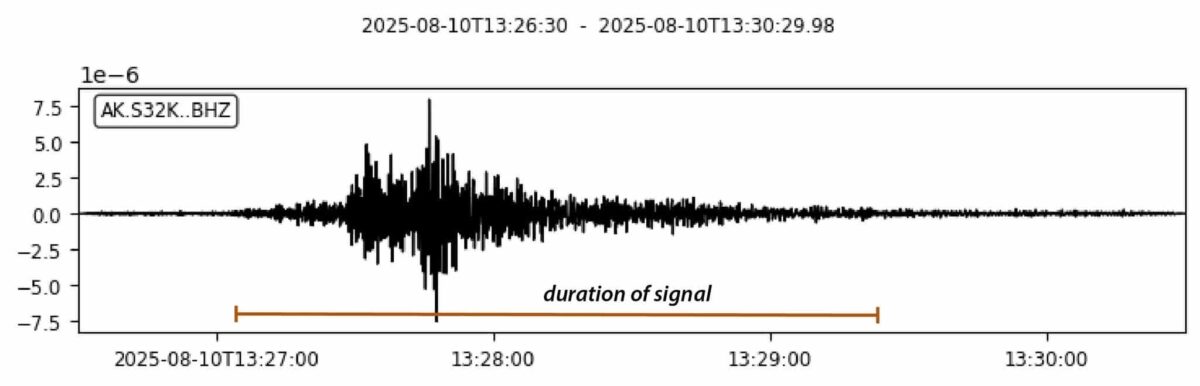
NOTN- A Landslide struck around Endicott Arm, just South of Juneau early Sunday, producing 10 to 15 foot waves according to the Alaska Earthquake Center, they say the waves were observed across the region.
According to the Alaska Earthquake Center the local Tsunami rolled through Endicott Arm just after 5:30 AM following a significant landslide in the region, where several tens of millions of cubic meters of rock struck the water.
This undated image, provided by the National Oceanic and Atmospheric Administration, shows a mockup of the Surveyor, an ocean-floor-mapping ship under construction and scheduled to be homeported in Ketchikan. (NOAA image)
Next week, the National Oceanic and Atmospheric Administration is planning to host a ceremony in Louisiana to mark the start of construction on the NOAA ship the Surveyor, a new charting and mapping ship scheduled to be homeported in Ketchikan.
NOAA announced the keel-laying ceremony, scheduled for Aug. 14, by email.
The Surveyor is expected to be finished in 2027, and its sister ship, the Navigator, is expected to be finished in 2028.
NOAA operates a fleet of 15 charting, mapping and fisheries ships using an unarmed officer corps like a scientific version of the U.S. military. The Surveyor and Navigator will be used primarily for ocean mapping and nautical charting.
Two other deep-sea ships, the Oceanographer and Discoverer, are also under construction and are expected to be complete in 2026.
All four ships are part of an ongoing effort to keep the NOAA fleet afloat; as of 2023, the fleet’s average age was 30 years old, and six of the fleet’s current ships are expected to reach the end of their service life by 2030.
The ships will be built by Thoma-Sea Marine Constructors in Houma, Louisiana, under a $624.6 million contract that would allow NOAA to construct two more ships if funding is available.
Adam Crum, commissioner of the Alaska Department of Revenue, testifies Friday, Jan. 20, 2023, at a meeting of the Alaska Senate Finance Committee in the state Capitol at Juneau, Alaska. (Photo by James Brooks/Alaska Beacon)
By: James Brooks, Alaska Beacon
Adam Crum, commissioner of the Alaska Department of Revenue, testifies Friday, Jan. 20, 2023, at a meeting of the Alaska Senate Finance Committee in the state Capitol at Juneau, Alaska. (Photo by James Brooks/Alaska Beacon)
Adam Crum, commissioner of the Alaska Department of Revenue, will leave his job Aug. 8, according to an announcement published Friday by Gov. Mike Dunleavy’s office.
A person familiar with Crum’s plans said he intends to run for governor in 2026, joining seven other Republican candidates. No independents or Democrats have filed for the primary election, which is 13 months away.
Asked whether he will run for governor, Crum said by text message, “I’ve accomplished a lot to put Alaska on sound economic footing. I’ll have a formal statement on my last day, August 8th. Stay tuned.”
Crum has been part of Dunleavy’s cabinet since the governor took office in 2018. He initially served as commissioner of the Alaska Department of Health and Social Services, occupying that position during the COVID-19 pandemic and during an executive order that split the agency into two separate departments.
In 2022, Dunleavy named Crum as revenue commissioner, and he assumed a seat on the board of the Alaska Permanent Fund Corp., whose revenues are the No. 1 source of general-purpose dollars for state services and the Permanent Fund dividend.
Jason Brune, former commissioner of the Alaska Department of Environmental Conservation, now fills a public seat on the Permanent Fund Corp. board.
Brune said he knows Crum has been considering a run for governor but could not confirm his plans.
“His departure is a big loss for the state,” Brune said by text.
“It was an honor working with him for the five years we served together,” he said, referring to the time they spent on the Dunleavy cabinet.
In a written statement Dunleavy praised Crum’s performance during his time with the state.
“Commissioner Crum has been an exemplary leader whose unwavering dedication and innovative approach have significantly benefited Alaskans,” Dunleavy said. “During his time leading both the Department of Health and Social Services and the Department of Revenue, Adam consistently prioritized Alaska’s economic well-being, public health, and fiscal stability. His collaborative spirit and commitment to serving our communities have made a lasting, positive impact.”
The governor’s office said an acting commissioner will be named soon.
Deena Bishop, commissioner of the Alaska Department of Education and Early Development, at a news conference with Gov. Mike Dunleavy on education funding on Friday, Jan. 31, 2025. (Photo by Corinne Smith/Alaska Beacon)
The state of Alaska has filed an appeal with the U.S. Department of Education after federal officials said the state failed a test measuring the differences in funding between school districts, which put more than $80.8 million in federal aid at risk.
Each year, the state receives federal funding called “impact aid” intended to compensate districts with federally owned lands, which reduce the tax base to support schools. The state can put that funding toward its own funding for schools — which the state has done in the past — but only if it can pass what’s known as a disparity test.
Federal law requires there to be no more than a 25% gap between per-student revenue in districts near the highest in funding and districts near the lowest. The department found Alaska’s disparity to be 26.88%, given the state’s complex funding formula.
But Alaska has rejected the finding, filing a formal appeal on July 14 and submitting districts’ finance data to argue their expenditures meet the standard. The test puts federal funding at stake, according to the state, which this year amounts to an estimated $80.8 million.
Deena Bishop, commissioner of the Alaska Department of Education and Early Development, said in an interview last week that she feels good about the state’s accounting and a successful appeal.
“I’m confident that we did meet it,” Bishop said of the requirements. “If I base it off of the last appeal and how Alaska was able to share how transportation costs are truly that disparate, then I think we will do fine.”
The state failed the same disparity test in 2021, based on 2019 state data, and successfully appealed. This time, the state submitted 2024 data for evaluation.
“So a little bit of it is a huge math problem at the beginning,” Bishop said of the appeal process. “We wrapped our arms around it and figured that out, and then made an argument on … why we did it that way, given the background of those costs in Alaska.”
Bishop said Alaska sees high costs in rural school districts — especially for transportation, but also basic supplies and operating costs.
“The cost to do business is highly diverse in Alaska. If you just took the cost of a head of lettuce or a gallon of milk, you know, in Anchorage, as compared to Teller, it’s not just three times (higher in Teller). It could be up to five times. And really building and construction materials, supplies, all of those are such a significant increase due to the way you can only get in by barge or plane. So it’s just … again, understanding why we pay such large differences in different places in Alaska.”
The U.S. Department of Education notified the state that it failed the test on May 16, as first reported by KTOO. Bishop said it will take time to resolve. The 2021 appeal was resolved at the end of that fiscal year, in 2022.
“It is a long process, because I think they’re very careful at it,” she said. “You want to spend the time on it. They did spend the time to understand Alaska.”
In the meantime, the federal impact aid payments will continue to school districts.
DEED spokesperson Bryan Zadalis said by email those funds will continue through the appeal process. “School districts will continue to receive Impact Aid funding directly from US-ED through their regular processes of application approval and funding availability,” he said.
Added uncertainty for education funding
The results of the disparity tests add uncertainty for the state, and for Alaska schools.
That’s based on the state’s complex funding formula for schools – which includes federal, state and local contributions.
Alexei Painter, who directs the division of state government that analyzes the budget for the Legislature, said the Legislature passed a budget that funds whatever the state’s portion is in that funding formula. If the state passes the disparity test, it allows the state to deduct the federal impact aid dollars from the state school funding.
But if the state fails the test, Painter said, “that money doesn’t go away. It just goes directly to those districts.”
If the federal impact aid isn’t flowing through the state government, it no longer is distributed based on the state funding formula. That’s potentially a big problem for the state.
“If we fail, we can’t make that deduction,” Painter said in an interview Wednesday. “The result of that is that what the state would owe to pay the full formula would go up by $80 million.”
That’s because the state would still be required to distribute the remaining state aid according to formula, but it would have less revenue to do it.
Painter explained that the issue is further complicated by Gov. Mike Dunleavy’s budget veto of $50 million for the state’s education funding this year.
Under the original budget bill passed by the Legislature, the state had an open-ended commitment to provide school funding according to the formula. But in issuing the veto, Dunleavy crossed out the language, replacing it with a dollar amount.
“The governor vetoed that appropriation from an open-ended one to a fixed dollar amount,” Painter said. That means that if the state fails the disparity test, “that cost goes up by $80 million, and now the veto impact is $130 million.”
The Legislature is set to take a vote on whether to override Dunleavy’s veto of school funding during a special session, scheduled for Aug. 2.
Painter said that if the Legislature votes to override the veto, it would fund the education formula – including the $80.8 million.
Depending on the override vote and the appeal, the impacts to school districts could vary widely across the state, he said. The division issued a memo in June on the potential impacts.
Some districts that receive the federal impact aid because they include federal lands, like the Lower Kuskokwim or Fairbanks school districts, could see millions more. But others, like the Matanuska-Susitna or Anchorage districts could see millions less, as the state would not have enough money to fully balance its part in the funding formula.
“I would just assume the Legislature will address this in some way,” Painter said. A veto override would be one way to address it. Another way would be to provide more money for school districts after the Legislature reconvenes for its next regular session, in January, in a supplemental budget bill.
If the state loses its appeal and the Legislature doesn’t act, it could be a problem for districts.
“Otherwise there’s just a lot of uncertainty for districts,” Painter said. “Even if the department’s ultimately successful, in the meantime, it just adds uncertainty for districts.”
Sen. Löki Tobin, D-Anchorage and chair of the Senate Education Committee, said in a phone interview that she was glad the state has appealed. But she argued that the disparity is being driven by a lack of funding on the state’s part for public schools.
“That is ultimately on the shoulders of our state and also of our local communities, and with a decade of flat funding, it is clear why our school districts’ budgets are getting tighter, the deficits are getting larger,” and the disparity is growing, Tobin said.
Zadalis said no date has been set yet for a hearing on the appeal.
U.S. Rep. Mary Peltola, D-Alaska, speaks on Jan. 4, 2024, at a town hall meeting on the possible Albertsons-Kroger grocery merger. The meeting was held at the Teamsters Local 959 headquarters in Anchorage. Peltola said on Tuesday she has not decided whether to support her party's likely candidate, Vice President Kamala Harris. (Photo by Yereth Rosen/Alaska Beacon)
U.S. Rep. Mary Peltola, D-Alaska, speaks on Jan. 4, 2024, at a town hall meeting on the possible Albertsons-Kroger grocery merger. The meeting was held at the Teamsters Local 959 headquarters in Anchorage. Peltola said on Tuesday she has not decided whether to support her party’s likely candidate, Vice President Kamala Harris. (Photo by Yereth Rosen/Alaska Beacon)
AP- A small plane that crashed in 2023 while carrying moose meat for hunters in remote western Alaska, killing the husband of former U.S. Rep. Mary Peltola, was overweight for takeoff and encountered drag from a set of antlers mounted outside, federal investigators said in a report released Tuesday.
The National Transportation Safety Board, in its final report on the crash that killed Eugene Peltola Jr., who was the only person on board the aircraft, listed several factors among its probable cause findings. They included decisions by Peltola to fly the plane above its maximum takeoff weight and affix a set of moose antlers on the right wing strut that caused a drag, along with turbulent flight conditions in the area.
Downdrafts, “along with the overweight airplane and the added drag and lateral weight imbalance caused by the antlers on the right wing, would likely have resulted in the airplane having insufficient power and/or control authority to maneuver above terrain,” the report states.
The Piper PA-18-150 Super Cub crashed Sept. 12, 2023, northeast of the small western Alaska community of St. Mary’s. Peltola had days earlier taken five hunters, a guide and equipment from the community of Holy Cross to an airstrip at St. Mary’s. The group set up camp next to the runway, which was near hilly terrain and about 70 miles (113 kilometers) northwest of Holy Cross, the agency said.
The day before the crash, the group got a moose and made plans with Peltola, via satellite messaging devices, for him to transport the meat, the NTSB said. On the day of the crash, Peltola had already picked up a load of meat and had returned for another. He did not use scales to weigh the cargo, the agency said.
Two hunters were at the site when the crash occurred and provided aid to Peltola, the agency previously reported. Peltola died of his injuries within about two hours, the agency said.
“Given the remote location of the accident site, which was about 400 miles from a hospital, and accessible only by air, providing the pilot with prompt medical treatment following the accident was not possible,” Tuesday’s report states.
The agency said carrying antlers on the outside of a plane is a common practice in Alaska but requires formal approval from the Federal Aviation Administration, with a notation in the plane’s logbooks. “There was no evidence that such approval had been granted for the accident airplane,” the report states.
Peltola was a former Alaska regional director for the Bureau of Indian Affairs and worked for decades for the U.S. Fish and Wildlife Service. He had received his commercial pilot’s license in 2004, requiring him to use corrective lenses at all distances, according to an FAA database.
His death came almost exactly a year after Mary Peltola was sworn in as Alaska’s lone U.S. House member, following a special election for the seat. Mary Peltola, who is Yup’ik, was the first Alaska Native in Congress.
She won a full, two-year term in November 2022 but lost her reelection bid last November. She has kept a relatively low public profile since then.
FILE - Alaska Airlines aircraft sits in the airline's hangar at Seattle-Tacoma International Airport, Jan. 10, 2024, in SeaTac, Wash. (AP Photo/Lindsey Wasson, File)
FILE – Alaska Airlines aircraft sits in the airline’s hangar at Seattle-Tacoma International Airport, Jan. 10, 2024, in SeaTac, Wash. (AP Photo/Lindsey Wasson, File)
AP- Alaska Airlines has resumed operations after the failure of a critical piece of hardware forced the airline to ground all its flights for approximately three hours, but the effects will linger into Monday, the company announced.
The carrier issued a system-wide ground stop for Alaska Airlines and Horizon Air flights around 8 p.m. Pacific time Sunday. The stop was lifted at 11 p.m., the Seattle-based company said in a social media post. More than 150 flights have been canceled since Sunday evening, including 64 Monday.
The airline said “a critical piece of multi-redundant hardware at our data centers, manufactured by a third-party, experienced an unexpected failure.” That affected several of the airlines key systems, but hacking was not involved, and the airline said the incident was not related to any other events like the attack involving Microsoft’s servers over the weekend or the recent cybersecurity event at its Hawaiian Airlines subsidiary in June.
“We appreciate the patience of our guests whose travel plans have been disrupted. We’re working to get them to their destinations as quickly as we can,” the airline said in a statement.
The airline also said it is working with its vendor to replace the hardware at the data center.
Alaska Airlines led all airlines in cancellations Monday, according to the FlightAware website. Many of the cancellations were at the airline’s major hub of Seattle, but it also canceled flights at airports all over the country.
The Federal Aviation Administration website had confirmed a ground stop for all Alaska Airlines mainline and Horizon aircraft, referring to an Alaska Airlines subsidiary. But the FAA referred all questions to the airline Monday.
In September, Alaska Airlines said it grounded its flights in Seattle briefly due to “significant disruptions” from an unspecified technology problem that was resolved within hours.
Health care costs. Stethoscope and calculator symbol for health care costs or medical insurance
By: Yereth Rosen, Alaska Beacon
Health care costs. Stethoscope and calculator symbol for health care costs or medical insurance (Photo by Valeriya, provided by Alaska Beacon and Getty Images)
Health insurers must provide speedier responses to prior authorization requests for certain medical treatments and services, under a bill that went into law on Monday without Gov. Mike Dunleavy’s signature.
The measure, Senate Bill 133, requires insurers to notify patients within 72 hours whether the requested services are authorized in cases when requests are sent by fax or by other routine means. In cases of expedited requests, the insurer must provide answers within 24 hours, under the bill.
The bill, which passed unanimously in both the Senate and House, is intended to prevent delays in patient treatment, said the main sponsor, Sen. Jesse Bjorkman, R-Nikiski.
“Alaskans should not have to fight with their insurance company to get the care they need,” Bjorkman said in a statement. “This bill makes the process quicker, clearer, and fairer for everyone.”
The bill was officially sponsored by the Senate Labor and Commerce Committee, which Bjorkman chairs.
It was supported by medical organizations, including the Alaska Hospital and Healthcare Association, the Alaska State Medical Association and the Alaska Native Health Board.
It also got some qualified support from Premera Blue Cross Blue Shield of Alaska, the state’s largest health insurer.
In a March 25 letter to Bjorkman and members of the Senate Labor and Commerce Committee, Premera said that the version that emerged through the committee process had “some reasonable sideboards as well as incentives that will help plans modernize and improve their prior authorization systems so that these systems optimally serve providers, patients and plans alike.”
Premera said in its letter that it requires prior authorizations for care in only about 2% of cases, unlike insurers that “have been exceedingly aggressive in this space,” requiring prior authorization for up to 20% of all claims.
The bill has some exceptions, caveats and special provisions. For example, it does not prevent insurers from requiring generic versions of medicines prescribed by providers. It also has a section giving guidelines for insurers to grant exceptions for cancer patients who are covered by “step therapy” protocols. Those protocols provide patients with the least expensive medications first before advancing to more expensive medications.
Additionally, the bill gives insurers up to 14 working days to obtain more information from providers if they determine that there is a lack of sufficient information for decisions on prior authorization requests.
The new law goes into effect on Jan. 1, except for a portion that directs the state Division of Insurance to start drafting regulations. That portion went into effect immediately.
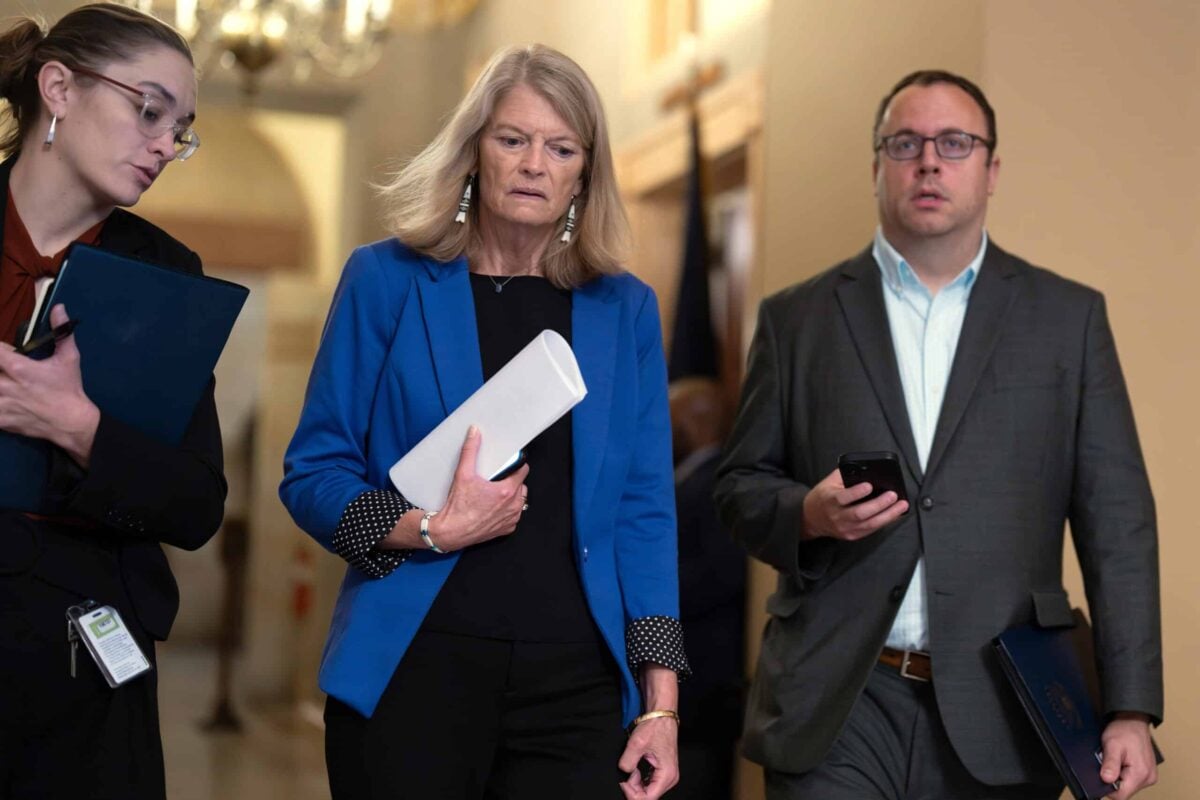
Sen. Lisa Murkowski, R-Alaska, center, a member of the Senate Appropriations Committee, arrives for a closed-door Republican meeting to advance President Donald Trump's sweeping domestic policy bill, at the Capitol in Washington, Friday, June 27, 2025. (AP Photo/J. Scott Applewhite)
Sen. Lisa Murkowski, R-Alaska, center, a member of the Senate Appropriations Committee, arrives for a closed-door Republican meeting to advance President Donald Trump’s sweeping domestic policy bill, at the Capitol in Washington, Friday, June 27, 2025. (AP Photo/J. Scott Applewhite)
U.S. Sen. Lisa Murkowski, R-Alaska, has joined a group of Republican senators urging the Office of Management and Budget (OMB) to release federal education funds already approved by Congress for the 2025 fiscal year.
In a letter sent to OMB Director Russell Vought, the senators asked the agency to fully implement the Fiscal Year 2025 Full-Year Continuing Resolution Act, which includes funding for several education programs supporting students, educators and adult learners.
“The decision to withhold this funding is directly contrary to President Trump’s goal of returning K-12 education to the states,” the senators wrote. “This funding goes directly to states and local school districts, where local leaders decide how this funding is spent, because as we know, local communities know how to best serve students and families. Withholding this funding denies states and communities the opportunity to pursue localized initiatives to support students and their families.”
The funding in question includes grants for Supporting Effective Instruction, 21st Century Community Learning Centers, Student Support and Academic Enrichment, English Language Acquisition, Migrant Education, and Adult Basic and Literacy Education, including integrated civics and language programs.
Murkowski and her colleagues argue the funds are essential for local school districts and adult education providers, especially those that support English learners, workforce training, and after-school care. They also emphasized the bipartisan nature of these programs, writing, ” We share your concern about taxpayer money going to fund radical left-wing programs. However, we do not believe that is happening with these funds. These funds go to support programs that enjoy longstanding, bipartisan support like after-school and summer programs that provide learning and enrichment opportunities for school aged children which also enables their parents to work and contribute to local economies.”
The letter was also signed by Senators Shelley Moore Capito (R-WV), Susan Collins (R-ME), John Boozman (R-AR), Katie Boyd Britt (R-AL), Deb Fischer (R-NE), John Hoeven (R-ND), Jim Justice (R-WV), Mitch McConnell (R-KY), and M. Michael Rounds (R-SD).
The senators said they welcome further collaboration with OMB and Education Secretary Linda McMahon, writing, ” We want to see students in our states and across the country thrive, whether they are adult learners, students who speak English as a second language, or students who need after-school care so that their parents can work. We believe you share the same goal.” They urged Vought to reverse the decision and release the congressionally approved funding without further delay.
A full copy of the letter is available on Sen. Murkowski’s official website, or on her Facebook page.