Categories
Featured Juneau News Juneau Local Ketchikan Local News Feeds Sitka Local

Human Rights Foundation’s Alex Gladstein talks technology and human rights

Photo courtesy of the Human Rights Foundation

The first-ever Bitcoin Alaska Conference was held July 5–6 at Centennial Hall in Juneau.

The conference brought together policymakers, energy experts, and Bitcoin enthusiasts to examine the role of cryptocurrency in shaping Alaska’s economy and energy future.

One of those experts was Alex Gladstein, chief strategy officer at the Human Rights Foundation.

Alex Gladstein offers an argument for technology as a critical tool for individual empowerment and freedom in an increasingly complex global landscape.

“So the organization that I worked for, the Human Rights Foundation, was founded with a very specific mission, which was to address authoritarianism.” Said Gladstein , “5.7 billion people live under an authoritarian regime in nearly 100 countries around the world, where they don’t have free speech, rule of law, separation of powers, or property rights. So while our country is not perfect, it is something that you know, billions of people aspire to, and we focus on helping human rights activists, journalists, labor leaders and environmentalists, who live under authoritarian regimes. And that often brings us to look at what the tools are that they’re using.”

Gladstein, working with the Human Rights Foundation since 2007, has witnessed firsthand the power of technology in some of the world’s most restrictive environments. His journey began with underground internet efforts in Cuba, where he and his team would smuggle contraband media and help citizens access information forbidden by authoritarian regimes.

The conversation centers on two primary technological innovations: Bitcoin and open-source AI tools. Bitcoin he says, emerges as a powerful instrument of financial sovereignty.

“even the most hardened skeptic admits that it’s got some sort of speculative investment quality to it, given that it’s been the best performing financial asset in the world since it was created, I think there’s a risk in ending the story there. I mean, that’s really what a lot of people see. They see an investment, and that’s about it.” Said Gladstein “I think what they don’t see is the freedom money part of it, which is that it doesn’t require paperwork to use. You don’t need an account. You can be any gender, any faith, any religion, any nationality, and you can use it and connect to it and trade and commerce and transact with other people. The second part of it is the censorship resistance. You know, it’s unstoppable.”

In Alaska, particularly in the North Slope, where abundant “stranded” natural gas from oil production could power cryptocurrency data centers, Stax Capital Partners, a Wasilla-based startup, recently proposed building a 50 MW Bitcoin mining facility south of Prudhoe Bay, about the same amount of electricity used as Alaska’s largest coal plant, according to the Alaska Beacon.

A New York Times investigation found that U.S. Bitcoin mining operations can require power comparable to small cities, and during crises like Texas’ 2021 Winter Storm Uri, some operations were actually paid to shut down to protect vulnerable power grids, Critics warn that large-scale installations, like those proposed in Alaska, risk similar grid strain and could push fossil fuel consumption higher.

On the technology front, according to Gladstein, it’s a double-edged sword. “there’s the centralizing force of the state, and they are using AI tools to better understand their population, map their population, surveil their population. But at the same time, these open AI tools that are available to anybody, are allowing individuals to have, essentially, a fortune 500 company in their pocket.”

Gladstein acknowledges the risks of digital intrusion and recommends people spend more time offline to reduce their digital surface area as these same technologies can pose a threat to individual privacy.

Yet, he remains fundamentally optimistic about technology’s potential to expand human freedom. “It’s going to be super empowering for individuals and small businesses that don’t have a lot of resources. I’m excited about that.”

Categories
Featured Juneau News Juneau Local Ketchikan Local News Feeds Sitka Local

Gov. Dunleavy veto of increase for Alaska child care and infant learning funding draws concerns

Students swing on a playground at Meadow Lakes Head Start in Wasilla, Alaska. It closed in 2024 due to funding and staffing challenges. (Image by Lela Seiler, courtesy of CCS Early Learning)

By: Corinne Smith, Alaska Beacon

The budget vetoes that Alaska Gov. Mike Dunleavy issued last month included millions of dollars proposed by the Legislature to bolster child care and early intervention services for children with disabilities or developmental delays.

Dunleavy vetoed a proposed $1.86 million in additional funding for child care grant programs and place-based and home-based child care centers, citing declining state revenues. The budget retains $5.87 million for those programs for next year. 

For early education and infant learning, the Legislature proposed a significant boost — $5.7 million more — for the state’s 17 programs that provide intervention services for families with children from infancy to 3 years old experiencing disabilities or developmental delays. Dunleavy rejected the increase, and allocated $10 million for the statewide programs. 

“Governor Dunleavy’s goal is for Alaska to be the best place in the country to raise a family,” said Grant Robinson, a deputy press secretary for the governor in an email on Monday responding to a request for comment. “The budgeting process requires the Governor to consider all line items in view of the State’s fiscal situation. The budget the Governor signed still provides more than $5.8 million of funding for childcare benefits. Given the State’s revenue outlook, the Governor made the difficult yet fiscally responsible decision to veto increasing and expanding infant learning programs.”

The governor vetoed more than $127 million from the Legislature’s proposed budget, including $50 million for public schools. In a prerecorded video released with the veto announcement in June, Dunleavy cited lower state revenues due to falling oil prices.

“Basically, we don’t have enough money to pay for all of our obligations. So as a result of that, you’re going to see some reductions in this year’s budget. It’s not an easy thing to do. It’s certainly not a fun thing to do, but it’s necessary,” he said.

Anchorage Republican Sen. Cathy Giessel, who also serves as the Senate majority leader, agreed that the state is facing fiscal challenges, but said child care and early education programs should be prioritized, as the Legislature had proposed.

 Senate Majority Leader Cathy Giessel, R-Anchorage, listens to a presentation about natural gas during a March 12, 2025, hearing of the Senate Resources Committee, which she chairs. (Photo by Yereth Rosen/Alaska Beacon)

“We had a balanced budget. It is true, it was very difficult to arrive at that balanced budget,” she said in a phone interview. “We searched all the couch cushions for one-time funding to fund this balanced budget, but we achieved it. The governor’s vetoes of these two critical services are just going to mean future costs, because these services were not provided for kids in their earliest development stages. So I was very disappointed.”

An estimated 1,800 Alaskan families are currently served each year by the state’s infant learning programs, funded by the state and federal Medicaid, at no cost to families. Children and families work with developmental specialists, and can receive speech, physical and occupational therapies. In addition, parents receive training and education on child development.

For example, in the Northwest Arctic region, an early learning and family program is administered by the Northwest Arctic Borough School District. It is based in Kotzebue and serves all the Northwest Arctic villages, as well as Point Hope in the North Slope Borough.

“We’re spread very thin,” said Tracey Schaeffer, one of the program’s three staff members. “And we definitely could use another staff person to help with traveling and seeing families and spending time in the villages.”

There is only one air carrier, Bering Air, serving the region, down from four companies operating a few years ago, she said, so with weather events and disruptions, it’s increasingly challenging. 

“We have to change reservations a lot because of the weather,” she said, estimating the total cost for travel and flights at up to $25,000 per year, plus significant time. “As it gets warmer, we have a lot more days that are not very safe to fly here.” 

Schaeffer said they work as much as possible by phone, but intervention services are very personal. “And all the while, you’re trying to kind of build a relationship with this family, because it’s a really intimate, sensitive situation when you’re working with a family who has a child that experienced, you know, something that wasn’t expected, a disability, or something, a medical issue, that has put their development at risk,” she said. 

The proposed state funding increase would have been welcome, she said. “That would have been a huge relief, because there’s a lot of pressure. I mean, (with) early intervention, three years is a short period of time, you know, and we lose so much time because of weather, flight cancellations or something,” she said. “So there’s a lot of pressure there. We’ve done this job for a long time, and we know the time goes fast, and we want to provide as much intervention as we can. And it’s just hard to do that.”

Schaeffer also runs a small child care center in Kotzebue, serving eight children, the first licensed provider to open in the community in over a decade. She said more local and state support is needed to address the lack of child care and rippling impacts for the community. “We lose people all the time because of a lack of child care. You know, we have educators or providers that come and they start a family, and then they realize, like, ‘Wow, I can’t find a child care provider,’ and we lose them because of that.”

Shaeffer and her daughter opened the child care center in 2023, a challenging process documented in a short film by Laura Norton-Cruz, a social worker, public health advocate and film producer. She and filmmaker Joshua Albeza Branstetter created a documentary film series focused on the challenges of child care and early education programs called the “Early Childhood in Alaska” series.

Yulia Smith, a developmental specialist with the Mat-Su Valley infant learning program, and subject of the short film about the program, is seen in a playroom with a young participant (Photo courtesy of Joshua Albeza Branstetter)
 Yulia Smith, a developmental specialist with the Mat-Su Valley infant learning program, is seen in a playroom with a young participant. The program is the subject of a short documentary film produced by Laura Norton-Cruz and Joshua Albeza Branstetter, part of the ‘Early Childhood in Alaska’ series. (Photo courtesy of Joshua Albeza Branstetter)

“Child care is just not a profitable business model. It’s an investment in child brain development and family well-being, and the economy,” Norton-Cruz said, emphasizing the need for increasing state and federal funding support. “Staffing is the majority of the costs. But also, if you run a home-based child care center, you have to pay your mortgage or you have to pay rent, you have to pay utilities: Those things cost money. And we need support from the government to be able to offer this essential service, to have a workforce, and to have children who are kindergarten ready.” 

In April, Anchorage’s largest child care provider, Bright Beginnings Early Learning Center, closed, displacing 125 children. Norton-Cruz said while some progress has been made, like raising awareness around Alaska’s child care crisis, families and providers are still struggling. 

“Others have cut back on hours or cut back on the number of rooms, or the number of kids they can take, in order to have this essential service for parents to be able to go to work, which we need them to do,” she said. “Because we have major workforce shortages, and parents need income to pay for, you know, rent and everything else, we have to do a better job of funding and supporting the sector.”

In 2023, Dunleavy launched a child care task force with the stated goal to develop a plan to improve availability and affordability of quality child care throughout Alaska. Norton-Cruz said the work of the task force was positive, and would like to see the governor put more state funding toward its recommendations.

“When we don’t have policy that supports child care and early childhood, we basically just rely on the unpaid labor of women,” Norton-Cruz said. “Whether that’s moms, or whether that’s grandmothers, or aunties, you can’t just say, ‘Oh, but grandmas and aunties can step in.’ That’s not policy. That relies on something that may not always be there for everyone, and isn’t fair. … People need to be able to make that choice, rather than have that choice made for them.”

Giessel also said there is a need for state funding for the governor’s own task force recommendations. She pointed to new state revenue measures that Dunleavy has opposed —like oil taxes — that leaders in the Alaska House multipartisan and Senate bipartisan majority caucuses want to pursue to bring in more state dollars. 

“First of all, we have a huge gap in our tax structure on our oil resources,” Giessel said, referring to the difference between taxes paid by traditional corporations and by those corporations that report their income through their owners, known as “S corporations.”

“The S corporations pay no corporate tax to the state,” Giessel said. “There is legislation that would institute a requirement for S corporations to pay a corporate tax to the state, conservatively estimated, that would be $100 million per year.”

A bill to tax these corporations is in the Senate Rules Committee.

“That would pay for a huge amount of these child care and early education funding requirements,” Giessel said.

“For him to say that these cuts are because of declining revenue and ignoring his responsibility in this, is just amazing to me,” Giessel added. 

The Legislature will meet for a special session on Aug. 2, when they will consider whether to override the budget vetoes.

Categories
Featured Juneau News Juneau Local Ketchikan Local News Feeds Sitka Local

Federal court upholds State control in Cook Inlet salmon fishery dispute

Sockeye salmon at Tazimina Lake. NPS Photo / D. Young. 2013

U.S. District Judge Sharon Gleason has sided with Alaska in a contentious case about who gets to control salmon fishing in certain waters.

Gleason upheld the National Marine Fisheries Service’s (NMFS) adoption of Amendment 16 to the federal salmon fishery plan for the Cook Inlet Exclusive Economic Zone (EEZ). The ruling confirms that NMFS is not obligated to regulate salmon fishing in state waters.

Opponents of Amendment 16 had argued that the measure violated the Magnuson-Stevens Act, which is the primary law governing marine fisheries in U.S federal waters and was created to prevent overfishing, rebuild depleted fish stocks and protect marine eco systems.

Opponents also argued the measure violated the Administrative Procedure Act (APA), a law that governs how federal agencies can create and enforce rules, claiming that NMFS should be required to manage salmon stocks across their full range or everywhere that salmon swim, including within state-managed nearshore waters.

The court disagreed. Judge Gleason affirmed that the MSA permits NMFS to manage fisheries as distinct units, and that the Cook Inlet EEZ salmon fishery qualifies. The decision also reinforced that NMFS’s jurisdiction is limited to federal waters, which begin three miles offshore.

Attorney General Treg Taylor praised the decision, calling it “a victory for Alaska and our salmon fishery.” He added, “It upheld the state’s rights and responsibilities to managing our waters. I want to congratulate the hard work and dedication of our Department of Law attorneys, especially Aaron Peterson, who have been tirelessly defending Alaska’s interests.”

Categories
Featured Juneau News Juneau Local Ketchikan Local News Feeds Sitka Local

Alaska Gov. Dunleavy forces early vote on education veto override with special session in August

Governor Mike Dunleavy speaks during a press conference on Thursday, April 17 in Juneau. (Photo by Greg Knight/NOTN)

By: Corinne Smith and James Brooks, Alaska Beacon

Alaska Gov. Mike Dunleavy is calling state legislators back to Juneau for a surprise special session.

On Wednesday, the governor issued a proclamation stating that the session, which begins Aug. 2, will cover education reform and his executive order creating a new Department of Agriculture.

The proclamation also forces an early vote on whether to override or sustain several of the governor’s vetoes, including an unprecedented cut to the base student allocation, core of the state’s per-pupil funding formula for public schools.

Under the Alaska Constitution, legislators must vote on an override in the first five days of the next session, in this case a special session.

That’s significant, because 45 votes are needed to override a budget veto, and while there were 46 votes in favor of a prior veto override this spring, at least one legislator who voted in favor of that override is expected to be unavailable in August.

In a prepared statement, Dunleavy outlined his stated reasons for calling a special session.

​​“Enacting a few necessary reforms to our public education system can elevate those children struggling in Alaska’s school system,” Dunleavy said. “As elected officials we must do all we can to put the next generation on the path to a successful and prosperous future, and that starts with a solid public education.” 

The governor’s office declined to answer an emailed question asking whether the special session’s goals included an early vote. Some legislators said that seemed apparent.

House Minority Leader Mia Costello, R-Anchorage, said members of the House’s Republican minority were preparing to meet with the governor Wednesday afternoon.

Asked whether she thinks the governor called the session to force a veto override early, she said, “undoubtedly, the governor is aware that those issues would be taken up in the first five days in the Legislature. So, I do believe that is a part of the plan.”

She said she doesn’t know whether calling the vote early will decrease the chances of an override. Though some lawmakers may be absent, “people are home, talking to their constituents … how that translates into their votes is a hard thing to tell.”

Sen. Bill Wielechowski, D-Anchorage and chair of the Senate Rules Committee, did not mince words: “Oh yeah, this is all about the veto override,” he said. “Because he knows there’s people that are not in the state. You know, that’s actually the day that the National Conference of State Legislatures starts to meet also. So I know there’s some people who are scheduled to go to that. So, yeah, this is all about trying to game the system so we don’t have enough votes to override his veto.”

Legislators uniformly said that the governor’s special session proclamation came as a surprise. Rep. Andy Josephson, D-Anchorage, was hiking in Denali when reached by phone. Speaker of the House Bryce Edgmon, I-Dillingham, was at his town’s boat harbor.

“It’s a stunning announcement,” Edgmon said. “It’s extraordinary to get the Legislature back to Juneau, and it takes a tremendous amount of organization, cooperation, dialogue, you know, conversations, particularly when you’re throwing a topic like education policy in the mix, which normally could take up an entire two years of a legislative session.”

Senate President Gary Stevens, R-Kodiak, said the Legislature will reconvene but the votes for an override are uncertain. “I suspect that’ll be the first thing we deal with, if not the only thing we deal with, and we’ll see how the votes go.”

Under the Alaska Constitution, governors have the power to call special sessions, with the subjects limited to those chosen by the governor and the reconsideration of vetoed bills. While the Legislature is required to convene, it’s not required to actually discuss the chosen subjects. 

Stevens said there’s no guarantee that the Legislature will take up Dunleavy’s agenda items. “It should be no secret to anyone that we’re going to, when we do meet —  it’s my intention — on Aug. 2 to bring up first the issue of the override. And then we could, after we’ve done that, pass or fail, then we probably … can easily adjourn and deal with these issues the governor brought up at a later date.”

Sen. Forrest Dunbar, D-Anchorage, is currently deployed in Poland as part of U.S. National Guard service, and Stevens says it’s unlikely he would be able to make the special session. “He’s doing a service to the country, and it’d be very hard for him to get back. I don’t know if the military would even allow him to leave at this point, he’s in a training session, and so we’ll certainly look into that. But I would say it’s probably unlikely that he can be back.” 

Dunbar did not respond to requests for comment by Wednesday afternoon.

“But he’s not the only one,” Stevens added. “There are others that are traveling, which makes it even more difficult to get to 45 votes.”

That threshold matters because overriding a governor’s budget veto requires 45 of 60 legislators, meeting in joint session.

This spring, 46 lawmakers voted to override the governor’s veto of a bill increasing the base student allocation in state policy. But authorizing spending the money was a separate vote, as part of passing the budget. If Dunbar is absent, all 45 remaining supporters of the veto override would have to stand firm in order to restore public school funding cut by the governor.

“I don’t know where people are going to be, but it’s really going to come down to probably one vote on a number of these overrides. So, not having that one vote, it’s going to be tough,” Wielechowski said.

In addition to the budget vetoes, the governor had vetoed three policy bills, including Senate Bill 183, increasing the powers of the legislative auditor. 

Legislators said that bill, which passed with bipartisan support, was needed because the executive branch has stopped providing reports needed to verify the work of oil tax auditors on state taxes owed. Dunleavy said legislators’ criticism of the administration’s handling of the issue insinuated that it was acting unethically or illegally and undermined public trust in government. He demanded in a letter to lawmakers last week that they stop.

Afterward, at a meeting of the Legislative Budget and Audit Committee, lawmakers voted to authorize subpoenas against members of the administration over the issue.

Calling a special session makes an override of the SB 183 veto more difficult, Wielechowski said.

“If you’re an oil company, today’s a great day. They’re probably popping champagne bottles in Houston, Texas, today, and also all across the oil basins, because they know that it’s going to be harder to audit their taxes and probably likely to cost the state hundreds of millions of dollars,” he said.

Josephson said there will likely be several veto override votes taken up by the Legislature. “There will be attempts on multiple overrides. Multiple, multiple overrides,” he said, and hopes it includes an override vote to restore a policy bill addressing funding for teacher housing and Mount Edgecumbe High School in Sitka, and budget increases for infant learning programs. “So that’s going to be sort of interesting as well, because those veto override attempts must occur.”

After addressing the overrides, lawmakers could adjourn the special session without taking up either of the topics on the formal agenda.

Rep. Kevin McCabe, R-Big Lake, said he hopes that doesn’t happen and lawmakers consider creating a Department of Agriculture separate from the Department of Natural Resources.

Agriculture is currently overseen by a division within DNR, and McCabe said that recent wildfires in the Denali Borough show the need for DNR to be free to concentrate its attention on more important things without taking time away from agriculture.

Dunleavy addressed the issue in his statement announcing the session: “Splitting the Division of Agriculture away from DNR into a department will elevate food security and support our hard-working farmers while growing the agricultural sector.”

In May, lawmakers voted 32-28 to deny an executive order by Dunleavy to create a new Department of Agriculture, citing the proposal’s costs as well as creation through an executive order rather than as legislation, with public input.

Sen. Löki Tobin, D-Anchorage, chair of the Senate Education Committee, said by phone Wednesday that the Legislature passed legislation related to many of the governor’s policy priorities for education in May, including taking steps toward easing access for new charter school applications and expanding funding for career and technical education, as well as creating a task force to examine open enrollment and other measures. 

She said she was unclear what further education reforms the governor wants: “I haven’t heard from the governor nor any of his staff, about anything else that he would like to see happen within our public education system.”

In a video Dunleavy released when he vetoed the school policy bill, he said it “fell short” on the policies he sought, including on charter schools, reading improvement incentives and open enrollment.

Other legislators were skeptical that the special session would accomplish its stated goals.

“I don’t think it’s going to work, is it?” said Rep. Jamie Allard, R-Eagle River, on talk radio Wednesday morning. 

Senate Minority Leader Mike Shower, R-Wasilla, said he hadn’t spoken to the governor or any of his staff about the special session but said that sustaining the vetoes could be a primary objective.

“Honestly, I don’t know exactly what the intent is, or what the hope is for accomplishing (something), whether it’s PR or some kind of vote with people missing, or anything like that,” he said.

“Personally,” Shower said, “I’m not the biggest fan of special sessions, only because in my eight-plus years here, I’ve never seen them actually accomplish anything.”

Categories
Featured Juneau News Juneau Local Ketchikan Local News Feeds Sitka Local

Alaska Legislature launches education funding task force to address finances and future of schools

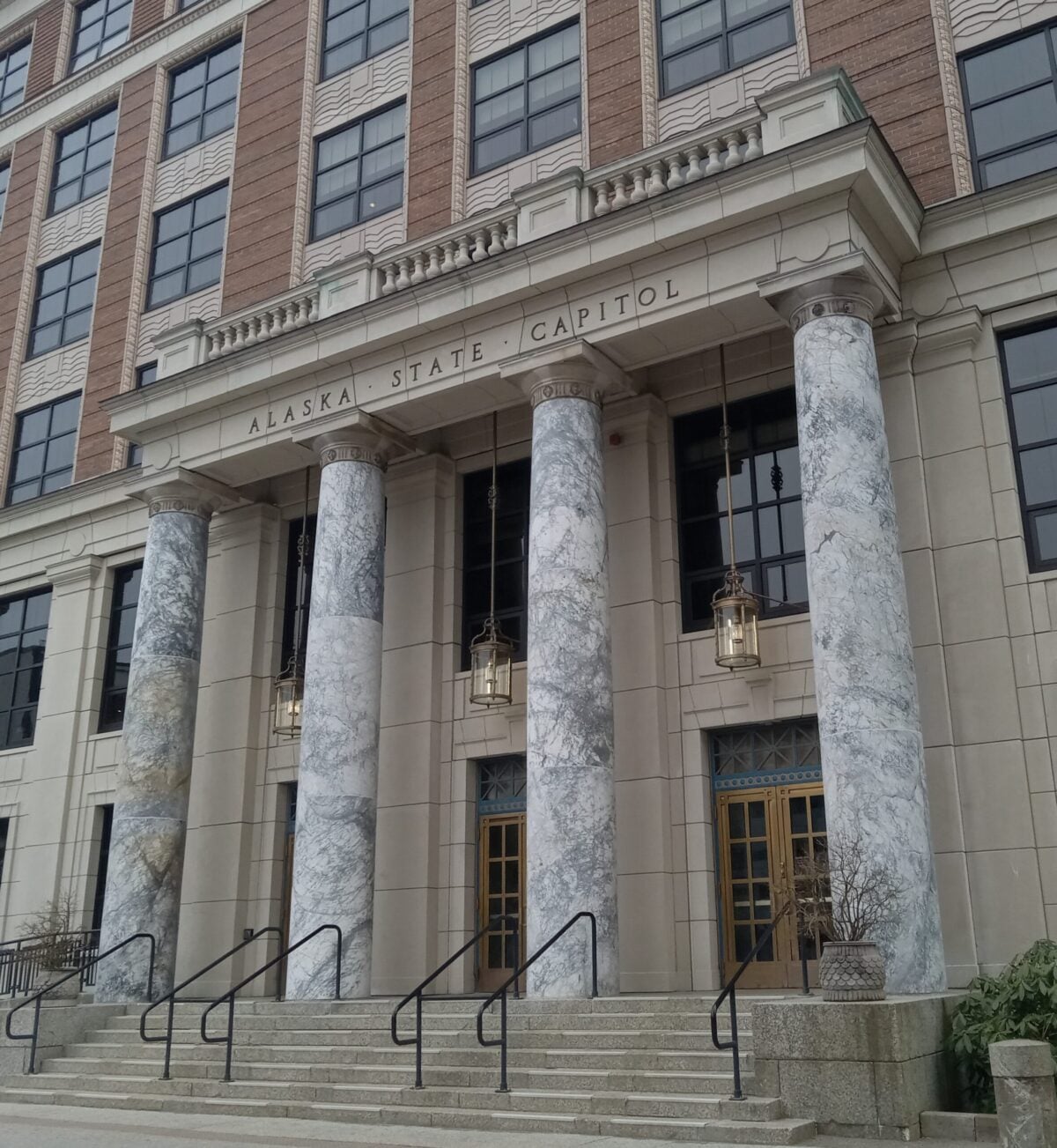
 The Alaska State Capitol is seen during the last week of the 2025 session on May 19, 2025. (Photo by Corinne Smith/Alaska Beacon)

By: Corinne Smith, Alaska Beacon

As many Alaska school districts grapple with steep budget deficits, and in the wake of Gov. Mike Dunleavy’s partial veto of an increase to per-student funding, the Alaska State Legislature has launched a joint bipartisan task force to focus on education funding.

The Legislature approved a $700 increase per student to the funding formula, but earlier this month the governor vetoed more than $50 million in education-related funding from the state’s budget, including a portion of the per-student increase, pushing it down to $500 per student.

Some lawmakers and education officials have expressed outrage and disappointment at the governor’s budget cuts, with leadership of both the House and Senate promising to hold a vote to override the budget veto to partially restore funding to schools, in the first five days of the January 2026 session. The Legislature previously overrode Dunleavy’s veto of a separate bill that enshrined the $700 increase as policy in state law; it required funding in the budget bill to put the increase into practice.

In the meantime, the task force, created by House Bill 57, will look at a wide range of financial challenges and school policies. It’s charged with making recommendations before the 35th Alaska State Legislature convenes in January 2027.

“This is a ‘yes, and’ moment,” said task force co-chair Rep. Rebecca Himschoot, I-Sitka, in a phone interview.  “Is there a way by looking more globally at issues, that we can help contain some of those rising costs that districts have? But the fact remains that we haven’t given a significant increase to education in over 10 years.”

 Rep. Rebecca Himschoot, I-Sitka, speaks in favor of a veto override on House Bill 69 on Tuesday, April 22, 2025. Himschoot also serves as co-chair of the House Education Committee and now co-chair of the education funding task force. (Photo by James Brooks/Alaska Beacon)

Education funding has been at the heart of Alaska’s ongoing political and financial debates among Dunleavy and the Legislature — as well as school officials, families and local municipalities — around state funding, policy changes, and how to improve students’ performance and learning outcomes. In a short video released the day of the line-item budget veto, Dunleavy cited declining state revenues and repeated his conviction that increasing education funding will not necessarily improve outcomes without policy changes. 

The joint task force is set to start work in August, Himschoot said, and will not only look at how the state funds school districts, but also how it can address rising costs of transportation, energy, health insurance and school maintenance. 

“We’re seeing double-digit increases in insurance costs, we’re seeing double-digit increases in energy costs. Is there something we can do to either arrest those increases, or a separate funding stream we should use?” she said.

“There’s been a lot of interest in trying to create some sort of an insurance pool to help with those costs,” she said, adding of the task force’s goals: “In general, examine the big picture to try to get down to that, so to speak, smaller picture of the annual funding cycle.”

Himschoot said solutions will vary as widely as Alaska’s 54 school districts, and the task force can take time on issues not afforded during the fast-paced legislative session. 

“We can tweak individual levers of funding during the session. We can look at how we’re funding career and technical education and say, ‘We want to fund it more. We want to fund it less. We want to use this other mechanism or this other fund source,’” she said. “So by doing this work during the interim over the next two years, it gives us time to ask questions, which often lead to more questions, and during the session, it can be very difficult, on a very tight timeline, and bring in all the different perspectives that need to be heard.”

The task force is planning to meet monthly and meetings will be open to the public, Himschoot said. “It’s super important that this is a process that anyone and everyone can participate in,” she said. “That’s the only way that it has any real value.”

Republican member Sen. Mike Cronk, a former teacher and representative for the large Interior District R that includes nine school districts, said he sees participation from school officials as mandatory. “I’ve already talked to numerous superintendents in my district, and I am going to require some of their input on certain things, because they’re the experts,” he said, in a phone interview. “I believe that’s the buy-in. I don’t believe ‘legislators’ singular, should be making these decisions. We need buy-in from everybody.”

 Then-Rep. Mike Cronk, R-Tok, speaks to a fellow lawmaker on Wednesday, Feb. 21, 2024. Cronk, now a senator, was appointed to the new education funding task force. (Photo by James Brooks/Alaska Beacon)

Cronk said he wants the task force to create an ongoing, stable fiscal plan for funding schools. 

“We’re spinning our wheels. We just continue to not actually solve anything as a Legislature. We just prolong it to the next year, and the next year,” he said, after five years in the Legislature. “So that’s my desire, is to make sure that we have a fiscal plan in place where, if education needs more funding, we have the ability to get that. Or if roads need more attention, we have the ability to get more funding for that versus this. Just, ‘hey, oil prices are great, we could fund everything.’ Or ‘oil prices aren’t so good. Oh boy, we’re in a crisis situation.’ We shouldn’t be there. We should be working together, you know, for the betterment of Alaska.” 

Cronk said he understands the governor’s concerns but disagreed with his partial veto of the school funding increase. “I respect the governor: He’s a separate office than the Legislature, so he has the ability to make decisions what he feels best, you know, and I feel the more we respect that, the better off we’ll all be working together,” he said. “But again, the override vote of the initial bill, I think, was pretty strong and showed that for the most part, most of us supported the increase.”

The task force will also examine student performance and accountability measures, including absenteeism, as well as policy changes sought by the governor throughout the session, like open enrollment, easing the application process for charter schools, and reading incentive grants. 

Cronk said he’s open to looking at all policy changes to improve outcomes. “It’s not just straight up, how do we fund better? It’s, ‘How do we make our education system better for all students?’ So that’s what I hope to focus on,” he said. 

Task force member Rep. Justin Ruffridge, R-Soldotna, said he’s interested in looking at the school funding formula. “So from some of the issues in the formula itself, like school size factor and district cost factor, which some of those haven’t been updated in decades, as well as some of the issues from the federal government, things like the disparity test,” he said, referring to the state failing a federal test and now proposing capping local municipalities’ contributions to their schools.

Rep. Justin Ruffridge, R-Soldotna, addresses the House during the debate on the school funding bill on Mar 10, 2025 (Photo by Corinne Smith/Alaska Beacon)
 Rep. Justin Ruffridge, R-Soldotna, addresses the House during the debate on the school funding bill on Mar 10, 2025. He is a member of the House minority caucus and was appointed to the education funding task force. (Photo by Corinne Smith/Alaska Beacon)

“A task force is well suited to come out with some recommendations,” he said. “I think that we also need to discuss accountability measures, so things like testing, how we test, how we talk about testing … open enrollment, how does that affect Alaska schools? How does it affect military bases? There’s a lot that we have to look at.”

Ruffridge said he’s also focused on teacher recruitment and retention, and incentives for local residents to become certified teachers. “So developing an apprenticeship track to be engaged with teachers, and really growing some of our teachers in their homes and in their communities, I think, is a really good idea,” he said. 

He and Cronk both said they hope the task force will be less of a political and more of an advisory body, “where … you take the time to understand these deeper, complex funding elements or other policy measures and bring forward a draft recommendation of ways that we could make things better — and then that would need to go through the political process,” Ruffridge said. “So, trying to be a little more apolitical.”

The task force also includes co-chair Sen. Löki Tobin, D-Anchorage; Sen. Jesse Kiehl, D-Juneau; and Rep. Andi Story, D-Juneau.

Many school districts are facing millions in budget shortfalls, and with Dunleavy’s budget veto, school boards are going back into budget meetings this summer to make further cuts to programs and staff.

Himschoot addressed criticism of the Legislature not calling an emergency special session this summer to override the line-item veto, saying some legislators are out of the country and unavailable and there is more of a possibility of having the votes to override in January. 

“So the problem is, can we get everyone together? And if we do, will their votes hold? We know for sure we can get everyone together in January. We don’t know that we’ll have the votes, not now and not in January,” she said. “And so we are working on it.”

The task force will present recommendations in a report on the first day of the January 2027 session, the same month the task force sunsets.