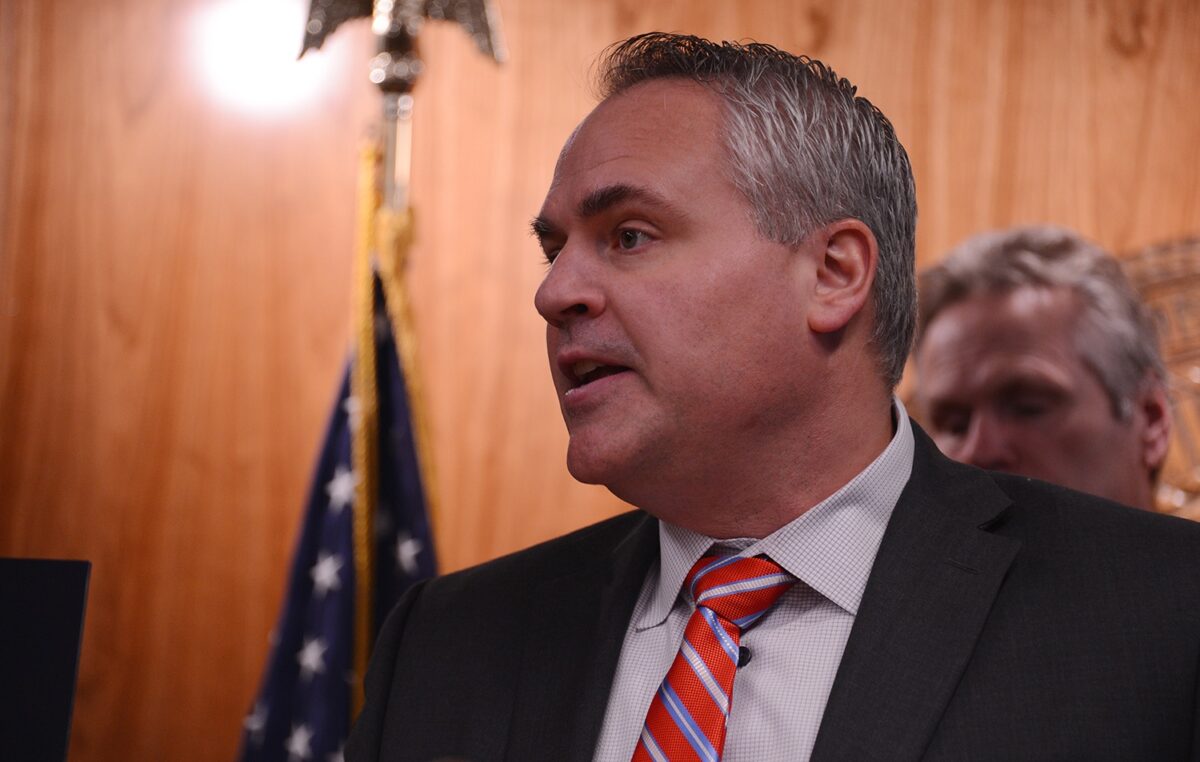
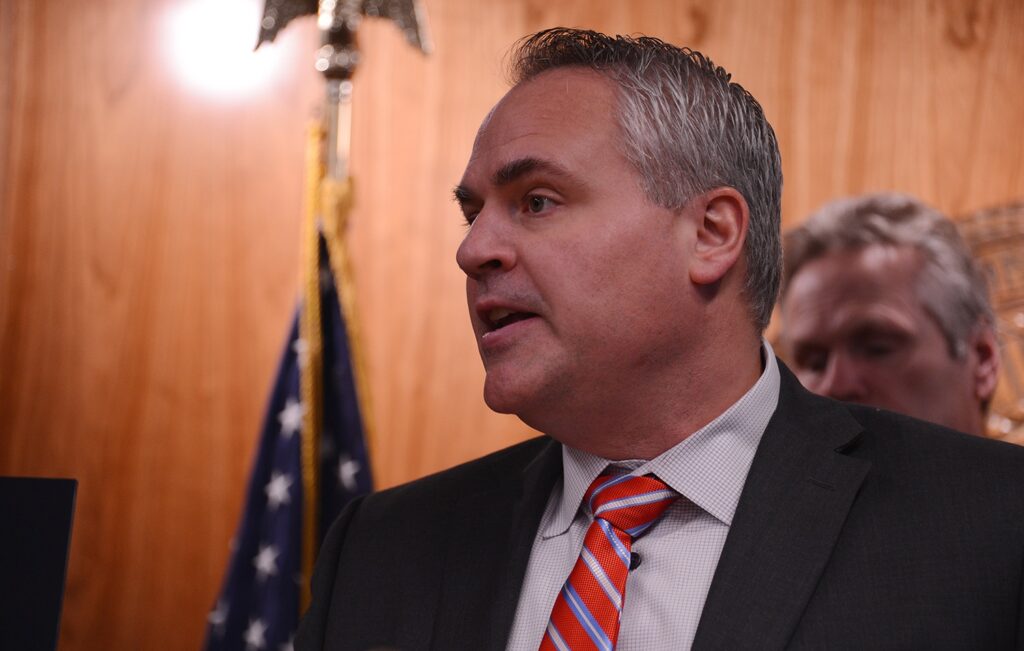
NOTN- Gov. Mike Dunleavy has appointed Stephen J. Cox as Alaska’s next attorney general. The appointment takes effect on Friday, pending legislative confirmation in 2026.
Cox, 48, is a former U.S. attorney for the Eastern District of Texas and senior Justice Department official under the Trump administration. He most recently served as senior vice president and chief legal and strategy officer at Bristol Bay Industrial, an investment arm of the Bristol Bay Native Corporation.
Cox has worked in both federal service and Alaska’s private sector.
In Alaska, the attorney general serves as chief prosecutor, legal counsel to the governor, and represents the state in civil and criminal matters.
Cox and his wife, Cristina, live in Anchorage with their three children.
““I am honored that Governor Dunleavy has invited me to be a part of the Alaska story,” Cox said. “And I am grateful to the Governor and the people of Alaska for the opportunity to serve. Since 2011, I have been privileged to work on Alaska’s development, and my family and I were blessed with the opportunity to move to Anchorage and make Alaska our home.”
Screenshot of Wednesday’s press meeting in Anchorage
NOTN- Governor Mike Dunleavy hosted a press event yesterday with members of the U.S. House Committee on Natural Resources to ‘highlight Alaska’s resource development opportunities’, the 45-person committee deals with a variety of issues pertaining to public lands in the United States.
Committee Chairman Bruce Westerman, Congressman Nick Begich , and several other members are in the state reviewing current and future projects.
According to the Alaska Beacon, lawmakers visited Hecla Greens Creek Mine, which produces silver, gold, zinc and lead from a site west of Juneau. They overflew parts of the Tongass National Forest, the nation’s largest, and observed Suicide Basin in the Mendenhall Glacier.
The group joined the Governor at his Anchorage office to share their findings and discuss Alaska’s resource potential.
“you know, Alaska is a giant in the resource space.” Said Representative Begich at the meeting, “You know how you bind a giant? one little thread at a time. That’s what we’ve dealt with from the federal government, from not just my perspective, from the perspective of industry that has worked so hard for so many years to develop the resources of Alaska responsibly.”
Following the press conference, Dunleavy signed the nation’s first state-level FAST-41 memorandum of understanding with Emily Domenech, Executive Director of the Federal Permitting Improvement Steering Council.
They say agreement will streamline project reviews, enhance coordination between state and federal regulators, and increase transparency through the Federal Permitting Dashboard.
Dunleavy called the agreement a step toward “unlocking Alaska’s full potential,” saying it will help cut federal delays on resource and energy projects.
Permitting Council Executive Director Emily Domenech added that Alaska is the first state to formally partner with the council, giving projects like energy, mining, transportation, and broadband a path to streamlined approval.
The Alaska Department of Natural Resources will serve as the lead agency working with the council.
The U.S. Department of Agriculture also announced yesterday it will move forward with plans to rescind the Clinton-era “Roadless Rule,” which has restricted logging and development on millions of acres of national forest land for more than two decades.
The agency will open a public comment period on Friday through Sept. 19 before finalizing the repeal.
The rule, enacted in 2001, currently protects about 45 million acres of federal forestland, with Alaska’s Tongass National Forest among the most affected areas.
Sun shines through the canopy in the Tongass National Forest. (Photo by Brian Logan/U.S. Forest Service)
The U.S. Department of Agriculture, parent agency of the U.S. Forest Service, announced Wednesday that it is moving ahead with plans to rescind a rule that has restricted logging and construction on millions of acres of federal lands in the American West for more than two decades.
U.S. Secretary of Agriculture Brooke Rollins said in a written statement that the agency intends to open public comments Friday on its proposal to end the so-called “Roadless Rule,” an act that will affect as much as 45 million acres of federal land as well as millions of Americans who live near it.
Opening a public comment period is the first step in repealing the rule. According to Rollins’ statement, members of the public will have until Sept. 19 to offer their opinions on the repeal, a timeframe that opponents of the plan denounced as inadequate.
Roads are a key prerequisite for large-scale logging and mining projects, and the rule — enacted in 2001 at the end of the Clinton administration — has limited the number of development projects on Forest Service land.
In Wednesday’s announcement, Rollins said rescinding the roadless rule would allow local land managers to make decisions on development and logging.
“It is vital that we properly manage our federal lands to create healthy, resilient, and productive forests for generations to come. We look forward to hearing directly from the people and communities we serve as we work together to implement productive and commonsense policy for forest land management,” she said.
Tree thinning could also reduce wildfire risks, she suggested.
Environmental groups, already prepared for Rollins’ announcement, were quick to denounce it as harmful and out of touch.
“America’s national forests give us clean air, water, wildlife, and the freedom for all to enjoy the outdoors,” said Tracy Stone-Manning, president of The Wilderness Society, in a prepared statement, “but now they are the latest target in this administration’s unpopular push to give away our lands to drill, mine, and log. Gutting the Roadless Rule — which has protected our forests for 25 years — would be the single largest rollback of conservation protections in our nation’s history.”
The Roadless Rule has been the subject of lawsuits for decades, and forests in Colorado and Idaho have already been exempted from it under state-specific guidelines.
Ninety-six percent of the Forest Service’s inventoried roadless areas are located in 12 western states, and no state is more affected than Alaska, which has almost a third of the 45 million acres affected by the pending change.
Alaska is home to the Tongass National Forest, a West Virginia-sized stretch of islands and waterways in the Southeast Alaska panhandle that make up the largest surviving temperate rainforest in the world.
Until the 1980s, the area was also home to a vast logging program and pulp wood mills that employed thousands of people.
“Across Southeast Alaska, we see the irreparable damage from so many decades of unsustainable clear-cut logging in the scarred landscapes and decimated fish and wildlife habitats — we cannot and will not go back to that, and we know that’s what public comment will show once again,” said Maggie Rabb, executive director of the Southeast Alaska Conservation Council, in a statement released Wednesday.
Some Alaska Native tribes in the region support keeping the rule in place, as do some tourism businesses.
“Rescinding the Roadless Rule will devastate our community just as we are beginning to heal from clear-cut logging of the past. It’s clear the people making these decisions in Washington, D.C., don’t care about how it will harm those of us who live here and have lived here for thousands of years,” said President Joel Jackson of the Organized Village of Kake, which has repeatedly intervened in lawsuits seeking to defend the rule.
“We are the people of the forest and salmon people — our lives and our voices should count — this process makes it clear they won’t,” Jackson said.
Repealing the Roadless Rule also has powerful support in the region. Local electric utilities have advocated a repeal in order to ease the construction of clean hydroelectric power plants. The Alaska Forest Association, representing the logging industry, supports it, as do mining proponents.
Ten members of the U.S. House’s Committee on Natural Resources were in Anchorage on Wednesday as part of a weeklong tour of the state.
U.S. Rep. Paul Gosar, R-Arizona, said he believes the Roadless Rule “has really handicapped us in a number of areas,” including in firefighting.
Gosar said he believes the federal government needs to take a new approach on federal land in order to thin trees and reduce wildfire risks.
In Utah, which has 4 million acres of inventoried roadless land, Republican U.S. Rep. Celeste Maloy said she frequently hears from constituents upset about restrictions on the public use of federal land and supports the repeal.
“One of the complaints my constituents have frequently is that the federal government manages a lot of our resources but isn’t always great at listening to the people who live among the resources. … This Roadless Rule decision is a direct result of complaints from people who live with the Roadless Rule and the unintended consequences it’s having on economies and on resources,” she said.
U.S. Rep. Val Hoyle is a Democrat from Oregon also traveling with the committee. Her state has almost 2 million acres of inventoried roadless area, much of it in her district, but she said she would like to see a more balanced approach than the one being offered by the Trump administration.
“We have to protect our federal lands. We have to make sure that the public has access to our public land, and we have to make sure that we aren’t just wholesale taking out the protections that we worked really, really hard for, because we owe it to the people of this country to protect those lands that truly are theirs,” she said.
U.S. Rep. Jared Huffman, D-California, is the top Democratic member of the resources committee, and wasn’t on the trip to Alaska.
In an emailed statement, he said Rollins “is steamrolling ahead with Trump’s plan to deliver America’s last wild forests to corporate polluters.”
“Democrats will fight this reckless scheme and stand with Tribes, hunters, anglers, and families who rely on these forests — not corporations looking to cash in,” he said.
Members of the U.S. House Committee on Natural Resoures talk with reporters at Juneau International Airport on Monday, Aug. 25, 2025. (Photo by James Brooks/Alaska Beacon)
Ten members of the U.S. House of Representatives’ Committee on Natural Resources are making an unusual visit to Alaska this week during a break from business on Capitol Hill.
The 45-person committee deals with a variety of issues pertaining to public lands in the United States, and the visit is giving eight Republicans and two Democrats a chance to put their literal hands on the topics they cover.
On Monday, the lawmakers visited Hecla Greens Creek Mine, which produces silver, gold, zinc and lead from a site west of Juneau. They overflew parts of the Tongass National Forest, the nation’s largest, and observed Suicide Basin in the Mendenhall Glacier, the origin point for glacial floods that have inundated parts of Alaska’s capital city in recent summers.
Outside the hangars of Ward Air in Juneau, several House representatives talked with reporters.
“Obviously, Alaska is a big natural resources state, so we’re here seeing things on the ground, so that when we’re talking about (them) in Washington, DC, it’s not just an academic exercise for us,” said Rep. Celeste Maloy, R-Utah and a member of the committee.
Among the group was the committee’s chairman, Rep. Bruce Westerman, R-Arkansas, as well as the home-state Republican Rep. Nick Begich.
U.S. Rep. Bruce Westerman, R-Arkansas, speaks with reporters at Juneau International Airport on Monday, Aug. 25, 2025. At left is Rep. Harriet Hageman, R-Wyoming. (Photo by James Brooks/Alaska Beacon)
Begich called the visit “historic for Alaska,” citing the number of visiting Representatives.
Also attending were Reps. Harriet Hageman, R-Wyoming; Tom Tiffany, R-Wisconsin; Pete Stauber, R-Minnesota; Rob Wittman, R-Virginia; Val Hoyle, D-Oregon; Paul Gosar, R-Arizona; and Sarah Elfreth, D-Maryland.
“It is imperative that we visit these places, so that we have a better understanding when they come before us and ask for relief, whether it is in permitting reform or in ways to better manage the resources that we have,” Hageman said.
The legislators are expected to spend several days in southcentral Alaska, where they will address the annual meeting of the Alaska Oil and Gas Association in Anchorage on Wednesday.
Members are planning to meet with Gov. Mike Dunleavy and expecting to hold a news conference with reporters in Anchorage as well.
Members of the U.S. House Committee on Natural Resources pose for a photo in Hecla Greens Creek Mine near Juneau, Alaska, on Monday, Aug. 25, 2025. At far left is Juneau Mayor Beth Weldon. (Natural Resources Commitee photo)
For many of the national lawmakers, fresh from a mine tour, minerals were on their minds. President Donald Trump and his administration have been talking at length about the need to increase American production of so-called “critical minerals” used in electronics and high-tech equipment.
Stauber, of Minnesota, said he saw Alaska’s potential to contribute to that effort.
“Alaska can drive that. They can lead the nation into both oil and gas and mineral exploration, if we’d allow them to do that. What we saw at that mine was spectacular,” he said, referring to the Greens Creek mine.
Westerman said he believes additional mining and refining are needed in the United States and Alaska.
“With the big demand on critical minerals and rare earth (minerals) that we have in the country right now, the dependence we have on China for that, I think it’s imperative that Congress work with everyone who’s in the business to help figure out how to get more mining done here in the US — and not just mining, but also the refining of the metals, which is a huge issue,” he said.
Neither of the two Democrats on the trip spoke publicly during their stop in Juneau.
Several of the Republican lawmakers said they believe there is room to increase logging in the Tongass in order to meet the demand for lumber to build housing, particularly locally.
“You ought to at least be able to cut enough timber to sustain your needs here at home, and that will make the forest healthier,” Westerman said.
Speaking nationally, Gosar of Arizona said he believes that selectively thinning national forests could reduce wildfire danger as well.
“You can’t let a lightning fire start where the undergrowth hasn’t been taken care of,” he said. “That’s how we lost the 19 firefighters in Yarnell. … I think there needs to be common sense in that aspect. Get people out on the timber, get the timber, use it for something like building homes. This place needs a lot of homes.”
NOTN- The Juneau School District Board of Education will hold a special meeting today, at noon via Zoom to consider a series of action items, from playground improvements to budget changes and contract approvals.
One of the key items up for a final vote is the acceptance of playground equipment donated by Juneau Rotary Clubs for the Dzantik’i Heeni campus. Rotary has secured $30,000 in funding to provide musical play elements for students at Montessori Borealis and the Juneau Community Charter School.
Volunteers have committed to installing the equipment this fall.
Also on the agenda is a first reading of a budget revision that would add universal free breakfast for all JSD students. The revision comes after an increase in state education funding, after the Base Student Allocation was restored to $700 per student.
The adjustment would provide an additional $1.5 million in revenue, allowing the district to potentially expand student meal programs.
The public can view the meeting online, and final adoption of the FY 2026 Budget Revision is expected at a subsequent board meeting.
Students begin their first day of school at the Tlingit Culture, Language and Literacy program at Harborview Elementary School in Juneau on Aug. 15, 2025 (Photo by Corinne Smith/Alaska Beacon)
The Alaska Legislature opened an 18-month study of the state’s troubled public education system on Tuesday as lawmakers convened the first meeting of their Task Force on Education Funding, established by law this spring.
Alaska’s public schools rank among the worst in the country according to national standardized testing data, and members of the bipartisan, bicameral task force have been charged with identifying ways to improve performance by changing the way schools are funded and manage their students.
Legislative leaders have said the task force will also have the opportunity to examine funding for schools and ways to address rising costs of transportation, utilities, insurance and maintenance.
Members of the task force will hold a series of hearings and discussions before drafting recommendations for new laws that legislators might implement. Those recommendations must be delivered before lawmakers arrive at the Alaska Capitol in January 2027.
Gov. Mike Dunleavy called legislators into a special session to address education issues, but lawmakers have ignored that call and are not planning to hold formal meetings before the special session ends at the end of the month. Legislative leaders have said they prefer to work through the task force instead.
Dunleavy is term-limited and will be out of office by the time the task force’s recommendations are complete.
“The current state of Alaska’s education is not where we’d like it to be, but I know that we can get to a better place if we all work together, we find common ground, and we build upon what we agree upon,” said Sen. Löki Tobin, D-Anchorage and co-chair of the task force.
But on Monday, it appeared that finding that common ground could be difficult, as task force participants identified different areas they prefer to focus upon.
“John Muir said that when we try to pick out anything by itself, we find it hitched to everything else in the universe. The same is true in education,” said Rep. Rebecca Himschoot, I-Sitka. If we take steps to improve teacher quality, that has an impact on the classroom. If we take steps to make sure kids are fed, that has an impact. If we take steps to make sure that we have the right ratios of teachers with students. All of these things have impacts.”
Rep. Justin Ruffridge, R-Soldotna, said he would like the task force to consider how it measures results. What standardized tests, if any, should be used to consider performance?
“I think accountability broadly is a place that I hope to go, and I hope that the (Alaska Department of Education and Early Development) can have some input on that,” he said.
Sen. Jesse Kiehl, D-Juneau, suggested that the task force should be “looking at how we empower local government” to deal with education decisions, while Sen. Mike Cronk, R-Tok, said he wants to make sure the task force is “focusing on policies like the READS Act,” which was a bipartisan bill intended to improve reading performance among younger students.
“We are seeing success in that, and those are the kind of policies we need,” he said.
This year, lawmakers voted to increase the base student allocation, core of the state’s per-pupil funding formula, but Ruffridge suggested that lawmakers need to examine other aspects of the formula to see whether they are delivering the intended results.
Alaska, for example, multiplies the base student allocation for students with “intensive needs” and those in rural Alaska.
“It’s a scary proposition to open up the foundation formula, but I think it’s something that we are really tasked with doing in this group,” he said, adding that the state has failed to properly maintain school facilities, particularly in rural Alaska.
Cronk, in prior comments, said he also is concerned about school maintenance. In most of Alaska, proper maintenance depends on funding from the state government.
“If we want to continue to have (stable) education funding, us as a collective group need to create a fiscal plan for this state,” he said.
“I’m hoping that if we’re talking about funding, that should be our goal as part of this, to make sure that we can come up with something so we do have a level funding for all the government services,” Cronk said.
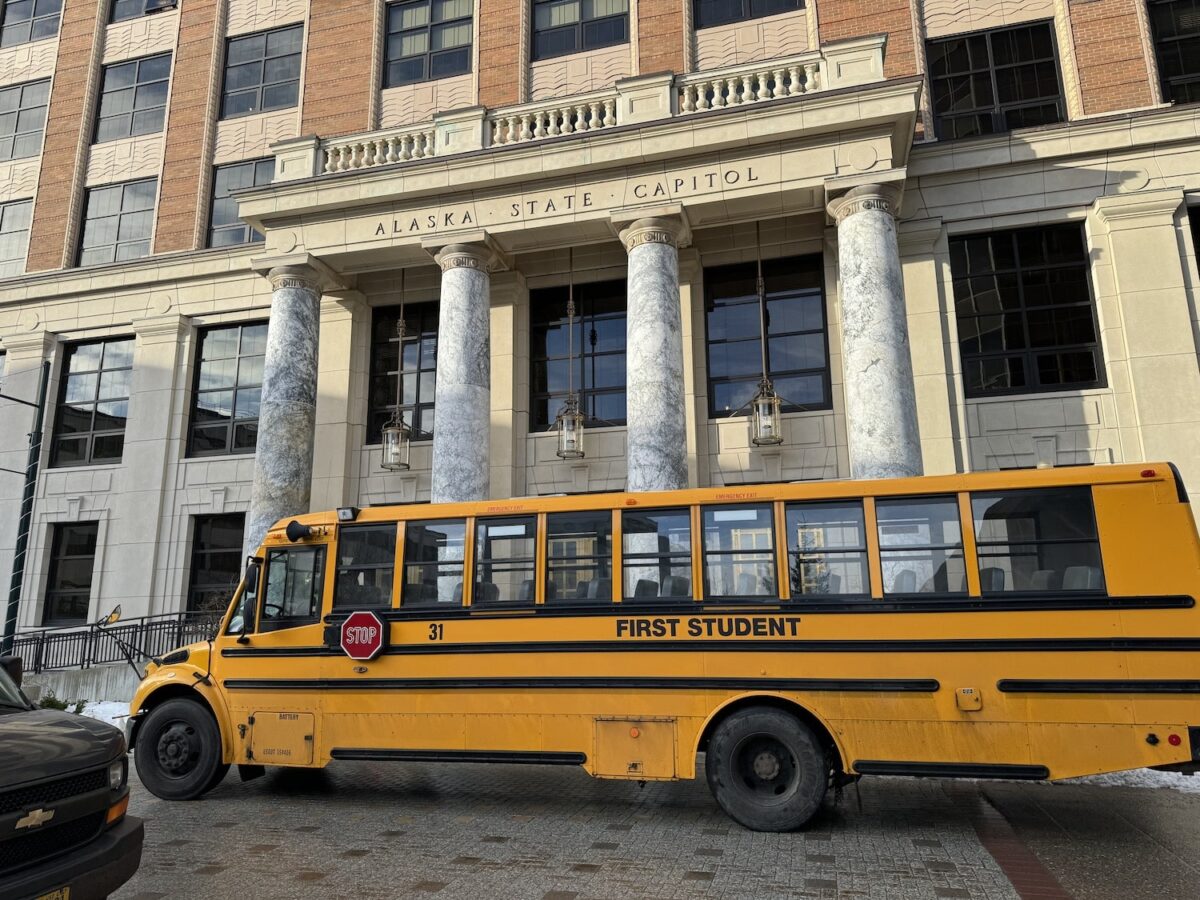
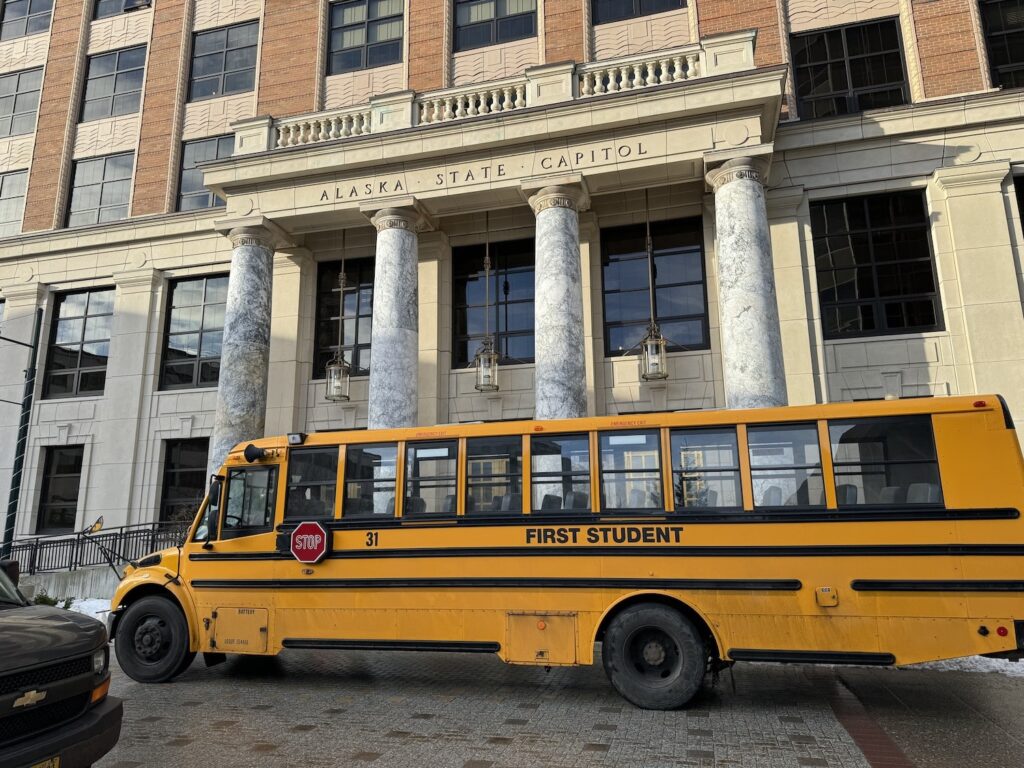
A school bus passes in front of the Alaska Capitol on Tuesday, Feb. 6, 2024. (Photo by James Brooks/Alaska Beacon)
A school bus passes in front of the Alaska Capitol on Tuesday, Feb. 6, 2024. (Photo by James Brooks/Alaska Beacon)
NOTN- Alaska lawmakers will hold the first meeting of the Education Task Force today, beginning a 17-month process to evaluate the state’s approach to school funding and policy.
The task force, is charged with producing a report to the full legislature that will examine education funding formulas as well as policy items championed by the governor and other lawmakers.
“it’s a really broad mandate.” Said Juneau Senator Jessie Kiehl, we’ll look at education funding, look at some policy issues, including several that were on the governor’s wish list, and and really dig in.”
The Education Task force is described as multipartisan, with both democratic and republican leaders starting work this August.
“We’re going to bring in a lot of information, a lot of experts, and see if we can figure out what the state needs to do, to really improve education stability, education funding and outcomes for Alaska kids.” said Kiehl.
The panel’s creation stems from House bill 57, and is part of Alaska’s ongoing political and financial discussions surrounding education.
“This task force was in the bill that the Governor vetoed, that Bill had, of course, most importantly, the funding stabilization, but then it also had a number of education policy things that the governor wanted, some legislators wanted,” Kiehl said,”The governor’s veto, he said, was because he didn’t get all of the policy pieces he wanted. One of the things this task force is going to look into is some of those policy pieces that just did not have support in the legislature.”
Task force members said they will revisit some of those disputed policy proposals while focusing on long-term solutions to strengthen education in Alaska.
AP- Alaska medical professionals who provide gender-affirming care could risk disciplinary action under a proposal set for review by the state medical board on Friday.
The proposal would deem any professional who uses hormonal and surgical treatments for minors “as being grossly negligent” and subject to sanctions by the board, according to the board’s minutes from a June meeting.
The type and extent of disciplinary actions were not spelled out, and board member Matt Heilala, an Anchorage podiatrist who was helping write the proposed regulations, declined to discuss the details Thursday with The Associated Press ahead of the meeting.
The move comes after the board in March sent a letter to state lawmakers expressing opposition to hormonal or surgical gender-affirming care for minors and urging legislators to enact limits on treatments. The Legislature — controlled by bipartisan majorities in both the House and Senate — didn’t take up the issue before adjourning in May.
Critics worry the board is overstepping its authority in pursuing regulations that could leave medical providers open to possible disciplinary actions. Instead of allowing the legislative process to play out, “they are now becoming the legislators themselves, which is inappropriate,” said state Sen. Löki Tobin, a Democrat who has been outspoken in support of the LGBTQ+ community.
The medical board at a June meeting designated member Heilala to help draft a statement for consideration that would pertain to declaring those providing the care “as being grossly negligent and therefore subject to disciplinary sanctions,” according to the minutes of that meeting.
Heilala declined to discuss the specific language stemming from that directive that the board would consider Friday but told the AP that the proposed rules would go through a deliberate and transparent process for the public. Such processes can take months, he said.
Gender-affirming care includes a range of medical and mental health services to support a person’s gender identity, including when it’s different from the sex they were assigned at birth. It encompasses counseling, medications that block puberty and hormone therapy to produce physical changes as well as surgeries to transform chests and genitals, though those are extremely rare for minors.
Most major medical groups say access to the treatment is important for those with gender dysphoria and see gender as existing along a spectrum. While there’s wide, if not universal, medical consensus, the political situation is contentious.
In Texas, Republican Gov. Greg Abbott had issued an order allowing the state to investigate parents of transgender youth for child abuse. But a Texas judge in 2022 blocked the state from investigating families of transgender youths who have received such care and members of the LGBTQ advocacy group PFLAG Inc. over such medical care.
Tom Pittman, executive director of Identity Inc., an Anchorage-based advocacy and health care organization for the LGBTQ+ community, said about 500 Alaska medical professionals have signed an open letter opposing the changes being considered by the board.
The letter campaign organized by Pittman’s group said gender-affirming care for adolescents, when provided in partnership with families, is evidence-based medicine.
“Labeling it ‘negligence’ is not a medical conclusion. It is a political act with devastating consequences: punishing clinicians, undermining parents, and denying young people lifesaving treatment,” the letter states.
Fewer than 100 youth are receiving such gender-affirming care, Pittman said.
Pittman called Heilala’s actions politically motivated, saying he “has co-opted Alaska’s medical board and institution to launch a bid for governorship, and he’s using scapegoating and discrimination against what is a very small vulnerable population of Alaskans to create a bully pulpit for himself.”
Heilala is one of at least eight Republicans to announce plans to run for governor next year. But he said this is an issue the board has been working on for some time and “has nothing to do with my running at all.”
Alaska Attorney General Treg Taylor speaks at a news conference on Thursday, Dec. 15, 2022, at the Alaska State Capitol in Juneau. (Photo by James Brooks / Alaska Beacon)
Alaska Attorney General Treg Taylor speaks at a news conference on Thursday, Dec. 15, 2022, at the Alaska State Capitol in Juneau. (Photo by James Brooks/Alaska Beacon)
JUNEAU – Alaska Attorney General Treg Taylor will resign later this month after more than three years as the state’s top lawyer.
According to a statement from Governor Mike Dunleavy, he accepted the resignation and said Taylor’s final day will be Friday, August 29.
“Attorney General Treg Taylor’s sound legal judgment and dedication to public service have made a meaningful difference for Alaska,” Dunleavy said. “From defending our right to develop Alaska’s natural resources to fighting crime, his legal leadership has helped preserve and advance opportunities for everyday Alaskans.”
Taylor, first appointed in 2021, ranks among the longest-serving attorneys general in Alaska’s history. In a statement, Dunleavy credited him with steering the state through major legal battles, from natural resource development disputes to public safety issues.
“It has been an honor and a privilege to serve as the Alaska Attorney General,” Taylor said. “I am incredibly proud of what the Department has accomplished together fighting federal overreach, making our communities safer, and defending the Alaska way of life. None of these victories would have been possible without the extraordinary attorneys and staff at the Department of Law and the support of the Governor. Their dedication and professionalism inspire me, and I will always be thankful for the opportunity to have served alongside them.”
Dunleavy said he plans to name an interim attorney general before Taylor’s departure.
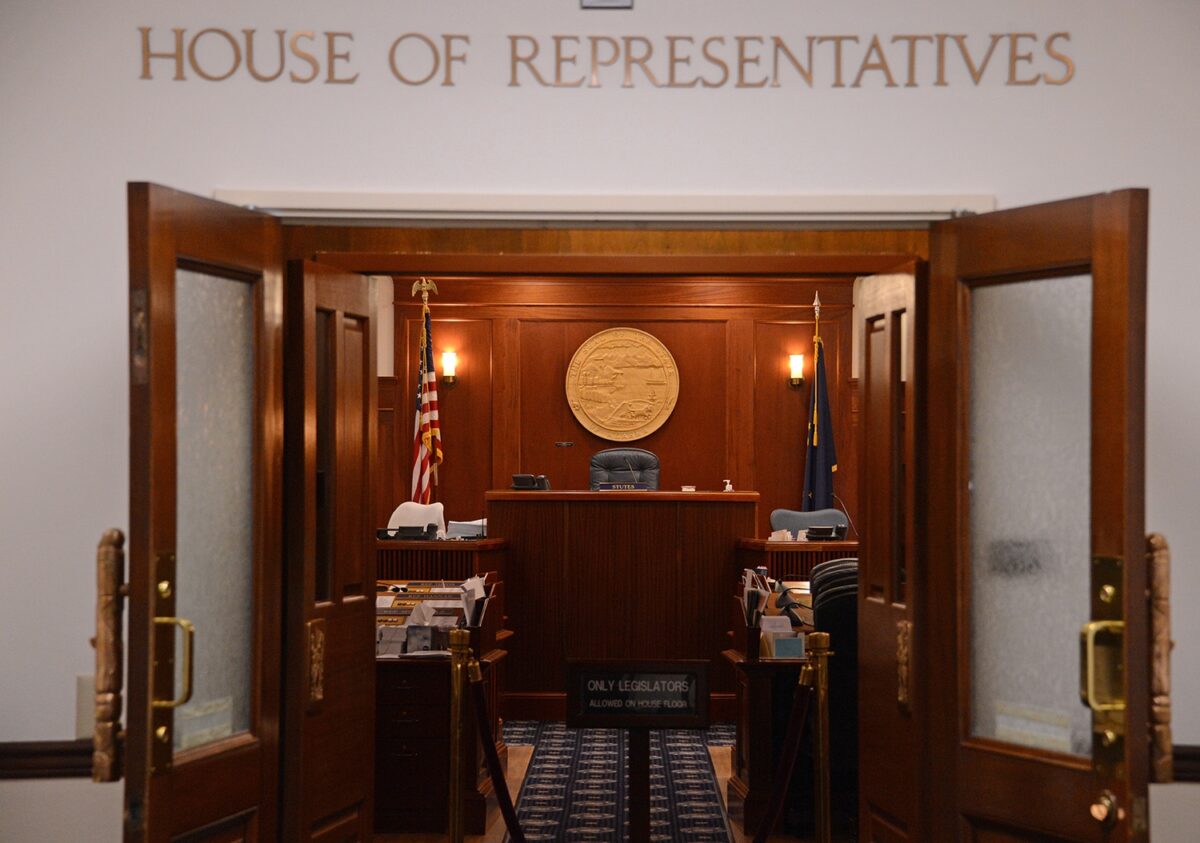
The House chambers are seen on Friday, May 13, 2022 at the Alaska State Capitol in Juneau, Alaska. (Photo by James Brooks/Alaska Beacon)
By: Corinne Smith, Alaska Beacon
The House chambers are seen on Friday, May 13, 2022 at the Alaska State Capitol in Juneau, Alaska. (Photo by James Brooks/Alaska Beacon)
The Alaska State Legislature is planning a brief session without taking any action on Tuesday, and legislative leaders say they’ve already completed their intended work for the special session, which ends on Aug. 31.
Gov. Mike Dunleavy called the 30-day session, which began on Aug. 2, for legislators to address his education policy priorities and to create a new Alaska Department of Agriculture. The Legislature convened — one senator flying back from U.S. National Guard duty in Poland — and within hours voted to override two of the governor’s vetoes. Lawmakers then adjourned until Tuesday.
Legislators voted to leave the session open and not officially close out the special session to prevent Dunleavy from calling them into another one.
On Tuesday, just “a handful” of legislators are expected to be present for what’s known as a “technical session,” said House Speaker Rep. Bryce Edgmon, I-Dillingham, reached by phone Monday in his district.
Edgmon said he was planning to fly back to Juneau to facilitate proceedings in the House on Tuesday, but said it will be brief.
He said the Legislature’s votes to override two of the governor’s vetoes, including restoring $51 million for K-12 schools, was a success – and their only goal for the special session.
“But the specter of the governor calling us right back in seems to be very prominent,” Edgmon said. “And we had to do what we had to do in terms of allowing members to go back home, go back to their districts, not being Juneau, drawing per diem, costing the state money — with the stated intention, of course, of looking at the governor’s bills, continuing to consider the governor’s bills and the subject matter next session, as we started to do last session.”
The governor introduced three bills on Aug. 2, related to education policy, and Edgmon said they have been referred to related committees.
Edgmon said he’s had no communication from the governor’s office since the veto override votes.
“I wish we had a better relationship with the governor, to where we could plan things out, work jointly in terms of any outcomes for a special session. The governor is acting unilaterally, which, of course, is his prerogative, should he choose. But that does not bode well in terms of any kind of a positive result for special session,” he said.
Jeff Turner, the governor’s communications director, said by email Monday, “lawmakers should not need an incentive to improve public education policy,” and that it was the Legislature’s decision to not take up the governor’s bills during this special session.
Turner pointed to the governor’s comments on an Anchorage-based commercial radio show on Aug. 14, where Dunleavy criticized the Legislature’s veto override restoring school funding, and said additional funding is “not going to change the performance outcomes.”
The House and Senate are scheduled to gavel in at 10 a.m. on Tuesday.
A new joint legislative education funding task force is scheduled to hold its first meeting on Aug 25, where its six members are expected to examine how the state funds schools, as well as Dunleavy’s educational policy items.