NOTN- Juneau’s city officials are still weighing cuts to city services, new debt for infrastructure and a major change to sales tax rules as they work to close a nearly $12 million dollar budget deficit.
After a nearly five-hour finance committee meeting last night, officials began prioritizing a list of possible reductions. The work will shape the budget the Assembly expects to pass by the deadline on June 15.
Still under consideration are cuts to destination marketing through Travel Juneau, economic development funding for the Juneau Economic Development Council, potential closure of Mount Jumbo Gym, reduced hours or closure of the City Museum, and cuts to arts and culture funding through the Juneau Arts and Humanities Council.
Some of the most controversial ideas have been taken off the table for this year, including closing one of the city’s pools, the field house and the Treadwell arena. Those facilities will instead be supported with city savings which will be a short-term solution.
“Those were the ones that we had heard lots of public feedback on.” Said Finance Director Christine Woll, “Closure of the ice rink is no longer in consideration. I will say, everyone on the assembly acknowledged we can get away with not making those cuts this year, but that’s because we have a lot of money in savings, and so using our savings to fund those facilities will not work much for longer than a year.”
The Assembly is also considering up to two bond proposals for the ballot, Woll said, one for improvements to aging school facilities and another for water and wastewater infrastructure. She said general obligation bonds are appropriate only for capital projects and must be approved by voters.
“With approval from the taxpayers, the city does have a good amount of debt capacity and one piece I’ll add to that is, we would only use debt for Capital Projects, right? So the idea is you would borrow money so you can improve something or build something, and then pay it back over time, as opposed to taking on debt to operate something into the future.” Woll said, “So the Assembly is looking at putting up to two bond proposals on the ballot. We haven’t decided yet, but basically we’re looking at taking on debt for some improvements to our aging school facilities, as well as our water and wastewater infrastructure. So those in my opinion, good projects for debt.”
The Assembly plans a public hearing June 8, the same day many budget decisions are expected, and is accepting email comments at boroughassembly@juneau.gov. Woll urged residents to weigh in on the tax cap and potential service cuts as soon as possible.
A drone image shows widespread flooding in the Mendenhall Valley. (Image courtesy of Rich Ross)
A drone image shows widespread flooding in the Mendenhall Valley in 2024. (Image courtesy of Rich Ross)
NOTN- City officials and U.S. Army Corps of Engineers representatives outlined ongoing and proposed flood-mitigation work last night.
The Committee of the Whole work session focused on HESCO barriers and river armoring installed after the series of glacial lake outburst floods in recent years.
Mike Records, the Technical Lead for the Army Corp of Engineers, outlined the hydrology of the system, how the flood water moves.
His presentation estimated flood risk. those estimations will be used to design short, medium and long-term protections.
Engineers discussed “Annual Exceedance Probability” or AEP, which was once referred to as “100 Year Flood.”
This means the chance that a flood of a certain size will happen in any given year. For example, a “1% AEP” flood has a 1% chance of happening each year.
But according to officials, those odds add up over time. Even a rare flood becomes much more likely if you look over many years. A flood with a 1% yearly chance has about a 40% chance of happening at least once over 50 years.
“A 1% annual exceedance probability event would be the equivalent of a 100-year event, there is a low chance of that happening, but over time, those chances compound.” Records said, “The annual exceedance probability events that we developed are peak discharge events that we then used in hydraulic modeling to inform decision making on design. You’ll see that a lot of these events are significantly larger in magnitude than anything that’s been experienced at this point.”
In most places, engineers rely on decades of historical data to estimate flood risk, but in this case, there are only about three years of major data available.
“There’s flooding all over the country, it’s rare that it develops so suddenly like this.” Records said, “So normally, you might have like a 60 year period of record of flood events that you could use to develop your AEPS. In this case, there’s basically three years of full drainage events.”
Because of limited data and a changing environment, there is a lot of uncertainty in these estimates, so engineers are planning for the worst-case scenario.
According to officials, Suicide Basin is expanding. This is because the glacier is melting and retreating, which opens up more space for water to collect. Ice is breaking off (calving), melting, and adding to the lake, so overall the basin can hold more water than it used to. On the other side, the spillway,, the pathway where water drains out beneath or around the glacier, is also changing. As the glacier thins and melts, the outlet is getting lower, which can allow water to start draining sooner.
Cubic-feet-per-second or CFS, is the rate at which water flows. Last year’s flood reached about 50,000 CFS. Officials said work aims to reach a 63,500 CFS flood scenario threshold by mid-July.
Assembly Member Nano Brooks asked Records about the service life of the HESCO barriers, to which Records responded, “They have a warranty of five years. I think that’s primarily for fabric degradation. Of course, those parts can be replaced, but that is kind of the maximum expectation without significant ongoing maintenance.”
Three options were presented for the coming season: the status-quo-plus build, upgrades to protect to 63,500 CFS (the staff recommendation), or a larger, more costly build to protect to 90,000 CFS. According to officials, that type of flood has an 18% chance of occurring in the next 10 years.
Officials said the 63,500-CFS option would leave an estimated $3 million funding gap and the 90,000-CFS option about $8 million short of current funding.
The city is pursuing State Revolving Fund assistance that would forgive half the loan and could cover much of the cost if approved.
Ultimately The City and Borough Assembly voted 7-2 to authorize work to reinforce and raise HESCO flood barriers to protect against a 63,500 CFS event ahead of the 2026 flood season .
An ordinance to formalize the appropriation is expected for introduction May 18.
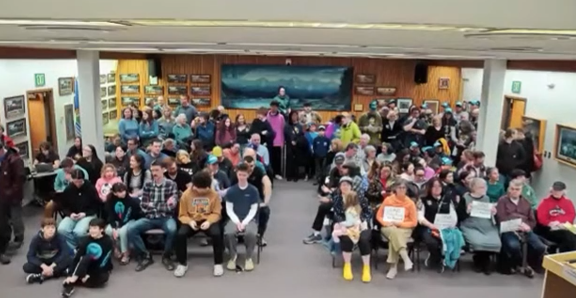
Juneau residents pack Assembly Chambers to give public testimony on CBJ’s proposed Budget cuts, photo courtesy of CBJ.
NOTN-Residents packed a special Assembly meeting last night to oppose proposed cuts to city recreation facilities, warning that closures would damage public safety, youth development and the community’s quality of life.
“‘I’ve got some serious questions about the budget as proposed and how it actually balances livability.” Said one testifier, Brock.
The hearing focused on the city manager’s draft budget, which lists possible reductions to parks and recreation services, including the closure of one of Juneau’s two public pools, the Treadwell Ice Arena, and the Dimond Park Field House. City officials have emphasized the list is preliminary and intended for discussion, not a final set of cuts.
“Speaking in favor of the Juneau Douglas City Museum, my wife and I volunteer there, as do many, many other people, thousands of hours a year.” Said one testifier, Ed, “We provide a lot of information for visitors, capital tours, walking tours, the museum itself. When you lose a museum, you lose history. When you lose your history, you screw up the future.”
Speaker after speaker, including parents, children, seniors and former officials, urged the Assembly to keep the facilities open.
“‘Name me a better return on investment for the well being of Juneau than our pools in a community like ours, surrounded by water and defined by our connection to it. Access to safe, welcoming aquatic spaces is not a luxury. It is a necessity. Public Pools provide a place where people of all ages can come together, stay active and build community on any given day. Young children are being taught how to swim. Senior citizens are participating in low impact exercise. Athletes are using the gym. Parents like me are maintaining social connections. It is a shared space that strengthens the fabric of our town. For family, these pools are essential.” Said Connor, testifying in support of Parks and Rec.
Residents urged continued funding for the field house and ice arena, saying they are heavily used indoor venues that provide affordable recreation during long, dark winters.
“I’m here tonight as a social worker and advocate, and most importantly, a mother, because the people most affected by these proposed cuts are often the least able to attend in person late at night meetings.” Said Joanna, testifying on behalf of Parks and Recreation programs, “The proposed elimination of community services is not a minor budget adjustment. These are not luxuries. They are essential public infrastructure. What is most disappointing for me personally is not just the threat of cuts, but the lack of thoughtful understanding behind them.”
Some residents accused city leaders of, what they characterized as poor fiscal decisions, including spending on a new city hall and the troubled Eaglecrest gondola project.
“Mayor, City Manager, you’ve got to listen to the public. I was someone that worked for you that told the truth. I tried to go to a November assembly meeting. You made me leave.” Said KC Kregar, who has previously been trespassed from City Hall, according to a story by KTOO, he also came to discuss safety issues at Eaglecrest. “You’ve spent hundreds of thousands of dollars on a now dead gondola project. You spent millions of dollars of the community’s money not having a plan, and now you think this community is going to accept you taking away their recreational facilities.”
Some also warned that reductions to core services could drive working families away and erode trust in local government.
“Yes, our community faces some difficult decisions. But our solutions cannot be simply to take an ax to all the things that make this community wonderful.” Said Cheryl.
A few days prior to the special assembly meeting, Assembly member Nano Brooks posted to his Facebook with his own reduction proposals.
“It breaks my heart to see people pleading for recreation facilities. People are sad, people are scared and you all deserve better.” He wrote.
An assembly finance meeting took place directly following the swathes of public tesimony.
Members reviewed two lean budget options for Eaglecrest Ski Area, both designed to avoid another year of deficit spending.
At the Assembly’s request, the Eaglecrest Board and staff returned with a “bare minimum” budget built around the ski area’s traditional $930,000 general fund subsidy, and a separate, broader budget that would need about $1.68 million from the city but is the lowest level board members say can realistically support operations next winter.
Board members said the $930,000 option technically balances on paper but would cut staffing by 56%, trim operating days from about 86 to roughly 66, and shorten hours to 9 a.m.-3 p.m. all season and eliminate in‑house food service. Eaglecrest staff warned that would leave the mountain unable to reliably open lifts, respond to breakdowns or maintain safety.
Acting general manager Erin Lupro said the higher-subsidy plan still cuts staffing around 44% and keeps shortened hours, but preserves just enough capacity to run the hill, pursue a private food-and-beverage concession and continue long‑range planning the Assembly has requested.
In a split decision, the Finance Committee directed staff to calculate the cost of effectively mothballing Eaglecrest, which essentially means keeping facilities maintained but not operating, while leaving enough staff to plan for a future relaunch. Some members opposed even studying closure, but others said they need those numbers before deciding on any subsidy level.
“At some point, we’re going to be moving some stuff, we’ve got a long list for final decision.” Said Finance Chair Christine Woll, “I move that we direct somebody, and I would think this would be city staff and Eaglecrest staff, to work together to bring us back the cost for keeping Eagle Crest warm. When I hear that we can’t operate Eaglecrest at the same level of taxpayer funding that’s been going into Eaglecrest, I just have to know what the cost, if we were to not operate Eaglecrest, but maintain our infrastructure so that when a new plan for Eaglecrest arises, we can pick it back up. I think that will be expensive, but it’s hard for me to imagine justifying spending twice as many dollars of taxpayer support on Eaglecrest, given all of the feedback that we’ve gotten.”
No final decisions were made. Eaglecrest’s budget, along with youth grants and other items, remains on the committee’s pending list as the Assembly continues work on the fiscal 2027 budget.
NOTN- The City and Borough of Juneau Assembly will hold a public hearing tomorrow on its proposed fiscal year 2027 budget, including property taxes, school funding, a multi-year capital improvement plan, Eaglecrest and the Gondola Project.
The special Assembly meeting is scheduled for 5:30 p.m. and it will be followed by the Assembly Finance Committee. Residents may testify in person or via Zoom.
At the hearing, Assembly members will take testimony on several key ordinances, including a measure setting the 2026 property tax rate to fund the FY27 budget.
According to the agenda, officials will also consider a $551.2 million operating budget for city and borough services, along with a separate $97.2 million budget for the Juneau School District.
In addition, the Assembly will review a resolution adopting the city’s capital improvement program for fiscal years 2027 through 2032, which outlines infrastructure priorities and planned project spending.
Another resolution would set aside up to $2.3 million from the city’s restricted budget reserve to cover an anticipated operating deficit at Eaglecrest Ski Area.
Separately, the Assembly is expected to introduce an ordinance to begin terminating a revenue-sharing agreement with Goldbelt Inc. tied to the proposed gondola project at Eaglecrest. City officials say the project is no longer financially feasible after cost estimates rose to more than $37 million, up from initial projections of about $10 million.
This is still up in the air, but under this agreement Juneau would be required to repay Goldbelt’s $10 million investment plus interest if the deal is terminated. Repayment would include general funds and previously allocated project money.
NOTN- Juneau Assembly members are bracing for tough budget decisions as they begin sorting through a broad list of possible service reductions and revenue changes intended to close some future funding gaps.
The Assembly Finance Committee met last night and members reviewed a “service reduction summary” outlining dozens of options, from closing one of the city’s public pools to trimming grants and changing how the city handles criminal prosecutions.
Finance Committee Chair Christine Woll, stressed that no cuts were being adopted yet, but said the Assembly must narrow the list so staff can focus their limited time.
“I know we’ve gotten lots of emails, as we expected, because these are pretty startling to see.” She said, “But you can’t look at our finances and not start discussing some of these things, that’s where we’re at. My intent today is not that we are voting on any things, we’re going to focus our discussion on where we need more information from staff to move forward in this process. At some point, we’re going to have to start reducing this list.”
City Manager Katie Koester and Finance Director Angie Flick said they will compile a memo for the committee’s April 29 meeting, answering questions and attempting to attach firmer cost estimates to selected ideas. Many items currently have no fixed dollar amounts attached, particularly those unlikely to produce savings by fiscal year 2027.
“Thank you all for working on a task that’s hard and not fun and probably nauseating in the process.” Said Flick.
Several of the highest‑profile possibilities involve facilities and recreation, such as potentially “Mothballing” one or both municipal pools, with members requesting analysis of which pool to close, impacts on user groups and staffing, and whether organized swim clubs could help operate a facility.
“Mothball means truly close the facility, not permanently, but we would keep it in warm status.” Said Koester, “We would keep it so that it could be turned back on, essentially. And so there would be an expense to that.”
Members also discussed changes at the Mount Jumbo facility and the Dimond Park Field House, including what services they provide, who uses them and how closures or relocations would affect maintenance workloads.
The final big ticket item on the list is, options for the Juneau City Museum, including what minimum operating space staff believe is needed and whether the city can legally divest parts of the collection.
The committee also debated whether to shift misdemeanor prosecutions back to the state, city staff say this could save roughly the cost of operating a pool but would reduce Juneau’s autonomy over criminal justice.
Members requested additional information in several other areas:
How higher utility rates and reduced general fund support are affecting a growing backlog of infrastructure projects, and scenarios for splitting funding between utility customers and street work.
A breakdown separating mandatory or grant‑funded travel from discretionary trips, including which portions fall on the general fund.
As well as discussions around Bartlett Regional Hospital- whether a city subsidy is necessary, and Animal Control- adding cat licensing, which members believe could offset animal control costs.
“When you start making policy around animals, this could very well be the time we’re looking for every penny and dime, So if people feel strongly like we’re looking for all the pennies then fine.” Said Assembly Member Alicia Hughes-Skandijs, ” I just know that when you get animals involved, and maybe this would be the time, because they’d get overpowered by people who don’t want their facilities closed, but it just usually bogs down the process. Anytime you bring people’s pets into it, it usually just goes nuts.”
The committee also asked for analysis of leasing the largely underused Douglas fire station.
Most empowered‑board budgets, including docks and harbors and the airport are advancing as proposed by their respective boards.
Members also weighed a series of foregone revenue options, places where the city may be losing money where they could be gaining.
The Committee reviewed a pared-down list of revenue ideas that identified 47 potential sources of foregone revenue.
One early focus was a possible property tax on commercial vessels, where Flick said the city lacks the data to estimate how much revenue could be raised.
On new revenue options, members discussed a potential business license program and local registration requirements, but agreed those ideas would not generate money in time for FY 2027.
“We move to instruct staff to bring back additional information on these two new revenue options to the finance committee after the budget process.” Said Neil Steininger.
There were no objections.
Later in the meeting, the panel advanced an ordinance to renew Juneau’s 3% temporary sales tax on the October ballot.
“Previously, we asked the body if you wanted to have an ordinance drafted to put on the ballot in October, a renewal of the 3% sales tax. And your answer was yes. And so in the packet tonight, is a draft ordinance.” Said Flick, “It has all the same intent language on how the 3% is split as we did.”
Mayor Beth Weldon described this as roughly one-third of the city’s operating budget. The draft measure will move to the full Assembly for scheduling and a future public hearing at a later date, but the public should expect to see this before June.
NOTN- Juneau’s city manager is urging residents to stay engaged and, not to panic as the Assembly prepares to confront a multimillion-dollar budget shortfall that could reshape what services the city provides.
“I think the message I want for the public is definitely be engaged, because, you know, this is where some of the real conversations start to happen, but not the panic. Because the silver lining to this exercise is we, everyone from staff to the assembly, and hopefully the public is learning a lot more about what our city does and the valuable service we provide and who we provide them for. And we should be doing that level of deep dive in our budget process.” Katie Koester said.
Koester said the Assembly’s Finance Committee will meet today to review $2 million to $4 million in potential service reductions, part of a broader effort to address an estimated $12 million budget gap over the next two years.
“The estimated gap we have is $12 million but we don’t really know that, so the assembly is trying to take a measured approach, over two years. They know that there’s going to be some cuts that impact services, so individually, they came up with $2 -4 million in service productions, and they’re looking at that collated a list (this) evening, so it will be the first time some people see, their favorite services, or their favorite things on a list.” Koester said.
The Juneau Independent has published a story detailing some of those potential cuts which can be read here.
The list of possible cuts will be presented publicly tonight.
She also cautioned against alarm, saying the process has forced the city, the Assembly and hopefully the public to take a deeper look at what the city does, who it serves and what those services are worth.
Koester said the priority is to avoid ‘nickel-and-diming’ every program and ending up with a city that does many things poorly.
“I think what we can not afford to do, and I think the assembly sees this, is to do a lot of things really poorly, right? The assembly is really trying to take a look at what things should we be doing? What things should we not be doing? and making sure that the services that we do provide, we continue to provide well.” She said.
Alongside potential cuts, the Assembly will also examine foregone revenue, areas where the city may not be collecting as much as it could under current policy.
That includes a fresh look at some sales tax exemptions and other practices that may be limiting the city’s ability to raise money without new tax hikes.
“I certainly think the future is bright, with a lot of development, with the coming of the Coast Guard and all of those things, right? We have more people. We have more economic activity that provides more tax revenue for services, more dollars circulating in our economy.” She said, “Those are all good things, because another thing that the assembly is looking at on (today) is foregone revenue. They’re taking a fresh look at just how we do things and why we do things.”
Still, the immediate focus will be on the detailed, sometimes uncomfortable budget work now beginning in public.
The Assembly is expected to continue its budget work in the coming weeks, with more public discussion as members narrow down which services to preserve and where to look for new or previously overlooked revenue before the budget is due in June.
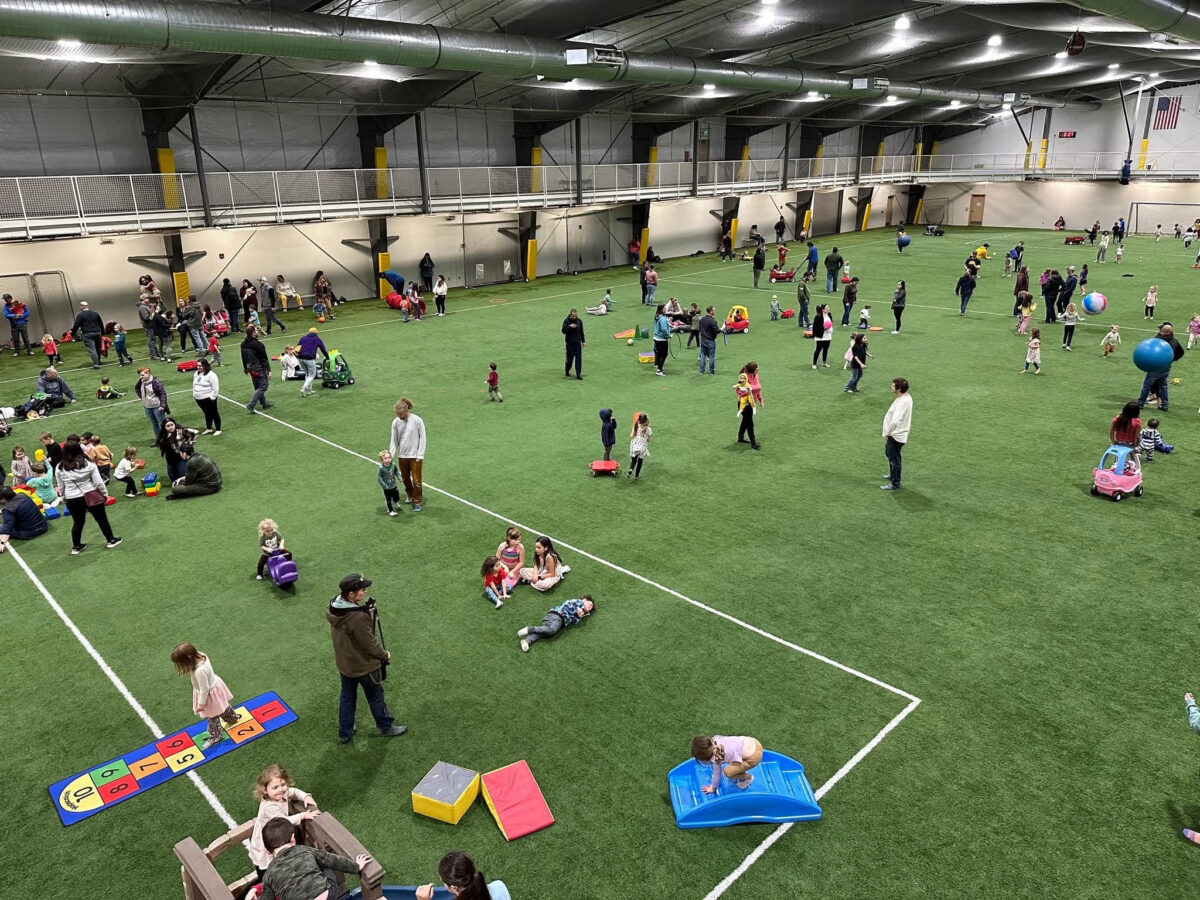
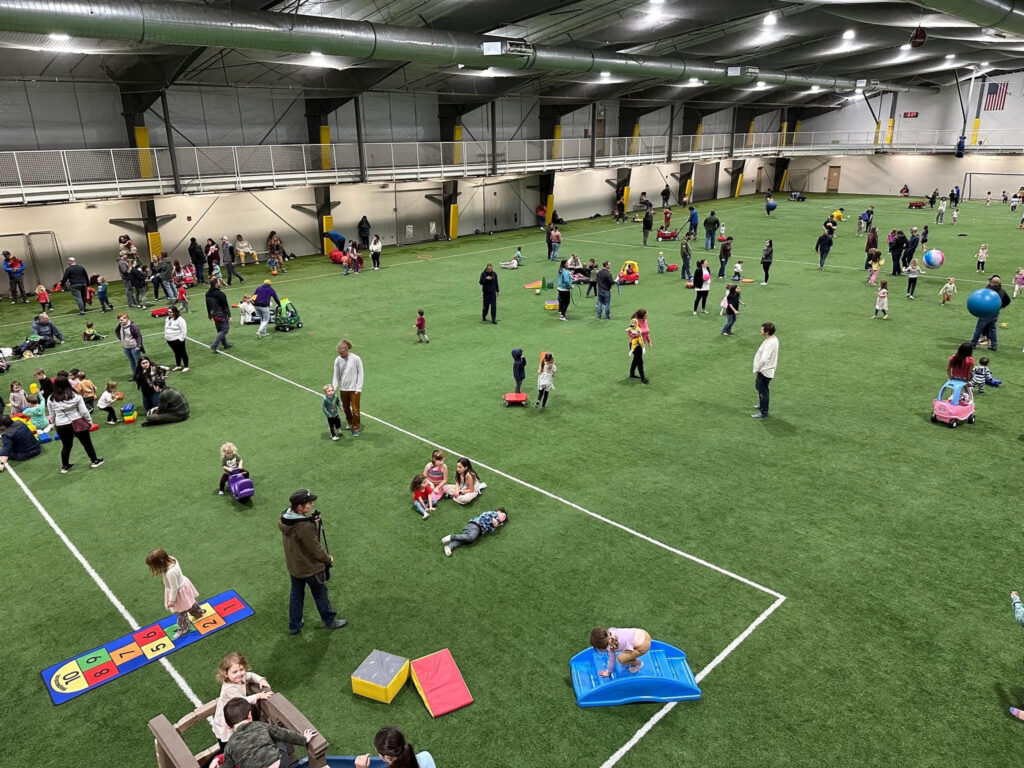
Family Fun Night at Dimond Park Field House, photo courtesy of Juneau Parks and Recreation
NOTN- The Juneau Assembly held a special budget listening session last night as the city faces a steep drop in revenue following last fall’s municipal election.
Assembly and staff said voter-approved changes, including a property tax mill rate cap and new sales tax exemptions on essential food and residential utilities. have created a larger-than-expected budget gap.
“As I’m sure most of or all of you know, we’re in a difficult position of having to come up with a balanced budget after significant revenue loss.” Finance Chair Christine Woll said, “People are paying less in taxes, which is a good thing. The flip side is we have less resources available to fund city services.”
Finance staff now project roughly a $14 million reduction in sales tax revenue heading into fiscal year 2027.
The Assembly is searching for $2-4 million in service cuts and potential new revenue.
“No question, there’s reduced revenue, but we’re really trying to be measured in how they approach it, which means you will be hearing from us and having this conversation over the course of two years, and you’ll get very tired of it, but expect us to be in this conversation of, ‘how do we live within our means for a couple of years?’ Because he certainly wants to make sure that it’s done thoughtfully and with lots of engagement.” Said City Manager Katie Koester.
Public testimony at the listening session focused largely on protecting Parks and Recreation services, including the Treadwell Arena, Diamond Park Field House, pools, and the Jensen-Olson Arboretum.
Testifiers told heartwarming stories about their experiences, memories and use of these city facilities emphasizing to the assembly their importance to Juneau life year round but especially during long winters like this one.
“I understand that the city has some tough decisions to make regarding funding, and while fields, playgrounds and a field house may not seem vital parts to our community, I’m here to tell you they are.” Said one testifier, Lexi, “Parks and Rec is vital to the Juneau community because it organizes sports for youth to participate in, without the high price tag of club teams. It also provides facilities that youth can play organized or pick up games. Any large cuts to Parks and Rec will substantially hurt the youth of Juneau, the parents that support them and the adults that still feel like they’re youths on the field.”
Residents argued those facilities are critical to Juneau’s physical and mental health, youth opportunities and community retention, especially through long winters.
“I made the possibly questionable decision to start playing hockey at 59 years of age.” Said testifier Kieth, “Since I started I have found a community that is incredible. What’s important to our community is what’s going to keep young people and families here in Juneau, and I’m afraid that recreation opportunities are underestimated in their value there. It’s hard to quantify. People make decisions about whether they’re going to stay here or not based upon what kind of opportunities there are. There’s a wide range of people that I’ve met there, from all across the community that I would never have met before, spans all generations. And during the dark, wet winter months, it’s always light and dry, well lit. And so, I just think it’s a very important place to maintain and I hope we can keep the full funding for the for the rink.”
Some speakers urged the city to raise or revisit certain tax exemptions, while others called for expanded use of user fees, volunteers, and public‑private partnerships rather than deeper cuts to specific city entities.
“Maintain existing services within your existing revenue stream. I don’t think that you ought to adjust taxes, particularly sales tax. I do think that reasonable adjustments to fees are acceptable to users, if they enjoy the service that you’re providing, or the community is providing, then they ought to pay for those and they should understand that we’re in tough times.” Said testifier Don.
Assembly members repeatedly warned, that even with strong public support, some services are still likely to be reduced as they work to balance the budget over the next two years.
Budget discussions will continue, with more public input opportunities expected before the city passes next year’s budget.
NOTN- The City and Borough of Juneau is moving to terminate its revenue sharing agreement with Goldbelt, as discussed at a Committee of the Whole work session Monday night, over the proposed gondola project at Eaglecrest.
Mayor Beth Weldon said the Assembly’s Committee of the Whole voted to end the existing Revenue Sharing Agreement (RSA) with Goldbelt, citing mounting interest costs and concerns over the city’s fund balance.
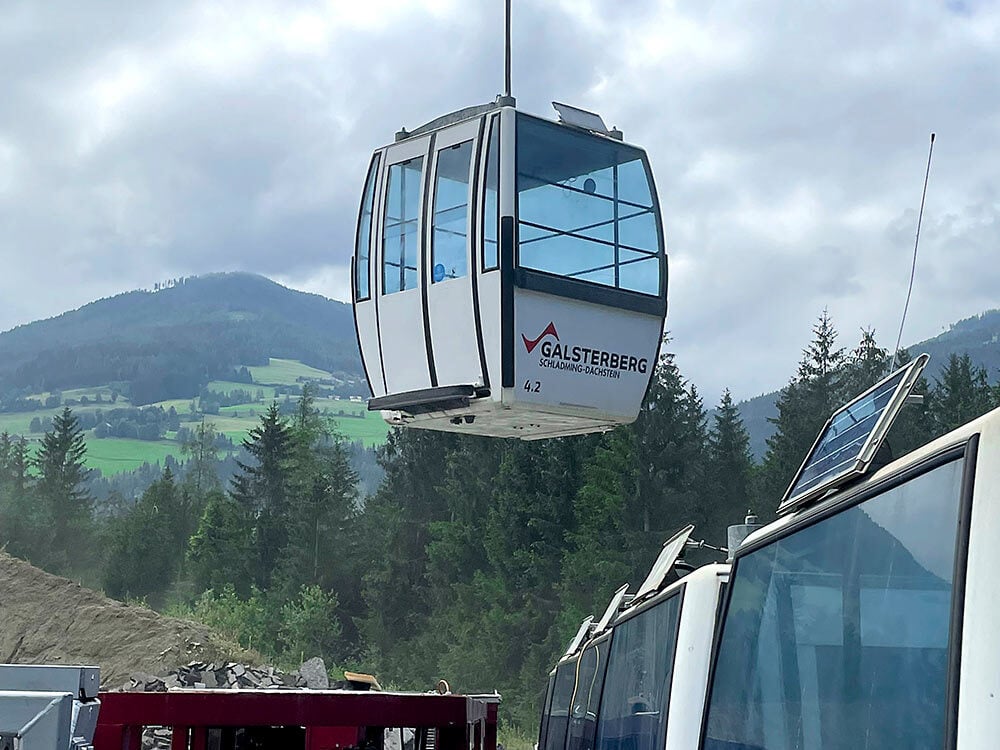
At Monday night’s meeting City Manager Katie Koester introduced the Gondola issue, saying, “We have a 99% designed gondola, and all the parts and pieces for this mountain, and marketing that to an outside investor is certainly something that this body has expressed interest in. As a reminder repayment on May 1 is a little over $12 million. We have about $3.3 million left in the project account. However, there’s lots of moving pieces and encumbrances, and I’d like to leave at least, you know, half a million dollars in that account to cover some of those.”
“Goldbelt still wants to negotiate, but in the meantime, the revenue sharing agreement that we have keeps collecting interest, so we moved an ordinance to terminate the RSA with Goldbelt forward to the full assembly, accompanied by an appropriate ordinance for 9.5 million from fund balance and 2.7 million in the remaining gondola project. So we’re going to terminate the RSA agreement, but that doesn’t mean that we still won’t negotiate with Goldbelt or another entity to move forward.” Weldon said.
The city is advancing an ordinance to appropriate $9.5 million from its fund balance and $2.7 million from remaining gondola project funds. Those dollars would be used to satisfy the city’s obligations under the RSA.
“There was quite a bit of conversation that this will take our fund balance down considerably, but we have yet to do all of our work, and so we’re working on trying to put stuff back in the fund balance, and we have a ways to go.” She said.
The refund to Goldbelt could go out soon after the Assembly’s next regular meeting, Weldon said. “it will come in our next assembly meeting, if that passes, it will go through.” She added.
Weldon said she has already submitted budget-cutting ideas to help replenish reserves, though it will be up to the Assembly to decide what to adopt.
The gondola was one of three major financial and development topics discussed at the Assembly Committee of the Whole work session, alongside Telephone Hill development and child care funding.
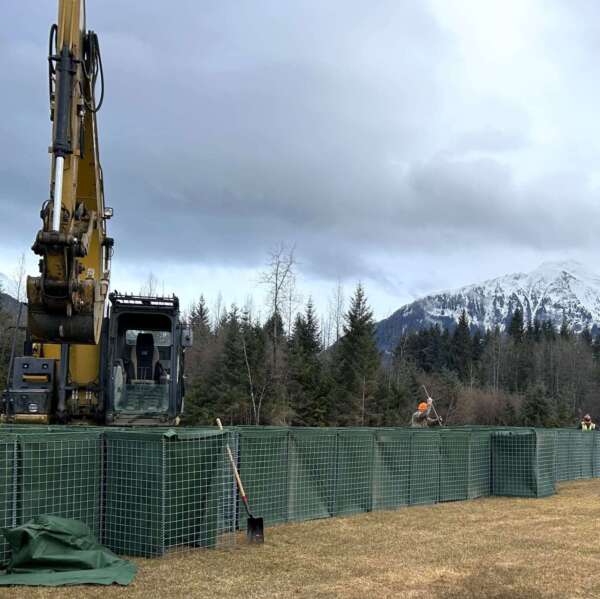
Photo provided by CBJ following the installation of the HESCO barrier project
Photo provided by CBJ following the installation of the HESCO barrier project
CBJ- As the snow melts, City and Borough of Juneau (CBJ) crews and contractors are now moving quickly to repair, raise and reconstruct the Phase 1 HESCO barrier project ahead of a 2026 glacial lake outburst flood (GLOF) event.
CBJ’s Engineering and Public Works department has spent months documenting damage, analyzing impacts and vulnerabilities, and utilizing the latest available hydrologic and hydraulic modeling to develop plans for the reconstruction of existing Phase 1 HESCO barriers. The CBJ Assembly has identified GLOF response, mitigation & preparedness as a top priority. The goal of this ongoing work, done in coordination with the U.S. Army Corps of Engineers (USACE), is to ensure that these flood fighting projects provide as much protection as practicable until a longer-term solution is in place.
The project includes additional bank armoring and raising HESCO barriers to protect Mendenhall Valley residents from future floods up to 90,000 cubic feet per second or approximately a 20-foot lake stage flood. A map showing planned reinforcements and raising of Phase 1 is available at juneau.org.
“The HESCO barriers proved their value in 2025, but we had some close calls, we’ve learned a lot, and we aren’t taking any chances in 2026,” explains CBJ City Manager, Katie Koester. “By doing this major reconstruction work in 2026, we can have confidence in the protection of the HESCO barriers against larger flood events, with less future disruption to residents and lower annual maintenance costs to the community.”
The 90,000 CFS flow rate represents a 50-year GLOF event and is the number the USACE is using in their evaluation of mid-term flood fighting solutions for Juneau. Constructing to the 50-year event now, instead of annual incremental increases, will reduce future annual costs and minimize annual disruption to property owners. The “50-year event” is a probability-based number that represents the comparatively higher likelihood that a flood of 90,000 CFS may occur. Based on projections, it is possible that the Mendenhall River could experience a 90,000 CFS (20 ft) event within the operational life of the HESCO barriers. The 2026 Phase 1 reconstruction and fortification will not impact the Local Improvement District (LID) assessments for the original Phase 1 construction. This year’s project is a separate scope that is fully funded by CBJ funding and Alaska Department of Conservation State Revolving Loan funds. CBJ and agency partners are also actively seeking grant funding to support this project.
CBJ project managers have and will continue to coordinate directly with property owners and impacted residents along the Phase 1 and Phase 2 project areas. More information about flood fighting, flood emergency preparedness and the pursuit of an enduring solution is available at bit.ly/CBJGLOF. In addition to barrier reinforcement and fortification, CBJ is making improvements to drainage and stormwater management in the area. CBJ is coordinating with USACE to acquire over 40 industrial-grade pumps to deploy to strategic staging locations based on anticipated water intrusion risks. These pumps will be deployed to serve the community as a whole rather than individual properties. Importantly, they can operate for up to 24 hours do not require refueling during an event, allowing both staff and residents to safely evacuate inundation areas.
Phase 2 HESCO Barriers USACE – Alaska District, in partnership with CBJ, began the first phases of the Phase 2 HESCO barrier project installation along the Mendenhall River last month. USACE contractor Sealaska Constructors is leading the work. The Advance Measures scope includes riverbank armoring and installation of temporary (HESCO) flood barriers to construct a fortified, complete temporary flood barrier along the unprotected, populated riverbank areas of the Mendenhall River – referred to as Phase 2 – prior to July 15, 2026. For questions about the Phase 2 HESCO Barrier Project, please contact public.affairs3@usace.army.mil.
Safety CBJ and USACE are on a tight timeline to complete construction before the next GLOF. We ask that the public avoid the construction area for your safety and the safety of workers, residents and property owners, and to allow for efficient and expedient operations.
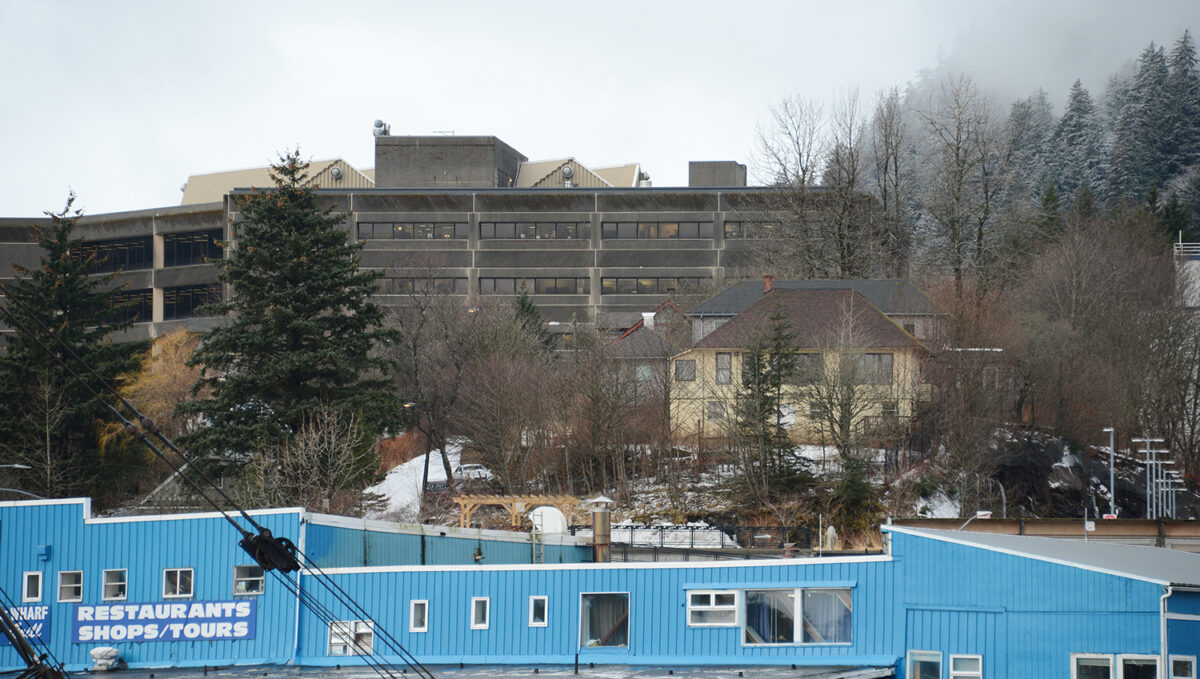
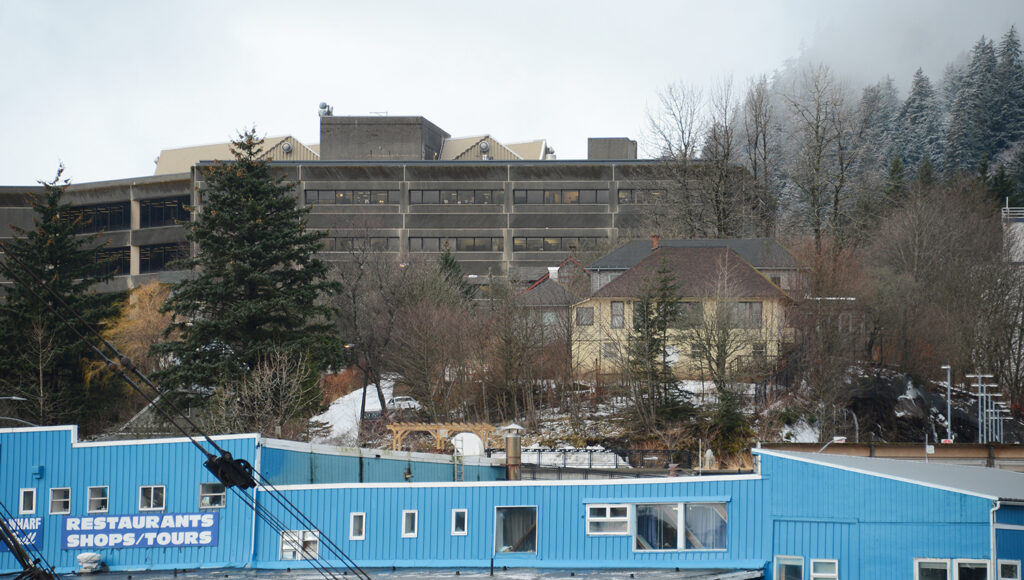
Juneau's Telephone Hill neighborhood is seen at center right, beneath the State Office Building, on Wednesday, Dec. 28, 2022. The neighborhood, owned by the state of Alaska, is being transferred to the City and Borough of Juneau. (Photo by James Brooks/Alaska Beacon)
Juneau’s Telephone Hill neighborhood is seen at center right, beneath the State Office Building. (Photo by James Brooks/Alaska Beacon)
NOTN- Juneau’s Assembly narrowly rejected a plan during last night’s Committee of the Whole work session, to carve up the city-owned Telephone Hill property and sell most of it “as is,” choosing instead to stay the course for the time being.
“So spending time with all of you, a lot lately with the budget, and spending a lot of time in the office with budget stuff and the flood coming upon us, and an election coming upon us, I think it’s nice to get Telephone Hill off our plate.” Mayor Beth Weldon said, “However, my main reason for doing this is just the public outcry not to spend any more money on Telephone Hill.”
On a 5–4 vote last night, members voted down Weldon’s proposal to divide Telephone Hill into three lots, reserve one for potential Coast Guard or workforce housing, and sell the other two with existing homes still standing.
The draft plan envisioned minimum bids of about $1 million and $2 million for the properties.
Members argued the change would undercut years of planning for higher-density housing in the downtown core at a time when the city faces a severe housing shortage and an influx of Coast Guard families. Several members said splitting up the property now could limit the city’s ability to pursue a cohesive, larger-scale project.
“I object to this. It’s funny, I object to this on so many levels that it’s hard to know where to start.” Said Assembly member Alicia Hughes-Skandijs,”I don’t want to put words in your mouth, but my read on the motion that passed at the last meeting was to bring this back and talk about, where are we going? Do we still feel good? How are we going to get there? And then we have this from the mayor, I will say crazy idea with love, I wouldn’t say that to anyone else. I don’t understand at the heart of this, the sponsor statement is that this is about not spending any more funding on this project, this seems to try to care for other issues, which is to leave some of that land back to where it might not turn into what our current plans are for it. It does preserve a small amount for our housing goals, but even that, I don’t see how that coincides with the goal of not spending any more money. I don’t see this, if that is indeed your intended goal, as the best way to move forward with that.”
In a separate 5–4 vote, the Assembly agreed not to award a roughly $2.3 million demolition contract until after it sees responses to a Request for Qualifications from potential developers, expected later this year.
“I understand and see where the mayor is trying to go.” Said Deputy Mayor Greg Smith, “This has been a challenge for us. I have an idea, I would move, or someone else could move, to not award the bill to demolish until after the results of the RFQ have been returned, to see what people think and hear and, you know, get real proposals on how to develop this, see what can be done. There is uncertainty now that will provide more, getting the RFQ back, because this could be a transformative project for downtown and for our housing crisis.”
The city is also defending a lawsuit filed by several Assembly members seeking to halt demolition; a jury trial is set for August, though no court order currently blocks the work.