By: Alix Soliman, KTOO, Clarise Larson, KTOO and Corinne Smith Alaska Beacon
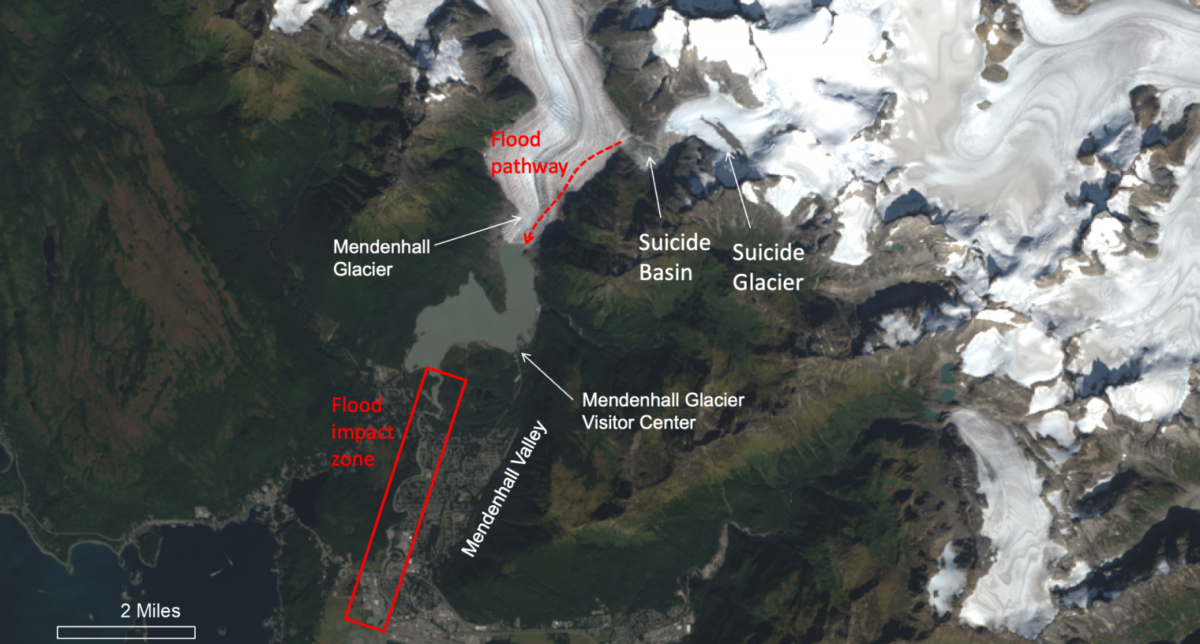
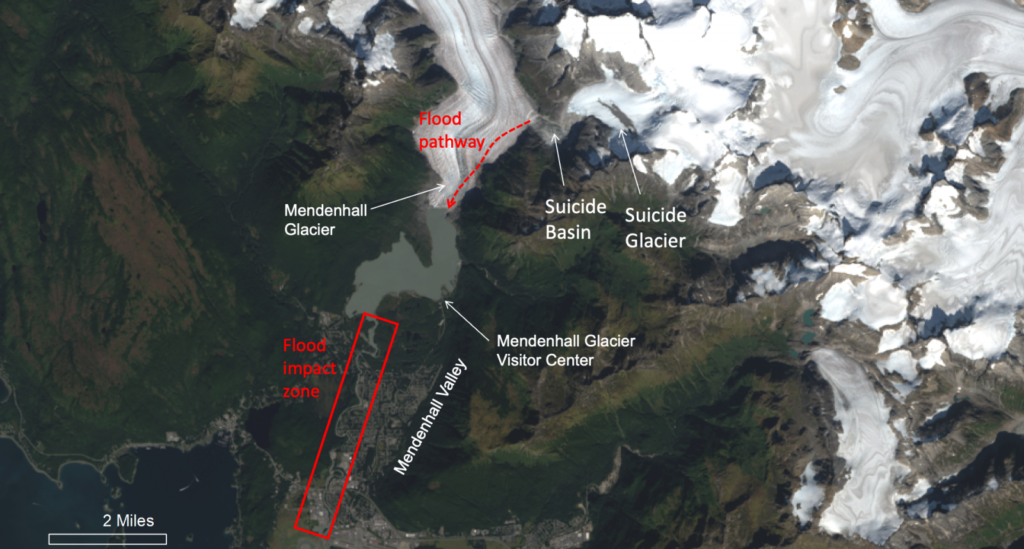
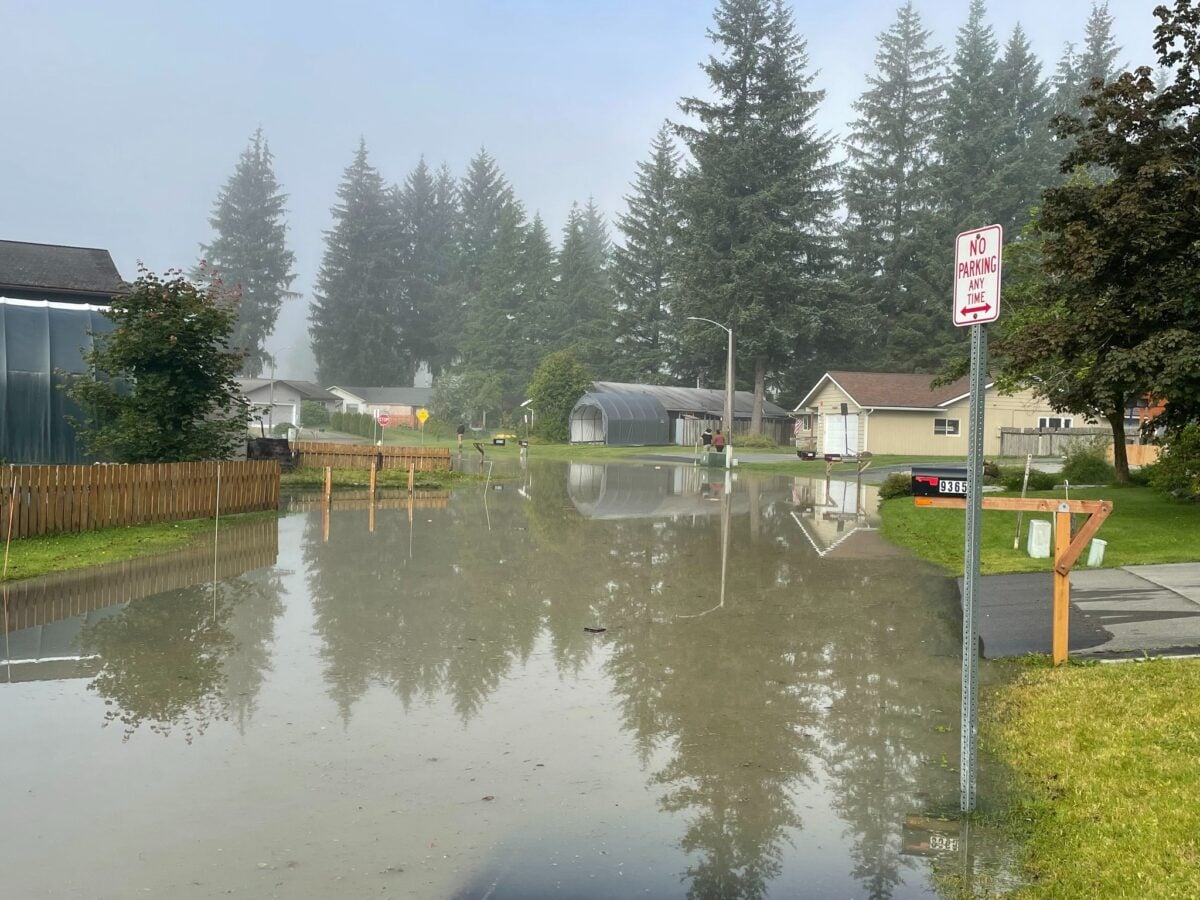
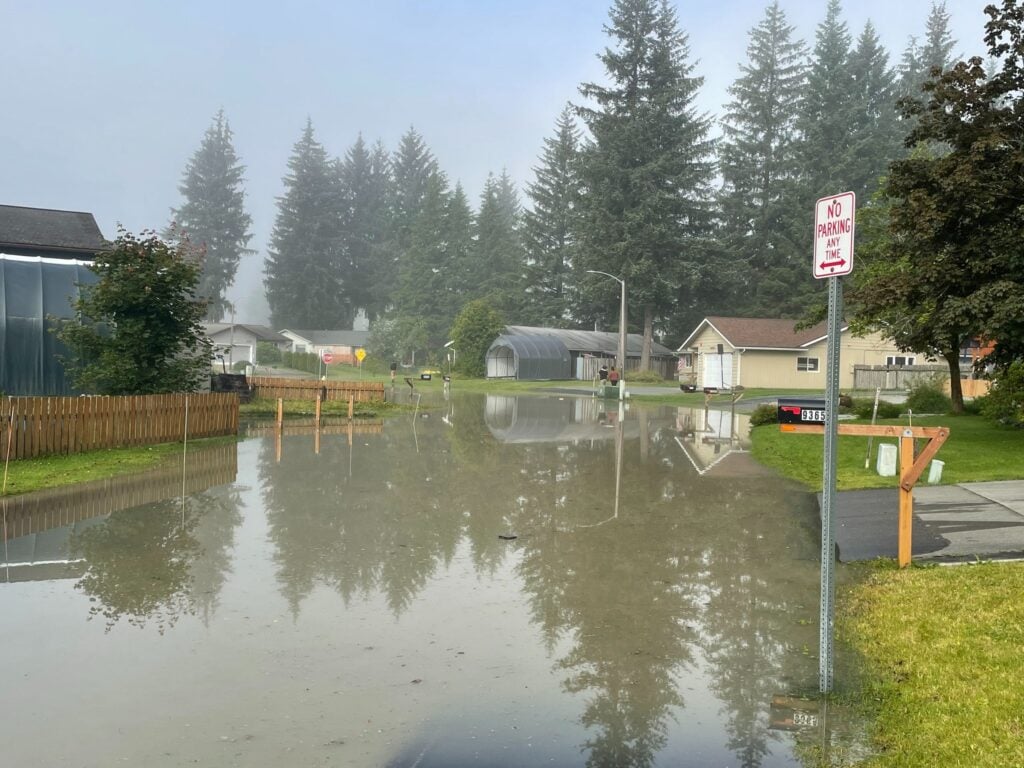
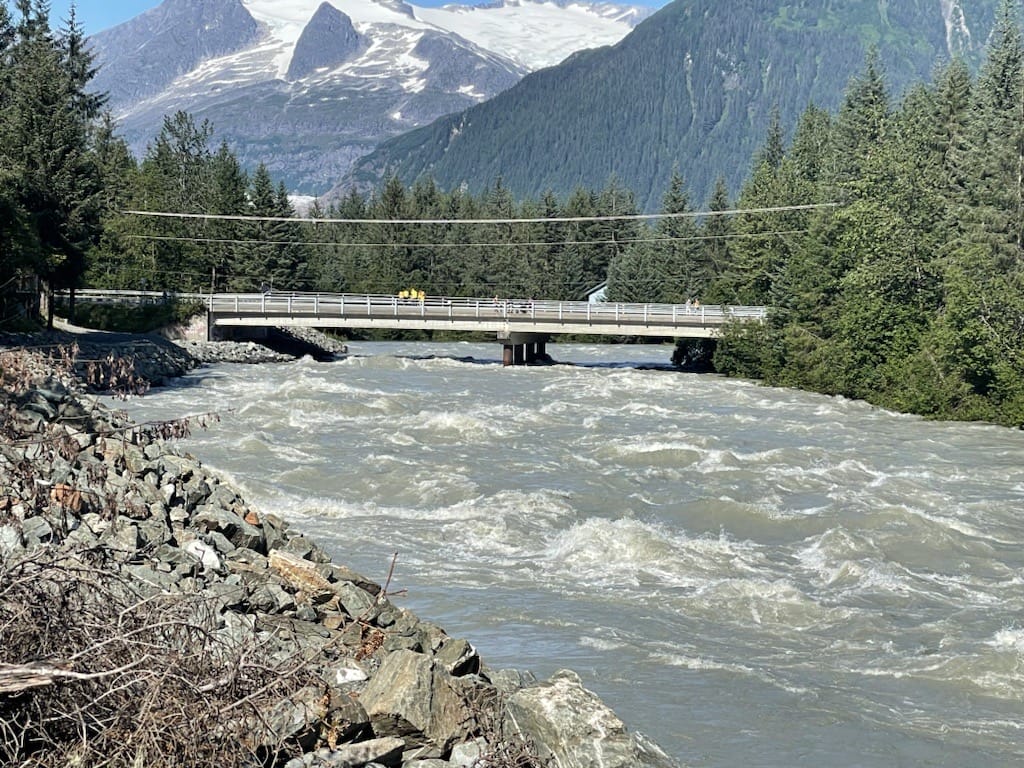
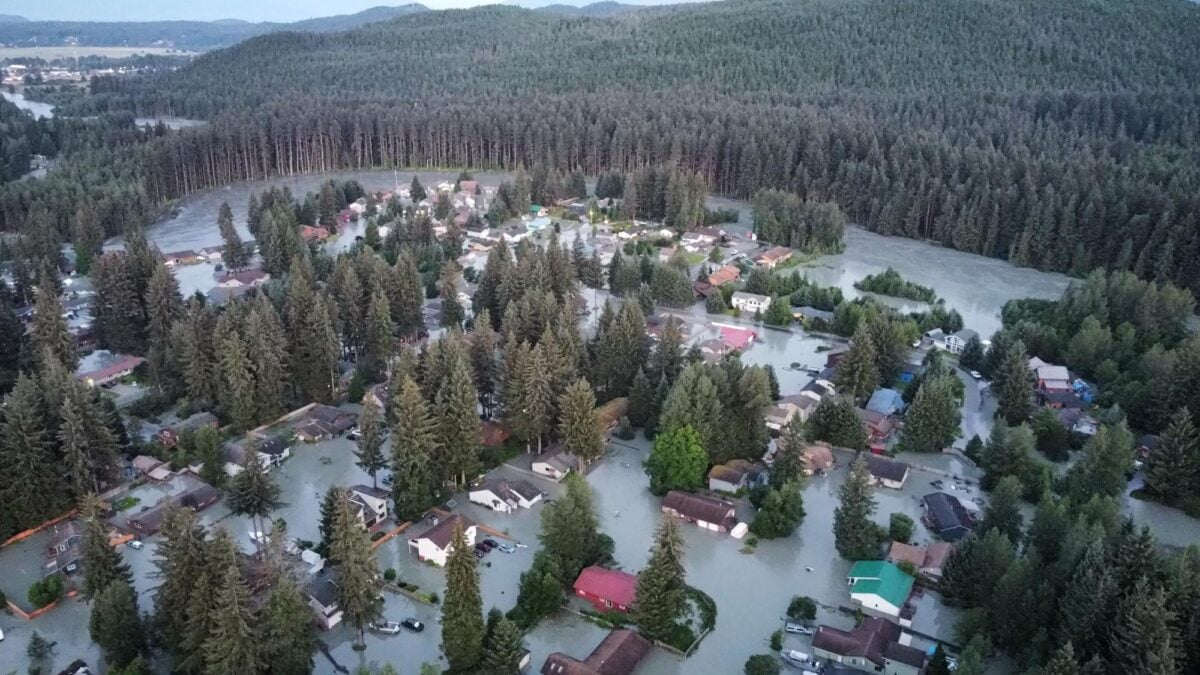
As the Mendenhall River swells with glacial outburst floodwater, hundreds of people living in the suburban valley below spent Tuesday night and Wednesday preparing to evacuate or hunker down. The National Weather Service predicts the flood will crest Thursday.
Officials managing the flood response recommended residents evacuate by 3 p.m.
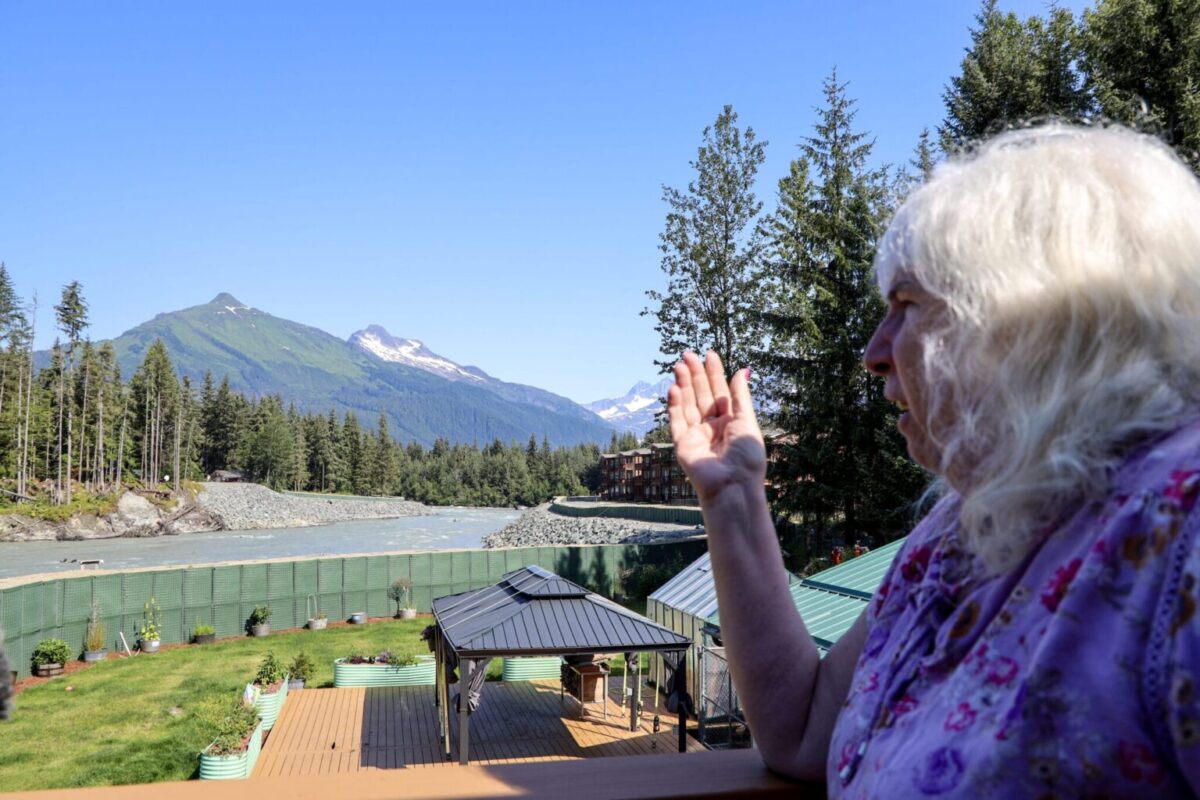
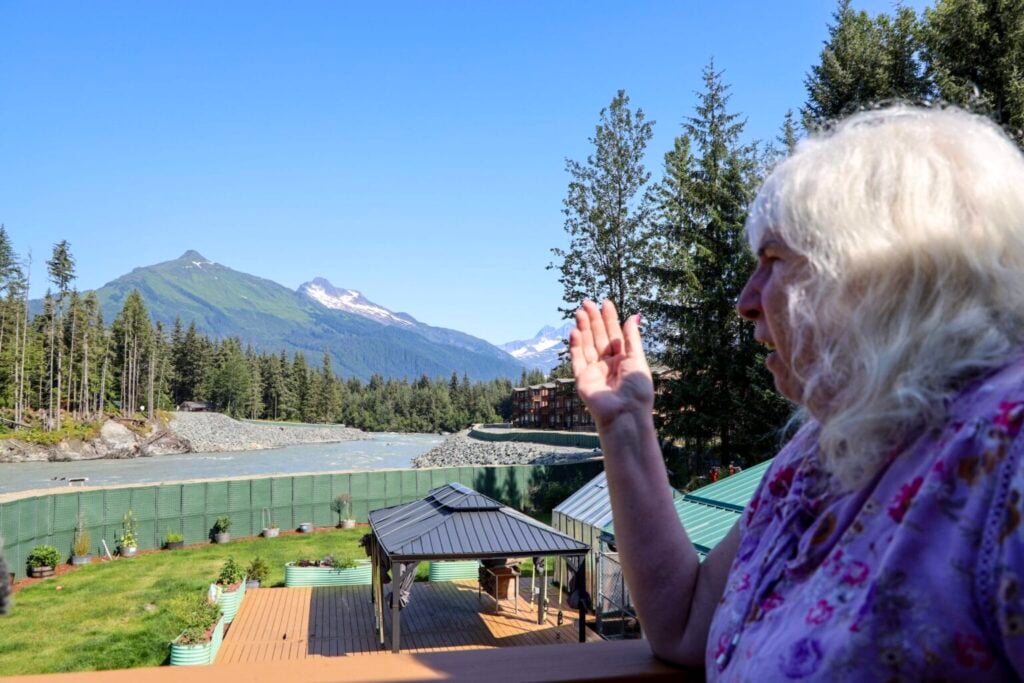
On Marion Drive, Ann Lind plans to watch the flood from her second-story balcony overlooking the Mendenhall River.
“I got lawn chairs up there, and we’ll just be sitting there, and that’s where I’ve been every year,” she said.
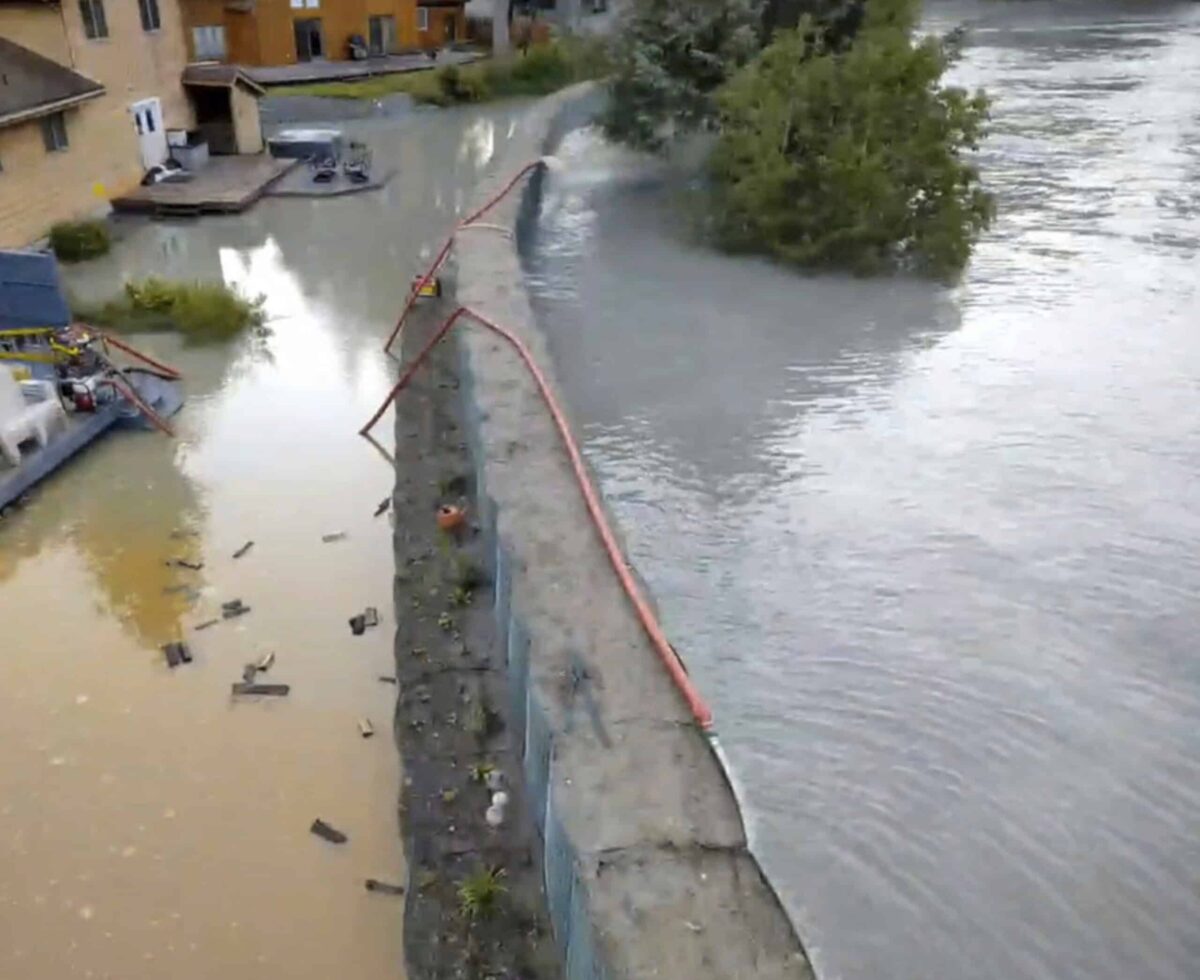
Lind said her crawl space flooded last year when water leaked through the HESCO barriers and a drainage pipe failed. She said she’s staying again this year to protect the property.
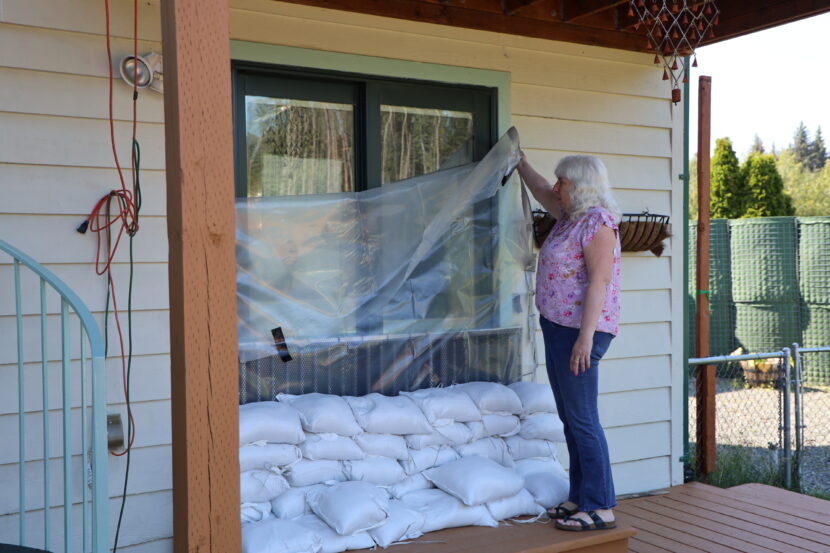
“Because if I wouldn’t have stayed last year, I never would have known that I was flooding back there, and the flooding would have been way worse,” she said. “Within 30 minutes of me calling for help, I had nine guys and five pumps back there.”
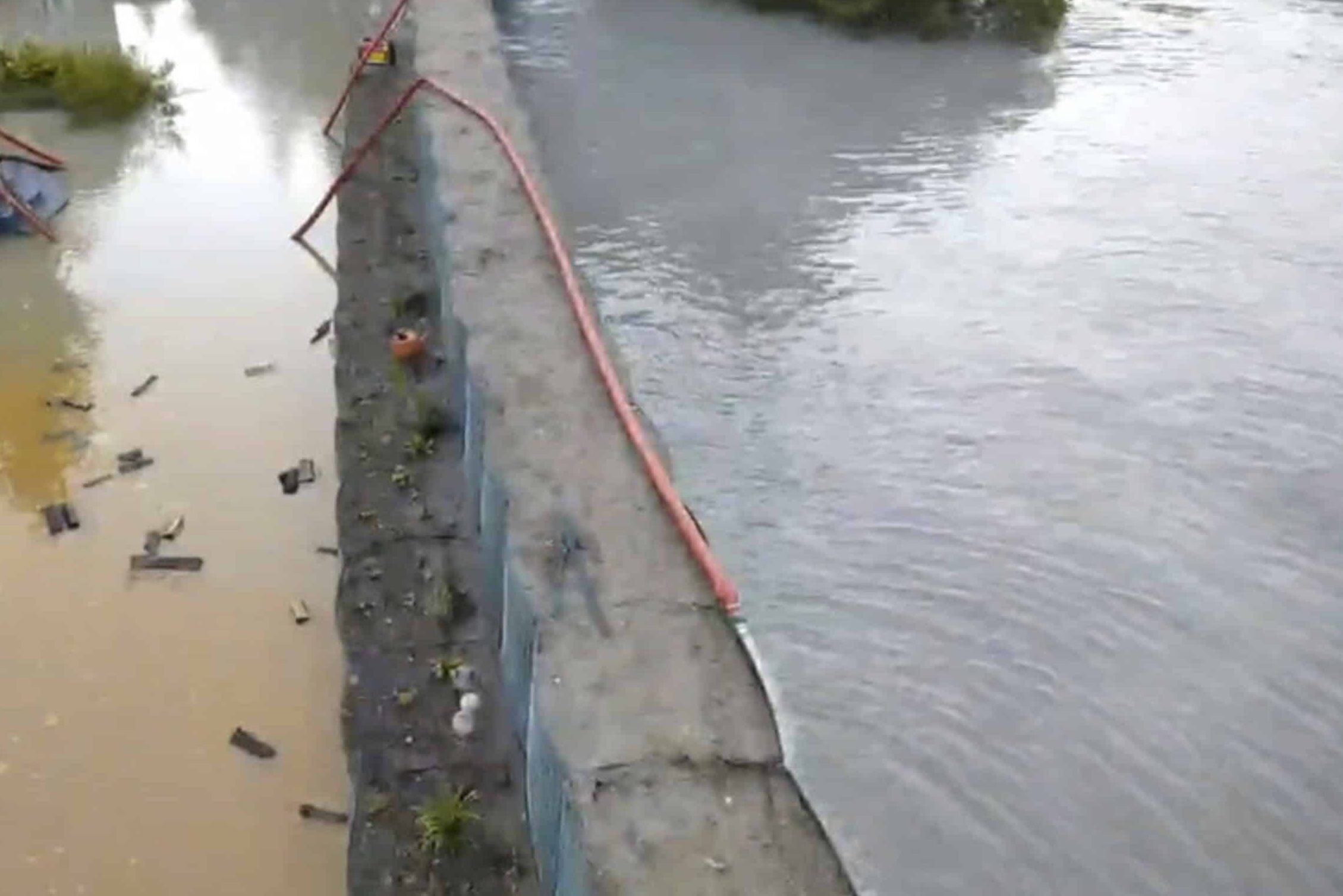
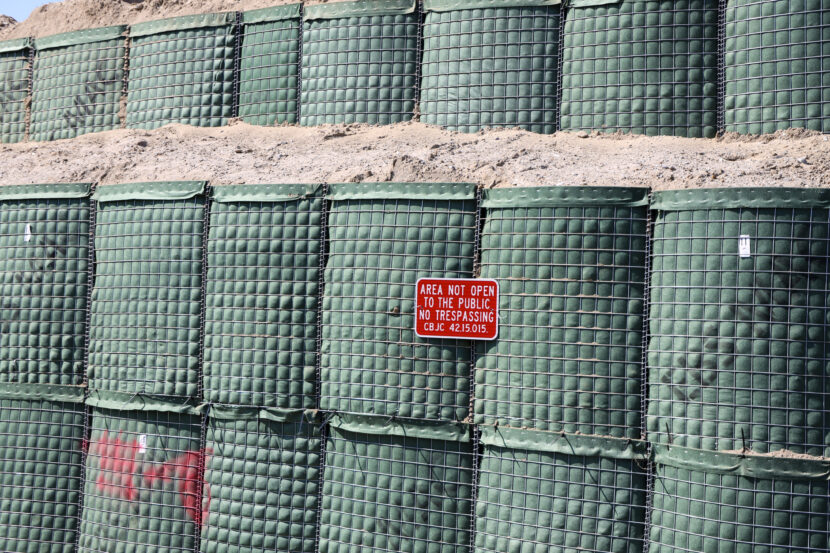
She said she’s more confident her home won’t flood this time after the U.S. Army Corps of Engineers placed an industrial-sized pump just beyond her lawn to send water that leaks through the flood wall back into the river.
Although she plans to stay behind with her 17-year-old daughter, she said her other kids and pets will evacuate – heeding official advice.
Downstream from Lind’s place, on Meander Way, Locke Brown said he and his wife are optimistic about flood protection this year. Last year, the pair’s crawl space and garage flooded.
“If we had these pumps on the roads sitting here last year, I think we probably wouldn’t have had any water in the house,” he said.
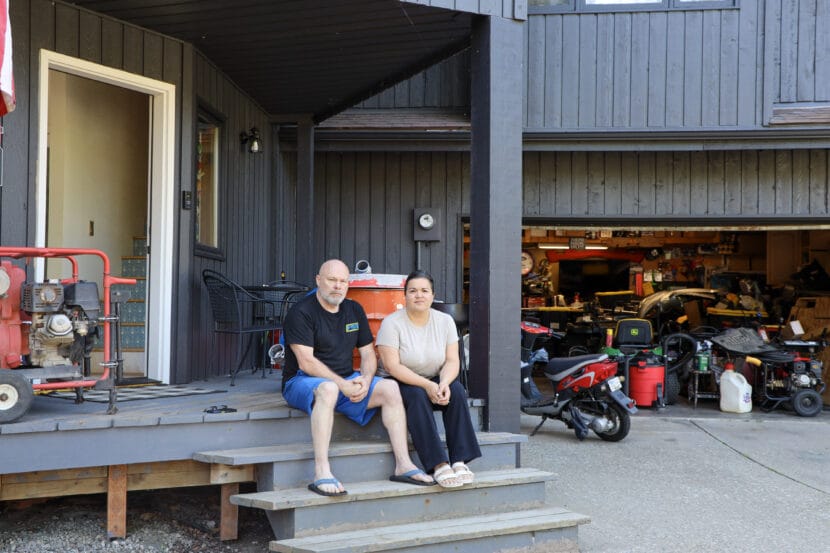
They said they’re grateful for the pumps and bolstered flood wall provided by the Army Corps this year — but they’re not taking any chances. They said that once the water rises high up on the barriers, they plan to evacuate to a camper they have set up outside of the flood zone.
Locke is retired from the U.S. Coast Guard and his wife still works for the Coast Guard.
“We’ve made our living saving people when they know they should have left,” he said.
Locke said the prudent thing is to leave since there’s a possibility the barriers could fail.
“It’s one of those unknowns. You just — what do they say? — Prepare for the worst and hope for the best,” he said. “We just feel like, at this point, we’re just driftwood. Whatever happens is gonna happen, and we’re just gonna have to deal with it when it’s over.”
Just a few blocks over, on Gee Street, Benson Bullock said he’s not too worried. He’s patching a pair of waders in his garage, but not for walking through floodwaters.
“Hopefully, if it’s not too crazy, I’ll be going fishing,” he said.
Bullock had a few inches of water in his garage during the catastrophic flood in 2024, but his house has never flooded. Bullock says he plans to put sandbags in front of the garage before the flood crests.
“We have stuff moved and cleaned up,” he said. “We moved my boat, we’ll move my wife’s truck, and we’ll just have my truck here in case we decide to leave.”
On View Drive, many residents say they’re planning to stay to try to protect their property and look out for their neighbors.
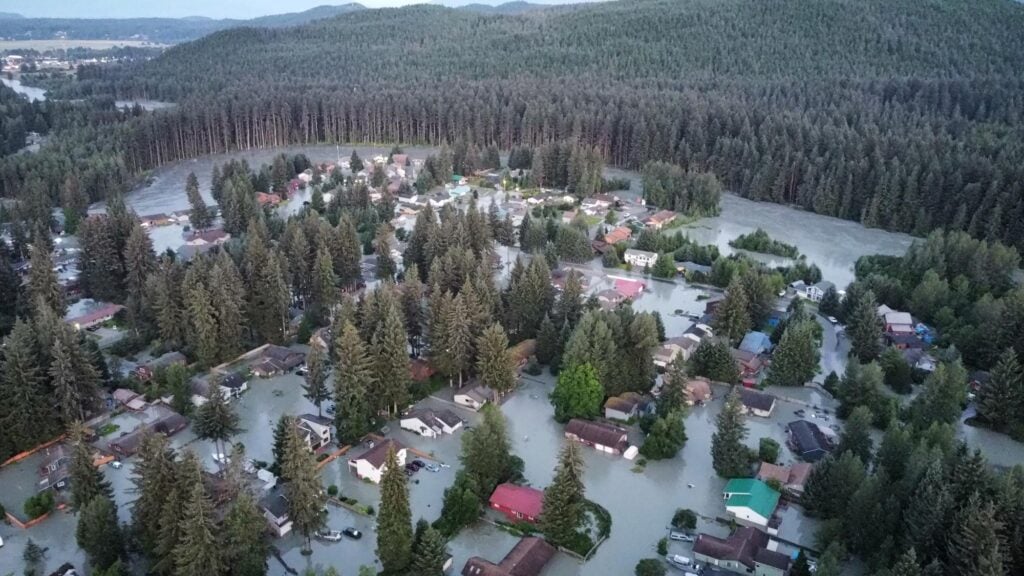
View Drive is a forested cul-de-sac that forms a peninsula jutting into the Mendenhall River. It’s been hit the hardest by past floods. For a second year in a row, the street has been left without the protection of the flood wall constructed by the City and Borough of Juneau and the Army Corps. Officials have said in the past that the street has porous soil and have doubts that the homes could be protected.
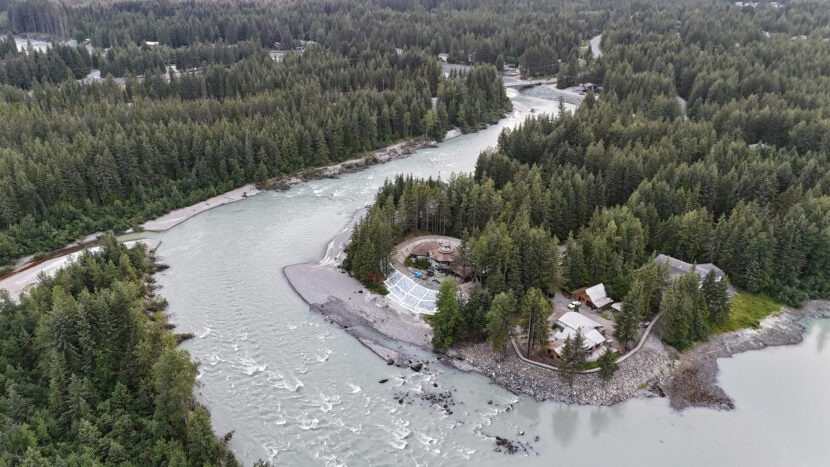
Mandy Mallott lives at the end of the cul-de-sac. She bought the house from a family she babysat for when she was growing up in Juneau. It looks out over Stroller White Mountain, where her father died in 2005.
“It’s a very spiritual place to us,” she said. “It’s a private place, and we’ll do what we can to protect it.”
She and her family spent Tuesday evening moving their belongings up onto shelves in their garage. Last year, she worked with her neighbors to have contractors put up their own HESCO barriers around a few properties, and she said her home didn’t flood.
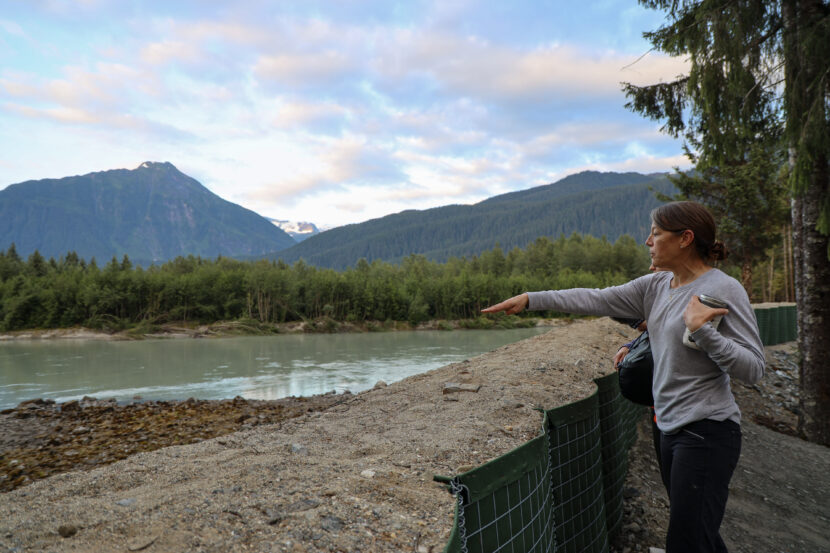
Although a federally sponsored buyout for her home and others on View Drive might be on the table — Mallott said she’s emotionally tied to the place, and sees a long-term solution designed by the Army Corps as her best option.
“That emergency tunnel fix gives us all a lot of hope,” she said.
Mallott and her family are tribal citizens, and she said she’s grateful for the dozens of sandbags that the Central Council of the Tlingit and Haida Indian Tribes of Alaska dropped off on Tuesday.
Residents of the Riverview Senior Living facility were about 50-50 split on whether to evacuate on Wednesday afternoon, said its Executive Director René Bryant. This year, new HESCO barriers are now standing between the Mendenhall River and the two-story assisted living and memory care facility.
She said the roughly 70 residents have a choice whether to stay or evacuate, and they are providing transportation to a nearby emergency shelter at St. Paul’s Catholic Church after an early dinner on Wednesday evening. Bryant said additional transportation to evacuate will be provided Thursday if needed.
“We are respecting everybody’s rights, while contacting family members to make these decisions as well,” Bryant said.