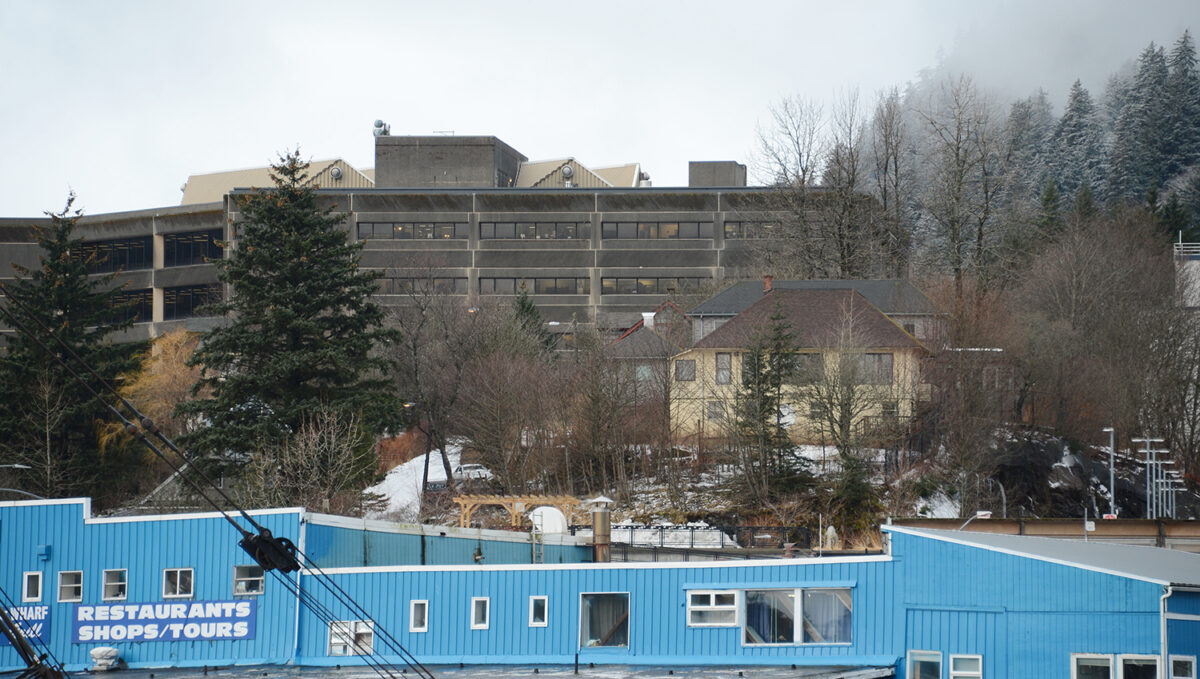
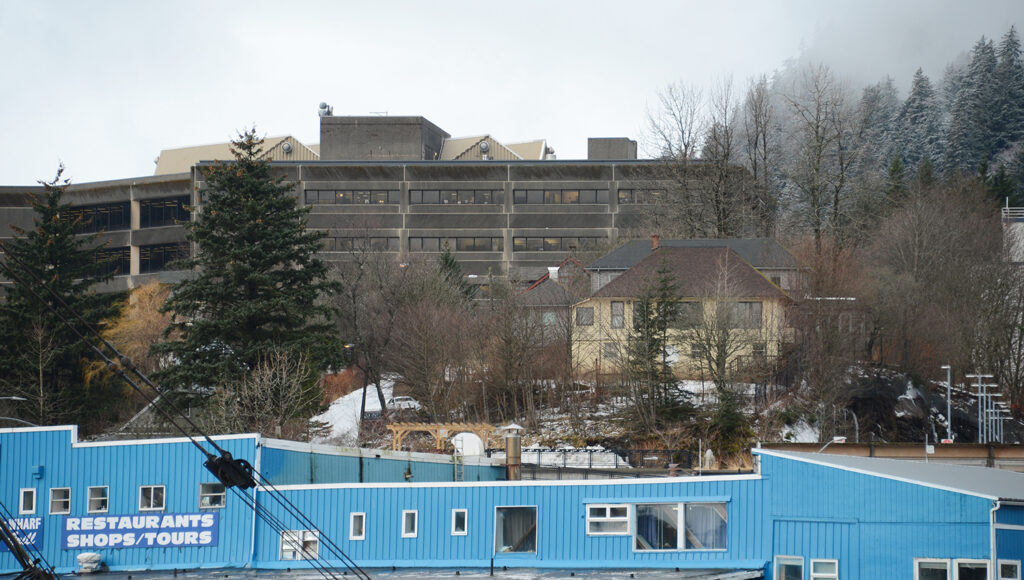
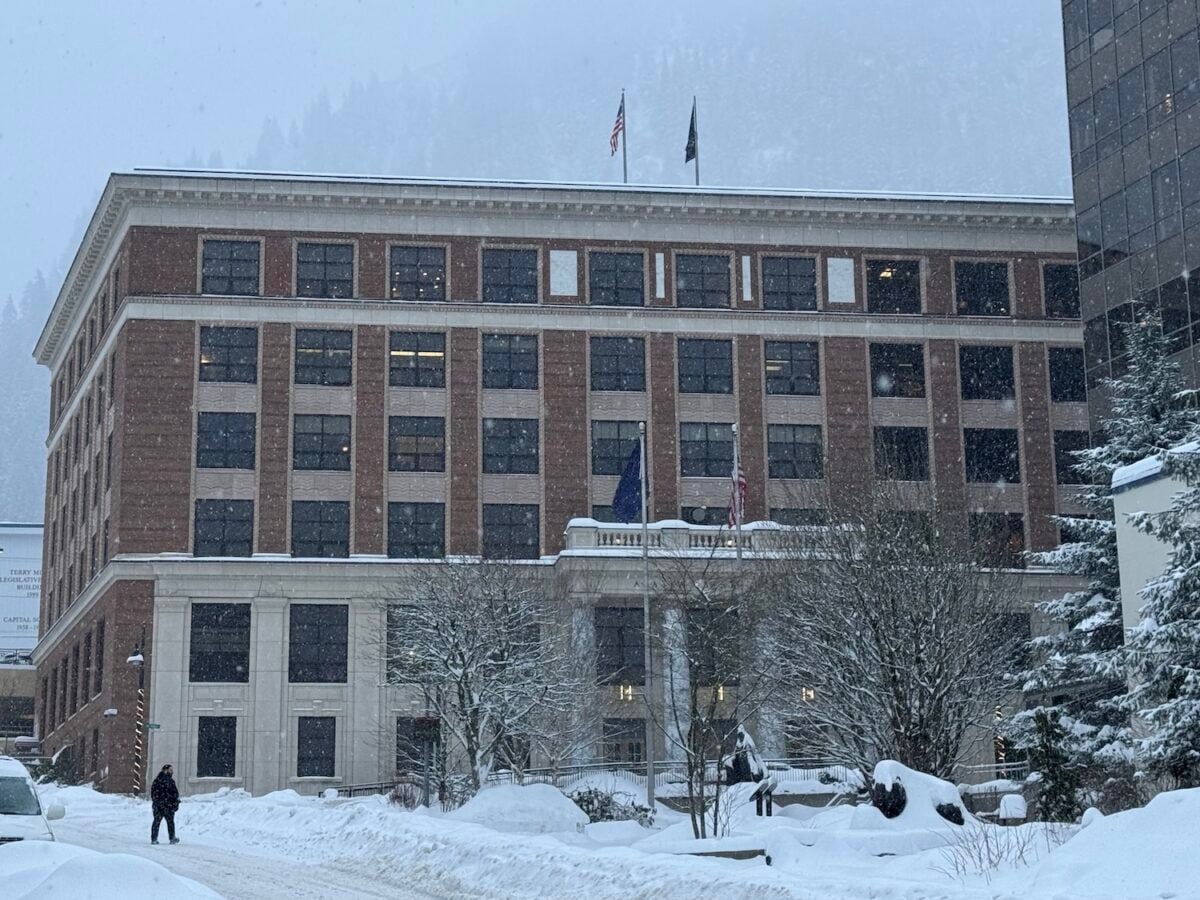
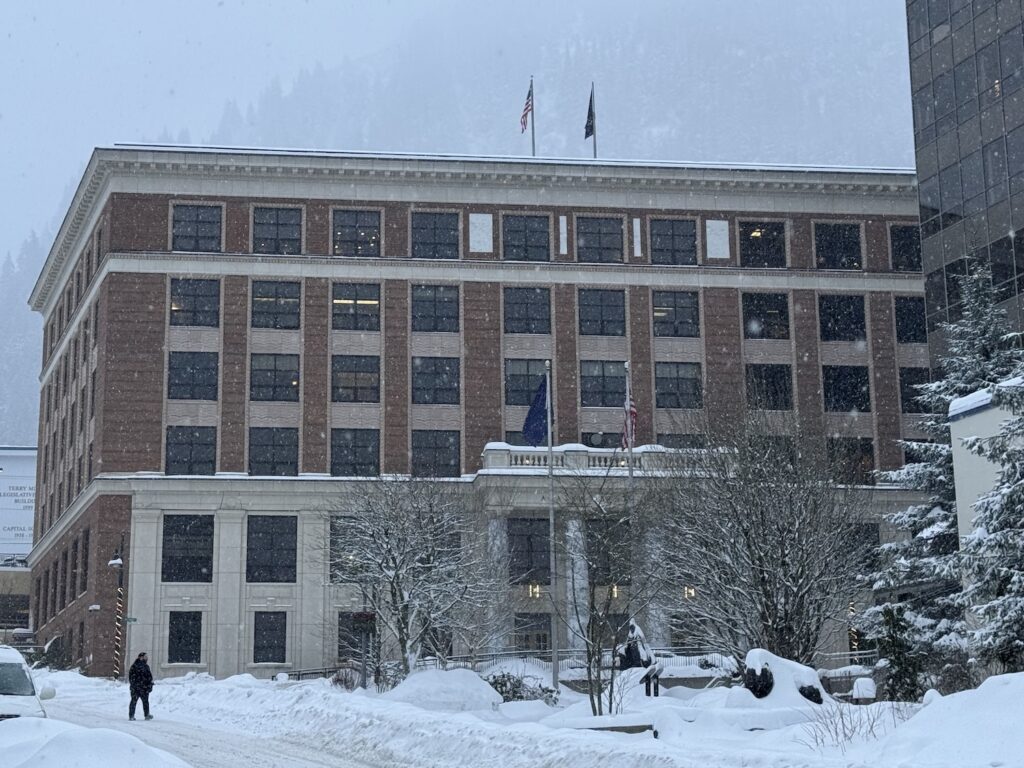
Juneau's Telephone Hill neighborhood is seen at center right, beneath the State Office Building, on Wednesday, Dec. 28, 2022. The neighborhood, owned by the state of Alaska, is being transferred to the City and Borough of Juneau. (Photo by James Brooks/Alaska Beacon)
Juneau’s Telephone Hill neighborhood is seen at center right, beneath the State Office Building. (Photo by James Brooks/Alaska Beacon)
NOTN- Juneau’s Assembly narrowly rejected a plan during last night’s Committee of the Whole work session, to carve up the city-owned Telephone Hill property and sell most of it “as is,” choosing instead to stay the course for the time being.
“So spending time with all of you, a lot lately with the budget, and spending a lot of time in the office with budget stuff and the flood coming upon us, and an election coming upon us, I think it’s nice to get Telephone Hill off our plate.” Mayor Beth Weldon said, “However, my main reason for doing this is just the public outcry not to spend any more money on Telephone Hill.”
On a 5–4 vote last night, members voted down Weldon’s proposal to divide Telephone Hill into three lots, reserve one for potential Coast Guard or workforce housing, and sell the other two with existing homes still standing.
The draft plan envisioned minimum bids of about $1 million and $2 million for the properties.
Members argued the change would undercut years of planning for higher-density housing in the downtown core at a time when the city faces a severe housing shortage and an influx of Coast Guard families. Several members said splitting up the property now could limit the city’s ability to pursue a cohesive, larger-scale project.
“I object to this. It’s funny, I object to this on so many levels that it’s hard to know where to start.” Said Assembly member Alicia Hughes-Skandijs,”I don’t want to put words in your mouth, but my read on the motion that passed at the last meeting was to bring this back and talk about, where are we going? Do we still feel good? How are we going to get there? And then we have this from the mayor, I will say crazy idea with love, I wouldn’t say that to anyone else. I don’t understand at the heart of this, the sponsor statement is that this is about not spending any more funding on this project, this seems to try to care for other issues, which is to leave some of that land back to where it might not turn into what our current plans are for it. It does preserve a small amount for our housing goals, but even that, I don’t see how that coincides with the goal of not spending any more money. I don’t see this, if that is indeed your intended goal, as the best way to move forward with that.”
In a separate 5–4 vote, the Assembly agreed not to award a roughly $2.3 million demolition contract until after it sees responses to a Request for Qualifications from potential developers, expected later this year.
“I understand and see where the mayor is trying to go.” Said Deputy Mayor Greg Smith, “This has been a challenge for us. I have an idea, I would move, or someone else could move, to not award the bill to demolish until after the results of the RFQ have been returned, to see what people think and hear and, you know, get real proposals on how to develop this, see what can be done. There is uncertainty now that will provide more, getting the RFQ back, because this could be a transformative project for downtown and for our housing crisis.”
The city is also defending a lawsuit filed by several Assembly members seeking to halt demolition; a jury trial is set for August, though no court order currently blocks the work.
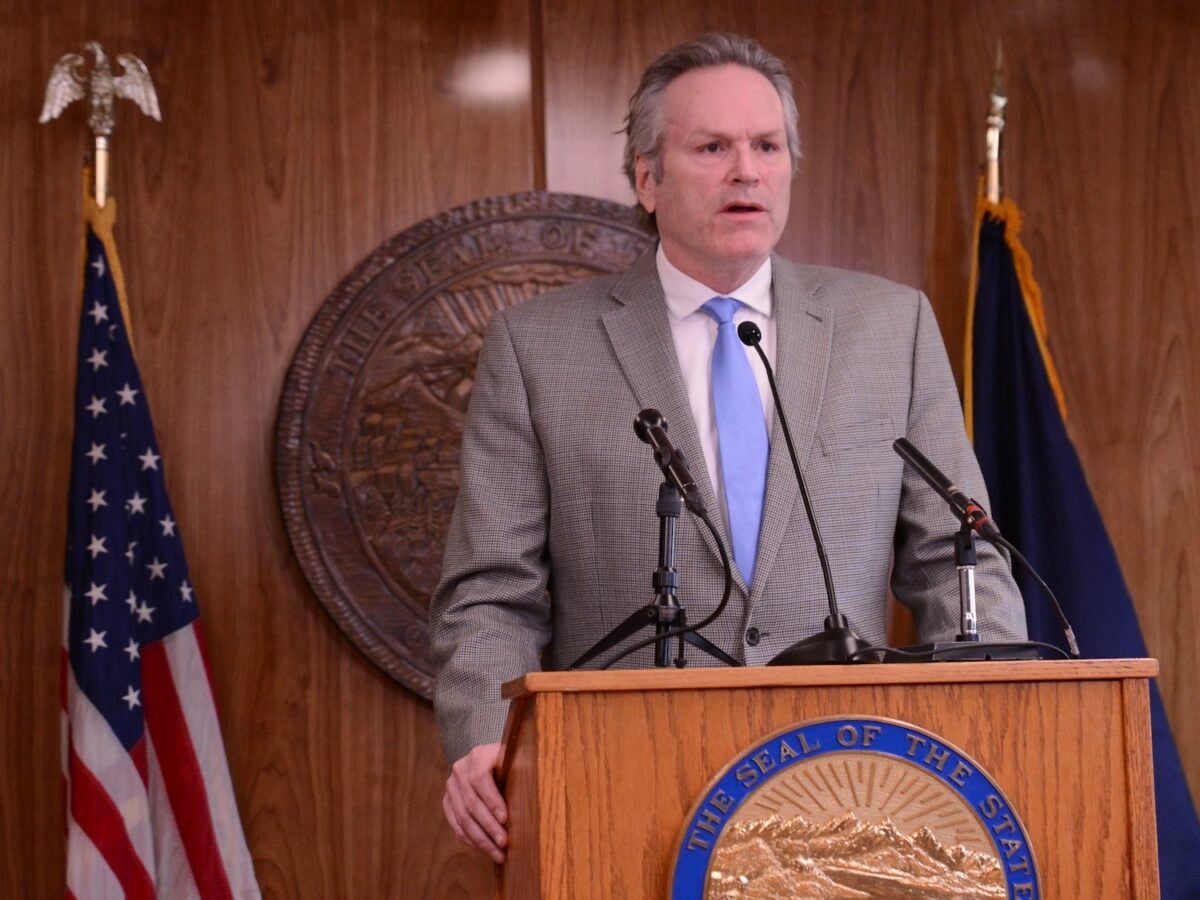
Alaska Gov. Mike Dunleavy speaks to reporters on Thursday, April 17, 2025, with Deena Bishop, commissioner of the Alaska Department of Education and Early Development, looking on in the background. (Photo by James Brooks/Alaska Beacon)
By: Corinne Smith, Alaska Beacon
Alaska Gov. Mike Dunleavy speaks to reporters on Thursday, April 17, 2025. (Photo by James Brooks/Alaska Beacon)
Gov. Mike Dunleavy signed off on a supplemental budget bill that authorizes nearly $450 million in additional state spending this year.
The budget bill covers additional costs incurred by the state this fiscal year ending in June, including funds for disaster relief, education, corrections and transportation.
The bill was approved by the Alaska State Legislature two weeks ago. Dunleavy signed the budget on Apr. 2, and transmitted it back to the Legislature on Thursday.
“I appreciate the Legislature’s support of these proposals,” Dunleavy said in a letter announcing his signature on the bill. “The supplemental budget I have signed into law today enables the State to meet current fiscal year responsibilities and represents prudent and fiscally responsible investments in emergency and fire response, public safety and statewide transportation needs.”
The budget includes $75 million for disaster relief to address the response to the Western Alaska storms last fall, and nearly $100 million for fire suppression, particularly in Interior Alaska. It includes $20 million for the Alaska Department of Corrections overtime expenses, as well as $70 million in time-sensitive funding for transportation — sought by the construction industry to unlock a federal match of $630 million for state construction projects.
It also includes $130 million for the Alaska Higher Education Fund which provides grants and scholarships for students, as well as $34.4 million for Medicaid and $12.8 million for other public assistance programs through the Alaska Department of Health.
The governor’s office submitted an additional $11.6 million request, but it was submitted too late to include in the budget bill, and will be rolled into the proposal for next year’s budget.
Additionally, the state is waiting on an appeal decision after failing a federal disparity test for education funding, and could potentially be liable for $72 million in K-12 funding for next year, according to officials with the Legislative Finance Division.
Oil revenues still uncertain
In the Legislature, the bill was delayed this year amid ongoing debate in the House of Representatives on whether to pay for the larger than usual budget bill out of state savings — an act that requires the approval of three-quarters of legislators.
Members of the House Republican minority caucus objected to spending from a state savings account, the Constitutional Budget Reserve. After the Alaska Department of Revenue projected the state would see an additional $500 million in oil revenue due to a surge in oil prices driven by the Iran war, they argued the state would not need to pull from savings to pay its bills.
Members of the multipartisan House majority caucus objected to the uncertainty of revenue forecasts and future oil prices, and argued for a draw from state savings to fund the budget bill immediately.
If oil-driven state revenues from now until the end of the fiscal year are not sufficient to cover the $450 million supplemental budget, then lawmakers agreed to draw from state savings. That means oil prices must average approximately $82 per barrel of oil through June for state revenue to cover spending, according to officials with the Legislative Finance Division.
House Speaker Rep. Bryce Edgmon, I-Dillingham, was among legislators who supported the draw from savings several weeks ago, instead of banking on uncertain future oil revenues. On Friday, he said it seems revenues will cover the budget bill.
“As appears now, oil prices are continuing to move in an upward trajectory, which means that the bill at the very end could be fully funded,” Edgmon said. “But there’s still a fair amount of time in front of us for oil prices to, you know, continue to be volatile.”
Edgmon said barring a dive in oil prices, he doesn’t expect another vote on drawing from the state savings this session.
“That’s pending a dramatic drop in oil prices, of course, which doesn’t seem to be on the horizon.”
Juneau's Telephone Hill neighborhood is seen at center right, beneath the State Office Building, on Wednesday, Dec. 28, 2022. The neighborhood, owned by the state of Alaska, is being transferred to the City and Borough of Juneau. (Photo by James Brooks/Alaska Beacon)
Juneau’s Telephone Hill neighborhood is seen at center right, beneath the State Office Building. (Photo by James Brooks/Alaska Beacon)
NOTN- The future of Juneau’s Telephone Hill redevelopment will get another look after the Assembly voted late last night to add the topic to an upcoming Committee of the Whole meeting.
Last night’s meeting was full of passionate testimony from Social Service providers, businesses and residents, and among that testimony were more calls to halt demolition of the historic neighbourhood.
“Juneau’s Historic Resources Advisory Committee members who you appoint because of their expertise have told you multiple times that the homes on Telephone Hill are a direct tangible connection to our history and should be preserved.” Said Larry Talley, “Please consider taking the advice of those you have selected for their expertise, even if you believe a housing project is worth more than the historic district, don’t demolish this historic district until you know that you can afford to put housing where your market analysis says is a very expensive place to develop.”
Assembly member Nano Brooks moved to place on the next Committee of the Whole agenda a discussion of “actions that could affect Telephone Hill development or the timeline,” including options for pausing the current demolition request for proposals until responses to a separate qualifications process are in hand, and exploring partial or full land disposal strategies.
Assembly members say this is a way to reassess timing and structure rather than to kill the project outright.
“My concerns is, since we last touched on it, there’s even been more public outcry.” Said Assembly Member Maureen Hall, “Could we modify the bid for partial demolition? This is really hard, but I don’t know that we’re ready to go full steam ahead.”
“we know the strain on the Treasury, we know the costs after getting the gondola cost. My risk tolerance and concern for moving forward without having better senses on the price has gone down.” Said Deputy Mayor Greg Smith, “That being said, there’s five votes to have this discussion. It’s a challenge, and I think staff has done a good job trying to make it as smooth as possible. But you know, all changes will have impacts to possible development, but I’ll support at least having the discussion.”
Some members pushed back, saying the body has already debated the issue repeatedly and that no new information had emerged.
“I do feel that we have voted on this and very similar issues many times at this point.” Said Assembly member Ella Adkison, “At this point, no new information has come forward that would change my calculations and I know that the COW (Committee of the Whole) has quite a bit on its plate, and I don’t really want to rehash old ground when we have other things we need to deal with.”
Mayor Beth Weldon however, agreed to put the item on a future agenda.
“While it kills me to do this, I would support the motion, because I have an idea that I need to run by everybody, so I’ll be bringing an idea.” She said.
The motion passed 6–2, set for more discussion at a Committee of the Whole session currently scheduled for April 13.
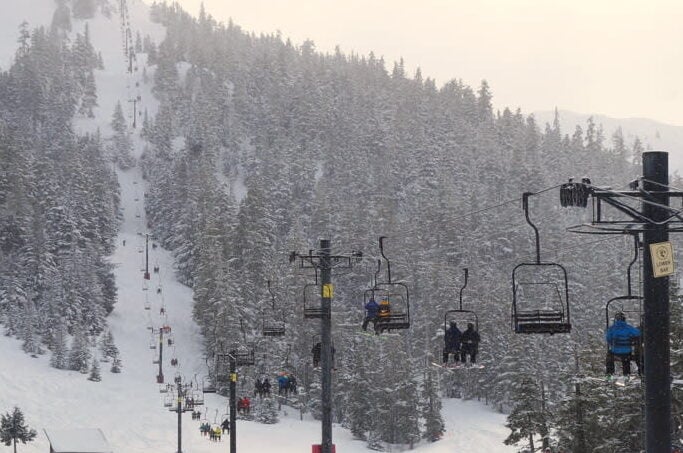
NOTN- The City and Borough of Juneau is scrapping its participation in the long-planned gondola project at Eaglecrest ski area after costs ballooned from single-digit millions to an estimated $37 million, leaving the city on the hook to repay Goldbelt during an already tight budget season.
Finance Committee Chair Christine Woll said the Juneau Assembly voted Wednesday night to move forward with pulling out of its agreement with Goldbelt, which had helped finance the project. The city expects to repay about $12 million that Goldbelt invested, roughly $9 million of which has already been spent.
“We knew that increases at Eaglecrest were going to be significant over time, just because of aging infrastructure, and we knew that the public tax dollars probably couldn’t sustain paying for those increases at Eaglecrest.” Woll said, “So the vision was that by installing a gondola that could help take advantage of summer revenue from our visitor industry, we could provide a more reliable, non-taxpayer dollar-funded income stream at Eaglecrest, but for a price tag that big, it no longer becomes something that the city has funds to invest in.”
The gondola was originally projected to cost about $7 million, later revised to around $9 million when the city and Goldbelt signed their deal, Woll said. The latest estimate, about $37 million to install, pushed the project far beyond affordability for the City.
“It’s just terrible, what a waste of money, but we’re gonna have to figure out how to pay it back.” Woll said.
The decision to cancel the project now leaves Eaglecrest in a precarious financial position. Its future budgets had assumed new income from gondola operations during the summer months.
Woll said the Assembly has directed Eaglecrest to return with a much-reduced operating budget that fits within the traditional taxpayer subsidy the ski area receives.
The gondola reversal comes as Juneau is just beginning to create it’s annual budget for FY 27.
“Ultimately, the assembly is going to have to make some hard decisions about service reductions. We’re aiming to make about $2 million more in cuts before June, when we have to pass the budget.” Said Woll.
Members of the Alaska House of Representatives convene on the first day of the second session of the 34th Alaska State Legislature on Jan. 20, 2026 (Photo by Corinne Smith/Alaska Beacon)
The Alaska Legislature on Wednesday approved a stopgap budget bill amid an ongoing debate among lawmakers around war-driven oil revenues and whether to draw from state savings.
The stopgap budget bill contains $449.6 million in state spending including for disaster relief, construction, education, correctional officer overtime and some public assistance programs — expenses accrued since the Legislature and Gov. Mike Dunleavy adopted the state budget last year.
But the question of how and when all the items will be funded is still uncertain. Lawmakers chose to rely on anticipated oil revenue to fund the bill rather than drawing from savings.
The Alaska Senate passed the budget bill by a 19 to 1 vote on Wednesday, with Sen. Robert Meyers, R-North Pole opposing. The bill was quickly transferred to the Alaska House where it passed unanimously by all 40 members. The bill now moves to the governor’s desk for his consideration.
The Legislature created a select bicameral conference committee to hammer out differences between House and Senate versions of the budget bill over the last week.
The final bill includes $75 million for disaster relief to cover the state’s response to the Western Alaska storms last fall, and almost $100 million for fire suppression. It contains $20 million for the Alaska Department of Corrections for overtime spending, as well as $34.4 million for Medicaid and $12.8 million for other public assistance programs through the Alaska Department of Health. The bill allocates nearly $130 million toward the Alaska Higher Education Fund which provides grants and scholarships to students.
The spending bill also includes a time-sensitive appropriation for Alaska’s construction industry. It contains $70.2 million in state dollars to unlock roughly $630 million in federal grant funding that industry groups have said is essential for the summer construction season.
But how the nearly $450 million budget bill is funded is still in question.
Legislators have been closely watching oil prices since the start of the Iran war, which state forecasters have projected could potentially generate hundreds of millions in state revenue for Alaska.
Lawmakers agreed that if oil-driven state revenues from now until June 30, the end of the fiscal year, are not sufficient to cover the stopgap budget, then the Legislature will draw from state savings. That roughly pencils out to an average of $74 per barrel of oil through June to cover state spending, according to data provided by the House Finance Committee.
But that vote to confirm drawing from savings again failed in the House on Wednesday — the fourth vote held in the House this year. To draw from Alaska’s main $3 billion savings account requires support from three-quarters of the House and Senate.
The Senate approved the immediate draw from savings on Wednesday by a 16 to 4 vote, but it failed to pass the House by a vote of 22 to 18. It takes 30 votes in the House to spend from the savings reserve.
On Thursday, House Speaker Rep. Bryce Edgmon, I-Dillingham, expressed concern at sending the budget bill to the governor with what he said was no “backstop” funding from savings.
“So if the price of oil goes down, the governor may not have the money ultimately, to finish up or to pay for operations,” he said for this fiscal year.
Edgmon said he is concerned with banking on future oil prices to pay the state’s bills.
“It’s the first time, I think maybe perhaps in Alaska’s history, we’ve ever done it this way,” he said. “It’s going to be very interesting to see how this plays out, because oil prices can certainly go up as well, but they can also go down. And it’s not the way that I like to operate in terms of being fiscally responsible.”
Members of the Republican House minority caucus in opposition from drawing from savings expressed confidence in oil revenues providing enough funding to cover state expenses.
“Everything in this bill the state currently projects enough revenues to fund,” said Rep. Will Stapp, R-Fairbanks on Wednesday. “We still have many days in session, happy to revisit in the event oil price changes and we need to structure something in order to meet our obligations. That is not a requirement at this moment.”
The stopgap budget bill now moves to Dunleavy who can sign or veto the bill or let it pass into law without his signature.
Alaska Gov. Mike Dunleavy delivers the annual State of the State address on Tuesday, Jan. 28, 2025, in the Alaska Capitol. (Photo by James Brooks/Alaska Beacon)
By: Sean Maguire, Alaska Beacon
Alaska Gov. Mike Dunleavy delivers the annual State of the State address on Tuesday, Jan. 28, 2025, in the Alaska Capitol. (Photo by James Brooks/Alaska Beacon)
Alaska Gov. Mike Dunleavy has proposed eliminating property taxes for the Alaska LNG project to incentivize development of the $46 billion gas line and export facilities.
The bill was introduced to the Legislature on Mar. 20 and would exempt the project from local taxes in Alaska, including property and sales taxes. Instead, a volume-based tax would be levied once the pipeline starts producing significant quantities of gas from the North Slope.
In a statement, Dunleavy said his legislation “removes a structural barrier” that would help get the gas line built. The project is expected to create thousands of construction jobs, spur the development of new industries and potentially lower power and heating bills for consumers.
“We bring more gas into Alaska and stabilize supply — that lowers cost for families like yours and businesses,” Dunleavy said Wednesday on social media.
The state of Alaska is expected to collect over $22.5 billion in new revenue from the project over the next 36 years, primarily from production taxes and royalties, according to state economists.
In addition to exempting the project from property and sales taxes during its ramp-up period, the Alaska Department of Revenue estimates Dunleavy’s bill would equate to a 90% reduction in property tax revenue, once the pipeline is at full capacity.
Municipal governments are expected to take the biggest hit from that change. If the project was built under current tax law, they would collect an extra $13 billion in revenue through 2062, or $360 million annually.
Some long-time lawmakers have questioned whether the pipeline will result in reduced gas prices. Others have questioned why such a sharp reduction in property taxes is needed.
‘Industrial renaissance’
An 800-mile pipeline from the North Slope to deliver natural gas to market has been a dream in Alaska for decades. But prior efforts have all fallen short.
Supporters say its prospects have never been stronger. Key permits are in hand, several Asian nations are interested in buying Alaska’s gas, and President Donald Trump has voiced support for the project.
Former Democratic U.S. Sen. Mark Begich has been hired by the Dunleavy administration to help advance the pipeline. He told lawmakers the 1973 oil shock helped spur development of North Slope oil. Now, war in the Middle East has upended LNG production and raised prices, which makes Alaska natural gas more attractive, he said.
“This is our moment,” he said to the House Resources Committee on Monday, calling the gas line “an incredible project.”
Glenfarne, a New York-based company, signed on to develop the pipeline last January. It owns 75% of the project while the Alaska Gasline Development Corp., a state agency, owns the remaining 25%.
But the economics of the $46 billion gas line remain uncertain.
Glenfarne chose to split the project in two. The first phase would see construction of a pipeline for domestic consumption, with delivery of gas targeted for 2029. The second phase would construct a plant and shipping terminal in Cook Inlet for export.
Alaska’s current tax structure means a 2% property tax can be levied on oil and gas infrastructure.
Dunleavy’s tax proposal would impose a volume-based alternative. A new tax would be levied at 6 cents on every thousand cubic feet of gas, which would increase by 1% annually.
The tax would only be imposed once the pipeline delivers an average of 1 billion cubic feet of gas per day or 10 years after gas starts being produced.
Dan Stickel, economist with the Department of Revenue, on Wednesday said reducing property taxes would help with front-end costs. He said the agency is not examining Dunleavy’s bill as a tax cut because it would help spur the pipeline and potentially lead to new state revenue.
Stickel told the House Resources Committee that AGDC and Glenfarne have said the project will not move forward without property tax relief.
At full capacity, the pipeline is expected to deliver 3.5 billion cubic feet of gas per day. Southcentral Alaska’s demand for Cook Inlet gas equates to roughly 70 billion cubic feet of gas per year.
Glenfarne Group CEO and founder Brendan Duval and Alaska LNG President Adam Prestidge stand while Gov. Mike Dunleavy recognizes them during his State of the State address on Jan. 22, 2026. (Photo by Corinne Smith/Alaska Beacon)
Adam Prestidge, president of Glenfarne Alaska LNG, said the project would be an “industrial renaissance” for Alaska. It could create 7,000 jobs during construction and spur new opportunities such as data centers, he said.
Wearing a lapel pin in a House Resources Committee hearing that said “build the line,” Prestidge told lawmakers discussions on gas agreements are ongoing with Alaska utilities. He said agreements could be signed and made public in the next couple of months.
“This is the only way to significantly bring down the cost of energy for Alaskans,” he said.
‘Huge give’
The Alaska Department of Revenue estimates the state would receive $22.5 billion in revenue from the gas line through 2062. The majority of that windfall would come from production taxes and royalties.
Compared to Alaska’s current tax regime, Dunleavy’s proposal would see the state miss out on $200 million per year from property taxes once the pipeline is at full capacity, projections show.
The alternative tax structure proposed by the governor would see $64 million per year collected by municipalities at full gas production and $9 million annually by the state.
For municipalities, there would be a bigger hit.
The gas line is expected to be built through four municipalities that collect property taxes: the North Slope Borough, Denali Borough, Matanuska-Susitna Borough and the Kenai Peninsula Borough.
Under Alaska’s current tax structure, municipal governments would be expected to share in $17.3 billion from the pipeline through 2062. Under Dunleavy’s tax bill, it would be below $4 billion.
Anchorage Democratic Sen. Bill Wielechowski, vice-chair of the Senate Resources Committee, spoke at a Tuesday news conference. He said legislators would look closely at Dunleavy’s proposed tax break and determine whether a 90% cut in property taxes is appropriate.
“I don’t know anybody in the Legislature who doesn’t want a gas pipeline. The question is, what is it going to take to get it?” Wielechowski said.
State projections show that under both tax systems, the owners of the pipeline are expected to collect $60 billion over the next 36 years.
Anchorage Republican Sen. Cathy Giessel, chair of the Senate Resources Committee, estimates Alaska has invested $1.1 billion to build a natural gas pipeline, but nothing has been built.
On Tuesday, Giessel cited costs like public safety that could be borne by communities along the proposed pipeline. She said it would likely take until the second phase of the project before 1 billion cubic feet of gas is produced per day. Meaning, it could take years before municipalities collect Dunleavy’s volume-based tax, she said.
“That’s a long time for these communities to have no property tax,” she said.
State data suggests local governments would take $6.3 billion in property taxes through 2042. Dunleavy’s volume-based tax would net them $1.3 billion over the same period.
“This is a huge give to the company,” Giessel said. “Will it still be enough for them? I don’t know.”
Mayors in impacted communities are set to testify on the governor’s tax proposal on Friday afternoon before the Senate Resources Committee.
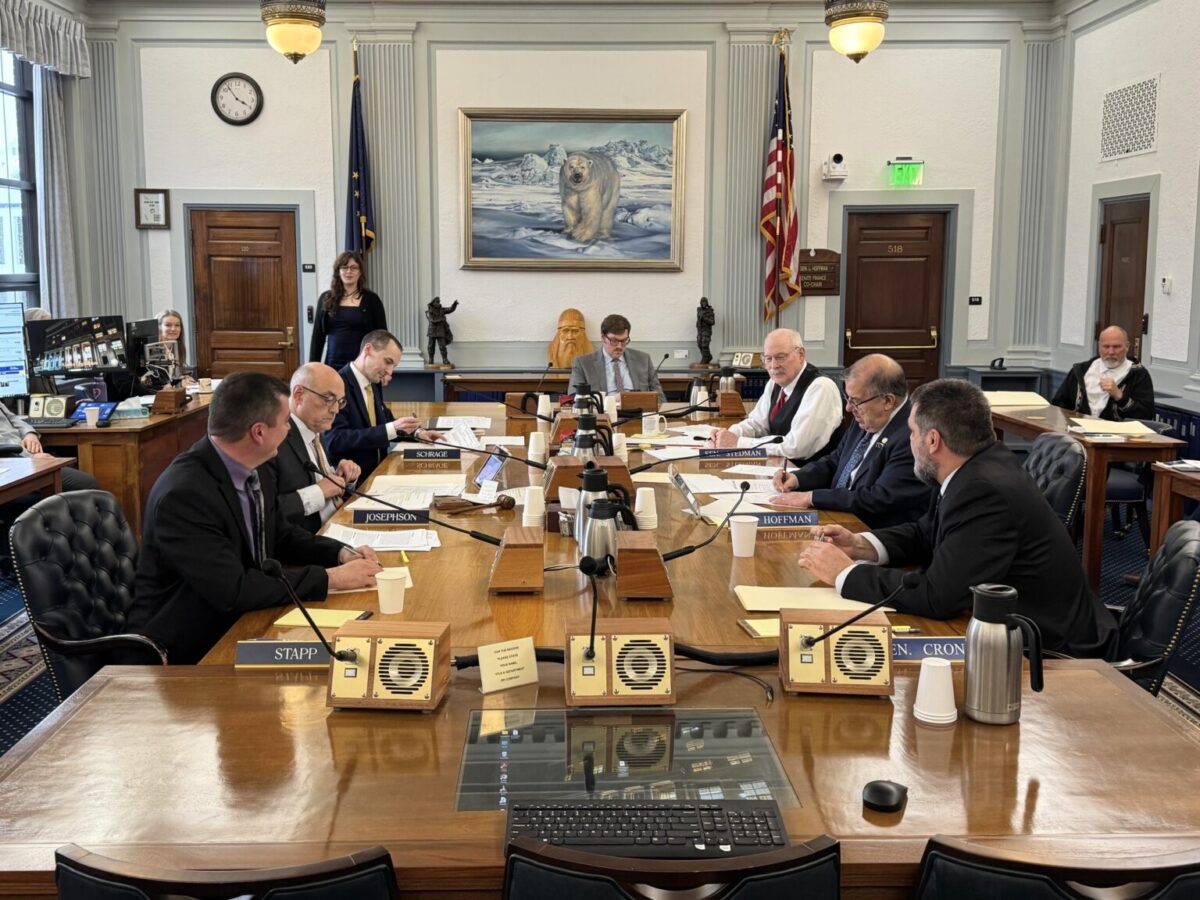
Members of the bicameral conference committee charged with writing a compromise supplemental budget sign the final documents on Monday, March 23, 2026, at the Alaska Capitol in Juneau. (James Brooks photo/Alaska Beacon)
By: James Brooks, Alaska Beacon
Members of the bicameral conference committee charged with writing a compromise supplemental budget sign the final documents on Monday, March 23, 2026, at the Alaska Capitol in Juneau. (James Brooks photo/Alaska Beacon)
The Alaska Legislature is preparing to re-vote on a key spending bill that will cover millions of dollars in disaster response and construction projects in the current fiscal year.
On Monday, a bicameral conference committee voted 5-1 to send an amended version of the bill to final votes in the House and Senate. Those votes may take place Wednesday.
The state’s fast-track supplemental budget contains $449.3 million in spending — expenses accrued since legislators and Gov. Mike Dunleavy adopted the state budget last year.
Legislators are separately working on a budget for the next fiscal year, which begins July 1. A vote on that is expected at the end of the legislative session in May.
The supplemental budget bill includes $70.2 million to unlock grant-funded construction projects principally paid for by the federal government — a major lobbying priority for the state’s construction industry.
It also includes tens of millions for the state response to last year’s wildfire season and millions more as a down payment for the state’s response to ex-Typhoon Halong, which devastated Western Alaska last fall.
The new spending would largely be paid for with new revenue the state expects because of higher oil prices caused by the Iran war.
As long as prices remain high through June 30, the end of the fiscal year, legislators expect there will be enough general-purpose money to cover the expenses, plus a smaller package of budget amendments already proposed by Dunleavy.
Those amendments arrived too late to be added to the supplemental bill.
If oil prices don’t match expectations, the bill contains language that would allow the state to use the Constitutional Budget Reserve, the state’s principal savings account, to cover the difference plus $20 million in “headroom.”
That clause may run into problems in the House, where the 19-person House Republican minority caucus has voted several times against spending from the reserve.
It takes 30 votes in the House and 15 in the Senate to spend from the reserve; while the Senate has met that threshold and is expected to do so again this week, it isn’t clear whether the House will do so.
The 21-person, predominantly Democratic coalition that controls the House would need to attract at least nine minority votes, and in earlier votes, it was unable to do so — something that forced the bill into a bicameral conference committee for further negotiations.
Rep. Will Stapp, R-Fairbanks and the minority’s negotiator on the conference committee, was the only lawmaker to vote against the revised bill on Monday, saying he doesn’t believe any kind of spending from the reserve is necessary at this point.
Members of the House majority have argued that allowing reserve spending — if necessary — would provide surety for construction businesses making summer plans.
They have also argued that time is of the essence: Delaying action on the bill would mean those companies might have to defer purchasing and hiring decisions ahead of the summer construction season.
Members of the House minority argued that as previously written, the bill would have allowed members of the majority to direct the spending of hundreds of millions from the reserve, even if it wasn’t needed to balance the supplemental budget.
That version was cut to less than $375 million in spending, an attempt to attract minority votes, but while that approach worked in the Senate, it did not succeed in the House.
When the House failed to pass the reserve vote, lawmakers there sent the bill to the conference committee for further work.
While that committee was able to finalize a draft compromise, it won’t be clear until later whether that compromise can pass out of the Legislature.
NOTN-The results are in, residents in Juneau have been helping shape the capital city’s long-term future at “Juneau Futures” workshops and with a community survey.
“Juneau’s had Comprehensive Plans on the books for decades, since the 1900s, so it’s basically a big picture guide that helps us decide where and how to develop, usually, over the next 20 to 30 years.” Said Senior Planner Minta Montalbo, “I think it’s important to keep in mind that the Comprehensive Plan reflects community priorities, and it connects our values and goals with CBJ decision makers, with policies and actions. It’s like a reference point for decisions on how to best use our land and where to focus our resources.”
The effort is part of the “Our Juneau, Our Future” comprehensive plan update, which gathered input through 14 in-person workshops and an online survey aimed at guiding development in Juneau over the next 20 years.
The workshops asked residents 3 major questions, Where should Juneau grow? What does Juneau need to do to prepare for the future? And how should Juneau grow?
According to findings released by CBJ, participants outlined several approaches for where that growth should happen. Many supported investing in central areas like downtown Juneau and Lemon Creek.
Quotes in italics will be pulled directly from CBJ’s results.
Downtown Juneau and Lemon Creek were popular development areas with many participants expressing interest in building activity in and around central Juneau.
Others prioritized established neighborhoods such as the Mendenhall Valley, emphasizing investment near current residents.
Investments should focus on infill and areas with existing infrastructure.
Additional support emerged for developing multiple hubs, including Auke Bay, seen by some as an alternative community center, others pointed to North Douglas as a next step for expansion due to its available land.
North Douglas is the next logical step for development in the next 20 years, and then we can focus on West Douglas.
Across all responses, one issue stood out: housing.
Participants consistently identified it as the community’s top priority, even noting that “everything connects to housing.”
Housing was the most important issue for many participants. While approaches differed, it is clear that Juneau needs more housing solutions.
Respondents also stressed the importance of protecting neighborhoods from natural hazards like flooding and avalanches, and called for diversifying Juneau’s economy beyond tourism.
“Folks are focused mainly on flooding and protecting the homes in the valley, but we’re also hearing renewed discussion about landslide dangers and avalanches, so we’re going to want to be looking at that in the new comp plan.” Montalbo said, “Not surprisingly, housing for all definitely remains a huge priority, and when we’re talking about housing, housing options that suit a variety of needs. And then I think the third biggest category is economic diversification. Again, not a new topic, but we’re hearing a lot of concern about trying to strengthen year round industries, and find a balanced approach to tourism. We want to recognize the economic contribution, but people are also asking that we care for Juneau’s unique small town characteristics at the same time.”
Once participants had decided how Juneau should grow, they were asked to see how their scenario would hold up against future conditions, such as potential increase or decrease in tourism, funding, and natural hazards.
Participants said they expect tourism to increase, while state and federal funding may decline and natural hazards may become more severe.
In workshop scenarios, residents adjusted their priorities accordingly, shifting resources toward housing, hazard mitigation, and economic resilience when faced with those challenges, notably when faced with a decrease in federal funds, participants primarily divested from Remote Area Infrastructure and Waterfront Development, viewing them as non-essential “luxuries” without federal support.
According to the findings particpants felt, “no matter the strategy, growth should consider existing investment, current residents, housing needs, and hazard risk.”
Economist Dan Stickel talks to the Alaska House Finance Committee on Monday, March 16, 2026. (James Brooks photo/Alaska Beacon)
By: James Brooks, Alaska Beacon
Economist Dan Stickel talks to the Alaska House Finance Committee on Monday, March 16, 2026. (James Brooks photo/Alaska Beacon)
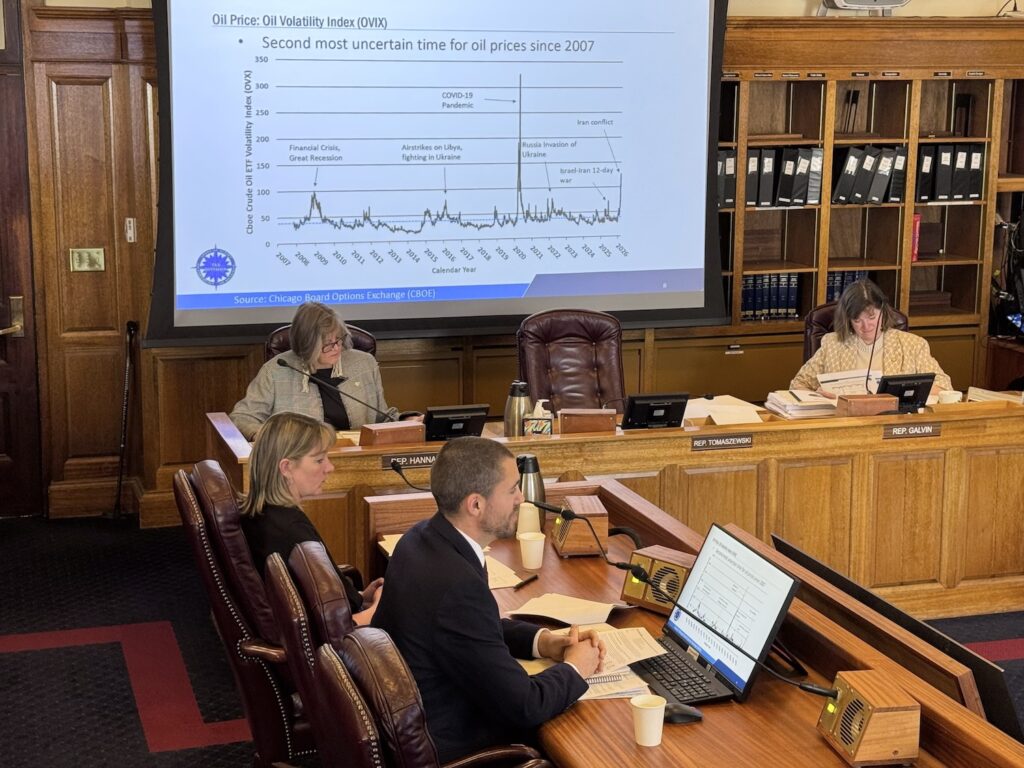
The U.S.-Israeli war against Iran has left oil markets more uncertain than they were during the Great Recession, a state expert told the Alaska Legislature on Monday.
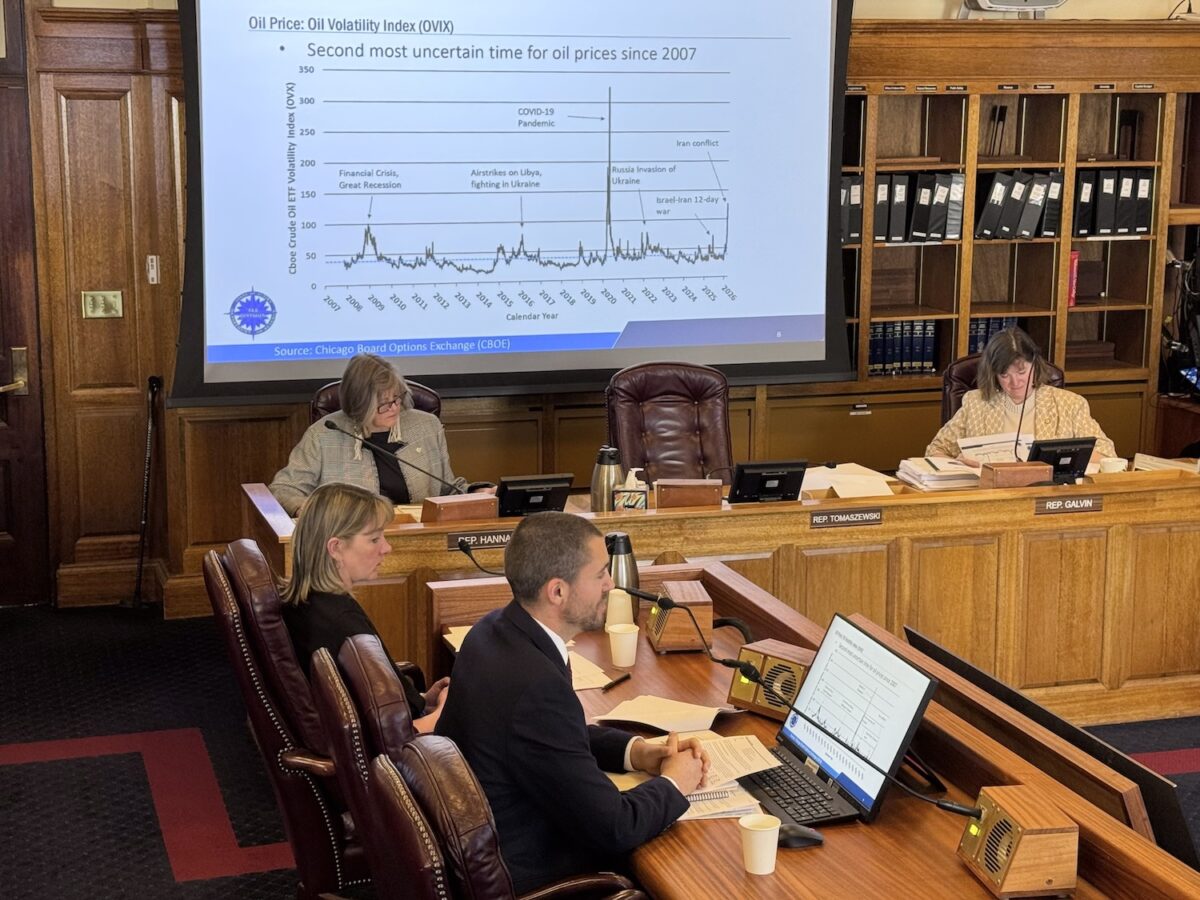
In a pair of hearings, Alaska Department of Revenue economist Dan Stickel told state legislators that the volatility of global oil markets is the second-highest on record, leaving future forecasts particularly unreliable.
“The level of uncertainty around future prices in the oil markets now is higher than during the peaks of the Great Recession in 2008-2009 and it’s higher than the Russian invasion of Ukraine, and it’s higher than any of the COVID spikes other than the initial April 2020 spike,” he said during a Monday morning hearing of the Senate Finance Committee.
“The message here is to plan for the possibility that revenue doesn’t come in exactly at what we forecast for the next couple of years,” Stickel said.
Oil is the second-largest source of general-purpose revenue for the Alaska state budget, and Stickel’s testimony came days after the department released a new Alaska revenue forecast showing $545 million more in current-year revenue than projected in the fall. Most of that higher prediction is due to the price of oil.
That forecast has snarled relations in the Alaska House of Representatives, which has repeatedly postponed discussion of a bill that would fund a variety of amendments to the fiscal year 2026 budget passed by lawmakers and Gov. Mike Dunleavy last spring.
On Monday, after more than two hours of acrimonious debate, House legislators again declined to take up the bill.
Soon after the House adjourned its floor session, Stickel testified in front of the House Finance Committee, and told lawmakers that “the level of certainty that we will hit our exact forecast is low.”
As he spoke, on the other end of the Capitol’s fifth floor, the Senate Finance Committee was simultaneously hearing from Office of Management and Budget director Lacey Sanders, who said the governor’s office was requesting another $18 million in spending for the current fiscal year.
Altogether, the governor has requested almost $427 million in additions to the budget. Add in additional spending proposed by lawmakers, and there’s only about a $30 million difference between the new revenue forecast and the additions proposed by the governor and legislators.
At the latest forecast prices, said Rep. Calvin Schrage, I-Anchorage, a $2 change in the average price of a barrel of North Slope oil is worth $30 million.
He asked Stickel what the odds were that the forecast misses low by more than $2.
“Roughly a slightly less than 50% chance that we come in more than $2 below the forecast,” Stickel said, then alluded to the fact that there’s a similar chance of coming in above the forecast.
“The level of certainty that we will hit our exact forecast is low in either direction,” he said.
Currently, members of the House majority are advocating that legislators unlock the state’s principal savings account to provide surety for some of those budget additions.
Doing so would avoid problems if oil prices turn out to be lower than forecast.
But spending from the Constitutional Budget Reserve, the state’s principal savings account, requires 30 votes in the House and 15 votes in the Senate.
The House’s multipartisan coalition majority has 21 members, which means they need support from the all-Republican House minority caucus.
Members of that group have been arguing against unlocking the budget reserve right now, saying that the new forecast and the current balance of the state’s general-purpose accounts demonstrate it isn’t needed.
In addition, as currently written, the supplemental budget bill in the House would allow spending from savings regardless of the price of oil. That could allow the majority to dictate extra spending even if prices stay high.
The Senate has already approved spending from the Constitutional Budget Reserve, and on Monday morning, Sen. Bert Stedman, R-Sitka and co-chair of the Senate Finance Committee, said a draw from the reserve would act as a “safety net.”
Sen. Lyman Hoffman, D-Bethel, said senators don’t intend to spend dollars from savings unless it is needed.
“If they are not needed, they will stay in the CBR,” he said, adding that without permission to spend from savings, there’s a chance that lawmakers would need to return in August to fix budget problems in a special session.
The Alaska State Capitol is seen on Wednesday, March 4, 2026. (James Brooks photo/Alaska Beacon)
By: Corinne Smith and James Brooks, Alaska Beacon
The Alaska State Capitol is seen on Wednesday, March 4, 2026. (James Brooks photo/Alaska Beacon)
A potential $500 million windfall is giving the Alaska House of Representatives a headache.
On Friday, the Alaska Department of Revenue released a forecast predicting that the state of Alaska will collect hundreds of millions of dollars more oil revenue by June 30 than previously expected.
That forecast landed in the middle of an ongoing debate over whether or not to spend from savings to cover almost $530 million in extra expenses, largely added by Gov. Mike Dunleavy, to the state budget since last spring.
The Senate approved a proposal to pay for roughly three-quarters of those expenses and it is now in the state House, awaiting a vote that could come as soon as Monday.
Tensions rose on Friday, with no agreement among House lawmakers on how to pay for the proposal.
The House is led by a 21-person multipartisan coalition whose members have been urging fast action on the issue. They say it is particularly important to fund $70 million for the state’s transportation projects to unlock more than $630 million in additional federal funding.
Without sure money, majority lawmakers say projects can’t go out to bid and construction firms can’t make purchasing and hiring decisions.
The majority wants to use the state’s Constitutional Budget Reserve, a savings account, to provide guaranteed funding.
The majority can pass a bill on its own, but it can’t spend from savings on its own. It takes 30 members of the House and 15 from the Senate to approve spending from the Constitutional Budget Reserve, the state’s principal savings account.
The Senate has already given that approval, but in the House, at least nine members of the 19-person, all-Republican House minority would have to support the majority, and so far, they’re not willing to do that.
Part of that reluctance is because as currently written, the supplemental budget bill allows lawmakers to spend up to $373.6 million from the reserve regardless of whether or not the war-caused bonus becomes real.
If oil prices stay high and the reserve money isn’t needed, the majority could spend it on other things without further input from the minority. That’s because it takes only 21 votes to advance a budget bill.
The money would return to the reserve only if it was unspent at the end of the fiscal year.
If lawmakers don’t spend from savings and the Iran war ends unexpectedly quickly, causing oil prices to fall, the minority could vote to spend from savings later to fill the gap.
The result is an ironic set of circumstances — Trump has said that the war will be short, but minority House Republicans’ action is effectively a bet on a long war.
Minority members say they’re being fiscally responsible. So do members of the majority, who add that there’s an opportunity cost for any delay — Alaska construction companies can’t make plans for the summer until they know what projects they’ll need to build.
Majority members also expressed frustration that the supplemental budget was largely requested by the governor, who they say has been absent in negotiations.
In addition, legislators and Gov. Dunleavy could also find themselves with a problem if oil prices fall after legislators have adjourned for the summer.
Legislators typically write budgets based on forecasts from the Department of Revenue, but this year’s forecast is especially uncertain, the department said.
Rep. Calvin Schrage, D-Anchorage, co-chair of the House Finance Committee and a member of the majority, said he’s skeptical of banking on the forecast.
“I have a lot of concern over budgeting based on that forecast, because that’s all it is. It’s a forecast. It’s not realized money, it’s not money in hand,” he said Friday.
“Even with this optimistic forecast, you are just barely, maybe able to balance the budget — if everything goes perfect. We still don’t have additional supplementals,” he said, referring to more budget amendments that could be requested by the governor.
Schrage said lawmakers will be scrutinizing the forecast in the coming days and weeks, and he said there’s still the possibility the Legislature may need to draw from savings.
But minority Republicans said they considered drawing from savings fiscally irresponsible.
“Taking a draw from our savings account to put into the general fund to fund things that were, by all accounts and purposes, able to be funded without it would have been irresponsible,” said Rep. Justin Ruffridge, R-Soldotna, on Friday.
House Minority Leader DeLena Johnson, R-Anchorage, said she’s confident in the forecast projections. “There’s some actuals there too. So I’m very comfortable with actuals, and I also know, if there’s changes, we can come in and we can come in and make them, and make a different vote. I’m not as worried about that.”
Speaker of the House Bryce Edgmon, I-Dillingham, expressed frustration at the delay.
“This is pure politics. We should have had the supplemental budget funded. A long time ago,” he said. “The House Majority coalition prioritized the funding of the entire package that was proposed by the governor. Every single item came from the governor. And so here we are, you know, in a really precarious state, because we’re at the point where every week that goes by gets us a week closer to that federal match not being achieved for the summer construction season.”
Edgmon and other majority legislators have voiced frustration about “moving goal posts” on the budget bill. While there are more than $530 million in proposed additions, the bill in front of House lawmakers contains only three-quarters of that amount because majority members wanted to attract members of the minority for the savings vote.
The remainder will still have to be addressed later, regardless of what happens in the upcoming vote.
Edgmon said it’s not clear to him what the Republican minority wants in exchange for a budget reserve vote.
“We don’t know what the ask is,” he said. “But it’s all about leverage, and unfortunately, it’s falling on the shoulders of a lot of smaller contractors around the state.”
As of Friday afternoon, it appeared as if the budget bill was on course to pass, but without approval to spend from savings.
If that occurs, the state of Alaska will be in the awkward position of hoping for a war long and difficult enough to keep oil prices high for months.