Categories
Featured Juneau News juneau Juneau Local Juneau Local News Feeds

Assembly OKs year-round Warming Shelter, plans tougher camping enforcement

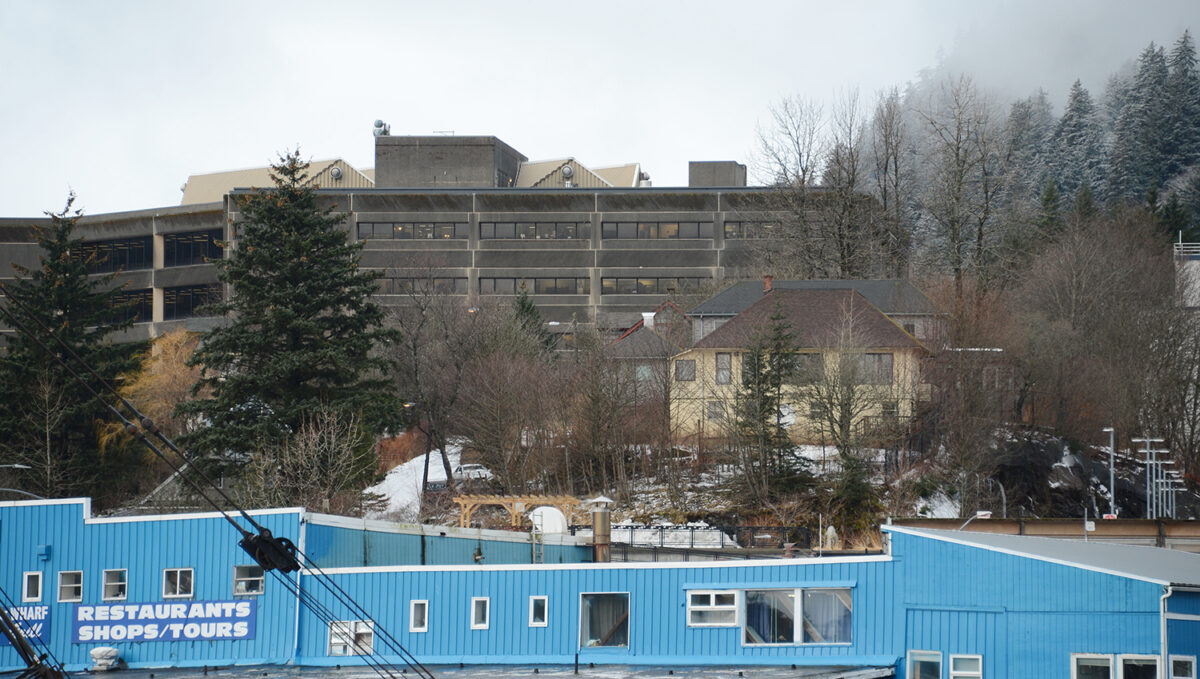
The Warming Shelter on a foggy night, courtesy of the Warming Shelter

NOTN- The Juneau Assembly has approved an ordinance to extend funding for the Warming Shelter to stay open year round, as well as pledging tougher enforcement of public camping.

The measure, adopted Monday night without objection, The Warming Shelter operated by St. Vincent de Paul open through the year and directs staff to step up enforcement in high-impact areas such as Teal Street and near the Rock Dump.

City officials said they will move more quickly on camping in public rights-of-way and will prioritize sites that generate significant public health concerns and a high volume of complaints.

“This ordinance is only half of the piece, providing people a safe place to go, to really increase our enforcement actions in those highly visible areas where we have received a lot of complaints. So we are a complaint driven organization, so the number and the diversity of complaints for any dispersed camping would influence how quickly and aggressively we would respond to that dispersed camping. We also would look at the public impact, not just who’s complaining, but what that impact is to your to public health. And we would prioritize enforcement when those two things are high.” Said City Manager Katie Koester.

Service providers urged the Assembly to support keeping the Warming Shelter open, arguing that shelter beds give people a chance to stabilize instead of cycling between the hospital, sobering center and police contacts.

“Last winter, someone came into the Warming Shelter after days of sleeping outside, cold, exhausted and struggling. Before that, they cycled between Bartlett Regional Hospital, Juneau sobering center and calls to Juneau Police Department. Each system did its job, but no one could offer what they truly needed, a safe, consistent place to be. Without that option, people often create encampments in areas of concern without sanitation or basic services, impacting both their health and the surrounding community. At the shelter, something simple changed. They got warm, they slept, they stabilized, and they had a starting point. That’s what the warming shelter provides.” Said Deputy Director of St. Vincent de Paul Mollie Carr, “We know we can’t fix every situation, but offering a year round place for people to go is a practical, common sense step that reduces crisis and stabilizes our community. When the shelter closes, the need doesn’t disappear. It shifts to a higher cost, and systems like the ER, law enforcement and emergency services. It costs far less to provide a shelter than repeated response to crisis. Year round funding is not just compassionate, it’s responsible, efficient and necessary.”

Neighbors and business owners described escalating problems they linked to dispersed camping, including theft, vandalism, public defecation and employees who said they felt unsafe walking to and from work. Some, including business owners along Teal Street and across from the shelter, said they reluctantly backed the ordinance as long as it came with stronger police presence, clear no-camping zones near workplaces and consistent enforcement of existing code.

“‘I’m here to support the Warming Shelter, combined with not allowing the chaotic Teal street camping to go on again this summer. Last summer, I personally cleaned up thousands of pounds of trash. I tried to help people camping in terrible conditions. I tried to support my co-workers and partner agency employees who are afraid to be at work or to walk to their cars because of the chaos. Just because people are poor and homeless or work in social services does not mean that they do not deserve a safe place to live and work.” Said Logan, member of the Glory Hall team, “The warming shelter extension is not perfect, but it is the only doable thing we came up with. Not allowing dozens of tents on Teal Street is not a violation of people’s rights. It is bringing order and safety to people’s lives. It is doing what a city is supposed to do. I am now a productive and essential member of the Glory Hall team. I am a hard worker. I think on my feet, I am great in a crisis. I am a single parent of an amazing daughter. I also used to live outside on South Franklin Street, struggling. This was a long time ago. I got help along the way because of Tlingit and Haida regional housing authority. I’m about to become a homeowner. Because of the Glory Hall, I have a job and training, and I was able to get basic food, shelter and help with transportation and other needs while I figured out my life because of the Southeast Alaska Food Bank, I was able to eat at Glory Hall because of Nami Juneau, I got certified as a peer support specialist, If you’re willing to do the work for lives to stabilize. It is critical.”

Assembly members said the ordinance is not a permanent solution to homelessness in Juneau but called it a necessary step while longer-term housing, shelter capacity and camping policies continue to be debated.

“I would like to say this isn’t perfect by any means. The need is greater than what anyone can serve.” Said Assembly member Maureen Hall, “Everyone in this room should continue to look for solutions and work with partner agencies to help this happen.”

“I appreciate that everything is imperfect, and so I’m okay with this, as long as we are continuously checking, I think there were some real emergent problems that we heard from residents and neighborhoods on different kinds of camping, car camping on the street, camping in the woods, camping creates different kinds of problems, and I think those call for different kinds of enforcement.” Said assembly member Alicia Hughes-Skandijs, “I think this is a really good step, when you have a consistent, year round place, and you can really say, nope, this is our hard line. I want us to be really careful, that we’re both balancing the needs of the members of the community, that things don’t get out of hand, and that we’re fulfilling our obligation to those unhoused members of our community, who we are equally accountable to, and who are much less able at this point, in their lives, to come.”

Categories
Alaska News Featured Juneau News juneau Juneau Local Juneau Local Ketchikan Local News Feeds Sitka Local

Juneau seeks public input on $24.5M cruise passenger fee spending plan

NOTN- Juneau officials are asking residents to weigh in on how millions of dollars collected from cruise ship passengers should be spent in the coming year.

The City and Borough of Juneau has released draft recommendations for allocating Marine Passenger Fee revenue and is accepting public comments through May 3.

Each cruise visitor to Juneau pays $13 in fees, which must be used for projects that support the tourism industry or address its impacts on the community.

“Really what people need to know is we get $13 per passenger, and that these funds are restricted on how they can be used.” Said Tourism Manager Alex Pierce, “Every year I get messages that are like, ‘how come we can’t spend this money on my street in the valley, busses drive on it, and it needs to be repaved, and I want to spend passenger fees there.’ The funds are actually restricted by the US Constitution. So under the US Constitution, the fees have to serve the vessel itself. That gets a little bit complicated when you get into human cargo. So we’ve always kind of had a push pull with where and how we can spend this money.”

City officials say the current proposal would allocate about $24.5 million across operating, grant and capital projects.

Recommended spending includes funding to offset increased demand on city services such as police, fire and emergency response, along with street maintenance, parks and expanded bus service during the busy cruise season.

Other proposed projects focus on infrastructure improvements in downtown Juneau, including upgrades to the water system, expansion of public Wi-Fi, maintenance and extension of the seawalk, and additional public restrooms.

All comments received by the May 3 deadline will be reviewed alongside the draft recommendations before being sent to the Assembly Finance Committee on May 6. The plan will then move to the full Assembly for consideration as part of the city’s upcoming budget process.

Residents can submit comments by email or mail to the city manager’s office.

Categories
Alaska News Featured Juneau News juneau Juneau Local Juneau Local Ketchikan Local News Feeds Sitka Local

Metals mining in Alaska still a big source of jobs, money and exports, report says

By: Yereth Rosen, Alaska Beacon

 Kinross’s Fort Knox mine outside of Fairbanks in seen in this undated photo. Fort Knox produced 239,508 ounces of gold in 2024, according to the Alaska Department of Labor and Workforce Development, and it is one of the state’s six major mines. (Photo provided by Kinross Gold Corporation)

Metals mining has a prominent place in Alaska history. Today, it remains a prominent economic driver in the state.

Over the past decade, the metals mining sector has made up 3% to 4% of Alaska’s gross domestic product, and those mined metals rival Alaska seafood as top exports from the state, according to a state Department of Labor and Workforce Development analysis.

Metals such as zinc produced at the Red Dog mine in Northwest Alaska, silver produced by the Greens Creek Mine in Southeast Alaska and gold, lead and copper produced by various mines, now support an industry worth close to $3 billion a year, according to the analysis, published in the current issue of Alaska Economic Trends, the department’s monthly research magazine.

Alaska has six major metals mines, three of which produce more than one type of metal, and hundreds of small placer operations.

Among the mined products coming from Alaska is germanium, a byproduct of zinc that is classified as a critical mineral and used in electronics. In 2024, the Red Dog mine produced about 10 tons of germanium, according to the analysis, making it a critical source to the nation because China cut off deliveries of its germanium. That year, the Red Dog mine was the only U.S. mine producing germanium, though prior to 2023, a Tennessee mine was also producing the mineral, said Karinne Wiebold, the state economist who wrote the Alaska Economic Trends report.

Mining's share of Alaska's gross domestic product has grown considerably, as this graph shows. The graph includes values for metals mining and mining of coal, gravel and sand, but it does not include oil or gas production. Dollar figures are inflation-adjusted to 2024. (Graph provided by the Alaska Department of Labor and Workforce Development research and analysis section)
Mining’s share of Alaska’s gross domestic product has grown considerably, as this graph shows. The graph includes values for metals mining and mining of coal, gravel and sand, but it does not include oil or gas production. Dollar figures are inflation-adjusted to 2024. (Graph provided by the Alaska Department of Labor and Workforce Development research and analysis section)

The value of Alaska’s mining sector, including coal, gravel and sand as well as metals, actually peaked in 2011 at nearly $3.5 million and close to 5% of the state’s gross domestic product. That peak reflected extremely high metals prices and the startup of the Kensington gold mine in Southeast Alaska.

Still, mining has been a strong economic factor in Alaska for the last two decades, after jumping in value in 2006. Every year since then, its total value to the state has generally been above $2 billion and usually accounted for 3% to 4% of Alaska’s gross domestic product.

Metals mining has also become a big employment driver as well, according to the analysis.

There were 3,533 metal mining and support jobs in Alaska in 2024, the most recent data available, and jobs in the sector grew by 37% over the past decade, compared to an overall state job growth rate of 0.3%, Wiebold’s analysis said.

The average metal mining job paid $135,000 in 2024, well above the state average of $71,000 that year and second only to the average pay for workers in the oil and gas sector, the analysis said.

But a large percentage of mine workers are not Alaska residents. Wiebold’s analysis puts resident hire at 56%. That puts the non-resident hire percentage in the metals mining sector well above the state average.

In 2024, the most recent year for which data is available, 22.9% of workers in the state were not Alaska residents, according to an annual report published by the Department of Labor and Workforce Development. That is the highest percentage since such records began in state average, which is the highest percentage since records started in the 1990s.

A visitor to the Donlin Gold mine site on June 23, 2025, touches core samples collected from exploration work. (Photo by Yereth Rosen/Alaska Beacon)
A visitor to the Donlin Gold mine site on June 23, 2025, touches core samples collected from exploration work. Donlin is one of the major Alaska projects that could be developed in the future. (Photo by Yereth Rosen/Alaska Beacon)

Wiebold noted that the nonresident hire in the mining sector is about the same as that in the oil and gas sector, which in 2024 was 40.5%, according to the state’s report.

Mining and oil and gas work in Alaska is conducive to nonresident employees because it is generally conducted at remote locations, typically with rotating schedules of two weeks on and two weeks off, she said.

“This combo means most folks don’t live near the mine and have to commute and stay at the worksite, and that there is not a significant time/cost/commute savings for living in the state,” she said by email. “As a result, miners from out of state can work in Alaska and live somewhere less expensive or more appealing to them.”

Another reason for the high percentage of nonresidents lies in Alaska’s demographics, she said. “In the last several years, with Alaska’s working age population fairly stagnant after a decade of significant declines, more jobs are being held by out of state workers,” she said.

The sector is poised for future growth, with projects like the Donlin gold mine in Southwestern Alaska, the Graphite One graphite mine in Northwestern Alaska and, potentially, the commercialization of the copper-rich but isolated Ambler Mining District in Northwestern Alaska.

But none of those proposed mines can be expected to be developed quickly, and development itself is uncertain, Wiebold’s article said.

“Mines take years to come to fruition — exploration, feasibility studies, environmental reviews, and permitting are expensive, and all have the potential to derail a project. Public concerns and controversy can also slow or stop development,” the article said.

Categories
Alaska News Featured Juneau News juneau Juneau Local Juneau Local Ketchikan Local News Feeds Sitka Local

Alaska House budget panel advances $3,800 PFD in draft budget

By: Sean Maguire, Alaska Beacon

Rep. Andy Josephson, D-Anchorage, asks a question about Senate Bill 48, the carbon credits bill, on Tuesday, May 16, 2023, in the House Finance Committee. (Photo by James Brooks/Alaska Beacon)

The Alaska House Finance Committee on Wednesday advanced a draft operating budget with a roughly $3,800 Permanent Fund dividend.

For a decade, the annual PFD check has been part of the Legislature’s annual budget-making process. A $3,800 PFD would follow a formula from a 1982 statute.

Lawmakers on a budget panel adopted the full, statutory dividend in the evening after long debate. Anchorage Democratic Rep. Andy Josephson, co-chair of the House Finance Committee, cautioned legislators that the vote means Alaskans “will absolutely have the impression” that “a very liberal dividend” will be paid this year. 

Republican Alaska Gov. Mike Dunleavy proposed a full PFD as part of his budget proposal in December. A $3,800 dividend check is estimated to cost roughly $2.47 billion, the largest single spending item in the budget. 

Ketchikan independent Rep. Jeremy Bynum proposed that the PFD would come from two sources. Almost $1 billion would be drawn from the general fund of the state treasury. A simple majority of lawmakers is required to spend from that account.

However, close to $1.5 billion would come from the state’s main savings account, the $3 billion Constitutional Budget Reserve. Three-quarters of the House and Senate would need to support spending from that account. 

If the three-quarter vote fails, the dividend paid to Alaskans in 2026 would drop to around $1,500. Some lawmakers cautioned that would still leave the state roughly $100 million in deficit. 

Last year’s dividend paid to over 618,000 Alaskans was $1,000.

The roughly $3,800 PFD was approved 6-5 by the House Finance Committee. All five minority House Republicans supported a check of that size, alongside Nome Democratic Rep. Neal Foster, co-chair of the House Finance Committee.

The remaining five members of the Democrat-dominated House majority voted no.

Supporters of a full PFD said that high oil prices justified a larger dividend this year. In 2022, Alaskans received a $3,284 dividend and energy relief check when Russia’s invasion of Ukraine sent oil prices skyrocketing.

Rep. Frank Tomaszewski, R-Fairbanks, said that the “people of Alaska are hurting right now” and are facing difficult circumstances from high energy bills. 

The U.S.-Israel war in Iran has seen oil prices spike to well over $100 per barrel. The Alaska Department of Revenue projected last month that would see the state collect $1 billion more revenue than expected over the current fiscal year and the fiscal year that starts July 1.

Lawmakers have already earmarked a substantial portion of that additional revenue to pay Alaska’s outstanding bills. 

The operating budget now advances to debate by the full Alaska House. Once approved in that chamber, it advances to the Alaska Senate for its consideration before heading to the governor’s desk. 

Categories
Alaska News Featured Juneau News juneau Juneau Local Juneau Local Ketchikan Local News Feeds Sitka Local

University of Alaska staff vote to unionize

Corinne Smith, Alaska Beacon

 One of the outdoor sculptures at the University of Alaska Anchorage campus is integrated into a fountain, pictured here on May 16, 2022. More than half of the University of Alaska system students attend UAA or one of its satellite campuses. (Photo by Yereth Rosen/Alaska Beacon)

University of Alaska staff announced a vote to form a union on Wednesday. The union would represent 2,300 permanent staff across the three universities and a dozen community campuses. 

Staff voted to form the union Coalition of Alaska University Staff for Equity, or CAUSE, which would be part of the national United Auto Workers union, in a 1,106 to 610 vote, with 64% voting yes. 

UA staff that would be represented by the union include student services staff, researchers, fiscal and administrative staff, development staff, science communicators, information systems specialists, library workers, athletics coaches and many others, according to a statement announcing the vote. 

“Amid growing uncertainty around state and federal funding for the University, staff cited several reasons for forming a union: consistency and competitiveness in pay and benefits; greater transparency in promotion, career development, and retention; fair workload; and more,” the statement said. 

“This is an exciting day for staff at UA,” said Mike DeLue, a researcher with the International Arctic Research Center at the University of Alaska Fairbanks, in the emailed statement. 

“We did our research, discussed and debated, and overwhelmingly chose to unionize. As soon as the result is certified, we’re ready to sit down with the University and work constructively on addressing the issues that motivated us to form a union in the first place. Improving our working conditions will help us serve more students, enhance UA’s research capacity, and support Alaska communities,” he said. 

The results of the union vote are expected to be certified on April 8, barring any objections or challenges filed by either of the parties, said Jonathon Taylor, director of UA public affairs, by email on Wednesday. 

Taylor also cited financial uncertainty as one of the reasons the university opposed the union effort, which he said was communicated to employees ahead of the vote.

“The university opposed unionization because we believed it would reduce flexibility, slow decision-making, and limit our ability to respond to financial uncertainty,” he said. “That position was operational, not ideological.”

“UA respects the outcome and the right of staff to organize,” he said by email. “We’ll be bargaining in good faith with CAUSE-UAW in accordance with Alaska labor law.”

Taylor noted that existing wages and working conditions will remain in place while the contract is negotiated. He said initial contracts take roughly 400 days to negotiate. He said a 3% salary increase the university requested of the Alaska State Legislature in next year’s budget for all unionized and non-union staff will not apply to the new union members since they are in the process of forming the union and have not yet negotiated a new contract.

“Under Alaska labor law and case law, a contract with a bargaining unit must be in place for negotiated raises to be requested and approved by the legislature,” he said. Taylor said the issue was communicated to staff ahead of the union vote. 

“Non-represented staff remain eligible for that increase,” he said. 

But Charlie Banks, an organizer for the union effort and an academic advisor with the University of Alaska Anchorage, said Thursday that it is the university’s choice, and the new union members should be eligible.

“We believe that the university has the ability to issue the pay increases to us,” she said in a phone interview.

She said support for salary increases is also a show of support for retaining staff, which she says is a common goal of both the union and the university.

“We agree with university admins concerns about difficulties with recruitment and retention. One of the main reasons for this is that Alaska is not keeping up with its peers in maintaining competitive packages for workers,” she said. “Not surprisingly, our peer institutions that have staff unions have much stronger recruitment tools because their contracts are responsive to their needs.”

The new staff union follows the 2024 unionization of UA graduate workers to form the Alaska Graduate Workers Association within the United Auto Workers Local 1907. The union represents graduate teaching assistants, researchers and fellows. They bargained their first three-year contract within 96 days, which secured higher pay, an updated grievance process and a change from at-will to just-cause employment, according to reporting from the student-run newspaper The Northern Light. 

The new staff union joins the national UAW union, which includes approximately 120,000 higher education workers across the country, including staff at the University of Washington and University of California. 

Categories
Alaska News Featured Juneau News juneau Juneau Local Juneau Local Ketchikan Local News Feeds Sitka Local

Alaska Senate advances constitutional amendment to establish education fund

By: Sean Maguire, Alaska Beacon

Sen. Lyman Hoffman, D-Bethel, speaks during a joint session of the Alaska Legislature on Tuesday, March 10, 2026. (James Brooks photo/Alaska Beacon)

The Alaska Senate on Wednesday advanced a constitutional amendment that would establish a dedicated fund for public education.

If passed, lawmakers could design a new source of state revenue to go toward the fund that would be used specifically for schools. The resolution states that the Legislature could only appropriate money from the fund for public education. 

The Alaska Constitution explicitly prohibits the dedication of funds in most cases. Supporters say that prohibition was intended to give the Legislature flexibility in budgeting, and avoid mandated funds.

Bethel Democratic Sen. Lyman Hoffman said before Wednesday’s vote that education is his No. 1 priority. A dedicated education fund could be a “tremendous tool” to improve schools in Alaska, he said. Hoffman co-chairs the Senate Finance Committee which sponsored the constitutional amendment.

The Legislature last year approved an historic increase in school funding through the state’s complex formula, overriding two separate vetoes by Republican Alaska Gov. Mike Dunleavy. Still, advocates say that substantially more school funding is needed with school districts facing sizable budget shortfalls and decades of deferred maintenance.

Two Alaska school districts in January sued the state, arguing that Alaska’s education funding levels violate a constitutional duty to fund schools adequately. School districts across Alaska have long complained about crumbling buildings that have reached crisis level. 

Republican Sen. Bert Stedman represents Sitka, home of Mt. Edgecumbe High School, a state-run boarding school which has reported leaking roofs and buildings in disrepair. Stedman said Alaska is one of the nation’s richest states, but the condition of its schools is “kind of embarrassing.”

Surrounded by school children in the Senate’s public galleries, Stedman said that “we should be doing better for our kids.”

“Every generation needs to make a little step forward and this is our little step,” he said in support of the resolution before the final vote. 

The Alaska Senate approved the resolution on a 17-3 vote. At least 14 of 20 senators are needed to support a constitutional amendment. Two-thirds of the Alaska House of Representatives would need to vote for the same resolution to put the proposal before voters at the November election. 

All 14 members of the bipartisan Senate majority supported the constitutional amendment, alongside three minority Senate Republicans — Sens. Robert Yundt of Wasilla, Mike Cronk of Tok and James Kaufman of Anchorage.

Three minority Senate Republicans voted no: Sens. Robb Myers of North Pole, Cathy Tilton of Wasilla and George Rauscher of Sutton. 

Myers said the drafters of the Alaska Constitution sought to block the proliferation of dedicated funds, which would consume the annual budget.  

He said that establishing a dedicated fund for education “removed any sort of flexibility for the Legislature.” He said that avoiding annual debates about school funding was “not necessarily a good thing.” Education spending could effectively be “out of sight, out of mind,” he said. 

Myers said the state has numerous other priorities such as health care and natural resource management, but they would not receive the same dedicated funds. 

The resolution now advances to the House. If approved by 27 of 40 House members, it would then be placed before voters at the Nov. 3 election. A simple majority of voters is needed to approve an amendment to the Alaska Constitution.

A governor cannot block a constitutional amendment from appearing on the ballot with their veto pen. The Alaska Constitution was last amended in 2004

Categories
Alaska News Featured Juneau News juneau Juneau Local Juneau Local Ketchikan Local News Feeds Sitka Local

Gondola reversal puts Eaglecrest, Juneau budget under strain

NOTN- The City and Borough of Juneau is scrapping its participation in the long-planned gondola project at Eaglecrest ski area after costs ballooned from single-digit millions to an estimated $37 million, leaving the city on the hook to repay Goldbelt during an already tight budget season.

Finance Committee Chair Christine Woll said the Juneau Assembly voted Wednesday night to move forward with pulling out of its agreement with Goldbelt, which had helped finance the project. The city expects to repay about $12 million that Goldbelt invested, roughly $9 million of which has already been spent.

“We knew that increases at Eaglecrest were going to be significant over time, just because of aging infrastructure, and we knew that the public tax dollars probably couldn’t sustain paying for those increases at Eaglecrest.” Woll said, “So the vision was that by installing a gondola that could help take advantage of summer revenue from our visitor industry, we could
provide a more reliable, non-taxpayer dollar-funded income stream at Eaglecrest, but for a price tag that big, it no longer becomes something that the city has funds to invest in.”

The gondola was originally projected to cost about $7 million, later revised to around $9 million when the city and Goldbelt signed their deal, Woll said. The latest estimate, about $37 million to install, pushed the project far beyond affordability for the City.

“It’s just terrible, what a waste of money, but we’re gonna have to figure out how to pay it back.” Woll said.

The decision to cancel the project now leaves Eaglecrest in a precarious financial position. Its future budgets had assumed new income from gondola operations during the summer months.

Woll said the Assembly has directed Eaglecrest to return with a much-reduced operating budget that fits within the traditional taxpayer subsidy the ski area receives.

The gondola reversal comes as Juneau is just beginning to create it’s annual budget for FY 27.

“Ultimately, the assembly is going to have to make some hard decisions about service reductions. We’re aiming to make about $2 million more in cuts before June, when we have to pass the budget.” Said Woll.

Categories
Alaska News Featured Juneau News juneau Juneau Local Juneau Local Ketchikan Local News Feeds Sitka Local Uncategorized

Alaska Advocates defend Roadless Rule

By: Grace Dumas

The Tongass National Forest

As the federal government advances plans to roll back Roadless Rule protections on 58 million acres of national forests, Southeast Alaska conservation advocates are racing to mobilize public opposition, warning that repealing the Roadless Rule could open the Tongass National Forest to expanded clear-cut logging and place subsistence, fisheries and tourism in peril.

Nathan Newcomer, Southeast Alaska Conservation Council (SEACC) Tongass Campaigner, said the current administration has signaled from “day one” that it intends to eliminate the federal Roadless Rule, a regulation that limits road-building and industrial development on certain undeveloped national forest lands.

“They signed an executive order to try to get rid of the Roadless Rule. The Secretary of Agriculture, Brooke Rollins, also issued a statement intending to rescind the Roadless Rule nationwide.”

Despite the administration’s push, the conservation group says public sentiment has been overwhelmingly in favor of keeping the rule.

A Notice of Intent, the first step in the rulemaking process, opened a 21-day public comment period nationwide. During that brief window, the public submitted more than 627,000 comments Newcomer said.

“Over half a million people submitted public comments. There’s a group called the Center for Western Priorities that did an analysis of those public comments, and they found that 99% of the public comments were in favor of keeping the roadless rule in place. When do you see 99% of American citizens agreeing on something? That just goes to show you that people really like the Roadless Rule.”

In 2001 when the Rule was enacted by the Clinton Administration, more than 600 public hearings were held around the nation, and the public provided more than 1.6 million comments on the Rule, more comments than any other rule in the nation’s history.

Now, Newcomer says, the government is trying to unwind those protections without holding any comparable meetings.

“They’re not holding any public meetings anywhere, not only for Alaska, but nothing down south either. So that’s why we’re organizing these public hearings, not just in Juneau, but throughout southeast.” Said Newcomer.

Juneau’s hearing was scheduled for yesterday evening at the JACC downtown.

The event featured a panel discussion with President Mike Jones of the Organized Village of Kasaan, Atagan Hood, Vice President of Alaska Youth for Environmental Action, Jamalea Martelle of Artemis National Wildlife Federation and Nicole Weston, Owner of NW Photography.

A moderator guided the conversation, about why roadless protections matter in their communities. The event then shifted into a public hearing where attendees offered testimony themselves.

“We’re going to have several videographers on hand that are going to document everything, record everybody’s public testimony, then we’re going to transcribe that testimony, and then we’re going to officially submit it to the public record once the public comment period for the draft EIS (Environmental Impact Statement) is open.”

If the roadless rule is repealed, Newcomer warned, “If you get rid of protections for federal public lands, you’re talking about more large scale clear cut logging, that’s the main threat. And of course, when you start to clear cut, it’s going to have huge impacts on the wildlife, on our subsistence ways of life here in the Tongass, on the tourism, recreation economy. How many people came up on cruise ships to Juneau last year?”

Despite the scale of public opposition documented in the comment record, Newcomer said he does not believe the federal government, under current leadership, is likely to change course.

“But that doesn’t mean that we shouldn’t make our voices heard and make a lot of noise and make sure that we’re all on the record saying that we don’t want this. Because there are also other elections that happen, right? And so power can shift, so it’s about demonstrating that the people care about these things, and that’s just kind of the work that I have to do, and that’s the work that we’re doing to make sure that the public’s voice is heard.”

He said he’s seen community organizing make a difference over longer timelines, even when initial decisions seemed foregone.

“Historically, Americans have said we would like to keep the Roadless Rule in place, and now this administration is trying to ram a policy through that the vast majority of us don’t want to see happen. That’s not the role of government.” Newcomer said, “Government needs to be by the people for the people. I think highlighting that is really critical, so that people understand that they have agency, Because there’s a lot going on in the world, right? And it’s really easy to get overwhelmed and to become apathetic, but you really do have agency. I’ve seen it time and time again in my life, where you might feel like the the clouds are closing in on you, and it’s getting dark and gloomy, but really, when you stand together and you speak in a solid voice in unity, it can have really powerful change. It might not happen today or tomorrow, but it could make a huge difference.”

Categories
Alaska News Featured Juneau News juneau Juneau Local Juneau Local Ketchikan Local News Feeds Sitka Local

Alaska lawmakers push for continued ban on Russian seafood imports

By: Yereth Rosen, Alaska Beacon

Fishing vessels are seen in Homer’s harbor on Oct. 22, 2025. A resolution passed by state lawmakers urges federal officials to extend the ban on Russian seafood imports. Russian fish competes for market share with Alaska’s fish. (Photo by Yereth Rosen/Alaska Beacon)

A legislative resolution urging a continued and better-enforced ban on Russian seafood in the United States is headed to Gov. Mike Dunleavy.

Part of a series of actions by Alaska lawmakers to try to shore up the state’s ailing seafood industry, House Joint Resolution 29 won final passage last week and was transferred to the governor on Monday.

The resolution calls for continuation of the ban on Russian seafood imports imposed in 2022, after that country’s invasion of Ukraine. The ban was expanded in 2023 to cover imports of Russian seafood to the U.S. through a third-party country, usually China, where fish are processed.

The import ban is set to expire later this year. That makes the resolution timely, supporters aid.

Among the supporters is Jeremy Woodrow, executive director of the Alaska Seafood Marketing Institute.

Woodrow, in testimony to the Senate Resources Committee on Feb. 27, said a stockpile of Russian fish that was in the U.S. before the ban went into full effect is just now being depleted.

“We need more time to really capture the U.S. marketplace. Our industry has not recovered yet,” Woodrow said. Even though last year’s fishing season was better, it was still one of the worst years in the last 20 years, he said.

“This is one measure that will help our fishermen. We’re starting to see the fruits of this ban coming into play, but we need more time to provide stability to our industry. We need more time to see it come to fruition,” he told the committee.

In addition to seeking an extension of the import ban, the resolution calls for stronger monitoring and enforcement to “ensure fair trade, protect the state’s seafood industry, and promote sustainable and ethical seafood production.”

Legislative resolutions do not have the power of law, but they can influence actions by Congress, the federal executive branch or other institutions.

The Russian seafood import ban resolution was not among the measures introduced by the Joint Legislative Task Force Evaluating Alaska’s Seafood Industry, formed in 2024. However, it addresses an aspect of international trade, one of the issues raised by the task force. The task force’s report recommended an update to a Russia-focused resolution passed by the legislature in 2022, Senate Joint Resolution 16.

Russian king crab is displayed at a Costco in Anchorage on Nov. 14, 2022. The crab, from the Barent Sea, was distributed by Arctic Seafoods of San Francisco, and was part of inventory stockpiled before the U.S. government banned fish imports from Russia. (Photo by Yereth Rosen/Alaska Beacon)

The eight-member task force, comprising Senate and House members from fishery-dependent districts, issued its recommendation report in January 2025, at the start of last year’s session. Recommendations for action resulted in the introduction of a series of bills intended to help the industry, which has struggled with low fish prices, glutted international markets, high costs and other challenges.

Other bills focus on tax credits and revenues

One of the task force’s bills, aimed at encouraging seafood product development and diversification, is headed for a vote in the Senate this week.

That measure, Senate Bill 130, concerns the state’s fisheries product development tax credit system. Currently, seafood companies are allowed to deduct the cost of new equipment used to develop value-added products from salmon, herring, pollock, sablefish and Pacific cod. The bill would expand that to all fish species, including shellfish. That is in line with the recommendation in the task force report, which identifies arrowtooth flounder, fish meal and crab shells as examples of some underused or discarded products that could be processed into something marketable.

The bill, in the amended form before the Senate, also seeks to expand the range of technology for which investment would qualify for credits, and it would extend the sunset date for the credit to 2037. Currently, the tax credit is due to expire next year.

The revenue impact of the bill, if it wins final passage, is difficult to determine because there are several unknown variables, said the fiscal note prepared by the state Alaska Department of Revenue. Estimated annual revenues losses to the state would range from $1 million to nearly $4 million, according to the fiscal note.

Another task force bill, aimed at helping fishery-dependent local governments, had not moved out of the Senate Finance Committee as of Tuesday. That measure, Senate Bill 135, would allow municipalities to increase their share of fisheries business tax and fishery resource landing tax revenues. Currently, the state and local governments split those tax revenues equally. The bill would allow local governments to get up to 75% of the tax revenues.

The legislature passed two seafood task force bills last year, each of which had wide support. However, Dunleavy vetoed one of the bills.

The bill that escaped the governor’s veto, House Bill 116, allows for the formation and operation of member-owned commercial fishing insurance cooperatives. Such cooperativesexist in other states and were used by some Alaska fishers. The bill passed unanimously.

The vetoed bill, Senate Bill 156, would have transferred $3.69 million from a defunct state loan fund to the Alaska Commercial Fishing and Agriculture Bank. The state-owned bank needed the boost to keep serving the seafood industry, bill supporters argued. But Dunleavy argued that the cost of the action was too great for the state budget to bear.

Categories
Alaska News Featured Juneau News juneau Juneau Local Juneau Local Ketchikan Local News Feeds Sitka Local

Alaska Senate advances constitutional amendment to lower override threshold for spending vetoes

By: Sean Maguire, Alaska Beacon

 Members of the House and Senate voted to sustain Gov. Mike Dunleavy’s veto of SB 113, a corporate income tax bill tied to education funding by a vote of 45 to 16. 46 votes were needed to override the veto on Jan. 22, 2026 (Photo by Corinne Smith/Alaska Beacon)

The Alaska Senate on Tuesday advanced a constitutional amendment that would lower the threshold for veto overrides of spending decisions.

The Alaska Constitution currently has two thresholds to override a governor’s vetoes: it takes two-thirds of legislators to override a veto of a policy bill and three-quarters of lawmakers to override a budget veto or a veto of legislation that spends money.  

Anchorage Democratic Sen. Matt Claman’s proposed the constitutional amendment that would reduce vetoes of spending decisions to the same two-thirds threshold.

Sen. Matt Claman, D-Anchorage, speaks at a March 19, 2024, news conference held by the Senate majority caucus. (Photo by Yereth Rosen/Alaska Beacon)

Claman’s resolution passed the Senate along caucus lines on a 14-6 vote. All 14 members of the bipartisan Senate majority voted for the resolution while each member of the all-Republican Senate minority voted no. 

At least 14 of Alaska’s 20 Senators are needed to reach the two-thirds threshold to advance a constitutional amendment. Twenty-seven of the 40 House members would need to approve Claman’s resolution for the proposed amendment to appear on November’s ballot.

The last time the Alaska Constitution was amended was in 2004.

Claman, a Democratic candidate for governor, said the drafters of the Alaska Constitution intended to create a strong executive branch. But the high hurdle to override a veto on spending decisions had “undermined the balance of power between the Legislature and the executive,” he said.

Alaska is the only state with a three-quarter veto override threshold for spending decisions.

In a statement following the vote on Tuesday, minority Senate Republicans said the governor’s veto power was one of few tools to curb the Legislature’s wide-reaching power. Members of the caucus stated that Gov. Mike Dunleavy had used that authority to veto tax bills, among other measures.

“The framers of our Constitution saw the wisdom in giving the governor considerable power to reduce state spending,” said Tok Republican Sen. Mike Cronk, the Senate minority leader. “The fiscal override threshold is high for a reason.”

While the Legislature has voted to override a governor on 40 occasions for policy bills since statehood, veto overrides for spending decisions have only occurred five times, Claman said.

The most recent override of a spending veto occurred last August in a special session Lawmakers voted to reject Dunleavy’s veto of more than $50 million in public school funding. The vote was 45-14, the minimum number of lawmakers needed to override a budget veto.

If approved by the House, the constitutional amendment would appear on the ballot at the Nov. 3 election. If approved by a majority of voters, the constitutional threshold for budget vetoes would then be lowered starting in 2027, also the beginning of a new governor’s term.

Unlike legislation, an Alaska governor cannot veto a constitutional amendment.