







Categories
Alaska News Featured Juneau News juneau Juneau Local Juneau Local Ketchikan Local News Feeds Sitka Local Uncategorized

Alaska Advocates defend Roadless Rule

By: Grace Dumas

The Tongass National Forest

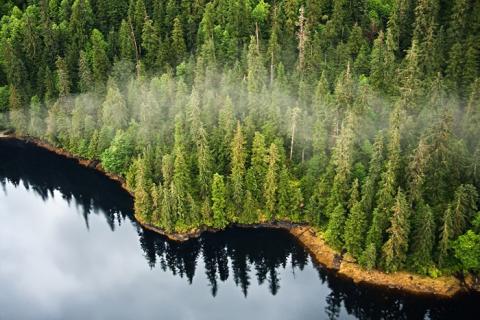
As the federal government advances plans to roll back Roadless Rule protections on 58 million acres of national forests, Southeast Alaska conservation advocates are racing to mobilize public opposition, warning that repealing the Roadless Rule could open the Tongass National Forest to expanded clear-cut logging and place subsistence, fisheries and tourism in peril.

Nathan Newcomer, Southeast Alaska Conservation Council (SEACC) Tongass Campaigner, said the current administration has signaled from “day one” that it intends to eliminate the federal Roadless Rule, a regulation that limits road-building and industrial development on certain undeveloped national forest lands.

“They signed an executive order to try to get rid of the Roadless Rule. The Secretary of Agriculture, Brooke Rollins, also issued a statement intending to rescind the Roadless Rule nationwide.”

Despite the administration’s push, the conservation group says public sentiment has been overwhelmingly in favor of keeping the rule.

A Notice of Intent, the first step in the rulemaking process, opened a 21-day public comment period nationwide. During that brief window, the public submitted more than 627,000 comments Newcomer said.

“Over half a million people submitted public comments. There’s a group called the Center for Western Priorities that did an analysis of those public comments, and they found that 99% of the public comments were in favor of keeping the roadless rule in place. When do you see 99% of American citizens agreeing on something? That just goes to show you that people really like the Roadless Rule.”

In 2001 when the Rule was enacted by the Clinton Administration, more than 600 public hearings were held around the nation, and the public provided more than 1.6 million comments on the Rule, more comments than any other rule in the nation’s history.

Now, Newcomer says, the government is trying to unwind those protections without holding any comparable meetings.

“They’re not holding any public meetings anywhere, not only for Alaska, but nothing down south either. So that’s why we’re organizing these public hearings, not just in Juneau, but throughout southeast.” Said Newcomer.

Juneau’s hearing was scheduled for yesterday evening at the JACC downtown.

The event featured a panel discussion with President Mike Jones of the Organized Village of Kasaan, Atagan Hood, Vice President of Alaska Youth for Environmental Action, Jamalea Martelle of Artemis National Wildlife Federation and Nicole Weston, Owner of NW Photography.

A moderator guided the conversation, about why roadless protections matter in their communities. The event then shifted into a public hearing where attendees offered testimony themselves.

“We’re going to have several videographers on hand that are going to document everything, record everybody’s public testimony, then we’re going to transcribe that testimony, and then we’re going to officially submit it to the public record once the public comment period for the draft EIS (Environmental Impact Statement) is open.”

If the roadless rule is repealed, Newcomer warned, “If you get rid of protections for federal public lands, you’re talking about more large scale clear cut logging, that’s the main threat. And of course, when you start to clear cut, it’s going to have huge impacts on the wildlife, on our subsistence ways of life here in the Tongass, on the tourism, recreation economy. How many people came up on cruise ships to Juneau last year?”

Despite the scale of public opposition documented in the comment record, Newcomer said he does not believe the federal government, under current leadership, is likely to change course.

“But that doesn’t mean that we shouldn’t make our voices heard and make a lot of noise and make sure that we’re all on the record saying that we don’t want this. Because there are also other elections that happen, right? And so power can shift, so it’s about demonstrating that the people care about these things, and that’s just kind of the work that I have to do, and that’s the work that we’re doing to make sure that the public’s voice is heard.”

He said he’s seen community organizing make a difference over longer timelines, even when initial decisions seemed foregone.

“Historically, Americans have said we would like to keep the Roadless Rule in place, and now this administration is trying to ram a policy through that the vast majority of us don’t want to see happen. That’s not the role of government.” Newcomer said, “Government needs to be by the people for the people. I think highlighting that is really critical, so that people understand that they have agency, Because there’s a lot going on in the world, right? And it’s really easy to get overwhelmed and to become apathetic, but you really do have agency. I’ve seen it time and time again in my life, where you might feel like the the clouds are closing in on you, and it’s getting dark and gloomy, but really, when you stand together and you speak in a solid voice in unity, it can have really powerful change. It might not happen today or tomorrow, but it could make a huge difference.”

Categories
Featured Juneau News Juneau Local Ketchikan Local News Feeds Sitka Local

Republican lawmakers try to rewrite 50-year-old law protecting marine mammals

A gray seal surveys its surroundings, Tuesday, Sept. 30, 2025, off the coast of Brunswick, Maine. (AP Photo/Robert F. Bukaty)

AP- Republican lawmakers are targeting one of the U.S.’s longest standing pieces of environmental legislation, credited with helping save rare whales from extinction.

Conservative leaders feel they now have the political will to remove key pieces of the Marine Mammal Protection Act, enacted in 1972 to protect whales, seals, polar bears and other sea animals. The law also places restrictions on commercial fishermen, shippers and other marine industries.

A GOP-led bill in the works has support from fishermen in Maine who say the law makes lobster fishing more difficult, lobbyists for big-money species such as tuna in Hawaii and crab in Alaska, and marine manufacturers who see the law as antiquated.

Conservation groups adamantly oppose the changes and say weakening the law will erase years of hard-won gains for jeopardized species such as the vanishing North Atlantic right whale, of which there are less than 400, and is vulnerable to entanglement in fishing gear.

Here’s what to know about the protection act and the proposed changes.

Why does the 1970s law still matter

“The Marine Mammal Protection Act is important because it’s one of our bedrock laws that help us to base conservation measures on the best available science,” said Kathleen Collins, senior marine campaign manager with International Fund for Animal Welfare. “Species on the brink of extinction have been brought back.”

It was enacted the year before the Endangered Species Act, at a time when the movement to save whales from extinction was growing. Scientist Roger Payne had discovered that whales could sing in the late 1960s, and their voices soon appeared on record albums and throughout popular culture.

The law protects all marine mammals, and prohibits capturing or killing them in U.S. waters or by U.S. citizens on the high seas. It allowed for preventative measures to stop commercial fishing ships and other businesses from accidentally harming animals such as whales and seals. The animals can be harmed by entanglement in fishing gear, collisions with ships and other hazards at sea.

The law also prevents the hunting of marine mammals, including polar bears, with exceptions for Indigenous groups. Some of those animals can be legally hunted in other countries.

Changes to oil and gas operations — and whale safety

Republican Rep. Nick Begich of Alaska, a state with a large fishing industry, submitted a bill draft this summer that would roll back aspects of the law. The bill says the act has “unduly and unnecessarily constrained government, tribes and the regulated community” since its inception.

The proposal states that it would make changes such as lowering population goals for marine mammals from “maximum productivity” to the level needed to “support continued survival.” It would also ease rules on what constitutes harm to marine mammals.

For example, the law currently prevents harassment of sea mammals such as whales, and defines harassment as activities that have “the potential to injure a marine mammal.” The proposed changes would limit the definition to only activities that actually injure the animals. That change could have major implications for industries such as oil and gas exploration where rare whales live.

That poses an existential threat to the Rice’s whale, which numbers only in the dozens and lives in the Gulf of Mexico, conservationists said. And the proposal takes specific aim at the North Atlantic right whale protections with a clause that would delay rules designed to protect that declining whale population until 2035.

Begich and his staff did not return calls for comment on the bill, and his staff declined to provide an update about where it stands in Congress. Begich has said he wants “a bill that protects marine mammals and also works for the people who live and work alongside them, especially in Alaska.”

Fishing groups want restrictions loosened

A coalition of fishing groups from both coasts has come out in support of the proposed changes. Some of the same groups lauded a previous effort by the Trump administration to reduce regulatory burdens on commercial fishing.

The groups said in a July letter to House members that they feel Begich’s changes reflect “a positive and necessary step” for American fisheries’ success.

Restrictions imposed on lobster fishermen of Maine are designed to protect the right whale, but they often provide little protection for the animals while limiting one of America’s signature fisheries, Virginia Olsen, political director of the Maine Lobstering Union, said. The restrictions stipulate where lobstermen can fish and what kinds of gear they can use. The whales are vulnerable to lethal entanglement in heavy fishing rope.

Gathering more accurate data about right whales while revising the original law would help protect the animals, Olsen said.

“We do not want to see marine mammals harmed; we need a healthy, vibrant ocean and a plentiful marine habitat to continue Maine’s heritage fishery,” Olsen said.

Some members of other maritime industries have also called on Congress to update the law. The National Marine Manufacturers Association said in a statement that the rules have not kept pace with advancements in the marine industry, making innovation in the business difficult.

Environmentalists fight back

Numerous environmental groups have vowed to fight to save the protection act. They characterized the proposed changes as part of the Trump administration’s assault on environmental protections.

The act was instrumental in protecting the humpback whale, one of the species most beloved by whale watchers, said Gib Brogan, senior campaign director with Oceana. Along with other sea mammals, humpbacks would be in jeopardy without it, he said.

“The Marine Mammal Protection Act is flexible. It works. It’s effective. We don’t need to overhaul this law at this point,” Brogan said.

What does this mean for seafood imports

The original law makes it illegal to import marine mammal products without a permit, and allows the U.S. to impose import prohibitions on seafood products from foreign fisheries that don’t meet U.S. standards.

The import embargoes are a major sticking point because they punish American businesses, said Gavin Gibbons, chief strategy officer of the National Fisheries Institute, a Virginia-based seafood industry trade group. It’s critical to source seafood globally to be able to meet American demand for seafood, he said.

The National Fisheries Institute and a coalition of industry groups sued the federal government Thursday over what they described as unlawful implementation of the protection act. Gibbons said the groups don’t oppose the act, but want to see it responsibly implemented.

“Our fisheries are well regulated and appropriately fished to their maximum sustainable yield,” Gibbons said. “The men and women who work our waters are iconic and responsible. They can’t be expected to just fish more here to make up a deficit while jeopardizing the sustainability they’ve worked so hard to maintain.”

Some environmental groups said the Republican lawmakers’ proposed changes could weaken American seafood competitiveness by allowing imports from poorly regulated foreign fisheries.