By: Grace Dumas
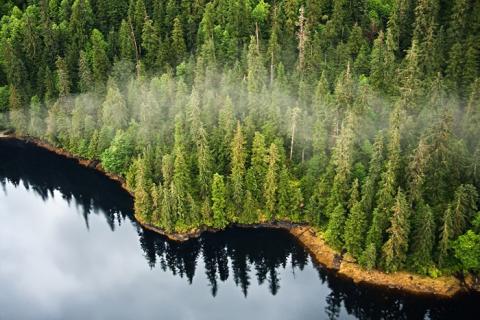
As the federal government advances plans to roll back Roadless Rule protections on 58 million acres of national forests, Southeast Alaska conservation advocates are racing to mobilize public opposition, warning that repealing the Roadless Rule could open the Tongass National Forest to expanded clear-cut logging and place subsistence, fisheries and tourism in peril.
Nathan Newcomer, Southeast Alaska Conservation Council (SEACC) Tongass Campaigner, said the current administration has signaled from “day one” that it intends to eliminate the federal Roadless Rule, a regulation that limits road-building and industrial development on certain undeveloped national forest lands.
“They signed an executive order to try to get rid of the Roadless Rule. The Secretary of Agriculture, Brooke Rollins, also issued a statement intending to rescind the Roadless Rule nationwide.”
Despite the administration’s push, the conservation group says public sentiment has been overwhelmingly in favor of keeping the rule.
A Notice of Intent, the first step in the rulemaking process, opened a 21-day public comment period nationwide. During that brief window, the public submitted more than 627,000 comments Newcomer said.
“Over half a million people submitted public comments. There’s a group called the Center for Western Priorities that did an analysis of those public comments, and they found that 99% of the public comments were in favor of keeping the roadless rule in place. When do you see 99% of American citizens agreeing on something? That just goes to show you that people really like the Roadless Rule.”
In 2001 when the Rule was enacted by the Clinton Administration, more than 600 public hearings were held around the nation, and the public provided more than 1.6 million comments on the Rule, more comments than any other rule in the nation’s history.
Now, Newcomer says, the government is trying to unwind those protections without holding any comparable meetings.
“They’re not holding any public meetings anywhere, not only for Alaska, but nothing down south either. So that’s why we’re organizing these public hearings, not just in Juneau, but throughout southeast.” Said Newcomer.
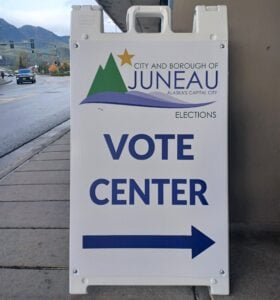
Juneau’s hearing was scheduled for yesterday evening at the JACC downtown.
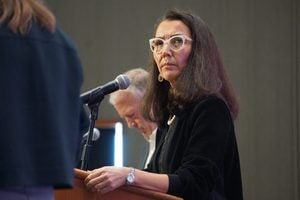
The event featured a panel discussion with President Mike Jones of the Organized Village of Kasaan, Atagan Hood, Vice President of Alaska Youth for Environmental Action, Jamalea Martelle of Artemis National Wildlife Federation and Nicole Weston, Owner of NW Photography.
A moderator guided the conversation, about why roadless protections matter in their communities. The event then shifted into a public hearing where attendees offered testimony themselves.
“We’re going to have several videographers on hand that are going to document everything, record everybody’s public testimony, then we’re going to transcribe that testimony, and then we’re going to officially submit it to the public record once the public comment period for the draft EIS (Environmental Impact Statement) is open.”
If the roadless rule is repealed, Newcomer warned, “If you get rid of protections for federal public lands, you’re talking about more large scale clear cut logging, that’s the main threat. And of course, when you start to clear cut, it’s going to have huge impacts on the wildlife, on our subsistence ways of life here in the Tongass, on the tourism, recreation economy. How many people came up on cruise ships to Juneau last year?”
Despite the scale of public opposition documented in the comment record, Newcomer said he does not believe the federal government, under current leadership, is likely to change course.
“But that doesn’t mean that we shouldn’t make our voices heard and make a lot of noise and make sure that we’re all on the record saying that we don’t want this. Because there are also other elections that happen, right? And so power can shift, so it’s about demonstrating that the people care about these things, and that’s just kind of the work that I have to do, and that’s the work that we’re doing to make sure that the public’s voice is heard.”
He said he’s seen community organizing make a difference over longer timelines, even when initial decisions seemed foregone.
“Historically, Americans have said we would like to keep the Roadless Rule in place, and now this administration is trying to ram a policy through that the vast majority of us don’t want to see happen. That’s not the role of government.” Newcomer said, “Government needs to be by the people for the people. I think highlighting that is really critical, so that people understand that they have agency, Because there’s a lot going on in the world, right? And it’s really easy to get overwhelmed and to become apathetic, but you really do have agency. I’ve seen it time and time again in my life, where you might feel like the the clouds are closing in on you, and it’s getting dark and gloomy, but really, when you stand together and you speak in a solid voice in unity, it can have really powerful change. It might not happen today or tomorrow, but it could make a huge difference.”