By: Corinne Smith, Alaska Beacon
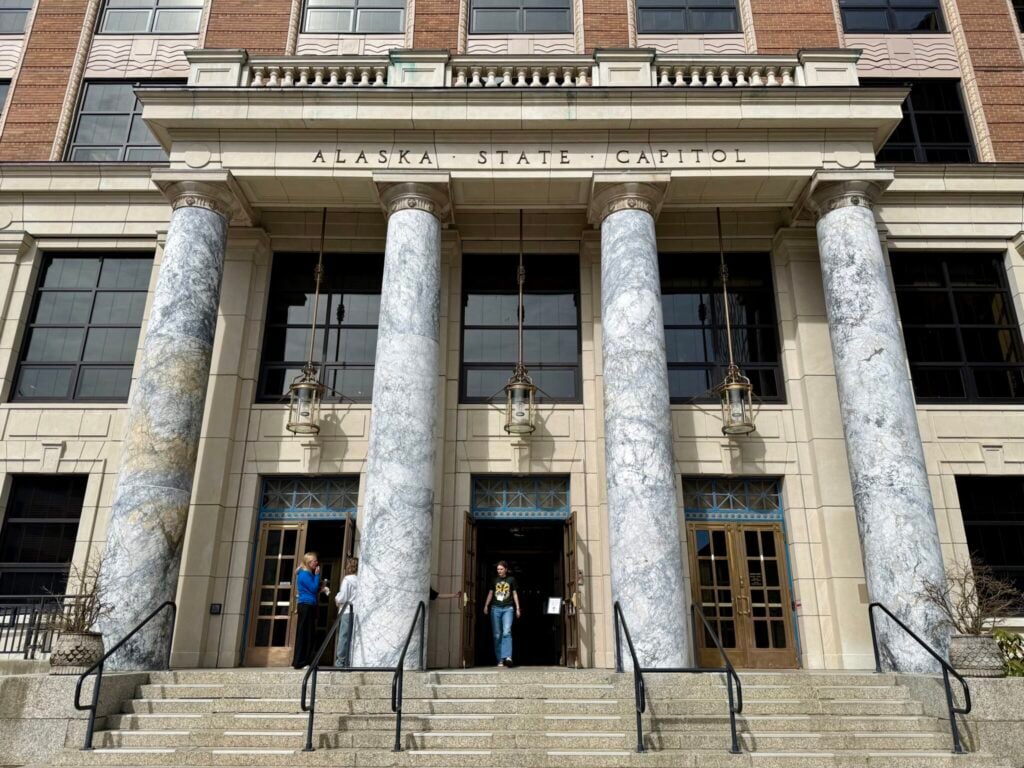
There are five competitive races for the Alaska House and Senate in this year’s primary election, where candidates are vying for the top four places in order to advance to the ranked choice general election in November.
Early voting has begun across Alaska, and ends on Tuesday with polls closing at 8 p.m. Mail-in ballots must be postmarked by Tuesday, Aug. 18.
All 40 members of the Alaska House are up for election; 10 of the 20 Senate seats are up for election.2026 Voter Guide
The candidates, the ballot measures, and the tools you need to cast your vote.
In those races with four or fewer candidates, all are expected to advance to the general election unless they decide to drop out by an Aug. 31 deadline.
Those competitive primary races include one of the largest Senate districts that extends from Western Alaska to the Aleutian Islands, as well as House districts in Southwest Alaska, Eagle River and in the eastern and western districts of the Matanuska-Susitna Borough.
In the Western Alaska Senate District S, longtime incumbent Bethel Democrat Sen. Lyman Hoffman is retiring. The district extends from Western Alaska to Lake Clark and south across the Aleutian Islands, and the Senate seat represents approximately 36,800 Alaskans.
The candidates are current House Speaker Independent Rep. Bryce Edgmon of Dillingham, Republican Darren Deacon of Aniak, Democrat Wassilie Guy of Napaskiak and Independents Wayne Morgan of Aniak and Rick Robb of Bethel.
The winner of the Senate race in November will serve a four-year term.
Alaska House seats represent approximately 18,335 Alaskans each, and representatives serve two-year terms.
Edgmon is vacating a seat representing House District 37, which includes Southwest Alaska communities from Bristol Bay to the Aleutian Islands.
Seven candidates are running for the top four spots this race: Independents Peter Angasan of King Salmon, Kimberly Johnson of Dillingham, Mark Smith of Aleknagik and Cade Woods of Dillingham; Democrats Dennis Robinson of Unalaska and Evelynn Trefon of Newhalen; and Republican Brenda Wilson of King Cove.
Five candidates are running for House District 23, which encompasses Eagle River, a northern suburb of Anchorage near the Joint Base Elmendorf-Richardson. Incumbent Republican Rep. Jamie Allard is running for re-election, challenged by Republicans Nick Capozzi and Ruby Jones, and Democrats Jim Arlington and Lee Hammermeister.
In the eastern district of the Manatuska-Susitna Borough, House District 29 covers communities in the Palmer-Fishook area eastward to Valdez. Incumbent Republican Rep. Garret Nelson is running for the seat for the first time. He was appointed by Gov. Mike Dunleavy to the seat last year, after former Rep. George Rauscher, R-Sutton, was appointed to the Alaska Senate to fill a seat vacated by Shelley Hughes who is running for governor.
Challenging Nelson are Independents Amber Hansen of Wasilla and Jessica Kusner-Kalarchik of Palmer, Republican Steve Menard of Palmer, Democrat Kimberly Slone of Wasilla and Libertarian Candice Frisby of Palmer.
In House District 30, in the western region of the Mat-Su Borough from Big Lake to Talkeetna, four candidates are challenging incumbent Republican Rep. Kevin McCabe. He was first elected to the seat in 2020. McCabe will face Democrat Sandra Loomis of Talkeetna and Republicans Mike Alexander of Big Lake, Doyle Holmes of Willow and Doug Massie of Wasilla.
In the House, 36 races are expected to be competitive in the general election. Four incumbents are running unopposed: Rep. Sara Hannan, D-Juneau, in District 4; Rep. Chuck Kopp, R-Anchorage in District 10, Rep. Genevieve Mina, D-Anchorage in District 19; Chuck Kopp, R-Anchorage in District 10, and Rep. Will Stapp, R-Fairbanks in District 32.
In the Senate, seven races are expected to be competitive in the general election. Three Senate incumbents are running unopposed, including Sitka Republican Sen. Bert Stedman, and Anchorage Democrats Bill Wielochowski, and Löki Tobin.