By: Yereth Rosen, Alaska Beacon
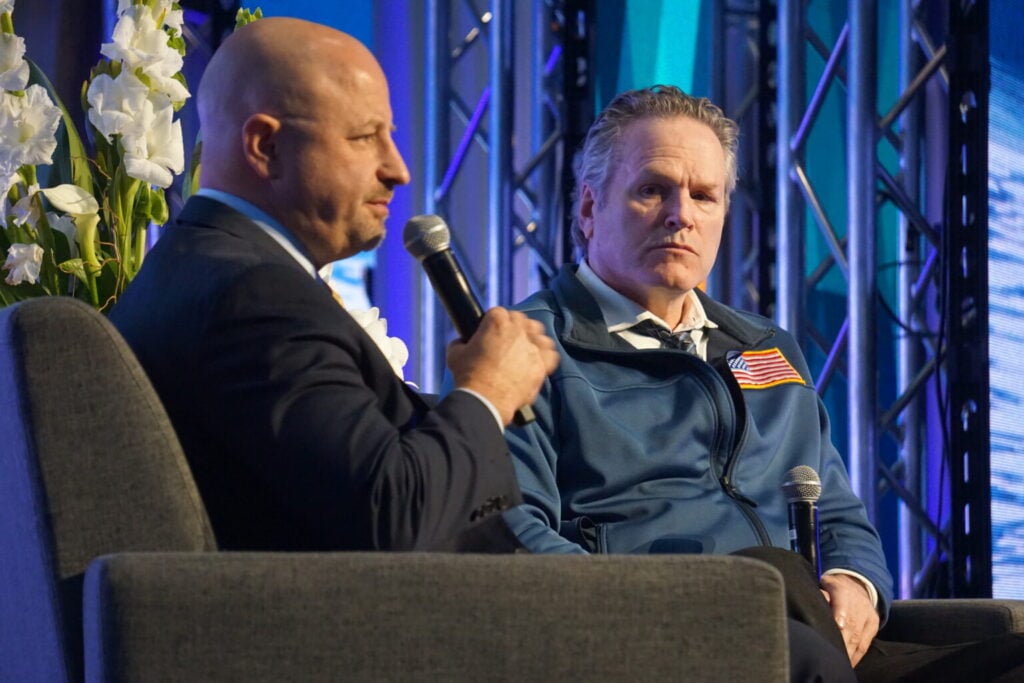
Gov. Mike Dunleavy on Wednesday introduced a new natural gas pipeline bill that he characterized as a compromise between conflicting philosophies on oil and gas taxes that he wants lawmakers to pass during the ongoing special session.
The new bill would nearly eliminate property taxes that would be charged on the operator of a yet-to-be-built gas pipeline. Dunleavy and Glenfarne, the Texas-based investment company that is now the main sponsor of the gas pipeline project, have argued in recent months that such concessions are a major requirement for the project to be built.
The special session is due to end in less than two weeks. Lawmakers are still evaluating the proposal, but on Monday members of the Senate’s bipartisan majority expressed reticence to make quick decisions on a gasline bill.
Dunleavy’s new bill contains a concession to a tax previously sought by the Senate majority. It would also impose a small corporate income tax on certain private oil- and gas-producing corporations. Those companies, also known as S corporations or pass-through corporations, are currently exempted from such taxes in Alaska law. For now, the main corporation that would be affected is Hilcorp, a privately held Texas-based company that operated the Prudhoe Bay field and other North Slope assets that used to be owned by BP. Several legislators view Hilcorp’s exemption from corporate income taxes as a loophole that should be closed.
The governor said legislators should pass his bill in what is now the third special session he has called on the subject.
“I have never been in favor of new taxes on Alaska’s producers, and I still am not,” Dunleavy said in a statement. “This bill is a compromise that removes a significant barrier to moving the gas line forward. Given the robust discussion and work that has already gone into this bill, I am hopeful the legislature can swiftly pass a bill that will help the AK LNG project get the financing it needs to start construction as soon as possible.”
The 2% tax rate Dunleavy proposed on petroleum-producing S corporations is significantly lower than the lower than tax rates legislative leaders have previously proposed, which went up as high as 9.4%.

Officials and energy companies in Alaska and elsewhere have been pushing since the 1970s — even before oil began flowing through the Trans Alaska Pipeline System — for a second pipeline to deliver the North Slope’s vast but stranded natural gas resources to markets. None of the plans has been economically feasible, even though politicians at various points over the past decades declared that construction was imminent.
The current iteration of the gas commercialization plan calls for a pipeline to run about 800 miles from Prudhoe Bay to tidewater at Cook Inlet, where the product would be liquefied for shipment by tanker to markets. The estimated price tag is $65 billion to $70 billion, according to legislators.
A bill considered during an earlier special session, House Bill 381, proposed to grant the property tax concession, but it also included several conditions for any LNG sponsor to meet, such as timeline assurances, labor protections, alternative sources of state revenue and required financial support of local school districts.
The bill also included a bracketed income tax with rates up to 9.4% on petroleum-producing S corporations such as Hilcorp — significantly higher than the 2% that Dunleavy is now proposing.
That bill passed the state Senate narrowly last month but was rejected by the House.
One lawmaker on Wednesday said Dunleavy’s new bill, just like any oil tax legislation, should not be rushed.
“It would be wildly irresponsible to pass complex oil and gas legislation without due diligence to understand the consequences,” said Rep. Zack Fields, D-Anchorage.
Leaders of the state Senate majority caucus, in a statement on Monday, expressed skepticism about the need for any further concessions to help Glenfarne’s plan.
“For more than fifty years, Alaskans have worked to bring our gas to market, and every member who has served in this building shares that goal. The Senate has done its part in good faith, passing two bills that would let this project move forward while protecting the people we answer to,” Senate President Gary Stevens, R-Kodiak, said in the statement. “A decision of this scale will outlast all of us, and it deserves to be made with care rather than in haste. We are ready to evaluate the project further once the producer, Glenfarne, and the Administration bring us the numbers this year. These are Alaska’s resources, and they must work first and foremost for Alaskans.”
The special session is scheduled to end on Aug. 25.