Categories
Featured Juneau News juneau Juneau Local Juneau Local News Feeds

Assembly OKs year-round Warming Shelter, plans tougher camping enforcement

The Warming Shelter on a foggy night, courtesy of the Warming Shelter

NOTN- The Juneau Assembly has approved an ordinance to extend funding for the Warming Shelter to stay open year round, as well as pledging tougher enforcement of public camping.

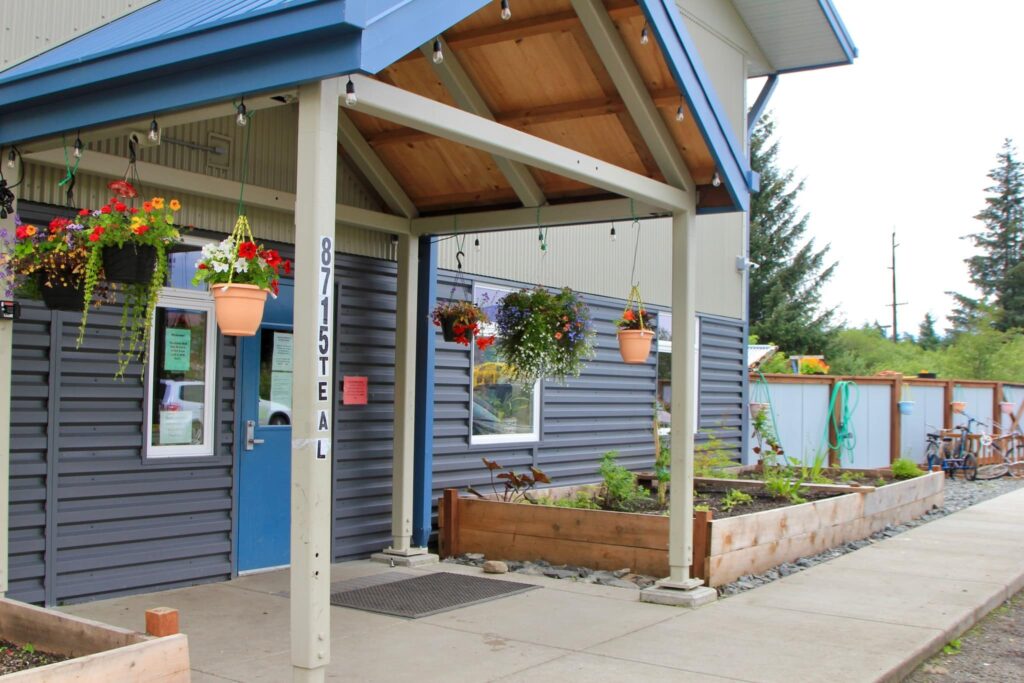
The measure, adopted Monday night without objection, The Warming Shelter operated by St. Vincent de Paul open through the year and directs staff to step up enforcement in high-impact areas such as Teal Street and near the Rock Dump.

City officials said they will move more quickly on camping in public rights-of-way and will prioritize sites that generate significant public health concerns and a high volume of complaints.

“This ordinance is only half of the piece, providing people a safe place to go, to really increase our enforcement actions in those highly visible areas where we have received a lot of complaints. So we are a complaint driven organization, so the number and the diversity of complaints for any dispersed camping would influence how quickly and aggressively we would respond to that dispersed camping. We also would look at the public impact, not just who’s complaining, but what that impact is to your to public health. And we would prioritize enforcement when those two things are high.” Said City Manager Katie Koester.

Service providers urged the Assembly to support keeping the Warming Shelter open, arguing that shelter beds give people a chance to stabilize instead of cycling between the hospital, sobering center and police contacts.

“Last winter, someone came into the Warming Shelter after days of sleeping outside, cold, exhausted and struggling. Before that, they cycled between Bartlett Regional Hospital, Juneau sobering center and calls to Juneau Police Department. Each system did its job, but no one could offer what they truly needed, a safe, consistent place to be. Without that option, people often create encampments in areas of concern without sanitation or basic services, impacting both their health and the surrounding community. At the shelter, something simple changed. They got warm, they slept, they stabilized, and they had a starting point. That’s what the warming shelter provides.” Said Deputy Director of St. Vincent de Paul Mollie Carr, “We know we can’t fix every situation, but offering a year round place for people to go is a practical, common sense step that reduces crisis and stabilizes our community. When the shelter closes, the need doesn’t disappear. It shifts to a higher cost, and systems like the ER, law enforcement and emergency services. It costs far less to provide a shelter than repeated response to crisis. Year round funding is not just compassionate, it’s responsible, efficient and necessary.”

Neighbors and business owners described escalating problems they linked to dispersed camping, including theft, vandalism, public defecation and employees who said they felt unsafe walking to and from work. Some, including business owners along Teal Street and across from the shelter, said they reluctantly backed the ordinance as long as it came with stronger police presence, clear no-camping zones near workplaces and consistent enforcement of existing code.

“‘I’m here to support the Warming Shelter, combined with not allowing the chaotic Teal street camping to go on again this summer. Last summer, I personally cleaned up thousands of pounds of trash. I tried to help people camping in terrible conditions. I tried to support my co-workers and partner agency employees who are afraid to be at work or to walk to their cars because of the chaos. Just because people are poor and homeless or work in social services does not mean that they do not deserve a safe place to live and work.” Said Logan, member of the Glory Hall team, “The warming shelter extension is not perfect, but it is the only doable thing we came up with. Not allowing dozens of tents on Teal Street is not a violation of people’s rights. It is bringing order and safety to people’s lives. It is doing what a city is supposed to do. I am now a productive and essential member of the Glory Hall team. I am a hard worker. I think on my feet, I am great in a crisis. I am a single parent of an amazing daughter. I also used to live outside on South Franklin Street, struggling. This was a long time ago. I got help along the way because of Tlingit and Haida regional housing authority. I’m about to become a homeowner. Because of the Glory Hall, I have a job and training, and I was able to get basic food, shelter and help with transportation and other needs while I figured out my life because of the Southeast Alaska Food Bank, I was able to eat at Glory Hall because of Nami Juneau, I got certified as a peer support specialist, If you’re willing to do the work for lives to stabilize. It is critical.”

Assembly members said the ordinance is not a permanent solution to homelessness in Juneau but called it a necessary step while longer-term housing, shelter capacity and camping policies continue to be debated.

“I would like to say this isn’t perfect by any means. The need is greater than what anyone can serve.” Said Assembly member Maureen Hall, “Everyone in this room should continue to look for solutions and work with partner agencies to help this happen.”

“I appreciate that everything is imperfect, and so I’m okay with this, as long as we are continuously checking, I think there were some real emergent problems that we heard from residents and neighborhoods on different kinds of camping, car camping on the street, camping in the woods, camping creates different kinds of problems, and I think those call for different kinds of enforcement.” Said assembly member Alicia Hughes-Skandijs, “I think this is a really good step, when you have a consistent, year round place, and you can really say, nope, this is our hard line. I want us to be really careful, that we’re both balancing the needs of the members of the community, that things don’t get out of hand, and that we’re fulfilling our obligation to those unhoused members of our community, who we are equally accountable to, and who are much less able at this point, in their lives, to come.”


Categories
Featured Juneau News Juneau Local Ketchikan Local News Feeds Sitka Local

As winter sets in, Alaska DOT prepares another push to remove homeless encampments

By: James Brooks, Alaska Beacon

A campsites is seen on Oct. 8, 2025, near the intersection of the Seward Highway and Northern Lights Boulevard in Anchorage. (Photo by Yereth Rosen/Alaska Beacon)

The Alaska Department of Transportation and Public Facilities is planning to remove trash, waste, and the belongings of unhoused Alaskans from land near state highways, continuing an offensive that began last year.

In a public notice published last week, the department said it is seeking bids from contractors who can perform “the as needed removal of unauthorized encampments … at various locations within the state” that are managed by DOT&PF.

The department did not say how much it proposes to spend on the removal, only that “approval or continuation of a contract resulting from this (invitation to bid) is contingent upon legislative appropriation.”

Alaska’s hub cities, particularly Anchorage, have a large population of unhoused residents. 

Camps already removed by Alaska DOT&PF

Since November 2024, the Alaska Department of Transportation and Public Facilities has identified eight encampments that it has removed:

  • NW/SW/SE quadrants of the 36th/Seward Highway Intersection (Anch)
  • East Fireweed Road/Parks Highway (Mat-Su)
  • Minnesota/International off-ramp (Anch)
  • Seward Meridian/Blue Lupine (Mat-Su)
  • NE quadrant of the Tudor/Seward Highway intersection (Anch)
  • A Street – between 36th Avenue and 38th Avenue (Anch)
  • Seward Highway – south side, Campbell Creek Bridge (Anch)
  • International Airport Road & Minnesota Drive – Northeast Interchange Area (Anch)

Last year, the U.S. Supreme Court ruled that it is legal for local governments to ban outdoor camping, even if no homeless shelter space is available. That move has provided the legal justification for large-scale camp removal nationwide, and since the ruling, DOT&PF has removed eight encampments in southcentral Alaska.

According to the proposed contract, the winning bidder will be available “on an on-call, as-needed, and/or urgent basis.” The contract will last for one year, but it can be renewed up to four times for additional one-year terms.

The contract is expected to be issued by Nov. 11 and would go into effect in December. 

“This is a continuation of the work the department has always undertaken and was of particular focus, in coordination with local government partners, starting last year to remove encampments within state highway (right of way),” said Shannon McCarthy, a spokesperson for the department, by email.

Under state law and federal regulations, McCarthy said, the department must ensure that rights of way — the land designated for transportation — are actually used for transportation and are clear of things that might obstruct the right of way or could cause a safety risk.

“In addition, encampments in the ROW (right of way) have increased the risk of pedestrians vs. vehicle crashes, caused traffic conflicts that result in serious injury and fatalities, prevented the public from using these rights-of-way, and severely limit the intended highway buffer zones for purposes such as safety pullouts, noise buffers, stormwater retention/filtration areas, and other transportation and functional purposes,” McCarthy wrote.

In April, DOT&PF Commissioner Ryan Anderson signed a new policy describing how DOT will remove encampments.

Under that policy, encampments underneath bridges, near utility structures or on medians are the highest priority to be removed.

The policy also requires consultation with the Alaska Department of Law “to ensure constitutional and civil rights protections are observed.”

Categories
Featured Juneau News Juneau Local Ketchikan Local News Feeds Sitka Local

Glory Hall shifts services next week, Teal street maintains JPD patrols

NOTN- The Glory Hall shelter says it will stop offering dayroom services to non-residents later this month, citing worsening safety conditions around the facility.

The Glory Hall, which offers food, shelter and daytime support at its Teal Street location, plans to end its day services on Aug. 26.

Going forward, only individuals staying overnight at the shelter will have access to the dayroom. Others will be allowed inside only when meeting with a case manager, clinician, or outreach worker.

“The Teal Street area is probably the most major area of JPD patrol right now. There’s a lot of extra patrol that goes on over there.” Said Deputy City Manager Robert Barr.

Barr said the city will continue discussions with shelter staff, police and service providers in the coming weeks as the shift takes effect.

The Glory Hall has served Juneau’s unhoused community for decades. Its decision to adjust services comes amid continued assaults, criminal activity, and “general chaos” near the Teal Street site, including sales of illegal drugs and stolen goods.

Despite more than a year of meetings with residents and city officials, the board says the environment is no longer tenable.

Categories
Featured Juneau News Juneau Local Ketchikan Local News Feeds Sitka Local

Assembly expected to table new disorderly conduct ordinance after community backlash

NOTN- The Juneau Assembly proposed updates to the city’s disorderly conduct laws, tightening rules around blocking sidewalks, public disturbances, and behavior in public spaces. However, it is expected that this action will be tabled at tonight’s meeting, possibly indefinitely, after community backlash.

“We’ve heard a lot from the public, not positive things.” Said Juneau Mayor Beth Weldon.

The focus of the new update was to make it easier for the Juneau Police Department to arrest individuals for disruptive actions in public areas.

The ordinance adds language allowing police to intervene when people stand, walk, or camp in places like sidewalks, stairwells, parking lots, and garages.

Organizations like Juneau for Democracy, argued the ordinance would unfairly target people experiencing homelessness and could also infringe on First Amendment rights, since the language does not specifically exempt lawful protests or public gatherings.

The systemic racism Review Committee also had a real problem with this.” Said Mayor Weldon, “as well as some of the members of the assembly, so we decided that that wasn’t right for now.”

Deputy City Manager Robert Barr said the changes would have brought city code in line with state law, removing steps that currently delay enforcement, which lie within officers arresting individuals for trespassing rather than disorderly conduct.

“Our first course of action whenever we’re engaged in that sort of activity with folks who are unhoused, is to try and connect to resources and seek voluntary compliance.” Said Barr, “but sometimes it’s not possible.”

Categories
Featured Juneau News Juneau Local Ketchikan Local News Feeds Sitka Local

Juneau Assembly considers new safety measures for homeless services

The city of Juneau, birds eye view.

NOTN- The Juneau Assembly is weighing new safety policies aimed at protecting homeless shelter clients and staff.

In June the Juneau Police Department cleared an unhoused encampment on Teal street, the city’s largest encampment.

City officials said they decided to clear the encampment due to safety concerns and have been actively searching for better solutions.

City officials are examining Anchorage’s model of restricting camping near trails, water bodies, and critical public areas.

Anchorage recently cleared its two largest camps in the Mountain View neighborhood, displacing up to 200 people from Davis Park and a nearby snow dump. The city has since removed more than 370 tons of trash from the sites.

Anchorage Mayor Suzanne LaFrance’s Anchorage Mayor Suzanne LaFrance’s homelessness strategy includes expanding shelter capacity, increasing access to crisis care, and adding transitional housing.

According to Alaska Public Media, the city plans to open 24 tiny homes by mid-October to support people transitioning out of homelessness.

Both Juneau and Anchorage officials acknowledge that clearing encampments, also known as abatements, are not long-term solutions by themselves.

The U.S. Supreme Court recently gave cities more power to clear camps, overturning a ruling that made such actions harder when no shelter space was available.

Deputy City Manager Robert Barr said local officials are considering establishing ‘shelter safety zones’ that could restrict camping near key facilities and enhance protections for shelter clients and staff.

“We had a very long conversation on the merits of a shelter safety zone. There’s definitely desire among the body to see what could be done.” Said Barr.

The city plans to operate a cold weather shelter this winter.

While specific ordinance details remain under development, assembly members expressed a strong desire to implement more robust protective measures around homeless service facilities.

The next assembly meeting is scheduled for August 18.