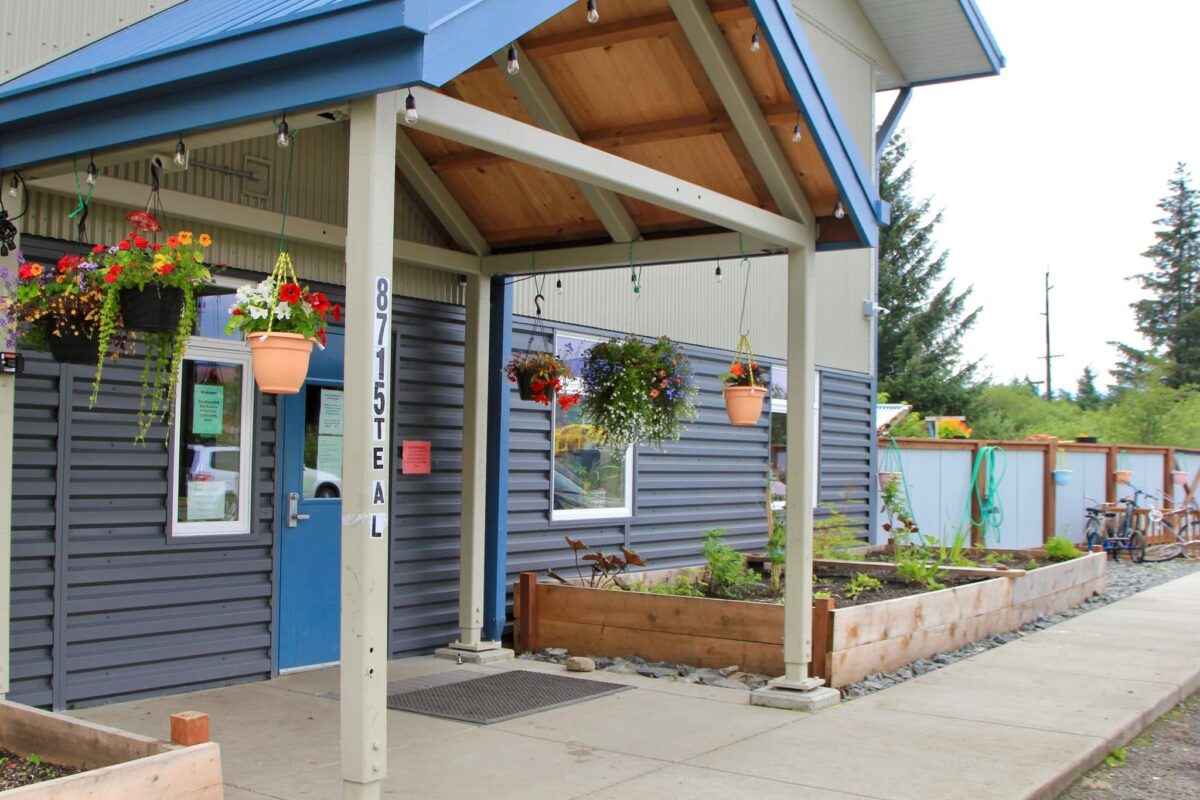
NOTN- The Juneau Assembly has approved an ordinance to extend funding for the Warming Shelter to stay open year round, as well as pledging tougher enforcement of public camping.
The measure, adopted Monday night without objection, The Warming Shelter operated by St. Vincent de Paul open through the year and directs staff to step up enforcement in high-impact areas such as Teal Street and near the Rock Dump.
City officials said they will move more quickly on camping in public rights-of-way and will prioritize sites that generate significant public health concerns and a high volume of complaints.
“This ordinance is only half of the piece, providing people a safe place to go, to really increase our enforcement actions in those highly visible areas where we have received a lot of complaints. So we are a complaint driven organization, so the number and the diversity of complaints for any dispersed camping would influence how quickly and aggressively we would respond to that dispersed camping. We also would look at the public impact, not just who’s complaining, but what that impact is to your to public health. And we would prioritize enforcement when those two things are high.” Said City Manager Katie Koester.
Service providers urged the Assembly to support keeping the Warming Shelter open, arguing that shelter beds give people a chance to stabilize instead of cycling between the hospital, sobering center and police contacts.
“Last winter, someone came into the Warming Shelter after days of sleeping outside, cold, exhausted and struggling. Before that, they cycled between Bartlett Regional Hospital, Juneau sobering center and calls to Juneau Police Department. Each system did its job, but no one could offer what they truly needed, a safe, consistent place to be. Without that option, people often create encampments in areas of concern without sanitation or basic services, impacting both their health and the surrounding community. At the shelter, something simple changed. They got warm, they slept, they stabilized, and they had a starting point. That’s what the warming shelter provides.” Said Deputy Director of St. Vincent de Paul Mollie Carr, “We know we can’t fix every situation, but offering a year round place for people to go is a practical, common sense step that reduces crisis and stabilizes our community. When the shelter closes, the need doesn’t disappear. It shifts to a higher cost, and systems like the ER, law enforcement and emergency services. It costs far less to provide a shelter than repeated response to crisis. Year round funding is not just compassionate, it’s responsible, efficient and necessary.”
Neighbors and business owners described escalating problems they linked to dispersed camping, including theft, vandalism, public defecation and employees who said they felt unsafe walking to and from work. Some, including business owners along Teal Street and across from the shelter, said they reluctantly backed the ordinance as long as it came with stronger police presence, clear no-camping zones near workplaces and consistent enforcement of existing code.
“‘I’m here to support the Warming Shelter, combined with not allowing the chaotic Teal street camping to go on again this summer. Last summer, I personally cleaned up thousands of pounds of trash. I tried to help people camping in terrible conditions. I tried to support my co-workers and partner agency employees who are afraid to be at work or to walk to their cars because of the chaos. Just because people are poor and homeless or work in social services does not mean that they do not deserve a safe place to live and work.” Said Logan, member of the Glory Hall team, “The warming shelter extension is not perfect, but it is the only doable thing we came up with. Not allowing dozens of tents on Teal Street is not a violation of people’s rights. It is bringing order and safety to people’s lives. It is doing what a city is supposed to do. I am now a productive and essential member of the Glory Hall team. I am a hard worker. I think on my feet, I am great in a crisis. I am a single parent of an amazing daughter. I also used to live outside on South Franklin Street, struggling. This was a long time ago. I got help along the way because of Tlingit and Haida regional housing authority. I’m about to become a homeowner. Because of the Glory Hall, I have a job and training, and I was able to get basic food, shelter and help with transportation and other needs while I figured out my life because of the Southeast Alaska Food Bank, I was able to eat at Glory Hall because of Nami Juneau, I got certified as a peer support specialist, If you’re willing to do the work for lives to stabilize. It is critical.”
Assembly members said the ordinance is not a permanent solution to homelessness in Juneau but called it a necessary step while longer-term housing, shelter capacity and camping policies continue to be debated.
“I would like to say this isn’t perfect by any means. The need is greater than what anyone can serve.” Said Assembly member Maureen Hall, “Everyone in this room should continue to look for solutions and work with partner agencies to help this happen.”
“I appreciate that everything is imperfect, and so I’m okay with this, as long as we are continuously checking, I think there were some real emergent problems that we heard from residents and neighborhoods on different kinds of camping, car camping on the street, camping in the woods, camping creates different kinds of problems, and I think those call for different kinds of enforcement.” Said assembly member Alicia Hughes-Skandijs, “I think this is a really good step, when you have a consistent, year round place, and you can really say, nope, this is our hard line. I want us to be really careful, that we’re both balancing the needs of the members of the community, that things don’t get out of hand, and that we’re fulfilling our obligation to those unhoused members of our community, who we are equally accountable to, and who are much less able at this point, in their lives, to come.”