Categories
Featured Juneau News Juneau Local Ketchikan Local News Feeds Sitka Local

No public comment or hearings on environmental review of oil leasing in Alaska’s Cook Inlet

By: Yereth Rosen, Alaska Beacon

 Cook Inlet waves roll onto the beach at Kenai on Aug. 14, 2018. The U.S. Bureau of Ocean Energy Management is preparing a supplemental environmental impact statement to address legal deficiencies in a 2022 lease sale. (Photo by Yereth Rosen/Alaska Beacon)

Federal regulators will accept no public comments on a pending environmental study of oil leasing in Alaska’s Cook Inlet, a U.S. Department of the Interior agency announced through a Federal Register notice published Thursday.

There will be no public comment period and no public hearing on a draft supplemental environmental impact statement for a Cook Inlet lease sale that was held in 2022 but found to be legally flawed, said U.S. Bureau of Ocean Energy Management, which manages oil and gas development in federal offshore areas.

The rejection of public comments is in accordance with Trump administration changes to the National Environmental Policy Act, the 55-year-old law that guides federal decisions about activities that may have environmental impacts. The changes are aimed at speeding up environmental reviews and developing infrastructure projects.

BOEM is following the administration’s updated NEPA regulations and a new department handbook on the law, which went into effect on July 3, said Elizabeth Pearce, a U.S. Department of the Interior senior public affairs specialist.

“This Supplemental Environmental Impact Statement is narrowly focused on addressing the court’s concerns, without a separate public-comment round – streamlining what is typically a protracted, multi-year process down to a few months.” Pearce said by email on Thursday.

Although no public comments will be accepted, the public will be able to read the new environmental impact statement when it is finished, Pearce added. “The completed Supplemental EIS will be posted online so Alaskans and other stakeholders can see exactly how we addressed the court’s limited concerns,” she said.

The Cook Inlet environmental study stems from a federal lease sale that was held on Dec. 30, 2022. It drew only one bid.

Earlier in the year, the Biden administration had planned to cancel the sale because of lack of industry interest. But at the urging of former Sen. Joe Manchin of West Virginia, the Inflation Reduction Act that narrowly passed Congress that year included a mandate for the sale to take place. Hilcorp Inc., the dominant oil and gas operator in Cook Inlet, submitted the only bid.

In response to a lawsuit filed by environmental groups days before the lease sale was held, U.S. District Court Judge Sharon Gleason ruled in 2024 that the lease sale had been held without adequate study of impacts to endangered Cook Inlet beluga whales. Her ruling put the lease sale results on hold, and she ordered BOEM to conduct a new review addressing impacts to the belugas.

BOEM’s announcement about the lack of public comment opportunities was blasted by environmental plaintiffs in the case.

“BOEM’s decision to exclude the public from its supplemental environmental statement is unacceptable. Public participation is not a box to check — it is the heart of NEPA,” Loren Barrett, co-executive director the water conservation non-profit Cook Inletkeeper, said in an emailed statement.

BOEM’s earlier lapses concerning Cook Inlet belugas were “not minor oversights; they are serious errors that must be corrected with rigor and transparency and a proper review that allows the time for public input,” Barrett added.

Kristen Monsell, oceans legal director for the Center for Biological Diversity, also cited risks to the endangered beluga population, which is estimated to number a little over 300.

“This secrecy around exploiting public waters for fossil fuels is completely unacceptable. It would only take one oil spill to devastate Cook Inlet and its beluga whales, which is why the law requires transparency for these dangerous sales,” Monsell said in a statement. “The court found that federal officials failed to look at several important factors that could harm endangered belugas, including vessel noise. If the agency hides its analysis, we won’t know whether these critical issues have been addressed to better protect the belugas.” 

Hilcorp currently holds eight federal leases in Cook Inlet, including the sole lease acquired in the disputed 2022 sale. The company relinquished seven other federal leases in Cook Inlet. The BOEM website does not list any Hilcorp plans for exploring its remaining leases in the inlet.

Categories
Featured Juneau News Juneau Local Ketchikan Local News Feeds Sitka Local

Trump cuts to University of Alaska programs for Native students worse than previously announced

By: Corinne Smith, Alaska Beacon

The campus of the University of Alaska Fairbanks is seen from the air on Sept. 20, 2022. (Photo by James Brooks/Alaska Beacon)

Officials at the University of Alaska said this week that previously announced cuts to federally funded programs for Alaska Native and Native Hawaiian students will be worse than initially thought. 

At the University of Alaska Fairbanks, the canceled funding will amount to an estimated $8.8 million, and University of Alaska Southeast programs will also be affected but to a lesser degree. 

“​​It was quite a shock, because there was no forewarning to this,” said Bryan Uher, interim vice chancellor for rural, community and Native education at UAF in a phone interview Wednesday. 

Uher said the elimination of the grant funding for the University of Alaska Fairbanks affects programs at the Bristol Bay campus in Dillingham and in Fairbanks at the Community and Technical College focused on career training and workforce development, as well as student services. 

In total, for the five-year grant programs, Uher said the cancellation is estimated at $8.8 million of $12.9 million in grant funding previously awarded.

“This award funding is unique in that it funds faculty for new program development, and then it also funds staff for student support — so advisors, outreach, individual wellness coordinators, admissions, graduation – student services, essentially,” he said. 

Uher said new programs in development that will be impacted — for students in person or through distance education — include American Sign Language, information technology technician training and private pilot ground school, helping students train for their pilot’s license.

Uher said those programs will continue through this academic year, and then the university will evaluate whether or how to continue them. University officials say they were given one year to close out grant-funded programs. 

UAF includes campuses in Fairbanks, Dillingham, Bethel, Nome and Kotzebue. Uher said while these programs must have at least 20% Native students to be eligible for the funding, they serve a wider student population, especially student services at rural campuses that serve wider regions of rural Alaska. 

“They provide follow-ups, financial aid support like, how do you apply for financial aid? Are there scholarships out there?” Uher said. “They provide financial literacy to students. So it really is a comprehensive service that we provide to these students who are not living in or located in urban centers like Fairbanks or Anchorage.”

An estimated 17% of the University of Alaska student population identified as Alaska Native in 2024, or 3,254 students statewide, and roughly 1.3% or 266 students identified as Native Hawaiian. 

UAA and UAS expect less impact

University of Alaska Anchorage has grant-funded programs for Native students, but officials say they are not expecting them to be affected.

University of Alaska Southeast Chancellor Aparna Palmer said in a university-wide email Monday that a grant-funded program on its Sitka campus to support student services is already set to end this month, and the university is authorized to continue to spend remaining funds for another year. 

“I want to assure you that we will continue to support the many ways in which we are rooted in Alaska Native culture, history, language, and arts,” Palmer said, adding emphasis by underlining her statement.

Palmer said programs and courses in Indigenous studies, as well as support for Indigenous students, will continue. “Our programs and courses in Indigenous Studies at UAS are strong and will continue to thrive and grow. The UA President, Pat Pitney, and I are fully aligned on this,” she said. “Our Native and Rural Student Center will continue to be a space that provides support for Alaska Native students while welcoming all students.”

Faculty union president Jill Dumesnill, professor of mathematics at UAS, said by email on Monday that the announcement also disrupts future programs, faculty positions and student services.

“Writing these grant applications takes an enormous amount of faculty time and effort, and the Sitka proposal would have provided two additional faculty on the Sitka campus. That loss is significant because there are currently no Alaskan Native faculty members on the Sitka campus,” she said. “You don’t make campuses welcoming simply by calling them welcoming.”

Alaska’s U.S. Senators say they’re working to fund higher education

U.S. Sen Lisa Murkowski, R-Alaska, said in a statement Wednesday that the funds are already legally authorized by Congress, and support students as well as address workforce shortages in the state. 

Alaska Republican U.S. Sens. Lisa Murkowski and Dan Sullivan (Alaska Beacon file photos)

“I am working with my colleagues to reinforce to the administration that these are statutory grant programs authorized and appropriated by Congress that align with the President’s goal of providing career technical education to the next generation for high-impact workforce needs such as fisheries, healthcare, skilled trades, and energy,” Murksowski said.

“As Alaska partners with this administration on several large-scale and exciting projects that can help transform our state, we need a local workforce trained to meet this moment,” she said. “Cancelling these funds takes us further away from that objective.”

A spokesperson for U.S. Sen. Dan Sullivan, R-Alaska, also repeated the impact on career training and workforce development education.

“Senator Sullivan and his team are in touch with the Department of Education regarding these grants. The University of Alaska serves thousands of students across the state, including Alaska Natives, and provides critical programs, such as job training and technical education, that build up Alaska’s trained workforce. President Trump’s Day 1 executive order to ‘Unleash Alaska’s Extraordinary Resource Potential’ makes it clear we must be training the next generation to power projects like the Alaska LNG pipeline and keep these good-paying jobs in Alaska,” said spokesperson Amanda Coyne by email on Tuesday. 

“Senator Sullivan will continue to work with the administration to fund secondary education and job training to continue building up Alaska’s economy and workforce,” she said. 

Alaska’s U.S. House Representative Nick Begich did not respond to a request for comment on Wednesday. 

The announcement follows the Trump administration’s move to cancel $350 million in congressionally approved grant funding for minority-serving institutions last week, saying the funds will be allocated elsewhere. 

There are an estimated 5 million students enrolled in 800 minority-serving institutions nationwide. The grant funding is aimed at supporting students of color and from low-income backgrounds to pursue and complete higher education.

Categories
Featured Juneau News Juneau Local Ketchikan Local News Feeds Sitka Local

Former Alaska attorney general Treg Taylor is 11th candidate to announce run for governor in 2026

By: James Brooks, Alaska Beacon

Alaska Attorney General Treg Taylor speaks at a news conference on Thursday, Dec. 15, 2022, at the Alaska State Capitol in Juneau. (Photo by James Brooks / Alaska Beacon)

Treg Taylor, the former Alaska attorney general, is running for governor, he announced Wednesday morning.

“I have a four-and-a-half-year proven record as the attorney general of fighting crime, fighting Biden, and fighting for Alaska,” he said by phone.

In a campaign video and written statement, Taylor promoted himself as a “fearless conservative” who is the best successor to incumbent Gov. Mike Dunleavy, who is term-limited and unable to run for another four years in office.

Taylor is the 10th Republican and 11th candidate overall to enter the 2026 Alaska governor’s race. 

The lone non-Republican in the race is former state Sen. Tom Begich, an Anchorage Democrat. 

The other Republicans are Anchorage business owner Bernadette Wilson; former state Sen. Click Bishop of Fairbanks; former Alaska Revenue Commissioner Adam Crum; current state Sen. Shelley Hughes of Palmer, Lt. Gov. Nancy Dahlstrom of Eagle River; Matanuska-Susitna Borough Mayor Edna DeVries; podiatrist Matt Heilala of Anchorage; former teacher James William Parkin IV of Angoon; and Bruce Walden of Palmer.

“That is a ridiculous number of people in the race,” Taylor said when asked how he distinguishes himself from the other Republicans. “My answer is that I am the only candidate that has a proven record of fighting on behalf of Alaska. When I was the attorney general for four and a half years, I fought crime, I fought Biden, I fought for Alaska’s economic future. I’ve been heavily involved with the Trump administration. I helped draft Trump’s first day Executive Order unleashing Alaska’s extraordinary resource potential. And I’ve worked hard with the Trump administration, with (Department of the Interior), (Department of Justice), to see fulfillment of that executive order, which is going to push Alaska’s economic future.”

Asked about his campaign plans, Taylor said, “over the next few months, I’ll be hard at work, visiting with groups, visiting with individuals, working up support, fundraising. Obviously, I think the biggest tell in this race is going to be when everybody divulges their fundraising and our goal is to be at the top of that list, and I think we’ve got a good plan for getting there.”

Taylor, a longtime attorney with a degree from the Brigham Young University law school, worked in private practice and for Arctic Slope Regional Corp. before joining the Alaska Department of Law in 2018. He was head of the department’s civil division in 2021 when Dunleavy picked him as attorney general following the resignations of two other men amid sexual misconduct scandals.

Taylor, who has never held publicly elected office before, ran unsuccessfully for the Anchorage School Board in 2011 and for that city’s Assembly in 2016.

Taylor’s entry into the governor’s race marks an unusually early start for an Alaska campaign. Eight years ago, when now-Gov. Dunleavy launched his campaign in July 2017, he was the first high-profile candidate to challenge then-Gov. Bill Walker. This time around, three candidates had entered the race before June

While the race is unusually crowded, additional candidates are still possible. Republican U.S. Sen. Lisa Murkowski has not ruled out a campaign, and a run by former U.S. Rep. Mary Peltola, a Democrat, is also possible.

Categories
Featured Juneau News Juneau Local Ketchikan Local News Feeds Sitka Local

Trump administration terminates University of Alaska grants for Alaska Native, Indigenous students

By: Corinne Smith, Alaska Beacon

 The sign at the entrance to the University of Alaska Fairbanks campus welcomes students on Sept. 20, 2023. (Photo by Yereth Rosen/Alaska Beacon)

The U.S. Department of Education has terminated grant funding for universities’ Alaska Native and Native-Hawaiian-serving programs and support services, an act that University of Alaska Fairbanks Chancellor Mike Sfraga said “will have a substantial and negative impact on a large number of Alaskans, including our Alaska Native students.”

Sfraga announced the federal decision in a campus-wide email on Thursday.

Mike Sfraga spoke at an Alaska Senate hearing in April. (Photo by James Brooks/Alaska Beacon)
Mike Sfraga spoke at an Alaska Senate hearing in April 2025. (Photo by James Brooks/Alaska Beacon)

Sfraga said the funding cut for UAF is estimated at $2.9 million, and the full effects are still under review. More than 20%, or an estimated 1,450 students at UAF are Indigenous, Sfraga noted. 

The full extent of the grant funding freeze across the University of Alaska system is still being analyzed, said Jonathon Taylor, UA director of public affairs, by email on Friday.

UA President Pat Pitney said in an emailed statement on Friday that the university will continue to create a welcoming environment for all students. 

“We are evaluating the impact these changes will have on our services to Alaska Native students, and are communicating directly with students, staff, and faculty who may be affected,” Pitney said. “A significant part of UA’s identity is our commitment to Alaska Native culture, language, art, heritage, business, and tribal management and governance; that remains unchanged. We proudly embrace our global leadership in Alaska Native and Indigenous studies, and will continue to sustain a welcoming environment where all – including our Alaska Native and Indigenous students – can thrive and succeed.”

Taylor said the University of Alaska Southeast has at least one grant-funded program on the Sitka campus aimed at improving student services, and university officials are waiting to hear whether it will be eliminated. Taylor said the University of Alaska Anchorage does not have any programs funded by this federal grant.

As of fall 2024, there were 3,254 students enrolled at the University of Alaska that identified as Alaska Native or American Indian, and 266 that identified as Hawaiian Native or Pacific Islander, according to the university, and 19,629 students total across the UA system. 

The University of Alaska announcements came after the Trump administration said Wednesday it will withhold an estimated $350 million of congressionally-approved funding for minority serving colleges and universities, saying the money will be allocated elsewhere. The measure continues President Donald Trump’s initiative to eliminate programs that focus on diversity, equity and inclusion. 

Sfraga said the federal government is allowing up to a year to close out the programs. UAF has multiple grants which fall under the program, Sfraga said, and most are under the College of Indigenous Studies and the UAF Community and Technical College.

Sfraga said the grant program does not fund student aid, but it does support degree programs and support services like student advising and recruiting, workforce development and student success initiatives across campuses. 

University officials report that to date, the Trump administration has cancelled $6.6 million in research grants and almost $45 million has been frozen.

Each year, the university receives an estimated $250 million in federal research funds, Taylor said, adding that “95% of the university’s broad research portfolio remains intact. UA has experienced only minor disruptions as a result of the rapidly shifting policy picture in Washington, D.C., and we are closely monitoring developments as they evolve.”

Categories
Featured Juneau News Juneau Local Ketchikan Local Music News Feeds Sitka Local

Alaskans rally to defend Tongass protections as Roadless Rule faces rollback

By: Grace Dumas, News of the North

Protesters gather at the Roadless Rule Rally September 13th, Photo by: Greg Knight/ News of the North

NOTN- Conservation group Southeast Alaska Conservation Council (SEACC) and local advocates like Juneau for Democracy are urging Alaskans to speak out against a federal proposal that could roll back long-standing protections for millions of acres in the Tongass National Forest, the world’s largest intact temperate rainforest.

The call to action culminated as Alaskans from Juneau to the organized village of Kake, rallied at the downtown whale statue, where they gathered in solidarity to oppose the Trump administration’s renewed attempt to rescind the federal roadless rule.

The roadless rule, adopted in 2001, bars large-scale commercial logging, mining, oil and gas development and road construction on 58.5 million acres of national forest land across the United States. In the Tongass alone, the protections cover 9.3 million acres of old-growth forest that support subsistence, recreation and some of the state’s most profitable industries.

“It was a rule process that involved the public for many years to get support, it was by far one of the biggest public participation events on a federal document in the history of the United States.” Said Nathan Newcomer, Federal Campaigns Manager of SEACC, “1.6 million people submitted comments on this rule-making process back in 2001, and the vast majority was support, it was 96% of Americans who wanted to see the Roadless Rule put in place.”

The Trump administration attempted to eliminate the rule once before, which triggered widespread public opposition before former President Joe Biden reinstated the protections.

The administration has now revived the effort, this time under an accelerated timeline.

A notice of intent was published in the Federal Register on Aug. 29, opening a public comment period of just 21 days, far shorter than most federal rulemaking processes. That window closes in less than a week.

“Initially it was only going to be 14 days that the public could comment on this document. That’s unheard of, It’s unprecedented. ” Said Newcomer, “They gave us an extra week, So they gave us 21 days.”

The window for public comment closes on September 19th.

Eagle Raven dancer Raelhiya Fulmer took part in the event. Photo: Greg Knight/ News of the North

Advocates say tribal voices have been sidelined in the process. The Organized Village of Kake, a federally recognized tribe, has led opposition to the rollback since the early 2000s. President Joel Jackson from the Organized Village Kake and President Mike Jones from the Organized Village of Kasaan joined Saturday’s rally in Juneau.

“We’ve been battling all this since time’s first contact,” said Áakʼw Ḵwáan Tribal spokesperson Fran Houston, “this was our land, this was our territory, and it was taken away from us. And now, hundreds of years later, here I am standing on the grounds of my ancestors, trying to protect what they had. we were forced to live in two worlds.”

“This is the home of the Tlingit, Haida and Tsimshian people, and to cut them out of the process is reprehensible.” Newcomer said, “I can tell the audience that the US Department of Agriculture was supposed to hold a tribal consultation online Zoom meeting with tribal governments, and then they canceled at the last minute and never rescheduled it. So what does that tell you?”

Áakʼw Ḵwáan Tribal spokesperson Fran Houston spoke at the event. Photo: Greg Knight/ News of the North

In a commentary article published by the Alaska Beacon, Ariel Hasse-Zamudio, public advocate with Juneau for Democracy and the Director of Alaska Energy Infrastructure, wrote, “For thousands of years, the Tongass National Forest has provided for the people and wildlife who have lived below its canopies and along its shorelines. The lands protected by the Roadless Rule are the delicate habitats that allow the rest of the forests to thrive. Resource development, while sometimes necessary, almost inevitably changes or destroys habitats essential to the flora and fauna humans depend on.”

Tourism and fishing, two industries closely tied to the health of the Tongass, contribute billions of dollars annually.

According to Newcomer and Hasse-Zamudio, commercial fishing generates more than $6 billion a year, while tourism adds more than $5 billion.

“Without this protection, the other parts of the forest that are able to be managed for logging and mining, won’t be healthy enough for us to even be able to use those resources.” said Hasse-Zamudio, “So this is also about the health of the entire forest, even the parts that are managed for resources.”

For now, the focus is on generating public comments before the deadline. As of this article, more than 86,000 comments have been submitted nationwide.

“It is a specific action everyone can take to elevate their voice and be a part of the democratic process, because it is work to be a citizen in a democracy, and this is how you participate.” Said Hasse-Zamudio.

Saturday’s protest included cultural performances, speakers from tribal governments and conservation groups, and a message of solidarity.

“Because we do live and work in this sacred land, and we need to stand up for it with one solid voice.” Said Newcomer.

Public comments can be submitted through the Federal Register under ‘Special Areas; Roadless Area Conservation; National Forest System Lands.’

For more information about the Roadless Rule, visit the Southeast Alaska Conservation Council website.

Categories
Featured Juneau News Juneau Local Ketchikan Local News Feeds Sitka Local

Murkowski, Sullivan vote with Republicans against measure seeking release of Epstein files

By: James Brooks, Alaska Beacon

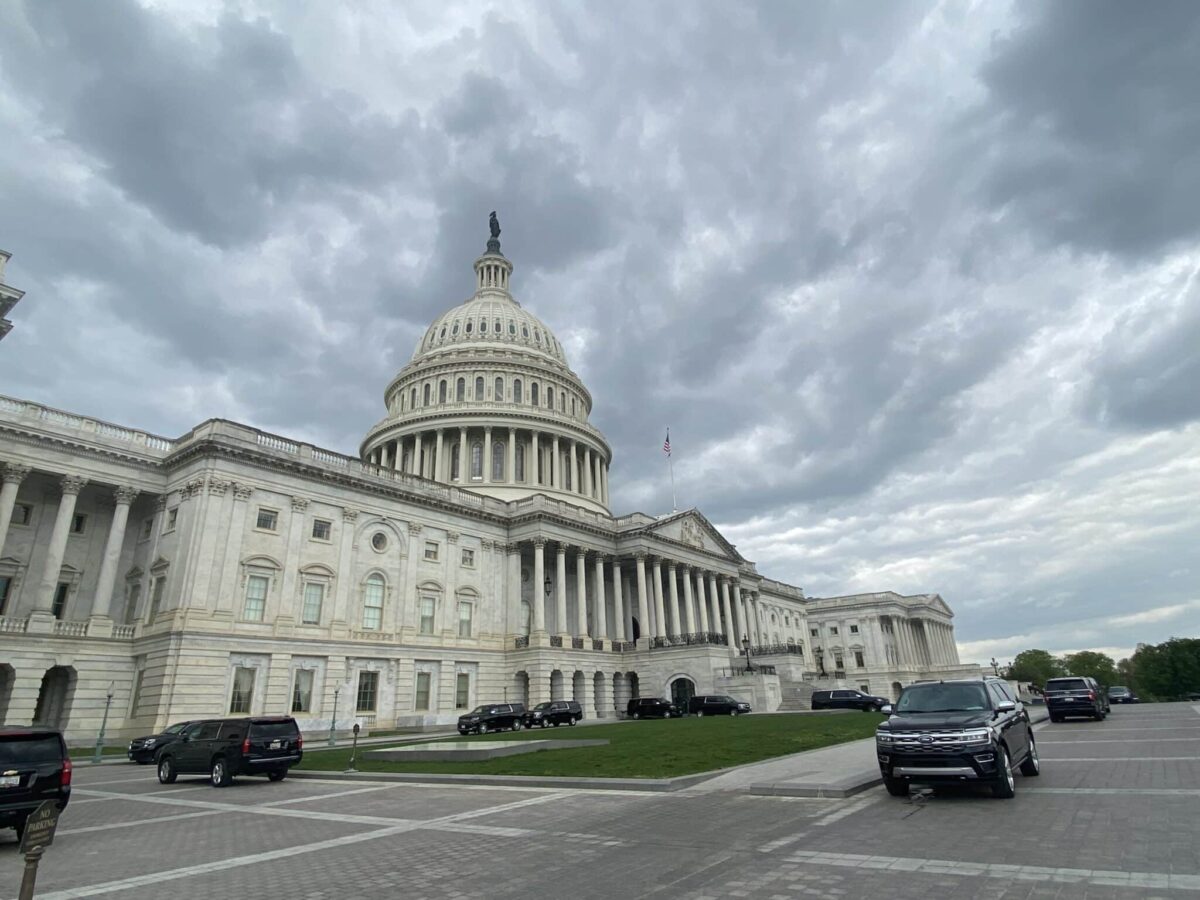
The U.S. Capitol on July 2, 2025. (Photo by Ashley Murray/States Newsroom)

Alaska Republican U.S. Sens. Lisa Murkowski and Dan Sullivan joined fellow Senate Republicans Wednesday night in voting to set aside a budget amendment that would have compelled the U.S. Department of Justice to release files related to the late sex offender Jeffrey Epstein.

The vote to table the amendment, stopping the Senate from considering it, was 51-49. 

All of the Senate’s Democrats voted in favor of the amendment, as did Republican Sens. Josh Hawley of Missouri and Rand Paul of Kentucky.

The failure of either of Alaska’s Republican senators to vote for the amendment drew criticism from the Alaska Democratic Party.

Alaska Republican U.S. Sens. Lisa Murkowski and Dan Sullivan (Alaska Beacon file photos)

Murkowski, talking by phone on Thursday, said the amendment, proposed by Senate Minority Leader Chuck Schumer, D-New York, came as a surprise, and she voted against it for procedural reasons, not because she opposes the idea of a release.

“What Schumer did was nothing more than a political stunt,” Murkowski said.

In July, Murkowski and other members of a Senate budget subcommittee voted unanimously to amend a proposed appropriations bill to mandate that the U.S. Department of Justice compile a report on the activities of Epstein, a sex trafficker with extensive ties to rich and powerful people worldwide. Epstein died in jail while awaiting trial in 2019. 

The final text of the bill requires a report, but not the release of original documents in the possession of the federal government.

President Donald Trump campaigned on releasing the documents during last year’s presidential election, but this summer has since broken that campaign pledge, downplaying the case 

In February, U.S. Attorney General Pam Bondi said she had Epstein’s client list “sitting on my desk right now.” But in July the FBI announced in a memo that there was no “client list” and no more public information would be released. The announcement caused a public outcry, and the federal government still has not released the documents.

Trump’s social relationship with Epstein was well-documented, and this week, the Wall Street Journal published a copy of a birthday greeting Trump sent to Epstein in 2003. Trump has claimed the letter doesn’t exist, but it bears his signature.

The letter was released to the public after being obtained by U.S. House members investigating the Epstein case.

“I have been — I don’t know if it’s fair to say one of the rare Republicans — certainly a very early Republican on the Senate side who said, ‘Look, just, just release these Epstein files. Just get this stuff out there,” Murkowski said.

The appropriations bill with Murkowski’s preferred Epstein language would fund the U.S. Department of Justice and other commerce and science-related parts of the federal government. For that reason, it’s been nicknamed the “CJS bill.”

It has not yet come to a floor vote, and with senators hurrying to pass budget bills before the end of the federal fiscal year on Sept. 30, it isn’t clear when it will come up.

“Will we see the CJS as part of a floor package that could move through the Senate? It’s not impossible, but we are kind of running out of daylight,” Murkowski said.

Part of that uncertainty is due to Senate Democrats’ opposition to the overall contents of the bill. That opposition has slowed the bill’s progress.

Schumer’s amendment would have forced the Senate to debate the Epstein issue immediately, as part of the annual defense authorization bill now under debate.

In response to a request for comment, Sullivan’s office issued a written statement that also criticized Schumer’s amendment and defended his vote.

It said in part, “Senator Sullivan has repeatedly said that he believes the DOJ should release as much information as possible on Epstein’s horrific crimes, while protecting survivors. Chuck Schumer tried slipping the Epstein provision into the National Defense Authorization Act (NDAA), knowing full well it would be stripped out as the bill went through the process, leaving no doubt he’s using Epstein’s atrocious crimes as a political pawn instead of focusing on building up our military in the NDAA, which Schumer has never shown any interest in doing.”

Murkowski said the amendment disrupted normal work on the defense bill and “threw a real wrench into the whole negotiated process that had really been moving along in a positive way.”

She said she believes Schumer brought up the Epstein issue because Senate Republicans are preparing to change the rules for the confirmation of Trump’s executive-branch nominations.

Ordinarily, the Senate approves uncontroversial nominees without a roll-call vote to make the process more efficient. Since the beginning of Trump’s second term, none of his nominees have been approved without a roll-call vote, an unprecedented change in the Senate, and one that has slowed both the Senate and the Trump administration’s confirmations.

In response, Senate Republicans are planning to change the Senate’s rules to allow the approval of multiple nominees with a single vote.

“I think he was trying to kind of change the narrative,” Murkowski said of Schumer’s proposed amendment. “I don’t think he was making much headway on his pushback on some of the nominations. And he made a decision that, I think, is going to be short-lived in its political fire. He really kind of poisoned the waters around here in terms of good-faith negotiations.”

The day after the vote, Alaska Democratic Party Chair Eric Croft released a statement, saying by email: “Just two months ago, Dan Sullivan called on the Department of Justice to release the documents to shine a light on convicted sex offender Jeffrey Epstein’s horrific crimes. But last night, Dan Sullivan was a deciding vote to continue the cover-up and block an effort to force the DOJ to release the Epstein files. Instead of listening to Alaskans and the victims of Jeffrey Epstein, Sullivan acted in his usual fashion – like a spineless politician who’s only loyal to his billionaire buddies. Alaskans and survivors deserve better.”

Sullivan faces re-election in 2026 and is running for another term in Congress.

To date, no Democrat has filed with the Alaska Division of Elections to challenge Sullivan. Filings with the Federal Elections Commission show Republican Christopher Miklos of Homer and Democrat Ann Diener of Fairbanks have filed forms necessary to begin fundraising.

The U.S. House, meanwhile, is close to having enough support to force a vote on the Epstein issue. While Speaker of the House Mike Johnson, R-Louisiana, opposes bringing up the topic, a bipartisan petition could override the Speaker if it has 218 signatures. As of Wednesday night, it had 217. Alaska’s lone member of the House of Representatives, Rep. Nick Begich, has not signed the discharge petition. His office did not respond to questions about his position on the Epstein issue and whether he will sign the petition.

Categories
Featured Juneau News Juneau Local Ketchikan Local News Feeds Sitka Local

Alaska resident attending college in Utah recounts witnessing Charlie Kirk shooting

Photo of Charlie Kirk at Utah Valley University event Wednesday, courtesy of AP

NOTN/AP- An Alaskan resident attending Brigham Young University said she was just feet away when conservative commentator Charlie Kirk was shot and killed during a campus event on Wednesday.

Margie Brown of Kasilof, Alaska, described the scene as “surreal” and said she is still processing what she witnessed.

“I’m okay. I definitely know I’m probably still in a little bit of shock,” Brown said in an interview with News of the North. “As he was setting his microphone down, you heard the crack, it was behind me, and I saw him, with my own eyes, get shot in the neck, and I knew it was the neck because there was a lot of blood.”

Videos posted to social media from Utah Valley University show Kirk speaking into a handheld microphone while sitting under a white tent emblazoned with the slogans “The American Comeback” and “Prove Me Wrong.” A single shot rings out and Kirk can be seen reaching up with his right hand as a large volume of blood gushes from the left side of his neck. Stunned spectators are heard gasping and screaming before people start to run away.

Brown, a history major finishing her last semester at Brigham Young University in Provo, Utah, said she and a friend signed up to attend Kirk’s appearance and they found seats near the stage, about 50 feet from where Kirk was speaking.

Immediately before the shooting, Kirk was taking questions from an audience member about mass shootings and gun violence.

Brown said she hit the ground hard before urging others to run.

Authorities continue to investigate the shooting.

Categories
Featured Juneau News Juneau Local Ketchikan Local News Feeds Sitka Local

Trump administration wants to cancel Biden-era rule that made conservation a ‘use’ of public land

FILE – Interior Secretary Doug Burgum listens as President Donald Trump speaks with reporters in the James Brady Press Briefing Room at the White House, Monday, Aug. 11, 2025, in Washington. (AP Photo/Mark Schiefelbein, File)

AP-Interior Secretary Doug Burgum on Wednesday proposed canceling a public land management rule that put conservation on equal footing with development, as President Donald Trump’s administration seeks to open more taxpayer-owned tracts to drilling, logging, mining and grazing.

The rule was a key part of efforts under former President Joe Biden to refocus the Interior Department’s Bureau of Land Management, which oversees about 10% of land in the U.S. Adopted last year, it allowed public property to be leased for restoration in the same way that oil companies lease land for drilling.

Industry and agriculture groups were bitterly opposed to the Biden rule and lobbied Republicans to reverse it. States including North Dakota, where Burgum served as governor before joining Trump’s Cabinet, pursued a lawsuit hoping to block the rule.

Wednesday’s announcement comes amid a flurry of actions since Trump took office aimed at boosting energy production from the federal government’s vast land holdings, which are concentrated in Western states including Alaska, California, Nevada, New Mexico, Utah and Wyoming.

Interior officials said the Biden rule had sidelined people who depend on public lands for their livelihoods and imposed unneeded restrictions.

Burgum said in a statement that it would have prevented thousands of acres from being used for energy and mineral productions, grazing and recreation. Overturning it “protects our American way of life and gives our communities a voice in the land that they depend on,” Burgum said.

“The previous administration’s Public Lands Rule had the potential to block access to hundreds of thousands of acres of multiple-use land – preventing energy and mineral production, timber management, grazing and recreation across the West,” Burgum said.

Environmentalists had largely embraced the rule that was finalized in April 2024. Supporters argued that conservation was a long-neglected facet of the land bureau’s mission under the 1976 Federal Lands Policy Management Act.

“The administration cannot simply overthrow that statutory authority because they would prefer to let drilling and mining companies call the shots,” said Alison Flint, senior legal director at The Wilderness Society.

While the bureau previously issued leases for conservation purposes in limited cases, it never had a dedicated program for it.

Critics said the change under Biden violated the “multiple use” mandate for Interior Department lands, by catapulting the “non-use” of federal lands — meaning restoration leases — to a position of prominence.

National Mining Association CEO Rich Nolan said Burgum’s proposal would ensure the nation’s natural resources are available to address rising energy demands and supply important minerals.

“This is a welcome change from the prior clear disregard for the legal obligation to balance multiple uses on federal lands,” Nolan said.

The rule also promoted the designation of more “areas of critical environmental concern” — a special status that can restrict development. It’s given to land with historic or cultural significance or that’s important for wildlife conservation.

In addition to its surface land holdings, the land bureau regulates publicly-owned underground mineral reserves — such as coal for power plants and lithium for renewable energy — across more than 1 million square miles (2.5 million square kilometers). The bureau has a history of industry-friendly policies and for more than a century has sold grazing permits and oil and gas leases.

The pending publication of Burgum’s proposal will kick off a 60-day public comment period.

House Republicans last week repealed land management plans adopted in the closing days of former President Joe Biden’s administration that restricted development in large areas of Alaska, Montana and North Dakota. Interior officials also announced a proposal aimed at increasing mining and drilling in Western states with populations of greater sage grouse. Biden administration officials proposed limits on development and prohibitions against mining to help protect the grouse.

Categories
Featured Juneau News Juneau Local Ketchikan Local News Feeds Sitka Local

ConocoPhillips plans large layoffs, potentially slowing or reversing Alaska’s oilfield jobs growth

By: James Brooks, Alaska Beacon

The ConocoPhillips Alaska Inc. building in Anchorage is seen on June 28, 2023. (Photo by Yereth Rosen/Alaska Beacon)


The top oil-producing company in Alaska is planning significant layoffs, it announced last week.

In a series of statements, the oil giant ConocoPhillips said it will be firing between 20% and 25% of its global workforce of about 13,000 people. That would mean between 2,600 and 3,250 layoffs worldwide.

“We are always looking at how we can be more efficient with the resources we have. As part of this process, we have informed employees that a 20% to 25% reduction in our global workforce, which includes employees and contractors, is anticipated. The majority of these reductions will take place in 2025,” said Rebecca Boys, director of external affairs for ConocoPhillips Alaska, on Thursday.

Boys declined to say how many people the company employs in Alaska, but prior documents published by the company say that it has “about 1,000 people in Alaska,” and of those, about 80% live in the state.

Altogether, the oil and gas industry employed 8,800 people in Alaska as of July, according to state statistics. If ConocoPhillips were to lay off a quarter of its Alaska workforce, it likely would reverse an upward trend for the oil and gas industry here.

Since bottoming out at 6,100 people in November 2020, during the COVID-19 pandemic emergency, the number of people employed by the oil and gas industry rose throughout President Joe Biden’s administration.

ConocoPhillips produces the most oil of any company operating on the North Slope and holds the second-most oil and gas lease area in the state.

According to state data, ConocoPhillips leases about 490,000 acres of Alaska land and water for oil and gas drilling. That’s behind only privately owned Hilcorp, whose holdings exceed 500,000 acres.

ConocoPhillips is developing the large Willow project in the National Petroleum Reserve-Alaska, which is expected to begin producing oil in 2029. 

According to the Alaska Division of Oil and Gas, ConocoPhillips is also planning to drill four exploration wells in other parts of the reserve this winter.

On its production side, ConocoPhillips was planning to drill 12 new production wells this year and next from the Kuparuk oilfield west of Prudhoe Bay.

Categories
Featured Juneau News Juneau Local Ketchikan Local News Feeds Sitka Local

Republican attorneys general say they see a threat from Democratic states’ climate laws and lawsuits

By: James Brooks, Alaska Beacon

Attorneys general (from left to right) Treg Taylor of Alaska, Marty Jackley of South Dakota, Kris Kobach of Kansas, J.B. McCuskey of West Virginia, and Liz Murrill of Louisiana participate in a panel discussion on Thursday, Aug. 28, 2025, at the Alaska Oil and Gas Association conference in Anchorage. (Photo by James Brooks/Alaska Beacon)

During a pair of public panel discussions during the last week of August, attorneys general from five conservative Republican states said they see climate ‘superfund laws’ passed by Democratic states as major threats to the fossil fuel industries of their state.

“I think that the group of people that are on this panel are all united in making sure that all of the expertise in all of our offices are being utilized to make sure that this doesn’t keep going, because it’s very, very dangerous,” said J.B. McCuskey, attorney general of West Virginia, at the annual meeting of the Alaska Oil and Gas Association.

Alongside him were attorneys general Kris Kobach of Kansas, Liz Murrill of Louisiana, Marty Jackley of South Dakota, and then-attorney general of Alaska, Treg Taylor.

The attorneys general said they are also concerned by lawsuits from states and local governments that could result in financial penalties against fossil fuel companies for disasters attributed to climate change.

Vermont made history in 2024 when it enacted a law that allows the state to hold fossil fuel companies financially liable for the negative impacts of climate change on that state. New York followed suit with a similar law later in the year. 

Under both laws, fines levied by the states and paid by fossil fuel companies would go into a large fund that would be spent on projects that could mitigate natural disasters or subsidize clean energy projects.

Other Democratic-led states, including Massachusetts, New Jersey and California, are considering similar laws.

“Now that we have a friendly EPA and a friendly administration, the blue states are deciding that they’re now going to be the EPA,” McCuskey said, speaking at a different panel hosted by the Republican Women of Anchorage. 

The attorneys general, plus Ken Paxton of Texas, who was not present at the industry panel, nodded along as McCuskey spoke.

“Their argument is that every single permitted operation that happened in Alaska caused $75 billion worth of damage to the people of New York. It’s completely outrageous. And the problem isn’t just that it’s New York, it’s that Illinois has one. California is going to have one. Vermont’s going to have one. Massachusetts is going to have one. You name a place that has radical environmentalists running their government, and then it becomes an amount of money that’s not withstandable,” McCuskey said.

Taylor, who has since resigned as Alaska’s attorney general and is expected to run for governor, said he believes that in states with budget holes, “it’s pretty convenient just to raise taxes on oil and gas, right? And those states that don’t have oil and gas, that’s their way of dealing with their budget shortfalls, is to take it out of oil and gas through these types of acts.”

Republican attorneys general from five states speak at an event hosted by the Anchorage Republican Women on Thursday, Aug. 28, 2025, in Anchorage. (Photo by James Brooks/Alaska Beacon)

Fossil fuel businesses and trade groups, including the American Petroleum Institute and the U.S. Chamber of Commerce, filed suit last year against the Vermont law. 

A group of Republican attorneys general, led by McCuskey, sued New York in February. Another McCuskey-led suit, filed in May, targets Vermont

The Trump administration has also gotten involved by filing lawsuits against both states and against states like Hawaii that have filed lawsuits against fossil fuel companies.

Those suits say companies should be financially liable for harm caused by climate change.

Speaking at the Alaska oil panel, Kobach said he’s concerned about climate lawsuits filed by cities and counties and believes they’re being encouraged by national environmental law firms and groups.

“The reason I’m so energized about fighting back against that is Ford County, Kansas, which you probably never heard of, where Dodge City is — little tiny county, rural county, very low population — somehow, they were convinced by some very well-heeled attorneys in California to be a plaintiff in one of these lawsuits. And so we’re chasing them around. My office is chasing them around, trying to get them kicked out of court because they don’t speak for the people of Kansas,” he said.

Taylor said he sees the same issue.

“We’re seeing those opportunistic plaintiffs’ attorneys convince municipalities and boroughs and cities to take on litigation that’s really not in their best interest and really puts money into their own pockets,” he said during the panel discussion.

McCuskey, of West Virginia, said his state is considering a law that would restrict the ability of local governments to sue.

Nationally, the fossil fuel industry is lobbying Congress to pass a liability shield law akin to the one passed in 2005 to protect the gun industry against lawsuits attempting to hold gun manufacturers responsible for gun crimes. 

In June, McCuskey and other attorneys general wrote a letter to the U.S. Attorney General to offer support for a national liability shield to protect fossil fuel companies. 

The National Association of Counties and the National League of Cities have each adopted resolutions opposing such a liability shield. Both organizations say that local governments should retain the power to file lawsuits.

McCuskey, speaking at the oil panel, got a laugh from the audience when he asked attendees what they thought West Virginians would say if New York tried to collect a fine from the state of West Virginia.

“Our big joke is that the people in New York are literally looking down on us from the skyscrapers that were built with coal from West Virginia,” McCuskey said at the oil and gas association panel. “So they’re not just looking down on us figuratively, but both literally and figuratively, and they just have no contemplation of why their economies were built by the people who do the work that’s happening here.”