Scott Turner, secretary of the U.S. Department of Housing and Urban Development, speaks at a news conference on Tuesday in Anchorage. With him is U.S. Sen. Dan Sullivan, R-Alaska, and U.S. Rep. Nick Begich, R-Alaska. Turner is one of several Trump administration cabinet members who have traveled to Alaska this summer. (Photo by Yereth Rosen/Alaska Beacon)
The secretary of the U.S. Department of Housing and Urban Development, visiting Alaska this week, said he hopes to learn about challenges facing both the state’s urban centers and remote rural communities.
“I came here to be a great listener, to understand the needs of the people of Alaska, to understand the challenges of the people of Alaska and particularly when it comes to homelessness and affordable housing,” Scott Turner, the Trump administration’s HUD secretary, said at a news conference Tuesday in Anchorage.
Turner is among several Trump administration cabinet members touring Alaska this summer.
He spent part of Tuesday meeting with Anchorage municipal officials who discussed the challenges of homelessness in the state’s largest city.
It is a national issue, Turner said.
That 770,000 people identified as homeless in the nation “is unacceptable to me, it’s unacceptable to my colleagues and I know it’s unacceptable to you,” he said.
In Alaska, he said, almost 2,700 people are homeless, with about 1,700 of them in Anchorage. “That’s something that we want to attack and eradicate,” he said.
Those numbers show that past efforts by HUD to address homelessness have not been effective, said Turner. To make his point, he referred to his background as a professional football player.
“One of the things that holds you accountable in the NFL is called game film,” he said. “You can say what you want to on Sunday during the game. You can say, ‘Well, I did the right thing,’ but on Monday, the film will tell the story, and the film does not lie.”
On Wednesday, Turner was touring Bethel, in Western Alaska, to learn about rural Alaska housing problems.
Crowding is a dire concern in rural communities, according to the Alaska Housing Finance Corp., a state agency. Conditions are most severe in the Yukon-Kuskokwim Delta region, where Bethel is located, according to AHFC. Crowded conditions are linked to poor health, including transmission of respiratory diseases like COVID-19.
Turner said HUD wants to add 7 million more units of affordable housing to the national supply and is focused on reducing regulations that reduce housing access in rural areas as well as in urban areas.
Sen. Dan Sullivan, R-Alaska, accompanied Turner and asserted at the news conference that overregulation by HUD is one of the major impediments to housing availability and quality in rural parts of the state.
“You can send all the money you want to rural Alaska, but it’s so smothered in red tape that it costs a million bucks to build a duplex. One duplex. A lot of that, I think, is self-inflicted,” Sullivan said.
Other analysis identified different problems for rural Alaska housing.
The high cost of energy in rural communities, which are unconnected to larger power grids, is one problem that for years has been cited as a key factor making rural Alaska housing unaffordable.
However, the budget reconciliation bill passed by Congress at the end of June, along with various actions by the Trump administration, has created new barriers to renewable energy development in rural Alaska and elsewhere.
Climate change has also exacerbated rural Alaska’s housing crisis, according to reports by government agencies.
A 2019 statewide assessment by the Denali Commission found that 144 rural communities are threatened by increased erosion, flooding, permafrost thaw or some combination of those factors.
More frequent flooding in the Yukon-Kuskokwim region, for example, is attributed to climate change and has affected housing quality and safety.
But the Trump administration is seeking to halt in-state policies intended to mitigate and adapt to climate change, including those in Alaska.
The administration also abolished the Federal Emergency Management Agency’s Building Resistant Infrastructure and Communities program. The program provided grants to help communities prevent damage from natural disasters, many of which are linked to climate change.
FILE - U.S. President Donald Trump meets with Russian President Vladimir Putin at the G-20 Summit on July 7, 2017, in Hamburg, Germany. (AP Photo/Evan Vucci, File)
FILE – U.S. President Donald Trump meets with Russian President Vladimir Putin at the G-20 Summit on July 7, 2017, in Hamburg, Germany. (AP Photo/Evan Vucci, File)
AP- The U.S.-Russia summit in Alaska is happening at a site where East meets West — quite literally — in a place familiar to both countries as a Cold War front line of missile defense, radar outposts and intelligence gathering.
Whether it can lead to a deal to produce peace in Ukraine more than 3 1/2 years after Moscow’s invasion remains to be seen.
Here’s what to know about the meeting between Russian President Vladimir Putin and U.S. President Donald Trump, the first summit in four years:
When and where is it taking place?
The summit will take place Friday in Alaska, although where in the state is still unknown.
It will be Putin’s first trip to the United States since 2015, for the U.N. General Assembly in New York. Since the U.S. is not a member of the International Criminal Court, which in 2023 issued a warrant for Putin on war crimes accusations, it is under no obligation to arrest him.
Is Zelenskyy going?
Both countries confirmed a meeting between only Putin and Trump, even though there were initial suggestions that Ukrainian President Volodymyr Zelenskyy might be part of it. But the Kremlin has long pushed back against Putin meeting Zelenskyy -– at least until a peace deal is reached by Russia and Ukraine and was ready to be signed.
Putin said last week he wasn’t against meeting Zelenskyy “but certain conditions need to be created” for it to happen and were “still a long way off.”
That raised fears about excluding Ukraine from negotiations. Ukrainian officials last week talked with European allies, who stressed that peace cannot be achieved without Kyiv’s involvement.
What’s Alaska’s role in Russian history?
It will be the first visit by a Russian leader to Alaska, even though it was part of the czarist empire until 1867, the state news agency Tass said.
Alaska was colonized by Russia starting from the 18th century until Czar Alexander II sold it to the United States in 1867 for $7.2 million. When it was found to contain vast resources, it was seen as a naïve deal that generated remorse and self-reproach.
After the USSR’s collapse, Alaska was a subject of nostalgia and jokes for Russians. One popular song in the 1990s went: “Don’t play the fool, America … give back our dear Alaska land.”
Sam Greene of King’s College London said on X the symbolism of Alaska as the site of a summit about Ukraine was “horrendous — as though designed to demonstrate that borders can change, land can be bought and sold.”
What’s the agenda?
Trump has appeared increasingly exasperated with Putin over Russia’s refusal to halt the bombardment of Ukrainian cities. Kyiv has agreed to a ceasefire, insisting on a truce as a first step toward peace.
Moscow presented ceasefire conditions that are nonstarters for Zelenskyy, such as withdrawing troops from the four regions Russia illegally annexed in 2022, halting mobilization efforts, or freezing Western arms deliveries. For a broader peace, Putin demands Kyiv cede the annexed regions, even though Russia doesn’t fully control them, and Crimea, renounce a bid to join NATO, limit the size of its armed forces and recognize Russian as an official language along with Ukrainian.
Zelenskyy insists any peace deals must include robust security guarantees for Ukraine to protect it from future Russian aggression.
Putin has warned Ukraine it will face tougher conditions for peace as Russian troops forge into other regions to build what he described as a “buffer zone.” Some observers suggested Russia could trade those recent gains for territory still under Ukrainian control in the four annexed regions annexed by Moscow.
Zelenskyy said Saturday that “Ukrainians will not give their land to the occupier.”
But Trump said Monday: “There’ll be some land swapping going on. I know that through Russia and through conversations with everybody. To the good, for the good of Ukraine. Good stuff, not bad stuff. Also, some bad stuff for both.”
What are expectations?
Putin sees a meeting with Trump as a chance to cement Russia’s territorial gains, keep Ukraine out of NATO and prevent it from hosting any Western troops so Moscow can gradually pull the country back into its orbit.
He believes time is on his side as Ukrainian forces are struggling to stem Russian advances along the front line amid swarms of Moscow’s missiles and drones battering the country.
The meeting is a diplomatic coup for Putin, isolated since the invasion. The Kremlin sought to portray renewed U.S. contacts as two superpowers looking to resolve various global problems, with Ukraine being just one.
Ukraine and its European allies are concerned a summit without Kyiv could allow Putin to get Trump on his side and force Ukraine into concessions.
“Any decisions that are without Ukraine are at the same time decisions against peace,” Zelenskyy said. “They will not bring anything. These are dead decisions. They will never work.”
European officials echoed that.
“As we work towards a sustainable and just peace, international law is clear: All temporarily occupied territories belong to Ukraine,” European Union foreign policy chief Kaja Kallas said. “A sustainable peace also means that aggression cannot be rewarded.”
NATO Secretary General Mark Rutte said Sunday he believed Trump was “making sure that Putin is serious, and if he is not, then it will stop there.”
“If he is serious, then from Friday onwards, the process will continue. Ukraine getting involved, the Europeans being involved,” Rutte added.
Since last week, Putin spoke to Chinese leader Xi Jinping, Indian Prime Minister Narendra Modi, Brazilian President Luiz Inácio Lula da Silva, as well as the leaders of South Africa, Kazakhstan, Uzbekistan, Belarus and Kyrgyzstan, the Kremlin said.
That suggested Putin perhaps wanted to brief Russia’s most important allies about a potential settlement, said pro-Kremlin analyst Sergei Markov.
Ukrainian forces are increasing the intensity of long-range drone strikes deep into Russia, according to data released by Moscow, ahead of Friday's planned meeting between Presidents Donald Trump and Vladimir Putin in Alaska.
Ukrainian forces are increasing the intensity of long-range drone strikes deep into Russia, according to data released by Moscow, ahead of Friday’s planned meeting between Presidents Donald Trump and Vladimir Putin in Alaska. (Photo courtesy ABC News)
LONDON – Ukrainian forces are increasing the intensity of long-range drone strikes deep into Russia, according to data released by Moscow, ahead of Friday’s planned meeting between Presidents Donald Trump and Vladimir Putin in Alaska.
Russia’s Defense Ministry reported downing another 59 Ukrainian drones overnight into Monday morning, with Moscow Mayor Sergei Sobyanin reporting that at least nine craft were shot down en route to the capital.
Russia’s federal air transport agency, Rosaviatsiya, reported temporary restrictions on flights at airports in Penza, Nizhny Novgorod, Kaluga, Volgograd and Saratov during the overnight attacks.
Monday’s figures bring the total number of long-range Ukrainian drones claimed shot down by Russian forces in August to 1,337 — with a daily average of more than 121 drones each day.
Moscow only provides data on the number of drones it claims to have shot down, and not the overall number of Ukrainian craft launched. Neither Ukraine nor Russia provide public information on the scale of their own cross-border drone attacks.
In July, the total number of Ukrainian drones claimed downed over the course of the month was 3,008, with an average of just over 97 craft per day.
Ukraine’s air force, meanwhile, said Russia launched 100 drones into Ukraine overnight into Monday morning, of which 70 were intercepted or suppressed.
Thus far in August, the intensity of Russian strikes on Ukraine appear to have eased. The first 11 days of this month have seen Moscow launch a daily average of 74 drones and one missile into Ukraine, compared with record-breaking July figures of 201 drones and around six missiles per day.
Ukrainian President Volodymyr Zelenskyy and his officials have said Kyiv will continue and expand its long-range strikes in an effort to force Moscow to the negotiating table.
“They in Russia must clearly feel the consequences of what they are doing against Ukraine,” the president said in a statement posted to Telegram in May. “And they will. Attack drones, interceptors, cruise missiles, Ukrainian ballistic systems — these are the key elements. We must manufacture all of them.”
It is not clear whether Zelenskyy will attend Friday’s summit in Alaska. There, Trump and Putin are expected to discuss proposals to secure a ceasefire and potentially to end Russia’s full-scale invasion, which it launched in February 2022.
Zelenskyy has insisted that any negotiations must include Ukraine. Kyiv will also not officially cede any territory, accept limitations on its armed forces, or jettison its ambitions to join NATO and the European Union, Zelenskyy has said.
Putin, though, is demanding that Ukraine cede several regions — not all of which are controlled by Russian troops — in the south and east of the country, accept curbs on the size and sophistication of its military and be permanently excluded from NATO.
Russia’s demands, Zelenskyy has said, constitute an attempt to “partition Ukraine.”
Ukrainian Presidential Press Service on June 27, 2024, in which Ukrainian President Volodymyr Zelensky looks on during a signature ceremony of Agreement on Security Cooperation and Long-term Support between Ukraine and Estonia during the European Council Summit. )Ukrainian Presidential Press Service/POOL/Sputnik/AFP via Getty Images)
Speaking from the White House on Friday, Trump suggested a settlement could include “some swapping of territories.”
Zelenskyy swiftly rejected the proposal, saying Ukraine “will not give Russia any awards for what it has done” and that “Ukrainians will not give their land to the occupier.”
On Monday, Zelenskyy appealed for more pressure on the Kremlin. “Russia is prolonging the war and therefore deserves stronger pressure from the world,” he wrote on Telegram.
“Russia refuses to stop the killings and therefore should not receive any rewards or benefits,” he added.
President Donald Trump delivers remarks during a joint press conference with French President Emmanuel Macron in the East Room at the White House on Feb. 24, 2025, in Washington, D.C. (Photo by Chip Somodevilla/Getty Images)
President Donald Trump delivers remarks during a joint press conference with French President Emmanuel Macron in the East Room at the White House on Feb. 24, 2025, in Washington, D.C. (Photo by Chip Somodevilla/Getty Images)
By James Brooks, Alaska Beacon
President Donald Trump will meet with Russian President Vladimir Putin on Aug. 15 in Alaska, Trump said in a social media post Friday.
The location, timing and other details were not immediately available. Staff for all three members of Alaska’s congressional delegation said they were unaware of the announcement ahead of time.
“The highly anticipated meeting between myself, as President of the United States of America, and President Vladimir Putin, of Russia, will take place next Friday, August 15, 2025, in the Great State of Alaska,” Trump wrote on Truth Social.
Trump has repeatedly said on social media that he is interested in negotiating with Putin in order to bring an end to the Russian invasion of Ukraine.
FILE - Demonstrators hold signs during a protest outside the annual Alaska Sustainable Energy Conference on Tuesday, June 3, 2025, in Anchorage, Alaska. (AP Photo/Jenny Kane, File)
Demonstrators hold signs during a protest outside the annual Alaska Sustainable Energy Conference on Tuesday, June 3, 2025, in Anchorage, Alaska. (AP Photo/Jenny Kane, File)
AP- Fish camps still dot the banks of the broad Kuskokwim River in southwestern Alaska. Wooden huts and tarped shelters stand beside drying racks draped with bright red strips of salmon, which Alaska Native families have harvested for generations and preserved for the bitter winters ahead.
But the once-abundant salmon populations have declined so sharply in recent years that authorities have severely restricted subsistence fishing on Alaska’s second-longest river. They’ve imposed even tighter restrictions on the longer Yukon River to the north.
Various factors are blamed for the salmon collapse, from climate change to commercial fishing practices. What’s clear is the impact is not just on food but on long-standing rituals — fish camps where elders transmit skills and stories to younger generations while bonding over a sacred connection to the land.
“Our families are together for that single-minded purpose of providing for our survival,” said Gloria Simeon, a Yup’ik resident of Bethel. “It’s the college of fish camp.”
So when Alaska Natives debate proposals to drill, mine or otherwise develop the landscape of the nation’s largest state, it involves more than an environmental or economic question. It’s also a spiritual and cultural one.
“We have a special spiritual, religious relationship to our river and our land,” said Simeon, standing outside her backyard smokehouse where she uses birch-bark kindling and cottonwood logs to preserve this year’s salmon catch. “Our people have been stewards of this land for millennia, and we’ve taken that relationship seriously.”
Trump policies intensify the debates
Such debates are simmering across the state’s vast tundra, broad rivers, sprawling wetlands and towering mountain ranges. Put a pin just about anywhere on the map of Alaska, and you’re likely to hit an area debating a proposed mine, a new wilderness road, a logging site, an oil well, a natural gas pipeline.
Such debates have intensified during President Donald Trump’s second term. His administration and allies have pushed aggressively for drilling, mining and developing on Alaska’s public lands.
More than 1 in 5 Alaskans identify as Alaska Native or American Indian alone or in combination with another racial group, the highest ratio of any state, according to 2020 U.S. Census figures. Alaska Natives include Aleut, Athabascan, Iñupiat, Tlingit, Yup’ik and other groups. For all their diversity, they share a history in the region dating back thousands of years, as well as cultural and spiritual traditions, including those closely associated with subsistence hunting and gathering.
Native leaders and activists are divided about extraction projects. Supporters say they bring jobs and pay for infrastructure. Opponents say they imperil the environment and their traditions.
Tribal members sometimes even find themselves on opposite sides of the same proposal. Native-run corporations — formed to benefit Alaska Native shareholders — are supporting a mine in southwestern Alaska that a regional tribal coalition opposes, a scenario similar to an oil exploration project underway in Interior Alaska.
Trump singled out Alaska as a priority for extraction projects in an executive order signed on his first day in office.
“Unlocking this bounty of natural wealth will raise the prosperity of our citizens while helping to enhance our Nation’s economic and national security,” the order said.
Increasingly, words are turning to action.
Congress, in passing Trump’s budget bill in July, authorized an unprecedented four new sales of oil and gas leases in the coastal plain of the Arctic National Wildlife Refuge, and still more in other locations.
Trump cabinet officials made a high-profile visit in June to Prudhoe Bay in Alaska’s far north — an aging oil field that is one of the largest in North America. They touted goals of doubling the oil coursing through Alaska’s existing pipeline system and building a massive natural gas pipeline as its “big, beautiful twin.”
Trump’s policy shifts came even as he removed one of the most prominent Alaska Native names from the official map. He returned the federal name of “Mount McKinley” to the largest mountain in Alaska and North America. For all their disputes over extraction, Native and Alaska political leaders were largely united in wanting to keep its traditional Athabascan name of Denali, which translates to “the high one.”
‘We need jobs … to stand on our own two feet’
It takes years for proposed extraction projects to unfold, if they ever do. The extent of oil reserves in the Arctic refuge remains uncertain. Limited infrastructure and harsh weather raise costs. No major oil company bid during the only two lease sales offered to date in the Arctic refuge.
But the measures pushed by the new administration and Congress amount to the latest pendulum swing between Republican and Democratic presidents, between policies prioritizing extraction and environmental protections.
The budget bill calls for additional lease sales in the National Petroleum Reserve-Alaska, west of the Arctic refuge, and opening more areas to potential leasing than authorized under recent Democratic administrations.
Alaska’s political leaders generally have cheered on the push for more extraction, including its Republican congressional delegation and its governor, who has called his state “America’s natural resource warehouse.”
So have some Native leaders, who say their communities stand to benefit from jobs and revenues. They say such projects are critical to their economic prospects and self-determination, providing jobs and helping their communities pay for schools, streets and snow removal. They’ve accused the previous administration of President Joe Biden of ignoring their voices.
“We need jobs. Our people need training, to stand on our own two feet. Our kids need a future,” said PJ Simon, first chief of the Allakaket Tribal Council. He said communities can maintain their traditions while benefiting from economic development — but that it’s crucial that public officials and businesses include them in the planning. “Native people want to be heard, not pushed aside,” Simon said.
Mayor Nathan Gordon Jr. of Kaktovik, the only community within the Arctic refuge, applauded the budget bill. It enables Kaktovik “to strengthen our community, preserve our cultural traditions, and ensure that we can remain in our homelands for years to come,” he said in a statement issued by Voice of the Arctic Iñupiat, a group advocating for oil exploration.
A ‘lack of respect’ for Native subsistence traditions
But Native opponents of such projects say short-term economic gains come at the risk of long-term environmental impacts that will reverberate widely.
“We’re kind of viewed as the last frontier, like we have unlimited resources,” said Sophie Swope, executive director of the environmental advocacy group Mother Kuskokwim Tribal Coalition.
She said Alaska’s most renewable resources — such as salmon, deer and other migratory wildlife — are threatened both by overly aggressive ocean fishing and by extractive industries.
“There’s that lack of respect for our traditional subsistence lifestyles,” she said.
Opponents of oil drilling in the Arctic refuge fear it will permanently disrupt the long-range migration of caribou, which Native people have hunted for millennia. The Tanana Chiefs Conference, a coalition representing dozens of tribes in Alaska’s interior south of the refuge, has long opposed the drilling.
A massive caribou herd goes to the refuge’s coastal plain to calve in the spring before fanning out across a wider area, providing a crucial food source for Native hunters in Alaska and Canada.
If the herd’s migration is disrupted, opponents fear an impact similar to the salmon collapse — a loss not just of food but of a focal point of culture and spirituality.
While the source of the salmon crisis is uncertain, researchers say possible causes include the impacts of commercial fishing, disease, warming waters, other environmental changes and competition between wild and hatchery-reared fish. In a June policy brief, Indigenous leaders, scientists and policy experts called for further study and for easing the disproportionate impact of the crisis on subsistence fishermen.
But if the salmon collapse’s cause isn’t clear, its impact is.
It has meant “no fish camps, no traditional knowledge that’s been passed down to our younger generation,” said Kristen Moreland, executive director of the Fairbanks-based advocacy group Gwich’in Steering Committee.
Moreland said she regularly takes her children to her home village in the north to reconnect with traditional festivals and activities, including those centered around the caribou hunt: “They learn all our traditional knowledge that way. What if the caribou doesn’t migrate up there anymore?”
The yearslong battle over the refuge takes its toll, she said. “How long do we have to advocate for our land and our people?”
Chief Brian Ridley of the Tanana Chiefs Conference said he sympathizes with those tribal leaders supporting development, given the shortage of well-paying jobs in many villages.
But concern over potential long-term environmental damage has prompted the conference to oppose projects such as oil drilling in the Arctic refuge and the nearer Yukon Flats, as well as construction of the so-called Ambler Road, which could open access to mining in more remote areas.
Ridley said he recently attended a national conference with other tribal leaders who echoed a common theme — opposing “development projects on our land or near our land that come in and promise jobs and whatnot, and they come and go and then we get stuck with the long-term negative aspects of cleanup and restoration.”
Empty smokehouses, broken spirits
In southwestern Alaska, a proposed major mine, the Donlin Gold project, has long been debated.
The project, planned by private investors in cooperation with Native corporations owning the land and mineral rights, would require a massive dam to hold back millions of tons of mineral and chemical waste in a valley.
Project proponents say the dam will involve state-of-the-art design, with its wide base anchored to bedrock and the surrounding mountain walls incorporated into containing the debris. Proponents tout benefits including jobs, shareholder payments and funds for such things as village services and education.
“This kind of project, since it’s on our lands, is different than most other resource projects,” said Thomas Leonard, vice president of corporate affairs for Calista Corp., a regional Alaska Native corporation involved. “We literally have a seat at the table, have a voice in the project.”
But opponents, such as Mother Kuskokwim and some area tribes, aren’t convinced and say the risk of a failure on the Kuskokwim watershed is too great.
“Protecting the river and the land and the Earth is part of the partnership and the relationship that we have as caregivers,” Simeon said.
That relationship isn’t abstract, Simeon said. She said the disruption of communal hunting and fishing activities leads to a spiritual rootlessness that she believes contributes to alarming rates of addictions and suicide among Alaska Native people.
“What does it do to your heart and soul when you have to look at an empty smokehouse year after year after year, and you can’t provide for your family?” Simeon said.
Protesters hold signs and chant outside the Alaska Native Tribal Health Consortium where U.S. Health Secretary Robert F. Kennedy Jr. met with Alaska Native leaders, in Anchorage, Alaska, Tuesday, Aug. 5, 2025, shortly after the Department of Health and Human Services announced its plans to cancel contracts and pull funding for some vaccines being developed to fight respiratory viruses like COVID-19 and the flu. (AP Photo/Mark Thiessen)
Protesters hold signs and chant outside the Alaska Native Tribal Health Consortium where U.S. Health Secretary Robert F. Kennedy Jr. met with Alaska Native leaders, in Anchorage, Alaska, Tuesday, Aug. 5, 2025, shortly after the Department of Health and Human Services announced its plans to cancel contracts and pull funding for some vaccines being developed to fight respiratory viruses like COVID-19 and the flu. (AP Photo/Mark Thiessen)
AP- The Department of Health and Human Services will cancel contracts and pull funding for some vaccines that are being developed to fight respiratory viruses like COVID-19 and the flu.
Robert F. Kennedy Jr. announced in a statement Tuesday that 22 projects, totaling $500 million, to develop vaccines using mRNA technology will be halted.
Kennedy’s decision to terminate the projects is the latest in a string of decisions that have put the longtime vaccine critic’s doubts about shots into full effect at the nation’s health department. Kennedy has pulled back recommendations around the COVID-19 shots, fired the panel that makes vaccine recommendations, and refused to offer a vigorous endorsement of vaccinations as a measles outbreak worsened.
The health secretary criticized mRNA vaccines in a video on his social media accounts, explaining the decision to cancel projects being led by the nation’s leading pharmaceutical companies, including Pfizer and Moderna, that offer protection against viruses like the flu, COVID-19 and H5N1.
“To replace the troubled mRNA programs, we’re prioritizing the development of safer, broader vaccine strategies, like whole-virus vaccines and novel platforms that don’t collapse when viruses mutate,” Kennedy said in the video.
Infectious disease experts say the mRNA technology used in vaccines is safe, and they credit its development during the first Trump administration with slowing the 2020 coronavirus pandemic. Future pandemics, they warned, will be harder to stop without the help of mRNA.
“I don’t think I’ve seen a more dangerous decision in public health in my 50 years in the business,” said Mike Osterholm, a University of Minnesota expert on infectious diseases and pandemic preparations.
He noted mRNA technology offers potential advantages of rapid production, crucial in the event of a new pandemic that requires a new vaccine.
The shelving of the mRNA projects is short-sighted as concerns about a bird flu pandemic continue to loom, said Dr. Paul Offit, a vaccine expert at Children’s Hospital of Philadelphia.
“It’s certainly saved millions of lives,” Offit said of the existing mRNA vaccines.
Scientists are using mRNA for more than infectious disease vaccines, with researchers around the world exploring its use for cancer immunotherapies. At the White House earlier this year, billionaire tech entrepreneur Larry Ellison praised mRNA for its potential to treat cancer.
Traditionally, vaccines have required growing pieces of viruses, often in chicken eggs or giant vats of cells, then purifying that material. The mRNA approach starts with a snippet of genetic code that carries instructions for making proteins. Scientists pick the protein to target, inject that blueprint and the body makes just enough to trigger immune protection — producing its own vaccine dose.
In a statement Tuesday, HHS said “other uses of mRNA technology within the department are not impacted by this announcement.”
The mRNA technology is used in approved COVID-19 and RSV shots, but has not yet been approved for a flu shot. Moderna, which was studying a combination COVID-19 and flu mRNA shot, had said it believed mRNA could speed up production of flu shots compared with traditional vaccines.
The abandoned mRNA projects signal a “shift in vaccine development priorities,” the health department said in its statement, adding that it will start “investing in better solutions.”
“Let me be absolutely clear, HHS supports safe, effective vaccines for every American who wants them,” Kennedy said in the statement.
Speaking hours later Tuesday at a news conference in Anchorage, Alaska, alongside the state’s two Republican U.S. senators, Kennedy said work is underway on an alternative.
He said a “universal vaccine” that mimics “natural immunity” is the administration’s focus.
“It could be effective — we believe it’s going to be effective — against not only coronaviruses, but also flu,” he said.
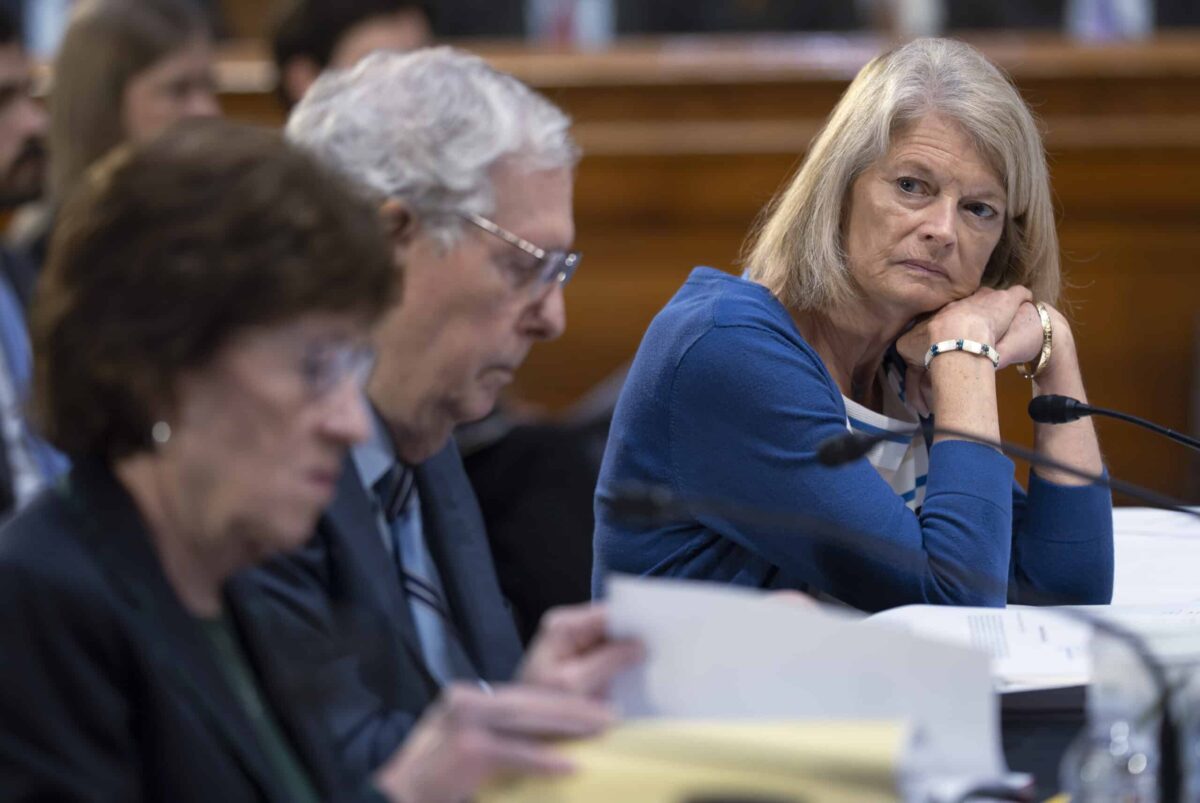
Sen. Lisa Murkowski, R-Alaska, right, listens as the Senate Appropriations Committee marks up the FY2026 spending bill for the Department of the Interior, the Environmental Protection Agency, Department of Transportation, and the Department of Housing and Urban Development, at the Capitol in Washington, Thursday, July 24, 2025. (AP Photo/J. Scott Applewhite)
Sen. Lisa Murkowski, R-Alaska, right, listens as the Senate Appropriations Committee marks up the FY2026 spending bill for the Department of the Interior, the Environmental Protection Agency, Department of Transportation, and the Department of Housing and Urban Development, at the Capitol in Washington, Thursday, July 24, 2025. (AP Photo/J. Scott Applewhite)
AP- Republican U.S. Sen. Lisa Murkowski, speaking with Alaska reporters Monday, toyed with the idea of running for governor and defended her recent high-profile decision to vote in support of President Donald Trump’s tax breaks and spending cuts bill.
Murkowski, speaking from Anchorage, said “sure” when asked if she has considered or is considering a run for governor. She later said her response was “a little bit flippant” because she gets asked that question so often.
“Would I love to come home? I have to tell you, of course I would love to come home,” she said. “I am not making any decisions about anything, because my responsibility to Alaskans is my job in the Senate right now.”
Several Republicans already have announced plans to run in next year’s governor’s race, including Lt. Gov. Nancy Dahlstrom. Republican Gov. Mike Dunleavy is not eligible to seek a third consecutive term. Alaska has an open primary system and ranked choice voting in general elections.
Murkowski is not up for reelection until 2028.
A centrist, Murkowski has become a closely watched figure in a sharply divided Congress. She has at times been at odds with her party in her criticism of Trump and blasted by some GOP voters as a “Republican in name only.” But her decision to support Trump’s signature bill last month also frustrated others in a state where independents comprise the largest number of registered voters. She previously described her decision-making process around the bill as “agonizing.”
On Monday, she said it was clear to her the bill was not only a priority of Trump’s but also that it was going to pass, so it became important to her to help make it as advantageous to the state as she could.
“So I did everything within my power — as one lawmaker from Alaska — to try to make sure that the most vulnerable in our state would not be negatively impacted,” she said. “And I had a hard choice to make, and I think I made the right choice for Alaskans.”
NOTN- The last two defendants in a six-person drug trafficking conspiracy pleaded guilty last week to charges stemming from a multi-state operation that funneled fentanyl and heroin into Alaska, federal prosecutors said..
According to court documents, Semaj Brown, 34, and Brandon Garrett, 46, both of Anchorage, pleaded guilty to conspiring with Julio Juarez, 32, of Anchorage, Marcelino Juarez, 30, of Anchorage, Shane Murphy, 43, of Wasilla, and Gustavo Sebastian Lopez-Chavez, 24, a Mexican national illegally residing in the U.S., to purchase fentanyl and heroin in California and transport the substances to Alaska through the mail or in checked airline baggage.
According to officials, the group trafficked at least 36 kilograms of fentanyl and about 10 kilograms of heroin.
The investigation culminated on Aug. 22, 2024, when U.S. Postal Inspection Service agents intercepted a suspicious parcel in Anchorage. A search warrant revealed more than two kilograms of fentanyl powder inside.
Days later, law enforcement conducted a controlled delivery, ultimately arresting Marcelino Juarez and Brown after observing them collect and transport the package. Garrett was detained in a separate vehicle nearby.
Authorities later linked Brown and Murphy to a July 2024 trip to Los Angeles, where they allegedly sourced additional fentanyl and heroin, including from Lopez-Chavez.
On July 6, airport security at Los Angeles International Airport seized a suitcase bound for Anchorage containing about one kilogram of heroin and two kilograms of fentanyl, when Murphy and Brown arrived in Alaska, they noted that the suitcase did not arrive.
Lopez-Chavez was arrested in Los Angeles on Nov. 14, 2024. At the time, he was carrying roughly 23 kilograms of fentanyl, along with cash and counterfeit immigration documents.
The Juarez brothers and Brown were identified as known gang members by the Stockton, California, Police Department.
All six defendants have now pleaded guilty. Marcelino and Julio Juarez entered pleas in July; Murphy pleaded guilty in April; Lopez-Chavez pleaded guilty in June; and Garrett was indicted in March before pleading last week.
The defendants are scheduled to be sentenced within the next three months. Marcelino Juarez, Brown, Murphy, Lopez-Chavez and Garrett face between 10 years to life in prison. Julio Juarez faces between 15 years to life in prison due to a prior conviction in California for attempted murder, for which he served 11 years in prison.
The case was investigated by the FBI Anchorage Field Office and the Alaska High Intensity Drug Trafficking Area (HIDTA) task forces, with assistance from multiple agencies across Alaska and California.
U.S. Attorneys Tom Bradley, Jack Schmidt, and Bill Reed are prosecuting the case.
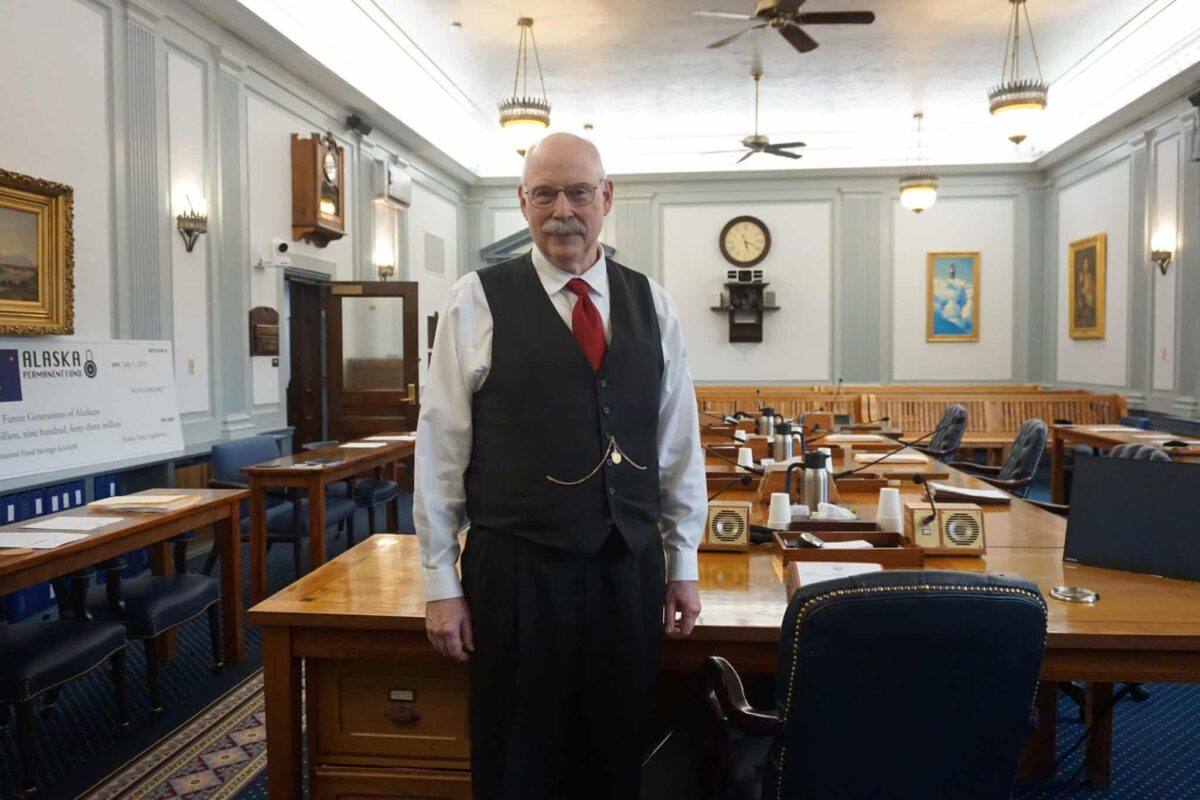
Sen. Bert Stedman, R-Sitka, stands in the Senate Finance Committee room on April 24, 2025. Stedman is sponsoring a bill that would create an Alaska flood insurance system that would be an alternate to the Federal Emergency Management Agency’s national insurance program. (Photo by Yereth Rosen/Alaska Beacon)
As the Trump administration shrinks and even considers eliminating the Federal Emergency Management Agency, the Alaska Legislature is considering a substitute for one of the agency’s key functions.
A bill introduced by Sen. Bert Stedman, a Republican from the Southeast city of Sitka, would establish an Alaska flood authority and an Alaska flood insurance fund. As far as he knows, it would make Alaska the only state with its own flood insurance, Stedman said.
The veteran state lawmaker said his measure, Senate Bill 11, stems from his dissatisfaction with FEMA and its flood policies, feelings that predated the agency’s possible demise in the Trump era.
The federal agency is, for now, the only source of flood insurance in Alaska, as private carriers that offer policies elsewhere in the country do not operate in the state’s small market, Stedman said.
But Alaskans overall pay much more into the FEMA insurance pool that they receive, he said.
“There’s a cost factor involved here, with Alaska residents subsidizing the Mississippi Delta and the Gulf Coast and East Coast and all that compared to our losses,” Stedman said.
FEMA’s rules about insurance and assistance, which are aimed at flood-prone flat Lower 48 areas, are another source of irritation for Stedman. In Lower 48 areas, FEMA encourages communities to avoid building along coastlines, but in Southeast Alaska, where steep mountains rise from the water’s edge, there are few options for moving inland, he said. An only-in-Alaska flood program could consider local conditions and local governments’ zoning rules rather than FEMA national guidelines, he said.
The Trump administration’s antipathy toward FEMA and its mission has given his bill more urgency, he said.
“It’s reasonably likely that there’ll be significant changes to FEMA coming out of Washington, from restructuring to possibly elimination, so the timing of this bill might be, by happenstance, timely,” he said.
The bill moved through committees this year and is due for more work next year’s session, including an examination of funding options. If a system is established, Stedman said, it could potentially be expanded to another type of disaster that is occurring with increasing frequency in warming Alaska: landslides. There is no specific landslide insurance available in Alaska, Stedman noted.
That may be of interest to Jason Amundson and Eran Hood, University of Alaska Southeast scientists who are focused on glacial outburst flood risks. Though immersed in their project at Mendenhall Glacier, they do not live in the path of the meltwater. Rather, both live in the city’s downtown area, which clings to the lower slopes of steep mountains. There, avalanches and landslides pose the most serious risks.
“There’s hazards everywhere in Juneau,” Hood said.
This story has been supported by the Solutions Journalism Network, a nonprofit organization dedicated to rigorous and compelling reporting about responses to social problems, http://solutionsjournalism.org.
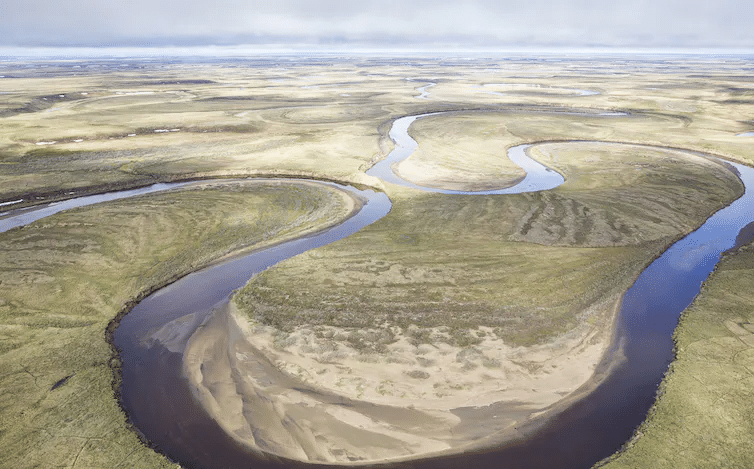
Several oil projects are active in the National Petroleum Reserve in Alaska. (Photo by Bob Wick/Bureau of Land Management, CC BY-SA)
The U.S. Department of the Interior announced on Thursday that it will revoke three documents intended to form the basis for limits on oil drilling in the National Petroleum Reserve in Alaska.
Those documents, and the limits themselves, were issued in the last year of President Joe Biden’s administration.
Since his election, President Donald Trump has prioritized administrative moves that would reverse Biden decisions limiting oil and gas drilling in Alaska.
That decision followed prior decisions by the Biden administration and President Barack Obama’s administration that put about half the reserve off limits to oil development.
Thursday’s announcement, rescinding three planning documents, is a step toward that end.
On Wednesday, ahead of the official notice in the Federal Register, all three members of Alaska’s congressional delegation expressed support for the move and praised the Trump administration for taking action.