The tundra surrounding Bethel, Alaska turns red and gold in the fall. October 10, 2023. (Photo by Claire Stremple/Alaska Beacon)
A national support line for Native survivors of domestic violence and sexual assault has begun work to launch an Alaska-specific service.
Strong Hearts Native Helpline is a Native-led nonprofit that offers 24-hour, seven-day-a-week support for anonymous and confidential calls from people who have experienced domestic violence or sexual assault.
The line is staffed by Native advocates, but Strong Hearts Deputy Executive Officer Rachel Carr-Shunk said there are not yet any Alaska Native people answering phone calls.
That is set to change soon.
“Even though we’re a Native organization and all of our advocates are American Indian, we do recognize that there is a difference for our Alaska Native relatives who experience violence in that context, whether they live in a rural village or they just live in Alaska, which is a different experience,” she said.
Carr-Shunk expects the organization to launch the Alaska-specific line within the next calendar year, after building partnerships in the state.
“When Alaska Native survivors reach out, we want them to trust that they’re going to have someone who understands their experience as an Alaska Native person, or who understands that identity,” she said.
To that end, the organization has hired Anchorage-based Minnie Sneddy, who is originally from Hooper Bay. Sneddy is tasked with explaining Alaska’s regional differences and specific needs to the organization, as well as helping create a database of Alaska resources.
Sneddy has years of experience in behavioral health work and said that her career and life experience have shown her the lack of resources for people who face domestic violence and sexual assault — and how many of those people need mental health support.
“The years I lived in Hooper Bay, and here in Anchorage and Alaska, there’s so many (people) that need help and want help, but they feel like if they do come forward and get help, they get in trouble — not only with their families, but with OCS, Office of Children’s Services,” she said. “I feel like Strong Hearts Native Helpline can help at least allow a person to be heard, because the majority of time, people want to be heard. Everyone just wants to feel seen and be heard.”
Sneddy said she is reaching out to resources that already exist in the state, and Strong Hearts is working with the Alaska Native Women’s Resource Center to build out its state-specific service.
“We don’t have a voice, really, in the villages,” Sneddy said, adding that when abuse happens: “There’s no help for an individual. And if a woman decides to do something about it, she’s seen as a bad person.”
The Strong Hearts Native Helpline is available now for Alaskans, even though there are not yet Alaska Native advocates on the other end of the line. A full list of Alaska shelters and victim’s services providers can be found in the state directory at law.alaska.gov.
Audience watches a dance group perform at the Alaska Federation of Natives convention in October 2018 at the Dena’ina Convention Center in Anchorage, Alaska. (Photo from video by Joaqlin Estus/ICT)
State demographer David Howell said on Wednesday that the state estimate isn’t expected until at least Jan. 28 due to the lack of required data from the U.S. Census Bureau.
The estimate is typically published in the first full week of January by the Alaska Department of Labor and Workforce Development and reflects information as of July the previous year.
While the department uses Permanent Fund Dividend data to hone its guess, it also incorporates Census data published annually. That data, normally available by the start of the year, isn’t expected until Jan. 27, Howell said. That means the state’s estimate can’t be finalized.
The estimate is a barometer of the state’s economic and social health: When the state’s economy is booming and the Lower 48’s economy is stagnant, in-migration surges. When the opposite is true, more people leave the state than arrive.
Last year’s estimate showed 741,147 residents, the highest population since 2017, in part due to an unexpected surge in the estimated number of people moving to Alaska from outside the United States.
If the new estimate is on par or above last year’s figure, it could be a sign that the state’s decade-long economic malaise is ebbing.
This year’s estimate is also expected to incorporate an increase in military residents in and near Fairbanks, which could boost the Golden Heart’s population.
In the long run, Alaska’s population is expected to drop because a lack of new arrivals has caused the state’s average age to rise.
That leads to a drop in the number of new births and a rise in the number of elderly Alaskans. By 2050, the agency expects the state’s population to drop by about 2%.
The deadly landslide that crashed through the outskirts of Wrangell on the night of Nov. 20, 2023, is seen from the air on the following day. The landslide killed six people and blocked a major road, the Zimovia Highway. The slide was triggered by heavy rain carried north by an atmospheric river. (Photo provided by Alaska Department of Transportation and Public Facilities)
Future assessments of U.S. landslide hazards could include the study of risks posed by atmospheric rivers, which caused extreme precipitation that was linked to recent deadly slides in Southeast Alaska.
The added focus on atmospheric rivers is one of the main updates in a bill that would reauthorize the National Landslide Preparedness Act. The bill, sponsored by U.S. Sen. Lisa Murkowski, R-Alaska, passed the U.S. Senate on Monday and is now to be considered by the U.S. House.
Atmospheric rivers are long and transitory bands of moisture and heat, likened to rivers in the sky. They carry that moisture northward from more southern latitudes, and they can dump vast amounts of rain for several hours or even days.
“You can very rapidly saturate soils in the right conditions,” said Rick Thoman, a scientist with the Alaska Center for Climate Assessment and Preparedness at the University of Alaska Fairbanks.
When such large amounts of warm southern moisture hit the steep mountainous regions of Southeast Alaska, they can cause sudden downhill flows, Thoman said.
“It’s really that intense amount of rain that atmospheric rivers deliver that’s the link to landslides,” he said.
Numerous landslides in the United States have been triggered by atmospheric rivers’ extreme precipitation. Those events include the 2023 slide in Wrangell that killed six people, the 2020 slide in Haines that killed two people and the 2015 slide in Sitka that killed three people.
Extreme precipitation events from atmospheric rivers are tied to shallow-seated landslides such as the deadly events that struck Southeast Alaska in recent years. Other types of Alaska landslides are caused by more deep-seated slope failures triggered by glacial retreat, permafrost thaw or a combination of those forces.
Also passed on Monday by unanimous consent in the Senate was another Murkowski-sponsored and disaster-focused bill, the National Earthquake Hazards Reduction Program Reauthorization Act. That bill, co-sponsored by U.S. Sen. Alex Padilla, D-California, supports the federal program that maintains earthquake measurement resources and equipment and equipment and early warning systems.
“Earthquakes and landslides are active threats that have taken lives and damaged property across Alaska in recent years,” Murkowski said in a statement issued Tuesday. “Our passage of these bills puts us on track to ensure that federal agencies have the resources they need to help keep communities safe both back home and around the country. I thank my colleagues for working cooperatively to pass these measures and urge the House to take them up and send them to the President as soon as possible.”
Kim Kovol has accepted a job with the U.S. Department of Health and Human Services, Gov. Mike Dunleavy announced last week. Her last day working for the state was on Friday, and Tracy Dompeling, the department’s deputy commissioner, assumed the role of acting commissioner, the statement said.
The department’s primary divisions are the Division of Juvenile Justice, the Alaska Psychiatric Institute, the Alaska Pioneer Homes and the Office of Children’s Services.
Kovol was the first commissioner of the Department of Family and Community Services, which was created in 2022. Up to then, its functions were part of the Alaska Department of Health and Social Services. Through an executive order, Dunleavy split that department into two: the Department of Health and the Department of Family and Community Services.
In his statement, Dunleavy said Kovol was a “strong and dedicated leader” for the redesigned department. “As the first Commissioner of DFCS, she built a foundation focused on service, accountability, and support for Alaska’s most vulnerable populations. I thank her for her service and wish her every success in this next role,” he said.
Kovol said she was honored to have served in that role. “I am incredibly grateful to the staff, partners, and communities who have supported our work. Together, we have made meaningful progress for Alaska families, youth, and elders, and I will always be proud of what we have accomplished,” she said in the statement.
Kim Kovol, the first commissioner of the Alaska Department of Family and Community Services. The department was created in 2022 when the Department of Health and Social Services was divided into two entities: the Department of Health and the Department of Family and Community Services. Kovol’s last day working for the state was Jan. 2. She has taken a job with the U.S. Department of Health and Social Services. (Photo provided by the Alaska Department of Family and Community Services)
Kovol is the second Alaska department head to leave state service to join the Trump administration. Almost a year ago, Emma Pokon left her position as commissioner of the Department of Environmental Conservation to become the Pacific Northwest regional administrator for the U.S. Environmental Protection Agency.
Dunleavy in May chose Randy Bates to be the department’s new commissioner. Bates was formerly director of DEC’s Division of Water.
With Kovol’s departure, there are now five state departments with leaders who currently lack legislative approval.
In addition to Bates, Dunleavy has named commissioner-designees for the Department of Law and the Department of Natural Resources. Dunleavy in August named Stephen Cox, a former U.S. attorney in Texas, as Alaska’s attorney general, replacing Treg Taylor, a Republican who is running for governor.
Dunleavy also named John Crowther, a DNR veteran, as his choice to be permanent commissioner. Crowther became acting commissioner after John Boyle resigned from the position in October.
Bates, Cox and Crowther are subject to legislative confirmation after lawmakers convene later this month for their 2026 session.
The state Department of Revenue is currently being led by an acting commissioner, Janelle Earls, who assumed the job in August after Adam Crum left the commissioner post. Crum is another Republican candidate for governor.
Dunleavy has not yet named his choices for the commissioner posts at the Department of Revenue or the Department of Family and Community Services, said Jeff Turner, the governor’s spokesperson. Earls and Dompeling are currently acting commissioners and it is not clear whether the governor will name commissioner-designees for those positions, he said.
Dunleavy is in the last year of his second term. He is term limited and may not run for reelection.
NOTN- Juneau schools and City and Borough of Juneau offices will be closed today as a winter storm warning takes effect earlier than expected, with forecasters calling for heavy snowfall and hazardous road conditions across much of Southeast Alaska.
The City and Borough of Juneau announced that all CBJ offices and the Juneau School District will be closed.
City staff will work remotely where possible and remain available by phone or email. Officials are urging residents to limit travel to allow snow removal crews to operate safely and efficiently.
According to the National Weather Service, snow is beginning this morning for much of Southeast, and intensifing through the afternoon, with peak snowfall around midday.
Updated forecasts issued late Sunday moved winter storm warnings up in time for Juneau, Pelican, Gustavus, Hoonah and Angoon.
The weather service said Juneau could see between 8 and 14 inches of snow by this evening, Snow is expected to start out light and fluffy before transitioning to wetter snow later tonight, meaning residents can shovel snow early before the snow becomes wet and dense.
City officials are encouraging residents to avoid unnecessary driving and to check road conditions if travel is unavoidable.
The Juneau Police Department is also asking the public to report slick intersections or dangerous road conditions to its non-emergency line.
Snow removal crews from CBJ Streets and the Alaska Department of Transportation and Public Facilities have been working through the weekend to prepare for the storm.
A certified medical assistant holds a syringe for a flu vaccine at a clinic in Seattle, on Wednesday, Sept. 10, 2025. (AP Photo/Lindsey Wasson, File)
AP-Flu is rising rapidly across the U.S., driven by a new variant of the virus — and cases are expected to keep growing with holiday travel.
That variant, known as “subclade K,” led to early outbreaks in the United Kingdom, Japan and Canada. In the U.S., flu typically begins its winter march in December. On Tuesday, the Centers for Disease Control and Prevention reported high or very high levels of illness in more than half the states.
The CDC estimated there have been at least 7.5 million illnesses, 81,000 hospitalizations and 3,100 deaths from flu so far this season. That includes at least eight child deaths — and is based on data as of Dec. 20, before major holiday gatherings.
Some states are particularly hard-hit. New York’s health department said the week ending Dec. 20 marked the most flu cases the state had recorded in a single week since 2004: 71,000.
It’s far too soon to know if this flu season will be as severe as last winter’s.
But it’s not too late to get a flu shot, which health experts say can still prevent severe illness even if someone gets infected. While this year’s vaccine isn’t a perfect match to the subclade K strain, a preliminary analysis from the U.K. found it offered at least partial protection, lowering people’s risk of hospitalization.
According to the CDC, only about 42% of adults and children have gotten a flu vaccination so far this year.
What is subclade K flu?
The flu virus is a shape-shifter, constantly mutating, and it comes in multiple forms. There are two subtypes of Type A flu, and subclade K is a mutated version of one of them, named H3N2. That H3N2 strain is always harsh, especially for older adults.
Subclade K’s mutations aren’t enough of a change to be considered an entirely new kind of flu.
But they’re different enough to evade some of the protection from this year’s vaccine, said Andrew Pekosz, a virus expert at Johns Hopkins Bloomberg School of Public Health.
Will subclade K make people sicker?
The CDC said it’s too soon to know how severe this season will be.
Flu seasons dominated by any version of H3N2 tend to be bad, with more infections overall and more people becoming seriously ill. But Hopkins’ Pekosz cautioned it will take time to tease apart whether this subclade K version simply spreads more easily or also is more dangerous.
That question aside, the CDC notes there are some prescription medicines to treat flu — usually recommended for people at high risk of complications. But they generally need to be started a day or two after symptoms begin.
Who needs a flu vaccine?
The CDC and major medical societies all recommend a flu vaccine for just about everyone age 6 months and older. Despite lots of recent misinformation and confusion about vaccines, the flu recommendations haven’t changed.
Flu is particularly dangerous for people 65 and older, pregnant women, young children and people of any age who have chronic health problems, including asthma, diabetes, heart disease and weak immune systems.
The vaccines are brewed to protect against three influenza strains. Despite concern over that new H3N2 variant, they appear to be a good match against H1N1 and Type B flu that may also circulate this year, Pekosz said.
There are shots for all ages, as well as the nasal spray FluMist for ages 2 to 49. For the first time this year, some people may be eligible to vaccinate themselves with FluMist at home.
The U.S. Capitol in Washington, D.C., on Oct. 1, 2025. (Photo by Jennifer Shutt/States Newsroom)
Alaska was awarded more federal money than any state besides Texas for a federal rural health initiative, the Centers for Medicare & Medicaid Services announced on Monday.
The money will come from the Rural Health Transformation Fund, a $50 billion program set up as part of the One Big Beautiful Bill Act and intended to counteract the effects of its sweeping Medicaid cuts in rural areas.
Alaska’s congressional delegation and state officials lauded the federal investment, which will be upwards of $272 million in Alaska in 2026.
At a Wednesday news conference in Anchorage, Sen. Dan Sullivan, R-Alaska, said the $1.36 billion the state is slated to receive over the next five years is the biggest investment from the federal government to Alaska’s health care system in state history.
“This is a generational opportunity for our state,” he said.
Heidi Hedberg, commissioner of the state’s health department said a major goal is to rework the state’s “fragmented” health system.
She said the agency will release more information about its plan for the money in the coming days, but pointed to the state’s application to the program, which outlines six priorities: maternal and child health, access to services, preventative care, a strengthened workforce, financial sustainability and updated technology and data systems.
Emily Ricci, the agency’s deputy commissioner, said that core to the state’s application was the question of how to support services that already exist in the state.
“Part of our focus was making sure that the tribal communities could see some of the ways that they want to sustain their programs and evolve or build their programs out further into something that provides more access and sustainable costs,” she said. “So I would say that those opportunities are written in each one of the initiatives.”
She did not immediately supply specific examples.
The state’s application also commits to adherence to several policies favored by the Trump administration, including a pledge to join licensure compacts and prohibit the use of federal Supplemental Nutrition Assistance Program funds to buy soda pop by 2027.
Several of those commitments require the approval of the state’s legislature or medical board.
Hedberg said her agency will work with those decision makers to follow through on the commitments the state made in its application.
In a virtual meeting with reporters after the state’s news conference, Sen. Lisa Murkowski, R-Alaska, challenged the state administration and legislators to take on the question of rebuilding the state’s health care system as a major issue.
In response to a reporter’s question, she said she was worried about the reliability of the funding because the state could fail to make the most of the opportunity or because the federal government could pause or cancel the funding.
“I know that we’re going into an election year next year. I know that the Permanent Fund always takes up space. I know we’re going to be talking about the gas line,” she said. “But we must, we must absolutely be talking about this health care opportunity that we have in front of us now.”
Alaska Gov. Mike Dunleavy greets a child during the governor’s annual holiday open house on Tuesday, Dec. 12, 2022 at the Governor’s Mansion in Juneau. (Photo by James Brooks / Alaska Beacon)
Framed by the fireplace in Alaska’s governor’s mansion earlier this month, Gov. Mike Dunleavy shook hands and posed for pictures in the final holiday open house of his two terms as Alaska’s top elected official.
Dunleavy is prohibited from running for another term, and 14 candidates have already signed up to run for his office in the 2026 elections. One of those candidates, Lt. Gov. Nancy Dahlstrom, stood next to Dunleavy at the open house, smiling alongside her husband.
“It started what I think is going to be a real pipeline,” Dunleavy said. “It’s something that the state has dreamed about for decades, ever since the trans-Alaska oil pipeline came into being.”
Since January, when Glenfarne announced it was buying into the long-pursued Alaska LNG pipeline project, it’s announced a series of preliminary agreements from international companies interested in buying gas.
To date, it doesn’t have firm deals for either buying or selling, and it is expected to make a go/no-go decision on the first phase of the project — a pipeline from the North Slope to Southcentral Alaska for in-state use — within the next month.
“I think in January there’s going to be some major announcements that will solidify that this pipeline as a go,” Dunleavy said.
Dunleavy said he’s also been pleased with rising forecasts for Alaska North Slope oil. In November, the federal Energy Information Administration predicted that North Slope production would grow 13% in 2026, reaching levels that haven’t been seen since 2018.
“That’s good for Alaska as well,” Dunleavy said, “because of the renaissance on the Slope.”
The state’s unemployment rate is holding below 5%, he noted.
“When you look at the turmoil across the country and you look at the turmoil across the world, I think Alaska is in pretty good shape. … We have a lot of resources here, and I think we have a lot of great people,” he said.
Asked for the lowest point of the year on a statewide basis, Dunleavy said: “You’re always dealing with disasters. Under my tenure, there’s been 73 declared disasters … we had the issue out in Western Alaska, and so we have to add now a typhoon to our mix of volcanoes, earthquakes and so forth.”
Dunleavy himself was affected by the recent Matanuska-Susitna Borough windstorm disaster, and his wife couldn’t attend the holiday open house as a result.
“We lost some of our roofing on a building or two out there, and the heat went out,” he said.
While disasters are part of living in Alaska, he said Typhoon Halong was something extra.
“I would say that whenever a disaster impacts people at the visceral level, at the local level, at their household level — we got hit hard with that typhoon,” he said.
For much of the year, as in his conversation with reporters, the governor preferred to focus on the positives.
Earlier this year, Dunleavy said the arrival of the Trump administration was “like Christmas every morning” for Alaska.
Since Trump was sworn into office, his administration has relaxed restrictions on oil and gas drilling on the North Slope. It has advanced the Ambler Access Project, which promises to open a large mining area in Northwest Alaska.
The Interior Department has also pushed forward the road between Cold Bay and King Cove and proposals to explore for oil in the coastal plain of the Arctic National Wildlife Refuge.
The Dunleavy administration has been enthusiastic in its support of those actions, but most have been tied up in federal court and will be for months or years.
The ANWR drilling issue, for example, won’t even come before a federal judge until late 2026, according to a status update published this month in the U.S. District Court for the District of Alaska.
The Trump-backed Big Beautiful Bill Act passed by Congress this year will deliver millions of dollars in construction projects to the state, and other legislation will provide millions more, but other projects — particularly those involving renewable energy and projects intended to deal with climate change — were eliminated.
“Christmas every morning” entailed other metaphorical bits of coal for Alaska this year: The extended government shutdown left thousands of Alaskans unpaid for over a month, and the cuts instituted by the Elon Musk-led Department of Government Efficiency caused significant amounts of uncertainty.
In the long run, DOGE doesn’t appear to have significantly affected the number of federal jobs here: The latest available figures show more federal employees in the state than there were at the start of the year.
While some federal grants targeted by DOGE have since been restored, many were not. Public radio stations and arts organizations laid off staff and curtailed their work.
Tariffs, visa issues and a prolonged dispute with Canada threatened the summer tourist season, but a feared Yukon boycott never appeared, and the number of cruise ship passengers traveling to Alaska increased slightly, to a new record high of more than 1.7 million.
At the holiday open house, Dunleavy said there’s plenty to look forward to in the coming year and in the years once he leaves office.
“There’s just a whole host of things — the possibility of data farms, artificial intelligence, and how that’s gonna revolutionize not just the world, but here in Alaska, I think we could become a data transportation center because of our proximity on the globe. So I think you’re going to see a number of announcements throughout the year that I think will set the stage for a great several decades going forward,” he said.
The Stikine River Flats area in the Tongass National Forest is viewed from a helicopter on July 19, 2021. The Stikine River flows from British Columbia to Southeast Alaska. It is one of the major transboundary rivers impacted by mines in British Columbia. Alaska tribes and communities are seeking some new protection to avoid downstream impacts. (Photo by Alicia Stearns/U.S. Forest Service)
By: Max Graham, Northern Journal
This story is co-published by the Wrangell Sentinel and Northern Journal.
An Indigenous community is locked in a debate about the pros and cons of a major new mine on their traditional lands — and a big cash payment promised by the developer.
There is strong support, and fierce opposition. A lot of money to be made, and a wild river to protect. The community faces a pivotal choice.
Though this story sounds like it could be unfolding in rural Alaska, a version of it has actually been playing out just across the border with Canada, in northwest British Columbia. Still, it has implications for the Alaskans who live downstream from the proposed mine site.
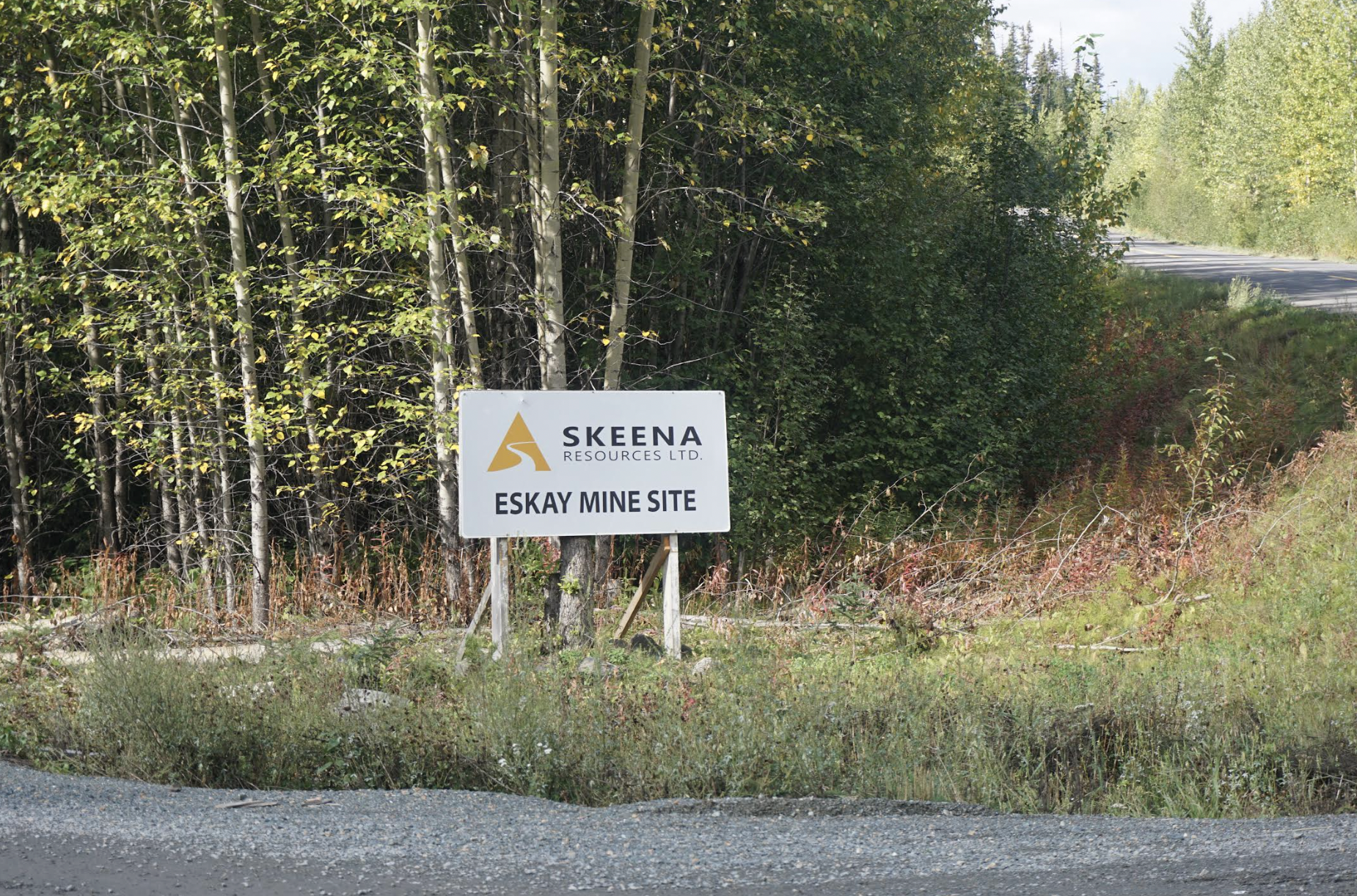
In a referendum after weeks of heated debate, members of the Tahltan Nation earlier this month voted overwhelmingly to approve a deal with a Canadian mining company that hopes to revive a huge gold and silver mine, called Eskay Creek, which stopped producing in 2008. The project is located above the Unuk River, which flows into Alaska near Ketchikan.
The Tahltans’ backing is a major step forward for the project, and it comes as the Canada and B.C. governments intensify efforts to build more mines in the name of national security and economic growth. Several of the projects are near the border with Alaska, where state and federal elected officials are separately pushing mines that could help wean the U.S. off a foreign supply of minerals used in energy, electronics and weapons.
Just one day after the Tahltan vote, Canada’s federal government announced that it had approved a merger between two multinational mining firms with a condition that calls for advancing two other proposed mines in Tahltan territory. Both projects sit above tributaries of the Stikine River, a major, salmon-bearing waterway that straddles Canada and the U.S. and empties into the ocean near the small Southeast Alaska town of Wrangell.
Louie Wagner Jr., a Tsimshian and Tlingit resident of Metlakatla, a Native community at the southern tip of Alaska’s panhandle, said he’s concerned about the health of the Unuk River and its future with mines in its watershed.
Wagner and his family have fished and hunted moose along the Unuk for generations.
“That little river cannot handle it,” Wagner said in a recent phone interview. The Unuk is notable, he added, for its abundance of eulachon, a small, oily fish also known as hooligan that’s a staple for Indigenous communities in Southeast Alaska.
Though rarely discussed in Alaska circles, the Tahltan Nation’s approach to mining has major implications for the industry’s future in the transboundary region. A top U.S. Department of Interior official visited the region last year to learn more about models for how Indigenous nations can partner with mining companies.
There are more than a dozen early-stage mining projects in Tahltan territory, many above rivers that flow into Alaska. And the Eskay Creek vote could serve as a preview of future deals between the Tahltan government and the for-profit mining companies promoting development.
For months, members of the First Nation debated whether to approve a deal, known as an impact benefit agreement, that Tahltan elected leaders had negotiated with Vancouver-based Skeena Resources, the company pushing Eskay Creek.
The Eskay Creek mine is accessible off British Columbia’s Stewart-Cassiar Highway. (Photo by Max Graham/Northern Journal)
The specifics of the agreement have not been made public. But Tahltan officials have said it guarantees benefits worth more than $1 billion over the life of the mine, mostly in cash but also in contracts and wages.
The deal also calls for an upfront payment from Skeena, intended to be distributed to individual Tahltan members — to the tune of $7,250 each, according to Tahltan officials. And the agreement reportedly gives the First Nation government some environmental oversight over the mine.
The nation backed the deal with support from more than 77% of the roughly 1,750 Tahltans who voted, according to the Tahltan Central Government. Payments are expected to go out to members in 2026.
“Tahltan Central Government is not standing on the sidelines,” Tahltan president Kerry Carlick said in a statement after the vote. “We are embedding ourselves directly into the governance of environmental protection.”
Tahltan leaders have long worked to navigate political tensions between an expanding mining industry and efforts to protect traditional lands and wildlife.
The Tahltan government has entered into a number of agreements with mining companies. But it also has opposed efforts to mine coal and drill for natural gas near the headwaters of major rivers in the region.
And some Tahltan members have been outspoken critics of the Eskay Creek project and the company promoting it.
In the leadup to the recent vote, arguments erupted on social media, and relationships among community members grew strained, some Eskay Creek opponents said in interviews.
“This is causing internal conflicts,” said Tamara Quock, a Tahltan member who lives in northern B.C. some 350 miles east of the mine site.
Quock said she thinks the promise of the direct payments “enticed” some people to vote in favor of the agreement. Debate over the project, she added, grew more intense after that condition was added to the deal.
Quock said she feels Skeena is “using the Tahltan people” to generate its own profits.
She and other critics have voiced concerns about a perceived lack of transparency and potential conflicts of interest within the First Nation’s government. They also say they are worried about possible environmental impacts from the project, which would involve digging two open pits and storing millions of tons of mining waste above the Unuk River.
Skeena didn’t respond to requests for comment.
Alaska Native leaders, fishermen and environmental advocates who live downstream, in Southeast Alaska, for years have expressed concerns about Eskay Creek and other proposed mines in the region, saying they don’t trust Canadian regulators to safeguard Alaskan interests.
“You can’t cut these watersheds in half and expect to adequately protect them,” said Guy Archibald, executive director of the tribally led Southeast Alaska Indigenous Transboundary Commission. “Right now they’re cutting the baby in half and ignoring the effects on the Alaska side of the border.”
The commission last month filed a legal challenge in B.C. court, asserting that regulators had failed to consult Alaska tribes on several proposed mines in the region, including Eskay Creek.
Meanwhile, after a major spill last year at a Canadian gold mine in the Yukon River watershed, Alaska’s congressional delegation called for more oversight of Canadian mines near transboundary rivers like the Unuk and Stikine. The statement from the delegation — which has strongly supported mine development in Alaska — called for “binding protections, financial assurances, and strong transboundary governance.”
“As British Columbia seeks to advance numerous mines just upstream from Alaska, we are still asking them to fully remediate legacy sites and firmly commit to binding protections for Alaska interests,” Joe Plesha, a spokesperson for U.S. Sen. Lisa Murkowski, said in a recent statement. “Senator Murkowski is actively considering new ways to make our B.C. neighbors take Alaskans’ concerns seriously.”
U.S. Sen. Lisa Murkowski’s office says she’s pushing the British Columbia provincial government on protections for Alaska interests as Canada advances mining projects in transboundary watersheds. (Photo by Nathaniel Herz/Northern Journal)
Ottawa and B.C.’s provincial government, meanwhile, are funding new infrastructure projects and prioritizing permitting for energy and resource development projects, including Eskay Creek and the expansion of a huge copper and gold mine in the Stikine watershed, called Red Chris.
Canadian officials say existing regulations are geared to minimize impacts in the shared watersheds. Major projects undergo thorough environmental assessments before they’re approved, a spokesperson with the B.C. agency that leads those reviews, the Environmental Assessment Office, said in an email.
“Making sure large-scale projects are properly assessed is critical to making sure development is sustainable — to ensure good jobs and economic growth while also protecting the environment and wildlife, and keeping communities healthy and safe,” said the spokesperson, Sarah Plank.
Tahltan officials declined an interview request and did not respond to questions about Alaskans’ concerns or the First Nation’s agreement with Skeena.
Supporters of Eskay Creek say it could be transformational for the Tahltan Nation. Among proponents of the deal is Chad Norman Day, a former Tahltan president who has worked in the mining industry and now runs a consulting firm that does mining-related business.
“The benefits which flow to the Tahltan Nation from here will empower the people and territory unlike anything we have ever seen,” Day said in a statement after the vote.
Many Tahltan people work in mining, and the First Nation already generates revenue from Red Chris and another large operating mine, Brucejack, which started producing gold in 2017.
In 2019, Tahltan citizens voted in favor of an agreement with a different mining company pushing another, much bigger proposed mine partially in the Unuk watershed, called KSM. The outcome of that vote was nearly identical to the recent Eskay one, with about the same percentage in favor.
The first nation also, in the past five years, has entered into two joint decisionmaking agreements with the B.C. government for regulatory reviews of mining projects, including Eskay Creek.
Before it can start producing, Eskay Creek needs an environmental approval from the provincial government. A decision is expected early next year.
Strips of sockeye salmon harvested from the Kuskokwim River are seen on July 19, 2017. Sockeye salmon, also known as red salmon, is among the species harvested for subsistence. (Photo provided by U.S. Fish and Wildlife Service)
The U.S. Department of the Interior is considering whether to change Alaska’s unique system of hunting and fishing, which gives rural residents priority on federal land in Alaska.
According to a notice published Dec. 15 in the Federal Register, the Interior Department is conducting “a targeted review” of the program mandated by the Alaska National Interest Lands Conservation Act.
While no specific changes were identified in the notice, it prompted the Alaska Federation of Natives to react with concern.
In a message to members, it called the new proposal “a serious threat and a major step backward” in fish and game management within Alaska, according to a report Tuesday by the Anchorage Daily News.
Federal law requires rural residents to receive a priority when subsistence hunting and fishing, but because Alaska’s constitution prohibits the state from operating a system that gives one resident priority over another, the federal government uses one set of rules for hunting and fishing on federally controlled waters and lands, and the state uses another set for state-controlled water and land.
That has frequently led to conflicts between the state and federal government over management, and several lawsuits over the issue are currently in progress in federal court.
The Daily News reported that the suggestion to revise the two-tiered program came from Safari Club International, a large sport-hunting organization that has frequently sided with the state in lawsuits against the federal government.
Information posted online by the Interior Department indicates that the agency may consider:
Changing the makeup of the board that regulates subsistence hunting and fishing on federal land;
Reconsidering the rules that determine what parts of the state are “rural” and thus eligible for preferential treatment;
And the role of the Alaska Department of Fish and Game in the program.