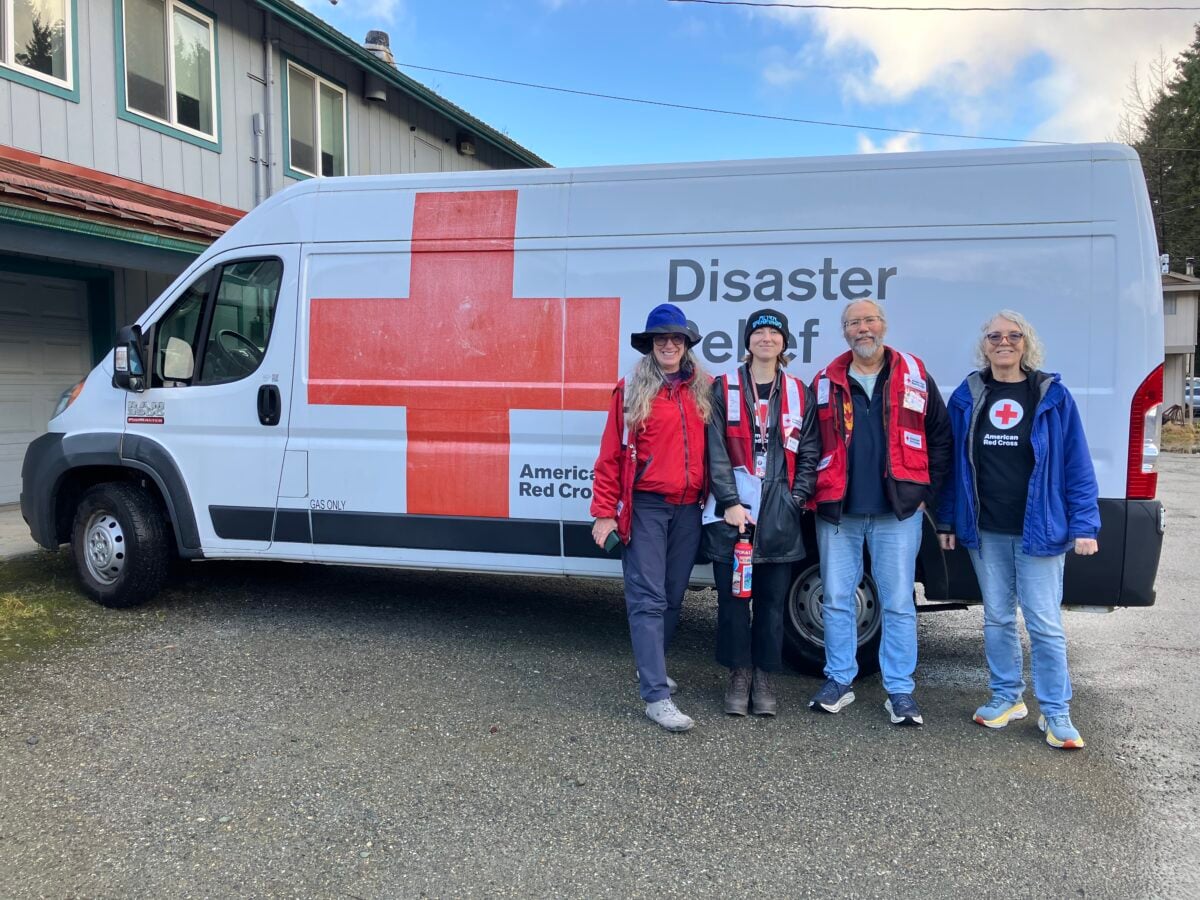
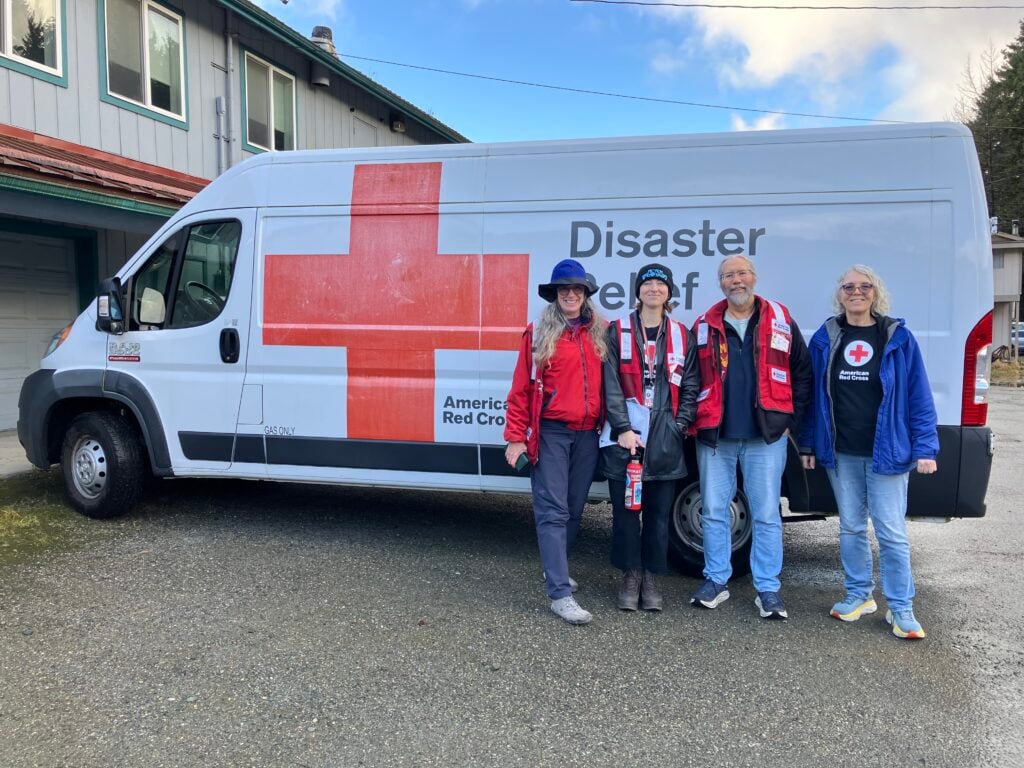
CBJ-The American Red Cross will host a free workshop and resource fair on Sunday, July 19 at the Mendenhall Valley Library. The event is designed to help older adults, individuals with access or functional needs, and medically fragile persons prepare for emergencies.
The event begins at 12 p.m. with a presentation, available both in-person and online, followed by a planning workshop and resource fair from 1 to 3 p.m.
Attendees will have the opportunity to build an individualized disaster plan, complete an emergency contact card, learn how and where to safely store important documents and more.
Registration is free and available online at bit.ly/4vZJlPL. Information for virtual attendance will be provided upon registration
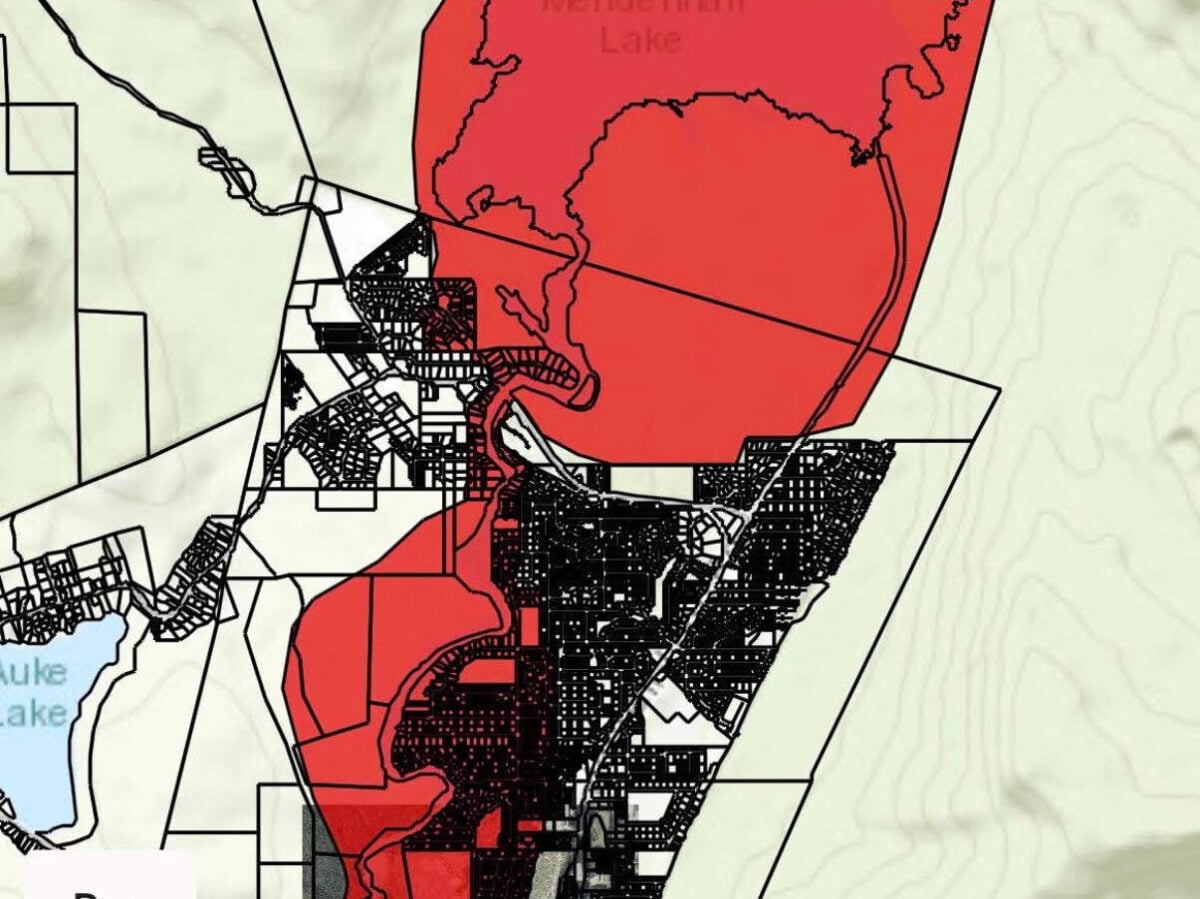
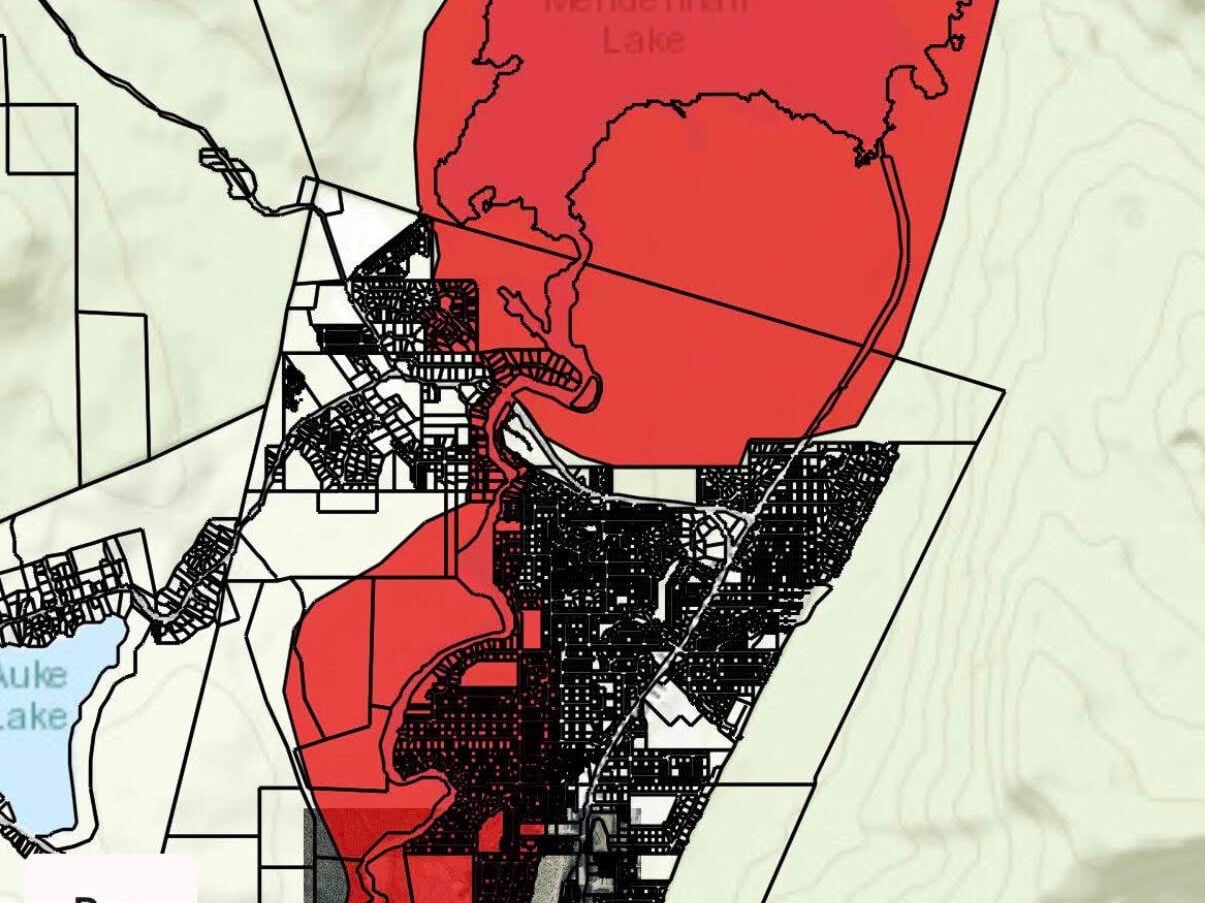
Portion of the brand new evacuation maps released by CBJ ahead of 2026 flood season
NOTN- Local, tribal, state and federal officials say Juneau is better protected but still at risk as the community braces for another glacial lake outburst flood from Suicide Basin in early August.
City Manager Katie Koester at a media briefing this morning, emphasized to reporters and media outlets that the purpose of the meeting as well as upcoming community events surrounding flood protection work is all about keeping residents informed and prepared ahead of this year’s Glacial Lake Outburst Flood, or GLOF.
She said the key takeaway however, was the need to evacuate during the event.
“We’ve done a lot to prepare for this event and we really appreciate the partnership with the Army Corps of Engineers in installing essentially between the city and the Army Corps $45 million worth of protective infrastructure for this year.” Koester said, “Nevertheless, it’s an unpredictable event, and if we have a breach, it will be a flash flood, and it will be very dangerous.”
The National Weather Service says Suicide Basin water levels are tracking close to 2024. Senior service hydrologist Aaron Jacobs said the basin is about 90 feet below the spillway and is most likely to fill between Aug. 1 and Aug. 9.
Forecasts point to a major flood similar to last year if the basin releases at full volume.
“We’re very close to the levels that we were seeing in 2024 and typically we’ll see about a three foot rise in normal inflow into the basin, and so right now we are about 90 feet below that spillway.” Jacobs said, “Right now that’s about 30 days out before we could see a full basin, and on our monitoring page we do update the conditions weekly, and if we see any other conditions change, we will update it more frequently.”
The City and Borough of Juneau has expanded its evacuation advisory zone to cover just over 1,900 residences, up from about 1,000 last year, based on new evacuation maps that account for blocked roads and responder access. Residents will be guided through a “ready, set, go” framework with Wireless Emergency Alerts, siren-style phone notifications and door hangers in affected neighborhoods.
“In years past, the CBJ and Unified Command have used inundation maps to communicate the risk from from potential flooding and the need to evacuate this year.” Said Emergency Programs Manager Ryan O’Shaughnessy, “We’ve worked really closely with all of our partners to plan for all scenarios, including the potential failure of the HESCO system. Our evacuation map this year, you’ll notice, has a lot more straight lines than an inundation map, and is generally aligned with streets and infrastructure, and the reason for that is we wanted to include areas that may not be directly inundated, but where access or travel, including by first responders, may be compromised. So in other words, if we wouldn’t be able to get to you during a breach scenario, or if you may not be able to get to safety, we are recommending that you evacuate.”
Engineers say roughly $45 million in temporary flood protection including HESCO barriers and a large pump system is now in place along the river through a partnership between the city and the U.S. Army Corps of Engineers.
“We have a very high level of confidence in the HESCO barriers, but this is a dynamic event… we really want to stress for folks to evacuate during this event,” said O’Shaughnessy.
Information on evacuation maps, sandbag events, and alerts is available on the Juneau Flood Ready page at juneau.gov.
CBJ- The Eaglecrest Board of Directors is pleased to announce the selection of Julie Jackson Piper as the next General Manager of Eaglecrest Ski Area. Piper was appointed to the role at the July 7 Eaglecrest Board special meeting.
“I am excited to welcome Julie Jackson Piper back to Eaglecrest as our ski area’s general manager,” said Brandon Cullum, Eaglecrest Board President. “Julie is the right person to lead our staff, support the board, and help inspire confidence with the Assembly as we move into the 2026/2027 ski season and work to address Eaglecrest’s longer-term sustainability concerns.”
Piper is currently employed as the Recreation Manager for the City of Richland, Washington, where she has served in that role since 2018. Her prior experience includes being the Aquatics Manager for the City and Borough of Juneau and Youth & Community Outreach Coordinator & Snowsports School Supervisor at Eaglecrest. Piper also has a Bachelor of Science in Ski Area Business Management from Northern Michigan University.
“I am honored to join Eaglecrest’s dedicated staff and engaged Board of Directors as we build upon the mountain’s remarkable legacy,” Piper said. “Together, we have an incredible opportunity to strengthen our connection with the community, enhance the year-round mountain experience, and ensure Eaglecrest continues to thrive for generations as we begin its next 50 years.”
Piper will begin her new role on August 31, 2026 and be paid an annual salary of $134,014.40.
The Eaglecrest General Manager is selected and supervised by the Eaglecrest Board. Following an initial applicant screening by the City and Borough of Juneau Human Resources Department, the Board Human Resources Committee interviewed candidates remotely before selecting a finalist for an in-person interview at the Eaglecrest Board meeting last week.
For more information, contact Dallas Hargrave, CBJ’s Human Resources/Risk Management Director, at dallas.hargrave@juneau.gov or 907-586-0225.
NOTN- The Eaglecrest Board will hold a special meeting this afternoon to consider the lone finalist for the ski area’s next general manager.
The meeting will run from 12:30 to 1:30 p.m. and will be held online only through Zoom, with the agenda available on the City and Borough of Juneau’s Civic Clerk webpage.
The finalist? Former Eaglecrest manager Julie Jackson Piper.
Piper previously worked at Eaglecrest from 2009 to 2015 and later managed Juneau’s public pools before becoming recreation manager for Richland, Washington. She was also a finalist for the position in 2024, finishing as the runner-up.
Her potential hiring comes during a challenging period for Eaglecrest, which has faced financial losses, equipment failures and closure uncertainty after the city canceled plans for a new gondola project because of soaring costs.
Currently the City and Goldbelt are discussing a potential partnership such as a long term lease.
Additional information on the meeting and other public meetings is available through the CBJ public meetings calendar.
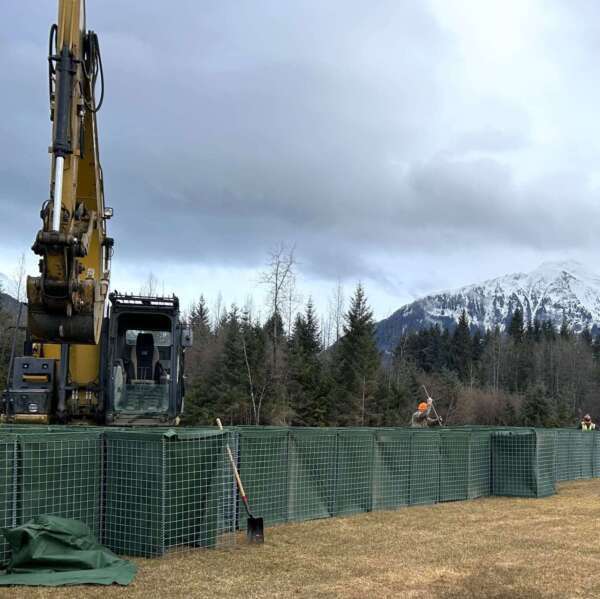
Photo provided by CBJ following the installation of the HESCO barrier project
Photo provided by CBJ following the installation of the HESCO barrier project
NOTN- City officials said they are nearing completion of armoring HESCO barriers as they race to protect low-lying neighborhoods from the annual glacier‑lake outburst flood season.
City Manager Katie Koester said the work, led by the city and the U.S. Army Corps of Engineers, is being expedited ahead of an early‑August release window the National Weather Service is monitoring.
“It was divided into two projects, and we’re nearing completion of that project, because we’re really racing towards that early August deadline. National Weather Service anticipates an early August release. They’re of course, constantly monitoring this, and you can go to their website.” Koester said, “They’re anticipating something around the release of last year, so the basin is filling out a little bit more quickly than it was last year, but about on pace for the previous years.”
Contractors and engineers have been working around the clock to meet the deadline.
Koester said the barriers are designed to withstand flows of about 63,000 cubic feet per second which is significantly higher than last year’s roughly 49,000 CFS event, and that the Corps used modeling to shape additional protections, including an earthen berm on the Back Loop Bridge that officials say is more efficient for extreme floods than HESCO barriers.
“The Army Corps analyzed it and decided the HESCO barriers would be more expensive and less efficient than doing an earthen berm. The Army Corps did do modeling to make sure that the earthen berm would not adversely effect other properties.” Koester said.
The city remains under a continuing state of emergency that allows crews access to private property to place barriers.
“We really are operating in a continuing emergency because of the unique annual nature of this event, and this is important not just for the city, but also for the Army Corps of Engineers, and the assistance that they’re able to provide under advanced measures. Basically, they’re able to provide this federal assistance because we have this imminent threat of flooding every single year, and it’s unique because most communities have a flood threat that may or may not happen; we have this very, very unique annual event.” Said Koester.
A special committee meeting on July 20 will feature Army Corps presentations on phase two and long‑term options, including a proposed basin tunnel concept.
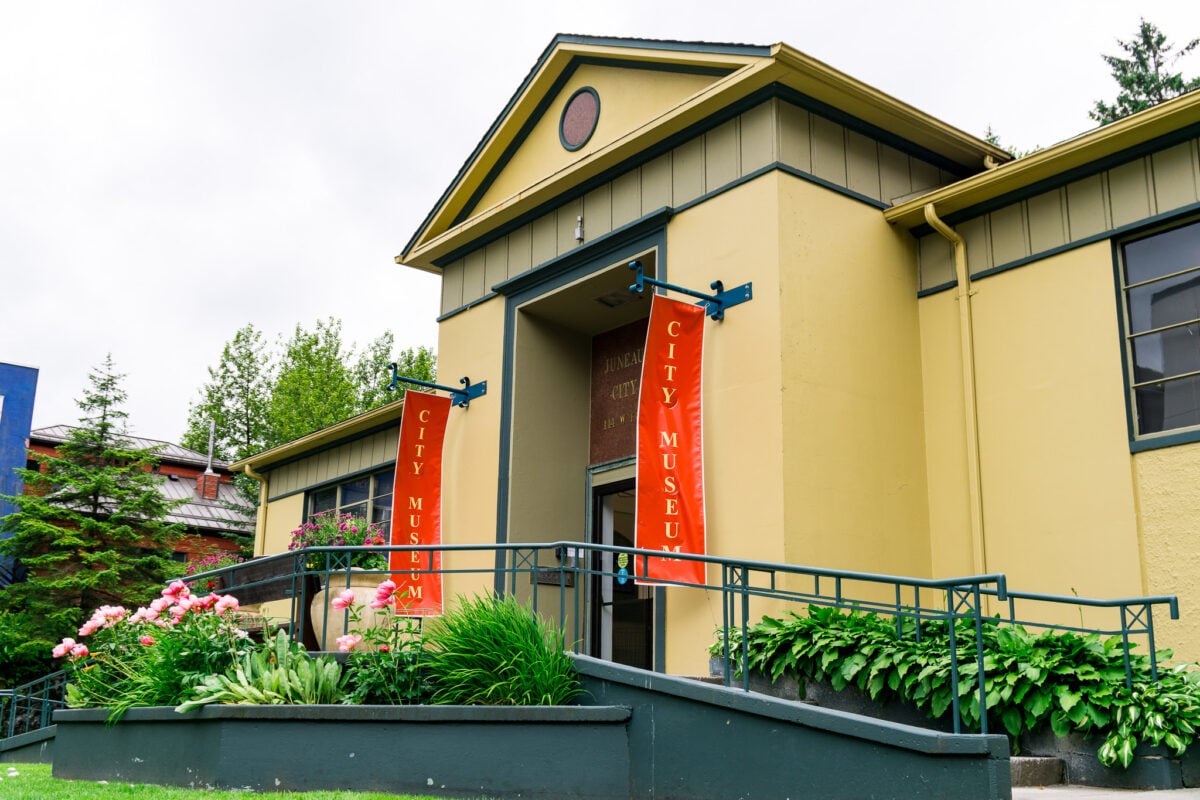
CBJ- Beginning Friday, July 10, the Juneau-Douglas City Museum will be open Wednesdays through Saturdays from 11 a.m. to 4:30 p.m. This transition to new hours comes after the City and Borough of Juneau (CBJ) Assembly made the difficult decision to reduce the museum’s funding by two positions due to declining municipal revenue. Since the fiscal year 2027 municipal budget was adopted, the City Manager’s Office, the Juneau Public Libraries Director, and museum staff have been actively working to support the museum’s transition.
The Juneau-Douglas City Museum has received a one-time, non-expiring $45,000 donation from Norwegian Cruise Line to support the museum’s summer operational hours. The donation, a result of Mayor Beth Weldon’s outreach to support the museum’s fiscal and operational transition, will fund the hiring of seasonal museum attendants, a role that has supported the museum’s open hours in summers past.
Like other city facilities, the Juneau-Douglas City Museum will be closed Friday, July 3 through Sunday, July 5 in observation of the Independence Day holiday. After the holiday, the museum is hosting a free author talk with Patrick Bringley on Friday, July 10 at the UAS Egan Lecture Hall that the public is welcome to join.
CBJ appreciates the community’s patience and desire to support the museum during this transition. The Juneau-Douglas City Museum has an active volunteer base, and if you would like to lend your support, contact Catherine Melville at Catherine.Melville@juneau.org.
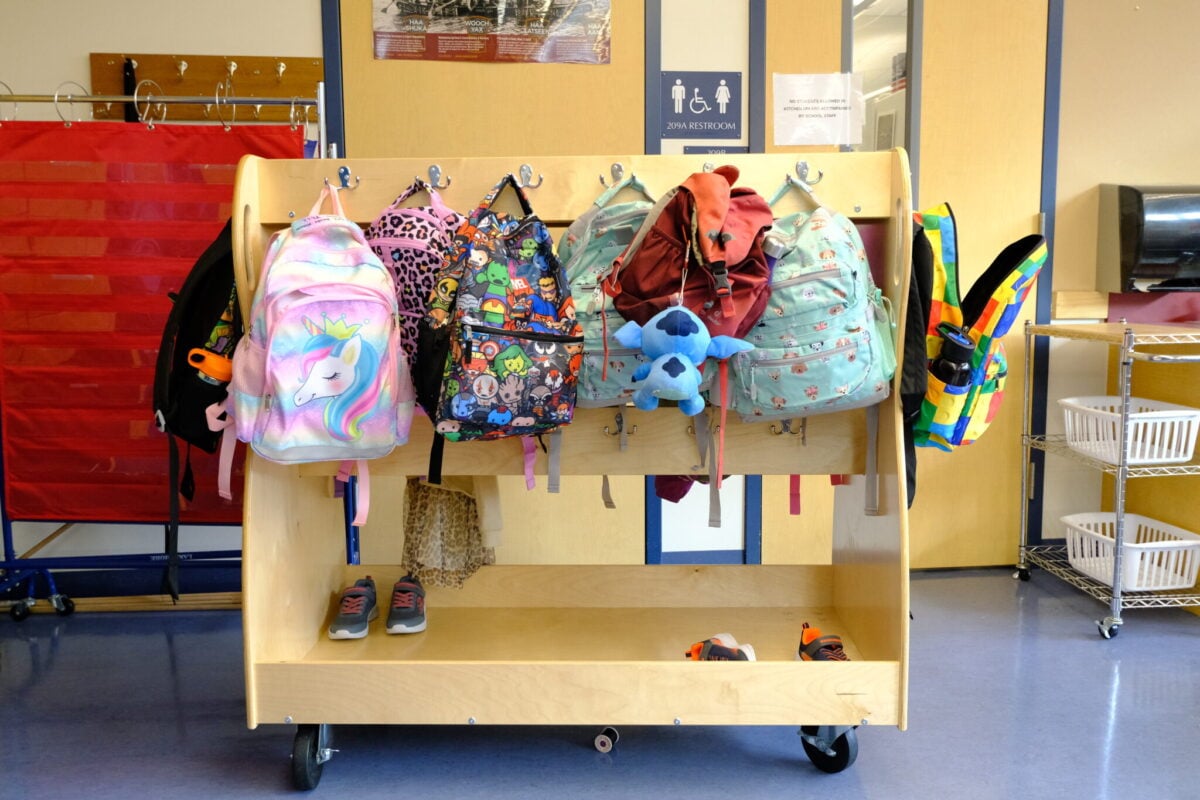
Student backpacks seen on the first day of school at Harborview Elementary School in Juneau on Aug. 15, 2025 (Photo by Corinne Smith/Alaska Beacon)
Content warning: This story contains references to sexual violence and abuse of children.
A new statewide initiative aims to prevent and reduce Alaska’s pervasively high rates of child sexual abuse.
The statewide prevention plan is led by the Alaska Children’s Trust, a non-profit advocacy group focused on supporting children and families and preventing child abuse and neglect.
Trevor Storrs, the president and CEO of the Alaska Children’s Trust, said a coordinated effort among state and community groups, service providers, schools, caregivers and youth is needed to make serious strides in intervening and preventing abuse.
“We should not expect children to fight off these predators. We want them equipped with the tools, but it’s our job, not just as adults, but as a community and society, to make sure kids are safe,” he said.
If you or someone you know has experienced sexual abuse or are healing from a crisis, resources are available:
The StrongHearts Native Helpline: Confidential 24/7 confidential helpline for Native Americans and Alaska Natives dealing with domestic and sexual violence. Call 1-844-762-8483 or use the chat feature.
Child sexual abuse prevention resources provided by the Alaska Children’s Trust can be found here.
AWARE’s list of resources, including housing, medical and financial resources
The plan was developed last year with a variety of statewide groups, including representatives from Child Advocacy Centers, the Alaska Department of Education and Early Development, the Office of Children’s Services, which runs the state’s foster care system, law enforcement, Tribes, health care providers, lived experience experts, faith communities, and the Alaska Network on Domestic Violence and Sexual Assault.
Storrs said the plan focuses on education and raising awareness, as well as preventing harm by developing and strengthening institutions so that questionable behavior is identified and stopped.
“If we don’t keep strong boundaries established, that’s when we start opening the door and predators see their opportunity,” he said. “If we keep those strong and not have those potential openings, it actually prevents the predators from ever accessing, or anybody who’s had even a slight inclination — they’re not being tempted to even try — and that is what our job is.”
The group launched the plan earlier this month and is providing an initial $100,000 in grant funding for prevention work in the three priority areas outlined by the initiative. Nonprofit organizations, tribes, local or state governments, schools and regional attendance areas are invited to apply by July 17.
Alaska has some of the highest rates of sexual violence and rates of child abuse, neglect, and child sexual abuse, in the nation. Many victims delay or never report abuse. A U.S. Department of Health and Human Services’ Child Maltreatment report published this year noted reports of child abuse and neglect have declined somewhat since 2020, but Alaska rates in 2024 were 80% above the nationwide average.
Nationwide, American Indian and Alaska Native children have the highest rates of victimization, and in Alaska national data from the maltreatment report shows rates of abuse among American Indian or Alaska Native children are nearly three times higher than the overall statewide average.
The Alaska Children’s Trust cites a national survey by the U.S. Centers for Disease Control and Prevention from 2013 to 2015 that showed on average one in five Alaska children experience sexual abuse. A 2023 report from the Alaska Children’s Justice Act Task Force showed that an estimated one in seven children will experience an allegation of sexual abuse before their 12th birthday.
“The majority of child abuse and neglect cases that are substantiated are neglect, then it’s physical, and then it’s a small fraction of child sexual abuse,” Storrs said. But sexual abuse can have severe impacts on a child’s development, according to the CDC, with short and long term effects, including chronic health conditions, mental health issues and even post-traumatic stress disorder, or PTSD.
Child sexual abuse is defined as any sexual activity between a child and adult or a child and another child that the child does not fully understand, does not consent to or is not developmentally prepared for and therefore cannot consent to. In Alaska, lawmakers this year changed the law to raise the age of consent to 18 years old.
An estimated 90% of child sexual abuse is perpetrated by someone known to the child or the child’s family, according to the CDC.
Perpetrators can exploit what Storrs calls “natural trust” to get close to a child, including people in positions like a coach, teacher, religious leader or friend of the family, in a pattern of behavior called grooming.
“Grooming is developing that relationship, developing a trust with the family that the child can be left alone with them,” Storrs said. “The trust with the child where their interactions may feel awkward, but are okay. The trust that it’s okay to keep secrets. They really build that trust and build that relationship that then allows them to abuse the child, to do what they do. And you see that in story after story when you talk to a survivor of child sexual abuse, they talk about the relationship.”
Storrs says addressing the stigma to intervene when behavior is inappropriate, also means implementing proper protocols for adults interacting with kids. He said for example, coaches should not text youth individually, but include parents in all communications.
That extends to online safety, he said. Nationally, there are increasing rates of predatory behavior and “sextortion,” a form of blackmail where perpetrators threaten to disclose information or images unless the victims make specific demands. Storrs said caregivers should talk with children and youth about what is and isn’t appropriate, in person and online.
“It’s also making sure that your child understands what the expectations and rules are, as well, of what it’s like to interact with an adult, and what are those boundaries,” he said.
Storrs said in raising awareness of potentially predatory behavior, it’s also important to trust children when they disclose inappropriate behavior.
“A lot of kids don’t disclose that X is happening, what they start disclosing is, ‘I don’t feel comfortable, I don’t want to go. I don’t like hanging out with this person anymore.’ They don’t feel connected,” he said. “That’s a sign.”
The statewide prevention plan likens preventing child sexual abuse to wildfire prevention. That means reducing risks, setting safety codes, educating communities and monitoring high risk situations — to prevent harm.
Three approaches to prevention
The statewide prevention plan has a three-pronged approach: educate and mobilize, cultivate safer environments and act early to prevent harm.
Storrs says all three involve children, families, and community-wide efforts, and the plan calls for local advocacy groups, service providers, schools and governments to gather community input and develop their own child sexual abuse prevention programs and resources best fit around cultural values. The initiative calls for local communities to develop and strengthen systems for children to safely report harm without fear of punishment and family disruption.
The first prong focuses on education: increasing awareness and reducing stigma, and increasing the number of people able to take action proactively. That means training for youth-focused employees like teachers and coaches, and building in protocols for reporting and addressing inappropriate behavior. It also involves providing educational resources for parents and caregivers on healthy boundaries, warning signs, and how to respond to concerns.
The plan calls for education and resources for children and youth on what’s appropriate. Storrs says the plan suggests children receive human development education, not necessarily sex education, so that children develop an understanding of consent, their body anatomy and healthy relationships.
“When you talk to a child about something, it does not give a child permission to engage in something or to act inappropriately,” he said, adding that teaching kids about sex does not give them permission to have it in the same way that teaching kids about car accidents doesn’t give them permission to drive recklessly.
Education is aimed at empowering children to identify when physical boundaries have been violated, Storrs said. “So when a kid needs to talk about any of their private areas or someone is trying to talk about it or touch it, they’re able to know what’s appropriate and what’s not appropriate,” he said.
Similarly, reducing shame and stigma can empower children to talk with an adult or caregiver when they’ve experienced or seen adults behaving inappropriately. Children should know that adults should never ask them to keep secrets, Storrs said, and when inappropriate behavior has occurred they can get help to stop it from continuing.
The second prong, “cultivating safer environments,” calls for state and local governments, Tribes and service organizations to support programs and policies that help families meet essential basic needs to address conditions that put children at risk for sexual abuse.
Storrs noted that children and families with unstable housing, inadequate child care or health care can create circumstances that put children at higher risk.
“Our safety net plays a critical part in keeping kids safe, not just of child sexual abuse, but child abuse in general,” he said. “We know when families have stable housing, food security, all those things, it puts less stress on the family.”
The plan calls for increasing safety of physical and digital spaces where youth spend time, and local community organizations to hold listening sessions in communities to identify risk factors and best prevention strategies.
The third prong aims to prevent harm by increasing access to resources to respond to harmful sexual attitudes or behaviors. That includes addressing people who have harmed or are at risk of harming children.
“I truly believe there’s more gray in our world ever than there is black and white,” Storrs said. “And there are definitely individuals who are 100% predators, and it’s very clear. Then you have individuals that may have some thoughts, but don’t act on it, or it’s controlled internally by themselves and by within the society they are.”
The approach includes responding to harmful and problematic sexual behavior among youth. Storrs said with youth having access to graphic sexual material online, problematic behaviors and attitudes may arise. The plan aims to expand treatment and support services for youth to address harmful behaviors.
“We’re seeing that kids are sexually maturing faster or becoming more hypersexual at a much younger age without the knowledge, skills, supports and resources to then deal with it or understand it,” Storrs said. “And if kids do not have an adult to talk to, or have learned this information, it starts creating hyper sexual experiences, which then can lead to this harmful sexual behavior.”
Alaska has unique challenges with rural and remote communities having less access to services, Storrs said, as well as grappling with legacies of trauma and adversity. He said the initiative aims to push a statewide focus and investment in policies and programs that support children and families that can help prevent harm. The plan is a collaborative effort, he said, and in the first year advocates with the Alaska Children’s Trust will visit communities to discuss the plan, help raise awareness, identify gaps and strengthen protocols and safer environments to prevent abuse.
“What we want to create that’s very clear in our community, in our state, that we as a community are watching and will not stand for any type of inappropriate behavior with our kids,” Storrs said. “And we will say something, we will step in, and you won’t be allowed.”
NOTN- Juneau residents will see higher water and sewer bills starting today.
The City and Borough of Juneau says utility rates will increase by five percent on July 1 as part of a series of annual rate adjustments approved by the Assembly through 2029.
City officials say the increases are intended to help fund utility operations and major infrastructure projects, including replacement of aging drinking water wells, pipelines, wastewater handling systems, and water pump stations. Crews are also currently working on improvements at Cope Park.
Fee increases will also take effect for a variety of Parks and Recreation Services.
The city says the increases are to reflect increased operational expenses and decreased city general funding.
Eaglecrest, located on Juneau’s Douglas Island, rises above the Inside Passage. (Nathaniel Herz/Northern Journal)
Last winter’s first big storm came in December. Then came another. And another. By New Year’s Day, four feet of fresh snow blanketed the city of Juneau.
For many locals, it was a crisis: Roofs collapsed; boats sank in the harbor.
For Juneau’s fervent alpine skiers and snowboarders, it could have been a godsend.
Except they had nowhere to ski.
During one of Juneau’s snowiest months on record, the city’s only ski area, a beloved, municipally-run mountain called Eaglecrest, was barely operating.
It’s one of Alaska’s biggest ski areas and a reminder that Juneau, a city defined largely by cruise tourism and the state Capitol, is a mountain town, too.
But just after the season started last December, mechanical issues forced a closure of Eaglecrest’s main chairlift. And a water line broke, leaving its two lodges without running water. Aside from a few beginner slopes, the mountain was closed.
“Pretty much anything that could have gone wrong went wrong,” the chair of the ski area’s public board, Hannah Shively, said at a meeting in early January.
The infrastructure failures came after years of deferred maintenance, staff turnover and accusations of mismanagement and underinvestment. And, though the ski area was fully opened by mid-January, its early-season woes may have been an omen: The next time it snows 80 inches in a month in Juneau, Eaglecrest might not exist at all.
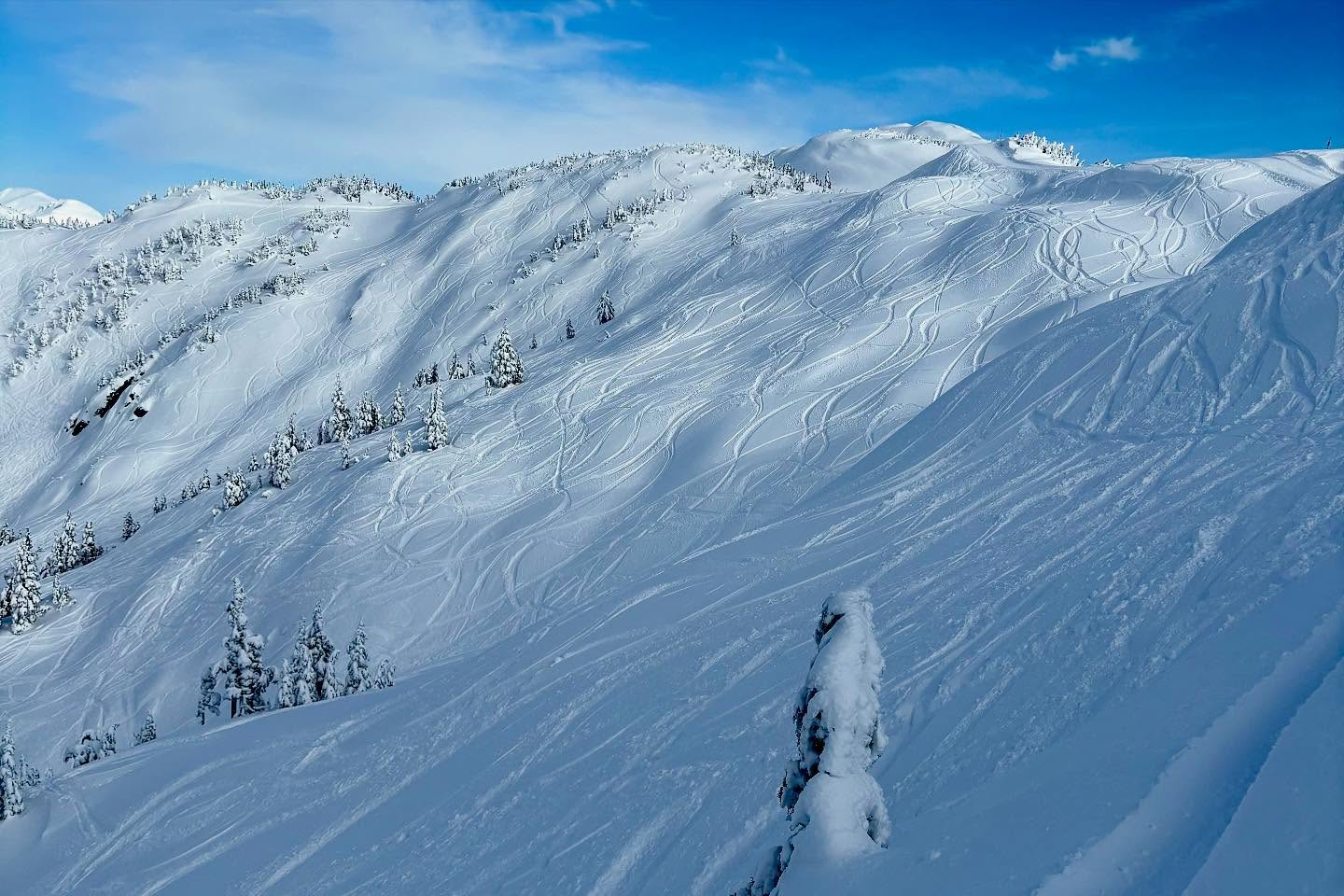
Ski tracks crisscross alpine terrain at Eaglecrest, one of Alaska’s most beloved ski areas. (Eaglecrest Ski Area)
The mountain has operated in the red each of the past four years, with losses totaling some $3 million. Now, it’s at the center of a fierce debate over local government spending, with implications not only for the future of skiing in Juneau, but for the town’s identity.
Some residents say the ski area provides a crucial outlet for outdoor recreation during Juneau’s notoriously gloomy winters, and deserves public funding. Others say the government has effectively run the place into the ground and that the mountain should be privatized.
The Juneau Assembly, which oversees Eaglecrest’s budget, voted this spring to keep the ski area open next season. But it’s allocating $1 million less than what Eaglecrest’s management requested, forcing layoffs and sustaining operations at an “absolute minimum.”
That decision came right after a long-term plan to turn around the mountain’s finances fell through.
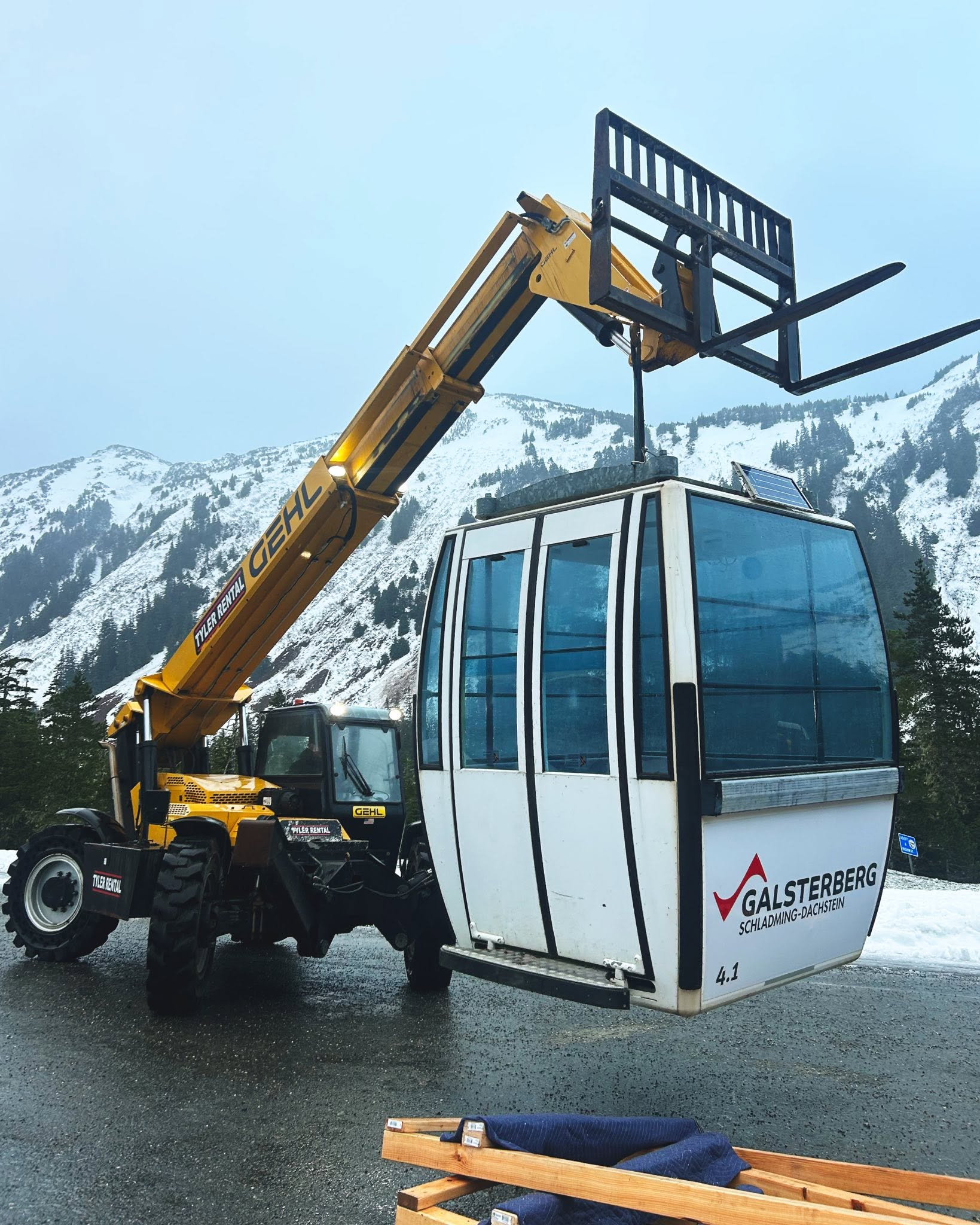
Four years ago, the city bought a used gondola, aiming to install it at Eaglecrest to boost summer tourism and generate enough new revenue to make the mountain profitable.
But after construction delays and a staggering cost increase, officials abandoned the project in May, setting the municipality back millions of dollars. They have yet to present an alternative path forward for the mountain, and there’s no certainty that Eaglecrest will stay open beyond next year.
It’s at the most precarious point in its 50-year history.
“We’re definitely at a threshold, or a turning point,” said Jim Calvin, a longtime Juneau skier and member of Eaglecrest’s board. “It’s an existential issue.”
What “separates” Juneau
One reason Alaska skiers love Eaglecrest is that it’s not a typical ski resort. In fact, it’s not a resort at all, but more like a public park.
Nearly all the big ski areas in North America are for-profit businesses. Some — Vail, Whistler, Park City — are owned by the same big, publicly traded corporation. Others, like Steamboat and Mammoth, are owned by private equity and investment firms.
Eaglecrest, meanwhile, is owned by the City and Borough of Juneau, meaning local taxpayers have been contributing about $1 million to operations annually. That’s about 0.6% of the city’s general operating budget.
This helps the mountain keep prices low: An adult season pass last winter cost $802, or $630 if bought before July. At Alyeska, the state’s largest ski area, in Girdwood, prices were nearly double that: $1,599 for a regular season pass, or $1,049 with an early-bird discount.
Public ownership also has helped Eaglecrest stay oriented around recreation and community rather than luxury hotels and real estate development. There is no Four Seasons on the mountain — nor any hotel, for that matter.
“It’s the one nice thing we have that separates us,” said Sandy Hussain, a Juneau resident who frequents the ski area with her husband and son. “Most cities have libraries. They have pools. They don’t have Eaglecrest.”
Eaglecrest is perched at the top of a dead-end road in the mountains of Douglas Island, a 20-minute drive from downtown Juneau. It was established by Juneau’s ski club in the mid-1970s. Over the years, local taxpayers have approved spending on mountain infrastructure projects through sales tax increases and bonds.
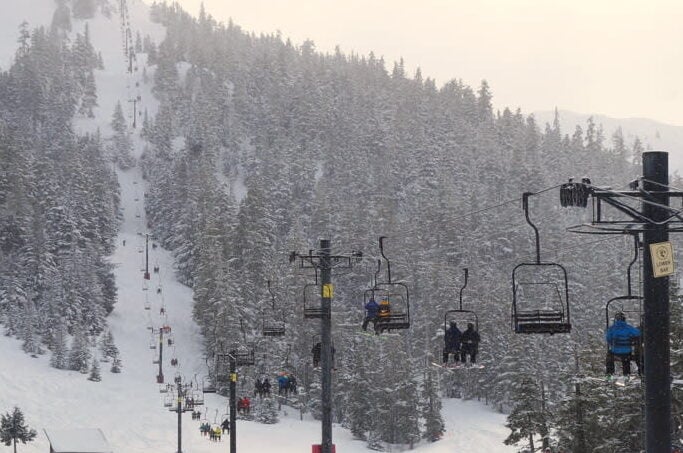
Spread across 640 acres, Eaglecrest has three operating chairlifts and two day lodges. From the parking lot, where skiers tailgate on sunny days, you can ride a lift named Ptarmigan through a spruce-and-hemlock forest to an alpine hut with ocean views. There are groomed runs for beginners, and there’s tree skiing for more advanced skiers. Cliff-lined backcountry areas beckon for experts.
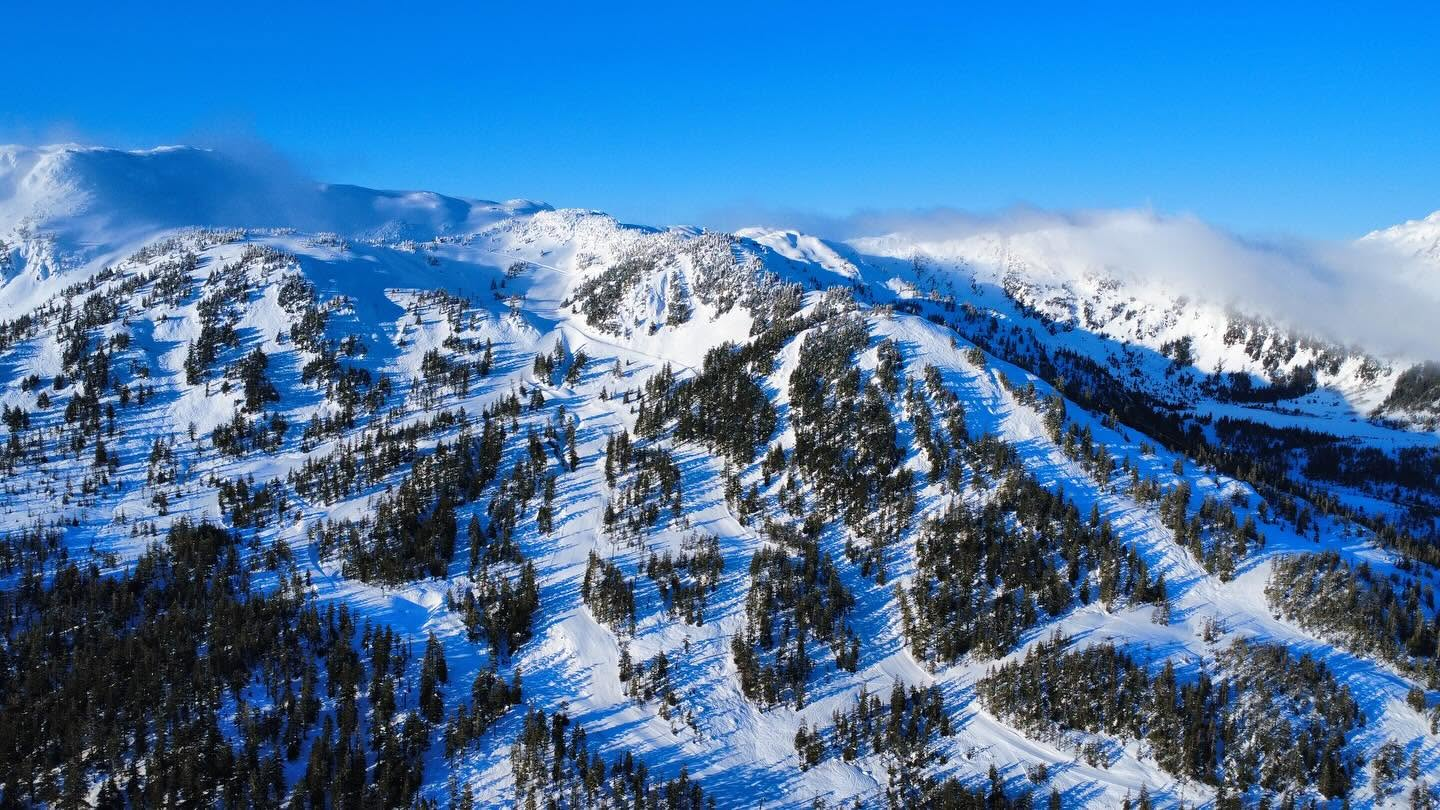
Eaglecrest is known for its diverse terrain. (Eaglecrest Ski Area)
While it’s small, with fewer trails and only half the vertical drop of Alyeska, Eaglecrest is known for its powder days (albeit rain days, too), ocean views and diverse terrain, including “tons of pillows and little spine features,” said Ryland Bell, a professional snowboarder based in Haines, a small town up Lynn Canal from Juneau.
Eaglecrest’s terrain and community vibes stand out internationally, said Bell, who has snowboarded all over the world.
“You’re looking down at the ocean, on all sides, and then all the peaks and fjords and canals. It’s an incredible place,” Bell said. “The town absolutely needs it.”
Juneau residents describe the ski area as a favorite winter gathering spot. People bump into friends in the parking lot; parents catch up at the base lodges while kids take ski lessons.
“There was nothing like that in Juneau that we had found yet,” said Hussain, who moved to the town three years ago in part because of Eaglecrest. “It felt like a very welcoming space, even if you’re not the best skier in the world.”
Her family would move away if the mountain were to close, Hussain said. “That would not be a question.”
Eaglecrest’s woes
Ask Juneau residents about the cause of Eaglecrest’s woes, and you’ll get a range of answers, some entirely contradictory.
One local skier said the dysfunction is mostly the fault of the ski area’s former general manager.
Another said the same general manager was one of the greatest things ever to happen to Eaglecrest and said the ski area declined after his firing.
A third skier: “Everyone in town thinks they’re the general manager of Eaglecrest.”
There is, however, broad agreement on a key cause of the ski area’s struggles: economics. There just aren’t enough skiers in Juneau, with a population of about 30,000, to cover all of the mountain’s costs through lift ticket sales and concessions.
And those costs are going up. Officials have substantially boosted employee pay, which was below Alaska’s minimum wage a few years ago. Plus, maintenance needs are growing as Eaglecrest’s infrastructure ages. Management decommissioned one of the main chairlifts, Black Bear, last year; the other, Ptarmigan, is the one that broke down in December.
“It’s an old ski area, and there are a lot of gremlins in there,” said Bruce Griggs, a longtime Juneau skier.
To offset rising costs, Eaglecrest officials hatched a plan four years ago: The city would buy a used gondola from a resort in the Austrian Alps, ship it to Juneau and set it up on the mountain.
Summer cruise tourists — numbering more than 1 million in Juneau each summer — could ride the gondola to the summit to soak in views or launch hikes.
Ticket sales, in turn, would generate new revenue for Eaglecrest. Goldbelt, the Alaska Native-owned corporation for Juneau and a major player in the local tourism industry, would loan the city $10 million in return for a share of the revenue.
Juneau officials bet that buying a used gondola would save the mountain. The plan fell through this spring. (Eaglecrest Ski Area)
The Juneau Assembly, in a 5-4 vote, approved a plan to buy the gondola for $2 million. Projections at the time showed it would generate enough cash to make Eaglecrest profitable. Supporters said the ski area’s future depended on it.
“This is going to be a true game-changer,” Eaglecrest’s general manager, Dave Scanlan, said in 2023.
Then the plan imploded.
Budget debate, identity crisis
Earlier this year, Jim Calvin, the Eaglecrest board member, made a bombshell announcement at a public meeting: Installing the gondola would cost $27 million, pushing the overall price tag to some $37 million, more than triple early estimates.
“That’s a pretty big gulp factor,” Calvin said at the meeting.
Construction would be more expensive than expected. The gondola needed more parts. And the city would have to pay tariffs on some of those parts, since they’d be coming from Austria.
In response to the cost increase, city officials had to decide whether to scrap the project or find new investors to cover the higher price tag.
At the same time, they were looking for ways to slash spending.
Last fall, Juneau voters passed two ballot initiatives to cut taxes, producing an estimated shortfall of $10 to $12 million — a roughly 8% reduction in the city’s general fund revenue, according to officials.
Among dozens of budget cuts under consideration by the Juneau Assembly this spring was money for public pools, a field house, an ice rink, the city’s library and Eaglecrest.
“We’re trying to make all these big decisions on the city budget, and it makes it really difficult to have the bandwidth to think rationally about the longer term of what we do with Eaglecrest,” Juneau Assembly member Neil Steininger, a former state budget director, said in a May interview.
Without the funds to pay for the gondola project at its new price, officials decided to abandon it. The city now must repay Goldbelt’s original loan, plus interest, costing taxpayers some $9 million.
The project’s failure was “a hit in the public eye” for Eaglecrest and has made it harder for Juneau officials to justify further investment in the ski area, said Christine Woll, a Juneau Assembly member and chair of its finance committee.
Looking out from Eaglecrest over Douglas Island. (Eaglecrest Ski Area)
A growing contingent of Juneau residents now think the solution is to hand the mountain over to a private investor who, in theory, could spend tens of millions of dollars to upgrade ailing infrastructure and develop summer tourism.
Among those residents is Dave Hanna, a local skier and longtime Eaglecrest supporter. He has lost faith in city ownership because critical maintenance on the mountain has lagged recently, he said — and officials, in his view, botched the gondola project.
“It’s been steadily going downhill the last couple years,” Hanna said.
He thinks boosting summer tourism — by developing a gondola and other attractions — is likely “the only thing that’s going to sustain Eaglecrest.”
Hanna supports privatizing Eaglecrest, but only if it can remain affordable for local residents, he said.
“I think there’s a lot of folks that have always believed the city could afford to maintain the area,” Hanna added. “And, finally, they’re waking up and smelling the coffee.”
Hanna is affiliated with the group, Affordable Juneau Coalition, that pushed the tax cuts last year, and he’s been on the opposite side of the broader fiscal debate from Juneau Assembly members like Woll.
He thinks the Assembly is looking in the wrong places to cut spending. Eaglecrest’s future, in his view, is contingent less on the city’s current budget than on its management of the mountain.
For Woll, though, the budget issue has created a real challenge for Eaglecrest.
In her ideal world, the city would keep funding the ski area along with other services facing cuts, she said.
But given the city’s fiscal realities, it’s “hard to justify” spending on Eaglecrest at the level it needs right now, in contrast with “essential services” like housing, Woll said.
Woll isn’t sure about a long-term solution. “I want the answer very badly,” she said.
While officials try to figure out a path forward, the ski area is raising lift ticket prices to help offset losses. A season pass will be about 10% more expensive next year, but still considerably less than at many other U.S. ski resorts.
Calvin, the Eaglecrest board member, said ski area officials will be looking for investors but will continue to ask city leaders for funding until Eaglecrest can “wean” itself off municipal support.
“It will just take time,” he said.
In the meantime — for another year, at least — Juneau’s skiers will still have a place in winter to zoom downhill and hang out with friends. Assuming, of course, nothing breaks before the next big storm.
Northern Journal contributor Max Graham can be reached at max@northernjournal.com. He’s interested in any and all mining related stories, as well as introductory meetings with people in and around the industry.
This article was originally published in Northern Journal, a newsletter from Nathaniel Herz. Subscribe at this link.
A drone image shows widespread flooding in the Mendenhall Valley. (Image courtesy of Rich Ross)
A drone image shows widespread flooding in the Mendenhall Valley. (Image courtesy of Rich Ross/2024)
NOTN- Residents affected by recurring glacial lake outburst floods in Juneau are calling for a faster path toward a long-term flood mitigation solution, arguing that years of annual preparation, uncertainty and recovery are taking a growing toll on the community.
Members of Juneau Flood Solution Advocates gathered recently at Chapel by the Lake to hear updates from scientists studying Suicide Basin as well as mining industry leaders to discuss potential solutions for reducing the threat posed by floods along the Mendenhall River.
The grassroots group formed in 2024 following major flooding in the Mendenhall Valley. Since then, members have worked to support neighbors, coordinate resources and advocate for permanent flood mitigation measures.
“We can’t do this every year,” said Debbie Penrose Fisher, a member of the group, “Whatever it takes to get this expedited on a fast track, and to include local experts, that’s the path to the finish line. Folks are exhausted, and they’re exhausted from the equipment, the noise, the intrusion on their property, to the anxiety of preparing, and we just want a solution.”
Many residents have expressed frustration with the timeline for a permanent solution. The U.S. Army Corps of Engineers has been studying several long-term mitigation options, including a proposed tunnel that would continuously drain water from Suicide Basin to reduce the likelihood of catastrophic releases.
Fisher said some residents would like to see additional expertise brought into the discussion, including mining industry engineers with experience in large-scale tunneling and earth-moving projects.
“The mining industry can do this. They do this all the time,” Fisher said, “The challenge is that, and the city is working really hard to protect us, The Corp is saying six plus years until a long term solution, and even recently are back to 10 to 15 years. We can’t wait that long. We can’t. Our push is to get the mining industry into a conversation with the Corps, so together they can solve this.”
At the same time, city officials say the challenge remains unprecedented and requires balancing safety, environmental concerns, costs and regulatory requirements.
“There is no playbook for how to address glacial lake outburst flooding in an urban area,” Said Deputy City Manager Robert Barr in an email response to News of the North, “For every decision, we and our counterparts at other agencies are having to balance public safety considerations, cost and fiscal considerations, and the regulatory processes that bound any mitigation actions.”
Officials said they understand residents’ concerns and are continuing to gather public input through community meetings and outreach efforts. Many of the same questions being asked by residents are also being asked by city leaders, including what future floods may look like, what would happen if temporary flood barriers fail and how permanent solutions can be implemented as quickly and safely as possible.
The city has invested heavily in temporary flood protection measures, including the installation and reinforcement of HESCO barriers along vulnerable sections of the river. Officials say those efforts helped reduce damage during a larger flood event last year compared with the devastating flooding experienced in 2024.
“Nature always has the potential to humble us,” Barr said. “No human-created solution to a natural phenomenon is going to be perfect.”
He emphasized that current projects are intended to reduce risk while longer-term solutions are evaluated.
The city also noted that the flood threat is unlike any faced by another urban community worldwide.
“This hazard does not occur in any other urban area in the world,” officials said. “Which is why it is so critical for us all to be working together and pulling in the same direction. The way our community has come together to research and learn about the science and potential solutions is impressive. It wasn’t too long ago where we became a community full of knowledge and understanding about things like antigens and antibodies, PCR tests and vaccines. Today, we’ve learned more than we ever thought we would about glacial dynamics, dams, levees, bank armoring, and tunnels. I’m optimistic, with all of the people and agencies tackling this problem, we’ll get to a solution as quickly as possible.”
While no definitive timeline has been established for a permanent solution, city officials said the situation remains fluid and pledged to keep residents informed as new information becomes available.
Upcoming public engagement opportunities include a Community Flood Preparedness Training event scheduled for July 11 at Dimond Park and a July 20 Committee of the Whole meeting, where U.S. Army Corps of Engineers officials are expected to provide updates on ongoing studies and mitigation efforts. Officials encouraged residents with questions or concerns to contact the city at floodresponse@juneau.gov or reach out to their Assembly representatives